CN103155482A - Device and method for load balancing for data packet transmissions in wireless networks - Google Patents
Device and method for load balancing for data packet transmissions in wireless networks Download PDFInfo
- Publication number
- CN103155482A CN103155482A CN2011800476915A CN201180047691A CN103155482A CN 103155482 A CN103155482 A CN 103155482A CN 2011800476915 A CN2011800476915 A CN 2011800476915A CN 201180047691 A CN201180047691 A CN 201180047691A CN 103155482 A CN103155482 A CN 103155482A
- Authority
- CN
- China
- Prior art keywords
- node
- data
- network
- equipment
- nodes
- Prior art date
- Legal status (The legal status is an assumption and is not a legal conclusion. Google has not performed a legal analysis and makes no representation as to the accuracy of the status listed.)
- Pending
Links
Images



Classifications
-
- H—ELECTRICITY
- H04—ELECTRIC COMMUNICATION TECHNIQUE
- H04W—WIRELESS COMMUNICATION NETWORKS
- H04W28/00—Network traffic management; Network resource management
- H04W28/02—Traffic management, e.g. flow control or congestion control
- H04W28/06—Optimizing the usage of the radio link, e.g. header compression, information sizing, discarding information
- H04W28/065—Optimizing the usage of the radio link, e.g. header compression, information sizing, discarding information using assembly or disassembly of packets
-
- H—ELECTRICITY
- H04—ELECTRIC COMMUNICATION TECHNIQUE
- H04L—TRANSMISSION OF DIGITAL INFORMATION, e.g. TELEGRAPHIC COMMUNICATION
- H04L1/00—Arrangements for detecting or preventing errors in the information received
- H04L1/12—Arrangements for detecting or preventing errors in the information received by using return channel
- H04L1/16—Arrangements for detecting or preventing errors in the information received by using return channel in which the return channel carries supervisory signals, e.g. repetition request signals
- H04L1/1607—Details of the supervisory signal
- H04L1/1621—Group acknowledgement, i.e. the acknowledgement message defining a range of identifiers, e.g. of sequence numbers
-
- H—ELECTRICITY
- H04—ELECTRIC COMMUNICATION TECHNIQUE
- H04L—TRANSMISSION OF DIGITAL INFORMATION, e.g. TELEGRAPHIC COMMUNICATION
- H04L1/00—Arrangements for detecting or preventing errors in the information received
- H04L1/12—Arrangements for detecting or preventing errors in the information received by using return channel
- H04L1/16—Arrangements for detecting or preventing errors in the information received by using return channel in which the return channel carries supervisory signals, e.g. repetition request signals
- H04L1/1607—Details of the supervisory signal
- H04L1/1628—List acknowledgements, i.e. the acknowledgement message consisting of a list of identifiers, e.g. of sequence numbers
-
- H—ELECTRICITY
- H04—ELECTRIC COMMUNICATION TECHNIQUE
- H04L—TRANSMISSION OF DIGITAL INFORMATION, e.g. TELEGRAPHIC COMMUNICATION
- H04L12/00—Data switching networks
- H04L12/02—Details
- H04L12/16—Arrangements for providing special services to substations
- H04L12/18—Arrangements for providing special services to substations for broadcast or conference, e.g. multicast
- H04L12/1863—Arrangements for providing special services to substations for broadcast or conference, e.g. multicast comprising mechanisms for improved reliability, e.g. status reports
- H04L12/1868—Measures taken after transmission, e.g. acknowledgments
-
- H—ELECTRICITY
- H04—ELECTRIC COMMUNICATION TECHNIQUE
- H04L—TRANSMISSION OF DIGITAL INFORMATION, e.g. TELEGRAPHIC COMMUNICATION
- H04L12/00—Data switching networks
- H04L12/02—Details
- H04L12/16—Arrangements for providing special services to substations
- H04L12/18—Arrangements for providing special services to substations for broadcast or conference, e.g. multicast
- H04L12/1863—Arrangements for providing special services to substations for broadcast or conference, e.g. multicast comprising mechanisms for improved reliability, e.g. status reports
- H04L12/1868—Measures taken after transmission, e.g. acknowledgments
- H04L12/1872—Measures taken after transmission, e.g. acknowledgments avoiding ACK or NACK implosion
-
- H—ELECTRICITY
- H04—ELECTRIC COMMUNICATION TECHNIQUE
- H04W—WIRELESS COMMUNICATION NETWORKS
- H04W28/00—Network traffic management; Network resource management
- H04W28/02—Traffic management, e.g. flow control or congestion control
- H04W28/0247—Traffic management, e.g. flow control or congestion control based on conditions of the access network or the infrastructure network
-
- H—ELECTRICITY
- H04—ELECTRIC COMMUNICATION TECHNIQUE
- H04L—TRANSMISSION OF DIGITAL INFORMATION, e.g. TELEGRAPHIC COMMUNICATION
- H04L1/00—Arrangements for detecting or preventing errors in the information received
- H04L2001/0092—Error control systems characterised by the topology of the transmission link
- H04L2001/0093—Point-to-multipoint
Landscapes
- Engineering & Computer Science (AREA)
- Computer Networks & Wireless Communication (AREA)
- Signal Processing (AREA)
- Mobile Radio Communication Systems (AREA)
- Communication Control (AREA)
Abstract
针对大规模无线网状网络中的负载平衡,提供了一种用于控制无线网状网络中的数据分组传输的设备、系统和方法,其中针对多于一个的所接收数据分组的应答被整合在一个应答批次中。

For load balancing in large-scale wireless mesh networks, an apparatus, system, and method are provided for controlling data packet transmission in a wireless mesh network, wherein responses to more than one received data packet are integrated into a single response batch.
Description
技术领域 technical field
本发明涉及一种用于对无线网络中的数据分组传输进行控制的设备、系统和方法。 The present invention relates to a device, system and method for controlling transmission of data packets in a wireless network.
背景技术 Background technique
近来,无线网状网络吸引力越来越多的注意力,例如用于照明系统的远程控制、建筑自动化、监视应用、传感器系统和医疗应用。特别地,被称作远端管理(telemanagement)的户外照明器的远程管理变得日益重要。这一方面是被环境关注所驱使,因为远端管理系统使得能够使用例如时间功能、天气调节和季节的不同调光模式,这允许更为高效能地使用户外照明系统。另一方面,这也被经济原因所驱使,因为提高的能量效率也降低了运行成本。此外,该系统能够远程监视电力使用并检测灯具故障,这允许确定维修照明器或更换灯具的最佳时间。 Recently, wireless mesh networks have attracted increasing attention, for example for remote control of lighting systems, building automation, surveillance applications, sensor systems, and medical applications. In particular, remote management of outdoor luminaires, known as telemanagement, is becoming increasingly important. This is on the one hand driven by environmental concerns, since remote management systems enable the use of different dimming modes such as time functions, weather adjustments and seasons, which allow a more efficient use of outdoor lighting systems. On the other hand, this is also driven by economic reasons, since increased energy efficiency also reduces operating costs. Additionally, the system is able to remotely monitor power usage and detect lamp failures, which allows determining the best time to service a luminaire or replace a lamp.
当前基于射频(RF)的无线解决方案使用星形网络拓扑或网状网络拓扑。在星形网络中,控制器具有到网络中每个节点的直接通信路径。然而,这通常需要在很高的位置(例如,建筑物顶端)放置高功率/高敏感度的类似基站的控制器,这使得该解决方案难以部署且昂贵。在网状网络中,多个节点通常并不直接与控制器进行通信,而是经由所谓的多跳(multi-hop)通信与控制器通信。在多跳通信中,数据分组从发送方节点经由一个或多个中间节点被传送至目的地节点。节点作为路由器以将数据分组从相邻节点传送至距离过远而无法以单跳到达的节点,这使得网络能够扩展至更远距离。通过将长距离分解为一系列更短的跳,信号强度保持不变。结果,由网状网络的所有节点来执行路由,决定数据分组要被发送至哪个相邻节点。因此,网状网络是非常鲁棒且稳定的网络,其具有高度连接性并且因此具有很高冗余度和可靠性。 Current radio frequency (RF) based wireless solutions use star or mesh network topologies. In a star network, the controller has a direct communication path to every node in the network. However, this typically requires placing a high-power/high-sensitivity base station-like controller in a very high location (e.g., on top of a building), making this solution difficult and expensive to deploy. In a mesh network, multiple nodes usually do not communicate directly with the controller, but communicate with the controller via so-called multi-hop communication. In multi-hop communications, data packets are transmitted from a sender node to a destination node via one or more intermediate nodes. Nodes act as routers to pass data packets from neighboring nodes to nodes that are too far away to reach with a single hop, which enables the network to be extended to greater distances. By breaking up long distances into a series of shorter hops, signal strength remains the same. As a result, routing is performed by all nodes of the mesh network, deciding to which neighboring node a data packet is to be sent. Thus, mesh networks are very robust and stable networks that are highly connected and thus highly redundant and reliable.
在现有技术中,网状网络传输技术可以被划分为两组:基于洪泛(flooding)和基于路由的网状网络。在基于洪泛的网状网络中,所有数据分组被网络中的所有节点转发。因此,节点并不必进行复杂的路由决策,而是仅对数据分组进行广播。通过这些手段,该技术十分鲁棒。然而,在大型网络中,转发造成的数据开销影响到了整体数据速率。此外,更加可能出现数据分组的冲突,这进一步降低了整体性能。因此,该解决方案主要的问题在于可扩展性。基于路由的网状网络能够进一步被划分为前摄式和反应式方案。在前摄式的基于路由的网状网络中,所有需要的网络路径都存储在每个节点的路由表中。该路由表例如通过向相邻节点定期发送信标消息以发现有效路由路径而被保持为最新。虽然数据传输在这种类型的网络中非常具有效率,但是可扩展性仍然很低,这是因为在大型网络中,路由表的前摄更新耗费了大部分网络资源。此外,路由表将随着网络规模的增长而增长。另外,网络的设置需要时间和资源以便构建路由表。与之相比,反应式方案通过按需要发现路线而避免了持久性开销和大的路由表。它们使用洪泛来发现网络路径并且对活动路线或节点进行高速缓存。当路线仅针对单个数据分组而很少地被使用时,令该数据分组洪泛而并不执行路线发现可能更为有效。如果路线被保持为足够长以避免频繁路由,则反应式方案就退化为前摄式方案。在Zigbee中使用了基于反应式路由的网站网络的示例。然而,该协议方案的主要问题仍然是网络的可扩展性。 In the prior art, mesh network transmission technologies can be divided into two groups: flooding-based and routing-based mesh networks. In a flood-based mesh network, all data packets are forwarded by all nodes in the network. Therefore, nodes do not have to make complex routing decisions, but just broadcast data packets. By these means, the technique is quite robust. However, in large networks, the data overhead caused by forwarding affects the overall data rate. In addition, collisions of data packets are more likely to occur, which further degrades overall performance. Therefore, the main problem with this solution is scalability. Route-based mesh networks can be further divided into proactive and reactive schemes. In a proactive route-based mesh network, all required network paths are stored in each node's routing table. The routing table is kept up-to-date, eg by periodically sending beacon messages to neighboring nodes to discover valid routing paths. Although data transfer is very efficient in this type of network, scalability is still low because in large networks proactive updates of routing tables consume most of the network resources. Also, the routing table will grow with the size of the network. Additionally, the setup of the network requires time and resources in order to build the routing tables. In contrast, reactive schemes avoid persistence overhead and large routing tables by discovering routes on demand. They use flooding to discover network paths and cache active routes or nodes. When a route is only rarely used for a single data packet, it may be more efficient to flood the data packet without performing route discovery. A reactive approach degenerates into a proactive approach if the routes are kept long enough to avoid frequent routing. An example of a web site network based on reactive routing is used in Zigbee. However, the main problem of this protocol scheme is still the scalability of the network.
因此,无线网站网络中的大多数传输以多跳模式来执行。因为每个数据分组或消息因此由于转发而被多次传送,所以降低了整体的网络吞吐量,无线网状网络的网络可扩展性非常有限。而且,更加可能发生数据分组冲突,这进一步降低了整体性能。特别地,当节点发起的例如统计报告数据或其它非时间关键数据之类的数据业务被多个节点选择在几乎相同的时刻发送至数据收集节点或控制中心,则会出现导致数据冲突和丢失的过载问题。 Therefore, most transmissions in a wireless site network are performed in a multi-hop mode. Since each data packet or message is thus transmitted multiple times due to forwarding, reducing the overall network throughput, the network scalability of wireless mesh networks is very limited. Also, data packet collisions are more likely to occur, which further degrades overall performance. In particular, when the data traffic initiated by a node, such as statistical report data or other non-time-critical data, is selected by multiple nodes to be sent to the data collection node or the control center at almost the same time, there will be problems that lead to data conflicts and loss. overload problem.
此外,在诸如RF网络的非可靠网络中,数据分组还会由于冲突之外的其它原因而在传输期间丢失,例如由于网络过载或者恶化的链路质量。重传会减少这种可能性,但是不会始终保证成功传输。分组丢失的可能性在分组必须通过多跳行进时进行累加。在大规模的多跳网络中,数据分组所必须行进的跳数相当大。例如,在包括数千节点的大型RF远端管理系统中,可能出现20-40跳。因此,单个数据分组的传递机会随着其跳跃距离增加而下降,因为每一跳都存在丢失数据分组的机会。此外,由于路由层面的拥塞和临时错误,在多跳情况下丢失分组的可能性进一步增大。如果应用要求传递保证,则这使数据确认在传输或应用层成为必要。然而,确认模式的缺陷在于数据确认增加了网络中的数据负载并且所经历的延迟明显增加,特别当数据分组必须在传输或应用层重传的时候。此外,当由许多或所有接收方节点在短的时间段内对组播或广播数据分组进行响应(确认),则会出现所谓的确认风暴,这在发送方节点的相邻节点导致过载问题并且因此导致数据冲突和丢失。这在全局调度的网络中可以被避免,其中每个节点具有用于传输的固定单独时隙。但是该全局调度需要全局协同和配置,因此涉及麻烦的设置过程。另外,通过全局调度进行发送以及为所有节点创建全局调度分别产生了高的数据开销和管理开销。此外,当时隙仅被不频繁地使用时,这大幅降低了可能带宽。结果,该方法也不适用于大规模网络。 Furthermore, in unreliable networks such as RF networks, data packets can also be lost during transmission for reasons other than collisions, eg due to network overload or degraded link quality. Retransmissions reduce this possibility, but successful delivery is not always guaranteed. The probability of packet loss adds up as the packet has to travel through multiple hops. In large-scale multi-hop networks, the number of hops that a data packet must travel is quite large. For example, in a large RF telemanagement system comprising thousands of nodes, 20-40 hops may occur. Therefore, the delivery chance of a single data packet decreases as its hop distance increases, because there is a chance of losing a data packet at each hop. In addition, the possibility of packet loss is further increased in multi-hop situations due to congestion and temporary errors at the routing level. This necessitates data acknowledgment at the transport or application layer if the application requires delivery guarantees. However, the disadvantage of acknowledgment mode is that data acknowledgments increase the data load in the network and the experienced delay increases significantly, especially when data packets have to be retransmitted at the transport or application layer. Furthermore, when a multicast or broadcast data packet is responded (acknowledged) by many or all receiver nodes within a short period of time, a so-called acknowledgment storm occurs, which causes overload problems at the neighbors of the sender node and Thus causing data conflicts and loss. This can be avoided in a globally scheduled network, where each node has a fixed individual time slot for transmission. But this global scheduling requires global coordination and configuration, thus involving a troublesome setup process. In addition, sending through a global schedule and creating a global schedule for all nodes incurs high data overhead and management overhead, respectively. Furthermore, this greatly reduces the possible bandwidth when slots are only used infrequently. As a result, this method is also not suitable for large-scale networks.
因此,常见无线网络中的重大缺陷一方面由于冗长的部署和配置以及另一方面由于非常有限的网络可扩展性所构成。特别地,RF远端管理网络尤其在其本地层面由于其拓扑和大小而受到明显过载的影响,这限制了它们的可扩展性。它的发生是因为消息由通信栈的多层所生成并传送而没有考虑到网络拓扑。因此,提高传输成功和可靠性在诸如具有大量照明器节点的街道照明系统之类的大型网络中是至关重要的。这是因为通常在通信栈的较高层进行的端对端重传是成本高得多且延迟密集的。结果,针对大规模无线网络需要有效的路由协议以便使得数据分组冲突以及随之出现的数据丢失最小化,并且实现所需要的吞吐量、响应时间和鲁棒性。 Thus, significant drawbacks in common wireless networks are constituted by lengthy deployment and configuration on the one hand and very limited network scalability on the other hand. In particular, RF telemanagement networks, especially at their local level, suffer from significant overload due to their topology and size, which limits their scalability. It occurs because messages are generated and transmitted by multiple layers of the communication stack without regard to the network topology. Therefore, improving transmission success and reliability is critical in large networks such as street lighting systems with a large number of luminaire nodes. This is because end-to-end retransmissions, which typically occur at higher layers of the communication stack, are much more costly and latency intensive. As a result, efficient routing protocols are needed for large-scale wireless networks in order to minimize data packet collisions and consequent data loss, and to achieve the required throughput, response time and robustness.
US2006/0187836A1描述了一种通信设备,其通过引入虚拟瓶颈队列而在时间关键业务之前延迟或丢弃时间不敏感的业务。 US2006/0187836A1 describes a communication device that delays or drops time-insensitive traffic ahead of time-critical traffic by introducing a virtual bottleneck queue.
Whetten等人(IEEE Network,vol.14,no.1,第37-47页,XP001195288)描述了可靠组播传输协议II(RMTP-II)。接收方节点通过向其双亲节点单播传输TRACK(层级ACK)分组而就其已经或没有接收的分组定期向其双亲节点进行通知。每个双亲节点整合来自其孩子节点的TRACK并且向其双亲(顶端)节点单播传输单个整合的TRACK。该顶端节点整合来自其孩子节点的TRACK并且向发送方节点单播传输单个TRACK。 Whetten et al. (IEEE Network, vol.14, no.1, pp. 37-47, XP001195288) describe the Reliable Multicast Transport Protocol II (RMTP-II). A receiver node periodically notifies its parent node of packets it has or has not received by unicasting TRACK (hierarchical ACK) packets to its parent node. Each parent node aggregates TRACKs from its child nodes and unicasts a single integrated TRACK to its parent (top) node. The top node aggregates TRACKs from its child nodes and unicasts a single TRACK to the sender node.
US2010/246600A1描述了一种用于减少通信系统中的开销的系统。响应于确定不同的帧适于在单个保留周期内进行传输而将不同的帧类型整合为增强型整合帧。如果帧是时间敏感的,则传送器或收发器将由于需要尽快将帧发出而并不对所述帧进行整合。 US2010/246600A1 describes a system for reducing overhead in a communication system. Different frame types are consolidated into an enhanced consolidated frame in response to determining that the different frames are suitable for transmission within a single reservation period. If the frame is time sensitive, the transmitter or transceiver will not integrate the frame because it needs to be sent out as soon as possible.
US2008/137624A1描述了一种全局无线传感器网络架构以及用于ad-hoc网络的远程监管、资产控制和运行管理的协议。该技术的应用是从集中的区域运行中心对照明系统进行远程控制和监管。 US2008/137624A1 describes a global wireless sensor network architecture and protocols for remote supervision, asset control and operational management of ad-hoc networks. The application of this technology is the remote control and supervision of the lighting system from a centralized regional operation center.
发明内容 Contents of the invention
鉴于现有技术中的以上缺陷和问题,本发明的目标是提供一种用于在无线网络中传送数据分组的设备、系统和方法,其解决了过载问题并且提供了高级别的可扩展性以及传输可靠性而在每个网络节点中并不需要高的处理功率。 In view of the above deficiencies and problems in the prior art, an object of the present invention is to provide a device, system and method for transmitting data packets in a wireless network, which solves the overload problem and provides a high level of scalability and transmission reliability without requiring high processing power in each network node.
该目标通过独立权利要求的特征而解决。 This object is solved by the features of the independent claims.
本发明基于这样的思想:对往来于数据收集方节点的消息进行调度和/或整形以跨时间和/或网络区域对传输负载进行平衡。优选地,这以跨层方法而实现,其中网络组件和协议例如可以利用跨层通信而使用可从彼此获得的信息,因此缓解了数据收集方节点或控制中心的相邻节点中的数据负载并且提高了网络可扩展性。 The invention is based on the idea of scheduling and/or shaping messages to and from data collector nodes to balance the transmission load across time and/or network regions. Preferably, this is achieved in a cross-layer approach, wherein network components and protocols can use information available from each other, for example, by means of cross-layer communication, thus relieving the data load in the data collector node or neighboring nodes of the control center and Improved network scalability.
在本发明的一个方面,提供了一种用于对无线网络中的数据分组传输进行控制的设备。该设备优选地包括控制单元,其被配置为在接收到多于一个的数据分组时将应答数据分组整合为一个应答批次。通过这些手段,根据本发明的设备被适配以对数据分组响应进行优化。因此,可以省略冗余报头并且能够降低数据开销,从而能够增加传输的有效载荷因此节省网络资源。因此,根据本发明的设备在响应所接收数据分组时对数据业务进行调度和/或整形,以便跨时间和网络区域平衡传输负载。 In one aspect of the invention, an apparatus for controlling transmission of data packets in a wireless network is provided. The device preferably comprises a control unit configured to combine the reply data packets into one reply batch when more than one data packet is received. By these means, the device according to the invention is adapted to optimize the data packet response. Therefore, redundant headers can be omitted and data overhead can be reduced, thereby increasing the payload of transmission and thus saving network resources. Thus, the device according to the invention schedules and/or shapes data traffic in response to received data packets in order to balance the transmission load across time and network regions.
为了被整合在一个应答批次中,针对所接收数据分组的应答可以被分别延期。优选地,考虑所确定的应答间隙以使得该应答批次在所确定的应答间隙内进行传送。当确定了所接收的数据分组是从单个发送方接收时,该应答批次被单播传输至该一个发送方。类似地,当确定了所接收的数据分组是从多个发送方接收,该应答批次可以被组播或广播传输至多个发送方节点中的多于一个的节点。因此,在本发明的一个实施例中,控制单元可以针对单独节点和/或预定节点群组整合应答数据分组以便避免不必要的数据开销。特别地,如果应答数据分组对应于几乎不包含有效载荷但是仍然需要完整的网络层和MAC层报头的确认,则明显降低了传输的数据开销并且节约了网络资源。在针对预定群组形成应答批次的情况下,例如可以基于网络效率或相应节点之间的距离适当确定节点群组。然而,也可能基于节点在网络内的位置或者其网络地址等确定它们的群组。可替换地,可以预先确定多个适当群组并存储在每个节点中。 The acknowledgments for received data packets can be deferred individually in order to be combined in an acknowledgment batch. Preferably, the determined acknowledgment gap is taken into account such that the acknowledgment batch is transmitted within the determined acknowledgment gap. When it is determined that the received data packet was received from a single sender, the acknowledgment batch is unicast to the one sender. Similarly, when it is determined that the received data packet was received from multiple senders, the acknowledgment batch may be multicast or broadcast to more than one of the multiple sender nodes. Therefore, in one embodiment of the invention, the control unit may consolidate reply data packets for individual nodes and/or predetermined groups of nodes in order to avoid unnecessary data overhead. In particular, if the acknowledgment data packet corresponds to an acknowledgment that contains almost no payload but still requires complete network layer and MAC layer headers, the data overhead of transmission is significantly reduced and network resources are saved. In the case of forming reply batches for predetermined groups, node groups may be appropriately determined based on, for example, network efficiency or distances between corresponding nodes. However, it is also possible to determine the group of nodes based on their location within the network or their network address or the like. Alternatively, a number of suitable groups may be predetermined and stored in each node.
优选地,该设备可以被添加或耦合到网络节点、数据收集方节点和控制中心中的至少一个。因此,该设备与网络节点相关联,其也可以是数据收集方节点。数据收集方节点可以是被配置为与网络的控制中心进行通信的任意节点并且可以作为一种网关。例如,该设备可以被适配以插入已有电路板或者被连接至节点的已有控制器。特别地,当该设备被添加至已有网络组件时,作为街道照明系统的已有无线网络可以被升级为本发明的概念。除了控制单元之外,该设备可以进一步包括存储器和/或用于接收和传送数据分组的收发单元。 Preferably, the device may be added or coupled to at least one of a network node, a data collector node and a control center. Thus, the device is associated with a network node, which may also be a data collector node. The data collector node may be any node configured to communicate with the control center of the network and may act as a kind of gateway. For example, the device may be adapted to plug into an existing circuit board or be connected to an existing controller of a node. In particular, existing wireless networks as street lighting systems can be upgraded to the inventive concept when the device is added to existing network components. Besides the control unit, the device may further comprise a memory and/or a transceiving unit for receiving and transmitting data packets.
无线网络可以具有网状拓扑。此外,无线网络的节点可以是静止的并且节点在无线网络内的位置可以是已知的。在该网络中,数据分组传输可以以具有针对每一跳的确认的逐跳(hop-by-hop)确认模式或者以端对端确认模式而作为多跳传输来执行。因此,成功的数据分组传输得以被验证并且避免了不必要的数据分组传输。 A wireless network can have a mesh topology. Furthermore, nodes of a wireless network may be stationary and the location of a node within the wireless network may be known. In this network, data packet transmission can be performed as a multi-hop transmission in a hop-by-hop acknowledged mode with an acknowledged for each hop or in an end-to-end acknowledged mode. Thus, successful data packet transmissions are verified and unnecessary data packet transmissions are avoided.
在优选实施例中,所接收的网络分组是被发送至多于一个接收方的组播或广播数据分组,例如针对数据传递的请求。应答可以是所接收数据分组的非时间关键的响应数据分组和/或确认。因此,根据本发明的设备可以被适配以通过将多个确认整合到一个应答批次而对数据分组确认进行优化。以这种方式,能够实现高效的确认模式而不产生大的数据开销或导致数据冲突数量的增加。 In a preferred embodiment, the received network packet is a multicast or broadcast data packet sent to more than one recipient, eg a request for data delivery. The acknowledgment may be a non-time-critical response data packet and/or acknowledgment of the received data packet. Thus, the device according to the invention can be adapted to optimize data packet acknowledgment by aggregating multiple acknowledgments into one acknowledgment batch. In this way, an efficient acknowledgment mode can be realized without incurring a large data overhead or causing an increase in the number of data collisions.
在一个实施例中,该设备的控制单元能够在时间关键和非时间关键数据分组之间进行区分。例如,控制单元执行分析步骤以便确定应答数据分组是时间关键还是非时间关键的数据分组。通过这些手段,能够确保时间关键数据分组在没有延迟甚至相对非时间关键数据分组有所优先地进行传送。此外,非时间关键数据分组将不会阻碍时间关键数据分组的传输。 In one embodiment, the control unit of the device is able to distinguish between time-critical and non-time-critical data packets. For example, the control unit performs an analysis step in order to determine whether the response data packet is a time-critical or non-time-critical data packet. By means of these means, it can be ensured that the time-critical data packets are transmitted without delay and even have priority over non-time-critical data packets. Furthermore, non-time-critical data packets will not hinder the transmission of time-critical data packets.
在进一步优选的实施例中,该控制单元被适配为在所确定的应答间隙内随机选择用于向所接收数据分组的发送方传送应答数据分组的时隙。特别地,如果所接收数据分组是组播或广播数据分组,则在已经接收到组播或广播数据分组的一些或所有接收方利用非常短的时间延迟进行响应时,这有助于避免发送方处的数据分组冲突。例如, 所接收的数据分组可以是针对数据传递的请求,接收方针对其传送所请求的数据作为应答。接收方和发送方分别可以任意是控制中心、数据收集方节点或节点。应答间隙的确定优选地由该设备的控制单元来执行。该应答间隙可以特定于所接收的数据分组。例如,如果应答数据分组是非时间关键数据分组,则应答间隙可以被确定为比用于时间关键的应答数据分组的应答间隙更长。如果所接收数据分组是组播数据或广播数据,则应答间隙的确定还基于所接收数据分组的接收方的数量。除此之外或可替换地,应答间隙的确定可以基于应答数据分组的接收方数量,即基于被传送数据分组的节点的数量。此外,应答间隙可以基于诸如网络容量、网络拓扑、当前网络负载、预期网络负载之类的网络特性来确定。可能地,在该设备中存储有调度表并且控制单元能够利用该调度表来确定应答间隙。用于确定应答间隙的另外其它或可替换标准可以是所接收数据分组中包括的信息,例如发送方所确定或估计的网络负载,发送方所确定的截止期限,指示在发送方已经在何时生成或发送数据分组的时间点的时间标签,等等。当发送方定义了应答数据必须在此之前被发送的截止期限时,发送方决定最迟预期何时应答。这允许发送方更好地调节重传计时器。该截止期限应当定义比接收数据分组并传送应答数据分组正常所需时间更长的应答间隙。在要对组播数据分组进行应答的情况下,发送方处出现数据冲突以及后续的数据丢失的概率随应答间隙更长而降低。 In a further preferred embodiment, the control unit is adapted to randomly select a time slot within the determined acknowledgment gap for transmitting the acknowledgment data packet to the sender of the received data packet. In particular, if the received data packet is a multicast or broadcast data packet, this helps to avoid sender Data packet collision at . For example, a received data packet may be a request for data delivery, and the receiving object responds by delivering the requested data. The receiver and the sender can be any control center, data collector node or nodes respectively. The determination of the acknowledgment gap is preferably performed by a control unit of the device. The acknowledgment gap may be specific to the received data packet. For example, if the reply data packet is a non-time critical data packet, the reply gap may be determined to be longer than the reply gap for time critical reply data packets. If the received data packet is multicast data or broadcast data, the determination of the acknowledgment gap is also based on the number of recipients of the received data packet. Additionally or alternatively, the determination of the acknowledgment gap can be based on the number of recipients of the acknowledgment data packet, ie on the number of nodes to which the data packet was transmitted. Furthermore, the reply gap may be determined based on network characteristics such as network capacity, network topology, current network load, expected network load, and the like. Possibly, a schedule is stored in the device and the control unit can use this schedule to determine the acknowledgment gap. Still other or alternative criteria for determining the acknowledgment gap may be information included in the received data packet, such as a network load determined or estimated by the sender, a deadline determined by the sender, an indication of when the sender has A time stamp of the point in time at which the data packet was generated or sent, etc. When the sender defines a deadline before which the acknowledgment data must be sent, the sender decides when the acknowledgment is expected at the latest. This allows the sender to fine tune retransmission timers. The deadline should define a longer acknowledgment gap than would normally be required to receive a data packet and transmit a acknowledgment data packet. In the event of an acknowledgment of a multicast data packet, the probability of data collisions and subsequent data loss at the sender decreases with longer acknowledgment intervals.
此外,控制单元可以被适配以通过基于跳距(hop distance)、网络区、相应节点的网络地址中的至少一个对来自网络节点的针对数据请求消息的应答进行调度而在不同网络区域上分布网络负载。在优选实施例中,当该设备与到数据收集方节点具有低跳距的节点相关联时,该设备的控制节点可以对数据分组传输进行调度以使其早于到数据收集方节点具有高跳距的网络区中的设备的数据分组传输。因此,该设备能够在考虑到网络拓扑的情况下对数据业务进行整形。以这种方式,确保了要由低跳距区中的节点传送的数据分组不会累积,从而低跳距区中的节点能够作为从较高跳距的区中的节点转发数据分组的路由器。因此,降低了低跳距区中的节点的负载。 Furthermore, the control unit may be adapted to be distributed over different network areas by scheduling replies to data request messages from network nodes based on at least one of hop distance, network zone, network address of the respective node network load. In a preferred embodiment, when the device is associated with a node with a low hop distance to the data collector node, the control node of the device may schedule data packet transmissions to be earlier than those with a high hop distance to the data collector node. Data packet transmission for devices in a remote network zone. Thus, the device is able to shape data traffic taking into account the network topology. In this way it is ensured that data packets to be transmitted by nodes in the low-hop zone do not accumulate, so that nodes in the low-hop zone can act as routers forwarding data packets from nodes in higher-hop zones. Therefore, the load of the nodes in the low-hop distance area is reduced.
此外,控制单元能够基于网络拓扑来设置回退延迟,所述网络拓扑诸如设备和数据收集方节点之间的空间或地理距离、设备到数据收集方节点的跳距、设备在网络内的位置、与设备相关联的网络地址或者它们的组合。回退延迟可以是指由MAC层或网络层所引入的数据重传的回退延迟。优选地,接近于数据收集方节点的设备中的回退延迟短于远离数据收集方节点的设备中的回退延迟。 Furthermore, the control unit is able to set the backoff delay based on the network topology such as the spatial or geographical distance between the device and the data collector node, the hop distance of the device to the data collector node, the location of the device within the network, The network address associated with the device, or a combination of them. The back-off delay may refer to the back-off delay of data retransmission introduced by the MAC layer or the network layer. Preferably, the backoff delay in devices close to the data collector node is shorter than the backoff delay in devices far from the data collector node.
在本发明的优选实施例中,该设备在用于例如街道照明系统的照明系统的远端管理的控制网络中使用。利用这样的远端管理系统,照明器节点可以被轻易开关和/或其调光模式可以基于诸如日期-时间、季节、天气、环境亮度、发生交通事故、存在道路作业等的参数而得以被控制。这些参数可以由随照明器节点所提供的传感器来确定并且随后可以被报告给控制中心。 In a preferred embodiment of the invention, the device is used in a control network for remote management of lighting systems, such as street lighting systems. With such a remote management system, luminaire nodes can be easily switched on and off and/or their dimming modes can be controlled based on parameters such as date-time, season, weather, ambient brightness, occurrence of a traffic accident, presence of road work, etc. . These parameters can be determined by sensors provided with the luminaire nodes and can then be reported to the control center.
本发明的另外的方面,提供了一种用于对无线网络中的数据分组传输进行控制的系统,该系统包括控制中心和多个节点,其中该控制中心和/或至少一个节点包括根据以上所描述实施例中的一个的设备。优选地,在无线网络中经由多跳传输来执行分组传输。在一个实施例中,节点与户外照明系统的照明器相关联。此外,从节点到数据收集方节点或者到控制中心的数据分组传输可以基于节点在网络内的位置、节点的网络地址以及节点到数据收集方节点或控制中心的跳距中的至少一个而进行调度。优选地,调度由位于节点中的设备来执行,从而该节点可以利用节点特定延迟而对控制中心或数据收集方节点组播传输的数据请求消息进行报告。除此之外或可替换地,可以由控制中心或数据收集方节点基于其网络地址和/或基于到数据收集方节点或控制中心的跳距对网络的节点进行轮询。该轮询可以在控制中心或数据收集方节点的网络层、传输层或应用层来执行,或者由其中所包括的设备来执行。随后,在轮询之后,节点在不同时刻进行报告,因此避免了数据分组冲突。 Another aspect of the present invention provides a system for controlling data packet transmission in a wireless network, the system includes a control center and a plurality of nodes, wherein the control center and/or at least one node includes The apparatus of one of the embodiments is described. Preferably, the packet transmission is performed via multi-hop transmission in the wireless network. In one embodiment, the nodes are associated with luminaires of an outdoor lighting system. In addition, the transmission of data packets from a node to a data collector node or to a control center may be scheduled based on at least one of the node's location within the network, the node's network address, and the node's hop distance to the data collector node or control center . Preferably, the scheduling is performed by a device located in the node, so that the node can report the data request message multicast transmitted by the control center or the data collector node with a node-specific delay. Additionally or alternatively, nodes of the network can be polled by the control center or data collector node based on their network address and/or based on the hop distance to the data collector node or control center. This polling can be performed at the network layer, transport layer or application layer of the control center or data collector node, or by devices included therein. Then, after polling, the nodes report at different times, thus avoiding data packet collisions.
在本发明的另一个方面,提供了一种对无线网络中的数据分组传输进行控制的方法,其中优选地将针对多于一个的所接收数据分组的应答数据分组整合在一个应答批次中。通过这些手段,能够关于传输时间和网络区域而对无线网络中的数据业务进行调度和/或整形以便避免网络过载和数据丢失。 In another aspect of the invention there is provided a method of controlling transmission of data packets in a wireless network, wherein acknowledgment data packets for more than one received data packets are preferably consolidated in one acknowledgment batch. By these means, data traffic in a wireless network can be scheduled and/or shaped with respect to transmission time and network area in order to avoid network overload and data loss.
附图说明 Description of drawings
在附图中: In the attached picture:
图1A图示了无线网状网络的示例; Figure 1A illustrates an example of a wireless mesh network;
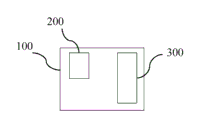
图1B图示了根据本发明的设备的示意图; Figure 1B illustrates a schematic diagram of an apparatus according to the present invention;
图2图示了组播传输; Figure 2 illustrates a multicast transmission;
图3A图示了根据本发明一个实施例的优化的数据传输的流程图; FIG. 3A illustrates a flowchart of optimized data transfer according to one embodiment of the present invention;
图3B图示了根据图3A所示实施例的修改形式的优化的数据传输的流程图; Figure 3B illustrates a flow diagram of optimized data transfer according to a modification of the embodiment shown in Figure 3A;
图4图示了根据本发明另一实施例的优化的数据传输的流程图; FIG. 4 illustrates a flowchart of optimized data transmission according to another embodiment of the present invention;
图5A图示了户外照明远端管理系统中节点的空间分布;和 Figure 5A illustrates the spatial distribution of nodes in the outdoor lighting remote management system; and
图5B示出了图示节点到数据收集方节点的跳距的无线网状网络示意图。 Figure 5B shows a schematic diagram of a wireless mesh network illustrating the hop distances of nodes to data collector nodes.
具体实施方式 Detailed ways
本发明的优选应用是致动器网络、传感器网络或者照明系统,诸如户外照明系统(例如,用于街道、停车场和公共区)和用于一般区域照明的室内照明系统(例如,用于商场、体育馆、停车场、车站、隧道等)。在下文中,将使用用于街道照明的户外照明系统的示例进一步对本发明进行解释,然而,其并不局限于该应用。在照明控制领域,经由射频网络技术对户外照明器进行远端管理已经受到越来越多的关注,特别是具有用于200个照明器以上的区段的大规模安装适用性的解决方案。 Preferred applications of the invention are actuator networks, sensor networks or lighting systems, such as outdoor lighting systems (e.g. for streets, parking lots and public areas) and indoor lighting systems for general area lighting (e.g. for shopping malls) , stadiums, parking lots, stations, tunnels, etc.). In the following, the invention will be further explained using an example of an outdoor lighting system for street lighting, however, it is not limited to this application. In the field of lighting control, remote management of outdoor luminaires via radio frequency network technology has received increasing attention, especially solutions with large-scale installation applicability for sections of more than 200 luminaires.
在图1A中,示出了具有网状拓扑的典型网络。多个节点10(N)通过无线通信路径40互相连接。一些节点10用作数据收集方节点50(N/DC),其经由单跳或多跳传输从周围节点10接收数据分组并且将它们传送至控制中心60,反之亦然。因此,数据收集方节点50可以以节点10和控制中心60之间的网关的方式运行。节点10和数据收集方节点50之间的无线通信路径40可以由RF传输所构成,而数据收集方节点50和控制中心60之间的连接70可以使用互联网、移动通信网络、无线电系统或者其它有线或无线数据传输系统。
In Fig. 1A, a typical network with a mesh topology is shown. A plurality of nodes 10 (N) are connected to each other by a
在用于户外照明控制的远端管理系统中,通信是非常不对称的。大多数业务由节点10所生成,例如向控制中心60报告其状态、其调光概况 (profile)、传感器数值或电力使用。其它业务由从控制中心60到不同节点10的控制命令所构成,例如用于调节调光模式或开关灯具。因此,大多数业务由N:1业务(单播)所构成,而从控制中心60到节点10的业务则由单播、组播或广播模式的1:N业务组成。此外,照明器节点10的数量在诸如街道照明系统的户外照明系统中极高。因此,网络大小非常庞大,特别是与通常包含少于200个节点的普通无线网状网络相比时更是如此。此外,节点10由于成本考虑而通常具有有限的处理能力,从而照明器节点10中的处理和存储器资源将是有限的。因此,用于在单个节点10之间传送数据分组的通信协议应当考虑有限资源以便进行有效且快速的数据分组传输。此外,与其它所谓的ad-hoc网状网络相比,用于户外照明控制网络的远端管理系统是静态的,即节点10并不移动。而且,所有节点10可以连接至主电源。结果,网络变化将主要是由于环境变化,例如交通。如果节点10是静止的,则例如GPS坐标的节点10的物理位置在系统中可以是已知的,这使得能够进行基于地理或位置的路由。此外,户外照明系统的远端管理并不需要高的数据速率。这意味着大部分数据业务由例如,状态报告数据、统计数据、传感器数据等的非时间关键数据分组所组成。然而,具有一些情形,其中针对某种类型的消息或数据分组(时间关键数据分组)需要低的响应时间。例如,当检测到交通事故时,能够对相对应区的节点10进行控制以立即切换至全功率。
In a remote management system for outdoor lighting control, communication is very asymmetric. Most traffic is generated by the
在图1B中,示出了根据本发明的设备100。设备100可以与无线多跳网状网络的节点10、数据收集方节点50或控制中心60相关联。设备100包括控制单元200。此外,节点10、数据收集方节点50或控制中心60分别或者设备100包括用于经由无线通信路径40(例如,经由RF传输)传送或接收数据分组的收发单元300。由于RF传输并不需要高的传输功率并且易于实施和部署,所以使用该设备设置并运营网络的成本会降低。这对于例如用于照明系统的RF远端管理网络的大型RF网络而言是特别重要的。然而,数据分组传输可以可替换地使用红外通信、自由空间可见光通信或电力线路通信。
In Fig. IB, a
如图2所示,从发送方A到多个网络节点10中的若干具体接收方B的数据分组传输可以作为组播(箭头)执行。发送方A或至少一个接收方B也可以被称作数据收集方节点50或控制中心60。然而,优选地,从数据收集方节点50到相应照明器节点10的数据分组传输通过洪泛来执行,其中所有数据分组被网络中的所有照明器节点10所转发。该数据分组至少包含与发送方A以及一个或多个目的地节点10或接收方B相关的信息。该数据分组随后由至少一个目的地节点10进行解码。对于从照明器节点10到数据收集方节点50的数据分组传输而言,基于路由的解决方案是优选的。优选地,使用前摄式路由结构,这是因为定期使用到数据收集器节点50的路线。在前摄式路由结构中,路由表存储在每个节点10中,其指示哪个相邻节点10能够作为指向数据收集方节点50的连接。因此,数据分组可以以非常有效且快捷的方式被发送至最接近的数据收集方节点50。有利地,每个节点10保留与作为可替换路线的多个下行链路相邻节点10相关的信息以便提高可靠性。如果一个相邻节点10由于强烈干扰或完全故障而无法到达,则路由协议具有将数据分组路由至数据收集方节点50的另外选择。
As shown in Fig. 2, the transmission of data packets from a sender A to several specific receivers B among a plurality of
因此,在无线网络中,通过广播或组播传输数据分组能够有效实现相同数据分组到多个节点10(群组或者甚至所有节点10)的传输(见图2)。如果需要传递保证以便确认成功传输,则以确认模式执行广播或组播传输,即已经接收到数据分组的接收方B通过向发送方A传送确认(ACK)来确证成功传输。然而,确认模式的一大缺陷在于确认数据分组几乎不包含有效载荷,但是仍然需要完整的网络层和MAC层报头,因此造成网络过载。这意味着确认数据分组的开销与其它数据分组相比非常高,并且确认传输因此在许多情况下占据了大量的可用有效载荷。因此,根据图3所示的本发明的一个实施例,多个独立确认能够被整合为一个应答批次。 Therefore, in a wireless network, transmission of data packets by broadcast or multicast effectively enables the transmission of the same data packet to multiple nodes 10 (groups or even all nodes 10 ) (see FIG. 2 ). If a delivery guarantee is required in order to confirm a successful transmission, the broadcast or multicast transmission is performed in acknowledged mode, i.e. receiver B, which has received the data packet, confirms the successful transmission by sending an acknowledgment (ACK) to sender A. However, a big drawback of the acknowledgment mode is that the acknowledgment data packet contains almost no payload, but still requires a complete network layer and MAC layer header, thus overloading the network. This means that the overhead of an acknowledgment data packet is very high compared to other data packets, and the acknowledgment transmission thus occupies a large amount of the available payload in many cases. Thus, according to one embodiment of the invention shown in FIG. 3, multiple independent acknowledgments can be combined into one reply batch.
在图3A中,针对确认对应于从相同发送方A所接收的数据分组的情形示出了用于整合若干确认的实施例。当接收方B从发送方A接收数据分组时(S300),无论是否接收到更多数据分组,接收方B都等待预定时间(S301)。这使得整合更可能发生。因此,接收方B延缓对在该预定时间内所接收的数据分组的确认,并且存储相应确认(S302)。在预定时间过去之后,接收方B确定是否已经从相同发送方A接收到了若干数据分组。在该预定时间间隙内从相同发送方A接收了若干数据分组的情况下(S303),在S304将针对这些数据分组的确认聚集为一个应答批次或确认批次(ACK批次)。该ACK批次随后被传送或单播传输至该一个发送方A(S305)。 In Fig. 3A, an embodiment for combining several acknowledgments is shown for the case where the acknowledgments correspond to data packets received from the same sender A. When the receiver B receives data packets from the sender A (S300), the receiver B waits for a predetermined time regardless of whether more data packets are received (S301). This makes consolidation more likely to happen. Therefore, the receiver B defers acknowledgment of the data packets received within the predetermined time, and stores the corresponding acknowledgment (S302). After a predetermined time has elapsed, receiver B determines whether several data packets have been received from the same sender A. In case several data packets are received from the same sender A within the predetermined time slot ( S303 ), acknowledgments for these data packets are aggregated into one reply batch or acknowledgment batch (ACK batch) at S304 . The ACK batch is then transmitted or unicast to the one sender A (S305).
在图3B中,针对从不同发送方A接收到若干数据分组的情况图示出类似过程。在已经接收到数据分组之后(S300),无论是否接收到更多数据分组,接收方B都等待预定时间间隙(S301),延缓并存储该时间期间所接收的确认(S302)。当确定了在预定时间间隙内从不同发送方A接收到若干数据分组时(S313),接收方B能够确定一个或多个适当的发送方群组(S314)。这可以基于所接收的数据分组、基于所要传送的应答、基于发送方A在网络内的位置、基于发送方A到接收方B的跳距或者基于发送方A的网络地址。然而,例如在发送方A的群组被预先确定并存储在接收方B中时,确定适当群组的步骤(S314)也可以被省略。最后,针对一个适当群组的发送方A的所接收数据分组的确认被整合为一个应答批次或ACK批次(S315),并且该ACK批次随后被传送或组播传输至该群组的所有发送方A(S316)。因此,接收方B对所接收数据分组的发送方A进行分组或归类。这在控制中心60或数据收集方节点50必须对从多个节点10所发送的多个数据分组进行确认时是特别有用的。因此,根据基础的通信协议,可能将这样的应答批次映射至具有网络效率的组播群组。可能地,并非所接收数据分组的所有发送方A都能够被分配至发送方的一个适当群组。在这种情况下,它们的确认可以被分开发送。此外,所接收数据分组的发送方A可能无法全部都被分配至相同的适当的发送方群组。因此,可以传送若干ACK批次,每个发送方群组一个ACK批次。
In Fig. 3B, a similar process is illustrated for the case where several data packets are received from different senders A. After having received a data packet (S300), the recipient B waits for a predetermined time slot (S301), whether or not more data packets are received, deferring and storing acknowledgments received during this time (S302). When it is determined that several data packets have been received from different sender A within a predetermined time slot (S313), receiver B can determine one or more suitable sender groups (S314). This can be based on the data packet received, on the reply to be transmitted, on the location of sender A within the network, on the hop distance from sender A to receiver B or on the network address of sender A. However, for example, when the group of the sender A is predetermined and stored in the receiver B, the step of determining an appropriate group ( S314 ) may also be omitted. Finally, the acknowledgments of the received data packets of sender A for an appropriate group are consolidated into an acknowledgment batch or ACK batch (S315), and the ACK batch is then transmitted or multicast to the group's All senders A (S316). Thus, receiver B groups or categorizes sender A of the received data packets. This is particularly useful when the
在以上所描述实施例的修改形式中,进一步确定所接收的数据分组是否涉及时间关键应答。在应答数据分组是非时间关键的情况下,可以选择大得多的等待周期,从而增大应答整合的可能性。因此,预定等待时间可以基于所要求的响应时间进行调节。在对多个所接收分组确定了不同应答间隙的情况下,可以选择最短的应答间隙。通过这些手段,能够甚至更为有效地节省网络资源。 In a modification of the embodiment described above, it is further determined whether the received data packet relates to a time critical reply. In the case of reply data packets which are not time critical, a much larger waiting period can be chosen, thereby increasing the probability of reply consolidation. Thus, the predetermined waiting time can be adjusted based on the required response time. In case different acknowledgment gaps are determined for multiple received packets, the shortest acknowledgment gap may be selected. By these means, network resources can be saved even more effectively.
以上所描述并且在图3A和3B中图示的实施例并不局限于确认的整合。当通过将若干应答数据分组整合为一个应答批次传送其它数据分组时也可以节省报头。所指出的是,应答批次以及确认批次分别包括多个独立应答或确认。以这种方式,节省了网络资源并减少了数据业务。 The embodiments described above and illustrated in FIGS. 3A and 3B are not limited to confirmed integration. Headers can also be saved when transmitting other data packets by combining several reply data packets into one reply batch. It is pointed out that reply batches and confirmation batches respectively comprise a plurality of independent replies or confirmations. In this way, network resources are saved and data traffic is reduced.
在确认模式中的组播传输或广播传输的情况下所出现的进一步的问题在于可能在发送方A处出现的所谓的确认风暴,其导致数据冲突和丢失。因此,根据本发明的另一个实施例,如图4所示,由每个接收方B对数据确认另外进行随机调度。 A further problem that arises in the case of multicast or broadcast transmissions in acknowledged mode is that so-called acknowledgment storms can occur at sender A, which lead to data collisions and loss. Therefore, according to another embodiment of the present invention, as shown in FIG. 4 , each receiver B additionally performs random scheduling on the data acknowledgment.
在图4中,针对确认传输而示例性图示了根据本发明另一个实施例的优化的数据传输。在接收方B已经从发送方A接收到组播或广播数据分组(S40)之后,每个接收方B确定一个应答间隙(S41)。在确定了应答间隙(S41)之后,接收方B在该应答间隙内随机选择时隙(S42)并且在所选择的时隙中向发送方A传送确认数据分组(S43),其确证所接收数据分组的成功接收。 In FIG. 4 , an optimized data transmission according to another embodiment of the invention is schematically illustrated for acknowledgment transmission. After receivers B have received multicast or broadcast data packets from sender A (S40), each receiver B determines an acknowledgment gap (S41). After determining the acknowledgment gap (S41), the receiver B randomly selects a time slot within the acknowledgment gap (S42) and transmits an acknowledgment data packet to the sender A in the selected time slot (S43), which confirms the received data Successful reception of the packet.
该应答间隙可以基于被发送了组播或广播数据分组的接收方B的数量来确定。例如,如果数据分组被发送至大量接收方B,则该应答间隙可以被确定为比将数据分组仅发送至数个接收方B的应答时间更长。接收方B的数量可以针对某种类型的数据分组预先确定。例如,在使用群组地址来组播传输数据分组时,该群组地址可以指具有预定数量的节点10的接收方B的预定群组。特别地,当由数据收集方节点50或控制中心60组播或广播传输数据请求消息时,每个接收方节点10可以获知将对所接收数据请求进行响应的接收方B的数量。还可以基于所接收数据分组中包括的信息来确定应答间隙。因此,发送方A可以获知或估计群组中接收方B的数量并且将该信息添加至组播或广播数据分组。除此之外或可替换地,发送方A可以估计或确定当前或预期的网络负载。可能地,应答间隙被确定为对于每个接收方B是类似的。然而,由于每个接收方B随机从应答间隙挑出时隙并且在所选择时隙中传送其应答数据分组,所以较不可能在发送方节点10处出现数据冲突。当然,应答间隙越长或者接收方节点B的数量越低,就越不可能出现数据冲突。因此,减少了数据丢失并且能够避免重传。此外,步骤S301的预定时间可以被定义为使得其处于指定截止期限内或者处于如S41中所确定的应答间隙内。可能地,S301中预先确定的等待时间在该应答间隙内随机进行选择。
The acknowledgment gap may be determined based on the number of recipients B to which the multicast or broadcast data packet was sent. For example, if data packets are sent to a large number of recipients B, the acknowledgment gap may be determined to be longer than the acknowledgment time if the data packets are sent to only a few recipients B. The number of recipients B can be predetermined for a certain type of data packet. For example, when a group address is used for multicast transmission of data packets, the group address may refer to a predetermined group of receivers B having a predetermined number of
在另外的实施例中,发送方A随数据分组一起传送最迟何时必须传送例如确认的应答数据分组的截止期限。随后,应答间隙将被确定为从接收数据分组的时间到预定截止期限的时间间隙。每个接收方B在该应答间隙内,即截止期限之前,随机选择时隙并且随后在所选择的时隙内传送其应答数据分组。可替换地,所接收的数据分组包括时间标签,例如指示由发送方A完成数据分组或传送数据分组的时间,每个接收方B随后使用它作为基准以便确定应答间隙。例如,例如可以根据所接收数据分组的类型而在每个节点10中存储预定时间间隙,以使得每个接收方B能够利用时间标签和预定时间间隙来容易地确定必须在其之前发送针对所接收数据分组的应答数据分组的截止期限。因此,通过在数据分组中包括截止期限或时间标签而使得能够确定截止期限并因此确定应答间隙,发送方A能够对数据业务进行整形。可能地,发送方A在设置截止期限时考虑当前或期望的网络负载。通过指定截止期限,发送方A能够另外对重传计时器的调节进行优化,因为其自己决定最后的应答数据分组预计最迟必须为何时。
In a further exemplary embodiment, sender A transmits with the data packet a deadline at the latest when a reply data packet, eg an acknowledgment, must be transmitted. Subsequently, the acknowledgment gap will be determined as the time gap from the time the data packet is received to a predetermined deadline. Within this acknowledgment gap, ie before the deadline, each recipient B randomly selects a time slot and then transmits its acknowledgment data packet in the selected time slot. Alternatively, the received data packets include a time stamp, eg indicating the time at which the data packet was completed or transmitted by the sender A, which each recipient B then uses as a reference for determining the acknowledgment gap. For example, a predetermined time slot can be stored in each
当然,图4所示的处理并不局限于数据确认。与之相比,该处理能够适用于对针对组播或广播分组的任意响应进行调度,例如针对组播数据请求消息的应答。通过这些手段,以ad-hoc的方式在每个接收方B本地创建了针对所接收组播数据分组的应答的随机化的调度,因此使得网络中例如发送方A处数据冲突的概率最小化。 Of course, the processing shown in FIG. 4 is not limited to data confirmation. In contrast, the process can be adapted to schedule any response to a multicast or broadcast packet, such as an acknowledgment to a multicast data request message. By these means, a randomized schedule of replies to received multicast data packets is created locally at each receiver B in an ad-hoc manner, thus minimizing the probability of data collisions in the network eg at sender A.
在本发明另外的实施例中,在另外考虑到网络拓扑的情况下对数据分组特别是非时间关键数据分组的传输进行调度,以便使得数据冲突以及随后的数据分组丢失最小化。该传输调度可以被应用于N: 1或1:N通信模式,例如应用于从数据收集方节点50到多个节点10或者从多个节点10到数据收集方节点50的通信链路。然而,即使从节点10到数据收集方节点50或者到控制中心60的通信在相反方向中更具效率,仍然存在改进的空间和必要,因为要在RF远端管理系统中进行传输的最大信息块将是来自节点10的统计数据或状态报告信息。因此,该实施例优选地应用于从节点10到数据收集方节点50或控制中心60的N:1通信,并且因此将使用该示例进行解释。该传输调度可以基于发送方A在网络内的位置、发送方A到数据收集方节点50的跳距以及发送方A的网络地址中的至少一个。
In a further embodiment of the invention, the transmission of data packets, in particular non-time-critical data packets, is scheduled taking additional account of the network topology in order to minimize data collisions and subsequent loss of data packets. The transmission schedule may be applied to an N:1 or 1:N communication mode, for example to a communication link from the
当传输调度基于发送方A在网络内的位置时,可以定义不同区以使得来自不同区域的节点10的通信链路40并不互相干扰。这避免了网络中某些瓶颈区特别是数据收集方节点50附近的过载。发送方节点10可以通过咨询其网络或MAC地址而查明其位置。传输调度可以由控制中心60或数据收集方节点50所建立并分布,并且指示期望不同网络区的节点10何时向控制中心60或数据收集方节点50报告其数据。可替换地,控制中心60或数据收集方节点50可以基于节点10在网络中的位置对它们进行轮询。
When the transmission schedule is based on the location of sender A within the network, different zones may be defined so that communication links 40 from
在图5A中,示出了街道照明系统,其具有沿街道分布的照明器节点10。因此,当照明器节点10向数据收集方节点50报告其例如电力状态、调光状态、环境亮度等的统计数据时,可以基于空间或地理划分对数据传输进行调度。可替换地,基于道路网络对照明器节点10进行分组可能是有利的,即处于相同街道的照明器节点10同时报告它们的数据。优选地,距数据收集方节点50更远的照明器节点10在时间上比接近于数据收集方节点50的照明器节点10更晚传送其数据分组。
In Fig. 5A a street lighting system is shown having
在以上所描述实施例的修改形式中,传输调度基于从照明器节点10到数据收集方节点50的跳距。如图5B所示,无线网状网络中使用多跳传输的照明器节点10可以通过其到数据收集方节点50的跳距进行分类。跳距涉及从发送方节点10向数据收集方节点50传送数据分组所必须的跳数。例如,半径502和半径501之间的照明器节点10将利用两跳传送其数据分组,而处于半径501以内的照明器节点10能够利用一跳传送其数据分组。跳距或跳数信息可以在照明器节点10的网络层获取。在一个示例性实施例中,数据分组以渐进方式从以其到数据收集方节点50的跳距所定义的区域进行传送。优选地,低跳距区域(例如,处于半径501以内)被调度为首先报告或者简单地首先被数据收集方节点50所轮询。通过这些手段,确保了一旦低跳距区域的照明器节点10已经报告了其数据分组,它们就仅作为转发来自较高跳距区中的照明器节点10的数据分组的路由器。通过这些手段,在正常情况下将非常可能由于网络拓扑而过载的低跳距区域中的照明器节点10可以得以解脱。
In a modification of the embodiment described above, the transmission schedule is based on the hop distance from the
可能地,基于发送方A在网络内的位置、发送方A到数据收集方节点50(或网络控制器60)的跳距以及发送方A的网络地址中至少一个的数据分组传输的空间调度与通过在应答间隙内随机选择时隙或者通过将应答整合为一个应答批次所进行的时间调度相结合。通过这些手段,在时间以及不同网络区域上对网络负载进行了平衡。 Possibly, spatial scheduling of data packet transmission based on at least one of sender A's location within the network, sender A's hop distance to data collector node 50 (or network controller 60), and sender A's network address is related to Combined with time scheduling by random selection of time slots within the acknowledgment gap or by grouping acknowledgments into an acknowledgment batch. By these means, the network load is balanced over time and over different network areas.
在以上所描述实施例进一步的修改形式中,传输调度基于照明器节点10的网络地址。因此,在已经接收到例如控制中心60或数据收集方节点50所广播或组播传输的报告请求消息之后,照明器节点10可以在不同时刻传送其应答数据分组。该广播或组播消息可以包含用作所有进行报告的照明器节点的共用基准的时间标签。基于该基准时间以及特定于节点或特定于网络地址的延迟,每个照明器节点10能够确定其个体传输时间。这进一步使得冲突的风险最小化,同时来自所有照明器节点10的数据分组都在相对短的时间段内被接收。这在照明器节点以N:1通信模式向数据收集方节点50或控制中心60报告状态数据等时是特别有利的。在以动态方式分布网络地址的情况下,可以在每个照明器节点10中存储具有特定于每个网络地址的延迟的调度表,并且可以基于当前要求向照明器节点10动态分配网络地址,因此确定个体传输时间。
In a further modification of the embodiment described above, the transmission schedule is based on the network address of the
在与传输调度实施例相类似的本发明另外的实施例中,由MAC层或网络层引入了用于数据分组重传的回退延迟。回退延迟是指后续传输尝试之间的延迟。例如,在传输失败后,发送方节点A可以通过回退延迟而延后数据分组的重传,从而另一节点可以完成其传输,因此较少了冲突的可能。因此,回退延迟可以包括介质访问尝试的回退时间。这里,介质访问尝试涉及在介质可被自由访问时数据分组的载波侦听和随后的传送或重传的处理。因此,介质访问尝试的回退时间表示后续介质访问尝试之间的时间间隙。该回退延迟基于节点10在网络内的位置、节点10和数据收集方节点50之间的跳距以及节点10的网络地址中的至少一个进行设置。优选地,在MAC层和网络层中的至少一个中,回退延迟取决于节点10和数据收集方节点50之间的距离。特别地,MAC层回退延迟和网络层回退延迟中的至少一个对于越来越远的节点10变得更大。在这种情况下,可以迫使距离数据收集方节点50更远的节点10比接近数据收集方节点50的节点10更多地传播其数据分组。通过这些手段,远程节点并不会在更接近数据收集方节点50的节点10处导致过载。因此,网络节点10的数据业务生成得以被整形从而避免了数据收集方节点50附近的拥塞。有利地,该实施例连同任意一个以上所描述的实施例一起使用。
In a further embodiment of the invention similar to the transmission scheduling embodiment, a back-off delay for data packet retransmission is introduced by the MAC layer or the network layer. Backoff delay is the delay between subsequent transmission attempts. For example, after a transmission failure, the sender node A can delay the retransmission of the data packet by backing off the delay so that another node can complete its transmission, thus reducing the possibility of collision. Accordingly, backoff delays may include backoff times for media access attempts. Here, a medium access attempt involves the process of carrier sensing and subsequent transmission or retransmission of data packets when the medium is freely accessible. Therefore, the backoff time of a media access attempt represents the time gap between subsequent media access attempts. The backoff delay is set based on at least one of the location of the
优选地,以上所描述的涉及数据分组传送延迟的实施例被应用于非时间关键数据和/或对跨网络的通信延迟一致性(homogeneity)没有严格要求的数据传输。例如,这样的非时间关键数据可以是指网络节点以规律的时间间隙所报告的统计数据或状态信息,诸如所消耗能量、点亮小时数、运行状态、当前或平均调光模式、所感应的环境亮度等。与之相比,时间关键信息可以是指针对在紧急状况期间向网络节点10发送的控制消息的确认。
Preferably, the embodiments described above relating to data packet transfer delays are applied to non-time critical data and/or data transfers where there is no strict requirement on the homogeneity of communication delays across the network. For example, such non-time-critical data may refer to statistics or status information reported by network nodes at regular time intervals, such as energy consumed, hours lit, operating status, current or average dimming mode, sensed ambient brightness, etc. In contrast, time-critical information may refer to acknowledgments for control messages sent to the
显然,以上所描述的实施例能够以各种方式进行结合。利用以上所描述的将应答整合为应答批次,能够降低局部和全局网络负载并且能够避免数据分组冲突以及后续的数据丢失。因此,对无线网状网络提供了允许高效且可靠的数据传输的路由手段,提供了高度可扩展性以及快速且容易的配置并且能够进行自行配置和自行修复。 Obviously, the embodiments described above can be combined in various ways. With the above described consolidation of replies into reply batches, local and global network load can be reduced and data packet collisions and subsequent data loss can be avoided. Thus, wireless mesh networks are provided with routing means that allow efficient and reliable data transmission, provide high scalability and fast and easy configuration and are capable of self-configuration and self-healing.
Claims (15)
Applications Claiming Priority (3)
| Application Number | Priority Date | Filing Date | Title |
|---|---|---|---|
| EP10186036.9 | 2010-10-01 | ||
| EP10186036A EP2437428A1 (en) | 2010-10-01 | 2010-10-01 | Device and method for load balancing for data packet transmissions in wireless networks |
| PCT/IB2011/054288 WO2012042495A1 (en) | 2010-10-01 | 2011-09-29 | Device and method for load balancing for data packet transmissions in wireless networks |
Publications (1)
| Publication Number | Publication Date |
|---|---|
| CN103155482A true CN103155482A (en) | 2013-06-12 |
Family
ID=43085846
Family Applications (1)
| Application Number | Title | Priority Date | Filing Date |
|---|---|---|---|
| CN2011800476915A Pending CN103155482A (en) | 2010-10-01 | 2011-09-29 | Device and method for load balancing for data packet transmissions in wireless networks |
Country Status (6)
| Country | Link |
|---|---|
| US (1) | US9526030B2 (en) |
| EP (2) | EP2437428A1 (en) |
| JP (1) | JP5992421B2 (en) |
| CN (1) | CN103155482A (en) |
| TW (1) | TW201218800A (en) |
| WO (1) | WO2012042495A1 (en) |
Cited By (7)
| Publication number | Priority date | Publication date | Assignee | Title |
|---|---|---|---|---|
| CN103763741A (en) * | 2013-11-13 | 2014-04-30 | 北京青创智通科技有限公司 | Wireless communication method and system of intelligent parking lot |
| CN105493576A (en) * | 2013-08-31 | 2016-04-13 | 高通股份有限公司 | Speed frame exchange rules |
| CN107005449A (en) * | 2014-11-20 | 2017-08-01 | 国立大学法人名古屋大学 | Communication system and communicator |
| CN107210851A (en) * | 2015-01-27 | 2017-09-26 | 高通股份有限公司 | Group acknowledgment/negative acknowledgment and triggered GACK/channel status information |
| CN110519310A (en) * | 2018-05-21 | 2019-11-29 | 浙江宇视科技有限公司 | A kind of store tasks distribution method and device |
| CN116208193A (en) * | 2021-12-01 | 2023-06-02 | 杭州联芯通半导体有限公司 | Method for wireless channel frequency hopping synchronization in PLC and RF integrated network |
| US12574069B2 (en) | 2021-12-01 | 2026-03-10 | Hangzhou Lianxintong Semiconductor Co., Ltd. | Method for wireless channel frequency hopping synchronization in PLC-RF integrated network |
Families Citing this family (28)
| Publication number | Priority date | Publication date | Assignee | Title |
|---|---|---|---|---|
| EP2437440A1 (en) | 2010-10-01 | 2012-04-04 | Koninklijke Philips Electronics N.V. | Device and method for delay optimization of end-to-end data packet transmissions in wireless networks |
| US9319184B2 (en) | 2011-02-01 | 2016-04-19 | Qualcomm Incorporated | Multiple wireless communication device acknowledgements |
| US9300442B2 (en) | 2011-07-21 | 2016-03-29 | Qualcomm Incorporated | Allowing a rejected wireless communication device access to a communication channel |
| CN102665289B (en) * | 2012-04-24 | 2014-09-10 | 南京邮电大学 | Greedy algorithm and optimization method for query message propagation in GEAR protocol |
| US9608789B2 (en) | 2012-05-11 | 2017-03-28 | Interdigital Patent Holdings, Inc. | Method and apparatus for transmitting acknowledgements in response to received frames |
| EP2879411B1 (en) * | 2012-07-25 | 2017-05-17 | Fujitsu Limited | Sensor node, data processing system, and data processing method |
| CN102802205A (en) * | 2012-09-01 | 2012-11-28 | 北京理工大学 | Load balancing routing method for wireless sensor network |
| CN105247589A (en) * | 2013-05-24 | 2016-01-13 | 富士通株式会社 | Communication method, system, and communication program |
| EP2903207A1 (en) * | 2014-01-30 | 2015-08-05 | Proximetry Poland Sp. z o.o. | Systems and methods for topology aware data multicast |
| JP2016076816A (en) * | 2014-10-06 | 2016-05-12 | 上田日本無線株式会社 | Wireless device, wireless communication system and trunk wireless device |
| JP6403556B2 (en) * | 2014-12-03 | 2018-10-10 | 三菱電機株式会社 | Gateway device, smart meter and wireless mesh network |
| US10462016B2 (en) * | 2015-01-19 | 2019-10-29 | Nec Corporation | Communication control system, communication control method, and recording medium |
| US9749723B2 (en) * | 2015-03-05 | 2017-08-29 | Huawei Technologies Co., Ltd. | System and method for optical network |
| TWI580227B (en) * | 2015-06-17 | 2017-04-21 | 財團法人工業技術研究院 | Routing gateway selecting method, controller and vehicles network system |
| JPWO2017138136A1 (en) * | 2016-02-12 | 2018-02-15 | 三菱電機株式会社 | Communication apparatus and communication method |
| JP6060299B1 (en) * | 2016-05-26 | 2017-01-11 | オーデリック株式会社 | Lighting system |
| US10797897B2 (en) | 2017-09-27 | 2020-10-06 | International Business Machines Corporation | Multi-step remote packet broadcasting/multicasting mechanism for cognitive systems |
| US10833923B2 (en) | 2017-10-26 | 2020-11-10 | Skylo Technologies Inc. | Dynamic multiple access for distributed device communication networks with scheduled and unscheduled transmissions |
| US10306442B1 (en) * | 2018-01-16 | 2019-05-28 | Skylo Technologies Inc. | Devices and methods for specialized machine-to-machine communication transmission network modes via edge node capabilities |
| US10944669B1 (en) | 2018-02-09 | 2021-03-09 | GoTenna, Inc. | System and method for efficient network-wide broadcast in a multi-hop wireless network using packet echos |
| US11108843B2 (en) | 2018-04-09 | 2021-08-31 | Lumenradio Ab | Streaming using constrained dynamic multi-hop network |
| WO2019209816A1 (en) | 2018-04-24 | 2019-10-31 | Carrier Corporation | Automated routing in a mesh network of wireless messaging devices |
| WO2019209851A1 (en) | 2018-04-24 | 2019-10-31 | Carrier Corporation | Automated routing in a mesh network of wireless messaging devices |
| WO2020023909A1 (en) | 2018-07-27 | 2020-01-30 | GoTenna, Inc. | Vine™: zero-control routing using data packet inspection for wireless mesh networks |
| CN114467285B (en) | 2019-10-01 | 2023-11-28 | 昕诺飞控股有限公司 | Control module for controlling intelligent household equipment |
| CN114731303B (en) | 2019-11-29 | 2024-06-18 | 昕诺飞控股有限公司 | Networking system having a control device and a plurality of controlled devices, and device and method used by the system |
| US12052782B2 (en) | 2020-12-23 | 2024-07-30 | ITRON, Global Sarl | Unicast discovery of forwarders in a multicast group |
| US11758369B2 (en) * | 2020-12-23 | 2023-09-12 | Itron Global Sarl | Discovery of forwarders to mitigate asymmetric links in a multicast group |
Citations (6)
| Publication number | Priority date | Publication date | Assignee | Title |
|---|---|---|---|---|
| US20050220064A1 (en) * | 2002-05-06 | 2005-10-06 | Frank Hundscheidt | Multi-user multimedia messaging services |
| CN1771699A (en) * | 2003-04-11 | 2006-05-10 | 艾利森电话股份有限公司 | Contention-based forwarding combined with multi-user detection capability |
| CN1904868A (en) * | 2005-07-11 | 2007-01-31 | 商辉达股份有限公司 | Combining packets for a packetized bus |
| CN1938979A (en) * | 2004-01-28 | 2007-03-28 | 高通股份有限公司 | Method and apparatus for providing acknowledgment and distribution messages using a single channel |
| CN101027914A (en) * | 2004-04-30 | 2007-08-29 | 维迈实验室有限公司 | Multi-to-multi point ad-hoc wireless data transfer protocol |
| US20100246600A1 (en) * | 2009-03-27 | 2010-09-30 | Qualcomm Incorporated | Method and system for reducing header information in communication systems |
Family Cites Families (22)
| Publication number | Priority date | Publication date | Assignee | Title |
|---|---|---|---|---|
| US6507562B1 (en) * | 1998-06-30 | 2003-01-14 | Sun Microsystems, Inc. | Dynamic optimization for receivers using distance between a repair head and a member station in a repair group for receivers having a closely knit topological arrangement to locate repair heads near the member stations which they serve in tree based repair in reliable multicast protocol |
| JP2003134128A (en) * | 2001-10-23 | 2003-05-09 | Japan Radio Co Ltd | Construction, restoration, reconstruction and operation method of multi-stage transmission network |
| US7339897B2 (en) | 2002-02-22 | 2008-03-04 | Telefonaktiebolaget Lm Ericsson (Publ) | Cross-layer integrated collision free path routing |
| DE10219701B4 (en) * | 2002-05-02 | 2006-08-31 | Eads Astrium Gmbh | Method for interleaving navigation data |
| US20040236829A1 (en) * | 2003-05-13 | 2004-11-25 | Yikang Xu | Reliable delivery of multi-cast conferencing data |
| US20050111416A1 (en) * | 2003-11-24 | 2005-05-26 | Boris Ginzburg | Method, system and device of fragmentation with group acknowledgement in wireless networks |
| JP2006060408A (en) | 2004-08-18 | 2006-03-02 | Nippon Telegr & Teleph Corp <Ntt> | Radio packet communication method and radio station |
| US7474630B2 (en) * | 2004-12-07 | 2009-01-06 | Palo Alto Research Center Incorporated | Coordinated convergecast for AD HOC wireless networks |
| US20060187836A1 (en) | 2005-02-18 | 2006-08-24 | Stefan Frey | Communication device and method of prioritizing transference of time-critical data |
| KR101226581B1 (en) | 2005-03-14 | 2013-01-28 | 나노라디오 에이비 | Wlan transmit scheduler comprising an accelerated back-off function |
| US7843819B1 (en) * | 2005-03-29 | 2010-11-30 | Avaya Inc. | Protocol for wireless multi-channel access control |
| US7693175B1 (en) * | 2005-04-21 | 2010-04-06 | Avaya Inc. | Prioritized access in a multi-channel MAC protocol |
| US8526415B2 (en) * | 2005-09-30 | 2013-09-03 | Robert Bosch Gmbh | Method and system for providing acknowledged broadcast and multicast communication |
| US7978725B2 (en) | 2006-03-06 | 2011-07-12 | Cisco Technology, Inc. | Dynamic modification of contention-based transmission control parameters achieving load balancing scheme in wireless mesh networks |
| US7983685B2 (en) * | 2006-12-07 | 2011-07-19 | Innovative Wireless Technologies, Inc. | Method and apparatus for management of a global wireless sensor network |
| US7924766B2 (en) * | 2007-04-10 | 2011-04-12 | Mitsubishi Electric Research Labs, Inc. | Hybrid multiple access method and system in wireless networks |
| US8442531B2 (en) * | 2007-05-15 | 2013-05-14 | Nokia Corporation | Context transfers and multi-band operation for wireless networks |
| US7940669B2 (en) | 2007-06-15 | 2011-05-10 | Silver Spring Networks, Inc. | Route and link evaluation in wireless mesh communications networks |
| US20090086706A1 (en) | 2007-10-01 | 2009-04-02 | The Hong Kong University Of Science And Technology | Cross-layer multi-packet reception based medium access control and resource allocation |
| US7885244B2 (en) * | 2008-03-18 | 2011-02-08 | Mitsubishi Electric Research Laboratories, Inc. | Hybrid multiple access method and system in wireless networks with extended content free access period |
| ES2368385T3 (en) * | 2009-01-29 | 2011-11-16 | Lg Electronics Inc. | SIGNAL TRANSMISSION SCHEME FOR EFFECTIVE MANAGEMENT OF THE COMMON IMPROVED DEDICATED CHANNEL. |
| US8700796B2 (en) * | 2010-09-22 | 2014-04-15 | Qualcomm Incorporated | MAC data service enhancements |
-
2010
- 2010-10-01 EP EP10186036A patent/EP2437428A1/en not_active Ceased
-
2011
- 2011-09-29 CN CN2011800476915A patent/CN103155482A/en active Pending
- 2011-09-29 JP JP2013530847A patent/JP5992421B2/en not_active Expired - Fee Related
- 2011-09-29 WO PCT/IB2011/054288 patent/WO2012042495A1/en not_active Ceased
- 2011-09-29 EP EP11773889.8A patent/EP2622790A1/en not_active Withdrawn
- 2011-09-29 US US13/876,498 patent/US9526030B2/en not_active Expired - Fee Related
- 2011-09-30 TW TW100135679A patent/TW201218800A/en unknown
Patent Citations (6)
| Publication number | Priority date | Publication date | Assignee | Title |
|---|---|---|---|---|
| US20050220064A1 (en) * | 2002-05-06 | 2005-10-06 | Frank Hundscheidt | Multi-user multimedia messaging services |
| CN1771699A (en) * | 2003-04-11 | 2006-05-10 | 艾利森电话股份有限公司 | Contention-based forwarding combined with multi-user detection capability |
| CN1938979A (en) * | 2004-01-28 | 2007-03-28 | 高通股份有限公司 | Method and apparatus for providing acknowledgment and distribution messages using a single channel |
| CN101027914A (en) * | 2004-04-30 | 2007-08-29 | 维迈实验室有限公司 | Multi-to-multi point ad-hoc wireless data transfer protocol |
| CN1904868A (en) * | 2005-07-11 | 2007-01-31 | 商辉达股份有限公司 | Combining packets for a packetized bus |
| US20100246600A1 (en) * | 2009-03-27 | 2010-09-30 | Qualcomm Incorporated | Method and system for reducing header information in communication systems |
Non-Patent Citations (2)
| Title |
|---|
| BRIAN WHETTEN等: "An Overview of Reliable Multicast Broadcast Transport Protocol Ⅱ", 《IEEE NETWORK》 * |
| BRIAN WHETTEN等: "An Overview of Reliable Multicast Broadcast Transport Protocol Ⅱ", 《IEEE NETWORK》, no. 1, 31 December 2000 (2000-12-31), pages 37 - 47 * |
Cited By (14)
| Publication number | Priority date | Publication date | Assignee | Title |
|---|---|---|---|---|
| CN105493576A (en) * | 2013-08-31 | 2016-04-13 | 高通股份有限公司 | Speed frame exchange rules |
| CN103763741A (en) * | 2013-11-13 | 2014-04-30 | 北京青创智通科技有限公司 | Wireless communication method and system of intelligent parking lot |
| CN103763741B (en) * | 2013-11-13 | 2018-05-22 | 雷振山 | A kind of intelligent parking lot wireless communications method and system |
| CN107005449A (en) * | 2014-11-20 | 2017-08-01 | 国立大学法人名古屋大学 | Communication system and communicator |
| CN107005449B (en) * | 2014-11-20 | 2020-09-04 | 国立大学法人名古屋大学 | Communication system and communication device |
| US10554341B2 (en) | 2015-01-27 | 2020-02-04 | Qualcomm Incorporated | Group acknowledgement/negative acknowledgement and triggering GACK/channel state information |
| CN107210851A (en) * | 2015-01-27 | 2017-09-26 | 高通股份有限公司 | Group acknowledgment/negative acknowledgment and triggered GACK/channel status information |
| CN107210851B (en) * | 2015-01-27 | 2020-10-16 | 高通股份有限公司 | Group acknowledgement/negative acknowledgement and trigger GACK/channel state information |
| US11489628B2 (en) | 2015-01-27 | 2022-11-01 | Qualcomm Incorporated | Group acknowledgement/negative acknowledgement and triggering GACK/channel state information |
| CN110519310A (en) * | 2018-05-21 | 2019-11-29 | 浙江宇视科技有限公司 | A kind of store tasks distribution method and device |
| CN110519310B (en) * | 2018-05-21 | 2021-12-28 | 浙江宇视科技有限公司 | Storage task allocation method and device |
| CN116208193A (en) * | 2021-12-01 | 2023-06-02 | 杭州联芯通半导体有限公司 | Method for wireless channel frequency hopping synchronization in PLC and RF integrated network |
| CN116208193B (en) * | 2021-12-01 | 2024-02-06 | 杭州联芯通半导体有限公司 | Method for wireless channel frequency hopping synchronization in PLC and RF integrated network |
| US12574069B2 (en) | 2021-12-01 | 2026-03-10 | Hangzhou Lianxintong Semiconductor Co., Ltd. | Method for wireless channel frequency hopping synchronization in PLC-RF integrated network |
Also Published As
| Publication number | Publication date |
|---|---|
| WO2012042495A1 (en) | 2012-04-05 |
| US20130182566A1 (en) | 2013-07-18 |
| EP2437428A1 (en) | 2012-04-04 |
| JP5992421B2 (en) | 2016-09-14 |
| US9526030B2 (en) | 2016-12-20 |
| EP2622790A1 (en) | 2013-08-07 |
| TW201218800A (en) | 2012-05-01 |
| JP2013546218A (en) | 2013-12-26 |
Similar Documents
| Publication | Publication Date | Title |
|---|---|---|
| CN103119887B (en) | Device and method for scheduling data packet transmissions in wireless networks | |
| JP5992421B2 (en) | Device and method for load balancing data packets in a wireless network | |
| EP2622800B2 (en) | System for delay optimization of end-to-end data packet transmissions in wireless networks | |
| CN103222241B (en) | System and method for the data transfer of the node that is optimized to wireless mesh network | |
| JP4895006B2 (en) | Information distribution method and system in mobile ad hoc network | |
| CN103765992B (en) | Device and method for controlling a node of a wireless network | |
| WO2012140610A1 (en) | Hierarchical routing for wireless networks | |
| WO2012042454A1 (en) | Device and method for reducing delay of data packet transmissions in wireless networks | |
| Chen et al. | Spatial-Temporal relation-based Energy-Efficient Reliable routing protocol in wireless sensor networks | |
| WO2012042426A1 (en) | Device and method for reliability enhancement for data packet transmissions in wireless networks |
Legal Events
| Date | Code | Title | Description |
|---|---|---|---|
| C06 | Publication | ||
| PB01 | Publication | ||
| C10 | Entry into substantive examination | ||
| SE01 | Entry into force of request for substantive examination | ||
| CB02 | Change of applicant information | ||
| CB02 | Change of applicant information |
Address after: Holland Ian Deho Finn Applicant after: KONINKLIJKE PHILIPS N.V. Address before: Holland Ian Deho Finn Applicant before: Koninklijke Philips Electronics N.V. |
|
| TA01 | Transfer of patent application right | ||
| TA01 | Transfer of patent application right |
Effective date of registration: 20170309 Address after: Eindhoven Applicant after: KONINKLIJKE PHILIPS N.V. Address before: Holland Ian Deho Finn Applicant before: KONINKLIJKE PHILIPS N.V. |
|
| RJ01 | Rejection of invention patent application after publication | ||
| RJ01 | Rejection of invention patent application after publication |
Application publication date: 20130612 |