CN103109360A - Thin film transistor array fabrication method, thin film transistor array, and display device - Google Patents
Thin film transistor array fabrication method, thin film transistor array, and display device Download PDFInfo
- Publication number
- CN103109360A CN103109360A CN2011800041383A CN201180004138A CN103109360A CN 103109360 A CN103109360 A CN 103109360A CN 2011800041383 A CN2011800041383 A CN 2011800041383A CN 201180004138 A CN201180004138 A CN 201180004138A CN 103109360 A CN103109360 A CN 103109360A
- Authority
- CN
- China
- Prior art keywords
- film thickness
- silicon layer
- gate insulating
- insulating layer
- layer
- Prior art date
- Legal status (The legal status is an assumption and is not a legal conclusion. Google has not performed a legal analysis and makes no representation as to the accuracy of the status listed.)
- Pending
Links
Images




Classifications
-
- H—ELECTRICITY
- H10—SEMICONDUCTOR DEVICES; ELECTRIC SOLID-STATE DEVICES NOT OTHERWISE PROVIDED FOR
- H10D—INORGANIC ELECTRIC SEMICONDUCTOR DEVICES
- H10D30/00—Field-effect transistors [FET]
- H10D30/01—Manufacture or treatment
- H10D30/021—Manufacture or treatment of FETs having insulated gates [IGFET]
- H10D30/031—Manufacture or treatment of FETs having insulated gates [IGFET] of thin-film transistors [TFT]
- H10D30/0312—Manufacture or treatment of FETs having insulated gates [IGFET] of thin-film transistors [TFT] characterised by the gate electrodes
- H10D30/0316—Manufacture or treatment of FETs having insulated gates [IGFET] of thin-film transistors [TFT] characterised by the gate electrodes of lateral bottom-gate TFTs comprising only a single gate
-
- H—ELECTRICITY
- H10—SEMICONDUCTOR DEVICES; ELECTRIC SOLID-STATE DEVICES NOT OTHERWISE PROVIDED FOR
- H10D—INORGANIC ELECTRIC SEMICONDUCTOR DEVICES
- H10D30/00—Field-effect transistors [FET]
- H10D30/01—Manufacture or treatment
- H10D30/021—Manufacture or treatment of FETs having insulated gates [IGFET]
- H10D30/031—Manufacture or treatment of FETs having insulated gates [IGFET] of thin-film transistors [TFT]
- H10D30/0321—Manufacture or treatment of FETs having insulated gates [IGFET] of thin-film transistors [TFT] comprising silicon, e.g. amorphous silicon or polysilicon
-
- H—ELECTRICITY
- H10—SEMICONDUCTOR DEVICES; ELECTRIC SOLID-STATE DEVICES NOT OTHERWISE PROVIDED FOR
- H10D—INORGANIC ELECTRIC SEMICONDUCTOR DEVICES
- H10D30/00—Field-effect transistors [FET]
- H10D30/60—Insulated-gate field-effect transistors [IGFET]
- H10D30/67—Thin-film transistors [TFT]
- H10D30/6729—Thin-film transistors [TFT] characterised by the electrodes
- H10D30/673—Thin-film transistors [TFT] characterised by the electrodes characterised by the shapes, relative sizes or dispositions of the gate electrodes
-
- H—ELECTRICITY
- H10—SEMICONDUCTOR DEVICES; ELECTRIC SOLID-STATE DEVICES NOT OTHERWISE PROVIDED FOR
- H10D—INORGANIC ELECTRIC SEMICONDUCTOR DEVICES
- H10D30/00—Field-effect transistors [FET]
- H10D30/60—Insulated-gate field-effect transistors [IGFET]
- H10D30/67—Thin-film transistors [TFT]
- H10D30/6729—Thin-film transistors [TFT] characterised by the electrodes
- H10D30/673—Thin-film transistors [TFT] characterised by the electrodes characterised by the shapes, relative sizes or dispositions of the gate electrodes
- H10D30/6732—Bottom-gate only TFTs
-
- H—ELECTRICITY
- H10—SEMICONDUCTOR DEVICES; ELECTRIC SOLID-STATE DEVICES NOT OTHERWISE PROVIDED FOR
- H10D—INORGANIC ELECTRIC SEMICONDUCTOR DEVICES
- H10D30/00—Field-effect transistors [FET]
- H10D30/60—Insulated-gate field-effect transistors [IGFET]
- H10D30/67—Thin-film transistors [TFT]
- H10D30/674—Thin-film transistors [TFT] characterised by the active materials
- H10D30/6741—Group IV materials, e.g. germanium or silicon carbide
- H10D30/6743—Silicon
- H10D30/6745—Polycrystalline or microcrystalline silicon
-
- H—ELECTRICITY
- H10—SEMICONDUCTOR DEVICES; ELECTRIC SOLID-STATE DEVICES NOT OTHERWISE PROVIDED FOR
- H10D—INORGANIC ELECTRIC SEMICONDUCTOR DEVICES
- H10D86/00—Integrated devices formed in or on insulating or conducting substrates, e.g. formed in silicon-on-insulator [SOI] substrates or on stainless steel or glass substrates
- H10D86/01—Manufacture or treatment
- H10D86/021—Manufacture or treatment of multiple TFTs
- H10D86/0221—Manufacture or treatment of multiple TFTs comprising manufacture, treatment or patterning of TFT semiconductor bodies
- H10D86/0223—Manufacture or treatment of multiple TFTs comprising manufacture, treatment or patterning of TFT semiconductor bodies comprising crystallisation of amorphous, microcrystalline or polycrystalline semiconductor materials
- H10D86/0227—Manufacture or treatment of multiple TFTs comprising manufacture, treatment or patterning of TFT semiconductor bodies comprising crystallisation of amorphous, microcrystalline or polycrystalline semiconductor materials using structural arrangements to control crystal growth, e.g. placement of grain filters
-
- H—ELECTRICITY
- H10—SEMICONDUCTOR DEVICES; ELECTRIC SOLID-STATE DEVICES NOT OTHERWISE PROVIDED FOR
- H10D—INORGANIC ELECTRIC SEMICONDUCTOR DEVICES
- H10D86/00—Integrated devices formed in or on insulating or conducting substrates, e.g. formed in silicon-on-insulator [SOI] substrates or on stainless steel or glass substrates
- H10D86/01—Manufacture or treatment
- H10D86/021—Manufacture or treatment of multiple TFTs
- H10D86/0221—Manufacture or treatment of multiple TFTs comprising manufacture, treatment or patterning of TFT semiconductor bodies
- H10D86/0223—Manufacture or treatment of multiple TFTs comprising manufacture, treatment or patterning of TFT semiconductor bodies comprising crystallisation of amorphous, microcrystalline or polycrystalline semiconductor materials
- H10D86/0229—Manufacture or treatment of multiple TFTs comprising manufacture, treatment or patterning of TFT semiconductor bodies comprising crystallisation of amorphous, microcrystalline or polycrystalline semiconductor materials characterised by control of the annealing or irradiation parameters
-
- H—ELECTRICITY
- H10—SEMICONDUCTOR DEVICES; ELECTRIC SOLID-STATE DEVICES NOT OTHERWISE PROVIDED FOR
- H10P—GENERIC PROCESSES OR APPARATUS FOR THE MANUFACTURE OR TREATMENT OF DEVICES COVERED BY CLASS H10
- H10P14/00—Formation of materials, e.g. in the shape of layers or pillars
- H10P14/20—Formation of materials, e.g. in the shape of layers or pillars of semiconductor materials
- H10P14/34—Deposited materials, e.g. layers
- H10P14/3402—Deposited materials, e.g. layers characterised by the chemical composition
- H10P14/3404—Deposited materials, e.g. layers characterised by the chemical composition being Group IVA materials
- H10P14/3411—Silicon, silicon germanium or germanium
-
- H—ELECTRICITY
- H10—SEMICONDUCTOR DEVICES; ELECTRIC SOLID-STATE DEVICES NOT OTHERWISE PROVIDED FOR
- H10P—GENERIC PROCESSES OR APPARATUS FOR THE MANUFACTURE OR TREATMENT OF DEVICES COVERED BY CLASS H10
- H10P14/00—Formation of materials, e.g. in the shape of layers or pillars
- H10P14/20—Formation of materials, e.g. in the shape of layers or pillars of semiconductor materials
- H10P14/38—Formation of materials, e.g. in the shape of layers or pillars of semiconductor materials characterised by treatments done after the formation of the materials
- H10P14/3802—Crystallisation or recrystallisation of non-monocrystalline semiconductor materials, e.g. regrowth
- H10P14/3808—Crystallisation or recrystallisation of non-monocrystalline semiconductor materials, e.g. regrowth using laser beams
Landscapes
- Thin Film Transistor (AREA)
- Recrystallisation Techniques (AREA)
Abstract
Description
技术领域 technical field
本发明涉及薄膜晶体管阵列的制造方法、薄膜晶体管阵列以及显示装置。The invention relates to a manufacturing method of a thin film transistor array, a thin film transistor array and a display device.
背景技术 Background technique
例如存在一种液晶面板或者有机EL(电致发光)面板所使用的薄膜晶体管(TFT:Thin Film Transistor)阵列。构成薄膜晶体管阵列的各个薄膜晶体管的沟道部由作为非晶硅的a-Si或者作为结晶的多晶硅的Poly-Si形成。通常,在形成非晶硅层(a-Si层)之后,对该非晶硅层例如照射准分子等激光来瞬间使其温度上升而使之结晶化,由此形成薄膜晶体管的沟道部的结晶硅层(Poly-Si层)。For example, there is a thin film transistor (TFT: Thin Film Transistor) array used in a liquid crystal panel or an organic EL (electroluminescence) panel. The channel portion of each thin film transistor constituting the thin film transistor array is formed of a-Si which is amorphous silicon or Poly-Si which is crystalline polysilicon. Usually, after forming an amorphous silicon layer (a-Si layer), the amorphous silicon layer is irradiated with a laser such as an excimer to instantly increase its temperature and crystallize it, thereby forming a channel portion of a thin film transistor. Crystalline silicon layer (Poly-Si layer).
另外,作为薄膜晶体管的构造,存在底栅构造和顶栅构造,所述底栅构造是栅极金属从沟道部的x-Si(x是a或者Poly)来看配置在基板侧的构造,所述顶栅构造是栅极金属从沟道部的x-Si来看配置在与基板相反的方向上的构造。底栅构造主要使用于具有由非晶硅层形成的沟道部的a-Si TFT,顶栅构造主要使用于具有由结晶硅层形成的沟道部的Poly-SiTFT。作为构成大面积的显示装置所使用的液晶面板或者有机EL面板的薄膜晶体管的构造,通常为底栅构造。In addition, as the structure of the thin film transistor, there are a bottom gate structure and a top gate structure in which the gate metal is arranged on the substrate side when viewed from x-Si (x is a or Poly) in the channel portion, The top gate structure is a structure in which the gate metal is arranged in a direction opposite to the substrate when viewed from x-Si in the channel portion. The bottom gate structure is mainly used for a-Si TFT having a channel formed of an amorphous silicon layer, and the top gate structure is mainly used for a Poly-Si TFT having a channel formed of a crystalline silicon layer. The structure of a thin film transistor constituting a liquid crystal panel or an organic EL panel used in a large-area display device is generally a bottom gate structure.
进一步,有时也在底栅构造使用Poly-Si TFT,在该情况下具有能抑制制作成本的优点。在这样的底栅构造的Poly-Si TFT中,通过对非晶硅层照射激光而使其结晶化,从而形成结晶硅层。在该方法(激光退火结晶化法)中,通过由照射激光产生的热,使非晶硅层结晶化。Furthermore, a Poly-Si TFT may also be used in a bottom-gate structure, and in this case, there is an advantage of being able to suppress manufacturing costs. In the Poly-Si TFT with such a bottom gate structure, the amorphous silicon layer is crystallized by irradiating laser light to form a crystalline silicon layer. In this method (laser annealing crystallization method), the amorphous silicon layer is crystallized by heat generated by irradiation with laser light.
另外,对构成例如使用于有机EL面板的薄膜晶体管阵列的各个薄膜晶体管要求特别均匀的特性。为了应对该要求,开发出了在基板整个面形成具有均匀的结晶性的结晶硅层的技术。但是,在使用所开发的形成技术而通过激光退火结晶化法制造底栅构造的薄膜晶体管的情况下,会产生不良情况(问题)。下面,说明其理由。In addition, particularly uniform characteristics are required for individual thin film transistors constituting, for example, a thin film transistor array used in an organic EL panel. In order to meet this demand, a technique of forming a crystalline silicon layer having uniform crystallinity on the entire surface of a substrate has been developed. However, when a thin-film transistor having a bottom-gate structure is manufactured by laser annealing crystallization using the developed formation technology, disadvantages (problems) arise. The reason for this will be described below.
在制造底栅构造的薄膜晶体管的情况下,当通过激光退火使非晶硅层结晶化时,通常存在栅电极的区域(称为“第一区域”)的非晶硅层和不存在栅电极的区域(称为“第二区域”)的非晶硅层对激光退火所使用的激光的光吸收率不同。这是因为:根据栅电极的有无,由非晶硅层和栅极绝缘层构成的多层薄膜的激光多重干涉效果会发生变化。In the case of manufacturing a thin-film transistor with a bottom-gate structure, when the amorphous silicon layer is crystallized by laser annealing, the region where the gate electrode exists (referred to as the "first region") and the region where the gate electrode does not exist The region (referred to as the "second region") of the amorphous silicon layer has a different light absorption rate for the laser light used for laser annealing. This is because the laser multiple interference effect of the multilayer thin film composed of the amorphous silicon layer and the gate insulating layer changes depending on the presence or absence of the gate electrode.
并且,当上述两个区域的非晶硅层的光吸收率产生差异时,在紧接着激光照射之后,在上述两个区域的非晶硅层会产生发热温度差,温度分布变得不均。由激光退火结晶化得到的结晶硅层的结晶性非常依赖于由激光照射产生的非晶硅层的发热温度。因此,在上述两个区域的非晶硅层,发热温度变得不均,产生了所得到的结晶硅层的结晶性不均的问题。In addition, when the light absorptivity of the amorphous silicon layer in the two regions differs, immediately after laser irradiation, a difference in heat generation temperature occurs in the amorphous silicon layer in the two regions, and the temperature distribution becomes uneven. The crystallinity of the crystalline silicon layer crystallized by laser annealing is very dependent on the heat generation temperature of the amorphous silicon layer by laser irradiation. Therefore, in the amorphous silicon layer in the above two regions, the heat generation temperature becomes uneven, and a problem of uneven crystallinity of the obtained crystalline silicon layer arises.
例如在专利文献1中公开了用于解决该问题的技术。在专利文献1中公开了以下技术:调节栅极绝缘层和非晶硅层的膜厚,使膜厚构成为使得第一区域的非晶硅层的光吸收率与第二区域的非晶硅层的光吸收率相等。由此,尽可能降低紧接着激光照射之后的、两个区域之间的非晶硅层的发热温度的不均匀性,在基板整个面形成具有均匀的结晶性的结晶硅薄膜。A technique for solving this problem is disclosed in
但是,在专利文献1所公开的技术中,在以下的情况下,存在无法在基板整个面形成具有均匀的结晶性的结晶硅薄膜的问题。下面,说明其理由。However, in the technique disclosed in
通常,在显示装置所使用的薄膜晶体管阵列的制造工序中,非晶硅层、栅极绝缘层通过等离子体增强化学气相沉积法(PECVD:Plasma-enhancedChemical Vapor Deposition)等工艺来形成。虽然通过这样的工艺形成的薄膜在基板面内也依赖于成膜条件,但是具有某种程度的膜厚不匀。Generally, in the manufacturing process of a thin film transistor array used in a display device, an amorphous silicon layer and a gate insulating layer are formed by processes such as plasma-enhanced chemical vapor deposition (PECVD: Plasma-enhanced Chemical Vapor Deposition). Although the thin film formed by such a process depends on the film formation conditions also within the substrate surface, it has some degree of film thickness unevenness.
在该情况下,即在基板面内在非晶硅层、栅极绝缘层产生膜厚不匀的情况下,虽然也依赖于激光退火所使用的激光的波长,但无法避免会与其膜厚不匀量(膜厚从目标膜厚的偏离量)对应地产生光吸收率的不匀。In this case, that is, when the film thickness of the amorphous silicon layer and the gate insulating layer are uneven in the surface of the substrate, although it also depends on the wavelength of the laser light used for laser annealing, the film thickness unevenness cannot be avoided. The amount (the amount of deviation of the film thickness from the target film thickness) corresponds to the unevenness of the light absorption rate.
即使是假设以使第一区域与第二区域的非晶硅层的光吸收率相同的膜厚为目标来形成了非晶硅层和栅极绝缘层,在基板面内也会产生膜厚的不匀。由此,无法在基板整个面使第一区域与第二区域的非晶硅层的光吸收率相等。Even if the amorphous silicon layer and the gate insulating layer are formed so that the light absorptivity of the amorphous silicon layer in the first region and the second region is the same as the film thickness, there will be a difference in film thickness within the substrate surface. uneven. Therefore, it is impossible to equalize the light absorptivity of the amorphous silicon layer in the first region and the second region over the entire surface of the substrate.
也即是,存在以下问题:在通过等离子体增强化学气相沉积法等工艺来形成了非晶硅层、栅极绝缘层的情况下,在激光退火的工艺中,无法在基板整个面实现第一区域与第二区域的非晶硅层的发热温度的均匀化,所得到的结晶硅层的结晶性也会在基板面内变得不均匀。That is, there is a problem that, when an amorphous silicon layer and a gate insulating layer are formed by a process such as plasma-enhanced chemical vapor deposition, the laser annealing process cannot achieve the first thickness on the entire surface of the substrate. The heat generation temperature of the amorphous silicon layer in the region and the second region becomes uniform, and the crystallinity of the obtained crystalline silicon layer also becomes uneven within the substrate surface.
因此,根据这样的理由,至少仅着眼于形成薄膜晶体管的沟道的区域(第一区域),公开了用于使在此形成的结晶硅层的结晶性在基板整个面内均匀的技术(例如,专利文献2)。Therefore, for such reasons, at least focusing only on the region (first region) where the channel of the thin film transistor is formed, techniques for making the crystallinity of the crystalline silicon layer formed there uniform over the entire surface of the substrate (for example, , Patent Document 2).
在专利文献2中,对于非晶硅层和栅极绝缘层的膜厚变动,采用使第一区域上的非晶硅层的光吸收率的变动最小的膜厚条件,以使得形成于第一区域上的结晶硅层的结晶性在基板整体上变得均匀。通过采用这样的膜厚条件,能够使非晶硅层的膜厚不匀以及栅极绝缘层的膜厚不匀对第一区域上的非晶硅层在激光退火中的发热以及所得到结晶硅层的结晶性的影响最小。In
在先技术文献prior art literature
专利文献1:日本特开2007-220918号公报Patent Document 1: Japanese Patent Laid-Open No. 2007-220918
专利文献2:日本特开2011-066243号公报Patent Document 2: Japanese Patent Laid-Open No. 2011-066243
发明内容 Contents of the invention
发明要解决的问题The problem to be solved by the invention
然而,即使使用上述专利文献2所公开的技术,也存在如下所述的问题。即,即使是能遍及基板整个面实现形成于第一区域上的结晶硅层的结晶性的均匀化,也无法实现将该结晶硅层作为沟道的薄膜晶体管的特性的均匀化、尤其是导通特性的均匀化。However, even if the technique disclosed in
这是因为:薄膜晶体管的导通特性不仅依赖于薄膜晶体管的成为沟道的结晶硅层的结晶性,还依赖于栅极绝缘层的栅极电容。也即是,基板面内的栅极绝缘层的膜厚变动会导致产生栅极绝缘层的栅极电容的不匀,因此即使成为沟道的结晶硅层的结晶性在各个薄膜晶体管中是均匀的,当栅极电容变动时,各个薄膜晶体管的导通特性也会产生不匀。This is because the conduction characteristics of the thin film transistor depend not only on the crystallinity of the crystalline silicon layer serving as a channel of the thin film transistor but also on the gate capacitance of the gate insulating layer. That is, variations in the film thickness of the gate insulating layer in the substrate surface cause unevenness in the gate capacitance of the gate insulating layer, so even if the crystallinity of the crystalline silicon layer used as the channel is uniform in each thin film transistor Yes, when the gate capacitance varies, the conduction characteristics of each thin film transistor will also be uneven.
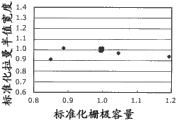
图1是表示薄膜晶体管阵列中的各薄膜晶体管的导通电流在基板面内的分布的示例的图。在此,图1示出的薄膜晶体管阵列由底栅型TFT构成,该底栅型TFT利用了通过激光退火结晶化法形成的结晶硅层,该薄膜晶体管阵列的基板面(图中)由224个×224个薄膜晶体管构成。在图1中,通过浓淡来表示薄膜晶体管阵列中的各薄膜晶体管的导通电流的大小,由此使导通电流在基板面内的分布可视化。另外,导通电流的单位被标准化而以任意单位进行表示。FIG. 1 is a diagram showing an example of distribution of on-current of each thin film transistor in a thin film transistor array within a substrate surface. Here, the thin-film transistor array shown in FIG. 1 is composed of bottom-gate TFTs using a crystalline silicon layer formed by laser annealing crystallization. It is composed of × 224 thin film transistors. In FIG. 1 , the magnitude of the on-current of each thin film transistor in the thin-film transistor array is represented by shading, thereby visualizing the distribution of the on-current in the substrate surface. In addition, the unit of the conduction current is standardized and expressed in an arbitrary unit.
根据图1可知,薄膜晶体管的导通电流在基板面内不均匀,具有特性不均。如上所述,在薄膜晶体管阵列的基板面内,栅极绝缘层的膜厚根据位置不同而不同,与此相应地栅极电极上的栅极绝缘层电容会发生变化,由此会引起该导通特性的不均。As can be seen from FIG. 1 , the conduction current of the thin film transistor is not uniform within the substrate surface, and has characteristic nonuniformity. As described above, in the substrate surface of the thin film transistor array, the film thickness of the gate insulating layer varies depending on the position, and accordingly the capacitance of the gate insulating layer on the gate electrode changes, which causes the conduction. Inhomogeneity of communication characteristics.
在图1中,薄膜晶体管阵列的基板面内的中央部的栅极绝缘层的膜厚大于周边部的栅极绝缘层的膜厚,因此栅极绝缘层的电容降低。因此,在该中央部的区域内,导通特性降低。也即是,在图1中,导通特性降低的中央部的区域呈现为不均(斑块)。In FIG. 1 , the thickness of the gate insulating layer in the central portion of the substrate surface of the thin film transistor array is larger than that in the peripheral portion, so the capacitance of the gate insulating layer decreases. Therefore, in the region of the central portion, conduction characteristics are degraded. That is, in FIG. 1 , the region of the central portion where the conduction characteristic is degraded appears as unevenness (blotches).
另外,随着面板制作中所使用的基板的大型化,薄膜晶体管的沟道构成层的膜厚变动会越来越难以进行控制。因此,随着显示装置的大型化,显示装置所使用的薄膜晶体管阵列中的各薄膜晶体管的栅极绝缘电容的不匀会变大。即使是假设能够遍及基板整个面而形成结晶性均匀的结晶硅层,由栅极电容的变动引起的薄膜晶体管的导通特性的不匀也会随着显示装置的大型化而变得显著。也即是,在制作更大面积的显示装置的情况下,由薄膜晶体管的导通特性的不匀引起的画质的不均会成为更严重的问题。In addition, as the size of the substrate used in panel fabrication increases, it becomes more and more difficult to control the variation in film thickness of the channel constituting layer of the thin film transistor. Therefore, as the size of the display device increases, the variation in the gate insulation capacitance of each thin film transistor in the thin film transistor array used in the display device becomes larger. Even assuming that a crystalline silicon layer with uniform crystallinity can be formed over the entire surface of the substrate, variations in conduction characteristics of thin film transistors due to variations in gate capacitance become significant as display devices increase in size. That is, in the case of fabricating a display device with a larger area, the unevenness of the image quality caused by the unevenness of the conduction characteristics of the thin film transistor becomes a more serious problem.
本发明是鉴于上述问题而完成的发明,目的在于供给一种能够由具有均匀的导通特性的薄膜晶体管构成的薄膜晶体管阵列的制造方法、薄膜晶体管阵列以及使用了该薄膜晶体管阵列的显示装置。The present invention was made in view of the above problems, and an object of the present invention is to provide a method for manufacturing a thin film transistor array that can be composed of thin film transistors having uniform conduction characteristics, a thin film transistor array, and a display device using the thin film transistor array.
用于解决问题的手段means of solving problems
为了达到上述目的,本发明的一种方式所涉及的薄膜晶体管阵列的制造方法包括:第一工序,准备基板;第二工序,在所述基板上形成多个栅电极;第三工序,在所述多个栅电极上形成栅极绝缘层;第四工序,在所述栅极绝缘层上形成非晶硅层;第五工序,使用从激光器照射的激光使所述非晶硅层结晶化而生成结晶硅层;以及第六工序,在所述多个栅电极各自的所述结晶硅层上的区域形成源电极和漏电极,在所述第三工序中,将所述多个栅电极上的所述栅极绝缘层的膜厚形成在使得所述栅电极上的所述非晶硅层对所述激光的光吸收率和所述栅极绝缘层的等效氧化膜厚为正相关的区域的膜厚范围内,在所述第四工序中,将所述多个栅电极上的所述非晶硅层的膜厚形成在使得相对于所述非晶硅层的膜厚变化的、所述光吸收率的变动处于与第一基准相比为预定范围内的区域的膜厚范围内。In order to achieve the above object, a method for manufacturing a thin film transistor array according to an aspect of the present invention includes: a first step of preparing a substrate; a second step of forming a plurality of gate electrodes on the substrate; a third step of forming a plurality of gate electrodes on the substrate; The gate insulating layer is formed on the plurality of gate electrodes; the fourth step is to form an amorphous silicon layer on the gate insulating layer; the fifth step is to crystallize the amorphous silicon layer using laser light irradiated from a laser generating a crystalline silicon layer; and a sixth step of forming a source electrode and a drain electrode in regions on each of the plurality of gate electrodes on the crystalline silicon layer, and in the third step, forming a The film thickness of the gate insulating layer is formed such that the optical absorptivity of the amorphous silicon layer on the gate electrode to the laser light and the equivalent oxide film thickness of the gate insulating layer are positively correlated. In the fourth step, the film thickness of the amorphous silicon layer on the plurality of gate electrodes is formed in such a range that the film thickness of the amorphous silicon layer varies, The variation of the light absorptivity is within a film thickness range of a region within a predetermined range compared with the first reference.
发明的效果The effect of the invention
根据本发明,能够实现能由具有均匀的导通特性的薄膜晶体管构成的薄膜晶体管阵列的制造方法、薄膜晶体管阵列以及使用了该薄膜晶体管阵列的显示装置。According to the present invention, it is possible to realize a method for manufacturing a thin film transistor array composed of thin film transistors having uniform conduction characteristics, a thin film transistor array, and a display device using the thin film transistor array.
具体而言,通过将与构成基板上的阵列的各个薄膜晶体管对应的栅电极区域上的非晶硅层以及栅极绝缘层形成为各自的膜厚满足预定的条件,能够使用可见光区域波长的激光,与第一区域上的栅极绝缘层的栅极电容的增减对应地形成结晶性变动以使抵消该栅极电容的增减的影响的结晶硅层,能够实现形成于基板整个面的薄膜晶体管阵列的各个薄膜晶体管的导通特性均匀的薄膜晶体管阵列的制造方法、薄膜晶体管阵列以及使用该薄膜晶体管阵列的显示装置。Specifically, by forming the amorphous silicon layer and the gate insulating layer on the gate electrode region corresponding to each thin film transistor constituting the array on the substrate so that the respective film thicknesses satisfy predetermined conditions, it is possible to use a laser light having a wavelength in the visible light region. Forming a crystalline silicon layer whose crystallinity fluctuates in response to the increase or decrease in the gate capacitance of the gate insulating layer on the first region so as to offset the influence of the increase or decrease in the gate capacitance can realize a thin film formed on the entire surface of the substrate. A method for manufacturing a thin film transistor array in which each thin film transistor of the transistor array has uniform conduction characteristics, a thin film transistor array, and a display device using the thin film transistor array.
附图说明 Description of drawings
图1是表示薄膜晶体管阵列中的各薄膜晶体管的导通电流在基板面内的分布的示例的图。FIG. 1 is a diagram showing an example of distribution of on-current of each thin film transistor in a thin film transistor array within a substrate surface.
图2是表示构成本发明实施方式的薄膜晶体管阵列的薄膜晶体管的构造的剖视图。2 is a cross-sectional view showing the structure of thin film transistors constituting the thin film transistor array according to the embodiment of the present invention.
图3是表示本发明实施方式的薄膜晶体管阵列的单位单元的等效电路的图。3 is a diagram showing an equivalent circuit of a unit cell of the thin film transistor array according to the embodiment of the present invention.
图4是表示构成本发明实施方式的薄膜晶体管阵列的薄膜晶体管的制造工序的流程图。FIG. 4 is a flowchart showing a manufacturing process of thin film transistors constituting the thin film transistor array according to the embodiment of the present invention.
图5A是用于说明构成本发明实施方式的薄膜晶体管阵列的薄膜晶体管的制造方法的剖视图。5A is a cross-sectional view illustrating a method of manufacturing a thin film transistor constituting the thin film transistor array according to the embodiment of the present invention.
图5B是用于说明构成本发明实施方式的薄膜晶体管阵列的薄膜晶体管的制造方法的剖视图。5B is a cross-sectional view illustrating a method of manufacturing a thin film transistor constituting the thin film transistor array according to the embodiment of the present invention.
图5C是用于说明构成本发明实施方式的薄膜晶体管阵列的薄膜晶体管的制造方法的剖视图。5C is a cross-sectional view illustrating a method of manufacturing a thin film transistor constituting the thin film transistor array according to the embodiment of the present invention.
图5D是用于说明构成本发明实施方式的薄膜晶体管阵列的薄膜晶体管的制造方法的剖视图。5D is a cross-sectional view illustrating a method of manufacturing a thin film transistor constituting the thin film transistor array according to the embodiment of the present invention.
图5E是用于说明构成本发明实施方式的薄膜晶体管阵列的薄膜晶体管的制造方法的剖视图。5E is a cross-sectional view illustrating a method of manufacturing a thin film transistor constituting the thin film transistor array according to the embodiment of the present invention.
图5F是用于说明构成本发明实施方式的薄膜晶体管阵列的薄膜晶体管的制造方法的剖视图。5F is a cross-sectional view illustrating a method of manufacturing a thin film transistor constituting the thin film transistor array according to the embodiment of the present invention.
图5G是用于说明构成本发明实施方式的薄膜晶体管阵列的薄膜晶体管的制造方法的剖视图。5G is a cross-sectional view illustrating a method of manufacturing a thin film transistor constituting the thin film transistor array according to the embodiment of the present invention.
图5H是用于说明构成本发明实施方式的薄膜晶体管阵列的薄膜晶体管的制造方法的剖视图。5H is a cross-sectional view illustrating a method of manufacturing a thin film transistor constituting the thin film transistor array according to the embodiment of the present invention.
图5I是用于说明构成本发明实施方式的薄膜晶体管阵列的薄膜晶体管的制造方法的剖视图。5I is a cross-sectional view illustrating a method of manufacturing a thin film transistor constituting the thin film transistor array according to the embodiment of the present invention.
图5J是用于说明构成本发明实施方式的薄膜晶体管阵列的薄膜晶体管的制造方法的剖视图。5J is a cross-sectional view illustrating a method of manufacturing a thin film transistor constituting the thin film transistor array according to the embodiment of the present invention.
图6是示意表示图4的S14中的激光退火的图。FIG. 6 is a diagram schematically showing laser annealing in S14 of FIG. 4 .
图7是表示本发明实施方式的薄膜晶体管阵列的单位重复单元的等效电路剖面的一例的图。FIG. 7 is a diagram showing an example of an equivalent circuit cross section of a unit repeat unit of a thin film transistor array according to an embodiment of the present invention.
图8是用于说明振幅透射率以及振幅透射率的计算方法的图。FIG. 8 is a diagram for explaining the amplitude transmittance and the calculation method of the amplitude transmittance.
图9是用于说明通过激光退火结晶化法形成结晶硅层的情况下的非晶硅层的膜厚具有合适的膜厚范围的状况的图。FIG. 9 is a diagram for explaining how the film thickness of the amorphous silicon layer has an appropriate film thickness range when the crystalline silicon layer is formed by the laser annealing crystallization method.
图10A是用于表示通过激光退火结晶化法形成结晶硅层的情况下的构成栅极绝缘层的绝缘膜的膜厚具有合适的膜厚范围的状况的图。FIG. 10A is a diagram showing how the thickness of an insulating film constituting a gate insulating layer has an appropriate thickness range when a crystalline silicon layer is formed by a laser annealing crystallization method.
图10B是用于表示通过激光退火结晶化法形成结晶硅层的情况下的构成栅极绝缘层的绝缘膜的膜厚具有合适的膜厚范围的状况的图。10B is a diagram showing how the thickness of the insulating film constituting the gate insulating layer has an appropriate thickness range when the crystalline silicon layer is formed by the laser annealing crystallization method.
图11是表示通过激光退火结晶化法形成结晶硅层的情况下的构成栅极绝缘层的绝缘膜的膜厚具有合适的膜厚范围的具体例的图。11 is a diagram showing a specific example in which the thickness of the insulating film constituting the gate insulating layer has an appropriate thickness range when the crystalline silicon layer is formed by the laser annealing crystallization method.
图12A是表示按条件1构成栅极绝缘层的情况下的不匀的栅极绝缘层的膜厚所形成的电容与非晶硅层的吸收率之间的关系的图。12A is a graph showing the relationship between the capacitance due to the non-uniform film thickness of the gate insulating layer and the absorptivity of the amorphous silicon layer when the gate insulating layer is formed according to
图12B是表示按条件2构成栅极绝缘层的情况下的不匀的栅极绝缘层的膜厚所形成的电容与非晶硅层的吸收率之间的关系的图。12B is a graph showing the relationship between the capacitance due to the non-uniform film thickness of the gate insulating layer and the absorptivity of the amorphous silicon layer when the gate insulating layer is formed according to
图12C是表示按条件3构成栅极绝缘层的情况下的不匀的栅极绝缘层的膜厚所形成的电容与非晶硅层的吸收率之间的关系的图。12C is a graph showing the relationship between the capacitance due to the non-uniform film thickness of the gate insulating layer and the absorptivity of the amorphous silicon layer when the gate insulating layer is formed according to
图13A是表示按条件1构成栅极绝缘层的情况下不匀的膜厚所形成的电容与非晶硅层的结晶性之间的关系的图。13A is a graph showing the relationship between capacitance due to non-uniform film thickness and crystallinity of the amorphous silicon layer when the gate insulating layer is formed according to
图13B是表示按条件2构成栅极绝缘层的情况下的不匀的膜厚所形成的电容与非晶硅层的结晶性之间的关系的图。FIG. 13B is a graph showing the relationship between capacitance due to uneven film thickness and crystallinity of the amorphous silicon layer when the gate insulating layer is formed under
图13C是表示按条件3构成栅极绝缘层的情况下的不匀的膜厚所形成的电容与非晶硅层的结晶性之间的关系的图。13C is a graph showing the relationship between capacitance due to uneven film thickness and crystallinity of the amorphous silicon layer when the gate insulating layer is formed under
图14A是表示按条件1构成栅极绝缘层的情况下的不匀的膜厚所形成的电容与将结晶硅层作为沟道的薄膜晶体管的导通电流之间的关系的图。14A is a graph showing the relationship between capacitance due to uneven film thickness and on-current of a thin film transistor having a crystalline silicon layer as a channel when a gate insulating layer is formed according to
图14B是表示按条件2构成栅极绝缘层的情况下的不匀的膜厚所形成的电容与将结晶硅层作为沟道的薄膜晶体管的导通电流之间的关系的图。14B is a graph showing the relationship between capacitance due to uneven film thickness and on-current of a thin film transistor having a crystalline silicon layer as a channel when the gate insulating layer is formed according to
图14C是表示按条件3构成栅极绝缘层的情况下的不匀的膜厚所形成的电容与将结晶硅层作为沟道的薄膜晶体管的导通电流之间的关系的图。14C is a graph showing the relationship between capacitance due to uneven film thickness and on-current of a thin film transistor having a crystalline silicon layer as a channel when the gate insulating layer is formed under
图15是表示具备本发明的薄膜晶体管阵列的显示装置的一例的图。FIG. 15 is a diagram showing an example of a display device including a thin film transistor array of the present invention.
标号说明Label description
1:开关晶体管;2:驱动晶体管;3:数据线;4:扫描线;5:电流供给线;6:电容;7:发光元件;10:基板;11:底涂层;12:栅电极;13:栅极绝缘层;14、16:非晶硅层;15:结晶硅层;17:n+硅层;18:源、漏电极;100:薄膜晶体管;401、402、403、404:层;405:基板层;1301、1302:绝缘膜。1: Switching transistor; 2: Driving transistor; 3: Data line; 4: Scanning line; 5: Current supply line; 6: Capacitor; 7: Light emitting element; 10: Substrate; 11: Undercoat layer; 12: Gate electrode; 13: gate insulating layer; 14, 16: amorphous silicon layer; 15: crystalline silicon layer; 17: n+ silicon layer; 18: source and drain electrodes; 100: thin film transistor; 401, 402, 403, 404: layers; 405: substrate layer; 1301, 1302: insulating film.
具体实施方式 Detailed ways
第一方式的薄膜晶体管阵列的制造方法包括:第一工序,准备基板;The manufacturing method of the thin film transistor array of the first mode includes: a first process, preparing a substrate;
第二工序,在所述基板上形成多个栅电极;第三工序,在所述多个栅电极上形成栅极绝缘层;第四工序,在所述栅极绝缘层上形成非晶硅层;第五工序,使用从激光器照射的激光使所述非晶硅层结晶化而生成结晶硅层;以及第六工序,在所述多个栅电极各自的所述结晶硅层上的区域形成源电极和漏电极,在所述第三工序中,将所述多个栅电极上的所述栅极绝缘层的膜厚形成在使得所述栅电极上的所述非晶硅层对所述激光的光吸收率和所述栅极绝缘层的等效氧化膜厚为正相关的区域的膜厚范围内,在所述第四工序中,将所述多个栅电极上的所述非晶硅层的膜厚形成在使得相对于所述非晶硅层的膜厚变化的、所述光吸收率的变动处于与第一基准相比为预定范围内的区域的膜厚范围内。The second step is to form a plurality of gate electrodes on the substrate; the third step is to form a gate insulating layer on the plurality of gate electrodes; the fourth step is to form an amorphous silicon layer on the gate insulating layer ; a fifth step of crystallizing the amorphous silicon layer using laser light irradiated from a laser to generate a crystalline silicon layer; and a sixth step of forming a source region on each of the plurality of gate electrodes on the crystalline silicon layer electrodes and drain electrodes, and in the third step, the thickness of the gate insulating layer on the plurality of gate electrodes is formed such that the amorphous silicon layer on the gate electrodes is The light absorptivity of the gate insulating layer is positively correlated with the equivalent oxide film thickness of the gate insulating layer. In the fourth step, the amorphous silicon on the plurality of gate electrodes is The film thickness of the layer is formed within a film thickness range of a region in which a variation in the light absorption rate with respect to a film thickness change of the amorphous silicon layer is within a predetermined range from a first reference.
在此,等效氧化膜厚是指将栅极绝缘层的物理厚度转换为与SiO2膜等效的电膜厚的值。Here, the equivalent oxide film thickness refers to a value obtained by converting the physical thickness of the gate insulating layer into an electrical film thickness equivalent to the SiO 2 film.
根据本方式,即使在非晶硅层的膜厚相对于某目标膜厚发生变动,与构成薄膜晶体管阵列的各个薄膜晶体管的栅电极上的区域对应的非晶硅层对激光退火中使用的激光的光吸收率、和同样地与各个栅电极上的区域对应的栅极绝缘层电容也为负相关的关系。根据该关系,即使构成薄膜晶体管阵列的栅极绝缘层的膜厚对于目标膜厚发生变动,也能够形成如下的结晶硅层:对应于与基板面内的各个栅电极上对应的栅极绝缘层电容的分布,具体具有随着栅极绝缘层电容的增加而通过激光退火结晶化形成于栅电极上的结晶硅层的结晶性降低的分布。另外,在该基板面内,使用与栅极绝缘层电容具有某一定关系而使结晶性的分布变化的结晶硅层来形成薄膜晶体管阵列。由此,能够实现以下效果:各个薄膜晶体管的由栅极绝缘层膜厚的变动导致的栅极绝缘层电量的不匀所引起的薄膜晶体管的导通特性的不匀被结晶性得到控制的薄膜晶体管的沟道层的结晶硅层抵消。According to this aspect, even if the film thickness of the amorphous silicon layer varies with respect to a certain target film thickness, the amorphous silicon layer corresponding to the region on the gate electrode of each thin film transistor constituting the thin film transistor array has a certain effect on the laser light used for laser annealing. The light absorptivity and the capacitance of the gate insulating layer corresponding to the regions on the respective gate electrodes are also negatively correlated. According to this relationship, even if the film thickness of the gate insulating layer constituting the thin film transistor array varies from the target film thickness, it is possible to form a crystalline silicon layer corresponding to the gate insulating layer corresponding to each gate electrode in the substrate surface. The distribution of capacitance specifically has a distribution in which the crystallinity of the crystalline silicon layer formed on the gate electrode crystallized by laser annealing decreases as the capacitance of the gate insulating layer increases. Also, within the substrate surface, a thin film transistor array is formed using a crystalline silicon layer having a certain relationship with the capacitance of the gate insulating layer so that the crystallinity distribution is changed. Thereby, it is possible to achieve the effect that the uneven conduction characteristics of the thin film transistors caused by the unevenness of the gate insulating layer electric charge caused by the variation of the thickness of the gate insulating layer of each thin film transistor are controlled by the thin film whose crystallinity is controlled. The crystalline silicon layer of the channel layer of the transistor cancels out.
作为第二方式的薄膜晶体管阵列的制造方法,所述激光器由固体激光装置构成。As the method of manufacturing a thin film transistor array according to the second aspect, the laser is constituted by a solid-state laser device.
作为第三方式的薄膜晶体管阵列的制造方法,所述激光器由使用了半导体激光元件的激光装置构成。As a method of manufacturing a thin film transistor array according to a third aspect, the laser is constituted by a laser device using a semiconductor laser element.
作为第四方式的薄膜晶体管阵列的制造方法,在所述第五工序中,所述激光在所述非晶硅层上的照射能量密度的变动小于5%左右。In the method for manufacturing a thin film transistor array according to a fourth aspect, in the fifth step, a fluctuation in the energy density of the irradiation of the laser light on the amorphous silicon layer is less than about 5%.
作为第五方式的薄膜晶体管阵列的制造方法,所述激光的波长范围为400nm~600nm。As the method for manufacturing a thin film transistor array according to the fifth aspect, the wavelength range of the laser light is 400 nm to 600 nm.
作为第六方式的薄膜晶体管阵列的制造方法,在在所述第四工序中,作为所述与第一基准相比为预定范围内的区域的膜厚范围,将所述非晶硅层的膜厚形成在使微分系数为-5~+5的膜厚范围内,所述微分系数是以所述非晶硅层的光学膜厚对所述非晶硅层的激光波长λ的吸收率进行微分时的微分系数,所述非晶硅层的光学膜厚是以所述激光的波长λ进行标准化而得到的光学膜厚,所述非晶硅层的激光波长λ的吸收率是以所述栅极绝缘层的光学膜厚进行标准化而得到的吸收率,所述栅极绝缘层的光学膜厚是以所述激光的波长λ进行标准化而得到的光学膜厚。As the method for manufacturing a thin film transistor array according to the sixth aspect, in the fourth step, as the film thickness range of the region within a predetermined range compared with the first reference, the film of the amorphous silicon layer is The thickness is formed within the range of film thickness so that the differential coefficient is -5 to +5, and the differential coefficient is to differentiate the optical film thickness of the amorphous silicon layer with respect to the absorption rate of the laser wavelength λ of the amorphous silicon layer When is the differential coefficient, the optical film thickness of the amorphous silicon layer is the optical film thickness obtained by standardizing the wavelength λ of the laser, and the absorption rate of the laser wavelength λ of the amorphous silicon layer is obtained by the grating The absorptivity obtained by normalizing the optical film thickness of the gate insulating layer is the optical film thickness obtained by normalizing the wavelength λ of the laser light.
作为第七方式的薄膜晶体管阵列的制造方法,在所述第四工序中,所述非晶硅层形成为所述多个栅电极上的所述非晶硅层的平均膜厚包含在由以下式1所表示的范围内,As a method of manufacturing a thin film transistor array according to a seventh aspect, in the fourth step, the amorphous silicon layer is formed such that the average film thickness of the amorphous silicon layer on the plurality of gate electrodes is included in the following: Within the range represented by
(式1)0.426≤na-Si×da-Si/λSi≤0.641(Formula 1) 0.426≤n a-Si ×d a-Si /λ Si ≤0.641
在此,da-Si表示所述非晶硅层的平均膜厚,λSi表示所述激光波长,na-Si表示所述非晶硅层对波长λ的激光的折射率。Here, d a-Si represents the average film thickness of the amorphous silicon layer, λ Si represents the wavelength of the laser light, and na -Si represents the refractive index of the amorphous silicon layer for the laser light of wavelength λ.
作为第八方式的薄膜晶体管阵列的制造方法,在所述第三工序中,所述栅极绝缘层形成为所述栅极绝缘层相对于所述激光波长的消光系数为0.01以下。In the method for manufacturing a thin film transistor array according to an eighth aspect, in the third step, the gate insulating layer is formed such that an extinction coefficient of the gate insulating layer with respect to the wavelength of the laser light is 0.01 or less.
作为第九方式的薄膜晶体管阵列的制造方法,所述栅极绝缘层为氧化硅膜。In the method of manufacturing a thin film transistor array according to a ninth aspect, the gate insulating layer is a silicon oxide film.
作为第十方式的薄膜晶体管阵列的制造方法,所述栅极绝缘层为氮化硅膜。In the tenth aspect of the method for manufacturing a thin film transistor array, the gate insulating layer is a silicon nitride film.
作为第十一方式的薄膜晶体管阵列的制造方法,所述栅极绝缘层由氧化硅膜与氮化硅膜的层叠膜构成。In the method of manufacturing a thin film transistor array according to an eleventh aspect, the gate insulating layer is formed of a laminated film of a silicon oxide film and a silicon nitride film.
作为第十二方式的薄膜晶体管阵列的制造方法,在所述第三工序中,所述栅极绝缘层形成为所述多个栅电极上的所述栅极绝缘层的平均膜厚包含在由以下式2表示的范围或者由以下式3表示的范围内,As a method for manufacturing a thin film transistor array according to a twelfth aspect, in the third step, the gate insulating layer is formed such that the average film thickness of the gate insulating layer on the plurality of gate electrodes is included in the range determined by Within the range represented by the following
(式2)0.44≤nGI×dGI/λ≤0.74(Formula 2) 0.44≤n GI ×d GI /λ≤0.74
(式3)0.96≤nGI×dGI/λ≤1.20(Formula 3) 0.96≤n GI ×d GI /λ≤1.20
在此,dGI表示所述栅极绝缘层的平均膜厚,λ表示所述激光波长,nGI表示所述栅极绝缘层对波长λ的激光的折射率。Here, d GI represents the average film thickness of the gate insulating layer, λ represents the wavelength of the laser light, and n GI represents the refractive index of the gate insulating layer with respect to the laser light of wavelength λ.
作为第十三方式的薄膜晶体管阵列的制造方法,在所述第三工序中,所述栅极绝缘层形成为所述多个栅电极上的所述栅极绝缘层的平均膜厚包含在由以下式4表示的范围或者由以下式5表示的范围内,As a method for manufacturing a thin film transistor array according to a thirteenth aspect, in the third step, the gate insulating layer is formed such that the average film thickness of the gate insulating layer on the plurality of gate electrodes is included in the range determined by Within the range represented by the following formula 4 or the range represented by the following formula 5,
(式4)0.47≤nGI×dGI/λ≤0.62(Formula 4) 0.47≤n GI ×d GI /λ≤0.62
(式5)1.04≤nGI×dGI/λ≤1.13(Formula 5) 1.04≤n GI ×d GI /λ≤1.13
在此,dGI表示所述栅极绝缘层的平均膜厚,λ表示所述激光波长,nGI表示所述栅极绝缘层对波长λ的激光的折射率。Here, d GI represents the average film thickness of the gate insulating layer, λ represents the wavelength of the laser light, and n GI represents the refractive index of the gate insulating layer with respect to the laser light of wavelength λ.
作为第十四方式的薄膜晶体管阵列的制造方法,在所述第三工序中,所述栅极绝缘层形成为所述多个栅电极上的所述氧化硅膜的平均膜厚和所述多个栅电极上的所述氮化硅膜的平均膜厚包含在由以下式6和式7表示的区域或者由以下式8和式9表示的区域内,In the method for manufacturing a thin film transistor array according to a fourteenth aspect, in the third step, the gate insulating layer is formed so that the average film thickness of the silicon oxide film on the plurality of gate electrodes and the multiplicity The average film thickness of the silicon nitride film on each gate electrode is included in the region represented by the following
(式6)Y≥-1070X6+1400X5-688X4+153X3-12.90X2-1.02X+0.439(Formula 6) Y≥-1070X 6 +1400X 5 -688X 4 +153X 3 -12.90X 2 -1.02X+0.439
(式7)Y≤49.9X6-131X5+127X4-56.8X3+11.8X2-2.01X+0.736(Formula 7) Y≤49.9X 6 -131X 5 +127X 4 -56.8X 3 +11.8X 2 -2.01X+0.736
(式8)Y≥-7.34X6+8.48X5+8.65X4-16.0X3+7.24X2-2.04X+0.961(Formula 8) Y≥-7.34X 6 +8.48X 5 +8.65X 4 -16.0X 3 +7.24X 2 -2.04X+0.961
(式9)Y≤-3.75X6+11.8X5-13.1X4+6.09X3-1.12X2-0.87X+1.20(Formula 9) Y≤-3.75X 6 +11.8X 5 -13.1X 4 +6.09X 3 -1.12X 2 -0.87X+1.20
在此,X=dSiO×nSiO/λ,Y=dSiN×nSiN/λ,dSiO表示所述氧化硅膜的平均膜厚,dSiN表示所述氮化硅膜的平均膜厚,λ表示所述激光波长,nSiO表示所述氧化硅膜对波长λ的激光的折射率,nSiN表示所述氮化硅膜对波长λ的激光的折射率。Here, X=d SiO ×n SiO /λ, Y=d SiN ×n SiN /λ, d SiO represents the average film thickness of the silicon oxide film, d SiN represents the average film thickness of the silicon nitride film, λ represents the wavelength of the laser light, n SiO represents the refractive index of the silicon oxide film for the laser light of the wavelength λ, and n SiN represents the refractive index of the silicon nitride film for the laser light of the wavelength λ.
作为第十五方式的薄膜晶体管阵列的制造方法,在所述第三工序中,所述栅极绝缘层形成为所述多个栅电极上的所述氧化硅膜的平均膜厚和所述多个栅电极上的所述氮化硅膜的平均膜厚包含在由以下式10和式11表示的区域或者由以下式12和式13表示的区域内,As the method for manufacturing a thin film transistor array according to the fifteenth aspect, in the third step, the gate insulating layer is formed so that the average film thickness of the silicon oxide film on the plurality of gate electrodes and the multiplicity The average film thickness of the silicon nitride film on each gate electrode is contained in the region represented by the following
(式10)Y≥-132.6X6+181X5-93.8X4+21.3X3-1.33X2-1.04X+0.473(Formula 10) Y≥-132.6X 6 +181X 5 -93.8X 4 +21.3X 3 -1.33X 2 -1.04X+0.473
(式11)Y≤23.7X6-4.56X5-35.4X4+27.2X3-5.75X2-0.973X+0.619(Formula 11) Y≤23.7X 6 -4.56X 5 -35.4X 4 +27.2X 3 -5.75X 2 -0.973X+0.619
(式12)Y≥7.46X6-32.4X5+50.8X4-35.7X3+11.0X2-2.20X+1.04(Formula 12) Y≥7.46X 6 -32.4X 5 +50.8X 4 -35.7X 3 +11.0X 2 -2.20X+1.04
(式13)Y≤-5.34X6+16.7X5-18.7X4+9.18X3-1.96X2-0.821X+1.13(Formula 13) Y≤-5.34X 6 +16.7X 5 -18.7X 4 +9.18X 3 -1.96X 2 -0.821X+1.13
在此,X=dSiO×nSiO/λ,Y=dSiN×nSiN/λ,dSiO表示所述氧化硅膜的平均膜厚,dSiN表示所述氮化硅膜的平均膜厚,λ表示所述激光波长,nSiO表示所述氧化硅膜对波长λ的激光的折射率,nSiN表示所述氮化硅膜对波长λ的激光的折射率。Here, X=d SiO ×n SiO /λ, Y=d SiN ×n SiN /λ, d SiO represents the average film thickness of the silicon oxide film, d SiN represents the average film thickness of the silicon nitride film, λ represents the wavelength of the laser light, n SiO represents the refractive index of the silicon oxide film for the laser light of the wavelength λ, and n SiN represents the refractive index of the silicon nitride film for the laser light of the wavelength λ.
作为第十六方式的薄膜晶体管阵列的制造方法,所述第二工序包括:在所述基板上形成由透明绝缘膜形成的底涂层的工序;以及在所述底涂层上形成多个栅电极的工序。As the method for manufacturing a thin film transistor array according to the sixteenth aspect, the second step includes: forming an undercoat layer made of a transparent insulating film on the substrate; and forming a plurality of gate layers on the undercoat layer. Electrode process.
第十七方式的薄膜晶体管阵列具备:基板;多个栅电极,其形成于所述基板上;栅极绝缘层,其共用地形成于所述多个栅电极上;结晶硅层,其形成于所述栅极绝缘层上;以及源电极和漏电极,其形成于所述多个栅电极各自的所述结晶硅层上的区域,使用从激光器照射的激光使形成于所述栅极绝缘层上的非晶硅层结晶化而形成所述结晶硅层,所述多个栅电极上的所述栅极绝缘层的膜厚形成在使得所述栅电极上的所述非晶硅层对所述激光的光吸收率和所述等效氧化膜厚为正相关的区域的膜厚范围内,所述多个栅电极上的所述非晶硅层的膜厚形成在使得相对于所述非晶硅层的膜厚变化的、所述光吸收率的变动处于与第一基准相比为预定范围内的区域的膜厚范围内。A thin film transistor array according to a seventeenth aspect includes: a substrate; a plurality of gate electrodes formed on the substrate; a gate insulating layer formed in common on the plurality of gate electrodes; and a crystalline silicon layer formed on the plurality of gate electrodes. on the gate insulating layer; and a source electrode and a drain electrode formed on regions on the crystalline silicon layer of each of the plurality of gate electrodes formed on the gate insulating layer using laser light irradiated from a laser. The amorphous silicon layer on the gate electrode is crystallized to form the crystalline silicon layer, and the film thickness of the gate insulating layer on the plurality of gate electrodes is formed such that the amorphous silicon layer on the gate electrode is The film thickness of the amorphous silicon layer on the plurality of gate electrodes is formed such that the film thickness of the amorphous silicon layer on the plurality of gate electrodes is within the film thickness range of the region where the light absorption rate of the laser light is positively correlated with the equivalent oxide film thickness. The change in the optical absorptivity in which the film thickness of the crystalline silicon layer changes is within a film thickness range of a region within a predetermined range from the first reference.
在第十八方式的薄膜晶体管阵列中,所述栅电极上的所述结晶硅层的平均结晶粒径相对于所述栅电极上的所述栅极绝缘层的栅极电容具有负相关。In the thin film transistor array according to the eighteenth aspect, the average crystal grain size of the crystalline silicon layer on the gate electrode has a negative correlation with the gate capacitance of the gate insulating layer on the gate electrode.
在第十九方式的薄膜晶体管阵列中,所述栅电极上的所述结晶硅层的520cm-1附近的拉曼散射光谱峰的半值宽度相对于所述栅电极上的所述栅极绝缘层的栅极电容具有正相关。In the thin film transistor array according to the nineteenth aspect, the half-value width of the Raman scattering spectrum peak near 520 cm -1 of the crystalline silicon layer on the gate electrode is larger than that of the gate insulating layer on the gate electrode. The gate capacitance of the layer has a positive correlation.
第二十方式的显示装置包括液晶面板或者EL面板,具备权利要求17~19中的任一项所述的薄膜晶体管阵列,所述薄膜晶体管阵列驱动所述液晶面板或者所述EL面板。A display device according to a twentieth aspect includes a liquid crystal panel or an EL panel, and includes the thin film transistor array according to any one of
下面,参照附图来说明本发明的实施方式。Embodiments of the present invention will be described below with reference to the drawings.
图2是表示构成本发明实施方式的显示装置所使用的薄膜晶体管阵列的薄膜晶体管的剖视图。2 is a cross-sectional view showing thin film transistors constituting a thin film transistor array used in a display device according to an embodiment of the present invention.
图2所示的薄膜晶体管100是底栅构造的薄膜晶体管,薄膜晶体管100具备基板10、底涂层11、栅电极12、栅极绝缘层13、结晶硅层15、非晶硅层16、n+硅层17以及源、漏电极18。The
基板10例如为由透明的玻璃或者石英形成的绝缘基板。The
底涂层11形成于基板10上,例如由氧化硅(SiOx)层、氮化硅(SiNx)层及其层叠体等构成。在此,优选底涂层11由1.5<x<2.0的氮化硅(SiNx)构成为300nm~1500nm的膜厚。更优选的底涂层11的膜厚范围为500nm~1000nm。这是由于,虽然增加底涂层11的厚度时能够降低对基板10的热负载,但当底涂层11过厚时会发生膜剥离、裂纹。The
栅电极12形成于底涂层11上,栅电极12典型地由钼(Mo)等金属、Mo合金等(例如MoW(钼、钨合金))金属形成。栅电极12为能耐受硅的熔点温度的金属即可,因此也可以由包括W(钨)、Ta(钽)、Nb(铌)、Ni(镍)、Cr(铬)以及Mo的它们的合金形成。栅电极12的膜厚优选为30nm~300nm,更优选为50nm~100nm。这是由于,当栅电极12的膜厚薄时,栅电极12的透射率会增加,以下所述的激光的反射容易降低。另外,当栅电极12的膜厚厚时,以下所述的栅极绝缘层13的覆盖性(coverage)会降低,特别是在栅电极的端部由于栅极绝缘膜发生层断而栅电极12与n+硅层17会电导通等,薄膜晶体管100的特性容易劣化。The
栅极绝缘膜13形成为覆盖栅电极12,例如由氧化硅层、或者氧化硅层或者氧化硅层与氮化硅层的层叠构造形成。栅极绝缘层典型地由CVD装置形成。根据CVD装置的特性,与基板10上的各个栅电极12对应的栅极绝缘层13的膜厚在基板面内的分布相对于目标膜厚会有±15%左右的变动。不管栅极绝缘层13由哪种结构形成,各个栅电极12上的栅极绝缘层13的等效氧化膜厚都形成为相对于栅电极12上的非晶硅层14对激光的光吸收率具有正相关的膜厚范围内的膜厚。在此,等效氧化膜厚是指将栅极绝缘层的物理厚度换算为与SiO2膜等效的电膜厚而得到的值。The
进而换言之,栅极绝缘层13形成如下膜厚范围内的膜厚,该膜厚范围中,各个栅电极12上的栅极绝缘层13的栅极电容相对于栅电极12上的非晶硅层14对激光的光吸收率具有负相关。也即是,栅极绝缘层13的膜厚分布(或者膜厚分布的中心值)具有对通过激光退火结晶化法形成结晶硅层15的情况合适的范围。后面将详细说明该合适的范围,该合适的范围根据栅极绝缘层13的构造、构成层的种类而表现为一定的关系式。Furthermore, in other words, the
结晶硅层15形成于栅极绝缘层13上,由多晶硅层(Poly-Si层)形成。在栅极绝缘层13上形成由a-Si形成的非晶硅层14(未图示)之后,对该非晶硅层14照射激光来使其多晶化(也包括微结晶化),由此形成该结晶硅层15。The
在此,多晶是指包括由50nm以下的结晶形成的狭义的微结晶的广义的结晶而不是只包括由50nm以上的结晶形成的狭义的多结晶。下面,将多晶作为广义的含义来记载。Here, polycrystal refers to crystals in a broad sense including narrowly defined microcrystals formed of crystals having a diameter of 50 nm or less, rather than narrowly defined polycrystals formed of crystals having a diameter of 50 nm or more. Hereinafter, polycrystal will be described in a broad sense.
用于照射激光的激光源是可见光区域波长的激光器。该可见光区域波长的激光器是大约380nm~780nm波长的激光器,优选为400nm~600nm波长的激光器。优选处于该范围的理由在于,当为激光的波长小于400nm的紫外光时,多重干涉的效果变弱,相对于栅极绝缘层13的膜厚变化的、非晶硅层的激光吸收率的变化几乎消失,无法得到本发明所期望的效果。另一方面,当激光的波长大于600nm时,非晶硅层14对激光的吸收显著下降,在激光结晶化中结晶化的效率会降低,因此从生产的观点来看不太理想。The laser light source for irradiating laser light is a laser with a wavelength in the visible light region. The laser with a wavelength in the visible light region is a laser with a wavelength of about 380nm to 780nm, preferably a laser with a wavelength of 400nm to 600nm. The reason why this range is preferable is that when the wavelength of laser light is ultraviolet light of less than 400 nm, the effect of multiple interference becomes weak, and the change of the laser absorption rate of the amorphous silicon layer with respect to the change of the film thickness of the
另外,该可见光区域波长的激光器为脉冲振荡、连续振荡或者模拟连续振荡模式中的任一模式即可。In addition, the laser with a wavelength in the visible light region may be in any mode of pulse oscillation, continuous oscillation, or pseudo continuous oscillation.
非晶硅层14由非晶硅即a-Si形成,形成于栅极绝缘层13上。非晶硅层14形成为如下膜厚范围内的膜厚,该膜厚范围中,栅电极12上的非晶硅层对激光的光吸收率相对于非晶硅层14的膜厚变动的变化较小。也即是,非晶硅层14的膜厚分布(膜厚分布的中心值)具有对通过激光退火结晶化法形成结晶硅层15的情况合适的范围。后面将详细说明该合适的范围,该合适的范围根据非晶硅层14的折射率、激光结晶化所使用的激光波长而表现为用一定的关系式。The
非晶硅层16形成于结晶硅层15上。这样,薄膜晶体管100具有在结晶硅层15层叠了非晶硅层16的构造的沟道层。The
n+硅层17形成为将非晶硅层16、结晶硅层15的侧面以及栅极绝缘层13覆盖。The n +
源、漏电极18形成于n+硅层17上,例如由Mo或者Mo合金等金属、钛(Ti)、铝(Al)或者Al合金等金属、铜(Cu)或者Cu合金等金属、或者银(Ag)、铬(Cr)、钽(Ta)或者钨(W)等金属材料形成。The source and drain
如上所述,构成薄膜晶体管100。As described above, the
图3是表示本发明实施方式的显示装置所使用的薄膜晶体管阵列的单位重复单元的等效电路的一例的图。图3示出的等效电路具备开关晶体管1、驱动晶体管2、数据线3、扫描线4、电流供给线5、电容6以及发光元件7。3 is a diagram showing an example of an equivalent circuit of a unit repeat unit of a thin film transistor array used in a display device according to an embodiment of the present invention. The equivalent circuit shown in FIG. 3 includes a switching
开关晶体管1与数据线3、扫描线4以及电容6连接。The
驱动晶体管2例如相当于图2示出的薄膜晶体管100,与电流供给线5、电容6以及发光元件7连接。The
数据线3是向发光元件7的像素传送确定发光元件7的像素明暗的数据(电压值的大小)的布线。The
扫描线4是向发光元件7的像素传送确定发光元件7的像素开关(ON/OFF)的数据的布线。The scanning line 4 is a wiring for transmitting data for determining the pixel switching (ON/OFF) of the light emitting element 7 to the pixel of the light emitting element 7 .
电流供给线5是用于对驱动晶体管2供给大电流的布线。The current supply line 5 is a wiring for supplying a large current to the
电容6将电压值(电荷)保持一定时间。The
如上所述,构成显示装置。As described above, the display device is configured.
接着,说明构成上述的薄膜晶体管阵列的薄膜晶体管100的制造方法。Next, a method of manufacturing the
图4是表示构成本发明实施方式的显示装置所使用的薄膜晶体管阵列的薄膜晶体管的制造工序的流程图。在基板上同时制造多个该薄膜晶体管100,但下面为了简化说明,作为制造一个薄膜晶体管的方法进行说明。图5A~图5J是用于说明本发明实施方式的显示装置所使用的薄膜晶体管阵列的制造方法的图。图6是示意表示图4的S14中的激光退火的图。4 is a flowchart showing a manufacturing process of thin film transistors constituting the thin film transistor array used in the display device according to the embodiment of the present invention. A plurality of
首先,准备基板10,在基板10上形成底涂层11(S10),接着,在底涂层11上形成栅电极(S11)。First, the
具体而言,通过等离子体CVD(化学气相沉积)法在基板10上成膜底涂层11,接着,通过溅射法来堆积成为栅电极的金属膜,通过光刻以及蚀刻来形成薄膜晶体管100中的栅电极12(图5A)。在此,栅电极12典型地由Mo等或者Mo合金等(例如MoW(钼、钨合金))金属材料形成。Specifically, the
接着,在栅电极12上形成栅极绝缘层13(S12)。并且,在栅极绝缘层13上形成非晶硅层14(S13)。Next, the
具体而言,通过等离子体CVD法在栅电极12上即覆盖底涂层11和栅电极12而形成氧化硅膜或者氮化硅膜、或者氧化硅膜与氮化硅膜的层叠膜,由此成膜栅极绝缘层13(图5B),在成膜的栅极绝缘层13上连续地成膜非晶硅层14(图5C)。Specifically, a silicon oxide film or a silicon nitride film, or a laminated film of a silicon oxide film and a silicon nitride film is formed on the
接着,通过激光退火法使非晶硅层14成为结晶硅层15(S14)。具体而言,使用从某预定的激光器照射的激光使非晶硅层14结晶化而生成结晶硅层15。更具体而言,首先,对所形成的非晶硅层14实施脱氢处理。作为脱氢处理,通常为在氮气氛中通过退火炉以450℃以上的温度进行加热的方法。之后,通过激光退火法使非晶硅层14成为多结晶(包括微结晶),由此形成结晶硅层15(图5D)。Next, the
在此,如上所述,在该激光退火法中,激光照射所使用的激光源是可见光区域波长的激光器。该可见光区域波长的激光器是大约380nm~780nm波长的激光器,优选为400nm~600nm波长的激光器。另外,该可见光区域波长的激光器为脉冲振荡、连续振荡或者模拟连续振荡模式中的任一模式即可。另外,该可见光区域波长的激光器可以由固体激光装置构成,也可以由使用了半导体激光元件的激光装置构成。进一步,可见光区域波长的激光器照射到非晶硅层14上时的照射能量密度的变动小于5%左右。Here, as described above, in this laser annealing method, the laser light source used for laser irradiation is a laser with a wavelength in the visible light region. The laser with a wavelength in the visible light region is a laser with a wavelength of about 380nm to 780nm, preferably a laser with a wavelength of 400nm to 600nm. In addition, the laser with a wavelength in the visible light region may be in any mode of pulse oscillation, continuous oscillation, or pseudo continuous oscillation. In addition, the laser having a wavelength in the visible light region may be constituted by a solid-state laser device, or may be constituted by a laser device using a semiconductor laser element. Furthermore, when the laser with a wavelength in the visible light region irradiates the
另外,如图6所示,在S14的工序即图5C至图5D的工序中,聚光为线状的激光照射到非晶硅层14,从而生成结晶硅层15。具体而言,激光的照射方法存在两种方法。即一种方法是:聚光为线状的激光的照射位置是固定的,将形成有非晶硅层14的基板10载置于载置台而使载置台进行移动。另一种方法是:载置台是固定的,激光的照射位置进行移动。无论在哪一种方法中,都是激光一边相对移动一边对非晶硅层14进行照射。这样,被照射激光的非晶硅层14吸收激光的能量,温度上升而结晶化,成为结晶硅层15。In addition, as shown in FIG. 6 , in the step of S14 , that is, the steps of FIGS. 5C to 5D , the laser light condensed into a line is irradiated to the
除了聚光为线状的激光以外,也可以使用光斑状(也包括圆形、椭圆形或者其它形状)的激光。在该情况下,优选通过适于结晶化的扫描方法来实施激光的照射。In addition to laser beams focused in a linear shape, spot-shaped (including circular, elliptical, or other shapes) laser light may also be used. In this case, laser irradiation is preferably performed by a scanning method suitable for crystallization.
接着,形成第二层的非晶硅层16(S15),对薄膜晶体管100的沟道区域的硅层进行图案形成(S16)。Next, the second
具体而言,通过等离子体CVD法在栅极绝缘层13上形成第二层的非晶硅层16(图5E)。并且,对硅层膜层(结晶硅层15和非晶硅层16的层)进行图案形成,使得留下薄膜晶体管100的沟道区域,通过蚀刻除去应该除去的非晶硅层16和结晶硅层15(图5F)。由此,能够在薄膜晶体管100中形成所期望的沟道层。Specifically, the second
接着,成膜n+硅层17和源、漏电极18(S17)。Next, the
具体而言,通过等离子体CVD法,成膜n+硅层17使得将非晶硅层16、结晶硅层15的侧面以及栅极绝缘层13覆盖(图5G)。并且,通过溅射法在成膜的n+硅层17上堆积成为源、漏电极18的金属(图5H)。在此,源、漏电极由Mo或者Mo合金等金属、钛(Ti)、铝(Al)或者Al合金等金属、铜(Cu)或者Cu合金等金属、或者银(Ag)、铬(Cr)、钽(Ta)或者钨(W)等金属材料形成。Specifically,
接着,进行源、漏电极18的图案形成(S18)。并且,对n+硅层17进行蚀刻,在此过程中,对第二层的非晶硅层16的一部分进行蚀刻(S19)。Next, patterning of the source and drain
具体而言,通过光刻以及蚀刻来形成源、漏电极18(图5I)。另外,对n+硅层17进行蚀刻,对薄膜晶体管100的沟道区域的非晶硅层16的一部分进行蚀刻(图5J)。换言之,对非晶硅层16进行沟道蚀刻,使得留下薄膜晶体管100的沟道区域的非晶硅层16的一部分。Specifically, source and drain
这样,制造出薄膜晶体管100。In this way, the
最后,简单说明使构成薄膜晶体管阵列的薄膜晶体管100相互电连接的工序。在此,图7是表示本发明实施方式的薄膜晶体管阵列的单位重复单元的等效电路剖面的一例的图。对与图3以及图5A~图5J同样的要素标记相同的标号,省略详细说明。Finally, the process of electrically connecting the
如图7所示,在基板10的整个面,为了保护和钝化薄膜晶体管100,通过等离子体CVD形成氮化硅膜来作为层间绝缘膜。接着,在源、漏电极18上开接触孔。通过光刻和干式蚀刻来开接触孔。之后,在基板10的整个面,通过溅射法形成主要由Al或者Cu形成的金属薄膜,通过光刻、湿式蚀刻来形成数据线3和电流供给线5。As shown in FIG. 7 , on the entire surface of the
如上所述,本实施方式中的薄膜晶体管100形成为具有底栅构造的Poly-Si TFT。在制造该薄膜晶体管100时,在使上述关系式成立的膜厚范围内成膜栅极绝缘层13和非晶硅层14。并且,使用可见光区域波长、更优选400nm~600nm波长的激光对非晶硅层14进行激光退火而使其结晶化,由此使非晶硅层14成为结晶硅层15。此时,能够使形成薄膜晶体管的沟道区域的结晶硅层15的结晶性根据栅极绝缘层13的栅极电容而变化。具体而言,能够在基板整个面形成结晶硅层15,使得结晶硅层15的结晶性相对于栅极绝缘层13的栅极电容具有负相关。换言之,能够在基板整个面形成结晶硅层15,使得栅电极上的结晶硅层15的平均结晶粒径相对于栅极绝缘层13的栅极电容具有负相关。进而换言之,能够在基板整个面形成结晶硅层15,使得栅电极上的结晶硅层15的拉曼散射光谱中的520cm-1附近的峰的半值宽度相对于栅极绝缘层13的栅极电容具有正相关。As described above, the
在沟道具备这样形成的结晶硅层15的薄膜晶体管100中,能够以结晶硅层15的结晶性、即导电能力来抵消与栅极绝缘层13的膜厚所对应的栅极电容相应的驱动能力,因此能够减少具备因不同的膜厚而具有不同的电容的栅极绝缘层13的薄膜晶体管之间的导通特性的不匀。因此,由这样的薄膜晶体管100构成的薄膜晶体管阵列的导通特性在面内的分布变得均匀。In the
如上所述,将栅极绝缘层13与非晶硅层14的膜厚形成为满足上述的条件,将使用上述激光使非晶硅层14结晶化而形成的结晶硅层15作为薄膜晶体管的沟道层来加以使用。由此,能实现以下效果:即使具备由该薄膜晶体管构成的薄膜晶体管阵列的显示装置的大型化发展下去,也不会产生由薄膜晶体管的构成层膜厚不匀引起的导通特性不均所导致的显示不均,能够提高其显示质量。As described above, the film thicknesses of the
在以下实施例中,具体说明能得到本发明的效果的栅极绝缘层13和非晶硅层14的膜厚范围的导出过程。In the following examples, the process of deriving the film thickness ranges of the
(实施例)(Example)
首先,在形成栅极绝缘层和非晶硅层的情况下,各个膜厚会从作为目标的膜厚(目标膜厚)变动。First, when forming a gate insulating layer and an amorphous silicon layer, each film thickness varies from a target film thickness (target film thickness).
具体而言,例如在形成于基板10上的多个栅电极12上连续地形成栅极绝缘层13和非晶硅层14。在此,将栅极绝缘层13的目标膜厚设为dGI,将非晶硅层14的目标膜厚设为da-Si。换言之,例如通过CVD装置在基板10上以目标膜厚形成栅极绝缘层13和非晶硅层14。在该情况下,栅极绝缘层13和非晶硅层14在其面内会从目标膜厚发生变动。Specifically, for example, the
该变动依赖于CVD装置的成膜室内的气体气流的波动和/或等离子体驻波的形成方式,因此通常不会是0,但能够根据CVD装置的成膜条件来进行优化。This fluctuation depends on the fluctuation of the gas flow in the film formation chamber of the CVD apparatus and/or the formation method of the standing plasma wave, so it is usually not zero, but can be optimized according to the film formation conditions of the CVD apparatus.
在本实施例中,假设相对于目标膜厚最大产生±15%的膜厚偏差来进行说明。当假设为基板面内的膜厚变动相对于目标膜厚形成正态分布时,能够认为栅极绝缘层13的目标膜厚以及非晶硅层14的目标膜厚为面内的平均膜厚。In this embodiment, description will be made assuming that a film thickness deviation of ±15% at maximum occurs from the target film thickness. Assuming that the film thickness variation in the substrate plane forms a normal distribution with respect to the target film thickness, the target film thickness of the
在此,将dGI的15%的变动量设为ΔdGI,将da-Si的15%的变动量设为Δda-Si。于是,能够认为在栅极绝缘层13和非晶硅层14中,与目标膜厚的组(dGI、da-Si)对应地,变动最大的变动膜厚的组(dGI±ΔdGI、da-Si±Δda-Si)(符号任意)以非零的概率形成于基板上。Here, a 15% variation in d GI is Δd GI , and a 15% variation in d a-Si is Δd a-Si . Therefore, in the
接着,考虑与包括目标膜厚的组(dGI、da-Si)的变动膜厚的组对应的、非晶硅层14的吸收率A。在此,吸收率A是栅电极12上的非晶硅层14对波长λ的激光的吸收率。吸收率A为栅极绝缘层13的膜厚以及非晶硅层14的膜厚的函数,因此能够针对目标膜厚的各个组(变动膜厚的组)唯一地计算吸收率A。例如在栅极绝缘层13由多种膜构成的情况下(例如膜131和膜132),将膜131的膜厚设为dGI1,将膜132的膜厚设为dGI2,考虑相对于各个膜的15%的变动ΔdGI1、ΔdGI2即可。在膜的种类为这以上的情况下,也可以同样地进行考虑。Next, the absorptivity A of the
然后,在计算出了与目标膜厚的组(dGI、da-Si)对应的变动膜厚的组(也包括目标膜厚的组)的、栅电极12上的非晶硅层的吸收率A的情况下,能够定义吸收率A与变动膜厚(dGI±ΔdGI、da-Si±Δda-Si)的相关。在此,可以将栅极绝缘层13的变动的组替换为栅极绝缘层13的栅极电容的变动的组(定义为CGI±ΔCGI)。即能够考虑将(dGI±ΔdGI、da-Si±Δda-Si)替换为(CGI±ΔCGI、da-Si±Δda-Si),因此能够同样地定义吸收率A与栅极电容的变动的组的相关。换言之,1)与多个栅电极12上各自对应的栅极绝缘层13的膜厚(具体而言为栅极绝缘层13的等效氧化膜厚)和栅电极12上的非晶硅层14对激光的吸收率为正相关的区域的膜厚范围与由激光波长λ、变动膜厚的组(dGI±ΔdGI、da-Si±Δda-Si)定义的吸收率A和栅极电容(CGI±ΔCGI)为负相关(例如,在引出近似直线时,其倾斜度取负值)的栅极绝缘层13的目标膜厚的可取范围等价。Then, the absorption of the amorphous silicon layer on the
进一步,2)与多个栅电极12上各自对应的非晶硅层14的膜厚形成在其光吸收率相对于非晶硅层14的膜厚变化小的区域的膜厚范围内。该膜厚范围与提供此时定义的吸收率A与栅极电容(CGI±ΔCGI)的相关性良好(例如,在引出近似直线时,R平方值大于0且最低也为0.3以上)的状态的、非晶硅层14的目标膜厚的可取范围等价。Further, 2) the film thickness of the
基于上述的想法,能够如以下那样计算能得到本发明的效果的栅极绝缘层13和非晶硅层14的膜厚范围。Based on the above idea, the film thickness ranges of the
即,首先计算与目标膜厚(dGI、da-Si)对应的假想变动膜厚的组以及与该变动膜厚的组各自对应的栅电极上的非晶硅层14对波长λ的激光的吸收率A。然后,可以调查该吸收率A与由假想变动膜厚得到的变动电容的相关,计算该相关的近似直线为负倾斜度且作为其R平方值为大于0的值的膜厚来作为膜厚的范围(目标膜厚的可取值的范围)。That is, first, the group of virtual variable film thickness corresponding to the target film thickness (d GI , d a-Si ) and the laser beam of wavelength λ on the
下面,作为一例,作为栅极绝缘层13由绝缘膜1301与绝缘膜1302的层叠膜构成来进行说明。具体而言,作为在栅电极12上形成绝缘膜1301、在绝缘膜1301上形成绝缘膜1302而构成栅极绝缘层13来进行说明。下面,对该构造中的栅电极12上的非晶硅层14对波长λ的激光的吸收率的计算过程进行说明。Hereinafter, as an example, the
通过计算对于各个构成膜的振幅反射率以及振幅透射率来求出构成薄膜晶体管100的多层薄膜的光吸收率。图8是用于说明振幅透射率以及振幅透射率的计算方法的图。The light absorptivity of the multilayer thin films constituting the
图8是表示使图2所示的薄膜晶体管100的构造模型化而得到的多层构造的模型构造的图。在图8所示的模型构造中,具备由复折射率N1形成的层401、由复折射率N2形成的层402、由复折射率N3形成的层403、由复折射率N4形成的层404以及由复折射率N5形成的基板层405(未图示)。在该模型构造中,示出层404、层403、层402以及层401按该顺序层叠在基板层405上的构造。另外,图中示出的复折射率N0的区域为模型构造的外部,表示激光向模型构造入射的一侧。该区域例如为空气或者N2气体。FIG. 8 is a diagram showing a model structure of a multilayer structure obtained by modeling the structure of the
基板层405例如为由透明的玻璃或者石英形成的绝缘基板,与图5A所示的基板10对应。层404由对激光的透射率为1%以下的膜厚的金属薄膜构成,例如由Mo、Cr、W等高熔点金属构成,与图5A示出的栅电极12对应。层403由绝缘膜1301构成,层402由绝缘膜1302构成。在此,绝缘膜1301和绝缘膜1302例如为氮化硅和氧化硅等电介质的薄膜。这两层(层403和层404)的层叠膜与图5A示出的栅极绝缘层13对应。层401与非晶硅层14对应。忽视栅电极12的光透射加以考虑,因此在图8示出的模型构造中,省略了与底涂层11对应的层。The substrate layer 405 is, for example, an insulating substrate made of transparent glass or quartz, and corresponds to the
在此,如图8所示,将对于从外部向层401入射的光的振幅反射系数设为r01,将对于从层401向层402入射的光的振幅反射系数设为r12,将对于从层402向层403入射的光的振幅反射系数设为r23,将对于从层403向层404入射的光的振幅反射系数设为r34。另外,将从外部向层401入射的光的振幅透射系数设为t01,将从层401向层402入射的光的振幅透射系数设为t12,将从层402向层403入射的光的振幅透射系数设为t23,将从层403向层404入射的光的振幅透射系数设为t34。Here, as shown in FIG. 8 , r 01 is the amplitude reflection coefficient for light incident on
进一步,将形成有与栅电极12对应的层404的区域上方的各层整体的振幅反射系数分别设为r01234(R1)、r1234(R2)、r234(R3)。具体而言,将层404和层403视作一层时的振幅反射系数设为r234(R3)。同样地,将层404、层403以及层402视作一层时的振幅反射系数设为r1234(R2),将层404、层403、层402以及层401视作一层时的振幅反射系数设为r01234(R1)。另外,将图8示出的各层整体的振幅透射系数分别设为t01234(T1)、t1234(T2)、t234(T3)。具体而言,将层404和层403视作一层时的振幅透射系数设为t234(T3)。同样地,将层404、层403以及层402视作一层时的振幅透射系数设为t1234(T2),将层404、层403、层402以及层401视作一层时的振幅透射系数设为t01234(T1)。Furthermore, the amplitude reflection coefficients of the entire layers above the region where the
并且,能够使用以下的(式1)~(式6)表示形成有与栅电极12对应的层404的区域上方的各层整体的振幅反射系数、振幅透射系数。Furthermore, the amplitude reflection coefficient and the amplitude transmission coefficient of the entire layers above the region where the
在此,here,
β1=2πd1N1cosθ1/λβ 1 =2πd 1 N 1 cos θ 1 /λ
β2=2πd2N2cosθ2/λβ 2 =2πd 2 N 2 cos θ 2 /λ
β3=2πd3N3cosθ3/λβ 3 =2πd 3 N 3 cos θ 3 /λ
dn为各层的膜厚,θn为各层的入射角、透射角,λ为激光的波长。d n is the film thickness of each layer, θ n is the incident angle and transmission angle of each layer, and λ is the wavelength of the laser.
另外,根据下式的斯涅尔(Snell)定律可以如以下(式7)那样算出θ。In addition, θ can be calculated as in the following (Formula 7) from Snell's law of the following formula.
NOsinθO=N1sinθ1=N2sinθ2=N3sinθ3(式7)N O sinθ O =N 1 sinθ 1 =N 2 sinθ 2 =N 3 sinθ 3 (Formula 7)
另外,可以使用以下的(式8)~(式15)算出各层各自的振幅反射系数r01、r12、r23、r34、r35以及振幅透射系数t01、t12、t23、t34、t35。In addition, the amplitude reflection coefficients r 01 , r 12 , r 23 , r 34 , r 35 and the amplitude transmission coefficients t 01 , t 12 , t 23 , t 34 , t 35 .
在此,光为单色激光,其偏振光假设为P偏振光。Here, the light is monochromatic laser light, and its polarization is assumed to be P-polarized light.
接着,使用以上算式,如以下所述算出形成有与栅电极12对应的层404的区域上方的各层整体的振幅反射系数、振幅透射系数。即,首先,通过将(式10)和(式11)代入到(式3)来算出r234。接着,通过将(式9)和r234代入到(式2)来算出r1234。接着,通过将(式8)和r1234代入到(式3)来算出r01234。接着,通过将(式10)、(式11)、(式14)以及(式15)代入到(式6)来算出t234。接着,通过将(式9)、(式13)、r234以及t234代入到(式5)来算出t1234。接着,通过将(式8)、(式12)、r1234以及t1234代入到(式4)来算出t01234。Next, using the above formula, the amplitude reflection coefficient and the amplitude transmission coefficient of the entire layers above the region where the
接着,通过(式16)~(式21)算出形成有与栅电极12对应的层404的区域上方的各层的反射率R1、R2以及R3、透射率T1、T2以及T3。Next, the reflectances R1 , R2 and R3 and the transmittances T1 , T2 and T3 of the layers above the region where the
R1=|r01234|2(式16)R 1 =|r 01234 | 2 (Formula 16)
R2=|r1234|2(式17)R 2 =|r 1234 | 2 (Formula 17)
R3=|r234|2(式18)R 3 =|r 234 | 2 (Formula 18)
最后,能够通过(式22)算出对栅电极上的非晶硅层的光吸收率A。Finally, the light absorption rate A with respect to the amorphous silicon layer on the gate electrode can be calculated by (Expression 22).
A=1-(R1+T1)(式22)A=1-(R 1 +T 1 ) (Formula 22)
使用上述的计算方法,能够算出与图8示出的模型构造垂直地、即以θ0=0或者sinθ0=0近似成立的范围的入射角度θ0入射了波长λ的激光的情况下的、栅极上的非晶硅层的光吸收率。在该情况下,激光的偏振光即使为S偏振光,计算结果也相同。Using the calculation method described above, it is possible to calculate when laser light of wavelength λ is incident at an angle of incidence θ 0 perpendicular to the model structure shown in FIG. Light absorption of the amorphous silicon layer on the gate. In this case, even if the polarization of the laser light is S-polarized light, the calculation result is the same.
通过以上方法,在非晶硅层14的膜厚为da-Si、例如使构成栅极绝缘层13的绝缘膜1301为氮化硅膜、使绝缘膜1302为氧化硅膜的情况下,能够使用各自的膜厚(氮化硅膜的膜厚:dSiN,氧化硅膜的膜厚:dSiO),算出栅电极12上的非晶硅层14对激光的吸收率。另外,当使用以上方法时,例如通过假设为绝缘膜1301与绝缘膜1302由同一物质构成,能够算出栅极绝缘层13由单层绝缘膜构成的情况下的、栅电极12上的非晶硅层14对激光的吸收率。By the above method, when the film thickness of the
接着,说明用于得到本发明的效果的非晶硅层14的膜厚具有合适的范围的状况。Next, the situation where the film thickness of the
图9是用于说明通过激光退火结晶化法来形成结晶硅层的情况下的非晶硅层的膜厚具有合适的厚度范围的状况的图。FIG. 9 is a diagram for explaining how the film thickness of the amorphous silicon layer has an appropriate thickness range when the crystalline silicon layer is formed by the laser annealing crystallization method.
具体而言,图9表示栅极绝缘层13由氧化硅层单层形成时的、以激光波长λ标准化得到的非晶硅层14的光学膜厚(na-Si×da-Si/λ)与根据以激光波长λ标准化得到的氧化硅膜的光学膜厚标准化得到的非晶硅层14的激光波长λ的吸收率(A/(nSiO×dSiO)/λ)之间的关系。图9示出的各个曲线与以激光波长λ标准化得到的氧化硅膜的光学膜厚(nSiO×dSiO/λ)的值对应。另外,在将激光的波长范围设为了400nm~600nm时,通过上述的栅电极12上的非晶硅层14对激光的吸收率的计算方法能导出图9示出的关系。Specifically, FIG. 9 shows the optical film thickness of the amorphous silicon layer 14 (n a-Si ×d a-Si /λ ) and the absorptivity (A/(n SiO × d SiO )/λ) of the
如图9所示,根据nSiO×dSiO/λ而来提供曲线的极大值的na-Si×da-Si/λ发生位移。As shown in FIG. 9 , n a-Si ×d a-Si /λ which provides the maximum value of the curve is shifted according to n SiO ×d SiO /λ.
在此,在薄膜晶体管阵列中,为了各个薄膜晶体管100具有均匀的导通特性,需要非晶硅层14的膜厚的变动不影响栅电极上的非晶硅层14的吸收率的变动。因此,在本实施例中,需要在非晶硅层14的膜厚变动对栅电极上的非晶硅层14的吸收率的变动带来的影响小的膜厚范围内形成该非晶硅层14。Here, in the thin film transistor array, in order for each
在图9中,非晶硅层14的膜厚变动对栅电极上的非晶硅层14的吸收率的变动带来的影响小的膜厚范围对于任一个nSiO×dSiO/λ的曲线均相当于提供该极大值的na-Si×da-Si/λ附近的非晶硅层14的膜厚范围。也即是,非晶硅层14的合适的膜厚范围是对于任一个nSiO×dSiO/λ的曲线均与以极大值作为基准的预定范围内的区域对应的膜厚范围。换言之,相当于:将以na-Si×da-Si/λ对A/(nSiO×dSiO)/λ的曲线进行微分时的微分系数0(极大值)作为基准,在与微分系数例如为-5~+5的范围内对应的膜厚范围内形成非晶硅层14。In FIG. 9, the thickness range of the
具体而言,能够通过式(23)来提供与微分系数为-5~+5的范围内对应的膜厚范围。Specifically, the film thickness range corresponding to the differential coefficient within the range of -5 to +5 can be given by the formula (23).
0.426≤na-Si×da-Si/λ≤0.641(式23)0.426≤n a-Si ×d a-Si /λ≤0.641 (Formula 23)
只要构成栅极绝缘层13的绝缘膜对于激光是透明的、即构成栅极绝缘层13的绝缘膜的消光系数小到不影响多重干涉(0.01以下),则栅极绝缘层13就不会吸收激光。因此,非晶硅层14的膜厚的合适的范围不管其结构如何都是成立的。As long as the insulating film forming the
另外,在本实施例中,为了使说明简单,作为栅极绝缘层13由氧化硅层单层构成来进行了说明,但不限于此。只要栅极绝缘层13由透明的绝缘膜构成,当将其光学膜厚(绝缘层的折射率与膜厚的积之和)替换为上述的氧化硅层的光学膜厚时,则同样是成立的。In addition, in this embodiment, in order to simplify the description, the
下面,更具体地说明用于得到本发明的效果的非晶硅层14的膜厚的合适的范围。下面,将激光的波长范围设为400nm~600nm,将na-Si×da-Si/λ的范围设为0.426~0.641的范围。另外,将构成上述的栅极绝缘层13的绝缘膜1301例如设为氮化硅膜、将绝缘膜1302例如设为氧化硅膜来进行说明。Next, the suitable range of the film thickness of the
在该情况下,栅极绝缘层13的栅极电容CGI成为氧化硅膜的电容与氮化硅膜的电容的合成电容,因此能够通过(式24)来进行计算。在此,将氧化硅膜的相对介电常数设为εSiO,将氮化硅膜的相对介电常数设为εSiN,将真空的介电常数设为ε0。In this case, the gate capacitance C GI of the
另外,下面,作为在调查与吸收率A之间的相关性时使用的栅极电容,使用了标准化后的栅极电容CGI’=(CGI±ΔCGI)/CGI,该标准化后的栅极电容CGI’是以与栅极绝缘层13的目标膜厚相对的栅极电容CGI对表示栅极绝缘层13的电容变动(变动电容)的栅极电容CGI±ΔCGI进行标准化而得到的。In addition, below, as the gate capacitance used when investigating the correlation with the absorption rate A, the normalized gate capacitance C GI '=(C GI ±ΔC GI )/C GI is used, and the normalized The gate capacitance C GI ′ is normalized by the gate capacitance C GI corresponding to the target film thickness of the
并且,使用上述的算式,首先,调查与变动膜厚的组(da-Si±Δda-Si、dSiO±ΔdSiO、dSiN±ΔdSiN)(符号任意)各自对应的栅电极上的非晶硅层14的吸收率A与标准化栅极电容CGI’的相关。在此,如上所述,变动膜厚的组(da-Si±Δda-Si、dSiO±ΔdSiO、dSiN±ΔdSiN)(符号任意)在激光波长为λ时相对于目标膜厚(da-Si、dSiO、dSiN)为从该膜厚变动15%时的膜厚的组。Then, using the above-mentioned formula, first, the values on the gate electrodes corresponding to each of the variable film thickness groups (d a-Si ±Δd a-Si , d SiO ±Δd SiO , d SiN ±Δd SiN ) (signs are arbitrary) were investigated. The absorptivity A of the
接着,对各个目标膜厚计算调查出的相关(标绘线(plot))的近似直线的系数和R平方值。Next, the coefficient and the R squared value of the approximate straight line of the investigated correlation (plot) are calculated for each target film thickness.
图10A是用于表示通过激光退火结晶化法形成结晶硅层15的情况下的构成栅极绝缘层13的绝缘膜的膜厚具有合适的膜厚范围的状况的图。10A is a diagram showing how the thickness of the insulating film constituting the
具体而言,图10A是将吸收率A与标准化栅极电容CGI’的相关的近似直线的系数作为等高线图来绘制的图。图10B是用于表示通过激光退火结晶化法形成结晶硅层15的情况下的构成栅极绝缘层13的绝缘膜的膜厚具有合适的膜厚范围的状况的图。具体而言,图10B是将吸收率A与标准化栅极电容CGI’的相关的近似直线的R平方值作为等高线图来绘制的图。在图10A和图10B中,横轴X表示将氧化硅层的光学膜厚、即氧化硅层的折射率nSiO乘以氧化硅层的膜厚dSiO而得到的值除以激光波长λ而得到的值、即X=(nSiO×dSiO)/λ。纵轴Y表示将氮化硅层的光学膜厚、即氮化硅层的折射率nSiN乘以氮化硅层的膜厚dSiN而得到的值除以激光波长λ而得到的值、即Y=(nSiN×dSiN)/λ。换言之,图10A和图10B所示的值是相对于激光波长和栅极绝缘层13的光学常数进行一般化而得到。另外,栅电极12的材料的光学常数、具体而言是折射率n和消光系数k会影响栅电极12上的非晶硅层14的吸收率A的绝对值,但是不影响与标准化栅极电容CGI’之间的相关性。换言之,图10A和图10B所示的值是相对于栅电极12的材料也进行一般化而得的。Specifically, FIG. 10A is a graph plotting coefficients of an approximate straight line relating the absorptivity A to the normalized gate capacitance C GI ′ as a contour map. 10B is a diagram showing how the thickness of the insulating film constituting the
图10A所示的区域A和区域B是吸收率A与标准化栅极电容CGI’相关的近似直线的系数为负的区域。具体而言,区域A是由(式25)和(式26)表示的区域,区域B是由(式27)和(式28)表示的区域。Region A and region B shown in FIG. 10A are regions where the coefficient of an approximate straight line relating the absorption rate A to the normalized gate capacitance C GI ′ is negative. Specifically, the region A is represented by (Expression 25) and (Expression 26), and the region B is represented by (Expression 27) and (Expression 28).
Y≥-1070X6+1400X5+688X4+153X3-12.90X2-1.02X+0.439(式25)Y≥-1070X 6 +1400X 5 +688X 4 +153X 3 -12.90X 2 -1.02X+0.439 (Formula 25)
Y≤49.9X6-131X5+127X4-56.8X3+11.8X2-2.01X+0.736(式26)Y≤49.9X 6 -131X 5 +127X 4 -56.8X 3 +11.8X 2 -2.01X+0.736 (Formula 26)
Y≥-7.34X6+8.48X5+8.65X4-16.0X3+7.24X2-2.04X+0.961(式27)Y≥-7.34X 6 +8.48X 5 +8.65X 4 -16.0X 3 +7.24X 2 -2.04X+0.961 (Formula 27)
Y≤-3.75X6+11.8X5-13.1X4+6.09X3-1.12X2-0.87X+1.20(式28)Y≤-3.75X 6 +11.8X 5 -13.1X 4 +6.09X 3 -1.12X 2 -0.87X+1.20 (Formula 28)
因此,通过采用满足由(式25)和(式26)或者(式27)和(式28)表示的关系式的氧化硅膜和氮化硅膜的膜厚来作为目标膜厚,能够形成栅极绝缘层13,以使得在基板面内即使这些膜厚发生变动,各个栅电极12上的非晶硅层14的吸收率A与各个栅电极12的栅极电容也具有负相关。Therefore, by adopting the film thicknesses of the silicon oxide film and the silicon nitride film satisfying the relational expressions expressed by (Formula 25) and (Formula 26) or (Formula 27) and (Formula 28) as target film thicknesses, it is possible to form a
进一步,图10B示出的区域1和区域2是吸收率A与标准化栅极电容CGI’相关的近似直线的R平方值为0.3以上的区域。具体而言,区域1是由(式29)和(式30)表示的区域,区域2是由(式31)和(式32)表示的区域。Further, the
Y≥-132.6X6+181X5-93.8X4+21.3X3-1.33X2-1.04X+0.473(式29)Y≥-132.6X 6 +181X 5 -93.8X 4 +21.3X 3 -1.33X 2 -1.04X+0.473 (Formula 29)
Y≤23.7X6-4.56X5-35.4X4+27.2X3-5.75X2-0.973X+0.619(式30)Y≤23.7X 6 -4.56X 5 -35.4X 4 +27.2X 3 -5.75X 2 -0.973X+0.619 (Formula 30)
Y≥7.46X6-32.4X5+50.8X4-35.7X3+11.0X2-2.20X+1.04(式31)Y≥7.46X 6 -32.4X 5 +50.8X 4 -35.7X 3 +11.0X 2 -2.20X+1.04 (Formula 31)
Y≤-5.34X6+16.7X5-18.7X4+9.18X3-1.96X2-0.821X+1.13(式32)Y≤-5.34X 6 +16.7X 5 -18.7X 4 +9.18X 3 -1.96X 2 -0.821X+1.13 (Formula 32)
因此,通过采用满足由(式29)和(式30)或者(式31)和(式32)表示的关系式的氧化硅膜和氮化硅膜的膜厚来作为目标膜厚,在基板面内即使非晶硅层14的膜厚发生变动,也能够使对于各个栅电极12上的非晶硅层14的吸收率A的变动的影响最小。Therefore, by adopting the film thicknesses of the silicon oxide film and the silicon nitride film satisfying the relational expressions represented by (Formula 29) and (Formula 30) or (Formula 31) and (Formula 32) as target film thicknesses, the substrate surface Even if the film thickness of the
进一步,在图10B中标记了在图10A中算出的区域A和区域B。因而,如图10B所示,可知区域1和区域2包含在区域A和区域B内。Furthermore, the region A and the region B calculated in FIG. 10A are marked in FIG. 10B . Therefore, as shown in FIG. 10B , it can be seen that the
也即是,当采用满足表示区域1和区域2的关系式的氧化硅膜和氮化硅膜的膜厚来作为目标膜厚时,自动地属于区域A和区域B的膜厚范围内。因此,能够形成栅极绝缘层13,以使得在基板面内即使氮化硅膜、氧化硅膜以及非晶硅膜的膜厚发生变动,各个栅电极上的非晶硅层14的吸收率A与各个栅电极12的栅极电容也具有负相关。That is, when the film thicknesses of the silicon oxide film and the silicon nitride film satisfying the relational expression representing the
如上所述,区域1和区域2是得到本发明的效果的最合适的、栅极绝缘层13以及非晶硅层14的目标膜厚的膜厚范围。As described above, the
如上所述,针对栅极绝缘层13说明了氧化硅膜和氮化硅膜按该顺序层叠的情况,但不限于此。例如在构成栅极绝缘层13的氮化硅膜和氧化硅膜的顺序反转的情况下,在替换上述的X和Y之后再导出上述的膜厚范围即可。As described above, the case where the silicon oxide film and the silicon nitride film are stacked in this order has been described for the
另外,例如栅极绝缘层13也可以由单层构成。在该情况下,通过与上述同样的算出方法,能够导出栅极绝缘层13的目标膜厚的膜厚范围,以使得各个栅电极12上的非晶硅层14的吸收率A与各个栅电极12的栅极电容具有负相关。In addition, for example, the
具体而言,在(式25)和(式26)或者(式27)和(式28)中代入X=0。于是,栅极绝缘层13由单层绝缘膜形成时的、相对于波长λ一般化的、栅极绝缘层13的目标膜厚的可取范围作为以下的(式33)或者(式34)而被导出。Specifically, X=0 is substituted in (Formula 25) and (Formula 26) or (Formula 27) and (Formula 28). Then, when the
0.44≤nGI×dGI/λ≤0.74(式33)0.44≤n GI ×d GI /λ≤0.74 (Formula 33)
0.96≤nGI×dGI/λ≤1.20(式34)0.96≤n GI ×d GI /λ≤1.20 (Equation 34)
在此,dGI表示栅极绝缘层的平均膜厚,λ表示激光波长,nGI表示栅极绝缘层13对波长λ的激光的折射率。Here, d GI represents the average film thickness of the gate insulating layer, λ represents the laser wavelength, and n GI represents the refractive index of the
另外,进一步在(式29)和(式30)或者(式31)和(式32)中代入X=0。于是,栅极绝缘层13由单层绝缘膜形成时的、相对于波长λ一般化的、栅极绝缘层13的目标膜厚的可取范围作为以下(式35)或者(式36)而被导出。In addition, X=0 is further substituted in (Formula 29) and (Formula 30) or (Formula 31) and (Formula 32). Then, when the
通过在该范围内形成栅极绝缘层13,在栅极绝缘层13由单层绝缘膜形成的情况下,在基板面内即使栅极绝缘层13和非晶硅层14的膜厚发生变动,各个栅电极12上的非晶硅层14的吸收率A与各个栅电极12的栅极电容也能够具有负相关。也即是,由(式35)或者(式36)表示的膜厚范围是得到本发明的效果的最合适的、栅极绝缘层13的目标膜厚的范围。By forming the
0.47≤nGI×dGI/λ≤0.62(式35)0.47≤n GI ×d GI /λ≤0.62 (Formula 35)
1.04≤nGI×dGI/λ≤1.13(式36)1.04≤n GI ×d GI /λ≤1.13 (Formula 36)
如上所述,无论薄膜晶体管100的栅极绝缘层13为层叠构造还是单层构造,都能够导出得到本发明的效果的非晶硅层14和栅极绝缘层13的膜厚。但是,该导出方法的使用不限于栅极绝缘层13为层叠构造或者单层构造。也即是,使用该导出方法时,能够与栅极绝缘层13的构造无关地导出得到本发明的效果的非晶硅层14和栅极绝缘层13的膜厚。As described above, regardless of whether the
下面,作为具体例,说明栅极绝缘层13由氮化硅膜和氧化硅膜构成的薄膜晶体管阵列。在该薄膜晶体管阵列中,栅极绝缘层13构成为从栅电极12起依次层叠了氮化硅膜和氧化硅膜。另外,作为使用波长λ=532nm的激光对非晶硅层14进行激光退火而形成结晶硅层15的情况进行说明。Next, as a specific example, a thin film transistor array in which the
图11是表示通过激光退火结晶化法形成结晶硅层15的情况下的构成栅极绝缘层13的绝缘膜的膜厚具有合适的膜厚范围的具体例的图。具体而言,图11示出将图10B所示的X和Y的0~0.8的范围扩大并且将X和Y转换为实际的氧化硅膜、氮化硅膜的膜厚。在此,将氧化硅膜的折射率设为1.467,将氮化硅膜的折射率设为1.947。将非晶硅层14的折射率设为5.07,将消光系数设为0.61。另外,非晶硅层14的目标膜厚范围假设为44.7nm~67.3nm,该膜厚范围是由上述的(式23)~(式32)导出的。FIG. 11 is a diagram showing a specific example in which the thickness of the insulating film constituting the
在此,作为构成薄膜晶体管阵列的薄膜晶体管100的构造,研究了栅极绝缘层13的构成条件(条件1~条件3)。如图11所示,条件1是氧化硅膜的膜厚dSiO=80nm、氮化硅膜的膜厚dSiN=75nm(下面记载为dSiO/dSiN=80/75nm)。条件2为dSiO/dSiN=30/160(nm)。另外,条件3为dSiO/dSiN=90/55(nm)。Here, as the structure of the
条件1~条件3即三个栅极绝缘层13的构成条件被设定成使得其等效氧化膜厚大约为120nm。
根据图11可知,条件1包含于最合适的区域1,条件2至少包含于区域A。另一方面,条件3不包含在区域1和区域A中的任何区域。因而,在条件1~条件3中,条件1是最合适的条件,条件2是合适的条件。条件3为不合适的以往的条件。It can be seen from FIG. 11 that
图12A~图12C是表示不匀的膜厚所形成的电容与非晶硅层14的吸收率之间的关系的图。12A to 12C are diagrams showing the relationship between capacitance due to non-uniform film thickness and the absorptivity of the
具体而言,图12A示出了按条件1构成栅极绝缘层13的目标膜厚的情况下、膜厚从目标膜厚分别变动了±15%时的栅电极12上的非晶硅层14的激光吸收率与栅极绝缘层13的栅极电容之间的关系。在此,图12A的横轴表示以目标膜厚的栅极绝缘层13的栅极电容标准化得到的值即标准化栅极电容,纵轴表示吸收率。另外,将非晶硅层14的目标膜厚设定为60nm。Specifically, FIG. 12A shows the
同样地,图12B是按条件2构成栅极绝缘层13的目标膜厚的情况的图,图12C是按条件3构成栅极绝缘层13的目标膜厚的情况的图。Similarly, FIG. 12B is a diagram showing the case where the target film thickness of the
根据图12A~图12C可知,在目标膜厚包含于区域1的条件1下,栅极电容与栅电极上的非晶硅层14的吸收率之间的关系呈现强的负相关,R平方值也接近0.5,非晶硅层14的膜厚变动对吸收率的变动带来的影响较小。另一方面,在不包含于区域1、但至少包含于区域A的条件2的膜厚条件下,栅极电容与栅电极12上的非晶硅层14的吸收率之间的关系呈现弱的负相关,但是R平方值也小到0.1以下,非晶硅层14的膜厚变动对吸收率的变动带来的影响较大。12A to 12C, it can be seen that under
与此相对,在不包含在区域1和区域A中的任何区域内的条件3的膜厚条件下,栅极电容与栅电极12上的非晶硅层14的吸收率之间的关系的近似直线的倾斜度大致为0。这意味着,该膜厚条件表示相对于栅极绝缘层13的膜厚变动,栅电极12上的非晶硅层14的吸收率没有变动,该膜厚条件是现有技术、例如专利文献2所公开的膜厚条件的一种方式。进一步,可知R平方值也大致为0,非晶硅层14的膜厚变动对吸收率的变动带来的影响大。In contrast, under the film thickness condition of
图13A~图13C是表示不匀的膜厚所形成的电容与非晶硅层14的结晶性之间的关系的图。13A to 13C are graphs showing the relationship between capacitance due to non-uniform film thickness and crystallinity of the
具体而言,图13A示出按条件1构成栅极绝缘层13的目标膜厚的情况下、膜厚从目标膜厚分别变动了±15%时的通过拉曼散射光谱法对栅电极12上的非晶硅层14的区域进行测量得到的拉曼散射光谱在520cm-1附近所具有的峰的半值宽度与栅极绝缘层13的栅极电容之间的相关。在此,图13A的横轴表示以目标膜厚的栅极绝缘层13的栅极电容标准化得到的值即标准化栅极电容,纵轴表示以目标膜厚时得到的结晶硅层15的半值宽度来标准化而得的值。Specifically, FIG. 13A shows that when the target film thickness of the
同样地,图13B是按条件2构成栅极绝缘层13的目标膜厚的情况的图,图13C是按条件3构成栅极绝缘层13的目标膜厚的情况的图。Similarly, FIG. 13B is a diagram showing the case where the target film thickness of the
在此,半值宽度的增加表示结晶硅层15的结晶性恶化,相反,半值宽度的减少表示结晶硅层15的结晶性良好。Here, an increase in the half-value width indicates that the crystallinity of the
因而,根据图13A可知,在按条件1构成栅极绝缘层13的目标膜厚的情况下,当栅极电容增加时,栅电极12上的结晶硅层15的结晶性恶化,相反,当栅极电容减少时,栅电极12上的结晶硅层15的结晶性良好。因此,通过设定目标膜厚的条件以使得包含在最合适的区域1内,如图12A中确认的那样,能够与栅极电容的增加一起使栅电极12上的非晶硅层14的吸收率降低。由此,能够使栅极电容与通过激光照射而形成于栅电极12上的结晶硅层15的结晶性之间为负相关(栅极电容-拉曼半值宽度的相关为正)。Therefore, as can be seen from FIG. 13A , in the case where the target film thickness of the
另一方面,根据图13B和图13C可知,随着目标膜厚离开合适范围,栅极电容与栅电极12上的结晶硅层15的结晶性的相关性明显减少。On the other hand, as can be seen from FIG. 13B and FIG. 13C , as the target film thickness leaves the appropriate range, the correlation between the gate capacitance and the crystallinity of the
图14A~图14C是表示不匀的膜厚所形成的电容与将结晶硅层15作为沟道的薄膜晶体管100的导通电流之间的关系的图。14A to 14C are graphs showing the relationship between capacitance due to non-uniform film thickness and ON current of the
具体而言,图14A示出按条件1构成栅极绝缘层13的目标膜厚的情况下、不匀的膜厚所形成的电容与将使非晶硅层14结晶化而得到的结晶硅层15作为沟道的薄膜晶体管100的导通电流之间的关系的图。在此,评价中使用的薄膜晶体管阵列是使用在上述激光退火条件下使非晶硅层14结晶化得到的结晶硅层15而形成于玻璃基板上的薄膜晶体管阵列。用该薄膜晶体管阵列的各个薄膜晶体管100中的一个晶体管来评价导通电流。另外,通过在对应的薄膜晶体管100附近形成的栅极电容评价TEG(TestElement Group:测试单元组)来评价不匀的膜厚所形成的电容。在此,在图14A中,用目标膜厚条件的薄膜晶体管100的特性将栅极电容和导通电流标准化。Specifically, FIG. 14A shows the capacitor formed by the non-uniform film thickness and the crystalline silicon layer obtained by crystallizing the
同样地,图14B是按条件2构成栅极绝缘层13的目标膜厚的情况的图,图14C是按条件3构成栅极绝缘层13的目标膜厚的情况的图。Similarly, FIG. 14B is a diagram showing the case where the target film thickness of the
如图14A所示,在条件1下,导通电流的最大值、最小值相对于中心值处于±20%以内,与其它条件相比,导通电流的不匀最少。另外,如图14B所示,在条件2下,导通电流的最大值、最小值相对于中心值稍微超过±20%。As shown in FIG. 14A , under
另一方面,如图14C所示,在条件3下,导通电流的最大值、最小值相对于中心值为±30%以上,相对于构成薄膜晶体管的沟道区域的膜厚的变动,导通电流的不匀变大。因而,在现有技术中,在使用使栅电极12上的非晶硅层14的吸收率的变动最小的膜厚条件的情况下,当薄膜晶体管100的沟道层的构成层膜厚发生了变动时,栅电极12上的结晶硅层15的结晶性的不匀能够某种程度地降低。但是,可知在基板面内形成多个薄膜晶体管100的情况下,难以降低这些导通电流的不匀。On the other hand, as shown in FIG. 14C , under
根据以上的实施例,通过设定目标膜厚以使得满足作为得到本发明的效果的膜厚区域而导出的区域A(以及区域B)、作为更合适的范围的区域1(以及区域2),能够相对于变动后的栅极电容的增加,使栅电极12上的结晶硅层15的结晶性降低。其结果,膜厚即使从目标膜厚变动,也能保持多个薄膜晶体管100的导通特性的均匀化。According to the above embodiment, by setting the target film thickness so as to satisfy the region A (and region B) derived as the film thickness region to obtain the effect of the present invention, and the region 1 (and region 2) as a more suitable range, The crystallinity of the
概括来说,在基板上形成薄膜晶体管阵列的情况下,通过如上所述那样计算而形成薄膜晶体管100的栅极绝缘层13以及激光退火结晶化前的非晶硅层14各自的目标膜厚以使得满足膜厚范围,从而在基板10上即使各个膜厚发生变动,也能够使栅电极12上的非晶硅层14的吸收率与栅极绝缘层13所形成的栅极电容之间的相关为负。由此,能够使相对于非晶硅层14的膜厚变动的、栅电极12上的非晶硅层14的吸收率的变动减小。也即是,通过采用这样的目标膜厚,在基板10上即使膜厚发生变动,在使非晶硅层14激光退火结晶化而形成了结晶硅层15时,也能够使其与各个栅电极12对应的结晶硅层15的结晶性与栅极容量之间具有负相关。由此,能够实现以下的现有技术中无法实现的效果,即能够通过结晶硅层15的结晶性来抵消由形成于基板10上的构成薄膜晶体管阵列的各个薄膜晶体管100的栅极电容的变动引起的驱动能力的变动,能够在基板整个面保持构成薄膜晶体管阵列的各个薄膜晶体管100的导通特性的均匀性。In summary, in the case of forming a thin film transistor array on a substrate, the respective target film thicknesses of the
以上,根据本发明,能够实现能够由具有均匀的导通特性的薄膜晶体管构成的薄膜晶体管阵列的制造方法、薄膜晶体管阵列以及使用了该薄膜晶体管阵列的显示装置。As described above, according to the present invention, it is possible to realize a method for manufacturing a thin film transistor array that can be composed of thin film transistors having uniform conduction characteristics, a thin film transistor array, and a display device using the thin film transistor array.
具体而言,能够使用可见光区域波长的激光,根据薄膜晶体管100的栅极电容的变动,形成有意地使结晶性变动的结晶硅层15。由此,能够实现使所制作的构成薄膜晶体管阵列的各个薄膜晶体管100的导通特性均匀的薄膜晶体管阵列的制造方法、薄膜晶体管阵列以及使用了该薄膜晶体管阵列的显示装置。Specifically, it is possible to form the
更具体而言,通过将非晶硅层14和栅极绝缘层13形成为各自的膜厚满足预定条件,能够使用可见光区域波长的激光来形成结晶硅层15,使得栅电极12上的结晶硅层15的结晶性相对于栅极电容具有负相关。由此,实现抵消由栅极电容带来的薄膜晶体管100的驱动能力的效果,能够实现使形成于基板10上的构成薄膜晶体管阵列的薄膜晶体管100的导通特性均匀化的薄膜晶体管阵列的制造方法、薄膜晶体管阵列以及使用了该薄膜晶体管阵列的显示装置。More specifically, by forming the
在此,在图15所示的显示装置中使用本发明的薄膜晶体管阵列的情况下,能够实现具备均匀的晶体管特性的高画质的显示装置。另外,也能够通过提高显示质量来提高材料利用率、降低成本。Here, when the thin film transistor array of the present invention is used in the display device shown in FIG. 15 , a high-quality display device having uniform transistor characteristics can be realized. In addition, it is also possible to improve material utilization and reduce costs by improving display quality.
根据本发明,例如不对栅电极12的图案形状等、特别是薄膜晶体管的构造、电路结构加以变更就能够实现使膜厚条件处于上述范围内的效果,因此可以说例如即使在制作更高精细的显示装置的情况下也能够保持其设计的灵活性,这一点也优于现有技术。According to the present invention, for example, without changing the pattern shape of the
以上,根据实施方式说明了本发明的薄膜晶体管阵列的制造方法、薄膜晶体管阵列以及使用了该薄膜晶体管阵列的显示装置,但是本发明不限于该实施方式。只要不脱离本发明的宗旨,对本实施方式实施本领域技术人员能够想到的各种变形而得到的方式、将不同的实施方式中的构成要素进行组合来构建的方式也包含在本发明的范围内。The method for manufacturing the thin film transistor array, the thin film transistor array, and the display device using the thin film transistor array of the present invention have been described above based on the embodiments, but the present invention is not limited to the embodiments. As long as they do not depart from the gist of the present invention, forms obtained by implementing various modifications conceivable by those skilled in the art to the present embodiment, and forms constructed by combining components in different embodiments are also included in the scope of the present invention. .
产业上的可利用性Industrial availability
本发明能够利用于薄膜晶体管阵列的制造方法、薄膜晶体管阵列以及包括使用了该薄膜晶体管阵列的液晶面板或者有机EL面板等EL面板的显示装置,尤其能够利用于包括如下的高画质的液晶面板或者有机EL面板等EL面板的显示装置的制造等,上述面板中,在激光结晶化工艺中,在大型基板上即使薄膜晶体管的沟道构成层(非晶硅层、栅极绝缘层)的膜厚发生变动,构成薄膜晶体管阵列的各个薄膜晶体管的导通特性也是均匀的。The present invention can be applied to a method for manufacturing a thin film transistor array, a thin film transistor array, and a display device including an EL panel such as a liquid crystal panel or an organic EL panel using the thin film transistor array, and can be used particularly for a high-quality liquid crystal panel including the following In the manufacture of EL panel display devices such as organic EL panels, etc., in the above panel, in the laser crystallization process, even the film of the channel constituting layer (amorphous silicon layer, gate insulating layer) of the thin film transistor on the large substrate The thickness varies, and the conduction characteristics of each thin film transistor constituting the thin film transistor array are also uniform.
Claims (20)
Applications Claiming Priority (1)
| Application Number | Priority Date | Filing Date | Title |
|---|---|---|---|
| PCT/JP2011/004769 WO2013030865A1 (en) | 2011-08-26 | 2011-08-26 | Thin film transistor array fabrication method, thin film transistor array, and display device |
Publications (1)
| Publication Number | Publication Date |
|---|---|
| CN103109360A true CN103109360A (en) | 2013-05-15 |
Family
ID=47742345
Family Applications (1)
| Application Number | Title | Priority Date | Filing Date |
|---|---|---|---|
| CN2011800041383A Pending CN103109360A (en) | 2011-08-26 | 2011-08-26 | Thin film transistor array fabrication method, thin film transistor array, and display device |
Country Status (4)
| Country | Link |
|---|---|
| US (1) | US8679907B2 (en) |
| KR (1) | KR20140051753A (en) |
| CN (1) | CN103109360A (en) |
| WO (1) | WO2013030865A1 (en) |
Cited By (3)
| Publication number | Priority date | Publication date | Assignee | Title |
|---|---|---|---|---|
| CN106898655A (en) * | 2017-03-22 | 2017-06-27 | 上海天马微电子有限公司 | Thin film transistor, array substrate and display panel |
| WO2022247271A1 (en) * | 2021-05-27 | 2022-12-01 | 惠科股份有限公司 | Thin film transistor, preparation method therefor, array substrate, and display device |
| US12142696B2 (en) | 2020-12-21 | 2024-11-12 | Boe Technology Group Co., Ltd. | Thin film transistor, display apparatus, and method of fabricating thin film transistor |
Families Citing this family (4)
| Publication number | Priority date | Publication date | Assignee | Title |
|---|---|---|---|---|
| US20150287831A1 (en) * | 2014-04-08 | 2015-10-08 | Semiconductor Energy Laboratory Co., Ltd. | Semiconductor device and electronic device including semiconductor device |
| CN109976596A (en) * | 2014-06-27 | 2019-07-05 | 宸盛光电有限公司 | Touch-control sensing unit |
| CN108732833A (en) * | 2018-05-24 | 2018-11-02 | 京东方科技集团股份有限公司 | Array substrate and preparation method thereof, display device |
| US12191323B2 (en) * | 2020-08-14 | 2025-01-07 | Samsung Display Co., Ltd. | Display device manufacturing apparatus and method |
Family Cites Families (5)
| Publication number | Priority date | Publication date | Assignee | Title |
|---|---|---|---|---|
| JPH10189450A (en) * | 1996-12-27 | 1998-07-21 | Sony Corp | Method for manufacturing semiconductor device |
| JP2007220918A (en) | 2006-02-16 | 2007-08-30 | Ulvac Japan Ltd | Laser annealing method, thin film semiconductor device and manufacturing method thereof, display device and manufacturing method thereof |
| US7662703B2 (en) * | 2006-08-31 | 2010-02-16 | Semiconductor Energy Laboratory Co., Ltd. | Method for manufacturing crystalline semiconductor film and semiconductor device |
| US9082857B2 (en) * | 2008-09-01 | 2015-07-14 | Semiconductor Energy Laboratory Co., Ltd. | Semiconductor device comprising an oxide semiconductor layer |
| JP2011066243A (en) * | 2009-09-17 | 2011-03-31 | Panasonic Corp | Method of forming crystalline silicon film, thin-film transistor using the same, and display device |
-
2011
- 2011-08-26 CN CN2011800041383A patent/CN103109360A/en active Pending
- 2011-08-26 KR KR1020127008728A patent/KR20140051753A/en not_active Withdrawn
- 2011-08-26 WO PCT/JP2011/004769 patent/WO2013030865A1/en not_active Ceased
-
2012
- 2012-04-04 US US13/438,954 patent/US8679907B2/en not_active Expired - Fee Related
Cited By (4)
| Publication number | Priority date | Publication date | Assignee | Title |
|---|---|---|---|---|
| CN106898655A (en) * | 2017-03-22 | 2017-06-27 | 上海天马微电子有限公司 | Thin film transistor, array substrate and display panel |
| CN106898655B (en) * | 2017-03-22 | 2019-09-03 | 上海天马微电子有限公司 | Thin film transistor, array substrate and display panel |
| US12142696B2 (en) | 2020-12-21 | 2024-11-12 | Boe Technology Group Co., Ltd. | Thin film transistor, display apparatus, and method of fabricating thin film transistor |
| WO2022247271A1 (en) * | 2021-05-27 | 2022-12-01 | 惠科股份有限公司 | Thin film transistor, preparation method therefor, array substrate, and display device |
Also Published As
| Publication number | Publication date |
|---|---|
| US20130049004A1 (en) | 2013-02-28 |
| KR20140051753A (en) | 2014-05-02 |
| US8679907B2 (en) | 2014-03-25 |
| WO2013030865A1 (en) | 2013-03-07 |
Similar Documents
| Publication | Publication Date | Title |
|---|---|---|
| US8865529B2 (en) | Thin-film transistor device manufacturing method, thin-film transistor device, and display device | |
| CN103109360A (en) | Thin film transistor array fabrication method, thin film transistor array, and display device | |
| WO2011161714A1 (en) | Method for crystallizing silicon thin film and method for manufacturing silicon tft device | |
| US9929274B2 (en) | Thin-film transistor, method for fabricating thin-film transistor, and display device | |
| US8884296B2 (en) | Thin-film transistor device manufacturing method, thin-film transistor device, and display device | |
| JP2020004860A (en) | Thin-film transistor, display, and method for manufacturing thin-film transistor | |
| JP5309387B2 (en) | Semiconductor layer and semiconductor device and display device using the semiconductor layer | |
| US8785302B2 (en) | Crystal silicon film forming method, thin-film transistor and display device using the crystal silicon film | |
| JP2012114131A (en) | Thin film transistor, manufacturing method for the same, and display device | |
| US8778746B2 (en) | Thin-film transistor device manufacturing method, thin-film transistor, and display device | |
| US20070155067A1 (en) | Method of fabricating polycrystalline silicon film and method of fabricating thin film transistor using the same | |
| JP2013161963A (en) | Thin film transistor, manufacturing method of thin film transistor and display device | |
| JP2013232548A (en) | Thin film transistor device manufacturing method, thin film transistor device and display device | |
| US8518763B2 (en) | Thin-film transistor device manufacturing method, thin-film transistor device, and display device | |
| US20180248044A1 (en) | Flexible substrate structure, flexible transistor and method for fabricating the same | |
| JPWO2013030865A1 (en) | Thin film transistor array manufacturing method, thin film transistor array, and display device | |
| JPWO2013069045A1 (en) | Thin film transistor device manufacturing method, thin film transistor device, and display device | |
| WO2012060104A1 (en) | Method for manufacturing transistor, transistor, and display device |
Legal Events
| Date | Code | Title | Description |
|---|---|---|---|
| C06 | Publication | ||
| PB01 | Publication | ||
| C02 | Deemed withdrawal of patent application after publication (patent law 2001) | ||
| WD01 | Invention patent application deemed withdrawn after publication |
Application publication date: 20130515 |