CN103086911A - Oligomer, polyimide film/fiber containing oligomer and preparation method of polyimide film/fiber containing oligomer - Google Patents
Oligomer, polyimide film/fiber containing oligomer and preparation method of polyimide film/fiber containing oligomer Download PDFInfo
- Publication number
- CN103086911A CN103086911A CN201210590782XA CN201210590782A CN103086911A CN 103086911 A CN103086911 A CN 103086911A CN 201210590782X A CN201210590782X A CN 201210590782XA CN 201210590782 A CN201210590782 A CN 201210590782A CN 103086911 A CN103086911 A CN 103086911A
- Authority
- CN
- China
- Prior art keywords
- oligopolymer
- fiber
- oligomer
- kapton
- polyamic acid
- Prior art date
- Legal status (The legal status is an assumption and is not a legal conclusion. Google has not performed a legal analysis and makes no representation as to the accuracy of the status listed.)
- Granted
Links
- 239000000835 fiber Substances 0.000 title claims abstract description 78
- 229920001721 polyimide Polymers 0.000 title claims abstract description 68
- 238000002360 preparation method Methods 0.000 title claims abstract description 26
- 239000004642 Polyimide Substances 0.000 claims abstract description 39
- 229920005575 poly(amic acid) Polymers 0.000 claims description 40
- 238000003756 stirring Methods 0.000 claims description 31
- 238000000034 method Methods 0.000 claims description 26
- SECXISVLQFMRJM-UHFFFAOYSA-N N-Methylpyrrolidone Chemical compound CN1CCCC1=O SECXISVLQFMRJM-UHFFFAOYSA-N 0.000 claims description 18
- GTDPSWPPOUPBNX-UHFFFAOYSA-N ac1mqpva Chemical compound CC12C(=O)OC(=O)C1(C)C1(C)C2(C)C(=O)OC1=O GTDPSWPPOUPBNX-UHFFFAOYSA-N 0.000 claims description 18
- 150000004985 diamines Chemical class 0.000 claims description 18
- 239000007787 solid Substances 0.000 claims description 17
- -1 4,4 '-diaminodiphenyl oxide diamines Chemical class 0.000 claims description 16
- PASDCCFISLVPSO-UHFFFAOYSA-N benzoyl chloride Chemical compound ClC(=O)C1=CC=CC=C1 PASDCCFISLVPSO-UHFFFAOYSA-N 0.000 claims description 10
- 239000000203 mixture Substances 0.000 claims description 9
- XLYOFNOQVPJJNP-UHFFFAOYSA-N water Chemical compound O XLYOFNOQVPJJNP-UHFFFAOYSA-N 0.000 claims description 8
- 125000003118 aryl group Chemical group 0.000 claims description 7
- 239000002243 precursor Substances 0.000 claims description 7
- LFQSCWFLJHTTHZ-UHFFFAOYSA-N Ethanol Chemical compound CCO LFQSCWFLJHTTHZ-UHFFFAOYSA-N 0.000 claims description 6
- 239000008367 deionised water Substances 0.000 claims description 6
- 229910021641 deionized water Inorganic materials 0.000 claims description 6
- ZUOUZKKEUPVFJK-UHFFFAOYSA-N diphenyl Chemical compound C1=CC=CC=C1C1=CC=CC=C1 ZUOUZKKEUPVFJK-UHFFFAOYSA-N 0.000 claims description 6
- 150000004984 aromatic diamines Chemical class 0.000 claims description 5
- 238000009987 spinning Methods 0.000 claims description 5
- 238000000967 suction filtration Methods 0.000 claims description 5
- RTZKZFJDLAIYFH-UHFFFAOYSA-N Diethyl ether Chemical compound CCOCC RTZKZFJDLAIYFH-UHFFFAOYSA-N 0.000 claims description 4
- 238000006243 chemical reaction Methods 0.000 claims description 4
- 235000010290 biphenyl Nutrition 0.000 claims description 3
- 239000004305 biphenyl Substances 0.000 claims description 3
- HYZJCKYKOHLVJF-UHFFFAOYSA-N 1H-benzimidazole Chemical compound C1=CC=C2NC=NC2=C1 HYZJCKYKOHLVJF-UHFFFAOYSA-N 0.000 claims description 2
- 238000001556 precipitation Methods 0.000 claims description 2
- 229920003223 poly(pyromellitimide-1,4-diphenyl ether) Polymers 0.000 claims 10
- 239000012467 final product Substances 0.000 claims 1
- 238000010528 free radical solution polymerization reaction Methods 0.000 claims 1
- ANSXAPJVJOKRDJ-UHFFFAOYSA-N furo[3,4-f][2]benzofuran-1,3,5,7-tetrone Chemical compound C1=C2C(=O)OC(=O)C2=CC2=C1C(=O)OC2=O ANSXAPJVJOKRDJ-UHFFFAOYSA-N 0.000 claims 1
- 230000001376 precipitating effect Effects 0.000 claims 1
- 238000010189 synthetic method Methods 0.000 claims 1
- 238000001291 vacuum drying Methods 0.000 claims 1
- 239000000463 material Substances 0.000 abstract description 20
- 239000001257 hydrogen Substances 0.000 abstract description 10
- 229910052739 hydrogen Inorganic materials 0.000 abstract description 10
- 230000003993 interaction Effects 0.000 abstract description 6
- 238000005516 engineering process Methods 0.000 abstract description 2
- 238000004519 manufacturing process Methods 0.000 abstract description 2
- 239000000178 monomer Substances 0.000 description 30
- IJGRMHOSHXDMSA-UHFFFAOYSA-N Atomic nitrogen Chemical compound N#N IJGRMHOSHXDMSA-UHFFFAOYSA-N 0.000 description 28
- 239000011550 stock solution Substances 0.000 description 26
- 229920000642 polymer Polymers 0.000 description 18
- 230000000052 comparative effect Effects 0.000 description 14
- 229910052757 nitrogen Inorganic materials 0.000 description 14
- 239000000243 solution Substances 0.000 description 12
- CBCKQZAAMUWICA-UHFFFAOYSA-N 1,4-phenylenediamine Chemical compound NC1=CC=C(N)C=C1 CBCKQZAAMUWICA-UHFFFAOYSA-N 0.000 description 11
- VLDPXPPHXDGHEW-UHFFFAOYSA-N 1-chloro-2-dichlorophosphoryloxybenzene Chemical compound ClC1=CC=CC=C1OP(Cl)(Cl)=O VLDPXPPHXDGHEW-UHFFFAOYSA-N 0.000 description 11
- 239000012456 homogeneous solution Substances 0.000 description 11
- 125000003368 amide group Chemical group 0.000 description 10
- 239000012299 nitrogen atmosphere Substances 0.000 description 10
- 239000002904 solvent Substances 0.000 description 10
- 230000000694 effects Effects 0.000 description 8
- 125000004435 hydrogen atom Chemical group [H]* 0.000 description 8
- 238000012360 testing method Methods 0.000 description 8
- QQGYZOYWNCKGEK-UHFFFAOYSA-N 5-[(1,3-dioxo-2-benzofuran-5-yl)oxy]-2-benzofuran-1,3-dione Chemical compound C1=C2C(=O)OC(=O)C2=CC(OC=2C=C3C(=O)OC(C3=CC=2)=O)=C1 QQGYZOYWNCKGEK-UHFFFAOYSA-N 0.000 description 7
- 238000005452 bending Methods 0.000 description 7
- 238000000655 nuclear magnetic resonance spectrum Methods 0.000 description 6
- 150000001875 compounds Chemical class 0.000 description 5
- 125000001997 phenyl group Chemical group [H]C1=C([H])C([H])=C(*)C([H])=C1[H] 0.000 description 5
- 208000012886 Vertigo Diseases 0.000 description 4
- 239000000843 powder Substances 0.000 description 4
- 230000008569 process Effects 0.000 description 4
- 150000003384 small molecules Chemical class 0.000 description 4
- 238000005160 1H NMR spectroscopy Methods 0.000 description 3
- 238000005033 Fourier transform infrared spectroscopy Methods 0.000 description 3
- UFHFLCQGNIYNRP-UHFFFAOYSA-N Hydrogen Chemical compound [H][H] UFHFLCQGNIYNRP-UHFFFAOYSA-N 0.000 description 3
- 238000013461 design Methods 0.000 description 3
- 238000001914 filtration Methods 0.000 description 3
- 239000011521 glass Substances 0.000 description 3
- 238000002329 infrared spectrum Methods 0.000 description 3
- 238000002844 melting Methods 0.000 description 3
- 230000008018 melting Effects 0.000 description 3
- 238000002156 mixing Methods 0.000 description 3
- 239000004014 plasticizer Substances 0.000 description 3
- 239000002861 polymer material Substances 0.000 description 3
- 238000011160 research Methods 0.000 description 3
- 238000001228 spectrum Methods 0.000 description 3
- 239000000126 substance Substances 0.000 description 3
- HIXDQWDOVZUNNA-UHFFFAOYSA-N 2-(3,4-dimethoxyphenyl)-5-hydroxy-7-methoxychromen-4-one Chemical compound C=1C(OC)=CC(O)=C(C(C=2)=O)C=1OC=2C1=CC=C(OC)C(OC)=C1 HIXDQWDOVZUNNA-UHFFFAOYSA-N 0.000 description 2
- 150000001555 benzenes Chemical class 0.000 description 2
- 230000009477 glass transition Effects 0.000 description 2
- 238000010438 heat treatment Methods 0.000 description 2
- 125000005462 imide group Chemical group 0.000 description 2
- 239000012535 impurity Substances 0.000 description 2
- 238000006116 polymerization reaction Methods 0.000 description 2
- 239000002244 precipitate Substances 0.000 description 2
- 239000000758 substrate Substances 0.000 description 2
- 238000010998 test method Methods 0.000 description 2
- ZGDMDBHLKNQPSD-UHFFFAOYSA-N 2-amino-5-(4-amino-3-hydroxyphenyl)phenol Chemical compound C1=C(O)C(N)=CC=C1C1=CC=C(N)C(O)=C1 ZGDMDBHLKNQPSD-UHFFFAOYSA-N 0.000 description 1
- UDQLIWBWHVOIIF-UHFFFAOYSA-N 3-phenylbenzene-1,2-diamine Chemical compound NC1=CC=CC(C=2C=CC=CC=2)=C1N UDQLIWBWHVOIIF-UHFFFAOYSA-N 0.000 description 1
- INSQMADOBZFAJV-UHFFFAOYSA-N 4,4-diamino-n-phenylcyclohexa-1,5-diene-1-carboxamide Chemical compound C1=CC(N)(N)CC=C1C(=O)NC1=CC=CC=C1 INSQMADOBZFAJV-UHFFFAOYSA-N 0.000 description 1
- 206010065226 Non-dipping Diseases 0.000 description 1
- 150000001412 amines Chemical class 0.000 description 1
- 229920006231 aramid fiber Polymers 0.000 description 1
- 150000001491 aromatic compounds Chemical class 0.000 description 1
- 230000009286 beneficial effect Effects 0.000 description 1
- 125000002915 carbonyl group Chemical group [*:2]C([*:1])=O 0.000 description 1
- 230000015271 coagulation Effects 0.000 description 1
- 238000005345 coagulation Methods 0.000 description 1
- 239000002131 composite material Substances 0.000 description 1
- 238000000354 decomposition reaction Methods 0.000 description 1
- 230000007423 decrease Effects 0.000 description 1
- 230000003247 decreasing effect Effects 0.000 description 1
- 230000007812 deficiency Effects 0.000 description 1
- 238000001514 detection method Methods 0.000 description 1
- 238000011161 development Methods 0.000 description 1
- 238000007598 dipping method Methods 0.000 description 1
- 238000011065 in-situ storage Methods 0.000 description 1
- 238000012805 post-processing Methods 0.000 description 1
- 230000005855 radiation Effects 0.000 description 1
- 230000009467 reduction Effects 0.000 description 1
- 230000002195 synergetic effect Effects 0.000 description 1
- 238000001308 synthesis method Methods 0.000 description 1
- 238000002411 thermogravimetry Methods 0.000 description 1
- 238000005406 washing Methods 0.000 description 1
- 238000002166 wet spinning Methods 0.000 description 1
Images


Landscapes
- Macromolecular Compounds Obtained By Forming Nitrogen-Containing Linkages In General (AREA)
Abstract
本发明公开了一种如下结构的齐聚物:,式中R为如下结构中的任一种: 


Description
技术领域technical field
本发明属于齐聚物和聚酰亚胺聚合物材料及其制备技术领域,具体涉及一种齐聚物和含齐聚物的聚酰亚胺薄膜或纤维及其制备方法。The invention belongs to the technical field of oligomer and polyimide polymer materials and their preparation, and in particular relates to an oligomer and a polyimide film or fiber containing an oligomer and a preparation method thereof.
背景技术Background technique
聚酰亚胺(Polyimide)是一类以酰亚胺环为结构特征的高性能聚合物,具有很好的化学稳定性、热稳定性、机械强度、电学性能和耐辐射性能,被广泛应用于电子电器、航空航天等高技术领域。目前高性能聚酰亚胺材料主要包括聚酰亚胺薄膜和纤维。由于一般高性能聚酰亚胺材料均不溶不熔,故其所得薄膜或纤维的制备工艺通常采用两步法,即先采用溶液合成聚酰亚胺前驱体聚酰胺酸原液,然后用聚酰胺酸原液成膜或纺丝成型,成型后再进行热酰亚胺化得到不溶不熔的高性能聚酰亚胺薄膜或纤维。该两步法工艺应该说从根本上解决了高性能聚酰亚胺材料的高性能和可成型性的矛盾问题,从而也奠定了聚酰亚胺材料在电子电器、航空航天等领域实际应用的基础。但是,随着近年来高新技术产业的迅速发展,对聚酰亚胺材料的力学性能要求越来越高,而已有的聚酰亚胺材料的力学性能已不能满足使用要求了,因而需要寻求对其进行提高的途径。Polyimide (Polyimide) is a class of high-performance polymers characterized by imide rings. It has good chemical stability, thermal stability, mechanical strength, electrical properties and radiation resistance, and is widely used in Electronic appliances, aerospace and other high-tech fields. At present, high-performance polyimide materials mainly include polyimide films and fibers. Since general high-performance polyimide materials are insoluble and infusible, the preparation process of the obtained film or fiber usually adopts a two-step method, that is, firstly, the solution is used to synthesize the polyamic acid stock solution of the polyimide precursor, and then the polyamic acid The stock solution is formed into a film or spinning, and then thermally imidized to obtain an insoluble and infusible high-performance polyimide film or fiber. The two-step process should be said to have fundamentally solved the contradiction between the high performance and formability of high-performance polyimide materials, thus laying the groundwork for the practical application of polyimide materials in the fields of electronics, aerospace and other fields. Base. However, with the rapid development of high-tech industries in recent years, the requirements for the mechanical properties of polyimide materials are getting higher and higher, and the mechanical properties of existing polyimide materials can no longer meet the requirements of use. ways to improve it.
目前,公开的提高聚酰亚胺材料的力学性能的途径主要有两条:一是通过热拉伸来提高材料的力学性能,但由于一般热酰亚胺化后的高性能聚酰亚胺材料的玻璃化转变温度很高,其热可拉伸效果并不理想。如Huang Sen-biao等人(CHEM.RES.CHINESE UNIVERSITIES2012,28(4),752—756)在其发表的论文中,就对联苯二酐/对苯二胺体系经热酰亚胺化后所制备的高性能聚酰亚胺材料的的热可拉伸性能作出了评价,即热可拉伸效果较差,并认为是由于其分子结构刚性较强,玻璃化转变温度较高所导致的。因此,对于热酰亚胺化后的高性能聚酰亚胺材料要想通过热可拉伸来提高其力学性能很困难。二是通过设计新的聚酰亚胺单体来提高聚酰亚胺材料的力学性能。如CN101200822就公开了通过分子设计,在聚酰亚胺大分子链结构单元中引入含苯并咪唑结构,并利用该大分子链结构热酰亚胺化后仍存在可以和酰亚胺环上的羰基形成分子间氢键的氢质子,来增强了聚酰亚胺大分子链间的相互作用力,从而明显提高了该聚酰亚胺纤维的拉伸强度(提高了67%),但遗憾的是不仅导致了其热可拉伸性能的急剧下降,而且纤维的断裂伸长率也下降了34%。Longbo Luo等人(J Polym Res(2012)19:9783)公开了在均苯四酸二酐/4,4’-二氨基二苯醚二胺聚酰亚胺体系中引入含有酰胺基的二胺单体4,4-二氨基苯酰替苯胺,但结果表明聚酰亚胺薄膜的拉伸强度虽提高了85%,但是断裂伸长率却降低了49%。At present, there are two main ways to improve the mechanical properties of polyimide materials disclosed: one is to improve the mechanical properties of materials by thermal stretching, but due to the general thermal imidization of high-performance polyimide materials The glass transition temperature is very high, and its thermal stretchability is not ideal. For example, in the paper published by Huang Sen-biao et al. (CHEM.RES.CHINESE UNIVERSITIES2012, 28(4), 752-756), the thermal imidization of p-diphenyldianhydride/p-phenylenediamine system The thermal stretchability of the prepared high-performance polyimide material was evaluated, that is, the thermal stretchability effect was poor, and it was considered to be due to its strong molecular structure rigidity and high glass transition temperature. Therefore, it is very difficult to improve the mechanical properties of thermally imidized high-performance polyimide materials through thermal stretching. The second is to improve the mechanical properties of polyimide materials by designing new polyimide monomers. For example, CN101200822 discloses that by molecular design, a benzimidazole-containing structure is introduced into the polyimide macromolecular chain structure unit, and there are still compounds that can be combined with the imide ring after thermal imidization of the macromolecular chain structure. The carbonyl group forms the hydrogen proton of the intermolecular hydrogen bond to enhance the interaction force between the polyimide macromolecular chains, thereby significantly improving the tensile strength of the polyimide fiber (increased by 67%), but unfortunately Not only did it lead to a sharp decline in its thermal stretchability, but the elongation at break of the fiber also dropped by 34%. Longbo Luo et al. (J Polym Res (2012) 19:9783) disclosed the introduction of diamine containing amide groups in the pyromellitic dianhydride/4,4'-diaminodiphenyl ether diamine
在聚合物体系中加入小分子化合物虽然是改善聚合物材料可加工性的常用方法(即利用小分子化合物本身所具有的高流动性能够起到增塑作用而达到改善共混材料的可拉伸性能的目的),但遗憾的是,现有技术均因所选用的小分子化合物与聚合物体系不匹配,往往在改善了共混材料的可拉伸性能的同时,又带来了聚合物材料力学强度、耐热等性能的降低。因此,通过加入小分子化合物来制备既具有更高力学性能又具有优良可加工性(热可拉伸性)的聚酰亚胺材料就成为高性能聚酰亚胺材料领域科技工作者所面临的重要研究课题。Although adding small molecular compounds to the polymer system is a common method to improve the processability of polymer materials (that is, the high fluidity of the small molecular compounds themselves can play a plasticizing role to improve the stretchability of the blended materials. performance purpose), but unfortunately, the existing technology often improves the stretchability of the blended material at the same time as the selected small molecular compound does not match the polymer system, and brings polymer materials The reduction of mechanical strength, heat resistance and other properties. Therefore, preparing polyimide materials with both higher mechanical properties and excellent processability (thermal stretchability) by adding small molecular compounds has become a challenge faced by scientific and technological workers in the field of high-performance polyimide materials. important research topic.
发明内容Contents of the invention
本发明的目的是针对现有技术的不足,首先提供一种齐聚物,该齐聚物不仅可与聚酰亚胺大分子链间形成氢键,且还可产生小分子增塑剂的效果。The purpose of the present invention is to address the deficiencies in the prior art, at first provide a kind of oligomer, this oligomer can not only form hydrogen bond with polyimide macromolecular chain, and also can produce the effect of small molecule plasticizer .
本发明的第二目的是提供一种含齐聚物的聚酰亚胺薄膜或纤维,该聚酰亚胺薄膜或纤维不仅力学性能得到明显提高,且又具备优良的热可拉伸性能。The second object of the present invention is to provide an oligomer-containing polyimide film or fiber, which not only has significantly improved mechanical properties, but also has excellent thermal stretchability.
本发明的另一目的是提供一种上述含齐聚物的聚酰亚胺薄膜或纤维的制备方法。Another object of the present invention is to provide a method for preparing the above oligomer-containing polyimide film or fiber.
为了达到本发明目的,本发明人通过仔细研究聚酰亚胺大分子链的结构,发现聚酰亚胺大分子链的刚性结构所带来空间位阻效应,使得其大分子链间不仅存在自由体积空隙,且还存在部分相互作用的空白点。如何利用这些自由体积空隙和部分相互作用的空白点来为获得更高性能聚酰亚胺薄膜或纤维作出贡献,本发明人通过深入的研究,进行了相应的分子设计,首先合成芳香族含酰胺键的低分子量齐聚物,然后利用该齐聚物分子良好的可运动性和结构中酰胺键可与聚酰亚胺大分子链间形成氢键的特点,让其进入其大分子链间存在的自由体积空隙中,并与聚酰亚胺大分子链间部分相互作用的空白点形成氢键,使其既有效地填补大分子链间留下的自由体积空隙,又可实现其与不同大分子链所形成空间“网络式”氢键的相互作用,增强聚酰亚胺大分子链间的相互作用力,并首先通过了添加低分子量化合物原位复合增强来提高其力学性能,其次,低分子量齐聚物的加入,还可产生小分子增塑剂的效果,使其热拉伸倍率有所提高,改善两步法聚酰亚胺材料后期的可热拉伸效果,进一步增强分子间作用力和提高取向度的协同作用。同时由于本发明采用的是芳香族含酰胺键结构的齐聚物,因此其对体系的耐热性没有明显影响。In order to achieve the object of the present invention, the present inventor has carefully studied the structure of the polyimide macromolecular chain, and found that the rigid structure of the polyimide macromolecular chain brings the steric hindrance effect, so that there is not only free space between the polyimide macromolecular chains. volumetric voids, and there are also partially interacting empty spots. How to use these free volume voids and partially interacted blank spots to contribute to obtaining higher performance polyimide films or fibers, the inventors carried out corresponding molecular design through in-depth research, and first synthesized aromatic amide bonds low-molecular-weight oligomers, and then use the good mobility of the oligomer molecules and the characteristics that the amide bonds in the structure can form hydrogen bonds with the polyimide macromolecular chains, allowing them to enter the existing gaps between the macromolecular chains In the free volume gap, hydrogen bonds are formed at the empty spots that interact with the polyimide macromolecular chains, so that it can not only effectively fill the free volume gaps left between the macromolecular chains, but also realize its interaction with different macromolecular chains. The interaction of the formed space "network" hydrogen bond strengthens the interaction force between polyimide macromolecular chains, and firstly improves its mechanical properties by adding low molecular weight compounds in situ composite enhancement, and secondly, the low molecular weight homogeneous The addition of polymers can also produce the effect of small molecule plasticizers, which can increase the thermal stretching ratio, improve the thermal stretching effect of the two-step polyimide material in the later stage, and further enhance the intermolecular force and Synergies that increase orientation. At the same time, because the present invention uses an aromatic oligomer with an amide bond structure, it has no obvious influence on the heat resistance of the system.
基于上述研究思路,本发明首先设计了一种齐聚物,该齐聚物的结构通式如下:Based on the above-mentioned research thinking, the present invention first designs a kind of oligomer, and the structural general formula of this oligomer is as follows:

式中R为如下结构中的任一种:In the formula, R is any one of the following structures:

该齐聚物的分子量分别为392、408、424。The molecular weights of the oligomers were 392, 408, and 424, respectively.
本发明提供的含齐聚物的聚酰亚胺薄膜或纤维,该薄膜或纤维中含有按重量百分比计1-20%的齐聚物,该齐聚物的结构通式如下:The oligomer-containing polyimide film or fiber provided by the present invention contains 1-20% oligomer by weight percentage in the film or fiber, and the general structural formula of the oligomer is as follows:

式中R为如下结构中的任一种:In the formula, R is any one of the following structures:
且该薄膜或纤维的拉伸强度为126-1200MPa,断裂伸长率为12-42%,热拉伸倍率为1.15-1.75。And the tensile strength of the film or fiber is 126-1200MPa, the elongation at break is 12-42%, and the thermal stretch ratio is 1.15-1.75.
本发明提供的上述含齐聚物聚酰亚胺薄膜或纤维的制备方法,该方法是先分别合成齐聚物和聚酰亚胺前驱体聚酰胺酸原液,然后将齐聚物与聚酰胺酸原液按重量比1~20:99~80进行共混,共混均匀后,按常规方式进行成膜或纺丝;将所得薄膜或纤维按现有的方法进行热酰亚胺化后即可得到高性能的含齐聚物的聚酰亚胺薄膜或纤维。The preparation method of the above-mentioned oligomer-containing polyimide film or fiber provided by the present invention is to first synthesize the oligomer and polyimide precursor polyamic acid stock solution respectively, and then mix the oligomer and polyamic acid The stock solution is blended at a weight ratio of 1-20:99-80, and after blending evenly, film-forming or spinning is carried out in a conventional manner; the obtained film or fiber is thermally imidized according to an existing method to obtain High performance oligomer-containing polyimide film or fiber.
以上方法中所用的齐聚物的低分子齐聚物结构通式如下:The low-molecular oligomer structure general formula of the oligomer used in the above method is as follows:

式中R为如下结构中的任一种:In the formula, R is any one of the following structures:

该齐聚物的合成方法是:常温下,将溶于N-甲基吡咯烷酮的二胺边搅拌边滴加至苯甲酰氯中,滴加完毕,继续搅拌5-6小时后,当采用的二胺为4,4’-二氨基二苯醚二胺或3,3’-二羟基-4,4’-联苯二胺时,需向反应溶液中加入体积比为1:4-6的去离子水或乙醇,让其沉析1-2小时,抽滤后得粉末状固体;当采用的二胺为联苯二胺时,搅拌5-6h后沉淀已基本析出,这时就可直接抽滤,抽滤时用去离子水洗涤5-8次除去溶剂后得粉末状固体,将粉末状固体于100℃真空干燥5-6小时即可,其中二胺与苯甲酰氯的摩尔比为1:2.5-3.5。The synthesis method of this oligomer is: at normal temperature, the diamine dissolved in N-methylpyrrolidone is added dropwise to benzoyl chloride while stirring, after the dropwise addition is completed, after continuing to stir for 5-6 hours, when the diamine used is When the amine is 4,4'-diaminodiphenyl ether diamine or 3,3'-dihydroxy-4,4'-biphenylenediamine, it is necessary to add to the reaction solution a volume ratio of 1:4-6 Ionized water or ethanol, let it settle for 1-2 hours, and obtain a powdery solid after suction filtration; when the diamine used is benzidine diamine, the precipitate has basically precipitated after stirring for 5-6 hours, and then it can be directly pumped Filtration, washing with deionized water 5-8 times to remove the solvent during suction filtration to obtain a powdery solid, which can be dried in vacuum at 100°C for 5-6 hours, wherein the molar ratio of diamine to benzoyl chloride is 1 :2.5-3.5.
以上方法中低分子量齐聚物既可以粉末加入,也可以齐聚物的均相溶液加入。In the above method, the low-molecular-weight oligomer can be added as a powder or as a homogeneous solution of the oligomer.
以上方法中所用的聚酰亚胺前驱体聚酰胺酸原液是按以下方法合成:室温下,先将芳香族二胺单体加入N-甲基吡咯烷酮溶剂中,在氮气保护下搅拌使二胺全部溶解,然后将体系降温至5~15℃,再将计量的芳香族二酐单体分三批加入体系中并搅拌,使之在氮气气氛下于20~30℃反应5~10小时,即得到粘稠的聚酰胺酸原液。芳香族二酐与芳香族二胺按常规的摩尔比进行配比。原液中聚合物的固含量为10wt%。The polyimide precursor polyamic acid stock solution used in the above method is synthesized according to the following method: at room temperature, first add the aromatic diamine monomer into the N-methylpyrrolidone solvent, stir under the protection of nitrogen to make the diamine completely Dissolve, then lower the temperature of the system to 5~15°C, then add the metered aromatic dianhydride monomer into the system in three batches and stir to make it react at 20~30°C for 5~10 hours under a nitrogen atmosphere to obtain Viscous polyamic acid stock solution. Aromatic dianhydrides and aromatic diamines are proportioned in conventional molar ratios. The solid content of the polymer in the stock solution was 10wt%.
所用的芳香族二酐为均苯四甲酸二酐(PMDA)、联苯二酐(BPDA)和醚二酐(ODPA)中的至少一种;芳香族二胺为对苯二胺(PDA)、4,4’-二氨基二苯醚二胺(ODA)和5(6)-胺基-2-(4-胺基苯基)苯并咪唑(PABZ)中的至少一种。其分别的化学结构如下:The aromatic dianhydride used is at least one of pyromellitic dianhydride (PMDA), biphenyl dianhydride (BPDA) and ether dianhydride (ODPA); the aromatic diamine is p-phenylenediamine (PDA), At least one of 4,4'-diaminodiphenyl ether diamine (ODA) and 5(6)-amino-2-(4-aminophenyl)benzimidazole (PABZ). Their respective chemical structures are as follows:

均苯四甲酸二酐(PMDA) 联苯二酐(BPDA)Pyromellitic dianhydride (PMDA) Biphenyl dianhydride (BPDA)

醚二酐(ODPA) 对苯二胺(PDA)Ether dianhydride (ODPA) p-phenylenediamine (PDA)

5(6)-胺基-2-(4-胺基苯基)苯并咪唑(PABZ) 4,4’-二氨基二苯醚二胺(ODA)5(6)-Amino-2-(4-aminophenyl)benzimidazole (PABZ) 4,4’-Diaminodiphenyl ether diamine (ODA)
以上方法中齐聚物与聚酰胺酸共混的重量比优选5~10:95~90。In the above method, the blending weight ratio of oligomer and polyamic acid is preferably 5-10:95-90.
本发明与现有技术相比,具有以下有益效果:Compared with the prior art, the present invention has the following beneficial effects:
1、由于本发明提供的齐聚物不仅化学结构中含有酰胺键,且分子量小,因而可顺利进入聚酰亚胺大分子链间并形成氢键,以增强聚酰亚胺大分子链间相互作用力和提高其取向度的协同效果,使所得聚酰亚胺薄膜或纤维的拉伸强度和断裂伸长率均得以提高。1. Since the oligomer provided by the present invention not only contains amide bonds in its chemical structure, but also has a small molecular weight, it can smoothly enter between polyimide macromolecular chains and form hydrogen bonds to strengthen the interaction between polyimide macromolecular chains. The synergistic effect of acting force and increasing the degree of orientation improves the tensile strength and elongation at break of the obtained polyimide film or fiber.
2、由于本发明提供的齐聚物为低分子量的化合物,能在聚酰亚胺大分子链间产生类似于增塑剂的功效,因而能使聚酰亚胺薄膜或纤维的力学性能获得明显提高的同时,又具备优良的热可拉伸性能,不仅可通过聚酰亚胺材料后期加工过程的拉伸进一步提高其力学性能,且也解决材料的高性能化和良好的可加工性之间的矛盾。2. Since the oligomer provided by the present invention is a low-molecular-weight compound, it can produce an effect similar to that of a plasticizer between polyimide macromolecular chains, so that the mechanical properties of polyimide film or fiber can be significantly improved. While improving, it also has excellent thermal stretchability, which can not only further improve the mechanical properties of polyimide materials through stretching in the post-processing process, but also solve the problem between high performance and good processability of materials. contradiction.
3、由于本发明采用的齐聚物为芳香族含酰胺键结构的化合物,因而对获得的含齐聚物的聚酰亚胺薄膜或纤维的耐热性基本没有影响。3. Since the oligomer used in the present invention is an aromatic compound containing an amide bond structure, it basically has no effect on the heat resistance of the obtained polyimide film or fiber containing the oligomer.
4、由于本发明是采用低分子量齐聚物和芳香族聚酰胺酸聚合物原液共混得到均相溶液,然后直接将共混物均相原液按常规的聚酰亚胺薄膜或纤维的制备工艺来制备含齐聚物的聚酰亚胺薄膜或纤维,因而不改变现有聚酰亚胺薄膜或纤维的制备设备,更有利于工业化直接生产。4. Since the present invention obtains a homogeneous solution by blending a low molecular weight oligomer and an aromatic polyamic acid polymer stock solution, the homogeneous stock solution of the blend is then directly prepared according to a conventional polyimide film or fiber preparation process To prepare oligomer-containing polyimide film or fiber, so the existing polyimide film or fiber preparation equipment is not changed, which is more conducive to industrial direct production.
附图说明Description of drawings
图1为本发明实施例1制备的齐聚物Q1的红外光谱图。图中3341.8cm-1是酰胺基团中-NH的伸缩振动峰,1650.1cm-1是酰胺基团中C=O的伸缩振动峰,817.3cm-1是对位取代苯环的弯曲振动峰,690.9cm-1和713.1cm-1是单取代苯环的弯曲振动峰。Fig. 1 is an infrared spectrogram of the oligomer Q1 prepared in Example 1 of the present invention. In the figure, 3341.8cm -1 is the stretching vibration peak of -NH in the amide group, 1650.1cm -1 is the stretching vibration peak of C=O in the amide group, and 817.3cm -1 is the bending vibration peak of the para-substituted benzene ring. 690.9cm -1 and 713.1cm -1 are the bending vibration peaks of the monosubstituted benzene ring.
图2为本发明实施例1制备的齐聚物Q1的核磁共振氢谱图。图中10.35处的单峰对应的是酰胺基团中-NH的氢质子振动;7.55与7.99之间的几组信号峰分别来自于苯环上的氢质子振动。图谱中几乎没有其他信号峰。Fig. 2 is the H NMR spectrum of the oligomer Q1 prepared in Example 1 of the present invention. The single peak at 10.35 in the figure corresponds to the hydrogen proton vibration of -NH in the amide group; several groups of signal peaks between 7.55 and 7.99 come from the hydrogen proton vibration on the benzene ring. There are few other signal peaks in the spectrum.
图3为本发明实施例2制备的齐聚物Q2的红外光谱图。图中3332.2cm-1是酰胺基团中-NH的伸缩振动峰,1650.6cm-1是酰胺基团中C=O的伸缩振动峰,826.5cm-1是对位取代苯环的弯曲振动峰,692.1cm-1和713.6cm-1是单取代苯环的弯曲振动峰,1269.6cm-1是芳香醚键的弯曲振动峰。Fig. 3 is an infrared spectrogram of the oligomer Q2 prepared in Example 2 of the present invention. In the figure, 3332.2cm -1 is the stretching vibration peak of -NH in the amide group, 1650.6cm -1 is the stretching vibration peak of C=O in the amide group, and 826.5cm -1 is the bending vibration peak of the para-substituted benzene ring. 692.1cm -1 and 713.6cm -1 are the bending vibration peaks of monosubstituted benzene rings, and 1269.6cm -1 is the bending vibration peak of aromatic ether bonds.
图4为本发明实施例2制备的齐聚物Q2的核磁共振氢谱图。图中10.28处的单峰对应的是酰胺基团中-NH的氢质子振动;7.04与7.95之间的几组信号峰分别来自于苯环上的氢质子振动。图谱中几乎没有其他杂质的信号峰。Figure 4 is the H NMR spectrum of the oligomer Q2 prepared in Example 2 of the present invention. The single peak at 10.28 in the figure corresponds to the hydrogen proton vibration of -NH in the amide group; several groups of signal peaks between 7.04 and 7.95 come from the hydrogen proton vibration on the benzene ring. There are almost no signal peaks of other impurities in the spectrum.
图5为本发明实施例3制备的齐聚物Q3的红外光谱图。图中3405.4cm-1是酰胺基团中-NH的伸缩振动峰,1655.1cm-1是酰胺基团中C=O的伸缩振动峰,3102.9cm-1是苯环上-OH的伸缩振动峰,817.3cm-1是对位取代苯环的弯曲振动峰,690.9cm-1和713.1cm-1是单取代苯环的弯曲振动峰。Fig. 5 is an infrared spectrogram of the oligomer Q3 prepared in Example 3 of the present invention. In the figure, 3405.4cm -1 is the stretching vibration peak of -NH in the amide group, 1655.1cm -1 is the stretching vibration peak of C=O in the amide group, and 3102.9cm -1 is the stretching vibration peak of -OH on the benzene ring. 817.3cm -1 is the bending vibration peak of the p-substituted benzene ring, 690.9cm -1 and 713.1cm -1 are the bending vibration peaks of the monosubstituted benzene ring.
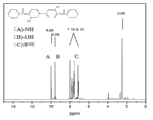
图6为本发明实施例3制备的齐聚物Q3的核磁共振氢谱图。图中9.99处的单峰对应的是酰胺基团中-NH的氢质子振动;9.58处的单峰为苯环上-OH的氢质子振动,7.16与8.10之间的几组信号峰分别来自于苯环上的氢质子振动。图谱中几乎没有其他杂质的信号峰。Figure 6 is the H NMR spectrum of the oligomer Q3 prepared in Example 3 of the present invention. The single peak at 9.99 in the figure corresponds to the hydrogen proton vibration of -NH in the amide group; the single peak at 9.58 is the hydrogen proton vibration of -OH on the benzene ring, and several groups of signal peaks between 7.16 and 8.10 come from The hydrogen protons on the benzene ring vibrate. There are almost no signal peaks of other impurities in the spectrum.
具体实施方式Detailed ways
下面通过实施例对本发明进行具体的描述,有必要在此指出的是以下实施例只用于对本发明进行进一步说明,不能理解为对本发明保护范围的限制,该领域的技术熟练人员根据上述本发明的内容作出的一些非本质的改进和调整,仍属于本发明的保护范围。The present invention is specifically described by the following examples. It is necessary to point out that the following examples are only used to further illustrate the present invention, and cannot be interpreted as limiting the protection scope of the present invention. Those skilled in the art according to the above-mentioned present invention Some non-essential improvements and adjustments made to the content still belong to the protection scope of the present invention.
实施例1Example 1
常温下,将溶于N-甲基吡咯烷酮的联苯二胺边搅拌边滴加至苯甲酰氯中,滴加完毕后,继续搅拌6小时后浅白色沉淀已基本析出,然后直接抽滤,抽滤时用去离子水洗涤5次,得到的粉末状固体于100℃真空干燥6小时即可。所用联苯二胺与苯甲酰氯的摩尔比为3:1。At room temperature, add biphenyldiamine dissolved in N-methylpyrrolidone dropwise into benzoyl chloride while stirring. After the dropwise addition, continue to stir for 6 hours. When filtering, wash with deionized water for 5 times, and then dry the obtained powdery solid in vacuum at 100° C. for 6 hours. The molar ratio of diphenyldiamine and benzoyl chloride used is 3:1.
所得齐聚物Q1的熔点为367℃,其红外光谱(FTIR)、核磁共振氢谱(1H-NMR)分别见图1、2。The melting point of the obtained oligomer Q1 is 367°C, and its infrared spectrum (FTIR) and hydrogen nuclear magnetic resonance spectrum ( 1 H-NMR) are shown in Figures 1 and 2, respectively.
实施例2Example 2
常温下,将溶于N-甲基吡咯烷酮的4,4’-二氨基二苯醚二胺边搅拌边滴加至苯甲酰氯中,滴加完毕后,继续搅拌5小时;向反应溶液中加入体积比为1:6的乙醇沉析1小时后抽滤,得到的粉末状固体于100℃真空干燥5.5小时即可。所用4,4’-二氨基二苯醚二胺与苯甲酰氯的摩尔比为1:2.5。At room temperature, add 4,4'-diaminodiphenyl ether diamine dissolved in N-methylpyrrolidone dropwise to benzoyl chloride while stirring. After the dropwise addition, continue stirring for 5 hours; add to the reaction solution Precipitate in ethanol with a volume ratio of 1:6 for 1 hour, then filter with suction, and dry the obtained powdery solid in vacuum at 100°C for 5.5 hours. The molar ratio of 4,4'-diaminodiphenyl ether diamine to benzoyl chloride is 1:2.5.
所得齐聚物Q2熔点为268℃,其红外光谱(FTIR)、核磁共振氢谱(1H-NMR)、谱图分别见图3、4。The resulting oligomer Q2 has a melting point of 268°C, and its infrared spectrum (FTIR), hydrogen nuclear magnetic resonance spectrum ( 1 H-NMR) and spectrograms are shown in Figures 3 and 4, respectively.
实施例3Example 3
常温下,将溶于N-甲基吡咯烷酮的3,3’-二羟基-4,4’-联苯二胺边搅拌边滴加至苯甲酰氯中,滴加完毕后,继续搅拌5.5小时;向反应溶液中加入体积比为1:4的去离子水沉析2小时后抽滤,得到的粉末状固体于100℃真空干燥5小时即可。所用3,3’-二羟基-4,4’-联苯二胺与苯甲酰氯的摩尔比为1:3.5。At room temperature, add 3,3'-dihydroxy-4,4'-biphenylenediamine dissolved in N-methylpyrrolidone dropwise into benzoyl chloride while stirring, and continue stirring for 5.5 hours after the dropwise addition; Add deionized water with a volume ratio of 1:4 to the reaction solution for precipitation for 2 hours, then filter with suction, and dry the obtained powdery solid in vacuum at 100°C for 5 hours. The molar ratio of 3,3'-dihydroxy-4,4'-biphenyldiamine to benzoyl chloride used was 1:3.5.
所得齐聚物Q3的熔点为317℃,其红外光谱(FTIR)、核磁共振氢谱(1H-NMR)、谱图分别见图5、6。The melting point of the obtained oligomer Q3 is 317°C. Its infrared spectrum (FTIR), hydrogen nuclear magnetic resonance spectrum ( 1 H-NMR) and spectrograms are shown in Figures 5 and 6, respectively.
实施例4Example 4
室温下,先将ODA二胺单体加入N-甲基吡咯烷酮溶剂中,在氮气保护下搅拌使其全部溶解,然后将体系降温至10℃,再将与ODA二胺单体的摩尔比100:100的PMDA二酐单体分三批加入体系中并搅拌,使之在氮气气氛下于20℃反应10小时,即得到粘稠的聚酰胺酸原液。该原液中聚合物的固含量为10wt%。At room temperature, first add the ODA diamine monomer to the N-methylpyrrolidone solvent, stir it under the protection of nitrogen to dissolve it completely, then cool the system down to 10°C, and then adjust the molar ratio of the ODA diamine monomer to 100: 100% PMDA dianhydride monomer was added into the system in three batches and stirred to make it react at 20° C. for 10 hours under a nitrogen atmosphere to obtain a viscous polyamic acid stock solution. The solid content of the polymer in the stock solution is 10wt%.
室温下,将与聚酰胺酸的重量比为98:2的齐聚物Q1粉末直接加入芳香族聚酰胺酸原液中,搅拌直至体系呈现均相溶液后,再继续搅拌3小时得共混物均相溶液。At room temperature, directly add oligomer Q1 powder with a weight ratio of 98:2 to the polyamic acid into the aromatic polyamic acid stock solution, stir until the system presents a homogeneous solution, and then continue to stir for 3 hours to obtain a homogeneous blend. phase solution.
将所获共混物均相溶液均匀涂覆于玻璃基板上,并在真空条件下,分别于100℃,150℃,250℃,300℃,350℃温度下热处理1小时后,停止加热,自然降温至100℃以下,取出涂敷有聚酰亚胺薄膜的玻璃板,再用去离子水浸泡直至聚酰亚胺薄膜从玻璃基板上自然剥离为止。然后将得到的聚酰亚胺薄膜经100℃烘干1小时即可。The homogeneous solution of the obtained blend was uniformly coated on a glass substrate, and heat-treated at 100°C, 150°C, 250°C, 300°C, and 350°C under vacuum conditions for 1 hour, then stopped heating, and naturally Lower the temperature to below 100°C, take out the glass plate coated with polyimide film, and soak it in deionized water until the polyimide film is naturally peeled off from the glass substrate. Then the obtained polyimide film is dried at 100° C. for 1 hour.
或将所获共混物均相溶液通过过滤、脱泡、纺丝等常规的湿法纺丝工艺得原丝,其中所用喷丝孔数为100孔,,孔径0.1mm;所用凝固浴为N-甲基吡咯烷酮与水的混合物,其重量比为50:50,纺丝阶段纤维的拉伸倍率为150%。然后在氮气保护下,将制备的聚酰胺酸纤维原丝束,连续通过一道热管,进行在线热拉伸/热酰亚胺化处理,热拉伸温度为400℃,其最大热拉伸倍率为30%。Or pass the homogeneous solution of the obtained blend through conventional wet spinning processes such as filtration, defoaming, and spinning to obtain precursors, wherein the number of spinneret holes used is 100, and the aperture is 0.1mm; the coagulation bath used is N - A mixture of methylpyrrolidone and water in a weight ratio of 50:50, with a draw ratio of 150% for the fibers in the spinning stage. Then, under the protection of nitrogen, the prepared polyamic acid fiber precursors are continuously passed through a heat pipe for online thermal stretching/thermal imidization treatment. The thermal stretching temperature is 400 ° C, and the maximum thermal stretching ratio is 30%.
所获得的含齐聚物聚酰亚胺薄膜或纤维的性能见表1。The properties of the obtained oligomer-containing polyimide film or fiber are shown in Table 1.
实施例5Example 5
本实施例除齐聚物Q1粉末的重量与聚酰胺酸的重量比为5:95,其纤维最大热拉伸倍率为50%外,其余聚酰胺酸合成单体的比例、共混物均相溶液的制备以及薄膜和纤维的制备工艺因与实施例4相同,故略去不述。In this example, except that the weight ratio of oligomer Q1 powder to polyamic acid is 5:95, and the maximum thermal stretching ratio of the fiber is 50%, the ratio of the other polyamic acid synthetic monomers and the blend are homogeneous The preparation of the solution and the preparation process of the film and fiber are the same as in Example 4, so they are omitted here.
实施例6Example 6
本实施例除齐聚物采用Q2,且Q2采用溶液加入的方式(将齐聚物Q2按1.5g Q2/10ml NMP的比例溶于N-甲基吡咯烷酮中形成均相溶液);齐聚物Q2的重量与聚酰胺酸的重量比为5:95;其纤维最大热拉伸倍率为60%外,其余薄膜和纤维制备工艺等因与实施例4相同,故略去不述。This embodiment adopts Q2 except oligomer, and the mode that Q2 adopts solution to add (oligomer Q2 is dissolved in N-methylpyrrolidone by the ratio of 1.5g Q2/10ml NMP to form homogeneous solution); Oligomer Q2 The weight ratio of polyamic acid to polyamic acid is 5:95; the maximum thermal stretch ratio of the fiber is 60%, and the rest of the film and fiber preparation process are the same as in Example 4, so they are omitted.
实施例7Example 7
本实施例除齐聚物采用Q2均相溶液加入的方式;齐聚物Q2的重量与聚酰胺酸的重量比为10:90;其纤维最大热拉伸倍率为80%外,其余薄膜和纤维制备工艺等因与实施例4相同,故略去不述。In this example, except that the oligomer is added by Q2 homogeneous solution; the weight ratio of oligomer Q2 to polyamic acid is 10:90; the maximum thermal stretching ratio of the fiber is 80%, the remaining films and fibers The preparation process etc. are omitted because they are the same as in Example 4.
实施例8Example 8
本实施例除齐聚物采用Q3;齐聚物Q3的重量与聚酰胺酸的重量比为1:99;其纤维最大热拉伸倍率为15%外,其余薄膜和纤维制备工艺等因与实施例4相同,故略去不述。In this example, Q3 is used as the oligomer; the weight ratio of oligomer Q3 to polyamic acid is 1:99; the maximum thermal stretching ratio of the fiber is 15%, and the other film and fiber preparation processes are related to the implementation Example 4 is the same, so it is omitted.
实施例9Example 9
室温下,先将ODA二胺单体加入N-甲基吡咯烷酮溶剂中,在氮气保护下搅拌使其全部溶解,再加入PABZ二胺单体,氮气保护下搅拌2小时,然后将体系降温至10℃,再将PMDA二酐单体分三批加入体系中并搅拌,使之在氮气气氛下于25℃反应8小时,即得到粘稠的聚酰胺酸原液。该原液中聚合物的固含量为10wt%。BPDA:ODA:PABZ的摩尔比=100:50:50。At room temperature, first add ODA diamine monomer into N-methylpyrrolidone solvent, stir under nitrogen protection to dissolve it completely, then add PABZ diamine monomer, stir for 2 hours under nitrogen protection, and then cool the system to 10 ℃, then PMDA dianhydride monomer was added into the system in three batches and stirred to make it react at 25 ℃ for 8 hours under a nitrogen atmosphere to obtain a viscous polyamic acid stock solution. The solid content of the polymer in the stock solution is 10wt%. The molar ratio of BPDA:ODA:PABZ=100:50:50.
本实施例除齐聚物采用以Q2粉末加入的方式;齐聚物Q2的重量与聚酰胺酸的重量比为3:97;其纤维最大热拉伸倍率为55%外,其余薄膜和纤维制备工艺等因与实施例4相同,故略去不述。In this example, except that the oligomer is added with Q2 powder; the weight ratio of oligomer Q2 to polyamic acid is 3:97; the maximum thermal stretching ratio of the fiber is 55%, and the remaining films and fibers are prepared Process etc. are omitted because of being identical with
实施例10Example 10
本实施例除聚酰胺酸聚合单体及其摩尔比采用:BPDA:ODA:PABZ=100:50:50;齐聚物采用Q2溶液加入的方式;齐聚物Q2的重量与聚酰胺酸的重量比为20:80;其纤维最大热拉伸倍率为70%外,其余薄膜和纤维制备工艺等因与实施例4相同,故略去不述。In this embodiment, polyamic acid polymerization monomers and their molar ratios are used: BPDA:ODA:PABZ=100:50:50; oligomers are added by Q2 solution; the weight of oligomer Q2 and the weight of polyamic acid The ratio is 20:80; except that the maximum thermal stretching ratio of the fiber is 70%, the rest of the film and fiber preparation process are the same as in Example 4, so they are omitted.
实施例11Example 11
室温下,先将PDA二胺单体加入N-甲基吡咯烷酮溶剂中,在氮气保护下搅拌使其全部溶解,然后将体系降温至8℃,再将PMDA和ODPA二酐单体依次分三批加入体系中并搅拌,使之在氮气气氛下于30℃反应10小时,即得到粘稠的聚酰胺酸原液。该原液中聚合物的固含量为10wt%。BPDA:ODPA:PDA的摩尔比=50:50:100。At room temperature, first add the PDA diamine monomer into the N-methylpyrrolidone solvent, stir it under the protection of nitrogen to dissolve it completely, then cool the system down to 8°C, and then divide the PMDA and ODPA dianhydride monomers into three batches Add it into the system and stir to make it react at 30° C. for 10 hours under a nitrogen atmosphere to obtain a viscous polyamic acid stock solution. The solid content of the polymer in the stock solution is 10wt%. The molar ratio of BPDA:ODPA:PDA=50:50:100.
本实施例除齐聚物采用Q2溶液加入的方式;齐聚物Q2的重量与聚酰胺酸的重量比为15:85;其纤维最大热拉伸倍率为60%外,其余薄膜和纤维制备工艺等因与实施例4相同,故略去不述。In this example, except that the oligomer is added by Q2 solution; the weight ratio of oligomer Q2 to polyamic acid is 15:85; the maximum thermal stretching ratio of the fiber is 60%, the remaining film and fiber preparation processes Etc reason is identical with
实施例12Example 12
本实施例除聚酰胺酸聚合单体及其摩尔配比采用:BPDA:ODPA:PDA=50:50:100;齐聚物采用Q1溶液加入的方式;齐聚物Q1的重量与聚酰胺酸的重量比为3:97;其纤维最大热拉伸倍率为65%外,其余薄膜和纤维制备工艺等因与实施例4相同,故略去不述。In this embodiment, polyamic acid polymerization monomers and their molar ratios are used: BPDA:ODPA:PDA=50:50:100; oligomers are added by Q1 solution; the weight of oligomer Q1 is related to the weight of polyamic acid The weight ratio is 3:97; except that the maximum thermal stretch ratio of the fiber is 65%, the rest of the film and fiber preparation process are the same as in Example 4, so they are omitted.
实施例13Example 13
室温下,先将ODA二胺单体加入N-甲基吡咯烷酮溶剂中,在氮气保护下搅拌使其全部溶解,再加入PDA二胺单体,氮气保护下搅拌1小时,然后将体系降温至10℃,再将BPDA二酐单体分三批加入体系中并搅拌,使之在氮气气氛下于20℃反应10小时,即得到粘稠的聚酰胺酸原液。该原液中聚合物的固含量为10wt%。BPDA:ODA:PDA的摩尔比=100:50:50。At room temperature, first add the ODA diamine monomer into the N-methylpyrrolidone solvent, stir it under the protection of nitrogen to dissolve it completely, then add the PDA diamine monomer, stir for 1 hour under the protection of nitrogen, and then cool the system to 10 ℃, and then add BPDA dianhydride monomer into the system in three batches and stir to make it react at 20 ℃ for 10 hours under a nitrogen atmosphere to obtain a viscous polyamic acid stock solution. The solid content of the polymer in the stock solution is 10wt%. The molar ratio of BPDA:ODA:PDA=100:50:50.
本实施例除齐聚物采用Q2溶液加入的方式;齐聚物Q2的重量与聚酰胺酸的重量比为8:92;其纤维最大热拉伸倍率为75%外,其余薄膜和纤维制备工艺等因与实施例4相同,故略去不述。In this example, except that the oligomer is added by Q2 solution; the weight ratio of the oligomer Q2 to polyamic acid is 8:92; the maximum thermal stretching ratio of the fiber is 75%, the other film and fiber preparation processes Etc reason is identical with
实施例14Example 14
本实施例除聚酰胺酸聚合单体及其摩尔比采用:BPDA:ODA:PDA=100:50:50;齐聚物采用Q3溶液加入的方式;齐聚物Q3的重量与聚酰胺酸的重量比为10:90;其纤维最大热拉伸倍率为65%外,其余薄膜和纤维制备工艺等因与实施例4相同,故略去不述。In this example, polyamic acid polymerized monomers and their molar ratios are used: BPDA:ODA:PDA=100:50:50; oligomers are added by Q3 solution; the weight of oligomer Q3 and the weight of polyamic acid The ratio is 10:90; except that the maximum thermal stretching ratio of the fiber is 65%, the rest of the film and fiber preparation process are the same as in Example 4, so they are omitted.
对比例1Comparative example 1
室温下,先将ODA二胺单体加入N-甲基吡咯烷酮溶剂中,在氮气保护下搅拌使其全部溶解,然后将体系降温至10℃,再将与ODA二胺单体的摩尔比100:100的PMDA二酐单体分三批加入体系中并搅拌,使之在氮气气氛下于20℃反应10小时,即得到粘稠的聚酰胺酸原液。该原液中聚合物的固含量为10wt%。At room temperature, first add the ODA diamine monomer to the N-methylpyrrolidone solvent, stir it under the protection of nitrogen to dissolve it completely, then cool the system down to 10°C, and then adjust the molar ratio of the ODA diamine monomer to 100: 100% PMDA dianhydride monomer was added into the system in three batches and stirred to make it react at 20° C. for 10 hours under a nitrogen atmosphere to obtain a viscous polyamic acid stock solution. The solid content of the polymer in the stock solution is 10wt%.
将所获聚合物均相溶液按实施例4的方法制备聚酰亚胺薄膜或纤维。本对比例所得纤维的最大热拉伸倍率为5%。The obtained polymer homogeneous solution is prepared polyimide film or fiber by the method for
对比例2Comparative example 2
室温下,先将ODA二胺单体加入N-甲基吡咯烷酮溶剂中,在氮气保护下搅拌使其全部溶解,再加入PABZ二胺单体,氮气保护下搅拌2小时,然后将体系降温至10℃,再将PMDA二酐单体分三批加入体系中并搅拌,使之在氮气气氛下于25℃反应8小时,即得到粘稠的聚酰胺酸原液。该原液中聚合物的固含量为10wt%。BPDA:ODA:PABZ的摩尔比=100:50:50。At room temperature, first add ODA diamine monomer into N-methylpyrrolidone solvent, stir under nitrogen protection to dissolve it completely, then add PABZ diamine monomer, stir for 2 hours under nitrogen protection, and then cool the system to 10 ℃, then PMDA dianhydride monomer was added into the system in three batches and stirred to make it react at 25 ℃ for 8 hours under a nitrogen atmosphere to obtain a viscous polyamic acid stock solution. The solid content of the polymer in the stock solution is 10wt%. The molar ratio of BPDA:ODA:PABZ=100:50:50.
将所获聚合物均相溶液按实施例4的方法制备聚酰亚胺薄膜或纤维。本对比例所得纤维的最大热拉伸倍率为50%。The obtained polymer homogeneous solution is prepared polyimide film or fiber by the method for
对比例3Comparative example 3
室温下,先将PDA二胺单体加入N-甲基吡咯烷酮溶剂中,在氮气保护下搅拌使其全部溶解,然后将体系降温至8℃,再将PMDA和ODPA二酐单体依次分三批加入体系中并搅拌,使之在氮气气氛下于30℃反应10小时,即得到粘稠的聚酰胺酸原液。该原液中聚合物的固含量为10wt%。BPDA:ODPA:PDA的摩尔比=50:50:100。At room temperature, first add the PDA diamine monomer into the N-methylpyrrolidone solvent, stir it under the protection of nitrogen to dissolve it completely, then cool the system down to 8°C, and then divide the PMDA and ODPA dianhydride monomers into three batches Add it into the system and stir to make it react at 30° C. for 10 hours under a nitrogen atmosphere to obtain a viscous polyamic acid stock solution. The solid content of the polymer in the stock solution is 10wt%. The molar ratio of BPDA:ODPA:PDA=50:50:100.
将所获聚合物均相溶液按实施例4的方法制备聚酰亚胺薄膜或纤维。本对比例所得纤维的最大热拉伸倍率为40%。The obtained polymer homogeneous solution is prepared polyimide film or fiber by the method for
对比例4Comparative example 4
室温下,先将ODA二胺单体加入N-甲基吡咯烷酮溶剂中,在氮气保护下搅拌使其全部溶解,再加入PDA二胺单体,氮气保护下搅拌1小时,然后将体系降温至10℃,再将BPDA二酐单体分三批加入体系中并搅拌,使之在氮气气氛下于20℃反应10小时,即得到粘稠的聚酰胺酸原液。该原液中聚合物的固含量为10wt%。BPDA:ODA:PDA的摩尔比=100:50:50。At room temperature, first add the ODA diamine monomer into the N-methylpyrrolidone solvent, stir it under the protection of nitrogen to dissolve it completely, then add the PDA diamine monomer, stir for 1 hour under the protection of nitrogen, and then cool the system to 10 ℃, and then add BPDA dianhydride monomer into the system in three batches and stir to make it react at 20 ℃ for 10 hours under a nitrogen atmosphere to obtain a viscous polyamic acid stock solution. The solid content of the polymer in the stock solution is 10wt%. The molar ratio of BPDA:ODA:PDA=100:50:50.
将所获聚合物均相溶液按实施例4的方法制备聚酰亚胺薄膜或纤维。本对比例所得纤维的最大热拉伸倍率为45%。The obtained polymer homogeneous solution is prepared polyimide film or fiber by the method for
为了考察以上实施例和对比例所得聚酰亚胺薄膜或纤维的性能,本发明对其作了如下检测:In order to investigate the performance of above embodiment and comparative example gained polyimide film or fiber, the present invention has done following detection to it:
1)力学性能和热拉伸性能测试1) Mechanical properties and thermal tensile properties test
薄膜测试样条长10cm,宽10mm,测试拉伸速度为5mm/min,夹具跨距20mm。测试结果见表1。The film test sample is 10cm long and 10mm wide, the test tensile speed is 5mm/min, and the span of the fixture is 20mm. The test results are shown in Table 1.
纤维单丝根据GJB993-90芳纶纤维拉伸性能试验方法-不浸胶法进行测试。测试结果见表1。The fiber monofilament is tested according to GJB993-90 Aramid Fiber Tensile Properties Test Method - Non-Dipping Method. The test results are shown in Table 1.
纤维束丝在400℃下进行拉伸。结果见表1。The fiber bundle was stretched at 400°C. The results are shown in Table 1.
从表1可以看出,实施例4-8与对比例1相比,薄膜的拉伸强度提高了5-11.6%,断裂伸长率提高了30-90%;纤维拉伸强度提高了27.6-49%,断裂伸长率提高了20-80%。热拉伸倍率提高了9.5-71.4%。As can be seen from Table 1, compared with Comparative Example 1, the tensile strength of the film in Examples 4-8 has increased by 5-11.6%, and the elongation at break has increased by 30-90%; the fiber tensile strength has increased by 27.6- 49%, and the elongation at break increased by 20-80%. The thermal stretching ratio was increased by 9.5-71.4%.
实施例9-10与对比例2相比,薄膜的拉伸强度提高了13.5-20%,断裂伸长率提高了6.7-40%;纤维拉伸强度提高了29.4-50%,断裂伸长率提高了53.3-100%。热拉伸倍率提高了3.3-13.3%。Compared with Comparative Example 2, the tensile strength of the film in Examples 9-10 has increased by 13.5-20%, and the elongation at break has increased by 6.7-40%; the tensile strength of fibers has increased by 29.4-50%, and the elongation at break Increased by 53.3-100%. The thermal stretch ratio was increased by 3.3-13.3%.
实施例11-12与对比例3相比,薄膜的拉伸强度提高了14.7-21.7%,断裂伸长率提高了15.2-27.2%;纤维拉伸强度提高了21.2-28.8%,断裂伸长率提高了30-50%。热拉伸倍率提高了14.3-17.9%。Compared with Comparative Example 3, the tensile strength of the film in Examples 11-12 has increased by 14.7-21.7%, and the elongation at break has increased by 15.2-27.2%; the tensile strength of fibers has increased by 21.2-28.8%, and the elongation at break Increased by 30-50%. The thermal stretch ratio was increased by 14.3-17.9%.
实施例13-14与对比例4相比,薄膜的拉伸强度提高了13.5-24.3%,断裂伸长率提高了37.5-50%;纤维拉伸强度提高了35.2-46.4%,断裂伸长率提高了22.2-50%,热拉伸倍率提高了13.8-20%。Compared with Comparative Example 4, the tensile strength of the film in Examples 13-14 has increased by 13.5-24.3%, and the elongation at break has increased by 37.5-50%; the tensile strength of fibers has increased by 35.2-46.4%, and the elongation at break It has increased by 22.2-50%, and the thermal stretch ratio has increased by 13.8-20%.
2)热失重分析测试:2) Thermogravimetric analysis test:
测试方法及条件:氮气氛围,升温速率10℃/min,测试温度为50-800℃。测试结果见表2。Test method and conditions: nitrogen atmosphere,
从表2可以看出,实施例4-8、9-10、11-12、13-14分别与对比例1、2、3、4相比,其热失重5%和10%的温度(T5%和T10%)以及开始分解温度(Td)只有0.1-5.1%的小幅度降低,说明低分子齐聚物的引入,对聚酰亚胺薄膜或纤维的耐热性基本没有影响。As can be seen from Table 2, compared with comparative examples 1, 2, 3, 4, the temperature (T 5% and T 10% ) and the onset decomposition temperature (T d ) are only slightly reduced by 0.1-5.1%, indicating that the introduction of low-molecular oligomers has basically no effect on the heat resistance of polyimide films or fibers.
表1Table 1

表2Table 2

Claims (10)


Priority Applications (1)
| Application Number | Priority Date | Filing Date | Title |
|---|---|---|---|
| CN201210590782.XA CN103086911B (en) | 2012-12-31 | 2012-12-31 | Oligomer, polyimide film/fiber containing oligomer and preparation method of polyimide film/fiber containing oligomer |
Applications Claiming Priority (1)
| Application Number | Priority Date | Filing Date | Title |
|---|---|---|---|
| CN201210590782.XA CN103086911B (en) | 2012-12-31 | 2012-12-31 | Oligomer, polyimide film/fiber containing oligomer and preparation method of polyimide film/fiber containing oligomer |
Publications (2)
| Publication Number | Publication Date |
|---|---|
| CN103086911A true CN103086911A (en) | 2013-05-08 |
| CN103086911B CN103086911B (en) | 2014-09-03 |
Family
ID=48200102
Family Applications (1)
| Application Number | Title | Priority Date | Filing Date |
|---|---|---|---|
| CN201210590782.XA Expired - Fee Related CN103086911B (en) | 2012-12-31 | 2012-12-31 | Oligomer, polyimide film/fiber containing oligomer and preparation method of polyimide film/fiber containing oligomer |
Country Status (1)
| Country | Link |
|---|---|
| CN (1) | CN103086911B (en) |
Cited By (2)
| Publication number | Priority date | Publication date | Assignee | Title |
|---|---|---|---|---|
| CN104788410A (en) * | 2014-01-22 | 2015-07-22 | 中国科学院上海药物研究所 | Phenyl ring-aromatic ring cascaded compound, and preparation method and medical application thereof |
| CN109401313A (en) * | 2018-10-31 | 2019-03-01 | 株洲时代新材料科技股份有限公司 | A kind of Kapton and preparation method thereof |
Citations (5)
| Publication number | Priority date | Publication date | Assignee | Title |
|---|---|---|---|---|
| GB1322394A (en) * | 1970-04-01 | 1973-07-04 | Agfa Gevaert | Electrophotographic recording |
| EP1111012A1 (en) * | 1999-12-20 | 2001-06-27 | Rohm And Haas Company | Coating powders comprising macrocyclic oligomers |
| JP2010225322A (en) * | 2009-03-19 | 2010-10-07 | Toagosei Co Ltd | Photocuring type composition for coating electrode |
| CN102677225A (en) * | 2012-05-28 | 2012-09-19 | 四川大学 | Aromatic polyamide/aromatic polyimide blended fiber and preparation method thereof |
| CN102766270A (en) * | 2012-07-25 | 2012-11-07 | 北京化工大学 | Polyimide nano-fiber membrane with crosslinked structure and preparation thereof |
-
2012
- 2012-12-31 CN CN201210590782.XA patent/CN103086911B/en not_active Expired - Fee Related
Patent Citations (5)
| Publication number | Priority date | Publication date | Assignee | Title |
|---|---|---|---|---|
| GB1322394A (en) * | 1970-04-01 | 1973-07-04 | Agfa Gevaert | Electrophotographic recording |
| EP1111012A1 (en) * | 1999-12-20 | 2001-06-27 | Rohm And Haas Company | Coating powders comprising macrocyclic oligomers |
| JP2010225322A (en) * | 2009-03-19 | 2010-10-07 | Toagosei Co Ltd | Photocuring type composition for coating electrode |
| CN102677225A (en) * | 2012-05-28 | 2012-09-19 | 四川大学 | Aromatic polyamide/aromatic polyimide blended fiber and preparation method thereof |
| CN102766270A (en) * | 2012-07-25 | 2012-11-07 | 北京化工大学 | Polyimide nano-fiber membrane with crosslinked structure and preparation thereof |
Non-Patent Citations (3)
| Title |
|---|
| SEINO, HIROSHI等: "Chemoselective polyamidation of 3,3"-dihydroxybenzidine", 《POLYMER JOURNAL》 * |
| T. P. SEMENOVA等: "Preparation of transparent monofilaments by introducing modifiers into the bulk of a fibre-forming polyamide", 《FIBRE CHEMISTRY》 * |
| 庄永兵等: "热固性聚酰亚胺的研究进展及其在印制电路板上的应用", 《化学与粘合》 * |
Cited By (4)
| Publication number | Priority date | Publication date | Assignee | Title |
|---|---|---|---|---|
| CN104788410A (en) * | 2014-01-22 | 2015-07-22 | 中国科学院上海药物研究所 | Phenyl ring-aromatic ring cascaded compound, and preparation method and medical application thereof |
| CN104788410B (en) * | 2014-01-22 | 2017-11-17 | 中国科学院上海药物研究所 | A kind of phenyl ring aromatic rings series connection compound, its preparation method and medical usage |
| CN109401313A (en) * | 2018-10-31 | 2019-03-01 | 株洲时代新材料科技股份有限公司 | A kind of Kapton and preparation method thereof |
| CN109401313B (en) * | 2018-10-31 | 2021-06-15 | 株洲时代华鑫新材料技术有限公司 | A kind of polyimide film and preparation method thereof |
Also Published As
| Publication number | Publication date |
|---|---|
| CN103086911B (en) | 2014-09-03 |
Similar Documents
| Publication | Publication Date | Title |
|---|---|---|
| CN103788651B (en) | Polyamic acid solution of low apparent viscosity and preparation method thereof | |
| CN106832364B (en) | Preparation method of flexible cross-linked polyimide aerogel film | |
| Lu et al. | Tröger’s base (TB)-based polyimides as promising heat-insulating and low-k dielectric materials | |
| US20190292338A1 (en) | Method for preparing polyimide film having low dielectric constant and high fracture toughness | |
| CN105153445B (en) | A kind of method by reactive end-capped with phthalic anhydride resin-made for Kapton | |
| CN105175725B (en) | The preparation method and Kapton and purposes of a kind of Kapton | |
| CN104928790A (en) | Method for preparing polyimide fibers | |
| CN102492141B (en) | Soluble polyimide molded plastic and preparation method thereof | |
| Yang et al. | Crown ether-containing polyimides with high dielectric constant | |
| CN102041577A (en) | Polyimide fiber and preparation method thereof | |
| CN104151823A (en) | Polyimide film and preparation methods thereof | |
| CN105017533A (en) | Preparation method for polyamide imide coating | |
| CN105440283A (en) | Modified cyanate ester resin and preparation method of modified cyanate ester resin | |
| Zhang et al. | Superior comprehensive performance of a rigid-rod poly (hydroxy-p-phenylenebenzobisoxazole) fiber | |
| CN105440286B (en) | A kind of polyimide containing fluorene or fluorenone structure and its preparation method and application | |
| CN117844018A (en) | A super-tough and super-high insulating heterocyclic aramid nanofiber film and preparation method thereof | |
| CN107793566A (en) | A kind of thermoplastic poly benzimidazole acid imide and preparation method thereof | |
| CN103319715B (en) | Hydrolysis-resistanteasy-processable easy-processable polythioetherimide resin material and preparation method thereof | |
| CN103086911B (en) | Oligomer, polyimide film/fiber containing oligomer and preparation method of polyimide film/fiber containing oligomer | |
| CN101392057A (en) | Preparation method of crystalline thermoplastic polyimide molding powder | |
| CN110128684A (en) | Transparent solvable biphenyl polyimide film of high heat resistance and the preparation method and application thereof | |
| CN102677225B (en) | Aromatic polyamide/aromatic polyimide blended fiber and preparation method thereof | |
| CN103467986A (en) | Nano titanium carbide/polyimide composite material modified by small organic molecules | |
| CN101225169A (en) | Sulfur-containing fluorinated self-crosslinking polyimide material and preparation method thereof | |
| CN107892745A (en) | A kind of thermoplastic poly benzoxazole acid imide and preparation method thereof |
Legal Events
| Date | Code | Title | Description |
|---|---|---|---|
| C06 | Publication | ||
| PB01 | Publication | ||
| C10 | Entry into substantive examination | ||
| SE01 | Entry into force of request for substantive examination | ||
| C14 | Grant of patent or utility model | ||
| GR01 | Patent grant | ||
| CF01 | Termination of patent right due to non-payment of annual fee |
Granted publication date: 20140903 |
|
| CF01 | Termination of patent right due to non-payment of annual fee |