CN103068380A - Methods and systems for modulating hormones and related methods, agents and compositions - Google Patents
Methods and systems for modulating hormones and related methods, agents and compositions Download PDFInfo
- Publication number
- CN103068380A CN103068380A CN2011800387714A CN201180038771A CN103068380A CN 103068380 A CN103068380 A CN 103068380A CN 2011800387714 A CN2011800387714 A CN 2011800387714A CN 201180038771 A CN201180038771 A CN 201180038771A CN 103068380 A CN103068380 A CN 103068380A
- Authority
- CN
- China
- Prior art keywords
- bitterness
- receptor
- receptors
- feel
- ptu
- Prior art date
- Legal status (The legal status is an assumption and is not a legal conclusion. Google has not performed a legal analysis and makes no representation as to the accuracy of the status listed.)
- Pending
Links
Images




Classifications
-
- G—PHYSICS
- G01—MEASURING; TESTING
- G01N—INVESTIGATING OR ANALYSING MATERIALS BY DETERMINING THEIR CHEMICAL OR PHYSICAL PROPERTIES
- G01N33/00—Investigating or analysing materials by specific methods not covered by groups G01N1/00 - G01N31/00
- G01N33/48—Biological material, e.g. blood, urine; Haemocytometers
- G01N33/50—Chemical analysis of biological material, e.g. blood, urine; Testing involving biospecific ligand binding methods; Immunological testing
- G01N33/53—Immunoassay; Biospecific binding assay; Materials therefor
- G01N33/566—Immunoassay; Biospecific binding assay; Materials therefor using specific carrier or receptor proteins as ligand binding reagents where possible specific carrier or receptor proteins are classified with their target compounds
-
- A—HUMAN NECESSITIES
- A61—MEDICAL OR VETERINARY SCIENCE; HYGIENE
- A61K—PREPARATIONS FOR MEDICAL, DENTAL OR TOILETRY PURPOSES
- A61K31/00—Medicinal preparations containing organic active ingredients
- A61K31/095—Sulfur, selenium, or tellurium compounds, e.g. thiols
- A61K31/10—Sulfides; Sulfoxides; Sulfones
-
- A—HUMAN NECESSITIES
- A61—MEDICAL OR VETERINARY SCIENCE; HYGIENE
- A61K—PREPARATIONS FOR MEDICAL, DENTAL OR TOILETRY PURPOSES
- A61K31/00—Medicinal preparations containing organic active ingredients
- A61K31/12—Ketones
-
- A—HUMAN NECESSITIES
- A61—MEDICAL OR VETERINARY SCIENCE; HYGIENE
- A61K—PREPARATIONS FOR MEDICAL, DENTAL OR TOILETRY PURPOSES
- A61K31/00—Medicinal preparations containing organic active ingredients
- A61K31/12—Ketones
- A61K31/122—Ketones having the oxygen directly attached to a ring, e.g. quinones, vitamin K1, anthralin
-
- A—HUMAN NECESSITIES
- A61—MEDICAL OR VETERINARY SCIENCE; HYGIENE
- A61K—PREPARATIONS FOR MEDICAL, DENTAL OR TOILETRY PURPOSES
- A61K31/00—Medicinal preparations containing organic active ingredients
- A61K31/16—Amides, e.g. hydroxamic acids
- A61K31/165—Amides, e.g. hydroxamic acids having aromatic rings, e.g. colchicine, atenolol, progabide
- A61K31/167—Amides, e.g. hydroxamic acids having aromatic rings, e.g. colchicine, atenolol, progabide having the nitrogen of a carboxamide group directly attached to the aromatic ring, e.g. lidocaine, paracetamol
-
- A—HUMAN NECESSITIES
- A61—MEDICAL OR VETERINARY SCIENCE; HYGIENE
- A61K—PREPARATIONS FOR MEDICAL, DENTAL OR TOILETRY PURPOSES
- A61K31/00—Medicinal preparations containing organic active ingredients
- A61K31/16—Amides, e.g. hydroxamic acids
- A61K31/17—Amides, e.g. hydroxamic acids having the group >N—C(O)—N< or >N—C(S)—N<, e.g. urea, thiourea, carmustine
-
- A—HUMAN NECESSITIES
- A61—MEDICAL OR VETERINARY SCIENCE; HYGIENE
- A61K—PREPARATIONS FOR MEDICAL, DENTAL OR TOILETRY PURPOSES
- A61K31/00—Medicinal preparations containing organic active ingredients
- A61K31/185—Acids; Anhydrides, halides or salts thereof, e.g. sulfur acids, imidic, hydrazonic or hydroximic acids
- A61K31/205—Amine addition salts of organic acids; Inner quaternary ammonium salts, e.g. betaine, carnitine
-
- A—HUMAN NECESSITIES
- A61—MEDICAL OR VETERINARY SCIENCE; HYGIENE
- A61K—PREPARATIONS FOR MEDICAL, DENTAL OR TOILETRY PURPOSES
- A61K31/00—Medicinal preparations containing organic active ingredients
- A61K31/33—Heterocyclic compounds
- A61K31/335—Heterocyclic compounds having oxygen as the only ring hetero atom, e.g. fungichromin
- A61K31/35—Heterocyclic compounds having oxygen as the only ring hetero atom, e.g. fungichromin having six-membered rings with one oxygen as the only ring hetero atom
- A61K31/352—Heterocyclic compounds having oxygen as the only ring hetero atom, e.g. fungichromin having six-membered rings with one oxygen as the only ring hetero atom condensed with carbocyclic rings, e.g. methantheline
-
- A—HUMAN NECESSITIES
- A61—MEDICAL OR VETERINARY SCIENCE; HYGIENE
- A61K—PREPARATIONS FOR MEDICAL, DENTAL OR TOILETRY PURPOSES
- A61K31/00—Medicinal preparations containing organic active ingredients
- A61K31/33—Heterocyclic compounds
- A61K31/335—Heterocyclic compounds having oxygen as the only ring hetero atom, e.g. fungichromin
- A61K31/35—Heterocyclic compounds having oxygen as the only ring hetero atom, e.g. fungichromin having six-membered rings with one oxygen as the only ring hetero atom
- A61K31/352—Heterocyclic compounds having oxygen as the only ring hetero atom, e.g. fungichromin having six-membered rings with one oxygen as the only ring hetero atom condensed with carbocyclic rings, e.g. methantheline
- A61K31/353—3,4-Dihydrobenzopyrans, e.g. chroman, catechin
-
- A—HUMAN NECESSITIES
- A61—MEDICAL OR VETERINARY SCIENCE; HYGIENE
- A61K—PREPARATIONS FOR MEDICAL, DENTAL OR TOILETRY PURPOSES
- A61K31/00—Medicinal preparations containing organic active ingredients
- A61K31/33—Heterocyclic compounds
- A61K31/335—Heterocyclic compounds having oxygen as the only ring hetero atom, e.g. fungichromin
- A61K31/365—Lactones
-
- A—HUMAN NECESSITIES
- A61—MEDICAL OR VETERINARY SCIENCE; HYGIENE
- A61K—PREPARATIONS FOR MEDICAL, DENTAL OR TOILETRY PURPOSES
- A61K31/00—Medicinal preparations containing organic active ingredients
- A61K31/33—Heterocyclic compounds
- A61K31/395—Heterocyclic compounds having nitrogen as a ring hetero atom, e.g. guanethidine or rifamycins
- A61K31/435—Heterocyclic compounds having nitrogen as a ring hetero atom, e.g. guanethidine or rifamycins having six-membered rings with one nitrogen as the only ring hetero atom
- A61K31/4353—Heterocyclic compounds having nitrogen as a ring hetero atom, e.g. guanethidine or rifamycins having six-membered rings with one nitrogen as the only ring hetero atom ortho- or peri-condensed with heterocyclic ring systems
- A61K31/4375—Heterocyclic compounds having nitrogen as a ring hetero atom, e.g. guanethidine or rifamycins having six-membered rings with one nitrogen as the only ring hetero atom ortho- or peri-condensed with heterocyclic ring systems the heterocyclic ring system containing a six-membered ring having nitrogen as a ring heteroatom, e.g. quinolizines, naphthyridines, berberine, vincamine
-
- A—HUMAN NECESSITIES
- A61—MEDICAL OR VETERINARY SCIENCE; HYGIENE
- A61K—PREPARATIONS FOR MEDICAL, DENTAL OR TOILETRY PURPOSES
- A61K31/00—Medicinal preparations containing organic active ingredients
- A61K31/33—Heterocyclic compounds
- A61K31/395—Heterocyclic compounds having nitrogen as a ring hetero atom, e.g. guanethidine or rifamycins
- A61K31/435—Heterocyclic compounds having nitrogen as a ring hetero atom, e.g. guanethidine or rifamycins having six-membered rings with one nitrogen as the only ring hetero atom
- A61K31/47—Quinolines; Isoquinolines
- A61K31/4738—Quinolines; Isoquinolines ortho- or peri-condensed with heterocyclic ring systems
- A61K31/4745—Quinolines; Isoquinolines ortho- or peri-condensed with heterocyclic ring systems condensed with ring systems having nitrogen as a ring hetero atom, e.g. phenantrolines
-
- A—HUMAN NECESSITIES
- A61—MEDICAL OR VETERINARY SCIENCE; HYGIENE
- A61K—PREPARATIONS FOR MEDICAL, DENTAL OR TOILETRY PURPOSES
- A61K31/00—Medicinal preparations containing organic active ingredients
- A61K31/33—Heterocyclic compounds
- A61K31/395—Heterocyclic compounds having nitrogen as a ring hetero atom, e.g. guanethidine or rifamycins
- A61K31/495—Heterocyclic compounds having nitrogen as a ring hetero atom, e.g. guanethidine or rifamycins having six-membered rings with two or more nitrogen atoms as the only ring heteroatoms, e.g. piperazine or tetrazines
- A61K31/505—Pyrimidines; Hydrogenated pyrimidines, e.g. trimethoprim
- A61K31/513—Pyrimidines; Hydrogenated pyrimidines, e.g. trimethoprim having oxo groups directly attached to the heterocyclic ring, e.g. cytosine
-
- A—HUMAN NECESSITIES
- A61—MEDICAL OR VETERINARY SCIENCE; HYGIENE
- A61K—PREPARATIONS FOR MEDICAL, DENTAL OR TOILETRY PURPOSES
- A61K31/00—Medicinal preparations containing organic active ingredients
- A61K31/70—Carbohydrates; Sugars; Derivatives thereof
- A61K31/7016—Disaccharides, e.g. lactose, lactulose
-
- A—HUMAN NECESSITIES
- A61—MEDICAL OR VETERINARY SCIENCE; HYGIENE
- A61K—PREPARATIONS FOR MEDICAL, DENTAL OR TOILETRY PURPOSES
- A61K31/00—Medicinal preparations containing organic active ingredients
- A61K31/70—Carbohydrates; Sugars; Derivatives thereof
- A61K31/7028—Compounds having saccharide radicals attached to non-saccharide compounds by glycosidic linkages
- A61K31/7034—Compounds having saccharide radicals attached to non-saccharide compounds by glycosidic linkages attached to a carbocyclic compound, e.g. phloridzin
- A61K31/704—Compounds having saccharide radicals attached to non-saccharide compounds by glycosidic linkages attached to a carbocyclic compound, e.g. phloridzin attached to a condensed carbocyclic ring system, e.g. sennosides, thiocolchicosides, escin, daunorubicin
-
- A—HUMAN NECESSITIES
- A61—MEDICAL OR VETERINARY SCIENCE; HYGIENE
- A61K—PREPARATIONS FOR MEDICAL, DENTAL OR TOILETRY PURPOSES
- A61K47/00—Medicinal preparations characterised by the non-active ingredients used, e.g. carriers or inert additives; Targeting or modifying agents chemically bound to the active ingredient
- A61K47/50—Medicinal preparations characterised by the non-active ingredients used, e.g. carriers or inert additives; Targeting or modifying agents chemically bound to the active ingredient the non-active ingredient being chemically bound to the active ingredient, e.g. polymer-drug conjugates
- A61K47/51—Medicinal preparations characterised by the non-active ingredients used, e.g. carriers or inert additives; Targeting or modifying agents chemically bound to the active ingredient the non-active ingredient being chemically bound to the active ingredient, e.g. polymer-drug conjugates the non-active ingredient being a modifying agent
- A61K47/56—Medicinal preparations characterised by the non-active ingredients used, e.g. carriers or inert additives; Targeting or modifying agents chemically bound to the active ingredient the non-active ingredient being chemically bound to the active ingredient, e.g. polymer-drug conjugates the non-active ingredient being a modifying agent the modifying agent being an organic macromolecular compound, e.g. an oligomeric, polymeric or dendrimeric molecule
- A61K47/61—Medicinal preparations characterised by the non-active ingredients used, e.g. carriers or inert additives; Targeting or modifying agents chemically bound to the active ingredient the non-active ingredient being chemically bound to the active ingredient, e.g. polymer-drug conjugates the non-active ingredient being a modifying agent the modifying agent being an organic macromolecular compound, e.g. an oligomeric, polymeric or dendrimeric molecule the organic macromolecular compound being a polysaccharide or a derivative thereof
-
- A—HUMAN NECESSITIES
- A61—MEDICAL OR VETERINARY SCIENCE; HYGIENE
- A61P—SPECIFIC THERAPEUTIC ACTIVITY OF CHEMICAL COMPOUNDS OR MEDICINAL PREPARATIONS
- A61P1/00—Drugs for disorders of the alimentary tract or the digestive system
- A61P1/16—Drugs for disorders of the alimentary tract or the digestive system for liver or gallbladder disorders, e.g. hepatoprotective agents, cholagogues, litholytics
-
- A—HUMAN NECESSITIES
- A61—MEDICAL OR VETERINARY SCIENCE; HYGIENE
- A61P—SPECIFIC THERAPEUTIC ACTIVITY OF CHEMICAL COMPOUNDS OR MEDICINAL PREPARATIONS
- A61P3/00—Drugs for disorders of the metabolism
-
- A—HUMAN NECESSITIES
- A61—MEDICAL OR VETERINARY SCIENCE; HYGIENE
- A61P—SPECIFIC THERAPEUTIC ACTIVITY OF CHEMICAL COMPOUNDS OR MEDICINAL PREPARATIONS
- A61P3/00—Drugs for disorders of the metabolism
- A61P3/04—Anorexiants; Antiobesity agents
-
- A—HUMAN NECESSITIES
- A61—MEDICAL OR VETERINARY SCIENCE; HYGIENE
- A61P—SPECIFIC THERAPEUTIC ACTIVITY OF CHEMICAL COMPOUNDS OR MEDICINAL PREPARATIONS
- A61P3/00—Drugs for disorders of the metabolism
- A61P3/08—Drugs for disorders of the metabolism for glucose homeostasis
- A61P3/10—Drugs for disorders of the metabolism for glucose homeostasis for hyperglycaemia, e.g. antidiabetics
-
- A—HUMAN NECESSITIES
- A61—MEDICAL OR VETERINARY SCIENCE; HYGIENE
- A61P—SPECIFIC THERAPEUTIC ACTIVITY OF CHEMICAL COMPOUNDS OR MEDICINAL PREPARATIONS
- A61P43/00—Drugs for specific purposes, not provided for in groups A61P1/00-A61P41/00
-
- A—HUMAN NECESSITIES
- A61—MEDICAL OR VETERINARY SCIENCE; HYGIENE
- A61P—SPECIFIC THERAPEUTIC ACTIVITY OF CHEMICAL COMPOUNDS OR MEDICINAL PREPARATIONS
- A61P9/00—Drugs for disorders of the cardiovascular system
-
- G—PHYSICS
- G01—MEASURING; TESTING
- G01N—INVESTIGATING OR ANALYSING MATERIALS BY DETERMINING THEIR CHEMICAL OR PHYSICAL PROPERTIES
- G01N2333/00—Assays involving biological materials from specific organisms or of a specific nature
- G01N2333/435—Assays involving biological materials from specific organisms or of a specific nature from animals; from humans
- G01N2333/705—Assays involving receptors, cell surface antigens or cell surface determinants
Landscapes
- Health & Medical Sciences (AREA)
- Life Sciences & Earth Sciences (AREA)
- Chemical & Material Sciences (AREA)
- Medicinal Chemistry (AREA)
- General Health & Medical Sciences (AREA)
- Public Health (AREA)
- Veterinary Medicine (AREA)
- Pharmacology & Pharmacy (AREA)
- Animal Behavior & Ethology (AREA)
- Epidemiology (AREA)
- Engineering & Computer Science (AREA)
- Molecular Biology (AREA)
- Immunology (AREA)
- Hematology (AREA)
- Bioinformatics & Cheminformatics (AREA)
- Biomedical Technology (AREA)
- Urology & Nephrology (AREA)
- Organic Chemistry (AREA)
- Nuclear Medicine, Radiotherapy & Molecular Imaging (AREA)
- General Chemical & Material Sciences (AREA)
- Chemical Kinetics & Catalysis (AREA)
- Diabetes (AREA)
- Cell Biology (AREA)
- Pathology (AREA)
- General Physics & Mathematics (AREA)
- Biochemistry (AREA)
- Analytical Chemistry (AREA)
- Physics & Mathematics (AREA)
- Food Science & Technology (AREA)
- Biotechnology (AREA)
- Microbiology (AREA)
- Pain & Pain Management (AREA)
- Obesity (AREA)
- Endocrinology (AREA)
- Emergency Medicine (AREA)
- Cardiology (AREA)
- Heart & Thoracic Surgery (AREA)
- Child & Adolescent Psychology (AREA)
- Gastroenterology & Hepatology (AREA)
- Medicinal Preparation (AREA)
Abstract
本文提供了用于体外或体内调节代谢激素从个体GI道的细胞释放的苦味觉受体的配体、相关的剂、组合、组合物、方法和系统。

This article provides ligands, related agents, combinations, compositions, methods, and systems for regulating the release of metabolic hormones from cells of an individual GI tract, either in vitro or in vivo, from bitter taste receptors.
Description
相关申请的交叉引用Cross References to Related Applications
本申请与2010年6月17日递交的序列号为61/397,940、名称为“Receptors,agents,treatment of diseases and conditions”的美国临时申请有关,其公开内容被通过引用全部并入本文。This application is related to U.S. Provisional Application Serial No. 61/397,940, filed June 17, 2010, entitled "Receptors, agents, treatment of diseases and conditions," the disclosure of which is incorporated herein by reference in its entirety.
政府资助说明Government Funding Instructions
根据与国家补充与替代医学中心(NCCAM)之间的合同号(1P01AT003960),美国政府在本发明中享有权利。The US Government has rights in this invention pursuant to Contract No. (1P01AT003960) with the National Center for Complementary and Alternative Medicine (NCCAM).
领域field
本公开内容涉及用于调节激素的方法和系统以及相关的方法、配体、剂和组合物。The present disclosure relates to methods and systems for modulating hormones and related methods, ligands, agents and compositions.
背景background
激素是通常被鉴定为传递质(mediator)的化学物质,其通常由生物体的一个部分的细胞或腺体释放以给生物体的其他部分充当化学信使。Hormones are chemical substances commonly identified as mediators, which are usually released by cells or glands in one part of an organism to act as chemical messengers to other parts of the organism.
各种生物学过程且特别是代谢过程与生物体内的激素释放有关。特别地,各种代谢激素(例如,基于肽的激素)影响并调控个体内细胞和/或器官的代谢网络。Various biological processes and especially metabolic processes are involved in the release of hormones in organisms. In particular, various metabolic hormones (eg, peptide-based hormones) affect and regulate metabolic networks of cells and/or organs within an individual.
然而,控制激素产生且特别是调节与治疗个体内的各种病症有关的激素释放是挑战性的。However, controlling hormone production and particularly modulating hormone release in relation to the treatment of various conditions in an individual is challenging.
概述overview
本文提供了允许在多个实施方式中调节代谢激素的释放和相关的生物学过程,鉴定能够进行所述调节和控制所述调节的配体的方法、系统和组合物。特别地,本文提供了用于调节代谢激素的释放并控制相关生物学过程的剂、组合物、方法和系统,包括适合用于治疗代谢性病症的剂、组合物、方法和系统。Provided herein are methods, systems and compositions that allow, in various embodiments, the modulation of the release of metabolic hormones and related biological processes, the identification of ligands capable of and control of said modulation. In particular, provided herein are agents, compositions, methods and systems for modulating the release of metabolic hormones and controlling related biological processes, including agents, compositions, methods and systems suitable for use in the treatment of metabolic disorders.
根据第一方面,描述了用于调节个体内代谢激素的释放和相关生物学过程的方法、系统和组合物。该方法包括对所述个体以允许结合所述个体中的一种或多种GI苦味觉受体(bitter taste receptor)的有效量施用选自PTU、PTC、苯甲地那铵(denatonium benzoate)、甘草酸铵盐、表没食子儿茶素没食子酸酯(Epigallocatechin gallate)、贯叶金丝桃素(Hyperforin)、盐酸小檗碱、盐酸黄连碱烯丙基硫醚、粗糠柴毒素(Rottlerin)、姜黄素、鞣花酸、酸藤子素(embelin)和/或其衍生物的一种或多种GI苦味觉受体的配体,所述结合导致对代谢激素释放和相关生物学过程的调节,所述代谢激素选自由GLP-1、PYY和CCK组成的组。该系统包括一种或多种GI苦味觉受体的配体中的至少两种以同时地、组合地或顺序地用于本文所述的用于调节激素释放的方法中。所述组合物包含经与合适的媒介物(vehicle)一起对所述个体施用后能够结合一种或多种靶GI苦味觉受体的一种或多种配体。According to a first aspect, methods, systems and compositions for modulating the release of metabolic hormones and related biological processes in an individual are described. The method comprises administering to the individual an effective amount to allow binding to one or more GI bitter taste receptors in the individual selected from the group consisting of PTU, PTC, denatonium benzoate, Ammonium Glycyrrhizinate, Epigallocatechin gallate, Hyperforin, Berberine Hydrochloride, Coptisine Hydrochloride Allyl Sulfide, Rottlerin, Curcumin , ellagic acid, embelin and/or derivatives of one or more GI bitter taste receptor ligands, said binding results in the regulation of metabolic hormone release and related biological processes, said The metabolic hormone is selected from the group consisting of GLP-1, PYY and CCK. The system includes at least two of the ligands of one or more GI bitter taste receptors for simultaneous, combined or sequential use in the methods described herein for modulating hormone release. The composition comprises one or more ligands capable of binding one or more target GI bitter taste receptors upon administration to the individual with a suitable vehicle.
根据第二方面,描述了用于调节个体内的靶苦味觉受体且特别是GI苦味觉受体的苦味剂以及相关的方法、系统和组合物。所述苦味剂基于苦味觉受体的配体和被设置为干扰所述苦味觉受体的配体的全身吸收和释放的补充分子(complementary molecule)的组合。特别地,所述苦味剂可包含与补充分子偶联的苦味觉受体的配体,其中所述配体具有第一部分和第二部分。在所述苦味剂中,所述苦味觉受体的配体的第一部分关于苦味觉配体与苦味觉受体的结合是活性的,而第二部分关于苦味觉配体与苦味觉受体的结合是钝态的。在所述苦味剂中,所述补充分子与所述配体在所述配体的第二部分连接,且所得的苦味剂被设置为呈递用于结合苦味觉受体的第一部分。所述方法包括对所述个体施用有效量的所述苦味剂。所述组合物包含一种或多种苦味觉受体的配体和至少一种补充分子。所述系统包括一种或多种苦味觉受体的配体中的至少两种和补充分子以同时地、组合地或顺序地用于提供苦味剂和/或用于本文所述的调节激素释放的方法中。According to a second aspect, bitter taste agents and related methods, systems and compositions for modulating target bitter taste receptors, in particular GI bitter taste receptors, in an individual are described. The bittering agent is based on a combination of a ligand for a bitter taste receptor and a complementary molecule arranged to interfere with the systemic absorption and release of the ligand for a bitter taste receptor. In particular, the bitter agent may comprise a ligand for a bitter taste receptor coupled to a complementary molecule, wherein the ligand has a first moiety and a second moiety. In said bitter agent, the first part of the ligand of the bitter taste receptor is active with respect to the binding of the bitter taste ligand to the bitter taste receptor, and the second part is active with respect to the binding of the bitter taste ligand to the bitter taste receptor. Binding is passive. In said bittering agent, said complementary molecule is linked to said ligand at a second portion of said ligand, and the resulting bittering agent is arranged to present a first portion for binding to a bitter taste receptor. The method includes administering to the individual an effective amount of the bittering agent. The composition comprises one or more ligands of bitter taste receptors and at least one complementary molecule. The system includes at least two of the ligands of one or more bitter taste receptors and complementary molecules for simultaneous, combined or sequential use in providing bitter agents and/or for modulating hormone release as described herein in the method.
根据第三方面,描述了鉴定与细胞且特别是GI道的细胞内的苦味元受体(bitter tastant receptor)的活化有关的生物学响应的方法和系统。该方法包括使所述细胞接触选自PTU、PTC、苯甲地那铵、甘草酸铵盐、表没食子儿茶素没食子酸酯、贯叶金丝桃素、盐酸小檗碱、盐酸黄连碱烯丙基硫醚、粗糠柴毒素、姜黄素、鞣花酸、酸藤子素和/或其衍生物的苦味元受体的配体以允许配体与苦味元受体的结合以及在接触后检测细胞内的生物学响应。在某些实施方式中,该方法还包括比较所检测的生物学响应与参考生物学响应以表征该生物学响应。该系统包括一种或多种苦味觉受体的配体中的至少两种和细胞,以同时地、组合地或顺序地用于本文所述的鉴定生物学响应的方法中。According to a third aspect, methods and systems are described for identifying biological responses associated with the activation of bitter tastant receptors in cells, particularly cells of the GI tract. The method comprises contacting the cells with a compound selected from the group consisting of PTU, PTC, denatonium benzoate, ammonium glycyrrhizinate, epigallocatechin gallate, hyperforin, berberine hydrochloride, berberine hydrochloride allyl Ligands for bitter tastant receptors of thioethers, sarcotoxins, curcumin, ellagic acid, saicherin and/or derivatives thereof to allow binding of ligands to bitter tastant receptors and detection of intracellular biological response. In certain embodiments, the method further comprises comparing the detected biological response to a reference biological response to characterize the biological response. The system includes at least two of the ligands of one or more bitter taste receptors and a cell for simultaneous, combined or sequential use in the methods of identifying a biological response described herein.
根据第四方面,描述了用于筛选候选配体以鉴定能够调节与GI系统有关的代谢激素的释放的GI苦味觉受体的配体的方法、系统和组合物,在某些实施方式中,所述筛选基于靶细胞在GI系统中的具体位置和靶细胞所表达的特定苦味觉受体进行。该方法包括鉴定表达在GI系统中的靶细胞内的苦味觉受体,预测GI苦味元受体的结构,基于所预测的结构鉴定结合该受体的候选配体,在苦味觉受体激活测定中测试该配体,并然后测试该配体对调节与GI系统有关的至少一种代谢激素的作用。According to a fourth aspect, methods, systems and compositions are described for screening candidate ligands to identify ligands for GI bitter taste receptors capable of modulating the release of metabolic hormones associated with the GI system, in certain embodiments, The screening is based on the specific location of the target cells in the GI system and the specific bitter taste receptors expressed by the target cells. The method includes identifying a bitter taste receptor expressed in a target cell in the GI system, predicting the structure of the GI bitter tastant receptor, identifying a candidate ligand that binds the receptor based on the predicted structure, and performing a test in a bitter taste receptor activation assay. The ligand is tested in , and then tested for its effect on the modulation of at least one metabolic hormone associated with the GI system.
根据第五方面,描述了调节激素从细胞释放的方法,该方法包括通过结合GI苦味觉受体的配体诱导GI苦味元受体的特定构象,所述特定构象为苦味元受体的多种活性构象中的至少一种,检测在诱导后来自细胞的激素释放的增加或减少以及通过GI苦味觉受体的配体的作用调节所述增加或减少。在某些实施方式中,在所述诱导之前鉴定GI苦味觉受体的配体。According to a fifth aspect, a method of modulating hormone release from a cell is described, the method comprising inducing a specific conformation of a GI bitter tastant receptor by binding a ligand of a GI bitter tastant receptor, said specific conformation being a plurality of bitter tastant receptors At least one of the active conformations, detecting an increase or decrease in hormone release from the cell after induction and modulating said increase or decrease through the action of a ligand for the GI bitter taste receptor. In certain embodiments, a ligand for the GI bitter taste receptor is identified prior to said inducing.
根据第六方面,描述了治疗或预防个体内与代谢激素有关的病症的苦味觉受体的配体、剂以及相关的方法和系统。该方法包括对所述个体施用治疗有效量的选自PTU、PTC、苯甲地那铵或其衍生物的一种或多种GI苦味觉受体的配体以调节代谢激素GLP-1、PYY和/或CCK。该系统包括本文所述的苦味觉受体的配体或剂中的至少两种以同时地、组合地或顺序地用于本文所述的治疗或预防个体内与代谢激素有关的病症的方法中。According to a sixth aspect, bitter taste receptor ligands, agents, and related methods and systems for treating or preventing metabolic hormone-related disorders in an individual are described. The method comprises administering to said individual a therapeutically effective amount of one or more GI bitter taste receptor ligands selected from PTU, PTC, denatonium benzoate or derivatives thereof to modulate metabolic hormones GLP-1, PYY and/or CCK. The system includes at least two of the ligands or agents of the bitter taste receptors described herein for simultaneous, combined or sequential use in the methods described herein for treating or preventing a metabolic hormone-related disorder in an individual .
本文所述的方法、系统和组合物允许在多个实施方式中调节GI苦味觉受体的活性,调节代谢激素的分泌和全身释放以及调节相关代谢性病症以及其他生物学过程,包括治疗代谢性疾病。The methods, systems, and compositions described herein allow, in various embodiments, to modulate the activity of GI bitter taste receptors, modulate the secretion and systemic release of metabolic hormones, and modulate associated metabolic disorders and other biological processes, including the treatment of metabolic disorders. disease.
本文所述的方法和组合物可与其中调节GI和肠苦味觉受体的活性是期望的应用结合使用,所述应用包括但不限于医疗应用、生物分析、食品处理、味道/风味调节、营养、营养学应用和诊断,包括但不限于临床应用。The methods and compositions described herein can be used in conjunction with applications where modulation of the activity of the GI and intestinal bitter taste receptors is desired, including, but not limited to, medical applications, bioanalysis, food processing, taste/flavor modulation, nutrition , nutritional applications and diagnostics, including but not limited to clinical applications.
附图和下文的描述中阐述本公开内容的一种或多种实施方式的细节。从说明书和附图以及从权利要求中其他特征、目的和优点将是明显的。The details of one or more implementations of the disclosure are set forth in the accompanying drawings and the description below. Other features, objects, and advantages will be apparent from the description and drawings, and from the claims.
附图简述Brief description of the drawings
被并入本说明书并构成本说明书的一部分的附图阐述了本公开内容的一种或多种实施方式,并与详述和实施例部分一起用来解释本公开内容的原理和实施。The accompanying drawings, which are incorporated in and constitute a part of this specification, illustrate one or more implementations of the disclosure, and together with the Detailed Description and Examples serve to explain the principles and practices of the disclosure.
图1示出了TAS2R38苦味觉受体变体hTAS2R38PAV、hTAS2R38AAI、hTAS2R38PVV(辨味者(taster))和hTAS2R38AVI(非辨味者(nontaster))的针对β1肾上腺素能受体(hβ1AR)的序列比对。 Figure 1 shows the TAS2R38 bitter taste receptor variants hTAS2R38 PAV , hTAS2R38 AAI , hTAS2R38 PVV (taster) and hTAS2R38 AVI (nontaster) against the β1 adrenergic receptor (hβ1AR ) sequence alignment.
图2示出了用来描述七个螺旋在GPCR束中的取向的坐标系。双箭头连接在BiHelix程序中独立抽样的最接近的相邻螺旋对。使用螺旋1和2强调BiHelix程序以表明当该螺旋对的构象被抽样时,其他螺旋不存在。 Figure 2 shows the coordinate system used to describe the orientation of the seven helices in a GPCR bundle. Double arrows connect the closest neighboring helix pairs sampled independently in the BiHelix program. The BiHelix program was highlighted using
图3示出了借助脂质和水的TAS2R38苦味觉受体分子动力学模拟盒(molecular dynamics simulation box)。EC区域位于顶部。 Figure 3 shows the TAS2R38 bitter taste receptor molecular dynamics simulation box with lipid and water. The EC area is at the top.
图4示出了由SuperComBiHelix预测的苦味觉受体hTAS2R38PAV(a)、hTAS2R38AVI(b)、TAS2R38AAI(C)、hTAS2R38PVV(d)的3D结构。(此处突出了形成螺旋间H键的残基) Figure 4 shows the 3D structures of bitter taste receptors hTAS2R38 PAV (a), hTAS2R38 AVI (b), TAS2R38 AAI (c) and hTAS2R38 PVV (d) predicted by SuperComBiHelix. (residues forming interhelical H bonds are highlighted here)
图5示出了在借助脂质和水的10ns MD后预测的苦味觉受体hTAS2R38PAV(a)和hTAS2R38AVI(b)的3D结构。(此处突出了形成螺旋间H键的残基且它们在10ns MD期间是稳定的) Figure 5 shows the predicted 3D structures of the bitter taste receptors hTAS2R38 PAV (a) and hTAS2R38 AVI (b) after 10 ns MD with lipid and water. (residues that form interhelical H bonds are highlighted here and are stable during 10 ns MD)
图6示出了预测的苦味觉受体内的氢键(HB)在经过借助全部的脂质和水的10ns MD后的稳定性。(a)hTAS2R38PAV中的W108-A262、(b)hTAS2R38PAV中的Y199-W108、(c)hTAS2R38AVI中的Y199-A266、(d)hTAS2R38AVI中的W108-A261。 Figure 6 shows the predicted stability of hydrogen bonds (HB) in bitter taste receptors after 10 ns MD with total lipid and water. (a) W108-A262 in hTAS2R38 PAV , (b) Y199-W108 in hTAS2R38 PAV , (c) Y199-A266 in hTAS2R38 AVI , (d) W108-A261 in hTAS2R38 AVI .
图7示出了hTAS2R38PAV(a)和hTAS2R38AVI(b)中的每个螺旋在10nsMD期间的Rmsd演变(参考为最后的时帧(frame))。 Figure 7 shows the Rmsd evolution of each helix in hTAS2R38 PAV (a) and hTAS2R38 AVI (b) during 10 nsMD (reference is last frame).
图8示出了苦味觉受体中激动剂的预测结合位点。(a)hTAS2R38PAV中的PTC,(b)hTAS2R38PAV中的PTU,(c)hTAS2R38AVI中的PTC,(d)hTAS2R38AVI中的PTU。 Figure 8 shows predicted binding sites for agonists in bitter taste receptors. (a) PTC in hTAS2R38 PAV , (b) PTU in hTAS2R38 PAV , (c) PTC in hTAS2R38 AVI , (d) PTU in hTAS2R38 AVI .
图9示出了在借助脂质和水的10ns MD后hTAS2R38PAV(a)和hTAS2R38AVI(b)中的PTC的最终结合位点。结合模式的必要元素被保留但是发现了另外的有利的相互作用。 Figure 9 shows the final binding site of PTC in hTAS2R38 PAV (a) and hTAS2R38 AVI (b) after 10 ns MD with lipid and water. Essential elements of the binding mode were retained but additional favorable interactions were found.
图10示出了在借助脂质和水的10ns分子动力学期间将PTC键合到hTAS2R38PAV和hTAS2R38AVI的H键距离。(a)hTAS2R38PAV中的PTC-A262;(b)hTAS2R38PAV中的PTC-Y199;(c)hTAS2R38AVI中的PTC-C198;(d)hTAS2R38AVI中的PTC-水。特别值得说明的是,在最初预测的结合位点中不存在最后三个氢键(b、c和d)的形成。 Figure 10 shows the H-bond distances bonding PTC to hTAS2R38 PAV and hTAS2R38 AVI during 10 ns molecular dynamics with lipids and water. (a) PTC-A262 in hTAS2R38 PAV ; (b) PTC-Y199 in hTAS2R38 PAV ; (c) PTC-C198 in hTAS2R38 AVI ; (d) PTC-water in hTAS2R38 AVI . Of particular note is the absence of formation of the last three hydrogen bonds (b, c, and d) in the originally predicted binding site.
图11示出了PTU的化学式,PTU是根据本文描述的实施方式的剂。在对图1的阐述中,由数字1到7指示七个碳原子。硫、氮和氧原子分别表示为S、N和O。 Figure 11 shows the chemical formula of PTU, which is an agent according to embodiments described herein. In the illustration of FIG. 1 , seven carbon atoms are indicated by
图12示出了连接到补充分子(R)的PTU。 Figure 12 shows PTU linked to a complementary molecule (R).
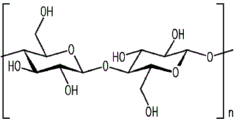
图13示出了用羧酸基团或叠氮化物官能化以使与补充分子如纤维素或PEG的连接容易的PTU。 Figure 13 shows PTUs functionalized with carboxylic acid groups or azide to facilitate attachment to complementary molecules such as cellulose or PEG.
图14示出了可被连接到PTU的R基团的实例:A.纤维素;B.PEG。 Figure 14 shows examples of R groups that can be attached to PTU: A. Cellulose; B. PEG.
图15示出了作为根据如下实施方式的剂的PTU的使用替代符号的原子结构,将氮、硫和氧原子分别表示为N、S和O。 Figure 15 shows the atomic structure of PTU as an agent according to an embodiment using alternative symbols, denoting nitrogen, sulfur and oxygen atoms as N, S and O, respectively.
图16示出了PTU-纤维素的原子结构。 Figure 16 shows the atomic structure of PTU-cellulose.
图17从第一角度示出了PTU-纤维素的原子结构的三维视图。 Figure 17 shows a three-dimensional view of the atomic structure of PTU-cellulose from a first angle.
图18从第二角度示出了PTU-纤维素的原子结构的三维视图。 Figure 18 shows a three-dimensional view of the atomic structure of PTU-cellulose from a second perspective.
图19示出了对hTAS2R47的TM螺旋预测,包括每个螺旋的疏水中心,这些疏水中心被定位为位于穿过脂质双层中部的平面上(左图),和所预测的结构(右图)。 Figure 19 shows the TM helix predictions for hTAS2R47, including the hydrophobic centers of each helix positioned to lie in a plane through the middle of the lipid bilayer (left panel), and the predicted structure (right panel ).
图20示出了对于复合到hTAS2R47的苯甲地那铵、DD2、4NS和6NS配体结合位点。 Figure 20 shows ligand binding sites for denatonium benzoate, DD2, 4NS and 6NS complexed to hTAS2R47.
图21示出了大鼠和人的TAS2R38味觉受体的TM区域。 Figure 21 shows the TM region of rat and human TAS2R38 taste receptors.
图22示出了新的嘧啶拮抗剂与人DP受体的预测结合模式。 Figure 22 shows the predicted binding pattern of novel pyrimidine antagonists to the human DP receptor.
图23示出了全部基于图22所示的分子a的修饰的嘧啶化合物。 FIG. 23 shows modified pyrimidine compounds all based on molecule a shown in FIG. 22 .
图24A示出了由不同浓度的PTC激发的内分泌STC-5细胞的GLP-1释放。X-轴表示细胞孵育中使用的以mM计的PTC浓度;Y-轴示出了以pM计的GLP-1释放的量。每个柱表示从一式两份获得的平均值。 Figure 24A shows GLP-1 release from endocrine STC-5 cells stimulated by different concentrations of PTC. The X-axis represents the PTC concentration in mM used in the cell incubation; the Y-axis shows the amount of GLP-1 released in pM. Each bar represents the mean value obtained from duplicates.
图24B示出了由不同浓度的PTC激发的内分泌STC-5细胞的GLP-1释放。X-轴表示细胞孵育中使用的以mM计的PTC的浓度;Y-轴示出了以pM计的GLP-1释放的量。每个柱表示从一式两份获得的平均值。 Figure 24B shows GLP-1 release from endocrine STC-5 cells stimulated by different concentrations of PTC. The X-axis represents the concentration of PTC in mM used in the cell incubation; the Y-axis shows the amount of GLP-1 released in pM. Each bar represents the mean value obtained from duplicates.
详述detail
本文描述了用于调节代谢激素的释放、相关的代谢性病症和其他相关生物学过程,包括治疗个体内的代谢性疾病的方法、系统和组合物。Described herein are methods, systems and compositions for modulating the release of metabolic hormones, related metabolic disorders and other related biological processes, including treating metabolic diseases in an individual.
如本文关于细胞膜受体的活性和/或可量化的生物学事件例如激素释放所用的术语“调节(modulate)”或“调节(modulation)”表示干扰所述活性或生物学事件的过程。干扰的实例包括增加、减少或保持所述活性和/或可量化的事件。例如,细胞受体例如GPCR的活性的调节可通过借助将GPCR转化成活性构象之一增加GPCR的活性进行,所述转化可例如在配体与GPCR的相互作用或甚至是GPCR内的单一突变之后进行。类似地,保持或减少活性可分别通过保持失活构象或使GPCR转化成失活构象进行,所述转化还可通过配体的相互作用或GPCR的各种突变进行。相似地,增加、减少或维持生物学事件例如生物激素的释放可通过由GPCR的活化引起的各种细胞间和/或细胞内通路的活化或失活进行,所述通路的活化或失活可通过操纵GPCR活性进行。对调节活性的检测可通过例如检测基点活性和/或基点可量化事件,例如,与待调节的活性和/或事件有关的生物和/或化学指示剂的变化进行。技术人员能够使用技术人员已知和/或经阅读本公开内容可认定的技术和方法来鉴定与所选择的事件有关的合适的生物和/或化学指示剂。The term "modulate" or "modulation" as used herein in relation to the activity of a cell membrane receptor and/or a quantifiable biological event such as hormone release means a process that interferes with said activity or biological event. Examples of interference include increasing, decreasing or maintaining said activity and/or quantifiable event. For example, modulation of the activity of a cellular receptor such as a GPCR can be performed by increasing the activity of the GPCR by converting the GPCR into one of the active conformations, which can be, for example, following the interaction of a ligand with the GPCR or even a single mutation within the GPCR conduct. Similarly, maintaining or reducing activity can be carried out by maintaining an inactive conformation or converting a GPCR to an inactive conformation, respectively, which conversion can also be carried out by interaction of ligands or various mutations of the GPCR. Similarly, increasing, decreasing or maintaining the release of biological events such as biological hormones can be carried out by activation or inactivation of various intercellular and/or intracellular pathways caused by the activation of GPCRs, which can be By manipulating GPCR activity. Detection of modulating activity can be performed, for example, by detecting a point-point activity and/or a point-point quantifiable event, eg, a change in a biological and/or chemical indicator associated with the activity and/or event to be modulated. A skilled artisan can identify suitable biological and/or chemical indicators associated with a selected event using techniques and methods known to the skilled artisan and/or identifiable upon reading this disclosure.
如本文所用的术语“激素”表示通常被鉴定为传递质的化学物质,其通常由生物体的一个部分的细胞或腺体释放以给生物体的其他部分充当化学信使。示例性的激素包含直接释放到血流中的内分泌激素和直接分泌到导管并从导管流入血流或在通过称为旁分泌信号传导的过程中通过扩散在细胞之间流动的外分泌激素(或外激素)。激素由各种多细胞生物体且特别是脊椎动物产生。特别地,脊椎动物的激素可分成三个化学类别:肽激素、脂质和磷脂衍生的激素以及单胺。肽激素由氨基酸链组成。肽激素的实例包括胰岛素和生长激素。脂质和磷脂衍生的激素衍生自脂质例如亚油酸和花生四烯酸和磷脂。主要类别是衍生自胆固醇和类二十烷酸(eicosanoid)的类固醇激素。类固醇激素的实例为睾酮和皮质醇。通过芳族氨基酸的脱羧酶的作用,单胺衍生自芳族物质例如苯丙氨酸、酪氨酸和色氨酸。单胺的实例为甲状腺素和肾上腺素。为了本申请的目的,激素将是由胃肠道包括胰的内分泌细胞释放的肽、脂质和磷脂衍生的激素以及单胺。The term "hormone" as used herein denotes a chemical substance generally identified as a transmitter substance, which is normally released by cells or glands in one part of an organism to act as a chemical messenger to other parts of the organism. Exemplary hormones include endocrine hormones that are released directly into the bloodstream and exocrine hormones (or exocrine hormones) that are secreted directly into and from the ducts into the bloodstream or flow between cells by diffusion in a process called paracrine signaling. hormone). Hormones are produced by various multicellular organisms, especially vertebrates. In particular, vertebrate hormones can be divided into three chemical classes: peptide hormones, lipid and phospholipid-derived hormones, and monoamines. Peptide hormones consist of chains of amino acids. Examples of peptide hormones include insulin and growth hormone. Lipid and phospholipid derived hormones are derived from lipids such as linoleic acid and arachidonic acid and phospholipids. The main classes are steroid hormones derived from cholesterol and eicosanoids. Examples of steroid hormones are testosterone and Cortisol. Monoamines are derived from aromatic species such as phenylalanine, tyrosine and tryptophan by the action of decarboxylases of aromatic amino acids. Examples of monoamines are thyroxine and epinephrine. For the purposes of this application, hormones will be peptide, lipid and phospholipid-derived hormones and monoamines released by endocrine cells of the gastrointestinal tract, including the pancreas.
如本文所用的术语“代谢激素”表示由内分泌系统释放以调节个体内的细胞和器官的代谢网络的激素。特别地,代谢激素可以是影响并调控个体内细胞和/或器官的代谢网络的基于肽的激素。示例性的代谢激素包含缩胆囊素(CCK)、胰高血糖素样肽-1(GLP-1)和酪酪肽(PYY)。The term "metabolic hormone" as used herein denotes a hormone released by the endocrine system to regulate the metabolic network of cells and organs within an individual. In particular, metabolic hormones may be peptide-based hormones that affect and regulate metabolic networks of cells and/or organs within an individual. Exemplary metabolic hormones include cholecystokinin (CCK), glucagon-like peptide-1 (GLP-1 ), and tyrosin (PYY).
在某个实施方式中,调节个体内的代谢激素的释放及其相关的生物学过程可通过对所述个体施用有效量的能够影响所述个体的一种或多种靶GI苦味觉受体的构象变化的一种或多种配体进行。In a certain embodiment, modulation of the release of metabolic hormones and their associated biological processes in an individual can be achieved by administering to the individual an effective amount of a drug that affects one or more target GI bitter taste receptors in the individual. One or more ligands undergo a conformational change.
术语“苦味觉受体”或“苦味元受体”表示哺乳动物味觉受体家族,其检测对苦味的感觉,且包含G蛋白偶联受体(GPCR)的独特亚族,该亚族不与其他GPCR共享任何同源性。特别地,人苦味觉受体家族(TAS2R)包含~25种苦味觉受体。因为是GPCR,所以这些受体显示出各自与不同的生物学响应例如一种或多种细胞内通路的上调或下调有关的多种构象。对构象的鉴定可用例如本文的实施例1至3中描述的方法的方法和技术以及技术人员可认定的其他方法和技术进行。对处于活性或失活构象的TAS2R的检测以及对已知与所述活性或失活构象中的一种有关的生物学响应的检测可用技术人员可认定的包括计算机(in silico)方法的方法进行。例如,对苦味元受体的活化的检测可通过测量TAS2R转化成活性构象后由异源三聚G蛋白释放的味转导素和/或转导蛋白进行[Wong 1995]。The term "bitter taste receptor" or "bitter tastant receptor" refers to a family of mammalian taste receptors that detect the perception of bitter taste and comprise a distinct subfamily of G protein-coupled receptors (GPCRs) that are not associated with Other GPCRs share any homology. In particular, the human bitter taste receptor family (TAS2R) comprises -25 bitter taste receptors. Because they are GPCRs, these receptors display multiple conformations that are each associated with different biological responses such as up- or down-regulation of one or more intracellular pathways. Identification of conformation can be performed using methods and techniques such as those described in Examples 1 to 3 herein, as well as other methods and techniques identifiable to the skilled artisan. Detection of TAS2R in an active or inactive conformation and detection of a biological response known to be associated with one of said active or inactive conformations can be performed using methods identifiable by the skilled artisan including in silico methods . For example, detection of activation of bitter tastant receptors can be performed by measuring the release of gustadoducins and/or transducins from heterotrimeric G proteins following conversion of TAS2R into the active conformation [Wong 1995].
细胞内Ca2+浓度增加提供了与TAS2R转化或保持成活性构象有关的另一种示例性生物学响应,Ca2+浓度增加通常伴随在检测Ca2+的细胞中处于活性构象的TAS2R受体。对味转导素/转导蛋白的检测可通过用针对味转导素/转导蛋白的抗体对细胞免疫染色或通过检测与其有关的任何一种生物学过程进行。检测细胞内Ca2+浓度的变化可通过用于GPCR的标准测定和细胞内Ca2+测量进行[Tsien 2003;Zacharias 2000;Zhang 2002]。与处于活性构象的TAS2R有关的另外的生物学响应包括:i)磷酸二酯酶的活化[Keravis 2010];ii)钾离子通道活性的改变[Scanziani 2009;Schultz 1998];iii)细胞的电学变化[Scanziani 2009];iv)激素或神经递质的释放和/或如技术人员经阅读本公开内容将理解的另外的响应。An increase in intracellular Ca2 + concentration provides another exemplary biological response associated with TAS2R conversion or maintenance into the active conformation. Increased Ca2 + concentration usually accompanies TAS2R receptors in the active conformation in cells that detect Ca2 + . Detection of gustrin/transducin can be performed by immunostaining cells with antibodies against gustrin/transducin or by detecting any of the biological processes associated with it. Detection of changes in intracellular Ca 2+ concentration can be performed by standard assays for GPCRs and intracellular Ca 2+ measurement [Tsien 2003;
如本文所用的术语“GI苦味觉受体”或“GI苦味元受体”表示定位在个体胃肠道(GI道)内的苦味觉受体。胃肠道可包含个体的完整胃肠道及其任何部分,例如单独或以任何组合的胃、小肠、十二指肠、空肠、回肠、大肠。通常,GI苦味觉受体定位在位于GI道的上皮和胰的朗格汉斯小岛中的内分泌细胞的面向腔的表面上。预期不同子集的苦味觉受体定位在不同类型的GI细胞中。实施例13中示出了已知的或预期呈递苦味元受体的GI细胞的示例性列表。特别地,已知或预期某种类型的GI细胞提供与由细胞的特定类型决定的特定TS2R的构象(例如,活性构象以及失活构象中的一种或多种)有关的生物学响应。The term "GI bitter taste receptor" or "GI bitter tastant receptor" as used herein means a bitter taste receptor localized within the gastrointestinal tract (GI tract) of an individual. The gastrointestinal tract can include the entire gastrointestinal tract of a subject and any portion thereof, such as the stomach, small intestine, duodenum, jejunum, ileum, large intestine, alone or in any combination. Typically, GI bitter taste receptors are localized on the lumen-facing surface of endocrine cells located in the epithelium of the GI tract and in the islets of Langerhans of the pancreas. Different subsets of bitter taste receptors are expected to be localized in different types of GI cells. An exemplary list of GI cells known or expected to present bitter tastant receptors is shown in Example 13 . In particular, a certain type of GI cell is known or expected to provide a biological response related to a particular conformation of TS2R (eg, one or more of an active conformation and an inactive conformation) determined by the particular type of cell.
如本文所用的术语“配体”是被特定受体识别并在一个或多个结合位点结合该受体的分子。配体的实例包括但不限于针对细胞膜受体的激动剂和拮抗剂、毒素和毒液、病毒表位、激素、激素受体肽、酶、酶底物、辅因子、药物(例如,阿片剂、类固醇等)、凝集素、糖、多核苷酸、核酸、寡糖、蛋白质和单克隆抗体。如本文所用的“配体受体对”的形成表示配体和受体分子通过分子识别而组合以形成可被技术人员已知的各种配体受体结合测定法检测的复合体[Lefkowitz 1970;de Jong 2005]。通常,在配体中,两个部分可被鉴定:关于该配体与相应受体的结合为活性的第一部分和关于所述结合和相应的配体受体对的形成为钝态的第二部分。特别地,技术人员将理解且将能够鉴定配体的参与结合并与受体的对应结合位点相互作用或导致与受体的对应结合位点的相互作用的活性部分和相反不参与且不影响所述结合和相应的配体受体对的形成的钝态部分。The term "ligand" as used herein is a molecule that is recognized by a particular receptor and binds that receptor at one or more binding sites. Examples of ligands include, but are not limited to, agonists and antagonists to cell membrane receptors, toxins and venoms, viral epitopes, hormones, hormone receptor peptides, enzymes, enzyme substrates, cofactors, drugs (e.g., opiates , steroids, etc.), lectins, sugars, polynucleotides, nucleic acids, oligosaccharides, proteins and monoclonal antibodies. The formation of a "ligand-receptor pair" as used herein means the combination of ligand and receptor molecules through molecular recognition to form a complex that can be detected by various ligand-receptor binding assays known to the skilled artisan [Lefkowitz 1970 ; de Jong 2005]. Typically, in a ligand, two moieties can be identified: a first moiety that is active with respect to the binding of the ligand to the corresponding receptor and a second moiety that is inactive with respect to said binding and formation of the corresponding ligand-receptor pair. part. In particular, the skilled person will understand and will be able to identify active parts of the ligand which are involved in binding and interacting with or causing an interaction with the corresponding binding site of the receptor and which conversely do not participate in and do not affect Passive part of the binding and formation of the corresponding ligand-receptor pair.
在本文所述的某些实施方式中,配体受体对的形成影响苦味觉受体的构象且特别地保持现有构象或将现有构象转化成新的构象。例如,在那些实施方式的某些中,配体是受体的拮抗剂且配体受体对复合体的形成导致失活构象的保持。在其他实施方式中,配体是受体的激动剂且配体受体对复合体的形成导致失活形式转化成该受体的一种或多种活性形式。TS2R受体形式反过来与产生一种或多种可检测的化学或生物学响应的至少一种细胞内通路的活化或失活有关。In certain embodiments described herein, the formation of a ligand-receptor pair affects the conformation of the bitter taste receptor and specifically maintains an existing conformation or converts an existing conformation to a new conformation. For example, in certain of those embodiments, the ligand is an antagonist of the receptor and formation of the ligand-receptor pair complex results in maintenance of the inactive conformation. In other embodiments, the ligand is an agonist of the receptor and formation of the ligand receptor pair complex results in conversion of the inactive form to one or more active forms of the receptor. The TS2R receptor form is in turn associated with the activation or inactivation of at least one intracellular pathway that produces one or more detectable chemical or biological responses.
在多种实施方式中,苦味元受体的至少一种活性构象导致对靶受体所定位的内分泌细胞释放代谢激素的调节。特别地,苦味觉受体的配体(BTRL)可导致活化多种细胞内通路中的任何一种或阻止活化那些细胞内通路中的任何一种,这导致激素释放的相应改变。In various embodiments, at least one active conformation of a bitter tastant receptor results in modulation of the release of metabolic hormones from endocrine cells to which the target receptor is localized. In particular, the ligand for the bitter taste receptor (BTRL) can lead to the activation of any of a variety of intracellular pathways or prevent the activation of any of those intracellular pathways, which leads to corresponding changes in hormone release.
对苦味觉GPCR的调节以及其对特定的目的激素或神经递质的释放的作用的检测可由技术人员通过体外或体内测量目的激素或神经递质的位移或通过检测如本文所述的另一种生物学响应进行,在体外测量的情况下测量从目的激素或神经递质细胞内位点到细胞外的位移或在体内测量的情况下测量从目的激素或神经递质细胞内位点进入血液的位移。Detection of the modulation of the bitter taste GPCR and its effect on the release of a particular hormone or neurotransmitter of interest can be measured by the skilled artisan by in vitro or in vivo displacement of the hormone or neurotransmitter of interest or by detection of another as described herein. The biological response is carried out by measuring displacement from the intracellular site of the hormone or neurotransmitter of interest to the extracellular space in the case of in vitro measurements or into the blood from the intracellular site of the hormone or neurotransmitter of interest in the case of in vivo measurements displacement.
对特定激素的释放的检测还可使用技术人员可认定的技术通过检测细胞外环境和体液且特别是血液中激素的释放进行。例如,血液中的检测可通过将个体的血液样品分离成血浆、血清和血细胞部分进行。使用标准的放射免疫测定(RIA)或酶联免疫吸附测定(ELISA)技术,测量血清或血浆部分中的特定激素。通常,RIA和ELISA都需要特定的针对待测量的每种激素的抗体。对于每种激素,合适抗体是从商业来源和学术中心可获得的。Detection of release of particular hormones can also be performed by detection of release of hormones in the extracellular environment and body fluids, particularly blood, using techniques recognizable to the skilled artisan. For example, detection in blood can be performed by separating an individual's blood sample into plasma, serum, and blood cell fractions. Specific hormones are measured in serum or plasma fractions using standard radioimmunoassay (RIA) or enzyme-linked immunosorbent assay (ELISA) techniques. Typically, both RIAs and ELISAs require antibodies specific to each hormone to be measured. For each hormone, suitable antibodies are available from commercial sources and academic centers.
如技术人员理解的,在某些实施方式中,细胞内通路的活化或失活可能与苦味感觉呈特异性相关。在那些实施方式中,在那些实施方式中,能够影响苦味觉受体的构象的配体通常包含一种或多种苦味元。如本文所用的术语“苦味元”表示被苦味觉受体识别以激发苦味感觉的物质。苦味感觉可使用例如醌的参考化合物检测。因此,奎宁刺激苦味的阈值平均为0.000008M。其他苦味物质的味觉阈值相对于奎宁是额定的。根据本公开内容的示例性的苦味元包括但不限于6-正丙基硫尿嘧啶(PTU)、苯硫脲(PTC)、苯甲地那铵及其某些衍生物。以下显示了PTC和PTU(也称为PROP)的化学结构As will be appreciated by the skilled artisan, in certain embodiments, activation or inactivation of intracellular pathways may be specifically related to the perception of bitter taste. In those embodiments, the ligand capable of affecting the conformation of the bitter taste receptor typically comprises one or more bitter tastants. The term "bitter tastant" as used herein means a substance recognized by bitter taste receptors to elicit the perception of bitter taste. Bitter taste perception can be detected using reference compounds such as quinones. Therefore, the threshold for quinine to stimulate bitter taste is 0.000008M on average. Taste thresholds for other bitter substances are rated relative to quinine. Exemplary bitter tastants according to the present disclosure include, but are not limited to, 6-n-propylthiouracil (PTU), phenylthiourea (PTC), denatonium benzoate, and certain derivatives thereof. The chemical structures of PTC and PTU (also known as PROP) are shown below
在其他实施方式中,配体与TAS2R受体的相关活性或失活构象的结合不涉及与苦味感觉有关的一种或多种细胞通路的活化或失活。In other embodiments, binding of the ligand to the relevant active or inactive conformation of the TAS2R receptor does not involve activation or inactivation of one or more cellular pathways involved in bitter taste perception.
在某些实施方式中,配体可以是现有配体的衍生物。如本文所用的述及第一化合物(例如PTU)的术语“衍生物”表示结构上与第一化合物有关且可通过在保持第一化合物的功能特性的同时引入第一化合物中不存在的特征的修饰从第一化合物衍生的第二化合物。因此,通过对化学式的与原始化合物中不存在的另外的功能可能有关或可能无关的修饰,PTU的衍生化合物通常不同于原始化合物。但是,PTU的衍生化合物保持了本文结合与PTU结合苦味元受体的能力有关的化合物描述的一种或多种功能活性。因此,PTU或其他BTRL的衍生物包含味元的任何化学修饰的形式,条件是这些衍生物保留了结合TAS2R38、将相应的味觉受体转化成一种或多种活性构象的能力。PTU或其他BTRL的衍生物还包含保留了结合TAS2R38的能力但是未保留改变TAS2R38的失活构象的能力的任何化学修饰的形式。在其中衍生物保留了影响靶受体的构象的能力的实施方式中,还可在配体的钝态部分进行化学修饰。在其中衍生物未保留改变TAS2R38的失活构象的能力的实施方式中,化学修饰可在配体的活性以及钝态部分上进行。待被修饰以衍生拮抗剂的特定残基可通过对该特定受体建模以识别能够结合TAS2R38的配体来鉴定。测试配体的生物学响应以确定配体不能活化TAS2R38受体并选择TAS2R38的拮抗剂。对拮抗剂结合位点进行腔分析(cavity analysis)以鉴定基于PTU的衍生物的与对TAS2R38的拮抗活性有关的结合残基。技术人员将能够通过修饰PTU以保存基于PTU的衍生拮抗剂的同一结合位点鉴定另外的PTU拮抗剂衍生物。基于对苦味觉受体中的味元结合位点建模(例如,取代配体上的官能团以引发另外的相互作用)确定化学修饰。对根据本公开内容的味元的不影响活化TAS2R38的构象的能力的示例性化学修饰包括修饰PTU(PROP)分子中的丙基链,因为基于所预测的结合位点该基团不与苦味觉受体相互作用。因此,在各种情况下,基于味元的预测结合位点,激动剂衍生物的核心结构可被定义为与苦味觉受体相互作用且因此不应被修饰的部分。这将因各个不同的配体而异。稍后讨论衍生物的性质和功能。In certain embodiments, the ligand may be a derivative of an existing ligand. The term "derivative" as used herein in reference to a first compound (e.g. PTU) means a derivative which is structurally related to the first compound and which can be obtained by introducing features not present in the first compound while maintaining the functional properties of the first compound. modifying a second compound derived from the first compound. Thus, PTU-derived compounds generally differ from the original compound by modifications of the chemical formula that may or may not be related to additional functions not present in the original compound. However, derivative compounds of PTU retain one or more of the functional activities described herein in connection with compounds related to the ability of PTU to bind bitter tastant receptors. Accordingly, derivatives of PTU or other BTRL include any chemically modified form of the tastant, provided that these derivatives retain the ability to bind TAS2R38, converting the corresponding taste receptor into one or more active conformations. Derivatives of PTU or other BTRL also encompass any chemically modified form that retains the ability to bind TAS2R38 but does not retain the ability to alter the inactive conformation of TAS2R38. In embodiments where the derivative retains the ability to affect the conformation of the target receptor, chemical modifications may also be performed on the passive portion of the ligand. In embodiments where the derivative does not retain the ability to alter the inactive conformation of TAS2R38, chemical modifications can be made on the active as well as the passive portion of the ligand. The particular residues to be modified to derive antagonists can be identified by modeling that particular receptor to recognize ligands capable of binding TAS2R38. The biological response of the ligand was tested to determine the inability of the ligand to activate the TAS2R38 receptor and to select antagonists of TAS2R38. Cavity analysis of the antagonist binding site was performed to identify binding residues of the PTU-based derivatives that were associated with antagonistic activity towards TAS2R38. The skilled person will be able to identify additional PTU antagonist derivatives by modifying the PTU to preserve the same binding site as the PTU-based derivative antagonist. Chemical modifications were determined based on modeling of the tastant binding site in the bitter taste receptor (eg, replacing functional groups on the ligand to elicit additional interactions). Exemplary chemical modifications to tastants according to the disclosure that do not affect the ability to activate the conformation of TAS2R38 include modifying the propyl chain in the PTU(PROP) molecule, as this group is not associated with bitter taste sensations based on the predicted binding site. Receptor interaction. Thus, in each case, based on the predicted binding site of the tastant, the core structure of the agonist derivative can be defined as the part that interacts with the bitter taste receptor and thus should not be modified. This will vary for each different ligand. The properties and functions of derivatives are discussed later.
有效量是在细胞水平下产生允许受体结合复合体的形成和激素释放的配体浓度的量。在某些实施方式中,例如,有效量包含从约1微摩尔至约1.25毫摩尔的活性剂浓度。已知或预期对PTC、PTU、苯甲地那铵或本文描述的其他配体有效的另外的量包括从约0.5uM至约1uM、从约1uM至约2.5uM、从约2.5uM至约5uM、从约5uM至约10uM、从约10uM至约100uM、从约100uM至约500uM、从约500uM至约1000uM、从约1mM至约1.25mM、从约1.25mM至约2.5mM、从约2.5mM至约5mM、从约5mM至约10mM。已知或预期有效的另外的有效量包含约1-2.5uM、从约2.6uM至约10uM、从约11uM至约100uM;从约101uM至约1000uM;从约1.25mM至约10mM。An effective amount is that amount that produces a concentration of ligand at the cellular level that permits formation of the receptor binding complex and release of the hormone. In certain embodiments, for example, an effective amount comprises an active agent concentration of from about 1 micromolar to about 1.25 millimolar. Additional amounts known or expected to be effective against PTC, PTU, denatonium benzoate, or other ligands described herein include from about 0.5 uM to about 1 uM, from about 1 uM to about 2.5 uM, from about 2.5 uM to about 5 uM , from about 5uM to about 10uM, from about 10uM to about 100uM, from about 100uM to about 500uM, from about 500uM to about 1000uM, from about 1mM to about 1.25mM, from about 1.25mM to about 2.5mM, from about 2.5mM to about 5 mM, from about 5 mM to about 10 mM. Additional effective amounts known or expected to be effective include about 1-2.5 uM, from about 2.6 uM to about 10 uM, from about 11 uM to about 100 uM; from about 101 uM to about 1000 uM; from about 1.25 mM to about 10 mM.
特别地,各个实施方式中已知或预期的有效量为约2.5uM。这些有效量对于本文单独或组合地描述的各种配体且特别是PTC、PTU、苯甲地那铵、盐酸黄连碱、烯丙基硫醚、粗糠柴毒素、姜黄素、鞣花酸、酸藤子素和实施例中提及的所有其他配体是已知的或所预期的。In particular, a known or expected effective amount in various embodiments is about 2.5 uM. These effective amounts are for the various ligands described herein, alone or in combination, and in particular PTC, PTU, denatonium benzoate, coptisine hydrochloride, allyl sulfide, keratin, curcumin, ellagic acid, Staphyrin and all other ligands mentioned in the examples are known or contemplated.
在各个实施方式中,GI苦味觉受体的配体,特别是苦味元和相关剂的施用可通过保证对期望的GI道的直接递送的任何施用途径,例如通过口服施用途径或其他施用途径进行。特别地,在某些实施方式中,所述剂被递送到GI道的腔且被设置为将剂从所述腔穿过GI道的上皮并进入血液的全部或部分全身转移降至最低。在那些实施方式的某些中,将从GI道的腔的全身转移最小化提供了作用特异性并降低了副作用。In various embodiments, administration of ligands for GI bitter taste receptors, particularly bitter tastants and related agents, may be by any route of administration that ensures direct delivery to the desired GI tract, such as by oral route of administration or other routes of administration . In particular, in certain embodiments, the agent is delivered to the lumen of the GI tract and configured to minimize total or partial systemic transfer of the agent from the lumen through the epithelium of the GI tract and into the blood. In certain of those embodiments, minimizing systemic transfer from the lumen of the GI tract provides specificity of action and reduces side effects.
在某个实施方式中,GI苦味觉受体的配体,包含该配体的相关的剂和组合物可被递送至GI或肠。特别地,在多个实施方式中,GI指整个的GI系统,本公开内容意义上的GI道可包括GI系统从口到肛门的所有部分以及所连接的胰和肝。从GI系统释放的激素的作用将或被预期进而对胰和肝产生次级效应,这种效应是整个有益响应所期望的。In a certain embodiment, ligands for GI bitter taste receptors, related agents and compositions comprising the ligands can be delivered to the GI or the gut. In particular, in various embodiments, GI refers to the entire GI system, and the GI tract in the sense of this disclosure may include all parts of the GI system from the mouth to the anus and the connected pancreas and liver. The action of hormones released from the GI system would or would be expected to have secondary effects on the pancreas and liver that would be expected for an overall beneficial response.
特别地,在某些实施方式中,GI苦味觉受体位于GI道的胃部上游的部分。如本文所用的术语“上游”表示食道的口的部分。在某些实施方式中,苦味觉受体位于胃中,即,位于胃部的任何类型的苦味觉受体。在某些实施方式中,苦味觉受体为肠苦味觉受体,即位于肠部(大肠和小肠)的任何类型的苦味觉受体。不同苦味觉受体在GI系统中的分布是预期的。如技术人员经阅读本公开内容将理解的,这些受体在GI系统中的定位将影响被施用的剂的选择。特别地,TAS2R和呈递待被靶向的TAS2R的细胞可基于待被调节的具体激素和期望的调节作用来选择。可确定所选择的细胞在GI道上的位置。因此能够在所选择的细胞内获得期望的调节作用的配体可被以保证递送到所选择的道中的合适的量和形式施用于GI道中,所选择的细胞位于该GI道中。例如,GLP-1的增加可通过活化定位在小肠和大肠中的细胞内的TAS2R38进行。适合活化L细胞内的TAS2R38的配体是PTU。技术人员将理解可将有效量的PTU直接递送到小肠以获得从L细胞释放到血液中的GLP-1的产量的期望的增加。技术人员还将理解由于PTU的化学性质和通过GI上皮被全身吸收的相关能力,PTU可与补充分子期望地偶联以将吸收最小化并将在肠中的半衰期最大化。In particular, in certain embodiments, the GI bitter taste receptors are located in the upstream gastric portion of the GI tract. The term "upstream" as used herein refers to the portion of the mouth of the esophagus. In certain embodiments, the bitter taste receptor is located in the stomach, ie, any type of bitter taste receptor located in the stomach. In certain embodiments, the bitter taste receptor is an intestinal bitter taste receptor, ie, any type of bitter taste receptor located in the intestine (large and small intestine). The distribution of different bitter taste receptors in the GI system is expected. As the skilled artisan will appreciate upon reading this disclosure, the location of these receptors in the GI system will affect the choice of agent to be administered. In particular, TAS2Rs and cells presenting TAS2Rs to be targeted can be selected based on the particular hormone to be modulated and the desired regulatory effect. The position of the selected cells on the GI tract can be determined. Ligands capable of achieving the desired modulatory effect in selected cells can thus be administered in the GI tract in an appropriate amount and form to ensure delivery to the selected tract in which the selected cells are located. For example, an increase in GLP-1 can occur through activation of TAS2R38 localized in cells in the small and large intestine. A suitable ligand for activation of TAS2R38 in L cells is PTU. The skilled artisan will appreciate that an effective amount of PTU can be delivered directly to the small intestine to achieve the desired increase in the production of GLP-1 released from the L cells into the blood. The skilled artisan will also understand that due to the chemical nature of PTU and the associated ability to be absorbed systemically through the GI epithelium, PTU can desirably be coupled to supplementary molecules to minimize absorption and maximize half-life in the gut.
在某个实施方式中,GI和肠苦味觉受体包含定位在位于GI道的腔表面上的内分泌细胞上的苦味觉受体,例如TAS2R38和TAS2R47。在那些实施方式的某些中,GI苦味觉受体的活化导致代谢激素从激素释放细胞的释放,包括从所述内分泌细胞释放以及被所述内分泌细胞介导的释放(这些细胞可在GI道或肠内被活化以将激素释放到血液中)以及由此而来的全身分布。还预期苦味元受体的配体、其组合或组合物对GI道或肠的递送通过干预性、互补性和替代性步骤和过程来影响所述释放。In a certain embodiment, the GI and intestinal bitter taste receptors comprise bitter taste receptors localized on endocrine cells located on the luminal surface of the GI tract, eg, TAS2R38 and TAS2R47. In certain of those embodiments, activation of GI bitter taste receptors results in the release of metabolic hormones from hormone-releasing cells, including from and mediated by said endocrine cells (which cells may be found in the GI tract). or the intestine is activated to release the hormone into the blood) and the resulting systemic distribution. Delivery of bitter tastant receptor ligands, combinations or compositions thereof to the GI tract or intestine is also contemplated to affect said release through intervening, complementary and alternative steps and processes.
在某些实施方式中,该方法包括以调节个体内的一种或多种代谢激素的释放的量对所述个体施用能够活化个体的一种或多种靶GI苦味觉受体的一种或多种GI苦味觉受体的配体和/或相关的剂。In certain embodiments, the method comprises administering to the individual one or more of the agents capable of activating one or more target GI bitter taste receptors in the individual in an amount that modulates release of one or more metabolic hormones in the individual. Ligands and/or related agents for various GI bitter taste receptors.
在某个实施方式中,本文所述的GI苦味觉受体的配体和剂可被递送至GI道以调节代谢激素从GI道的内分泌细胞例如包含CCK的I-细胞和包含GLP-1和PYY的L细胞的释放。在另一个实施方式中,预期本文所述的受体和剂对GI道的神经末端上存在的苦味觉受体是有效的并调节神经响应,所述神经响应反过来调节激素从GI道内的内分泌细胞的释放。In a certain embodiment, the GI bitter taste receptor ligands and agents described herein can be delivered to the GI tract to regulate the release of metabolic hormones from endocrine cells of the GI tract such as I-cells comprising CCK and I-cells comprising GLP-1 and Release of PYY by L cells. In another embodiment, the receptors and agents described herein are expected to be effective against bitter taste receptors present on the nerve endings of the GI tract and to modulate neural responses that in turn modulate the secretion of hormones from endocrine receptors within the GI tract. cell release.
在某个实施方式中,GI苦味觉受体的配体、相关的剂、组合物、方法和系统适合调节GLP-1。在这些实施方式的某些中,配体可以是PTC、PTU、甘草酸铵盐、表没食子儿茶素没食子酸酯、贯叶金丝桃素、盐酸小檗碱、盐酸黄连碱、烯丙基甲基硫醚、粗糠柴毒素、姜黄素、鞣花酸、酸藤子素和/或其激动剂衍生物。特别地,单独地或组合地应用到释放激素的包含GLP-1和PYY的L细胞的腔表面的PTC和PTU或任何其他配体将导致L细胞的腔表面上的TAS2R38受体的活化,导致激素GLP-1和PYY从包含激素的细胞释放到血液中。特别地,特别参考允许向GI道内的包含GLP-1和PYY的L细胞上的TAS2R38受体的位置的特定位点递送的系统,可将苦味觉受体的配体、其相关的剂及组合以从约1uM至约2.5uM、从约2.6uM至约10uM、从约11uM至约100uM;从约101uM至约1000uM;从约1.25mM至约10mM范围内的浓度应用到GI道的腔表面。特别参考允许向GI道内的包含GLP-1和PYY的L细胞上的TAS2R38受体的位置的特定位点递送的系统,以从约1uM至约2.5uM、从约2.6uM至约10uM、从约11uM至约100uM;从约101uM至约1000uM;从约1.25mM至约10mM的浓度应用到GI道的腔表面的能够活化TAS2R38受体的其他配体也被预期导致GLP-1和PYY从包含该激素的细胞释放到血液中。In a certain embodiment, ligands of GI bitter taste receptors, related agents, compositions, methods and systems are suitable for modulating GLP-1. In certain of these embodiments, the ligand may be PTC, PTU, ammonium glycyrrhizinate, epigallocatechin gallate, hyperforin, berberine hydrochloride, coptisine hydrochloride, allylmethyl Thioethers, sarcotoxins, curcumin, ellagic acid, sachinesin and/or their agonist derivatives. In particular, PTC and PTU or any other ligand applied alone or in combination to the luminal surface of hormone-releasing L cells containing GLP-1 and PYY will lead to activation of the TAS2R38 receptor on the luminal surface of L cells, resulting in The hormones GLP-1 and PYY are released from hormone-containing cells into the blood. In particular, ligands for bitter taste receptors, their related agents, and combinations thereof may be formulated with particular reference to systems that allow site-specific delivery within the GI tract to the location of the TAS2R38 receptor on L cells comprising GLP-1 and PYY. Applied to the luminal surface of the GI tract at concentrations ranging from about 1 uM to about 2.5 uM, from about 2.6 uM to about 10 uM, from about 11 uM to about 100 uM; from about 101 uM to about 1000 uM; from about 1.25 mM to about 10 mM. Particular reference is made to systems that allow delivery to specific sites within the GI tract at the location of TAS2R38 receptors on L cells comprising GLP-1 and PYY, from about 1 uM to about 2.5 uM, from about 2.6 uM to about 10 uM, from about 2.6 uM to about 10 uM, from about From about 101 uM to about 1000 uM; from about 1.25 mM to about 10 mM Other ligands capable of activating the TAS2R38 receptor applied to the luminal surface of the GI tract at concentrations of 11 uM to about 100 uM; from about 101 uM to about 1000 uM; The cells release the hormone into the blood.
在某个实施方式中,GI苦味觉受体的配体、相关的剂、组合物、方法和系统适合调节CCK向血液中的释放。在这些实施方式的某些中,配体是苯甲地那铵或其激动剂衍生物。单独地或组合地应用到释放激素的包含CCK的I细胞的腔表面的这些剂将导致定位在I细胞的腔表面上的TAS2R47受体的活化,导致激素CCK从包含该激素的细胞释放到血液中。特别地,在某些实施方式中,在允许向GI道内的包含CCK的I细胞上的TAS2R47受体的位置的特定位点递送的系统中,这些剂被以约1-2.5uM、从约2.6uM至约10uM、从约11uM至约100uM;从约101uM至约1000uM;从约1.25mM至约10mM的浓度应用到GI道的腔表面。特别地参考允许向GI道内的包含CCK的I细胞上的TAS2R47受体的位置的特定位点递送的系统,以从约1uM至约2.5uM、从约2.6uM至约10uM、从约11uM至约100uM;从约101uM至约1000uM;从约1.25mM至约10mM的浓度应用到GI道的腔表面的能够活化TAS2R47受体的其他配体也将导致CCK从包含该激素的细胞释放到血液中。In a certain embodiment, ligands of GI bitter taste receptors, related agents, compositions, methods and systems are suitable for modulating the release of CCK into the blood. In certain of these embodiments, the ligand is denatonium benzoate or an agonist derivative thereof. Application of these agents, alone or in combination, to the luminal surface of hormone-releasing CCK-containing I cells will result in activation of the TAS2R47 receptor localized on the luminal surface of I cells, resulting in release of the hormone CCK from the hormone-containing cells into the blood middle. Specifically, in certain embodiments, the agents are administered at about 1-2.5 uM, from about 2.6 uM, in a system that allows delivery to a specific site within the GI tract at the location of the TAS2R47 receptor on CCK-containing I cells. A concentration of uM to about 10 uM, from about 11 uM to about 100 uM; from about 101 uM to about 1000 uM; from about 1.25 mM to about 10 mM is applied to the luminal surface of the GI tract. With particular reference to a system that allows delivery to a specific site within the GI tract at the location of the TAS2R47 receptor on I cells comprising CCK, from about 1 uM to about 2.5 uM, from about 2.6 uM to about 10 uM, from about 11 uM to about Other ligands capable of activating the TAS2R47 receptor applied to the luminal surface of the GI tract at concentrations of 100 uM; from about 101 uM to about 1000 uM; from about 1.25 mM to about 10 mM will also result in the release of CCK from cells containing the hormone into the blood.
在某个实施方式中,GI苦味觉受体的配体组合物、方法和系统适合调节PYY。在那些实施方式的某些中,因为预期PYY由L细胞释放,所以能够调节GLP-1的剂也被预期或知晓为调节PYY。In a certain embodiment, GI bitter taste receptor ligand compositions, methods and systems are adapted to modulate PYY. In certain of those embodiments, because PYY is expected to be released by L cells, an agent capable of modulating GLP-1 is also expected or known to modulate PYY.
在某些实施方式中,所述一种或多种靶GI苦味觉受体包含TAS2R38,且所述一种或多种代谢激素包含GLP-1和PYY。在其他实施方式中,所述一种或多种靶GI苦味觉受体包含TAS2R47,且所述一种或多种代谢激素包含CCK。In certain embodiments, the one or more target GI bitter taste receptors comprises TAS2R38 and the one or more metabolic hormones comprise GLP-1 and PYY. In other embodiments, said one or more target GI bitter taste receptors comprises TAS2R47 and said one or more metabolic hormones comprise CCK.
在某些实施方式中,所述一种或多种剂包含苦味元。特别地,在某些实施方式中,所述苦味元选自由PTU、PTC、苯甲地那铵、其衍生物及其组合组成的组。特别地,活化TAS2R47的配体和剂(例如DB)及活化TAS2R38的配体和剂(例如PTU和PTC)可被单独或组合地以从约1uM至约2.5uM、从约2.6uM至约10uM、从约11uM至约100uM;从约101uM至约1000uM;从约1.25mM至约10mM的浓度应用到GI道的腔表面。在允许分别向TAS2R47受体或TAS2R38的位置的特定位点递送的系统中进行的那些实施方式的某些中,已知或预期施用导致激素被释放到血液中。在某些实施方式中,已知或预期活化TAS2R47的配体和剂导致激素CCK从肠的上部中的I细胞释放到血液中。在某个实施方式中,已知或预计活化TAS2R38的剂或配体导致激素GLP-1和PYY从肠的下部中的L细胞释放到血液中。In certain embodiments, the one or more agents comprise a bitter tastant. Particularly, in certain embodiments, the bitter tastant is selected from the group consisting of PTU, PTC, denatonium benzoate, derivatives thereof, and combinations thereof. In particular, ligands and agents that activate TAS2R47 (such as DB) and ligands and agents that activate TAS2R38 (such as PTU and PTC) can be administered alone or in combination at from about 1 uM to about 2.5 uM, from about 2.6 uM to about 10 uM , from about 11 uM to about 100 uM; from about 101 uM to about 1000 uM; from about 1.25 mM to about 10 mM at a concentration applied to the luminal surface of the GI tract. In certain of those embodiments that are performed in a system that allows site-specific delivery to the location of the TAS2R47 receptor or TAS2R38, respectively, the administration is known or expected to result in release of the hormone into the blood. In certain embodiments, ligands and agents that are known or expected to activate TAS2R47 result in the release of the hormone CCK from I cells in the upper part of the intestine into the blood. In a certain embodiment, an agent or ligand that is known or predicted to activate TAS2R38 results in the release of the hormones GLP-1 and PYY from L cells in the lower intestine into the blood.
更特别地,在某些实施方式中,所述苦味元选自由PTU、PTC、其衍生物及其组合组成的组,且所述一种或多种代谢激素包含GLP-1和PYY。在其他实施方式中,所述苦味元选自由苯甲地那铵、其衍生物及其组合组成的组,且所述一种或多种代谢激素包含CCK。在某些实施方式中,所述组合可以以不离开肠腔的形式被特别地递送。这样,每一种苦味元可被递送到肠中的合适位置。特别地,在这些实施方式的某些中,组合可在饭前和饭中施用。由于运动的动力学,针对I细胞的配体将在针对L细胞的配体到达L细胞之前达到I细胞。因此,预期CCK的主要是减缓胃排空的作用最先发生。例如,在一种情况下,在施用剂之后约30min至约2小时,预期针对L细胞的配体到达靶细胞并开始释放GLP-1和PYY,GLP-1和PYY如CCK一样对胃排空产生作用而且促进饱腹感和胰岛素释放。预期作用的组合对于体重控制和糖尿病以及这些疾患的后果都是有益的。在某些实施方式中,对于持续延长的时间量(例如,持续许多个月)地在所有用餐之前和与之一起施用的配体和/或剂的组合预料到持续的益处。More particularly, in certain embodiments, the bitter tastant is selected from the group consisting of PTU, PTC, derivatives thereof, and combinations thereof, and the one or more metabolic hormones comprise GLP-1 and PYY. In other embodiments, the bitter tastant is selected from the group consisting of denatonium benzoate, derivatives thereof, and combinations thereof, and the one or more metabolic hormones comprise CCK. In certain embodiments, the combination may be specifically delivered in a form that does not leave the intestinal lumen. In this way, each bitter tastant can be delivered to the appropriate location in the intestine. In particular, in certain of these embodiments, the combination may be administered before and during meals. Due to the kinetics of the movement, ligands targeting I cells will reach the I cells before ligands targeting L cells reach the L cells. Thus, the predominantly slowing effect of gastric emptying of CCK is expected to occur first. For example, in one instance, from about 30 min to about 2 hours after administration of the dose, the ligand for the L cells is expected to reach the target cells and begin to release GLP-1 and PYY, which empty the stomach like CCK Works and promotes satiety and insulin release. The combination of effects is expected to be beneficial for both weight management and diabetes and the consequences of these conditions. In certain embodiments, sustained benefit is expected for combinations of ligands and/or agents administered before and with all meals for an extended amount of time (eg, for many months).
在某些实施方式中,所述一种或多种剂包含苦味元,所述一种或多种靶GI苦味觉受体包含定位在I细胞上的TAS2R47和定位在L细胞上的TAS2R38,且所述一种或多种激素包含CCK、GLP-1和PYY。特别地,在某些实施方式中,其中所述一种或多种剂包含苦味元,所述一种或多种靶GI苦味觉受体包含定位在L细胞上的TAS2R38,且所述一种或多种激素包含定位在L细胞内的PYY、GLP-1。在其他实施方式中,其中所述一种或多种剂包含苦味元,所述一种或多种靶GI苦味觉受体包含定位在I细胞上的TAS2R47,且所述一种或多种激素包含定位在I细胞内的CCK。更特别地,在某些实施方式中,所述苦味元选自由PTU、PTC、苯甲地那铵、其衍生物及其组合组成的组,所述一种或多种靶GI苦味觉受体包含定位在L细胞上的TAS2R38,且所述一种或多种激素包含PYY、GLP-1。在其他实施方式中,所述苦味元选自由PTU、PTC、苯甲地那铵、其衍生物及其组合组成的组,所述一种或多种靶GI苦味觉受体包含定位在I细胞上的TAS2R47,且所述一种或多种激素包含CCK。In certain embodiments, the one or more agents comprise a bitter tastant, the one or more target GI bitter taste receptors comprise TAS2R47 localized on I cells and TAS2R38 localized on L cells, and The one or more hormones comprise CCK, GLP-1 and PYY. In particular, in certain embodiments, wherein said one or more agents comprise bitter tastants, said one or more target GI bitter taste receptors comprise TAS2R38 localized on L cells, and said one or multiple hormones including PYY, GLP-1 localized in L cells. In other embodiments, wherein said one or more agents comprise bitter tastants, said one or more target GI bitter taste receptors comprise TAS2R47 localized on I cells, and said one or more hormones Contains CCK localized in I cells. More particularly, in certain embodiments, said bitter tastant is selected from the group consisting of PTU, PTC, denatonium benzoate, derivatives thereof, and combinations thereof, said one or more target GI bitter taste receptors TAS2R38 localized on L cells is included, and the one or more hormones include PYY, GLP-1. In other embodiments, the bitter tastant is selected from the group consisting of PTU, PTC, denatonium benzoate, derivatives thereof, and combinations thereof, and the one or more target GI bitter taste receptors comprise TAS2R47 on , and the one or more hormones comprise CCK.
在某些实施方式中,所述一种或多种剂为包含一种或多种苦味元的组合物。特别地,在某些实施方式中,所述一种或多种苦味元选自由PTU、PTC、其衍生物及其组合组成的组,且所述一种或多种代谢激素包含GLP-1和PYY。在其他实施方式中,所述一种或多种苦味元选自由苯甲地那铵、其衍生物及其组合组成的组,且所述一种或多种代谢激素包含CCK。In certain embodiments, the one or more agents are compositions comprising one or more bitter tastants. Particularly, in certain embodiments, the one or more bitter tastants are selected from the group consisting of PTU, PTC, derivatives thereof, and combinations thereof, and the one or more metabolic hormones comprise GLP-1 and PYY. In other embodiments, the one or more bitter tastants are selected from the group consisting of denatonium benzoate, derivatives thereof, and combinations thereof, and the one or more metabolic hormones comprise CCK.
在某些实施方式中,所述一种或多种剂包含含有一种或多种苦味元的组合物。特别地,在某些实施方式中,所述一种或多种苦味元选自由PTU、PTC、苯甲地那铵、其衍生物及其组合组成的组。所述一种或多种靶苦味觉受体包含定位在L细胞上的TAS2R38,且所述一种或多种激素包含PYY、GLP-1。在其他实施方式中,所述一种或多种苦味元选自由PTU、PTC、地那铵、其衍生物及其组合组成的组。所述一种或多种靶苦味觉受体包含定位在L细胞上的TAS2R47,且所述一种或多种激素包含CCK。In certain embodiments, the one or more agents comprise a composition comprising one or more bitter tastants. In particular, in certain embodiments, the one or more bitter tastants are selected from the group consisting of PTU, PTC, denatonium benzoate, derivatives thereof, and combinations thereof. The one or more target bitter taste receptors comprise TAS2R38 localized on L cells, and the one or more hormones comprise PYY, GLP-1. In other embodiments, the one or more bitter tastants are selected from the group consisting of PTU, PTC, denatonium, derivatives thereof, and combinations thereof. The one or more target bitter taste receptors comprise TAS2R47 localized on L cells and the one or more hormones comprise CCK.
在某些实施方式中,所述一种或多种剂包含苦味元且所述施用通过口服对所述个体的GI道施用所述一种或多种剂进行,所述一种或多种靶GI苦味觉受体包含TAS2R38和TAS2R47且所述一种或多种代谢激素包含PYY、GLP-1和CCK,其中所述苦味元适合用于对GI道口服施用,特别地,在将穿过GI道的全身吸收和分布降至最低的系统中递送的所述苦味元及其代谢产物都不导致不利作用。特别地,在某些实施方式中,所述一种或多种靶GI苦味觉受体包含TAS2R38,且所述一种或多种代谢激素包含PYY、GLP-1。在其他实施方式中,所述一种或多种靶GI苦味觉受体包含TAS2R47,且所述一种或多种代谢激素包含CCK。In certain embodiments, said one or more agents comprise a bitter tastant and said administering is by oral administration of said one or more agents to the GI tract of said individual, said one or more target The GI bitter taste receptors comprise TAS2R38 and TAS2R47 and the one or more metabolic hormones comprise PYY, GLP-1 and CCK, wherein the bitter tastant is suitable for oral administration to the GI tract, in particular, when passing through the GI tract None of the bitter tastants and their metabolites delivered in a system that minimized systemic absorption and distribution in the tract resulted in adverse effects. In particular, in certain embodiments, the one or more target GI bitter taste receptors comprises TAS2R38, and the one or more metabolic hormones comprise PYY, GLP-1. In other embodiments, said one or more target GI bitter taste receptors comprises TAS2R47 and said one or more metabolic hormones comprise CCK.
在某些实施方式中,所述剂包含经口服或其他施用方式后能够运送到GI道或肠的部分或全部或穿过其运送的苦味元。In certain embodiments, the agent comprises a bitter tastant capable of being transported to or through some or all of the GI tract or intestine following oral or other administration.
在通过口服途径、直肠途径或适合向期望的肠道递送配体的其他途径进行施用的实施方式中,配体或其组合可处于制剂中使得该配体经过降解、加成反应、消化性酶促过程或其他过程、代谢或细菌性过程不损失其功能性,或另外在向其中驻留期望对其递送配体的苦味觉受体的GI道或肠的一个或多个部分递送之前或经递送后不损失其功能性。In embodiments where administration is by the oral route, rectal route, or other route suitable for delivery of the ligand to the desired intestinal tract, the ligand or combination thereof may be formulated so that the ligand undergoes degradation, addition reactions, digestive enzymes, etc. No loss of functionality of the pro- or other process, metabolic or bacterial process, or otherwise prior to or via delivery to one or more parts of the GI tract or intestine residing where the bitter taste receptor to which delivery of the ligand is desired resides No loss of functionality after delivery.
在某些实施方式中,经口服或其他施用途径的施用后,所述配体能够向GI道或肠的部分或全部运送或穿过其运送。在其他实施方式中,配体天然地具有穿过GI道的最小吸收或被修饰成将穿过GI道的吸收最小化。在某些实施方式中,为延长配体在肠内的半衰期,期望配体为非降解性的且在至少某些情况中是抵制或不受消化酶或其他化学物质的降解以及胃和肠的作用影响的。连接分子(tether)(如果存在的话)连接到所述剂上的方式和/或连接到所述剂上的点使得其不干扰/抑制所述剂的功能/结合。In certain embodiments, the ligand is capable of being transported to or through part or all of the GI tract or intestine following administration by oral or other route of administration. In other embodiments, the ligand naturally has minimal absorption across the GI tract or is modified to minimize absorption across the GI tract. In certain embodiments, in order to prolong the half-life of the ligand in the intestine, it is desirable that the ligand be non-degradable and in at least some cases resist or not be degraded by digestive enzymes or other chemicals, as well as by the stomach and intestines. effected. The tether, if present, is attached to the agent in such a manner and/or at a point of attachment that it does not interfere/inhibit the function/binding of the agent.
在某些实施方式中,配体可被包含在组合物中,可以以组合形式提供或以其他方式被修饰为用作剂或用于剂中。特别地,在某些实施方式中,配体被包括在被配制成将穿过GI道的配体吸收最小化的组合物中。In certain embodiments, ligands may be included in compositions, provided in combination, or otherwise modified for use as or in an agent. In particular, in certain embodiments, the ligand is included in a composition formulated to minimize absorption of the ligand through the GI tract.
在某些实施方式中,配体或剂或其组合可被包含在将剂特异性地递送到肠的细胞或部分附近或直接递送到特定细胞的组合物中。特别地,在某些实施方式中,根据技术人员可认定的技术和程序,递送可通过胶囊化(包括胶束胶囊化)进行,在其他实施方式中,通过与靶向细胞或环境并然后释放或活化剂/配体“有效负载”的多部分嵌段共聚物的链偶联进行。In certain embodiments, a ligand or agent or combination thereof may be included in a composition that specifically delivers the agent near a cell or portion of the intestine or directly to a specific cell. Specifically, delivery may be by encapsulation (including micellar encapsulation) in certain embodiments, and in other embodiments by targeting the cell or environment and then releasing Chain coupling of multipart block copolymers or activator/ligand "payloads" is performed.
在某些实施方式中,配体可与被设置为干扰苦味元的全身吸收的补充分子组合施用。In certain embodiments, the ligands may be administered in combination with complementary molecules configured to interfere with systemic absorption of bitter tastants.
如本文所用的术语“补充分子(complementary molecule)”表示被设置为改变至少一种BTRL的分布以将穿过GI道的吸收降至最低而基本上不改变配体结合相应的TAS2R的能力的分子。根据本公开内容的示例性类型的补充分子包括聚合物例如核酸、蛋白质、PEG、单糖和寡糖(例如,纤维素)。已知或预料到这些分子阻止GI系统中BTRL的吸收以延长其对激素释放的作用。示例性的补充分子包含单糖、寡糖、氨基酸、肽和聚合物例如纤维素或PEG。The term "complementary molecule" as used herein means a molecule configured to alter the distribution of at least one BTRL to minimize absorption across the GI tract without substantially altering the ability of the ligand to bind the corresponding TAS2R . Exemplary types of supplemental molecules according to the present disclosure include polymers such as nucleic acids, proteins, PEGs, mono- and oligosaccharides (eg, cellulose). These molecules are known or predicted to block the uptake of BTRL in the GI system to prolong its effect on hormone release. Exemplary supplementary molecules include monosaccharides, oligosaccharides, amino acids, peptides and polymers such as cellulose or PEG.
如本文所用的术语“单糖”表示生物学上重要的碳水化合物的最基本单元。通常单糖具有化学式Cx(H2O)y,其中x为至少3。单糖可通过碳原子数目x分类,其包含:乙糖(2)、丙糖(3)、丁糖(4)、戊糖(5)、己糖(6)、庚糖(7),等等。单糖可分为直链单糖、开链立体异构体和环状异构体。单糖的实例包括葡萄糖(右旋糖)、果糖(左旋糖)、半乳糖、木糖和核糖。单糖是二糖例如蔗糖和多糖(例如纤维素和淀粉)的结构单元。另外,支撑羟基的每个碳原子(除了第一个和最后一个)是手性的,产生都具有相同化学式的几种异构体形式。例如,虽然半乳糖和葡萄糖都是己醛糖,但是具有不同的化学和物理特性。The term "monosaccharide" as used herein denotes the most basic unit of biologically important carbohydrates. Typically monosaccharides have the formula C x (H 2 O) y , where x is at least 3. Monosaccharides can be classified by the number of carbon atoms x and include: Bose (2), Triose (3), Tetraose (4), Pentose (5), Hexose (6), Heptose (7), etc. wait. Monosaccharides can be classified into straight-chain monosaccharides, open-chain stereoisomers, and cyclic isomers. Examples of monosaccharides include glucose (dextrose), fructose (levulose), galactose, xylose and ribose. Monosaccharides are the building blocks of disaccharides such as sucrose and polysaccharides such as cellulose and starch. Additionally, every carbon atom supporting the hydroxyl group (except the first and last) is chiral, giving rise to several isomeric forms all having the same chemical formula. For example, although both galactose and glucose are aldohexoses, they have different chemical and physical properties.
如本文所用的术语“寡糖”表示包含少数几个(通常是二至十个)也称为简单糖(单糖)的成分糖的糖聚合物。寡糖可具有许多功能;例如,其通常发现于动物细胞的质膜上,在这些细胞中其可能在细胞-细胞识别中起作用。通常,发现寡糖为O-连接或N-连接的以与蛋白质的氨基酸侧链或与脂质部分相容(见聚糖)。The term "oligosaccharide" as used herein denotes a sugar polymer comprising a small number (usually two to ten) of constituent sugars, also known as simple sugars (monosaccharides). Oligosaccharides can have many functions; for example, they are commonly found on the plasma membrane of animal cells, where they may play a role in cell-cell recognition. Typically, oligosaccharides are found to be O-linked or N-linked for compatibility with amino acid side chains of proteins or with lipid moieties (see glycans).
如本文所用的术语“氨基酸”、“氨基酸单体”或“氨基酸残基”指二十种天然存在的氨基酸、非天然氨基酸和人工氨基酸中的任何一种且包括D和L型光学异构体。特别地,非天然氨基酸包括天然存在的氨基酸的D-立体异构体(这些包括有用的配体结构单元因为其不易受酶促降解影响)。术语“人工氨基酸”表示可使用标准氨基酸偶联化学法容易地偶联在一起,但是具有与天然存在的氨基酸不相似的分子结构的分子。术语“氨基酸类似物”指其中一个或多个单独的原子被不同原子、同位素或被不同的官能团取代但是在其他方面与该类似物所来源的原始氨基酸相同的氨基酸。所有这些氨基酸可使用标准氨基酸偶联化学法通过合成被并入到肽或多肽中。如本文所用的术语“多肽”包括包含一个或多个单体或除了氨基酸单体以外的结构单元的聚合物。术语单体、亚基或结构单元表示在合适的条件下可被化学键合到具有相同或不同化学性质的另一个单体而形成聚合物的化合物。另外术语“多肽”意在包含其中一个或多个结构单元与另一个结构单元通过除了酰胺键或肽键以外的化学键共价键合的聚合物。The term "amino acid", "amino acid monomer" or "amino acid residue" as used herein refers to any of the twenty naturally occurring amino acids, unnatural amino acids and artificial amino acids and includes D and L optical isomers . In particular, unnatural amino acids include the D-stereoisomers of naturally occurring amino acids (these include useful ligand building blocks because they are less susceptible to enzymatic degradation). The term "artificial amino acid" denotes a molecule that can be readily coupled together using standard amino acid coupling chemistry, but has a molecular structure that does not resemble a naturally occurring amino acid. The term "amino acid analog" refers to an amino acid in which one or more individual atoms has been replaced by a different atom, isotope, or by a different functional group, but which is otherwise identical to the original amino acid from which the analog is derived. All of these amino acids can be incorporated synthetically into peptides or polypeptides using standard amino acid coupling chemistry. The term "polypeptide" as used herein includes polymers comprising one or more monomers or structural units other than amino acid monomers. The term monomer, subunit or structural unit denotes a compound that can be chemically bonded to another monomer of the same or different chemical nature under suitable conditions to form a polymer. Additionally the term "polypeptide" is intended to encompass polymers in which one or more structural units are covalently bonded to another structural unit by chemical bonds other than amide or peptide bonds.
如本文所用的术语纤维素表示具有式(C6H10O5)n的有机化合物,即,由数百至一万个以上的β(1→4)连接的D-葡萄糖单元的直链组成的多糖。纤维素是地球上最常见的有机化合物。所有植物物质的约33%是纤维素(棉花的纤维素含量是90%且木材的纤维素含量是40-50%)。合成和使用有待在组合物特别是药物组合物中对个体施用的纤维素的方法和技术可由技术人员认定。The term cellulose as used herein denotes an organic compound having the formula (C 6 H 10 O 5 ) n , i.e., consisting of a linear chain of several hundred to more than ten thousand β(1→4) linked D-glucose units of polysaccharides. Cellulose is the most common organic compound on earth. About 33% of all plant matter is cellulose (cotton is 90% cellulose and wood is 40-50%). Methods and techniques for synthesizing and using cellulose to be administered to an individual in compositions, particularly pharmaceutical compositions, will be within the skill of the artisan.
如本文所用的术语“聚乙二醇”或“PEG”表示聚醚化合物。示例性PEG分子包含PEG、PEO或POE,其是指环氧乙烷的低聚物或聚合物。这三个名称在化学上是同义的,但是历史上PEG往往指具有低于20,000g/mol的分子量的低聚物或聚合物,PEO指具有高于20,000g/mol的分子量的聚合物,且POE指具有任何分子量的聚合物。取决于其分子量,PEG和PEO是液体或低熔点的固体。PEG通过环氧乙烷的聚合制备且在从300g/mol至10,000,000g/mol的宽的分子量范围内是市售的。在某些实施方式中,适合用作补充分子的PEG是PEG 10,000[Kerckhoffs,2010]。The term "polyethylene glycol" or "PEG" as used herein denotes a polyether compound. Exemplary PEG molecules include PEG, PEO or POE, which refer to oligomers or polymers of ethylene oxide. These three names are chemically synonymous, but historically PEG has tended to refer to oligomers or polymers with a molecular weight below 20,000 g/mol, PEO to a polymer with a molecular weight above 20,000 g/mol, And POE refers to a polymer having any molecular weight. Depending on their molecular weight, PEG and PEO are either liquids or low melting solids. PEG is prepared by the polymerization of ethylene oxide and is commercially available in a broad molecular weight range from 300 g/mol to 10,000,000 g/mol. In certain embodiments, a suitable PEG for use as a supplemental molecule is PEG 10,000 [Kerckhoffs, 2010].
在某个实施方式中,配体可与被设置为将GI系统中的配体吸收降至最低的补充分子一起包含在组合物中。在某个实施方式中,组合物可包含多于一种的剂和/或配体以及合适的媒介物或添加剂。示例性的组合物包含PTU-纤维素或PTU PEG。技术人员可鉴定适合不可穿过GI道吸收且被连接或胶囊化以满足标准的补充分子。In a certain embodiment, the ligand can be included in the composition with complementary molecules configured to minimize ligand absorption in the GI system. In a certain embodiment, a composition may contain more than one agent and/or ligand along with suitable vehicles or additives. Exemplary compositions comprise PTU-cellulose or PTU PEG. The skilled artisan can identify suitable supplemental molecules that are not absorbable through the GI tract and that are linked or encapsulated to meet the criteria.
在某些实施方式中,苦味元受体的配体可与补充分子偶联。如本文所用的术语“偶联(conjugate)”或“偶联(conjugation)”表示至少两个分子通过共价结合缔合成复合体。如本文所用的术语“共价结合”表示形成化学键合的过程,其特征是共享称为共价键的原子之间的电子对。共价键合表示当原子共用其电子时,原子之间的吸引力和排斥力的稳定平衡,且包括许多种类的相互作用,包括σ-键合、π-键合、金属与金属键合、抓氢相互作用(agostic interaction)和三中心两电子键。在多个实施方式中,期望偶联基团是像图13中所示的羧酸和叠氮化物一样的反应基,该反应基促进大多数类型的补充分子的连接。特别地,在某些实施方式中,偶联可通过苦味觉受体的配体与补充分子的直接连接进行。在某些实施方式中,补充分子可通过间接连接被偶联,其中苦味觉受体的配体与补充分子通过一个或多个另外的分子(例如,促进或有助于配体与补充分子的连接的接头)共价结合。特别地,进行偶联以使得在包含连接到补充分子的苦味觉受体的配体的所得的剂中的苦味觉受体的配体被呈递以结合相应的GI苦味觉受体。In certain embodiments, ligands for bitter tastant receptors can be coupled to complementary molecules. The term "conjugate" or "conjugation" as used herein means the association of at least two molecules into a complex by covalent association. The term "covalent bonding" as used herein refers to the process of forming a chemical bond characterized by the sharing of pairs of electrons between atoms known as a covalent bond. Covalent bonding represents a stable balance of attractive and repulsive forces between atoms when they share their electrons, and includes many kinds of interactions, including σ-bonding, π-bonding, metal-to-metal bonding, Grasping hydrogen interaction (agostic interaction) and three-center two-electron bond. In various embodiments, it is desirable that the coupling group is a reactive group like carboxylic acid and azide shown in Figure 13 , which facilitates attachment of most types of complementary molecules. In particular, in certain embodiments, conjugation can be by direct attachment of a ligand for a bitter taste receptor to a complementary molecule. In certain embodiments, the complementary molecule can be coupled via an indirect linkage, wherein the ligand for the bitter taste receptor and the complementary molecule are coupled via one or more additional molecules (e.g., that facilitate or facilitate the interaction between the ligand and the complementary molecule). linked linker) covalently bound. In particular, the coupling is performed such that the ligand of the bitter taste receptor in the resulting agent comprising the ligand of the bitter taste receptor linked to the complementary molecule is presented to bind the corresponding GI bitter taste receptor.
如本文所用的述及化合物或官能团的术语“呈递”表示维持所连接的化合物或官能团的化学反应性所进行的连接。因此,呈递在配体上的官能团能够在合适的条件下进行化学上表征该官能团的一种或多种化学反应。The term "presenting" as used herein in reference to a compound or functional group means an attachment that maintains the chemical reactivity of the attached compound or functional group. Thus, a functional group presented on a ligand is capable of undergoing, under suitable conditions, one or more chemical reactions that characterize the functional group chemically.
如本文所用的术语“连接”或“连接的”表示通过键(bond)、键(link)、力或连系结构(tie)连结和联合以将两个或更多个成分保持在一起,其包括直接或间接的连接,例如,其中第一分子与第二分子或材料直接结合,或一个或多个中间分子被布置在第一分子和第二分子或材料之间。As used herein, the term "connected" or "connected" means joined and united by a bond, link, force or tie to hold two or more components together, which Direct or indirect linkages are included, for example, where a first molecule is directly bound to a second molecule or material, or one or more intermediate molecules are disposed between the first molecule and the second molecule or material.
如本文所用的术语“官能团”表示分子结构内的特定原子基团,所述特定原子基团负责该结构的特征性化学反应。示例性的官能团包括都为技术人员所认可的烃、含卤素基团、含氧基团、含氮基团和含磷及含硫基团。特别地,本公开内容意义上的官能团包括羧酸、胺、三芳基膦、叠氮化物、炔、磺酰基叠氮化物、硫羰酸和醛。特别地,例如,第一官能团和第二官能团可被选择为包含下列结合配偶体:羧酸基和胺基、叠氮化物和炔基、叠氮化物和三芳基膦基团、磺酰基叠氮化物和硫羰酸以及醛和伯胺。另外的官能团可由技术人员经阅读本公开内容鉴定。如本文所用的,术语“对应的官能团”是指可与另一官能团反应的官能团。因此,可互相反应的官能团可被称作对应的官能团。The term "functional group" as used herein denotes a specific group of atoms within a molecular structure that is responsible for the characteristic chemical reactions of that structure. Exemplary functional groups include hydrocarbons, halogen-containing groups, oxygen-containing groups, nitrogen-containing groups, and phosphorus- and sulfur-containing groups, all recognized by the skilled artisan. In particular, functional groups in the sense of the present disclosure include carboxylic acids, amines, triarylphosphines, azides, alkynes, sulfonyl azides, thionoic acids and aldehydes. In particular, for example, the first and second functional groups can be selected to contain the following binding partners: carboxylic acid and amine groups, azide and alkynyl groups, azide and triarylphosphine groups, sulfonyl azide compounds and thionoic acids as well as aldehydes and primary amines. Additional functional groups may be identified by the skilled artisan upon reading this disclosure. As used herein, the term "corresponding functional group" refers to a functional group that can react with another functional group. Accordingly, functional groups that are reactive with each other may be referred to as corresponding functional groups.
在某些实施方式中,偶联的苦味元或组合物包含PTU。在那些实施方式的某些中,PTU共价键合到补充分子。特别地,在某些实施方式中,如图11所示的PTU的单个氢原子被OH官能团取代,该OH官能团为PTU和补充分子所共有,被连接到该二者,被并入到该二者中,或被该二者并入。In certain embodiments, the conjugated bitter tastant or composition comprises PTU. In certain of those embodiments, the PTU is covalently bonded to the complementary molecule. Specifically, in certain embodiments, a single hydrogen atom of the PTU as shown in Figure 11 is replaced with an OH functional group shared by the PTU and the complementary either, or incorporated by both.
特别地,在某些实施方式中,补充分子是核酸。在某些实施方式中,补充分子是蛋白质。在某些实施方式中,补充分子是单糖。在某些实施方式中,补充分子是寡糖。In particular, in certain embodiments, the complementary molecule is a nucleic acid. In certain embodiments, the complementary molecule is a protein. In certain embodiments, the complementary molecule is a monosaccharide. In certain embodiments, the complementary molecule is an oligosaccharide.
在某些实施方式中,组合物包含PTU和至少两个补充分子,其中至少一个补充分子与PTU共价键合,且至少另一个补充分子未与该配体共价结合。In certain embodiments, the composition comprises PTU and at least two complementary molecules, wherein at least one complementary molecule is covalently bound to the PTU and at least one other complementary molecule is not covalently bound to the ligand.
特别地,在某些实施方式中,所述至少一个补充分子和PTU之间的共价键合通过如图11所示的PTU的单个氢原子被羧酸或叠氮化物官能团(图 13)取代,该官能团为PTU和补充分子所共有,被连接到该二者,被并入到该二者中,或被该二者并入。In particular, in certain embodiments, the covalent bonding between the at least one complementary molecule and the PTU is through a single hydrogen atom of the PTU as shown in Figure 11 replaced by a carboxylic acid or azide functional group ( Figure 13 ) , the functional group is common to, linked to, incorporated into, or incorporated by both the PTU and the complementary molecule.
在某些实施方式中,PTU可被修饰、包括、胶囊化或以其他方式制备为用于递送到GI道或肠,或用于调节GI或肠的苦味觉受体且特别是活化或调节GI或肠的苦味觉受体TAS2R38或其他GI或肠的苦味觉受体。In certain embodiments, PTUs may be modified, included, encapsulated, or otherwise prepared for delivery to the GI tract or intestine, or for modulating bitter taste receptors of the GI or intestine and in particular activating or modulating GI or intestinal bitter taste receptor TAS2R38 or other GI or intestinal bitter taste receptors.
在某个实施方式中,描述了个体内靶苦味元受体的活化。该方法包括对所述个体施用有效量的选自由PTU、PTC、地那铵、其衍生物及其组合组成的组的一种或多种剂。该系统包含选自同一组的至少两种剂。该组合物包含选自同一组的一种或多种剂。In a certain embodiment, activation of a target bitter tastant receptor in an individual is described. The method comprises administering to said individual an effective amount of one or more agents selected from the group consisting of PTU, PTC, denatonium, derivatives thereof, and combinations thereof. The system comprises at least two agents selected from the same group. The composition comprises one or more agents selected from the same group.
在某些实施方式中,偶联的苦味元剂(bitter tastant agent)包含选自由盐酸小檗碱、盐酸矢车菊素、盐酸黄连碱、其任何官能衍生物及其任何组合组成的组的一种或多种化合物。在某些实施方式中,内分泌细胞是I细胞。在其他实施方式中,内分泌细胞是L细胞。在某些实施方式中,盐酸小檗碱、盐酸矢车菊素、盐酸黄连碱、其任何官能衍生物及其任何组合也可作为简单配体提供在本文描述的方法、组合物和系统中。在那些实施方式的某些中,配体和相关的剂可用于营养学用途的应用中。In certain embodiments, the conjugated bitter taste agent comprises a member selected from the group consisting of berberine hydrochloride, cyanidin hydrochloride, coptisine hydrochloride, any functional derivatives thereof, and any combination thereof. one or more compounds. In certain embodiments, the endocrine cells are I cells. In other embodiments, the endocrine cells are L cells. In certain embodiments, berberine hydrochloride, cyanidin hydrochloride, coptisine hydrochloride, any functional derivatives thereof, and any combination thereof may also be provided as simple ligands in the methods, compositions, and systems described herein. In certain of those embodiments, the ligands and related agents are useful in applications for nutritional use.
在某个实施方式中,苦味元受体的配体和相关组合物的用途以及对GI和肠苦味觉受体的调节可被定位为调节GLP-1、PYY、CCK和其他代谢激素的释放,其他代谢激素包括但不限于调节代谢及相关疾病和病症以及与前述疾病和病症有关的生物学过程的代谢激素。已知GLP-1、PYY、CCK和其他代谢激素通过GI道的腔内的胃肠组分释放到血液中,且已知其调节例如胃排空、饱腹感、胰岛素分泌、脂质代谢的功能及其他代谢相关过程。In a certain embodiment, the use of ligands for bitter tastant receptors and related compositions and modulation of GI and intestinal bitter taste receptors can be targeted to modulate the release of GLP-1, PYY, CCK and other metabolic hormones, Other metabolic hormones include, but are not limited to, metabolic hormones that modulate metabolism and related diseases and disorders, and biological processes associated with the aforementioned diseases and disorders. GLP-1, PYY, CCK, and other metabolic hormones are known to be released into the bloodstream by gastrointestinal components in the lumen of the GI tract, and are known to regulate, for example, gastric emptying, satiety, insulin secretion, lipid metabolism, function and other metabolic related processes.
如本文所用的术语“病症(condition)”表示个体身体的身体状态(作为整体或作为其一个或多个部分),该状态不符合与该个体的完全身体的、精神的和社交的良好状态有关的标准身体状态。本文描述的病症包括但不限于疾患和疾病,其中术语“疾患(disorder)”表示存活个体的与身体或其任何一个部分的功能异常有关的病症,而术语“疾病(disease)”表示存活个体的损害身体或其任何一个部分的正常功能且通常通过不同的体征和症状体现的病症。The term "condition" as used herein means a physical state of an individual's body (either as a whole or as one or more parts thereof) that is not consistent with the individual's complete physical, mental and social well-being standard physical condition. Conditions described herein include, but are not limited to, disorders and diseases, wherein the term "disorder" means a condition in a surviving individual that is related to an abnormal function of the body or any part thereof, and the term "disease" means a condition in a surviving individual. A condition that impairs the normal functioning of the body or any part thereof and is usually manifested by different signs and symptoms.
如本文所用的述及两种事项的用词“与...有关”表示两种物质之间的关系使得第一种事项的发生伴随有第二事项的发生,所述关系包括但不限于因果关系和体征/症状-疾病关系。As used herein, the term "related to" referring to two matters indicates a relationship between two substances such that the occurrence of the first event is accompanied by the occurrence of the second event, said relationship including but not limited to causation Relationships and sign/symptom-disease relationships.
因此,如本文所用的术语“代谢性病症”、“代谢性疾病”或“代谢相关病症”表示与一种或多种代谢过程和/或功能紊乱有关的病症或疾病,包括可通过调节代谢激素的释放治疗的病症或疾病。根据本公开内容的示例性的代谢性病症或疾病包括但不限于肥胖、糖尿病、肝病和心血管病。因为肥胖和糖尿病与多种癌症的风险增加有关,对肥胖和糖尿病的治疗将对这些癌症以及代谢综合征具有有益作用。Thus, the term "metabolic disorder," "metabolic disease," or "metabolic-related disorder" as used herein means a disorder or disease associated with one or more metabolic processes and/or dysfunctions, including The release treats the condition or disease. Exemplary metabolic disorders or diseases according to the present disclosure include, but are not limited to, obesity, diabetes, liver disease, and cardiovascular disease. Because obesity and diabetes are associated with an increased risk of various cancers, treatment of obesity and diabetes would have beneficial effects on these cancers as well as metabolic syndrome.
如本文在与如上所述的代谢性疾病或病症相关的生物学过程的上下文中所用的术语“生物学过程”指影响和/或导致如上所述的代谢性病症或疾病的生物学过程,包括但不限于胃排空、饱腹感、胰岛素分泌、脂质代谢。The term "biological process" as used herein in the context of a biological process associated with a metabolic disease or disorder as described above refers to a biological process that affects and/or causes a metabolic disorder or disease as described above, including But not limited to gastric emptying, satiety, insulin secretion, lipid metabolism.
根据多个实施方式,本文描述了治疗或预防个体内与代谢激素有关的病症的苦味觉受体的配体以及相关的组合物、方法和系统。According to various embodiments, described herein are ligands of bitter taste receptors and related compositions, methods, and systems for the treatment or prevention of metabolic hormone-related disorders in an individual.
如本文所用的术语“治疗”表示为用于某种病症的医疗护理的一部分或在医学上或手术上应对该病症的任何活动。The term "treatment" as used herein denotes any activity that is part of medical care for a condition or that deals with that condition, medically or surgically.
如本文所用的术语“预防”表示减少了个体患某病症的死亡率或发病率负担的任何活动。这发生在一级、二级和三级预防水平,其中a)一级预防避免了疾病的形成;b)二级预防活动旨在早期的疾病治疗,从而增加介入的机会以阻止疾病的推进和症状的出现;和c)三级预防通过修复功能和减少疾病相关的并发症减少了已确诊的疾病的不利影响。The term "prevention" as used herein refers to any activity that reduces the burden of mortality or morbidity in an individual suffering from a condition. This occurs at primary, secondary and tertiary prevention levels, where a) primary prevention avoids disease development; b) secondary prevention activities aim at early disease treatment, thereby increasing the chances of intervention to stop disease progression and emergence of symptoms; and c) tertiary prevention reduces the adverse effects of an established disease by restoring function and reducing disease-related complications.
如本文在施用剂的上下文中所用的术语“个体”包括单一的生物学上的生物体,包括但不限于动物且特别是高级动物且特别是脊椎动物例如哺乳动物且特别是人类。The term "individual" as used herein in the context of an administration agent includes a single biological organism including, but not limited to, animals and especially higher animals and especially vertebrates such as mammals and especially humans.
单独或组合的苦味觉受体的配体或剂的有效量且特别是治疗有效量包含从约1微摩尔至约1.25毫摩尔。已知或预期对PTC、PTU、苯甲地那铵或本文描述的其他配体有效的另外的量包括从约0.5uM至约1uM、从约1uM至约2.5uM、从约2.5uM至约5uM、从约5uM至约10uM、从约10uM至约100uM、从约100uM至约500uM、从约500uM至约1000uM、从约1mM至约1.25mM、从约1.25mM至约2.5mM、从约2.5mM至约5mM、从约5mM至约10mM。已知或预期为有效的另外的有效量包括约1-2.5uM、从约2.6uM至约10uM、从约11uM至约100uM;从约101uM至约1000uM;从约1.25mM至约10mM。An effective amount, and particularly a therapeutically effective amount, of a ligand or agent of a bitter taste receptor, alone or in combination, comprises from about 1 micromolar to about 1.25 millimolar. Additional amounts known or expected to be effective against PTC, PTU, denatonium benzoate, or other ligands described herein include from about 0.5 uM to about 1 uM, from about 1 uM to about 2.5 uM, from about 2.5 uM to about 5 uM , from about 5uM to about 10uM, from about 10uM to about 100uM, from about 100uM to about 500uM, from about 500uM to about 1000uM, from about 1mM to about 1.25mM, from about 1.25mM to about 2.5mM, from about 2.5mM to about 5 mM, from about 5 mM to about 10 mM. Additional effective amounts known or expected to be effective include about 1-2.5 uM, from about 2.6 uM to about 10 uM, from about 11 uM to about 100 uM; from about 101 uM to about 1000 uM; from about 1.25 mM to about 10 mM.
在某个实施方式中,可通过释放GLP-1、PYY、CCK或其他代谢激素或调节这些激素的释放而被治疗或预防的疾病和病症包括但不限于肥胖;糖尿病;其他代谢性病症和疾病;肝病和心血管病。因为肥胖和糖尿病与多种癌症的风险增加有关,预期对肥胖和糖尿病的治疗将对这些癌症具有有益作用。In a certain embodiment, diseases and conditions that can be treated or prevented by releasing or modulating the release of GLP-1, PYY, CCK or other metabolic hormones include, but are not limited to, obesity; diabetes; other metabolic conditions and diseases ; liver disease and cardiovascular disease. Because obesity and diabetes are associated with an increased risk of various cancers, it is expected that treatments for obesity and diabetes will have beneficial effects on these cancers.
在某些实施方式中,本文所述的苦味觉受体的配体且特别是苦味元和/或剂可与合适的媒介物一起包括在组合物中。如本文所用的术语“媒介物”表示通常充当作为活性成分被包含在组合物中的苦味觉受体的配体的溶剂、载体、粘合剂或稀释剂的各种介质中的任何一种。示例性的组合物包含PTC、PTU、苯甲地那铵、甘草酸铵盐、表没食子儿茶素没食子酸酯、贯叶金丝桃素、盐酸小檗碱、盐酸黄连碱、烯丙基甲基硫醚、粗糠柴毒素、姜黄素、鞣花酸、酸藤子素、其衍生物及其组合。在某些实施方式中,组合物被配制成全身释放。In certain embodiments, ligands of bitter taste receptors described herein, and in particular bitter tastants and/or agents, may be included in a composition together with a suitable vehicle. The term "vehicle" as used herein means any of various mediums that generally serve as a solvent, carrier, binder or diluent for the ligand of the bitter taste receptor contained in the composition as an active ingredient. Exemplary compositions comprising PTC, PTU, denatonium benzoate, ammonium glycyrrhizinate, epigallocatechin gallate, hyperforin, berberine hydrochloride, coptisine hydrochloride, allyl methylsulfide Ethers, sarcotoxins, curcumin, ellagic acid, sachinesin, derivatives thereof, and combinations thereof. In certain embodiments, compositions are formulated for systemic release.
在某些实施方式中,配体或相关的剂、组合或组合物通过经肠施用来施用。经肠施用是通过消化道给予物质的一种全身施用途径,且包括但不限于口服施用、通过胃进食管(gastric feeding tube)施用、通过十二指肠进食管(duodenal feeding tube)施用、胃造口术、肠营养和直肠施用。特别地,在多个实施方式中,适合这些化合物的施用为以固体或液体制剂口服施用。In certain embodiments, the ligand or related agent, combination or composition is administered by enteral administration. Enteral administration is a systemic route of administration of a substance through the alimentary canal and includes, but is not limited to, oral administration, administration via a gastric feeding tube, administration via a duodenal feeding tube, gastric feeding tube Ostomy, enteral nutrition and rectal administration. In particular, in various embodiments, suitable administration of these compounds is oral administration in solid or liquid formulations.
在其中组合物被施用到个体的某些实施方式中,该组合物可以是药物组合物,且包含苦味觉受体的配体和药学上可接受的媒介物。In certain embodiments where the composition is administered to an individual, the composition may be a pharmaceutical composition, and comprises a ligand for a bitter taste receptor and a pharmaceutically acceptable vehicle.
在某些实施方式中,配体可与赋形剂或稀释剂一起被包括在药物组合物中。特别地,在某些实施方式中,公开了包含与一种或多种相容的且药学上可接受的媒介物且特别是与药学上可接受的稀释剂或赋形剂组合的配体的药物组合物。In certain embodiments, a ligand can be included in a pharmaceutical composition together with an excipient or diluent. In particular, in certain embodiments, disclosed are compounds comprising a ligand in combination with one or more compatible and pharmaceutically acceptable vehicles, and in particular, pharmaceutically acceptable diluents or excipients. pharmaceutical composition.
如本文所用的术语“赋形剂”表示作为药剂的活性成分的载体使用的无活性物质。适合用于本文公开的药物组合物的赋形剂包括增强个体的身体吸收配体的能力的任何物质。合适的赋形剂还包括可被用来与配体一起组成(bulk up)制剂以允许方便且准确地给药的任何物质。除了其在单剂量中使用,赋形剂可在帮助处理配体的制造工艺中使用。取决于施用途径和药剂的形式,可使用不同的赋形剂。示例性的赋形剂包括但不限于抗粘附剂、粘合剂、涂层崩解剂、填充剂、调味剂(例如,甜味剂)和色素、助流剂(glidant)、润滑剂、防腐剂、吸附剂。The term "excipient" as used herein means an inactive substance used as a carrier for the active ingredient of a medicament. Excipients suitable for use in the pharmaceutical compositions disclosed herein include any substance that enhances the ability of an individual's body to absorb a ligand. Suitable excipients also include any substance that can be used to bulk up the formulation with the ligand to allow for convenient and accurate administration. In addition to their use in unit doses, excipients may be used during the manufacturing process to aid in handling the ligand. Depending on the route of administration and the form of the medicament, different excipients can be used. Exemplary excipients include, but are not limited to, anti-adherents, binders, coating disintegrants, fillers, flavorings (e.g., sweeteners) and colors, glidants, lubricants, Preservatives, adsorbents.
如本文所用的术语“稀释剂”表示被配给以稀释或运载组合物的有效成分的稀释性剂。合适的稀释剂包括可减少药物制剂的粘度的任何物质。The term "diluent" as used herein means a diluent dispensed to dilute or carry the active ingredient of the composition. Suitable diluents include any substance that reduces the viscosity of a pharmaceutical formulation.
示例性的用于肠施用的组合物包括但不限于片剂、胶囊、滴剂和栓剂。Exemplary compositions for enteral administration include, but are not limited to, tablets, capsules, drops, and suppositories.
在某些实施方式中,配体可与另一种分子和/或与其他分子组合施用以调节一种或多种激素。存在预期为有效的多种类型的组合。例如,如技术人员经阅读本公开内容将理解的,产生对TAS2R38和TAS2R47的调节的组合预期导致CCK和PPY/GLP-1的释放。在多个实施方式中,预计组合较对单细胞的施用具有更大的作用。特别地,预期多种配体的组合且特别是苦味元的组合可用来解决与激素且特别是代谢激素有关的一些病症。例如,预期DB和PTU+PEG适合治疗肥胖,因为预期其施用导致释放CCK和PYY,其每一种解决饱腹感。预期这与由其他GI粘膜细胞释放的其他激素一起发生以响应被T2R配体活化,T2R配体活化携带TAS2R的激素分泌细胞上的TAS2R受体。In certain embodiments, a ligand may be administered with another molecule and/or in combination with other molecules to modulate one or more hormones. There are many types of combinations that are expected to be effective. For example, a combination that produces modulation of TAS2R38 and TAS2R47 is expected to result in the release of CCK and PPY/GLP-1, as will be appreciated by the skilled artisan upon reading the present disclosure. In various embodiments, the combination is expected to have a greater effect than administration of single cells. In particular, it is expected that combinations of various ligands, and especially combinations of bitter tastants, can be used to address some disorders related to hormones, and in particular metabolic hormones. For example, DB and PTU+PEG are expected to be suitable for treating obesity because their administration is expected to result in the release of CCK and PYY, each of which addresses satiety. This is expected to occur with other hormones released by other GI mucosal cells in response to activation by T2R ligands, which activate TAS2R receptors on TAS2R-bearing hormone-secreting cells.
在某个实施方式中,预期配体的组合对单独的内分泌细胞类型提供有益的加性作用。例如,除了针对L细胞的TAS2R38或针对I细胞的TAS2R47,细胞类型可包括另一种类型的苦味觉GPCR。其他类型的味觉受体的实例被预期包括对盐酸小檗碱、盐酸矢车菊素、盐酸黄连碱响应的受体。In a certain embodiment, combinations of ligands are expected to provide beneficial additive effects on individual endocrine cell types. For example, a cell type may include another type of bitter taste GPCR in addition to TAS2R38 for L cells or TAS2R47 for I cells. Examples of other types of taste receptors are contemplated to include receptors responsive to berberine hydrochloride, cyanidin hydrochloride, coptisine hydrochloride.
如技术人员经阅读本公开内容将理解的,已知或预期对讨论中的方法有效的合适的施用方案包括在饭前或饭中递送剂。Suitable dosing regimens known or expected to be effective for the method in question include delivering the agent before or during a meal, as will be understood by the skilled artisan upon reading this disclosure.
本公开内容的实施例部分阐述了本文描述的组合物和方法以及申请人为了研究配体/剂、其组合与苦味觉受体的功能和物理相互作用所进行的研究的实例。The Examples section of the disclosure sets forth examples of the compositions and methods described herein and the studies conducted by the applicants to investigate the functional and physical interaction of ligands/agents, combinations thereof, with bitter taste receptors.
从下文仅通过示例性的方式提供的实施例的关于实验部分的下列详细的公开内容,本公开内容另外的优点和特征将变得更加明显。Further advantages and features of the present disclosure will become more apparent from the following detailed disclosure in relation to the experimental part of the examples, which are provided below by way of example only.
实施例Example
在通过示例性方式提供且意在为非限制性的下列实施例中进一步阐述了本文公开的活性剂、方法、系统和组合物。The agents, methods, systems and compositions disclosed herein are further illustrated in the following examples, provided by way of illustration and intended to be non-limiting.
实施例1:预测BTR的3D结构的方法和系统Example 1: Method and system for predicting the 3D structure of BTR
使用GEnSeMBLE和GenDock的方法和系统进行苦味元受体的3D结构预测。The 3D structure prediction of bitter tastant receptors was performed using the methods and systems of GEnSeMBLE and GenDock.
比对和同源。如图1所示,将TAS2R38受体的序列与火鸡β1肾上腺素能受体(thβ1AR)比对。然后将hβ1AR的残基突变成TAS2R38受体的比对序列并产生TAS2R38受体的初始3D结构。 Alignment and homology . As shown in Figure 1 , the sequence of the TAS2R38 receptor was aligned with the turkey β1 adrenergic receptor (thβ1AR). Residues of the hβ1AR were then mutated into the aligned sequence of the TAS2R38 receptor and an initial 3D structure of the TAS2R38 receptor was generated.
螺旋的优化。提取蛋白质的预测TM结构域以形成7个单螺旋,使用dreiding力场[Mayo 1990]将7个单螺旋降至最小并然后融合形成与模板匹配的7螺旋束。 Optimization of the spiral . The predicted TM domain of the protein was extracted to form 7 single helices, which were minimized using a dreiding force field [Mayo 1990] and then fused to form a 7-helix bundle matching the template.
模板结构的构建。考虑到描述7个TM结构域中的每一个的最佳螺旋,使用x-射线模板将其放入7-螺旋束中。每个实验模板具有42的自由度:对于七个TM螺旋中的每一个的x、y、z、θ、

Bihelix。螺旋最小化后,通过允许7个螺旋中的每一个采取绕其轴的12种取向(30°增量)来考虑所构建的所有可能的7-螺旋束,这导致GPCR的七螺旋的127=35,000,000种堆积(packing)。Bihelix程序[Goddard 2010]使用通过考虑12组最近的相邻双螺旋TM1-TM2、TM1-TM7、TM2-TM3、TM2-TM4、TM2-7、TM3-TM4、TM3-TM5、TM3-TM6、TM3-TM7、TM4-TM5、TM5-TM6和TM6-TM7的相互作用所构建的平均场来估计这3500万种堆积的能量。此处使用SCREAM来优化每种情形的侧链[Kam2008]。 Bihelix . After helix minimization, all possible 7-helix bundles constructed were considered by allowing each of the 7 helices to adopt 12 orientations (30° increments) around its axis, which resulted in 12 7 = 35,000,000 packings. The Bihelix procedure [Goddard 2010] uses the TM1-TM2, TM1-TM7, TM2-TM3, TM2-TM4, TM2-7, TM3-TM4, TM3-TM5, TM3-TM6, TM3 - TM7, TM4-TM5, TM5-TM6, and TM6-TM7 interactions construct mean fields to estimate the energies of these 35 million stacks. SCREAM is used here to optimize the sidechains for each case [Kam2008].
CombiHelix。下一步,将7-螺旋束构建成来自BiHelix的最佳的1000种结果并使用SCREAM重新优化侧链。再将每一束浸入隐式膜(implicitmembrane)中以计算应不利于螺旋旋转的膜溶解作用,螺旋旋转使带电荷的残基暴露于脂质。[Goddard 2010]中描述了这种膜溶解。 CombiHelix . In the next step, 7-helix bundles were constructed to the best 1000 results from BiHelix and the side chains were reoptimized using SCREAM. Each bundle was then dipped into an implicit membrane to account for membrane dissolution that should disfavor the helical rotation that exposes the charged residues to the lipid. Such membrane dissolution is described in [Goddard 2010].
SuperBiHelix。对于来自步骤E的旋转角(η)的最佳设置,现在与η同时对一系列的倾斜角
SuperComBiHelix。将来自SuDerBiHelix的这些前1000种螺旋束构建成7-螺旋束并重新优化侧链。然后持续10个步骤将结构最小化。该程序产生低能束(low-lying bundle)的系综。对低能束结构的检查显示哪些螺旋是柔性的,并可提供对活化的洞察。 SuperComBiHelix . These top 1000 helix bundles from SuDerBiHelix were constructed into 7-helix bundles and the side chains reoptimized. Then continue for 10 steps to minimize the structure. The program produces an ensemble of low-lying bundles. Examination of the low-energy beam structure reveals which helices are flexible and can provide insight into activation.
细胞外(EC)和细胞内(IC)环结构的预测。为提供待用于苦味觉受体的MD研究的三种EC和IC环的初始结构,使用苦味觉受体与tβ1AR的比对以将这些环同源穿引成(homology thread)晶体结构。然后,对具有固定的螺旋束原子的环进行最小化和动力学研究。预期这些环是相当柔性的并受溶剂的强烈影响,在前述步骤中仅对所述溶剂进行隐式处理。 Prediction of extracellular (EC) and intracellular (IC) loop structures . To provide initial structures of the three EC and IC loops to be used in MD studies of bitter taste receptors, an alignment of bitter taste receptors to tβ1AR was used to homology thread the crystal structures of these loops. Then, minimization and dynamical studies of rings with fixed helical bundle atoms are performed. These rings are expected to be quite flexible and strongly influenced by the solvent, which is only implicitly handled in the preceding steps.
实施例2:鉴定BTR配体结合位点的方法和系统Example 2: Methods and systems for identifying BTR ligand binding sites
以下方法和系统用来鉴定对接配体和预测的蛋白质结构。The following methods and systems were used to identify docking ligands and predicted protein structures.
从SuperBiHelix步骤中选择所鉴定的具有前10位总能量的BTR结构,这些结构中的每一个被用来对接激动剂PTC和PTU。The identified BTR structures with the top 10 total energies were selected from the SuperBiHelix step, and each of these structures was used to dock the agonists PTC and PTU.
使用量子力学(具有6-311G**基组的B3LYP)计算PTC和PTU的结构和电荷。使用两种PTC构象异构体和四种PTU构象异构体用于对接。使用用于对接的GenDock常规程序。The structures and charges of PTC and PTU were calculated using quantum mechanics (B3LYP with 6-311G** basis set). Two PTC conformers and four PTU conformers were used for docking. Use the usual GenDock procedure for docking.
使用GenDock方法来选择结合配体的构象并计算其结合能量。将整个蛋白分成32个区域(每一个具有

分子动力学模拟。因为BiHelix中对脂质和水的描述是隐式的,具有一层轻薄的脂质双层,在含有和不含配体时在显式脂质双层和水中对苦味觉受体的预测结构进行分子动力学(MD)模拟,持续10ns。使用包括显式水和定期无限供应的脂质的NAMD[Phillips 2005]进行MD模拟以确定蛋白质与脂质及水之间的相互作用。将预测的蛋白质结构与脂质分子剥离,并插入在1-棕榈酰-2-油酰基sn-甘油-3-磷脂酰胆碱(POPC)的周期性结构中。在该程序中,在蛋白质的


实施例3:人的hTAS2R38苦味觉受体的结构预测Example 3: Structural prediction of human hTAS2R38 bitter taste receptor
申请人已进行人PAV和AVI TAS2R38受体的结构预测。图21示出了对人和大鼠的该受体的跨膜(TM)区域的预测结果。申请人使用这些TM区域来产生优化的螺旋(TM5、6和7在其脯氨酸附近表现出弯曲)。Applicants have performed structural predictions of the human PAV and AVI TAS2R38 receptors. Figure 21 shows the predicted results for the transmembrane (TM) region of the receptor for human and rat. Applicants used these TM regions to generate optimized helices (TM5, 6 and 7 exhibit bends near their prolines).
在预测PAV和AVI人T2R38蛋白质的结构时,申请人发现AVI的TM7相对于PAV的TM7旋转30度,使得体积较大的残基I的取向更朝向蛋白质的外部。所有其他的TM显示了同样的旋转。PAV蛋白质由四个螺旋间氢键稳定:In predicting the structures of the PAV and AVI human T2R38 proteins, Applicants found that TM7 of AVI was rotated by 30 degrees relative to TM7 of PAV, so that the orientation of the bulky residue I was more toward the exterior of the protein. All other TMs showed the same rotation. The PAV protein is stabilized by hydrogen bonds between four helices:
a.TM1的T32与TM2的H68(2.01埃);TM2的Q77与TM3的Q104(1.85埃);a. T32 of TM1 and H68 of TM2 (2.01 angstroms); Q77 of TM2 and Q104 of TM3 (1.85 angstroms);
b.TM2的Q77与TM3的W108(2.01埃);TM3的R138与TM4的H126(1.64埃)。b. Q77 of TM2 and W108 of TM3 (2.01 Å); R138 of TM3 and H126 of TM4 (1.64 Å).
AVI蛋白质由2个螺旋间氢键稳定:The AVI protein is stabilized by 2 interhelical hydrogen bonds:
a.TM2的Q77与TM3的Q104(1.86埃);TM2的Q77与TM3的W108(2.02埃)。a. Q77 of TM2 and Q104 of TM3 (1.86 Å); Q77 of TM2 and W108 of TM3 (2.02 Å).
PTC与PAV和AVI的初步对接模拟得出PTC以~1.6kcal/mol与PAV更强烈地结合。PTC与PAV而不是AVI的TM1中的E25形成1.84埃氢键。Preliminary docking simulations of PTC with PAV and AVI concluded that PTC binds PAV more strongly at -1.6 kcal/mol. PTC forms a 1.84 angstrom hydrogen bond to E25 in TM1 of PAV but not AVI.
实施例4:对TAS2R38苦味觉受体的3D结构建模并比较TAS2R38苦味Example 4: Modeling the 3D structure of the TAS2R38 bitter taste receptor and comparing TAS2R38 bitter taste 觉受体的各种多态性的3D结构3D structures of various polymorphisms of sensory receptors
申请人使用火鸡β1肾上腺素能受体(tβ1AR)作为模板基于同源性方法构建了TAS2R38苦味觉受体(四种单元型hTAS2R38PAV、hTAS2R38AVI、hTAS2R38AAI和hTAS2R38PVV)的结构模型。Applicants constructed a structural model of the TAS2R38 bitter taste receptor (four haplotypes hTAS2R38 PAV , hTAS2R38 AVI , hTAS2R38 AAI and hTAS2R38 PVV ) using the turkey β1 adrenergic receptor (tβ1AR) as a template based on a homology method.
申请人缩短或增长了tβ1AR TM以适合通过同源技术获得的TM预测。最小化后,构建了组合来自tβ1AR的七个TM区段的初始结构(不含环和第八个螺旋)。基于[Goddard 2010]中描述的Bihelix和SuperBihelix技术产生具有不同的螺旋旋转角η、倾斜角θ和掠角
图1示出了hTAS2R38PAV、hTAS2R38AVI、hTAS2R38AAI、hTAS2R38PVV和hβ1AR之间的跨膜(TM)序列比对,使用这些比对通过同源性建模来构建3D结构。如表1中所示,BiHelix结果表明除螺旋6以外的四个变体的螺旋具有相同的旋转角。 Figure 1 shows the transmembrane (TM) sequence alignment between hTAS2R38PAV , hTAS2R38AVI , hTAS2R38AAI , hTAS2R38PVV and hβ1AR, which were used to construct 3D structures by homology modeling. As shown in Table 1 , the BiHelix results indicated that the helices of the four variants except
表1β1肾上腺素能受体模板中对于苦味觉受体的ComBiHelix结果。 Table 1 ComBiHelix results for bitter taste receptors in the β1 adrenergic receptor template.

C类GPCR,TAS2R38苦味觉受体缺乏A类GPCR中存在的一些相当保守的基序。因此可预料到TAS2R38苦味觉受体可能具有一组与hβ1AR不同的稳定性螺旋间氢键。图4中示出了TAS2R38苦味觉受体的四种变体的预测3D结构,并突出了形成螺旋间H键的残基。The class C GPCR, the TAS2R38 bitter taste receptor, lacks some rather conserved motifs present in class A GPCRs. It was therefore expected that the TAS2R38 bitter taste receptor might have a different set of stabilizing interhelical hydrogen bonds than the hβ1AR. The predicted 3D structures of four variants of the TAS2R38 bitter taste receptor are shown in Figure 4 , with residues forming interhelical H bonds highlighted.
申请人发现了hTAS2R38PAV蛋白质中Y199(5)与W108(3)之间,以及Y199(5)和A262(6)之间的螺旋间氢键。W108(3)和A(V)262(6)之间的螺旋间键存在于hTAS2R38AAI和hTAS2R38PVV蛋白质中。这些螺旋间键不存在于hTAS2R38AVI蛋白质中。Applicants discovered interhelical hydrogen bonds between Y199(5) and W108(3), and between Y199(5) and A262(6) in the hTAS2R38 PAV protein. The interhelical bond between W108(3) and A(V)262(6) is present in the hTAS2R38 AAI and hTAS2R38 PVV proteins. These interhelical bonds are absent in the hTAS2R38 AVI protein.
为解决这四种变体的3D结构,申请人对hTAS2R38PAV和hTAS2R38AVI蛋白质结构进行了10ns的分子动力学模拟。To resolve the 3D structures of these four variants, Applicants performed 10 ns molecular dynamics simulations of the hTAS2R38 PAV and hTAS2R38 AVI protein structures.
图5示出了在借助脂质和水的10ns MD后hTAS2R38PAV和hTAS2R38AVI蛋白质的3D结构。hTAS2R38PAV蛋白质中的氢键被破坏,而两个新的氢键在Y199(5)与W108(3)之间,和W108(3)与A262(6)之间,这与hTAS2R38AAI和hTAS2R38PVV蛋白质中的氢键相同。我们还发现hTAS2R38AVI蛋白质中的W108(3)与A261(6)之间以及Y199(5)与A266(6)之间的2个新的螺旋间氢键。图6表明这些新的H键在10ns MD期间都被保持。 Figure 5 shows the 3D structures of hTAS2R38 PAV and hTAS2R38 AVI proteins after 10 ns MD with lipid and water. Hydrogen bonds in the hTAS2R38 PAV protein were disrupted, while two new hydrogen bonds were between Y199(5) and W108(3), and between W108(3) and A262(6), which are consistent with hTAS2R38 AAI and hTAS2R38 PVV Hydrogen bonds are the same in proteins. We also found 2 new interhelical hydrogen bonds between W108(3) and A261(6) and between Y199(5) and A266(6) in the hTAS2R38 AVI protein. Figure 6 shows that these new H-bonds are all maintained during the 10 ns MD.
图7示出了在10ns MD期间螺旋区段的均方根差(root mean squaredeviation,rmsd)时间演变。此处,rmsd为关于10ns轨迹的最后一个时帧。在hTAS2R38PAV中的


实施例5:对TAS2R38苦味觉受体对于激动剂PTC和PTU的结合位点建Embodiment 5: Construction of the binding sites of TAS2R38 bitter taste receptors for agonists PTC and PTU 模mold
申请人使用GenDOCK技术预测激动剂与TAS2R38苦味觉受体的四种预测的(最低能量)结构的结合位点。图8中示出了hTAS2R38PAV和hTAS2R38AVI蛋白质中对激动剂PTC和PTU的预测结合位点。PTC和PTU定位在TM3、5和6的螺旋之间。指出如下最重要的残基(腔分析)(在括号中包括了与配体的相互作用能量):Applicants used GenDOCK technology to predict the binding sites of agonists to four predicted (lowest energy) structures of the TAS2R38 bitter taste receptor. The predicted binding sites for the agonists PTC and PTU in the hTAS2R38 PAV and hTAS2R38 AVI proteins are shown in FIG. 8 . PTC and PTU are localized between the helices of TM3, 5 and 6. Indicate the most important residues (cavity analysis) as follows (interaction energies with ligand are included in brackets):
a.Xx hTAS2R38PAV与PTC:ALA262(-5.336)、TYR199(-5.209)、CYS112(-2.68)、TRP108(-2.579)、LEU109(-2.564)、ILE265(-1.235)、PRO204(-1.106)、SER266(-0.976)。a.Xx hTAS2R38 PAV and PTC: ALA262(-5.336), TYR199(-5.209), CYS112(-2.68), TRP108(-2.579), LEU109(-2.564), ILE265(-1.235), PRO204(-1.106), SER266 (-0.976).
b.hTAS2R38PAV与PTU:ALA262(-4.085)、TYR199(-2.975)、TRP108(-2.127)、CYS112(-1.746)、VAL203(-1.699)、LEU109(-1.655)、ALA263(-1.155)、PRO204(-1.056)。b.hTAS2R38 PAV and PTU: ALA262(-4.085), TYR199(-2.975), TRP108(-2.127), CYS112(-1.746), VAL203(-1.699), LEU109(-1.655), ALA263(-1.155), PRO204 (-1.056).
c.-hTAS2R38AVI与PTC:ALA105(-4.637)、TRP108(-3.035)、CYS198(-2.410)、ILE265(-1.982)、LEU109(-1.937)、VAL262(-1.525)、SER202(-1.289)、SER266(-0.999)。c.-hTAS2R38 AVI and PTC: ALA105(-4.637), TRP108(-3.035), CYS198(-2.410), ILE265(-1.982), LEU109(-1.937), VAL262(-1.525), SER202(-1.289), SER266 (-0.999).
d.hTAS2R38AVI与PTU:SER266(-4.047)、GLN104(-3.994)、CYS198(-3.075)、TRP108(-3.072)、ILE265(-2.243)、VAL262(-2.032)、LEU109(-1.965)、ALA105(-1.149)。d.hTAS2R38 AVI and PTU: SER266(-4.047), GLN104(-3.994), CYS198(-3.075), TRP108(-3.072), ILE265(-2.243), VAL262(-2.032), LEU109(-1.965), ALA105 (-1.149).
如图9所示,在PTC与hTAS2R38PAV中的ALA262之间存在两个强的氢键,且在PTC与hTAS2R38PAV的TYR199之间存在π-π相互作用。在PTU与hTAS2R38PAV中的ALA262之间存在氢键。在hTAS2R38AVI中,PTC与ALA105通过H键互相作用,而PTU与SER266和GLN104通过H键互相作用。此外,PTC和PTU对接到其他辨味者hTAS2R38AAI和hTAS2R38PVV。这些结果表明残基262对于品尝到苦味是非常重要的,这与[Bufe 2005]报道的实验数据吻合。As shown in Figure 9 , there are two strong hydrogen bonds between PTC and ALA262 in hTAS2R38 PAV , and there is a π-π interaction between PTC and TYR199 in hTAS2R38 PAV . There is a hydrogen bond between PTU and ALA262 in hTAS2R38 PAV . In hTAS2R38 AVI , PTC interacts with ALA105 through H-bonds, while PTU interacts with SER266 and GLN104 through H-bonds. In addition, PTC and PTU docked to other tasters hTAS2R38 AAI and hTAS2R38 PVV . These results suggest that
向无限大的脂质膜中插入预测的hTAS2R38PAV/PTC和hTAS2R38AVI/PTC复合体并用水完全溶剂化后(使用部分2.3中描述的程序),申请人进行了10ns的MD。图9a比较了10ns分子动力学之后hTAS2R38PAV/PTC复合体的结构和最初的预测结构。发现最初预测的结构的氢键在10ns动力学期间保持稳定。然而,在PTC的-NH2基团和hTAS2R38PAV中的Y199(5)之间形成了一个另外的氢键。图10示出了PTC和hTAS2R38PAV之间的氢键距离的时间演变。Applicants performed 10 ns MD after insertion of predicted hTAS2R38 PAV /PTC and hTAS2R38 AVI /PTC complexes into infinite lipid films and complete solvation with water (using the procedure described in Section 2.3). Figure 9a compares the structure of the hTAS2R38 PAV /PTC complex after 10 ns molecular dynamics with the original predicted structure. The hydrogen bonds of the originally predicted structure were found to remain stable during the 10 ns kinetics. However, an additional hydrogen bond was formed between the -NH2 group of PTC and Y199(5) in hTAS2R38 PAV . Figure 10 shows the time evolution of the hydrogen bond distance between PTC and hTAS2R38 PAV .
i.-NH-A262(6):除了在最初的10ps期间偶尔延长至

ii.-NH2-Y199(5):最初距离为


因此,申请人得出结论:PTC与hTAS2R38PAV结构中的TM5和TM6都形成强烈的相互作用。配体在TM5和TM6之间的结合破坏了TM3和TM6之间以及TM3和TM5之间的强烈偶联。Therefore, Applicants conclude that PTC forms strong interactions with both TM5 and TM6 in the hTAS2R38 PAV structure. Ligand binding between TM5 and TM6 disrupts the strong coupling between TM3 and TM6 and between TM3 and TM5.
如图9b所示,与最初预测结构相比,hTAS2R38AVI/PTC复合体结构中的配体在10ns分子动力学之后上移。因此配体和A105之间的原始H键被破坏,且水分子移入结合位点并与配体形成氢键。配体插入到hTAS2R38AVI蛋白质中破坏了W108(3)和A261(6)之间的螺旋间氢键,但未破坏Y199(5)和A266(6)之间的氢键。As shown in Figure 9b , the ligand in the hTAS2R38 AVI /PTC complex structure shifted up after 10 ns molecular dynamics compared to the initially predicted structure. Thus the original H-bond between the ligand and A105 is broken, and water molecules move into the binding site and form hydrogen bonds with the ligand. Ligand insertion into the hTAS2R38 AVI protein disrupted the interhelical hydrogen bond between W108(3) and A261(6), but not between Y199(5) and A266(6).
实施例6:TAS2R38苦味觉受体的活化Example 6: Activation of TAS2R38 Bitter Taste Receptor
蛋白质结构预测和MD模拟结果表明预料到W108(3)和A(或V)262(6)之间的H键稳定辨味者hTAS2R38PAV、hTAS2R38AAI和hTAS2R38PVV,并且预料到W108(3)和A261(6)之间的H键稳定非辨味者hTAS2R38AVI。此外,申请人发现PTC和PTU都与辨味者(hTAS2R38PAV、hTAS2R38AAI和hTAS2R38PVV)中的A(或V)262通过氢键相互作用,但是在配体和非辨味者(hTAS2R38AVI)之间不存在任何H键。申请人在此处概括了在结合激动剂的辨味者和结合激动剂的非辨味者之间的差别。主要差别涉及苦味觉受体中的位置262。残基262不仅参与TM3-TM6相互作用而且参与激动剂与受体的结合。The results of protein structure prediction and MD simulations indicated that the H-bond between W108(3) and A(or V)262(6) was expected to stabilize taste discerners hTAS2R38 PAV , hTAS2R38 AAI and hTAS2R38 PVV , and that W108(3) and The H-bond between A261(6) stabilizes the non-taster hTAS2R38 AVI . In addition, applicants found that both PTC and PTU interact with A (or V) 262 in the taste discerners (hTAS2R38 PAV , hTAS2R38 AAI and hTAS2R38 PVV ) via hydrogen bonds, but in the ligand and non-taste discerners (hTAS2R38 AVI ) There are no H-bonds between them. Applicants outline here the difference between agonist-binding tasters and agonist-binding non-tasters. The main difference concerns position 262 in the bitter taste receptor.
活化期间关于视紫红质的荧光实验表明TM3-TM6相互作用参与GPCR活化[Farrens 1996]。突变实验表明,对于TAS2R38苦味觉受体,位置262对于品尝到苦味是重要的[Bufe 2005]。因此,结果表明W108(3)与A(或V)262(6)之间以及激动剂与辨味者中的A(或V)262(6)之间的H键在GPCR活化和苦味品尝中发挥关键作用,这与实验数据[Bufe 2005]是一致的。Fluorescence experiments on rhodopsin during activation suggest that TM3-TM6 interactions are involved in GPCR activation [Farrens 1996]. Mutation experiments showed that for the TAS2R38 bitter taste receptor,
另外,如表1所示,A262V和V296I的突变导致hTAS2R38AVI中TM5的更大的旋转角,并使得Y199更接近TM6,使得Y199和A266之间的氢键的形成可导致W108和A261而非V262之间的H键的形成。虽然A262V的突变存在于hTAS2R38PVV中,TM5的较小旋转角不能导致形成TM5-TM6氢键相互作用。因此,TM3和TM6之间的氢键相互作用可将信号传递至细胞内而活化受体。In addition, as shown in Table 1 , the mutations of A262V and V296I lead to a larger rotation angle of TM5 in hTAS2R38 AVI and bring Y199 closer to TM6, so that the formation of hydrogen bonds between Y199 and A266 can lead to W108 and A261 but not Formation of H-bonds between V262. Although the mutation of A262V was present in hTAS2R38 PVV , the smaller rotation angle of TM5 could not lead to the formation of TM5-TM6 hydrogen bond interaction. Thus, the hydrogen bond interaction between TM3 and TM6 transmits a signal into the cell to activate the receptor.
重要的是,PTC和PTU都与辨味者(hTAS2R38PAV、hTAS2R38AAI和hTAS2R38PVV)的残基262形成H键,而不与非辨味者(hTAS2R38AVI)的残基262形成H键。MD模拟结果表明PTC与hTAS2R38PAV结构中的TM5内的Y199和TM6内的A262形成稳定的H键,而在hTAS2R38AVI中,PTC更偏向于远离V262移动。所以参与PTC和辨味者结构之间的相互作用的残基262对于品尝苦味化合物是非常重要的,这与文献[Bufe 2005]吻合。Importantly, both PTC and PTU formed H-bonds with
为理解苦味觉受体,预测了TAS2R38的G蛋白偶联受体(GPCR)的四种单元型的3D结构。申请人发现hTAS2R38PAV(辨味者)中W108(3)与A262(6)之间,以及hTAS2R38AVI(非辨味者)中W108(3)与A261(6)之间的H键的形成能够稳定蛋白质结构。为进一步验证这些结构,申请人使用GenDock方法来分别预测对于结合到hTAS2R38PAV、hTAS2R38AVI、hTAS2R38AAI和hTAS2R38PVV的PTC和PTU的结合位点和3D结构。预测的结合位点将PTC和PTU安置在TM3、TM5和TM6之间的区域中。PTC和PTU可与辨味者(hTAS2R38PAV、hTAS2R38AAI和hTAS2R38PVV)的残基262形成H键,但不与非辨味者(hTAS2R38AVI)的残基262形成H键。在hAS2R38PAV中,PTC与A262(6)之间以及PTC与Y199之间的氢键是稳定的。但是,在hTAS2R38AVI中,PTC在10ns MD期间远离V262(6)向上移动。因此,结果表明TM3和TM6之间的氢键相互作用可将信号传递至细胞内以活化受体且激动剂和辨味者中残基262之间的H键参与苦味品尝,这与实验结果(Bufe,等人,2005)吻合。To understand bitter taste receptors, the 3D structures of four haplotypes of G protein-coupled receptors (GPCRs) of TAS2R38 were predicted. Applicants found that the formation of H-bonds between W108(3) and A262(6) in hTAS2R38 PAV (taster) and between W108(3) and A261(6) in hTAS2R38 AVI (non-taster) enables Stabilize protein structure. To further validate these structures, Applicants used the GenDock method to predict the binding sites and 3D structures for PTC and PTU bound to hTAS2R38PAV , hTAS2R38AVI , hTAS2R38AAI and hTAS2R38PVV , respectively. The predicted binding sites place PTC and PTU in the region between TM3, TM5 and TM6. PTC and PTU could form H-bonds with
实施例7:对人TAS2R47(hTAS2R47)苦味觉受体建模Example 7: Modeling the Human TAS2R47 (hTAS2R47) Bitter Taste Receptor
申请人已获得与[Pronin 2004]的研究中测试的配体家族复合的hTAS2R47的初步3-D结构。以下呈现了这些结果,连同提供了这些方法的验证的另一种GPCR(人前列腺素DP)的结构预测结果。Applicants have obtained a preliminary 3-D structure of hTAS2R47 in complex with the family of ligands tested in the study [Pronin 2004]. These results are presented below, together with the results of the structure prediction for another GPCR (human prostaglandin DP) that provided validation of these methods.
申请人使用Membstruk获得hTAS2R47的3-D结构,并使用MSCDock来预测四个配体与hTAS2R47的结合位点:地那铵(DD)、DD2(地那铵衍生物)、4-硝基糖精(4NS)和6-硝基糖精(6NS)。[Pronin 2004]已使用这些配体来研究hTAS2R47、43和44的活化。The applicant used Membstruk to obtain the 3-D structure of hTAS2R47, and used MSCDock to predict the binding sites of four ligands and hTAS2R47: denatonium (DD), DD2 (denatonium derivative), 4-nitrosaccharin ( 4NS) and 6-nitrosaccharin (6NS). [Pronin 2004] have used these ligands to study the activation of hTAS2R47, 43 and 44.
图19示出了对于hTAS2R47的预测的TM螺旋结构域和预测的TM螺旋束结构连同用于对接四个配体的预测结合区域。TM7螺旋中的可见弯曲发生在TM7序列的中间脯氨酸的位置处。 Figure 19 shows the predicted TM helix domain and predicted TM helix bundle structure for hTAS2R47 along with the predicted binding regions for docking of the four ligands. The visible bend in the TM7 helix occurs at the position of the middle proline of the TM7 sequence.
图20示出了对于四个配体的预测结合位点。Pronin等人[Pronin 2004]已观察到地那铵对hTAS2R47的活化最强,而DD2和6NS在较小的程度上活化该受体且4NS像非常弱的反向激动剂一样发挥作用。申请人发现地那铵导致最大的预测结合能量而其他配体(DD2、4NS、6NS)以与地那铵相比弱至少25%的结合能量结合。这些结果与Pronin等人[Pronin 2004]的结果一致,认为在实验活化速率和计算的结合能量之间存在关联。预测的DD与Asp150(TM4)的相互作用与诱变研究一致。预测的配体:hTAS2R47复合体表明了对于不同配体的多个结合位点和多种结合模式。 Figure 20 shows predicted binding sites for four ligands. Pronin et al. [Pronin 2004] have observed that denatonium activates hTAS2R47 most strongly, while DD2 and 6NS activate the receptor to a lesser extent and 4NS acts like a very weak inverse agonist. Applicants found that denatonium resulted in the largest predicted binding energy whereas the other ligands (DD2, 4NS, 6NS) bound at least 25% weaker binding energies than denatonium. These results are consistent with those of Pronin et al. [Pronin 2004], suggesting that there is a correlation between the experimental activation rate and the calculated binding energy. The predicted interaction of DD with Asp150(TM4) is consistent with mutagenesis studies. The predicted ligand:hTAS2R47 complex showed multiple binding sites and multiple binding modes for different ligands.
实施例8:前列腺素DP受体的结构和拮抗物结合位点Example 8: Structure and antagonist binding site of the prostaglandin DP receptor
申请人使用上一代MembStruk方法来预测DP前列腺素受体的结构并然后使用该预测的结构和HierDock来预测对于四个家族的配体的结合位点。以下总结的该工作表明预测的GPCR结构对于用于药物研发是足够准确的。Applicants used the previous generation MembStruk method to predict the structure of the DP prostaglandin receptor and then used the predicted structure and HierDock to predict the binding sites for the four families of ligands. This work, summarized below, demonstrates that the predicted GPCR structures are sufficiently accurate for use in drug discovery.
图22中示出了前导化合物的预测结合模式,该模式提供了对配体a与受体的重要相互作用的解释:i)苯环A上的甲氧基与R310(7)相互作用,ii)苯环A和嘧啶环位于包括L26(1)、K76(2)、F115(3)、S316(7)、L312(7)和I315(7)的疏水腔内,iii)保守的标志残基D72(2)与配体的HN-CH2-C(CH3)2部分的质子形成H键,iv)苯环B位于TM127之中,与N34(1)、L68(2)、T62(2)以及D319(7)相互作用,v)苯环B上的O-甲基与T62(2)形成HB。The predicted binding mode of the lead compound is shown in Figure 22 , which provides an explanation for the important interaction of ligand a with the receptor: i) the methoxy group on the phenyl ring A interacts with R310(7), ii ) phenyl ring A and pyrimidine ring are located in a hydrophobic cavity including L26(1), K76(2), F115(3), S316(7), L312(7) and I315(7), iii) conserved hallmark residues D72(2) forms an H-bond with the proton of the HN-CH2-C(CH3)2 part of the ligand, iv) the benzene ring B is located in TM127, and N34(1), L68(2), T62(2) and D319(7) interacts, v) O-methyl group on phenyl ring B forms HB with T62(2).
基于所预测的结合模式,申请人预测了许多修饰的化合物的结合能量。图23中所示的这些实例中的八种已通过实验测试且在预测的相对结合能量和相对结合常数之间存在完美的吻合[Li 2007]。Based on the predicted binding modes, Applicants predicted binding energies for a number of modified compounds. Eight of these examples shown in Figure 23 have been tested experimentally and there is a perfect fit between the predicted relative binding energies and relative binding constants [Li 2007].
化合物b在环B和接头HN-CH2-C(CH3)2上具有修饰,导致更好地与S316(7)和D319(7)相互作用,申请人预测到这些相互作用将使结合能量提高1.4kcal/mol。确实,对于b,Sanofi-Aventis测量到IC50=104nM,提高8倍。Compound b has modifications on ring B and the linker HN-CH2-C(CH3)2, resulting in better interactions with S316(7) and D319(7), applicants predicted that these interactions would increase the binding energy by 1.4 kcal/mol. Indeed, for b, Sanofi-Aventis measured IC50 = 104 nM, an 8-fold improvement.
化合物c和d在环B上包括修饰。化合物d从连接中去除了CH2,由于排斥性范德华接触,使预测的结合减少1.7kcal/mol。通过实验确认了这一点,IC50增加至1073nM。化合物c用噻吩取代苯,导致预测的3kcal/mol的提高和IC50的测量的78倍提高。Compounds c and d include modifications on ring B. Compound d removes CH2 from the linkage, reducing the predicted binding by 1.7 kcal/mol due to repulsive van der Waals contacts. This was confirmed experimentally with an IC50 increase to 1073nM. Substitution of benzene with thiophene for compound c resulted in a predicted 3 kcal/mol increase and a measured 78-fold increase in IC50.
化合物e至i具有环A上的修饰。由于与R310(7)的有利的相互作用,预测用碳酸或其他相似的基团取代导致结合的显著提高。如图23所示,通过实验还发现这些化合物具有提高的结合亲和力(IC50)。确实,根据该理论,最佳化合物i具有观察到的最佳结合,IC50=0.8nM,比起始化合物a好1000倍。此外,被预测为为第二佳、第三佳等的化合物位于与实验中完全相同的排序。Compounds e to i have modifications on ring A. Due to the favorable interaction with R310(7), substitution with carbonic acid or other similar groups is predicted to result in a significant increase in binding. As shown in Figure 23 , these compounds were also found to have increased binding affinities (IC50) through experiments. Indeed, according to this theory, the best compound i has the best binding observed, IC50 = 0.8 nM, 1000 times better than the starting compound a. Furthermore, the compounds predicted to be second best, third best, etc. are in the exact same order as in the experiments.
实施例9:示例性的PTU衍生物Example 9: Exemplary PTU Derivatives
对于GI系统中苦味觉受体的持续活化,期望苦味觉受体的配体(例如,PTU衍生物)保持在GI系统中而不被吸收。这需要具有改变的药物动力学特性例如吸收、分布、代谢、排泄和毒性的配体。For sustained activation of bitter taste receptors in the GI system, it is desirable that the ligands for the bitter taste receptors (eg, PTU derivatives) remain in the GI system and not be absorbed. This requires ligands with altered pharmacokinetic properties such as absorption, distribution, metabolism, excretion and toxicity.
基于hTAS2R38PAV中的PTU结合位点(图8),观察到丙基被暴露且不与受体相互作用。这表明,该官能团可被潜在地用来连接补充分子如氨基酸、肽、聚乙二醇(PEG)或糖。Based on the PTU binding site in hTAS2R38 PAV ( Figure 8 ), it was observed that the propyl group was exposed and did not interact with the receptor. This suggests that this functional group can potentially be used to attach complementary molecules such as amino acids, peptides, polyethylene glycol (PEG) or sugars.
图11中示出了PTU的化学式(C7H10N2OS),由数字1到7表示七个碳原子。硫、氮和氧原子分别表示为S、N和O。碳原子1、2和3形成与碳原子4连接的链。碳原子2和3各自具有两个氢原子且碳原子1具有三个氢原子。这三个氢原子中的一个可被OH官能团取代或丙基可被羧酸或叠氮化物基团官能化以与氨基酸、肽、PEG、单糖、寡糖或其他合适的补充分子形成共价键。The chemical formula (C7H10N2OS) of PTU is shown in FIG. 11 , with seven carbon atoms represented by
图12中示出了通过长度n的接头连接到任意R官能团的PTU,其中n可采取1-20范围内的值。通过先用反应基如羧酸和叠氮化物(图13)官能化PTU实际上促进了该连接。这些反应基促使大分子如纤维素和PEG(图 14)与PTU连接以产生具有期望的药物动力学特性的PTU衍生物。A PTU attached to an arbitrary R functional group via a linker of length n is shown in Figure 12 , where n can take a value in the range 1-20. This linkage is actually facilitated by first functionalizing the PTU with reactive groups such as carboxylic acid and azide ( Figure 13 ). These reactive groups facilitate the attachment of macromolecules such as cellulose and PEG ( Figure 14 ) to PTU to generate PTU derivatives with desirable pharmacokinetic properties.
已表明PEG的肠渗透高度依赖其分子量[Kerckhoffs 2010]。这提供了对于PEG分子量的下限10,000,在GI系统中,这将使例如与该PEG偶联的PTU对肠内的苦味觉受体的延长的活化,导致对激素释放的持续调节。Intestinal penetration of PEG has been shown to be highly dependent on its molecular weight [Kerckhoffs 2010]. This provides a lower limit for the molecular weight of PEG of 10,000, which would allow, in the GI system, prolonged activation of bitter taste receptors in the intestine by, for example, PTU conjugated to the PEG, resulting in sustained modulation of hormone release.
实施例10:与补充分子偶联的活性剂:PTU-纤维素的制备Example 10: Active Agents Conjugated to Complementary Molecules: Preparation of PTU-cellulose
与合适的补充分子偶联的活性剂可使用已知方法制备。用于与合适的补充分子偶联的示例性的反应方案。在以下实施例中展现了PTU-纤维素的化学合成。Active agents conjugated with suitable complementary molecules can be prepared using known methods. Exemplary reaction schemes for conjugation with suitable complementary molecules. The chemical synthesis of PTU-cellulose is demonstrated in the following examples.

方案 用于PTU-纤维素偶联物的合成途径Scheme Synthetic pathway for PTU-cellulose conjugates
通过与纤维素偶联改变PTU的一种药物动力学特性(分布)。该修饰和其他修饰可改变PTU的全部药物动力学特征(吸收、分布、代谢、排泄和毒性)。One of the pharmacokinetic properties (distribution) of PTU is altered by conjugation to cellulose. This and other modifications can alter the overall pharmacokinetic profile (absorption, distribution, metabolism, excretion, and toxicity) of PTU.
实施例11:PTC的施用导致增加的PYY释放Example 11: Administration of PTCs leads to increased PYY release
申请人对禁食、有意识的雄性Sprague-Dawley大鼠(重量250-300gm)通过标准的灌胃(gastric gavage)施用5ml的盐水或5ml盐水中的5mMPTC。然后在45min后无痛处死大鼠并通过心脏内穿刺取出血液并使用CURE抗体9153(Gift of J Reeve,University of California,Los Angeles.)通过新近修改的放射免疫学测定测量血液中的PYY。结果表明PYY水平加倍,如下:给予盐水的大鼠(n=5)71+/-35pM,给予PTC的大鼠(n=5)154+/-44pM。处死大鼠的时候的一种有趣的观察为残留在PTC处理的大鼠的胃中的流体体积在1-2ml的范围内,然而在盐水处理的大鼠的胃中小于0.5ml。该观察表明PTC通过与TAS2R38的相互作用调节胃排空。Applicants administered 5 ml of saline or 5 mMPTC in 5 ml of saline to fasted, conscious male Sprague-Dawley rats (weight 250-300 gm) by standard gastric gavage. Rats were then euthanized after 45 min and blood was removed by endocardiac puncture and PYY in blood was measured by a newly modified radioimmunological assay using CURE antibody 9153 (Gift of J Reeve, University of California, Los Angeles.). The results showed a doubling of PYY levels as follows: rats given saline (n=5) 71 +/- 35 pM, rats given PTC (n=5) 154 +/- 44 pM. An interesting observation at the time of sacrifice of the rats was that the volume of fluid remaining in the stomachs of PTC-treated rats was in the range of 1-2 ml, whereas in the stomachs of saline-treated rats was less than 0.5 ml. This observation suggests that PTC regulates gastric emptying through the interaction with TAS2R38.
实施例12:PTC的施用导致内分泌细胞中GLP-1的释放Example 12: Administration of PTC results in release of GLP-1 in endocrine cells
为了测定基于细胞的系统用于研究配体对特定苦味觉受体的选择性的可行性,申请人选择STC-5细胞并测量了PTC对来自这些细胞的GLP-1的作用。申请人已表明除了多种其他苦味觉受体以外,STC-5细胞具有TAS2R38。To determine the feasibility of a cell-based system for studying ligand selectivity for specific bitter taste receptors, Applicants selected STC-5 cells and measured the effect of PTC on GLP-1 from these cells. Applicants have shown that STC-5 cells possess TAS2R38 in addition to a variety of other bitter taste receptors.
在GLP-1释放实验中,所选择的内分泌细胞系STC-5细胞或NCI-H716细胞被用于测试由各种可能的配体激发的GLP-1释放。将内分泌细胞孵育在含有媒介物(0.01%DMSO)和特定浓度的候选配体的无血清DME/F12培养基中并持续一段特定的孵育时间。孵育后,用GLP-1 RIA试剂盒(LincoMissouri,USA)测量分泌到培养基中的活性GLP-1。In the GLP-1 release assay, selected endocrine cell lines STC-5 cells or NCI-H716 cells were used to test GLP-1 release stimulated by various possible ligands. Endocrine cells were incubated in serum-free DME/F12 medium containing vehicle (0.01% DMSO) and specific concentrations of candidate ligands for a specific incubation time. After incubation, the GLP-1 RIA kit (Linco Missouri, USA) to measure active GLP-1 secreted into the medium.
具体地,在含有媒介物(0.01%DMSO)和所示浓度的PTC的无血清DME/F12培养基中孵育STC-5细胞30分钟。用GLP-1 RIA试剂盒(LincoResearch,Missouri,USA)测量分泌到培养基中的活性GLP-1。对于所有组,一式两份地进行实验。Specifically, STC-5 cells were incubated for 30 minutes in serum-free DME/F12 medium containing vehicle (0.01% DMSO) and the indicated concentrations of PTC. Active GLP-1 secreted into the medium was measured with the GLP-1 RIA kit (LincoResearch, Missouri, USA). For all groups, experiments were performed in duplicate.
图24A和24B中的结果表明PTC对GLP-1从这些细胞的释放具有大的影响,而媒介物(阴性对照或0的PTC浓度)则没有。这表明苦味觉配体如GLP-1可被有效地用于GLP-1的释放。The results in Figures 24A and 24B indicate that PTC had a large effect on GLP-1 release from these cells, while vehicle (negative control or PTC concentration of 0) did not. This suggests that bitter taste ligands such as GLP-1 can be effectively used for GLP-1 release.
实施例13:胰高血糖素样肽-1(GLP-1)从内分泌细胞系NCI-H716细胞的Example 13: Glucagon-like peptide-1 (GLP-1) from endocrine cell line NCI-H716 cells 释放。freed.
内分泌细胞系NCI-H716细胞被用于测试由各种可能的配体激发的GLP-1释放。The endocrine cell line NCI-H716 cells was used to test GLP-1 release stimulated by various potential ligands.
将NCI-H716细胞孵育在含有媒介物(0.01%DMSO)和所示浓度的候选配体的无血清DME/F12培养基中。用GLP-1 RIA试剂盒(Linco Research,Missouri,USA)测量分泌到培养基中的活性GLP-1。表2中归纳了结果。对于所有组,一式两份地进行实验。NCI-H716 cells were incubated in serum-free DME/F12 medium containing vehicle (0.01% DMSO) and candidate ligands at the indicated concentrations. Active GLP-1 secreted into the medium was measured with a GLP-1 RIA kit (Linco Research, Missouri, USA). The results are summarized in Table 2 . For all groups, experiments were performed in duplicate.
表2.由各种配体激发的NCI-H716细胞的GLP-1释放。 Table 2. GLP-1 release from NCI-H716 cells stimulated by various ligands.
PTRU、表儿茶素和盐酸小檗碱是也为苦味元的示例性苦味元受体的配体。Hopsteiner是产生苦味元组合的配体的示例性组合。人参根是苦味元受体的配体的示例性组合,其包括许多、许多不同组分。剩余的配体不是苦味元。表2中示出的结果表明:PTC、丁酸盐、甘草酸、表没食子儿茶素没食子酸酯、贯叶金丝桃素、小檗碱、黄连碱、烯丙基硫醚、啤酒花(Hopsteiner BetaBio45组合物)中的B酸、粗糠柴毒素、鞣花酸和酸藤子素各自增加了GLP-1从NCI-H716细胞的释放,NCI-H716细胞是代表L细胞的一种模型细胞系。PTRU, epicatechin, and berberine hydrochloride are ligands for exemplary bitter tastant receptors that are also bitter tastants. Hopsteiner is an exemplary combination of ligands that produces a combination of bitter tastants. Ginseng root is an exemplary combination of ligands for bitter tastant receptors that includes many, many different components. The remaining ligands are not bitter tastants. The results shown in Table 2 show that: PTC, butyrate, glycyrrhizic acid, epigallocatechin gallate, hyperforin, berberine, coptisine, allyl sulfide, hops (Hopsteiner BetaBio45 combination B-acid, sarcotoxin, ellagic acid, and gensinin each increased GLP-1 release from NCI-H716 cells, a model cell line representing L cells.
实施例14:呈递苦味元受体的内分泌细胞和相关的激素Example 14: Endocrine cells presenting bitter tastant receptors and associated hormones
以下表3中一起列出了预期或已知呈递苦味元受体的配体的示例性内分泌细胞以及与那些不同的GI细胞中的每一种有关的特定代谢激素。Exemplary endocrine cells that are expected or known to present ligands for bitter tastant receptors are listed together in Table 3 below along with the specific metabolic hormones associated with each of those different GI cells.
表3肠内分泌细胞类型及其分泌的产物 Table 3 Enteroendocrine cell types and their secreted products
缩写:CCK,缩胆囊素;GIP,肠抑胃肽;GLP,胰高血糖素样肽;PPY,肽YY。Abbreviations: CCK, cholecystokinin; GIP, gastric inhibitory peptide; GLP, glucagon-like peptide; PPY, peptide YY.
来自Field,B.C.T.等人Bowels control brain:gut hormones and obesity Nat.Rev.Endocrinol,2010;6:444-453。From Field, B.C.T. et al. Bowels control brain: gut hormones and obesity Nat. Rev. Endocrinol, 2010;6:444-453.
实施例15:用于特定配体的补充分子的选择Example 15: Selection of Complementary Molecules for Specific Ligands
为了选择合适的待连接到确定配体的补充分子,期望该配体可被连接到参考现有文献确定的具有最小重量的尺寸的分子。本领域技术人员将知晓或能够在文献中发现特定分子量的PEG将不可能离开肠腔。因此,人们将会把那些分子量以及更大的分子量用于待被偶联到期望结合GI苦味觉受体的配体且不被穿过肠腔吸收的补充分子。In order to select a suitable complementary molecule to be linked to a defined ligand, it is desirable that the ligand can be linked to a molecule with a size of minimum weight determined with reference to the existing literature. Those skilled in the art will know or be able to find in the literature that a particular molecular weight of PEG will not be likely to leave the intestinal lumen. Accordingly, one would use those molecular weights and higher for supplemental molecules to be coupled to ligands expected to bind GI bitter taste receptors and not absorbed across the intestinal lumen.
一方面,本领域技术人员可查阅对IBS患者的研究(并与健康的患者比较),测试400、1500、4000和10,000的分子量M(下标r)且表明在某些条件下,在所研究(小)群体的7%-33%中,10,000重量的PEG从肠中迁移出来(存在于尿中)。不清楚的是在非IBS患者中10,000重量的PEG将逃逸,表明对于该群体,较低分子量的可能足够,但是可能的是对于IBS和非IBS组,具有更高重量的补充性PEG将可能是优选的。On the one hand, those skilled in the art can review studies on IBS patients (and compare with healthy patients), test molecular weight M (subscript r) of 400, 1500, 4000 and 10,000 and show that under certain conditions, the In 7%-33% of the (small) population, 10,000 wt. of PEG migrated from the intestine (present in urine). It is not clear that 10,000 weight PEG will escape in non-IBS patients, suggesting that for this population lower molecular weight ones may suffice, but it is possible that for both IBS and non-IBS groups, supplemental PEG with higher weights will likely be preferred.
因此,意在使剂保持处于肠内的分子的分子量此处预期在10,000或更大的范围内。在这种情况下,预期所连接的分子,无论是PEG还是其他分子以及连接分子都必须抵制或不受消化酶或其他化学物质的降解以及胃和肠的作用影响。连接分子连接到所述剂上的方式和/或连接在所述剂上的点将必须使得其不干扰/抑制该剂的功能/结合。预期通过连接到纤维素或PEG的修饰完成该作用。Thus, molecular weights of molecules intended to keep the agent in the intestine are contemplated herein to be in the range of 10,000 or greater. In this case, the molecule that is expected to be attached, whether PEG or otherwise, and the linking molecule must resist or be immune to degradation by digestive enzymes or other chemicals and the action of the stomach and intestines. The manner and/or point of attachment of the linking molecule to the agent will have to be such that it does not interfere/inhibit the function/binding of the agent. This effect is expected to be accomplished by modification attached to cellulose or PEG.
总之,在多个实施方式中,本文描述了用于体外或体内调节代谢激素从个体的GI道的细胞的释放的苦味觉受体的配体、相关的剂、组合、组合物、方法和系统。In summary, in various embodiments, described herein are bitter taste receptor ligands, related agents, combinations, compositions, methods and systems for modulating the release of metabolic hormones from cells of the GI tract of an individual in vitro or in vivo .
提供了以上列出的实施例以为本领域普通技术人员提供对如何制备和使用本公开内容的设置、设备、配体、剂、组合物、系统和方法的实施方式的完整公开和描述且并不意在限制本发明人认为是其公开内容的范围。说明书中提到的所有专利和出版物表示本公开内容所涉及的领域的技术人员的技术水平。The above-listed examples are provided to provide those of ordinary skill in the art with a complete disclosure and description of how to make and use embodiments of the devices, devices, ligands, agents, compositions, systems and methods of the present disclosure and are not intended to to limit the scope of what the inventors believe to be their disclosure. All patents and publications mentioned in the specification are indicative of the level of skill of those skilled in the art to which the disclosure pertains.
在背景、概述、详述和实施例中引用的每份文献(包括专利、专利申请、杂志文章、摘要、实验手册、书籍或其他公开刊物)的全部公开内容在此被通过引用并入本文。本公开内容中引用的所有参考文献在如同每份参考文献已被单独地通过引用全部并入的相同程度上被通过引用并入。但是,如果在所引用的参考文献和本公开内容之间出现不一致,则本公开内容优先。The entire disclosure of each document (including patents, patent applications, journal articles, abstracts, laboratory manuals, books, or other publications) cited in the Background, Summary, Detailed Description, and Examples is hereby incorporated by reference. All references cited in this disclosure are incorporated by reference to the same extent as if each reference had been individually incorporated by reference in its entirety. However, in the event of an inconsistency between a cited reference and the present disclosure, the present disclosure takes precedence.
本文所采用的术语和表达用作说明性而非限制性的术语,且不存在使用这些术语和表达排除所示出和描述的特征或其部分的任何等价物的意图,但是应认识到在本公开内容要求保护的范围内各种修改是可能的。因此,应理解虽然本公开内容已通过优选的实施方式、示例性实施方式和任选特征被具体公开,但是本领域技术人员可借助于对本文公开的概念的修改和改变,并且这些修改和改变被认为落在如所附权利要求限定的本公开内容的范围内。The terms and expressions employed herein are used as terms of description rather than of limitation, and there is no intention by their use of such terms and expressions to exclude any equivalents of the features shown and described, or portions thereof, but it is recognized that in the present disclosure Various modifications are possible within the scope of the content claims. Therefore, it should be understood that although the present disclosure has been specifically disclosed by way of preferred embodiments, exemplary embodiments and optional features, those skilled in the art can resort to modifications and alterations to the concepts disclosed herein, and that modifications and alterations are considered to be within the scope of the present disclosure as defined by the appended claims.
还应当理解本文所用的术语是仅是为了描述特定实施方式的目的,且并不意在是限制性的。如在本说明书和所附权利要求中所用的,除非内容明确地另外指明,否则单数形式“一个(a)”、“一个(an)”和“该(the)”包括复数指示物。除非内容明确地另外指明,否则术语“多个”包括两个或更多个指示物。除非另外指明,否则本文所用的所有技术和科学术语具有如本公开内容所涉及的领域的普通技术人员通常理解的相同含义。It is also to be understood that the terminology used herein is for the purpose of describing particular embodiments only and is not intended to be limiting. As used in this specification and the appended claims, the singular forms "a," "an," and "the" include plural referents unless the content clearly dictates otherwise. The term "plurality" includes two or more referents unless the content clearly dictates otherwise. Unless defined otherwise, all technical and scientific terms used herein have the same meaning as commonly understood by one of ordinary skill in the art to which this disclosure relates.
当本文使用马库什组和其他分组时,该组的所有单独的成员和该组的所有组合以及可能的亚组合意在被单独地包括在本公开内容中。除非另外指出,否则本文描述或例示的组分或材料的每种组合可被用来实施本公开内容。本领域普通技术人员将理解除了本文具体例示的方法、设备元件和材料以外的方法、设备元件和材料可在实施本公开内容时采用而不借助于过度的实验。任何这类方法、设备元件和材料的所有本领域已知的功能等价物期望被包括在本公开内容内。无论何时在说明书中给定某个范围,例如温度范围、频率范围、时间范围或组成范围,所有中间范围和所有子范围以及包括在所给定的范围内的所有单个的值期望包括在本公开内容内。本文公开的范围或组的任意一个或多个单独的成员可从本公开内容的权利要求中排除。在本文中适当地通过举例描述的公开内容可在无本文未明确公开的任何一种元件或多种元件、一种或多种限制条件的存在下实施。When Markush groups and other groupings are used herein, all individual members of the group and all combinations and possible subcombinations of the group are intended to be individually included in the present disclosure. Unless stated otherwise, every combination of components or materials described or exemplified herein can be used to practice the present disclosure. Those of ordinary skill in the art will appreciate that methods, device elements, and materials other than those specifically exemplified herein may be employed in the practice of the present disclosure without undue experimentation. All art-known functional equivalents of any such methods, device elements, and materials are intended to be encompassed within this disclosure. Whenever a range is given in the specification, such as a temperature range, a frequency range, a time range, or a composition range, all intermediate ranges and all subranges, as well as all individual values included within the given range, are intended to be included herein. within the public content. Any one or more individual members of a range or group disclosed herein may be excluded from the claims of the present disclosure. The disclosure described herein suitably by way of example may be practiced in the absence of any element or elements, limitation or limitations, not expressly disclosed herein.
已经描述了本公开内容的许多实施方式。本文提供的具体实施方式是本公开内容的有用的实施方式的实例,且对于本领域技术人员明显的是本公开内容可使用大量的对本说明书中列出的设备、设备部件、方法步骤的变化实施。如对于本领域技术人员将明显的,方法以及对这些方法有用的设备可包括大量的任选的组成和处理元件和步骤。A number of embodiments of the disclosure have been described. The specific embodiments provided herein are examples of useful implementations of the disclosure, and it will be apparent to those skilled in the art that the disclosure may be practiced using numerous variations of the devices, parts of devices, and method steps set forth in this specification. . As will be apparent to those skilled in the art, the methods, and apparatus useful for these methods, may include a large number of optional compositional and processing elements and steps.
特别地,将应理解可进行各种修改而不偏离本公开内容的精神和范围。因此,其他实施方式落在下列权利要求的范围内。In particular, it will be understood that various modifications may be made without departing from the spirit and scope of the present disclosure. Accordingly, other implementations are within the scope of the following claims.
参考文献references
·Bray JK和Goddard WA(2008).The structure of human serotonin 2c Gprotein-coupled receptor bound to agonists and antagonists,J Mol GraphModel 27:66-81.· Bray JK and Goddard WA(2008). The structure of human serotonin 2c Gprotein-coupled receptor bound to agonists and antagonists, J Mol GraphModel 27:66-81.
·Bufe B等人(2005).The Molecular Basis of Individual Differences inPhenylthiocarbamide and Propylthiouracil Bitterness Perception,Curr Biol15:322-7.Bufe B et al. (2005). The Molecular Basis of Individual Differences in Phenylthiocarbamide and Propylthiouracil Bitterness Perception, Curr Biol15: 322-7.
·de Jong LA等人(2005).Receptor-ligand binding assays:technologiesand applications,J Chromatogr B Analyt Technol Biomed Life Sci 829:1-25.· de Jong LA et al. (2005). Receptor-ligand binding assays: technologies and applications, J Chromatogr B Analyt Technol Biomed Life Sci 829: 1-25.
·Farrens D等人(1996).Requirement of rigid-body motion oftransmembrane helices for light activation of rhodopsin,Science 274:768-70.· Farrens D et al. (1996). Requirement of rigid-body motion of transmembrane helices for light activation of rhodopsin, Science 274: 768-70.
·Field BCT等人(2010).Bowels control brain:gut hormones and obesity,Nature Rev Endocrin 6:444-53.Field BCT et al. (2010). Bowels control brain: gut hormones and obesity, Nature Rev Endocrin 6: 444-53.
·Goddard WA等人(2010).Predicted 3D structures for adenosinereceptors bound to ligands:Comparison to the crystal structure,J Struc Biol170:10-20.Goddard WA et al. (2010). Predicted 3D structures for adenosine receptors bound to ligands: Comparison to the crystal structure, J Struc Biol170: 10-20.
·Kam VWT和Goddard WA(2008).Flat-bottom strategy for improvedaccuracy in protein side-chain placements,J Chem Theor Comput 4:2160-9.· Kam VWT and Goddard WA(2008). Flat-bottom strategy for improvedaccuracy in protein side-chain placements, J Chem Theor Comput 4: 2160-9.
·Kenakin T和Miller LJ(2010).Seven Transmembrane Receptors asShapeshifting Proteins:The Impact of Allosteric Modulation and FunctionalSelectivity on New Drug Discovery,Pharmacol Rev62:265-304.Kenakin T and Miller LJ(2010). Seven Transmembrane Receptors as Shapeshifting Proteins: The Impact of Allosteric Modulation and Functional Selectivity on New Drug Discovery, Pharmacol Rev62: 265-304.
·Keravis T和Lugnier C(2010).Cyclic nucleotide phosphodiesterases(PDE)and peptide motif,Curr Pharm Des 16:1114-25.· Keravis T and Lugnier C (2010). Cyclic nucleotide phosphodiesterases (PDE) and peptide motifs, Curr Pharm Des 16: 1114-25.
·Kerckhoffs AP等人(2010).Intestinal permeability in irritable bowelsyndrome patients:effects of NSAIDs,Dig Dis Sci 55:716-23.Kerckhoffs AP et al. (2010). Intestinal permeability in irritable bowel syndrome patients: effects of NSAIDs, Dig Dis Sci 55: 716-23.
·Kuntz ID等人(1982).A geometric approach to macromolecule-ligandinteractions,J Mol Biol 161:269-288.Kuntz ID et al. (1982). A geometric approach to macromolecule-ligand interactions, J Mol Biol 161: 269-288.
·Lefkowitz RJ等人(1970).Radioreceptor assay of adrenocorticotropichormone:new approach to assay of polypeptide hormones in plasma,Science170:633-5.· Lefkowitz RJ et al. (1970). Radioreceptor assay of adrenocorticotropichormone: new approach to assay of polypeptide hormones in plasma, Science170: 633-5.
·Li Y等人(2007).Prediction of the 3D structure and dynamics of humanDP G-protein coupled receptor bound to an agonist and an antagonist,J AmChem Soc 129:10720-31.· Li Y et al. (2007). Prediction of the 3D structure and dynamics of humanDP G-protein coupled receptor bound to an agonist and an antagonist, J AmChem Soc 129: 10720-31.
·Lim KT等人(1997).Molecular dynamics for very large systems onmassively parallel computers:The MPSim program,J Comput Chem18:501-521.· Lim KT et al. (1997). Molecular dynamics for very large systems on massively parallel computers: The MPSim program, J Comput Chem18: 501-521.
·Mayo SL等人(1990).DREIDING:a generic force field for molecularsimulations,J Phys Chem 94:8897-909.Mayo SL et al. (1990). DREIDING: a generic force field for molecular simulations, J Phys Chem 94: 8897-909.
·Phillips JC等人(2005).Scalable molecular dynamics with NAMD,JComput Chem 26:1781-1802.· Phillips JC et al. (2005). Scalable molecular dynamics with NAMD, J Comput Chem 26: 1781-1802.
·Pronin AN等人(2004).Identification of Ligands for two human bitterT2R receptors,Chem Senses 29:583-93.· Pronin AN et al. (2004). Identification of Ligands for two human bitter T2R receptors, Chem Senses 29: 583-93.
·Scanziani M和Hausser M(2009).Electrophysiology in the age of light,Nature 461:930-9.· Scanziani M and Hausser M (2009). Electrophysiology in the age of light, Nature 461: 930-9.
·Schultz SG(1998).A century of(epithelial)transport physiology:fromvitalism to molecular cloning.Am J Physiol Cell Physiol 274:C13-23.· Schultz SG(1998). A century of (epithelial) transport physiology: from vitalism to molecular cloning. Am J Physiol Cell Physiol 274: C13-23.
·Tsien RY(2003).Imagining imaging′s future,Nat Rev Mol Cell Biol增刊S:SS16-21.·Tsien RY(2003). Imagining imaging's future, Nat Rev Mol Cell Biol Supplement S: SS16-21.
·Wong GT等人(1996).Transduction of bitter and sweet taste bygustducin,Nature 381:796-800.·Wong GT et al. (1996).Transduction of bitter and sweet taste bygustducin, Nature 381:796-800.
·Zacharias DA等人(2000).Recent advances in technology formeasuring and manipulating cell signals,Curr Opin Neurobiol 10:416-21.· Zacharias DA et al. (2000). Recent advances in technology forming and manipulating cell signals, Curr Opin Neurobiol 10: 416-21.
·Zhang J等人(2002).Creating new fluorescent probes for cell biology,Nat Rev Mol Cell Biol 3:906-18.· Zhang J et al. (2002). Creating new fluorescent probes for cell biology, Nat Rev Mol Cell Biol 3: 906-18.
Claims (39)
Applications Claiming Priority (3)
| Application Number | Priority Date | Filing Date | Title |
|---|---|---|---|
| US39794010P | 2010-06-17 | 2010-06-17 | |
| US61/397,940 | 2010-06-17 | ||
| PCT/US2011/040994 WO2011160093A2 (en) | 2010-06-17 | 2011-06-17 | Methods and systems for modulating hormones and related methods, agents and compositions |
Publications (1)
| Publication Number | Publication Date |
|---|---|
| CN103068380A true CN103068380A (en) | 2013-04-24 |
Family
ID=45348917
Family Applications (1)
| Application Number | Title | Priority Date | Filing Date |
|---|---|---|---|
| CN2011800387714A Pending CN103068380A (en) | 2010-06-17 | 2011-06-17 | Methods and systems for modulating hormones and related methods, agents and compositions |
Country Status (6)
| Country | Link |
|---|---|
| US (4) | US8796233B2 (en) |
| EP (1) | EP2582367A4 (en) |
| JP (1) | JP2013528661A (en) |
| KR (2) | KR20160074015A (en) |
| CN (1) | CN103068380A (en) |
| WO (1) | WO2011160093A2 (en) |
Cited By (1)
| Publication number | Priority date | Publication date | Assignee | Title |
|---|---|---|---|---|
| CN114786647A (en) * | 2019-09-25 | 2022-07-22 | 阿达瓦克治疗公司 | Oral pharmaceutical immediate release compositions and methods of treatment for weight loss |
Families Citing this family (24)
| Publication number | Priority date | Publication date | Assignee | Title |
|---|---|---|---|---|
| CN103068380A (en) * | 2010-06-17 | 2013-04-24 | 加州理工学院 | Methods and systems for modulating hormones and related methods, agents and compositions |
| EA201370099A1 (en) * | 2010-10-19 | 2013-11-29 | Элселикс Терапьютикс, Инк. | THERAPY ON THE BASIS OF LIGANDS OF CHEMOSENSOR RECEPTORS |
| US9480663B2 (en) | 2011-01-07 | 2016-11-01 | Elcelyx Therapeutics, Inc. | Biguanide compositions and methods of treating metabolic disorders |
| US9572784B2 (en) | 2011-01-07 | 2017-02-21 | Elcelyx Therapeutics, Inc. | Compositions comprising statins, biguanides and further agents for reducing cardiometabolic risk |
| US9211263B2 (en) | 2012-01-06 | 2015-12-15 | Elcelyx Therapeutics, Inc. | Compositions and methods of treating metabolic disorders |
| US11974971B2 (en) | 2011-01-07 | 2024-05-07 | Anji Pharmaceuticals Inc. | Compositions and methods for treating metabolic disorders |
| US11759441B2 (en) | 2011-01-07 | 2023-09-19 | Anji Pharmaceuticals Inc. | Biguanide compositions and methods of treating metabolic disorders |
| HUE051738T2 (en) | 2011-01-07 | 2021-03-29 | Anji Pharma Us Llc | Chemosensory receptor ligand-based therapies |
| US8796338B2 (en) | 2011-01-07 | 2014-08-05 | Elcelyx Therapeutics, Inc | Biguanide compositions and methods of treating metabolic disorders |
| EA033067B1 (en) | 2012-01-06 | 2019-08-30 | Элселикс Терапьютикс, Инк. | Method for treating metabolic disorders in a patient having a contraindication for a biguanide compound |
| KR20200137035A (en) | 2012-01-06 | 2020-12-08 | 앤지 파마 유에스 엘엘씨 | Biguanide compositions and methods of treating metabolic disorders |
| JP2014148474A (en) * | 2013-01-31 | 2014-08-21 | Chube Univ | Glp-1 secretion promoter |
| JP2015083548A (en) * | 2013-10-25 | 2015-04-30 | 花王株式会社 | Blood GLP-1 concentration increase promoter |
| WO2016172479A1 (en) | 2015-04-22 | 2016-10-27 | Cedars-Sinai Medical Center | Enterically delivered bitter oligopeptides for the treatment for type 2 diabetes |
| CN105699545A (en) * | 2016-04-25 | 2016-06-22 | 广西壮族自治区梧州食品药品检验所 | Method for measuring content of ammonium glycyrrhetate in Yinma detoxifying particles |
| US10835505B2 (en) | 2018-06-11 | 2020-11-17 | Aardvark Therapeutics, Inc. | Oral pharmaceutical formulation for weight loss, diabetes and related disorders |
| WO2020010166A1 (en) | 2018-07-02 | 2020-01-09 | Aardvark Therapeutics Inc. | Oral pharmaceutical formulations of bitter compounds for asthma |
| WO2020014494A1 (en) | 2018-07-11 | 2020-01-16 | Aardvark Therapeutics Inc. | Oral pharmaceutical formulations of bitter compounds for pulmonary hypertension |
| KR102140493B1 (en) * | 2019-05-30 | 2020-08-03 | 충북대학교 산학협력단 | Composition for preventing or treating of bone diseases comprising denatonium compound |
| EP4081201A4 (en) * | 2019-12-24 | 2024-01-10 | Aardvark Therapeutics Inc. | PHARMACEUTICAL COMPOSITION FOR THE TREATMENT OR PREVENTION OF MANY INFLAMMATORY DISORDERS |
| ES2894177A1 (en) * | 2020-08-07 | 2022-02-11 | Univ Rovira I Virgili | Composition and method to modulate food intake |
| JP2022099458A (en) * | 2020-12-23 | 2022-07-05 | 株式会社東洋新薬 | Glucagon-like peptide-1 secretion promoting composition |
| KR20240046107A (en) * | 2021-02-01 | 2024-04-08 | 알드바크 테라퓨틱스 인크. | Denatonium salts for use in the prevention, progression and treatment of fatty liver disease. |
| CA3215858A1 (en) * | 2021-04-27 | 2022-11-03 | Zhenhuan ZHENG | Combination of bitter receptor agonist and gut-signaling compound |
Citations (4)
| Publication number | Priority date | Publication date | Assignee | Title |
|---|---|---|---|---|
| WO2004081023A1 (en) * | 2003-03-12 | 2004-09-23 | Biobud Co. Ltd. | Solubilization method of water-insoluble curcumin |
| CN1676132A (en) * | 2004-03-30 | 2005-10-05 | 贵州圣济堂制药有限公司 | Thio-oxy pyrimidine formulation and its preparing method |
| US20050226949A1 (en) * | 2001-02-02 | 2005-10-13 | Bland Jeffrey S | Medical composition for managing hormone balance |
| WO2010033580A2 (en) * | 2008-09-19 | 2010-03-25 | Board Of Supervisors Of Louisiana State University And Agricultural And Mechanical College | Curcumin conjugates for treating and preventing cancers |
Family Cites Families (16)
| Publication number | Priority date | Publication date | Assignee | Title |
|---|---|---|---|---|
| US3039933A (en) * | 1957-10-07 | 1962-06-19 | Premo Pharmaceutical Lab Inc | Ethyl cellulose-polyethylene glycol tablet matrix |
| US6500459B1 (en) * | 1999-07-21 | 2002-12-31 | Harinderpal Chhabra | Controlled onset and sustained release dosage forms and the preparation thereof |
| EP1214343A2 (en) * | 1999-09-10 | 2002-06-19 | The Regents Of The University Of California | T2r taste receptor family |
| DE10031955A1 (en) * | 2000-06-30 | 2002-01-17 | Deutsches Krebsforsch | Curcumin derivatives with improved water solubility compared to curcumin and medicaments containing them |
| US8030008B2 (en) | 2001-04-05 | 2011-10-04 | Senomyx, Inc. | Identification of bitter ligands that specifically activate human T2R receptors and related assays for identifying human bitter taste modulators |
| US7883856B2 (en) * | 2001-04-05 | 2011-02-08 | Senomyx Inc. | Identification of bitter ligands that specifically activate human T2R receptors and related assays for identifying human bitter taste modulators |
| CA2452337A1 (en) | 2001-07-10 | 2003-01-23 | Senomyx, Inc. | Use of specific t2r taste receptors to identify compounds that block bitter taste |
| US20060019346A1 (en) * | 2002-07-29 | 2006-01-26 | Senomyx, Inc. | Identification of a novel bitter taste receptor T2R76 that specifically responds to brucine and prop bitter ligands |
| US20050019435A1 (en) | 2003-07-21 | 2005-01-27 | Jeffrey Young | Method of treating non-insulin dependent diabetes mellitus and related complications |
| US7858080B2 (en) * | 2005-05-20 | 2010-12-28 | Agency For Science, Technology And Research | Aldehyde conjugated flavonoid preparations |
| US20090022806A1 (en) * | 2006-12-22 | 2009-01-22 | Mousa Shaker A | Nanoparticle and polymer formulations for thyroid hormone analogs, antagonists and formulations and uses thereof |
| US7390514B2 (en) | 2005-11-28 | 2008-06-24 | Sahajanand Biotech Pvt. Ltd. | Herbal composition for treatment and maintenance of hormone dependent conditions, osteoporosis, circulatory conditions, and for use as an immunostimulant |
| JP2010524959A (en) * | 2007-04-17 | 2010-07-22 | コドマン・アンド・シャートレフ・インコーポレイテッド | Nasal administration of curcumin in a helium gas bolus to treat Alzheimer's disease |
| US8309734B2 (en) * | 2008-10-29 | 2012-11-13 | Hoffmann-La Roche Inc. | Substituted pyridines as GPBAR1 agonists |
| KR101751074B1 (en) * | 2009-02-02 | 2017-06-26 | 크로모셀 코포레이션 | Novel cell lines and methods |
| CN103068380A (en) * | 2010-06-17 | 2013-04-24 | 加州理工学院 | Methods and systems for modulating hormones and related methods, agents and compositions |
-
2011
- 2011-06-17 CN CN2011800387714A patent/CN103068380A/en active Pending
- 2011-06-17 KR KR1020167015704A patent/KR20160074015A/en not_active Ceased
- 2011-06-17 KR KR1020137000152A patent/KR20130112019A/en not_active Ceased
- 2011-06-17 WO PCT/US2011/040994 patent/WO2011160093A2/en not_active Ceased
- 2011-06-17 EP EP11796562.4A patent/EP2582367A4/en not_active Withdrawn
- 2011-06-17 JP JP2013515572A patent/JP2013528661A/en active Pending
- 2011-06-17 US US13/163,638 patent/US8796233B2/en active Active
-
2014
- 2014-06-30 US US14/320,159 patent/US9272051B2/en active Active
-
2016
- 2016-01-29 US US15/009,824 patent/US10330678B2/en active Active
-
2019
- 2019-06-24 US US16/450,342 patent/US20200072832A1/en not_active Abandoned
Patent Citations (4)
| Publication number | Priority date | Publication date | Assignee | Title |
|---|---|---|---|---|
| US20050226949A1 (en) * | 2001-02-02 | 2005-10-13 | Bland Jeffrey S | Medical composition for managing hormone balance |
| WO2004081023A1 (en) * | 2003-03-12 | 2004-09-23 | Biobud Co. Ltd. | Solubilization method of water-insoluble curcumin |
| CN1676132A (en) * | 2004-03-30 | 2005-10-05 | 贵州圣济堂制药有限公司 | Thio-oxy pyrimidine formulation and its preparing method |
| WO2010033580A2 (en) * | 2008-09-19 | 2010-03-25 | Board Of Supervisors Of Louisiana State University And Agricultural And Mechanical College | Curcumin conjugates for treating and preventing cancers |
Cited By (1)
| Publication number | Priority date | Publication date | Assignee | Title |
|---|---|---|---|---|
| CN114786647A (en) * | 2019-09-25 | 2022-07-22 | 阿达瓦克治疗公司 | Oral pharmaceutical immediate release compositions and methods of treatment for weight loss |
Also Published As
| Publication number | Publication date |
|---|---|
| US10330678B2 (en) | 2019-06-25 |
| WO2011160093A2 (en) | 2011-12-22 |
| US9272051B2 (en) | 2016-03-01 |
| WO2011160093A3 (en) | 2012-04-26 |
| US20120058965A1 (en) | 2012-03-08 |
| US20160356773A1 (en) | 2016-12-08 |
| US20200072832A1 (en) | 2020-03-05 |
| EP2582367A4 (en) | 2013-11-27 |
| KR20160074015A (en) | 2016-06-27 |
| US8796233B2 (en) | 2014-08-05 |
| US20140364387A1 (en) | 2014-12-11 |
| KR20130112019A (en) | 2013-10-11 |
| EP2582367A2 (en) | 2013-04-24 |
| JP2013528661A (en) | 2013-07-11 |
Similar Documents
| Publication | Publication Date | Title |
|---|---|---|
| CN103068380A (en) | Methods and systems for modulating hormones and related methods, agents and compositions | |
| Yang et al. | Stapled, long-acting glucagon-like peptide 2 analog with efficacy in dextran sodium sulfate induced mouse colitis models | |
| Chen et al. | Supramolecular chemotherapy: cooperative enhancement of antitumor activity by combining controlled release of oxaliplatin and consuming of spermine by cucurbit [7] uril | |
| Gros et al. | Cardiac function in mice lacking the glucagon-like peptide-1 receptor | |
| ES2402522T3 (en) | Compositions and procedures to increase insulin sensitivity | |
| Kuhre et al. | Fructose stimulates GLP-1 but not GIP secretion in mice, rats, and humans | |
| Lubach et al. | Investigation of the rat model for preclinical evaluation of pH-dependent oral absorption in humans | |
| BR112020001698A2 (en) | compounds for the prevention and treatment of medical disorders and their uses | |
| Vrbata et al. | Glycopolymers decorated with 3-O-substituted thiodigalactosides as potent multivalent inhibitors of galectin-3 | |
| BR112019018989A2 (en) | lipid-based nanoparticles with improved stability | |
| ES2687083T3 (en) | Combinations of an agonist of GLPR1 and metformin and their use for the treatment of type 2 diabetes and other disorders | |
| Jin et al. | Molecular pharmacokinetic mechanism of the drug-drug interaction between genistein and repaglinide mediated by P-gp | |
| Nie et al. | Bioactive spermidine nanoparticles for effective cardiovascular recovery and diabetic therapy | |
| Li et al. | Active Anchoring Stimuli‐Responsive Nano‐Craft to Relieve Pulmonary Vasoconstriction by Targeting Smooth Muscle Cell for Hypoxic Pulmonary Hypertension Treatment | |
| Maki et al. | Molecular modeling-based delivery system enhances everolimus-induced apoptosis in Caco-2 cells | |
| Puthanveedu et al. | Drug-like antagonists of P2Y receptor subtypes: an update | |
| Zhou et al. | Human cannabinoid receptor 2 ligand-interaction motif: Transmembrane helix 2 cysteine, C2. 59 (89), as determinant of classical cannabinoid agonist activity and binding pose | |
| Kaur et al. | Polymeric micelles as potent islet amyloid inhibitors: current advances and future perspectives | |
| Singh et al. | Discovery of small-molecule modulators of the secretin receptor: Purmorphamine as novel anti-hypertensive agent | |
| Xu et al. | Oral Celastrol Micelles Forming High‐Density Lipoprotein Corona Targeting Hepatocytes for MASLD Treatment | |
| Wang et al. | Regulation of nanoparticle exocytosis direction via receptors transfer: A novel strategy to enhance therapeutic efficacy of semaglutide | |
| Li et al. | Modular Nanoassemblies Mimicking p62 Aggregates for Targeted Organelle Sequestration and Degradation against Breast Cancer | |
| US20220401430A1 (en) | Allosteric modulators of the mu opioid receptor | |
| CN111511364A (en) | Targeted therapeutic agents | |
| Tolou-Ghamari | Metformin (The Miracle Drug) Kinetics in Different Diseases such as Cancer |
Legal Events
| Date | Code | Title | Description |
|---|---|---|---|
| C06 | Publication | ||
| PB01 | Publication | ||
| C10 | Entry into substantive examination | ||
| SE01 | Entry into force of request for substantive examination | ||
| WD01 | Invention patent application deemed withdrawn after publication |
Application publication date: 20130424 |