CN102612971B - Rose cutting propagation method - Google Patents
Rose cutting propagation method Download PDFInfo
- Publication number
- CN102612971B CN102612971B CN 201210103394 CN201210103394A CN102612971B CN 102612971 B CN102612971 B CN 102612971B CN 201210103394 CN201210103394 CN 201210103394 CN 201210103394 A CN201210103394 A CN 201210103394A CN 102612971 B CN102612971 B CN 102612971B
- Authority
- CN
- China
- Prior art keywords
- cuttage
- branch
- rose
- soil
- cave
- Prior art date
- Legal status (The legal status is an assumption and is not a legal conclusion. Google has not performed a legal analysis and makes no representation as to the accuracy of the status listed.)
- Active
Links
- 241000220317 Rosa Species 0.000 title claims abstract description 31
- 238000000034 method Methods 0.000 title abstract description 26
- 238000005520 cutting process Methods 0.000 title abstract description 14
- 238000012545 processing Methods 0.000 claims abstract description 12
- 239000002689 soil Substances 0.000 claims description 43
- 239000007788 liquid Substances 0.000 claims description 35
- XLYOFNOQVPJJNP-UHFFFAOYSA-N water Substances O XLYOFNOQVPJJNP-UHFFFAOYSA-N 0.000 claims description 31
- 239000002131 composite material Substances 0.000 claims description 23
- 238000009395 breeding Methods 0.000 claims description 20
- 239000003337 fertilizer Substances 0.000 claims description 17
- 239000012286 potassium permanganate Substances 0.000 claims description 13
- 239000011159 matrix material Substances 0.000 claims description 12
- 239000003864 humus Substances 0.000 claims description 10
- 230000003203 everyday effect Effects 0.000 claims description 9
- 238000010899 nucleation Methods 0.000 claims description 9
- 238000005286 illumination Methods 0.000 claims description 7
- RTKIYNMVFMVABJ-UHFFFAOYSA-L thimerosal Chemical compound [Na+].CC[Hg]SC1=CC=CC=C1C([O-])=O RTKIYNMVFMVABJ-UHFFFAOYSA-L 0.000 claims description 7
- 229940033663 thimerosal Drugs 0.000 claims description 7
- 238000004659 sterilization and disinfection Methods 0.000 claims description 5
- 238000001467 acupuncture Methods 0.000 claims description 3
- 238000002791 soaking Methods 0.000 claims description 3
- 239000003643 water by type Substances 0.000 claims description 3
- 230000008569 process Effects 0.000 abstract description 4
- 238000004519 manufacturing process Methods 0.000 abstract description 3
- 230000004083 survival effect Effects 0.000 description 21
- 244000037666 field crops Species 0.000 description 12
- 230000001488 breeding effect Effects 0.000 description 11
- 239000005842 Thiophanate-methyl Substances 0.000 description 9
- 230000007613 environmental effect Effects 0.000 description 9
- QGHREAKMXXNCOA-UHFFFAOYSA-N thiophanate-methyl Chemical compound COC(=O)NC(=S)NC1=CC=CC=C1NC(=S)NC(=O)OC QGHREAKMXXNCOA-UHFFFAOYSA-N 0.000 description 9
- 241000196324 Embryophyta Species 0.000 description 8
- 238000007796 conventional method Methods 0.000 description 8
- 230000000249 desinfective effect Effects 0.000 description 7
- 241000238631 Hexapoda Species 0.000 description 6
- 201000010099 disease Diseases 0.000 description 6
- 208000037265 diseases, disorders, signs and symptoms Diseases 0.000 description 6
- 235000016709 nutrition Nutrition 0.000 description 6
- 230000035764 nutrition Effects 0.000 description 6
- 230000009286 beneficial effect Effects 0.000 description 5
- 238000002474 experimental method Methods 0.000 description 5
- 239000000463 material Substances 0.000 description 5
- 239000012895 dilution Substances 0.000 description 4
- 238000010790 dilution Methods 0.000 description 4
- 239000002985 plastic film Substances 0.000 description 4
- 229920006255 plastic film Polymers 0.000 description 4
- 239000007921 spray Substances 0.000 description 4
- 238000004140 cleaning Methods 0.000 description 3
- 238000007654 immersion Methods 0.000 description 3
- 230000004899 motility Effects 0.000 description 3
- 235000015097 nutrients Nutrition 0.000 description 3
- 206010020649 Hyperkeratosis Diseases 0.000 description 2
- 238000011161 development Methods 0.000 description 2
- 230000018109 developmental process Effects 0.000 description 2
- 230000000694 effects Effects 0.000 description 2
- 235000013305 food Nutrition 0.000 description 2
- SEOVTRFCIGRIMH-UHFFFAOYSA-N indole-3-acetic acid Chemical compound C1=CC=C2C(CC(=O)O)=CNC2=C1 SEOVTRFCIGRIMH-UHFFFAOYSA-N 0.000 description 2
- 125000002496 methyl group Chemical group [H]C([H])([H])* 0.000 description 2
- 239000011259 mixed solution Substances 0.000 description 2
- 241000894007 species Species 0.000 description 2
- 230000001954 sterilising effect Effects 0.000 description 2
- 241000894006 Bacteria Species 0.000 description 1
- 235000011449 Rosa Nutrition 0.000 description 1
- 235000000659 Rosa rugosa Nutrition 0.000 description 1
- 240000006066 Rosa rugosa Species 0.000 description 1
- 235000004789 Rosa xanthina Nutrition 0.000 description 1
- 241000109329 Rosa xanthina Species 0.000 description 1
- 241000220222 Rosaceae Species 0.000 description 1
- 230000002745 absorbent Effects 0.000 description 1
- 239000002250 absorbent Substances 0.000 description 1
- 238000012271 agricultural production Methods 0.000 description 1
- 238000004378 air conditioning Methods 0.000 description 1
- 239000010692 aromatic oil Substances 0.000 description 1
- 125000003118 aryl group Chemical group 0.000 description 1
- 230000015572 biosynthetic process Effects 0.000 description 1
- 239000002537 cosmetic Substances 0.000 description 1
- 239000013039 cover film Substances 0.000 description 1
- 239000003814 drug Substances 0.000 description 1
- 235000013399 edible fruits Nutrition 0.000 description 1
- 238000005516 engineering process Methods 0.000 description 1
- 230000000763 evoking effect Effects 0.000 description 1
- 239000012467 final product Substances 0.000 description 1
- 239000000796 flavoring agent Substances 0.000 description 1
- 235000019634 flavors Nutrition 0.000 description 1
- 238000010413 gardening Methods 0.000 description 1
- 230000035876 healing Effects 0.000 description 1
- 230000035699 permeability Effects 0.000 description 1
- 229910052700 potassium Inorganic materials 0.000 description 1
- 239000002994 raw material Substances 0.000 description 1
- 230000001850 reproductive effect Effects 0.000 description 1
- 239000004576 sand Substances 0.000 description 1
- 230000001568 sexual effect Effects 0.000 description 1
- 238000010008 shearing Methods 0.000 description 1
- 238000004904 shortening Methods 0.000 description 1
- 239000000243 solution Substances 0.000 description 1
- 235000013599 spices Nutrition 0.000 description 1
- 230000017260 vegetative to reproductive phase transition of meristem Effects 0.000 description 1
- 239000000341 volatile oil Substances 0.000 description 1
Images


Landscapes
- Cultivation Of Plants (AREA)
- Catching Or Destruction (AREA)
- Agricultural Chemicals And Associated Chemicals (AREA)
Abstract
The invention belongs to the field of horticultural cultivation, and in particular relates to a rose cutting propagation method. The technical problem to be solved in the invention is that the current rose cutting method is various in process and long in cultivation time. The technical scheme for resolving the problem in the invention is as follows: the rose cutting propagation method is provided; and the method comprises the following steps of: A, processing a seedbed; B, processing cutting branches; C, cutting; and D, managing after cutting. The method disclosed by the invention is simple in process; simultaneously, the rose propagation cycle is shortened; and a novel high-efficiency propagation method is provided for rose production.
Description
Technical field
The invention belongs to the horticultural gardening field, relate to the rose cuttage breeding method.
Background technology
Rose (Rosa rugosa Thunb.) is a rose family Rosa fallen leaves bush, is very high spices seeds of economic worth and common flowers and trees.Its flower contains essential oil about 0.03%, can extract senior aromatic oil, and lixiviate essence is the main fragrant source of food industry and cosmetics, and petal can be made raw materials for food industry, and bud, fruit, root micromicro are used as medicine.The rose branches and leaves are luxuriant, and flower is various, and pattern is gorgeous, and aromatic flavour is ornamental plantation and the fine tree species of afforesting and beautifying environment.Because of its rudiment power is strong, growth is rapid, and cold-resistant drought-enduring, the ability of checking winds and fixing drifting sand is strong, also is one of pioneer tree species of sandy bare land greening.
In recent years, along with improving constantly of fast development of market economy and living standards of the people, the rose goods more and more were subjected to domestic consumer's favor.Yet solving the rose breeding problem is a major issue of development rose industry.The propagation method of rose is divided into sexual propagation, vegetative propagation and tissue culture, and vegetative propagation is divided into cuttage, grafting, plant division, press strip etc. again.Wherein have characteristics such as fast, the small investment of emerging is commonly used because of cottage propagation.
Existing rose cottage method is divided into cuttage and epicormic branch cuttage.The main points of these two kinds of methods are: with seedbed or cave dish is the cuttage container, and permselectivity is good, short texture, the matrix that is rich in humus are cuttage soil; Select good branch, stay 2~3 full buds, keep the opposite leaf more than 2; Handle with thimerosal and taking root liquid shearing good branch; The branch cutting of handling well in the dish of seedbed or cave; The environmental temperature of control cuttage, humidity, illumination etc.Under the condition that measures all suits, the fastest can the transplanting behind 30d just can be transplanted to the land for growing field crops and plant after cultivation after a while, produces fresh flower.Existing rose cottage method operation is various, and the cultivation time is long.
Summary of the invention
The technical problem to be solved in the present invention is that existing rose cottage method operation is various, and the cultivation time is long.The technical scheme that the present invention addresses this problem provides a kind of rose cuttage breeding method.
The invention provides a kind of rose cuttage breeding method, may further comprise the steps:
The processing in A, seedbed: dig the dark cuttage cave of 16~27cm, the bottom is used and is contained the soil that mixes matrix, and soil 4~6cm is thick;
The processing of B, cuttage branch: the collection transverse diameter is not less than 1cm, length is the annual healthy and strong branch of 50~70cm, handles otch with thimerosal, and clear water cleans, and taking root liquid is handled;
C, cuttage: the branch of handling well is inserted in the cuttage cave, and reclaimed soil waters permeable;
Manage after D, the cuttage: temperature remains on 18~28 ℃, and the water content in seedbed remains on 60~80%, and relative air humidity is 65~85%, and cuttage is watered with taking root liquid every day, stops to water taking root liquid after 10~15 days, allows cuttage seeding accept illumination gradually.
Wherein, dig in the steps A before the cuttage cave disinfecting soil.
Wherein, the described cuttage of steps A acupuncture point is that the distance between the cuttage cave is 40~60cm on the ridge of 40~60cm, the wide 80~120cm of being in spacing.
Wherein, the described mixed-matrix of steps A contains at least a in composite fertilizer or the humus soil.
Wherein, the described thimerosal processing of step B otch is meant: adopt 0.2~0.5% potassium permanganate to soak otch 5~10 minutes.
Wherein, the described taking root liquid of step B contains at least a among NAA (methyl) or the IBA (heteroauxin).
Further, the concentration of described NAA is 250~400mg/L.
Further, the concentration of described IBA is 200~350mg/L.
Wherein, the taking root liquid described in the step B is handled and to be meant: for the NAA with 350mg/L soaks cuttage branch root 3h or soaks cuttage branch root 4h or for soaking cuttage branch root 4h with the NAA of 350mg/L and the IBA of 300mg/L for the NAA with 300mg/L.
Rose by the inventive method breeding, just can bloom in 1 year, this compares with existing rose cottage method and has shifted to an earlier date 1 year, and need through hardening after having avoided cuttage seeding to survive, be transplanted to the land for growing field crops, grow and just can carry out agricultural production, simplified the cultivation operation, shorten growth cycle, improved production efficiency greatly, can better meet the market demand.
Description of drawings
Fig. 1 NAA is to the influence of survival rate.
Fig. 2 IBA is to the influence of survival rate.
The composite taking root liquid of Fig. 3 is to the influence of cuttage survival rate.
Fig. 4 seedbed nutrient component is to the influence of cuttage survival rate.
Embodiment
The invention provides a kind of rose cuttage breeding method, may further comprise the steps:
The processing in A, seedbed: dig the dark cuttage cave of 16~27cm, the bottom is used and is contained the soil that mixes matrix, and it is thick to use soil 4~6cm;
The processing of B, cuttage branch: the collection transverse diameter is not less than 1cm, length is the annual healthy and strong branch of 50~70cm, handles otch with thimerosal, and clear water cleans, and taking root liquid is handled;
C, cuttage: the branch of handling well is inserted in the cuttage cave, and reclaimed soil waters permeable;
Manage after D, the cuttage: temperature remains on 18~28 ℃, and the water content in seedbed remains on 60~80%, and relative air humidity is 65~85%, and water with taking root liquid every day after the cuttage, stops to water taking root liquid after 10~15 days, allows cuttage seeding accept illumination gradually.
Wherein, dig in the steps A before the cuttage cave soil disinfection.
Wherein, the described cuttage of steps A acupuncture point is that the distance between the cuttage cave is 40~60cm on the ridge of 40~60cm, the wide 80~120cm of being in spacing.
Wherein, the described mixed-matrix of steps A is at least a in composite fertilizer or the humus soil.
Wherein, the processing of the thimerosal described in step B otch is meant: adopt 0.2~0.5% potassium permanganate to soak otch 5~10 minutes.
Wherein, the described taking root liquid of step B contains at least a among NAA (methyl) or the IBA (heteroauxin).
Further, the concentration of NAA is 250~400mg/L.
Further, the concentration of IBA is 200~350mg/L.
Wherein, taking root liquid is handled and to be meant among the step B: for the NAA with 350mg/L soak cuttage branch root 3h or for the NAA with 300mg/L soak cuttage branch root 4h, for or with the NAA of 350mg/L and the IBA immersion cuttage branch root 4h of 300mg/L.
The land for growing field crops is directly selected in seedbed of the present invention for use, and the transplanting process after can avoiding cuttage seeding to survive has been simplified the breeding operation, and simple and easy frame is set on the land for growing field crops, with the condition of controling environment.In order to make the cuttage better effects if, should select that the soil is porous, the well-formed, be beneficial to draining, nutrition better, the land for growing field crops of pH5.5~7.5.Cleaning weeds, foreign material wherein in the process of preparing seedbed.In order to reduce the generation of damage by disease and insect, can be to disinfecting soil, sterilization can be adopted potassium permanganate and thiophanate-methyl.For ease of irrigating,, on the ridge, dig the cuttage cave at the first ridging of big Tanaka.In the cuttage cave, use and contain the soil that mixes matrix, described mixed-matrix is composite fertilizer or humus soil, and its objective is after surviving at the cuttage branch provides prescribing adequate nutrition, promotes to survive growing of branch, also reduce simultaneously the number of times of fertilising, reached saving of labor's purpose.The composite fertilizer that is used is the composite fertilizer that contains N, P, K commonly used.
Among the present invention, cuttage branch selection transverse diameter is not less than 1cm, is about the annual healthy and strong branch of 50~70cm, no damage by disease and insect, with bloom branch or blade plumpness, well-developed branch is good, its objective is to guarantee survival rate and plant merit, help shortening growth cycle, improve productivity effect.The blade of cuttage branch should not stay more, and the blade of branch root is cut off, and only stays 2~4 leaves in top.Cuttage branch otch is carried out disinfection, can prevent the long incision bacterium, be unfavorable for the formation of callus.Use taking root liquid to soak cuttage branch root, help evoked callus to form, hestening rooting improves survival rate.
Among the present invention, water with taking root liquid every day after cuttage is finished, and the amount of each pouring is advisable so that root is moistening, and every day, pouring once got final product, and this measure can promote the cuttage branch to take root, and improves rooting rate.The optimum temperature that rose takes root is 18~28 ℃, and best moisture condition is that the water content in seedbed remains on 60~80%, and relative air humidity is 65~85%.If environmental temperature, humidity are bad, can increase the facility factor that controls environment, can on the seedbed, build green house or cover film.In the green house watering appliance, air-conditioning etc. can be set.Can regulate humidity by water spray after the cuttage, follow a small amount of principle repeatedly, keep blade face humidity, but do not make the water content in seedbed too high.The inventor finds through repeatedly preliminary experiment, cuttage after 10~15 days branch begun long root, can stop to water taking root liquid, begin to add intense light irradiation.
Cuttage can be selected in spring and autumn period among the present invention, and is better in order to make reproductive effect, generally more suitable in breeding in 3~May, will enhance field management in addition, mainly comprises: loosen the soil, increase gas permeability; Rationally water, must guard against too wet too dried.
1, experiment grouping
Be divided into 2 groups:
(1) NAA group: 250mg/L, 300mg/L, 350mg/L, 400mg/L;
(2) IBA group: 200mg/L, 250mg/L, 300mg/L, 350mg/L.
2, experimentation
Should select that the soil is porous, the well-formed, be beneficial to draining, nutrition better, the land for growing field crops of pH5.5~7.5, the land for growing field crops is provided with simple and easy frame, clear up big Tanaka's weeds, foreign material, (buy with 0.5% potassium permanganate and thiophanate-methyl from Tso Tat Co., Ltd., Japan, commodity are called thiophanate methyl, effective component content 70%) 500 times of liquid of dilution spray disinfecting soil, cover 3~4 days with plastic film again.For ease of irrigating, play the wide ridge of 100cm by interval 50cm, interval 50cm digs the cuttage cave of long 30cm, wide 30cm, dark 20cm on the ridge.
Gather the branch transverse diameter more than 1cm, length is the healthy and strong branch of the annual no damage by disease and insect of 50~70cm, soaked otch 10 minutes with 0.5% potassium permanganate, clear water cleans, adopt the NAA of each concentration in the above-mentioned grouping (1) to soak branch root 1h, 2h, 3h, 4h respectively, adopt the IBA of each concentration in the above-mentioned grouping (2) to soak branch root 2h, 3h, 4h, 5h respectively.
The branch of handling well vertically is put in cuttage cave central authorities, successively reclaimed soil (will be shown earthen backfill earlier, the backfill cubsoil is (when digging the cuttage cave again, the upper strata is table soil, and lower floor is a cubsoil), compacting after the backfill, water permeable, make environmental temperature remain on 18~28 ℃, the water content in seedbed remains on 60~80%, and relative air humidity is 65~85%.With the taking root liquid pouring once stop pouring every day after the cuttage after 10~15 days, allows cuttage seeding begin to accept illumination, adapts to external environmental condition gradually, carries out the water management of normal field.According to the weather conditions and the cutting time of locality, can be carried out to the motility rate statistics summer at 25~30 days, then need 40~50 days winter.
3, experimental result
The survival rate statistical result showed, handle branch root 3h with the NAA of 350mg/L after, it is maximum that the cuttage branch survives number, survival rate the highest (see Table 1 and Fig. 1); After handling branch root 4h with the NAA of 300mg/L, it is maximum that the cuttage branch survives number, survival rate the highest (see Table 2 and Fig. 2).
Table 1NAA is to the influence of survival rate
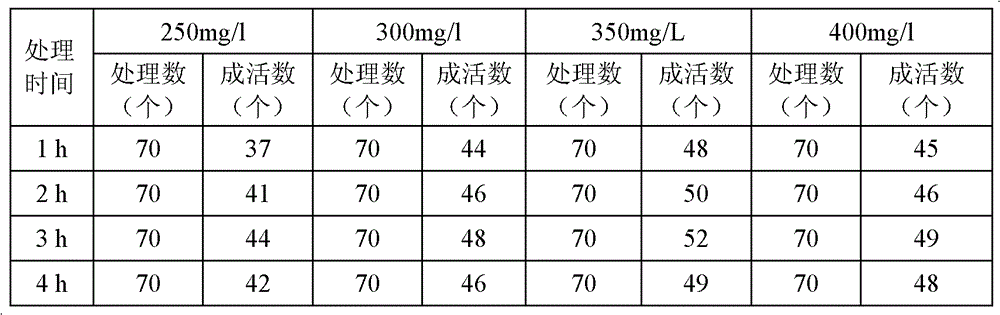
Table 2IBA is to the influence of survival rate

1, experiment grouping
Be divided into 3 groups:
(1) NAA with 350mg/L handles the cuttage branch;
(2) IBA with 300mg/L handles the cuttage branch;
(3) handle the cuttage branch with the NAA of 350mg/L and the IBA of 300mg/L.
2, experimentation
Should select that the soil is porous, the well-formed, be beneficial to draining, nutrition better, the land for growing field crops of pH5.5~7.5, the land for growing field crops is provided with simple and easy frame, clear up big Tanaka's weeds, foreign material, (buy with 0.5% potassium permanganate and thiophanate-methyl from Tso Tat Co., Ltd., Japan, commodity are called thiophanate methyl, effective component content 70%) 500 times of liquid of dilution spray disinfecting soil, cover 3~4 days with plastic film again.For ease of irrigating, play the wide ridge of 100cm by interval 50cm, interval 50cm digs the cuttage cave of long 30cm, wide 30cm, dark 20cm on the ridge.
Gather the branch transverse diameter more than 1cm, length is the healthy and strong branch of the annual no damage by disease and insect of 50~70cm, soaked otch 10 minutes with 0.5% potassium permanganate, clear water cleans, and adopts the taking root liquid in above-mentioned grouping (1), (2), (3) to soak branch root 2h, 3h, 4h, 5h respectively.
The branch of handling well vertically is put in cuttage cave central authorities, reclaimed soil successively, compacting after the backfill is watered permeablely, makes environmental temperature remain on 18~28 ℃, and the water content in seedbed remains on 60~80%, and relative air humidity is 65~85%.With the pouring of the taking root liquid in above-mentioned grouping (1), (2), (3) once stop pouring every day after the cuttage after 10~15 days, allows cuttage seeding begin to accept illumination, adapts to external environmental condition gradually, carries out the water management of normal field.According to the weather conditions and the cutting time of locality, can be carried out to the motility rate statistics summer at 25~30 days, then need 40~50 days winter.
3, experimental result
The survival rate statistical result showed, handle branch root 4h with the IBA of the NAA of 350mg/L and 300mg/L after, it is maximum that the cuttage branch survives number, survival rate the highest (see Table 3 and Fig. 3).
The composite taking root liquid of table 3 is to the influence of cuttage survival rate

1, experiment grouping
Be divided into 4 groups:
(1) not having (CK) is control group, and field soil is used in bottom, cuttage cave;
(2) field soil that contains composite fertilizer is used in bottom, cuttage cave, and the amount of application of composite fertilizer is each cuttage cave 5g;
(3) bottom, cuttage cave is used and is contained field soil humous, and amount of application humous is each cuttage cave 15g;
(4) bottom, cuttage cave is used and is contained composite fertilizer and field soil humous, and the amount of application of composite fertilizer is each cuttage cave 5g, and composite fertilizer and mass ratio humous are 1: 3.
2, experimentation
Should select that the soil is porous, the well-formed, be beneficial to draining, nutrition better, the land for growing field crops of pH5.5~7.5, the land for growing field crops is provided with simple and easy frame, clear up big Tanaka's weeds, foreign material, (buy with 0.5% potassium permanganate and thiophanate-methyl from Tso Tat Co., Ltd., Japan, commodity are called thiophanate methyl, effective component content 70%) 500 times of liquid of dilution spray disinfecting soil, cover 3~4 days with plastic film again.For ease of irrigating, 50cm plays the wide ridge of 100cm at interval, and interval 50cm digs the cuttage cave of long 30cm, wide 30cm, dark 20cm on the ridge, and uses the field soil of (1), (2), (3), (4) in the above-mentioned experiment grouping in the bottom in cuttage cave.
Gather the branch transverse diameter more than 1cm, length is the healthy and strong branch of the annual no damage by disease and insect of 50~70cm, soaks otch 10 minutes with 0.5% potassium permanganate, clear water cleans, employing is with the NAA of 350mg/L and the IBA immersion branch 4h of 300mg/L.
The branch of handling well vertically is put in cuttage cave central authorities, reclaimed soil successively, compacting after the backfill is watered permeablely, makes environmental temperature remain on 18~28 ℃, and the water content in seedbed remains on 60~80%, and relative air humidity is 65~85%.With the taking root liquid pouring once stop pouring every day after the cuttage after 10~15 days, allows cuttage seeding begin to accept illumination, adapts to external environmental condition gradually, carries out the water management of normal field.According to the weather conditions and the cutting time of locality, can be carried out to the motility rate statistics summer at 25~30 days, then need 40~50 days winter.
3, experimental result
The survival rate statistical result showed is added the survival rate (see Table 4 and Fig. 4) that composite fertilizer and humus soil can improve the cuttage branch in mixed-matrix.
Table 4 seedbed nutrient component is to the influence of cuttage survival rate
| Do not have (CK) | Composite fertilizer | Humus soil | Composite fertilizer+humus soil | |
| Handle number (individual) | 75 | 75 | 75 | 75 |
| Survive number (individual) | 31 | 46 | 50 | 58 |
| Survival rate | 41.33% | 61.33% | 66.67% | 77.33% |
The comparison of embodiment 4 the inventive method and conventional method
1, uses the inventive method breeding rose
The processing in seedbed: select that the soil is porous, the well-formed, be beneficial to draining, nutrition better, the land for growing field crops of pH5.5~7.5.Remove wherein weeds and foreign material, (buy with 0.5% potassium permanganate and thiophanate-methyl from Tso Tat Co., Ltd., Japan, commodity are called thiophanate methyl, effective component content 70%) 500 times of liquid sprinklings of dilution disinfecting soil, covered 3~4 days with plastic film again.For ease of irrigating, play the wide ridge of 100cm by interval 50cm.Interval 50cm on the ridge digs the cuttage cave of wide 30cm, long 30cm, dark 20cm, and spreads bottom the cave and execute thick the be composite fertilizer of 5cm and soil humous (composite fertilizer is 5g/ cuttage cave, and composite fertilizer and mass ratio humous are 1: 3).
The processing of cuttage branch: selection is healthy and strong, substantial, eye is full, (transverse diameter is more than the 1cm to the annotinous branch of no damage by disease and insect, and length is 50~70cm), but can not select water sprout for use.Cuttage branch root should be whittled into axe-shape, and cortex can not cut brokenly like this, and is not perishable, and cut sides is big, and absorbent function strengthens, easily healing and taking root.The branch otch of cutting is earlier with 0.5% potassium permanganate sterilization 10 minutes, and with using composite good taking root liquid (mixed solution of 350mg/L NAA and 300mg/L IBA) to soak again 4 hours after the clear water cleaning, soaking depth is 7cm.
Cuttage: do not injure skin zone during cuttage, backfill successively in whole good cuttage cave, compacting then irrigates water, plugged ear and soil is combined closely for 1 time.Make environmental temperature remain on 18~28 ℃, the water content in seedbed remains on 60~80%, and relative air humidity is 65~85%.
Manage after the cuttage: with taking root liquid (mixed solution of 350mg/L NAA and 300mg/L IBA) pouring once stop pouring every day after the cuttage after 10~15 days, allows cuttage seeding accept sunlight gradually.
2, use conventional method 1 breeding rose
Permselectivity is good, short texture, be rich in the matrix of humus; Select living then good branch, leave 2~3 full buds, keep the opposite leaf more than 2; Branch cutting is coiled in the cave in (the cave dish is 72 types, and specification is 540mm * 280mm, and the single hole specification is 40mm * 20mm, and the degree of depth is 45mm); The control temperature is 18~28 ℃, and the field capacity in seedbed remains on 60~80%, and relative air humidity is 65~85%.Under the condition that measures all suits, can behind 30d, carry out hardening the soonest, be transplanted in the flowerpot that bore is 12cm, after the seedling stalwartness, transplant field planting again.
3, use conventional method 2 breeding roses
Permselectivity is good, short texture, be rich in the matrix of humus; Select living then good branch, leave 2~3 full buds, keep the opposite leaf more than 2; To shear good branch with 0.5% disinfecting solution of potassium permanganate 10 minutes, cleaning the back with clear water is the NAA of 350mg/L and the IBA immersion 4h of 300mg/L with concentration; Then the branch cutting of handling well is coiled in the cave in (the cave dish is 72 types, and specification is 540mm * 280mm, and the single hole specification is 40mm * 20mm, and the degree of depth is 45mm); The control temperature is 18~28 ℃, and the field capacity in seedbed remains on 60~80%, and relative air humidity is 65~85%.Under the condition that measures all suits, can behind 30d, carry out hardening the soonest, be transplanted in the flowerpot that bore is 12cm, after the seedling stalwartness, transplant field planting again.
The rose of adopting the inventive method breeding just blooms surviving back 1 year, and flowering rate reaches 86.67%; And the rose of adopting the conventional method breeding will survive the 3rd year just can bloom (the seeing Table 5) in back by the time, especially conventional method 1 does not use the preferred composite taking root liquid of the inventive method to handle the cuttage branch, the 3rd year strain tree that blooms only is 9 strains after surviving, and is less than conventional method 2 and the inventive method of having used the preferred composite taking root liquid of the inventive method to handle the cuttage branch greatly.This shows that the inventive method can shorten the breeding cycle of rose, simplified the cultivation operation, improved production efficiency greatly.
The comparison of table 5 the inventive method and conventional method

Annotate: owing to adopt conventional method 1 breeding rose to bloom the strain number very little on the 3rd year surviving the back, be 9 strains only, statistical significance is little, therefore not have statistics to survive after the data in the 3rd year.
Claims (4)
1. rose cuttage breeding method is characterized in that: may further comprise the steps:
The processing in A, seedbed: dig the dark cuttage cave of 16~27cm, the bottom is used and is contained the soil that mixes matrix, and soil 4~6cm is thick; Described mixed-matrix contains at least a in composite fertilizer and the humus soil;
The processing of B, cuttage branch: gather the annual healthy and strong branch that transverse diameter is not less than 1cm, long 50~70cm, handle otch with thimerosal, clean, taking root liquid is handled; Described thimerosal is handled otch and is meant: adopt 0.2~0.5% potassium permanganate to soak otch 5~10 minutes; Described taking root liquid is that concentration is at least a among the NAA of 250~400mg/L or the IBA that concentration is 200~350mg/L;
C, cuttage: the branch of handling well is inserted in the cuttage cave, and reclaimed soil waters permeable;
Manage after D, the cuttage: temperature remains on 18~28 ℃, and the water content in seedbed remains on 60~80%, and relative air humidity is 65~85%, and water with taking root liquid every day after the cuttage, stops to water taking root liquid after 10~15 days, allows cuttage seeding accept illumination gradually.
2. rose cuttage breeding method according to claim 1 is characterized in that: dig in the steps A before the cuttage cave soil disinfection.
3. rose cuttage breeding method according to claim 1 and 2 is characterized in that: the described cuttage of steps A acupuncture point is that the distance between the cuttage cave is 40~60cm on the ridge of 40~60cm, the wide 80~120cm of being in spacing.
4. rose cuttage breeding method according to claim 1 is characterized in that: taking root liquid is handled and to be meant among the step B: for the NAA with 350mg/L soaks cuttage branch root 3h or soaks cuttage branch root 4h or for soaking cuttage branch root 4h with the NAA of 350mg/L and the IBA of 300mg/L for the NAA with 300mg/L.
Priority Applications (1)
| Application Number | Priority Date | Filing Date | Title |
|---|---|---|---|
| CN 201210103394 CN102612971B (en) | 2012-04-10 | 2012-04-10 | Rose cutting propagation method |
Applications Claiming Priority (1)
| Application Number | Priority Date | Filing Date | Title |
|---|---|---|---|
| CN 201210103394 CN102612971B (en) | 2012-04-10 | 2012-04-10 | Rose cutting propagation method |
Publications (2)
| Publication Number | Publication Date |
|---|---|
| CN102612971A CN102612971A (en) | 2012-08-01 |
| CN102612971B true CN102612971B (en) | 2013-07-31 |
Family
ID=46553454
Family Applications (1)
| Application Number | Title | Priority Date | Filing Date |
|---|---|---|---|
| CN 201210103394 Active CN102612971B (en) | 2012-04-10 | 2012-04-10 | Rose cutting propagation method |
Country Status (1)
| Country | Link |
|---|---|
| CN (1) | CN102612971B (en) |
Families Citing this family (17)
| Publication number | Priority date | Publication date | Assignee | Title |
|---|---|---|---|---|
| CN103650839A (en) * | 2013-10-25 | 2014-03-26 | 安徽环绿生态农业投资发展有限公司 | Cutting seedling-raising method of rose tender branches |
| CN103891509B (en) * | 2014-03-28 | 2016-01-20 | 兰州市农业科技研究推广中心 | A kind of Chinese bitter water rose cuttage technique |
| CN103918535B (en) * | 2014-04-28 | 2016-01-20 | 银谷玫瑰科技有限公司 | The seedling-cultivating method of a kind of Damask Rose |
| CN104221676A (en) * | 2014-09-05 | 2014-12-24 | 宁波丽盛生态农业有限公司 | Flower mud fixing propagation method for rose seedlings |
| CN104478580A (en) * | 2014-12-08 | 2015-04-01 | 镇江市官塘生态农业有限公司 | Rose cuttings rooting solution and preparation method thereof |
| CN104541881A (en) * | 2015-01-05 | 2015-04-29 | 云南沁园生物科技开发有限公司 | Planting method of rose |
| CN104584819A (en) * | 2015-01-06 | 2015-05-06 | 芮丹云 | Method for cultivating gold-edge roses on large scale |
| CN104904481B (en) * | 2015-06-17 | 2017-11-14 | 房子云 | A kind of French Ge Lasi roses cuttage and seedling culture method |
| CN105123194A (en) * | 2015-08-14 | 2015-12-09 | 太仓市新滨农场专业合作社 | Plantation method of roses |
| CN105248103A (en) * | 2015-10-31 | 2016-01-20 | 丽江雪山玫瑰食品有限公司 | Rose planting method |
| CN105284400A (en) * | 2015-11-25 | 2016-02-03 | 吴军 | Rose planting method |
| CN106613631A (en) * | 2016-11-10 | 2017-05-10 | 刘同明 | Rose planting method with high survival rate |
| CN107047184B (en) * | 2017-04-12 | 2020-12-11 | 广东德高信种植有限公司 | Cocoa tea cutting seedling method |
| CN107333598A (en) * | 2017-08-03 | 2017-11-10 | 芜湖玖荣生物科技有限公司 | Prevent and treat the implantation methods of rose diplostomiasis |
| CN107278781A (en) * | 2017-08-03 | 2017-10-24 | 芜湖玖荣生物科技有限公司 | The rose cuttage implantation methods of kind of blooming period prolonging |
| CN109937723A (en) * | 2019-04-04 | 2019-06-28 | 山西省农业科学院果树研究所 | A kind of method of flat Europe hybridization fibert cuttage and seedling culture |
| CN118235628A (en) * | 2024-04-19 | 2024-06-25 | 广东粤雄林业投资有限责任公司 | Method for cutting propagation of Semiliquidambar cathayensis |
Citations (2)
| Publication number | Priority date | Publication date | Assignee | Title |
|---|---|---|---|---|
| CN101112156A (en) * | 2007-08-30 | 2008-01-30 | 复旦大学 | A kind of cutting rapid propagation method of Bougainvillea |
| CN101627696A (en) * | 2009-08-24 | 2010-01-20 | 李姗 | Method for improving cuttage survival rate of rose |
-
2012
- 2012-04-10 CN CN 201210103394 patent/CN102612971B/en active Active
Patent Citations (2)
| Publication number | Priority date | Publication date | Assignee | Title |
|---|---|---|---|---|
| CN101112156A (en) * | 2007-08-30 | 2008-01-30 | 复旦大学 | A kind of cutting rapid propagation method of Bougainvillea |
| CN101627696A (en) * | 2009-08-24 | 2010-01-20 | 李姗 | Method for improving cuttage survival rate of rose |
Non-Patent Citations (4)
| Title |
|---|
| NAA、IBA、3721生根液对玫瑰绿枝扦插及移栽成活率的影响;刘云强等;《北方园艺》;20061231;20-21页 * |
| 刘云强等.NAA、IBA、3721生根液对玫瑰绿枝扦插及移栽成活率的影响.《北方园艺》.2006,20-21页. |
| 玫瑰扦插繁殖;赛丹;《新农业》;20060630;第50页 * |
| 赛丹.玫瑰扦插繁殖.《新农业》.2006,第50页. |
Also Published As
| Publication number | Publication date |
|---|---|
| CN102612971A (en) | 2012-08-01 |
Similar Documents
| Publication | Publication Date | Title |
|---|---|---|
| CN102612971B (en) | Rose cutting propagation method | |
| CN101637092B (en) | Method for cultivating eucalyptus seedlings | |
| CN105993626B (en) | A kind of cultivation method of potted golden camellia tea | |
| CN104206223B (en) | A kind of cultivation method of blueberry | |
| CN102960172B (en) | Short-spike and root-grafting rapid propagation method for camellia azalea | |
| CN102293111B (en) | Method for raising seedlings by cutting olives | |
| CN102948323B (en) | Method for raising seedlings of clematis by cutting | |
| CN102113445B (en) | Method for raising seedlings of Pinus kesiya var.langbianensis by efficient twig cuttage propagation | |
| CN104115676B (en) | A kind of Chinese honey locust bud seedling grafting of tender branch method | |
| CN104585007A (en) | Cuttage seedling culture method of liquidambar styraciflua | |
| CN102204489A (en) | Method for culturing teak seedlings by spike culture and rapid propagation in container | |
| CN108522121B (en) | Simple propagation method for grafting camellia chrysantha to camellia oleifera | |
| CN101697703B (en) | Method for bickiron inoculation of buds symbiotic to root fungi for culturing seedlings of Chinese chestnut | |
| CN104620828A (en) | Method of cultivating landscaping trees by wild-to-artificial cultivation of Choerospondias axillaris | |
| CN102349430B (en) | Method for breeding seedlings of grapes by using containers | |
| CN107242032A (en) | Walnut industrial fast breeding method and consolidant | |
| CN103636373A (en) | Method for vegetative propagation of vaccinium plants through fresh sphagnum | |
| CN111264328A (en) | Cultivation method of small bougainvillea spectabilis pot culture | |
| CN104969776A (en) | Intensification root-breaking grafting and seedling cultivating method for thin-skinned melons | |
| CN104170632A (en) | Cultivation method of high quality cuttings from semi-mangrove Cerbera manghas | |
| CN104904537B (en) | Plum tree woodland seedling culturing method | |
| CN103416209A (en) | Artificial cultivation method of wild sweet tea tree | |
| CN106472215A (en) | Peach tree nursery cuttage breeding method | |
| CN107996169A (en) | A kind of walnut container seedling culture method | |
| CN104885842A (en) | Method for cutting and breeding Taxus baccata |
Legal Events
| Date | Code | Title | Description |
|---|---|---|---|
| C06 | Publication | ||
| PB01 | Publication | ||
| C10 | Entry into substantive examination | ||
| SE01 | Entry into force of request for substantive examination | ||
| C14 | Grant of patent or utility model | ||
| GR01 | Patent grant |