CN102546580A - Method, system and device for updating user password - Google Patents
Method, system and device for updating user password Download PDFInfo
- Publication number
- CN102546580A CN102546580A CN2011100005247A CN201110000524A CN102546580A CN 102546580 A CN102546580 A CN 102546580A CN 2011100005247 A CN2011100005247 A CN 2011100005247A CN 201110000524 A CN201110000524 A CN 201110000524A CN 102546580 A CN102546580 A CN 102546580A
- Authority
- CN
- China
- Prior art keywords
- user password
- user
- hash value
- password
- server
- Prior art date
- Legal status (The legal status is an assumption and is not a legal conclusion. Google has not performed a legal analysis and makes no representation as to the accuracy of the status listed.)
- Pending
Links
- 238000000034 method Methods 0.000 title claims abstract description 82
- 238000012795 verification Methods 0.000 claims description 31
- 238000004364 calculation method Methods 0.000 claims description 18
- 230000005540 biological transmission Effects 0.000 abstract description 5
- 150000003839 salts Chemical class 0.000 description 22
- 238000010586 diagram Methods 0.000 description 7
- 102000005591 NIMA-Interacting Peptidylprolyl Isomerase Human genes 0.000 description 6
- 108010059419 NIMA-Interacting Peptidylprolyl Isomerase Proteins 0.000 description 6
- 230000004048 modification Effects 0.000 description 5
- 238000012986 modification Methods 0.000 description 5
- 102100022142 Achaete-scute homolog 1 Human genes 0.000 description 3
- 101000901099 Homo sapiens Achaete-scute homolog 1 Proteins 0.000 description 3
- 238000005516 engineering process Methods 0.000 description 1
Images




Landscapes
- Storage Device Security (AREA)
Abstract
本发明公开了一种用户口令的更新方法、系统及装置,主要技术方案包括:服务器接收用户终端发送的用户口令更新请求,用户口令更新请求中包括用户终端根据第一用户口令对第二用户口令加密生成的密文数据,其中,第一用户口令为服务器在完成用户口令更新之前用户使用的用户口令,第二用户口令为服务器在完成用户口令更新后用户使用的用户口令;根据保存的第一用户口令对接收的密文数据解密得到第二用户口令;利用解密得到的第二用户口令更新保存的第一用户口令。根据该技术方案,在用户需要更新用户口令时,能够根据用户的第一用户口令对用户的第二用户口令进行加密,从而增加了第二用户口令传输的安全性,进而提高了对用户口令进行更新的安全性。
The invention discloses a user password update method, system and device. The main technical solutions include: a server receives a user password update request sent by a user terminal, and the user password update request includes the user terminal updating the second user password according to the first user password. Encrypt the generated ciphertext data, wherein the first user password is the user password used by the user before the server completes the user password update, and the second user password is the user password used by the user after the server completes the user password update; according to the stored first The user password decrypts the received ciphertext data to obtain a second user password; and uses the decrypted second user password to update the stored first user password. According to this technical solution, when the user needs to update the user password, the user's second user password can be encrypted according to the user's first user password, thereby increasing the security of the transmission of the second user password, and further improving the security of the user password. Updated security.
Description
技术领域 technical field
本发明涉及数据传输技术领域,尤其涉及一种用户口令的更新方法、系统及装置。The invention relates to the technical field of data transmission, in particular to a user password update method, system and device.
背景技术 Background technique
在当今计算机网络中,最常见且最简单的访问控制方法是通过对用户口令的匹配来确认用户的合法性,这就要求用户预先在网络侧注册,设置登录时的用户口令,服务器则保存该用户的用户口令,以便该用户登录时进行验证。In today's computer network, the most common and simplest access control method is to confirm the legitimacy of the user by matching the user password, which requires the user to register on the network side in advance, set the user password when logging in, and the server will save the The user's user password for authentication when the user logs in.
目前比较常用的一种用户口令验证方法,是基于哈希算法的用户口令认证过程,主要如下:At present, a commonly used user password authentication method is the user password authentication process based on the hash algorithm, mainly as follows:
用户终端接收用户输入的用户口令后,向网络侧服务器发送口令验证请求;After receiving the user password input by the user, the user terminal sends a password verification request to the network side server;
网络侧服务器根据用户终端发送的口令验证请求生成随机数,并将生成的该随机数发送给用户终端;The server on the network side generates a random number according to the password verification request sent by the user terminal, and sends the generated random number to the user terminal;
用户终端根据网络侧服务器发送的随机数以及用户输入的用户口令,计算哈希值,并将计算得到的哈希值发送给网络侧服务器;The user terminal calculates the hash value according to the random number sent by the network side server and the user password input by the user, and sends the calculated hash value to the network side server;
网络侧服务器采用发送给用户终端的随机数以及保存的该用户的用户口令,计算哈希值,并将计算得到的哈希值与用户终端发送的哈希值比较,若一致,则验证通过,若不一致,则验证不通过,并向用户终端反馈验证结果。The server on the network side uses the random number sent to the user terminal and the saved user password of the user to calculate the hash value, and compares the calculated hash value with the hash value sent by the user terminal. If they are consistent, the verification is passed. If not, the verification fails, and the verification result is fed back to the user terminal.
其中,用户终端根据网络侧服务器发送的随机数以及用户输入的用户口令,计算哈希值基于如下公式:Wherein, the user terminal calculates the hash value based on the following formula according to the random number sent by the server on the network side and the user password entered by the user:
Hash1=HASH(HASH(口令)||随机数)Hash1=HASH(HASH(password)||random number)
存储在网络侧服务器中的用户口令以HASH(口令)的形式存在。The user password stored in the network side server exists in the form of HASH (password).
通过上述流程,实现了基于哈希算法的用户验证流程。但实际应用中,用户常常有修改用户口令的需求,而基于上述流程,在用户需要修改用户口令时,由用户终端将用户输入的新口令的哈希值发送给网络侧服务器,网络侧服务器利用接收的新口令的哈希值更新原口令的哈希值,完成用户口令的修改流程。该流程中,由于新用户口令的哈希值是以明文的形式直接发送给网络侧服务器,因此,该新用户口令的哈希值容易被非法用户监听并且截获,使得非法用户对网络侧服务器进行重放攻击、字典攻击变得相对容易。Through the above process, the user verification process based on the hash algorithm is realized. However, in practical applications, users often need to modify the user password, and based on the above process, when the user needs to modify the user password, the user terminal sends the hash value of the new password entered by the user to the network side server, and the network side server utilizes The hash value of the received new password updates the hash value of the original password to complete the modification process of the user password. In this process, since the hash value of the new user password is directly sent to the server on the network side in the form of plain text, the hash value of the new user password is easily monitored and intercepted by the illegal user, so that the illegal user conducts a check on the server on the network side. Replay attacks, dictionary attacks become relatively easy.
综上所述,现有技术中,对用户口令进行更新的安全性低。To sum up, in the prior art, the security of updating the user password is low.
发明内容 Contents of the invention
有鉴于此,本发明实施例提供一种用户口令的更新方法、系统及装置,采用该技术方案,能够提供对用户口令进行更新的安全性。In view of this, the embodiments of the present invention provide a method, system and device for updating a user password. By adopting the technical solution, security for updating the user password can be provided.
本发明实施例通过如下技术方案实现:Embodiments of the present invention are realized through the following technical solutions:
根据本发明实施例的一个方面,提供了一种用户口令的更新方法,包括:According to an aspect of an embodiment of the present invention, a method for updating a user password is provided, including:
服务器接收用户终端发送的用户口令更新请求,所述用户口令更新请求中包括所述用户终端根据第一用户口令对第二用户口令加密生成的密文数据,其中,所述第一用户口令为所述服务器在完成用户口令更新之前用户使用的用户口令,所述第二用户口令为所述服务器在完成用户口令更新后用户使用的用户口令;The server receives the user password update request sent by the user terminal, the user password update request includes the ciphertext data generated by the user terminal encrypting the second user password according to the first user password, wherein the first user password is the The user password used by the user before the server completes the user password update, and the second user password is the user password used by the user after the server completes the user password update;
根据保存的所述第一用户口令对接收的所述密文数据解密得到所述第二用户口令;Decrypting the received ciphertext data according to the saved first user password to obtain the second user password;
利用解密得到的所述第二用户口令更新保存的所述第一用户口令。The stored first user password is updated by using the second user password obtained through decryption.
根据本发明实施例的另一个方面,提供了一种用户口令的更新方法,包括:According to another aspect of the embodiments of the present invention, a method for updating a user password is provided, including:
用户终端根据第一用户口令对第二用户口令加密生成密文数据,其中,所述第一用户口令为服务器在完成用户口令更新之前用户使用的用户口令,所述第二用户口令为服务器在完成用户口令更新后用户使用的用户口令;The user terminal encrypts the second user password according to the first user password to generate ciphertext data, wherein the first user password is the user password used by the user before the server completes the update of the user password, and the second user password is the The user password used by the user after the user password is updated;
向服务器发送用户口令更新请求,所述用户口令更新请求中包括生成的所述密文数据。Sending a user password update request to the server, where the user password update request includes the generated ciphertext data.
根据本发明实施例的另一个方面,还提供了一种用户口令的更新系统,包括用户终端和服务器;According to another aspect of the embodiments of the present invention, a user password update system is also provided, including a user terminal and a server;
其中:in:
所述用户终端,用于根据第一用户口令对第二用户口令加密生成密文数据,其中,所述第一用户口令为所述服务器在完成用户口令更新之前用户使用的用户口令,所述第二用户口令为所述服务器在完成用户口令更新后用户使用的用户口令;以及向服务器发送用户口令更新请求,所述用户口令更新请求中包括生成的所述密文数据;The user terminal is configured to encrypt a second user password according to the first user password to generate ciphertext data, wherein the first user password is the user password used by the user before the server completes updating the user password, and the second user password is The second user password is the user password used by the user after the server completes the user password update; and a user password update request is sent to the server, and the user password update request includes the generated ciphertext data;
所述服务器,用于接收用户终端发送的用户口令更新请求,所述用户口令更新请求中包括所述用户终端根据第一用户口令对第二用户口令加密生成的密文数据,根据保存的所述第一用户口令对接收的所述密文数据解密得到所述第二用户口令,并利用解密得到的所述第二用户口令更新保存的所述第一用户口令。The server is configured to receive a user password update request sent by the user terminal, the user password update request includes ciphertext data generated by the user terminal encrypting the second user password according to the first user password, and according to the stored The first user password decrypts the received ciphertext data to obtain the second user password, and uses the decrypted second user password to update the stored first user password.
根据本发明实施例的另一个方面,还提供了一种用户口令的更新装置,包括:According to another aspect of the embodiments of the present invention, a device for updating user passwords is also provided, including:
接收单元,用于接收用户终端发送的用户口令更新请求,所述用户口令更新请求中包括所述用户终端根据第一用户口令对第二用户口令加密生成的密文数据,其中,所述第一用户口令为服务器在完成用户口令更新之前用户使用的用户口令,所述第二用户口令为服务器在完成用户口令更新后用户使用的用户口令;The receiving unit is configured to receive a user password update request sent by a user terminal, where the user password update request includes ciphertext data generated by encrypting a second user password by the user terminal according to the first user password, wherein the first The user password is the user password used by the user before the server completes the user password update, and the second user password is the user password used by the user after the server completes the user password update;
用户口令更新单元,用于根据保存的所述第一用户口令对所述接收单元接收的所述密文数据解密得到所述第二用户口令,并利用解密得到的所述第二用户口令更新保存的所述第一用户口令。A user password updating unit, configured to decrypt the ciphertext data received by the receiving unit according to the stored first user password to obtain the second user password, and use the decrypted second user password to update and save The password of the first user.
根据本发明实施例的另一个方面,还提供了一种用户口令的更新装置,包括:According to another aspect of the embodiments of the present invention, a device for updating user passwords is also provided, including:
密文数据生成单元,用于根据第一用户口令对第二用户口令加密生成密文数据,其中,所述第一用户口令为服务器在完成用户口令更新之前用户使用的用户口令,所述第二用户口令为服务器在完成用户口令更新后用户使用的用户口令;A ciphertext data generating unit, configured to encrypt a second user password according to the first user password to generate ciphertext data, wherein the first user password is the user password used by the user before the server completes updating the user password, and the second user password is The user password is the user password used by the user after the server completes the user password update;
用户口令更新请求发送单元,用于向服务器发送用户口令更新请求,所述用户口令更新请求中包括所述密文数据生成单元生成的所述密文数据。The user password update request sending unit is configured to send a user password update request to the server, where the user password update request includes the ciphertext data generated by the ciphertext data generation unit.
通过本发明实施例提供的上述至少一个技术方案,服务器接收用户终端发送的用户口令更新请求,该用户口令更新请求中包括用户终端根据第一用户口令对第二用户口令加密生成的密文数据,其中,第一用户口令为服务器在完成用户口令更新之前用户使用的用户口令,第二用户口令为服务器在完成用户口令更新后用户使用的用户口令。在接收到用户口令更新请求后,进一步根据保存的第一用户口令对接收的密文数据解密得到第二用户口令,利用解密得到的第二用户口令更新保存的第一用户口令。根据该技术方案,在用户需要更新用户口令时,能够根据用户的第一用户口令对用户的第二用户口令进行加密,从而增加了第二用户口令传输的安全性,进而提高了对用户口令进行更新的安全性。Through at least one of the above technical solutions provided by the embodiments of the present invention, the server receives the user password update request sent by the user terminal, and the user password update request includes the ciphertext data generated by the user terminal encrypting the second user password according to the first user password, Wherein, the first user password is the user password used by the user before the server finishes updating the user password, and the second user password is the user password used by the user after the server finishes updating the user password. After receiving the user password update request, further decrypt the received ciphertext data according to the stored first user password to obtain a second user password, and use the decrypted second user password to update the stored first user password. According to this technical solution, when the user needs to update the user password, the user's second user password can be encrypted according to the user's first user password, thereby increasing the security of the transmission of the second user password, and further improving the security of the user password. Updated security.
本发明的其它特征和优点将在随后的说明书中阐述,并且,部分地从说明书中变得显而易见,或者通过实施本发明而了解。本发明的目的和其他优点可通过在所写的说明书、权利要求书、以及附图中所特别指出的结构来实现和获得。Additional features and advantages of the invention will be set forth in the description which follows, and in part will be apparent from the description, or may be learned by practice of the invention. The objectives and other advantages of the invention may be realized and attained by the structure particularly pointed out in the written description and claims hereof as well as the appended drawings.
附图说明 Description of drawings
附图用来提供对本发明的进一步理解,并且构成说明书的一部分,与本发明实施例一起用于解释本发明,并不构成对本发明的限制。在附图中:The accompanying drawings are used to provide a further understanding of the present invention, and constitute a part of the description, and are used together with the embodiments of the present invention to explain the present invention, and do not constitute a limitation to the present invention. In the attached picture:
图1为本发明实施例一提供的用户口令的更新流程图一;Fig. 1 is the update flowchart 1 of the user password provided by Embodiment 1 of the present invention;
图2为本发明实施例一提供的用户口令的更新流程图二;Fig. 2 is the update flowchart 2 of the user password provided by Embodiment 1 of the present invention;
图3为本发明实施例一提供的用户终端对服务器进行验证的流程图;FIG. 3 is a flowchart of a user terminal verifying a server according to Embodiment 1 of the present invention;
图4为本发明实施例一提供的用户口令的验证流程图;Fig. 4 is the verification flowchart of the user password provided by Embodiment 1 of the present invention;
图5为本发明实施例一提供的用户口令的更新流程图三;FIG. 5 is a third flow chart of user password update provided by Embodiment 1 of the present invention;
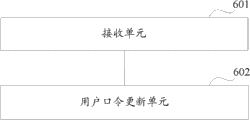
图6为本发明实施例二提供的用户口令的更新装置示意图一;FIG. 6 is a first schematic diagram of an apparatus for updating user passwords provided by Embodiment 2 of the present invention;
图7为本发明实施例二提供的用户口令的更新装置示意图二;FIG. 7 is a second schematic diagram of an apparatus for updating user passwords provided by Embodiment 2 of the present invention;
图8为本发明实施例二提供的用户口令的更新装置示意图三;FIG. 8 is a third schematic diagram of an apparatus for updating user passwords provided by Embodiment 2 of the present invention;
图9为本发明实施例三提供的用户口令的更新装置示意图一;FIG. 9 is a first schematic diagram of an apparatus for updating user passwords provided by Embodiment 3 of the present invention;
图10为本发明实施例三提供的用户口令的更新装置示意图二;FIG. 10 is a second schematic diagram of an apparatus for updating user passwords provided by Embodiment 3 of the present invention;
图11为本发明实施例三提供的用户口令的更新装置示意图三;FIG. 11 is a third schematic diagram of an apparatus for updating user passwords provided by Embodiment 3 of the present invention;
图12为本发明实施例四提供的用户口令的更新系统示意图。FIG. 12 is a schematic diagram of a system for updating user passwords provided by Embodiment 4 of the present invention.
具体实施方式 Detailed ways
为了给出提高了对用户口令进行更新的安全性的实现方案,本发明实施例提供了一种用户口令的更新方法、系统及装置,以下结合说明书附图对本发明的优选实施例进行说明,应当理解,此处所描述的优选实施例仅用于说明和解释本发明,并不用于限定本发明。并且在不冲突的情况下,本申请中的实施例及实施例中的特征可以相互组合。In order to provide an implementation scheme that improves the security of updating user passwords, embodiments of the present invention provide a method, system and device for updating user passwords. The preferred embodiments of the present invention will be described below in conjunction with the accompanying drawings. It should be understood that the preferred embodiments described here are only used to illustrate and explain the present invention, not to limit the present invention. And in the case of no conflict, the embodiments in the present application and the features in the embodiments can be combined with each other.
实施例一Embodiment one
本发明实施例一提供了一种用户口令的更新方法,该用户口令的更新方法主要在网络侧实施,通过该方法实现用户口令的更新,能够提高用户口令更新的安全性。Embodiment 1 of the present invention provides a method for updating a user password. The method for updating a user password is mainly implemented on the network side. The method is used to update the user password, which can improve the security of updating the user password.
如图1所示,本发明实施例一提供的用户口令的更新方法,主要包括如下步骤:As shown in Figure 1, the method for updating user passwords provided by Embodiment 1 of the present invention mainly includes the following steps:
以下流程中,第一用户口令为用户当前使用的用户口令,第二用户口令为用户要更改的用户口令。In the following process, the first user password is the user password currently used by the user, and the second user password is the user password to be changed by the user.
步骤101、用户终端根据用户的第一用户口令对第二用户口令加密生成密文数据,并将该密文数据包括在用户口令更新请求中发送给服务器。Step 101, the user terminal encrypts the second user password according to the user's first user password to generate ciphertext data, and includes the ciphertext data in the user password update request and sends it to the server.
步骤102、服务器接收用户终端发送的用户口令更新请求后,获取该用户口令更新请求中携带的密文数据。Step 102: After receiving the user password update request sent by the user terminal, the server acquires the ciphertext data carried in the user password update request.
步骤103、服务器根据保存的第一用户口令对获取的密文数据解密,得到第二用户口令。Step 103, the server decrypts the acquired ciphertext data according to the saved first user password to obtain the second user password.
步骤104、服务器利用解密得到的第二用户口令更新保存的第一用户口令,至此,用户口令更新流程结束。Step 104, the server uses the decrypted second user password to update the saved first user password, so far, the user password update process ends.
通过图1所述流程,在用户需要更新用户口令时,能够根据用户的第一用户口令对用户的第二用户口令进行加密,从而增加了第二用户口令传输的安全性,进而提高了对用户口令进行更新的安全性。Through the process described in Figure 1, when the user needs to update the user password, the user's second user password can be encrypted according to the user's first user password, thereby increasing the security of the transmission of the second user password, and then improving the security of the user. Password for update security.
本发明实施例一提供的优选实施方式中,为了进一步保证用户口令更新的安全性,在利用用户终端发送的用户口令更新请求中包括的密文数据更新用户口令之前,需要进一步对第一用户口令进行验证,具体流程如图2所示,包括如下步骤:In the preferred implementation mode provided by Embodiment 1 of the present invention, in order to further ensure the security of user password update, before using the ciphertext data included in the user password update request sent by the user terminal to update the user password, it is necessary to further update the first user password For verification, the specific process is shown in Figure 2, including the following steps:
步骤201、用户终端根据第一用户口令生成第一哈希值、并根据用户的第一用户口令对第二用户口令加密生成密文数据,并将生成的第一哈希值以及密文数据包括在用户口令更新请求中发送给服务器。
步骤202、服务器接收用户终端发送的用户口令更新请求后,根据保存的与该用户终端对应的第一用户口令,生成第二哈希值。Step 202: After receiving the user password update request sent by the user terminal, the server generates a second hash value according to the stored first user password corresponding to the user terminal.
步骤203、判断生成的第二哈希值与用户口令更新请求中包括的第一哈希值是否一致,若否,执行步骤204,若是,执行步骤205至步骤206。
步骤204、拒绝用户的用户口令更新请求,至此,流程结束。
步骤205、服务器根据保存的第一用户口令对获取的密文数据解密,得到第二用户口令。
步骤206、服务器利用解密得到的第二用户口令更新保存的第一用户口令,至此,用户口令更新流程结束。In
通过图2所述流程,服务器在根据保存的第一用户口令对用户的第二用户口令进行解密之前,对第一用户口令的合法性进行验证,在验证通过后,通过保存的第一用户口令解密接收的密文数据,并根据解密得到的第二用户口令更新保存的第一用户口令,从而进一步保证用户更新用户口令的安全性。Through the process described in Figure 2, before the server decrypts the user's second user password according to the saved first user password, it verifies the legitimacy of the first user password. The received ciphertext data is decrypted, and the stored first user password is updated according to the decrypted second user password, thereby further ensuring the security of the user updating the user password.
在图2所述的优选实施方式中,上述步骤201中,用户终端根据第一用户口令生成第一哈希值,可以有多种生成方式,具体如下:In the preferred embodiment described in FIG. 2, in the
第一哈希值的生成方式一Generation method 1 of the first hash value
对第一用户口令的哈希值采用设定哈希算法,计算得到第一哈希值,如下:The hash value of the first user password is calculated using the set hash algorithm to obtain the first hash value, as follows:
HASH1=HASH(第一用户口令的哈希值)。HASH1 = HASH (hash value of the first user's password).
第一哈希值的生成方式二Generation method 2 of the first hash value
对第一用户口令的哈希值、第一随机数以及第二随机数采用第一设定哈希算法,计算得到第一哈希值;其中,第一随机数以及第二随机数分别由用户终端以及服务器生成,具体如下:The hash value of the first user password, the first random number and the second random number are calculated by using the first set hash algorithm to obtain the first hash value; wherein, the first random number and the second random number are respectively determined by the user Terminal and server generation, as follows:
HASH1=HASH(第一用户口令的哈希值||RAND-C||RAND-S);HASH1=HASH (the hash value of the first user password||RAND-C||RAND-S);
其中,RAND-C为由用户终端生成的第一随机数,RAND-S为由服务器生成的第二随机数。Wherein, RAND-C is the first random number generated by the user terminal, and RAND-S is the second random number generated by the server.
在以上所述的第一哈希值的生成方式一以及生成方式二中,第一用户口令的哈希值也可以有多种生成方式,具体如下:In the above-mentioned generation method 1 and generation method 2 of the first hash value, the hash value of the first user password can also be generated in a variety of ways, as follows:
第一用户口令的哈希值为对第一用户口令进行至少一次哈希计算得到的哈希值,例如,第一用户口令的哈希值为对第一用户口令进行一次哈希计算得到,即第一用户口令的哈希值=HASH(PIN1),其中,PIN1为第一用户口令。The hash value of the first user password is obtained by performing at least one hash calculation on the first user password, for example, the hash value of the first user password is obtained by performing one hash calculation on the first user password, namely The hash value of the first user password=HASH(PIN1), where PIN1 is the first user password.
或者or
对第一用户口令以及服务器下发的随机数进行至少一次哈希计算得到的哈希值,例如,对第一用户口令以及服务器下发的随机数进行一次哈希计算得到的哈希值,即第一用户口令的哈希值=HASH(PIN1||随机数),其中,PIN1为第一用户口令。The hash value obtained by performing at least one hash calculation on the first user password and the random number issued by the server, for example, the hash value obtained by performing one hash calculation on the first user password and the random number issued by the server, that is Hash value of the first user password=HASH(PIN1||random number), where PIN1 is the first user password.
或者or
第一用户口令的哈希值为对第一用户口令以及服务器与用户终端共享参数进行至少一次哈希计算得到的哈希值,例如,第一用户口令的哈希值为对第一用户口令以及服务器与用户终端共享参数Salt进行一次哈希计算得到的哈希值,即第一用户口令的哈希值=HASH(Salt||PIN1),其中,PIN1为第一用户口令,Salt为服务器和用户终端的安全参数,可以由服务器生成下发到用户终端,也可以由用户终端生成上传至服务器。The hash value of the first user password is the hash value obtained by performing at least one hash calculation on the first user password and the parameters shared by the server and the user terminal, for example, the hash value of the first user password is the first user password and The server and the user terminal share the parameter Salt to perform a hash calculation to obtain a hash value, that is, the hash value of the first user password=HASH(Salt||PIN1), wherein, PIN1 is the first user password, and Salt is the server and user The security parameters of the terminal may be generated by the server and sent to the user terminal, or generated by the user terminal and uploaded to the server.
本发明实施例中,用户终端以及服务器中生成哈希值所采用的哈希算法可以为现有的哈希算法,例如,MD2、MD4、MD5和SHA-1等哈希算法。在生成哈希值之前,服务器和用户终端需要预先约定所采用的哈希算法。In the embodiment of the present invention, the hash algorithm used by the user terminal and the server to generate the hash value may be an existing hash algorithm, for example, hash algorithms such as MD2, MD4, MD5, and SHA-1. Before generating the hash value, the server and the user terminal need to pre-agree on the hash algorithm to be used.
本发明实施例一提供的优选实施方式中,根据用户终端生成第一哈希值时所采用的方式,服务器也需要根据相应的方式生成第二哈希值,具体如下:In the preferred implementation mode provided by Embodiment 1 of the present invention, according to the method used by the user terminal to generate the first hash value, the server also needs to generate the second hash value according to the corresponding method, as follows:
若用户终端采用上述第一哈希值的生成方式一,即对第一用户口令的哈希值采用设定哈希算法,计算得到第一哈希值,则上述步骤202中,服务器根据保存的与该用户终端对应的第一用户口令,生成第二哈希值,具体包括:If the user terminal adopts the above-mentioned method 1 for generating the first hash value, that is, adopts the set hash algorithm for the hash value of the first user password to calculate the first hash value, then in the
根据保存的与用户终端对应的第一用户口令的哈希值采用与该用户终端生成第一哈希值时相应的哈希算法,生成第二哈希值。According to the saved hash value of the first user password corresponding to the user terminal, a hash algorithm corresponding to when the user terminal generates the first hash value is used to generate the second hash value.
若用户终端采用上述第一哈希值的生成方式二,即对第一用户口令的哈希值、第一随机数以及第二随机数采用第一设定哈希算法,计算得到第一哈希值,则上述步骤202中,服务器根据保存的与该用户终端对应的第一用户口令,生成第二哈希值,具体包括:If the user terminal adopts the above-mentioned method 2 for generating the first hash value, that is, the hash value of the first user password, the first random number, and the second random number are calculated using the first set hash algorithm to obtain the first hash value. value, then in the
根据保存的与用户终端对应的第一用户口令的哈希值、第一随机数以及第二随机数采用与用户终端生成第一哈希值时相应的哈希算法,生成第二哈希值。According to the stored hash value of the first user password corresponding to the user terminal, the first random number and the second random number, a hash algorithm corresponding to that used when the user terminal generates the first hash value is used to generate the second hash value.
上述步骤202的具体实现方式中,服务器中需要预先保存第一用户口令的哈希值,该第一用户口令的哈希值可以由用户终端生成并上报,也可以由服务器根据用户终端上报的第一用户口令生成。其中,服务器生成第一用户口令的哈希值时,采用的生成方式与用户终端生成第一用户口令的哈希值时采用的生成方式一致。In the specific implementation of the
本发明实施例一提供的上述实施例中,用户终端根据第一用户口令生成第一哈希值以及服务器根据保存的第一用户口令生成第二哈希值,都是预先生成第一用户口令的哈希值,并进一步根据第一用户口令的哈希值生成第一哈希值或第二哈希值,实际应用中,为了减少计算量,用户终端也可以直接通过计算第一用户口令的哈希值生成第一哈希值,相应地,服务器也可以直接通过计算第一用户口令的哈希值生成第二哈希值,此时,服务器中可以直接保存第一用户口令。In the above embodiment provided by Embodiment 1 of the present invention, the user terminal generates the first hash value according to the first user password and the server generates the second hash value according to the saved first user password, both of which are pre-generated first user password hash value, and further generate the first hash value or the second hash value according to the hash value of the first user password. In practical applications, in order to reduce the amount of calculation, the user terminal can also directly calculate the first user password The hash generates the first hash value. Correspondingly, the server can also directly generate the second hash value by calculating the hash value of the first user password. At this time, the server can directly save the first user password.
在图1以及图2所述的优选实施方式中,步骤101以及201中,用户终端根据第一用户口令对第二用户口令加密生成密文数据可以有多种生成方式,具体如下:In the preferred embodiment described in Fig. 1 and Fig. 2, in
密文数据的生成方式一Method 1 of generating ciphertext data
利用第一用户口令的哈希值对第二用户口令加密生成密文数据。该方式中,第一用户口令的哈希值与上述用户终端生成第一哈希值时所使用的第一用户口令的哈希值的生成方式基本相同,此处不再赘述。The hash value of the first user password is used to encrypt the second user password to generate ciphertext data. In this manner, the hash value of the first user password is basically the same as the method for generating the hash value of the first user password used by the user terminal to generate the first hash value, and will not be repeated here.
密文数据的生成方式二Method 2 of generating ciphertext data
利用第一用户口令的哈希值对第二用户口令的哈希值加密生成密文数据。该方式中,第一用户口令的哈希值与上述用户终端生成第一哈希值时所使用的第一用户口令的哈希值的生成方式基本相同,此处不再赘述。第二用户口令的哈希值也可以采用与上述用户终端生成第一哈希值时所使用的第一用户口令的哈希值的生成方式,即:Using the hash value of the first user password to encrypt the hash value of the second user password to generate ciphertext data. In this manner, the hash value of the first user password is basically the same as the method for generating the hash value of the first user password used by the user terminal to generate the first hash value, and will not be repeated here. The hash value of the second user password may also be generated in the same way as the hash value of the first user password used by the user terminal to generate the first hash value, namely:
对第二用户口令进行至少一次哈希计算得到的哈希值作为第二用户口令的哈希值;或performing at least one hash calculation on the second user password as the hash value of the second user password; or
对第二用户口令以及服务器与用户终端共享参数进行至少一次哈希计算得到的哈希值作为第二用户口令的哈希值。A hash value obtained by performing at least one hash calculation on the second user password and the parameters shared by the server and the user terminal is used as the hash value of the second user password.
本发明实施例一提供的优选实施方式中,根据用户终端生成密文数据时所采用的方式,服务器也需要根据相应的方式对接收的密文数据解密得到第二用户口令,具体如下:In the preferred implementation mode provided by Embodiment 1 of the present invention, according to the method used by the user terminal to generate the ciphertext data, the server also needs to decrypt the received ciphertext data according to the corresponding method to obtain the second user password, as follows:
若用户终端采用上述密文数据的生成方式一,即利用第一用户口令的哈希值对第二用户口令加密生成密文数据,则上述步骤103~步骤104以及步骤205~步骤206中,利用保存的第一用户口令对接收的密文数据解密得到所述第二用户口令以及利用解密得到的所述第二用户口令更新保存的所述第一用户口令的过程,包括:If the user terminal adopts the first method of generating ciphertext data, that is, uses the hash value of the first user password to encrypt the second user password to generate ciphertext data, then in the above steps 103 to 104 and
利用保存的第一用户口令的哈希值对接收的密文数据解密得到第二用户口令;Decrypting the received ciphertext data by using the saved hash value of the first user password to obtain the second user password;
利用解密得到的第二用户口令的哈希值更新保存的第一用户口令的哈希值。The stored hash value of the first user password is updated by using the hash value of the second user password obtained through decryption.
若用户终端采用上述密文数据的生成方式二,即利用第一用户口令的哈希值对第二用户口令的哈希值加密生成密文数据,则上述步骤103~步骤104以及步骤205~步骤206中,利用保存的第一用户口令对接收的密文数据解密得到所述第二用户口令以及利用解密得到的所述第二用户口令更新保存的所述第一用户口令的过程,包括:If the user terminal adopts the second method of generating ciphertext data, that is, use the hash value of the first user password to encrypt the hash value of the second user password to generate ciphertext data, then the above steps 103 to 104 and
利用保存的第一用户口令的哈希值对接收的密文数据解密得到第二用户口令的哈希值;Decrypting the received ciphertext data by using the saved hash value of the first user password to obtain the hash value of the second user password;
利用解密得到的第二用户口令的哈希值更新保存的第一用户口令的哈希值。The stored hash value of the first user password is updated by using the hash value of the second user password obtained through decryption.
本发明实施例中,服务器对接收的密文数据解密所采用的解密算法与用户终端对第二用户口令加密所采用的加密算法相应。In the embodiment of the present invention, the decryption algorithm used by the server to decrypt the received ciphertext data corresponds to the encryption algorithm used by the user terminal to encrypt the second user password.
本发明实施例一提供的上述实施例中,用户终端根据第一用户口令对第二用户口令加密生成密文数据,都是预先生成第一用户口令的哈希值,并进一步根据第一用户口令的哈希值对第二用户口令或第二用户口令的哈希值进行加密得到密文数据,实际应用中,为了减少计算量,用户终端也可以直接通过第一用户口令对第二用户口令进行加密得到密文数据,即将第一用户口令作为加解密的密钥。相应地,服务器也可以直接通过第一用户口令对密文数据解密得到第二用户口令,若服务器中保存的第一用户口令直接以第一用户口令的形式存在,则直接利用第二用户口令更新保存的第一用户口令,若服务器中保存的第一用户口令以第一用户口令的哈希值形式存在,则需要计算第二用户口令的哈希值,并利用第二用户口令的哈希值更新保存的第一用户口令的哈希值。In the above-mentioned embodiment provided by Embodiment 1 of the present invention, the user terminal encrypts the second user password to generate ciphertext data according to the first user password, which is to generate the hash value of the first user password in advance, and further The hash value of the second user password or the hash value of the second user password is encrypted to obtain ciphertext data. In practical applications, in order to reduce the amount of calculation, the user terminal can also directly use the first user password to encrypt the second user password. Encrypt to obtain ciphertext data, that is, the first user password is used as a key for encryption and decryption. Correspondingly, the server can also directly decrypt the ciphertext data through the first user password to obtain the second user password. If the first user password stored in the server directly exists in the form of the first user password, then directly use the second user password to update The saved first user password, if the first user password saved in the server exists in the form of the hash value of the first user password, it is necessary to calculate the hash value of the second user password and use the hash value of the second user password Update the saved hash of the first user's password.
本发明实施例一提供的优选实施方式中,为了进一步保证用户口令的安全性,防止用户口令的泄露,用户终端还可以在向服务器发送用户口令更新请求之前,对服务器进行验证,在对服务器验证通过后,向该服务器发送的用户口令更新请求。具体地,用户终端对服务器进行验证的过程如图3所示,包括如下步骤:In the preferred implementation mode provided by Embodiment 1 of the present invention, in order to further ensure the security of the user password and prevent the leakage of the user password, the user terminal can also verify the server before sending the user password update request to the server. After passing, the user password update request sent to the server. Specifically, the process for the user terminal to verify the server is shown in Figure 3, including the following steps:
步骤301、用户终端向服务器发送包括由用户终端生成的第一随机数的服务器认证请求。Step 301, the user terminal sends a server authentication request including the first random number generated by the user terminal to the server.
步骤302、服务器在收到用户终端的服务器认证请求后,生成第二随机数,并根据保存的第一用户口令的哈希值、第一随机数以及第二随机数采用第二设定哈希算法生成第三哈希值。Step 302: After receiving the server authentication request from the user terminal, the server generates a second random number, and adopts the second set hash value according to the saved hash value of the first user password, the first random number, and the second random number The algorithm generates a third hash value.
步骤303、服务器将生成的第二随机数以及第三哈希值发送给用户终端。Step 303, the server sends the generated second random number and the third hash value to the user terminal.
步骤304、用户终端根据第一用户口令的哈希值、第一随机数以及服务器发送的第二随机数采用第二设定哈希算法生成第四哈希值。Step 304, the user terminal generates a fourth hash value using a second set hash algorithm according to the hash value of the first user password, the first random number, and the second random number sent by the server.
步骤305、用户终端判断生成的第四哈希值与服务器发送的第三哈希值是否一致,若是,执行步骤306,若否,执行步骤307。Step 305 , the user terminal judges whether the generated fourth hash value is consistent with the third hash value sent by the server, if yes, execute step 306 , if not, execute step 307 .
步骤306、确定对该服务器验证通过,至此,用户终端对服务器的合法性进行验证的流程结束。Step 306 , determining that the server is verified as successful, so far, the process of verifying the legitimacy of the server by the user terminal ends.
步骤307、确定对该服务器验证未通过,至此,用户终端对服务器的合法性进行验证的流程结束。Step 307 , it is determined that the verification of the server fails, and so far, the process of verifying the legitimacy of the server by the user terminal ends.
根据图3所述的流程,通过对服务器的合法性验证,能够进一步保证后续执行的用户口令更新的流程的安全性。在上述流程中,服务器与用户终端互相交换的第一随机数以及第二随机数,可以用于后续在用户口令的更新过程中,用户终端生成第一哈希值以及服务器生成第二哈希值,具体地,为了防止重放攻击,在进行服务器认证时根据第一随机数以及第二随机数生成哈希值时以及在进行用户口令更新时根据第一随机数以及第二随机数生成哈希值时,该第一随机数以及第二随机数在计算时的顺序可以不同。According to the process described in FIG. 3 , through the legality verification of the server, the security of the subsequent user password update process can be further ensured. In the above process, the first random number and the second random number exchanged between the server and the user terminal can be used for the user terminal to generate the first hash value and the server to generate the second hash value in the subsequent update process of the user password , specifically, in order to prevent replay attacks, when the hash value is generated according to the first random number and the second random number during server authentication and when the user password is updated, the hash value is generated according to the first random number and the second random number value, the order of the first random number and the second random number during calculation may be different.
根据本发明实施例,还提供了用户口令的验证流程,具体如图4所示,包括如下步骤:According to an embodiment of the present invention, a verification process of a user password is also provided, specifically as shown in FIG. 4 , including the following steps:
步骤401、用户终端接收用户输入的用户口令。Step 401, the user terminal receives the user password input by the user.
步骤402、用户终端向服务器发送用户口令验证请求。Step 402, the user terminal sends a user password verification request to the server.
步骤403、服务器向用户终端反馈生成的安全参数Salt以及随机数。Step 403, the server feeds back the generated security parameter Salt and the random number to the user terminal.
步骤404、用户终端根据用户输入的用户口令、服务器反馈的安全参数Salt以及随机数生成哈希值。Step 404, the user terminal generates a hash value according to the user password input by the user, the security parameter Salt and the random number fed back by the server.
步骤405、用户终端将生成的哈希值发送至服务器。Step 405, the user terminal sends the generated hash value to the server.
步骤406、服务器对用户终端发送的哈希值进行验证,若验证通过,允许该用户终端登录,否则拒绝该用户终端登录。Step 406, the server verifies the hash value sent by the user terminal, and if the verification is passed, the user terminal is allowed to log in, otherwise, the user terminal is rejected to log in.
至此,服务器对用户口令验证的流程结束。So far, the server's process of verifying the user's password is over.
具体地,上述步骤403中,服务器向用户终端反馈生成的安全参数Salt可以在接收到用户终端发送的用户口令验证请求之前发送。Specifically, in the above step 403, the security parameter Salt generated by the server feedback to the user terminal may be sent before receiving the user password verification request sent by the user terminal.
具体地,上述步骤404中,用户终端根据用户输入的用户口令、服务器反馈的安全参数Salt以及随机数生成哈希值,可以通过如下公式:Specifically, in the above step 404, the user terminal generates a hash value according to the user password input by the user, the security parameter Salt and the random number fed back by the server, and the following formula can be used:
Hash=HASH(HASH(Salt||PIN)||随机数);Hash=HASH(HASH(Salt||PIN)||random number);
其中:PIN为用户口令。Among them: PIN is the user password.
具体地,上述步骤406中,服务器对用户终端发送的哈希值进行验证的过程如下:Specifically, in the above step 406, the server verifies the hash value sent by the user terminal as follows:
服务器中预先保存了HASH(Salt||PIN),在认证过程中,服务器计算Hash=HASH(HASH(Salt||PIN)||随机数),并比较计算得到的哈希值与用户反馈的哈希值是否一致,若一致,则确定验证通过,否则验证不通过。HASH(Salt||PIN) is pre-saved in the server. During the authentication process, the server calculates Hash=HASH(HASH(Salt||PIN)||random number), and compares the calculated hash value with the hash value fed back by the user. Check whether the hash values are consistent. If they are consistent, the verification is determined to be passed, otherwise the verification is not passed.
通过图4所述的流程,在对用户口令进行验证的流程中,根据用户口令生成哈希值时,引入了安全参数Salt,从而能够有效地防止非法用户的字典攻击。Through the process described in Figure 4, in the process of verifying the user password, the security parameter Salt is introduced when the hash value is generated according to the user password, so that dictionary attacks by illegal users can be effectively prevented.
以下进一步说明根据本发明上述实施例提供的技术方案实现用户口令更新的优选实现过程:The following further illustrates the preferred implementation process of realizing user password update according to the technical solutions provided by the above-mentioned embodiments of the present invention:
如图5所示,用户口令的更新流程包括如下步骤:As shown in Figure 5, the update process of the user password includes the following steps:
步骤501、用户终端向服务器发送认证请求,并携带用户终端生成的随机数RAND-C。
步骤502、服务器向用户终端返回安全参数Salt、服务器生成的随机数RAND-S以及服务器计算得到的Hash0。
该步骤502中,Hash0的算法如下:In this
Hash0=HASH(HASH(Salt||OLD_PIN)||RAND-C||RAND-S)。Hash0=HASH(HASH(Salt||OLD_PIN)||RAND-C||RAND-S).
步骤503、用户终端采用同样的计算方式计算Hash0,如果与上述结果一致,则服务器通过验证,继续执行后续流程,否则服务器非法,用户终端拒绝后续流程。Step 503, the user terminal uses the same calculation method to calculate Hash0, if the result is consistent with the above, the server passes the verification and continues to execute the subsequent process, otherwise the server is illegal, and the user terminal rejects the subsequent process.
步骤504、用户通过用户终端输入OLD PIN(即第一用户口令)、NEW PIN(即第二用户口令)。
步骤505、用户终端根据OLD PIN、NEW PIN、随机数计算Hash1、密文数据。
步骤506、用户终端将Hash1以及密文数据传输到服务器。
步骤507、服务器校验OLD PIN,并在验证通过后修改保存的OLD PIN为NEW PIN。Step 507: The server verifies the OLD PIN, and changes the saved OLD PIN to NEW PIN after the verification is passed.
至此,完成用户口令的修改流程。So far, the modification process of the user password is completed.
上述步骤505中,相关算法说明如下:In the
Hash1=HASH(HASH(Salt||OLD_PIN)||RAND-S||RAND-C)Hash1=HASH(HASH(Salt||OLD_PIN)||RAND-S||RAND-C)
密文数据=Key(HASH(Salt||OLD_PIN))[HASH(Salt||NEW_PIN)]Ciphertext data = Key(HASH(Salt||OLD_PIN))[HASH(Salt||NEW_PIN)]
其中:Key(HASH(Salt||OLD_PIN))是从HASH(Salt||OLD_PIN)导出的密钥。即,采用由HASH(Salt||OLD_PIN)导出的密钥对HASH(Salt||NEW_PIN)加密。Where: Key(HASH(Salt||OLD_PIN)) is the key derived from HASH(Salt||OLD_PIN). That is, HASH(Salt||NEW_PIN) is encrypted with a key derived from HASH(Salt||OLD_PIN).
上述步骤507中,服务器收到Hash1和密文数据后验证方法如下:In the
首先,按照以上计算HASH1的公式计算Hash1’,并与Hash1比对,若比较一致,则对原口令的验证通过;First, calculate Hash1' according to the formula for calculating HASH1 above, and compare it with Hash1. If they are consistent, the verification of the original password is passed;
其次,计算Key(HASH(Salt||OLD_PIN))-1[密文1],得到的值即为新口令的HASH值,即:HASH(Salt||NEW_PIN),将该值存入数据库,覆盖原口令的Hash值。Secondly, calculate Key(HASH(Salt||OLD_PIN))-1[ciphertext 1], the obtained value is the HASH value of the new password, namely: HASH(Salt||NEW_PIN), store the value in the database, overwrite Hash value of the original password.
本发明实施例一提供的上述技术方案可以应用到所有基于用户终端以及服务器之间进行口令验证的领域,比如:WEB应用登录(邮箱、博客等)、也包括安全级别较高的应用(证券、网银等金融应用)。The above-mentioned technical solution provided by Embodiment 1 of the present invention can be applied to all fields based on password verification between user terminals and servers, such as: WEB application login (mailbox, blog, etc.), and applications with higher security levels (securities, securities, etc.) Financial applications such as online banking).
实施例二Embodiment two
本发明实施例二提供了一种用户口令的更新装置,该用户口令的更新装置可以位于网络侧,通过该装置实现用户口令的更新,能够提高用户口令更新的安全性。Embodiment 2 of the present invention provides a device for updating user passwords. The device for updating user passwords may be located on the network side. The device can be used to update user passwords, which can improve the security of user password updates.
如图6所示,本发明实施例二提供的用户口令的更新装置,包括:As shown in Figure 6, the device for updating user passwords provided by Embodiment 2 of the present invention includes:
接收单元601以及用户口令更新单元602;a receiving
其中:in:
接收单元601,用于接收用户终端发送的用户口令更新请求,该用户口令更新请求中包括用户终端根据第一用户口令对第二用户口令加密生成的密文数据,其中,第一用户口令为服务器在完成用户口令更新之前用户使用的用户口令,第二用户口令为服务器在完成用户口令更新后用户使用的用户口令;The receiving
用户口令更新单元602,用于根据保存的第一用户口令对接收单元601接收的密文数据解密得到第二用户口令,并利用解密得到的第二用户口令更新保存的第一用户口令。The user
本发明实施例二提供的优选实施方式中,图6所示装置包括的用户口令更新单元602,还用于:In the preferred implementation mode provided by Embodiment 2 of the present invention, the user
在接收单元601接收的用户口令更新请求中还包括用户终端根据第一用户口令生成的第一哈希值时,在根据保存的第一用户口令对接收的密文数据解密得到第二用户口令之前,根据保存的与用户终端对应的第一用户口令,生成第二哈希值,并确定生成的第二哈希值与接收的第一哈希值一致。When the user password update request received by the receiving
如图7所示,本发明实施例二提供的优选实施方式中,图6所示装置包括的用户口令更新单元602,还可以进一步包括:As shown in Figure 7, in the preferred implementation mode provided by Embodiment 2 of the present invention, the user
哈希值第一生成模块602A,用于在第一哈希值由用户终端对第一用户口令的哈希值采用设定哈希算法计算得到时,根据保存的与用户终端对应的第一用户口令的哈希值采用与用户终端生成第一哈希值时相应的哈希算法,生成第二哈希值;The first hash
哈希值第二生成模块602B,用于在第一哈希值由用户终端对第一用户口令的哈希值、用户终端生成的第一随机数以及服务器生成的第二随机数采用第一设定哈希算法计算得到时,根据保存的与用户终端对应的第一用户口令的哈希值、第一随机数以及第二随机数采用与用户终端生成第一哈希值时相应的哈希算法,生成第二哈希值;其中,第一随机数以及第二随机数分别由服务器以及用户终端生成。The second hash
在图7所示的装置中,根据生成哈希值的方式不同,可以选择由用户口令更新单元602包括的哈希值第一生成模块602A或者哈希值第二生成模块602B生成相应的第二哈希值,实际应用中,用户口令更新单元602也可以只包括上述的哈希值第一生成模块602A,或者只包括上述的哈希值第二生成模块602B。In the device shown in FIG. 7, according to different ways of generating hash values, the first hash
如图8所示,本发明实施例二提供的优选实施方式中,图6所示装置包括的用户口令更新单元602,还可以进一步包括:As shown in Figure 8, in the preferred implementation mode provided by Embodiment 2 of the present invention, the user
用户口令第一更新模块602C,用于在密文数据由用户终端利用第一用户口令的哈希值对第二用户口令加密生成时,利用保存的第一用户口令的哈希值对接收的密文数据解密得到第二用户口令,并利用解密得到的第二用户口令的哈希值更新保存的第一用户口令的哈希值;The first user
用户口令第二更新模块602D,用于在密文数据由用户终端利用第一用户口令的哈希值对第二用户口令的哈希值加密生成时,利用保存的第一用户口令的哈希值对接收的密文数据解密得到第二用户口令的哈希值,并利用解密得到的第二用户口令的哈希值更新保存的第一用户口令的哈希值。The second user
在图8所示的装置中,根据生成密文数据的方式不同,可以选择由用户口令更新单元602包括的用户口令第一更新模块602C或者用户口令第二更新模块602D对相应密文数据进行解密,实际应用中,用户口令更新单元602也可以只包括上述的用户口令第一更新模块602C,或者只包括上述的用户口令第二更新模块602D。In the device shown in FIG. 8 , according to different ways of generating ciphertext data, the first user
应当理解,以上用户口令的更新装置包括的单元仅为根据该装置实现的功能进行的逻辑划分,实际应用中,可以进行上述单元的叠加或拆分。并且该实施例提供的用户口令的更新装置所实现的功能与上述实施例一提供的用户口令的更新方法流程中服务器侧完成的功能一一对应,对于该装置所实现的更为详细的处理流程,在上述实施例一中已做详细描述,此处不再详细描述。It should be understood that the units included in the above user password updating device are only logically divided according to the functions realized by the device, and in practical applications, the above units can be superimposed or split. And the functions realized by the user password updating device provided in this embodiment correspond one-to-one to the functions completed on the server side in the flow of the user password updating method provided in the first embodiment above. For the more detailed processing flow realized by the device , has been described in detail in the first embodiment above, and will not be described in detail here.
实施例三Embodiment Three
本发明实施例三提供了一种用户口令的更新装置,该用户口令的更新装置可以位于终端侧,通过该装置实现用户口令的更新,能够提高用户口令更新的安全性。Embodiment 3 of the present invention provides a device for updating a user password. The device for updating a user password can be located on a terminal side. The device can be used to update a user password, which can improve the security of updating a user password.
如图9所示,本发明实施例三提供的用户口令的更新装置,包括:As shown in Figure 9, the device for updating user passwords provided by Embodiment 3 of the present invention includes:
密文数据生成单元901以及用户口令更新请求发送单元902;A ciphertext
其中:in:
密文数据生成单元901,用于根据第一用户口令对第二用户口令加密生成密文数据,其中,第一用户口令为服务器在完成用户口令更新之前用户使用的用户口令,第二用户口令为服务器在完成用户口令更新后用户使用的用户口令;The ciphertext
用户口令更新请求发送单元902,用于向服务器发送用户口令更新请求,用户口令更新请求中包括密文数据生成单元生成的密文数据。The user password update
如图10所示,本发明实施例三提供的优选实施方式中,图9所示的用户口令的更新装置还进一步包括:As shown in Figure 10, in the preferred implementation mode provided by Embodiment 3 of the present invention, the device for updating user passwords shown in Figure 9 further includes:
第一哈希值生成单元903,用于在向服务器发送包括生成的密文数据的用户口令更新请求之前,根据第一用户口令生成第一哈希值;The first hash
相应地,用户口令更新请求发送单元902,具体用于将第一哈希值生成单元生成的第一哈希值包括在用户口令更新请求发送。Correspondingly, the user password updating
本发明实施例三提供的优选实施方式中,图10所示装置包括的第一哈希值生成单元903,具体用于:In the preferred implementation mode provided by Embodiment 3 of the present invention, the first hash
对第一用户口令的哈希值采用设定哈希算法计算得到第一哈希值;或calculating the hash value of the first user password by using a set hash algorithm to obtain the first hash value; or
对第一用户口令的哈希值、用户终端生成的第一随机数以及服务器生成的第二随机数采用第一设定哈希算法计算得到第一哈希值。The hash value of the first user password, the first random number generated by the user terminal, and the second random number generated by the server are calculated using a first set hash algorithm to obtain the first hash value.
本发明实施例三提供的优选实施方式中,图9以及图10所示装置包括的密文数据生成单元901,具体用于:In the preferred implementation mode provided by Embodiment 3 of the present invention, the ciphertext
利用第一用户口令的哈希值对第二用户口令加密生成密文数据;或Encrypting the second user password with the hash value of the first user password to generate ciphertext data; or
利用第一用户口令的哈希值对第二用户口令的哈希值加密生成密文数据。Using the hash value of the first user password to encrypt the hash value of the second user password to generate ciphertext data.
如图11所示,本发明实施例三提供的优选实施方式中,图9所示的用户口令的更新装置还进一步包括:As shown in Figure 11, in the preferred implementation mode provided by Embodiment 3 of the present invention, the device for updating the user password shown in Figure 9 further includes:
服务器验证单元904,用于在用户口令更新请求发送单元902向服务器发送用户口令更新请求之前,对服务器验证通过。The
本发明实施例三提供的优选实施方式中,图11所示装置包括的服务器验证单元904,具体用于:In the preferred implementation mode provided by Embodiment 3 of the present invention, the
向服务器发送包括由用户终端生成的第一随机数的服务器认证请求,并接收服务器发送的由服务器生成的第二随机数以及第三哈希值,第三哈希值根据第一用户口令的哈希值、第一随机数以及第二随机数采用第二设定哈希算法生成;Send a server authentication request including the first random number generated by the user terminal to the server, and receive the second random number generated by the server and the third hash value sent by the server, the third hash value is based on the hash value of the first user password The hash value, the first random number and the second random number are generated using a second set hash algorithm;
根据第一用户口令的哈希值、第一随机数以及服务器发送的第二随机数采用第二设定哈希算法生成第四哈希值;Generate a fourth hash value by using a second set hash algorithm according to the hash value of the first user password, the first random number, and the second random number sent by the server;
若生成的第四哈希值与服务器发送的第三哈希值一致,则确定对服务器验证通过。If the generated fourth hash value is consistent with the third hash value sent by the server, it is determined that the verification of the server is passed.
应当理解,以上用户口令的更新装置包括的单元仅为根据该装置实现的功能进行的逻辑划分,实际应用中,可以进行上述单元的叠加或拆分。并且该实施例提供的用户口令的更新装置所实现的功能与上述实施例一提供的用户口令的更新方法流程中用户终端侧完成的功能一一对应,对于该装置所实现的更为详细的处理流程,在上述实施例一中已做详细描述,此处不再详细描述。It should be understood that the units included in the above user password updating device are only logically divided according to the functions realized by the device, and in practical applications, the above units can be superimposed or split. In addition, the functions implemented by the user password updating device provided in this embodiment correspond to the functions completed by the user terminal side in the flow of the user password updating method provided in the first embodiment above. For the more detailed processing implemented by the device The process has been described in detail in the first embodiment above, and will not be described in detail here.
实施例四Embodiment Four
本发明实施例四提供了一种用户口令的更新系统,通过该系统实现用户口令的更新,能够提高用户口令更新的安全性。Embodiment 4 of the present invention provides a system for updating user passwords, through which the update of user passwords can be implemented, and the security of updating user passwords can be improved.
如图12所示,本发明实施例四提供的用户口令的更新系统,包括:As shown in Figure 12, the user password update system provided by Embodiment 4 of the present invention includes:
用户终端1201和服务器1202;
其中:in:
用户终端1201,用于根据第一用户口令对第二用户口令加密生成密文数据,其中,第一用户口令为服务器1202在完成用户口令更新之前用户使用的用户口令,第二用户口令为服务器1202在完成用户口令更新后用户使用的用户口令;以及向服务器发送用户口令更新请求,用户口令更新请求中包括生成的密文数据;The
服务器1202,用于接收用户终端发送的用户口令更新请求,用户口令更新请求中包括用户终端1201根据第一用户口令对第二用户口令加密生成的密文数据,根据保存的第一用户口令对接收的密文数据解密得到第二用户口令,并利用解密得到的第二用户口令更新保存的第一用户口令。The
本发明实施例四提供的优选实施方式中,图12所示的用户口令的更新系统包括的用户终端1201,还用于根据第一用户口令生成第一哈希值,并将第一哈希值包括在用户口令更新请求中发送给服务器1202;In the preferred implementation mode provided by Embodiment 4 of the present invention, the
相应地,服务器1202,还用于在根据保存的第一用户口令对接收的密文数据解密得到第二用户口令之前,根据保存的与用户终端1201对应的第一用户口令,生成第二哈希值,并确定生成的第二哈希值与接收的第一哈希值一致。Correspondingly, the
应当理解,本发明实施例四提供的上述用户口令的更新系统中包括的用户终端1201所实现的功能与上述实施例三提供的用户口令的更新装置所实现的功能一一对应,本发明实施例四提供的上述用户口令的更新系统中包括的服务器1202所实现的功能与上述实施例二提供的用户口令的更新装置所实现的功能一一对应,具体实现细节已在上述实施例二以及实施例三中详细描述,此处不再详细描述。It should be understood that the functions implemented by the
通过本发明实施例提供的上述至少一个技术方案,服务器接收用户终端发送的用户口令更新请求,该用户口令更新请求中包括用户终端根据第一用户口令对第二用户口令加密生成的密文数据,其中,第一用户口令为服务器在完成用户口令更新之前用户使用的用户口令,第二用户口令为服务器在完成用户口令更新后用户使用的用户口令。在接收到用户口令更新请求后,进一步根据保存的第一用户口令对接收的密文数据解密得到第二用户口令,利用解密得到的第二用户口令更新保存的第一用户口令。根据该技术方案,在用户需要更新用户口令时,能够根据用户的第一用户口令对用户的第二用户口令进行加密,从而增加了第二用户口令传输的安全性,进而提高了对用户口令进行更新的安全性。Through at least one of the above technical solutions provided by the embodiments of the present invention, the server receives the user password update request sent by the user terminal, and the user password update request includes the ciphertext data generated by the user terminal encrypting the second user password according to the first user password, Wherein, the first user password is the user password used by the user before the server finishes updating the user password, and the second user password is the user password used by the user after the server finishes updating the user password. After receiving the user password update request, further decrypt the received ciphertext data according to the stored first user password to obtain a second user password, and use the decrypted second user password to update the stored first user password. According to this technical solution, when the user needs to update the user password, the user's second user password can be encrypted according to the user's first user password, thereby increasing the security of the transmission of the second user password, and further improving the security of the user password. Updated security.
进一步地,采用本发明实施例提供的技术方案,能够根据用户的第一用户口令(即旧用户口令)对用户的第二用户口令(即新用户口令)进行加密,从而无需引入专门的密钥,能够实现无密钥参与的用户口令认证,减少了密钥的分发以及管理成本。Further, adopting the technical solution provided by the embodiment of the present invention, the user's second user password (i.e. new user password) can be encrypted according to the user's first user password (i.e. old user password), so that there is no need to introduce a special key , can realize user password authentication without key participation, and reduce key distribution and management costs.
显然,本领域的技术人员可以对本发明进行各种改动和变型而不脱离本发明的精神和范围。这样,倘若本发明的这些修改和变型属于本发明权利要求及其等同技术的范围之内,则本发明也意图包含这些改动和变型在内。Obviously, those skilled in the art can make various changes and modifications to the present invention without departing from the spirit and scope of the present invention. Thus, if these modifications and variations of the present invention fall within the scope of the claims of the present invention and their equivalent technologies, the present invention also intends to include these modifications and variations.
Claims (26)
Priority Applications (1)
| Application Number | Priority Date | Filing Date | Title |
|---|---|---|---|
| CN2011100005247A CN102546580A (en) | 2011-01-04 | 2011-01-04 | Method, system and device for updating user password |
Applications Claiming Priority (1)
| Application Number | Priority Date | Filing Date | Title |
|---|---|---|---|
| CN2011100005247A CN102546580A (en) | 2011-01-04 | 2011-01-04 | Method, system and device for updating user password |
Publications (1)
| Publication Number | Publication Date |
|---|---|
| CN102546580A true CN102546580A (en) | 2012-07-04 |
Family
ID=46352549
Family Applications (1)
| Application Number | Title | Priority Date | Filing Date |
|---|---|---|---|
| CN2011100005247A Pending CN102546580A (en) | 2011-01-04 | 2011-01-04 | Method, system and device for updating user password |
Country Status (1)
| Country | Link |
|---|---|
| CN (1) | CN102546580A (en) |
Cited By (9)
| Publication number | Priority date | Publication date | Assignee | Title |
|---|---|---|---|---|
| CN103107989A (en) * | 2012-11-20 | 2013-05-15 | 高剑青 | Cryptosystem based on multi-hash values |
| CN104243158A (en) * | 2013-06-13 | 2014-12-24 | 松下电器产业株式会社 | Authentication method, communication system, device and server |
| CN106301785A (en) * | 2016-08-09 | 2017-01-04 | Tcl集团股份有限公司 | The binding method of a kind of intelligent home device and intelligent terminal and system |
| CN106330456A (en) * | 2016-08-19 | 2017-01-11 | Tcl集团股份有限公司 | Intelligent device security access method and system |
| CN106656955A (en) * | 2016-09-26 | 2017-05-10 | 山东浪潮商用系统有限公司 | Communication method and system and user terminal |
| CN107689869A (en) * | 2016-08-05 | 2018-02-13 | 华为技术有限公司 | The method and server of user password management |
| CN109194696A (en) * | 2018-11-01 | 2019-01-11 | 福建工程学院 | A kind of data-interface non-proliferation method |
| CN109561123A (en) * | 2017-09-27 | 2019-04-02 | 北京国双科技有限公司 | The caching method and device of token token |
| CN111401672A (en) * | 2019-01-02 | 2020-07-10 | 中国移动通信有限公司研究院 | Block chain based validity checking method, equipment and system |
Citations (4)
| Publication number | Priority date | Publication date | Assignee | Title |
|---|---|---|---|---|
| CN1946019A (en) * | 2005-10-04 | 2007-04-11 | 株式会社日立制作所 | Network device, network system and method for updating a key |
| WO2009121905A1 (en) * | 2008-04-04 | 2009-10-08 | International Business Machines Corporation | Handling expired passwords |
| CN101808097A (en) * | 2010-03-25 | 2010-08-18 | 杭州华三通信技术有限公司 | Method and equipment for preventing ARP attack |
| CN101888626A (en) * | 2009-05-15 | 2010-11-17 | 中国移动通信集团公司 | A method for realizing GBA key and its terminal equipment |
-
2011
- 2011-01-04 CN CN2011100005247A patent/CN102546580A/en active Pending
Patent Citations (4)
| Publication number | Priority date | Publication date | Assignee | Title |
|---|---|---|---|---|
| CN1946019A (en) * | 2005-10-04 | 2007-04-11 | 株式会社日立制作所 | Network device, network system and method for updating a key |
| WO2009121905A1 (en) * | 2008-04-04 | 2009-10-08 | International Business Machines Corporation | Handling expired passwords |
| CN101888626A (en) * | 2009-05-15 | 2010-11-17 | 中国移动通信集团公司 | A method for realizing GBA key and its terminal equipment |
| CN101808097A (en) * | 2010-03-25 | 2010-08-18 | 杭州华三通信技术有限公司 | Method and equipment for preventing ARP attack |
Cited By (14)
| Publication number | Priority date | Publication date | Assignee | Title |
|---|---|---|---|---|
| CN103107989A (en) * | 2012-11-20 | 2013-05-15 | 高剑青 | Cryptosystem based on multi-hash values |
| CN104243158A (en) * | 2013-06-13 | 2014-12-24 | 松下电器产业株式会社 | Authentication method, communication system, device and server |
| CN107689869A (en) * | 2016-08-05 | 2018-02-13 | 华为技术有限公司 | The method and server of user password management |
| CN107689869B (en) * | 2016-08-05 | 2020-06-16 | 华为技术有限公司 | Method and server for user password management |
| CN106301785B (en) * | 2016-08-09 | 2020-09-22 | Tcl科技集团股份有限公司 | Method and system for binding intelligent household equipment and intelligent terminal |
| CN106301785A (en) * | 2016-08-09 | 2017-01-04 | Tcl集团股份有限公司 | The binding method of a kind of intelligent home device and intelligent terminal and system |
| CN106330456A (en) * | 2016-08-19 | 2017-01-11 | Tcl集团股份有限公司 | Intelligent device security access method and system |
| CN106330456B (en) * | 2016-08-19 | 2020-09-22 | Tcl科技集团股份有限公司 | Intelligent device safe access method and system |
| CN106656955A (en) * | 2016-09-26 | 2017-05-10 | 山东浪潮商用系统有限公司 | Communication method and system and user terminal |
| CN109561123A (en) * | 2017-09-27 | 2019-04-02 | 北京国双科技有限公司 | The caching method and device of token token |
| CN109561123B (en) * | 2017-09-27 | 2022-02-22 | 北京国双科技有限公司 | Token caching method and device |
| CN109194696A (en) * | 2018-11-01 | 2019-01-11 | 福建工程学院 | A kind of data-interface non-proliferation method |
| CN109194696B (en) * | 2018-11-01 | 2021-09-21 | 福建工程学院 | Data interface anti-diffusion method |
| CN111401672A (en) * | 2019-01-02 | 2020-07-10 | 中国移动通信有限公司研究院 | Block chain based validity checking method, equipment and system |
Similar Documents
| Publication | Publication Date | Title |
|---|---|---|
| US12244739B2 (en) | Confidential authentication and provisioning | |
| US9847880B2 (en) | Techniques for ensuring authentication and integrity of communications | |
| CA2904615C (en) | Method and apparatus for embedding secret information in digital certificates | |
| CN102546580A (en) | Method, system and device for updating user password | |
| US8806206B2 (en) | Cooperation method and system of hardware secure units, and application device | |
| US20210056197A1 (en) | Remote processing of credential requests | |
| CN115883104B (en) | Secure login method and device for terminal equipment and nonvolatile storage medium | |
| CN116318784B (en) | Identity authentication method, identity authentication device, computer equipment and storage medium | |
| CN113051540B (en) | Application program interface safety grading treatment method | |
| CN114257376B (en) | Digital certificate updating method, device, computer equipment and storage medium | |
| Kravitz | Transaction immutability and reputation traceability: Blockchain as a platform for access controlled iot and human interactivity | |
| CN116232639B (en) | Data transmission method, device, computer equipment and storage medium | |
| CN102025503A (en) | Data security implementation method in cluster environment and high-security cluster | |
| EP4695938A1 (en) | Apparatus and method for managing credentials | |
| CN116318637A (en) | Method and system for secure network access communication of equipment | |
| CN111914270A (en) | Programmable authentication service method and system based on block chain technology | |
| CN120342615B (en) | Audit key management method based on trusted execution environment |
Legal Events
| Date | Code | Title | Description |
|---|---|---|---|
| C06 | Publication | ||
| PB01 | Publication | ||
| C10 | Entry into substantive examination | ||
| SE01 | Entry into force of request for substantive examination | ||
| C12 | Rejection of a patent application after its publication | ||
| RJ01 | Rejection of invention patent application after publication |
Application publication date: 20120704 |