CN102346123B - Method for analyzing swelling performance of ultrahigh-molecular-weight polyethylene resin - Google Patents
Method for analyzing swelling performance of ultrahigh-molecular-weight polyethylene resin Download PDFInfo
- Publication number
- CN102346123B CN102346123B CN 201110201289 CN201110201289A CN102346123B CN 102346123 B CN102346123 B CN 102346123B CN 201110201289 CN201110201289 CN 201110201289 CN 201110201289 A CN201110201289 A CN 201110201289A CN 102346123 B CN102346123 B CN 102346123B
- Authority
- CN
- China
- Prior art keywords
- swelling
- resin
- temperature
- uhmwpe
- change
- Prior art date
- Legal status (The legal status is an assumption and is not a legal conclusion. Google has not performed a legal analysis and makes no representation as to the accuracy of the status listed.)
- Active
Links
Images




Landscapes
- Processes Of Treating Macromolecular Substances (AREA)
Abstract
本发明涉及一种分析超高分子量聚乙烯树脂溶胀性能的方法,该方法是通过检测溶胀过程中温度与黏度的变化来分析树脂的溶胀效果。在溶胀釜中安装温度测试探头,在溶胀搅拌桨上安装扭矩或转速检测装置来测试反应物黏度变化。溶胀过程首先将溶剂以及称好重量的UHMWPE树脂加入溶胀釜内,搅拌并升温到预溶胀搅拌温度,搅拌一段时间后,溶胀釜加热系统升温到设定温度,当搅拌桨扭矩或转速发生频繁的波动时,釜内温度出现平台并有一定的微降,此时溶胀釜内出现雪花状的溶胀颗粒,并与溶剂清晰分离,树脂达到最佳溶胀状态,溶胀过程结束,并可通过溶胀比来评价树脂的溶胀效果。与现有肉眼观察的方法相比,本发明能够有效、直观的判断树脂的溶胀工艺。
The invention relates to a method for analyzing the swelling performance of ultra-high molecular weight polyethylene resin. The method is to analyze the swelling effect of the resin by detecting the changes of temperature and viscosity during the swelling process. Install a temperature test probe in the swelling kettle, and install a torque or rotational speed detection device on the swelling stirring paddle to test the viscosity change of the reactant. In the swelling process, the solvent and the weighed UHMWPE resin are first added to the swelling tank, stirred and heated to the pre-swelling stirring temperature. After stirring for a period of time, the heating system of the swelling tank is heated up to the set temperature. When fluctuating, the temperature in the kettle appears a plateau and has a certain slight drop. At this time, snowflake-like swelling particles appear in the swelling kettle and are clearly separated from the solvent. The resin reaches the best swelling state, and the swelling process is over. Evaluate the swelling effect of the resin. Compared with the existing method of visual observation, the invention can effectively and visually judge the swelling process of the resin.
Description
技术领域 technical field
本发明涉及溶胀性能的分析、检测、控制方法,尤其是涉及一种分析、检测、控制超高分子量聚乙烯树脂溶胀性能的方法。The invention relates to a method for analyzing, detecting and controlling swelling performance, in particular to a method for analyzing, detecting and controlling swelling performance of ultra-high molecular weight polyethylene resin.
背景技术 Background technique
超高分子量聚乙烯(UHMWPE)由于分子链规整、结晶度和分子量高,均匀溶解是困难的。溶解不均匀意味着UHMWPE大分子链未得到充分的解缠。为了使UHMWPE达到均匀溶解,必须首先采取均匀溶胀。目的是使溶剂最大限度地向聚合体内部渗透和扩散,溶剂的渗入减弱了大分子链之间的强相互作用力,这种溶剂化作用越充分,则越容易进入溶解阶段。Ultra-high molecular weight polyethylene (UHMWPE) is difficult to dissolve uniformly due to regular molecular chains, high crystallinity and high molecular weight. Uneven dissolution means that the UHMWPE macromolecular chains have not been fully disentangled. In order to achieve uniform dissolution of UHMWPE, uniform swelling must be taken first. The purpose is to maximize the penetration and diffusion of the solvent into the polymer. The infiltration of the solvent weakens the strong interaction force between the macromolecular chains. The more sufficient the solvation, the easier it is to enter the dissolution stage.
UHMWPE溶胀需在特定条件下进行。温度低不能使UHMWPE获得充分溶剂化,温度过高,又会使UHMWPE颗粒表面形成高黏度层,阻碍溶剂向其内部渗入,同样达不到对UHMWPE的充分溶剂化作用,相反还会出现冻胶块。因此,溶胀温度是溶胀工艺的主要参数,而在溶胀温度下控制好溶胀时间获得最佳溶胀效果是溶胀工艺的重要步骤。最佳溶胀效果的表现为:树脂在溶剂中呈现雪花状物,而且溶胀后的树脂与溶剂分离清晰。也可通过溶胀比来衡量树脂溶胀情况的好坏。溶胀比的定义为:经溶剂充分溶胀后的UHMWPE颗粒的质量与其中所含有的UHMWPE的质量之比。UHMWPE swelling needs to be carried out under specific conditions. Low temperature can not fully solvate UHMWPE. If the temperature is too high, a high-viscosity layer will be formed on the surface of UHMWPE particles, which will hinder the infiltration of solvent into its interior. Also, it will not be able to fully solvate UHMWPE. On the contrary, there will be gel piece. Therefore, the swelling temperature is the main parameter of the swelling process, and controlling the swelling time at the swelling temperature to obtain the best swelling effect is an important step in the swelling process. The performance of the best swelling effect is that the resin presents a snowflake in the solvent, and the swollen resin is clearly separated from the solvent. The swelling ratio of the resin can also be used to measure the quality of the resin swelling. The swelling ratio is defined as the ratio of the mass of UHMWPE particles fully swollen by solvent to the mass of UHMWPE contained therein.
分析UHMWPE溶解过程机理:UHMWPE在未出现溶解前,随着温度升高,分子的热运动越剧烈,有更多的溶剂分子渗入大分子内部,使分子链舒展并解缠,发生溶胀,当在一定温度下经过一定时间UHMWPE可均匀分散在溶剂中,形成雪花状的悬浮体系,达到最佳溶胀状态,由此反映出的溶胀比达到最高。当温度超过一定值后,随着分子链更充分地舒展,溶剂分子与大分子链间的相互作用增大,当能量超过UHMWPE溶解所需的自由能时,UHMWPE的表面开始溶解,宏观表现为UHMWPE颗粒间相互粘结,粘结表面抑制了溶剂分子进一步渗入内层大分子链中。继续升高温度,粘结界面发生溶解,使溶剂进一步由外向内扩展,直至内层的大分子,使UHMWPE颗粒逐渐变小,直至最终溶解。Analyze the mechanism of UHMWPE dissolution process: Before UHMWPE dissolves, as the temperature rises, the thermal motion of molecules becomes more intense, and more solvent molecules penetrate into the interior of macromolecules, causing molecular chains to stretch and untangle, and swelling occurs. After a certain period of time at a certain temperature, UHMWPE can be uniformly dispersed in the solvent to form a snowflake-like suspension system and reach the best swelling state, which reflects the highest swelling ratio. When the temperature exceeds a certain value, as the molecular chains stretch more fully, the interaction between solvent molecules and macromolecular chains increases. When the energy exceeds the free energy required for UHMWPE dissolution, the surface of UHMWPE begins to dissolve, and the macroscopic performance is The UHMWPE particles are bonded to each other, and the bonded surface inhibits the solvent molecules from further penetrating into the inner macromolecular chain. As the temperature continues to rise, the bonding interface dissolves, causing the solvent to further expand from the outside to the inside until it reaches the macromolecules in the inner layer, so that the UHMWPE particles gradually become smaller until they finally dissolve.
对溶胀过程的控制一直是UHMWPE溶解过程中的一个难题,溶胀效果的好坏直接影响到UHMWPE树脂的后续加工工艺,如体现在冻胶纺丝过程中,不均匀的溶胀过程可造成纺丝溶液的不均匀,在冻胶原丝中容易出现毛丝、断头等缺陷,并影响其后拉伸及纤维的最终性能。目前溶胀过程采用经验观察的办法来确定溶胀效果的好坏,不能形成判断标准,也造成溶胀工艺控制的难度。The control of the swelling process has always been a difficult problem in the UHMWPE dissolution process. The swelling effect directly affects the subsequent processing technology of UHMWPE resin. For example, it is reflected in the gel spinning process. The uneven swelling process can cause spinning solution The inhomogeneity of the jelly collagen filaments is prone to defects such as wool filaments and broken ends, which will affect the subsequent stretching and final properties of the fibers. At present, the swelling process adopts the method of empirical observation to determine whether the swelling effect is good or bad, which cannot form a judgment standard, and also makes it difficult to control the swelling process.
发明内容 Contents of the invention
本发明的目的就是为了克服上述现有技术存在的缺陷而提供一种简单、有效的分析超高分子量聚乙烯树脂溶胀性能的方法。The purpose of the present invention is to provide a simple and effective method for analyzing the swelling properties of ultra-high molecular weight polyethylene resins in order to overcome the above-mentioned defects in the prior art.
本发明的目的可以通过以下技术方案来实现:一种分析超高分子量聚乙烯树脂溶胀性能的方法,其特征在于,该方法是通过检测溶胀过程中温度与黏度的变化来分析树脂的溶胀效果。The purpose of the present invention can be achieved through the following technical solutions: a method for analyzing the swelling performance of ultra-high molecular weight polyethylene resin, characterized in that the method is to analyze the swelling effect of the resin by detecting the change of temperature and viscosity during the swelling process.
所述的方法具体包括以下步骤:Described method specifically comprises the following steps:
(1)在溶胀釜中安装温度测试探头,在溶胀搅拌桨上安装扭矩或转速检测装置来测试反应物黏度变化;(1) Install a temperature test probe in the swelling kettle, and install a torque or rotational speed detection device on the swelling stirring paddle to test the viscosity change of the reactant;
(2)将溶剂和UHMWPE树脂放入溶胀釜内,搅拌并升温到预溶胀搅拌温度,搅拌一段时间后,溶胀釜加热系统升温到溶胀温度,当搅拌桨扭矩或转速发生频繁的波动时,釜内温度出现平台并开始下降,此时溶胀釜内出现雪花状的溶胀颗粒,并与溶剂清晰分离,UHMWPE树脂达到最佳溶胀状态,溶胀过程结束,并可通过溶胀比来评价树脂的溶胀效果。(2) Put the solvent and UHMWPE resin into the swelling kettle, stir and heat up to the pre-swelling stirring temperature. After stirring for a period of time, the heating system of the swelling kettle will heat up to the swelling temperature. The internal temperature plateaus and begins to drop. At this time, snowflake-like swelling particles appear in the swelling kettle and are clearly separated from the solvent. The UHMWPE resin reaches the best swelling state, and the swelling process is over. The swelling effect of the resin can be evaluated by the swelling ratio.
步骤(1)所述的温度控制探头设置在溶胀釜中,并与溶胀釜内乳浊液充分接触,温度控制探头连接温度控制器,温度控制器连接数值显示器,温度控制器将温度控制探头采集到的数据实时绘制在数值显示器上。The temperature control probe described in step (1) is set in the swelling kettle, and fully contacts with the emulsion in the swelling kettle, the temperature control probe is connected to the temperature controller, the temperature controller is connected to the numerical display, and the temperature controller collects the temperature control probe The received data is plotted on the numerical display in real time.
步骤(1)所述的黏度变化的检测是指恒定扭矩的条件下,当树脂与溶剂的混合液黏度发生变化时,反映到搅拌桨转速上有细微的变化,设定一个转速工程量来表示这种转速的变化,转速工程量发生波动对应了混合液黏度的变化;The detection of the viscosity change described in step (1) means that under the condition of constant torque, when the viscosity of the mixture of the resin and the solvent changes, it is reflected in a slight change in the rotation speed of the stirring paddle, and an engineering quantity of the rotation speed is set to represent The change of this speed, the fluctuation of the engineering quantity of the speed corresponds to the change of the viscosity of the mixed liquid;
或者,在恒定转速的条件下,当树脂与溶剂的混合液黏度发生变化时,反映到扭矩上有细微的变化,设定一个扭矩工程量来表示这种扭矩的变化,扭矩工程量发生波动对应了混合液黏度的变化。Or, under the condition of constant speed, when the viscosity of the mixture of resin and solvent changes, a slight change in the torque is reflected, and a torque engineering quantity is set to represent this torque change, and the torque engineering quantity fluctuates correspondingly. changes in the viscosity of the mixture.
步骤(2)所述的溶剂包括四氢化萘、十氢化萘、煤油、白油中的一种或多种。The solvent described in step (2) includes one or more of tetralin, decalin, kerosene, and white oil.
步骤(2)所述的UHMWPE树脂粘均分子量在100万~1000万之间,UHMWPE树脂加入溶剂后的浓度为1wt%~30wt%。The viscosity-average molecular weight of the UHMWPE resin described in step (2) is between 1 million and 10 million, and the concentration of the UHMWPE resin after adding a solvent is 1 wt % to 30 wt %.
步骤(2)所述的预溶胀搅拌温度在20~110℃之间,搅拌时间在0~240min之间。The pre-swelling stirring temperature in the step (2) is between 20-110° C., and the stirring time is between 0-240 min.
步骤(2)所述的溶胀温度在100~130℃之间。The swelling temperature in step (2) is between 100°C and 130°C.
步骤(2)所述的UHMWPE树脂的溶胀比在1.5~3.0之间,其中溶胀比是指经溶剂充分溶胀后的UHMWPE颗粒的质量与其中所含有的UHMWPE的质量之比,其值越高,说明树脂溶胀效果越好;溶胀比测试是将溶胀物与溶剂过滤分离后称量溶胀物的重量m1,然后将溶胀物在超声波中用有机溶剂多次洗涤,再进行抽吸处理,后放置于50~70℃的真空烘箱2h以上,称重量m2,计算溶胀比α=m1/m2。The swelling ratio of the UHMWPE resin described in step (2) is between 1.5 and 3.0, wherein the swelling ratio refers to the ratio of the mass of the UHMWPE particles fully swollen by the solvent to the mass of the UHMWPE contained therein, and the higher the value, the It shows that the swelling effect of the resin is better; the swelling ratio test is to filter and separate the swelled product from the solvent, weigh the weight m 1 of the swollen product, and then wash the swollen product with an organic solvent for many times in an ultrasonic wave, then perform suction treatment, and then place Put it in a vacuum oven at 50-70°C for more than 2 hours, weigh m 2 , and calculate the swelling ratio α=m 1 /m 2 .
所述的有机溶剂包括乙醇、二甲苯、苯或乙醚。The organic solvent includes ethanol, xylene, benzene or ether.
根据权利要求2所述的一种分析超高分子量聚乙烯树脂溶胀性能的方法,其特征在于,步骤(2)所述的溶胀釜内还可添加辅助剂,包括UHMWPE树脂的抗氧剂、润滑剂或改性添加剂。A kind of method for analyzing the swelling performance of ultra-high molecular weight polyethylene resin according to claim 2, it is characterized in that, in the swelling still described in step (2), also can add auxiliary agent, comprise the antioxidant of UHMWPE resin, lubricating agent agent or modifying additive.
溶胀过程是一个吸热过程,溶胀发生时固定溶胀温度下的溶胀体系会产生一个降温趋势。另外,溶胀过程随着树脂吸油胀大,反应体系黏度增大。本发明正是基于这些原理通过检测溶胀体系的温度变化与黏度变化来分析、控制树脂的溶胀性能,并通过定量参数溶胀比来验证溶胀效果。The swelling process is an endothermic process, and the swelling system at a fixed swelling temperature will have a cooling trend when swelling occurs. In addition, during the swelling process, the viscosity of the reaction system increases as the resin absorbs oil and swells. Based on these principles, the present invention analyzes and controls the swelling performance of the resin by detecting the temperature change and viscosity change of the swelling system, and verifies the swelling effect through the quantitative parameter swelling ratio.
本发明方法适用于所有进行UHMWPE的溶胀工艺,如UHMWPE树脂的纺丝及成膜工艺。The method of the invention is applicable to all swelling processes of UHMWPE, such as spinning and film-forming processes of UHMWPE resin.
与现有技术相比,本发明通过检测溶胀体系的温度变化与黏度变化来分析、控制树脂的溶胀性能,并通过定量参数溶胀比来验证溶胀效果,方法简单、有效。Compared with the prior art, the present invention analyzes and controls the swelling performance of the resin by detecting the temperature change and the viscosity change of the swelling system, and verifies the swelling effect through the quantitative parameter swelling ratio, and the method is simple and effective.
附图说明 Description of drawings
图1为黏度变化控制设计流程图;Figure 1 is a flow chart of viscosity change control design;
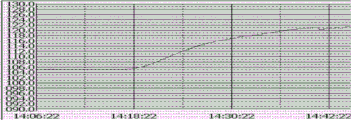
图2-a为树脂A溶胀试验过程中显示的温度曲线变化图;Fig. 2-a is the temperature curve change diagram shown during the swelling test of resin A;
图2-b为树脂A溶胀试验过程中显示的转速工程量曲线变化图;Figure 2-b is a graph showing the variation of the rotational speed engineering quantity curve during the swelling test of resin A;
图2-c为树脂A溶胀试验过程中显示的转速变化率曲线变化图;Figure 2-c is a graph of the change rate curve of the rotational speed displayed during the swelling test of resin A;
图2-d为树脂A溶胀试验过程中显示的转速变化累加曲线变化图;Fig. 2-d is the cumulative curve change diagram of the rotational speed change displayed during the swelling test of resin A;
图3-a所示的树脂B溶胀试验过程中显示的温度曲线变化图;The temperature curve change graph shown in the resin B swelling test process shown in Fig. 3-a;
图3-b所示的树脂B溶胀试验过程中显示的转速工程量曲线变化图;Figure 3-b shows the variation diagram of the engineering quantity curve of the rotational speed displayed during the swelling test of resin B;
图3-c所示的树脂B溶胀试验过程中显示的转速变化率曲线变化图;The change graph of the rotational speed change rate curve displayed during the swelling test of resin B shown in Figure 3-c;
图3-d所示的树脂B溶胀试验过程中显示的转速变化累加曲线变化图;Figure 3-d shows the cumulative curve change diagram of the rotational speed change displayed during the swelling test of resin B;
图4-a所示的树脂C溶胀试验过程中显示的温度曲线变化图;The temperature curve change graph shown in the resin C swelling test process shown in Fig. 4-a;
图4-b所示的树脂C溶胀试验过程中显示的转速工程量曲线变化图;Figure 4-b shows the variation diagram of the engineering quantity curve of the rotational speed displayed during the swelling test of resin C;
图4-c所示的树脂C溶胀试验过程中显示的转速变化率曲线变化图;The change graph of the rotational speed change rate curve displayed during the swelling test of resin C shown in Fig. 4-c;
图4-d所示的树脂C溶胀试验过程中显示的转速变化累加曲线变化图;Figure 4-d shows the cumulative curve change diagram of the rotation speed change shown in the resin C swelling test process;
图5为溶胀后的UHMWPE树脂。Figure 5 is the UHMWPE resin after swelling.
具体实施方式 Detailed ways
下面结合附图和具体实施例对本发明进行详细说明,但不限制本发明。The present invention will be described in detail below in conjunction with the accompanying drawings and specific embodiments, but the present invention is not limited.
实施例1~6中,设计溶胀温度与混合液黏度变化的控制装置,利用PLC控制系统将温度、黏度的变化实时的绘制在计算机人机界面上。溶胀温度的数据采用西门子RTD模块采集,能较好的反映温度的细微变化;黏度变化控制采用扭矩控制的方法。在恒定扭矩的条件下,当树脂与溶剂的混合液黏度发生变化时,通过灵敏度设定,反映到转速上有细微的变化,设定一个转速工程量来表示这种转速的变化,转速工程量发生波动对应混合液黏度的变化,为了更加定性的体现黏度变化引起的转速波动,将转速工程量进行绝对值计算,定义为“转速变化率”,这一绝对值与黏度变化呈正比关系。在此基础上,又设定了“转速变化累加”的概念,当溶胀发生时,逐一累加“转速变化率”随时间的变化。关于黏度变化控制的设计如图1所示。In Examples 1-6, the control device for the change of swelling temperature and the viscosity of the mixed liquid is designed, and the change of temperature and viscosity is drawn on the computer man-machine interface in real time by using the PLC control system. The data of swelling temperature is collected by Siemens RTD module, which can better reflect the subtle changes of temperature; the viscosity change control adopts the method of torque control. Under the condition of constant torque, when the viscosity of the mixture of resin and solvent changes, through the sensitivity setting, a slight change in the rotational speed is reflected, and an engineering quantity of rotational speed is set to represent this change in rotational speed. The engineering quantity of rotational speed The fluctuation corresponds to the change of the viscosity of the mixture. In order to more qualitatively reflect the fluctuation of the speed caused by the change of viscosity, the absolute value of the engineering quantity of the speed is calculated, which is defined as the "rate of change of the speed". This absolute value is directly proportional to the change of viscosity. On this basis, the concept of "rotational speed change accumulation" is set up. When swelling occurs, the change of "rotational speed change rate" with time is added one by one. The design of viscosity change control is shown in Figure 1.
实施例1~6中,试验在常温条件下进行,涉及的样品A~M粘均分子量在100~1000万之间。In Examples 1-6, the tests were carried out under normal temperature conditions, and the viscosity-average molecular weights of the involved samples A-M were between 1 million and 10 million.
实施例1:Example 1:
A、B、C三种UHMWPE树脂的溶胀性能试验Swelling performance test of three kinds of UHMWPE resins A, B, C
溶胀试验加热装置的设定温度与反应物的实际温度存在一个差值,设定温度一般高出实际温度约10℃,所以加热溶胀釜中的白油时,加热装置的设定温度为90℃,预溶胀搅拌时加热装置设定温度为110℃,预溶胀搅拌时间为60min,溶胀过程加热装置设定温度为130℃。图2是树脂A溶胀试验过程中显示的各监控参数的曲线变化,包括:图2-a所示的树脂A溶胀试验过程中显示的温度曲线变化图;图2-b所示的树脂A溶胀试验过程中显示的转速工程量曲线变化图;图2-c所示的树脂A溶胀试验过程中显示的转速变化率曲线变化图;图2-d所示的树脂A溶胀试验过程中显示的转速变化累加曲线变化图。There is a difference between the set temperature of the swelling test heating device and the actual temperature of the reactant, and the set temperature is generally about 10°C higher than the actual temperature, so when heating the white oil in the swelling kettle, the set temperature of the heating device is 90°C , the setting temperature of the heating device during the pre-swelling stirring is 110°C, the pre-swelling stirring time is 60min, and the setting temperature of the heating device during the swelling process is 130°C. Fig. 2 is the curve change of each monitoring parameter shown in the resin A swelling test process, including: the temperature curve change graph shown in the resin A swelling test process shown in Figure 2-a; the resin A swelling test process shown in Figure 2-b The curve change diagram of the rotational speed engineering quantity displayed during the test; the change diagram of the rotational speed change rate curve displayed during the swelling test of resin A shown in Figure 2-c; the rotational speed displayed during the swelling test of resin A shown in Figure 2-d Change cumulative curve change graph.
本次试验在1h的预溶胀搅拌后,将加热装置的设定温度由110℃上升到130℃。对应图2-a中的温度曲线变化,反应物的温度由103.5℃逐渐上升,约40min后在119℃时逐渐形成一个温度平台,反应物在119℃保持了近40min,后温度继续缓慢上升,在120℃停留30min后升到121℃,此时树脂A的溶胀粒子可由肉眼清晰观察到,温度出现波动,约30min后,出现约0.5℃的降温,并保持30min。当温度升到121℃以后,白油、树脂清晰分离,树脂形成良好的溶胀状态。如继续进行溶胀,反应物的温度将继续缓慢提升,反应物溶胀成块,树脂超过最佳溶胀状态。In this test, after 1 hour of pre-swelling and stirring, the set temperature of the heating device was raised from 110°C to 130°C. Corresponding to the temperature curve change in Figure 2-a, the temperature of the reactant gradually increased from 103.5°C, and gradually formed a temperature plateau at 119°C after about 40 minutes. The reactant remained at 119°C for nearly 40 minutes, and then the temperature continued to rise slowly. Stay at 120°C for 30 minutes and then rise to 121°C. At this time, the swollen particles of resin A can be clearly observed by the naked eye, and the temperature fluctuates. After about 30 minutes, the temperature drops by about 0.5°C and remains for 30 minutes. When the temperature rises to 121°C, white oil and resin are clearly separated, and the resin forms a good swelling state. If the swelling continues, the temperature of the reactant will continue to increase slowly, the reactant will swell into a block, and the resin will exceed the optimal swelling state.
在温度变化的同时,转速工程量的变化也被监测,如图2-b中,在100℃左右的预溶胀搅拌期间,对转速工程量的数值进行整定,使转速工程量在一定的灵敏度条件下能够稳定在一个数值上下。随着反应温度升高,树脂A逐渐发生溶胀,在119℃时,转速工程量出现波动,表明反应过程中反应液的黏度发生一定程度波动,但还没观察到明显的溶胀现象,而当温度上升到121℃时,溶胀现象可明显观察到,转速工程量开始出现频繁的波动,同时图2-c记录了转速变化率,即转速工程量的绝对变化值,可以看出受反应混合物黏度变化引起的搅拌桨扭矩的变化情况,图2-d记录了转速变化累加,即转速工程量变化的累加情况,表明在溶胀期间随着反应物黏度增大,搅拌桨受力增大,转速变化的累加数值上升,上升的大小也体现反应物黏度变化的大小。At the same time as the temperature changes, the change of the engineering quantity of the rotational speed is also monitored. As shown in Figure 2-b, during the pre-swelling and stirring period at about 100°C, the numerical value of the engineering quantity of the rotational speed is adjusted so that the engineering quantity of the rotational speed is under a certain sensitivity condition can be stabilized at a certain value. As the reaction temperature increased, resin A gradually swelled, and at 119 °C, the engineering quantity of the rotational speed fluctuated, indicating that the viscosity of the reaction solution fluctuated to a certain extent during the reaction process, but no obvious swelling phenomenon was observed. When it rises to 121°C, the swelling phenomenon can be clearly observed, and the engineering quantity of the rotational speed begins to fluctuate frequently. At the same time, Figure 2-c records the rate of change of the rotational speed, that is, the absolute change value of the engineering quantity of the rotational speed. It can be seen that the viscosity of the reacted mixture changes Figure 2-d records the change of the torque of the agitator due to the change of the rotation speed, that is, the accumulation of the change of the engineering quantity of the rotation speed. The cumulative value rises, and the magnitude of the rise also reflects the change in the viscosity of the reactant.
图3是树脂B溶胀试验过程中显示的各监测参数的曲线变化:图3-a所示的树脂B溶胀试验过程中显示的温度曲线变化图;图3-b所示的树脂B溶胀试验过程中显示的转速工程量曲线变化图;图3-c所示的树脂B溶胀试验过程中显示的转速变化率曲线变化图;图3-d所示的树脂B溶胀试验过程中显示的转速变化累加曲线变化图。溶胀过程与图2所示的树脂A相同,但溶胀结果有一定区别,图3中当反应物的温度上升到119℃时,转速工程量偶有波动,当温度上升到120℃时,树脂出现明显的溶胀现象,溶胀状态保持约30min,溶胀过程中转速工程量频繁波动。Fig. 3 is the curve change of each monitoring parameter shown in the resin B swelling test process: the temperature curve change figure shown in the resin B swelling test process shown in Fig. 3-a; The resin B swelling test process shown in Fig. 3-b Figure 3-c shows the curve change graph of the rotational speed change rate displayed during the swelling test of resin B; Figure 3-d shows the accumulation of rotational speed changes displayed during the resin B swelling test Curve change chart. The swelling process is the same as that of resin A shown in Figure 2, but the swelling results are somewhat different. In Figure 3, when the temperature of the reactant rises to 119°C, the engineering quantity of the rotational speed fluctuates occasionally. When the temperature rises to 120°C, the resin appears Obvious swelling phenomenon, the swelling state is maintained for about 30 minutes, and the rotational speed and engineering quantity fluctuate frequently during the swelling process.
图4是树脂C溶胀试验过程中显示的各监测参数的曲线变化:图4-a所示的树脂C溶胀试验过程中显示的温度曲线变化图;图4-b所示的树脂C溶胀试验过程中显示的转速工程量曲线变化图;图4-c所示的树脂C溶胀试验过程中显示的转速变化率曲线变化图;图4-d所示的树脂C溶胀试验过程中显示的转速变化累加曲线变化图。图4中明显的溶胀现象发生在119℃附近,溶胀过程中树脂D的溶胀速度快,最佳溶胀状态保持约3min后,溶胀块迅速增大,转速工程量出现剧烈的波动,如图4b中的密集的转速工程量波动线。Fig. 4 is the curve change of each monitoring parameter shown in the resin C swelling test process: the temperature curve change figure shown in the resin C swelling test process shown in Fig. 4-a; The resin C swelling test process shown in Fig. 4-b Figure 4-c shows the curve change graph of the rotational speed change rate displayed during the resin C swelling test; Figure 4-d shows the accumulation of rotational speed changes displayed during the resin C swelling test Curve change chart. The obvious swelling phenomenon in Figure 4 occurs around 119 °C. During the swelling process, the swelling speed of resin D is fast. After the best swelling state is maintained for about 3 minutes, the swelling block increases rapidly, and the engineering quantity of the rotational speed fluctuates violently, as shown in Figure 4b. The intensive rotational speed engineering volume fluctuation line.
比较图2、图3、图4的三种树脂的溶胀试验结果,三种树脂溶胀温度高低不同,而且不同树脂溶胀反应的快慢不同导致溶胀时间也有较大差异。其中溶胀反应的快慢可以从图2-d、图3-d、图4-d三张图中的转速变化累加结果可以看出,图4-d中转速累加曲线的斜率较图2-d、图3-d中明显增大,表明树脂C的溶胀反应过程黏度变化强烈,溶胀反应快。表1列出三种树脂的溶胀情况Comparing the swelling test results of the three resins in Figure 2, Figure 3, and Figure 4, the swelling temperature of the three resins is different, and the swelling reaction speed of different resins is different, resulting in large differences in swelling time. The speed of the swelling reaction can be seen from the cumulative results of the rotational speed changes in the three graphs of Figure 2-d, Figure 3-d, and Figure 4-d. -d increases significantly, indicating that the viscosity of resin C changes strongly during the swelling reaction process, and the swelling reaction is fast. Table 1 lists the swelling of the three resins
表1 树脂A、B、D溶胀现象对比Table 1 Comparison of swelling phenomena of resins A, B, and D

不同树脂的溶胀温度有一定区别,本试验中采用了统一的设定温度,一定程度上影响树脂的溶胀反应时间,即升到同样的设定温度,溶胀温度低的树脂发生溶胀快,进一步升温容易导致溶胀时间缩短。The swelling temperature of different resins is different to a certain extent. In this test, a unified set temperature is adopted, which affects the swelling reaction time of the resin to a certain extent. It is easy to shorten the swelling time.
实施例2:不同分子量UHMWPE树脂的溶胀试验Embodiment 2: the swelling test of different molecular weight UHMWPE resin
采用不同分子量的树脂进行溶胀试验的对比,加热溶胀釜中的白油时,加热装置的设定温度为90℃,预溶胀搅拌时加热装置设定温度为110℃,预溶胀搅拌时间为60min,溶胀过程加热装置设定温度为129℃。表2为不同分子量树脂的溶胀试验情况。随着分子量的增大,溶胀温度、溶胀时间均有所增大。Using resins with different molecular weights for comparison of swelling tests, when heating the white oil in the swelling kettle, the set temperature of the heating device is 90°C, when pre-swelling and stirring, the set temperature of the heating device is 110°C, and the pre-swelling and stirring time is 60min. The setting temperature of the heating device during the swelling process is 129°C. Table 2 shows the swelling test situation of different molecular weight resins. With the increase of molecular weight, the swelling temperature and swelling time both increased.
表2 不同分子量树脂溶胀现象对比Table 2 Comparison of swelling phenomena of different molecular weight resins
实施例3:UHMWPE树脂不同浓度溶胀试验Embodiment 3: Swelling test of different concentrations of UHMWPE resin
采用不同分子量的树脂进行溶胀试验的对比,加热溶胀釜中的白油时,加热装置的设定温度为90℃,预溶胀搅拌时加热装置设定温度为110℃,预溶胀搅拌30min,溶胀过程加热装置设定温度为129℃。表3对同一树脂I改变浓度观察溶胀情况,随着浓度的增加,溶胀温度起初保持不变,而当浓度提高到一定程度,溶胀温度降低,主要是由于树脂增多后,与溶剂的热交换几率增多。但溶胀过程中分配给单位树脂的溶剂量减少,溶胀粒变小,溶胀比也相应减小。浓度增大也使得溶胀体的不均匀程度加大,溶胀时间减小。The comparison of swelling tests with resins of different molecular weights. When heating the white oil in the swelling kettle, the set temperature of the heating device is 90°C, and the set temperature of the heating device is 110°C during pre-swelling and stirring, and the pre-swelling is stirred for 30 minutes. The set temperature of the heating device is 129°C. Table 3 changes the concentration of the same resin I to observe the swelling situation. As the concentration increases, the swelling temperature remains unchanged at first, but when the concentration increases to a certain level, the swelling temperature decreases, mainly due to the heat exchange probability with the solvent after the resin increases. increase. However, during the swelling process, the amount of solvent allocated to the unit resin decreases, the swelling particles become smaller, and the swelling ratio decreases accordingly. The increase of the concentration also increases the inhomogeneity of the swollen body and reduces the swelling time.
表3 UHMWPE树脂不同浓度的溶胀试验Table 3 Swelling tests of different concentrations of UHMWPE resin


实施例4:UHMWPE树脂粒径分布对溶胀过程的影响Example 4: Effect of UHMWPE resin particle size distribution on swelling process
采用不同粒径分布的树脂进行溶胀试验的对比,加热溶胀釜中的白油时,加热装置的设定温度为90℃,预溶胀搅拌时加热装置设定温度为110℃,预溶胀搅拌90min,溶胀过程加热装置设定温度为129℃。表4是不同粒径目数树脂的溶胀试验。粗颗粒溶胀时容易出现“里嫩外焦”的现象;细颗粒溶胀时,溶胀速度快,溶胀时间缩短,容易发生溶解,溶胀工艺控制的难度增加。Using resins with different particle size distributions for comparison of swelling tests, when heating the white oil in the swelling kettle, set the temperature of the heating device at 90°C, set the temperature of the heating device at 110°C during pre-swelling and stirring, and pre-swell and stir for 90 minutes. The setting temperature of the heating device during the swelling process is 129°C. Table 4 is the swelling test of resins with different particle sizes and meshes. When the coarse particles are swollen, the phenomenon of "soft inside and scorched outside" is easy to appear; when the fine particles are swollen, the swelling speed is fast, the swelling time is shortened, and dissolution is easy to occur, and the difficulty of swelling process control increases.
表4 UHMWPE树脂不同粒径分布时的溶胀试验Table 4 Swelling test of UHMWPE resin with different particle size distribution

实施例5:改变加热装置设定温度进行溶胀试验Embodiment 5: Change the set temperature of heating device to carry out swelling test
采用同一样品K树脂进行溶胀试验的对比,加热溶胀釜中的白油时,加热装置的设定温度为85℃,预溶胀搅拌时加热装置设定温度为115℃,预溶胀搅拌90min,溶胀过程加热装置设定温度如表6所示。通过此项试验也可以明确设定温度对树脂溶胀的重要影响。从表5可以看出,对于树脂K,选择的设定温度应为129℃。The same sample K resin was used for the comparison of the swelling test. When heating the white oil in the swelling kettle, the set temperature of the heating device was 85°C. The set temperature of the heating device is shown in Table 6. Through this test, the important influence of setting temperature on resin swelling can also be clarified. It can be seen from Table 5 that for resin K, the selected set temperature should be 129°C.
表5 不同设定温度时UHMWPE树脂的溶胀试验Table 5 Swelling test of UHMWPE resin at different set temperatures
实施例6:十氢化萘做溶剂的溶胀试验Embodiment 6: Decalin is made the swelling test of solvent
表6采用十氢化萘为溶剂进行UHMWPE树脂的溶胀试验。加热溶胀釜中的十氢化萘时,加热装置的设定温度为80℃,预溶胀搅拌时加热装置设定温度为100℃,预溶胀搅拌时间为30min,溶胀过程加热装置设定温度如表6中所示。十氢化萘溶解效果较白油好,相应的溶胀温度较白油的低,而且溶胀时间也比较短,再加上十氢化萘容易挥发,单一的溶胀工艺较难控制。试验中,随着溶胀过程设定温度的调整,树脂L在十氢萘中的溶胀温度约107.2℃,溶胀时间约3min,树脂M的溶胀温度约106.3℃,溶胀时间约3min。Table 6 uses decahydronaphthalene as a solvent to carry out the swelling test of UHMWPE resin. When heating the decahydronaphthalene in the swelling kettle, the set temperature of the heating device is 80°C, the set temperature of the heating device is 100°C during the pre-swelling stirring, and the pre-swelling stirring time is 30min. The set temperature of the heating device during the swelling process is shown in Table 6 shown in . Decalin has a better dissolving effect than white oil, and the corresponding swelling temperature is lower than that of white oil, and the swelling time is also shorter. In addition, decahydronaphthalene is easy to volatilize, so it is difficult to control a single swelling process. In the test, with the adjustment of the setting temperature of the swelling process, the swelling temperature of resin L in decahydronaphthalene is about 107.2°C, and the swelling time is about 3 minutes; the swelling temperature of resin M is about 106.3°C, and the swelling time is about 3 minutes.
表6 UHMWPE树脂在十氢化萘中的溶胀试验Table 6 Swelling test of UHMWPE resin in decahydronaphthalene


实施例7Example 7
一种分析超高分子量聚乙烯树脂溶胀性能的方法,该方法是通过检测溶胀过程中温度与黏度的变化来分析树脂的溶胀效果。A method for analyzing the swelling performance of ultra-high molecular weight polyethylene resin, the method is to analyze the swelling effect of the resin by detecting the change of temperature and viscosity during the swelling process.
所述的方法具体包括以下步骤:Described method specifically comprises the following steps:
(1)在溶胀釜中安装温度测试探头,并与溶胀釜内乳浊液充分接触,温度控制探头连接温度控制器,温度控制器连接数值显示器,温度控制器将温度控制探头采集到的数据实时绘制在数值显示器上。在溶胀搅拌桨上安装转速检测装置来测试反应物黏度变化,转速检测装置连接控制软件,控制软件连接数值显示器,在恒定转速的条件下,当树脂与溶剂的混合液黏度发生变化时,反映到搅拌桨转速上有细微的变化,设定一个转速工程量来表示这种转速的变化,转速工程量发生波动对应了混合液黏度的变化;(1) Install a temperature test probe in the swelling kettle, and fully contact with the emulsion in the swelling kettle. The temperature control probe is connected to the temperature controller, and the temperature controller is connected to the numerical display. The temperature controller will collect the data collected by the temperature control probe in real time. Plotted on the Numeric Display. Install a speed detection device on the swelling stirring paddle to test the viscosity change of the reactant. The speed detection device is connected to the control software, and the control software is connected to the numerical display. Under the condition of constant speed, when the viscosity of the mixture of resin and solvent changes, it is reflected in There is a slight change in the speed of the stirring paddle, and a speed engineering quantity is set to represent this change in speed. The fluctuation of the speed engineering quantity corresponds to the change in the viscosity of the mixture;
(2)将溶剂四氢化萘、称好重量的分子量为100万的UHMWPE树脂及其少量辅助剂(如市售抗氧剂、润滑剂或改性添加剂等)放入溶胀釜内,使UHMWPE树脂的浓度为1wt%,搅拌并升温到预溶胀搅拌温度70℃,搅拌0min后,溶胀釜加热系统升温到溶胀温度100℃,当搅拌桨扭矩或转速发生频繁的波动时,釜内温度出现平台并有一定的微降(如下降1~2度),此时溶胀釜内出现雪花状的溶胀颗粒,并与溶剂清晰分离(如图5所示),UHMWPE树脂达到最佳溶胀状态,溶胀过程结束。树脂溶胀效果也可通过溶胀比来评价。UHMWPE树脂的溶胀比在1.5之间,其中溶胀比是指经溶剂充分溶胀后的UHMWPE颗粒的质量与其中所含有的UHMWPE的质量之比;溶胀比测试是将溶胀物与溶剂过滤分离后称量溶胀物的重量m1,然后将溶胀物在超声波中用有机溶剂乙醇多次洗涤,再进行抽吸处理,后放置于50℃的真空烘箱2h以上,称重量m2,计算溶胀比α=m1/m2。(2) Put the solvent tetralin, UHMWPE resin with a molecular weight of 1 million and a small amount of auxiliary agents (such as commercially available antioxidants, lubricants or modified additives, etc.) into the swelling kettle to make the UHMWPE resin The concentration is 1wt%. Stir and heat up to the pre-swelling stirring temperature of 70°C. After stirring for 0min, the heating system of the swelling kettle heats up to the swelling temperature of 100°C. There is a certain slight drop (such as a drop of 1 to 2 degrees), and at this time snowflake-like swelling particles appear in the swelling kettle and are clearly separated from the solvent (as shown in Figure 5). The UHMWPE resin reaches the best swelling state and the swelling process is over. . Resin swelling effect can also be evaluated by swelling ratio. The swelling ratio of UHMWPE resin is between 1.5, where the swelling ratio refers to the ratio of the mass of the UHMWPE particles fully swollen by the solvent to the mass of the UHMWPE contained in it; the swelling ratio test is to filter and separate the swollen product from the solvent and then weigh it The weight of the swollen product is m 1 , and then the swollen product is washed with the organic solvent ethanol several times in the ultrasonic wave, and then subjected to suction treatment, and then placed in a vacuum oven at 50°C for more than 2 hours, weighed m 2 , and calculate the swelling ratio α=m 1 /m 2 .
实施例8Example 8
一种分析超高分子量聚乙烯树脂溶胀性能的方法,该方法是通过检测溶胀过程中温度与黏度的变化来分析树脂的溶胀效果。A method for analyzing the swelling performance of ultra-high molecular weight polyethylene resin, the method is to analyze the swelling effect of the resin by detecting the change of temperature and viscosity during the swelling process.
所述的方法具体包括以下步骤:Described method specifically comprises the following steps:
(1)在溶胀釜中安装温度测试探头,并与溶胀釜内乳浊液充分接触,温度控制探头连接温度控制器,温度控制器连接数值显示器,温度控制器将温度控制探头采集到的数据实时绘制在数值显示器上。在溶胀搅拌桨上安装转速检测装置来测试反应物黏度变化,转速检测装置连接控制软件,控制软件连接数值显示器,在恒定转速的条件下,当树脂与溶剂的混合液黏度发生变化时,反映到搅拌桨转速上有细微的变化,设定一个转速工程量来表示这种转速的变化,转速工程量发生波动对应了混合液黏度的变化;(1) Install a temperature test probe in the swelling kettle, and fully contact with the emulsion in the swelling kettle. The temperature control probe is connected to the temperature controller, and the temperature controller is connected to the numerical display. The temperature controller will collect the data collected by the temperature control probe in real time. Plotted on the Numeric Display. Install a speed detection device on the swelling stirring paddle to test the viscosity change of the reactant. The speed detection device is connected to the control software, and the control software is connected to the numerical display. Under the condition of constant speed, when the viscosity of the mixture of resin and solvent changes, it is reflected in There is a slight change in the speed of the stirring paddle, and a speed engineering quantity is set to represent this change in speed. The fluctuation of the speed engineering quantity corresponds to the change in the viscosity of the mixture;
(2)将溶剂煤油、称好重量的分子量为1000万的UHMWPE树脂及其少量辅助剂放入溶胀釜加热到90℃,UHMWPE树脂的浓度为1wt%~30wt%,搅拌并升温到预溶胀搅拌温度100℃,搅拌240min后,溶胀釜加热系统升温到溶胀温度130℃,当搅拌桨扭矩或转速发生频繁的波动时,釜内温度出现平台并有一定的微降,此时溶胀釜内出现雪花状的溶胀颗粒,并与溶剂清晰分离,UHMWPE树脂达到最佳溶胀状态,溶胀过程结束。树脂溶胀效果也可通过溶胀比来评价。UHMWPE树脂的溶胀比在3.0之间,其中溶胀比是指经溶剂充分溶胀后的UHMWPE颗粒的质量与其中所含有的UHMWPE的质量之比;溶胀比测试是将溶胀物与溶剂过滤分离后称量溶胀物的重量m1,然后将溶胀物在超声波中用有机溶剂二甲苯多次洗涤,再进行抽吸处理,后放置于70℃的真空烘箱2h以上,称重量m2,计算溶胀比α=m1/m2。(2) Put solvent kerosene, a weighed UHMWPE resin with a molecular weight of 10 million and a small amount of auxiliary agent into the swelling kettle and heat it to 90°C. The concentration of the UHMWPE resin is 1wt% to 30wt%. Stir and heat up to pre-swelling and stirring The temperature is 100°C, after stirring for 240 minutes, the heating system of the swelling kettle is heated up to the swelling temperature of 130°C. When the torque or rotation speed of the stirring paddle fluctuates frequently, the temperature in the kettle appears a plateau and has a certain slight drop. At this time, snowflakes appear in the swelling kettle Shaped swelling particles are clearly separated from the solvent, the UHMWPE resin reaches the best swelling state, and the swelling process ends. Resin swelling effect can also be evaluated by swelling ratio. The swelling ratio of UHMWPE resin is between 3.0, where the swelling ratio refers to the ratio of the mass of the UHMWPE particles fully swollen by the solvent to the mass of the UHMWPE contained in it; the swelling ratio test is to filter and separate the swollen product from the solvent and then weigh it The weight of the swollen product is m 1 , and then the swollen product is washed several times with the organic solvent xylene in the ultrasonic wave, and then subjected to suction treatment, and then placed in a vacuum oven at 70°C for more than 2 hours, and the weight m 2 is weighed to calculate the swelling ratio α= m 1 /m 2 .
上述方法适用于所有进行UHMWPE的溶胀工艺,如UHMWPE树脂的纺丝及成膜工艺。The above method is applicable to all swelling processes of UHMWPE, such as spinning and film-forming processes of UHMWPE resin.
Claims (9)
Priority Applications (1)
| Application Number | Priority Date | Filing Date | Title |
|---|---|---|---|
| CN 201110201289 CN102346123B (en) | 2011-07-18 | 2011-07-18 | Method for analyzing swelling performance of ultrahigh-molecular-weight polyethylene resin |
Applications Claiming Priority (1)
| Application Number | Priority Date | Filing Date | Title |
|---|---|---|---|
| CN 201110201289 CN102346123B (en) | 2011-07-18 | 2011-07-18 | Method for analyzing swelling performance of ultrahigh-molecular-weight polyethylene resin |
Publications (2)
| Publication Number | Publication Date |
|---|---|
| CN102346123A CN102346123A (en) | 2012-02-08 |
| CN102346123B true CN102346123B (en) | 2013-04-24 |
Family
ID=45544998
Family Applications (1)
| Application Number | Title | Priority Date | Filing Date |
|---|---|---|---|
| CN 201110201289 Active CN102346123B (en) | 2011-07-18 | 2011-07-18 | Method for analyzing swelling performance of ultrahigh-molecular-weight polyethylene resin |
Country Status (1)
| Country | Link |
|---|---|
| CN (1) | CN102346123B (en) |
Families Citing this family (7)
| Publication number | Priority date | Publication date | Assignee | Title |
|---|---|---|---|---|
| US10029226B2 (en) * | 2012-09-07 | 2018-07-24 | Univation Technologies, Llc | Method for determining a stickiness temperature of a resin |
| CN105259074A (en) * | 2015-10-14 | 2016-01-20 | 华北石油管理局总医院 | Rheological evaluation method of polyethylene for medical instruments |
| CN109470601B (en) * | 2018-10-29 | 2021-11-12 | 上海化工研究院有限公司 | Method for evaluating ultrahigh molecular weight polyethylene resin by using online rheometer |
| CN110487673B (en) * | 2019-08-09 | 2021-10-08 | 上海化工研究院有限公司 | A method for quantitatively determining the degree of entanglement of ultra-high molecular weight polyethylene resin |
| CN110658036B (en) * | 2019-09-05 | 2022-05-06 | 上海化工研究院有限公司 | A kind of preparation of UHMWPE dilute solution and method for detecting degree of solubility thereof |
| CN115461383A (en) * | 2020-05-14 | 2022-12-09 | Sabic环球技术有限责任公司 | Ultra-high molecular weight polyethylene powder with improved swelling properties |
| CN117169480A (en) * | 2023-09-11 | 2023-12-05 | 北京同益中新材料科技股份有限公司 | A device and method for analyzing and characterizing the swelling and dispersion uniformity of ultra-high molecular weight polyethylene |
Citations (3)
| Publication number | Priority date | Publication date | Assignee | Title |
|---|---|---|---|---|
| US4449395A (en) * | 1982-04-08 | 1984-05-22 | Union Carbide Corporation | Pheological measurement method and apparatus |
| CN2124471U (en) * | 1991-12-27 | 1992-12-09 | 南开大学 | Swelling capacity tester |
| CN101387595A (en) * | 2007-09-14 | 2009-03-18 | 中航惠腾风电设备股份有限公司 | Full automatic gel test machine and use thereof |
-
2011
- 2011-07-18 CN CN 201110201289 patent/CN102346123B/en active Active
Patent Citations (3)
| Publication number | Priority date | Publication date | Assignee | Title |
|---|---|---|---|---|
| US4449395A (en) * | 1982-04-08 | 1984-05-22 | Union Carbide Corporation | Pheological measurement method and apparatus |
| CN2124471U (en) * | 1991-12-27 | 1992-12-09 | 南开大学 | Swelling capacity tester |
| CN101387595A (en) * | 2007-09-14 | 2009-03-18 | 中航惠腾风电设备股份有限公司 | Full automatic gel test machine and use thereof |
Non-Patent Citations (2)
| Title |
|---|
| PAC与PAC/HPMC水凝胶的结构季溶胀规律研究;王文俊 等;《高分子通报》;20100715(第7期);91-96 * |
| 王文俊 等.PAC与PAC/HPMC水凝胶的结构季溶胀规律研究.《高分子通报》.2010,(第7期),91-96. |
Also Published As
| Publication number | Publication date |
|---|---|
| CN102346123A (en) | 2012-02-08 |
Similar Documents
| Publication | Publication Date | Title |
|---|---|---|
| CN102346123B (en) | Method for analyzing swelling performance of ultrahigh-molecular-weight polyethylene resin | |
| Vieyres et al. | Sulfur-cured natural rubber elastomer networks: correlating cross-link density, chain orientation, and mechanical response by combined techniques | |
| Chen et al. | Konjac glucomannan/kappa carrageenan interpenetrating network hydrogels with enhanced mechanical strength and excellent self-healing capability | |
| Li et al. | Phase behavior and its viscoelastic responses of poly (methyl methacrylate) and poly (styrene-co-maleic anhydride) blend systems | |
| Wu et al. | New understanding of morphology evolution of thermoplastic vulcanizate (TPV) during dynamic vulcanization | |
| Mangione et al. | Thermoreversible gelation of κ-Carrageenan: relation between conformational transition and aggregation | |
| Ago et al. | Thermomechanical properties of lignin-based electrospun nanofibers and films reinforced with cellulose nanocrystals: A dynamic mechanical and nanoindentation study | |
| Che et al. | Chain dynamics and strain-induced crystallization of pre-and postvulcanized natural rubber latex using proton multiple quantum NMR and uniaxial deformation by in situ synchrotron X-ray diffraction | |
| Zhang et al. | Microstructural changes during alkali-and heat induced gelation of konjac glucomannan | |
| Doutch et al. | Structural changes during starch pasting using simultaneous Rapid Visco Analysis and small-angle neutron scattering | |
| Xiao | Drying process of sodium alginate edible films forming solutions studied by LF NMR | |
| Zhang et al. | Unveiling the hierarchical microstructure of prevulcanized natural rubber latex film and its impact on mechanical properties | |
| Huang et al. | The effects of proteins and phospholipids on the network structure of natural rubber: a rheological study in bulk and in solution | |
| Liu et al. | Inhomogeneous natural network promoting strain-induced crystallization: a mesoscale model of natural rubber | |
| Hernández et al. | Controlling PVA hydrogels with γ-cyclodextrin | |
| Ceylan et al. | Preparation of partially neutralized poly (acrylic acid) microspheres via inverse pickering suspension polymerization | |
| CN113480985A (en) | Preparation method and application of micro-nano expanded micelle elastic particle oil displacement emulsion | |
| Blachot et al. | Rheological behavior of cellulose/monohydrate of n-methylmorpholine n-oxide solutions Part 1: Liquid state | |
| Okamoto et al. | Time-resolved dynamic light scattering study on gelation and gel-melting processes of gelatin gels | |
| Tan et al. | Water effect on the gelation behavior of polyacrylonitrile/dimethyl sulfoxide solution | |
| CN108659237B (en) | A nanofiber composite hydrogel whose electrical conductivity is tuned with temperature and its preparation method and application | |
| Yu et al. | Influence of molecular weight distribution on the melt extrusion of high density polyethylene (HDPE): Effects of melt relaxation behavior on morphology and orientation in HDPE extruded tubular films | |
| Xu et al. | Controlled deamidation of soy protein isolate by a novel protein glutaminase from Chryseobacterium sediminis enhances structural integrity and functional performance | |
| Wang et al. | Sequential extraction of hawthorn pectin: An attempt to reveal their original mode of being in plants and functional properties | |
| CN102391527B (en) | Preparation method of polymer nano-microspheres with uniform size |
Legal Events
| Date | Code | Title | Description |
|---|---|---|---|
| C06 | Publication | ||
| PB01 | Publication | ||
| C10 | Entry into substantive examination | ||
| SE01 | Entry into force of request for substantive examination | ||
| C14 | Grant of patent or utility model | ||
| GR01 | Patent grant | ||
| CP01 | Change in the name or title of a patent holder |
Address after: 200062 Shanghai city Putuo District Yunling Road No. 345 Patentee after: SHANGHAI RESEARCH INSTITUTE OF CHEMICAL INDUSTRY Co.,Ltd. Address before: 200062 Shanghai city Putuo District Yunling Road No. 345 Patentee before: Shanghai Research Institute of Chemical Industry |
|
| CP01 | Change in the name or title of a patent holder | ||
| TR01 | Transfer of patent right |
Effective date of registration: 20170425 Address after: 200062 Shanghai city Putuo District Yunling Road No. 345 Co-patentee after: SHANGHAI LIANLE INDUSTRY SCIENCE AND TECHNOLOGY CO.,LTD. Patentee after: SHANGHAI RESEARCH INSTITUTE OF CHEMICAL INDUSTRY Co.,Ltd. Address before: 200062 Shanghai city Putuo District Yunling Road No. 345 Patentee before: SHANGHAI RESEARCH INSTITUTE OF CHEMICAL INDUSTRY Co.,Ltd. |
|
| TR01 | Transfer of patent right |