CN102137722A - Hydrophobic and oleophobic coating and method for preparing the same - Google Patents
Hydrophobic and oleophobic coating and method for preparing the same Download PDFInfo
- Publication number
- CN102137722A CN102137722A CN2007800447530A CN200780044753A CN102137722A CN 102137722 A CN102137722 A CN 102137722A CN 2007800447530 A CN2007800447530 A CN 2007800447530A CN 200780044753 A CN200780044753 A CN 200780044753A CN 102137722 A CN102137722 A CN 102137722A
- Authority
- CN
- China
- Prior art keywords
- group
- silane
- alkyl
- groups
- bond
- Prior art date
- Legal status (The legal status is an assumption and is not a legal conclusion. Google has not performed a legal analysis and makes no representation as to the accuracy of the status listed.)
- Pending
Links
Images



Classifications
-
- B—PERFORMING OPERATIONS; TRANSPORTING
- B05—SPRAYING OR ATOMISING IN GENERAL; APPLYING FLUENT MATERIALS TO SURFACES, IN GENERAL
- B05D—PROCESSES FOR APPLYING FLUENT MATERIALS TO SURFACES, IN GENERAL
- B05D1/00—Processes for applying liquids or other fluent materials
- B05D1/60—Deposition of organic layers from vapour phase
-
- B—PERFORMING OPERATIONS; TRANSPORTING
- B05—SPRAYING OR ATOMISING IN GENERAL; APPLYING FLUENT MATERIALS TO SURFACES, IN GENERAL
- B05D—PROCESSES FOR APPLYING FLUENT MATERIALS TO SURFACES, IN GENERAL
- B05D1/00—Processes for applying liquids or other fluent materials
- B05D1/18—Processes for applying liquids or other fluent materials performed by dipping
- B05D1/185—Processes for applying liquids or other fluent materials performed by dipping applying monomolecular layers
-
- B—PERFORMING OPERATIONS; TRANSPORTING
- B05—SPRAYING OR ATOMISING IN GENERAL; APPLYING FLUENT MATERIALS TO SURFACES, IN GENERAL
- B05D—PROCESSES FOR APPLYING FLUENT MATERIALS TO SURFACES, IN GENERAL
- B05D7/00—Processes, other than flocking, specially adapted for applying liquids or other fluent materials to particular surfaces or for applying particular liquids or other fluent materials
- B05D7/50—Multilayers
- B05D7/52—Two layers
-
- B—PERFORMING OPERATIONS; TRANSPORTING
- B82—NANOTECHNOLOGY
- B82Y—SPECIFIC USES OR APPLICATIONS OF NANOSTRUCTURES; MEASUREMENT OR ANALYSIS OF NANOSTRUCTURES; MANUFACTURE OR TREATMENT OF NANOSTRUCTURES
- B82Y30/00—Nanotechnology for materials or surface science, e.g. nanocomposites
-
- B—PERFORMING OPERATIONS; TRANSPORTING
- B82—NANOTECHNOLOGY
- B82Y—SPECIFIC USES OR APPLICATIONS OF NANOSTRUCTURES; MEASUREMENT OR ANALYSIS OF NANOSTRUCTURES; MANUFACTURE OR TREATMENT OF NANOSTRUCTURES
- B82Y40/00—Manufacture or treatment of nanostructures
-
- C—CHEMISTRY; METALLURGY
- C09—DYES; PAINTS; POLISHES; NATURAL RESINS; ADHESIVES; COMPOSITIONS NOT OTHERWISE PROVIDED FOR; APPLICATIONS OF MATERIALS NOT OTHERWISE PROVIDED FOR
- C09D—COATING COMPOSITIONS, e.g. PAINTS, VARNISHES OR LACQUERS; FILLING PASTES; CHEMICAL PAINT OR INK REMOVERS; INKS; CORRECTING FLUIDS; WOODSTAINS; PASTES OR SOLIDS FOR COLOURING OR PRINTING; USE OF MATERIALS THEREFOR
- C09D5/00—Coating compositions, e.g. paints, varnishes or lacquers, characterised by their physical nature or the effects produced; Filling pastes
-
- B—PERFORMING OPERATIONS; TRANSPORTING
- B05—SPRAYING OR ATOMISING IN GENERAL; APPLYING FLUENT MATERIALS TO SURFACES, IN GENERAL
- B05D—PROCESSES FOR APPLYING FLUENT MATERIALS TO SURFACES, IN GENERAL
- B05D3/00—Pretreatment of surfaces to which liquids or other fluent materials are to be applied; After-treatment of applied coatings, e.g. intermediate treating of an applied coating preparatory to subsequent applications of liquids or other fluent materials
- B05D3/06—Pretreatment of surfaces to which liquids or other fluent materials are to be applied; After-treatment of applied coatings, e.g. intermediate treating of an applied coating preparatory to subsequent applications of liquids or other fluent materials by exposure to radiation
- B05D3/061—Pretreatment of surfaces to which liquids or other fluent materials are to be applied; After-treatment of applied coatings, e.g. intermediate treating of an applied coating preparatory to subsequent applications of liquids or other fluent materials by exposure to radiation using U.V.
- B05D3/062—Pretreatment
-
- B—PERFORMING OPERATIONS; TRANSPORTING
- B05—SPRAYING OR ATOMISING IN GENERAL; APPLYING FLUENT MATERIALS TO SURFACES, IN GENERAL
- B05D—PROCESSES FOR APPLYING FLUENT MATERIALS TO SURFACES, IN GENERAL
- B05D3/00—Pretreatment of surfaces to which liquids or other fluent materials are to be applied; After-treatment of applied coatings, e.g. intermediate treating of an applied coating preparatory to subsequent applications of liquids or other fluent materials
- B05D3/10—Pretreatment of surfaces to which liquids or other fluent materials are to be applied; After-treatment of applied coatings, e.g. intermediate treating of an applied coating preparatory to subsequent applications of liquids or other fluent materials by other chemical means
-
- B—PERFORMING OPERATIONS; TRANSPORTING
- B05—SPRAYING OR ATOMISING IN GENERAL; APPLYING FLUENT MATERIALS TO SURFACES, IN GENERAL
- B05D—PROCESSES FOR APPLYING FLUENT MATERIALS TO SURFACES, IN GENERAL
- B05D3/00—Pretreatment of surfaces to which liquids or other fluent materials are to be applied; After-treatment of applied coatings, e.g. intermediate treating of an applied coating preparatory to subsequent applications of liquids or other fluent materials
- B05D3/14—Pretreatment of surfaces to which liquids or other fluent materials are to be applied; After-treatment of applied coatings, e.g. intermediate treating of an applied coating preparatory to subsequent applications of liquids or other fluent materials by electrical means
- B05D3/141—Plasma treatment
- B05D3/142—Pretreatment
-
- Y—GENERAL TAGGING OF NEW TECHNOLOGICAL DEVELOPMENTS; GENERAL TAGGING OF CROSS-SECTIONAL TECHNOLOGIES SPANNING OVER SEVERAL SECTIONS OF THE IPC; TECHNICAL SUBJECTS COVERED BY FORMER USPC CROSS-REFERENCE ART COLLECTIONS [XRACs] AND DIGESTS
- Y10—TECHNICAL SUBJECTS COVERED BY FORMER USPC
- Y10T—TECHNICAL SUBJECTS COVERED BY FORMER US CLASSIFICATION
- Y10T428/00—Stock material or miscellaneous articles
- Y10T428/31504—Composite [nonstructural laminate]
- Y10T428/31652—Of asbestos
- Y10T428/31663—As siloxane, silicone or silane
Landscapes
- Engineering & Computer Science (AREA)
- Chemical & Material Sciences (AREA)
- Nanotechnology (AREA)
- General Physics & Mathematics (AREA)
- Crystallography & Structural Chemistry (AREA)
- Wood Science & Technology (AREA)
- Physics & Mathematics (AREA)
- Condensed Matter Physics & Semiconductors (AREA)
- Life Sciences & Earth Sciences (AREA)
- Materials Engineering (AREA)
- Manufacturing & Machinery (AREA)
- Organic Chemistry (AREA)
- Composite Materials (AREA)
- Paints Or Removers (AREA)
- Application Of Or Painting With Fluid Materials (AREA)
- Laminated Bodies (AREA)
- Materials Applied To Surfaces To Minimize Adherence Of Mist Or Water (AREA)
- Silicon Polymers (AREA)
Abstract
本发明公开了方法(100),该方法包括将第一硅烷沉积到表面(106)上和将第二硅烷沉积到第一硅烷(114)上,所述第一硅烷包括官能性连接基团和硅烷基团,且所述第二硅烷包括疏水性脂族基团和硅烷基团。本发明还公开了基于上述方法的组合物和助听装置。

This invention discloses a method (100) comprising depositing a first silane onto a surface (106) and depositing a second silane onto the first silane (114), wherein the first silane comprises a functional linking group and a silane group, and the second silane comprises a hydrophobic aliphatic group and a silane group. This invention also discloses compositions and hearing aids based on the above method.
Description
相关申请的交叉引用Cross References to Related Applications
本申请要求于2006年10月3日提交的美国临时申请第60/849,233号的优先权权益,该申请的内容以引用的方式全部引入。This application claims the benefit of priority to US Provisional Application No. 60/849,233, filed October 3, 2006, the contents of which are incorporated by reference in their entirety.
背景技术Background technique
许多聚合物/塑料材料具有理想的整体特性,例如低密度、低成本、良好的强度和易处理性,这使得它们可以成为许多生活消费品和消费设备的整体构件。不过,对于特定用途而言,具有理想整体特性的许多塑料品在表面特性诸如例如耐磨损性和润湿性等方面有所欠缺。因此,理想的是在聚合物/塑料上进行涂层以修饰其表面,从而使其有利的整体特性能够用于各种用途。Many polymer/plastic materials have desirable bulk properties, such as low density, low cost, good strength, and ease of handling, which allow them to be integral building blocks of many consumer goods and consumer devices. However, many plastics that have desirable bulk properties for a particular application fall short in surface properties such as, for example, abrasion resistance and wetting properties. Therefore, it is desirable to apply coatings on polymers/plastics to modify their surfaces so that their favorable bulk properties can be used for various applications.
在许多情况中,许多设备被设计为防止水进入该设备的内部从而维持适当的功能性。制造商常常设计用于如下环境的设备,即水或其它液体材料可能会与设备和设备构件相接触。设备和设备构件可具有各种防护罩以保护设备和构件的内部。防护罩往往由多个部分构成,结果造成各种接缝和开口,这些接缝和开口可能会使得内部受到液体的损害。许多设备还需要在防护罩内有小的开口或空隙,从而允许空气或其它气体在设备的内部和外部间自由流动,同时防止液体穿过该防护罩。例如,用于为电子装置供电的电池容易受到水分的损害,但又需要外部氧源来工作。另外,设备可能含有液体材料,所述液体材料需要在该设备内容纳一段较长时间,直至该液体被分配。例如,喷墨墨盒常常含有在该墨盒中容纳较长时间的液体墨水溶液。In many cases, many devices are designed to prevent water from entering the interior of the device in order to maintain proper functionality. Manufacturers often design equipment for use in environments where water or other liquid materials may come in contact with the equipment and equipment components. Equipment and equipment components may have various shields to protect the interior of equipment and components. Shields are often constructed from multiple parts, resulting in various seams and openings that could expose the interior to liquid damage. Many devices also require small openings or voids within the shield to allow free flow of air or other gases between the interior and exterior of the device while preventing liquids from passing through the shield. For example, batteries used to power electronic devices are susceptible to moisture damage but require an external source of oxygen to function. Additionally, the device may contain liquid material that needs to be contained within the device for an extended period of time until the liquid is dispensed. For example, inkjet cartridges often contain liquid ink solutions that are held in the cartridge for extended periods of time.
发明内容Contents of the invention
根据至少一个实施方式,一种方法可包括将第一硅烷沉积到表面上和将第二硅烷沉积到第一硅烷上,所述第一硅烷包括官能性连接基团和硅烷基团,且所述第二硅烷包括疏水性脂族基团和硅烷基团。According to at least one embodiment, a method may include depositing a first silane onto a surface and depositing a second silane onto the first silane, the first silane comprising a functional linking group and a silane group, and the The second silane includes a hydrophobic aliphatic group and a silane group.
在特定实施方式中,一种组合物可包括下述物质的反应产物:包括羟基基团的基材、包括官能性连接基团和硅烷基团的第一硅烷、以及包括疏水性脂族基团和硅烷基团的第二硅烷。In a particular embodiment, a composition may include the reaction product of a substrate including hydroxyl groups, a first silane including a functional linking group and a silane group, and a first silane including a hydrophobic aliphatic group. and the second silane of the silane group.
在各种实施方式中,一种涂层组合物可包括与表面结合的第一硅烷和通过硅氧烷键与第一硅烷结合的第二硅烷,所述第一硅烷包括硅烷基团,且所述第二硅烷包括疏水性脂族基团。In various embodiments, a coating composition may include a first silane bound to a surface and a second silane bound to the first silane through a siloxane bond, the first silane comprising silane groups, and the The second silane includes a hydrophobic aliphatic group.
在特定实施方式中,一种制品可包括具有表面的第一部分、与第一部分的表面结合的第一硅烷、以及通过硅氧烷键与第一硅烷结合的第二硅烷,所述第一硅烷包括硅烷基团,且所述第二硅烷包括疏水性脂族基团。In a particular embodiment, an article can include a first portion having a surface, a first silane bound to the surface of the first portion, and a second silane bonded to the first silane through a siloxane bond, the first silane comprising a silane group, and the second silane includes a hydrophobic aliphatic group.
在其它实施方式中,一种助听装置可包括具有表面部分的第一构件和与该第一构件的表面部分结合的涂层组合物,所述涂层组合物包括与第一构件的表面部分结合的粘附层和与粘附层结合的疏水层。In other embodiments, a hearing device may include a first member having a surface portion and a coating composition bonded to the surface portion of the first member, the coating composition comprising a surface portion bonded to the first member. An adhesive layer bonded and a hydrophobic layer bonded to the adhesive layer.
在至少一个实施方式中,一种方法可包括将粘附促进化合物(adhesion promoting compound)沉积到表面上,所述粘附促进化合物包括官能性连接基团和硅烷官能团与锗官能团中的至少一种。该方法还可包括将疏水层形成化合物(hydrophobic layer forming compound)沉积到粘附促进化合物上,所述疏水层形成化合物包括疏水性脂族基团和硅烷官能团与锗官能团中的至少一种。In at least one embodiment, a method can include depositing onto a surface an adhesion promoting compound comprising a functional linking group and at least one of a silane functional group and a germanium functional group . The method may also include depositing a hydrophobic layer forming compound on the adhesion promoting compound, the hydrophobic layer forming compound including a hydrophobic aliphatic group and at least one of silane functional groups and germanium functional groups.
在各种实施方式中,一种组合物可包括下述物质的反应产物:包括羟基基团的基材、包括粘附促进化合物的粘附促进组合物和包括疏水层形成化合物的疏水层形成组合物,所述粘附促进化合物包括官能性连接基团和硅烷官能团与锗官能团中的至少一种,且所述疏水层形成化合物包括疏水性脂族基团和硅烷官能团与锗官能团中的至少一种。In various embodiments, a composition may comprise the reaction product of a substrate comprising hydroxyl groups, an adhesion promoting composition comprising an adhesion promoting compound, and a hydrophobic layer forming combination comprising a hydrophobic layer forming compound The adhesion promoting compound includes a functional linking group and at least one of a silane functional group and a germanium functional group, and the hydrophobic layer forming compound includes a hydrophobic aliphatic group and at least one of a silane functional group and a germanium functional group kind.
上述实施方式的特征可根据本文所描述的一般原理而彼此组合使用。当阅读下述详细描述及所附附图和权利要求时,将会更充分地理解这些和其它实施方式、特征及优点。Features of the above-described embodiments may be used in combination with each other according to the general principles described herein. These and other embodiments, features, and advantages will be more fully understood upon reading the following detailed description together with the accompanying drawings and claims.
附图说明Description of drawings
附图描述了许多示例性实施方式并构成说明书的一部分。这些附图与下述说明共同证明并解释了本发明公开内容的各种原理。The accompanying drawings illustrate a number of exemplary embodiments and constitute a part of this specification. Together with the following description, these drawings demonstrate and explain the various principles of the present disclosure.
图1是根据至少一个实施方式的包括涂层的示例性制品的一部分的截面图;1 is a cross-sectional view of a portion of an exemplary article including a coating according to at least one embodiment;
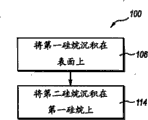
图2是根据另外的实施方式的用于在表面上形成涂层的示例性方法的流程图;2 is a flowchart of an exemplary method for forming a coating on a surface according to additional embodiments;
图3是根据另外的实施方式的用于在表面上形成涂层的示例性方法的流程图;3 is a flowchart of an exemplary method for forming a coating on a surface according to additional embodiments;
图4是根据另外的实施方式的用于在表面上形成涂层的示例性方法的流程图;4 is a flowchart of an exemplary method for forming a coating on a surface according to additional embodiments;
图5是根据另外的实施方式的用于在表面上形成涂层的示例性方法的流程图;5 is a flowchart of an exemplary method for forming a coating on a surface according to additional embodiments;
图6是根据另外的实施方式的用于在表面上形成涂层的示例性方法的流程图;6 is a flowchart of an exemplary method for forming a coating on a surface according to additional embodiments;
图7是根据另外的实施方式的用于在表面上形成涂层的示例性方法的流程图;7 is a flowchart of an exemplary method for forming a coating on a surface according to additional embodiments;
图8是根据另外的实施方式的用于在表面上形成涂层的示例性方法的流程图;8 is a flowchart of an exemplary method for forming a coating on a surface according to additional embodiments;
图9是根据另外的实施方式的用于在表面上形成涂层的示例性方法的流程图;9 is a flowchart of an exemplary method for forming a coating on a surface according to additional embodiments;
图10A是根据另外的实施方式的在其一部分上形成有涂层的示例性助听装置;FIG. 10A is an exemplary hearing device having a coating formed on a portion thereof according to additional embodiments;
图10B是根据另外的实施方式的在其一部分上形成有涂层的示例性助听装置;FIG. 10B is an exemplary hearing device having a coating formed on a portion thereof according to additional embodiments;
图10C是根据另外的实施方式的在其一部分上形成有涂层的示例性助听装置;10C is an exemplary hearing device having a coating formed on a portion thereof according to additional embodiments;
图10D是根据另外的实施方式的在其一部分上形成有涂层的示例性助听装置;FIG. 10D is an exemplary hearing device having a coating formed on a portion thereof according to additional embodiments;
图11是根据另外的实施方式的在其一部分上形成有涂层的示例性硅基(silicon-based)制品。Figure 11 is an exemplary silicon-based article having a coating formed on a portion thereof according to further embodiments.
在全部附图中,相同的附图标记和描述表示类似的、但不一定完全相同的构件。本文中描述的示例性实施方式允许有各种修饰和变化方式,具体的实施方式已经由附图中的例子显示,并将在本文中进行详细描述。然而,本文中描述的示例性实施方式并非意图限制于所公开的特定形式。相反,本发明的公开内容涵盖了所有落入所附权利要求范围内的修饰、等价物和替代物。Throughout the drawings, like reference numbers and descriptions indicate similar, but not necessarily identical, components. The exemplary embodiments described herein allow various modifications and variations, and specific embodiments have been shown by way of example in the drawings and will be described in detail herein. However, the example embodiments described herein are not intended to be limited to the particular forms disclosed. On the contrary, the present disclosure is to cover all modifications, equivalents, and alternatives falling within the scope of the appended claims.
具体实施方式Detailed ways
本发明的公开内容中所表述的硅烷组合物可被沉积在制品上以使该制品具有各种特性。在本发明的公开内容中也表述了将组合物施用于各种制品上的方法。本文中讨论的组合物和方法还可提供各种其它特征和优点。The silane compositions described in the present disclosure can be deposited on an article to impart various properties to the article. Methods of applying the compositions to various articles are also described in the present disclosure. The compositions and methods discussed herein also provide various other features and advantages.
图1是包括基材22和涂层26的示例性制品20。如该图所描述般,基材22可包括表面24。另外,涂层26可包括粘附促进层28和疏水层30。制品20可包括任何合适的具有表面部分的制品或装置。制品20的例子可包括但不限于电子设备、硅晶片、硅芯片、喷墨墨盒、塑料膜、电池、电池触点、可充电电池、网状遮盖物、耳机及前述制品的构件。制品20还可包括成型为任何形状、尺寸、质地或构造的表面,包括例如平面、曲面、粗糙表面、平滑表面和/或不规则表面。另外,制品20可包括各种助听装置、构件和/或附件,包括例如壳体构件、盖子、耳内穹隆物(例如用于助听产品)、麦克风套(例如织物网状套)、音量控制器、开关、按钮、麦克风端口、接收端口、管子、耳挂、声阻尼元件、电池盒盖(battery door)、电池、电池触点、管口、DAI连接器、水分和/或蜡防护物、面板元件、耳模(例如用于标准耳模和定制耳模)以及任何其它助听装置或构件。FIG. 1 is an
基材22可包括任何适于沉积下述硅烷化合物的材料或材料组合。适于形成基材22的材料的例子包括但不限于聚合物材料、金属材料、复合材料、硅基材料、半导体材料、绝缘材料或前述材料的组合。基材22的表面24可包括基材22和/或制品20的外部和/或内部。
涂层26可形成于完成的制品组件、制品的分组件(sub-assembliy)、单独的制品、装置构件和/或壳体构件的部分上。涂层26可具有相对于表面24而言基本一致的厚度。作为选择,涂层26也可间歇地、和/或以某些模式地来施用于表面24。另外,涂层26可仅施用于表面24的所需部分,例如,与限定在表面24中或者邻接于表面24的接缝、孔、空隙或其它开口相接触或位于它们紧邻的表面24的部分。涂层26可使表面24具有各种特性,包括,例如,提高的疏水性、提高的疏油性、提高的耐磨损性、提高的防染色性和/或提高的防变色性。涂层26还可为表面24和/或基材22的部分提供透气性,同时为表面24提供液体不渗透性。另外,涂层26可包括超薄透明层,这能够使要在表面24上形成的涂层26对制品20的功能性或美观没有或几乎没有影响。
粘附促进层28可以形成于表面24上。在某些实施方式中,粘附促进层28可与表面24结合。粘附促进层28可用作将其它化合物结合并稳固(ensure)在基材24上的粘附促进剂。粘附促进层28可包括具有至少两个反应性基团的第一硅烷。另外,第一硅烷和/或粘附促进层28可包括各种硅烷化合物的混合物。粘附促进层28还可包括除了第一硅烷之外的其它化合物。粘附促进层28中的其它化合物可为粘附促进层28赋予各种理想特性(例如,抗微生物性),而不会妨碍粘附促进层28和/或第一硅烷用作粘附促进剂。
在某些实施方式中,除硅烷化合物(例如,第一硅烷)之外或作为其替代,粘附促进层28可包括锗基化合物(germanium based compound)。锗基化合物可以以与类似的硅化合物相似的方式用作粘附促进剂。因此,以下列出作为第一硅烷的例子的硅化合物可由类似的锗化合物取代或替换。In certain embodiments,
第一硅烷能够形成包括硅氧烷(Si-O-Si)键的聚合物。在至少一个实施方式中,第一硅烷可不受限制地包括下述基团中的至少一种:异氰酸酯基团、酰氯基团、环氧化物基团、缩水甘油基基团、氨基基团、甲酯基团、异硫氰酸根基团、羧基基团、活化羧基基团、烷基氯基团、烷基溴基团、烷基碘基团、苄基氯基团、苄基溴基团、氯硅烷基团(如-SiCl3)、甲氧基硅烷基团(例如,-Si(OCH3)3)、乙氧基硅烷基团(例如,-Si(OCH2CH3)3)和/或任何其它合适的反应性官能团。The first silane is capable of forming a polymer including siloxane (Si-O-Si) linkages. In at least one embodiment, the first silane may include, without limitation, at least one of the following groups: isocyanate, acid chloride, epoxide, glycidyl, amino, formazan Ester group, isothiocyanate group, carboxyl group, activated carboxyl group, alkyl chloride group, alkyl bromide group, alkyl iodide group, benzyl chloride group, benzyl bromide group, Chlorosilane groups (eg -SiCl 3 ), methoxysilane groups (eg -Si(OCH 3 ) 3 ), ethoxysilane groups (eg -Si(OCH 2 CH 3 ) 3 ) and/or or any other suitable reactive functional group.
第一硅烷还可包括至少一个硅烷基团。在一个示例性实施方式中,第一硅烷上的硅烷基团可由式(I)表示:The first silane may also include at least one silane group. In an exemplary embodiment, the silane group on the first silane can be represented by formula (I):

其中,R1、R2和R3各自独立地是F、Cl、Br、I、H、OH、甲氧基、乙氧基、异丙氧基、烷氧基、乙酰氧基、甲基、烷基、全氟烷基、部分氟化的烷基、二甲基氨基、二烷基氨基、乙基氨基、单烷基氨基、氨基、苯基或甲氧基乙氧基乙氧基。Wherein, R 1 , R 2 and R 3 are each independently F, Cl, Br, I, H, OH, methoxy, ethoxy, isopropoxy, alkoxy, acetoxy, methyl, Alkyl, perfluoroalkyl, partially fluorinated alkyl, dimethylamino, dialkylamino, ethylamino, monoalkylamino, amino, phenyl or methoxyethoxyethoxy.
在至少一个实施方式中,第一硅烷可由式(II)表示:In at least one embodiment, the first silane can be represented by formula (II):

其中,X可为但不限于:异氰酸酯基团、酰氯基团、环氧化物基团、缩水甘油基基团、氨基基团、甲酯基团、异硫氰酸根基团、羧基基团、活化羧基基团、烷基氯基团、烷基溴基团、烷基碘基团、苄基氯基团、苄基溴基团、氯硅烷基团(如-SiCl3)、甲氧基硅烷基团(例如,-Si(OCH3)3)、乙氧基硅烷基团(例如,-Si(OCH2CH3)3)和/或任何其它合适的反应性官能团。在式(II)中,n可为0~32的整数。在另外的实施方式中,n可为1~18的整数。在至少一个实施方式中,n可为3~4的整数。另外,在式(II)中,R1、R2和R3可如上式(I)中所定义。Among them, X can be but not limited to: isocyanate group, acid chloride group, epoxide group, glycidyl group, amino group, methyl ester group, isothiocyanate group, carboxyl group, activation Carboxyl group, alkyl chloride group, alkyl bromide group, alkyl iodide group, benzyl chloride group, benzyl bromide group, chlorosilane group (such as -SiCl 3 ), methoxysilyl group groups (eg, -Si(OCH 3 ) 3 ), ethoxysilane groups (eg, -Si(OCH 2 CH 3 ) 3 ), and/or any other suitable reactive functional groups. In formula (II), n may be an integer of 0-32. In another embodiment, n can be an integer of 1-18. In at least one embodiment, n can be an integer of 3-4. In addition, in formula (II), R 1 , R 2 and R 3 may be as defined in formula (I) above.
第一硅烷的代表性例子包括但不限于:3-异氰酸丙酯基三乙氧基硅烷、3-异氰酸丙酯基三甲氧基硅烷、4-异氰酸丁酯基三乙氧基硅烷、4-异氰酸丁酯基三甲氧基硅烷、3-异氰酸丙酯基二甲基氯硅烷、(异氰酸甲酯基)甲基二甲氧基硅烷、3-硫氰酸丙酯基三乙氧基硅烷、3-氨基丙基三乙氧基硅烷、3-氨基丙基三甲氧基硅烷、4-氨基丁基三乙氧基硅烷、4-氨基丁基三甲氧基硅烷、(氨基乙基氨基甲基)苯乙基-三甲氧基硅烷、N-(2-氨基乙基)-3-氨基异丁基-甲基二甲氧基硅烷、N-甲基氨基丙基三甲氧基硅烷、N-甲基氨基丙基三乙氧基硅烷、N-甲基氨基丙基甲基二甲氧基硅烷、N-甲基氨基丙基甲基二乙氧基硅烷、N-乙基氨基异丁基三甲氧基硅烷、(N,N-二乙基-3-氨基丙基)三甲氧基硅烷、(N,N-二乙基-3-氨基丙基)三乙氧基硅烷、正丁基氨基丙基三甲氧基硅烷、11-氨基十一烷基三乙氧基硅烷、11-氨基十一烷基三甲氧基硅烷、3-氨基丙基甲基二乙氧基硅烷、3-氨基丙基甲基二甲氧基硅烷、3-氨基丙基二甲基乙氧基硅烷、3-氨基丙基二甲基甲氧基硅烷、3-氨基丙基三(甲氧基乙氧基乙氧基)硅烷、N-(2-氨基乙基)-3-氨基丙基三甲氧基硅烷、N-(2-氨基乙基)-3-氨基丙基三乙氧基硅烷、(氨基乙基氨基甲基)苯乙基三甲氧基硅烷、(氨基乙基氨基甲基)苯乙基三乙氧基硅烷、N-(2-氨基乙基)-3-氨基异丁基甲基二甲氧基硅烷、N-(2-氨基乙基)-3-氨基异丁基甲基二乙氧基硅烷、N-(2-氨基乙基)-3-氨基异丁基二甲基甲氧基硅烷、N-(2-氨基乙基)-3-氨基异丁基二甲基乙氧基硅烷、(3-缩水甘油氧基丙基)三甲氧基硅烷、(3-缩水甘油氧基丙基)三乙氧基硅烷、(3-缩水甘油氧基丙基)甲基二甲氧基硅烷、(3-缩水甘油氧基丙基)甲基二乙氧基硅烷、(3-缩水甘油氧基丙基)二甲基乙氧基硅烷、(3-缩水甘油氧基丁基)三甲氧基硅烷、(3-缩水甘油氧基丁基)三乙氧基硅烷、SiCl4、Si(CH3)Cl3、Si(CH3)2Cl2、Si(OCH3)4、Si(CH3)(OCH3)3、Si(CH3)2(OCH3)2、Si(OCH2CH3)4、Si(CH3)(OCH2CH3)3、Si(CH3)2(OCH2CH3)2、Si(N(CH3)2)4、SiH(N(CH3)2)3和Si(CH3)(N(CH3)2)3、SiCl(N(CH3)2)3、Si(CH3)H(N(CH3)2)2。Representative examples of the first silane include, but are not limited to: 3-isocyanatopropyltriethoxysilane, 3-isocyanatopropyltrimethoxysilane, 4-isocyanatobutyltriethoxysilane silane, 4-isocyanatobutyltrimethoxysilane, 3-isocyanatopropyldimethylchlorosilane, (isocyanatomethyl)methyldimethoxysilane, 3-thiocyanato Propyl triethoxysilane, 3-aminopropyltriethoxysilane, 3-aminopropyltrimethoxysilane, 4-aminobutyltriethoxysilane, 4-aminobutyltrimethoxysilane Silane, (aminoethylaminomethyl)phenethyl-trimethoxysilane, N-(2-aminoethyl)-3-aminoisobutyl-methyldimethoxysilane, N-methylaminopropyl Trimethoxysilane, N-methylaminopropyltriethoxysilane, N-methylaminopropylmethyldimethoxysilane, N-methylaminopropylmethyldiethoxysilane, N -Ethylaminoisobutyltrimethoxysilane, (N,N-diethyl-3-aminopropyl)trimethoxysilane, (N,N-diethyl-3-aminopropyl)triethoxy N-butylsilane, n-butylaminopropyltrimethoxysilane, 11-aminoundecyltriethoxysilane, 11-aminoundecyltrimethoxysilane, 3-aminopropylmethyldiethoxysilane Silane, 3-aminopropylmethyldimethoxysilane, 3-aminopropyldimethylethoxysilane, 3-aminopropyldimethylmethoxysilane, 3-aminopropyltris(methoxy ethoxyethoxy)silane, N-(2-aminoethyl)-3-aminopropyltrimethoxysilane, N-(2-aminoethyl)-3-aminopropyltriethoxysilane , (aminoethylaminomethyl)phenethyltrimethoxysilane, (aminoethylaminomethyl)phenethyltriethoxysilane, N-(2-aminoethyl)-3-aminoisobutylmethyl Dimethoxysilane, N-(2-aminoethyl)-3-aminoisobutylmethyldiethoxysilane, N-(2-aminoethyl)-3-aminoisobutyldimethylmethoxy Silane, N-(2-aminoethyl)-3-aminoisobutyldimethylethoxysilane, (3-glycidyloxypropyl)trimethoxysilane, (3-glycidyloxypropyl ) triethoxysilane, (3-glycidyloxypropyl) methyldimethoxysilane, (3-glycidyloxypropyl) methyldiethoxysilane, (3-glycidyloxy Propyl)dimethylethoxysilane, (3-glycidoxybutyl)trimethoxysilane, (3-glycidoxybutyl)triethoxysilane, SiCl 4 , Si(CH 3 ) Cl 3 , Si(CH 3 ) 2 Cl 2 , Si(OCH 3 ) 4 , Si(CH 3 )(OCH 3 ) 3 , Si(CH 3 ) 2 (OCH 3 ) 2 , Si(OCH 2 CH 3 ) 4 , Si(CH 3 )(OCH 2 CH 3 ) 3 , Si(CH 3 ) 2 (OCH 2 CH 3 ) 2 , Si(N(CH 3 ) 2 ) 4 , SiH(N(CH 3 ) 2 ) 3 and Si(CH 3 )(N(CH 3 ) 2 ) 3 , SiCl(N(CH 3 ) 2 ) 3 , Si(CH 3 )H(N(CH 3 ) 2 ) 2 .
能够通过例如硅氧烷键或其它端基键与表面24结合的第一硅烷的其它例子包括但不限于:双(二甲基氨基二甲基甲硅烷基)乙烷、双(二甲基氨基)乙烯基甲基硅烷、3-巯基丙基三乙氧基硅烷、乙酰氧基乙基三甲氧基硅烷、双(氯甲基)二氯硅烷、双(氯甲基)甲基氯硅烷、双(二氯甲硅烷基)甲烷、双(甲基二氯甲硅烷基)乙烷、双(三氯甲硅烷基)己烷、双(三氯甲硅烷基)甲烷、双(三氯甲硅烷基)辛烷、1,3-双(三氯甲硅烷基)丙烷、双(乙氧基甲硅烷基)乙烷、2-溴乙基三氯硅烷、1-氯乙基三氯硅烷、六氯二硅烷、甲基三氯硅烷、十六烷基三氯硅烷、四溴硅烷、三氯甲基三氯硅烷、三(三氯甲硅烷基乙基)甲基硅烷和三(对-三氯甲硅烷基丙基苯基)胺、双(甲基二氯甲硅烷基)丁烷。Other examples of first silanes capable of binding to surface 24 through, for example, siloxane linkages or other end group linkages include, but are not limited to: bis(dimethylaminodimethylsilyl)ethane, bis(dimethylaminosilyl) ) vinylmethylsilane, 3-mercaptopropyltriethoxysilane, acetoxyethyltrimethoxysilane, bis(chloromethyl)dichlorosilane, bis(chloromethyl)methylchlorosilane, bis (Dichlorosilyl)methane, Bis(methyldichlorosilyl)ethane, Bis(trichlorosilyl)hexane, Bis(trichlorosilyl)methane, Bis(trichlorosilyl) ) octane, 1,3-bis(trichlorosilyl)propane, bis(ethoxysilyl)ethane, 2-bromoethyltrichlorosilane, 1-chloroethyltrichlorosilane, hexachloro Disilane, Methyltrichlorosilane, Hexadecyltrichlorosilane, Tetrabromosilane, Trichloromethyltrichlorosilane, Tris(trichlorosilylethyl)methylsilane, and Tris(p-trichloromethane Silylpropylphenyl)amine, bis(methyldichlorosilyl)butane.
疏水层30可形成于粘附促进层28上。在某些实施方式中,疏水层30可与粘附促进层28结合。疏水层30可用作疏水和/或疏油层。另外,第二硅烷可用作疏水和/或疏油化合物。疏水层30可包括具有至少一个全氟化脂族基团和至少一个硅烷基团的第二硅烷。除第二硅烷之外,疏水层30还可以包括另外的化合物。疏水层30中的另外的化合物可为疏水层30赋予各种理想特性(例如,抗微生物性),而不会妨碍疏水层30和/或第二硅烷用作疏水和/或疏油的层或化合物。
为对涂层26赋予疏水性,第二硅烷可包括长的烷基链、部分氟化的烷基链和/或具有全氟化区域的烷基链,上述任何链可为直链或支链的。例如,第二硅烷可包括具有通式CF3(CF2)n(CF2)mSiR1R2R3和/或CF2H(CF2)n(CF2)mSiR1R2R3的烷基链,其中n和m为整数(n≥0,m≥0)。另外,第二硅烷和/或疏水层30可包括烷基、全氟烷基或部分氟化的烷基链的混合物。To impart hydrophobicity to
第二硅烷能够通过例如硅氧烷(Si-O-Si)键而与第一硅烷结合。另外,第二硅烷能够形成含有硅氧烷键的聚合物。在一个示例性实施方式中,第二硅烷上的硅烷基团可由式(III)表示:The second silane can be bonded to the first silane through, for example, a siloxane (Si-O-Si) bond. In addition, the second silane is capable of forming a polymer containing siloxane linkages. In an exemplary embodiment, the silane group on the second silane can be represented by formula (III):

其中,R4、R5和R6各自独立地是F、Cl、Br、I、H、OH、甲氧基、乙氧基、异丙氧基、烷氧基、乙酰氧基、甲基、烷基、全氟烷基、部分氟化的烷基、二甲基氨基、二烷基氨基、乙基氨基、单烷基氨基、氨基、苯基或甲氧基乙氧基乙氧基。Wherein, R 4 , R 5 and R 6 are each independently F, Cl, Br, I, H, OH, methoxy, ethoxy, isopropoxy, alkoxy, acetoxy, methyl, Alkyl, perfluoroalkyl, partially fluorinated alkyl, dimethylamino, dialkylamino, ethylamino, monoalkylamino, amino, phenyl or methoxyethoxyethoxy.
在至少一个实施方式中,第二硅烷可由式(IV)表示:In at least one embodiment, the second silane can be represented by formula (IV):

其中,n可为0~32的整数,R4、R5和R6可如上式(III)中所定义。在另外的实施方式中,n可为1~16的整数。在至少一个实施方式中,n可为5~9的整数。Wherein, n can be an integer ranging from 0 to 32, and R 4 , R 5 and R 6 can be as defined in the above formula (III). In another embodiment, n can be an integer of 1-16. In at least one embodiment, n can be an integer of 5-9.
第二硅烷的代表性例子包括但不限于:(十三氟-1,1,2,2-四氢辛基)三氯硅烷、(十三氟-1,1,2,2-四氢辛基)甲基二氯硅烷、(十三氟-1,1,2,2-四氢辛基)三甲氧基硅烷、(十三氟-1,1,2,2-四氢辛基)三乙氧基硅烷、(三(十三氟-1,1,2,2-四氢辛基)二甲基硅氧基)氯硅烷、(十七氟-1,1,2,2-四氢辛基)三氯硅烷、三乙氧基(1H,1H,2H,2H-全氟辛基)硅烷、(十七氟-1,1,2,2-四氢癸基)三乙氧基硅烷、(十七氟-1,1,2,2-四氢癸基)三甲氧基硅烷、(十七氟-1,1,2,2-四氢癸基)甲基二氯硅烷、(十七氟-1,1,2,2-四氢癸基)二甲基氯硅烷、全氟十二烷基-1H,1H,2H,2H-三乙氧基硅烷-全氟十四烷基-1H,1H,2H,2H-三乙氧基硅烷混合物、1,8-双(三氯甲硅烷基乙基)十六烷基氟辛烷、正十八烷基二甲基氯硅烷、正十八烷基二甲基甲氧基硅烷、正十八烷基甲氧基二氯硅烷、正十八烷基甲基二氯硅烷、正十八烷基甲氧基二氯硅烷、正十八烷基甲基二乙氧基硅烷、正十八烷基三氯硅烷、正十八烷基三乙氧基硅烷、正十八烷基三甲氧基硅烷、正十八烷基二甲基(二甲基氨基)硅烷、正三十烷基二甲基氯硅烷、正三十烷基三氯硅烷、正十六烷基三氯硅烷、正十六烷基三甲氧基硅烷、正十六烷基三乙氧基硅烷、正十二烷基三氯硅烷、正十二烷基三甲氧基硅烷、正十二烷基三乙氧基硅烷、正十二烷基甲基二氯硅烷、正辛基三氯硅烷、正辛基三甲氧基硅烷、正辛基三乙氧基硅烷、正辛基甲基二氯硅烷和正辛基二甲基氯硅烷。第二硅烷还可包括根据通式CH3(CH2)nCHRCH2SiCl3的化合物,其中R=CH3(CH2)m,n和m为整数(n≥0,m≥0)。第二硅烷还可包括根据通式CH3(CH2)nCHRSiCl3的化合物,其中R=CH3(CH2)m,n和m为整数(n≥0,m≥0)。第二硅烷还可包括根据通式CH3(CH2)nCHRSi(OCH3)3的化合物,其中R=CH3(CH2)m,n和m为整数(n≥0,m≥0)。Representative examples of second silanes include, but are not limited to: (tridecafluoro-1,1,2,2-tetrahydrooctyl)trichlorosilane, (tridecafluoro-1,1,2,2-tetrahydrooctyl) Base) methyldichlorosilane, (tridecafluoro-1,1,2,2-tetrahydrooctyl)trimethoxysilane, (tridecafluoro-1,1,2,2-tetrahydrooctyl) tri Ethoxysilane, (tris(tridecafluoro-1,1,2,2-tetrahydrooctyl)dimethylsiloxy)chlorosilane, (heptadecafluoro-1,1,2,2-tetrahydro Octyl)trichlorosilane, Triethoxy(1H,1H,2H,2H-perfluorooctyl)silane, (Heptadecafluoro-1,1,2,2-tetrahydrodecyl)triethoxysilane , (heptadecafluoro-1,1,2,2-tetrahydrodecyl)trimethoxysilane, (heptadecafluoro-1,1,2,2-tetrahydrodecyl)methyldichlorosilane, (decyl Heptafluoro-1,1,2,2-tetrahydrodecyl)chlorodimethylsilane, perfluorododecyl-1H,1H,2H,2H-triethoxysilane-perfluorotetradecyl- 1H, 1H, 2H, 2H-triethoxysilane mixture, 1,8-bis(trichlorosilylethyl)hexadecyl fluorooctane, n-octadecyldimethylchlorosilane, n-decyl Octadecyldimethylmethoxysilane, n-octadecylmethoxydichlorosilane, n-octadecylmethyldichlorosilane, n-octadecylmethoxydichlorosilane, n-octadecane Methyldiethoxysilane, n-octadecyltrichlorosilane, n-octadecyltriethoxysilane, n-octadecyltrimethoxysilane, n-octadecyldimethyl (dimethyl Amino) silane, n-triaconyl dimethyl chlorosilane, n-triaconyl trichlorosilane, n-hexadecyl trichlorosilane, n-hexadecyl trimethoxysilane, n-hexadecyl trichlorosilane, n-hexadecyl trichlorosilane Ethoxysilane, n-dodecyltrichlorosilane, n-dodecyltrimethoxysilane, n-dodecyltriethoxysilane, n-dodecylmethyldichlorosilane, n-octyltrichlorosilane Chlorosilane, n-octyltrimethoxysilane, n-octyltriethoxysilane, n-octylmethyldichlorosilane and n-octyldimethylsilyl chloride. The second silane may also include compounds according to the general formula CH 3 (CH 2 ) n CHRCH 2 SiCl 3 , wherein R=CH 3 (CH 2 ) m , n and m being integers (n≧0, m≧0). The second silane may also include compounds according to the general formula CH 3 (CH 2 ) n CHRSiCl 3 , wherein R=CH 3 (CH 2 ) m , n and m being integers (n≧0, m≧0). The second silane may also include compounds according to the general formula CH 3 (CH 2 ) n CHRSi(OCH 3 ) 3 , where R=CH 3 (CH 2 ) m , n and m being integers (n≥0, m≥0) .
在某些实施方式中,除硅烷化合物之外或作为其替代,粘附促进层28还可以包括锗化合物。锗化合物可以以与类似的硅化合物相似的方式用作疏水和/或疏油组合物。因此,上面列出作为第一硅烷例子的硅化合物可由类似的锗化合物取代,其中Si原子由Ge原子替换。In certain embodiments,
在至少一个实施方式中,粘附促进层28可包括用作粘附促进剂的锗化合物。粘附促进层28中的锗化合物可不受限制地包括下述基团中的至少一种:异氰酸酯基团、酰氯基团、环氧化物基团、缩水甘油基基团、氨基基团、甲酯基团、异硫氰酸根基团、羧基基团、活化羧基基团、烷基氯基团、烷基溴基团、烷基碘基团、苄基氯基团、苄基溴基团、氯硅烷基团(如-SiCl3)、甲氧基硅烷基团(例如,-Si(OCH3)3)、乙氧基硅烷基团(例如,-Si(OCH2CH3)3)和/或任何其它合适的反应性官能团。粘附促进层28中的锗化合物还可以包括至少一个锗基团。在一个示例性实施方式中,粘附促进层28中的锗化合物上的锗基团可由式(V)表示:In at least one embodiment,

其中,R7、R8和R9各自独立地是F、Cl、Br、I、H、OH、甲氧基、乙氧基、异丙氧基、烷氧基、乙酰氧基、甲基、烷基、全氟烷基、部分氟化的烷基、二甲基氨基、二烷基氨基、乙基氨基、单烷基氨基、氨基、苯基或甲氧基乙氧基乙氧基。Wherein, R 7 , R 8 and R 9 are each independently F, Cl, Br, I, H, OH, methoxy, ethoxy, isopropoxy, alkoxy, acetoxy, methyl, Alkyl, perfluoroalkyl, partially fluorinated alkyl, dimethylamino, dialkylamino, ethylamino, monoalkylamino, amino, phenyl or methoxyethoxyethoxy.
在至少一个实施方式中,粘附促进层28中的锗化合物可由式(VI)表示:In at least one embodiment, the germanium compound in the
其中,X可为而不限于异氰酸酯基团、酰氯基团、环氧化物基团、缩水甘油基基团、氨基基团、甲酯基团、异硫氰酸根基团、羧基基团、活化羧基基团、烷基氯基团、烷基溴基团、烷基碘基团、苄基氯基团、苄基溴基团、氯硅烷基团(如-SiCl3)、甲氧基硅烷基团(例如,-Si(OCH3)3)、乙氧基硅烷基团(例如,-Si(OCH2CH3)3)和/或任何其它合适的反应性官能团中的至少一种。式(VI)中,n可为0~32的整数。在另外的实施方式中,n可为1~18的整数。在至少一个实施方式中,n可为3~4的整数。另外,式(VI)中,R7、R8和R9可以如上述式(V)中所定义。Among them, X can be but not limited to isocyanate group, acid chloride group, epoxide group, glycidyl group, amino group, methyl ester group, isothiocyanate group, carboxyl group, activated carboxyl group group, alkyl chloride group, alkyl bromide group, alkyl iodide group, benzyl chloride group, benzyl bromide group, chlorosilane group (such as -SiCl 3 ), methoxysilane group (eg, -Si(OCH 3 ) 3 ), an ethoxysilane group (eg, -Si(OCH 2 CH 3 ) 3 ), and/or any other suitable reactive functional group. In formula (VI), n may be an integer of 0-32. In another embodiment, n can be an integer of 1-18. In at least one embodiment, n can be an integer of 3-4. In addition, in the formula (VI), R 7 , R 8 and R 9 may be as defined in the above formula (V).
在某些实施方式中,疏水层30除了硅烷化合物之外或替代硅烷化合物,还可以包括锗类化合物。锗类化合物可以与类似的硅化合物相似的方式发挥疏水和/或疏油组合物的作用。因此,以上列举的作为第二硅烷例子的硅化合物可由类似的锗化合物取代,其中Si原子由Ge原子替换。In some embodiments, the
疏水层30中的锗化合物能够通过,例如硅氧烷(Si-O-Si)键、Ge-O-Si键和/或Ge-O-Ge键与硅烷(例如第一硅烷)或锗化合物结合。粘附促进层28中的锗化合物也能够通过,例如硅氧烷键、Ge-O-Si键和/或Ge-O-Ge键与硅烷(例如第一硅烷)或锗化合物结合。另外,疏水层30中的锗化合物能够形成包括硅氧烷键、Ge-O-Si键和/或Ge-O-Ge键的聚合物。在一个示例性实施方式中,第二硅烷上的硅烷基团可由式(VII)表示:The germanium compound in the
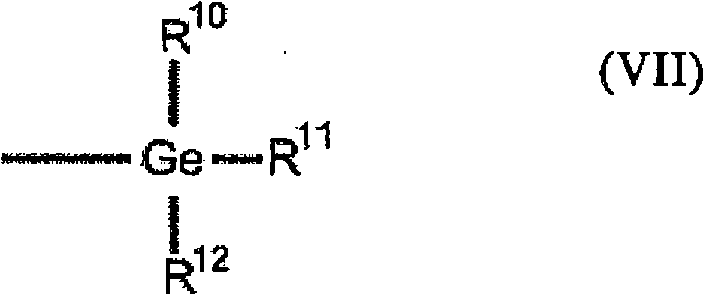
其中,R10、R11和R12各自独立地是F、Cl、Br、I、H、OH、甲氧基、乙氧基、异丙氧基、烷氧基、乙酰氧基、甲基、烷基、全氟烷基、部分氟化的烷基、二甲基氨基、二烷基氨基、乙基氨基、单烷基氨基、氨基、苯基或甲氧基乙氧基乙氧基。Wherein, R 10 , R 11 and R 12 are each independently F, Cl, Br, I, H, OH, methoxy, ethoxy, isopropoxy, alkoxy, acetoxy, methyl, Alkyl, perfluoroalkyl, partially fluorinated alkyl, dimethylamino, dialkylamino, ethylamino, monoalkylamino, amino, phenyl or methoxyethoxyethoxy.
在至少一个实施方式中,第二硅烷可由式(VIII)表示:In at least one embodiment, the second silane can be represented by formula (VIII):

其中,n可为0~32的整数,R10、R11和R12可如上式(VII)所定义。在另外的实施方式中,n可为1~16的整数。在至少一个实施方式中,n可为5~9的整数。Wherein, n can be an integer from 0 to 32, and R 10 , R 11 and R 12 can be as defined in the above formula (VII). In another embodiment, n can be an integer of 1-16. In at least one embodiment, n can be an integer of 5-9.
图2~9显示了根据各种实施方式的用于在表面上形成涂层的示例性方法。尽管附图和说明中提及的是采用硅烷化合物(例如,第一硅烷和第二硅烷)的方法,不过与硅烷化合物类似的锗化合物也可不受限制地与硅烷化合物一起使用或作为其替代。另外,下述方法中可不受限制地使用硅烷化合物与锗化合物的组合。在各种实施方式中,图2~9中描述的方法可以在约0℃~约350℃的温度范围内进行。2-9 illustrate exemplary methods for forming a coating on a surface, according to various embodiments. Although the drawings and description refer to methods using silane compounds (eg, first silane and second silane), germanium compounds similar to silane compounds may also be used with or instead of silane compounds without limitation. In addition, a combination of a silane compound and a germanium compound can be used without limitation in the method described below. In various embodiments, the methods described in Figures 2-9 can be performed at a temperature ranging from about 0°C to about 350°C.
图2是根据至少一个实施方式的用于形成涂层26的示例性方法100的流程图。如该图所示,在106中,第一硅烷可被沉积在表面24上。粘附促进层28可由将第一硅烷沉积到表面24上形成。在114中,第二硅烷可被沉积在第一硅烷和/或粘附促进层28上。疏水层30可由将第二硅烷沉积到第一硅烷和/或粘附促进层28上来形成。在106(其中第一硅烷可被沉积在表面24上)中,第一硅烷可为固体、液体或气体状态。将第一硅烷沉积到表面24上可使用任何合适的方法进行,包括,例如,将表面24浸入包括第一硅烷的液体中和/或将表面24曝露于包括第一硅烷的蒸气中和/或将表面24浸入包括第一硅烷的溶液中。当第一硅烷被沉积在表面24上时,可存在一种或多种惰性气体的一部分分压。在各种实施方式中,第一硅烷可以在数托(torr)至超过大气压的压力范围内沉积。FIG. 2 is a flowchart of an
在106(其中第一硅烷可被沉积在表面24上)中或在其之后,第一硅烷可与表面24结合。在至少一个实施方式中,第一硅烷可通过例如氨基甲酸酯(即氨酯(urethane))键、酯键、醚键、酰胺键和/或C-O-Si键而与表面24共价结合。例如,诸如聚合物基材表面等的表面可包括羟基基团。During or after 106 (where the first silane may be deposited on surface 24 ), the first silane may be combined with
在至少一个实施方式中,通过表面24上的羟基基团与第一硅烷上的异氰酸酯基团之间的反应可在第一硅烷与表面24之间形成氨基甲酸酯键。在另外的实施方式中,通过表面24上的羟基基团与第一硅烷上的酰氯基团之间的反应可在第一硅烷与表面24之间形成酯键。在某些实施方式中,通过表面24上的羟基基团与第一硅烷上的烷基氯基团或苄基氯基团之间的反应可在第一硅烷与表面24之间形成醚键。在另外的实施方式中,通过表面24上的羟基基团与第一硅烷上的环氧基基团或缩水甘油基基团之间的反应可在第一硅烷与表面24之间形成醚键。在另外的实施方式中,通过表面24上的羟基基团与第一硅烷上的甲酯(methyl ester)基团之间的反应可在第一硅烷与表面24之间形成酯键。在另外的实施方式中,通过表面24上的羟基基团与第一硅烷上的Si-Cl基团、Si-OCH3基团、Si-OCH2CH3基团、Si-N(CH3)2基团或类似反应基团之间的反应可在第一硅烷与表面24之间形成Si-O-C键。在另外的实施方式中,通过表面24上的羧基基团与第一硅烷上的胺基团之间的反应可在第一硅烷与表面24之间形成酰胺键。在另外的实施方式中,通过表面24上的羧基基团与第一硅烷上的伯胺基团之间的形成-COO-基团和-NH3+基团的离子对的反应可在第一硅烷与表面24之间形成离子键。在另外的实施方式中,通过表面24上的羰基基团与第一硅烷上的胺基团之间的反应可在第一硅烷与表面24之间形成亚胺键。In at least one embodiment, a urethane bond may be formed between the first silane and the
作为选择,例如通过第一硅烷上的硅烷基团与表面24上的硅烷醇(Si-OH)基团之间的反应可在第一硅烷与氧化硅基(silicon oxide based)基材的表面之间形成硅氧烷键和/或Si-O-C键。例如通过第一硅烷上的硅烷基团与表面24上的AlOH基团之间的反应也可在第一硅烷与氧化铝类基材的表面之间形成Al-O-Si键。Alternatively, the first silane can be formed between the first silane and the surface of a silicon oxide based substrate, for example by a reaction between the silane groups on the first silane and the silanol (Si-OH) groups on the
在114(其中第二硅烷可被沉积在第一硅烷上)中,第二硅烷可为固体、液体或气体状态。将第二硅烷沉积到表面24上可使用任何合适的方法进行,包括,例如,将表面24浸入包括第二硅烷的液体中和/或将表面24曝露于包括第二硅烷的蒸气中。在某些实施方式中,第二硅烷可被容纳(contained)在含有溶剂的溶液中。在各种实施方式中,第二硅烷薄膜可以在数托至超过大气压的压力范围内沉积。At 114 (where a second silane can be deposited on the first silane), the second silane can be in a solid, liquid, or gaseous state. Depositing the second silane onto
在114(其中第二硅烷被沉积在第一硅烷上)中或在其之后,第二硅烷可与第一硅烷结合。在至少一个实施方式中,第二硅烷可通过例如硅氧烷(Si-O-Si)键而与第一硅烷共价结合。硅氧烷键可通过第二硅烷上的硅烷基团与第一硅烷上的硅烷基团之间的反应来形成。在114之前,第一硅烷上的硅烷基团可被水解形成硅羟基(siloxyl)(Si-OH)。随后,第一硅烷上的硅羟基基团可与第二硅烷上的硅烷基团反应形成硅氧烷键。During or after 114 (where the second silane is deposited on the first silane), the second silane can be combined with the first silane. In at least one embodiment, the second silane can be covalently bonded to the first silane through, for example, a siloxane (Si-O-Si) bond. A siloxane bond may be formed by a reaction between a silane group on the second silane and a silane group on the first silane. Prior to 114, the silane groups on the first silane may be hydrolyzed to form siloxyl (Si—OH). Subsequently, the silanol groups on the first silane can react with the silane groups on the second silane to form siloxane linkages.
在某些实施方式中,在将第一硅烷沉积到表面24上之前,表面24可被氧化。例如,如图3所示,方法100还可在106之前包括102。在102中,表面24的一部分被氧化。表面24可通过例如将表面24与等离子体接触而被氧化。在至少一个实施方式中,表面24可通过使表面24与空气等离子体接触而被氧化。表面24的氧化可将另外的羟基和/或硅羟基基团引入表面24。将表面24与等离子体接触还可从表面24清除掉有机物。In certain embodiments,
在至少一个实施方式中,表面24可通过使表面24与氧等离子体接触而被氧化。表面24还可通过使表面24与水等离子体接触而被氧化。在另外的实施方式中,表面24还可通过使表面24与含有氧和水的等离子体接触而被氧化。在另外的实施方式中,表面24可通过使表面24与氩等离子体接触并随后使该表面与空气或含氧的气体组合物接触而被氧化。在另外的实施方式中,表面24可通过使表面24与氦等离子体接触并随后使该表面与空气接触而被氧化。在另外的实施方式中,表面24可通过使表面24与紫外(UV)光接触而被氧化。在另外的实施方式中,表面24可通过使表面24与含有氧化剂的溶液接触而被氧化。In at least one embodiment,
在各种实施方式中,第一硅烷可在被沉积到表面24上之前被蒸发。例如,如图4所示,方法100还可在106之前包括104。在104中,第一硅烷可被蒸发形成汽化的第一硅烷。在106中,第一硅烷随后通过气相沉积而被沉积到表面24上。In various embodiments, the first silane may be evaporated prior to being deposited onto
第一硅烷可通过任何合适的方法而被蒸发,包括,例如,提高第一硅烷的温度和/或降低第一硅烷的压力。在某些实施方式中,载体溶剂可用于将第一硅烷输送至加热的真空室中,在这里第一硅烷可被蒸发。基材22可存在于其中第一硅烷可被蒸发的加热真空室中。The first silane may be vaporized by any suitable method, including, for example, increasing the temperature of the first silane and/or reducing the pressure of the first silane. In certain embodiments, a carrier solvent can be used to deliver the first silane to a heated vacuum chamber where the first silane can be evaporated.
第一硅烷的气相沉积能够有效地沉积第一硅烷和/或使第一硅烷与表面24反应,同时减少或消除将第一硅烷递送至表面24所需部分的溶剂的使用。因此,与溶液基递送体系相比,第一硅烷的气相沉积能够有效地使溶剂和/或其它废物减至最少。另外,第一硅烷的气相沉积可减少或消除在114(其中第二硅烷可被沉积到第一硅烷上)之前的任何清洁表面24和所沉积的第一硅烷的需要。Vapor deposition of the first silane enables efficient deposition of the first silane and/or reaction of the first silane with
在至少一个实施方式中,第一硅烷可在第一硅烷沉积到表面24上的过程之中或之后被水解。例如,如图5所示,方法100还可在106之后和114之前包括108。在108中,第一硅烷可被水解。将第一硅烷水解可包括,例如,在第一硅烷沉积到表面24上的过程之中或之后,使第一硅烷与液体或蒸发水相接触。在某些实施方式中,将第一硅烷水解可包括:通过升高水温和/或降低水压而使水蒸发,并使沉积在表面24上的第一硅烷与蒸发水相接触。在各种实施方式中,水解可以在数托至超过大气压的压力范围内进行。In at least one embodiment, the first silane may be hydrolyzed during or after deposition of the first silane onto
作为选择,水解可由部分或全部来自基材和/或反应副产物的水来促进。例如,在表面24包括聚合物基材的表面的情况中,蒸发水可由方法100的过程中的聚合物基材的降解或反应来产生。另外,水可存在于基材本身中,并在方法100的过程中被释放。蒸发水也可转而使第一硅烷水解。Alternatively, hydrolysis may be facilitated by some or all of the water from the substrate and/or reaction by-products. For example, where
在第一硅烷的水解过程中,至少一个硅烷醇基团(即,Si-O-H基团)可形成于第一硅烷上的硅烷基团的位置处。硅烷醇基团可用作第二硅烷的粘附促进剂,其提供使第二硅烷与第一硅烷结合的高度反应性位点。During the hydrolysis of the first silane, at least one silanol group (ie, Si-O-H group) may be formed on the first silane in place of the silane group. The silanol group can act as an adhesion promoter for the second silane, providing a highly reactive site for the second silane to bond to the first silane.
第一硅烷的水解导致第一硅烷的分子成分之间的缩合,这在邻近的分子成分之间形成硅氧烷键。邻近的分子成分之间的硅氧烷键可导致沉积到表面24上的第一硅烷的交联。第一硅烷的邻近分子成分之间的硅氧烷键可增加沉积在表面上的第一硅烷的结构牢固性,这能够在表面24上形成相对稳定且耐磨损的超薄粘附促进层28。Hydrolysis of the first silane results in condensation between molecular constituents of the first silane, which form siloxane bonds between adjacent molecular constituents. Siloxane bonds between adjacent molecular constituents may result in crosslinking of the first silane deposited onto
在各种实施方式中,使第一硅烷与蒸发水接触可导致第一硅烷上至少一个未反应的异氰酸酯基团水解生成胺基(即,-NH2)。第一硅烷上的胺基可以用作
在另外的实施方式中,第二硅烷可在沉积于第一硅烷和/或粘附促进层28上之前被蒸发。例如,如图6所示,方法100在106之后和114之前还可包括110。在110处,第二硅烷蒸发形成汽化的第二硅烷。在114中,第二硅烷随后通过气相沉积而沉积在第一硅烷和/或粘附促进层28上。In other embodiments, the second silane may be evaporated prior to deposition on the first silane and/or
第二硅烷可通过任何合适的方法而被蒸发,包括,例如,升高第二硅烷的温度和/或降低第二硅烷的压力。在某些实施方式中,载体溶剂可用于将第二硅烷输送至加热真空室中,在这里第二硅烷可被蒸发。基材22可存在于其中第二硅烷可被蒸发的加热真空室中。The second silane may be vaporized by any suitable method, including, for example, increasing the temperature of the second silane and/or reducing the pressure of the second silane. In certain embodiments, a carrier solvent can be used to transport the second silane into a heated vacuum chamber where the second silane can be evaporated. The
第二硅烷的气相沉积能够有效地沉积第二硅烷和/或使第二硅烷与第一硅烷反应,同时减少或消除将第二硅烷递送至粘附促进层28所需部分的溶剂的使用。因此,与溶液基递送系统相比,第二硅烷的气相沉积能够有效地使溶剂和/或其它废物减至最少。另外,第二硅烷的气相沉积可减少或消除在沉积第二硅烷之后的任何清洁表面24和所沉积的第二硅烷的需要。Vapor deposition of the second silane enables efficient deposition of the second silane and/or reaction of the second silane with the first silane while reducing or eliminating the use of solvent in the portion required to deliver the second silane to the
在各种实施方式中,在将第一硅烷沉积在表面24上之后,第一硅烷可被交联。例如,如图7所示,方法100在106之后还可包括112。在112中,第一硅烷可被交联。In various embodiments, after the first silane is deposited on the
第一硅烷的交联可在将第一硅烷沉积在基材上之后的任何合适的时间进行,包括,例如,在将第二硅烷沉积在第一硅烷上之前或之后。第一硅烷的交联可通过任何合适的方法来促进,包括例如第一硅烷的水解。如上所述,在108中,第一硅烷可被水解。第一硅烷的水解可导致第一硅烷的分子成分之间的缩合,这在邻近的分子成分之间形成硅氧烷键。邻近的分子成分之间的硅氧烷键可导致沉积在表面24上的第一硅烷的交联。第一硅烷的邻近分子成分之间的硅氧烷键可增加沉积在表面上的第一硅烷的结构牢固性,从而能够在表面24上形成相对稳定且耐磨损的超薄粘附促进层28。Crosslinking of the first silane can occur at any suitable time after depositing the first silane on the substrate, including, for example, before or after depositing the second silane on the first silane. Crosslinking of the first silane can be facilitated by any suitable method, including, for example, hydrolysis of the first silane. As described above, at 108 the first silane may be hydrolyzed. Hydrolysis of the first silane can result in condensation between molecular components of the first silane, which form siloxane bonds between adjacent molecular components. Siloxane bonds between adjacent molecular constituents may result in crosslinking of the first silane deposited on
在另外的实施方式中,交联化合物(cross-linking compound)可用来促进和/或提高第一硅烷的分子成分之间的交联。适用于将第一硅烷交联的交联化合物的例子包括但不限于:双(三氯甲硅烷基)己烷和四(三氯甲硅烷基乙基)硅烷。交联化合物可通过任何合适的手段(包括例如通过水解)而与第一硅烷的分子成分结合。交联化合物可促进第一硅烷的分子成分之间的提高的支链化,并且可提高粘附促进层28的稳定性和耐磨损性。在某些实施方式中,诸如乙烯基等的可聚合基团可被引入第一硅烷中,然后可聚合基团的聚合可被引发。In additional embodiments, cross-linking compounds may be used to facilitate and/or increase cross-linking between molecular components of the first silane. Examples of crosslinking compounds suitable for crosslinking the first silane include, but are not limited to, bis(trichlorosilyl)hexane and tetrakis(trichlorosilylethyl)silane. The crosslinking compound can be associated with the molecular constituents of the first silane by any suitable means, including, for example, by hydrolysis. The crosslinking compound can promote increased branching between the molecular components of the first silane and can increase the stability and abrasion resistance of the
在各种实施方式中,在将第二硅烷沉积在表面24上之后,第二硅烷可被交联。例如,如图8所示,方法100在114之后还可包括116。在116中,第二硅烷被交联。第二硅烷的交联可通过任何合适的方法来促进,包括例如第二硅烷的水解。在某些实施方式中,在第二硅烷沉积在第一硅烷上的过程之中或之后,第二硅烷可通过使第二硅烷与蒸发水接触来水解。作为选择,水解可通过部分或全部来自基材和/或反应副产物的水来促进。例如,在表面24包括聚合物基材的表面的情况中,蒸发水可由方法100的过程中的聚合物基材的降解或反应来产生。另外,水可存在于基材本身中,并在方法100的过程中被释放。In various embodiments, after the second silane is deposited on the
第二硅烷的水解可导致第二硅烷的各分子成分之间及第二硅烷与第一硅烷的分子成分之间的缩合。缩合可导致在邻近的分子成分之间形成硅氧烷键。邻近分子成分间的硅氧烷键可导致沉积在表面24上的第二硅烷的交联。邻近分子成分间的硅氧烷键还可导致第二硅烷与第一硅烷之间的交联。第二硅烷和/或第一硅烷的邻近分子成分间的硅氧烷键增加了涂层组合物的结构牢固性,从而能够使相对稳定且耐磨损的超薄涂层沉积在表面24上。Hydrolysis of the second silane can result in condensation between the molecular constituents of the second silane and between the molecular constituents of the second silane and the first silane. Condensation can result in the formation of siloxane bonds between adjacent molecular components. The siloxane bonds between adjacent molecular constituents may result in crosslinking of the second silane deposited on the
在另外的实施方式中,交联化合物可用来促进和/或增大第二硅烷的分子成分之间的交联。适用于将第二硅烷交联的交联化合物的例子包括但不限于双(三氯甲硅烷基)己烷和四(三氯甲硅烷基乙基)硅烷。交联化合物可通过任何合适的手段(包括例如通过水解)而与第二硅烷的分子成分结合。交联化合物可促进第二硅烷的分子成分之间的提高的支链化,并增大第二硅烷的涂层的稳定性和耐磨损性。在某些实施方式中,诸如乙烯基等的可聚合基团可被引入第二硅烷,然后可聚合基团的聚合可被引发。In additional embodiments, crosslinking compounds may be used to facilitate and/or increase crosslinking between molecular components of the second silane. Examples of crosslinking compounds suitable for crosslinking the second silane include, but are not limited to, bis(trichlorosilyl)hexane and tetrakis(trichlorosilylethyl)silane. The crosslinking compound can be associated with the molecular constituents of the second silane by any suitable means, including, for example, by hydrolysis. The crosslinking compound can promote increased branching between the molecular components of the second silane and increase the stability and abrasion resistance of the coating of the second silane. In certain embodiments, a polymerizable group, such as a vinyl group, can be introduced into the second silane, and then polymerization of the polymerizable group can be initiated.
在某些实施方式中,在将第一硅烷沉积在表面24上之后和/或将第二硅烷沉积在第一硅烷上之后,第一硅烷和/或第二硅烷可被固化。例如,如图9所示,方法100在114之后还可包括118。118可包括将第二硅烷和/或第一硅烷固化以在表面24上形成固化涂层26。本文中使用的术语“固化”、“被固化”或“使...固化”是指材料的状态、条件和/或结构的改变,包括部分固化及全部固化。In certain embodiments, the first silane and/or the second silane may be cured after depositing the first silane on the
第一硅烷和/或第二硅烷的固化可使用任何合适的方法进行,包括例如使第一硅烷和/或第二硅烷暴露于热或辐射。在示例性实施方式中,包括第一硅烷和第二硅烷的涂层可通过使该涂层与高温接触一段合适的时间而被固化。Curing of the first silane and/or the second silane can be performed using any suitable method, including, for example, exposing the first silane and/or the second silane to heat or radiation. In an exemplary embodiment, a coating comprising a first silane and a second silane can be cured by exposing the coating to an elevated temperature for a suitable period of time.
图10A~10D显示了根据各种实施方式的示例性助听装置。如这些附图所示,助听装置200包括装置外壳202、麦克风套204及电池盒盖208。在至少一个实施方式中,如图10A所示,助听装置200可为开耳式助听器(open ear hearing aid)。如图10A所示,助听装置200可包括装置外壳202、至少两个麦克风套204(例如,遮盖前麦克风和后麦克风)、程序按钮214、管子210、耳内穹隆物(dome)216和声音端口220。麦克风套204可包括网状材料。图10D显示了助听装置200(例如开耳式助听器)的一部分上的示例性电池盒222。电池盒222可包括电池盒盖208和电池224。图10D中的电池盒222以开放式构造来显示。10A-10D illustrate exemplary hearing devices according to various embodiments. As shown in these figures, the
在另外的实施方式中,如图10B所示,助听装置200可为耳后式(behind the ear,BTE)助听器。如图10B所示,助听装置200可包括装置外壳202、电池盒盖208、程序按钮214、音量控制器206、管子210、耳挂212和耳模218。In another embodiment, as shown in FIG. 10B , the
在另外的实施方式中,如图10C所示,助听装置200可为定制助听器(custom hearing aid)。如图10C所示,助听装置200可包括装置外壳202、麦克风套204、电池盒盖208和声音端口220。定制助听器可设计为安装在耳朵或耳道的一部分内。定制助听器的例子包括但不限于CIC(深耳道式)、MC(小耳道式)、ITC(耳道式)、ITE(耳内式)和HS(半耳甲腔式(HalfShell))助听器。麦克风套204可包括网状材料。In another embodiment, as shown in FIG. 10C , the
助听装置200可在任何合适的部分(包括助听装置200的外部和内部)之上、附近或邻接处包括涂层26。另外,其任何合适的构件或部分可包括涂层26。涂层26可形成于助听装置200的任何部分之上、附近或邻接处,所述助听装置200可在该助听装置200的外部和内部之间具有开口。涂层26可在其上、其附近或其邻接处形成的助听装置200的部分的例子包括但不限于装置外壳202、麦克风套204、音量控制器206、电池盒盖208、管子210、耳挂212、程序按钮214、耳内穹隆物216、耳模218、声音端口220、电池盒222和/或电池224。
图11是根据另外的实施方式的其一部分形成有涂层的示例性硅基制品(silicon-based article)。如该图所示,硅基制品300可包括基材322和基材表面324。涂层26可形成在基材322的表面部分上,包括例如基材表面324。硅基制品300的例子包括但不限于硅晶片、半导体装置和集成电路。硅基制品300可包括任何合适的材料,包括例如硅和/或二氧化硅。Figure 11 is an exemplary silicon-based article having a coating formed on a portion thereof according to further embodiments. As shown in this figure, silicon-based
实施例Example
下述实施例仅是用于描述的目的,而非意图限制所附权利要求的范围。The following examples are for illustrative purposes only and are not intended to limit the scope of the appended claims.
试剂Reagent
用于下述实施例的试剂包括:(十三氟-1,1,2,2,2-四氢辛基)三氯硅烷(≥97%,Aldrich公司)、3-异氰酸丙酯基三乙氧基硅烷(95%,宾夕法尼亚州Morrisville市的Gelest公司)、三乙氧基(1H,1H,2H,2H-全氟辛基)硅烷(98%,Aldrich公司)、间甲酚(97%,Aldrich公司)和尼龙6/6小球(Aldrich公司,Cat号为181129)。本文中使用的“盐/酸水溶液”是人造汗液制剂,其为0.34M的NaCl、0.08M的脲、0.33M的NH4Cl、0.04M的CH3COOH和0.12M的乳酸。用2M的NaOH将该溶液的pH值调至4.7。Reagents used in the following examples include: (tridecafluoro-1,1,2,2,2-tetrahydrooctyl)trichlorosilane (≥97%, Aldrich), 3-isocyanatopropyl Triethoxysilane (95%, Gelest Company, Morrisville, Pennsylvania), triethoxy (1H, 1H, 2H, 2H-perfluorooctyl) silane (98%, Aldrich Company), m-cresol (97 %, Aldrich Company) and nylon 6/6 pellets (Aldrich Company, Cat No. 181129). As used herein, "aqueous salt/acid solution" is an artificial perspiration formulation that is 0.34M NaCl, 0.08M urea, 0.33M NH4Cl , 0.04M CH3COOH , and 0.12M lactic acid. The pH of the solution was adjusted to 4.7 with 2M NaOH.
基材Substrate
用在下述实施例中的基材包括硅基材、增强尼龙基材和旋涂尼龙基材。用于各实施例的硅基材包括来自加利福尼亚州UniSil Corporation的硅晶片(测试级,n-型,<1-0-0>取向,2~6Ω-cm)。将该硅晶片切割成大约1.5×1.5cm的片。在对硅基材进行任何表面化学之前,用2%的十二烷基硫酸钠(“SDS”)水溶液和水在没有超声波的条件下对硅基材进行清洁。Substrates used in the following examples include silicon substrates, reinforced nylon substrates, and spin-on nylon substrates. Silicon substrates used in the various examples included silicon wafers (test grade, n-type, <1-0-0> orientation, 2-6 Ω-cm) from UniSil Corporation, California. The silicon wafer was cut into approximately 1.5 x 1.5 cm pieces. Silicon substrates were cleaned with a 2% aqueous solution of sodium dodecyl sulfate ("SDS") and water without ultrasonic waves prior to performing any surface chemistry on the silicon substrates.
用在下述实施例中的增强尼龙基材包括含35重量%短切玻璃纤维(1/8″~3/16″长)的FDA级增强尼龙6/6表面。FDA级增强尼龙表面包括符合FDA的添加剂(如着色剂),并且不含紫外添加剂或高流动添加剂。Aldrich公司表明,他们提供的尼龙6/6的熔点为263℃,其玻璃化转变温度为45℃。在对增强尼龙基材进行任何表面化学之前,在SDS溶液中对该增强尼龙基材进行5分钟的声波处理。然后在去离子水中进行10分钟的声波处理。在进行声波处理时换三次水。The reinforced nylon substrate used in the following examples included an FDA grade reinforced nylon 6/6 surface with 35% by weight chopped glass fibers (1/8" to 3/16" long). The FDA-grade reinforced nylon surface includes FDA-compliant additives such as colorants, and contains no UV additives or high-flow additives. Aldrich shows that the nylon 6/6 they provide has a melting point of 263°C and a glass transition temperature of 45°C. The reinforced nylon substrate was sonicated in SDS solution for 5 minutes before any surface chemistry was performed on the reinforced nylon substrate. Sonication was then performed for 10 min in deionized water. Change the water three times while sonicating.
用在下述实施例中的旋涂尼龙基材包括如下制备的基材:使用下述程序条件(在来自Laurell Technologies Corporation的仪器上,该仪器型号为WS-400B-6NPP/LITE):1000rpm(10秒),随后5000rpm(90秒),在天然氧化物覆盖(native oxide coated)的硅晶片表面上旋涂尼龙6/6球的间甲酚溶液。尼龙6/6溶液的初始浓度为<3%(w/w),但该尼龙6/6溶液在间甲酚中被稀释直至旋涂过程得到的膜厚大约为170
表面分析仪器Surface Analysis Instruments
用具有双透镜、单一同位素69Ga+枪作为初级离子源(primary ionsource)的ION-TOF(TOF-SIMS IV)仪器进行飞行时间二级离子质谱分析(time-of-flight seconcdary ion mass spectrometry,“TOF-SIMS”)。用来自Surface Sciences的SSX-100仪器,使用Al Kα源和半球分析仪进行X-射线光电子光谱分析(“XPS”)。电子流枪用于增强尼龙样品的电荷补偿,这种电荷补偿通过将约0.5~1.0mm的精细Ni网放置在玻璃增强聚合物的表面上而得到进一步的增强。对于硅或硅样品上的旋涂尼龙来说,电荷补偿不是必需的。水接触角用Ramé-Hart(100-00型)接触角测角器来测定。用来自J.A.Wollam Co.,Inc.的M-2000仪器进行椭偏光谱分析。波长范围为190.5~989.4nm,入射角固定至75°。使用仪器软件中确定的相同的二氧化硅光学常数来对二氧化硅、烃、沉积的硅烷膜和旋涂尼龙进行模拟。Time-of-flight secondary ion mass spectrometry (time-of-flight secondary ion mass spectrometry) using the ION-TOF (TOF-SIMS IV) instrument with a dual-lens, monoisotope 69 Ga + gun as the primary ion source, "TOF-SIMS"). X-ray photoelectron spectroscopy ("XPS") was performed with an SSX-100 instrument from Surface Sciences using an Al Kα source and a hemispherical analyzer. An electron flow gun was used to enhance the charge compensation of the nylon samples, which was further enhanced by placing a fine Ni mesh of about 0.5-1.0 mm on the surface of the glass-reinforced polymer. Charge compensation is not necessary for spin-coated nylon on silicon or silicon samples. Water contact angles were measured with a Ramé-Hart (model 100-00) contact angle goniometer. Ellipsometric analysis was performed with an M-2000 instrument from JAWollam Co., Inc. The wavelength range is 190.5~989.4nm, and the incident angle is fixed to 75°. Silica, hydrocarbons, deposited silane films, and spin-on nylon were simulated using the same silica optical constants determined in the instrument software.
实施例1.硅基材的等离子体清洁/处理Example 1. Plasma cleaning/treatment of silicon substrates
通过使硅基材在等离子清洗器(PDC-32G型,来自纽约州Ithaca市的Harrick Plasma公司)中在中功率(10.5W施用至RF线圈)条件下与空气等离子体接触30秒来对硅基材进行等离子体清洁/处理。在等离子体清洁/处理之前测定的硅基材表面的水前进接触角(θa(H2O))为40°。在等离子体清洁/处理之后,根据该实施例制备的硅基材表面的平均水前进接触角测定为<15°。Silicon substrates were cleaned by exposing them to air plasma in a plasma cleaner (Model PDC-32G from Harrick Plasma, Ithaca, NY) at medium power (10.5 W applied to the RF coil) for 30 seconds. material for plasma cleaning/treatment. The advancing water contact angle (θ a (H 2 O)) of the silicon substrate surface measured before plasma cleaning/treatment was 40°. After plasma cleaning/treatment, the average advancing water contact angle of the silicon substrate surface prepared according to this example was determined to be <15°.
水前进接触角(advancing water contact angle)可用作表面疏水性的量度。表面的水前进接触角越大,则表示该表面的疏水程度越高。在等离子体清洁/处理之后表面的水接触角下降表明表面的含氧量(例如,-OH含量)增大。在等离子体清洁/处理之后表面的水接触角下降还表明,作为等离子体清洁/处理的结构,烃类污染物从表面去除。The advancing water contact angle can be used as a measure of surface hydrophobicity. The larger the advancing water contact angle of a surface, the higher the hydrophobicity of the surface. A decrease in the water contact angle of the surface after plasma cleaning/treatment indicates an increase in the oxygen content (eg, -OH content) of the surface. The decrease in the water contact angle of the surface after plasma cleaning/treatment also indicates that hydrocarbon contaminants were removed from the surface as a result of the plasma cleaning/treatment.
实施例2.增强尼龙基材的等离子体清洁/处理Example 2. Enhanced plasma cleaning/treatment of nylon substrates
通过使增强尼龙基材在等离子清洗器(PDC-32G型,来自纽约州Ithaca市的Harrick Plasma公司)中在中功率(10.5W施用至RF线圈)条件下与空气等离子体接触30秒来对增强尼龙基材进行等离子体清洁/处理。Reinforced nylon substrates were exposed to air plasma in a plasma cleaner (Model PDC-32G from Harrick Plasma, Ithaca, NY) at medium power (10.5W applied to the RF coil) for 30 seconds. Nylon substrates were plasma cleaned/treated.
在等离子体清洁/处理之前测定的三个增强尼龙基材表面的平均水前进接触角为69°。在等离子体清洁/处理之后,根据该实施例制备的五个增强尼龙基材表面的平均水前进接触角测定为32°。The average advancing water contact angle of the three reinforced nylon substrate surfaces measured prior to plasma cleaning/treatment was 69°. After plasma cleaning/treatment, the average advancing water contact angle of five reinforced nylon substrate surfaces prepared according to this example was determined to be 32°.
在根据该实施例制备的增强尼龙基材的等离子体清洁/处理之前,使用XPS得到的增强尼龙基材表面的X-射线光电子光谱(“XPS光谱”)主要是来自氧(O1s)、氮(N1s)和碳(C1s)的信号。在增强尼龙基材的等离子体清洁/处理之后,O1s、N1s和C1s信号仍然在增强尼龙基材表面的XP光谱中占优。不过,增强尼龙基材的O1s相对于C1s的峰比率明显增大,从等离子体清洁/处理之前的比率0.14变为等离子体清洁/处理之后的比率0.28,表明等离子体清洁/处理之后的增强尼龙基材表面的含氧(例如,-OH)量增大。另外,增强尼龙基材表面的XP光谱的C1s的窄扫描显示了代表被氧化(即,化学位移)的碳的峰显著增大,进一步表明等离子体清洁/处理之后的增强尼龙基材中的含氧量增大。The X-ray photoelectron spectrum ("XPS spectrum") obtained using XPS for the surface of the reinforced nylon substrate prepared according to this example prior to plasma cleaning/treatment of the reinforced nylon substrate was mainly derived from oxygen (O1s), nitrogen ( N1s) and carbon (C1s) signals. After the plasma cleaning/treatment of the enhanced nylon substrate, the O1s, N1s and C1s signals still dominate in the XP spectrum of the enhanced nylon substrate surface. However, the peak ratio of O1s to C1s for reinforced nylon substrates increased significantly, from a ratio of 0.14 before plasma cleaning/treatment to a ratio of 0.28 after plasma cleaning/treatment, indicating that the reinforced nylon substrate after plasma cleaning/treatment The amount of oxygen (for example, —OH) on the surface of the substrate increases. In addition, a narrow scan of the C1s of the XP spectrum of the reinforced nylon substrate surface showed a significant increase in the peak representing oxidized (i.e., chemically shifted) carbon, further indicating that the reinforced nylon substrate after plasma cleaning/treatment contains The amount of oxygen increases.
根据该实施例制备的增强尼龙基材表面的阴离子TOF-SIMS光谱中的O-/C-的比率在等离子体清洁/处理之前为0.09,在等离子体清洁/处理之后为0.21,表明等离子体清洁/处理使得增强尼龙基材表面的含氧量增大。The ratio of O − /C − in the anion TOF-SIMS spectrum of the surface of the reinforced nylon substrate prepared according to this example was 0.09 before plasma cleaning/treatment and 0.21 after plasma cleaning/treatment, indicating plasma cleaning / treatment increases the oxygen content on the surface of the reinforced nylon substrate.
实施例3.旋涂尼龙基材的等离子体清洁/处理Example 3. Plasma cleaning/treatment of spin-coated nylon substrates
通过使旋涂尼龙基材在等离子清洗器(PDC-32G型,来自来自纽约州Ithaca市的Harrick Plasma公司)中在中功率(10.5W施用至RF线圈)条件下与空气等离子体接触30秒来对旋涂尼龙基材进行等离子体清洁/处理。Spin-coated nylon substrates were exposed to air plasma in a plasma cleaner (Model PDC-32G from Harrick Plasma, Ithaca, NY) at medium power (10.5 W applied to the RF coil) for 30 seconds. Plasma cleaning/treatment of spin-coated nylon substrates.
在等离子体清洁/处理之前测定的五个旋涂尼龙基材表面的平均水前进接触角为60°。在等离子体清洁/处理之后,根据该实施例制备的六个增强尼龙基材表面的平均水前进接触角测定为34°。The average advancing water contact angle of five spin-coated nylon substrate surfaces measured prior to plasma cleaning/treatment was 60°. After plasma cleaning/treatment, the average advancing water contact angle of six reinforced nylon substrate surfaces prepared according to this example was determined to be 34°.
实施例4.NCO-硅烷/硅基材的制备Example 4. Preparation of NCO-silane/silicon substrate
在根据实施例1的等离子体清洁/处理之后,硅基材在减压下在100℃的真空炉中脱水。真空炉中的真空由旋转式叶片泵来提供。真空炉中包括用干冰/丙酮冷却的玻璃阱(glass trap),其防止油从旋转式叶片泵回流,并且防止溶剂和试剂进入旋转式叶片泵。将硅基材放入炉中后,开启旋转式叶片泵3分钟,以获得15Torr的压力,然后关闭旋转式叶片泵的阀。表面在这些条件下脱水30分钟。然后再次开启旋转式叶片泵3分钟,以将水蒸汽抽出,之后再次关闭旋转式叶片泵的阀。After plasma cleaning/treatment according to Example 1, the silicon substrate was dehydrated in a vacuum oven at 100° C. under reduced pressure. The vacuum in the vacuum furnace is provided by a rotary vane pump. A glass trap cooled with dry ice/acetone is included in the vacuum furnace, which prevents backflow of oil from the rotary vane pump and prevents solvents and reagents from entering the rotary vane pump. After placing the silicon substrate in the furnace, the rotary vane pump was turned on for 3 minutes to obtain a pressure of 15 Torr, and then the valve of the rotary vane pump was closed. The surface was dehydrated under these conditions for 30 minutes. The rotary vane pump was then turned on again for 3 minutes to pump out the water vapor, after which the valve of the rotary vane pump was closed again.
将250μl的3-异氰酸丙酯基三乙氧基硅烷(“NCO-硅烷”)的等分试样通过隔膜注入真空炉中。NCO-硅烷在注入真空炉中之后快速蒸发。表面在基本静态的条件下与NCO-硅烷的蒸汽反应30分钟,以形成其上沉积有NCO-硅烷的硅基材(“NCO-硅烷/硅基材”)。然后打开旋转式叶片泵的阀,以抽出未反应的NCO-硅烷。在等离子体清洁/处理之后,根据该实施例制备的三个NCO-硅烷/硅基材的平均水前进接触角测定为82°。A 250 [mu]l aliquot of 3-isocyanatopropyltriethoxysilane ("NCO-silane") was injected through the septum into the vacuum furnace. The NCO-silane evaporates quickly after injection into the vacuum furnace. The surface was reacted with a vapor of NCO-silane under substantially static conditions for 30 minutes to form a silicon substrate on which NCO-silane was deposited ("NCO-silane/silicon substrate"). The valve of the rotary vane pump was then opened to pump out unreacted NCO-silane. After plasma cleaning/treatment, the average advancing water contact angle of the three NCO-silane/silicon substrates prepared according to this example was determined to be 82°.
在NCO-硅烷沉积到硅基材上之前,在硅基材表面的XP光谱中未观察到N1s信号。根据该实施例在硅基材上沉积NCO-硅烷以形成NCO-硅烷/硅基材之后,在NCO-硅烷/硅基材表面的XP光谱中可观察到少量的N1s信号。NCO-硅烷/硅基材的椭偏光谱分析表明在硅基材的表面上存在厚度为9.5
实施例5.NCO-硅烷/增强尼龙基材的制备Example 5. Preparation of NCO-silane/reinforced nylon substrate
基本遵循实施例4描述的过程,不同之处在于使用根据实施例2制备的增强尼龙基材来代替硅基材,以形成其上沉积有NCO-硅烷的增强尼龙基材(“NCO-硅烷/增强尼龙基材”)。在沉积NCO-硅烷之后,根据该实施例制备的五个NCO-硅烷/增强尼龙基材的平均水前进接触角测定为87°。The procedure described in Example 4 was essentially followed, except that the reinforced nylon substrate prepared according to Example 2 was used instead of the silicon substrate to form a reinforced nylon substrate with NCO-silane deposited thereon ("NCO-silane/ Reinforced Nylon Substrate"). The average advancing water contact angle of five NCO-silane/reinforced nylon substrates prepared according to this example was determined to be 87° after deposition of the NCO-silane.
实施例6.NCO-硅烷/旋涂尼龙基材的制备Example 6. Preparation of NCO-silane/spin-coated nylon substrates
基本遵循实施例4描述的过程,不同之处在于使用根据实施例3制备的旋涂尼龙基材来代替硅基材,以形成其上沉积有NCO-硅烷的旋涂尼龙基材(“NCO-硅烷/旋涂尼龙基材”)。沉积NCO-硅烷并进行等离子体清洁/处理之后,根据该实施例制备的六个NCO-硅烷/旋涂尼龙基材的平均水前进接触角测定为82°。The procedure described in Example 4 was essentially followed, except that the silicon substrate was replaced with a spin-coated nylon substrate prepared according to Example 3 to form a spin-coated nylon substrate with NCO-silane deposited thereon (“NCO- Silane/Spin-on Nylon Substrate"). After deposition of NCO-silane and plasma cleaning/treatment, the average advancing water contact angle of six NCO-silane/spin-on-nylon substrates prepared according to this example was determined to be 82°.
实施例7.NCO-硅烷/硅基材的水解Example 7. Hydrolysis of NCO-silane/silicon substrates
将实施例4制备的NCO-硅烷/硅基材放置在真空炉中,并将包括5ml水的陪替氏培养皿放入真空炉中。关闭炉门,NCO-硅烷/硅基材在大气压下在100℃水解30分钟,以形成具有水解表面的NCO-硅烷/硅基材(“水解的NCO-硅烷/硅基材”)。The NCO-silane/silicon substrate prepared in Example 4 was placed in a vacuum furnace, and a petri dish containing 5 ml of water was placed in the vacuum furnace. With the oven door closed, the NCO-silane/silicon substrate was hydrolyzed at 100° C. for 30 minutes at atmospheric pressure to form an NCO-silane/silicon substrate with a hydrolyzed surface (“hydrolyzed NCO-silane/silicon substrate”).
实施例8.NCO-硅烷/增强尼龙基材的水解Example 8. Hydrolysis of NCO-silane/reinforced nylon substrates
将根据实施例5制备的NCO-硅烷/增强尼龙基材放置在真空炉中,并将包括5ml水的陪替氏培养皿放入真空炉中。关闭炉门,NCO-硅烷/增强尼龙基材在大气压下在100℃水解30分钟,以形成具有水解表面的NCO-硅烷/增强尼龙基材(“水解的NCO-硅烷/增强尼龙基材”)。The NCO-silane/reinforced nylon substrate prepared according to Example 5 was placed in a vacuum furnace, and a petri dish containing 5 ml of water was placed in the vacuum furnace. With the oven door closed, the NCO-silane/reinforced nylon substrate was hydrolyzed at 100°C for 30 minutes at atmospheric pressure to form an NCO-silane/reinforced nylon substrate with a hydrolyzed surface ("hydrolyzed NCO-silane/reinforced nylon substrate") .
实施例9.NCO-硅烷/旋涂尼龙基材的水解Example 9. Hydrolysis of NCO-silane/spin-coated nylon substrates
将根据实施例6制备的NCO-硅烷/旋涂尼龙基材放置在真空炉中,并将包括5ml水的陪替氏培养皿放入真空炉中。关闭炉门,NCO-硅烷/旋涂尼龙基材在大气压下在100℃水解30分钟,以形成具有水解表面的NCO-硅烷/旋涂尼龙基材(“水解的NCO-硅烷/旋涂尼龙基材”)。The NCO-silane/spin-coated nylon substrate prepared according to Example 6 was placed in a vacuum furnace, and a petri dish containing 5 ml of water was placed in the vacuum furnace. With the oven door closed, the NCO-silane/spin-on-nylon substrate was hydrolyzed at 100 °C for 30 min at atmospheric pressure to form an NCO-silane/spin-on-nylon substrate with a hydrolyzed surface (“hydrolyzed NCO-silane/spin-on-nylon base material").
实施例10.RExample 10.R ff -NCO-硅烷/硅基材的制备- Preparation of NCO-silane/silicon substrates
将根据实施例7制备的水解的NCO-硅烷/硅基材与(十三氟-1,1,2,2-四氢辛基)三氯硅烷(“Rf-硅烷”)的开放式小瓶一起放入干燥器中16小时。然后将水解的NCO-硅烷/硅基材从干燥器中取出,并在80℃的炉中固化1小时,以形成在其表面上沉积有Rf-硅烷的NCO-硅烷/硅基材(“Rf-NCO-硅烷/硅基材”)。椭偏光谱分析表明,在与Rf-硅烷接触之前水解的NCO-硅烷/硅基材的平均表面厚度为29.1

实施例11.RExample 11.R ff -NCO-硅烷/增强尼龙基材的制备Preparation of -NCO-silane/reinforced nylon substrate
将根据实施例8制备的水解的NCO-硅烷/增强尼龙基材与Rf-硅烷的开放式小瓶一起放入干燥器中16小时。然后将水解的NCO-硅烷/增强尼龙基材从干燥器中取出,并在80℃的炉中固化1小时,以形成在其表面上沉积有Rf-硅烷的NCO-硅烷/增强尼龙基材(“Rf-NCO-硅烷/增强尼龙基材”)。The hydrolyzed NCO-silane/reinforced nylon substrate prepared according to Example 8 was placed in a desiccator for 16 hours along with an open vial of Rf -silane. The hydrolyzed NCO-silane/reinforced nylon substrate was then removed from the desiccator and cured in an oven at 80 °C for 1 h to form an NCO-silane/reinforced nylon substrate with Rf -silane deposited on its surface ("R f -NCO-silane/reinforced nylon substrate").
根据该实施例制备的Rf-NCO-硅烷/增强尼龙基材的XPS光谱分析显示,具有其伴随的F俄歇峰的F1s信号是XP光谱中的主要信号。观察到分裂的碳信号,表明存在:i)结合能较低的与碳和/或氢和/或轻度氧化的碳结合的碳,和ii)结合能较高的CF2基团中的碳,其中与C原子结合的每一个F原子已知使C1s信号移动约2.9ev,其次移动碳原子约0.7ev。XP光谱中未观察到N1s信号,表明Rf-硅烷可形成没有针孔缺陷和/或在各处均相对厚的膜。XP光谱中也存在少量的氧信号,估计来自Si-O键。XPS spectral analysis of the Rf -NCO-silane/reinforced nylon substrate prepared according to this example showed that the F1s signal with its accompanying F Auger peak was the dominant signal in the XP spectrum. A split carbon signal is observed, indicating the presence of: i) carbons with lower binding energy bound to carbon and/or hydrogen and/or lightly oxidized carbon, and ii) carbons in the CF2 group with higher binding energy , where each F atom bound to a C atom is known to shift the C1s signal by about 2.9 eV, followed by a carbon atom by about 0.7 eV. No N1s signal was observed in the XP spectra, suggesting that Rf -silanes can form films that are free of pinhole defects and/or are relatively thick throughout. There is also a small amount of oxygen signal in the XP spectrum, which is estimated to come from the Si-O bond.
实施例12.RExample 12.R ff -NCO-硅烷/旋涂尼龙基材的制备-NCO-silane/spin-coated nylon substrate preparation
将根据实施例9制备的水解的NCO-硅烷/旋涂尼龙基材与Rf-硅烷的开放式小瓶一起放入干燥器中16小时。然后将水解的NCO-硅烷/旋涂尼龙基材干燥器中取出,并在80℃的炉中固化1小时,以形成在其表面上沉积有Rf-硅烷的NCO-硅烷/旋涂尼龙基材(“Rf-NCO-硅烷/旋涂尼龙基材”)。椭偏光谱分析表明,在与Rf-硅烷接触之前水解的NCO-硅烷/旋涂尼龙基材的表面厚度为125.9

实施例13.RExample 13.R ff -NCO-硅烷/增强尼龙基材的磨损测试-NCO-Silane/Reinforced Nylon Substrate Wear Test
测试耐磨损性的磨损设备由相对于试验台顶部垂直夹紧的电钻(Craftsman公司,No.315.101160型)构成。经设计与电钻一起使用的市售抛光盘(Craftsman公司)与钻机的卡盘连接,一片研磨毡(15cm×14.7cm)粘贴在抛光盘上。开启钻机时,使得毡盘平行于试验台顶部来旋转。样品架由两个通过钢铰链以端对端方式连接的矩形胶合板条构成。矩形条之一的端部被夹紧至试验台,样品通过双面胶与另一个矩形条的端部连接。然后将样品放在毡轮上距其中心4.5cm处,并在毡轮旋转时保持与毡轮的接触。称重164g的黄铜筒放在板条上的样品的正上方。钻机的转速由调压变压器控制,此外在毡片的边缘做标记以计算磨损测试时的循环数。The wear apparatus for testing abrasion resistance consisted of an electric drill (Craftsman Company, Model No. 315.101160) clamped vertically against the top of the test rig. A commercially available polishing disc (Craftsman Company) designed to be used with an electric drill was connected to the chuck of the drill, and a piece of abrasive felt (15 cm x 14.7 cm) was pasted on the polishing disc. When the rig was turned on, the felt disc was rotated parallel to the top of the test bench. The sample holder consists of two rectangular plywood strips connected end-to-end by steel hinges. The end of one of the rectangular strips is clamped to the test stand, and the sample is connected to the end of the other rectangular strip by double-sided adhesive tape. The sample is then placed on the felt wheel 4.5 cm from its center and maintained in contact with the felt wheel as it rotates. A brass cylinder weighing 164 g was placed directly above the sample on the plank. The speed of the drill was controlled by a voltage regulating transformer, and the edge of the felt was marked to count the number of cycles during the wear test.
另外,增强尼龙基材根据实施例2来进行等离子体清洁/处理。在等离子体清洁/处理之后,增强尼龙基材被水解,使其具有与已用NCO硅烷处理过般类似的表面,然后将其与(十三氟-1,1,2,2-四氢辛基)三氯硅烷的开放式小瓶一起放入干燥器中16小时。随后将增强尼龙基材从干燥器中取出,并在80℃的炉中固化1小时,以形成其表面上沉积有Rf-硅烷的增强尼龙基材,Rf-硅烷与增强尼龙基材的表面之间不存在NCO-硅烷。Additionally, the reinforced nylon substrate was plasma cleaned/treated according to Example 2. After plasma cleaning/treatment, the reinforced nylon substrate was hydrolyzed to have a surface similar to that which had been treated with NCO silane, and then treated with (tridecafluoro-1,1,2,2-tetrahydrooctane Base) open vials of trichlorosilane were placed together in a desiccator for 16 hours. The reinforced nylon substrate was then taken out of the desiccator and cured in an oven at 80 °C for 1 hour to form a reinforced nylon substrate with Rf -silane deposited on its surface, and the Rf -silane and reinforced nylon substrate There is no NCO-silane between the surfaces.
使用磨损设备分别测试根据实施例11制备的Rf-NCO-硅烷/增强尼龙基材和包括Rf-硅烷但不包括NCO-硅烷的增强尼龙基材。在磨损测试设备中超过430个循环后,根据实施例11制备的Rf-NCO-硅烷/增强尼龙基材表面的水前进接触角比包括Rf-硅烷但不包括NCO-硅烷的增强尼龙基材表面的水前进接触角大10°。The Rf -NCO-silane/reinforced nylon substrate prepared according to Example 11 and the reinforced nylon substrate including Rf -silane but not NCO-silane were tested separately using abrasion equipment. After more than 430 cycles in the abrasion test device, the ratio of the advancing water contact angles of the Rf -NCO-silane/reinforced nylon substrate surface prepared according to Example 11 to the reinforced nylon base including Rf -silane but excluding NCO-silane The advancing water contact angle on the material surface is 10° larger.
磨损测试后的基材表面的XP光谱显示根据实施例11制备的Rf-NCO-硅烷/增强尼龙基材的C∶F的比率为43∶57,而包括Rf-硅烷且不包括NCO-硅烷的增强尼龙基材C∶F的比率为49∶51,表明在实施例11制备的Rf-NCO-硅烷/增强尼龙基材的表面上具有更高的Rf-硅烷浓度。XP光谱的窄扫描显示,对于根据实施例11制备的Rf-NCO-硅烷/增强尼龙基材表面来说,与F原子连接的C的峰具有相对较大的强度,进一步表明表面上的Rf-硅烷的浓度更高。The XP spectrum of the substrate surface after the abrasion test showed a C:F ratio of 43:57 for Rf -NCO-silane/reinforced nylon substrate prepared according to Example 11, while including Rf -silane and excluding NCO- The silane-reinforced nylon substrate C:F ratio was 49:51, indicating a higher concentration of Rf -silane on the surface of the Rf -NCO-silane/reinforced nylon substrate prepared in Example 11. A narrow scan of the XP spectrum shows that for the Rf -NCO-silane/reinforced nylon substrate surface prepared according to Example 11, the peak of the C attached to the F atom has a relatively large intensity, further indicating that the Rf on the surface The concentration of f -silane is higher.
实施例14.基材表面的TOF-SIMS分析Example 14. TOF-SIMS Analysis of Substrate Surfaces
对用NCO-硅烷处理过的、并再次用Rf-硅烷处理过的二氧化硅基层、增强尼龙基材和旋涂尼龙基材进行负离子模式和正离子模式的TOF-SIMS分析。信息深度仅约为2nm的TOF-SIMS分析比探测材料至少10nm的XPS分析通常具有更多的表面灵敏度。根据实施例10制备的Rf-NCO-硅烷/硅基材、根据实施例11制备的Rf-NCO-硅烷/增强尼龙基材和根据实施例12制备的Rf-NCO-硅烷/旋涂尼龙基材的正离子TOF-SIMS光谱分析各自显示了一系列的峰,均以全氟化的烃为特征。TOF-SIMS光谱中的两个最大的峰被识别为CF+峰和CF3 +峰。Rf-NCO-硅烷/硅基材、Rf-NCO-硅烷/增强尼龙基材和Rf-NCO-硅烷/旋涂尼龙基材的负离子光谱主要是单一的F-峰,还显示了F2 -峰,其作为F-信号强度一般小于5%。Negative and positive ion mode TOF-SIMS analyzes were performed on silica-based substrates, reinforced nylon substrates, and spin-coated nylon substrates treated with NCO-silane and again treated with Rf -silane. TOF-SIMS analysis, with an information depth of only about 2nm, typically has more surface sensitivity than XPS analysis, which probes materials at least 10nm. Rf -NCO-silane/silicon substrate prepared according to example 10, Rf -NCO-silane/reinforced nylon substrate prepared according to example 11 and Rf -NCO-silane/spin-coated according to example 12 Positive ion TOF-SIMS spectral analysis of the nylon substrates each showed a series of peaks, all characteristic of perfluorinated hydrocarbons. The two largest peaks in the TOF -SIMS spectra were identified as CF + peak and CF 3+ peak. The negative ion spectra of Rf- NCO -silane/silicon substrate, Rf- NCO -silane/reinforced nylon substrate, and Rf -NCO-silane/spin-on-nylon substrate are mainly single F - peaks and also show the F The 2 - peak, whose intensity as the F - signal is generally less than 5%.
实施例15.表面层厚度的分析Example 15. Analysis of Surface Layer Thickness
将表面上均未沉积NCO-硅烷的等离子体处理过的硅基材和旋涂尼龙基材进行水解。将表面上沉积有NCO-硅烷的硅基材和旋涂尼龙基材也进行水解。该实施例中的各基材随后与Rf-硅烷的开放式小瓶一同放在干燥器中16小时,之后在80℃的炉中固化1小时。Plasma-treated silicon substrates and spin-coated nylon substrates, neither of which had NCO-silane deposited on the surface, were hydrolyzed. Silicon substrates and spin-coated nylon substrates with NCO-silane deposited on their surfaces were also hydrolyzed. Each substrate in this example was then placed in a desiccator with an open vial of Rf -silane for 16 hours before being cured in an oven at 80°C for 1 hour.
椭偏光谱显示,其上未沉积NCO-硅烷的硅基材的表面平均涂层厚度为116.7


实施例16.使用YES体系的增强尼龙基材的等离子体清洁/处理Example 16. Plasma cleaning/treatment of reinforced nylon substrates using the YES system
使用加利福尼亚州Yield Engineering Systems,Inc.制造的YES1224 P Chemical Vapor Deposition System(“YES体系”)在O2等离子体中对增强尼龙基材进行清洁/处理。采用各种不同的时限。表1显示了根据该实施例的曝露于O2等离子体中不同时限的增强尼龙基材的水的前进接触角。Reinforced nylon substrates were cleaned/treated in an O2 plasma using a YES1224P Chemical Vapor Deposition System ("YES system") manufactured by Yield Engineering Systems, Inc., California. Various time frames are used. Table 1 shows the advancing water contact angles of reinforced nylon substrates exposed to O2 plasma for different time periods according to this example.
表1Table 1
实施例17.使用YES体系的NCO-硅烷/硅基材的制备Example 17. Preparation of NCO-silane/silicon substrates using the YES system
使用YES体系在O2等离子体中对硅基材进行6分钟的清洁/处理。硅基材随后曝露于温度为100℃的NCO-硅烷蒸汽10分钟,以形成NCO-硅烷/硅基材。根据该实施例制备的NCO-硅烷/硅基材的水的前进接触角测定为55°。硅基材的表面和根据该实施例制备的NCO-硅烷/硅基材的椭偏光谱显示NCO-硅烷沉积导致硅基材表面的厚度增大11.8
实施例18.使用YES体系的NCO-硅烷/增强尼龙基材的制备Example 18. Preparation of NCO-silane/reinforced nylon substrate using the YES system
使用YES体系在O2等离子体中对增强尼龙基材进行6分钟的清洁/处理。增强尼龙基材随后曝露于温度为100℃的NCO-硅烷蒸汽10分钟,以形成NCO-硅烷/增强尼龙基材。根据该实施例制备的NCO-硅烷/增强尼龙基材的水的前进接触角测定为76°。Reinforced nylon substrates were cleaned/treated in O2 plasma for 6 min using the YES system. The reinforced nylon substrate was then exposed to NCO-silane vapor at a temperature of 100° C. for 10 minutes to form an NCO-silane/reinforced nylon substrate. The advancing contact angle of water for the NCO-silane/reinforced nylon substrate prepared according to this example was determined to be 76°.
实施例19.使用YES体系的RExample 19. R using the YES system ff -NCO-硅烷/硅基材的制备- Preparation of NCO-silane/silicon substrates
制备实施例17的NCO-硅烷/硅基材之后,将3ml水引入YES体系的小室中,以在小室中产生水蒸气。NCO-硅烷/硅基材通过在小室中与温度为100℃的水蒸气接触30分钟进行水解。NCO-硅烷/硅基材随后曝露于温度为100℃的Rf-NCO-硅烷蒸汽15分钟,以形成Rf-NCO-硅烷/硅基材。根据该实施例制备的Rf-NCO-硅烷/硅基材的水前进接触角测定为125°。After preparing the NCO-silane/silicon substrate of Example 17, 3 ml of water was introduced into the cell of the YES system to generate water vapor in the cell. The NCO-silane/silicon substrate was hydrolyzed by exposure to water vapor at a temperature of 100° C. for 30 minutes in a small chamber. The NCO-silane/silicon substrate was then exposed to Rf -NCO-silane vapor at a temperature of 100°C for 15 minutes to form the Rf -NCO-silane/silicon substrate. The advancing water contact angle of the Rf -NCO-silane/silicon substrate prepared according to this example was determined to be 125°.
实施例20.使用YES体系的RExample 20. R using the YES system ff -NCO-硅烷/增强尼龙基材的制备Preparation of -NCO-silane/reinforced nylon substrate
在制备实施例18的NCO-硅烷/增强尼龙基材之后,将3ml水引入YES体系中含有NCO-硅烷/增强尼龙基材的小室中,以在小室中产生水蒸气。NCO-硅烷/增强尼龙基材通过在小室中与温度为100℃的水蒸气接触30分钟而进行水解。NCO-硅烷/增强尼龙基材随后曝露于温度为100℃的Rf-NCO-硅烷蒸汽15分钟,以形成Rf-NCO-硅烷/增强尼龙基材。根据该实施例制备的Rf-NCO-硅烷/增强尼龙基材的水前进接触角测定为155°。After preparing the NCO-silane/reinforced nylon substrate of Example 18, 3 ml of water was introduced into the cell containing the NCO-silane/reinforced nylon substrate in the YES system to generate water vapor in the cell. The NCO-silane/reinforced nylon substrate was hydrolyzed by exposure to water vapor at a temperature of 100° C. for 30 minutes in a small chamber. The NCO-silane/reinforced nylon substrate was then exposed to Rf -NCO-silane vapor at a temperature of 100°C for 15 minutes to form the Rf -NCO-silane/reinforced nylon substrate. The advancing water contact angle of the Rf -NCO-silane/reinforced nylon substrate prepared according to this example was determined to be 155°.
前述描述已被提供为能够使本领域的技术人员最好地利用本文中描述的示例性实施方式的各种方案。该示例性描述并非意图穷举所披露的任何精确形式或限制于所披露的任何精确形式。可以进行许多改进和变化而不会背离即时披露的精神和范围。本文中描述的实施方式从各方面来说均是描述性而非限制性的。The foregoing description has been provided to enable those skilled in the art to best utilize the various aspects of the exemplary embodiments described herein. This exemplary description is not intended to be exhaustive or to be limited to any precise form disclosed. Many modifications and changes can be made without departing from the spirit and scope of the immediate disclosure. The embodiments described herein are in all respects illustrative and not restrictive.
除非另作说明,本说明书和权利要求中使用的术语“一个”或“一种”将被理解为“至少一个”或“至少一种”的意思。另外,为便于使用,本说明书和权利要求中使用的单词“含有”和“具有”是可以互换的,并具有与单词“包括”相同的含义。Unless otherwise stated, the terms "a" or "an" used in the specification and claims shall be understood as meaning "at least one" or "at least one". In addition, for ease of use, the words "comprising" and "having" used in the specification and claims are interchangeable and have the same meaning as the word "comprising".
Claims (99)


Applications Claiming Priority (3)
| Application Number | Priority Date | Filing Date | Title |
|---|---|---|---|
| US84923306P | 2006-10-03 | 2006-10-03 | |
| US60/849,233 | 2006-10-03 | ||
| PCT/US2007/080347 WO2008042986A2 (en) | 2006-10-03 | 2007-10-03 | Hydrophobic and oleophobic coating and method for preparing the same |
Publications (1)
| Publication Number | Publication Date |
|---|---|
| CN102137722A true CN102137722A (en) | 2011-07-27 |
Family
ID=39269200
Family Applications (1)
| Application Number | Title | Priority Date | Filing Date |
|---|---|---|---|
| CN2007800447530A Pending CN102137722A (en) | 2006-10-03 | 2007-10-03 | Hydrophobic and oleophobic coating and method for preparing the same |
Country Status (7)
| Country | Link |
|---|---|
| US (1) | US20080240479A1 (en) |
| EP (1) | EP2069082A4 (en) |
| JP (1) | JP5351031B2 (en) |
| CN (1) | CN102137722A (en) |
| AU (1) | AU2007303131A1 (en) |
| CA (1) | CA2664536A1 (en) |
| WO (1) | WO2008042986A2 (en) |
Cited By (12)
| Publication number | Priority date | Publication date | Assignee | Title |
|---|---|---|---|---|
| CN103343336A (en) * | 2013-06-25 | 2013-10-09 | 奇瑞汽车股份有限公司 | Preparation method of hydrophobic membrane layer of automobile coating |
| CN104321279A (en) * | 2011-11-11 | 2015-01-28 | 优耐特防护科技有限责任公司 | Multifunctional superhydrophobic diatomaceous earth for chemical adhesion and color change |
| CN105451898A (en) * | 2013-03-19 | 2016-03-30 | 阿普塔尔法国简易股份公司 | Process for the surface treatment of a metering valve |
| CN106433454A (en) * | 2016-09-12 | 2017-02-22 | 上海至纯洁净系统科技股份有限公司 | Method for forming protection layer on surface of object and product with protection layer formed on surface |
| US9994732B1 (en) | 2014-09-12 | 2018-06-12 | Steven Martin Johnson | Polysilazane and fluoroacrylate coating composition |
| CN108372724A (en) * | 2017-01-31 | 2018-08-07 | 精工爱普生株式会社 | The manufacturing method and liquid container of liquid container |
| CN109957788A (en) * | 2017-12-22 | 2019-07-02 | 西尔科特克公司 | Fluorine-containing thermal chemical vapor deposition method and product |
| US10562065B1 (en) | 2015-11-03 | 2020-02-18 | Newtech Llc | Systems and methods for application of polysilazane and fluoroacrylate coating compositions |
| US10584264B1 (en) | 2016-02-25 | 2020-03-10 | Newtech Llc | Hydrophobic and oleophobic coating compositions |
| CN111073019A (en) * | 2019-12-12 | 2020-04-28 | 北京市理化分析测试中心 | Surface hydrophobic modification method of flexible organic polymer substrate |
| CN111087640A (en) * | 2019-12-12 | 2020-05-01 | 北京市理化分析测试中心 | Surface modification method of flexible organic polymer base material |
| WO2025148015A1 (en) * | 2024-01-12 | 2025-07-17 | The Hong Kong Research Institute Of Textiles And Apparel Limited | Fluorine-free omniphobic coating |
Families Citing this family (26)
| Publication number | Priority date | Publication date | Assignee | Title |
|---|---|---|---|---|
| US8846161B2 (en) | 2006-10-03 | 2014-09-30 | Brigham Young University | Hydrophobic coating and method |
| US20090263581A1 (en) * | 2008-04-16 | 2009-10-22 | Northeast Maritime Institute, Inc. | Method and apparatus to coat objects with parylene and boron nitride |
| US20090263641A1 (en) * | 2008-04-16 | 2009-10-22 | Northeast Maritime Institute, Inc. | Method and apparatus to coat objects with parylene |
| JP5477839B2 (en) * | 2009-02-18 | 2014-04-23 | エア・ウォーター株式会社 | Surface treatment method for triacetyl cellulose film |
| US9369816B2 (en) * | 2009-12-31 | 2016-06-14 | Starkey Laboratories, Inc. | Omniphobic perforated barrier for hearing aid transducers |
| EP2348757B1 (en) * | 2009-12-31 | 2015-11-04 | Starkey Laboratories, Inc. | Foreign material mitigation for hearing assistance device components |
| US20110214909A1 (en) | 2010-03-05 | 2011-09-08 | International Business Machines Corporation | Hydrophobic Silane Coating for Preventing Conductive Anodic Filament (CAF) Growth in Printed Circuit Boards |
| CN102939770B (en) | 2010-03-19 | 2015-12-09 | 领先仿生公司 | Waterproof acoustic element sealing cover and comprise its equipment |
| WO2012008970A1 (en) * | 2010-07-16 | 2012-01-19 | Brigham Young University | Hydrophobic coating and method |
| EP2666306B1 (en) | 2011-01-18 | 2017-03-15 | Advanced Bionics AG | Moisture resistant headpieces and implantable cochlear stimulation systems including the same |
| JP5942334B2 (en) * | 2011-03-15 | 2016-06-29 | セイコーエプソン株式会社 | Primer treatment method |
| US9071918B2 (en) | 2011-03-18 | 2015-06-30 | Starkey Laboratories, Inc. | Ball and socket connection with an acoustic seal and mounting interface for a hearing assistance device |
| JP5998221B2 (en) | 2011-10-14 | 2016-09-28 | ヴェーデクス・アクティーセルスカプ | Method for producing soft custom ear mold and soft custom ear mold |
| US11041080B2 (en) | 2011-11-11 | 2021-06-22 | Velox Flow, Llc | Multifunctional superhydrophobic diatomaceous earth for chemical adhesion and color change |
| US20140178641A1 (en) * | 2012-12-21 | 2014-06-26 | General Electric Company | Methods of coating a surface and articles with coated surface |
| US10284974B2 (en) | 2013-07-10 | 2019-05-07 | Starkey Laboratories, Inc. | Acoustically transparent barrier layer to seal audio transducers |
| KR101507757B1 (en) * | 2013-09-03 | 2015-04-07 | 가천대학교 산학협력단 | Method for fabricating hydrophobic coating layer on micropatterned hydrophilic substrate and micropatterned hydrophilic substrate including hydrophobic coating layer fabricated thereby |
| US9868911B2 (en) | 2013-10-09 | 2018-01-16 | The Regents Of The University Of Michigan | Apparatuses and methods for energy efficient separations including refining of fuel products |
| WO2015054652A2 (en) | 2013-10-10 | 2015-04-16 | The Regents Of The University Of Michigan | Silane based surfaces with extreme wettabilities |
| CA2953510C (en) | 2014-06-23 | 2019-12-03 | Southwire Company, Llc | Uv-resistant superhydrophobic coating compositions |
| JP6056899B2 (en) * | 2015-04-22 | 2017-01-11 | セイコーエプソン株式会社 | Surface treatment apparatus, primer treatment apparatus, and liquid repellent film forming apparatus |
| EP3359234B1 (en) * | 2015-10-09 | 2021-04-28 | Boehringer Ingelheim International GmbH | Method for coating microstructured components |
| US10212812B2 (en) | 2016-01-15 | 2019-02-19 | International Business Machines Corporation | Composite materials including filled hollow glass filaments |
| US10889727B1 (en) | 2018-06-14 | 2021-01-12 | Southwire Company, Llc | Electrical cable with improved installation and durability performance |
| US11746418B2 (en) * | 2018-12-03 | 2023-09-05 | Moxtek, Inc. | Chemical vapor deposition of thick inorganic coating on a polarizer |
| CN118240460B (en) * | 2022-12-23 | 2025-12-12 | 江苏菲沃泰纳米科技股份有限公司 | A film and its preparation method |
Family Cites Families (100)
| Publication number | Priority date | Publication date | Assignee | Title |
|---|---|---|---|---|
| US525903A (en) * | 1894-09-11 | Iron frame for fireproof partitions | ||
| US3660165A (en) * | 1970-04-22 | 1972-05-02 | Leesona Corp | Electrodes comprising fluorinated phosphonitrile polymer and fuel cell in combination therewith |
| US3963881A (en) * | 1973-05-29 | 1976-06-15 | Thermo Electron Corporation | Unidirectional condenser microphone |
| US3899354A (en) * | 1973-09-10 | 1975-08-12 | Union Carbide Corp | Gas electrodes and a process for producing them |
| DE2804205A1 (en) * | 1978-02-01 | 1979-08-02 | Varta Batterie | HOUSING FOR ELECTRICAL EQUIPMENT OPERATED WITH AEROXIC ELEMENTS |
| US4362164A (en) * | 1980-09-11 | 1982-12-07 | Hughes Aircraft Company | Electronic pick-up device for transducing electrical energy and sound energy of the heart |
| CA1306904C (en) * | 1985-10-09 | 1992-09-01 | Tetsumi Suzuki | Electrically conductive material and secondary battery using the electrically conductive material |
| US4826741A (en) * | 1987-06-02 | 1989-05-02 | Ergenics Power Systems, Inc. | Ion exchange fuel cell assembly with improved water and thermal management |
| DE8713369U1 (en) * | 1987-10-05 | 1989-02-09 | Siemens AG, 1000 Berlin und 8000 München | Device for closing openings on hearing aids or earpieces for hearing aids |
| JP2936604B2 (en) * | 1989-12-13 | 1999-08-23 | 松下電器産業株式会社 | Square sealed alkaline storage battery using hydrogen storage alloy negative electrode |
| US5282245A (en) * | 1990-08-13 | 1994-01-25 | Shure Brothers, Incorporated | Tubular bi-directional microphone with flared entries |
| US5259032A (en) * | 1990-11-07 | 1993-11-02 | Resound Corporation | contact transducer assembly for hearing devices |
| JPH089891Y2 (en) * | 1990-11-27 | 1996-03-21 | リオン株式会社 | Hearing aid battery storage |
| JP2637869B2 (en) * | 1990-12-10 | 1997-08-06 | 松下電器産業株式会社 | Adsorbed monomolecular film and method for producing the same |
| DE4104358A1 (en) * | 1991-02-13 | 1992-08-20 | Implex Gmbh | IMPLANTABLE HOER DEVICE FOR EXCITING THE INNER EAR |
| JP2732777B2 (en) * | 1992-05-27 | 1998-03-30 | 松下電器産業株式会社 | Manufacturing method of chemisorption membrane |
| US5222050A (en) * | 1992-06-19 | 1993-06-22 | Knowles Electronics, Inc. | Water-resistant transducer housing with hydrophobic vent |
| ATE205357T1 (en) * | 1993-06-11 | 2001-09-15 | Ascom Audiosys Ag | IN-EAR HEARING AID AND METHOD FOR PRODUCING THE SAME |
| US5798189A (en) * | 1994-04-15 | 1998-08-25 | Kabushiki Kaisha Toshiba | Nickel-hydrogen secondary battery |
| DE4426958A1 (en) * | 1994-07-29 | 1996-02-01 | Varta Batterie | Gas-tight sealed metal oxide-metal hydride accumulator |
| US20010049051A1 (en) * | 1996-11-12 | 2001-12-06 | William E. M. Jones | Use of catalysts in standby valve-regulated lead acid cells |
| EP0901743A1 (en) * | 1996-03-26 | 1999-03-17 | Sarnoff Corporation | Battery and circuitry assembly |
| DE19635229C2 (en) * | 1996-08-30 | 2001-04-26 | Siemens Audiologische Technik | Direction sensitive hearing aid |
| US6177482B1 (en) * | 1996-12-23 | 2001-01-23 | The Proctor & Gamble Company | Adhesive for secure topical attachment to the skin and comfortable removal |
| US5759712A (en) * | 1997-01-06 | 1998-06-02 | Hockaday; Robert G. | Surface replica fuel cell for micro fuel cell electrical power pack |
| EP0867963A3 (en) * | 1997-03-25 | 2002-09-04 | Matsushita Electric Industrial Co., Ltd. | Polymer electrolyte fuel cell |
| DE59809366D1 (en) * | 1998-03-02 | 2003-10-02 | Phonak Ag Staefa | hearing Aid |
| US6134333A (en) * | 1998-03-17 | 2000-10-17 | Sonic Innovations, Inc. | Disposable oleophobic and hydrophobic barrier for a hearing aid |
| US6389143B1 (en) * | 1998-07-14 | 2002-05-14 | Sarnoff Corporation | Modular electroacoustic instrument |
| US7098163B2 (en) * | 1998-08-27 | 2006-08-29 | Cabot Corporation | Method of producing membrane electrode assemblies for use in proton exchange membrane and direct methanol fuel cells |
| US6258454B1 (en) * | 1998-09-01 | 2001-07-10 | Agilent Technologies Inc. | Functionalization of substrate surfaces with silane mixtures |
| US6105713A (en) * | 1998-09-17 | 2000-08-22 | Sonic Innovations, Inc. | Cover movable by rotation forming a cerumen barrier in a hearing aid |
| US6402689B1 (en) * | 1998-09-30 | 2002-06-11 | Sicel Technologies, Inc. | Methods, systems, and associated implantable devices for dynamic monitoring of physiological and biological properties of tumors |
| US7664282B2 (en) * | 1998-11-25 | 2010-02-16 | Insound Medical, Inc. | Sealing retainer for extended wear hearing devices |
| US6517967B1 (en) * | 1998-12-15 | 2003-02-11 | Electric Fuel Limited | Battery pack design for metal-air battery cells |
| US6359993B2 (en) * | 1999-01-15 | 2002-03-19 | Sonic Innovations | Conformal tip for a hearing aid with integrated vent and retrieval cord |
| US6127061A (en) * | 1999-01-26 | 2000-10-03 | High-Density Energy, Inc. | Catalytic air cathode for air-metal batteries |
| US6135235A (en) * | 1999-04-06 | 2000-10-24 | Sonic Innovations, Inc. | Self-cleaning cerumen guard for a hearing device |
| US6546110B1 (en) * | 1999-06-16 | 2003-04-08 | Phonak Ag | Behind-the-ear hearing aid and attachment module for same |
| US6512834B1 (en) * | 1999-07-07 | 2003-01-28 | Gore Enterprise Holdings, Inc. | Acoustic protective cover assembly |
| JP3357872B2 (en) * | 2000-01-25 | 2002-12-16 | 三洋電機株式会社 | Fuel cell |
| JP3883366B2 (en) * | 2000-06-28 | 2007-02-21 | セントラル硝子株式会社 | Highly slidable substrate and manufacturing method thereof |
| US6751327B1 (en) * | 2000-07-11 | 2004-06-15 | Insonus Medical, Inc. | Miniature plastic battery assembly for canal hearing devices |
| US6567527B1 (en) * | 2000-08-07 | 2003-05-20 | Insound Medical, Inc. | Elongated oval battery assembly for canal hearing device |
| US6605379B1 (en) * | 2000-11-03 | 2003-08-12 | Grafttech Inc. | Hydrophobic fuel cell electrode |
| US20060257715A1 (en) * | 2005-05-16 | 2006-11-16 | Matsushita Electric Industrial Co., Ltd. | Direct oxidation fuel cell and manufacturing method therefor |
| US7166910B2 (en) * | 2000-11-28 | 2007-01-23 | Knowles Electronics Llc | Miniature silicon condenser microphone |
| US20030091891A1 (en) * | 2001-01-16 | 2003-05-15 | Tomoaki Yoshida | Catalyst composition for cell, gas diffusion layer, and fuel cell comprising the same |
| US7014953B2 (en) * | 2001-03-01 | 2006-03-21 | Texaco Ovoric Fuel Cell, Llc | Regenerative bipolar fuel cell |
| US6830847B2 (en) * | 2001-04-10 | 2004-12-14 | The Gillette Company | Zinc/air cell |
| US7136496B2 (en) * | 2001-04-18 | 2006-11-14 | Sonion Nederland B.V. | Electret assembly for a microphone having a backplate with improved charge stability |
| US20020180094A1 (en) * | 2001-06-01 | 2002-12-05 | Gough Jeffrey John | Hydrophobic fuel cell component |
| US6961434B2 (en) * | 2001-06-26 | 2005-11-01 | Denovo Research, Llc | Submersible headphones |
| JP3992949B2 (en) * | 2001-07-13 | 2007-10-17 | セントラル硝子株式会社 | Coating liquid for forming sol-gel film for base film having pit-like or uneven surface shape, and method for obtaining sol-gel film for base film |
| DE60228720D1 (en) * | 2001-07-18 | 2008-10-16 | Univ Tel Aviv Future Tech Dev | FUEL CELL WITH PROTON-CONDUCTIVE MEMBRANE AND WITH IMPROVED WATER AND FUEL HANDLING |
| JP2005501177A (en) * | 2001-08-22 | 2005-01-13 | エンゲン グループ インコーポレイテッド | Electrochemical reaction electrode, manufacturing method, and application device thereof. |
| US6838205B2 (en) * | 2001-10-10 | 2005-01-04 | Lynntech, Inc. | Bifunctional catalytic electrode |
| WO2003058741A1 (en) * | 2001-12-28 | 2003-07-17 | Canon Kabushiki Kaisha | Fuel cell and electric apparatus |
| TW557596B (en) * | 2002-06-03 | 2003-10-11 | Ming Chi Inst Of Technology | The method of preparing the solid-state polymer Zn-air battery |
| WO2003077064A2 (en) * | 2002-03-06 | 2003-09-18 | Xtremespectrum, Inc. | Method of accommodating overlapping or adjacent networks |
| JP4102184B2 (en) * | 2002-03-15 | 2008-06-18 | 株式会社東芝 | Aluminum negative battery |
| US7144476B2 (en) * | 2002-04-12 | 2006-12-05 | Sgl Carbon Ag | Carbon fiber electrode substrate for electrochemical cells |
| US20030219645A1 (en) * | 2002-04-22 | 2003-11-27 | Reichert David L. | Treated gas diffusion backings and their use in fuel cells |
| DE10219679A1 (en) * | 2002-05-02 | 2003-11-20 | Audio Service Gmbh As | Hearing aid or hearing aid parts for use in the ear canal and / or auricle of a wearer |
| US20040004433A1 (en) * | 2002-06-26 | 2004-01-08 | 3M Innovative Properties Company | Buffer layers for organic electroluminescent devices and methods of manufacture and use |
| JP3760895B2 (en) * | 2002-07-03 | 2006-03-29 | 日本電気株式会社 | LIQUID FUEL SUPPLY FUEL CELL, FUEL CELL ELECTRODE, AND METHOD FOR PRODUCING THEM |
| WO2004031804A2 (en) * | 2002-09-30 | 2004-04-15 | Shmuel Shapira | System and method for monitoring changes in body position |
| US20040146772A1 (en) * | 2002-10-21 | 2004-07-29 | Kyocera Corporation | Fuel cell casing, fuel cell and electronic apparatus |
| US20040166397A1 (en) * | 2002-11-08 | 2004-08-26 | Valdez Thomas I. | Cathode structure for direct methanol fuel cell |
| US6848136B2 (en) * | 2002-11-21 | 2005-02-01 | Teruo Sonobe | Bedding |
| DE10260307B4 (en) * | 2002-12-20 | 2007-02-22 | Siemens Audiologische Technik Gmbh | Electroacoustic miniature transducer for a hearing aid |
| US7303835B2 (en) * | 2003-01-15 | 2007-12-04 | General Motors Corporation | Diffusion media, fuel cells, and fuel cell powered systems |
| US20040157101A1 (en) * | 2003-02-11 | 2004-08-12 | Smedley Stuart I. | Fuel cell electrode assembly |
| US7590255B2 (en) * | 2003-02-14 | 2009-09-15 | Gn Resound A/S | Retaining member for an earpiece |
| JP4627997B2 (en) * | 2003-02-24 | 2011-02-09 | セイコーインスツル株式会社 | Fuel cell system |
| US20040241537A1 (en) * | 2003-03-28 | 2004-12-02 | Tetsuo Okuyama | Air battery |
| US7407721B2 (en) * | 2003-04-15 | 2008-08-05 | Mti Microfuel Cells, Inc. | Direct oxidation fuel cell operating with direct feed of concentrated fuel under passive water management |
| US20040229107A1 (en) * | 2003-05-14 | 2004-11-18 | Smedley Stuart I. | Combined fuel cell and battery |
| US8734421B2 (en) * | 2003-06-30 | 2014-05-27 | Johnson & Johnson Consumer Companies, Inc. | Methods of treating pores on the skin with electricity |
| JP4747842B2 (en) * | 2003-08-22 | 2011-08-17 | 日本電気株式会社 | Fuel supply for fuel cell and fuel cell using the same |
| US6932187B2 (en) * | 2003-10-14 | 2005-08-23 | Gore Enterprise Holdings, Inc. | Protective acoustic cover assembly |
| JP2005149727A (en) * | 2003-11-11 | 2005-06-09 | Nec Tokin Corp | Membrane electrode assembly, method for producing the same, and direct fuel cell using the same |
| JP2005150002A (en) * | 2003-11-19 | 2005-06-09 | Konica Minolta Holdings Inc | Fuel cell |
| US7267847B2 (en) * | 2003-12-30 | 2007-09-11 | Phonak Ag | Hydrophobic coating of individual components of hearing aid devices |
| DE602004029732D1 (en) * | 2004-01-12 | 2010-12-09 | Phonak Ag | Hearing aid with fuel cell |
| JP2007523539A (en) * | 2004-02-05 | 2007-08-16 | インサウンド メディカル, インコーポレイテッド | Microphone-Long-term wearable ear canal device with a common battery cavity |
| EP1723828A2 (en) * | 2004-02-13 | 2006-11-22 | InSound Medical, Inc. | Perforated cap for a hearing aid |
| US20050249369A1 (en) * | 2004-05-05 | 2005-11-10 | Phonak Ag | Flexible frequency response shaping |
| JP2006032180A (en) * | 2004-07-20 | 2006-02-02 | Honda Motor Co Ltd | Membrane / electrode structure for polymer electrolyte fuel cell and polymer electrolyte fuel cell |
| US8410747B2 (en) * | 2004-07-21 | 2013-04-02 | Societe Bic | Flexible fuel cell structures having external support |
| US7998638B2 (en) * | 2004-11-03 | 2011-08-16 | Samsung Sdi Co., Ltd. | Electrode for fuel cell, and membrane-electrode assembly and fuel cell system comprising the same |
| JP2006143970A (en) * | 2004-11-24 | 2006-06-08 | Soft99 Corporation | Colored coating composition |
| KR100739035B1 (en) * | 2004-11-29 | 2007-07-12 | 삼성에스디아이 주식회사 | Membrane-electrode assembly and fuel cell system comprising same |
| US7558394B2 (en) * | 2005-02-14 | 2009-07-07 | Insound Medical, Inc. | Systems and methods for in situ cerumen removal from hearing devices |
| US7720244B2 (en) * | 2005-03-16 | 2010-05-18 | Widex A/S | Earpiece for a hearing aid and a hearing aid |
| US20060228606A1 (en) * | 2005-03-23 | 2006-10-12 | Fiebig Brad N | Water management in monopolar fuel cells |
| US7829211B2 (en) * | 2005-06-15 | 2010-11-09 | Univeristy Of Connecticut | Thermal-fluids management system for direct methanol fuel cells |
| US7991174B2 (en) * | 2005-06-30 | 2011-08-02 | Insound Medical, Inc. | Hearing aid battery barrier |
| US20070003081A1 (en) * | 2005-06-30 | 2007-01-04 | Insound Medical, Inc. | Moisture resistant microphone |
| JP4949655B2 (en) * | 2005-08-09 | 2012-06-13 | 株式会社日立製作所 | FUEL CELL, FUEL CELL POWER SUPPLY SYSTEM, AND ELECTRONIC DEVICE USING THE SAME |
-
2007
- 2007-10-03 CN CN2007800447530A patent/CN102137722A/en active Pending
- 2007-10-03 WO PCT/US2007/080347 patent/WO2008042986A2/en not_active Ceased
- 2007-10-03 JP JP2009531591A patent/JP5351031B2/en not_active Expired - Fee Related
- 2007-10-03 US US11/866,897 patent/US20080240479A1/en not_active Abandoned
- 2007-10-03 AU AU2007303131A patent/AU2007303131A1/en not_active Abandoned
- 2007-10-03 EP EP07843775A patent/EP2069082A4/en not_active Withdrawn
- 2007-10-03 CA CA 2664536 patent/CA2664536A1/en not_active Abandoned
Cited By (15)
| Publication number | Priority date | Publication date | Assignee | Title |
|---|---|---|---|---|
| CN104321279A (en) * | 2011-11-11 | 2015-01-28 | 优耐特防护科技有限责任公司 | Multifunctional superhydrophobic diatomaceous earth for chemical adhesion and color change |
| CN104321279B (en) * | 2011-11-11 | 2016-09-28 | 维络斯弗洛有限责任公司 | For chemical attachment and the multifunctional super-hydrophobicity kieselguhr of variable color |
| CN105451898A (en) * | 2013-03-19 | 2016-03-30 | 阿普塔尔法国简易股份公司 | Process for the surface treatment of a metering valve |
| CN103343336A (en) * | 2013-06-25 | 2013-10-09 | 奇瑞汽车股份有限公司 | Preparation method of hydrophobic membrane layer of automobile coating |
| CN103343336B (en) * | 2013-06-25 | 2016-03-16 | 奇瑞汽车股份有限公司 | A kind of preparation method of car paint hydrophobic film layer |
| US9994732B1 (en) | 2014-09-12 | 2018-06-12 | Steven Martin Johnson | Polysilazane and fluoroacrylate coating composition |
| US10647884B1 (en) | 2014-09-12 | 2020-05-12 | Newtech Llc | Polysilazane and fluoroacrylate coating composition |
| US10562065B1 (en) | 2015-11-03 | 2020-02-18 | Newtech Llc | Systems and methods for application of polysilazane and fluoroacrylate coating compositions |
| US10584264B1 (en) | 2016-02-25 | 2020-03-10 | Newtech Llc | Hydrophobic and oleophobic coating compositions |
| CN106433454A (en) * | 2016-09-12 | 2017-02-22 | 上海至纯洁净系统科技股份有限公司 | Method for forming protection layer on surface of object and product with protection layer formed on surface |
| CN108372724A (en) * | 2017-01-31 | 2018-08-07 | 精工爱普生株式会社 | The manufacturing method and liquid container of liquid container |
| CN109957788A (en) * | 2017-12-22 | 2019-07-02 | 西尔科特克公司 | Fluorine-containing thermal chemical vapor deposition method and product |
| CN111073019A (en) * | 2019-12-12 | 2020-04-28 | 北京市理化分析测试中心 | Surface hydrophobic modification method of flexible organic polymer substrate |
| CN111087640A (en) * | 2019-12-12 | 2020-05-01 | 北京市理化分析测试中心 | Surface modification method of flexible organic polymer base material |
| WO2025148015A1 (en) * | 2024-01-12 | 2025-07-17 | The Hong Kong Research Institute Of Textiles And Apparel Limited | Fluorine-free omniphobic coating |
Also Published As
| Publication number | Publication date |
|---|---|
| JP2010505615A (en) | 2010-02-25 |
| AU2007303131A1 (en) | 2008-04-10 |
| EP2069082A4 (en) | 2011-11-09 |
| US20080240479A1 (en) | 2008-10-02 |
| WO2008042986A3 (en) | 2008-10-16 |
| WO2008042986A2 (en) | 2008-04-10 |
| CA2664536A1 (en) | 2008-04-10 |
| EP2069082A2 (en) | 2009-06-17 |
| JP5351031B2 (en) | 2013-11-27 |
Similar Documents
| Publication | Publication Date | Title |
|---|---|---|
| JP5351031B2 (en) | Hydrophobic and oleophobic coatings and methods for their preparation | |
| EP0511548B1 (en) | Chemically adsorbed film and method of manufacturing the same | |
| JP5297652B2 (en) | Method and apparatus for coating a substrate using dielectric barrier discharge | |
| CN106029556B (en) | Hydrophobic products | |
| KR101871867B1 (en) | Organic resin laminate | |
| JP7382309B2 (en) | Adhesion promoters and their use | |
| JP4285730B2 (en) | Surface treatment composition and rubber surface treatment method | |
| JP2002220485A (en) | Method for modifying the functionality of the surface of an organofunctional support, surface-modified support, products based on such a support and use of the support and the product | |
| CN109485895A (en) | Silastic product | |
| WO2020100725A1 (en) | Fluorine-containing ether composition, coating liquid, and article and method for producing same | |
| WO2012086656A1 (en) | Resin substrate having a hard coat film and production method of resin substrate with a hard coat film | |
| JP6567788B1 (en) | Glass coating layer forming method and glass coating layer obtained thereby | |
| JP4170669B2 (en) | Laminated body and method for producing the same | |
| JP2500150B2 (en) | Water / oil repellent coating film and method for producing the same | |
| CN111511805B (en) | Modified silicone resin, modified silicone resin crosslinked product, and method for producing resin crosslinked product | |
| JP2003253250A (en) | Surface-treating composition and surface-treating method | |
| JPH10180179A (en) | Method and apparatus for producing molecular film | |
| AU2013203720A1 (en) | Hydrophobic and oleophobic coating and method for preparing the same | |
| JP2007137767A (en) | Water / oil repellent glass substrate | |
| JP2006199880A (en) | Surface modification method for resin molded body and resin molded body | |
| KR102229354B1 (en) | A primer manufacturing method for antifouling coating of plastic matreial based on vacuum deposition | |
| JP2002241525A (en) | Hard coat-covered polyolefin resin and method for manufacturing the same | |
| JP4967361B2 (en) | Resin substrate and method for producing the same | |
| CN121949860A (en) | Water-repellent components and their manufacturing methods | |
| CN112608679A (en) | Glass surface atomization scratch-resistant nano coating and preparation method thereof |
Legal Events
| Date | Code | Title | Description |
|---|---|---|---|
| C06 | Publication | ||
| PB01 | Publication | ||
| C10 | Entry into substantive examination | ||
| SE01 | Entry into force of request for substantive examination | ||
| WD01 | Invention patent application deemed withdrawn after publication |
Application publication date: 20110727 |
|
| WD01 | Invention patent application deemed withdrawn after publication |