CN102096101A - Method and device for extracting hybrid-phase seismic wavelets - Google Patents
Method and device for extracting hybrid-phase seismic wavelets Download PDFInfo
- Publication number
- CN102096101A CN102096101A CN2010105599567A CN201010559956A CN102096101A CN 102096101 A CN102096101 A CN 102096101A CN 2010105599567 A CN2010105599567 A CN 2010105599567A CN 201010559956 A CN201010559956 A CN 201010559956A CN 102096101 A CN102096101 A CN 102096101A
- Authority
- CN
- China
- Prior art keywords
- seismic
- wavelet
- mrow
- phase
- spectrum
- Prior art date
- Legal status (The legal status is an assumption and is not a legal conclusion. Google has not performed a legal analysis and makes no representation as to the accuracy of the status listed.)
- Granted
Links
Images








Landscapes
- Geophysics And Detection Of Objects (AREA)
Abstract
本发明实施例提供一种混合相位地震子波的提取方法及装置,该方法包括:计算地震数据的四阶累积量;通过三维滞后窗函数对地震数据的四阶累积量进行平滑处理,并估计地震子波的三谱;通过地震子波的三谱提取混合相位地震子波。通过本发明实施例,可以提高高阶谱估计的精度和子波估计的精度。

Embodiments of the present invention provide a method and device for extracting mixed-phase seismic wavelets. The method includes: calculating the fourth-order cumulant of seismic data; smoothing the fourth-order cumulant of seismic data through a three-dimensional lag window function, and estimating Triple spectrum of seismic wavelet; extract mixed-phase seismic wavelet through triple spectrum of seismic wavelet. Through the embodiments of the present invention, the precision of high-order spectrum estimation and the precision of wavelet estimation can be improved.
Description
Technical Field
The invention relates to the field of geophysical exploration of petroleum, in particular to a method and a device for extracting mixed-phase seismic wavelets by utilizing three spectrums of seismic records.
Background
In seismic forward modeling, conventional inversion, and seismic deconvolution methods, it is desirable to utilize seismic wavelets either directly or indirectly. In the earthquake forward modeling problem, a wave equation or a convolution model is required to be utilized, and earthquake wavelet forward modeling is combined to form earthquake numerical simulation records; in the inversion and deconvolution problems, wavelets also need to be estimated through seismic data, and the accuracy of seismic wavelet extraction has a great influence on the final inversion result.
Seismic wavelet estimation methods can be divided into two categories, one is a deterministic method and the other is a statistical method. At present, a deterministic wavelet extraction method widely adopted in industrial production is to firstly calculate a reflection coefficient sequence by utilizing logging information and then solve seismic wavelets by a convolution model theory in combination with well-side seismic channels. The deterministic wavelet extraction method can be well applied to an exploration area with high exploration degree and rich logging information, and is greatly limited to the exploration environment with low exploration degree and poor logging information. Meanwhile, the seismic wavelets extracted from the well side channels must contain response information of stratum reflection coefficients, and wavelets extracted from different wells often have large difference and low reliability.
Under the condition that no logging information exists or the seismic wavelets cannot be directly measured, a statistical wavelet extraction method is generally used, the method generally needs to make some assumptions on the distribution of reflection coefficients, then the wavelets are extracted by utilizing the statistical characteristics of seismic data, the matching degree of the assumed conditions and the actual conditions has great influence on the wavelet extraction precision, but the method has the advantages that even if no logging information exists, more accurate wavelets can be obtained, the method can be widely applied, and the wavelet extracted by a second-order statistical method is inaccurate due to the fact that the actual seismic wavelets are often mixed phase characteristics. In physical terms, the greatest disadvantage of the second-order statistics is that the second-order statistics are sensitive to amplitude information only and lose phase information of the seismic wavelets.
To solve the problem of mixed-phase wavelet extraction, Lazear proposed in 1993 to apply a higher-order statistical theory to seismic wavelet extraction, and Lazear proposed a method for estimating non-minimum-phase seismic wavelets by fitting the higher-order cumulant of the initial seismic wavelets with the higher-order cumulant of seismic records under a least-squares condition and then using a steepest descent algorithm. However, the steepest descent method as a linear fitting method has two disadvantages: the final result is greatly influenced by the given initial value and has a trend similar to the initial value; the result may fall into a local extremum, and if the initial value is not appropriate, the result may have a large error.
In order to reduce errors, Velis and Ulryc propose a nonlinear fitting method, namely a simulated annealing method, which can effectively avoid the possibility that the result falls into local minimum, but the simulated annealing algorithm also has its own defects, such as difficult selection of control parameters and long operation time.
In the process of implementing the invention, therefore, the inventor finds that the prior art has the following defects: under the condition that the seismic wavelet is not in the minimum phase, a second-order statistical method is not applicable; the higher-order correlation function and the higher-order spectrum are sensitive to phase information of the seismic wavelet, so that the mixed-phase seismic wavelet can be estimated by adopting a higher-order spectrum method, however, the result of wavelet estimation is often influenced by the estimation precision of the higher-order spectrum, and the precision of spectrum estimation is not high.
Disclosure of Invention
The embodiment of the invention provides a method and a device for extracting mixed-phase seismic wavelets, and aims to improve the precision of high-order spectrum estimation and the precision of wavelet estimation.
In order to achieve the above object, an embodiment of the present invention provides a method for extracting a mixed-phase seismic wavelet, where the method includes: calculating fourth-order cumulant of the seismic data; smoothing the fourth-order cumulant of the seismic data through a three-dimensional hysteresis window function, and estimating the trispectrum of the seismic wavelet; the mixed-phase seismic wavelets are extracted through the three spectra of the seismic wavelets.
The embodiment of the invention also provides a device for extracting the mixed-phase seismic wavelet, which comprises the following components:
the calculating unit is used for calculating the fourth-order cumulant of the seismic data;
the processing unit is used for smoothing the fourth-order cumulant of the seismic data through a three-dimensional hysteresis window function and estimating the three spectrums of the seismic wavelets;
and the extraction unit is used for extracting the mixed-phase seismic wavelet through the three spectrums of the seismic wavelets.
The method and the device have the advantages that the three spectrums of the seismic record are smoothed through the three-dimensional hysteresis window function, so that the precision of high-order spectrum estimation and the precision of wavelet estimation are improved.
Drawings
The accompanying drawings, which are included to provide a further understanding of the invention and are incorporated in and constitute a part of this application, illustrate embodiment(s) of the invention and together with the description serve to explain the principles of the invention. In the drawings:
FIG. 1 is a flow chart of a method of extracting mixed-phase seismic wavelets according to an embodiment of the present invention;
FIG. 2 is a schematic diagram of wavelets, reflection coefficient sequences, synthetic seismic records with significant mixed-phase features in a convolution model according to an embodiment of the present invention;
FIG. 3 is a schematic diagram of a fourth order cumulant slice, a reflection coefficient trispectrum amplitude spectral slice, a reflection coefficient trispectrum phase spectral slice of a reflection coefficient sequence according to an embodiment of the invention;
FIG. 4 is a schematic diagram of a fourth order cumulant slice, a three-spectrum amplitude spectral slice, a three-spectrum phase spectral slice of a mixed-phase seismic wavelet according to an embodiment of the present invention;
FIG. 5 is a schematic of a fourth order cumulant slice, a three-spectrum amplitude spectrum slice, a three-spectrum phase spectrum slice of a synthetic seismic record according to an embodiment of the invention;
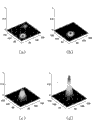
FIG. 6 shows a three-dimensional hysteresis window at τ according to an embodiment of the present invention1=5、τ1=40、τ1=60、τ1Schematic of the slicing results at 80;
FIG. 7 is a schematic illustration of a three-spectral amplitude spectral slice, a three-spectral phase spectral slice of an un-windowed function optimized seismic record, in accordance with an embodiment of the present invention;
FIG. 8 is a schematic diagram of a three-spectral amplitude spectral slice, a three-spectral phase spectral slice of a windowed function optimized seismic record in accordance with an embodiment of the present invention;
FIG. 9 is a schematic diagram of the mixed-phase wavelet extraction result before and after time shift according to an embodiment of the present invention;
FIG. 10 is a schematic diagram of the results of optimizing the trispectrum of a seismic record without optimizing the trispectrum of the seismic record and directly performing wavelet extraction;
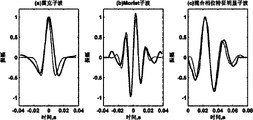
FIG. 11 is a waveform schematic of a Rake wavelet, an improved Morlet wavelet, and a wavelet with significant mixed phase features of an embodiment of the present invention;
FIG. 12 is a schematic illustration of a sequence of reflection coefficients utilized in numerical simulations of an embodiment of the present invention;
FIG. 13 is a diagram illustrating wavelet extraction results when the wavelet estimate length is equal to the real wavelet length in accordance with an embodiment of the present invention;
FIG. 14 is a diagram illustrating wavelet extraction results when the wavelet estimate length is less than the real wavelet length in accordance with an embodiment of the present invention;
FIG. 15 is a schematic diagram of wavelet extraction results when the wavelet estimate length is greater than the real wavelet length according to an embodiment of the present invention;
FIG. 16 is a graphical illustration of wavelet estimation results for a synthetic seismic record having a signal-to-noise ratio of 30dB in accordance with an embodiment of the present invention;
FIG. 17 is a graphical illustration of wavelet estimation results for a synthetic seismic record having a signal-to-noise ratio of 20dB in accordance with an embodiment of the present invention;
FIG. 18 is a graphical illustration of wavelet estimation results for a synthetic seismic record with a signal-to-noise ratio of 10dB in accordance with an embodiment of the present invention;
FIG. 19 is a schematic illustration of actual seismic data for a mixed-phase seismic wavelet estimation of an embodiment of the present invention;
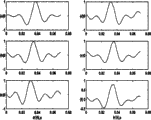
FIG. 20 is a schematic representation of wavelet estimation results from the 5 traces of seismic data of FIG. 19 extracted using a three-spectral method;
FIG. 21 is a schematic diagram of the spectrum of an average wavelet and its distribution of Z-transformed roots according to an embodiment of the present invention;
FIG. 22 is a configuration diagram of a mixed-phase seismic wavelet extraction apparatus according to an embodiment of the present invention;
fig. 23 is a configuration diagram of an extraction unit of the embodiment of the present invention.
Detailed Description
In order to make the objects, technical solutions and advantages of the present invention more apparent, embodiments of the present invention are described in further detail below with reference to the accompanying drawings. The exemplary embodiments and descriptions of the present invention are provided to explain the present invention, but not to limit the present invention.
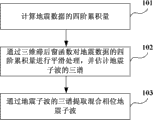
The embodiment of the invention provides a method for extracting mixed-phase seismic wavelets, which comprises the following steps of:
and 103, extracting the mixed-phase seismic wavelet through the three spectrums of the seismic wavelets.
In this embodiment, according to the convolution model, the seismic record x (t) can be regarded as the convolution of the seismic wavelet w (t) and the reflection coefficient sequence r (t), that is:
where w (t) is a seismic wavelet and r (t) is a sequence of reflection coefficients. For convenience of expression, equation (1) may be rewritten as a discrete form:
where the seismic record x (n) is observed in additive gaussian noise v (n), thus:
y(n)=x(n)+v(n) (3)
y (n) is the actual recorded seismic data, assuming the following conditions are met: (1) the sequence of reflection coefficients r (n) is a stationary, zero-mean, independent, identically distributed, non-gaussian process; (2) seismic wavelets are allowed to be non-minimum phase; (3) the noise v (n) is independent of the sequence of reflection coefficients r (n).
In step 101, a high-order spectrum is defined, and for a length N seismic signal x (N) without noise and with zero mean, its three spectra can be defined as:
Tx(ω1,ω2,ω3)=X(ω1)X(ω2)X(ω3)X*(ω1+ω2+ω3) (4)
where X (ω) is the fourier transform of the seismic signal X (n), the above equation may be further expressed as:
Tx(ω1,ω2,ω3)=|Tx(ω1,ω2,ω3)|exp[jψ(ω1,ω2,ω3)] (5)
seismic data y (n) containing additive noise v (n) according to definition and nature of cumulant, and fourth-order cumulant of the cumulant can be represented by the following formula:
C4y(τ1,τ2,τ3)=M4w(τ1,τ2,τ3)C4r(τ1,τ2,τ3)+C4v(τ1,τ2,τ3) (6)
wherein M is4wIs the fourth moment of the seismic wavelet, which is expressed in the form:
fourth order cumulant C due to noise4vTends to zero, so the fourth order cumulant of the observed data y (n) is the same as the fourth order cumulant of the noiseless seismic data x (n). When the reflection coefficient is non-Gaussian, independently distributed and the data approaches to infinite length, the fourth-order cumulant of the reflection coefficient is constant, and the kurtosis of the reflection coefficient is deltarExpressing, therefore, using the BBR formula for the cumulative amount, one can obtain:
C4y(τ1,τ2,τ3)=δrM4w(τ1,τ2,τ3) (8)
wherein, deltar=C4r(0,0,0)。
According to the formula (8), the three spectrums of the seismic record and the three spectrums of the seismic wavelets satisfy the following relations:
Ty(ω1,ω2,ω3)=δrW(ω1)W(ω2)W(ω3)W(-ω1-ω2-ω3) (9)
kurtosis delta of reflection coefficientrIs a scalar quantity, the presence of which does not affect the morphology of the seismic wavelet, but only the magnitude of the amplitude of the estimated wavelet. Therefore, the estimation of the seismic wavelet trispectrum can be obtained by calculating the trispectrum of the seismic record, and further the seismic wavelet can be estimated.
The model is used as an example to illustrate the seismic wavelets, reflection coefficients and high order statistical features of the synthetic seismic records in the convolution model.
FIG. 2 (a) is a diagram of a wavelet with obvious mixed-phase characteristics, which includes 40 sampling points; fig. 2 (b) is a schematic diagram of a reflection coefficient sequence satisfying a bernoulli-gaussian distribution, including 500 sampling points; FIG. 2 (c) is a schematic diagram of a synthetic seismic record.
In this embodiment, a fourth order cumulant slice of the reflection coefficient and a corresponding trispectral slice (τ)10) is shown in fig. 3. FIG. 3 (a) is a schematic diagram of a fourth order cumulant slice of the reflection coefficient sequence of FIG. 2 (b), wherein the input sequence has been de-averaged prior to calculating the cumulant; in FIG. 3, (b) and (c) are a reflection coefficient trispectrum amplitude spectrum slice and a phase spectrum slice (. tau.) respectively10).
As can be seen from (a) in fig. 3, the fourth-order cumulant of the reflection coefficient has a positive peak at the center, i.e., δr=C4r(0, 0, 0) > 0, indicating that the reflection coefficient sequence is super-Gaussian; as can be seen from (b) (c) of fig. 3, the three spectra of the reflection coefficients are spread over the entire space.
In this embodiment, the fourth order cumulant slice (τ) of the mixed-phase seismic wavelet10) see fig. 4 (a), fourth order cumulant slices (τ) of synthetic seismic recordings10) is shown in fig. 5 (a). As can be seen from (a) in fig. 5, the fourth-order cumulant of the synthetic recording is the result of integration of the wavelet and the cumulant of the reflection coefficient.
FIG. 4 (b) and FIG. 5 (b) are amplitude spectrum slices (τ) of seismic wavelets and synthetic recordings, respectively10), fig. 4 (c) and fig. 5 (c) are phase spectral slices (τ) of seismic wavelets and synthetic recordings, respectively10). The observation shows that the three spectrums of the synthetic record are still the result of the integration of the three spectrums of the reflection coefficient and the three spectrums of the seismic wavelets, the spatial spread of the three spectrums of the synthetic record and the three spectrums of the mixed phase wavelets is basically consistent, although the frequency bandwidth is changed, the main frequency is completely corresponding, and the result shows that the three spectrums of the synthetic record can accurately reflect the frequency spectrum of the wavelets.
In fact, the fourth order cumulant of noise in seismic recordings does not always satisfy the condition of being equal to zero, and at the same time, the fourth order cumulant of reflection coefficients is not a multi-dimensional spike at zero delay. Therefore, in the case of less seismic data or the case of seismic records containing additive gaussian noise, optimization processing must be performed on the spectrum estimation process to improve the accuracy of the tri-spectrum estimation.
When the step 102 is implemented, a three-dimensional hysteresis window function is constructed in a hysteresis domain to carry out smoothing processing on the fourth-order cumulant of the seismic record, and further improve the precision of the three-spectrum estimation.
The three-dimensional hysteresis window function can be constructed with a standard one-dimensional hysteresis window d (τ), where d (τ) should satisfy:
many one-dimensional hysteresis windows are available for the construction of three-dimensional hysteresis windows, such as Daniel windows, Hamming windows, Parzen windows, and Sasaki windows, among others. But is not limited thereto, and the specific embodiment may be determined according to actual circumstances.
The Sasaki window is a common hysteresis window, and the mathematical expression of the one-dimensional Sasaki window is as follows:
another commonly used one-dimensional hysteresis window is the Parzen window, which is expressed as:
researchers have found that the Parzen window works best among many one-dimensional window functions, and therefore, in this embodiment, a three-dimensional smoothing window function is constructed using the Parzen window. The construction of the three-dimensional lag window can be completed according to a general multi-dimensional lag window construction formula, and the general multi-dimensional window function construction formula is shown as formula (13):

in this example, the three-dimensional hysteresis window function is constructed as:

where d (τ) is the Parzen window.
In the present embodiment, the three-dimensional hysteresis window designed by using the above formula is shown in fig. 6, wherein (a), (b), (c) and (d) in fig. 6 are the three-dimensional hysteresis window at τ1=5,τ1=40,τ1=60,τ1Schematic of the slicing results at 80.
In this embodiment, in order to verify the effect of the three-dimensional Parzen window in the spectrum estimation process, the trispectrum of the synthetic seismic record (c) in fig. 2 is subjected to windowing smoothing, and the trispectrum (τ) of the synthetic seismic records before and after optimization10) are shown in fig. 7 and 8, respectively.
FIG. 7 (a) is a schematic illustration of a three-spectrum amplitude spectral slice of an un-windowed function optimized seismic record; FIG. 7 (b) is a schematic illustration of a three-spectral phase spectral slice of an un-windowed function optimized seismic recording; FIG. 8 (a) is a schematic illustration of a three-spectral amplitude spectral slice of a windowing function optimized seismic recording; FIG. 8 (b) is a schematic diagram of a three-spectral phase spectral slice of a windowing function optimized seismic recording.
Comparing the above figures, it is obvious that the three-spectrum amplitude spectrum in fig. 7A vibrates violently due to errors caused by the fact that the seismic data are of finite length and the reflection coefficient does not strictly meet non-gaussian distribution, and the amplitude spectrum is already obviously smoothed by the smoothing optimization processing of the three-dimensional lag window, so that the precision of spectrum estimation is improved.
Meanwhile, the observation of the three-spectrum phase spectrum slices before and after optimization can also find that the phase spectrum becomes smoother than before the optimization. Because the three-spectrum phase spectrum is a high-order statistic, and the influence factors on phase expression and calculation are large, the inherent information contained in the three-spectrum phase spectrum cannot be observed from the graph, and although the three-spectrum phase spectrum is represented in a messy way, the three-spectrum phase spectrum contains more information than the second-order statistic (autocorrelation and power spectrum).
When the step 103 is implemented, obtaining the mixed-phase seismic wavelet through the three spectrums of the seismic wavelets specifically includes: the phase spectrum of the seismic wavelet is recurred through the three-spectrum phase spectrum of the seismic wavelet through a Pan-Nikias formula; acquiring an amplitude spectrum of the seismic wavelet by a second-order statistical method; a mixed-phase seismic wavelet is generated from the phase spectrum and the amplitude spectrum of the seismic wavelet.
The following specifically describes a three-spectrum domain phase reconstruction algorithm, where three-spectrum phase reconstruction is to obtain three spectrums T of seismic waveletsw(ω1,ω2,ω3) In this case, the phase spectrum of the seismic wavelet is reconstructed.
According to the definition of the three spectra, the three spectra of seismic wavelets can be defined as:
Tw(ω1,ω2,ω3)=W(ω1)W(ω2)W(ω3)W*(ω1+ω2+ω3) (15)
the above formula can be further expressed as:

the spectrum of a seismic wavelet may be represented as:
W(ω)=|W(ω)|exp[jφ(ω)] (17)
according to the expressions (15), (16) and (17), the relation between the three-spectrum phase of the seismic wavelet and the phase of the seismic wavelet can be obtained:

using the basic equation above, a recursive continuous form can be obtained:
and discrete form:

wherein N is 2, 3.
The above equation (20) constitutes a MU recursion algorithm for solving the phase spectrum of the seismic wavelet in the three-spectral domain, and the initial values phi (0) of the algorithm are 0 and
wherein

Phi (N) can be based on Takes a value of 0 or pi.
By improving the above algorithm, Pan and Nikias propose a least square algorithm of three-spectral domain phase reconstruction, namely Pan-Nikias formula, and the method firstly defines:


thus, a system of linear equations is constructed:
s(2)=2φ(1)-φ(2)
.
.
.
combining equations (23) and (24), the following matrix equation can be obtained:
Bφ=s (25)
wherein
φ=[φ(1),φ(2),...,φ(N-1)]T (26)

In the formula (28), B is a square matrix of (N-1) × (N-1). Since B is non-singular, the phase spectrum of the seismic wavelet can be calculated by directly inverting the matrix:
φ=B-1s (29)
in this embodiment, the convolution model data shown in fig. 2 can be used to perform the mixed-phase wavelet extraction. FIG. 9 (a) is a diagram showing the result of mixed-phase wavelet extraction; since the phase spectrum calculation has a linear phase shift, time shift is required in the time domain, and the result after time shift is shown in fig. 9 (b). It was found that the extracted wavelets were very similar to the original wavelets, thus verifying the effectiveness of this approach.
In this embodiment, the three spectra of the seismic record are optimized by adding a multidimensional hysteresis window, and how much influence is exerted on the final seismic wavelet extraction result is verified by wavelet extraction. FIG. 10 (a) is a schematic diagram of the result of wavelet extraction directly without optimization of the trispectrum of the seismic record, and the similarity between the extraction result and the original wavelet is 0.85645; as shown in fig. 10 (b), after the optimization processing, the similarity between the wavelet extraction result and the original wavelet is improved to 0.93967, and the quality of the extracted wavelet at the front end and the tail end of the waveform is obviously improved, and is more similar to the real wavelet in waveform.
From the above embodiment, the method for estimating the mixed-phase seismic wavelet by using the three-spectrum method is based on the signal high-order statistical theory, the high-order spectrum is sensitive to the amplitude and phase information of the seismic wavelet, the traditional seismic wavelet minimum phase and reflection coefficient random white noise assumption is abandoned, and the second-order statistics is sensitive to the amplitude information, so that the phase and amplitude of the real wavelet can be extracted by calculating the high-order spectrum recorded by the seismic, and the purpose of recovering the mixed-phase wavelet is achieved.
In this embodiment, in order to test the effectiveness of the method for estimating the mixed phase wavelet by using the three spectra of the seismic record, a numerical simulation test may be performed by using three wavelets, namely, a rake wavelet, an improved Morlet wavelet, and a wavelet with obvious mixed phase characteristics, and the estimated wavelets and the original wavelets may be compared and analyzed.
First, three wavelets and reflection coefficient sequences used in numerical simulation are introduced.
(1) The Rake wavelet, the analytic expression of which is:
wherein f ispThe dominant frequency of the rake wavelet.
(2) Improved Morlet wavelets, the analytical expression of which is:
where m 2 pi f is the central angular frequency of the wavelet, i is the imaginary unit, c is a constant to control the Gaussian function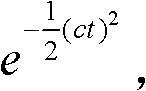 Thus modulating the wavelet function and controlling the wavelet shape, the formula (31) gives the analytic expression of complex Morlet wavelet, and only the real part is utilized in the simulation.
(3) Wavelets with distinct phase characteristics are mixed, which have no explicit analytical expression.
The waveforms of the above three wavelets are shown in FIG. 11, where the abscissa is the duration of the wavelet and the ordinate is the normalized amplitude.
As shown in fig. 11, (a) shows that the dominant frequency of the Rake wavelet is 40Hz, the sampling interval is 2ms, 38 sampling points and the duration is 76 ms; (b) the central angular frequency of the given Morlet wavelet is 4 pi, the sampling interval is 2ms, 40 sampling points and the duration is 80 ms; (c) the dominant frequency of the given mixed-phase wavelet is 50Hz, the sampling interval is 2ms, 40 sampling points and the duration is 80 ms.
The reflection coefficient sequence used in the numerical simulation is shown in fig. 12, and the reflection coefficient sequence follows a uniform distribution between [ -0.4, 0.4], with a sampling interval of 2ms, 1000 sampling points, and a duration of 2 s.
In this embodiment, a noiseless wavelet estimation test and analysis are also performed. In actual seismic data processing, since the duration of a seismic wavelet is unknown, a great deal of experimental work is often required to test the length of the seismic wavelet. Different wavelet estimation lengths have great influence on the extracted seismic wavelets and the seismic deconvolution processing in the later period.
Therefore, the wavelet extraction test is respectively carried out on the three wavelets introduced above by utilizing the synthetic seismic data under the noise-free condition, and the accuracy of the final wavelet estimation result is tested when the estimated wavelet length is different from the real wavelet length.
First, the accuracy of wavelet extraction is tested when the estimated length of the wavelet is equal to the real wavelet length. The estimated lengths of the Rake wavelet, the improved Morlet wavelet and the wavelet with obvious mixed phase characteristics are set as the real wavelet length, namely the estimated length parameters of the wavelet are set as 76ms, 80ms and 80 ms. The wavelet extraction result under this condition is shown in FIG. 13, in which the dotted line is the estimated wavelet and the solid line is the original wavelet. It can be found that when the estimated length of the wavelet is consistent with the real length, the result obtained by the method has better consistency with the original wavelet in morphology.
Next, when the estimated wavelet length is not equal to the real wavelet length, the simulation result is shown in fig. 14 and fig. 15, where the preset lengths of the three wavelets in fig. 14 are all smaller than the real wavelet length, and the estimated length parameters of the three wavelets are set to 60ms, 76ms, and 72ms, respectively. The estimated lengths of the three wavelets in FIG. 15 are all greater than the length of the real wavelet, and are set to 80ms, 84ms and 88ms, respectively, with the estimated wavelets in the dotted line and the original wavelets in the solid line.
Observation shows that the seismic wavelets obtained when the wavelet estimated length parameters are different from the real length of the wavelets can still keep overall consistency with the original wavelets on the waveform, and the influence of the wavelet estimated length parameters on the wavelet extraction result is not large.
In this embodiment, the mixed-phase seismic wavelet estimation using the higher-order spectrum of the seismic record has the advantage that it has strong capability of resisting gaussian noise, and can separate non-gaussian signals from gaussian background noise, in addition to solving the problem of non-minimum phase of the seismic wavelet.
However, since actual seismic data is of finite length and noise does not fully satisfy the gaussian distribution, the fourth-order cumulative amount of noise is not equal to zero in many cases. In order to verify the anti-noise performance of the method, Gaussian noises with different signal-to-noise ratios are added into the artificial synthesis record, and the influence of the noises on wavelet extraction is analyzed.
The results obtained at different noise levels are shown in fig. 16, 17 and 18, where the signal to noise ratios of the synthetic seismic recordings in the three plots are 30dB, 20dB and 10dB, respectively, with increasing noise levels. Wherein, the dotted line is the estimated wavelet, and the solid line is the original wavelet. In the wavelet extraction process, the lengths of the wavelet estimation parameters are all equal to the length of the real wavelet.
Analysis shows that when the noise intensity is low, the wavelet estimation result is more accurate, and the estimated wavelet and the original wavelet keep better consistency on the waveform; but as the noise level increases, the estimation results deteriorate. When the noise level is high, the waveform of the estimated wavelet is greatly changed compared with the original wavelet, and the estimation result is not credible. The higher the signal-to-noise ratio of the seismic data, the more accurate the wavelet estimation result will be.
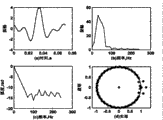
In this embodiment, fig. 19 is a schematic diagram of a part cut from actual seismic data of a certain area, including 80 seismic data, with a time sampling interval of 1ms and a recording length of 1 s. FIG. 20 shows wavelets extracted by a cepstrum from 5 traces of seismic data, where the corresponding trace numbers of (a) (b) (c) (d) (e) in FIG. 20 are 5, 15, 25, 35, 45, respectively, and (f) in FIG. 20 is the average wavelet of the extracted 5 mixed-phase wavelets. It can be found by observing the wavelet waveforms extracted from each trace in fig. 20 that the extracted wavelets from each trace have good consistency and stability.
FIG. 21 is a diagram of the spectrum of an average wavelet and its distribution of Z-transformed roots. As shown in FIG. 21, the roots of the wavelets are distributed inside and outside the unit circle, and the mixed phase characteristics are very obvious, so that the effectiveness of the high-order spectrum method in extracting the mixed phase seismic wavelets is verified.
According to the embodiment, the high-order spectrum estimation optimization algorithm in the digital signal processing field is introduced into the seismic exploration field, and the three-spectrum method mixed-phase seismic wavelet estimation technology is provided. The method has the advantages that the method has strong capability of resisting Gaussian noise and can separate non-Gaussian signals from noise of Gaussian background.
However, because the actual seismic data are of finite length and the noise does not completely satisfy the Gaussian distribution, the fourth-order cumulant of the noise is not equal to zero in many cases, but the influence of the noise on the wavelet estimation result can be reduced through the windowing function optimization, the accuracy of the wavelet estimation is improved, and the model seismic data and the actual data both have good effects, so that the technology has good application prospects.
An embodiment of the present invention further provides an apparatus for extracting a mixed-phase seismic wavelet, as shown in fig. 22, where the apparatus includes: a calculation unit 2201, a processing unit 2202, and an extraction unit 2203; wherein,
the calculation unit 2201 calculates fourth-order cumulants of the seismic data;
the processing unit 2202 smoothes the fourth-order cumulant of the seismic data through a three-dimensional hysteresis window function and estimates the three spectrums of the seismic wavelets;
the extraction unit 2203 extracts the mixed-phase seismic wavelet through the three spectra of the seismic wavelets.
Further, as shown in fig. 23, the extracting unit 2203 may specifically include: a recurrence unit 2301, an acquisition unit 2302, and a generation unit 2303; wherein,
a recursion unit 2301 recurs the phase spectrum of the seismic wavelet from the three-spectrum phase spectrum of the seismic wavelet through a Pan-Nikias formula;
the obtaining unit 2302 obtains an amplitude spectrum of the seismic wavelet through a second-order statistical method;
the generation unit 2303 generates a mixed-phase seismic wavelet from the phase spectrum and amplitude spectrum of the seismic wavelet.
Preferably, the three-dimensional hysteresis window function is constructed by a standard one-dimensional hysteresis window function. The one-dimensional hysteresis window function includes: daniel window, Hamming window, Parzen window, or Sasaki window.
Preferably, the three-dimensional hysteresis window function is:

The components of the apparatus of this embodiment are respectively used to implement the steps of the method of the foregoing embodiment, and since the steps have been described in detail in the method embodiment, no further description is given here.
According to the embodiment, the three spectrums of the seismic record are smoothed through the three-dimensional hysteresis window function, so that the precision of high-order spectrum estimation and the precision of wavelet estimation are improved.
It will be further appreciated by those of ordinary skill in the art that the elements and algorithm steps of the examples described in connection with the embodiments disclosed herein may be embodied in electronic hardware, computer software, or combinations of both, and that the components and steps of the examples have been described in a functional general in the foregoing description for the purpose of illustrating clearly the interchangeability of hardware and software. Whether such functionality is implemented as hardware or software depends upon the particular application and design constraints imposed on the implementation. Skilled artisans may implement the described functionality in varying ways for each particular application, but such implementation decisions should not be interpreted as causing a departure from the scope of the present invention.
The above-mentioned embodiments are intended to illustrate the objects, technical solutions and advantages of the present invention in further detail, and it should be understood that the above-mentioned embodiments are merely exemplary embodiments of the present invention, and are not intended to limit the scope of the present invention, and any modifications, equivalent substitutions, improvements and the like made within the spirit and principle of the present invention should be included in the scope of the present invention.
Claims (10)
1. A method of extracting mixed-phase seismic wavelets, the method comprising:
calculating fourth-order cumulant of the seismic data;
smoothing the fourth-order cumulant of the seismic data through a three-dimensional hysteresis window function, and estimating a trispectrum of the seismic wavelet;
and extracting the mixed-phase seismic wavelet through the three spectrums of the seismic wavelets.
2. The method of claim 1, wherein extracting the mixed-phase seismic wavelet from a three-spectrum of the seismic wavelet comprises:
deducing the phase spectrum of the seismic wavelet from the three-spectrum phase spectrum of the seismic wavelet through a Pan-Nikias formula;
acquiring an amplitude spectrum of the seismic wavelet by a second-order statistical method;
and generating the mixed-phase seismic wavelet according to the phase spectrum and the amplitude spectrum of the seismic wavelet.
3. The method of claim 1, wherein the three-dimensional hysteresis window function is constructed by a standard one-dimensional hysteresis window function.
4. The method of claim 3, wherein the one-dimensional hysteresis window function comprises: daniel window, Hamming window, Parzen window, or Sasaki window.
5. The method of claim 4, wherein the three-dimensional hysteresis window function is:

6. An apparatus for extracting mixed-phase seismic wavelets, the apparatus comprising:
the calculating unit is used for calculating the fourth-order cumulant of the seismic data;
the processing unit is used for smoothing the fourth-order cumulant of the seismic data through a three-dimensional hysteresis window function and estimating the three spectrums of the seismic wavelets;
and the extraction unit is used for extracting the mixed-phase seismic wavelet through the three spectrums of the seismic wavelets.
7. The apparatus according to claim 6, wherein the extracting unit specifically comprises:
the recurrence unit is used for recurrently deriving the phase spectrum of the seismic wavelet from the three-spectrum phase spectrum of the seismic wavelet through a Pan-Nikias formula;
the acquisition unit is used for acquiring an amplitude spectrum of the seismic wavelet by a second-order statistical method;
and the generating unit is used for generating the mixed-phase seismic wavelet according to the phase spectrum and the amplitude spectrum of the seismic wavelet.
8. The apparatus of claim 6, wherein the three-dimensional hysteresis window function is constructed by a standard one-dimensional hysteresis window function.
9. The apparatus of claim 8, wherein the one-dimensional hysteresis window function comprises: daniel window, Hamming window, Parzen window, or Sasaki window.
10. The apparatus of claim 9, wherein the three-dimensional hysteresis window function is:

Priority Applications (1)
| Application Number | Priority Date | Filing Date | Title |
|---|---|---|---|
| CN201010559956.7A CN102096101B (en) | 2010-11-24 | 2010-11-24 | Method and device for extracting hybrid-phase seismic wavelets |
Applications Claiming Priority (1)
| Application Number | Priority Date | Filing Date | Title |
|---|---|---|---|
| CN201010559956.7A CN102096101B (en) | 2010-11-24 | 2010-11-24 | Method and device for extracting hybrid-phase seismic wavelets |
Publications (2)
| Publication Number | Publication Date |
|---|---|
| CN102096101A true CN102096101A (en) | 2011-06-15 |
| CN102096101B CN102096101B (en) | 2014-11-12 |
Family
ID=44129269
Family Applications (1)
| Application Number | Title | Priority Date | Filing Date |
|---|---|---|---|
| CN201010559956.7A Active CN102096101B (en) | 2010-11-24 | 2010-11-24 | Method and device for extracting hybrid-phase seismic wavelets |
Country Status (1)
| Country | Link |
|---|---|
| CN (1) | CN102096101B (en) |
Cited By (9)
| Publication number | Priority date | Publication date | Assignee | Title |
|---|---|---|---|---|
| CN103278849A (en) * | 2013-05-24 | 2013-09-04 | 中国石油天然气集团公司 | Method and system for performing wavelet estimation on the basis of seismic data and logging information |
| CN104181589A (en) * | 2014-08-20 | 2014-12-03 | 中国石油集团川庆钻探工程有限公司地球物理勘探公司 | Nonlinear deconvolution method |
| CN104635263A (en) * | 2013-11-13 | 2015-05-20 | 中国石油化工股份有限公司 | Method for extracting mixed-phase seismic wavelets |
| CN103853930B (en) * | 2014-03-19 | 2017-01-18 | 中国科学院地质与地球物理研究所 | Method and device for numerical simulation of seismic vector wave field |
| CN107462923A (en) * | 2017-06-15 | 2017-12-12 | 中国石油化工股份有限公司 | The method of prestack domain estimation stratum Q values based on instantaneous seismic wavelet |
| CN109669213A (en) * | 2019-02-25 | 2019-04-23 | 中国石油化工股份有限公司 | Frequency dividing diffusing filter tomography intensifying method based on optimization Morlet small echo |
| CN110308483A (en) * | 2019-05-23 | 2019-10-08 | 中国石油天然气股份有限公司 | Method and device for calculating reflection coefficient based on multi-task Bayesian compressed sensing |
| CN112068202A (en) * | 2020-09-09 | 2020-12-11 | 中国矿业大学(北京) | High-precision time-varying wavelet extraction method and system |
| CN119439275A (en) * | 2024-10-23 | 2025-02-14 | 成都理工大学 | A fast extraction method of mixed-phase seismic wavelets |
Citations (5)
| Publication number | Priority date | Publication date | Assignee | Title |
|---|---|---|---|---|
| US5870691A (en) * | 1996-12-06 | 1999-02-09 | Amoco Corporation | Spectral decomposition for seismic interpretation |
| US6438069B1 (en) * | 1996-09-13 | 2002-08-20 | Pgs Data Processing, Inc. | Method for time lapse reservoir monitoring |
| CN101013161A (en) * | 2007-01-15 | 2007-08-08 | 中国石油大港油田勘探开发研究院 | Seismic exploration position calibration method based on prestack wave field simulation |
| CN101545984A (en) * | 2009-05-05 | 2009-09-30 | 中国石油集团西北地质研究所 | Seismic coherence algorithm based on wavelet transformation |
| CN101545983A (en) * | 2009-05-05 | 2009-09-30 | 中国石油集团西北地质研究所 | Multiattribute frequency division imaging method based on wavelet transformation |
-
2010
- 2010-11-24 CN CN201010559956.7A patent/CN102096101B/en active Active
Patent Citations (5)
| Publication number | Priority date | Publication date | Assignee | Title |
|---|---|---|---|---|
| US6438069B1 (en) * | 1996-09-13 | 2002-08-20 | Pgs Data Processing, Inc. | Method for time lapse reservoir monitoring |
| US5870691A (en) * | 1996-12-06 | 1999-02-09 | Amoco Corporation | Spectral decomposition for seismic interpretation |
| CN101013161A (en) * | 2007-01-15 | 2007-08-08 | 中国石油大港油田勘探开发研究院 | Seismic exploration position calibration method based on prestack wave field simulation |
| CN101545984A (en) * | 2009-05-05 | 2009-09-30 | 中国石油集团西北地质研究所 | Seismic coherence algorithm based on wavelet transformation |
| CN101545983A (en) * | 2009-05-05 | 2009-09-30 | 中国石油集团西北地质研究所 | Multiattribute frequency division imaging method based on wavelet transformation |
Non-Patent Citations (2)
| Title |
|---|
| 袁子龙 等: "三谱地震子波估计中三维窗函数的应用", 《大庆石油学院学报》, vol. 34, no. 1, 2 February 2010 (2010-02-02), pages 18 - 21 * |
| 霍志勇: "《中国石油大学硕士研究生学位论文》", 31 December 2007, article "基于高阶统计量和混沌遗传算法地震子波提取方法的研究", pages: 44 * |
Cited By (11)
| Publication number | Priority date | Publication date | Assignee | Title |
|---|---|---|---|---|
| CN103278849A (en) * | 2013-05-24 | 2013-09-04 | 中国石油天然气集团公司 | Method and system for performing wavelet estimation on the basis of seismic data and logging information |
| CN103278849B (en) * | 2013-05-24 | 2016-09-28 | 中国石油天然气集团公司 | The method and system of higher-order spectra are carried out based on seismic data and well-log information |
| CN104635263A (en) * | 2013-11-13 | 2015-05-20 | 中国石油化工股份有限公司 | Method for extracting mixed-phase seismic wavelets |
| CN103853930B (en) * | 2014-03-19 | 2017-01-18 | 中国科学院地质与地球物理研究所 | Method and device for numerical simulation of seismic vector wave field |
| CN104181589A (en) * | 2014-08-20 | 2014-12-03 | 中国石油集团川庆钻探工程有限公司地球物理勘探公司 | Nonlinear deconvolution method |
| CN107462923A (en) * | 2017-06-15 | 2017-12-12 | 中国石油化工股份有限公司 | The method of prestack domain estimation stratum Q values based on instantaneous seismic wavelet |
| CN109669213A (en) * | 2019-02-25 | 2019-04-23 | 中国石油化工股份有限公司 | Frequency dividing diffusing filter tomography intensifying method based on optimization Morlet small echo |
| CN110308483A (en) * | 2019-05-23 | 2019-10-08 | 中国石油天然气股份有限公司 | Method and device for calculating reflection coefficient based on multi-task Bayesian compressed sensing |
| CN112068202A (en) * | 2020-09-09 | 2020-12-11 | 中国矿业大学(北京) | High-precision time-varying wavelet extraction method and system |
| CN112068202B (en) * | 2020-09-09 | 2021-08-31 | 中国矿业大学(北京) | High-precision time-varying wavelet extraction method and system |
| CN119439275A (en) * | 2024-10-23 | 2025-02-14 | 成都理工大学 | A fast extraction method of mixed-phase seismic wavelets |
Also Published As
| Publication number | Publication date |
|---|---|
| CN102096101B (en) | 2014-11-12 |
Similar Documents
| Publication | Publication Date | Title |
|---|---|---|
| CN102096101A (en) | Method and device for extracting hybrid-phase seismic wavelets | |
| Walden et al. | Seismic wavelet estimation: a frequency domain solution to a geophysical noisy input-output problem | |
| Edgar et al. | How reliable is statistical wavelet estimation? | |
| Jian et al. | On the denoising method of prestack seismic data in wavelet domain | |
| Ansari et al. | Correction of highly noisy strong motion records using a modified wavelet de-noising method | |
| Sun et al. | Cross-correlation analysis and time delay estimation of a homologous micro-seismic signal based on the Hilbert–Huang transform | |
| CN107179550B (en) | A kind of seismic signal zero phase deconvolution method of data-driven | |
| CN107272063B (en) | Anisotropism depicting method based on high-resolution time frequency analysis and consistency metric | |
| CN102707314A (en) | Deconvolution method of multi-path double-spectral domain mixed phase wavelets | |
| CN115327632B (en) | Analysis Method of Dereflection Coefficient Short-Time Window Spectrum Attenuation | |
| CN111060961A (en) | Quality factor determination method, device and system based on multi-information constraint inversion | |
| Du et al. | Study on optical fiber gas-holdup meter signal denoising using improved threshold wavelet transform | |
| Sui et al. | A seismic coherency method using spectral amplitudes | |
| CN101354442A (en) | A hybrid phase deconvolution method and processing system for obtaining formation information | |
| CN119105073A (en) | High-resolution wave impedance inversion method and device based on spectrum fusion | |
| Liu et al. | Seismic quality factor estimation using frequency-dependent linear fitting | |
| CN106125134A (en) | Based on the geological data signal-noise ratio computation method of window during hyperbolic | |
| CN117250585A (en) | Parameter estimation method of multi-component chirp signal based on incomplete spectrum reconstruction | |
| CN108957529B (en) | Attribute-based wellless wavelet estimation method | |
| Zhao et al. | Inversion-based data-driven time-space domain random noise attenuation method | |
| CN112578438B (en) | A seismic wavelet extraction method and system | |
| CN111427080B (en) | Method for extracting space-variant generalized wavelets of seismic data | |
| Yu et al. | Phase estimation in bispectral domain based on conformal mapping and applications in seismic wavelet estimation | |
| Weishi et al. | Statistical denoising of signals in the S-transform domain | |
| Wang et al. | A predictive deconvolution method for non-white-noise reflectivity |
Legal Events
| Date | Code | Title | Description |
|---|---|---|---|
| C06 | Publication | ||
| PB01 | Publication | ||
| C10 | Entry into substantive examination | ||
| SE01 | Entry into force of request for substantive examination | ||
| C14 | Grant of patent or utility model | ||
| GR01 | Patent grant |