CN102014482A - Wireless communication system and method - Google Patents
Wireless communication system and method Download PDFInfo
- Publication number
- CN102014482A CN102014482A CN2009101730299A CN200910173029A CN102014482A CN 102014482 A CN102014482 A CN 102014482A CN 2009101730299 A CN2009101730299 A CN 2009101730299A CN 200910173029 A CN200910173029 A CN 200910173029A CN 102014482 A CN102014482 A CN 102014482A
- Authority
- CN
- China
- Prior art keywords
- terminal
- registration
- communication path
- mobile
- base station
- Prior art date
- Legal status (The legal status is an assumption and is not a legal conclusion. Google has not performed a legal analysis and makes no representation as to the accuracy of the status listed.)
- Pending
Links
Images




Classifications
-
- H—ELECTRICITY
- H04—ELECTRIC COMMUNICATION TECHNIQUE
- H04W—WIRELESS COMMUNICATION NETWORKS
- H04W60/00—Affiliation to network, e.g. registration; Terminating affiliation with the network, e.g. de-registration
- H04W60/005—Multiple registrations, e.g. multihoming
-
- H—ELECTRICITY
- H04—ELECTRIC COMMUNICATION TECHNIQUE
- H04W—WIRELESS COMMUNICATION NETWORKS
- H04W8/00—Network data management
- H04W8/22—Processing or transfer of terminal data, e.g. status or physical capabilities
-
- H—ELECTRICITY
- H04—ELECTRIC COMMUNICATION TECHNIQUE
- H04W—WIRELESS COMMUNICATION NETWORKS
- H04W8/00—Network data management
- H04W8/26—Network addressing or numbering for mobility support
-
- H—ELECTRICITY
- H04—ELECTRIC COMMUNICATION TECHNIQUE
- H04W—WIRELESS COMMUNICATION NETWORKS
- H04W80/00—Wireless network protocols or protocol adaptations to wireless operation
- H04W80/04—Network layer protocols, e.g. mobile IP [Internet Protocol]
Landscapes
- Engineering & Computer Science (AREA)
- Computer Networks & Wireless Communication (AREA)
- Signal Processing (AREA)
- Mobile Radio Communication Systems (AREA)
Abstract
本发明提供无线通信系统和方法,本发明的无线通信系统,用于将移动终端连接至公众网络,具有:基站,和移动终端无线连接;终端登记装置,和基站连接并对其进行控制,将表示移动终端通过该基站连接到了自己属下的内容的登记信息,登记到终端信息管理装置;及终端信息管理装置,与公众网络连接,并管理由终端登记装置登记的登记信息中的移动终端的地址信息;其特征在于:基站与控制基站的终端登记装置的组合,以及基站与控制基站的终端登记装置、与其他终端登记装置和终端信息管理装置中的一个或多个设备的组合,构成多个不同的通信路径,能够利用该多个不同的通信路径中的任意一个实现移动终端至公众网络的连接。
The present invention provides a wireless communication system and method. The wireless communication system of the present invention is used to connect a mobile terminal to a public network, and has: a base station wirelessly connected to the mobile terminal; The registration information indicating that the mobile terminal has connected to its own content through the base station is registered to the terminal information management device; and the terminal information management device is connected to the public network and manages the mobile terminal in the registration information registered by the terminal registration device Address information; it is characterized in that: the combination of the base station and the terminal registration device controlling the base station, and the combination of the base station and the terminal registration device controlling the base station, and one or more devices in other terminal registration devices and terminal information management devices, constitute multiple Any one of the multiple different communication paths can be used to realize the connection of the mobile terminal to the public network.
Description
技术领域technical field
本发明涉及在移动通信网络中为代理移动IPv6协议提供混合注册的无线通信系统和方法。尤其涉及在移动通信系统中,利用新的移动接入网关、本地移动代理来进行混合注册的方法,提供高效的支持灵活的数据路由的设备和方法,这里提到的移动通信网络为至少支持多基站联合服务的移动通信系统。The invention relates to a wireless communication system and method for providing hybrid registration for proxy mobile IPv6 protocol in a mobile communication network. In particular, in a mobile communication system, using a new mobile access gateway and a local mobile agent to perform mixed registration methods, providing efficient equipment and methods supporting flexible data routing, the mobile communication network mentioned here supports at least multiple A mobile communication system for joint service of base stations.
背景技术Background technique
代理移动IPv6技术(Proxy Mobile IPv6,PMIP6)是IETF标准组织新近制定的标准(RFC5213,参见:http://www.ietf.org/rfc/rfc5213.txt)。该技术也被称为网络主导的移动性管理技术。它可以提供与移动IPv6技术相类似的性能,但是它不需要对移动终端的网络协议栈进行大量的改造。也就是说,移动性管理的任务主要由网络侧设备完成。在代理移动IPv6网络中,不支持移动IP协议栈的普通终端可以接入异地网络,同时不用改变IP地址。与移动IPv6技术相比,代理移动IPv6的网络侧设备需要跟踪终端的移动,并触发相关的信令。根据IETF标准的设计要求,代理移动IPv6技术需要支持IPv6终端,IPv4终端,和IPv4/IPv6双栈终端。图2是典型的代理移动IPv6技术的信令流程图。这当中包括IPv6终端,IPv4终端,和IPv4/IPv6双栈终端。Proxy Mobile IPv6 technology (Proxy Mobile IPv6, PMIP6) is a standard recently formulated by the IETF standard organization (RFC5213, see: http://www.ietf.org/rfc/rfc5213.txt). This technology is also known as network-led mobility management technology. It can provide performance similar to that of the mobile IPv6 technology, but it does not require a large number of modifications to the network protocol stack of the mobile terminal. That is to say, the task of mobility management is mainly completed by the network side device. In the proxy mobile IPv6 network, ordinary terminals that do not support the mobile IP protocol stack can access the remote network without changing the IP address. Compared with the mobile IPv6 technology, the network-side device proxying the mobile IPv6 needs to track the movement of the terminal and trigger related signaling. According to the design requirements of the IETF standard, the proxy mobile IPv6 technology needs to support IPv6 terminals, IPv4 terminals, and IPv4/IPv6 dual-stack terminals. Fig. 2 is a typical signaling flowchart of proxy mobile IPv6 technology. These include IPv6 terminals, IPv4 terminals, and IPv4/IPv6 dual-stack terminals.
代理移动IPv6的网络侧实现主要由移动接入网关(MAG)和本地移动代理(LMA)组成。在实际的移动网络中,这两个设备的实现主要有以下几种情况:The network side implementation of proxy mobile IPv6 mainly consists of mobile access gateway (MAG) and local mobile agent (LMA). In the actual mobile network, the implementation of these two devices mainly has the following situations:
情况1(在LTE(Long Term Evolution:长期演进)网络中):移动接入网关在S-GW(Serving Gateway:服务网关)中,本地移动代理在P-GW(PDNGateway:分组数据网网关)中。Case 1 (in LTE (Long Term Evolution: Long Term Evolution) network): the mobile access gateway is in the S-GW (Serving Gateway: Serving Gateway), and the local mobile agent is in the P-GW (PDNGateway: Packet Data Network Gateway) .
情况2(在WiMAX(World Interoperability for Microwave Access)网络中):移动接入网关在ASN(Access Service Network:接入业务网络)中,本地移动代理在CSN(Connectivity Service Network:核心业务网络)中;还有一种情况是这两个设备都集成在ASN当中。(在WiMAX论坛中,如何使用代理移动IPv6还在进一步的探讨)。Case 2 (in a WiMAX (World Interoperability for Microwave Access) network): the mobile access gateway is in the ASN (Access Service Network: Access Service Network), and the local mobile agent is in the CSN (Connectivity Service Network: Core Service Network); In another case, both devices are integrated in the ASN. (In the WiMAX forum, how to use proxy mobile IPv6 is still under further discussion).
情况3(在未来移动通信网络中,由中国未来移动通信论坛(FutureForum)制定):移动接入网关在无线基站中,本地移动代理在网关中。Situation 3 (in the future mobile communication network, formulated by the China Future Mobile Communication Forum (FutureForum): the mobile access gateway is in the wireless base station, and the local mobile agent is in the gateway.
代理移动IPv6技术的应用,以如下假设为前提:The application of proxy mobile IPv6 technology is based on the following assumptions:
1)只有一个移动接入网关可以帮助终端的一条链接进行代理移动IPv6注册;1) Only one mobile access gateway can help a link of the terminal to perform proxy mobile IPv6 registration;
2)移动接入网关只可以注册在本地移动代理中;2) The mobile access gateway can only be registered in the local mobile agent;
3)移动接入网关只能在一跳内将来自终端的数据转发到外部网络中。3) The mobile access gateway can only forward the data from the terminal to the external network within one hop.
然而,在某些情况下,上述假设未必成立,例如:However, in some cases, the above assumption may not hold, for example:
情况1:在IMT-Advanced中的多基站联合服务的情况Case 1: Case of multi-base station joint service in IMT-Advanced
在IMT-Advanced中,一个移动终端可以与多个无线基站相连,增大无线接口的数据吞吐。多个无线基站可能由一个移动接入网关管理,也有可能被多个移动接入网关管理,这时,会发生多个移动接入网关对移动终端的一个链接进行服务的情况;In IMT-Advanced, a mobile terminal can be connected to multiple wireless base stations to increase the data throughput of the wireless interface. Multiple wireless base stations may be managed by one mobile access gateway, or may be managed by multiple mobile access gateways. At this time, multiple mobile access gateways will serve a link of the mobile terminal;
情况2:当前的服务移动接入网关可能使用其他移动接入网关作为中继服务;Case 2: The current serving mobile access gateway may use other mobile access gateways as relay services;
有时,当前的移动接入网关与本地移动代理之间的连接断掉,但是没有其他本地移动代理可以使用的时候,移动接入网关可以使用其他移动接入网关进行备用路由。Sometimes, the connection between the current mobile access gateway and the local mobile agent is broken, but when there is no other local mobile agent available, the mobile access gateway can use other mobile access gateways for backup routing.
情况3:当前移动接入网关失效或者负荷过大:Case 3: The current mobile access gateway fails or the load is too large:
在这种情况下,移动终端和本地移动代理可以使用其他备用移动接入网关进行备用服务;In this case, the mobile terminal and the local mobile agent can use other backup mobile access gateways for backup services;
情况4:移动接入网关可能想将移动终端的数据包直接路由至互联网:Case 4: The mobile access gateway may want to route the data packets of the mobile terminal directly to the Internet:
在目前的代理移动IPv6标准中,并不支持本地路由优化。但是移动网络运营商已经开始要求提供本地路由优化,在这当中本地移动代理并不参与数据包的路由。而且,当本地移动代理出现失效的时候,移动接入网关有可能选择将移动终端的数据包直接路由至互联网。In the current proxy mobile IPv6 standard, local route optimization is not supported. But mobile network operators have started asking for local route optimization, in which the local mobile agent does not participate in the routing of data packets. Moreover, when the local mobile agent fails, the mobile access gateway may choose to directly route the data packets of the mobile terminal to the Internet.
因此,目前的代理移动IPv6网络在上述情况1~4时无法提供很好的支持,所以需要新的解决方案来提升代理移动IPv6技术的性能。对应于上述4种情况,期望主要的提升包括以下几个方面:Therefore, the current proxy mobile IPv6 network cannot provide good support for the above situations 1-4, so a new solution is needed to improve the performance of the proxy mobile IPv6 technology. Corresponding to the above four situations, the main improvement is expected to include the following aspects:
1)允许多于一个的移动接入网关对一个移动终端的一条链接进行服务;1) Allow more than one mobile access gateway to serve one link of one mobile terminal;
2)移动接入网关可以再经由其他移动接入网关把数据包路由到本地移动代理;2) The mobile access gateway can then route the data packet to the local mobile agent via other mobile access gateways;
3)本地移动代理可以选择其他移动接入网关;3) The local mobile agent can select other mobile access gateways;
4)主服务移动接入网关可以通过其他移动接入网关将数据包发到移动终端;4) The main serving mobile access gateway can send data packets to the mobile terminal through other mobile access gateways;
现有技术中,对于代理移动IPv6技术的提升,已有如下技术:In the prior art, for the improvement of proxy mobile IPv6 technology, the following technologies are available:
在华为的专利WO2008/134980A1中,网络侧可以选择具体的移动性管理技术,然而当代理移动IPv6技术被选择的时候,只能支持最基本的功能,上述提升功能无法支持;In Huawei's patent WO2008/134980A1, the network side can choose a specific mobility management technology, but when the proxy mobile IPv6 technology is selected, it can only support the most basic functions, and the above-mentioned enhanced functions cannot be supported;
在日立的专利JP特开2006-114916中,可以为移动IPv6网络和NEMO(Network Mobility)网络选择家乡代理,但是这种方法无法应用在代理移动IPv6网络中;In Hitachi's patent JP 2006-114916, a home agent can be selected for a mobile IPv6 network and a NEMO (Network Mobility) network, but this method cannot be applied to an agent mobile IPv6 network;
在Intel的专利GB 2414903 A中,当前的转交地址(CoA)可以通过DNS方式来选择,但是最终只能选择一个移动接入网关的转交地址进行注册;In Intel's patent GB 2414903 A, the current care-of address (CoA) can be selected through DNS, but in the end only one care-of address of the mobile access gateway can be selected for registration;
在RFC 5231标准中也包括一种路由优化方案,但是该方案要求通信的对端与移动终端都在同一个代理移动IPv6网络域中,这种方案无法满足上述的提升要求;The RFC 5231 standard also includes a routing optimization scheme, but this scheme requires that the opposite end of the communication and the mobile terminal are in the same proxy mobile IPv6 network domain, which cannot meet the above-mentioned improvement requirements;
发明内容Contents of the invention
本发明鉴于上述情况而做出,其目的在于提供一种能够为代理移动IPv6协议提供混合注册的无线通信系统及方法。The present invention is made in view of the above situation, and its purpose is to provide a wireless communication system and method capable of providing mixed registration for proxy mobile IPv6 protocol.
根据本发明的一个方面,提供了一种无线通信系统,用于将移动终端连接至公众网络,该无线通信系统具有:基站,和所述移动终端无线连接;终端登记装置,和所述基站连接并对其进行控制,将表示所述移动终端通过该基站连接到了自己属下的内容的登记信息,登记到终端信息管理装置;及终端信息管理装置,与所述公众网络连接,并管理由所述终端登记装置登记的所述登记信息中的所述移动终端的地址信息;其特征在于:所述基站与控制所述基站的所述终端登记装置的组合,以及所述基站与控制所述基站的所述终端登记装置、与其他所述终端登记装置和所述终端信息管理装置中的一个或多个设备的组合,构成多个不同的通信路径,所述无线通信系统能够利用所述多个不同的通信路径中的任意一个,实现所述移动终端至所述公众网络的连接。According to one aspect of the present invention, a wireless communication system is provided for connecting a mobile terminal to a public network, the wireless communication system has: a base station wirelessly connected to the mobile terminal; a terminal registration device connected to the base station and control it, registering the registration information indicating that the mobile terminal has connected to its own content through the base station to the terminal information management device; and the terminal information management device is connected to the public network and manages the The address information of the mobile terminal in the registration information registered by the terminal registration device; it is characterized in that: the combination of the base station and the terminal registration device controlling the base station, and the base station and the base station controlling the base station The combination of the terminal registration device and one or more of the other terminal registration devices and the terminal information management device constitutes a plurality of different communication paths, and the wireless communication system can utilize the multiple Any one of different communication paths realizes the connection of the mobile terminal to the public network.
优选地,在上述无线通信系统中,所述终端登记装置,将包含与要利用的所述通信路径相关的其他终端登记装置的地址信息的路径信息,附加在所述登记信息中,登记到所述终端信息管理装置,所述终端信息管理装置在接收到附加了所述路径信息的所述登记信息后,根据所述路径信息中包含的所述地址信息,向该地址信息所表示的所述其他终端登记装置发送混合注册请求,在从所述其他终端登记装置收到混合注册应答后,向发送了所述登记信息的所述终端登记装置返回包含所述路径信息的登记应答,接收到该登记应答的所述终端登记装置,与所述其他终端登记装置协作,开始所述移动终端至所述公众网络的利用所述通信路径的连接。Preferably, in the wireless communication system described above, the terminal registration means adds path information including address information of other terminal registration means related to the communication path to be used to the registration information, and registers it in the registration information. The terminal information management device, after receiving the registration information to which the route information is added, according to the address information contained in the route information, the terminal information management device sends the address information indicated by the address information to the The other terminal registration device sends a mixed registration request, and after receiving a mixed registration response from the other terminal registration device, returns a registration response including the path information to the terminal registration device that sent the registration information, and receives the mixed registration response. The terminal registration means that registered the response starts the connection of the mobile terminal to the public network using the communication path in cooperation with the other terminal registration means.
优选地,在上述无线通信系统中,所述多个通信路径至少包括:第1通信路径、第2通信路径、第3通信路径和第4通信路径,所述第1通信路径为,从与所述移动终端进行无线通信的一个所述基站,经由控制该基站的一个所述终端登记装置,到达所述终端信息管理装置,进一步到达所述公众网络,所述第2通信路径为,从与所述移动终端进行无线通信的多个所述基站,经由分别控制各个所述基站的多个所述终端登记装置,到达所述终端信息管理装置,进一步到达所述公众网络,所述第3通信路径为,从与所述移动终端进行无线通信的一个所述基站,经由控制该基站的一个所述终端登记装置,再经由其他的所述终端登记装置,到达所述终端信息管理装置,进一步到达所述公众网络,及所述第4通信路径为,从与所述移动终端进行无线通信的一个所述基站,经由控制该基站的一个所述终端登记装置,直接到达所述公众网络而不经由所述终端信息管理装置。Preferably, in the above wireless communication system, the plurality of communication paths at least include: a first communication path, a second communication path, a third communication path, and a fourth communication path, and the first communication path is, from and to all One of the base stations where the mobile terminal performs wireless communication, via one of the terminal registration devices that control the base station, reaches the terminal information management device, and further reaches the public network, and the second communication path is from and to the The plurality of base stations through which the mobile terminal performs wireless communication reaches the terminal information management device via the plurality of terminal registration devices respectively controlling each of the base stations, and further reaches the public network, and the third communication path In order to reach the terminal information management device from one of the base stations wirelessly communicating with the mobile terminal via one of the terminal registration devices controlling the base station, and then via other terminal registration devices, and further reach the The public network, and the fourth communication path is to directly reach the public network from one of the base stations wirelessly communicating with the mobile terminal via one of the terminal registration devices controlling the base station without going through the said public network. The terminal information management device is described.
优选地,在上述无线通信系统中,所述第1通信路径、所述第2通信路径、所述第3通信路径之间能够相互切换,并且所述第1通信路径和所述第4通信路径能够相互切换。Preferably, in the above-mentioned wireless communication system, the first communication path, the second communication path, and the third communication path are mutually switchable, and the first communication path and the fourth communication path able to switch between each other.
优选地,在上述无线通信系统中,所述第1通信路径、所述第2通信路径、所述第3通信路径之间的相互切换,通过判断所述移动终端是否需要多基站联合服务来进行,在判断为不需要多基站联合服务时切换为所述第1通信路径,而在判断为需要多基站联合服务时,根据当前使用的终端登记装置与终端信息管理装置之间的连接状况,切换为所述第2通信路径或所述第3通信路径;所述第1通信路径和所述第4通信路径之间的相互切换通过基于本地的移动运营商指定的策略判断所述终端登记装置和所述终端信息管理装置是否支持直接路由来进行,在判断为支持直接路由且所述终端登记装置决定要进行直接路由时,切换为所述第4通信路径。Preferably, in the above wireless communication system, the mutual switching between the first communication path, the second communication path, and the third communication path is performed by judging whether the mobile terminal needs multi-base station joint service switching to the first communication path when it is judged that the multi-base station joint service is not required, and when it is judged that the multi-base station joint service is needed, switching according to the connection status between the currently used terminal registration device and the terminal information management device It is the second communication path or the third communication path; the mutual switching between the first communication path and the fourth communication path is based on the strategy specified by the local mobile operator to determine the terminal registration device and Whether the terminal information management device supports direct routing is determined, and when it is judged that direct routing is supported and the terminal registration device decides to perform direct routing, it switches to the fourth communication path.
优选地,该无线通信系统采用代理移动IPv6协议。Preferably, the wireless communication system adopts a proxy mobile IPv6 protocol.
根据本发明的另一方面,提供了一种无线通信系统中的无线通信方法,用于将移动终端连接至公众网络,该无线通信系统具有:基站、终端登记装置、终端信息管理装置,所述无线通信方法包括下列步骤:第一步骤,所述基站和所述移动终端进行无线连接;第二步骤,所述终端登记装置和所述基站连接并对其进行控制,并将表示所述移动终端通过该基站连接到了自己属下的内容的登记信息,登记到所述终端信息管理装置;及第三步骤,所述终端信息管理装置与所述公众网络连接,并管理由所述终端登记装置登记的所述登记信息中的所述移动终端的地址信息;其特征在于:所述基站与控制所述基站的所述终端登记装置的组合,以及所述基站与控制所述基站的所述终端登记装置、与其他所述终端登记装置和所述终端信息管理装置中的一个或多个设备的组合,构成多个不同的通信路径,所述无线通信方法能够利用所述多个不同的通信路径中的任意一个,实现所述移动终端至所述公众网络的连接。According to another aspect of the present invention, a wireless communication method in a wireless communication system is provided for connecting a mobile terminal to a public network. The wireless communication system has: a base station, a terminal registration device, and a terminal information management device. The wireless communication method includes the following steps: the first step, the base station and the mobile terminal are wirelessly connected; the second step, the terminal registration device is connected to the base station and controls it, and will represent the mobile terminal The base station is connected to the registration information of the content under its own, and registered to the terminal information management device; and the third step, the terminal information management device is connected to the public network, and manages the registration by the terminal registration device The address information of the mobile terminal in the registration information; it is characterized in that: the combination of the base station and the terminal registration device controlling the base station, and the registration of the base station and the terminal controlling the base station The combination of the device and one or more devices in the other terminal registration device and the terminal information management device constitutes a plurality of different communication paths, and the wireless communication method can use the plurality of different communication paths Any one of the mobile terminals to realize the connection of the mobile terminal to the public network.
根据本发明的无线通信系统和方法,能够实现代理移动IPv6协议下的混合注册,就是说,除了现有的基本的注册方式之外,还能够进行利用新的移动接入网关、本地移动代理的混合注册,由此可以提供高效的支持灵活的数据路由的设备和方法,具体而言,本发明可以实现的有益技术效果包括:According to the wireless communication system and method of the present invention, it is possible to realize the hybrid registration under the agent mobile IPv6 protocol, that is to say, in addition to the existing basic registration method, it is also possible to use the new mobile access gateway and local mobile agent. Hybrid registration, thereby providing efficient devices and methods supporting flexible data routing. Specifically, the beneficial technical effects that can be achieved by the present invention include:
1)可以支持代理移动IPv6的混合路由注册。移动接入网关和本地移动代理可以灵活的为移动终端选择数据包的路由;1) Can support proxy mobile IPv6 hybrid route registration. The mobile access gateway and the local mobile agent can flexibly select the route of the data packet for the mobile terminal;
2)可以使代理移动IPv6协议支持未来移动网络的要求;2) The proxy mobile IPv6 protocol can support the requirements of future mobile networks;
3)可以支持快速移动接入网关的故障恢复。3) It can support fault recovery of the fast mobile access gateway.
附图说明Description of drawings
图1是代理移动IPv6系统的网络架构;Fig. 1 is the network framework of proxy mobile IPv6 system;
图2是传统的代理移动IPv6的注册、切换、注销的典型流程;Fig. 2 is a typical flow of registration, handover and cancellation of traditional proxy mobile IPv6;
图3是根据本发明实施方式的无线通信系统实现的混合注册的不同模式的示例;FIG. 3 is an example of different modes of hybrid registration implemented by a wireless communication system according to an embodiment of the present invention;
图4是根据本发明实施方式的混合注册选项(HRO)的数据结构的典型内容;Fig. 4 is the typical content of the data structure of the hybrid registration option (HRO) according to the embodiment of the present invention;
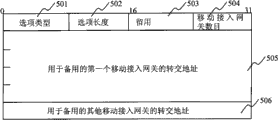
图5是根据本发明实施方式的备用移动接入网关选项(BMO)的数据结构的典型内容;Fig. 5 is the typical content of the data structure of standby mobile access gateway option (BMO) according to the embodiment of the present invention;
图6是根据本发明实施方式的混合注册请求消息头(HRI)的数据结构的典型内容;Fig. 6 is the typical content of the data structure of hybrid registration request header (HRI) according to the embodiment of the present invention;
图7是根据本发明实施方式的混合注册应答消息头(HRA)的数据结构的典型内容;Fig. 7 is the typical content of the data structure of the Hybrid Registration Response Header (HRA) according to the embodiment of the present invention;
图8是根据本发明实施方式的对应于图3的模式示例的混合注册的流程;FIG. 8 is a flowchart of hybrid registration corresponding to the mode example of FIG. 3 according to an embodiment of the present invention;
图9是根据本发明实施方式的移动终端接入代理移动IPv6网络时,决定注册模式的流程;FIG. 9 is a flow chart of determining a registration mode when a mobile terminal accesses a proxy mobile IPv6 network according to an embodiment of the present invention;
图10是根据本发明实施方式的不同模式之间互相转换的关系的示意图;FIG. 10 is a schematic diagram of the mutual conversion relationship between different modes according to an embodiment of the present invention;
图11是根据本发明实施方式的模式0到模式1转换的一个实例;FIG. 11 is an example of
图12是根据本发明实施方式的模式3到模式0转换的一个实例;FIG. 12 is an example of
图13是根据本发明实施方式的模式1到模式3转换的一个实例;FIG. 13 is an example of
图14是根据本发明实施方式的代理IPv6绑定表的典型内容。FIG. 14 is a typical content of a proxy IPv6 binding table according to an embodiment of the present invention.
具体实施方式Detailed ways
下面描述的实例是基于3GPP LTE-A通信系统。本发明可以被应用于其他支持多基站联合服务的无线通信网络。The example described below is based on the 3GPP LTE-A communication system. The present invention can be applied to other wireless communication networks supporting joint service of multiple base stations.
图1是代理移动IPv6系统的网络架构。移动终端(移动终端a~d)1,移动接入网关(移动接入网关a~d)(MAG:Mobile Access Gateway,在本发明中也可称为“终端登记装置”)2以及本地移动代理(本地移动代理a~c)(LMA:Local Mobile Agent,在本发明中也可称为“终端信息管理装置”)3是代理移动IPv6网络的主要节点。移动终端1通过移动接入网(由未图示的基站等实现)与移动接入网关2相连。移动接入网关2从本质上讲,相当于该移动网络的接入网关。本地移动代理从理论上讲应该在移动终端1的家乡网络中,在实际的部署中,也可以部署在外地网络的边缘。当进行数据路由服务时,移动终端1将上行数据包通过移动接入网络发送到移动接入网关2。在检查了数据包的有效性之后,移动接入网关2将上行数据包封装在IP数据隧道4中,送往本地移动代理3。IP数据隧道被解封装后,原始的上行数据包被送往目的地址所规定的网络节点。当下行数据包需要送达移动终端1的时候,最近一个路由节点首先将数据包送到本地移动代理3中负责代理移动IPv6服务的网络接口。之后,下行数据包被封装在IP隧道4中,送往移动接入网关2。在解封装之后,内部的原始下行数据包将被送达目的地址所规定的移动终端1中。在这个过程中,代理移动IPv6网络中的各个主要节点都可以是IPv4,或者IPv6,或者IPv4/IPv6双栈节点。Figure 1 is the network architecture of the proxy mobile IPv6 system. Mobile terminal (mobile terminal a~d) 1, mobile access gateway (mobile access gateway a~d) (MAG: Mobile Access Gateway, also can be referred to as " terminal registration device " in the present invention) 2 and local mobile agent (Local Mobile Agent a~c) (LMA: Local Mobile Agent, may also be referred to as "terminal information management device" in the present invention) 3 is the main node of the agent mobile IPv6 network. A
图2是传统的代理移动IPv6的注册、切换、注销的典型流程。这当中包括对于IPv6终端、IPv4终端、和IPv4/IPv6双栈终端的服务。代理移动IPv6网络的注册过程中,首先移动终端1与移动网络接入点建立底层连接,并连接到一个移动接入网关(移动接入网关a)2上(201)。底层连接的建立是通过移动通信基站(未示出,参见附图3)来完成的,移动终端1首先要和移动通信基站之间建立物理层和链路层的数据通路,然后通过上层的信令与移动接入网关2建立联系。关于底层连接的建立,可以采用本领域公知的方式,而且其也并非本发明的核心,因此在本说明书中省略具体的说明。Fig. 2 is a typical process of registration, handover and cancellation of traditional proxy mobile IPv6. These include services for IPv6 terminals, IPv4 terminals, and IPv4/IPv6 dual-stack terminals. In the registration process of the proxy mobile IPv6 network, firstly, the
在经过可能的底层认证(202)之后,移动接入网关2向本地移动代理3发送代理绑定更新消息(在本发明中也称为“登记信息”)(203),移动接入网关2所发送的该代理绑定更新消息中,至少包含表示移动终端1通过该移动接入网关2所控制的基站5连接到了移动接入网关2自己的属下的信息,由此也将移动接入网关2称为“终端登记装置”。After possible bottom layer authentication (202), the
本地移动代理3接收从移动接入网关2登记来的消息,并至少具有对登记信息中包含的表示移动终端1的地址的地址信息进行管理的功能,由此,本地移动代理3也被称为终端信息管理装置。The local
如果消息认证成功,则本地移动代理3将在本地建立绑定更新列表(关于绑定表的具体细节参见下文对图14的说明)和用于数据包转发的路由(204)。在这之后,本地移动代理3向移动接入网关2发送代理绑定确认消息(代理绑定应答)(205),移动接入网关2在收到这个消息后,向移动终端1发送接入成功的消息(206)。这样,移动终端1接入代理IPv6网络的典型注册过程就完成了。上下行的数据转发通路就建立起来了(207)。If the message authentication is successful, the local
在移动终端1需要切换到另一个移动接入网关(移动接入网关b)所管理的移动网络中的时候(208),它首先如上述201一样,连接到新的移动接入网关(移动接入网关b)(209)。之后,移动接入网关b与上述注册过程中移动接入网关a的动作同样地向本地移动代理3发送代理绑定更新消息(210)。如果该消息认证成功,本地移动代理3将更新之前的绑定更新列表和用于数据包转发的路由(211)。在这之后,本地移动代理3向移动接入网关b发送代理绑定确认消息(代理绑定应答)(212),移动接入网关b也在收到这个消息后,向移动终端1发送接入成功的消息(213)。这样,移动终端1在代理IPv6网络的典型切换过程就完成了。上下行的数据转发通路就改变到新的路由上了(214)。When
在典型的注销过程中,移动终端当前注册的移动接入网关(移动接入网关b)向本地移动代理3发送代理绑定更新(215),请求注销连接,本地移动代理3删除相关的绑定和路由(216)后,向移动接入网关b发送表示注销连接的代理绑定应答(217),完成注销过程。另外,本地移动代理3也可以向原(切换前的)移动接入网关2(移动接入网关a)发送绑定消除(binding revocation)消息,用以回收部分资源,在本图中没有示出这个可选流程。In a typical deregistration process, the mobile access gateway (MAG b) to which the mobile terminal is currently registered sends a proxy binding update (215) to the local
在上述流程中建立的数据路由(214和207)中,移动接入网关2和移动终端1之间的点到点数据通路是通过图2中未示出的移动通信基站(图3,基站5)来转发的。In the data routing (214 and 207) established in the above-mentioned process, the point-to-point data path between the
图3是根据本发明实施方式的无线通信系统实现的混合注册的不同模式的示例,图中示出了不同模式下网络的各节点之间形成的不同的通信路径。本发明的混合注册中,可以列举以下几种模式:Fig. 3 is an example of different modes of hybrid registration implemented by the wireless communication system according to an embodiment of the present invention, and the figure shows different communication paths formed between nodes of the network in different modes. In the mixed registration of the present invention, the following modes can be listed:
模式0:基本注册模式(图3中的实线箭头所示的通信路径,以下简称为“基本模式”)Mode 0: basic registration mode (the communication path shown by the solid arrow in Figure 3, hereinafter referred to as "basic mode")
移动终端从与其进行无线通信的一个基站(基站a),经由控制该基站的一个移动接入网关(移动接入网关a),到达本地移动代理3,进一步到达公众网络(在本实施方式中为因特网);The mobile terminal reaches the local
模式1:移动接入网关组注册模式(图3中的虚线箭头所示的通信路径,以下简称为“组模式”)Mode 1: Mobile Access Gateway group registration mode (the communication path shown by the dotted arrow in Figure 3, hereinafter referred to as "group mode")
移动终端从与其进行无线通信的多个基站(基站a、基站b),经由控制各个基站的多个移动接入网关(移动接入网关a、移动接入网关b),到达本地移动代理3,进一步到达因特网;The mobile terminal arrives at the local
模式2:直接移动接入网关注册模式(图3中的双线箭头所示的通信路径,以下简称为“直接模式”)Mode 2: direct mobile access gateway registration mode (the communication path shown by the double-line arrow in Figure 3, hereinafter referred to as "direct mode")
移动终端从与其进行无线通信的一个基站(基站c),经由控制该基站的移动接入网关(移动接入网关c),直接到达因特网,而不经由本地移动代理3;The mobile terminal directly reaches the Internet from a base station (base station c) that carries out wireless communication with it, via the mobile access gateway (mobile access gateway c) controlling the base station, without going through the local
模式3:中继移动接入网关注册模式(图3中的点虚线箭头所示的通信路径,以下简称为“中继模式”)Mode 3: Relay mobile access gateway registration mode (the communication path shown by the dotted arrow in Figure 3, hereinafter referred to as "relay mode")
移动终端从与其进行无线通信的一个基站(基站b),经由控制该基站的移动接入网关(移动接入网关b),再经由其他移动接入网关(移动接入网关a),到达本地移动代理3,进一步到达因特网。From a base station (base station b) with which the mobile terminal communicates wirelessly, via the mobile access gateway (mobile access gateway b) controlling the base station, and then via other mobile access gateways (mobile access gateway a), to the local
不同模式下各节点之间形成的不同的通信路径在图3中示出。上述模式0~模式3下各节点形成的通信路径当然只是示例,本发明可以以其他的模式及相应的通信路径来实现。例如在模式1(组模式)中,作为通过基站对移动终端提供服务的移动接入网关,当然也可以不是移动接入网关a和移动接入网关b的组合,而是移动接入网关a和移动接入网关c的组合,或者是移动接入网关a、移动接入网关b和移动接入网关c这三者的组合,只要是多于一个的移动接入网关对一个移动终端进行服务即可。另外,在模式3(中继模式)中,作为中继移动接入网关的当然也可以不是移动接入网关a而是移动接入网关c,或者也可以是由一个以上的移动接入网关来进行中继,只要是移动接入网关将数据包再经由其他移动接入网关路由到本地移动代理即可。Different communication paths formed between nodes in different modes are shown in FIG. 3 . Of course, the communication paths formed by the nodes in
在上述示例的基础上,本领域技术人员可以得知,通信路径的构成还包括其他各种可能,只要所构成的通信路径能够实现本发明的混合注册的目的,这些可能都落入本发明的保护范围之内。例如,构成不同通信路径的节点的组合可以包括:基站、控制基站的移动接入网关(终端登记装置)、再加上其他的任意数量的移动接入网关(终端登记装置)和/或任意数量的本地移动代理(终端信息管理装置)的组合,当然也可以如上述直接模式那样不经由本地移动代理,只由基站与控制基站的移动接入网关的组合来构成通信路径。总之,本发明的特征在于,基站与控制基站的终端登记装置的组合,以及基站与控制基站的终端登记装置、与其他终端登记装置和终端信息管理装置中的一个或多个设备的组合,构成多个不同的通信路径,本发明的无线通信系统能够利用这些多个不同的通信路径中的任意一个,实现移动终端至公众网络的连接。On the basis of the above examples, those skilled in the art can know that the composition of the communication path also includes various other possibilities, as long as the formed communication path can realize the purpose of the hybrid registration of the present invention, these possibilities all fall into the scope of the present invention. within the scope of protection. For example, the combination of nodes forming different communication paths may include: a base station, a mobile access gateway (terminal registration device) controlling the base station, plus any number of other mobile access gateways (terminal registration device) and/or any number of Of course, the combination of the local mobility agent (terminal information management device) of the above-mentioned direct mode can also constitute the communication path only by the combination of the base station and the mobile access gateway controlling the base station without passing through the local mobility agent. In summary, the present invention is characterized in that the combination of the base station and the terminal registration device controlling the base station, and the combination of the base station and the terminal registration device controlling the base station with one or more devices in other terminal registration devices and terminal information management devices constitute a There are multiple different communication paths, and the wireless communication system of the present invention can use any one of these multiple different communication paths to realize the connection of the mobile terminal to the public network.
图4到图7是本发明中新定义的代理移动IPv6的信令和信令扩展的格式。其使用方法在图3的流程图中已经给出。Figure 4 to Figure 7 are the signaling and signaling extension formats of the newly defined proxy mobile IPv6 in the present invention. Its usage method has been given in the flow chart of FIG. 3 .
图4是根据本发明实施方式的混合注册选项(HRO)的数据结构的典型内容。401为该选项的选项类型,这个要在IETF标准化的时候,由IANA具体分配。402为该选项的字节长度。403为注册的模式,典型的值有:0x00为模式0,0x01为模式1,0x02为模式2,0x03为模式3。厂商或者运营商可以根据需要扩展更多的模式。404为这个选项后续指明的移动接入网关的数目。405为用于混合注册的第一个移动接入网关的转交地址。406为该移动接入网关服务当前移动终端的数据百分比。407为其余用于混合注册的移动接入网关的转交地址和对应数据百分比。本发明中的混合注册选项被携带在代理移动IPv6的消息体中,用于指明混合注册的模式和相关的其他移动接入网关。图4中各项目上方的数字(0、16、31)表示的该项目在消息中的比特位置,图5~图7中也相同。FIG. 4 is a typical content of a data structure of a Hybrid Registration Option (HRO) according to an embodiment of the present invention. 401 is the option type of this option, which will be assigned by IANA when it is standardized by IETF. 402 is the byte length of this option. 403 is the registered mode, typical values are: 0x00 is
图5是根据本发明实施方式的备用移动接入网关选项(BMO)的数据结构的典型内容。501为该选项的选项类型,这个要在IETF标准化的时候,由IANA具体分配。502为该选项的字节长度。503暂时留用,作为以后的扩展功能使用。504为这个选项后续指明的移动接入网关的数目。505为用于备用的第一个移动接入网关的转交地址。506为用于备用的其他移动接入网关的转交地址。本发明中备用移动接入网关选项被携带在代理移动IPv6的消息体中,用于指明用于备用和失效恢复的其他移动接入网关。FIG. 5 is a typical content of a data structure of a backup mobile access gateway option (BMO) according to an embodiment of the present invention. 501 is the option type of this option, which will be assigned by IANA when it is standardized by IETF. 502 is the byte length of this option. 503 is temporarily reserved for future extended functions. 504 is the number of mobile access gateways specified subsequently by this option. 505 is the care-of address of the first mobile access gateway for backup. 506 is the care-of address of other mobile access gateways for backup. In the present invention, the standby mobile access gateway option is carried in the message body of the proxy mobile IPv6, and is used to indicate other mobile access gateways for standby and failure recovery.
图6是根据本发明实施方式的混合注册请求消息头(HRI)的数据结构的典型内容。601为该消息的序列号,用于标识一对消息交互的过程,防止重放攻击。D比特602用于表示该消息的方向,其设置示例可以是:“0”——表示本地移动代理到移动接入网关的方向;“1”——表示移动接入网关到本地移动代理的方向。P比特603为备用或者失效恢复的移动接入网关使用,其设置示例可以是:“0”——表示备用请求;“1”——表示备用开始。604暂时留用,作为以后的扩展功能使用。605为有效期,规定了对方回复混合注册应答消息的最长时限。606为其余的移动注册选项。本发明中混合注册请求消息主要用于本地移动代理通知其余与混合注册相关的移动接入网关。该消息也可用于在绑定更新不方便的情况下,移动接入网关通知本地移动代理与混合注册相关的内容。FIG. 6 is a typical content of a data structure of a hybrid registration request header (HRI) according to an embodiment of the present invention. 601 is the serial number of the message, which is used to identify a pair of message interaction process to prevent replay attacks. The
图7是根据本发明实施方式的混合注册应答消息头(HRA)的数据结构的典型内容。该消息是对混合注册请求消息的应答消息。701为状态值,表示了应答的状态,可以是成功,也可以是由于某种原因的失败。702暂时留用,作为以后的扩展功能使用。703为该消息的序列号,应该与对应的混合注册请求消息头中的序列号601相同,用于标识一对消息交互的过程,防止重放攻击。704为有效期,应该同混合注册应答消息的有效期605相同,防止重放攻击。705为其余的移动注册选项。FIG. 7 is a typical content of a data structure of a Hybrid Registration Response header (HRA) according to an embodiment of the present invention. This message is a reply message to the hybrid registration request message. 701 is a status value, indicating the status of the response, which can be success or failure for some reason. 702 is temporarily reserved for future expansion. 703 is the serial number of the message, which should be the same as the serial number 601 in the header of the corresponding hybrid registration request, and is used to identify a pair of message interaction process to prevent replay attacks. 704 is the validity period, which should be the same as the
图8是根据本发明实施方式的对应于图3的模式示例的混合注册的流程。在这里,与图2中相同,第一步(801)中,底层连接的建立是通过移动通信基站5(图3)来完成的,移动终端1首先要和移动通信基站5之间建立物理层和链路层的数据通路,然后通过上层的信令与移动接入网关2建立联系。FIG. 8 is a process of hybrid registration corresponding to the mode example in FIG. 3 according to an embodiment of the present invention. Here, same as in FIG. 2, in the first step (801), the establishment of the bottom layer connection is accomplished through the mobile communication base station 5 (FIG. 3), and the
对于图8中其他与图2的传统代理移动IPv6的典型流程相同的步骤(例如802的认证、804的更新绑定和路由等),在这里也不再具体说明。For other steps in FIG. 8 that are the same as the typical flow of the traditional proxy mobile IPv6 in FIG. 2 (such as authentication at 802, updating binding and routing at 804, etc.), no specific description will be given here.
如果支持本发明中的混合注册模式,在从移动接入网关a发至本地移动代理的代理绑定更新(在本发明中也称为“登记信息”)(803)中,需要加入图4和图5所示的HRO和BMO(在本发明中也称为“路径信息”)。其中,根据RFC5213,主转交地址(在这里是移动接入网关a的转交地址1)应当被放在该消息的源地址中,或者放在可选转交地址选项中。其余相关移动接入网关的转交地址放在HRO域中。在BMO中,包含备选移动接入网关的转交地址。在本地移动代理中,当接收到该绑定更新的时候,将检查HRO和BMO,并根据HRO和BMO中包含的相关地址信息,发送图6所示的HRI消息(在本发明中也称为“混合注册请求”)给相关的其他移动接入网关(805、806)。当从其他移动接入网关接收到表示成功的HRA消息(在本发明中也称为“混合注册应答”)(807、808)时,本地移动代理更新本地绑定列表,并发送代理绑定应答(在本发明中也称为“登记应答”)给主移动接入网关,收到代理绑定应答的主移动接入网关与HRO和BMO涉及的相关移动接入网关协作,就可以按照模式0、模式1、模式2、模式3等开始移动终端1连接至因特网的服务了。在图8中,给出各种模式以及移动接入网关失效时的路由方式的示例。其中,所建立的数据路由811、812、813、814和818中,移动接入网关2和移动终端1之间的点到点数据通路是通过移动通信基站5来转发的。If the mixed registration mode in the present invention is supported, in the proxy binding update (also referred to as "registration information" in the present invention) (803) sent from the mobile access gateway a to the local mobile agent, it is necessary to add the HRO and BMO shown in FIG. 5 (also referred to as "path information" in the present invention). Wherein, according to RFC5213, the primary care-of-address (here, the care-of-
本发明中提出的混合代理移动IPv6注册中,注册模式决定的方法在图9和图10中给出。图9是根据本发明实施方式的移动终端接入代理移动IPv6网络时,决定注册模式的流程。当移动终端通过接入网的认证,并连接到第一个移动接入网关(主移动接入网关)的时候(901),网络侧需要决定是否需要对该移动终端进行多基站联合服务(902);如果需要使用多基站联合服务(902:是),则主移动接入网关需要基于代理移动IPv6网络中的邻居信息,选出相关的移动接入网关(903)。如果它发现需要别的移动接入网关参与服务(904:是),则将进一步判断移动终端的移动状况(906)。如果,移动终端并不移动(906:否)(例如某些企业应用的固定终端,或者固定的笔记本电脑等等),则使用模式1(组模式)进行注册(909)。如果移动终端处于移动中(906:是),则在本地移动代理进行动态数据流的划分不是很准确,因此主服务移动接入网关与本地移动代理注册为本发明中提出的模式3(中继模式)(910)。如果主服务移动接入网关决定不适用多基站联合服务(902:否),则基于本地的移动运营商指定的策略,例如根据移动接入网关和本地移动代理是否支持直接路由(905),在不支持直接路由时(905:否)注册为模式0(基本模式)(907),在支持直接模式时(905:是)注册为模式2(直接模式)(908)。在决定了注册模式之后利用图8中示出的流程进行注册。In the hybrid proxy mobile IPv6 registration proposed in the present invention, the method for determining the registration mode is shown in FIG. 9 and FIG. 10 . FIG. 9 is a flowchart of determining a registration mode when a mobile terminal accesses a proxy mobile IPv6 network according to an embodiment of the present invention. When the mobile terminal passes the authentication of the access network and connects to the first mobile access gateway (primary mobile access gateway) (901), the network side needs to decide whether to perform multi-base station joint service for the mobile terminal (902 ); if it is necessary to use the joint service of multiple base stations (902: yes), the master mobile access gateway needs to select the relevant mobile access gateway based on the neighbor information in the proxy mobile IPv6 network (903). If it finds that other mobile access gateways need to participate in the service (904: yes), it will further judge the mobile status of the mobile terminal (906). If the mobile terminal does not move (906: No) (such as a fixed terminal for some enterprise applications, or a fixed notebook computer, etc.), use mode 1 (group mode) to register (909). If the mobile terminal is moving (906: yes), it is not very accurate to divide the dynamic data flow at the local mobile agent, so the main service mobile access gateway and the local mobile agent are registered as mode 3 (relay) proposed in the present invention. mode) (910). If the main serving mobile access gateway decides not to apply the joint service of multiple base stations (902: No), based on the policy specified by the local mobile operator, for example, according to whether the mobile access gateway and the local mobile agent support direct routing (905), in When direct routing is not supported (905: No), it is registered as mode 0 (basic mode) (907), and when direct mode is supported (905: Yes), it is registered as mode 2 (direct mode) (908). After the registration mode is determined, registration is performed using the flow shown in FIG. 8 .
上述图9示出的判断过程当然只是用于说明本发明实施方式的示例,本发明不限于此,不同模式之间的选择的判断标准或者判断顺序可以有其他的实施方式。例如,图9中在判断为需要多移动接入网关联合服务时(904:是),模式1和模式3之间的选择标准以移动终端是否移动(906)为例进行了说明,移动终端正在移动时由于本地移动代理进行动态数据流的划分将出现困难,因此可选择经过中继移动接入网关的中继模式(模式3)。但本发明当然不限于此,需要多移动接入网关联合服务时,模式1和模式3之间的选择也可以根据是否移动或者移动速度之外的标准来进行,例如在前文中提到的当前移动接入网关与本地移动代理之间的连接断掉、或者二者之间的连接因为其他状况而失效或负荷过大时,当然也可以在模式1和3中选择模式3以进行中继,总之,这种情况下模式1和模式3之间的选择以当前使用的移动接入网关与本地移动代理之间的连接状况而定,可以根据该连接状况来选择更为合理的方式。Of course, the judgment process shown in FIG. 9 is only an example for illustrating the implementation of the present invention, and the present invention is not limited thereto. There may be other implementations for the judgment criteria or judgment order of the selection between different modes. For example, in FIG. 9, when it is judged that the joint service of multiple mobile access gateways is required (904: Yes), the selection criteria between
图10是根据本发明实施方式的不同模式之间互相转换的关系的示意图。图中涉及的主要条件和对应的模式转换如下:Fig. 10 is a schematic diagram of the mutual conversion relationship between different modes according to an embodiment of the present invention. The main conditions involved in the figure and the corresponding mode transitions are as follows:
(101)模式0到模式2:当主移动接入网关决定需要采用直接移动接入网关注册模式的时候(可以根据本地策略决定或者本地移动代理失效来决定),可以通过再注册从基本模式转到直接模式。(101)
(102)模式2到模式0:主移动接入网关可以在合适的时候或者手工配置从直接模式退回到基本模式。(102)
(103)模式1到模式0:当多基站联合不必要的时候,主移动接入网关可以从组模式退回到基本模式。(103)
(104)模式0到模式1:当面向固定位置的移动终端的多基站联合服务需要进行的时候,主移动接入网关申请重注册为组模式。(104)
(105)模式3到模式0:当多基站联合不必要或者到本地移动代理的路由恢复的时候,主移动接入网关可以从中继模式退回到基本注册模式。(105)
(106)模式0到模式3:当面向位置移动的移动终端的多基站联合服务需要进行的时候,主移动接入网关申请重注册为中继模式。(106)
(107)模式0到模式3:当前本地移动代理失效或者过载的时候,主移动接入网关申请重注册为中继模式。(107)
(108)模式1到模式3:当多基站联合服务中,之前固定的移动终端进行移动的时候,可以从组模式转换到中继模式。(108)
(109)模式3到模式1:当多基站联合服务中,之前移动的移动终端不再进行移动的时候,可以从中继模式转换到组模式。(109)
由图10可知,在本发明的实施方式中,模式0、模式1、模式3之间可以进行互相转换,而模式2可以和模式0之间进行互相转换。It can be seen from FIG. 10 that in the embodiment of the present invention,
上述各模式之间的转换的条件当然也只是用于说明本发明实施方式的示例,本发明不限于此,在其他条件下也可以进行上述各个模式以及这些模式之外的其他模式之间的转换。Of course, the conditions for switching between the above modes are only examples for illustrating the implementation of the present invention, and the present invention is not limited thereto, and the conversion between the above modes and other modes other than these modes can also be performed under other conditions .
图11~13示出根据本发明实施方式的模式之间转换的具体流程,对于与图2及图8的相关步骤相同的步骤,省略具体说明。11 to 13 show the specific flow of switching between modes according to the embodiments of the present invention, and for the steps that are the same as those in FIG. 2 and FIG. 8 , detailed description is omitted.
图11是一个例子,表示服务于IPv6终端的模式0向模式1的转换流程。开始时,移动终端运行模式0,注册于移动接入网关a和本地移动代理3(1101)。当移动接入网关a(主移动接入网关)要与移动接入网关b和移动接入网关c进行联合服务时(1102),它将把PBU信息发送给本地移动代理(1103)。在PBU信令中,HRO是必需的,存放相关的移动接入网关的地址和以及所需要的模式。如RFC5213所要求的,主转交地址1(主移动接入网关a的地址)放在PBU信令的源地址中,应放在数据包源地址中。在接受本PBU的时候,本地移动代理将检查HRO,并发送HRI给相关的移动接入网关b和移动接入网关c(1105、1106)。如果成功的话,本地移动代理将收到来自移动接入网关b和移动接入网关c的HRA(1107、1108),并设立本地绑定表,发送成功的PBA到移动接入网关a(1109)。然后,这三个移动接入网关和本地移动代理可以启动组模式(模式1)。对于IPv6终端来说,这种情况下,只有IPv6-in-IPv6隧道是必要,用于在移动接入网关和本地移动代理之间进行数据传输。其中,数据路由1101和1110中,移动接入网关2和移动终端1之间的点到点数据通路是通过移动通信基站5来转发的。FIG. 11 is an example, showing the conversion process from
图12是一个例子,表示服务于IPv4终端的模式3向模式0的转换流程。开始时,移动终端运行模式3,注册在移动接入网关a、移动接入网关b、移动接入网关c和本地移动代理(1201)。当不再需要继续进行联合服务时(1202),移动接入网关a(主移动接入网关)将把PBU信息发送给本地移动代理3(1203)。在PBU信令中,HRO是必需的,存放所需要的模式(模式0)。如RFC5213所要求的,主转交地址1(主移动接入网关a的地址)放在PBU信令的源地址中,应放在数据包源地址中。在接受本PBU的时候,本地移动代理将检查HRO,并发送HRI给相关的移动接入网关b和移动接入网关c(1205、1206)。如果成功的话,本地移动代理将收到来自移动接入网关b和移动接入网关c的HRA(1207、1208),并更改本地绑定表,发送成功的PBA到移动接入网关a(1209)。然后,移动接入网关a和本地移动代理可以变为基本模式(模式0)。对于IPv4终端来说,这种情况下,只有IPv4-in-IPv6隧道是必要,用于在移动接入网关和本地移动代理之间进行数据传输。其中,数据路由1201和1210中,移动接入网关2和移动终端1之间的点到点数据通路是通过移动通信基站5来转发的。FIG. 12 is an example, showing the conversion process from
图13是一个例子,表示服务于IPv4/IPv6双栈终端的模式1向模式3的转换流程。开始时,移动终端运行模式1,注册于移动接入网关a、移动接入网关b、移动接入网关c和本地移动代理(1301)。当例如移动终端开始移动,需要转换为模式3时(1302),移动接入网关a(主移动接入网关)将把PBU信息发送给本地移动代理3(1303)。在PBU信令中,HRO是必需的,存放所需要的模式(模式3)和相关的移动接入网关(移动接入网关2和移动接入网关3)。如RFC5213所要求的,主转交地址1(主移动接入网关1的地址)放在PBU信令的源地址中,应放在数据包源地址中。在接受本PBU的时候,本地移动代理将检查HRO,并发送HRI给相关的移动接入网关b和移动接入网关c(1305、1306)。如果成功的话,本地移动代理将收到来自移动接入网关b和移动接入网关c的HRA(1307、1308),并更改本地绑定表,发送成功的PBA到移动接入网关a(1309)。然后,这三个移动接入网关和本地移动代理可以变为中继模式(模式3)。对于IPv4/IPv6双栈终端来说,这种情况下,IPv4-in-IPv6隧道和IPv6-in-IPv6都是必要,用于在移动接入网关和本地移动代理之间进行数据传输。其中,数据路由1301和1310中,移动接入网关2和移动终端1之间的点到点数据通路是通过移动通信基站5来转发的。Fig. 13 is an example, showing the conversion process from
根据本发明实施方式的绑定表的典型内容的例子在图14中示出。基本上,每一个绑定缓存表项(BCE)(图14中的每一行内容)必须具备RFC5213和RFC3775中规定的基本内容。除了基本BCE的内容,本发明增加了有关支持混合注册的内容,包括备份转交地址、混合注册转交地址、以及相关的流分配比例等。图14中绑定表1400的各表项包括:表示移动终端的ID的1401;现有技术中的传统绑定更新表项中的基本内容1402;表示注册模式是0(基本模式)、1(组模式)、2(直接模式)、3(中继模式)中的哪一个的注册模式1403;表示需要的转交地址的数目的1404;表示主移动接入网关的主转交地址及其所负责的流量百分比的1405和1406;表示用于混合注册的移动接入网关的转交地址及其所负责的流量百分比的1407和1408以及1409和1410;表示其他用于混合注册的移动接入网关的转交地址及其所负责的流量百分比的1411和1412。An example of typical content of a binding table according to an embodiment of the present invention is shown in FIG. 14 . Basically, each binding cache entry (BCE) (the content of each row in FIG. 14 ) must have the basic content specified in RFC5213 and RFC3775. In addition to the content of the basic BCE, the present invention adds content related to supporting mixed registration, including backup care-of address, mixed registration care-of address, and related flow allocation ratios. Each entry of the binding table 1400 in FIG. 14 includes: 1401 representing the ID of the mobile terminal; the
如上所述,根据本发明的无线通信系统和方法,能够实现代理移动IPv6协议下的混合注册,就是说,除了现有的基本的注册方式之外,还能够进行利用新的移动接入网关、本地移动代理的混合注册,由此可以提供高效的支持灵活的数据路由的设备和方法,提升无线通信系统的性能。As mentioned above, according to the wireless communication system and method of the present invention, hybrid registration under the agent mobile IPv6 protocol can be realized, that is to say, in addition to the existing basic registration method, new mobile access gateway, The mixed registration of the local mobile agent can thus provide an efficient device and method supporting flexible data routing, and improve the performance of the wireless communication system.
Claims (12)
Priority Applications (4)
| Application Number | Priority Date | Filing Date | Title |
|---|---|---|---|
| CN2009101730299A CN102014482A (en) | 2009-09-04 | 2009-09-04 | Wireless communication system and method |
| JP2010189547A JP2011061774A (en) | 2009-09-04 | 2010-08-26 | Radio communication system and method |
| EP10174908A EP2293607A3 (en) | 2009-09-04 | 2010-09-01 | Radio communication system and method |
| US12/875,675 US20110058517A1 (en) | 2009-09-04 | 2010-09-03 | Radio communication system and method |
Applications Claiming Priority (1)
| Application Number | Priority Date | Filing Date | Title |
|---|---|---|---|
| CN2009101730299A CN102014482A (en) | 2009-09-04 | 2009-09-04 | Wireless communication system and method |
Publications (1)
| Publication Number | Publication Date |
|---|---|
| CN102014482A true CN102014482A (en) | 2011-04-13 |
Family
ID=43332263
Family Applications (1)
| Application Number | Title | Priority Date | Filing Date |
|---|---|---|---|
| CN2009101730299A Pending CN102014482A (en) | 2009-09-04 | 2009-09-04 | Wireless communication system and method |
Country Status (4)
| Country | Link |
|---|---|
| US (1) | US20110058517A1 (en) |
| EP (1) | EP2293607A3 (en) |
| JP (1) | JP2011061774A (en) |
| CN (1) | CN102014482A (en) |
Families Citing this family (4)
| Publication number | Priority date | Publication date | Assignee | Title |
|---|---|---|---|---|
| US9344874B2 (en) | 2011-03-15 | 2016-05-17 | Nec Corporation | Mobility management system, mobility management method, access GW apparatus, mobility management control apparatus, and computer-readable medium |
| JP5790775B2 (en) * | 2011-11-11 | 2015-10-07 | 富士通株式会社 | Routing method and network transmission apparatus |
| WO2018061942A1 (en) * | 2016-09-30 | 2018-04-05 | 株式会社Nttドコモ | Gateway selection method and communication system |
| US20250141798A1 (en) * | 2023-10-26 | 2025-05-01 | Juniper Networks, Inc. | Providing a multiple dwelling unit fixed wireless access mechanism |
Family Cites Families (9)
| Publication number | Priority date | Publication date | Assignee | Title |
|---|---|---|---|---|
| US7415274B2 (en) * | 2003-02-19 | 2008-08-19 | Nokia Corporation | Routing procedure for a communication system |
| US7535878B2 (en) * | 2003-03-28 | 2009-05-19 | Intel Corporation | Method, apparatus and system for ensuring reliable access to a roaming mobile node |
| JP4425757B2 (en) | 2004-10-12 | 2010-03-03 | 株式会社日立製作所 | Mobile network system |
| US8144593B2 (en) * | 2006-11-17 | 2012-03-27 | Qualcomm Incorporated | Method and apparatus for efficient routing in communication networks |
| US9155118B2 (en) * | 2007-01-22 | 2015-10-06 | Qualcomm Incorporated | Multi-link support for network based mobility management systems |
| US8510455B2 (en) | 2007-04-30 | 2013-08-13 | Futurewei Technologies, Inc. | Method and apparatus for IP mobility management selection |
| US20080279151A1 (en) * | 2007-05-09 | 2008-11-13 | Nokia Siemens Networks Gmbh & Co. Kg | Method and device for processing data and communication system comprising such device |
| US8036176B2 (en) * | 2007-06-08 | 2011-10-11 | Toshiba America Research, Inc. | MIH pre-authentication |
| JPWO2009044539A1 (en) * | 2007-10-05 | 2011-02-03 | パナソニック株式会社 | Communication control method, network node, and mobile terminal |
-
2009
- 2009-09-04 CN CN2009101730299A patent/CN102014482A/en active Pending
-
2010
- 2010-08-26 JP JP2010189547A patent/JP2011061774A/en not_active Withdrawn
- 2010-09-01 EP EP10174908A patent/EP2293607A3/en not_active Withdrawn
- 2010-09-03 US US12/875,675 patent/US20110058517A1/en not_active Abandoned
Also Published As
| Publication number | Publication date |
|---|---|
| JP2011061774A (en) | 2011-03-24 |
| EP2293607A3 (en) | 2011-12-21 |
| US20110058517A1 (en) | 2011-03-10 |
| EP2293607A2 (en) | 2011-03-09 |
Similar Documents
| Publication | Publication Date | Title |
|---|---|---|
| CN101855922B (en) | Service Continuity of Local Grooming Services in Handover Situations | |
| JP5227960B2 (en) | Packet transfer for proxy mobile IP | |
| CN101822080B (en) | Technique for providing support for plurality of mobility management protocols | |
| US20120140719A1 (en) | Data transmission method, system and related network device based on proxy mobile (pm) ipv6 | |
| RU2530694C2 (en) | Method (versions) and system providing information exchange with mobile node | |
| KR20080008935A (en) | How to set IP address line in mobile communication system | |
| JPWO2009153943A1 (en) | Binding cache generation method, binding cache generation system, home agent, and mobile node | |
| CN101222752B (en) | Group node switching method, group node-based communication system, and group node controller | |
| JP2010537528A (en) | How to perform a handover | |
| JP4968328B2 (en) | Mobile IP communication system, mobile IP communication apparatus, and mobile IP communication method | |
| JP2015508945A (en) | COMMUNICATION SYSTEM, GATEWAY CONTROL DEVICE, ROUTE CONTROL DEVICE, COMMUNICATION METHOD, AND PROGRAM | |
| CN101656993A (en) | Access point switching method and device | |
| CN106686572B (en) | SDN-based mobility management method | |
| JP5655018B2 (en) | Handover processing system and gateway router | |
| CN102014482A (en) | Wireless communication system and method | |
| JP4875630B2 (en) | Method for releasing link after handover of multi-mode mobile terminal and mobile terminal | |
| WO2012058817A1 (en) | A method for providing a local traffic shortcut in a packet-oriented mobile communication network | |
| JP2012509044A (en) | Session continuity to support simultaneous terminal access | |
| WO2011020418A1 (en) | Connection activation method for changing serving gateway while terminal is converted to connection state and system thereof | |
| CN102882788A (en) | Message forwarding processing method, net element and system | |
| KR101084138B1 (en) | How to Perform Cross-MAP Handover | |
| CN102170628B (en) | Realize the Wimax system without fixed anchor point switching and changing method thereof | |
| JP3756781B2 (en) | Data relay apparatus and data relay method | |
| CN102378284A (en) | Inter-domain switching method of proxy mobile IPv6 (Internet Protocol Version 6) | |
| CN101621793B (en) | Quick switching method and device based on decentralization mobility management business architecture |
Legal Events
| Date | Code | Title | Description |
|---|---|---|---|
| C06 | Publication | ||
| PB01 | Publication | ||
| C10 | Entry into substantive examination | ||
| SE01 | Entry into force of request for substantive examination | ||
| C02 | Deemed withdrawal of patent application after publication (patent law 2001) | ||
| WD01 | Invention patent application deemed withdrawn after publication |
Application publication date: 20110413 |