CN101911563B - A method of data modulation adapted to selected modulation rotational angle - Google Patents
A method of data modulation adapted to selected modulation rotational angle Download PDFInfo
- Publication number
- CN101911563B CN101911563B CN200880122382.8A CN200880122382A CN101911563B CN 101911563 B CN101911563 B CN 101911563B CN 200880122382 A CN200880122382 A CN 200880122382A CN 101911563 B CN101911563 B CN 101911563B
- Authority
- CN
- China
- Prior art keywords
- rotation
- anglec
- data
- signal
- modulation
- Prior art date
- Legal status (The legal status is an assumption and is not a legal conclusion. Google has not performed a legal analysis and makes no representation as to the accuracy of the status listed.)
- Expired - Fee Related
Links
Images


Classifications
-
- H—ELECTRICITY
- H04—ELECTRIC COMMUNICATION TECHNIQUE
- H04L—TRANSMISSION OF DIGITAL INFORMATION, e.g. TELEGRAPHIC COMMUNICATION
- H04L1/00—Arrangements for detecting or preventing errors in the information received
- H04L1/0001—Systems modifying transmission characteristics according to link quality, e.g. power backoff
- H04L1/0036—Systems modifying transmission characteristics according to link quality, e.g. power backoff arrangements specific to the receiver
- H04L1/0038—Blind format detection
-
- H—ELECTRICITY
- H04—ELECTRIC COMMUNICATION TECHNIQUE
- H04L—TRANSMISSION OF DIGITAL INFORMATION, e.g. TELEGRAPHIC COMMUNICATION
- H04L27/00—Modulated-carrier systems
- H04L27/18—Phase-modulated carrier systems, i.e. using phase-shift keying
-
- H—ELECTRICITY
- H04—ELECTRIC COMMUNICATION TECHNIQUE
- H04L—TRANSMISSION OF DIGITAL INFORMATION, e.g. TELEGRAPHIC COMMUNICATION
- H04L27/00—Modulated-carrier systems
- H04L27/32—Carrier systems characterised by combinations of two or more of the types covered by groups H04L27/02, H04L27/10, H04L27/18 or H04L27/26
- H04L27/34—Amplitude- and phase-modulated carrier systems, e.g. quadrature-amplitude modulated carrier systems
- H04L27/3405—Modifications of the signal space to increase the efficiency of transmission, e.g. reduction of the bit error rate, bandwidth, or average power
- H04L27/3444—Modifications of the signal space to increase the efficiency of transmission, e.g. reduction of the bit error rate, bandwidth, or average power by applying a certain rotation to regular constellations
-
- H—ELECTRICITY
- H04—ELECTRIC COMMUNICATION TECHNIQUE
- H04L—TRANSMISSION OF DIGITAL INFORMATION, e.g. TELEGRAPHIC COMMUNICATION
- H04L5/00—Arrangements affording multiple use of the transmission path
- H04L5/02—Channels characterised by the type of signal
- H04L5/12—Channels characterised by the type of signal the signals being represented by different phase modulations of a single carrier
-
- H—ELECTRICITY
- H04—ELECTRIC COMMUNICATION TECHNIQUE
- H04L—TRANSMISSION OF DIGITAL INFORMATION, e.g. TELEGRAPHIC COMMUNICATION
- H04L1/00—Arrangements for detecting or preventing errors in the information received
- H04L1/0001—Systems modifying transmission characteristics according to link quality, e.g. power backoff
- H04L1/0002—Systems modifying transmission characteristics according to link quality, e.g. power backoff by adapting the transmission rate
- H04L1/0003—Systems modifying transmission characteristics according to link quality, e.g. power backoff by adapting the transmission rate by switching between different modulation schemes
Landscapes
- Engineering & Computer Science (AREA)
- Signal Processing (AREA)
- Computer Networks & Wireless Communication (AREA)
- Quality & Reliability (AREA)
- Mobile Radio Communication Systems (AREA)
- Transmitters (AREA)
- Digital Transmission Methods That Use Modulated Carrier Waves (AREA)
Abstract
Description
技术领域 technical field
本发明涉及数据信号调制的方法和设备。The present invention relates to methods and devices for data signal modulation.
背景技术 Background technique
全球移动通信系统(GSM)用户数目的快速增长增加了提高语音能力的需要。为了满足这一需要,移动网络运营商和通信设备制造商同意启动3GPP标准的新研究项目。该新研究项目已经命名为多用户复用单时隙(MUROS),并在GP-072027“WID on MUROS”中进行了描述。基本思想是允许两个用户在下行链路和上行链路中共享相同的载波频率和相同的时隙。存在MUROS的几个可能的技术实现。The rapid growth in the number of Global System for Mobile Communications (GSM) subscribers has increased the need for improved voice capabilities. To meet this need, mobile network operators and communication equipment manufacturers have agreed to initiate a new research project on 3GPP standards. This new research project has been named Multi-User Multiplexed Single Slot (MUROS) and is described in GP-072027 "WID on MUROS". The basic idea is to allow two users to share the same carrier frequency and the same time slot in downlink and uplink. Several possible technical implementations of MUROS exist.
然而,还是需要在GSM网络中实现MUROS的更有效的方法和系统。However, there remains a need for more efficient methods and systems for implementing MUROS in GSM networks.
发明内容 Contents of the invention
本发明的目的是改进同时(例如在向复用相同传输时隙的多个用户传送数据时)向多个用户的数据传送。It is an object of the invention to improve data transmission to multiple users at the same time (eg when transmitting data to multiple users multiplexing the same transmission time slot).
该目的和其它目的通过一种方法、调制器、发射机和接收机来实现,其中在相同的传输时隙内以相同的频率向至少两个接收移动站同时传送数据信号的调制器适于响应于共享相同传输时隙的至少两个移动站的能力,来选择用于调制给至少两个移动站的数据信号的调制(尤其是α-QPSK调制)的旋转角度。This and other objects are achieved by a method, modulator, transmitter and receiver, wherein the modulator for simultaneously transmitting a data signal to at least two receiving mobile stations at the same frequency in the same transmission time slot is adapted to respond to The rotation angle of the modulation (in particular α-QPSK modulation) used to modulate the data signals to at least two mobile stations is selected based on the ability of at least two mobile stations sharing the same transmission time slot.
包括这种调制器的移动电信系统可以同时在相同的时隙中向多个用户传送数据信号。接收机将相应地对所接收到的信号进行解调。A mobile telecommunication system comprising such a modulator can simultaneously transmit data signals to multiple users in the same time slot. The receiver will demodulate the received signal accordingly.
根据一个实施例,对调制后的数据信号的旋转角度进行盲检测。According to one embodiment, the angle of rotation of the modulated data signal is detected blindly.
根据一个实施例,调制后的信号的旋转角度是发信号通知的信息。According to one embodiment, the angle of rotation of the modulated signal is the signaled information.
在一个实施例中,旋转角度的选择基于所有接收移动站是否知道子信道的存在。In one embodiment, the selection of the rotation angle is based on whether all receiving mobile stations are aware of the existence of the sub-channel.
在一个实施例中,调制器适于采用α-QPSK调制方案。In one embodiment, the modulator is adapted to employ an alpha-QPSK modulation scheme.
本发明还延及适于根据上述原则传送数据的发射机、基站收发站和移动站。The invention also extends to transmitters, base transceiver stations and mobile stations adapted to transmit data according to the above principles.
调制增大了下行链路信道的覆盖。这也使利用更高发射机功率成为可能,因此可以帮助增加在干扰受限场景中的网络的能力。此外,由于新型的知道α-QPSK的移动站取代了传统的移动站,所以提高了整体网络性能。另外,可以将零交叉的出现最小化或者完全避免。这就降低了发射机和关联功率放大器的线性需求,因此降低了组件的成本。Modulation increases the coverage of the downlink channel. This also makes it possible to utilize higher transmitter power, thus helping to increase the capacity of networks in interference-limited scenarios. In addition, the overall network performance is improved as newer α-QPSK aware mobile stations replace legacy mobile stations. In addition, the occurrence of zero crossings can be minimized or completely avoided. This reduces the linearity requirements of the transmitter and associated power amplifier, thus reducing the cost of the components.
附图说明 Description of drawings
将结合附图,通过非限制性示例详细描述本发明,其中The invention will be described in detail by way of non-limiting examples with reference to the accompanying drawings, in which
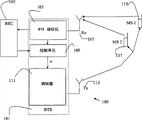
图1是示出移动电信网络的一部分的视图;Figure 1 is a diagram illustrating a part of a mobile telecommunications network;
图2是对数据信号进行调制的调制器的视图;Figure 2 is a view of a modulator modulating a data signal;
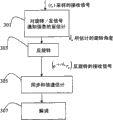
图3是示出当接收和解调数据信号时所执行步骤的流程图;FIG. 3 is a flowchart showing the steps performed when receiving and demodulating a data signal;
图4是根据不选择旋转角度的QPSK调制方案的传输特征的视图;以及Fig. 4 is the view according to the transmission characteristic of the QPSK modulation scheme that does not select rotation angle; And
图5是根据选择旋转角度的QPSK调制方案的传输特征的视图。Fig. 5 is a diagram of transmission characteristics according to a QPSK modulation scheme with selected rotation angles.
具体实施方式 Detailed ways
提供MUROS的一种方式是在下行链路信道中使用混合正交调制。将两个用户信号映射至基带信号的实部和虚部。这被称为I和Q子信道,并且在某些条件下,它们是正交的。通过在蜂窝无线电系统中使用四相移键控QPSK调制方案将传输的数据调制到在包括两个分支的共享信道上复用的两个移动站处,从而调制后信号的总能量在调制后的信号的两个分支之间不均等地分配,这样可以获得改进的无线电系统。One way to provide MUROS is to use hybrid quadrature modulation in the downlink channel. Map the two user signals to the real and imaginary parts of the baseband signal. These are called I and Q subchannels, and under certain conditions they are orthogonal. The transmitted data is modulated to two mobile stations multiplexed on a shared channel comprising two branches by using a quadrature phase shift keying QPSK modulation scheme in a cellular radio system such that the total energy of the modulated signal is in the range of An unequal distribution between the two branches of the signal results in an improved radio system.
因此,在下行链路信道中,采用参数化的、混合正交调制。在混合正交调制中,符号星座图是正交的,其中4个符号位于复平面的单位圆上。保持I和Q分支的正交性。然而,引入了互功率分支比参数α,允许信号的总能量在两个子信道之间不均等地分配。参数α可以随着时间的推移改变。例如,参数可以逐传输时隙发生改变。可以选择使得0≤α≤1。在α=1的情况下,功率均等地在I/Q分支之间分配,从而产生常规QPSK调制。当α=0时,将所有的信号功率给予分支之一,产生BPSK调制。α的其它值导致I和Q子信道之间总能量的中间分布。根据一个实施例,例如基于来自通过共享下行链路信道接收数据的一个或两个移动站的反馈,或使用固定的方案,可以适应性地选择参数α。Therefore, in the downlink channel, a parametric, hybrid quadrature modulation is employed. In hybrid quadrature modulation, the symbol constellation is orthogonal with 4 symbols lying on the unit circle in the complex plane. Orthogonality of the I and Q branches is maintained. However, a cross-power branch ratio parameter α is introduced, allowing the total energy of the signal to be unequally distributed between the two subchannels. The parameter α can change over time. For example, parameters may change from transmission slot to transmission slot. It can be chosen such that 0≤α≤1. In the case of α=1, the power is equally distributed between the I/Q branches, resulting in conventional QPSK modulation. When α=0, all signal power is given to one of the branches, resulting in BPSK modulation. Other values of α result in an intermediate distribution of the total energy between the I and Q subchannels. According to one embodiment, the parameter a may be adaptively selected, for example based on feedback from one or both mobile stations receiving data over a shared downlink channel, or using a fixed scheme.
使用混合正交调制的调制采用时变信号星座图,被称为自适应α-QPSK。通过实值参数α将正交星座图参数化。该参数定义信号星座图的形状,并且可以逐脉冲串(burst)发生变化。因此,理论上,可以存在不限定数目的不同的信号星座图。Modulation using hybrid quadrature modulation employs a time-varying signal constellation and is known as adaptive α-QPSK. The orthogonal constellation is parameterized by a real-valued parameter α. This parameter defines the shape of the signal constellation and can vary from burst to burst. Therefore, in theory, an unlimited number of different signal constellations can exist.
为了与传统GSM移动站具有向后兼容性,可以使用旋转π/2的信号星座图。For backward compatibility with legacy GSM mobile stations, a signal constellation rotated by π/2 may be used.
然而,另一方面,针对α的特定值,该旋转角度会产生具有诸如高PAR(峰均比)和零交叉之类的不期望的特性的基带信号。On the other hand, however, for certain values of α, this rotation angle can produce a baseband signal with undesirable characteristics such as high PAR (Peak-to-Average Ratio) and zero crossings.
例如,在α=1时,与常规QPSK相对应,旋转π/2产生所有可能旋转的最高PAR。换言之,π/2是该示例中所有旋转角度中最不期望的。典型的功率放大器有峰值限制,这对于具有高PAR的信号需要附加的功率补偿。因此,作为结果,当PAR增加时,基站收发站(BTS)的覆盖减少。For example, at α=1, a rotation of π/2 yields the highest PAR of all possible rotations, corresponding to conventional QPSK. In other words, π/2 is the least desirable of all rotation angles in this example. Typical power amplifiers are peak limited, which requires additional power compensation for signals with high PAR. Thus, as a result, when PAR increases, the coverage of the base transceiver station (BTS) decreases.
下行链路信道中的混合正交调制采用通过实值参数α参数化的时变信号星座图。它被称为α-QPSK,且包括4个复值符号(见以下表1)。α的值确定总信号功率如何在复值基带信号的实部和虚部之间分布。Hybrid quadrature modulation in the downlink channel employs a time-varying signal constellation parameterized by a real-valued parameter α. It is called α-QPSK and includes 4 complex-valued symbols (see Table 1 below). The value of α determines how the total signal power is distributed between the real and imaginary parts of the complex-valued baseband signal.

表1α-QPSK信号星座图Table 1 α-QPSK signal constellation diagram
针对α的每个值,选择产生低PAR的旋转角度rot(α)。如果在子信道的至少一个中,存在传统的移动站,那么BTS调制器将信号旋转π/2。然而,如果在两个子信道中存在两个知道α-QPSK的移动站(MS),那么BTS将信号旋转rot(α)。For each value of α, the rotation angle rot(α) is chosen that yields a low PAR. If in at least one of the subchannels there is a legacy mobile station, the BTS modulator rotates the signal by π/2. However, if there are two α-QPSK aware mobile stations (MS) in the two subchannels, the BTS rotates the signal by rot(α).
在接收机侧,移动站可以适于执行对旋转角度的预定集合中的旋转角度的盲检测。根据增强型GPRS通用分组无线业务EGPRS,已知旋转的盲检测可以具有可忽略的性能损失和低计算复杂度。On the receiver side, the mobile station may be adapted to perform blind detection of rotation angles from a predetermined set of rotation angles. According to Enhanced GPRS General Packet Radio Service EGPRS, blind detection of known rotations can have negligible performance loss and low computational complexity.
作为选择,BTS可以适于将旋转角度发信号通知移动站。适当选择的旋转角度可以产生更低的PAR。因而,通过使用预先定义的旋转角度,当两个知道α-QPSK的移动站共享相同的时隙时,性能将提高。结果,随着网络中知道α-QPSK的移动站比例的增加,下行链路覆盖也将增加。由于必要时可以使用更高的传输功率,所以更低的PAR也会对干扰受限小区有益。Alternatively, the BTS may be adapted to signal the angle of rotation to the mobile station. Properly chosen rotation angles can yield lower PAR. Thus, by using a predefined rotation angle, the performance will increase when two α-QPSK aware mobiles share the same time slot. As a result, as the proportion of mobile stations in the network that know α-QPSK increases, the downlink coverage will also increase. Lower PAR is also beneficial for interference limited cells since higher transmit power can be used if necessary.
在图1中,示出了示例性GSM系统100的一部分。系统100包括基站收发站(BTS)101。BTS 101与控制一个或多个基站收发站的基站控制器(BSC)103相连。BTS 101包括用于处理通过天线系统107接收的信号的接收单元105。BTS 101还包括用于确定α值的控制单元109。此外,BTS包括调制器111,用于使用MUROS,根据自适应α-QPSK调制方案来调制信号。调制后的信号通过发射机113以相同的时隙同时传送到移动站MS1和MS2。移动站MS1和MS2分别以115和117表示。In Fig. 1, a portion of an
调制器111使用的自适应α-QPSK调制使用包括表1中示出的4个符号的复星座图。参数
在图2中,更详细地示出了示例性调制器111和调制器111执行的不同步骤。调制器111包括初始调制器201和203,用于接收传送到两个不同移动站的数据序列并将其调制为二进制符号。调制器201和203耦合至映射单元205,该映射单元适于根据自适应α-QPSK星座图映射来自调制器201和203的信号。将在单元205中形成的自适应α-QPSK星座图序列转发至与脉冲成形过滤器209连接的旋转块207,该脉冲成形过滤器209与适于将要传送到接收机的复用的数据序列上混和放大至载波频率的单元211相连。In Fig. 2, an
调制器111可以从数据被传送所至的一个或两个移动站处接收反馈。响应于所接收到的反馈,调制器可以适于相应地调整α。例如,可以根据两个移动站距离基站收发站(BTS)的距离、所报告的接收到的信号质量(RXQUAL)、或者移动站(例如相同频率和相同时隙上的传统的或知道同信道存在的移动站)的能力来设置α。
根据一个实施例,如下实现旋转块207。According to one embodiment, the
针对某一正整数k,定义序列

因而,根据共享相同传输时隙的移动站的能力,调制器选择旋转角度。具体地,如果接收移动站115或117中的至少一个是传统移动站,那么就将旋转角度设置为π/2。如果,另一方面,共享相同时隙的所有/两个移动站都支持相同频率和相同时隙上的同信道(co-channel),那么就将旋转角度设置为θm。Thus, the modulator selects the angle of rotation according to the capabilities of the mobile stations sharing the same transmission slot. Specifically, if at least one of the receiving
如果αn-1≤α<αn,则通过将α-QPSK符号星座图旋转θn而产生的信号具有低PAR,可以以这样的方式选择角度θm,1≤m≤k。可选地,也可以以最小化或避免零交叉的出现的方式选择角度θm。The signal produced by rotating the α-QPSK symbol constellation by θ n has low PAR if α n-1 ≤ α < α n , the angle θ m can be chosen in such a way that 1 ≤ m ≤ k. Alternatively, the angle θ m may also be chosen in such a way as to minimize or avoid the occurrence of zero crossings.
知道α-QPSK的移动站必须对可能的旋转θ1,Λ,θk中的旋转角度rot(α)进行盲检测。例如,这种盲检测方案使用在EGPRS及其演进EGPRS2中。可以在实际上没有性能损失以及具有低计算复杂度的情况下实现旋转的盲检测。A mobile station knowing α-QPSK has to perform a blind detection of the rotation angle rot(α) among the possible rotations θ 1 , Λ, θ k . For example, this blind detection scheme is used in EGPRS and its evolution EGPRS2. Blind detection of rotations can be achieved with practically no performance loss and with low computational complexity.
在图3中示出了说明相同频率和相同时隙中知道同信道存在的移动站中执行的步骤。首先,在步骤301中,执行对所接收的数据信号的盲检测。然后,在步骤303中,基于步骤301中执行的盲检测,执行对所接收的信号的反旋转。因此,在步骤305中,执行同步和信道估计,然后在步骤307中进行解调。In FIG. 3 is shown illustrating the steps performed in a mobile station aware of the presence of a co-channel in the same frequency and in the same time slot. First, in
作为对当前使用的旋转角度的盲检测的可选项,BTS可以适于将旋转角度发信号通知移动站,并在步骤301中接收该信号。在这种情况下,如果以附加信令为代价,则旋转的盲检测不是必须的。As an alternative to blind detection of the currently used rotation angle, the BTS may be adapted to signal the rotation angle to the mobile station and receive this signal in
以下给出示出不同旋转角度的使用的精心设计的示例。分别在表2和表3中对(αk)和(θm)进行定义。A well-designed example showing the use of different rotation angles is given below. (α k ) and (θ m ) are defined in Table 2 and Table 3, respectively.

表2Table 2
表3table 3
在该实例中,仅使用了两个不同的旋转角度。因此,MS中对旋转的盲检测的实现具有非常低的复杂度。可选地,旋转角度的信令仅会需要1比特。In this example, only two different rotation angles are used. Therefore, the implementation of blind detection of rotation in MS has very low complexity. Alternatively, signaling of the rotation angle would only require 1 bit.
当图1中的控制单元109仅允许值α=1时,可以使用于此描述的调制器,以及等式(1)中的函数rot(α),其中(αk)和(θm)正如上述表2和表3中所定义。When the
图4和图5示出了针对使用常规QPSK传输的同信道的调制方案的益处。在图4中,旋转角度是π/2,以及在图5中旋转角度是π/4。在两种情况下,α设置为1,即,使用QPSK调制。Figures 4 and 5 illustrate the benefits of a modulation scheme for a co-channel using conventional QPSK transmission. In FIG. 4, the rotation angle is π/2, and in FIG. 5, the rotation angle is π/4. In both cases α is set to 1, ie QPSK modulation is used.
图5中示出的信号具有比图4中示出的信号低的PAR,并且没有零交叉,这当然是一个主要的优势。The signal shown in Figure 5 has a lower PAR than the signal shown in Figure 4 and has no zero crossings, which is of course a major advantage.
因此,适于根据共享相同传输时隙的至少两个移动站的能力来选择给相同传输时隙中的至少两个移动站的旋转角度的调制器的使用不限于混合α-QPSK调制方案,但是可以用于任何QPSK调制方案和其它调制方案。Thus, the use of modulators adapted to select the angle of rotation for at least two mobile stations in the same transmission slot according to their capabilities to share the same transmission slot is not limited to hybrid α-QPSK modulation schemes, but Can be used for any QPSK modulation scheme and other modulation schemes.
使用于此描述的调制增加了下行链路信道中的覆盖。此外,由于传统移动站被支持知道两个子信道存在的更新的移动站(尤其是知道α-QPSK的移动站)所取代,整体网络性能得以提高。Using the modulation described herein increases coverage in the downlink channel. Furthermore, overall network performance is improved as legacy mobiles are replaced by newer mobiles (especially α-QPSK aware) that support knowing the existence of two sub-channels.
可以最小化或完全避免零交叉的出现。这降低了发射机及其关联功率放大器的线性需求,从而降低了组件的成本。The occurrence of zero crossings can be minimized or completely avoided. This reduces the linearity requirements of the transmitter and its associated power amplifier, reducing component cost.
Claims (17)
- One kind in identical transmission time slot with identical frequency method at least two mobile radio station data signal in cochannel, wherein in response to the ability of sharing described at least two mobile radio stations of identical traffic time slot, the same anglec of rotation of selecting the same self adaptation α-QPSK modulation for the data-signal of at least two mobile radio stations described in going to is modulated, the described anglec of rotation arranges according to the currency of α.
- 2. the method for claim 1 is wherein selected the described anglec of rotation from the anglec of rotation of predetermined number.
- 3. method as claimed in claim 1 or 2, wherein the described anglec of rotation is set to the value corresponding with low peak average ratio.
- 4. method as claimed in claim 1 or 2, wherein the described anglec of rotation is set to the value corresponding or corresponding with the minimal amount of zero crossing with zero crossing number under predetermined value.
- One kind in mobile radio station for receiving the method for using the data-signal after same self adaptation α-QPSK modulation, data-signal after wherein said modulation be included in same frequency and identical time slot, transmit, for the data after the modulation of at least two mobile radio stations, wherein the identical anglec of rotation of the data-signal after described modulation is carried out to blind Detecting (301), described in the described anglec of rotation is in response to, the ability of at least two mobile radio stations is selected, and arranges according to the currency of α.
- 6. method as claimed in claim 5, wherein the blind Detecting based on the described anglec of rotation, carries out (303) despining to received signal.
- One kind in mobile radio station for receiving the method for using the data-signal after same self adaptation α-QPSK modulation, data-signal after wherein said modulation be included in same frequency and identical time slot, transmit, for the data after the modulation of at least two mobile radio stations, wherein receive the information of (301) signaling, described information comprises the identical anglec of rotation of the data-signal after described modulation, described in the described anglec of rotation is in response to, the ability of at least two mobile radio stations is selected, and arranges according to the currency of α.
- 8. method as claimed in claim 7, wherein the information based on described signaling, carries out (303) despining to received signal.
- One kind in identical transmission time slot with identical frequency in cochannel simultaneously to the transmitter (111) of at least two mobile radio station data signal, described transmitter comprises module (207), for the ability in response to sharing described at least two mobile radio stations of identical traffic time slot, the same anglec of rotation of selecting the same self adaptation α-QPSK modulation for the data-signal of at least two mobile radio stations described in going to is modulated, the described anglec of rotation arranges according to the currency of α.
- 10. transmitter as claimed in claim 9, wherein for selecting the module of the described anglec of rotation to be suitable for selecting the described anglec of rotation from the anglec of rotation of predetermined number.
- 11. transmitters as described in claim 9 or 10, wherein for selecting the module of the described anglec of rotation to be suitable for the described anglec of rotation to be chosen as the value corresponding with low peak average ratio.
- 12. transmitters as described in claim 9 or 10, wherein for selecting the module of the described anglec of rotation to be suitable for the described anglec of rotation to be chosen as the value corresponding or corresponding with the minimal amount of zero crossing with zero crossing number under predetermined value.
- 13. 1 kinds comprise according to the base station transmitting-receiving station (101) of the transmitter (111) described in arbitrary claim in claim 9-12.
- 14. 1 kinds in mobile radio station for receiving the equipment that uses the data-signal after same self adaptation α-QPSK modulation, data-signal after wherein said modulation be included in same frequency and identical time slot, transmit, for the data after the modulation of at least two mobile radio stations, described equipment comprises: the device that the identical anglec of rotation of the data-signal after described modulation is carried out to blind Detecting, described in the described anglec of rotation is in response to, the ability of at least two mobile radio stations is selected, and arranges according to the currency of α.
- 15. equipment as claimed in claim 14, wherein said equipment also comprises: based on described blind Detecting, carry out the despun device to received signal.
- 16. 1 kinds in mobile radio station for receiving the equipment that uses the data-signal after same self adaptation α-QPSK modulation, data-signal after wherein said modulation be included in same frequency and identical time slot, transmit, for the data after the modulation of at least two mobile radio stations, wherein said equipment comprises: the device that receives the information of signaling, described information comprises the identical anglec of rotation of the data-signal after described modulation, described in the described anglec of rotation is in response to, the ability of at least two mobile radio stations is selected, and arranges according to the currency of α.
- 17. equipment as claimed in claim 16, wherein said equipment also comprises: the despun device of the information and executing based on described signaling to received signal.
Applications Claiming Priority (5)
| Application Number | Priority Date | Filing Date | Title |
|---|---|---|---|
| PCT/SE2008/050116 WO2009096832A1 (en) | 2008-01-30 | 2008-01-30 | Timeslot sharing using unbalanced qpsk modulation |
| SEPCT/SE2008/050116 | 2008-01-30 | ||
| US3923608P | 2008-03-25 | 2008-03-25 | |
| US61/039,236 | 2008-03-25 | ||
| PCT/SE2008/051291 WO2009096842A1 (en) | 2008-01-30 | 2008-11-11 | A method of data modulation adapted to selected modulation rotational angle |
Publications (2)
| Publication Number | Publication Date |
|---|---|
| CN101911563A CN101911563A (en) | 2010-12-08 |
| CN101911563B true CN101911563B (en) | 2014-03-26 |
Family
ID=40404519
Family Applications (1)
| Application Number | Title | Priority Date | Filing Date |
|---|---|---|---|
| CN200880122382.8A Expired - Fee Related CN101911563B (en) | 2008-01-30 | 2008-11-11 | A method of data modulation adapted to selected modulation rotational angle |
Country Status (4)
| Country | Link |
|---|---|
| US (1) | US8848683B2 (en) |
| EP (1) | EP2235866B1 (en) |
| CN (1) | CN101911563B (en) |
| WO (1) | WO2009096842A1 (en) |
Families Citing this family (5)
| Publication number | Priority date | Publication date | Assignee | Title |
|---|---|---|---|---|
| KR101552266B1 (en) * | 2009-04-07 | 2015-09-11 | 삼성전자주식회사 | Receiver method for cancellating interference thereof and transmitter for the same |
| US9100963B2 (en) | 2010-10-07 | 2015-08-04 | Telefonaktiebolaget L M Ericsson (Publ) | Time slot sharing in TDMA communication system |
| EP2645654B1 (en) * | 2012-03-30 | 2016-08-03 | Imec | Method and Device for Demodulating Rotated Constellations |
| US8781037B2 (en) | 2012-06-27 | 2014-07-15 | Intel Mobile Communications GmbH | Method and a processing unit for processing a data signal |
| WO2014201634A1 (en) * | 2013-06-19 | 2014-12-24 | 华为技术有限公司 | Method and device for transmitting and receiving data |
Citations (2)
| Publication number | Priority date | Publication date | Assignee | Title |
|---|---|---|---|---|
| CN1466345A (en) * | 2002-06-06 | 2004-01-07 | 华为技术有限公司 | Digital Carrier Recovery Device |
| US6683921B1 (en) * | 1997-12-17 | 2004-01-27 | Kabushiki Kaisha Kenwood | Received-signal absolute phasing apparatus of receiver |
Family Cites Families (48)
| Publication number | Priority date | Publication date | Assignee | Title |
|---|---|---|---|---|
| US4736170A (en) * | 1987-05-08 | 1988-04-05 | Rca Corporation | Unbalanced quarternary PSK modulator using unbalanced quadrature coupler |
| US5469112A (en) * | 1994-08-15 | 1995-11-21 | Motorola, Inc. | Communication device with zero-crossing demodulator |
| US5512526A (en) * | 1995-01-06 | 1996-04-30 | Akzo Nobel N.V. | Heavy metal removal system containing clay, quaternary ammonium compound, and mercaptan |
| US6396804B2 (en) * | 1996-05-28 | 2002-05-28 | Qualcomm Incorporated | High data rate CDMA wireless communication system |
| US6185259B1 (en) * | 1996-06-12 | 2001-02-06 | Ericsson Inc. | Transmitter/receiver for GMSK and offset-QAM |
| US6826169B1 (en) * | 1996-12-20 | 2004-11-30 | Fujitsu Limited | Code multiplexing transmitting apparatus |
| EP0905091A1 (en) * | 1997-09-29 | 1999-03-31 | Nalco Chemical Company | Starch/cationic polymer combinations as coagulants for the mining industry |
| US6884842B2 (en) * | 1997-10-14 | 2005-04-26 | Alnis Biosciences, Inc. | Molecular compounds having complementary surfaces to targets |
| JPH11122312A (en) | 1997-10-17 | 1999-04-30 | Mitsubishi Electric Corp | Digital modulator, digital demodulator, digital modulator / demodulator, digital modulation method, digital demodulation method, and digital modulation / demodulation method |
| US6243413B1 (en) * | 1998-04-03 | 2001-06-05 | International Business Machines Corporation | Modular home-networking communication system and method using disparate communication channels |
| US6385233B1 (en) * | 1999-03-16 | 2002-05-07 | Trw Inc. | Unbalanced quadrature waveform |
| US6452959B1 (en) * | 1999-05-28 | 2002-09-17 | Dot Wireless, Inc. | Method of and apparatus for generating data sequences for use in communications |
| US6214237B1 (en) * | 1999-06-29 | 2001-04-10 | Allegheny Energy Supply Company | Process for treating solid waste slurry |
| US6728228B1 (en) * | 1999-09-20 | 2004-04-27 | Telefonaktiebolaget Lm Ericsson (Publ) | Method and system for measuring and reporting received signal strength |
| US6421398B1 (en) * | 2000-01-28 | 2002-07-16 | Alcatel Canada Inc. | Modulation system having on-line IQ calibration |
| US6961392B2 (en) * | 2000-08-18 | 2005-11-01 | Texas Instruments Incorporated | Joint equalization and decoding using a search-based decoding algorithm |
| US6882679B2 (en) * | 2000-12-29 | 2005-04-19 | Sharp Laboratories Of America, Inc. | Extension of wireless local area network communication system to accommodate higher data rates while preserving legacy receiver features |
| US6544425B2 (en) * | 2001-02-16 | 2003-04-08 | Slurry Cleanup Environmental, Inc. | Method for dewatering coal tailings and slurries and removing contaminants therefrom |
| US6865235B2 (en) * | 2001-03-06 | 2005-03-08 | Agere Systems Inc. | Multi-protocol modulator |
| ES2188370B1 (en) * | 2001-05-21 | 2004-10-16 | Diseño De Sistemas En Silicio, S.A. | PROCEDURE FOR SYNCHRONIZATION IN THE DESCENDING LINK OF MULTIPLE USERS IN A POINT TO MULTIPOINT TRANSMISSION SYSTEM WITH OFDM MODULATION. |
| JP3443113B2 (en) * | 2001-08-08 | 2003-09-02 | 松下電器産業株式会社 | Wireless receiving apparatus and wireless receiving method |
| US7346126B2 (en) * | 2001-11-28 | 2008-03-18 | Telefonaktiebolaget L M Ericsson (Publ) | Method and apparatus for channel estimation using plural channels |
| WO2003058844A1 (en) * | 2002-01-09 | 2003-07-17 | Nokia Corporation | Method and receiver for reception of a composite signal |
| US7239667B2 (en) * | 2003-03-18 | 2007-07-03 | Broadcom Corporation | 8 PSK rotationally invariant turbo trellis coded modulation without parallel transitions |
| CN100518030C (en) | 2003-03-21 | 2009-07-22 | 乐金电子(中国)研究开发中心有限公司 | Multi-user detection method and device and adaptive filtering detection device therein |
| US20050002471A1 (en) * | 2003-07-01 | 2005-01-06 | Tramm Fred C. | Systems and methods for low loss monolithic extremely high frequency quadra-phase shift key modulation |
| US7324605B2 (en) * | 2004-01-12 | 2008-01-29 | Intel Corporation | High-throughput multicarrier communication systems and methods for exchanging channel state information |
| US8107560B2 (en) * | 2004-05-12 | 2012-01-31 | Telefonaktiebolaget Lm Ericsson (Publ) | Method and apparatus for interference cancellation in communication signal processing |
| US20100157833A1 (en) * | 2005-03-10 | 2010-06-24 | Qualcomm Incorporated | Methods and systems for improved timing acquisition for varying channel conditions |
| JP4557859B2 (en) * | 2005-09-29 | 2010-10-06 | 富士通株式会社 | Frequency division multiplexing transmission / reception apparatus and transmission / reception method |
| JP4734337B2 (en) | 2005-09-30 | 2011-07-27 | パナソニック株式会社 | Radio transmission apparatus and radio transmission method |
| CN101005303B (en) | 2006-01-18 | 2010-08-18 | 中兴通讯股份有限公司 | Transmitting Antenna Selection and Adaptive Modulation Method for OFDM Systems |
| JP4777440B2 (en) * | 2006-02-01 | 2011-09-21 | エルジー エレクトロニクス インコーポレイティド | Data transmission / reception method using superposition modulation in wireless communication system |
| WO2007136211A2 (en) * | 2006-05-19 | 2007-11-29 | Lg Electronics Inc. | A method of utilizing and manipulating wireless resources for efficient and effective wireless communication |
| FI20065866A0 (en) * | 2006-12-29 | 2006-12-29 | Nokia Corp | Data transmission in a mobile communication system |
| AR067299A1 (en) * | 2007-03-30 | 2009-10-07 | Interdigital Tech Corp | POWER CONTROL IN ORTOGONAL SUB-CHANNELS IN WIRELESS COMMUNICATIONS SYSTEMS |
| KR20100027118A (en) * | 2007-05-04 | 2010-03-10 | 에이저 시스템즈 인크 | Method for selecting constellation rotation angles for quasi-orthogonal space-time and space-frequency block coding |
| IL203785A (en) * | 2007-09-12 | 2014-07-31 | Qualcomm Inc | Capacity increasing devices and methods for wireless communication |
| KR20100077053A (en) * | 2007-10-24 | 2010-07-06 | 인터디지탈 패튼 홀딩스, 인크 | Voice and data communication services using orthogonal sub-channels |
| TW200931852A (en) * | 2007-12-06 | 2009-07-16 | Interdigital Patent Holdings | Method and apparatus for signaling in multiple user one-slot operation in wireless communication |
| CN101933300A (en) | 2008-01-30 | 2010-12-29 | 艾利森电话股份有限公司 | Slot Sharing Using Unbalanced QPSK Modulation |
| US8353641B2 (en) * | 2008-02-14 | 2013-01-15 | Soane Energy, Llc | Systems and methods for removing finely dispersed particulate matter from a fluid stream |
| US8349188B2 (en) * | 2008-02-14 | 2013-01-08 | Soane Mining, Llc | Systems and methods for removing finely dispersed particulate matter from a fluid stream |
| US8945394B2 (en) * | 2009-10-27 | 2015-02-03 | Soane Energy, Llc | System, methods, processes and apparatus for removing finely dispersed particulate matter from a fluid stream |
| CA2777987A1 (en) * | 2009-10-20 | 2011-04-28 | Soane Mining, Llc | Systems and methods for recovering fine particles from fluid suspensions for combustion |
| US8894863B2 (en) * | 2010-03-17 | 2014-11-25 | Soane Mining, Llc | Method for removal of dissolved metal cations from aqueous fluids using modified capture polymers and tether polymer bearing anchor particles |
| US8187470B2 (en) * | 2010-03-19 | 2012-05-29 | Arr-Maz Custom Chemicals, Inc. | Enhancing sedimentation performance of clarifiers/thickeners |
| US20120029120A1 (en) * | 2010-07-27 | 2012-02-02 | Soane Mining, Llc | Systems and methods for removing finely dispersed particulate matter from a fluid stream |
-
2008
- 2008-11-11 WO PCT/SE2008/051291 patent/WO2009096842A1/en not_active Ceased
- 2008-11-11 CN CN200880122382.8A patent/CN101911563B/en not_active Expired - Fee Related
- 2008-11-11 US US12/864,307 patent/US8848683B2/en active Active
- 2008-11-11 EP EP08871911.7A patent/EP2235866B1/en not_active Not-in-force
Patent Citations (2)
| Publication number | Priority date | Publication date | Assignee | Title |
|---|---|---|---|---|
| US6683921B1 (en) * | 1997-12-17 | 2004-01-27 | Kabushiki Kaisha Kenwood | Received-signal absolute phasing apparatus of receiver |
| CN1466345A (en) * | 2002-06-06 | 2004-01-07 | 华为技术有限公司 | Digital Carrier Recovery Device |
Non-Patent Citations (1)
| Title |
|---|
| Voice Capacity Evolution with Orthogonal Sub channel;Nokia;《3GPP TSG GERAN #332007》;20070216;第1-8页 * |
Also Published As
| Publication number | Publication date |
|---|---|
| WO2009096842A1 (en) | 2009-08-06 |
| US20100296597A1 (en) | 2010-11-25 |
| US8848683B2 (en) | 2014-09-30 |
| EP2235866B1 (en) | 2014-02-26 |
| CN101911563A (en) | 2010-12-08 |
| EP2235866A1 (en) | 2010-10-06 |
Similar Documents
| Publication | Publication Date | Title |
|---|---|---|
| US20150003545A1 (en) | Method of data modulation adapted to selected modulation rotational angle | |
| JP5160456B2 (en) | Apparatus and method for selecting modulation and filter roll-off to meet power and bandwidth requirements | |
| US10764006B2 (en) | Method and apparatus for generating pilot tone in orthogonal frequency division multiplexing access system, and method and apparatus for estimating channel using it | |
| CN107888533B (en) | Data processing method, device and system | |
| US8149969B2 (en) | Apparatus and method for reduced peak-to-average-power ratio in a wireless network | |
| CN101953127B (en) | A receiver for MUROS adapted to estimate symbol constellation using training sequences from two sub-channels | |
| US10893473B2 (en) | Envelope modulation for concurrent transmission of a wake-up signal and user data | |
| CN101965720B (en) | Data transmission in a mobile communication system apparatus, system and method | |
| US7948868B2 (en) | Method and arrangement relating to the insertion of pilot tones in the frequency domain in SC-FDMA | |
| CN101911563B (en) | A method of data modulation adapted to selected modulation rotational angle | |
| US12476858B2 (en) | Methods and apparatus for using a phase tracking reference signal with a single carrier waveform | |
| JP2005123898A (en) | Communication device | |
| US20250007765A1 (en) | Transform-precoding of a selective set of data for transmission over a wireless communication network | |
| US12166621B2 (en) | Dual carrier index modulation (DC-IM) | |
| EP4434199A1 (en) | Transmitting device, receiving device, communication apparatus, and methods of wireless communication | |
| WO2021059297A1 (en) | Method and system for generating a waveform in a communication network |
Legal Events
| Date | Code | Title | Description |
|---|---|---|---|
| C06 | Publication | ||
| PB01 | Publication | ||
| C10 | Entry into substantive examination | ||
| SE01 | Entry into force of request for substantive examination | ||
| GR01 | Patent grant | ||
| GR01 | Patent grant | ||
| CF01 | Termination of patent right due to non-payment of annual fee |
Granted publication date: 20140326 Termination date: 20211111 |
|
| CF01 | Termination of patent right due to non-payment of annual fee |