CN101855633A - Video analysis device, evaluation value calculation method between people based on video analysis - Google Patents
Video analysis device, evaluation value calculation method between people based on video analysis Download PDFInfo
- Publication number
- CN101855633A CN101855633A CN200880101177A CN200880101177A CN101855633A CN 101855633 A CN101855633 A CN 101855633A CN 200880101177 A CN200880101177 A CN 200880101177A CN 200880101177 A CN200880101177 A CN 200880101177A CN 101855633 A CN101855633 A CN 101855633A
- Authority
- CN
- China
- Prior art keywords
- scene
- evaluation
- information
- estimate
- cameraman
- Prior art date
- Legal status (The legal status is an assumption and is not a legal conclusion. Google has not performed a legal analysis and makes no representation as to the accuracy of the status listed.)
- Pending
Links
Images





Classifications
-
- H—ELECTRICITY
- H04—ELECTRIC COMMUNICATION TECHNIQUE
- H04N—PICTORIAL COMMUNICATION, e.g. TELEVISION
- H04N5/00—Details of television systems
- H04N5/76—Television signal recording
- H04N5/765—Interface circuits between an apparatus for recording and another apparatus
- H04N5/77—Interface circuits between an apparatus for recording and another apparatus between a recording apparatus and a television camera
- H04N5/772—Interface circuits between an apparatus for recording and another apparatus between a recording apparatus and a television camera the recording apparatus and the television camera being placed in the same enclosure
-
- G—PHYSICS
- G06—COMPUTING OR CALCULATING; COUNTING
- G06F—ELECTRIC DIGITAL DATA PROCESSING
- G06F16/00—Information retrieval; Database structures therefor; File system structures therefor
- G06F16/70—Information retrieval; Database structures therefor; File system structures therefor of video data
- G06F16/78—Retrieval characterised by using metadata, e.g. metadata not derived from the content or metadata generated manually
- G06F16/783—Retrieval characterised by using metadata, e.g. metadata not derived from the content or metadata generated manually using metadata automatically derived from the content
- G06F16/7837—Retrieval characterised by using metadata, e.g. metadata not derived from the content or metadata generated manually using metadata automatically derived from the content using objects detected or recognised in the video content
- G06F16/784—Retrieval characterised by using metadata, e.g. metadata not derived from the content or metadata generated manually using metadata automatically derived from the content using objects detected or recognised in the video content the detected or recognised objects being people
-
- G—PHYSICS
- G06—COMPUTING OR CALCULATING; COUNTING
- G06V—IMAGE OR VIDEO RECOGNITION OR UNDERSTANDING
- G06V20/00—Scenes; Scene-specific elements
- G06V20/40—Scenes; Scene-specific elements in video content
- G06V20/41—Higher-level, semantic clustering, classification or understanding of video scenes, e.g. detection, labelling or Markovian modelling of sport events or news items
-
- G—PHYSICS
- G11—INFORMATION STORAGE
- G11B—INFORMATION STORAGE BASED ON RELATIVE MOVEMENT BETWEEN RECORD CARRIER AND TRANSDUCER
- G11B27/00—Editing; Indexing; Addressing; Timing or synchronising; Monitoring; Measuring tape travel
- G11B27/10—Indexing; Addressing; Timing or synchronising; Measuring tape travel
- G11B27/19—Indexing; Addressing; Timing or synchronising; Measuring tape travel by using information detectable on the record carrier
- G11B27/28—Indexing; Addressing; Timing or synchronising; Measuring tape travel by using information detectable on the record carrier by using information signals recorded by the same method as the main recording
-
- H—ELECTRICITY
- H04—ELECTRIC COMMUNICATION TECHNIQUE
- H04N—PICTORIAL COMMUNICATION, e.g. TELEVISION
- H04N21/00—Selective content distribution, e.g. interactive television or video on demand [VOD]
- H04N21/40—Client devices specifically adapted for the reception of or interaction with content, e.g. set-top-box [STB]; Operations thereof
- H04N21/41—Structure of client; Structure of client peripherals
- H04N21/422—Input-only peripherals, i.e. input devices connected to specially adapted client devices, e.g. global positioning system [GPS]
- H04N21/4223—Cameras
-
- H—ELECTRICITY
- H04—ELECTRIC COMMUNICATION TECHNIQUE
- H04N—PICTORIAL COMMUNICATION, e.g. TELEVISION
- H04N21/00—Selective content distribution, e.g. interactive television or video on demand [VOD]
- H04N21/40—Client devices specifically adapted for the reception of or interaction with content, e.g. set-top-box [STB]; Operations thereof
- H04N21/43—Processing of content or additional data, e.g. demultiplexing additional data from a digital video stream; Elementary client operations, e.g. monitoring of home network or synchronising decoder's clock; Client middleware
- H04N21/433—Content storage operation, e.g. storage operation in response to a pause request, caching operations
- H04N21/4334—Recording operations
-
- H—ELECTRICITY
- H04—ELECTRIC COMMUNICATION TECHNIQUE
- H04N—PICTORIAL COMMUNICATION, e.g. TELEVISION
- H04N21/00—Selective content distribution, e.g. interactive television or video on demand [VOD]
- H04N21/80—Generation or processing of content or additional data by content creator independently of the distribution process; Content per se
- H04N21/83—Generation or processing of protective or descriptive data associated with content; Content structuring
- H04N21/84—Generation or processing of descriptive data, e.g. content descriptors
-
- H—ELECTRICITY
- H04—ELECTRIC COMMUNICATION TECHNIQUE
- H04N—PICTORIAL COMMUNICATION, e.g. TELEVISION
- H04N9/00—Details of colour television systems
- H04N9/79—Processing of colour television signals in connection with recording
- H04N9/80—Transformation of the television signal for recording, e.g. modulation, frequency changing; Inverse transformation for playback
- H04N9/82—Transformation of the television signal for recording, e.g. modulation, frequency changing; Inverse transformation for playback the individual colour picture signal components being recorded simultaneously only
- H04N9/8205—Transformation of the television signal for recording, e.g. modulation, frequency changing; Inverse transformation for playback the individual colour picture signal components being recorded simultaneously only involving the multiplexing of an additional signal and the colour video signal
- H04N9/8233—Transformation of the television signal for recording, e.g. modulation, frequency changing; Inverse transformation for playback the individual colour picture signal components being recorded simultaneously only involving the multiplexing of an additional signal and the colour video signal the additional signal being a character code signal
Landscapes
- Engineering & Computer Science (AREA)
- Multimedia (AREA)
- Signal Processing (AREA)
- Theoretical Computer Science (AREA)
- General Physics & Mathematics (AREA)
- Library & Information Science (AREA)
- Physics & Mathematics (AREA)
- Databases & Information Systems (AREA)
- General Engineering & Computer Science (AREA)
- Data Mining & Analysis (AREA)
- Computational Linguistics (AREA)
- Software Systems (AREA)
- Television Signal Processing For Recording (AREA)
- Information Retrieval, Db Structures And Fs Structures Therefor (AREA)
- Image Analysis (AREA)
- Testing, Inspecting, Measuring Of Stereoscopic Televisions And Televisions (AREA)
- Studio Devices (AREA)
Abstract
Description
技术领域technical field
本发明涉及影像数据的分析技术,尤其涉及通过分析影像数据来获得用于对影像数据进行分类和整理的指标的技术。The present invention relates to the analysis technology of image data, and in particular to the technology of obtaining indexes for classifying and sorting the image data by analyzing the image data.
背景技术Background technique
近年来,伴随影像数据的数字化,影像数据的存储量飞跃性地增大。因此,需要通过较少的劳动对影像数据进行分类和整理的技术。In recent years, with the digitization of video data, the storage capacity of video data has increased dramatically. Therefore, there is a need for a technique for classifying and organizing image data with less labor.
以往,对于静止图像数据,提供了对分类及整理进行支持的算法软件。在JPEG形式的静止图像数据中附加Exif信息,该Exif信息包含摄影时刻及通过GPS获取的位置信息(以下称为GPS数据)等,在以往的算法软件中,有的算法软件把Exif信息中包含的信息用作分类及整理的指标。Algorithm software that supports classification and sorting of still image data has conventionally been provided. Exif information is added to the still image data in JPEG format. The Exif information includes the shooting time and position information obtained by GPS (hereinafter referred to as GPS data). In the past algorithm software, some algorithm software includes Exif information. The information is used as an index for classification and collation.
并且,作为静止图像数据的其他分类方法有使用图像分析的分类方法(例如专利文献1)。在专利文献1公开的技术中,采用人脸识别技术等识别被拍摄到静止图像数据中的人物,根据拍摄了某个人物的静止图像数据的张数来估计人物间的关系,把表示所估计的人物间的关系的值用作静止图像数据的分类及整理的指标。Also, as another classification method for still image data, there is a classification method using image analysis (for example, Patent Document 1). In the technology disclosed in
在这种技术中,成为分类及整理的对象的静止图像数据是基于个人用途所拍摄到的静止图像数据,是通过在摄影者所计划的时间点备好摄影器材、并主动地确定图像的构图而拍摄的纪念摄影等而得到的。通过纪念摄影等得到的个人用途的静止图像数据,虽然摄影时间点在时间上是离散的,但是能够预想到一同来到摄影现场的人物被恰当地摄入到该画面内。因此,能够估计摄影时的人物间的关系。In this technology, the still image data to be classified and sorted is based on the still image data captured for personal use, and the composition of the image is actively determined by preparing the photographic equipment at the time planned by the photographer. And shooting commemorative photography and so on. Still image data for personal use obtained through commemorative photography, etc., although the shooting time points are discrete in time, it can be expected that people who came to the shooting scene together are appropriately captured in the screen. Therefore, it is possible to estimate the relationship between persons at the time of shooting.
专利文献1:日本特开2006-81021号公报(第5项、图1)Patent Document 1: Japanese Patent Laid-Open No. 2006-81021 (item 5, FIG. 1 )
可是,作为影像数据,例如动态图像数据包括在具有时间宽度的期间中连续拍摄到的许多静止图像(以下称为帧图像)。However, as video data, for example, moving image data includes a large number of still images (hereinafter referred to as frame images) captured continuously in a period having a time width.
但是,因为摄影技术或被摄影者的移动,在贯穿某个摄影期间的全部的帧图像中,未必能够连续拍摄到相同的被摄体人物。因此,虽然一同来到摄影场所,但有时同行者处于摄影范围之外,也存在该人物未被摄入到图像内的帧图像。However, due to photography techniques or the movement of the subject, it is not always possible to continuously capture the same subject person in all the frame images throughout a certain photography period. Therefore, even though they came to the shooting location together, there may be a frame image in which the accompanying person is out of the shooting range and the person is not captured in the image.
在此,把专利文献1公开的技术适用于动态图像数据,识别被摄入到动态图像数据中包含的每个帧图像中的人物,根据拍摄了某个人物的帧图像的张数来估计人物间的关系时,尽管一同来到摄影场所,但有可能进行较低的评价。Here, the technology disclosed in
因此,通过把这种技术适用于动态图像数据得到的指标值,不会成为用于对动态图像数据进行分类及整理的合适的指标。Therefore, an index value obtained by applying this technique to video data is not a suitable index for classifying and sorting video data.
尤其在采用可佩戴式终端进行摄影时,用户不会主动地进行摄影动作,所以该问题变得更加显著。In particular, when taking pictures using a wearable terminal, the user does not take the initiative to take pictures, so this problem becomes more prominent.
发明内容Contents of the invention
本发明的目的在于,提供一种通过影像分析来获得适合于对影像数据进行分类及整理的指标的影像分析装置、以及用于获得适合于对影像数据进行分类及整理的指标的评价值计算方法。An object of the present invention is to provide a video analysis device for obtaining an index suitable for classifying and sorting video data by video analysis, and an evaluation value calculation method for obtaining an index suitable for classifying and sorting video data .
为了达到上述目的,本发明的一个实施方式的影像分析装置具有:识别单元,按每个场景识别被拍摄到的各个被摄影者;场景评价值计算单元,计算拍摄有至少一个被摄影者的场景的场景评价值;场景选择单元,从全部场景中,选择与由所述识别单元识别到的全部被摄影者中的所述一个被摄影者有关的场景;和人物评价值计算单元,对由场景选择单元选择的场景的场景评价值进行合计,计算与所述一个被摄影者有关的人物评价值。In order to achieve the above object, an image analysis device according to an embodiment of the present invention includes: an identification unit for identifying each subject to be photographed for each scene; a scene evaluation value calculation unit for calculating and photographing a scene with at least one subject The scene evaluation value; the scene selection unit, from all the scenes, selects the scene related to the one subject in all the subjects identified by the recognition unit; and the character evaluation value calculation unit, for the scene by the scene The scene evaluation values of the scenes selected by the selection unit are totaled to calculate a person evaluation value related to the one subject.
其中,所说场景,例如指在动态图像数据中由多个帧图像构成的部分、或多个静止图像数据的集合等。Here, the scene refers to, for example, a part composed of a plurality of frame images in moving image data, or a collection of a plurality of still image data.
发明效果Invention effect
根据用于解决上述问题的方案中记述的结构,不是按照帧图像单位,而是可以按照场景单位来识别被摄影者,能够通过合计对每个场景算出的场景评价值,计算与被识别到的被摄影者有关的人物评价值。According to the structure described in the means for solving the above-mentioned problems, the subject can be identified not in units of frame images but in units of scenes, and the identified subject can be calculated by summing up the scene evaluation values calculated for each scene. The character evaluation value related to the subject being photographed.
因此,例如对于在某个场景中被识别到的被摄影者,即使存在在该场景中没有被拍摄到的期间,由于是对每个场景计算场景评价值,所以该场景中的场景评价值对于在该场景中被识别到的全部被摄影者是一样的。Therefore, for example, for a subject recognized in a certain scene, even if there is a period in which the subject is not photographed in the scene, since the scene evaluation value is calculated for each scene, the scene evaluation value in the scene is All subjects recognized in this scene are the same.
因而,尽管一同来到摄影场所,但由于存在没有被拍摄到的期间,使得与摄影者的关系被估计得极低的可能性比较小,能够获得适合于将影像数据分类并整理的指标。Therefore, even though they came to the shooting place together, the relationship with the photographer is less likely to be estimated to be extremely low due to the period when they were not photographed, and an index suitable for classifying and organizing video data can be obtained.
可是,摄影者本人虽然不会被摄入到图像数据中,但是实际上应该是一同来到该摄影场所了。但是,在专利文献1公开的技术中,不能把被摄体人物间的关系作为对象,来评价被摄体与没有出现在图像中的摄影者之间的关系。However, although the photographer himself will not be included in the image data, he should have actually come to the shooting location together. However, in the technique disclosed in
因此,在本发明的一个实施方式的影像分析装置中,优选地,所述人物评价值是表示拍摄有所述一个被摄影者的场景的摄影者与所述一个被摄影者之间的亲密关系的值,所述人物评价值越大,表示亲密度越高。Therefore, in the image analysis device according to one embodiment of the present invention, preferably, the character evaluation value represents the intimate relationship between the photographer who photographed the scene with the one subject and the one subject The value of , the larger the evaluation value of the character, the higher the intimacy.
由此,能够计算拍摄有一个被摄影者的场景的摄影者与该一个被摄影者之间的关系,作为人物评价值。因此,例如在由多人交替地拍摄了动态图像数据的情况下,也能够计算各个摄影者与预定的被摄影者之间的亲密关系,作为人物评价值。In this way, the relationship between the photographer who photographed a scene with one subject and the one subject can be calculated as a character evaluation value. Therefore, for example, even in a case where video data is captured alternately by multiple people, the intimate relationship between each photographer and a predetermined subject can be calculated as a person evaluation value.
并且,在本发明的一个实施方式的影像分析装置中,也可以是,与所述一个被摄影者有关的场景是所述一个被摄影者和其他被摄影者一起被拍摄到的场景,所述人物评价值是表示所述一个被摄影者与所述其他被摄影者之间的亲密关系的值,所述人物评价值越大,表示亲密度越高。Furthermore, in the video analysis device according to an embodiment of the present invention, the scene related to the one subject may be a scene in which the one subject is photographed together with other subjects, and the The character evaluation value is a value indicating the intimate relationship between the one subject and the other subjects, and the larger the character evaluation value, the higher the degree of intimacy.
由此,能够计算一个被摄影者与其他被摄影者之间的亲密关系,作为人物评价值。Thereby, the close relationship between one subject and other subjects can be calculated as a character evaluation value.
附图说明Description of drawings
图1是表示适用了本发明的影像分析装置2的分类整理系统的图。FIG. 1 is a diagram showing a sorting system to which a
图2是表示影像分析装置2的硬件结构的图。FIG. 2 is a diagram showing a hardware configuration of the
图3是表示影像分析装置2的功能结构的框图。FIG. 3 is a block diagram showing the functional configuration of the
图4是表示影像分析装置2的具体功能结构的框图。FIG. 4 is a block diagram showing a specific functional configuration of the
图5是表示影像分析装置2的具体功能结构的框图。FIG. 5 is a block diagram showing a specific functional configuration of the
图6是表示轮廓信息的图。FIG. 6 is a diagram showing outline information.
图7是表示基准场所信息的数据结构的图。FIG. 7 is a diagram showing a data structure of reference location information.
图8是表示动态图像数据与构成该动态图像数据的帧图像与场景的关系的图。FIG. 8 is a diagram showing the relationship between moving image data, frame images and scenes constituting the moving image data.
图9是表示场景时间信息的图。FIG. 9 is a diagram showing scene time information.
图10是表示场景参加者信息的图。FIG. 10 is a diagram showing scene participant information.
图11是表示场景场所信息的图。FIG. 11 is a diagram showing scene location information.
图12是表示场景摄影者信息的图。FIG. 12 is a diagram showing scene photographer information.
图13是表示与场景ID相对应的时间加权值的图。FIG. 13 is a diagram showing temporal weighting values corresponding to scene IDs.
图14是表示与场景ID相对应的参加人数加权值的图。FIG. 14 is a diagram showing weighted values of the number of participants corresponding to scene IDs.
图15是表示与场景ID相对应的场所加权值的图。FIG. 15 is a diagram showing location weights corresponding to scene IDs.
图16是表示相似场景信息的图。FIG. 16 is a diagram showing similar scene information.
图17是表示摄影者-参加者之间共用场景信息的图。FIG. 17 is a diagram showing shared scene information between photographers and participants.
图18是表示摄影者-参加者之间评价值信息的图。FIG. 18 is a diagram showing evaluation value information between photographers and participants.
图19是表示参加者之间共用场景信息的图。FIG. 19 is a diagram showing sharing scene information among participants.
图20是表示参加者之间评价值信息的图。FIG. 20 is a diagram showing evaluation value information among participants.
图21是表示评价值信息的图。FIG. 21 is a diagram showing evaluation value information.
图22是表示显示方法的一例的图。FIG. 22 is a diagram showing an example of a display method.
图23是表示显示方法的一例的图。FIG. 23 is a diagram showing an example of a display method.
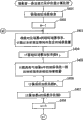
图24是表示影像分析装置2的整体动作的流程图。FIG. 24 is a flowchart showing the overall operation of the
图25是表示场景分割处理的流程图。FIG. 25 is a flowchart showing scene division processing.
图26是表示场景信息提取处理的流程图。Fig. 26 is a flowchart showing scene information extraction processing.
图27是表示场景内摄影者-参加者之间评价值计算处理的流程图。FIG. 27 is a flowchart showing the calculation process of the in-scene photographer-participant evaluation value.
图28是表示场景内摄影者-参加者之间评价值计算处理的流程图。FIG. 28 is a flowchart showing in-scene photographer-participant evaluation value calculation processing.
图29是表示场景内参加者之间评价值计算处理的流程图。FIG. 29 is a flowchart showing evaluation value calculation processing between participants in a scene.
图30是表示场景内参加者之间评价值计算处理的流程图。FIG. 30 is a flowchart showing evaluation value calculation processing between participants in a scene.
图31是表示影像分析装置2a的功能结构的框图。Fig. 31 is a block diagram showing the functional configuration of the video analysis device 2a.
图32是表示摄影者信息的图。Fig. 32 is a diagram showing photographer information.
图33是表示参加者信息的图。Fig. 33 is a diagram showing participant information.
图34是表示评价值信息的图。FIG. 34 is a diagram showing evaluation value information.
图35是表示影像分析装置2a的动作的流程图。Fig. 35 is a flowchart showing the operation of the video analysis device 2a.
标号说明Label description
1数据记录装置;2影像分析装置;201 CPU;202 ROM;203 CRT;204键盘;205通信I/F;206 RAM;207 HDD;208鼠标;310数据库部;311动态图像数据存储部;312声音/人脸信息存储部;313地图信息存储部;314基准场所信息存储部;315摄影者信息存储部;320记录信息分析部;321场景时间信息生成部;322场景参加者信息生成部;322a参加者信息生成部;323场景场所信息生成部;324场景摄影者信息生成部;324a摄影者信息生成部;330场景加权值计算部;331场景时间加权值计算部;332场景参加人数加权值计算部;333场景场所加权值计算部;340相似场景信息提取部;341提取部;342场景信息存储部;350场景内摄影者-参加者之间评价值计算部;350a摄影者-参加者之间评价值计算部;351共用场景检测部;352场景内评价值计算部;360场景内参加者之间评价值计算部;360a参加者之间评价值计算部;361共用场景检测部;362场景内评价值计算部;370、370a评价值信息存储部。1 data recording device; 2 image analysis device; 201 CPU; 202 ROM; 203 CRT; 204 keyboard; 205 communication I/F; 206 RAM; 207 HDD; /face information storage unit; 313 map information storage unit; 314 reference location information storage unit; 315 photographer information storage unit; 320 record information analysis unit; 321 scene time information generation unit; 322 scene participant information generation unit; 323 scene place information generation unit; 324 scene photographer information generation unit; 324a photographer information generation unit; 330 scene weighted value calculation unit; 331 scene time weighted value calculation unit; 332 scene participant number weighted
具体实施方式Detailed ways
以下,根据附图说明本发明的实施方式。Embodiments of the present invention will be described below with reference to the drawings.
(第1实施方式)(first embodiment)
1.整体结构1. Overall structure
首先,说明分类整理系统的概况。First, an overview of the sorting system will be described.
图1是表示适用了本发明的影像分析装置2的分类整理系统的图。读入程序并作为影像分析装置发挥作用的电脑2,通过USB线缆等与可佩戴式照相机及摄像机等的数据记录装置1连接。FIG. 1 is a diagram showing a sorting system to which a
数据记录装置1构成为包括照相机及麦克风,将通过照相机及麦克风拍摄到的动态图像数据记录在记录介质中。并且,将所记录的动态图像数据输出给影像分析装置2。The
影像分析装置2分析由数据记录装置1输入的动态图像数据,并获得用于对动态图像数据进行分析及整理的指标。具体地讲,对于按照预定的时间区间划分动态图像数据后得到的每个场景,识别被拍摄到的被摄影者,并且计算场景评价值。其中,所说被拍摄到的被摄影者,指在构成该场景的帧图像中被摄入了一定数以上的被摄影者、或者以一定比例以上的比例被摄入的被摄影者。并且,检测全部场景中与识别到的被摄影者中的任一个被摄影者相关的场景,并合计所检测到的场景的场景评价值,由此计算与一个被摄影者相关的人物评价值。The
并且,影像分析装置2根据与各个被摄影者相关的人物评价值,对动态图像数据进行分类及整理。Furthermore, the
另外,在本实施方式中,尤其把利用可佩戴式照相机拍摄到的动态图像数据作为影像分析的对象。In addition, in the present embodiment, particularly, moving image data captured by a wearable camera is targeted for video analysis.
下面,使用附图具体说明本实施方式的影像分析装置2。Next, the
2.影像分析装置2的结构2. Structure of the
2.1.硬件结构2.1. Hardware structure
图2是表示影像分析装置2的硬件结构的图。影像分析装置2构成为包括CPU201、ROM202、RAM206、CRT显示器203、键盘204、通信接口205、硬盘207、鼠标208,它们通过总线连接并能够互相通信。FIG. 2 is a diagram showing a hardware configuration of the
通信接口205例如与USB线缆等连接,从数据记录装置1获取动态图像数据。The
在硬盘207中,除了OS之外,还存储有:算法软件;图像识别软件;与场景分割、场景加权值的生成、场景信息的提取及评价值的计算等的影像分析相关的控制程序;与可佩戴式照相机及摄像机等数据记录装置1通信、并从这些设备读入动态图像数据、向这些设备输出动态图像数据的应用软件;浏览器这样的程序等;以及在影像分析中使用的各种数据及阈值。并且,随电源开启一起,起动OS,然后根据来自键盘204及鼠标208的起动指示,将所指定的程序读出到RAM206中,由CPU201解读并执行。In the
2.2.功能结构2.2. Functional structure
下面,说明CPU201按照存储在硬盘207中的控制程序进行动作从而实现的功能。图3是表示影像分析装置2的功能结构的一例的框图。如该图所示,影像分析装置2构成为包括数据库部310、记录信息分析部320、场景加权值计算部330、相似场景信息提取部340、场景内摄影者-参加者之间评价值计算部350、场景内参加者之间评价值计算部360、和评价值信息存储部370。Next, functions realized by the
数据库部310具体地讲构成为包括硬盘207等,用于存储动态图像数据等在本发明中使用的各种数据。关于各种数据的具体内容将在“2.2.1.数据库部310”中说明。Specifically, the
记录信息分析部320从数据库部310读出动态图像数据,并分析所读出的动态图像数据,生成在场景加权值计算部330计算加权值时以及相似场景信息提取部340提取相似场景时所使用的、与场景相关的各种信息。将所生成的各种信息输出给场景加权值计算部330和相似场景信息提取部340。关于动态图像数据的分析方法、以及根据分析而生成的各种信息的具体内容,将在“2.2.2.记录信息分析部320”中说明。The record
场景加权值计算部330使用由记录信息分析部320输入的各种信息,按每个场景计算加权值,并输出给摄影者-参加者之间评价值计算部350和参加者之间评价值计算部360。具体内容将在“2.2.3.场景加权值计算部330”中说明。The scene weight
相似场景信息提取部340根据由记录信息分析部320输入的各种信息,从存储在数据库部310中的与其他动态图像数据相关的场景的场景信息中,提取和与作为分析对象的动态图像数据相关的场景的场景信息相似的场景信息,将提取结果输出给摄影者-参加者之间评价值计算部350和参加者之间评价值计算部360。The similar scene
场景内摄影者-参加者之间评价值计算部350根据由场景加权值计算部330输入的每个场景的加权值、和由相似场景信息提取部340输入的场景信息,计算表示摄影者与参加者之间的关系的评价值,并输出给评价值信息存储部370,其中该摄影者是拍摄了成为分析对象的动态图像数据的人物,该参加者是作为摄影对象加入到场景中的参加者。The in-scene photographer-participant evaluation
场景内参加者之间评价值计算部360根据由场景加权值计算部330输入的每个场景的加权值、和由相似场景信息提取部340输入的场景信息,计算表示作为摄影对象而加入到场景中的参加者彼此间的关系的评价值,并输出给评价值信息存储部370。The intra-scene inter-participant evaluation
评价值信息存储部370将由摄影者-参加者之间评价值计算部350输入的摄影者-参加者之间的评价值、和由参加者之间评价值计算部360输入的参加者彼此间的评价值相对应地存储。具体内容将在“2.2.7.评价值信息存储部370”中说明。The evaluation value
下面,使用图4、5更具体地说明各个功能单元。图4、5用于更具体地表示图3所示的功能框图。Next, each functional unit will be described in more detail using FIGS. 4 and 5 . 4 and 5 are used to more specifically represent the functional block diagram shown in FIG. 3 .
2.2.1.数据库部3102.2.1.
数据库部310如图4所示构成为包括动态图像数据存储部311、声音/人脸信息存储部312、地图信息存储部313、基准场所信息存储部314和摄影者信息存储部315。The
动态图像数据存储部311将由数据记录装置1拍摄到的动态图像数据,与由数据记录装置1所具备的GPS获取到的位置信息(纬度和经度)相对应地存储。The moving image
声音/人脸信息存储部312存储在认证时使用的多个人物的轮廓(profile)信息。图6是表示轮廓信息的图。轮廓信息如图6所示,将在人脸图像认证时使用的多个人物的人脸信息及在讲话人认证时使用的多个人物的声音信息、与用于识别人物的人物识别符对应起来。The voice/face information storage unit 312 stores profile information of a plurality of persons used for authentication. FIG. 6 is a diagram showing outline information. As shown in Figure 6, the contour information corresponds to the face information of multiple people used in face image authentication and the voice information of multiple people used in speaker authentication, and the person identifier used to identify the person .
地图信息存储部313存储将位置信息与该位置的名称(以下称为“地标信息”)及类别相对应而得到的地图信息。The map information storage unit 313 stores map information in which position information is associated with the name of the position (hereinafter referred to as “landmark information”) and category.
基准场所信息存储部314存储基准场所信息。图7是表示基准场所信息的数据结构的图。基准场所信息如图7所示,将例如自己家及公司等用户平常经常所在的场所等与其位置信息对应起来。The reference location information storage unit 314 stores reference location information. FIG. 7 is a diagram showing a data structure of reference location information. As shown in FIG. 7 , the reference place information associates places where the user usually stays, such as his home and company, with their location information.
摄影者信息存储部315存储用于识别拍摄了影像的人物的人物识别符。在利用可佩戴式照相机拍摄了影像的情况下,表示该可佩戴式照相机的所有者的人物识别符被预先存储为摄影者。The photographer information storage unit 315 stores a person identifier for identifying a person who has captured a video. When a video is captured by the wearable camera, a person identifier indicating the owner of the wearable camera is stored in advance as the photographer.
2.2.2.记录信息分析部3202.2.2. Log
记录信息分析部320如图4所示构成为包括场景时间信息生成部321、场景参加者信息生成部322、场景场所信息生成部323和场景摄影者信息生成部324。The log
场景时间信息生成部321从动态图像数据存储部311读出应该分析的动态图像数据,将所读出的动态图像数据划分为多个场景,并生成场景时间信息。将所生成的场景时间信息输出给场景参加者信息生成部322、场景场所信息生成部323、场景摄影者信息生成部324、提取部341和时间加权值计算部331。The scene time information generation unit 321 reads the video data to be analyzed from the video
在将动态图像数据划分为多个场景时,例如在根据图像信息划分为场景的情况下,场景时间信息生成部321对构成动态图像数据的每个帧图像顺序地分析图像信息,并根据摄影图像的整体上的颜色变化来确定分割点。具体内容将在“4.2.场景分割处理”中说明。When dividing video data into a plurality of scenes, for example, in the case of dividing into scenes based on image information, the scene time information generator 321 sequentially analyzes the image information for each frame image constituting the video data, and The color change on the whole to determine the split point. The specific content will be described in "4.2. Scene Segmentation Processing".
图8是表示动态图像数据与构成该动态图像数据的帧图像与场景的关系的图。如图8所示,存储在动态图像数据存储部311中的文件名aaa的动态图像数据,例如按照时刻10:00、15:00、18:00分别被划分为场景。各个场景的点是帧图像的整体上的颜色变化较大的点。这样可知,文件名aaa的动态图像数据由沿时间轴方向划分了该动态图像数据而得到的4个场景构成,各个场景由多个帧图像构成。FIG. 8 is a diagram showing the relationship between moving image data, frame images and scenes constituting the moving image data. As shown in FIG. 8 , the moving image data of the file name aaa stored in the moving image
图9是表示场景时间信息的图。场景时间信息如图9所示,对于多个场景中的各个场景,将识别该场景的场景识别符(ID)与该场景的时间信息(开始时刻和结束时刻)对应起来。其中,所说场景ID是对各个场景唯一确定的值即可。FIG. 9 is a diagram showing scene time information. The scene time information is as shown in FIG. 9 , and for each of the multiple scenes, the scene identifier (ID) for identifying the scene is associated with the time information (start time and end time) of the scene. Wherein, the scene ID may be a uniquely determined value for each scene.
场景参加者信息生成部322在从动态图像数据存储部311读出应该分析的动态图像数据后,对利用由场景时间信息生成部321输入的场景时间信息所表示的每个场景,把在该场景中与摄影者一起行动的人物确定为参加者,并生成场景参加者信息。将所生成的参加者信息输出给参加人数加权值计算部332、提取部341和共用场景检测部351、361。After the scene participant
为了确定各个场景中的参加者,首先对构成该场景的每个帧图像进行人物的人脸图像的检测。具体地讲,进行轮廓(contour)提取处理和颜色分布分析处理等公知的图像处理,检测该图像中包含的一个以上的被摄体,并根据表示检测到的各个被摄体的图像检测人物的人脸固有的特征量,由此根据该图像检测表示人物的人脸的部分图像。In order to identify participants in each scene, first, face images of people are detected for each frame image constituting the scene. Specifically, known image processing such as contour extraction processing and color distribution analysis processing is performed, one or more subjects included in the image are detected, and the presence of a person is detected from an image representing each detected subject. A feature amount inherent to a human face is used to detect a partial image representing a person's face from the image.
并且,采用人脸图像识别技术,判定所检测到的人物的人脸图像对应于存储在声音/人脸信息存储部312中的人物的人脸图像中的哪个人脸图像。当在该场景中包括被判定为对应的人物的人脸图像的帧图像为一定数量以上的情况下,判定该人物是该场景的参加者。In addition, the face image recognition technology is used to determine which face image of the person's face images stored in the voice/face information storage unit 312 the detected person's face image corresponds to. When there are more than a certain number of frame images including the face image of the corresponding person in the scene, it is determined that the person is a participant of the scene.
另外,即使是人脸图像没有存储在声音/人脸信息存储部312中的人物,只要在该场景中出现了预定数以上,则也可以判定为参加者,该情况时,可以将被判定为参加者的人物的人脸图像新追加到声音/人脸信息存储部312中。In addition, even if it is a person whose face image is not stored in the voice/face information storage unit 312, as long as it appears in the scene more than a predetermined number, it can be determined as a participant. In this case, it can be determined as a participant. The face image of the participant's person is newly added to the voice/face information storage unit 312 .
图10是表示场景参加者信息的图。场景参加者信息如图10所示,对于多个场景中的各个场景,将识别该场景的场景识别符(ID)与表示被判定为该场景的参加者的人物的参加者ID对应起来。其中,所说参加者ID,是对各个参加者唯一确定的值即可。FIG. 10 is a diagram showing scene participant information. As shown in FIG. 10 , scene participant information associates a scene identifier (ID) for identifying the scene with a participant ID indicating a person determined to be a participant of the scene for each of a plurality of scenes. However, the participant ID may be a value uniquely determined for each participant.
场景场所信息生成部323在从动态图像数据存储部311读出与应该分析的动态图像数据相对应的位置信息后,根据位置信息,对利用由场景时间信息生成部321输入的场景时间信息表示的每个场景,生成场景场所信息,将所生成的场景场所信息输出给提取部341和场所加权值计算部333。After the scene location information generating unit 323 reads the position information corresponding to the moving image data to be analyzed from the moving image
具体地讲,根据与存储在动态图像数据存储部311中的动态图像数据相对应的GPS数据,检测对应各个场景的时刻的位置信息,将该位置信息与存储在地图信息存储部313中的地图信息进行核对,根据地图信息获得与该位置信息相对应的地标信息。Specifically, based on the GPS data corresponding to the moving image data stored in the moving image
图11是表示场景场所信息的图。场景场所信息如图11所示,对于多个场景中的各个场景,将识别该场景的场景识别符(ID)与该场景的纬度和经度及地标信息对应起来FIG. 11 is a diagram showing scene location information. The scene location information is shown in Figure 11. For each scene in multiple scenes, the scene identifier (ID) for identifying the scene is corresponding to the latitude and longitude and landmark information of the scene
场景摄影者信息生成部324在从动态图像数据存储部311读出应该分析的动态图像数据后,对利用由场景时间信息生成部321输入的场景时间信息表示的每个场景,将拍摄了该场景的人物确定为摄影者,并生成场景摄影者信息。After reading out the video data to be analyzed from the video
具体地讲,将利用存储在摄影者信息存储部315中的场景摄影者信息表示的人物,判定为拍摄了该场景的摄影者。另外,场景摄影者信息在拍摄动态图像数据时,预先由用户输入并与该动态图像数据相对应地进行存储。Specifically, the person indicated by the scene photographer information stored in the photographer information storage unit 315 is determined as the photographer who photographed the scene. In addition, the scene photographer information is input by the user in advance when capturing video data, and is stored in association with the video data.
图12是表示场景摄影者信息的图。场景摄影者信息如图12所示,对于多个场景中的各个场景,将识别该场景的场景识别符(ID)与表示判定为该场景的摄影者的人物的摄影者ID对应起来。其中,所说摄影者ID,是对各个场景唯一确定的值即可。在本实施方式中,把利用可佩戴式照相机拍摄到的动态图像数据作为对象,所以摄影者是固定的,与场景无关。FIG. 12 is a diagram showing scene photographer information. Scene photographer information As shown in FIG. 12 , for each of a plurality of scenes, a scene identifier (ID) identifying the scene is associated with a photographer ID indicating a person determined to be the photographer of the scene. Wherein, the photographer ID may be a uniquely determined value for each scene. In this embodiment, moving image data captured by a wearable camera is used as an object, so the photographer is fixed regardless of the scene.
2.2.3.场景加权值计算部3302.2.3. Scene
场景加权值计算部330如图4、5所示构成为包括场景时间加权值计算部331、场景参加人数加权值计算部332和场景场所加权值计算部333。The scene
场景时间加权值计算部331根据由场景时间信息生成部321输入的场景时间信息,对每个场景计算时间加权值。具体地讲,根据对应各个场景ID的时间信息分别生成时间长度,根据时间长度计算各个场景的时间加权值。例如,在时间长度越长使加权越大的情况下,时间加权值RT如下面的(式1)所示,是向场景的时间长度T乘以常数α(此处为0.2)而得到的值。The scene time
RT=αT ……(式1)R T = α T ... (Formula 1)
图13是表示与场景ID相对应的时间加权值的图。其中,场景ID2、3、4的时间加权值分别是1.0、0.6、0.2。FIG. 13 is a diagram showing temporal weighting values corresponding to scene IDs. Wherein, the time weighted values of
场景时间加权值计算部331将各个时间加权值输出给场景内评价值计算部352、362。The scene time weight
场景参加人数加权值计算部332根据由场景参加者信息生成部322输入的场景参加者信息,对每个场景计算参加人数加权值。具体地讲,为了计算参加人数加权值,首先对每个场景合计参加者的人数。此时,摄影者本人也作为参加人数被计数。然后,根据参加人数计算各个场景中的参加人数加权值。例如,在场景中的场景人数越少使加权越大的情况下,参加人数加权值RN如下面的(式2)所示,是向场景参加人数N的倒数乘以常数β(此处为2)而得到的值。The scenario participant number weighted
RN=β(1/N) ……(式2)R N =β(1/N) ... (Formula 2)
图14是表示与场景ID相对应的参加人数加权值的图。其中,场景ID2、3、4的参加人数加权值分别是0.66、0.5、1.0。FIG. 14 is a diagram showing weighted values of the number of participants corresponding to scene IDs. Among them, the weighted values of the number of participants of
场景参加人数加权值计算部332将各个参加人数加权值输出给场景内评价值计算部352、362。The scene participant number weighted
场景场所加权值计算部333根据由场景场所信息生成部323输入的场景场所信息、和由基准场所信息存储部314输入的基准场所信息,对每个场景计算场所加权值。具体地讲,根据场景场所信息的各个场景的纬度和经度、以及基准场所信息表示的场所的纬度和经度,计算两点间的距离,然后,根据各个场景中的位置与基准位置之间的距离,计算各个场景中的场所加权值。例如,在距基准位置的距离越远使加权越大、反之当在基准位置共用场景时使加权变小的情况下,场所加权系数RL如下面的(式3)所示,是向距基准位置的距离L乘以常数γ(此处为0.1)而得到的值。The scene location weight
RL=γL ……(式3)R L =γL ... (Formula 3)
图15是表示与场景ID相对应的场所加权值的图。其中,场景ID2、3、4的场所加权值分别是0、1.0、0.5。FIG. 15 is a diagram showing location weights corresponding to scene IDs. Among them, the location weight values of scene ID2, 3, and 4 are 0, 1.0, and 0.5, respectively.
场景场所加权值计算部333将各个场所加权值输出给场景内评价值计算部352、362。The scene place weight
2.2.4.相似场景信息提取部3402.2.4. Similar scene
相似场景信息提取部340如图4所示构成为包括提取部341和场景信息存储部342。The similar scene
提取部341在从记录信息分析部320获取与场景相关的各种信息后,访问存储在场景信息存储部342中的与过去的其他动态图像数据相关的场景的场景信息,并计算该场景信息和与作为分析对象的动态图像数据相关的场景的场景信息之间的相似度。作为场景信息的相似度可以计算时间相似度、参加者相似度及场所相似度。After acquiring various information related to the scene from the record
时间相似度可以根据场景被记录的年月日、以及时间段的相似性来计算。The time similarity can be calculated according to the year, month and day when the scene was recorded, and the similarity of the time period.
参加者相似度可以根据场景参加者信息的一致程度来计算。The participant similarity can be calculated according to the degree of consistency of scene participant information.
场所相似度可以根据场景场所信息表示的距离的远近、以及地标信息的相似性来计算。The location similarity can be calculated according to the distance represented by the scene location information and the similarity of the landmark information.
提取部341把存储在场景信息存储部342中的场景信息中、所算出的各个相似度比较高的上位的一定数的场景信息,作为相似场景信息,输出给摄影者-参加者之间评价值计算部350和参加者之间评价值计算部360。The extracting
图16是表示相似场景信息的图。相似场景信息如图16所示由场景ID、场景时间信息、场景参加者信息及场景场所信息构成。各个相似场景信息以按照相似度从高到低的顺序排列的形式被输出。另外,也可以一并输出表示各个相似场景信息的相似度的数值。FIG. 16 is a diagram showing similar scene information. Similar scene information is composed of scene ID, scene time information, scene participant information, and scene location information as shown in FIG. 16 . The pieces of similar scene information are outputted in a descending order of similarity. In addition, a numerical value representing the degree of similarity of each piece of similar scene information may also be output together.
场景信息存储部342存储与过去的其他动态图像数据相关的场景的场景信息。The scene information storage unit 342 stores scene information of scenes related to other past video data.
2.2.5.场景内摄影者-参加者之间评价值计算部3502.2.5. In-scene photographer-participant evaluation
场景内摄影者-参加者之间评价值计算部350如图5所示构成为包括共用场景检测部351、和场景内评价值计算部352。The in-scene photographer-participant evaluation
共用场景检测部351根据由场景参加者信息生成部322输入的场景参加者信息、和由场景摄影者信息生成部324输入的场景摄影者信息,检测除摄影者之外的参加者人数为一人以上的场景,作为共用场景,并且生成摄影者-参加者之间共用场景信息。将所生成的摄影者-参加者之间共用场景信息发送给场景内评价值计算部352。The common
图17是表示摄影者-参加者之间共用场景信息的图。由于全部场景中都有摄影者参加,所以对于各个场景,生成摄影者与各个参加者的组。另外,对于除摄影者之外的参加者人数为0的场景,不进行评价值计算处理,所以不会被检测为共用场景。因此,场景ID1的场景由于不存在除摄影者之外的参加者,所以也不存在摄影者-参加者之间的组合,不会被检测为共用场景,而被去除。FIG. 17 is a diagram showing shared scene information between photographers and participants. Since the photographer participates in all the scenes, a group of the photographer and each participant is generated for each scene. In addition, since evaluation value calculation processing is not performed on a scene where the number of participants other than the photographer is 0, it is not detected as a common scene. Therefore, since there are no participants other than the photographer in the scene of the scene ID1, there is no combination between the photographer and the participants, and the scene is not detected as a common scene and removed.
场景内评价值计算部352根据由场景加权值计算部330输入的各个加权值、由相似场景信息提取部340输入的相似场景信息、和由共用场景检测部351输入的摄影者-参加者之间共用场景信息,计算场景内摄影者-参加者之间评价值信息,并输出给评价值信息存储部370。关于处理的具体内容将在“4.4.场景内摄影者-参加者之间评价值计算处理”中说明。The intra-scene evaluation
图18是表示场景内摄影者-参加者之间评价值信息的图。场景内摄影者-参加者之间评价值信息构成为除摄影者-参加者之间共用场景信息之外,还包括场景评价值(根据时间加权值、参加人数加权值、场所加权值及相似场景信息,对每个场景计算的场景加权系数)、和参加者评价值(对各个场景中的每个参加者计算的参加者加权系数)。FIG. 18 is a diagram showing evaluation value information between photographers and participants in a scene. In-scene photographer-participant evaluation value information is composed of scene evaluation value (according to time weighted value, participant weighted value, place weighted value and similar scene weighted value) in addition to shared scene information between photographers and participants. information, scene weighting coefficient calculated for each scene), and participant evaluation value (participant weighting coefficient calculated for each participant in each scene).
各个场景的每个参加者的场景评价值能够通过计算该场景的时间加权值、参加人数加权值、场所加权值、场景加权系数及参加者加权系数的合计值而得到。The scene evaluation value for each participant of each scene can be obtained by calculating the total value of the time weighted value, the number of participants weighted value, the location weighted value, the scene weighted coefficient, and the participant weighted coefficient of the scene.
另外,在计算场景评价值时,也可以在对时间加权值、参加人数加权值及场所加权值进行加权后,计算合计值。具体内容将在“4.4.场景内摄影者-参加者之间评价值计算处理”中说明。此处为了简单起见,假设不进行加权即计算各个值的合计值来继续说明。In addition, when calculating the scene evaluation value, the total value may be calculated after weighting the time weighted value, the number of participants weighted value, and the location weighted value. The details will be described in "4.4. In-Scene Photographer-Participant Evaluation Value Calculation Process". Here, for the sake of simplicity, the description is continued assuming that the total value of each value is calculated without performing weighting.
其中,把某个场景S中的摄影者X与参加者A的评价值设为RAS,全部场景中的摄影者X与参加者A的评价值RA如(式5)所示,可以根据各个共用场景的评价值RAn的总和算出。Among them, the evaluation value of photographer X and participant A in a certain scene S is set as R AS , and the evaluation value R A of photographer X and participant A in all scenes is shown in (Formula 5), which can be calculated according to The sum of the evaluation values R An of the respective common scenes is calculated.
RA=∑RAn ……(式5)R A =∑R An ... (Eq. 5)
即,通过合计在全部场景中相同的摄影者与参加者的组的评价值,最终能够对参加者ID A、B、C、D分别获得评价值5.76、2.66、5.8、2.85。That is, by summing up the evaluation values of the same photographer and participant groups in all the scenes, evaluation values 5.76, 2.66, 5.8, and 2.85 can be finally obtained for the participant IDs A, B, C, and D, respectively.
2.2.6.场景内参加者之间评价值计算部3602.2.6. In-scene inter-participant evaluation
场景内参加者之间评价值计算部360如图5所示构成为包括共用场景检测部361、和场景内评价值计算部362。The in-scene inter-participant evaluation
共用场景检测部361根据由场景参加者信息生成部322输入的场景参加者信息,检测除摄影者之外的参加者人数为二人以上的场景,作为共用场景,并且生成参加者之间共用场景信息。将所生成的参加者之间共用场景信息发送给场景内评价值计算部362。The shared
图19是表示参加者之间共用场景信息的图。对于除摄影者之外的参加者为1人以下的场景,不进行参加者之间的评价值计算处理,所以不会被检测为共用场景。因此,场景ID4的场景由于除摄影者之外的参加者是1人,所以也不存在参加者之间的组合,不会被检测为共用场景,而被去除。在参加者人数为3人以上的情况下,生成全部参加者彼此的组合。FIG. 19 is a diagram showing sharing scene information among participants. Since evaluation value calculation processing among participants is not performed for a scene with one or less participants other than the photographer, it is not detected as a shared scene. Therefore, the scene of the
场景内评价值计算部362根据由场景加权值计算部330输入的各个加权值、由相似场景信息提取部340输入的相似场景信息、和由共用场景检测部361输入的参加者之间共用场景信息,计算场景内参加者之间评价值信息,并输出给评价值信息存储部370。关于处理的具体内容将在“4.5.场景内参加者之间评价值计算处理”中说明。The intra-scene evaluation
图20是表示场景内参加者之间评价值信息的图。场景内参加者之间评价值信息构成为除参加者之间共用场景信息之外,还包括场景评价值(根据时间加权值、参加人数加权值、场所加权值及相似场景信息,对每个场景计算的场景加权系数)、和参加者评价值(对各个场景中的每个参加者计算的参加者加权系数)。FIG. 20 is a diagram showing evaluation value information among participants in a scene. The evaluation value information among the participants in the scene is composed of not only the shared scene information among the participants, but also the scene evaluation value (according to the time weighted value, the weighted value of the number of participants, the place weighted value and similar scene information, for each scene Calculated scene weighting coefficient), and participant evaluation value (participant weighting coefficient calculated for each participant in each scene).
各个场景的参加者彼此的每个组合的场景评价值,能够通过计算该场景的时间加权值、参加人数加权值、场所加权值、场景加权系数及参加者加权系数的合计值而得到。The scene evaluation value for each combination of participants in each scene can be obtained by calculating the total value of the time weighted value, the number of participants weighted value, the location weighted value, the scene weighted coefficient, and the participant weighted coefficient of the scene.
另外,在计算场景评价值时,也可以在对时间加权值、参加人数加权值及场所加权值进行加权后,计算合计值。具体内容将在“4.5.场景内参加者之间评价值计算处理”中说明。此处为了简单起见,假设不进行加权即计算各个值的合计值来继续说明。In addition, when calculating the scene evaluation value, the total value may be calculated after weighting the time weighted value, the number of participants weighted value, and the place weighted value. The details will be described in "4.5. Evaluation value calculation process between participants in the scene". Here, for the sake of simplicity, the description is continued assuming that the total value of each value is calculated without performing weighting.
其中,把某个场景S中的参加者A与参加者B之间的评价值设为RA-BS,全部场景中的参加者A与参加者B之间的评价值RA-B如(式6)所示,可以根据各个共用场景的评价值RA-Bn的总和算出。Among them, the evaluation value between participant A and participant B in a certain scene S is set as R A-BS , and the evaluation value R AB between participant A and participant B in all scenes is as follows (Formula 6 ), it can be calculated based on the sum of the evaluation values R A-Bn of each shared scene.
RA-B=∑RA-Bn ……(式6)R AB =∑R A-Bn ... (Formula 6)
即,通过合计在全部场景中相同的参加者彼此的组的评价值,最终参加者A和B之间的评价值为2.41,同样,参加者A和C之间的评价值为2.9,参加者A和D之间的评价值为2.85,参加者B和C以及参加者B和D之间的评价值为0,参加者C和D之间的评价值为2.85。That is, by summing up the evaluation values of groups of participants who are the same in all scenarios, the final evaluation value between participants A and B is 2.41, and similarly, the evaluation value between participants A and C is 2.9, and the participants The evaluation value between A and D was 2.85, the evaluation value between participants B and C and participants B and D was 0, and the evaluation value between participants C and D was 2.85.
2.2.7.评价值信息存储部3702.2.7. Evaluation value
评价值信息存储部370存储由场景内评价值计算部352、362输入的评价值信息。图21是表示存储的评价值信息的图。如图21所示,整合地存储场景内摄影者-参加者之间评价值信息和场景内参加者之间评价值信息。The evaluation value
3.用户接口(UI)3. User interface (UI)
下面,说明利用在本实施方式中示出的评价值计算方法能够实现的显示方法的一例。Next, an example of a display method that can be realized by the evaluation value calculation method described in this embodiment will be described.
图22是按照评价值的数值从大到小的顺序排列表示各个参加者的图标1001~1004并进行显示的图。评价值最高的人物C(图标1001)被显示在最上位。图标可以使用参加者的人脸图像,也可以利用字符来显示姓名。这样,通过采用图22所示的显示方法,摄影者能够容易判定哪个人物的评价值高,能够推测与各个人物之间的亲密程度。FIG. 22 is a diagram in which
在图22的左侧所示的画面中,在用户选择了表示人物的图标1001~1004中的某一个图标后,转入图22的右侧所示的画面。图22的右侧所示的画面是选择了人物C的情况的示例。在选择人物显示区域1005中显示表示被选择的人物的图标1001,并且对被选择的人物所参加的场景,按照评价值的数值从大到小的顺序排列并进行显示(1006~1008)。其中,评价值最高的场景3(1006)被显示在最上位。在表示各个场景的区域内,场景中包含的图像数据中的几个图像数据被显示为缩略图像(1009、1010)。作为缩略图像优选选择摄入了被选择的人物C的图像。这样,通过采用图22所示的显示方法,摄影者能够容易判定与选择人物最亲密地行动的场景是哪个场景。On the screen shown on the left side of FIG. 22 , when the user selects one of the
在图22的右侧所示的画面中,在选择场景1006~1008中的某一个场景后,从在该场景的开头时刻拍摄到的动态图像数据开始顺序进行显示。On the screen shown on the right side of FIG. 22 , when one of the
下面,图23是以各个人物彼此的组合的评价值为基础,在显示区域1101内配置表示摄影者X(1102)和参加者A、B、C、D(1103~1106)的图标并进行显示的图。评价值越高的组合,使图标彼此的距离越近地进行显示。相反,评价值越低的组合、及没有产生评价值的也就是没有共用场景的人物彼此,使距离远来进行显示时。这样,通过采用图23所示的显示方法,在摄影者与参加者之间的组合中,能够容易从视觉上掌握哪个人物与哪个人物之间的评价值高。Next, in FIG. 23, icons representing the photographer X (1102) and participants A, B, C, and D (1103-1106) are arranged and displayed in the display area 1101 based on the evaluation values of the combinations of the characters. diagram. For a combination with a higher evaluation value, the distance between the icons is displayed closer. On the contrary, when the combination with the lower evaluation value and the characters who do not generate the evaluation value, that is, the characters who do not share the scene, are displayed with the distance increased. As described above, by employing the display method shown in FIG. 23 , it is possible to easily visually grasp which person has a high evaluation value among the combinations between the photographer and the participants.
另外,也可以是,在图23中选择表示人物的图标1102~1106,由此转入显示如图22的右侧所示的选择人物所参加的场景的画面。In addition, in FIG. 23 , icons 1102 to 1106 representing characters may be selected to switch to a screen displaying a scene in which a selected character participates as shown on the right side of FIG. 22 .
4.影像分析装置2的动作4. Operation of
4.1.主例程4.1. Main routine
下面,说明本发明的影像分析装置2的动作。图24是表示影像分析装置2的整体动作的流程图。在该流程图中,j是用于在成为分析对象的动态图像数据中确定一个场景的变量,N表示该动态图像数据中的场景总数。Next, the operation of the
首先,场景时间信息生成部321对存储在动态图像数据存储部311中的动态图像数据进行后面叙述的场景分割处理,将该动态图像数据划分为多个场景(步骤S101)。First, the scene time information generation unit 321 performs scene division processing described later on the video data stored in the video
在场景分割处理之后,将用于确定是第几个场景的变量j的值初始化为1(步骤S102),对第j个场景生成场景参加者信息、场景场所信息和场景摄影者信息(步骤S103)。After the scene segmentation process, the value of the variable j that is used to determine which scene is initialized to 1 (step S102), and the scene participant information, scene location information and scene photographer information are generated for the j scene (step S103 ).
判定变量j的值是否达到场景总数N(步骤S104),在没有达到场景总数N时(步骤S104:否),将变量j计数1(步骤S105),并转入步骤S103。Determine whether the value of variable j reaches the total number of scenes N (step S104), when not reaching the total number of scenes N (step S104: No), count variable j by 1 (step S105), and turn to step S103.
在达到场景总数N时(步骤S104:是),分别计算时间加权值、参加人数加权值及场所加权值(步骤S106),并且进行后面叙述的场景信息提取处理(步骤S107)。When the total number of scenes N is reached (step S104: Yes), time weighted values, number of participants weighted values, and place weighted values are calculated (step S106), and scene information extraction processing described later is performed (step S107).
在场景信息提取处理之后,进行后面叙述的场景内摄影者-参加者之间评价值计算处理及场景内参加者之间评价值计算处理(步骤S108、109),将通过这些处理而算出的评价值信息存储在评价值信息存储部370中(步骤S110)。After the scene information extraction process, the in-scene photographer-participant evaluation value calculation process and the in-scene participant evaluation value calculation process (steps S108 and S109), which will be described later, are performed, and the evaluation values calculated by these processes are The value information is stored in the evaluation value information storage unit 370 (step S110).
4.2.场景分割处理4.2. Scene segmentation processing
下面,说明场景分割处理。图25是表示场景分割处理的流程图。在该流程图中,i是用于在成为分析对象的动态图像数据中确定一个帧图像的变量,M表示该动态图像数据中的帧图像的总数。Next, scene division processing will be described. FIG. 25 is a flowchart showing scene division processing. In this flowchart, i is a variable for specifying one frame image in the moving image data to be analyzed, and M represents the total number of frame images in the moving image data.
首先,场景时间信息生成部321将用于确定是第几个帧图像的变量i的值初始化为1(步骤S201),计算第i个帧图像中的各个像素具有的亮度的积算值(步骤S202)。First, the scene time information generation unit 321 initializes the value of the variable i for determining which frame image is the number one to 1 (step S201), and calculates the integrated value of the brightness of each pixel in the i-th frame image (step S201). S202).
判定所算出的积算值是否为预定的阈值以上(步骤S203),在积算值小于阈值时(步骤S203:否),将i计数1(步骤S204),并转入步骤S202。It is determined whether the calculated integrated value is greater than or equal to a predetermined threshold (step S203), and if the integrated value is smaller than the threshold (step S203: No), i is counted by 1 (step S204), and the process proceeds to step S202.
在积算值为阈值以上时(步骤S203:是),把该第i个帧图像作为场景的分割点(步骤S205)。When the integrated value is equal to or greater than the threshold (step S203: Yes), the i-th frame image is used as the segmentation point of the scene (step S205).
判定i的值是否达到帧图像的总数M(步骤S206),在没有达到时(步骤S206:否),将i计数1(步骤S204),并转入步骤S202。Determine whether the value of i reaches the total number M of frame images (step S206), if not (step S206: No), count i by 1 (step S204), and proceed to step S202.
在达到时(步骤S206:是),以判定为分割点的帧图像为基础生成场景时间信息(步骤S207)。When it is reached (step S206: Yes), scene time information is generated based on the frame image determined as the division point (step S207).
4.3.场景信息提取处理4.3. Scene Information Extraction Processing
下面,说明场景信息提取处理。图26是表示场景信息提取处理的流程图。在该流程图中,j是用于在成为分析对象的动态图像数据中确定一个场景信息的变量,k是表示存储在场景信息存储部342中的过去的一个场景信息的变量,N表示成为分析对象的动态图像数据的场景信息的总数,P表示过去的场景信息的总数。Next, scene information extraction processing will be described. Fig. 26 is a flowchart showing scene information extraction processing. In this flowchart, j is a variable for specifying one piece of scene information in the moving image data to be analyzed, k is a variable indicating one piece of past scene information stored in the scene information storage unit 342, and N indicates the variable to be analyzed. The total number of scene information of the moving image data of the object, P represents the total number of past scene information.
首先,相似场景信息提取部340从记录信息分析部320获取场景时间信息、场景参加者信息及场景场所信息(步骤S301)。First, the similar scene
将用于确定是第几个场景信息的变量j的值和用于确定是第几个过去场景信息的变量k的值分别初始化为1(步骤S302、303),计算第k个过去场景信息与第j个场景信息之间的各种相似度(步骤S304)。计算所算出的各种相似度的合计值(步骤S305),并判定k的值是否达到过去的场景信息的总数P(步骤S306)。The value of the variable j for determining which scene information and the value of the variable k for determining the past scene information are initialized to 1 respectively (steps S302, 303), and the k-th past scene information and Various similarities between the jth scene information (step S304). The total value of the calculated various similarities is calculated (step S305), and it is determined whether or not the value of k has reached the total number P of past scene information (step S306).
在没有达到时(步骤S306:否),将k计数1(步骤S307),并转入步骤S304。When it has not been reached (step S306: No), k is counted up by 1 (step S307), and it goes to step S304.
在达到时(步骤S306:是),根据各种相似度的合计值的大小,进行各个过去场景信息的分类(sorting)(步骤S308),根据分类结果,从上位开始选择预定数量的、相似度的值为预定的阈值以上的过去场景信息(步骤S309)。When it is reached (step S306: Yes), according to the size of the total value of various similarities, perform classification (sorting) of each past scene information (step S308), and select a predetermined number of similarities from the upper order according to the classification result. past scene information whose value is above a predetermined threshold (step S309).
判定j的值是否达到场景信息的总数N(步骤S310),在没有达到时(步骤S310:否),将j计数1(步骤S311),并转入步骤S303。Determine whether the value of j reaches the total number N of scene information (step S310), if not (step S310: No), count j by 1 (step S311), and go to step S303.
在达到时(步骤S310:是),把对每个场景选择的过去场景信息作为相似场景信息,输出给场景内评价值计算部352、362(步骤S312)。When it is reached (step S310: Yes), the past scene information selected for each scene is output to the in-scene evaluation
4.4.场景内摄影者-参加者之间评价值计算处理4.4. Calculation and processing of evaluation values between photographers and participants in the scene
下面,使用图27、28说明在场景内摄影者-参加者之间评价值计算部350中计算摄影者与参加者之间的评价值R时的处理。图27、28是表示场景内摄影者-参加者之间评价值计算处理的流程图。在该流程图中,m是表示能够成为评价值的计算对象的一个场景的变量,n是用于在场景m中确定一个参加者的变量,S表示能够成为评价值的计算对象的场景的总数,Tm表示场景m中的参加者人数的总数。Next, the processing for calculating the evaluation value R between the photographer and the participants in the in-scene photographer-participant evaluation
首先,场景内评价值计算部352从相似场景信息提取部340获取对每个场景提取到的相似场景信息(步骤S401),将变量m的值初始化为1(步骤S402)。根据对应于第m个场景的相似场景信息,对相似场景中包含在过去的预定期间内的场景数量进行计数(步骤S403),计算与计数得到的数值对应的场景加权系数WS(步骤S404)。例如,如果在过去1年内共用相似的场景的频度高,则将该场景的评价值调整为更高的值。First, the in-scene evaluation
根据相似场景信息,对与第m个场景的地标信息一致的相似场景数量进行计数(步骤S405),计算对应该数量的场所加权系数WL(步骤S406)。例如,如果过去在相同场所拍摄的相似场景多,则将针对在该场所拍摄的场景的评价值调整为更高的值。According to the similar scene information, the number of similar scenes consistent with the landmark information of the mth scene is counted (step S405), and the place weighting coefficient W L corresponding to the number is calculated (step S406). For example, if many similar scenes were shot at the same location in the past, the evaluation value for the scene shot at that location is adjusted to a higher value.
从场景加权值计算部330获取各个场景的时间加权值RT、参加人数加权值RN和场所加权值RL,使各个加权值规格化,然后分别乘以加权系数并进行相加,再加算场景加权系数WS,由此计算场景m中的场景评价值R(步骤S407)。其中,关于场景加权系数WS和场所加权系数WL,使用在步骤S404、406计算的值。关于时间加权系数WT和参加人数加权系数WN,是在想要重视各个项目的哪个项目并计算评价值的情况下设定的。The time weighted value RT, the number of participants weighted value R N and the location weighted value R L of each scene are obtained from the scene weighted
(式4)表示在步骤S407的场景评价值R的计算式。(Equation 4) represents an expression for calculating the scene evaluation value R in step S407.
R=WS+WTRT+WNRN+WLRL ……(式4)R=W S +W T R T +W N R N +W L R L ... (Formula 4)
然后,将变量n的值初始化为1(步骤S408),根据相似场景信息,对含有参加者n的相似场景数量进行计数(步骤S409)。计算与计数得到的数值对应的参加者加权系数WHn(步骤S410),并与场景评价值Rn相加,由此计算每个参加者n的评价值Rn(步骤S411)。例如,进行调整以使得越是在过去的相似场景中经常出现的参加者,计算出越高的评价值。Then, the value of variable n is initialized to 1 (step S408), and the number of similar scenes including participant n is counted based on the similar scene information (step S409). The participant weighting coefficient W Hn corresponding to the counted value is calculated (step S410), and added to the scene evaluation value R n , thereby calculating the evaluation value R n for each participant n (step S411). For example, an adjustment is made so that a participant who appeared frequently in similar scenes in the past is calculated to have a higher evaluation value.
判定n的值是否达到场景m中的参加者人数的总数Tm(步骤S412),在没有达到时(步骤S412:否),将n计数1(步骤S413),并转入步骤S409。Determine whether the value of n reaches the total number T m of the number of participants in the scene m (step S412), and when not reached (step S412: No), count n by 1 (step S413), and proceed to step S409.
在达到时(步骤S412:是),判定m的值是否达到S(步骤S414),在没有达到时(步骤S414:否),将m计数1(步骤S415),并转入步骤S403。在达到时(步骤S414:是),在各个摄影者与参加者的组中,合计相同的摄影者与参加者的组的评价值(步骤S416)。When reaching (step S412: yes), determine whether the value of m reaches S (step S414), when not reaching (step S414: no), count m by 1 (step S415), and turn to step S403. When reaching (step S414: Yes), in each photographer and participant group, the evaluation value of the same photographer and participant group is totaled (step S416).
4.5.场景内参加者之间评价值计算处理4.5. Calculation and processing of evaluation values between participants in the scene
下面,使用图29、30说明在场景内参加者之间评价值计算部360中计算参加者彼此的评价值R时的动作。图29、30是表示场景内参加者之间评价值计算处理的流程图。在该流程图中,m是表示可能成为评价值的计算对象的一个场景的变量,I是用于在场景m中确定一个参加者的组合的变量,S表示可能成为评价值的计算对象的场景的总数,Um表示场景m中的参加者的组合的总数。步骤S501~507与场景内摄影者-参加者之间评价值计算部350的步骤S401~407为止的步骤相同,所以省略说明。Next, the operation at the time of calculating the evaluation value R between participants in the in-scene inter-participant evaluation
在步骤S507,在计算了场景评价值R后,将变量I的值初始化为1(步骤S508),根据相似场景信息,对含有利用变量I表示的参加者的组的相似场景数量进行计数(步骤S509)。In step S507, after the scene evaluation value R has been calculated, the value of variable I is initialized to 1 (step S508), and according to the similar scene information, the similar scene quantity of the group containing the participant represented by variable I is counted (step S508). S509).
计算与计数得到的数值对应的参加者加权系数WHI(步骤S510),并与场景评价值RI相加,由此计算利用变量I表示的参加者之间的评价值RI(步骤S511)。例如,进行调整以使得越是在过去的相似场景中经常一起出现的参加者彼此,计算出越高的评价值。Calculate the participant weighting coefficient W HI corresponding to the numerical value obtained by counting (step S510), and add it to the scene evaluation value R 1 , thereby calculating the evaluation value R 1 between participants represented by the variable I (step S511) . For example, adjustments are made so that the more frequently participants appear together in similar scenes in the past, the higher the evaluation value is calculated.
判定I的值是否达到场景m中的参加者的组合的总数Um(步骤S512),在没有达到时(步骤S512:否),将I计数1(步骤S513),并转入步骤S509。Determine whether the value of I reaches the total number U m (step S512) of the participants' combinations in the scene m, and when not reached (step S512: No), count I by 1 (step S513), and proceed to step S509.
在达到时(步骤S512:是),判定m的值是否达到S(步骤S514),在没有达到时(步骤S514:否),将m计数1(步骤S515),并转入步骤S503。在达到时(步骤S514:是),在各个参加者的组中,合计相同的参加者彼此的组的评价值(步骤S516)。When reaching (step S512: yes), determine whether the value of m reaches S (step S514), when not reaching (step S514: no), count m by 1 (step S515), and turn to step S503. When it arrives (step S514: Yes), in each participant's group, the evaluation values of the same participant's group are summed up (step S516).
根据以上所述的本实施方式,能够计算与按照将动态图像数据沿时间轴方向划分后的场景单位识别到的一个参加者相关的评价值,即,能够计算该动态图像数据的摄影者与上述一个参加者之间的评价值、以及上述一个参加者与其他参加者之间的评价值。通过使用所算出的评价值来对动态图像数据进行分类及整理,能够恰当地表现与该动态图像数据相关联的人物间的关系。According to the present embodiment described above, it is possible to calculate an evaluation value related to a participant recognized in units of scenes in which the moving image data is divided along the time axis direction, that is, it is possible to calculate the relationship between the photographer of the moving image data and the above-mentioned An evaluation value among one participant, and an evaluation value between the above-mentioned one participant and other participants. By classifying and sorting video data using the calculated evaluation values, it is possible to appropriately express the relationship between persons associated with the video data.
并且,在计算评价值时,根据各个场景的时间长度及参加人数、位置信息,对各个场景赋予加权,并且对该场景中的每个参加者赋予加权,由此能够提高对于所算出的评价值的可靠性。In addition, when calculating the evaluation value, according to the time length of each scene, the number of participants, and the location information, weighting is given to each scene, and each participant in the scene is given a weight, thereby improving the evaluation value of the calculation. reliability.
(第2实施方式)(second embodiment)
在实施方式1中,把利用数据记录装置1拍摄到的动态图像数据作为影像分析的对象,但在本实施方式中,把多个静止图像数据(以下称为“帧图像”)设为影像分析的对象。因此,在本实施方式中,数据记录装置1例如是数码照相机(DSC)等。In
5.影像分析装置2a的结构5. Structure of image analysis device 2a
图31是表示本实施方式的影像分析装置2a的功能结构的框图。影像分析装置2a构成为包括数据库部310a、参加者信息生成部322a、摄影者信息生成部324a、摄影者-参加者之间评价值计算部350a、参加者之间评价值计算部360a、和评价值信息存储部370a。FIG. 31 is a block diagram showing the functional configuration of the video analysis device 2a according to this embodiment. The video analysis device 2a is configured to include a database unit 310a, a participant
数据库部310a将利用数码照相机(DSC)拍摄到的多个静止图像数据,与表示该静止图像数据的拍摄位置的位置信息相对应地存储。The database unit 310a stores a plurality of still image data captured by a digital camera (DSC) in association with position information indicating the shooting position of the still image data.
摄影者信息生成部324a从数据库部310a读出多个静止图像数据,对每个静止图像数据生成表示拍摄了该静止图像数据的人物的信息的摄影者信息,并输出给摄影者-参加者之间评价值计算部350a。具体地讲,预先对可能成为摄影者的多个人物和摄影设备中的每个,分别附带短距离无线标签(tag),把在摄影时距摄影设备的距离最近、而且没有被摄入到摄影图像中的人物检测为摄影者。The photographer
图32是表示摄影者信息的图。摄影者信息如图32所示,对于多个图像中的各个图像,将识别该图像的图像识别符(ID)与表示被判定为该图像的摄影者的人物的摄影者ID对应起来。Fig. 32 is a diagram showing photographer information. Photographer information As shown in FIG. 32 , for each of a plurality of images, an image identifier (ID) identifying the image is associated with a photographer ID indicating a person determined to be the photographer of the image.
参加者信息生成部322a从数据库部310a读出多个静止图像数据,对每个静止图像数据生成表示被摄入到该静止图像数据中的人物的信息的参加者信息,并输出给摄影者-参加者之间评价值计算部350a和参加者之间评价值计算部360a。The participant
图33是表示参加者信息的图。参加者信息如图33所示,对于多个图像中的各个图像,将识别该图像的图像识别符(ID)与表示被判定为该图像的参加者的人物的参加者ID对应起来。在没有除了摄影者之外的参加者的情况下,不赋予参加者ID。FIG. 33 is a diagram showing participant information. As shown in FIG. 33 , participant information associates, for each of a plurality of images, an image identifier (ID) for identifying the image with a participant ID indicating a person determined to be a participant of the image. When there is no participant other than the photographer, no participant ID is given.
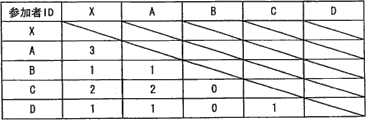
摄影者-参加者之间评价值计算部350a根据由摄影者信息生成部324a输入的摄影者信息、和由参加者信息生成部322a输入的参加者信息,计算各个图像中的摄影者与参加者之间的评价值,并输出给评价值信息存储部370a。具体地讲,评价值是根据拍摄有摄影者和参加者的图像的张数而算出的。The photographer-participant evaluation value calculation unit 350a calculates the number of photographers and participants in each image based on the photographer information input from the photographer
参加者之间评价值计算部360a根据由参加者信息生成部322a输入的参加者信息,计算各个图像中的参加者彼此的评价值,并输出给评价值信息存储部370a。具体地讲,评价值是根据拍摄有各个参加者的图像的张数而算出的。The inter-participant evaluation
评价值信息存储部370a将分别由摄影者-参加者之间评价值计算部350a和参加者之间评价值计算部360a输入的评价值相对应地存储。图34是表示评价值信息的图。例如,对于人物X与人物A的组合,在图像ID2中,人物X是摄影者,人物A是参加者,评价值增加1,在图像ID3、4中,人物A成为摄影者,人物X成为参加者,评价值增加2,所以整体上人物A与人物X之间的评价值为3。The evaluation value
6.影像分析装置2a的动作6. Operation of video analysis device 2a
下面,说明本发明的影像分析装置2a的动作。图35是表示影像分析装置2a的动作的流程图。在该流程图中,i是用于确定多个帧图像中的一个帧图像的变量,N表示帧图像的总数。Next, the operation of the video analysis device 2a of the present invention will be described. Fig. 35 is a flowchart showing the operation of the video analysis device 2a. In this flowchart, i is a variable for determining one frame image among a plurality of frame images, and N represents the total number of frame images.
首先,将用于确定是第几个帧图像的变量i的值初始化为1(步骤S601),对于第i个场景生成摄影者信息和参加者信息(步骤S602、603)。First, the value of the variable i for determining which frame image is initialized to 1 (step S601), and photographer information and participant information are generated for the i-th scene (steps S602, 603).
判定变量i的值是否达到帧图像总数N(步骤S604),在没有达到帧图像总数N时(步骤S604:否),将变量i计数1(步骤S605),并转入步骤S602。Determine whether the value of the variable i reaches the total number N of frame images (step S604), when not reaching the total number N of frame images (step S604: No), count the variable i by 1 (step S605), and turn to step S602.
在达到帧图像总数N时(步骤S604:是),计算摄影者-参加者之间评价值(步骤S606),并计算参加者之间评价值(步骤S607)。并且,将所算出的各个评价值存储在评价值信息存储部370a中(步骤S608)。When the total number N of frame images is reached (step S604: Yes), the photographer-participant inter-evaluation value is calculated (step S606), and the inter-participant evaluation value is calculated (step S607). Then, each calculated evaluation value is stored in the evaluation value
根据以上所述的本实施方式,在由多个摄影者(X、A)拍摄了静止图像数据的情况下,也能够根据摄影者信息和参加者信息,计算各个摄影者与参加者之间的评价值。According to the present embodiment described above, even when still image data is captured by a plurality of photographers (X, A), the relationship between each photographer and participant can be calculated based on the photographer information and participant information. Evaluation value.
(其他变形例)(Other modifications)
以上,根据上述实施方式说明了本发明,但本发明当然不限于上述实施方式。下面所述的情况也包含于本发明中。As mentioned above, although this invention was demonstrated based on the said embodiment, it cannot be overemphasized that this invention is not limited to the said embodiment. The cases described below are also included in the present invention.
(1)在上述实施方式1中,根据图像信息将动态图像数据分割为场景,但也可以分析图像信息、声音信息及传感器信息中的某信息或全部信息,并将其特征量变化的时间点判定为场景分割点。(1) In
例如,在根据声音信息将动态图像数据分割为场景的情况下,按照周围的声音状况变化大的时间点进行分割,在根据传感器信息将动态图像数据分割为场景的情况下,作为传感器信息,例如可以根据由GPS传感器获取的位置信息,按照摄影场所变化大的时间点进行分割。For example, when video data is divided into scenes based on sound information, it is divided according to the time point when the surrounding sound conditions change greatly. When video data is divided into scenes based on sensor information, as sensor information, such as Based on the position information acquired by the GPS sensor, it can be divided according to the point of time when the shooting location changes greatly.
并且,场景分割方法不一定是自动的,也可以按照预先设定的时间长度进行分割,还可以由用户手动进行场景分割。In addition, the scene segmentation method is not necessarily automatic, and the scene segmentation can also be performed according to a preset time length, and the scene segmentation can also be manually performed by the user.
(2)在上述实施方式中,参加者的判定方法采用了人脸图像识别技术,但也可以使用除此之外的方法。例如,对于声音信息,也可以采用讲话人识别技术,与预先登记的人物的声音信息进行比较,在相应的声音的人物包含于该场景中时,判定是场景的参加者。(2) In the above-mentioned embodiment, the face image recognition technology is used as the determination method of the participants, but other methods may also be used. For example, speaker recognition technology may be used to compare voice information with voice information of pre-registered people, and when a person with a corresponding voice is included in the scene, it is determined to be a participant of the scene.
并且,在数据记录装置1附带了GPS那样的位置信息获取传感器的情况下,也可以把与摄影者的位置信息的差分在一定距离之内的人物判定为参加者。In addition, when the
另外,在数据记录装置1及其周围的人物附带了短距离无线标签那样的传感器的情况下,也可以把处于在场景中能够无线通信一定时间的距离范围内的人物判定为参加者。In addition, when the
另外,参加者的判定方法不一定是自动的,也可以由用户手动输入参加者。In addition, the method of judging the participants does not have to be automatic, and the user may manually input the participants.
(3)在上述实施方式中,关于是否是参加者的判定,根据拍摄有预定的人物的图像在构成某个场景的帧图像中是否为一定张数以上来判定,但也可以是,在该场景中的帧图像中预定的人物以一定的比例以上的比例被拍摄了的情况下,判定为是参加者。(3) In the above-mentioned embodiment, the determination of whether or not the participant is a participant is determined based on whether or not there are more than a certain number of images of a predetermined person in the frame images constituting a certain scene. However, in this When a predetermined person is photographed in a frame image in a scene at a ratio equal to or greater than a certain ratio, it is determined that the person is a participant.
(4)在上述实施方式中,根据GPS检测场所信息,但关于场所信息的检测方法,也可以采用除GPS信息之外的信息。例如,也可以获取来自手机或公用无线LAN等固定基站的电波信息,把固定基站的位置信息作为各个场景的场所信息进行赋予。(4) In the above-mentioned embodiment, location information is detected based on GPS, however, information other than GPS information may be used as a detection method of location information. For example, radio wave information from fixed base stations such as mobile phones and public wireless LANs may be acquired, and position information of the fixed base stations may be provided as location information for each scene.
另外,场所信息的检测方法不一定是自动的,也可以由用户手动输入经度和纬度、以及地标信息。In addition, the detection method of location information is not necessarily automatic, and the longitude and latitude and landmark information may be manually input by the user.
(5)在上述实施方式1中,场景摄影者信息是通过用户输入而预先存储的,但在没有存储摄影者信息的情况下,也可以从场景中检测声音信息,并采用讲话人识别技术,将检测到的声音信息与预先存储在声音/人脸信息存储部312中的人物的声音信息进行比较,并判定是否一致,并且对构成该场景的每个帧图像进行人物的人脸图像的检测,并采用人脸图像识别技术,判定检测到的人物的人脸图像是否对应于存储在声音/人脸信息存储部312中的人物的人脸图像中的哪个人脸图像。(5) In the first embodiment above, the scene photographer information is pre-stored through user input, but if the photographer information is not stored, it is also possible to detect sound information from the scene and use speaker recognition technology, Compare the detected voice information with the voice information of the person stored in the voice/face information storage unit 312 in advance, and determine whether they match, and detect the face image of the person for each frame image constituting the scene , and use the face image recognition technology to determine whether the detected face image of the person corresponds to which face image among the face images of the person stored in the voice/face information storage unit 312 .
在各个判定的结果是检测到的声音信息对应于所存储的人物的声音信息中的某一个声音信息,而且在该场景中完全没有摄入与所检测到的声音信息对应的声音的人物的情况下,判定为该人物是该场景的摄影者。As a result of each determination, the detected voice information corresponds to any one of the stored voice information of persons, and there is no case in which a person whose voice corresponds to the detected voice information is captured in the scene. Next, it is determined that the person is the photographer of the scene.
并且,作为摄影者信息的判定方法也可以采用除讲话人识别技术之外的方法。例如,在对可能成为摄影者的多个人物和摄影设备分别附带了短距离无线标签那样的传感器的情况下,也可以将在各个场景中,在距摄影设备的距离为能够拍摄的范围之内滞留了一定时间的人物,判定为摄影者。In addition, a method other than the speaker recognition technology may be used as a determination method of the photographer information. For example, when a sensor such as a short-range wireless tag is attached to a plurality of persons who may become photographers and a photographing device, the distance from the photographing device in each scene may be within the range that can be photographed. People who stay for a certain period of time are judged as photographers.
(6)在上述实施方式中,根据时间长度计算时间加权值,但也可以不采用时间长度,而根据场景的时间段来计算时间加权值。例如,也可以是,相比平日里的白天,对休息日及夜间的场景赋予较大的加权。(6) In the above embodiments, the time-weighted value is calculated according to the length of time, but the time-weighted value may be calculated according to the time period of the scene instead of using the time length. For example, scenes on holidays and nighttime may be weighted more heavily than daytime on weekdays.
(7)在上述实施方式中,根据位置信息的差分值计算场所加权值,但也可以不采用位置信息的差分值,而根据赋予给场景的地标信息所表示的场所的类型,计算场所加权值。具体地讲,预先存储使表示亲密度的评价值与地标信息所表示的场所的每种类型相对应的评价值对应表、和使地标信息所表示的场所与该场所的类型相对应的场所对应表。并且,参照场所对应表,根据地标信息所表示的场所来确定摄影场所的类型,另外参照评价值对应表来确定与摄影场所的类型相对应的评价值,并根据所确定的评价值计算场景评价值。关于评价值对应表,例如也可以对游乐园那样的娱乐场所赋予更大的加权。(7) In the above-mentioned embodiment, the place weighted value is calculated according to the difference value of the position information, but the place weighted value may be calculated according to the type of place indicated by the landmark information assigned to the scene instead of using the difference value of the position information . Specifically, an evaluation value correspondence table in which an evaluation value indicating intimacy is associated with each type of place indicated by landmark information, and a place correspondence table in which a place indicated by landmark information is associated with the type of the place are stored in advance. surface. And, referring to the location correspondence table, the type of the shooting location is determined according to the location indicated by the landmark information, and the evaluation value corresponding to the type of the shooting location is determined by referring to the evaluation value correspondence table, and the scene evaluation is calculated based on the determined evaluation value. value. Regarding the evaluation value correspondence table, for example, entertainment places such as amusement parks may be given greater weight.
(8)在上述实施方式1中,摄影者在全部场景中是同一人物,但摄影者不一定在全部场景中都是同一人物,在某个场景中是参加者的人物,有可能在其他场景中成为摄影者。该情况时,在利用数据记录装置1进行摄影时,也可以由进行摄影的用户预先输入自己的摄影者信息。(8) In
(9)在上述实施方式中,通过将时间、人数及场所的各个加权值相加来计算评价值,但也可以不将时间、人数及场所的各个加权值相加,而通过相乘来计算评价值。(9) In the above-mentioned embodiment, the evaluation value is calculated by adding the respective weighted values of time, number of people, and place, but instead of adding the respective weighted values of time, number of people, and place, the evaluation value may be calculated by multiplying Evaluation value.
并且,各个加权值不一定全部使用,也可以组合任意几个加权值来计算评价值。Furthermore, it is not necessary to use all the weighted values, and any number of weighted values may be combined to calculate the evaluation value.
并且,也可以不使用过去的相似场景信息,而是设定各种加权系数来计算评价值。In addition, instead of using past similar scene information, various weighting coefficients may be set to calculate the evaluation value.
(10)在上述实施方式中,对记录在场景信息存储部342中的全部的过去场景信息计算相似度,但也可以对指定时间范围内的过去场景信息计算相似度。(10) In the above embodiment, the similarity is calculated for all the past scene information recorded in the scene information storage unit 342 , but the similarity may be calculated for the past scene information within a specified time range.
(11)在上述实施方式中,通过对包含于预定时间内的相似场景数量进行计数来计算场景加权系数WS,但也可以根据相似场景信息的时间信息,检测相似场景的时间上的周期性,并计算场景加权系数WS。即,对于在每天的相同时刻发生的场景,视为日常性的场景,并将加权系数WS设为低的值。(11) In the above embodiment, the scene weighting coefficient W S is calculated by counting the number of similar scenes contained in a predetermined time, but it is also possible to detect the temporal periodicity of similar scenes according to the time information of similar scene information , and calculate the scene weighting coefficient W S . That is, a scene that occurs at the same time every day is regarded as a daily scene, and the weighting coefficient W S is set to a low value.
(12)在上述实施方式中,参加人数加权系数WN是在想要重视参加人数加权系数WN来计算评价值的情况下设定的,具体地讲,也可以对含有一个被摄影者的累积场景数进行计数,并根据该数来计算参加人数加权系数WN。此时,也可以设为在含有一个被摄影者的数越大时,使参加人数加权系数WN越大。(12) In the above-mentioned embodiment, the weighting coefficient W N of the number of participants is set when it is desired to pay attention to the weighting coefficient W N of the number of participants to calculate the evaluation value. The number of accumulated scenes is counted, and the number of participants weighting coefficient W N is calculated based on the number. In this case, the weighting coefficient W N for the number of participants may be made larger as the number including one subject is larger.
并且,也可以根据需要而增减场景加权系数WS和场所加权系数WL。例如,在想要更重视基于场所的评价值的情况下,在增加了场所评价值的加权WL的基础上,将评价值相加。Furthermore, the scene weighting coefficient WS and the place weighting coefficient W L may be increased or decreased as necessary. For example, when it is desired to place more emphasis on the evaluation value based on the location, the evaluation value is added in addition to the weight W L that adds the evaluation value of the location.
(13)也可以对由场景内摄影者-参加者之间评价值计算部350计算的评价值、和由场景内参加者之间评价值计算部360计算的评价值,分别赋予不同的加权。(13) Different weights may be assigned to the evaluation value calculated by the in-scene photographer-participant evaluation
(14)在上述实施方式1中,把影像分析的对象设为在时间上连续记录的动态图像数据,但也可以设为静止图像数据。该情况时,如上所述,也可以根据静止图像的图像信息将多个静止图像划分为各个场景,还可以根据时间信息及场所信息划分为各个场景。在根据时间信息划分为场景的情况下,例如把在预定的时间段拍摄到的静止图像划分为相同场景。并且,在根据场所信息划分为场景的情况下,例如把场所信息相同的静止图像划分为相同场景。(14) In the above-mentioned first embodiment, the target of the video analysis is the video data recorded continuously in time, but it may also be the still image data. In this case, as described above, a plurality of still images may be divided into scenes based on the image information of the still images, or may be divided into scenes based on time information and location information. In the case of dividing into scenes based on time information, for example, still images captured within a predetermined period of time are divided into the same scene. In addition, in the case of classifying scenes based on location information, for example, still images having the same location information are classified as the same scene.
通过按照场景单位来计算评价值,能够获得与动态图像数据时相同的效果。By calculating the evaluation value on a scene-by-scene basis, the same effect as in the case of video data can be obtained.
(15)也可以对上述实施方式和上述变形例进行各种组合。(15) Various combinations of the above-mentioned embodiment and the above-mentioned modifications are also possible.
并且,本发明的影像分析装置当然能够在不脱离本发明的范围的情况下,按照本发明的宗旨进行各种变形或修改。Furthermore, the video analysis device of the present invention can of course be variously modified or modified in accordance with the gist of the present invention without departing from the scope of the present invention.
产业上的可利用性Industrial availability
在对利用可佩戴式照相机或摄像机、DSC等拍摄到的个人内容进行分类及整理时,把表示人物间的关系的评价值作为指标来进行分类及整理,对于这样的内容浏览软件,本发明特别有用。When classifying and sorting personal content captured by wearable cameras, video cameras, DSC, etc., the evaluation value indicating the relationship between characters is used as an index to classify and sort. For such content browsing software, the present invention is particularly useful. it works.
Claims (18)
Applications Claiming Priority (3)
| Application Number | Priority Date | Filing Date | Title |
|---|---|---|---|
| JP2007198982 | 2007-07-31 | ||
| JP2007-198982 | 2007-07-31 | ||
| PCT/JP2008/002040 WO2009016833A1 (en) | 2007-07-31 | 2008-07-30 | Video analysis apparatus and method for calculating inter-person evaluation value using video analysis |
Publications (1)
| Publication Number | Publication Date |
|---|---|
| CN101855633A true CN101855633A (en) | 2010-10-06 |
Family
ID=40304075
Family Applications (1)
| Application Number | Title | Priority Date | Filing Date |
|---|---|---|---|
| CN200880101177A Pending CN101855633A (en) | 2007-07-31 | 2008-07-30 | Video analysis device, evaluation value calculation method between people based on video analysis |
Country Status (4)
| Country | Link |
|---|---|
| US (1) | US8442268B2 (en) |
| JP (1) | JP5175852B2 (en) |
| CN (1) | CN101855633A (en) |
| WO (1) | WO2009016833A1 (en) |
Cited By (7)
| Publication number | Priority date | Publication date | Assignee | Title |
|---|---|---|---|---|
| CN102855269A (en) * | 2011-06-13 | 2013-01-02 | 索尼公司 | Content extracting device, content extracting method and program |
| CN103369232A (en) * | 2012-03-26 | 2013-10-23 | 富士胶片株式会社 | Image evaluating device, image evaluating method, and image evaluating system |
| CN110972519A (en) * | 2018-07-31 | 2020-04-07 | 艾思益信息应用技术股份公司 | Information providing system and information providing method |
| US11520823B2 (en) | 2019-03-29 | 2022-12-06 | Information System Engineering Inc. | Information providing system and information providing method |
| US11520822B2 (en) | 2019-03-29 | 2022-12-06 | Information System Engineering Inc. | Information providing system and information providing method |
| US11651023B2 (en) | 2019-03-29 | 2023-05-16 | Information System Engineering Inc. | Information providing system |
| US12450900B2 (en) | 2020-03-26 | 2025-10-21 | Information System Engineering Inc. | Information processing device and method for scene estimation and chunk estimation |
Families Citing this family (21)
| Publication number | Priority date | Publication date | Assignee | Title |
|---|---|---|---|---|
| JP4944183B2 (en) * | 2009-12-03 | 2012-05-30 | 株式会社ソニー・コンピュータエンタテインメント | Information processing apparatus and information processing method |
| US8271497B2 (en) | 2009-12-03 | 2012-09-18 | Sony Computer Entertainment Inc. | Information processing apparatus and information processing method outputting information on movement of person |
| JP5727476B2 (en) * | 2010-06-23 | 2015-06-03 | パナソニック インテレクチュアル プロパティ コーポレーション オブアメリカPanasonic Intellectual Property Corporation of America | Image evaluation apparatus, image evaluation method, program, integrated circuit |
| JP5780764B2 (en) * | 2011-01-17 | 2015-09-16 | オリンパス株式会社 | Imaging device |
| JP2013008182A (en) * | 2011-06-24 | 2013-01-10 | Nikon Corp | Electronic apparatus |
| KR101541495B1 (en) * | 2012-08-17 | 2015-08-05 | 네이버 주식회사 | Apparatus, method and computer readable recording medium for analyzing a video using the image captured from the video |
| US20140181668A1 (en) | 2012-12-20 | 2014-06-26 | International Business Machines Corporation | Visual summarization of video for quick understanding |
| KR20150118855A (en) * | 2014-04-15 | 2015-10-23 | 삼성전자주식회사 | Electronic apparatus and recording method thereof |
| EP3591651A1 (en) * | 2014-08-14 | 2020-01-08 | Samsung Electronics Co., Ltd. | Method and apparatus for providing image contents |
| JP5842103B1 (en) * | 2014-10-24 | 2016-01-13 | パナソニックIpマネジメント株式会社 | Login authentication apparatus and login authentication method for in-vehicle camera system |
| US9769367B2 (en) | 2015-08-07 | 2017-09-19 | Google Inc. | Speech and computer vision-based control |
| JP6234408B2 (en) * | 2015-08-24 | 2017-11-22 | 日本電信電話株式会社 | Content information providing device, content display device, data structure of object metadata, data structure of event metadata, content information providing method, content information providing program, and content information providing system |
| US10732809B2 (en) | 2015-12-30 | 2020-08-04 | Google Llc | Systems and methods for selective retention and editing of images captured by mobile image capture device |
| US10225511B1 (en) | 2015-12-30 | 2019-03-05 | Google Llc | Low power framework for controlling image sensor mode in a mobile image capture device |
| US9838641B1 (en) | 2015-12-30 | 2017-12-05 | Google Llc | Low power framework for processing, compressing, and transmitting images at a mobile image capture device |
| US9836819B1 (en) | 2015-12-30 | 2017-12-05 | Google Llc | Systems and methods for selective retention and editing of images captured by mobile image capture device |
| US9836484B1 (en) | 2015-12-30 | 2017-12-05 | Google Llc | Systems and methods that leverage deep learning to selectively store images at a mobile image capture device |
| JP6586380B2 (en) * | 2016-03-01 | 2019-10-02 | 富士フイルム株式会社 | Image processing apparatus, image processing method, program, and recording medium |
| JP6799779B2 (en) * | 2016-10-07 | 2020-12-16 | パナソニックIpマネジメント株式会社 | Surveillance video analysis system and surveillance video analysis method |
| CN113573044B (en) * | 2021-01-19 | 2022-12-09 | 腾讯科技(深圳)有限公司 | Video data processing method and device, computer equipment and readable storage medium |
| US20210397858A1 (en) * | 2021-08-31 | 2021-12-23 | Cornelius Buerkle | Detection and mitigation of inappropriate behaviors of autonomous vehicle passengers |
Family Cites Families (10)
| Publication number | Priority date | Publication date | Assignee | Title |
|---|---|---|---|---|
| JP2006081021A (en) | 2004-09-10 | 2006-03-23 | Fuji Photo Film Co Ltd | Electronic album display system, electronic album display method, electronic album display program, image classification device, image classification method and image classification program |
| US7783115B2 (en) * | 2004-12-14 | 2010-08-24 | Fujifilm Corporation | Apparatus and method for setting degrees of importance, apparatus and method for representative image selection, apparatus and method for printing-recommended image selection, and programs therefor |
| WO2006091869A2 (en) * | 2005-02-25 | 2006-08-31 | Youfinder Intellectual Property Licensing Limited Liability Company | Automated indexing for distributing event photography |
| JP2006236216A (en) | 2005-02-28 | 2006-09-07 | Fuji Photo Film Co Ltd | Person recognition system, person recognizing method and person recognition program |
| JP2006268395A (en) * | 2005-03-24 | 2006-10-05 | Fuji Xerox Co Ltd | Information processor, information processing method and program |
| JP4577113B2 (en) * | 2005-06-22 | 2010-11-10 | オムロン株式会社 | Object determining device, imaging device, and monitoring device |
| JP4597803B2 (en) * | 2005-07-26 | 2010-12-15 | パナソニック株式会社 | Video scene information generator |
| JP2007041964A (en) * | 2005-08-04 | 2007-02-15 | Matsushita Electric Ind Co Ltd | Image processing device |
| JP2007094990A (en) * | 2005-09-30 | 2007-04-12 | Fujifilm Corp | Image classification apparatus and method, and program |
| US7916894B1 (en) * | 2007-01-29 | 2011-03-29 | Adobe Systems Incorporated | Summary of a video using faces |
-
2008
- 2008-07-30 CN CN200880101177A patent/CN101855633A/en active Pending
- 2008-07-30 JP JP2009525281A patent/JP5175852B2/en not_active Expired - Fee Related
- 2008-07-30 US US12/671,101 patent/US8442268B2/en not_active Expired - Fee Related
- 2008-07-30 WO PCT/JP2008/002040 patent/WO2009016833A1/en not_active Ceased
Cited By (9)
| Publication number | Priority date | Publication date | Assignee | Title |
|---|---|---|---|---|
| CN102855269A (en) * | 2011-06-13 | 2013-01-02 | 索尼公司 | Content extracting device, content extracting method and program |
| CN103369232A (en) * | 2012-03-26 | 2013-10-23 | 富士胶片株式会社 | Image evaluating device, image evaluating method, and image evaluating system |
| CN110972519A (en) * | 2018-07-31 | 2020-04-07 | 艾思益信息应用技术股份公司 | Information providing system and information providing method |
| US11341714B2 (en) | 2018-07-31 | 2022-05-24 | Information System Engineering Inc. | Information service system and information service method |
| US11520823B2 (en) | 2019-03-29 | 2022-12-06 | Information System Engineering Inc. | Information providing system and information providing method |
| US11520822B2 (en) | 2019-03-29 | 2022-12-06 | Information System Engineering Inc. | Information providing system and information providing method |
| US11651023B2 (en) | 2019-03-29 | 2023-05-16 | Information System Engineering Inc. | Information providing system |
| US11934446B2 (en) | 2019-03-29 | 2024-03-19 | Information System Engineering Inc. | Information providing system |
| US12450900B2 (en) | 2020-03-26 | 2025-10-21 | Information System Engineering Inc. | Information processing device and method for scene estimation and chunk estimation |
Also Published As
| Publication number | Publication date |
|---|---|
| WO2009016833A1 (en) | 2009-02-05 |
| US20100195874A1 (en) | 2010-08-05 |
| JP5175852B2 (en) | 2013-04-03 |
| JPWO2009016833A1 (en) | 2010-10-14 |
| US8442268B2 (en) | 2013-05-14 |
Similar Documents
| Publication | Publication Date | Title |
|---|---|---|
| JP5175852B2 (en) | Video analysis device, method for calculating evaluation value between persons by video analysis | |
| CN102576461B (en) | The aesthetic quality of assessment digital picture | |
| JP4616702B2 (en) | Image processing | |
| US8238615B2 (en) | Method for comparing photographer aesthetic quality | |
| JP5231827B2 (en) | Image display device, display control method, and display control program | |
| US8786753B2 (en) | Apparatus, method and program for selecting images for a slideshow from among a large number of captured images | |
| US20130329059A1 (en) | Person detection system | |
| Kawanishi et al. | Shinpuhkan2014: A multi-camera pedestrian dataset for tracking people across multiple cameras | |
| US20110074966A1 (en) | Method for measuring photographer's aesthetic quality progress | |
| JP6098318B2 (en) | Image processing apparatus, image processing method, image processing program, and recording medium | |
| KR100956159B1 (en) | How to Auto Tag Lifelog Devices and Information | |
| CN112784740B (en) | Gait data acquisition and labeling method and application | |
| JPWO2011001587A1 (en) | Content classification device, content classification method, and content classification program | |
| US8320609B2 (en) | Device and method for attaching additional information | |
| JP2011244043A (en) | Recorded video playback system | |
| CN114429608B (en) | A behavior recognition method, device, equipment and storage medium | |
| JP2008131330A (en) | Image display device and image display method | |
| JP4427714B2 (en) | Image recognition apparatus, image recognition processing method, and image recognition program | |
| JP6410427B2 (en) | Information processing apparatus, information processing method, and program | |
| JP2008146191A (en) | Image output apparatus and image output method | |
| KR100827845B1 (en) | Apparatus and method for providing people tag | |
| CN113496152A (en) | Face recognition method and device based on AR glasses, electronic equipment and storage medium | |
| JP6169382B2 (en) | Shared information provision system | |
| CN115641628B (en) | Light-sensing intelligent recognition display stand and system | |
| CN121750980A (en) | Shooting methods, handheld gimbal and shooting equipment |
Legal Events
| Date | Code | Title | Description |
|---|---|---|---|
| C06 | Publication | ||
| PB01 | Publication | ||
| C10 | Entry into substantive examination | ||
| SE01 | Entry into force of request for substantive examination | ||
| C02 | Deemed withdrawal of patent application after publication (patent law 2001) | ||
| WD01 | Invention patent application deemed withdrawn after publication |
Application publication date: 20101006 |