CN101636169B - Self-assembling amphiphilic polymers as antiviral agents - Google Patents
Self-assembling amphiphilic polymers as antiviral agents Download PDFInfo
- Publication number
- CN101636169B CN101636169B CN200780050316.XA CN200780050316A CN101636169B CN 101636169 B CN101636169 B CN 101636169B CN 200780050316 A CN200780050316 A CN 200780050316A CN 101636169 B CN101636169 B CN 101636169B
- Authority
- CN
- China
- Prior art keywords
- polymer
- hydrophobic
- comb
- peg
- acid
- Prior art date
- Legal status (The legal status is an assumption and is not a legal conclusion. Google has not performed a legal analysis and makes no representation as to the accuracy of the status listed.)
- Expired - Fee Related
Links
Images

Classifications
-
- B—PERFORMING OPERATIONS; TRANSPORTING
- B82—NANOTECHNOLOGY
- B82B—NANOSTRUCTURES FORMED BY MANIPULATION OF INDIVIDUAL ATOMS, MOLECULES, OR LIMITED COLLECTIONS OF ATOMS OR MOLECULES AS DISCRETE UNITS; MANUFACTURE OR TREATMENT THEREOF
- B82B3/00—Manufacture or treatment of nanostructures by manipulation of individual atoms or molecules, or limited collections of atoms or molecules as discrete units
-
- A—HUMAN NECESSITIES
- A61—MEDICAL OR VETERINARY SCIENCE; HYGIENE
- A61K—PREPARATIONS FOR MEDICAL, DENTAL OR TOILETRY PURPOSES
- A61K31/00—Medicinal preparations containing organic active ingredients
- A61K31/74—Synthetic polymeric materials
- A61K31/795—Polymers containing sulfur
-
- A—HUMAN NECESSITIES
- A61—MEDICAL OR VETERINARY SCIENCE; HYGIENE
- A61K—PREPARATIONS FOR MEDICAL, DENTAL OR TOILETRY PURPOSES
- A61K47/00—Medicinal preparations characterised by the non-active ingredients used, e.g. carriers or inert additives; Targeting or modifying agents chemically bound to the active ingredient
- A61K47/50—Medicinal preparations characterised by the non-active ingredients used, e.g. carriers or inert additives; Targeting or modifying agents chemically bound to the active ingredient the non-active ingredient being chemically bound to the active ingredient, e.g. polymer-drug conjugates
- A61K47/51—Medicinal preparations characterised by the non-active ingredients used, e.g. carriers or inert additives; Targeting or modifying agents chemically bound to the active ingredient the non-active ingredient being chemically bound to the active ingredient, e.g. polymer-drug conjugates the non-active ingredient being a modifying agent
- A61K47/54—Medicinal preparations characterised by the non-active ingredients used, e.g. carriers or inert additives; Targeting or modifying agents chemically bound to the active ingredient the non-active ingredient being chemically bound to the active ingredient, e.g. polymer-drug conjugates the non-active ingredient being a modifying agent the modifying agent being an organic compound
- A61K47/549—Sugars, nucleosides, nucleotides or nucleic acids
-
- A—HUMAN NECESSITIES
- A61—MEDICAL OR VETERINARY SCIENCE; HYGIENE
- A61K—PREPARATIONS FOR MEDICAL, DENTAL OR TOILETRY PURPOSES
- A61K47/00—Medicinal preparations characterised by the non-active ingredients used, e.g. carriers or inert additives; Targeting or modifying agents chemically bound to the active ingredient
- A61K47/50—Medicinal preparations characterised by the non-active ingredients used, e.g. carriers or inert additives; Targeting or modifying agents chemically bound to the active ingredient the non-active ingredient being chemically bound to the active ingredient, e.g. polymer-drug conjugates
- A61K47/51—Medicinal preparations characterised by the non-active ingredients used, e.g. carriers or inert additives; Targeting or modifying agents chemically bound to the active ingredient the non-active ingredient being chemically bound to the active ingredient, e.g. polymer-drug conjugates the non-active ingredient being a modifying agent
- A61K47/54—Medicinal preparations characterised by the non-active ingredients used, e.g. carriers or inert additives; Targeting or modifying agents chemically bound to the active ingredient the non-active ingredient being chemically bound to the active ingredient, e.g. polymer-drug conjugates the non-active ingredient being a modifying agent the modifying agent being an organic compound
- A61K47/55—Medicinal preparations characterised by the non-active ingredients used, e.g. carriers or inert additives; Targeting or modifying agents chemically bound to the active ingredient the non-active ingredient being chemically bound to the active ingredient, e.g. polymer-drug conjugates the non-active ingredient being a modifying agent the modifying agent being an organic compound the modifying agent being also a pharmacologically or therapeutically active agent, i.e. the entire conjugate being a codrug
- A61K47/551—Medicinal preparations characterised by the non-active ingredients used, e.g. carriers or inert additives; Targeting or modifying agents chemically bound to the active ingredient the non-active ingredient being chemically bound to the active ingredient, e.g. polymer-drug conjugates the non-active ingredient being a modifying agent the modifying agent being an organic compound the modifying agent being also a pharmacologically or therapeutically active agent, i.e. the entire conjugate being a codrug one of the codrug's components being a vitamin, e.g. niacinamide, vitamin B3, cobalamin, vitamin B12, folate, vitamin A or retinoic acid
-
- A—HUMAN NECESSITIES
- A61—MEDICAL OR VETERINARY SCIENCE; HYGIENE
- A61K—PREPARATIONS FOR MEDICAL, DENTAL OR TOILETRY PURPOSES
- A61K47/00—Medicinal preparations characterised by the non-active ingredients used, e.g. carriers or inert additives; Targeting or modifying agents chemically bound to the active ingredient
- A61K47/50—Medicinal preparations characterised by the non-active ingredients used, e.g. carriers or inert additives; Targeting or modifying agents chemically bound to the active ingredient the non-active ingredient being chemically bound to the active ingredient, e.g. polymer-drug conjugates
- A61K47/51—Medicinal preparations characterised by the non-active ingredients used, e.g. carriers or inert additives; Targeting or modifying agents chemically bound to the active ingredient the non-active ingredient being chemically bound to the active ingredient, e.g. polymer-drug conjugates the non-active ingredient being a modifying agent
- A61K47/62—Medicinal preparations characterised by the non-active ingredients used, e.g. carriers or inert additives; Targeting or modifying agents chemically bound to the active ingredient the non-active ingredient being chemically bound to the active ingredient, e.g. polymer-drug conjugates the non-active ingredient being a modifying agent the modifying agent being a protein, peptide or polyamino acid
- A61K47/64—Drug-peptide, drug-protein or drug-polyamino acid conjugates, i.e. the modifying agent being a peptide, protein or polyamino acid which is covalently bonded or complexed to a therapeutically active agent
-
- A—HUMAN NECESSITIES
- A61—MEDICAL OR VETERINARY SCIENCE; HYGIENE
- A61K—PREPARATIONS FOR MEDICAL, DENTAL OR TOILETRY PURPOSES
- A61K47/00—Medicinal preparations characterised by the non-active ingredients used, e.g. carriers or inert additives; Targeting or modifying agents chemically bound to the active ingredient
- A61K47/50—Medicinal preparations characterised by the non-active ingredients used, e.g. carriers or inert additives; Targeting or modifying agents chemically bound to the active ingredient the non-active ingredient being chemically bound to the active ingredient, e.g. polymer-drug conjugates
- A61K47/51—Medicinal preparations characterised by the non-active ingredients used, e.g. carriers or inert additives; Targeting or modifying agents chemically bound to the active ingredient the non-active ingredient being chemically bound to the active ingredient, e.g. polymer-drug conjugates the non-active ingredient being a modifying agent
- A61K47/68—Medicinal preparations characterised by the non-active ingredients used, e.g. carriers or inert additives; Targeting or modifying agents chemically bound to the active ingredient the non-active ingredient being chemically bound to the active ingredient, e.g. polymer-drug conjugates the non-active ingredient being a modifying agent the modifying agent being an antibody, an immunoglobulin or a fragment thereof, e.g. an Fc-fragment
- A61K47/6835—Medicinal preparations characterised by the non-active ingredients used, e.g. carriers or inert additives; Targeting or modifying agents chemically bound to the active ingredient the non-active ingredient being chemically bound to the active ingredient, e.g. polymer-drug conjugates the non-active ingredient being a modifying agent the modifying agent being an antibody, an immunoglobulin or a fragment thereof, e.g. an Fc-fragment the modifying agent being an antibody or an immunoglobulin bearing at least one antigen-binding site
- A61K47/6839—Medicinal preparations characterised by the non-active ingredients used, e.g. carriers or inert additives; Targeting or modifying agents chemically bound to the active ingredient the non-active ingredient being chemically bound to the active ingredient, e.g. polymer-drug conjugates the non-active ingredient being a modifying agent the modifying agent being an antibody, an immunoglobulin or a fragment thereof, e.g. an Fc-fragment the modifying agent being an antibody or an immunoglobulin bearing at least one antigen-binding site the antibody targeting material from viruses
- A61K47/6841—Medicinal preparations characterised by the non-active ingredients used, e.g. carriers or inert additives; Targeting or modifying agents chemically bound to the active ingredient the non-active ingredient being chemically bound to the active ingredient, e.g. polymer-drug conjugates the non-active ingredient being a modifying agent the modifying agent being an antibody, an immunoglobulin or a fragment thereof, e.g. an Fc-fragment the modifying agent being an antibody or an immunoglobulin bearing at least one antigen-binding site the antibody targeting material from viruses the antibody targeting a RNA virus
-
- A—HUMAN NECESSITIES
- A61—MEDICAL OR VETERINARY SCIENCE; HYGIENE
- A61K—PREPARATIONS FOR MEDICAL, DENTAL OR TOILETRY PURPOSES
- A61K47/00—Medicinal preparations characterised by the non-active ingredients used, e.g. carriers or inert additives; Targeting or modifying agents chemically bound to the active ingredient
- A61K47/50—Medicinal preparations characterised by the non-active ingredients used, e.g. carriers or inert additives; Targeting or modifying agents chemically bound to the active ingredient the non-active ingredient being chemically bound to the active ingredient, e.g. polymer-drug conjugates
- A61K47/69—Medicinal preparations characterised by the non-active ingredients used, e.g. carriers or inert additives; Targeting or modifying agents chemically bound to the active ingredient the non-active ingredient being chemically bound to the active ingredient, e.g. polymer-drug conjugates the conjugate being characterised by physical or galenical forms, e.g. emulsion, particle, inclusion complex, stent or kit
- A61K47/6905—Medicinal preparations characterised by the non-active ingredients used, e.g. carriers or inert additives; Targeting or modifying agents chemically bound to the active ingredient the non-active ingredient being chemically bound to the active ingredient, e.g. polymer-drug conjugates the conjugate being characterised by physical or galenical forms, e.g. emulsion, particle, inclusion complex, stent or kit the form being a colloid or an emulsion
- A61K47/6907—Medicinal preparations characterised by the non-active ingredients used, e.g. carriers or inert additives; Targeting or modifying agents chemically bound to the active ingredient the non-active ingredient being chemically bound to the active ingredient, e.g. polymer-drug conjugates the conjugate being characterised by physical or galenical forms, e.g. emulsion, particle, inclusion complex, stent or kit the form being a colloid or an emulsion the form being a microemulsion, nanoemulsion or micelle
-
- A—HUMAN NECESSITIES
- A61—MEDICAL OR VETERINARY SCIENCE; HYGIENE
- A61P—SPECIFIC THERAPEUTIC ACTIVITY OF CHEMICAL COMPOUNDS OR MEDICINAL PREPARATIONS
- A61P31/00—Antiinfectives, i.e. antibiotics, antiseptics, chemotherapeutics
- A61P31/12—Antivirals
-
- A—HUMAN NECESSITIES
- A61—MEDICAL OR VETERINARY SCIENCE; HYGIENE
- A61P—SPECIFIC THERAPEUTIC ACTIVITY OF CHEMICAL COMPOUNDS OR MEDICINAL PREPARATIONS
- A61P31/00—Antiinfectives, i.e. antibiotics, antiseptics, chemotherapeutics
- A61P31/12—Antivirals
- A61P31/14—Antivirals for RNA viruses
-
- A—HUMAN NECESSITIES
- A61—MEDICAL OR VETERINARY SCIENCE; HYGIENE
- A61P—SPECIFIC THERAPEUTIC ACTIVITY OF CHEMICAL COMPOUNDS OR MEDICINAL PREPARATIONS
- A61P31/00—Antiinfectives, i.e. antibiotics, antiseptics, chemotherapeutics
- A61P31/12—Antivirals
- A61P31/14—Antivirals for RNA viruses
- A61P31/16—Antivirals for RNA viruses for influenza or rhinoviruses
-
- C—CHEMISTRY; METALLURGY
- C01—INORGANIC CHEMISTRY
- C01G—COMPOUNDS CONTAINING METALS NOT COVERED BY SUBCLASSES C01D OR C01F
- C01G23/00—Compounds of titanium
-
- C—CHEMISTRY; METALLURGY
- C07—ORGANIC CHEMISTRY
- C07K—PEPTIDES
- C07K7/00—Peptides having 5 to 20 amino acids in a fully defined sequence; Derivatives thereof
- C07K7/04—Linear peptides containing only normal peptide links
- C07K7/08—Linear peptides containing only normal peptide links having 12 to 20 amino acids
Landscapes
- Health & Medical Sciences (AREA)
- Life Sciences & Earth Sciences (AREA)
- Chemical & Material Sciences (AREA)
- Engineering & Computer Science (AREA)
- General Health & Medical Sciences (AREA)
- Medicinal Chemistry (AREA)
- Bioinformatics & Cheminformatics (AREA)
- Animal Behavior & Ethology (AREA)
- Pharmacology & Pharmacy (AREA)
- Public Health (AREA)
- Veterinary Medicine (AREA)
- Epidemiology (AREA)
- Virology (AREA)
- Molecular Biology (AREA)
- Organic Chemistry (AREA)
- Proteomics, Peptides & Aminoacids (AREA)
- Biochemistry (AREA)
- Nanotechnology (AREA)
- Chemical Kinetics & Catalysis (AREA)
- Oncology (AREA)
- Communicable Diseases (AREA)
- General Chemical & Material Sciences (AREA)
- Nuclear Medicine, Radiotherapy & Molecular Imaging (AREA)
- Dispersion Chemistry (AREA)
- Crystallography & Structural Chemistry (AREA)
- Immunology (AREA)
- Biophysics (AREA)
- Genetics & Genomics (AREA)
- General Life Sciences & Earth Sciences (AREA)
- Environmental & Geological Engineering (AREA)
- Geology (AREA)
- Inorganic Chemistry (AREA)
- Pulmonology (AREA)
- Manufacturing & Machinery (AREA)
- Medicinal Preparation (AREA)
- Peptides Or Proteins (AREA)
- Medicines That Contain Protein Lipid Enzymes And Other Medicines (AREA)
- Pharmaceuticals Containing Other Organic And Inorganic Compounds (AREA)
- Polyethers (AREA)
- Medicines Containing Antibodies Or Antigens For Use As Internal Diagnostic Agents (AREA)
Abstract
Description
相关申请related application
本申请要求2006年1月19日提交的国际专利申请PCT/US2006/01820的优先权。This application claims priority from International Patent Application PCT/US2006/01820 filed January 19,2006.
技术领域technical field
本发明涉及两性分子聚合物领域,具体而言涉及生物相容的胶囊形成(micelle-forming)梳型聚合物。本发明也涉及靶向给药和抗病毒剂的领域。The present invention relates to the field of amphiphilic polymers, in particular to biocompatible micelle-forming comb polymers. The invention also relates to the field of targeted drug delivery and antiviral agents.
背景技术Background technique
在近些年,包含疏水嵌段和亲水嵌段的两性分子嵌段共聚物已被很好地研究,这是因为当周围溶剂改变时,它们自组装成多种纳米结构的能力。参见Cameron et al.,Can.J.Chem./Rev.Can.Can.Chim.77:1311-1326(1999)。在水溶液中,两性分子聚合物的疏水区室具有自组装的倾向,以便避免与水接触并最小化系统的自由界面能。同时,亲水嵌段在水性环境中形成水合的“壳(corona)”,所以聚集物保持热力学稳定结构。结果是稳定的,聚合物的乳胶状交替悬浮液聚集为具有疏水核和亲水壳的颗粒。In recent years, amphiphilic block copolymers comprising hydrophobic and hydrophilic blocks have been well studied because of their ability to self-assemble into various nanostructures when the surrounding solvent is changed. See Cameron et al., Can. J. Chem./Rev. Can. Can. Chim. 77:1311-1326 (1999). In aqueous solution, the hydrophobic compartments of amphiphilic polymers have a tendency to self-assemble in order to avoid contact with water and minimize the free interfacial energy of the system. At the same time, the hydrophilic blocks form a hydrated "corona" in an aqueous environment, so the aggregates maintain a thermodynamically stable structure. The result is a stable, latex-like alternating suspension of polymer aggregated into particles with a hydrophobic core and a hydrophilic shell.
梳型两性分子共聚物与嵌段共聚物不同,因为其主链是很大程度疏水或亲水的,并且具有与主链相反极性侧链的聚合物链没有掺入其中。梳型共聚物已用疏水主链和亲水支链制备(Mayes等,美国专利号6,399,700),也用亲水主链和疏水支链制备(Watterson等,美国专利号6,521,736)。使用前者来对细胞表面受体提供多价配体表达,而使用后者来溶解药物并将其输送至细胞。Comb amphiphilic copolymers differ from block copolymers in that their backbones are largely hydrophobic or hydrophilic and polymer chains with side chains of opposite polarity to the backbone are not incorporated. Comb copolymers have been prepared with a hydrophobic backbone and hydrophilic branches (Mayes et al., US Patent No. 6,399,700) and also with a hydrophilic backbone and hydrophobic branches (Watterson et al., US Patent No. 6,521,736). The former is used to provide expression of multivalent ligands to cell surface receptors, while the latter is used to solubilize and deliver drugs to cells.
两性分子聚合物聚集物已经被研究作为载体用于溶解不溶药物、靶向给药载体和基因传递系统(gene delivery systems)。它们具有比传统低分子量胶囊更稳定的结构,这是由于内部疏水区的链缠结和/或结晶性。载体的聚合性能使聚集物对普通脂质体当在它们的临界胶囊浓度下溶解时遭到的分解具有相当的免疫。不存在双层膜使它们能更容易与细胞膜融合并将它们的有效负载直接输送至细胞。聚集物的两性分子性能也赋予洗涤剂样的活性,并且适当的靶向聚集物显示能与病毒衣蛋白融合并使其破裂。Amphiphilic polymer aggregates have been investigated as carriers for dissolving insoluble drugs, targeted drug delivery vehicles, and gene delivery systems. They have a more stable structure than traditional low molecular weight capsules due to chain entanglement and/or crystallinity in the internal hydrophobic regions. The polymeric nature of the carrier renders the aggregates fairly immune to the breakdown experienced by ordinary liposomes when dissolved at their critical capsular concentration. The absence of a double membrane allows them to more easily fuse with the cell membrane and deliver their payload directly to the cell. The amphiphilic nature of the aggregates also confers detergent-like activity, and appropriately targeted aggregates were shown to fuse to and disrupt viral coat proteins.
由于聚乙二醇(PEG)良好的生物相容性,和PEG-包衣的“秘密(stealth)”颗粒避免网状内皮系统的明显的能力,掺入PEG的胶囊、脂质体和聚合物已被广泛地考虑作为给药系统的材料。有很多报道使用聚乙二醇(PEG)作为PEG-脂质的亲水成分(形成脂质体和胶囊);参见例如Krishnadas et al,Pharm.Res.20:297-302(2003)。自组装两性分子的嵌段共聚物——其自组装入更结实的“聚集体(polymersomes)”,已被研究作为药物溶解和输送的载体(Photos et al,J.Controlled Release,90:323-334(2003))。也参见Gref et al,Int.Symp.ControlledRelease Mater.20:131(1993);Kwon et al,Langmuir,9:945(1993);Kabanov etal,J.Controlled Release,22:141(1992);Allen et al.,J.Controlled Release,63:275(2000);Inoue et al.,J.Controlled Release,51:221(1998);Yu andEisenberg,Macromolecules,29:6359(1996);Discher et al,Science,284:1 13(1999);Kim et al,美国专利号6,322,805;Seo et al.,美国专利号6,616,941和Seoet al,欧洲专利号EP 0583955。在这种能力中,应即报告应用聚乙稀亚胺(PEI),其关注于寡核苷酸的输运(Nam et al,美国专利号6,569,528;Wagner et al,美国专利申请公开号20040248842)。相似的情况中,Luo et al,in Macromolecules35:3456(2002),描述适合用于多核苷酸输运的PEG-结合的聚酰胺型胺类(″PAMAM″)树形分子。Due to the good biocompatibility of polyethylene glycol (PEG), and the apparent ability of PEG-coated "stealth" particles to avoid the reticuloendothelial system, PEG-incorporated capsules, liposomes, and polymers It has been widely considered as a material for drug delivery systems. There are many reports using polyethylene glycol (PEG) as the hydrophilic component of PEG-lipids (forming liposomes and capsules); see eg Krishnadas et al, Pharm. Res. 20:297-302 (2003). Block copolymers of self-assembling amphiphiles, which self-assemble into stronger "polymersomes," have been investigated as vehicles for drug dissolution and delivery (Photos et al, J. Controlled Release, 90:323- 334 (2003)). See also Gref et al, Int. Symp. Controlled Release Mater. 20:131 (1993); Kwon et al, Langmuir, 9:945 (1993); Kabanov et al, J. Controlled Release, 22:141 (1992); Allen et al. al., J.Controlled Release, 63: 275 (2000); Inoue et al., J. Controlled Release, 51: 221 (1998); Yu and Eisenberg, Macromolecules, 29: 6359 (1996); Discher et al, Science, 284:1 13 (1999); Kim et al, U.S. Patent No. 6,322,805; Seo et al., U.S. Patent No. 6,616,941 and Seo et al, European Patent No. EP 0583955. In this capacity, the application of polyethyleneimine (PEI), which focuses on the transport of oligonucleotides, should be reported (Nam et al, US Patent No. 6,569,528; Wagner et al, US Patent Application Publication No. 20040248842) . In a similar vein, Luo et al, in Macromolecules 35:3456 (2002), describe PEG-conjugated polyamidoamine ("PAMAM") dendrimers suitable for polynucleotide delivery.
除了溶解、分散和输送药物的需要,还有靶向给药系统的需要,具体而言,所述靶向给药系统导向靶组织、肿瘤或器官。这通常通过将对细胞壁具有特异亲和性的抗体或其它配体附到靶位点而完成。然而,PEG除了在聚合物链的末端外缺乏官能团,并且末端基团的大部分不可避免地被与另一个嵌段共聚物成分结合的键占用。因为这个原因,连接靶向部分如抗体或细胞粘附分子到PEG嵌段共聚物通常被限定于非-PEG嵌段,不幸地是其不是正常暴露于自组装聚集物的壳中的共聚物的部分。In addition to the need to dissolve, disperse and deliver the drug, there is also the need for a targeted drug delivery system, specifically directed to the target tissue, tumor or organ. This is usually accomplished by attaching antibodies or other ligands with specific affinity for the cell wall to the target site. However, PEG lacks functional groups except at the ends of the polymer chains, and the majority of the end groups are inevitably taken up by linkages to another block copolymer component. For this reason, attachment of targeting moieties such as antibodies or cell adhesion molecules to PEG block copolymers is generally limited to non-PEG blocks, which unfortunately are not of the copolymer normally exposed in the shell of self-assembled aggregates. part.
导致嵌段共聚物自组装入聚合物聚集物的相分离现象是容易可逆的,并且已经进行尝试通过交联疏水核来增加聚集物的稳定性(参见欧洲专利号EP0552802)。将药物共价连接到嵌段共聚物的疏水部分也已经被尝试(Park和Yoo,美国专利号6,623,729;欧洲专利号EP 0397307)。The phase separation phenomenon leading to the self-assembly of block copolymers into polymer aggregates is readily reversible and attempts have been made to increase the stability of the aggregates by cross-linking the hydrophobic core (see European Patent No. EP0552802). Covalent attachment of drugs to the hydrophobic portion of block copolymers has also been attempted (Park and Yoo, US Patent No. 6,623,729; European Patent No. EP 0397307).
树形分子容易与靶向部分结合,并且也具有在活体内靶向特定细胞的能力(Singh et al.(1994)Clin.Chem.40:1845),并且将病毒和细菌性病原体嵌段粘合到生物基底(substrate)。与多唾液酸接合的梳状支链和支化接枝(dendrigraft)聚合物对于其在体外抑制病毒血细胞凝集和嵌段感染哺乳动物细胞的能力已被评估(Reuter et al.(1999)Bioconjugate Chem.10:271)。最有效的病毒抑制剂是梳状支链和支化接枝大分子,对这些病毒其示出多达50,000-倍增加的活性。Dendrimers are readily combined with targeting moieties and also have the ability to target specific cells in vivo (Singh et al. (1994) Clin. Chem. 40:1845), and bind viral and bacterial pathogen blocks to the biological substrate. Comb branched and branched graft (dendrigraft) polymers conjugated with polysialic acid have been evaluated for their ability to inhibit viral hemagglutination and block infection of mammalian cells in vitro (Reuter et al. (1999) Bioconjugate Chem .10:271). The most potent virus inhibitors were comb branched and branched graft macromolecules, which showed up to 50,000-fold increased activity against these viruses.
近来,制药公司Starpharma宣布成功地开发了树形分子-基(dendrimer-based)杀生物剂(VivaGel(TM)),其通过与病毒表面的受体结合来预防HIV感染(Halford(2005)Chem.& Eng.News 83(24):30)。Chen等(2000)(Biomacromolecules.1:473)已经报道季铵功能化的聚丙烯亚胺(聚甲基吖丙啶)树形分子是非常有效力的杀生物剂。Recently, pharmaceutical company Starpharma announced the successful development of dendrimer-based (dendrimer-based) biocide (VivaGel(TM)), which prevents HIV infection by binding to receptors on the surface of the virus (Halford (2005) Chem. & Eng. News 83(24): 30). Chen et al. (2000) (Biomacromolecules. 1:473) have reported that quaternary ammonium functionalized polypropyleneimine (polymethylimine) dendrimers are very potent biocides.
仍然需要稳定、生物相容的、易于将靶向部分连接至聚集物外部、以及在给药至期望细胞目标中有效的给药系统。也需要相似稳定和生物相容的靶抗病毒剂。There remains a need for drug delivery systems that are stable, biocompatible, readily attach targeting moieties to the exterior of aggregates, and are effective in delivery to desired cellular targets. There is also a need for similarly stable and biocompatible target antiviral agents.
发明概述Summary of the invention
本发明提供生物相容的梳型聚合物分子,其包括具有分支点部分(branch-point moieties)的亲水主链,和连接到这些分支点部分的疏水支链。本发明提供从这些聚合物形成的聚合物聚集物的水悬浮液,并且提供用于溶解不溶或微溶的有机化合物的方法,所述有机化合物例如药物、染料、维生素等,这通过将这些化合物引入聚合物聚集物的疏水核来实现。用于在水溶剂中溶解水不溶有机种类的方法基本包括将水不溶有机种类与本发明的聚合物在水中或混合水的溶剂中接触。The present invention provides biocompatible comb polymer molecules comprising a hydrophilic backbone with branch-point moieties, and hydrophobic branches attached to these branch-point moieties. The present invention provides aqueous suspensions of polymer aggregates formed from these polymers, and provides methods for dissolving insoluble or sparingly soluble organic compounds, such as drugs, dyes, vitamins, etc., by adding these compounds This is achieved by introducing a hydrophobic core of the polymer aggregate. The method for dissolving water-insoluble organic species in an aqueous solvent essentially involves contacting a water-insoluble organic species with a polymer of the invention in water or a water-mixed solvent.
本发明也提供用于治疗或预防病毒对动物感染的方法,其包括给所述动物施用基本上由下列结构组成的梳型聚合物。
该结构包含由交替的分支点部分B和亲水的水溶性聚合物嵌段A形成的主链。疏水侧链C和配体Z被连接到所述分支点部分。优选地,侧链C是直链的或支链的烃——其任选地用一个或多个亲水取代基取代、或者C6-C30环状或稠环的烃——其任选地用一个或多个亲水取代基取代。侧链C也可以是疏水氨基酸、肽或聚合物。侧链C的适当的亲水取代基是羟基、羧基和氨基,以及酰胺、氨磺酰、亚砜和砜基团。优选的亲水取代基是极性无质子基团如叔酰胺、亚砜和砜。The structure comprises a backbone formed of alternating branch point moieties B and hydrophilic water soluble polymer blocks A. A hydrophobic side chain C and a ligand Z are attached to the branch point moiety. Preferably, the side chain C is a linear or branched hydrocarbon - which is optionally substituted with one or more hydrophilic substituents, or a C 6 -C 30 cyclic or fused ring hydrocarbon - which is optionally substituted with one or more hydrophilic substituents. Side chain C can also be a hydrophobic amino acid, a peptide or a polymer. Suitable hydrophilic substituents for side chain C are hydroxyl, carboxyl and amino groups, as well as amide, sulfonamide, sulfoxide and sulfone groups. Preferred hydrophilic substituents are polar aprotic groups such as tertiary amides, sulfoxides and sulfones.
配体Z是对病毒表面具有特异性结合亲和力的配体。“特异性结合亲和力”指在存在哺乳动物体内发现的许多细胞表面和大分子的情况下,配体能在体内结合到病毒的表面。基团s是键或间隔部分,并且当s是间隔区时,每个s可携带1到4个基团Z。n的值的范围是3到大约100;p的平均值的范围为1到2,r的平均值的范围为1到4。Ligand Z is a ligand that has a specific binding affinity for the surface of the virus. "Specific binding affinity" refers to the ability of a ligand to bind to the surface of a virus in vivo in the presence of many cell surfaces and macromolecules found in mammals. The groups s are bonds or spacers, and when s is a spacer, each s can carry 1 to 4 groups Z. The value of n ranges from 3 to about 100; the average value of p ranges from 1 to 2, and the average value of r ranges from 1 to 4.
分支点部分B是多价部分,其具有连接到两个聚合物嵌段A的键、连接到1-2个侧链C(平均)的键和一个或多个连接到间隔区″s″和/或配体Z的键。在特定的实施方式中,连接到B和s和/或Z的键通过多个活性官能团产生,所述活性官能团能用作连接点。在特别优选的实施方式中,靶向部分如配体或抗体被共价连接到本发明的聚合物的分支点部分,并且药物被掺入聚集物的核,以便形成靶药物复合体。The branch point moiety B is a multivalent moiety having a bond to two polymer blocks A, a bond to 1-2 side chains C (on average), and one or more bonds to the spacer "s" and / or the bond of ligand Z. In a particular embodiment, the linkages to B and s and/or Z are created through multiple reactive functional groups that can serve as points of attachment. In a particularly preferred embodiment, a targeting moiety such as a ligand or antibody is covalently linked to the branch point moiety of the polymer of the invention and the drug is incorporated into the core of the aggregate so as to form a target drug complex.
本发明也提供如上描述的生物相容的梳型聚合物分子,其甚者在不存在小分子治疗剂的情况下具有固有的抗病毒性。该抗病毒活性被认为是由于两性分子聚合物的洗涤剂样能力破坏病毒颗粒的外包衣。在优选的实施方式中,通过连接对靶病毒表面具有结合亲和力的靶向部分,增强抗病毒活性。The present invention also provides biocompatible comb polymer molecules as described above that are inherently antiviral even in the absence of small molecule therapeutics. This antiviral activity is thought to be due to the detergent-like ability of the amphiphilic polymer to disrupt the outer coat of viral particles. In a preferred embodiment, the antiviral activity is enhanced by attaching a targeting moiety that has a binding affinity for the surface of the target virus.
本发明进一步提供用于制备本文描述的梳型聚合物、聚集物以及靶聚合物聚集物和药物复合体的方法。本发明的聚合物自组装入聚合物聚集物,其在体内有效溶解、分散和输运药物;具有抗病毒活性;是无毒性的、生物相容的和稳定的;并且能在它们的外表面上具有多个细胞-和病毒-靶向部分。The present invention further provides methods for preparing the comb polymers, aggregates and target polymer aggregates and drug complexes described herein. The polymers of the present invention self-assemble into polymer aggregates that effectively dissolve, disperse, and transport drugs in vivo; have antiviral activity; are nontoxic, biocompatible, and stable; has multiple cell- and virus-targeting moieties on it.
附图简述Brief description of the drawings
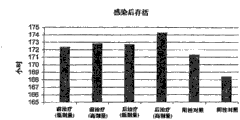
图1示出施用本发明的组合物对感染流感的小鼠的平均存活时间的影响。Figure 1 shows the effect of administration of a composition of the invention on the mean survival time of mice infected with influenza.
图2示出感染流感的小鼠当用本发明的组合物治疗时存活时间增加。Figure 2 shows the increased survival time of mice infected with influenza when treated with a composition of the invention.
图3示出感染流感的小鼠当用本发明的组合物治疗时在7天的过程内体重的损失。Figure 3 shows the weight loss of influenza infected mice over the course of 7 days when treated with a composition of the invention.
发明详述Detailed description of the invention
本发明的聚合物——在本文称为“π-聚合物”,具有梳型结构,其主链由交替的分支点部分B和亲水的水溶性聚合物嵌段A形成;并且具有多个连接到每个分支点部分的疏水侧链C,如在式1中所示。侧链C是相对短的、疏水部分,其可以是脂肪族分子、链或寡聚物。P的值理想地是整数:2、3或4。实际上,最经常通过化学反应以低于完美效率引入侧链,这导致就整体而言聚合物制剂的p的平均值不是预期的整数。非整数的平均值也可以通过设计得到,如在下面讨论的。因此,在本发明的聚合物中的p的平均值大于1,并且可以最高为4(1<p≤4)。在优选的实施方式中,p的范围为大约2到4,最优选为1.5<p≤2。The polymers of the present invention, referred to herein as "π-polymers", have a comb-like structure whose main chain is formed by alternating branch point moieties B and hydrophilic water-soluble polymer blocks A; and has multiple A hydrophobic side chain C attached to each branch point moiety, as shown in Formula 1. The side chain C is a relatively short, hydrophobic moiety which can be an aliphatic molecule, chain or oligomer. The value of P is ideally an integer: 2, 3 or 4. In fact, side chains are most often introduced by chemical reactions with less than perfect efficiency, which leads to an average value of p for polymer formulations as a whole that is not the expected integer. Non-integer averages can also be obtained by design, as discussed below. Thus, the average value of p in the polymers of the invention is greater than 1 and can be up to 4 (1<p≦4). In a preferred embodiment, p ranges from about 2 to 4, most preferably 1.5<p≦2.
主链聚合物嵌段A选自亲水和/或水溶性聚合物链,其包括但不限于聚乙二醇、聚丙二醇,聚乙烯亚胺、聚乙烯醇、聚乙烯吡咯烷酮、多糖等。优选地,聚合物单元A是式(CH2CH2O)m的聚乙二醇链,其中m在1和10,000之间,优选在3和3,000之间。The main chain polymer block A is selected from hydrophilic and/or water-soluble polymer chains, including but not limited to polyethylene glycol, polypropylene glycol, polyethyleneimine, polyvinyl alcohol, polyvinylpyrrolidone, polysaccharides and the like. Preferably, polymer unit A is a polyethylene glycol chain of formula ( CH2CH2O ) m , wherein m is between 1 and 10,000 , preferably between 3 and 3,000.
在各种等级的聚乙二醇的制造中,已知在工业中,将二价连接子部分(例如双酚A二缩水甘油醚)偶联到两个聚乙二醇链,这有效的加倍了聚合物的分子量,同时保持相对窄的分子量范围。所形成的“聚乙二醇”分子因而通过非-乙二醇连接子部分(参见,例如聚乙二醇-双酚A二缩水甘油醚加合物,CAS等级号37225-26-6)在聚合物链的中点打断。更大的寡聚物——即那些具有被两个双酚A二缩水甘油醚部分分开的三个PEG链的寡聚物,也是已知的,参见例如国际专利申请WO 00/24008。因此,如本文使用的,术语“聚乙二醇”和“聚丙二醇”包括聚乙二醇和聚丙二醇聚合物链,其掺入非-乙二醇连接子单元,其包括但不限于双酚A二缩水甘油醚、双酚B二缩水甘油醚、双酚S二缩水甘油醚、氢醌二缩水甘油醚等。因本说明书起见,任何这类连接子部分不被算为“单体单位”。In the manufacture of various grades of polyethylene glycol, it is known in the industry to couple a divalent linker moiety (such as bisphenol A diglycidyl ether) to two polyethylene glycol chains, which effectively doubles the The molecular weight of the polymer is increased while maintaining a relatively narrow molecular weight range. The formed "polyethylene glycol" molecule is thus linked via a non-ethylene glycol linker moiety (see, e.g., polyethylene glycol-bisphenol A diglycidyl ether adduct, CAS class number 37225-26-6) in the The midpoint of the polymer chain is interrupted. Larger oligomers, ie those having three PEG chains separated by two bisphenol A diglycidyl ether moieties, are also known, see eg International Patent Application WO 00/24008. Thus, as used herein, the terms "polyethylene glycol" and "polypropylene glycol" include polyethylene glycol and polypropylene glycol polymer chains incorporating non-ethylene glycol linker units including, but not limited to, bisphenol A Diglycidyl ether, bisphenol B diglycidyl ether, bisphenol S diglycidyl ether, hydroquinone diglycidyl ether, etc. For purposes of this specification, any such linker moiety is not counted as a "monomeric unit".
聚合物嵌段A最优选具有在20和50单体单位之间的平均长度。聚乙二醇链可以用适合用作对其它部分的连接子的官能团在一侧或两侧末端取代,其包括但不限于氨基、巯基、丙烯酸酯、丙烯酰胺、马来酸酯、马来酰亚胺等。n的值的范围是1到1000,并且优选在3和100之间。π-聚合物的总的分子量的范围可以是1000到100,000道尔顿或更多;优选在2,000道尔顿以上,更优选在7,000道尔顿以上。Polymer block A most preferably has an average length of between 20 and 50 monomer units. The polyethylene glycol chains may be terminally substituted on one or both sides with functional groups suitable for use as linkers to other moieties, including but not limited to amino, mercapto, acrylate, acrylamide, maleate, malein Amines etc. The value of n ranges from 1 to 1000, and preferably between 3 and 100. The total molecular weight of the π-polymer may range from 1000 to 100,000 Daltons or more; preferably above 2,000 Daltons, more preferably above 7,000 Daltons.
疏水部分C可以是相同的也可以是不同的,可以是例如支链烃(任选地用一个或多个亲水取代基取代)、稠环烃(任选地用一个或多个亲水取代基取代)、疏水氨基酸、肽和聚合物。适合的亲水取代基包括但不限于羟基、醚、氰基和酰胺官能团。具体考虑的是C8到C20烷基,其具有ω-羟基、ω-氰基、ω-酰胺基或ω-烷氧基取代基。在本文中,术语“取代基”包括杂原子例如O、N或S取代部分C的烃链或环系统中的碳原子。因此,醚和酰胺键以及杂环可以被掺入C。The hydrophobic moieties C can be the same or different and can be, for example, branched chain hydrocarbons (optionally substituted with one or more hydrophilic substituents), fused ring hydrocarbons (optionally substituted with one or more hydrophilic substituents), substituents), hydrophobic amino acids, peptides and polymers. Suitable hydrophilic substituents include, but are not limited to, hydroxyl, ether, cyano and amide functional groups. Specifically contemplated are C 8 to C 20 alkyl groups having ω-hydroxyl, ω-cyano, ω-amido or ω-alkoxy substituents. As used herein, the term "substituent" includes heteroatoms such as O, N or S replacing carbon atoms in the hydrocarbon chain or ring system of moiety C. Thus, ether and amide linkages as well as heterocycles can be incorporated into C.
疏水部分C优选相对短的(C8-C20)脂肪族链,但是也可以是短的寡聚物。适合的寡聚物包括寡羟基酸,如聚(羟基乙酸)、聚(DL-乳酸)、聚(L-乳酸)、和聚(羟基乙酸)和聚(乳酸)羟基酸的共聚物;以及聚(氨基酸)、聚(酐)、聚(原酸酯)、和聚(磷酸酯);聚内酯如聚(ε-己内酯)、聚(δ-戊内酯)、聚(γ-丁内酯)和聚(β-羟丁酯)。C部分也可以选自疏水分子如胆固醇、胆酸、石胆酸;疏水肽等。每部分C的分子量大于40,优选在50和1,000之间,最优选在100和500之间。分子C-H的logP的值(辛醇-水)大于大约1.4,优选大于大约2.0,更优选大于大约2.5。一般而言,任何部分C被认为适合用于本发明,如果分子C-H基本上不溶于水。“基本上不溶”指液体C-H当与水混合时,形成分离相。The hydrophobic moiety C is preferably a relatively short (C 8 -C 20 ) aliphatic chain, but may also be a short oligomer. Suitable oligomers include oligohydroxy acids, such as poly(glycolic acid), poly(DL-lactic acid), poly(L-lactic acid), and copolymers of poly(glycolic acid) and poly(lactic) hydroxy acids; and poly(glycolic acid) (amino acids), poly(anhydrides), poly(orthoesters), and poly(phosphates); polylactones such as poly(ε-caprolactone), poly(δ-valerolactone), poly(γ-butylene lactone) and poly(β-hydroxybutyl ester). Moiety C may also be selected from hydrophobic molecules such as cholesterol, cholic acid, lithocholic acid; hydrophobic peptides and the like. Each fraction C has a molecular weight greater than 40, preferably between 50 and 1,000, most preferably between 100 and 500. The value of logP (octanol-water) for the molecule CH is greater than about 1.4, preferably greater than about 2.0, more preferably greater than about 2.5. In general, any moiety C is considered suitable for use in the present invention if the molecule CH is substantially insoluble in water. "Essentially insoluble" means that liquid CH, when mixed with water, forms a separate phase.
本发明的梳状聚合物的侧链C不是规则、均匀地沿聚合物链分布,而是出现在簇(clusters)[C]p,这是本发明的区别特征。这些簇规则地沿着聚合物链被或多或少的间隔开,这取决于聚合物单元A的单分散性程度。因此,在连接到共同分支部分B的两个侧链C之间的距离与连接到不同分支部分的两个侧链之间的距离不同。The side chains C of the comb polymer of the present invention are not regularly and uniformly distributed along the polymer chain, but appear in clusters [C] p , which is the distinguishing feature of the present invention. These clusters are more or less regularly spaced apart along the polymer chain, depending on the degree of monodispersity of the polymer units A. Therefore, the distance between two side chains C connected to a common branch part B is different from the distance between two side chains connected to different branch parts.
在本发明特别适合的实施方式中,分支点部分B进一步包括一个或多个活性官能团X,如在式2中所示。
在式2中,单独的反应基团X以其它可以是相同的也可以是不同的,并且如果在组装聚合物2期间是必须的,可以任选地被封闭或保护。r的平均值范围是0(没有X基团)到大约4。典型地,反应基团选自本领域已知的可被用于在分子种类之间形成共价键的官能团。基团X用作药物分子、组织或细胞靶向部分、病毒靶向部分或基质连接部分的连接点(例如为了包被支架或其它医疗仪器表面)。在某些实施方式中,可以具有单一连接点X。在其它实施方式中,可以具有三或四种不同类型的反应基团。基质连接部分可以通过共价键、特异性非共价相互作用(例如抗体-抗原或非特异性相互作用(例如经由离子配对或″疏水″相互作用)连接到基质。适当的反应基团X包括但不限于-OH、-NH2、-SH、-CHO、-NHNH2、-COOH、-CONHNH2、卤酰基、乙酰乙酰基、-CN、-OCN、-SCN、-NCO、-NCS等;活性双键如乙烯的、丙烯酸的、烯丙基的、马来酸的、肉桂的等;和活性三键如乙炔基羧基和乙炔基酰胺基(适合用于迈克尔(Michael)加成、狄尔斯-阿尔德(Diels-Alder)反应和自由基加成反应)。In Formula 2, the individual reactive groups X and others may be the same or different, and may optionally be blocked or protected if necessary during the assembly of polymer 2 . The average value of r ranges from 0 (no X group) to about 4. Typically, reactive groups are selected from functional groups known in the art that can be used to form covalent bonds between molecular species. The group X serves as a point of attachment for a drug molecule, a tissue or cell targeting moiety, a virus targeting moiety or a matrix linking moiety (eg for coating a stent or other medical device surface). In certain embodiments, there may be a single point of attachment X. In other embodiments, there may be three or four different types of reactive groups. The matrix linking moiety may be attached to the matrix by covalent bonds, specific non-covalent interactions such as antibody-antigen or non-specific interactions such as via ion pairing or "hydrophobic" interactions. Suitable reactive groups X include but Not limited to -OH, -NH 2 , -SH, -CHO, -NHNH 2 , -COOH, -CONHNH 2 , haloacyl, acetoacetyl, -CN, -OCN, -SCN, -NCO, -NCS, etc.; active Double bonds such as vinyl, acrylic, allyl, maleic, cinnamon, etc.; and reactive triple bonds such as ethynyl carboxyl and ethynyl amido groups (suitable for Michael addition, Diels - Alder (Diels-Alder reaction and free radical addition reaction).
示例性细胞-靶向部分包括但不限于受体-特异性配体、抗体和其它靶向部分,例如具有精氨酸-甘氨酸-天冬氨酸(RGD)氨基酸序列或酪氨酸-异亮氨酸-丝氨酸-精氨酸-甘氨酸(YISRG)基序的肽;生长因子,包括表皮生长因子、血管内皮生长因子和成纤维细胞生长因子;病毒表面配体,如唾液酸和N-乙酰神经氨酸衍生物;细胞受体配体,如叶酸酯、甲氨喋呤、蝶酸、雌二醇、雌三醇、睾丸酮和其它激素;甘露糖-6-磷酸酯、糖、维生素、色氨酸等。抗体优选定向细胞特异性表面抗原的单克隆抗体;适合的靶向部分不仅包括完整的抗体,而且包括抗体片段,其含有活性抗原-结合序列如Fab′2片段、Fab′片段,或者这类抗体的活性抗原结合序列的短链肽类似物。Exemplary cell-targeting moieties include, but are not limited to, receptor-specific ligands, antibodies, and other targeting moieties, e.g., having an arginine-glycine-aspartate (RGD) amino acid sequence or a tyrosine-isoleucine peptides with amino acid-serine-arginine-glycine (YISRG) motif; growth factors, including epidermal growth factor, vascular endothelial growth factor, and fibroblast growth factor; viral surface ligands, such as sialic acid and N-acetyl neuro amino acid derivatives; cellular receptor ligands such as folate, methotrexate, pteroic acid, estradiol, estriol, testosterone, and other hormones; mannose-6-phosphate, sugars, vitamins, chromosomal Amino acid etc. The antibody is preferably a monoclonal antibody directed against a cell-specific surface antigen; suitable targeting moieties include not only intact antibodies but also antibody fragments containing active antigen-binding sequences such as Fab'2 fragments, Fab' fragments, or such antibody Short-chain peptide analogs of the active antigen-binding sequence of
病毒-靶向部分的实例包括结合于病毒的小分子配体,如氨基烷基金刚胺、FuzeonTM、PRO-542、BMS-488043、唾液酸、2-脱氧-2,3-二脱氢-N-乙酰神经氨酸、4-胍基-Neu5Ac2en(扎那米韦)、奥塞米韦、RWJ-270201等;寡肽、低聚糖和糖肽类——其结合于病毒表面,以及定向病毒特异性表面抗原的抗体和抗体片段。在优选的实施方式中,本发明提供π-聚合物,其含有对病毒神经氨酸酶或血球凝集素的配体。已经很好的确立这些聚合物在它们自己右侧具有抗病毒性;参见例如T.Masuda et al.,Chemical & Pharmaceutical Bulletin51:1386-98(2003);M.Itoh et al.,Virology 212:340-7(1995),和Reece等,美国专利号6,680,054(2004)。本发明的抗病毒聚合物和聚合物聚集物的疏水核可任选地被负载有一种或多种传统抗病毒药,其在病毒颗粒附近有利地释放。Examples of virus-targeting moieties include small molecule ligands that bind to viruses, such as aminoalkylamantadine, Fuzeon ™ , PRO-542, BMS-488043, sialic acid, 2-deoxy-2,3-didehydro- N-acetylneuraminic acid, 4-guanidino-Neu5Ac2en (zanamivir), oseltamivir, RWJ-270201, etc.; oligopeptides, oligosaccharides and glycopeptides - which bind to the surface of the virus, and target Antibodies and antibody fragments to virus-specific surface antigens. In a preferred embodiment, the present invention provides π-polymers containing ligands for viral neuraminidase or hemagglutinin. It is well established that these polymers are antiviral in their own right; see for example T. Masuda et al., Chemical & Pharmaceutical Bulletin 51: 1386-98 (2003); M. Itoh et al., Virology 212: 340 -7 (1995), and Reece et al., US Patent No. 6,680,054 (2004). The hydrophobic cores of the antiviral polymers and polymer aggregates of the present invention may optionally be loaded with one or more traditional antiviral drugs, which are advantageously released in the vicinity of the viral particle.
医学相关的其它连接基团可以是小的化学试剂、肽、抗体或抗体片段、酶或活性药物成分——其可影响生物过程,如激素或激素促进剂或拮抗剂、干扰病毒结合的物质、细胞内进入后干扰细胞周期或细胞过程的物质等。单细胞和多细胞器官包括病毒、真菌、高等动物和植物的细胞可以被靶向。生物素可以被连接到π-聚合物,并且被用作抗生物蛋白和抗生物素蛋白链菌素偶联蛋白、肽和其它靶向或药理学活性试剂如抗体、生长激素、成像试剂等的连接点。Other linking groups of medical relevance can be small chemical reagents, peptides, antibodies or antibody fragments, enzymes or active pharmaceutical ingredients - which can affect biological processes such as hormones or hormone enhancers or antagonists, substances that interfere with viral binding, Substances that interfere with the cell cycle or cellular processes after entering the cell. Cells of unicellular and multicellular organs including viruses, fungi, higher animals and plants can be targeted. Biotin can be attached to π-polymers and used as a base for avidin and streptavidin-coupled proteins, peptides, and other targeting or pharmacologically active agents such as antibodies, growth hormones, imaging agents, etc. Junction.
″基质″指有机或无机物质、表面和沉积物,如玻璃、二氧化硅或金属表面、细胞外基质、蛋白沉积物如各种淀粉样蛋白斑、细胞表面、病毒表面和一般均质或异质表面,其可以有或可以没有特征,包括朊病毒。"Matrix" refers to organic or inorganic substances, surfaces and deposits, such as glass, silica or metal surfaces, extracellular matrix, protein deposits such as various amyloid plaques, cell surfaces, viral surfaces and generally homogeneous or heterogeneous A textured surface, which may or may not have features, including prions.
玻璃或二氧化硅基质连接部分的实例包括各种卤化硅烷、烷氧基硅烷、酰基硅烷,以及展现含有聚合物的这类官能团的化学试剂。其它连接基团可以基于基质的具体物理化学特性而设计。适当的连接部分,例如在支架包被中使用的那些连接部分,本领域普通技术人员是已知的。Examples of glass or silica matrix linking moieties include various halosilanes, alkoxysilanes, acylsilanes, and chemistries that exhibit such functional groups containing polymers. Other linking groups can be designed based on the specific physicochemical properties of the substrate. Suitable linking moieties, such as those used in stent encapsulation, are known to those of ordinary skill in the art.
在本发明的第三方面,分支点部分B被连接到聚合物链其它位置的其它分支点部分,以便形成交联的水凝胶结构。这类交联可通过使聚合物与多功能部分反应而实现,所述多功能部分含有同型官能团或异型官能团,其至少一个与位于第一分支点部分的C上的X或反应基团反应,并且其至少一个与位于第二分支点部分的C上的X或活性官能团反应。也可经由与聚合物链A的末端官能团连接而进行交联。这类交联的聚合物可任选含有适合用来连接药物分子或靶向部分的活性官能团。In a third aspect of the invention, the branch point moiety B is linked to other branch point moieties elsewhere in the polymer chain so as to form a crosslinked hydrogel structure. Such crosslinking can be achieved by reacting the polymer with a multifunctional moiety containing homofunctional or heterofunctional groups, at least one of which reacts with X or a reactive group located on C of the first branch point moiety, And at least one of them reacts with X or a reactive functional group located on C of the second branch point moiety. Crosslinking via attachment to terminal functional groups of the polymer chain A is also possible. Such crosslinked polymers may optionally contain reactive functional groups suitable for attachment of drug molecules or targeting moieties.
分支点部分B典型衍生自具有多个反应基团的多功能分子,其两个适于连接亲水聚合物单元A,其两个适于连接疏水部分C。部分B可任选具有上述的反应基团X。The branch point moiety B is typically derived from a multifunctional molecule having multiple reactive groups, two of which are suitable for attachment of a hydrophilic polymer unit A and two of which are suitable for attachment of a hydrophobic moiety C. Moiety B may optionally have a reactive group X as described above.
特别优选的分支点部分是二硫苏糖醇(DTT)、二硫赤藓糖醇(DTE)或2,3-二氨基丁烷-l,4-二硫醇(dithiols)与两个马来酸分子的结合物。该分支点部分与作为部分A的聚乙二醇的结合产生式3和3a的聚合物主链。
式3和3a拟输送可被单独连接到α或β的每一个硫原子至PEG酯羧基基团。本发明包括单一异构体组分以及在一个或两个C-S键的位置异构体的混合物。而且,由于在式1中的四个不对称碳,本发明包括是所有的手性、间位和非对映体的异构体以及它们的混合物。Formulas 3 and 3a are intended to deliver each sulfur atom that can be individually attached to α or β to the PEG ester carboxyl group. The present invention includes single isomeric components as well as mixtures of positional isomers at one or both C-S bonds. Furthermore, due to the four asymmetric carbons in Formula 1, the present invention includes all chiral, meta and diastereomeric isomers and mixtures thereof.
乙炔基二羧酸和呋喃的狄尔斯-阿尔德加合物也可作为适合的分支点部分。例如,衍生自PEG和乙炔基二羧酸的聚酯4已知经历与呋喃的狄尔斯-阿尔德反应(M.Delerba et al,Macromol.Rapid Commun.18(8):723-728(1997))。因此,其可经历与3,4-二取代的呋喃的狄尔斯-阿尔德反应,以产生种类如5,并且聚合物5也可通过羟基化作用或环氧化作用进行修饰以提供反应基团(例如式1中的X和X′)。
相似地,PEG与乙二胺四乙酸二酐反应将提供式6的聚酯:
其它适合的分支点部分可以缘自酒石酸、乙炔基二羧酸、氨三乙酸、3,4,3′,4′-二苯基砜四羧酸二酐、3,4,3′,4′-二苯基醚四羧酸二酐、苯四酸二酐、链烷二硫醇如1,2-乙烷二硫醇和1,4-丁烷二硫醇,二(2-巯基乙基)醚、2-巯基乙硫醚、二巯基丙醇、二巯基嘌呤、二巯基噻二唑、二巯基琥珀酸、苯二甲硫醇、苯二硫酚、二卤代苯二甲硫醇、二卤代4,4′-硫代双苯硫酚等。Other suitable branch point moieties may be derived from tartaric acid, ethynyl dicarboxylic acid, nitrilotriacetic acid, 3,4,3',4'-diphenylsulfone tetracarboxylic dianhydride, 3,4,3',4' - Diphenyl ether tetracarboxylic dianhydride, pyromellitic dianhydride, alkanedithiols such as 1,2-ethanedithiol and 1,4-butanedithiol, bis(2-mercaptoethyl) Ether, 2-mercaptoethyl sulfide, dimercaptopropanol, dimercaptopurine, dimercaptothiadiazole, dimercaptosuccinic acid, benzenedimethanol, benzenedithiol, dihalobenzenedimethanol, di Halogenated 4,4'-thiobisthiophenol, etc.
其中Y和Y′是OH,通过羧酸基团的酰胺化或酯化作用,疏水基团C可被连接到聚合物。疏水基团C优选是相对小的(C8-C20),并主要是烃部分,并可以是直链的或支化的或含有一个或多个环。实例包括但不限于衍生自C-H分子n-辛醇、n-癸醇、n-十二烷胺、n-十五烷胺、胆固醇、和胆酸的共价连接的部分。尽管本发明的聚合物为了方便而表示为最多含有两个不同的输水侧链,但是应该被理解两种或多种疏水化合物的混合物可被用于将多种疏水侧链引入具体的聚合物。Where Y and Y' are OH, the hydrophobic group C can be attached to the polymer by amidation or esterification of the carboxylic acid group. The hydrophobic group C is preferably relatively small (C 8 -C 20 ), and primarily a hydrocarbon moiety, and may be linear or branched or contain one or more rings. Examples include, but are not limited to, covalently attached moieties derived from CH molecules n-octanol, n-decanol, n-dodecylamine, n-pentadecylamine, cholesterol, and cholic acid. Although the polymers of the present invention are shown for convenience as containing up to two different water transporting side chains, it should be understood that mixtures of two or more hydrophobic compounds may be used to introduce a variety of hydrophobic side chains into a particular polymer .
作为一个具体的实例,式2的聚合物——其中X=OH并且r=2,被通过将聚乙二醇与马来酸酐反应形成聚酯7,然后与二硫苏糖醇反应形成8而制备。然后酸7与n-十八胺酰胺化形成期望的梳状聚合物9(方案2)。式9表示的DTT-衍生的酰胺梳状聚合物在本文被称为″π-聚合物A″;在方案2中具体的聚合物9被称为″C18-π-聚合物A″。
2,3-二(t-丁氧基羰基氨基)丁烷-1,4-二硫醇(通过DuPriest等的美国专利号4,755,528中的方法制备)对于二硫苏糖醇的取代在脱保护后导致相应的氨基-官能化的π-聚合物9b(方案3)。
应用丁烷二硫醇10c同样导致通用结构9c的聚合物,其中间隔区基团L在适当位置用于接下来连接靶向部分(方案4)。间隔区基团L可以是用于将配体或标记物连接至基底分子的领域已知的任何间隔区基团,包括但不限于C2到C20亚烷基和具有一个到十个-CH2CH2O-单元的寡(乙二醇)间隔区。方案4Application of butanedithiol 10c also leads to a polymer of general structure 9c with a spacer group L in place for subsequent attachment of a targeting moiety (Scheme 4). The spacer group L can be any spacer group known in the art for attaching ligands or labels to substrate molecules, including but not limited to C2 to C20 alkylene and groups with one to ten -CH 2 Oligo(ethylene glycol) spacers of CH2O -units. Option 4
在其它实施方式中,具有末端氨基的PEG聚合物可被用来制备在A和B单元之间具有酰胺键的实例,如下面结构10-14所示。这些聚酰胺的每一个可以经由PEG二胺H2N-(CH2CH2O)mCH2CH2-NH2与适当的环酐反应而得到:
在适度条件下,上述酰胺酸是期望的产物。在加热后,可期望形成酰亚胺,这导致具有更少反应基团的聚合物,但是其仍旧适合用于连接疏水C部分。另外,侧链C可被加入到聚合物A嵌段的末端,并且分支点部分可在聚合作用时出现(方案5)。
除了简单二胺如1,3-二氨基丙烷,如在方案5中所示,具有(任选掩蔽的)活性官能团X的二胺可被使用,这导致聚合物15适合用于连接靶向部分(方案6)。在下面的式中,p的范围可以是0-4,并且每个X独立为与其它可存在的基团X相同或不同的。反应基团X可以不是侧链的,但是可以是例如组成二胺的原子链中的NH,如在单体H2N-(CH2)3-NH-(CH2)3-NH2中。
如上制备的某些π-聚合物具有适合用于进一步衍生的反应基团X,以连接靶向部分如小分子、肽、核苷酸、糖、抗体等,或者经由双功能或多功能交联剂实现聚合物链的交联。在特定的实施方式中,在聚合物链上反应基团的部分衍生被进行以产生具有多种不同反应基团的π-聚合物,其允许将多种靶向和药物部分连接到单一聚合物链。因此,将化学计算量下的丙烯酰氯(或马来酸酐)加入到实施例1的π-聚合物中将提供既具有丙烯酰(或马来酰)基团又具有残留羟基基团的聚合物。化学计算量下的巯基-羧酸例如HS-(CH2)3-COOH的接下来的迈克尔加成将提供具有羟基基团、丙烯酰基团和羧基基团的聚合物。除了化学计算量下的试剂留下的任何残留反应基团以外,加入半胱氨酸引入氨基和羧基。Certain π-polymers prepared as above have reactive groups X suitable for further derivatization, to attach targeting moieties such as small molecules, peptides, nucleotides, sugars, antibodies, etc., or via bifunctional or multifunctional crosslinking agent to achieve cross-linking of polymer chains. In a specific embodiment, partial derivatization of reactive groups on the polymer chain is performed to generate π-polymers with a variety of different reactive groups, which allows attachment of various targeting and drug moieties to a single polymer chain. Thus, addition of acryloyl chloride (or maleic anhydride) in stoichiometric amounts to the π-polymer of Example 1 will provide a polymer with both acryloyl (or maleyl) groups and residual hydroxyl groups . Subsequent Michael addition of stoichiometric mercapto-carboxylic acids such as HS-( CH2 ) 3 -COOH will provide polymers with hydroxyl, acryloyl and carboxyl groups. Addition of cysteine introduces amino and carboxyl groups in addition to any residual reactive groups left by the reagents in stoichiometric amounts.
多功能的π-聚合物的另一种方法包括故意省略疏水链C的部分。例如,实施例1的π-聚合物可通过简单使用限制在酰胺化步骤中的侧链形成烷基胺的数量使用未反应的羧酸基团来制备。又一个方法是用胺的混合物酰胺化,所述胺的部分含有反应基团X。同样,在适当的条件(在步骤A中过量的马来酸酐,在步骤中B中过量的DTT)下,具有期望数量的游离硫醇基团的聚合物制备物可被产生。Another approach to multifunctional π-polymers involves deliberately omitting the C portion of the hydrophobic chain. For example, the π-polymer of Example 1 can be prepared by simply using unreacted carboxylic acid groups to limit the number of side-chain forming alkylamines in the amidation step. Yet another method is the amidation with a mixture of amines, part of which contains the reactive group X. Also, under appropriate conditions (excess maleic anhydride in step A, excess DTT in step B), polymer preparations with the desired number of free thiol groups can be produced.
根据设计,实施例1的π-聚合物包括,来自主链的DTT部分羟基,其作为反应基团X。这些基团与丙烯酰氯或甲基丙烯酰氯在水介质中在存在碳酸盐/碳酸氢盐缓冲的情况下的酯化导致-OH基团上的丙烯酰取代。丙烯酸化的聚合物(acrylated polymer)可易于经历自由基聚合作用(具有加入的或没有具有加入的自由基单体如丙烯酸化合物或交联剂如双丙烯酸的化合物)以得到适合用于受控给药(作为聚合物贮存药剂或贮器(reservoir))和用于局部施用(例如皮肤贴剂或膏剂)的水凝胶。丙烯酰基也可经历迈克尔加成,特别是与硫醇,例如残留在蛋白质、酶、肽、抗体、Fab′2片段或Fab′片段,或其它靶向部分中的半胱氨酸残基的硫醇(方案7)。
具有反应性羟基基团的π-聚合物,在干燥后,可与马来酸酐酯化以连接到马来酸酯基团,迈克尔接纳体,同时产生游离羧基。在所形成的聚合物中,顺丁烯双键对于迈克尔加成是可行的,特别是与硫醇,例如残留在蛋白质、酶、肽、抗体、Fab′2片段或Fab′片段,或其它靶向部分中的半胱氨酸的硫醇(方案8),并且羧基是可行的用于偶联到药物或配体的氨基,或蛋白和肽中的赖氨酸残基。π-polymers with reactive hydroxyl groups, after drying, can be esterified with maleic anhydride to link to maleate groups, Michael acceptors, while generating free carboxyl groups. In the polymer formed, the cis-butene double bond is feasible for Michael addition, especially with thiols, such as residues in proteins, enzymes, peptides, antibodies, Fab'2 fragments or Fab' fragments, or other targets Thiols to cysteines in moieties (Scheme 8), and carboxyl groups are viable for conjugation to amino groups of drugs or ligands, or lysine residues in proteins and peptides.
不同的部分经由酰胺化可进一步被连接到新引入的(或先前可获得的)羧基。因此,至少两个不同的靶向部分甚至在饱和反应条件(即,待被连接的部分以化学计算过量存在)下可以被连接。 Different moieties can further be attached to newly introduced (or previously accessible) carboxyl groups via amidation. Thus, at least two different targeting moieties can be attached even under saturating reaction conditions (ie, the moieties to be attached are present in stoichiometric excess).
具有侧链羧基化基团的聚合物可以用胺在典型偶联条件下酰胺化,并且它们也可以经由库尔修斯(Curtius)重排被转化为异氰酸酯基团,然后与胺或醇偶联以分别形成尿素和氨基甲酸酯。这样的反应可被用来引入疏水基团C,或连接靶向部分。Polymers with pendant carboxylated groups can be amidated with amines under typical coupling conditions, and they can also be converted to isocyanate groups via a Curtius rearrangement followed by coupling with amines or alcohols to form urea and carbamate, respectively. Such reactions can be used to introduce hydrophobic groups C, or to attach targeting moieties.
通过至少使反应基团的一个与二胺部分反应,游离胺可被引入聚合物。必须选择二胺,以便胺基团中的一个在反应条件下或者被保护或者不反应。后者可通常通过使用1,2-乙二胺在大约7.5的pH下完成,这是因为两个氨基的pKa′s极大不同。优选地,该酰胺化作为单独步骤在引入疏水侧链基团后被进行。然后,通过酰胺化具有羧基的肽或另一种分子可被连接在游离胺。Free amines can be incorporated into the polymer by partially reacting at least one of the reactive groups with the diamine. The diamine must be chosen such that one of the amine groups is either protected or unreacted under the reaction conditions. The latter can usually be accomplished by using ethylenediamine at a pH of about 7.5, since the pKa's of the two amino groups are very different. Preferably, the amidation is carried out as a separate step after the introduction of the hydrophobic side chain group. Then, a peptide or another molecule with a carboxyl group can be attached to the free amine by amidation.
因此,甚至在饱和条件下,多至三种不同的肽或其它靶向部分可被连接到π-聚合物:一个通过硫醇,一个经由胺或羟基,一个经由羧酸基团。Thus, even under saturated conditions, up to three different peptides or other targeting moieties can be attached to the π-polymer: one via a thiol, one via an amine or hydroxyl group, and one via a carboxylic acid group.
羟基和硫醇基团通过与氮丙啶或卤代烷基胺(例如溴乙胺或氯乙胺)反应也可被转化为伯胺。用半胱胺进行酰胺化将引入二硫化物,其可通过肽或抗体的半胱氨酸直接反应以连接肽或抗体;或者可首先被还原,例如用氨基乙烷硫醇或DTT,用肽或抗体进行进一步反应。Hydroxyl and thiol groups can also be converted to primary amines by reaction with aziridines or haloalkylamines such as bromoethylamine or chloroethylamine. Amidation with cysteamine will introduce a disulfide, which can be reacted directly with the cysteine of the peptide or antibody to link the peptide or antibody; or can be reduced first, for example with aminoethanethiol or DTT, with the peptide or antibodies for further reaction.
通过实施部分反应,可将另外的活性官能团引入到本发明的聚合物中,其包括但不限于(1)硫醇-反应基团如丙烯酸或马来酸衍生物,(2)羧酸反应基团如氨基或羟基,(3)胺-反应基团如羧基,和(4)二硫化物-反应基团如巯基。每聚合物分子这些加入的官能团的数目的范围从1/r上至r的数倍,这取决于使用的试剂和使用的数量。Additional reactive functional groups may be introduced into the polymers of the present invention by performing partial reactions, including but not limited to (1) thiol-reactive groups such as acrylic acid or maleic acid derivatives, (2) carboxylic acid reactive groups groups such as amino or hydroxyl groups, (3) amine-reactive groups such as carboxyl groups, and (4) disulfide-reactive groups such as sulfhydryl groups. The number of these added functional groups per polymer molecule ranges from 1/r up to multiples of r, depending on the reagents used and the quantities used.
另外,两个或多个特异性配体可被连接以提高对塞(say)、病毒或细胞表面的结合特异性。两个或多个特异性配体也可被使用,以便引起不同细胞靶之间的相互作用,如,一个配体可靶向病毒颗粒,而另一个配体可促进对吞噬细胞的结合,从而使病毒颗粒靠近吞噬细胞或与图噬细胞接触并促进吞噬作用。Additionally, two or more specific ligands can be linked to increase binding specificity to say, virus or cell surface. Two or more specific ligands can also be used in order to elicit an interaction between different cellular targets, e.g. one ligand can target a viral particle while another ligand can facilitate binding to phagocytic cells, thereby Bring virus particles close to or in contact with phagocytes and promote phagocytosis.
这种衍生通过不同的官能团连接(例如胺,羧酸酯和硫醇)使三个或更多不同的靶向和/或治疗部分连接到聚合物。因此,可以将组织特异性靶向试剂、成像试剂和治疗剂连接到单一聚合物链,并且随后的聚合物自组装将产生靶治疗,其分布和靶向功效可被监控。This derivatization enables three or more different targeting and/or therapeutic moieties to be attached to the polymer through different functional group linkages (eg, amine, carboxylate, and thiol). Thus, tissue-specific targeting agents, imaging agents, and therapeutic agents can be attached to a single polymer chain, and subsequent polymer self-assembly will generate targeted therapeutics, whose distribution and targeting efficacy can be monitored.
将配体连接到本发明的聚合物的重复单元提供聚合物链上和纳米颗粒表面上的配体的多价显示。多价显示通常导致对目标的亲和性的更大增加。例如,多价抗体在清除它们的靶方面比正常二价抗体有效的多。糖结合蛋白和糖类在性质上已知是多价的,并且如果是单价是无效的。相似地,多价肽和糖类靶向部分比单独的单体更有效。在MW上的增加,由于连接到聚合物导致肽和其它配体的减少的肾清除率。另外,PEG主链提供的肽的益处与PEG化的肽的益处相似,包括避免免疫监督。Linking ligands to the repeat units of the polymers of the invention provides a multivalent display of ligands on the polymer chains and on the surface of the nanoparticles. Multivalent display generally results in a greater increase in affinity for the target. For example, multivalent antibodies are much more effective at clearing their targets than normal bivalent antibodies. Carbohydrate binding proteins and carbohydrates are known to be multivalent in nature and would not be effective if monovalent. Similarly, multivalent peptide and carbohydrate targeting moieties are more effective than monomers alone. Increases in MW, due to attachment to polymers lead to decreased renal clearance of peptides and other ligands. Additionally, PEG backbones provide peptides with benefits similar to those of PEGylated peptides, including avoidance of immune surveillance.
此外,多价靶向部分将修饰多价靶(塞(say)、病毒颗粒)和对其中和,这比单体靶向部分有效得多。在多价形式中,展示(display)多种(不同)肽的能力将导致增强的特异性。例如,真实的HIV-特异性(HIV病毒-结合)聚合物可通过连接与病毒的CD4结合区相应的肽、和与病毒的CCR5或CXCR-4结合区相应的另一种肽、以及可能的与其它受体(分别为CXCR-4或CCR-5)相应的第三种肽来建立。这样的聚合物可完全掩蔽病毒结合区域,并导致病毒不能连接到细胞并因而是非传染性的。另外,聚合物的表面活性剂性能将导致病毒结构本身在结合后失去稳定性。代替肽,干扰相同结合模式的小分子(CD4,CCR-5,CXCR-4)或肽和小分子的混合物——优选具有互补活性,可被使用。所形成的聚合物将致使游离病毒无效,并且因此通过使用它们作为避孕套润滑剂等的成分对于停止感染的传播是理想的。另外,这类聚合物可被注射入患者以减少HIV负担(burden)。Furthermore, multivalent targeting moieties will modify and neutralize multivalent targets (say, virions) much more efficiently than monomeric targeting moieties. In a multivalent format, the ability to display multiple (different) peptides will lead to enhanced specificity. For example, a true HIV-specific (HIV virus-binding) polymer can be obtained by linking a peptide corresponding to the CD4 binding region of the virus, and another peptide corresponding to the CCR5 or CXCR-4 binding region of the virus, and possibly A third peptide corresponding to the other receptor (CXCR-4 or CCR-5, respectively) was established. Such polymers can completely mask the virus binding region and render the virus unable to attach to cells and thus be non-infectious. In addition, the surfactant properties of the polymer will lead to the destabilization of the viral structure itself after binding. Instead of peptides, small molecules that interfere with the same binding mode (CD4, CCR-5, CXCR-4) or mixtures of peptides and small molecules, preferably with complementary activities, can be used. The polymers formed will render free virus ineffective, and are therefore ideal for stopping the spread of infection by using them as ingredients in condom lubricants and the like. Additionally, such polymers can be injected into patients to reduce HIV burden.
一般而言,当多功能试剂如DTT被使用时,也可经由羧酸与DTT的酯化或相似的副反应将聚合物链部分交联。在PEG链的中心区域的仲羟基——例如那些与双酚A二缩水甘油醚残基相连的,也可以促进交联——如果它们存在于PEG起始材料中。所形成的交联的水凝胶结构也是有用的材料。例如,通过适当增加该交联的范围或者通过使用可选的交联剂(如诸如双环氧乙烷)清楚的(explicit)交联,可制造为柔韧的水凝胶的材料,其可作为药物的容器贮存药剂(repository depots)。通过适当的修饰该材料(例如,更小PEG长度、更大的开放羧基和掺入适当的丙烯酸基团),可制造线性或交联的水凝胶材料,其可作为可以或者固定在仪器如支架上或吸附在仪器如用于粘合贴剂或皮下插入贴剂的垫上而被支撑的贮物器(repositories)。一般而言,这类交联材料将适合用于受控释放,而不是增强的靶释放。In general, when a multifunctional reagent such as DTT is used, the polymer chains can also be partially crosslinked via esterification of carboxylic acid with DTT or similar side reactions. Secondary hydroxyl groups in the central region of the PEG chains—such as those attached to bisphenol A diglycidyl ether residues—can also facilitate crosslinking if they are present in the PEG starting material. The resulting cross-linked hydrogel structures are also useful materials. For example, by appropriately increasing the extent of this cross-linking or by explicitly cross-linking using alternative cross-linking agents such as dioxirane, materials can be fabricated as flexible hydrogels, which can be used as Drug containers store medicine (repository depots). By appropriately modifying the material (e.g., smaller PEG length, larger open carboxyl groups, and incorporation of appropriate acrylic groups), linear or cross-linked hydrogel materials can be fabricated that can be used or immobilized in instruments such as Repositories supported on a stand or by adsorption on an instrument such as a pad for an adhesive or subcutaneously inserted patch. In general, such cross-linked materials will be suitable for controlled release rather than enhanced targeted release.
本发明的梳状聚合物可用于在水溶剂系统中溶解微水溶性材料。在水溶剂中溶解物质的方法包括将微溶物质与本发明的梳型聚合物在水存在下接触,以便形成该物质和聚合物的水溶性复合体。或者,聚合物和待被溶解的物质可被结合在两相的水-有机乳状液中,并且通过蒸发除去有机溶剂。示例性的方法被描述于美国专利第6,838,089号,该美国专利被引入本文作为参考。相信,在大多数情况下,聚合物自组装成纳米颗粒,其在疏水C链中具有溶解的微溶物质,所述疏水C链在颗粒的核聚结,同时A嵌段(块)形成亲水壳,其具有足够低的界面自由能以使颗粒的水悬浮液保持稳定。The comb polymers of the present invention can be used to dissolve slightly water-soluble materials in aqueous solvent systems. The method of dissolving a substance in an aqueous solvent comprises contacting a sparingly soluble substance with a comb polymer of the present invention in the presence of water so as to form a water-soluble complex of the substance and polymer. Alternatively, the polymer and the substance to be dissolved can be combined in a two-phase aqueous-organic emulsion and the organic solvent removed by evaporation. Exemplary methods are described in US Patent No. 6,838,089, which is incorporated herein by reference. It is believed that, in most cases, the polymer self-assembles into nanoparticles with dissolved sparingly soluble species in the hydrophobic C chains coalescing at the particle's core while the A blocks (blocks) form hydrophilic A water shell with sufficiently low interfacial free energy to stabilize the aqueous suspension of particles.
在一些情况中,微溶物质不可能在核中完全溶解,但是可存在为被在颗粒的核的C链包围或悬浮在颗粒的核的C链中的固体纳米颗粒。对于本发明,这是程度的差别,因为本发明的实践不依赖于C链与微溶物质的任何特定的混合程度。在一些情况中,在C链中物质可以以分子水平溶解,但是在其它情况下,其可展示与C-链环境的任何程度的相分离。在一些情况中,可期望系统将作为温度函数从一种状态移到另一种状态。In some cases, sparingly soluble substances may not be completely soluble in the core, but may exist as solid nanoparticles surrounded by or suspended in the C-chains of the particle's core. For the present invention, this is a difference of degree, since the practice of the present invention does not depend on any particular degree of mixing of C chains with sparingly soluble species. In some cases, a species may dissolve at the molecular level in the C-chain, but in other cases it may exhibit any degree of phase separation from the C-chain environment. In some cases, it may be expected that the system will move from one state to another as a function of temperature.
聚合物颗粒的疏水核的溶剂化能力可通过修饰疏水C部分而进行修饰。适当的修饰包括但不限于引入一个或多个亲水取代基,例如羟基、醚、酰胺和氰基官能团,以便增加疏水核的极性和/或可极化性。The solvating capacity of the hydrophobic core of the polymer particle can be modified by modifying the hydrophobic C moiety. Suitable modifications include, but are not limited to, the introduction of one or more hydrophilic substituents, such as hydroxyl, ether, amide and cyano functional groups, in order to increase the polarity and/or polarizability of the hydrophobic core.
可被这些聚合物致使溶解的微溶材料包括脂溶性维生素和营养素,其包括但不限于维生素A、D、E和K、胡萝卜素、微生物D3和辅酶Q;不溶的药物如多西他奇、两性霉素B、制霉素、紫杉醇、阿霉素、表柔比星、卢比替康、鬼臼噻吩甙、依托泊苷、柔红霉素、甲氨喋呤、丝裂霉素C、环孢霉素A、依立替康代谢物(SN-38)、他汀类药物和类固醇;染料,光促试剂(photodynamicagents)和成像试剂;和核酸、核酸类似物和核酸复合体。核酸类似物包括种类如硫代磷酸酯和核酸肽;核酸复合体是寡核酸与基本上中和电数量的阳离子或聚阳离子种类的离子络合物。Sparingly soluble materials that can be rendered soluble by these polymers include fat-soluble vitamins and nutrients including, but not limited to vitamins A, D, E, and K, carotene, microbial D3, and coenzyme Q; insoluble drugs such as docetaxel, Amphotericin B, Nystatin, Paclitaxel, Adriamycin, Epirubicin, Rubitecan, Podophylloside, Etoposide, Daunorubicin, Methotrexate, Mitomycin C, Cyclic A, irinotecan metabolite (SN-38), statins, and steroids; dyes, photodynamicagents, and imaging agents; and nucleic acids, nucleic acid analogs, and nucleic acid complexes. Nucleic acid analogs include species such as phosphorothioates and nucleic acid peptides; nucleic acid complexes are ionic complexes of oligonucleotides with substantially neutralizing amounts of cationic or polycationic species.
对于本公开内容,在中性pH中不溶的药物被认为是“微溶的”,这是因为在许多情况中,需要中性药物组合物。例如,环丙沙星在pH 4.5以下适当溶于水,但是当药物被配置用于眼施用时,该pH是高度刺激性(irritating)的。本发明的聚合物将在pH 7下正常盐水中溶解环丙沙星。同样,对于本公开内容,“微溶”应该被理解指任何物质在水载体中的溶解性,这样溶解性的增加将产生提高的或更有用的组合物。因此,中度溶解——例如到2g/l的程度——的药物是“微溶的”,如果用于静脉施用的单位剂量是5g。For the purposes of this disclosure, a drug that is insoluble at neutral pH is considered "slightly soluble" because in many cases a neutral drug composition is desired. For example, ciprofloxacin is reasonably soluble in water below pH 4.5, but this pH is highly irritating when the drug is formulated for ocular administration. The polymers of the present invention will dissolve ciprofloxacin in normal saline at pH 7. Likewise, for purposes of this disclosure, "slightly soluble" should be understood to mean the solubility of any substance in an aqueous carrier such that increased solubility will result in an improved or more useful composition. Thus, a drug that is moderately soluble - eg to the extent of 2 g/l - is "slightly soluble" if the unit dose for intravenous administration is 5 g.
作为本发明的聚合物溶解药物活性种类的能力的结果,本发明也提供药物组合物,其包含一种或多种本发明的π-聚合物与治疗有效量的一种或多种药物活性试剂的结合。本发明的聚合物可使在其它方式是无效量的药物活性试剂有效。因此,对于本公开内容,“治疗有效量”是致使总成分有效的试剂的量。As a result of the ability of the polymers of the invention to solubilize pharmaceutically active species, the invention also provides pharmaceutical compositions comprising one or more π-polymers of the invention and a therapeutically effective amount of one or more pharmaceutically active agents combination. The polymers of the invention can render effective otherwise ineffective amounts of pharmaceutically active agents. Thus, for purposes of this disclosure, a "therapeutically effective amount" is that amount of an agent that renders the total ingredient effective.
本文提到的所有专利、专利申请和出版物在此本全部引入作为参考。实施例1.一般过程All patents, patent applications, and publications mentioned herein are hereby incorporated by reference in their entirety. Example 1. General procedure
本发明也提供用于制备本发明的梳状聚合物的方法。通过下面描述的过程,有机合成领域的技术人员将很容易地实行这些聚合物的合成。主要起始材料是聚乙二醇,其优选在使用前干燥。通过在真空中高温下搅拌熔化的PEG,直到泡沫停止产生,可容易进行。这可花费8-12小时,这取决于PEG的质量。在干燥后,PEG可被不确定地储存在氩气中。商业可获得的工业或研究级PEG可被使用制造本发明的聚合物,例如具有1430-1570分子量分布的商业的多分散″PEG 1500″。这种物质可掺入双酚A二缩水甘油醚,其在PEG链的中间引入仲羟基。为了确保本发明的聚合物具有最可重复性和一致性特性,PEG优选不含双酚A,并且是低分散度的。最优选的是>95%单分散性的PEG聚合物,例如从Nektar Therapeutics(以前,Shearwater(鹱)聚合物),Huntsville AL和Polypure AS,Oslo,Norway商业可获得的。特别优选的PEG的一个实例是来自Polypure的″PEG-28″,其为>95%的HO(CH2CH2O)28H,分子量1252。The invention also provides a process for preparing the comb polymers of the invention. The synthesis of these polymers will be readily performed by those skilled in the art of organic synthesis by the procedures described below. The main starting material is polyethylene glycol, which is preferably dried before use. This is easily done by stirring the molten PEG in vacuo at high temperature until foaming ceases. This can take 8-12 hours, depending on the quality of the PEG. After drying, PEG can be stored indefinitely under argon. Commercially available industrial or research grade PEGs can be used to make the polymers of the invention, such as the commercial polydisperse "PEG 1500" having a molecular weight distribution of 1430-1570. This material may incorporate bisphenol A diglycidyl ether, which introduces a secondary hydroxyl group in the middle of the PEG chain. To ensure the most reproducible and consistent properties of the polymers of the present invention, the PEG is preferably bisphenol A free and low in dispersion. Most preferred are >95% monodisperse PEG polymers such as those commercially available from Nektar Therapeutics (formerly, Shearwater (fulmar) polymers), Huntsville AL and Polypure AS, Oslo, Norway. An example of a particularly preferred PEG is "PEG-28" from Polypure, which is >95% HO( CH2CH2O ) 28H , molecular weight 1252.
所有反应在惰性气氛如氮气或氩气中实行,伴随磁或优选机械搅拌。All reactions are carried out under an inert atmosphere such as nitrogen or argon with magnetic or preferably mechanical stirring.
在步骤A,熔化干燥PEG,并伴随搅拌加入马来酸酐(每摩尔PEG,2摩尔)。马来酸酐的量应该与PEG末端羟基基团的数目尽可能接近的匹配。马来酸酐不足将导致羟基-封端的聚合物链,反之,过量的马来酸酐将在下一步骤中消耗硫醇基团,这导致过早的链封端和末端羧基。反应温度不是关键的,该方法可在45℃和100℃之间的温度下合宜地实行。优选的反应温度在65℃和90℃之间。如果使用高温,马来酸酐倾向升华,步骤应该注意马来酸酐保持溶解。最小化顶空和将反应容器浸没在油浴中是有效的方法。In Step A, PEG was melt-dried and maleic anhydride (2 moles per mole of PEG) was added with stirring. The amount of maleic anhydride should match as closely as possible the number of PEG terminal hydroxyl groups. Insufficient maleic anhydride will result in hydroxyl-terminated polymer chains, whereas excess maleic anhydride will consume thiol groups in the next step, which leads to premature chain termination and terminal carboxyl groups. The reaction temperature is not critical and the process is conveniently carried out at temperatures between 45°C and 100°C. The preferred reaction temperature is between 65°C and 90°C. If high temperatures are used, maleic anhydride tends to sublime, and steps should be taken to keep the maleic anhydride dissolved. Minimizing headspace and submerging the reaction vessel in an oil bath are effective methods.
取决于选择的温度,反应可以在2小时或更少的时间内完成,或者反应可被过夜进行。可以通过硅胶板上的TLC监控反应,并且继续进行直到马来酸酐消失以后。视觉对比、UV和碘染色都可被用来检查TLC板。Depending on the temperature chosen, the reaction can be complete in 2 hours or less, or the reaction can be carried out overnight. The reaction can be monitored by TLC on a silica gel plate and continued until the maleic anhydride disappears. Visual contrast, UV and iodine staining can all be used to examine TLC plates.
在步骤B中,在步骤A中产生的粗制PEG二-马来酸酯被与二硫苏糖醇(DTT)和N,N,N′,N′-四甲基乙二胺(TEMED)组合(如果需要流动,加入水),在70℃下,搅拌混合物。在30分钟内完成反应,如粘度的快速增加所表明的。如果多于或少于被使用的DTT的最佳的量,那么将减少产物的分子量。产物的分子量也可被减少,如果需要,通过用更少有效的叔胺碱如TEA替代TEMED。In Step B, the crude PEG bis-maleate produced in Step A was combined with dithiothreitol (DTT) and N,N,N',N'-tetramethylethylenediamine (TEMED) Combine (add water if fluidity is required) and stir the mixture at 70°C. The reaction was complete within 30 minutes, as indicated by a rapid increase in viscosity. If more or less than the optimum amount of DTT is used, then the molecular weight of the product will be reduced. The molecular weight of the product can also be reduced, if desired, by replacing TEMED with a less effective tertiary amine base such as TEA.
在步骤C中,将足量的水加入到反应混合物以减少粘度,并且加入聚合物中每摩尔羧酸基团0.1mol N-羟基丁二酰亚胺(NHS)和1.05mol十六胺(这个量NHS表现最佳最小化了副反应的程度)。然后,分部加入过量的N-(3-二甲基氨基丙基)-N′-乙基碳二亚胺(EDC)(每摩尔羧酸基团1.4mol EDC),加入另外的水,如果需要保持搅拌。反应混合物的pH被保持在7以上,并优选在9到11之间,以优化烷基胺的反应性。含有十二烷胺,该反应可在大约40~45℃下进行,反之含有十八烷胺,温度在大约55℃-57℃。反应后,进行TCL,直到观察到恒定水平的剩余烷基胺,这典型在过夜运行后。In Step C, sufficient water was added to the reaction mixture to reduce the viscosity, and 0.1 mol of N-hydroxysuccinimide (NHS) and 1.05 mol of hexadecylamine (the The amount of NHS performed best minimized the extent of side reactions). Then, an excess of N-(3-dimethylaminopropyl)-N'-ethylcarbodiimide (EDC) (1.4 mol EDC per mole of carboxylic acid groups) was added in portions, additional water was added if Need to keep stirring. The pH of the reaction mixture is maintained above 7, and preferably between 9 and 11, to optimize the reactivity of the alkylamine. With dodecylamine, the reaction can be carried out at about 40-45°C, whereas with octadecylamine, the reaction can be carried out at about 55°C-57°C. After the reaction, TCL was performed until a constant level of residual alkylamine was observed, typically after an overnight run.
将反应混合物酸化到pH大约3.0到大约4.5,并且在室温下搅拌大约24小时,以破坏未反应的EDC,然后使用1N NaOH将其滴定至pH 7.0。最终的反应混合物在大约800xg下离心1到3小时,以除去固体污染物和副产物。The reaction mixture was acidified to pH about 3.0 to about 4.5 and stirred at room temperature for about 24 hours to destroy unreacted EDC, then titrated to pH 7.0 using 1N NaOH. The final reaction mixture was centrifuged at approximately 800 xg for 1 to 3 hours to remove solid contaminants and by-products.
离心后,在GPC柱(ToyopearlTM、SephadexTM、SephacrylTM、BiogelTM等)上可对上清液色谱分析。然而,π聚合物是两性分子的物质,并且将对大多数GPC柱填充物表现亲和性,这使除去污染物变复杂。可选的,可在大孔疏水相互作用柱(例如TOYOPEARLTM Phenyl 650C Toshoh Biosciences,Montgomeryville,PA,U.S.A.)上对聚合物色谱分析,用水中甲醇梯度进行洗脱。优选地,反应混合物针对数种酸化的和中性的水的变化进行透析,以除去低分子量起始材料和反应副产物。After centrifugation, the supernatant can be chromatographed on a GPC column (Toyopearl ™ , Sephadex ™ , Sephacryl ™ , Biogel ™ , etc.). However, π-polymers are amphiphilic species and will exhibit an affinity for most GPC column packings, which complicates removal of contaminants. Alternatively, polymers can be chromatographed on a macroporous hydrophobic interaction column (eg, TOYOPEARL ™ Phenyl 650C Toshoh Biosciences, Montgomeryville, PA, USA), eluting with a gradient of methanol in water. Preferably, the reaction mixture is dialyzed against several changes of acidified and neutral water to remove low molecular weight starting materials and reaction by-products.
反应混合物也可用丁酮、异丙醇、丁醇或其它极性有机溶剂洗提,以除去有机杂质,但是大量的两性分子聚合物被损失在洗脱溶剂中。优选地,反应混合物经过使用适当膜的超滤以将产物分馏为分子量等级,如5kDa到10kDa;10kDa到30kDa;30kDa到50kDa等,这取决于使用的滤过膜的截流(cutoff)。聚合物的水溶液可经过死端式过滤,以便产生无菌或无病毒的溶液,这取决于滤过膜或介质的选择。2.π-聚合物的合成实施例1:PEG-二(烷基酰胺基琥珀酰)二硫醚中等分子量聚合物(C16-π-聚合物A)The reaction mixture can also be eluted with methyl ethyl ketone, isopropanol, butanol or other polar organic solvents to remove organic impurities, but a large amount of amphiphilic polymer is lost in the elution solvent. Preferably, the reaction mixture is subjected to ultrafiltration using a suitable membrane to fractionate the product into molecular weight grades such as 5 kDa to 10 kDa; 10 kDa to 30 kDa; 30 kDa to 50 kDa etc., depending on the cutoff of the filtration membrane used. Aqueous solutions of polymers can be dead-end filtered to produce sterile or virus-free solutions, depending on the choice of filter membrane or media. 2. Synthesis of π-polymer Example 1: PEG-bis(alkylamidosuccinyl) disulfide medium molecular weight polymer (C16-π-polymer A)
在真空中80℃下,干燥聚乙二醇(PEG-1500,Sigma Chemical Co.),直到气泡停止产生(8-12小时,这取决于PEG的质量)。干燥的PEG可被不确定地储存在氩气中。Polyethylene glycol (PEG-1500, Sigma Chemical Co.) was dried in vacuo at 80°C until bubble generation ceased (8-12 hours, depending on the quality of PEG). Dry PEG can be stored indefinitely under argon.
在氩气中,油浴上熔化干燥的PEG,并且伴随搅拌逐步加入马来酸酐(每摩尔PEG 2摩尔,做了对杂质的校正)。在氩气中90℃下,搅拌该混合物。因为马来酸酐倾向升华,最小化顶空,并且将整个反应容器保持在反应温度下。容器壁上任何浓缩的马来酸酐被刮回到反应混合物中。反应过程通过硅胶板上的TLC监控,分别使用乙醇和己烷作为溶剂,进行UV可视化和碘染色。在马来酸酐消失后继续反应一小时。Dry PEG was melted on an oil bath under argon, and maleic anhydride (2 moles per mole of PEG, corrected for impurities) was added gradually with stirring. The mixture was stirred at 90°C under argon. Because maleic anhydride tends to sublime, minimize headspace and keep the entire reaction vessel at reaction temperature. Any concentrated maleic anhydride on the vessel walls was scraped back into the reaction mixture. The progress of the reaction was monitored by TLC on silica gel plates using ethanol and hexane as solvents, UV visualization and iodine staining, respectively. The reaction was continued for one hour after the maleic anhydride had disappeared.
用两体积的水稀释粗制的PEG马来酸氢酯。然后,在搅拌下,将二硫苏糖醇(DTT,每当量PEG,1.01当量)和N,N,N′,N′-四甲基乙二胺(TEMED,1.02当量)的水溶液(每体积TEMED,2体积水)加入到反应混合物中。在70℃下、氩气中搅拌反应2.5hrs,留在室温下过夜,然后再次在70℃下搅拌2小时。TLC监控反应,并且在DTT完全消失后完成反应。The crude PEG hydrogen maleate was diluted with two volumes of water. Then, under stirring, an aqueous solution of dithiothreitol (DTT, per equivalent of PEG, 1.01 equivalents) and N,N,N',N'-tetramethylethylenediamine (TEMED, 1.02 equivalents) (per volume TEMED, 2 volumes of water) was added to the reaction mixture. The reaction was stirred at 70°C under argon for 2.5 hrs, left at room temperature overnight, then stirred again at 70°C for 2 hours. The reaction was monitored by TLC and completed after complete disappearance of DTT.
将水加入到上述反应混合物以减少粘度,直到混合物可以被搅拌(大约25%固体),在65℃下、氩气中搅拌混合物,并且加入N-羟基丁二酰亚胺(在PEG-马来酸氢酯-DTT聚合物中,每摩尔羧酸基团0.1摩尔),然后加入十六烷胺(在聚合物中,每摩尔羧酸基团1.05摩尔)和N-(3-二甲基氨基丙基)-N′-乙基碳二亚胺(EDC,在聚合物中每摩尔羧酸基团0.56摩尔)。在氩气中,搅拌混合物1小时,加入第二份EDC(在聚合物中每摩尔羧酸基团0.56摩尔)。另一个小时后,进一步加入第三份EDC(在聚合物中每摩尔羧酸基团0.28摩尔,总共每摩尔羧酸1.4mol EDC),以补充EDC水解的损失。当加入的固体使悬浮液很难搅拌时,如果需要保持流动性,加入另外的水,并且当需要时通过加入1N NaOH将pH保持在8到10之间。在65℃下、氩气中搅拌混合物过夜,TLC监控(二氧化硅、乙醇),直到烷基胺表现达到稳定的浓度,然后搅拌另外4小时。然后,用1N HCl酸化反应混合物至pH大约4.5,搅拌24小时以破坏未反应的EDC,并且通过逐滴加入1N NaOH,调节到pH 7.0。含有十二烷胺,该反应可在大约40-45℃下进行,反之含有十八烷胺,温度优选在55℃-57℃。Water was added to the above reaction mixture to reduce the viscosity until the mixture could be stirred (approximately 25% solids), the mixture was stirred at 65°C under argon, and N-hydroxysuccinimide (in PEG-malay Hydrogen ester-DTT polymer, 0.1 moles per mole of carboxylic acid groups), then cetylamine (1.05 moles per mole of carboxylic acid groups in the polymer) and N-(3-dimethylamino Propyl)-N'-ethylcarbodiimide (EDC, 0.56 moles per mole of carboxylic acid groups in the polymer). Under argon, the mixture was stirred for 1 hour and a second portion of EDC (0.56 moles per mole of carboxylic acid groups in the polymer) was added. After another hour, a third portion of EDC was further added (0.28 moles per mole of carboxylic acid groups in the polymer, for a total of 1.4 moles of EDC per mole of carboxylic acid) to compensate for EDC hydrolysis losses. When the added solids made the suspension difficult to stir, additional water was added if necessary to maintain fluidity, and the pH was maintained between 8 and 10 by adding 1N NaOH when needed. The mixture was stirred overnight at 65° C. under argon with TLC monitoring (silica, ethanol) until the alkylamine appeared to reach a stable concentration, then stirred for an additional 4 hours. Then, the reaction mixture was acidified to pH approximately 4.5 with 1N HCl, stirred for 24 hours to destroy unreacted EDC, and adjusted to pH 7.0 by dropwise addition of 1N NaOH. With dodecylamine, the reaction can be carried out at about 40-45°C, whereas with octadecylamine, the temperature is preferably at 55°C-57°C.
将混合物转移到离心管中,并且在台式离心机中在大约800xg下旋转大约2小时以分离残留固体。在离心后,用异丙醇洗提反应混合物,以除去有机杂质。优选超滤作为异丙醇洗提的替代方法。The mixture was transferred to a centrifuge tube and spun at approximately 800 xg in a tabletop centrifuge for approximately 2 hours to separate residual solids. After centrifugation, the reaction mixture was eluted with isopropanol to remove organic impurities. Ultrafiltration is preferred as an alternative to isopropanol elution.
通过该方法,下列氨基化合物被连接到聚合物:实施例1a:十一烷胺实施例1b:十八烷胺实施例1c:4-壬基苄胺实施例1d:3-[(4-苯氧基)苯基]丙胺实施例2:PEG-二(烷基酰胺基琥珀酰)二硫醚高分子量聚合物By this method, the following amino compounds were attached to the polymer: Example 1a: Undecylamine Example 1b: Octadecylamine Example 1c: 4-Nonylbenzylamine Example 1d: 3-[(4-Benzene Oxygen)phenyl]propylamine Example 2: PEG-bis(alkylamidosuccinyl)disulfide high molecular weight polymer
按照在实施例1中列出的方法,除了使用每摩尔马来酸酐0.55mol DTT和0.55mol TEMED。因为粘度增长很快,需要强力搅拌。表明大部分反应在5-10分钟内完成,然后,随着温度从55℃被升高到80℃,通过接下来4小时,缓慢完成反应。实施例3:PEG-二(烷基酰胺基琥珀酰)二硫醚聚合物The procedure outlined in Example 1 was followed except that 0.55 moles DTT and 0.55 moles TEMED were used per mole of maleic anhydride. Vigorous stirring is required because the viscosity increases rapidly. It was shown that most of the reaction was complete within 5-10 minutes and then slowly completed over the next 4 hours as the temperature was raised from 55°C to 80°C. Example 3: PEG-bis(alkylamidosuccinyl) disulfide polymer
按照在实施例1中列出的方法,除了在聚合物中使用每摩尔羧酸基团1.5mol十二烷胺。加入N-羟基丁二酰亚胺(NHS,每摩尔羧酸基团1.0mol)和1,1′-羰基二咪唑(CDI,每摩尔羧酸基团3.0mol),然后在80℃下,搅拌反应4小时,并如上述逐步建立反应。The procedure outlined in Example 1 was followed except that 1.5 moles of dodecylamine per mole of carboxylic acid groups were used in the polymer. Add N-hydroxysuccinimide (NHS, 1.0 mol per mole of carboxylic acid groups) and 1,1'-carbonyldiimidazole (CDI, 3.0 mol per mole of carboxylic acid groups), and then stir at 80°C The reaction was for 4 hours and the reaction was set up stepwise as above.
通过该方法,下列氨基化合物被连接到聚合物:实施例3a:十一烷胺实施例3b:十四烷胺实施例3c:十八烷胺实施例3d:脱氢枞胺实施例3e:胆固醇2-氨基乙醚实施例3f:10-苯氧基癸胺实施例3g:癸二酸酰肼实施例3h:油酸酰肼实施例3i:脱氢松香酸酰肼实施例3j:胆酸酰肼实施例3k:棕榈酸酰肼实施例4:PEG-共-(烷基酰胺基琥珀酸)聚合物By this method the following amino compounds were attached to the polymer: Example 3a: Undecylamine Example 3b: Tetradecylamine Example 3c: Octadecylamine Example 3d: Dehydroabietylamine Example 3e: Cholesterol 2-Aminoethylether Example 3f: 10-Phenoxydecylamine Example 3g: Sebacic acid hydrazide Example 3h: Oleic acid hydrazide Example 3i: Dehydroabietic acid hydrazide Example 3j: Cholic acid hydrazide Example 3k: Palmitic acid hydrazide Example 4: PEG-co-(alkylamidosuccinic acid) polymer
在0℃下、氩气中,冷却干燥的乙醚(10ml)中的PEG(6.66mmol)和三乙胺(2.32ml,16.65mmol)的溶液,并且用甲磺酰氯(1.03ml,13.32mmol)对其逐滴处理。在0℃下,连续搅拌1小时,然后在室温下搅拌2小时。蒸发醚,并将干燥的丙酮(15ml)加入到剩余物中,以便沉淀三乙胺盐酸盐,其被从溶液过滤。将滤液用溴化锂(2.31g,26.64mmol)处理,并加热至回流20小时。然后用己烷稀释混合物,并通过覆盖有CeliteTM(0.5cm)的二氧化硅(3cm)短柱过滤,并用己烷洗脱。干燥滤液,过滤并蒸发以留下α,ω-二溴-PEG,一种油状物。Cool a dry solution of PEG (6.66mmol) and triethylamine (2.32ml, 16.65mmol) in diethyl ether (10ml) under argon at 0°C and treat with methanesulfonyl chloride (1.03ml, 13.32mmol) It's handled drop by drop. Stirring was continued for 1 hour at 0°C and then for 2 hours at room temperature. Ether was evaporated and dry acetone (15ml) was added to the residue to precipitate triethylamine hydrochloride which was filtered from solution. The filtrate was treated with lithium bromide (2.31 g, 26.64 mmol) and heated to reflux for 20 hours. The mixture was then diluted with hexanes and filtered through a short column of silica (3 cm) covered with Celite ™ (0.5 cm) eluting with hexanes. The filtrate was dried, filtered and evaporated to leave α,ω-dibromo-PEG as an oil.
通过Godjoian et al.,tetrahedron Letters,37:433-6(1996)的方法将α,ω-二溴-PEG与一当量的2,2-二丁基-4,5-二(甲氧基羰基)-l,3,2-双氧化(dioxastannolane)反应。所形成的二甲基酒石酸-PEG聚醚使用甲醇中的KOH皂化,然后用十二烷胺或十六烷胺对其酰胺化,如上面在实施例1和3中所述,或者用实施例3a-3k中的胺对其酰胺化。实施例5:PEG与EDTA二酐的共聚合By the method of Godjoian et al., tetrahedron Letters, 37:433-6 (1996), α, ω-dibromo-PEG and one equivalent of 2,2-dibutyl-4,5-bis(methoxycarbonyl )-l,3,2-dioxastannolane reaction. The resulting dimethyl tartaric acid-PEG polyether was saponified using KOH in methanol and then amidated with dodecylamine or hexadecylamine as described above in Examples 1 and 3, or in Example The amines in 3a-3k amidate them. Embodiment 5: Copolymerization of PEG and EDTA dianhydride
通过实施例1中描述的方法,将干燥PEG与1,2-乙二胺四乙酸二酐反应,然后,如在实施例1用十二烷胺或如在实施例3用十六烷胺或者用实施例3a-3k中的胺对其酰胺化。Dry PEG was reacted with 1,2-ethylenediaminetetraacetic dianhydride by the method described in Example 1, followed by dodecylamine as in Example 1 or hexadecylamine as in Example 3 or This was amidated with the amines of Examples 3a-3k.
以相同方式,下列的二酐与PEG共聚合,并接下来对其酰胺化:实施例5a:萘四羧酸二酐实施例5b:苝四羧酸二酐实施例5c:二苯甲酮四羧酸二酐实施例5d:4,4′-(六氟异亚丙基)双邻苯二甲酸酐实施例5e:丁烷四羧酸二酐实施例5f:双环(2,2,2)辛-7-烯-2,3,5,6-四羧酸二酐实施例5g:二亚乙基四胺五乙酸二酐实施例5h:3,4,3′,4′-二苯基砜四羧酸二酐实施例5i:3,4,3′,4′-二苯基醚四羧酸二酐实施例5j:苯均四酸二酐实施例6A:具有侧链硫醚的PEG-二胺共聚物In the same manner, the following dianhydrides were copolymerized with PEG and subsequently amidated: Example 5a: Naphthalene tetracarboxylic dianhydride Example 5b: Perylene tetracarboxylic dianhydride Example 5c: Benzophenone tetracarboxylic dianhydride Carboxylic dianhydride Example 5d: 4,4'-(hexafluoroisopropylidene) diphthalic anhydride Example 5e: Butane tetracarboxylic dianhydride Example 5f: Bicyclo(2,2,2) Oct-7-ene-2,3,5,6-tetracarboxylic dianhydride Example 5g: Diethylenetetraaminepentaacetic dianhydride Example 5h: 3,4,3',4'-diphenyl Sulfone tetracarboxylic dianhydride Example 5i: 3,4,3',4'-diphenyl ether tetracarboxylic dianhydride Example 5j: pyromellitic dianhydride Example 6A: PEG with side chain thioether -diamine copolymer
使用在实施例1中用于DTT的相同的步骤,将PEG马来酸氢酯,如实施例1中制备,与十二烷硫醇(每当量PEG马来酸氢酯,两当量)反应。当没有聚合作用发生时,不需要稀释,并且在熔化的PEG-马来酸氢酯中进行反应。加入TEMED催化剂,然后加入硫醇。反应后,起始材料消失,使用TLC。高达如此点的温度——在该温度下通过蒸发烷基硫醇的损失变得足够,可被使用(高达大约100℃)。可使用轻微过量的烷基硫醇来充分饱和马来酸基团。通过用氮气和氩气冲击和/或在真空中加热,在反应最后,过量烷基硫醇被驱除,直到通过气味或通过TLC检测不到烷基硫醇。Using the same procedure as used for DTT in Example 1, PEG hydrogenmaleate, prepared as in Example 1, was reacted with dodecanethiol (two equivalents per equivalent of PEG hydrogenmaleate). When no polymerization occurred, no dilution was required and the reaction was carried out in molten PEG-hydrogenmaleate. The TEMED catalyst was added, followed by the mercaptan. After the reaction, the starting material disappeared, using TLC. Up to the point at which the loss of alkylmercaptans through evaporation becomes sufficient, can be used (up to about 100°C). A slight excess of alkylthiol can be used to fully saturate the maleic acid groups. Excess alkylmercaptan was driven off at the end of the reaction by sparging with nitrogen and argon and/or heating in vacuo until no alkylmercaptan was detected by odor or by TLC.
通过该方法,下列硫醇被连接到PEG马来酸氢酯:实施例6Aa:巯基琥珀酸二-t-丁酯实施例6Ab:十四烷硫醇实施例6Ac:十六烷硫醇实施例6Ad:2-巯基乙烷磺酸实施例6Ae:3-巯基丙烷磺酸实施例6Af:6-巯基己酸-t-丁酯实施例6Ag:4-巯基苯甲酸-t-丁酯实施例6Ah:巯基乙酸-t-丁酯实施例6Ai:4-(t-丁氧基羰基氨基)丁烷硫醇实施例6Aj:3-(t-丁氧基羰基氨基)苄硫醇实施例6Ak:4-癸基苄硫醇By this method, the following thiols were attached to PEG hydrogen maleate: Example 6Aa: Di-t-butyl mercaptosuccinate Example 6Ab: Tetradecanethiol Example 6Ac: Hexadecanethiol Example 6Ad: 2-mercaptoethanesulfonic acid Example 6Ae: 3-mercaptopropanesulfonic acid Example 6Af: 6-mercaptohexanoic acid-t-butyl ester Example 6Ag: 4-mercaptobenzoic acid-t-butyl ester Example 6Ah : Thioglycolic acid-t-butyl ester Example 6Ai: 4-(t-butoxycarbonylamino) butanethiol Example 6Aj: 3-(t-butoxycarbonylamino) benzylthiol Example 6Ak: 4 - Decylbenzylthiol
具有活性官能团的硫醇适合用于连接C链,和/或活性官能团可作为对靶向部分的连接点(X)。实施例6B:PEG-二胺与侧链硫醚的共聚物
使用与用于实施例1的十二烷胺的相同方法,用1,4-二氨基丁烷(每两COOH基团,一当量的二胺)对实施例6A中获得的硫醇加合物酰胺化,当需要时用水稀释以保持反应混合物的流动性。当需要时,加入EDC另外的等分样以确保完全的聚合作用。通过该方法,实施例6A和6Aa到6Ak的硫醇加合物被转化为PEG-二氨基丁烷聚酰胺。The thiol adduct obtained in Example 6A was reacted with 1,4-diaminobutane (one equivalent of diamine per two COOH groups) using the same method as for dodecylamine in Example 1 For amidation, dilute with water when necessary to keep the reaction mixture fluid. When needed, additional aliquots of EDC were added to ensure complete polymerization. By this method, the thiol adducts of Examples 6A and 6Aa to 6Ak were converted to PEG-diaminobutane polyamides.
通过该方法,下列二胺可被转化为PEG聚酰胺(BOC=t-丁氧基羰基):实施例6Ba:2-(O-BOC)-1,3-二氨基-2-丙醇实施例6Bb:N′,N″-二(BOC)六乙撑四胺实施例6Bc:N′,N″-二(BOC)精胺实施例6Bd:N′-BOC亚精胺实施例6Be:N′,N″,N′″-三(BOC)五乙撑六胺实施例6Bf:胍基丁胺实施例6Bg:赖氨酸t-丁酯实施例6Bh:1,6-二氨基己烷实施例6Bi:1,4-苯二胺实施例6Bj:1,3-苯二胺实施例6Bk:1,4-二氨基丁烷-2,3-二醇丙酮化合物实施例7:PEG-二(烷基琥珀酸酯)二硫醚
通过S.Sasaki et al.,Chem.Pharm.Bull.33(10):4247-4266(1985)的方法的改良制备DTT(间-2,3-二(十六烷氧基)丁烷-l,4-二硫醇)的2,3-二-O-十六烷基醚。通过实施例1的方法,其被加入到PEG-马来酸氢酯。DTT (m-2,3-bis(hexadecyloxy)butane-l , 4-dithiol) of 2,3-di-O-hexadecyl ether. By the method of Example 1, it was added to PEG-hydrogenmaleate.
通过该方法,下列醚二硫醇被连接到PEG聚合物:实施例7a:间-2,3-二(n-丁氧基)丁烷-1,4-二硫醇实施例7b:间-2,3-二(4-壬基苯基甲氧基)丁烷-1,4-二硫醇实施例7c:间-2,3-二(二苯基-4-甲氧基)丁烷-l,4-二硫醇实施例7d:4,6-二(癸氧基)苯-1,3-二甲烷硫醇实施例7e:4,5-二(癸氧基)苯-l,2-二甲烷硫醇实施例7f:3,4-二(癸氧基)噻吩-2,5-二甲烷硫醇实施例8A:取代的PEG琥珀酸酯By this method, the following ether dithiols were linked to PEG polymers: Example 7a: m-2,3-bis(n-butoxy)butane-1,4-dithiol Example 7b: m- 2,3-bis(4-nonylphenylmethoxy)butane-1,4-dithiol Example 7c: m-2,3-bis(diphenyl-4-methoxy)butane -1,4-dithiol Example 7d: 4,6-bis(decyloxy)benzene-1,3-dimethylthiol Example 7e: 4,5-bis(decyloxy)benzene-l, 2-Dimethanethiol Example 7f: 3,4-Bis(decyloxy)thiophene-2,5-dimethylthiol Example 8A: Substituted PEG succinates
按照实施例1制备的方法,除了2-十二碳-1-烯琥珀酸酐被使用代替马来酸酐。十二碳烯取代基在最终聚合物中提供侧链C链。The method of preparation in Example 1 was followed except that 2-dodeca-1-ene succinic anhydride was used instead of maleic anhydride. The dodecene substituents provide pendant C chains in the final polymer.
通过该方法,下列取代的琥珀酸酐用PEG酯化:实施例8Aa:异丁烯基琥珀酸酐实施例8Ab:2-辛烯-1-基琥珀酸酐实施例8Ac:十八烯基琥珀酸酐实施例8Ad:3-氧杂二环-己烷-2,4-二酮实施例8Ae:环己烷二羧酸酐实施例8Af:邻苯二甲酸酐实施例8Ag:4-癸基邻苯二甲酸酐实施例8Ah:六氢甲基邻苯二甲酸酐实施例8Ai:四氢邻苯二甲酸酐实施例8Aj:降冰片烯二羧酸酐实施例8Ak:斑蝥素实施例8Al:双环辛烯二羧酸酐实施例8Am:外-3,6-环氧-1,2,3,6-四氢邻苯二甲酸酐实施例8An:S-乙酰基巯基琥珀酸酐实施例8B:具有侧链烷基的PEG-二(烷基酰胺基琥珀酰)二硫醚By this method, the following substituted succinic anhydrides were esterified with PEG: Example 8Aa: Isobutenylsuccinic anhydride Example 8Ab: 2-octen-1-ylsuccinic anhydride Example 8Ac: Octadecenylsuccinic anhydride Example 8Ad: 3-Oxabicyclo-hexane-2,4-dione Example 8Ae: Cyclohexanedicarboxylic anhydride Example 8Af: Phthalic anhydride Example 8Ag: 4-decylphthalic anhydride Example 8Ah: Hexahydromethylphthalic anhydride Example 8Ai: Tetrahydrophthalic anhydride Example 8Aj: Norbornene dicarboxylic anhydride Example 8Ak: Cantharidin Example 8Al: Bicyclooctene dicarboxylic anhydride example 8Am: exo-3,6-epoxy-1,2,3,6-tetrahydrophthalic anhydride Example 8An: S-acetylmercaptosuccinic anhydride Example 8B: PEG-di (Alkylamidosuccinyl) disulfide
根据实施例1的方法,按照在实施例8A和8Aa到8An中描述获得的取代的PEG琥珀酰酯与DTT反应。According to the method of Example 1, the substituted PEG succinyl esters obtained as described in Examples 8A and 8Aa to 8An were reacted with DTT.
通过该方法,下列二硫醇与按照在实施例8A和8Aa到8An中描述获得的任意的取代的PEG琥珀酰酯反应:实施例8Ba:乙烷-1,2-二硫醇实施例8Bb:丙烷-1,3-二硫醇实施例8Bc:丁烷-1,4-二硫醇实施例8Bd:戊烷-1,5-二硫醇实施例8Be:己烷-1,6-二硫醇实施例8Bf:1,4-苯二硫酚实施例8Bg:1,3-苯二硫酚实施例8Bh:1,4-苯二甲硫醇实施例8Bi:1,3-苯二甲硫醇实施例8Bj:1,2-苯二甲硫醇实施例8C:具有侧链烷基的PEG-二胺的共聚物By this method, the following dithiols were reacted with optionally substituted PEG succinyl esters obtained as described in Examples 8A and 8Aa to 8An: Example 8Ba: Ethane-1,2-dithiol Example 8Bb: Propane-1,3-dithiol Example 8Bc: Butane-1,4-dithiol Example 8Bd: Pentane-1,5-dithiol Example 8Be: Hexane-1,6-dithiol Alcohol Example 8Bf: 1,4-Benzene Dithiol Example 8Bg: 1,3-Benzene Dithiol Example 8Bh: 1,4-Benzene Dithiol Example 8Bi: 1,3-Benzene Dithiol Alcohol Example 8Bj: 1,2-Benzene Dimethylthiol Example 8C: Copolymer of PEG-diamine with pendant alkyl groups
根据实施例6B的方法,按照在实施例8A中描述获得的取代的PEG琥珀酰酯与1,4-二氨基丁烷共聚合。The substituted PEG succinyl ester obtained as described in Example 8A was copolymerized with 1,4-diaminobutane according to the method of Example 6B.
通过该方法,下列二胺与按照在实施例8A和8Aa到8An中描述获得的任意的取代的PEG琥珀酰酯共聚合:实施例8Ca:2O-BOC 1,3-二氨基-2-丙醇实施例8Cb:N′,N″-二(BOC)六乙撑四胺实施例8Cc:N′,N″-二(BOC)精胺实施例8Cd:N′-BOC亚精胺实施例8Ce:N′,N″,N′″-三(BOC)五乙撑六胺实施例8Cf:胍基丁胺实施例8Cg:赖氨酸t-丁酯实施例8Ch:1,6-二氨基己烷实施例8Ci:1,4-苯二胺实施例8Cj:1,3-苯二胺实施例8Ck:l,4-二氨基丁烷-2,3-二醇丙酮化合物实施例9:使用取代的酸PEG酯交换By this method, the following diamines were copolymerized with optionally substituted PEG succinyl esters obtained as described in Examples 8A and 8Aa to 8An: Example 8Ca: 2O-BOC 1,3-Diamino-2-propanol Example 8Cb: N', N"-bis(BOC) hexaethylenetetramine Example 8Cc: N', N"-bis(BOC) spermine Example 8Cd: N'-BOC spermidine Example 8Ce: N', N", N'"-tris(BOC)pentaethylenehexamine Example 8Cf: Agmatine Example 8Cg: Lysine t-Butyl Ester Example 8Ch: 1,6-Diaminohexane Example 8Ci: 1,4-phenylenediamine Example 8Cj: 1,3-phenylenediamine Example 8Ck: 1,4-diaminobutane-2,3-diol acetonide Example 9: Using substituted Acid PEG Transesterification
PEG二甲苯磺酸酯:向1mol的PEG(溶解在DMF或者将其熔化)中,加入2.1mol的甲苯磺酰氯(5%摩尔过量),同时在氩气中搅拌。向该反应混合物中加入2.2mol的四甲基乙二胺(TEMED)。然后,在45℃下,温育反应物2小时。使用TLC将产物解析为乙酸乙酯、甲苯或乙醇作为TLC溶剂。PEG二甲苯磺酸酯可以用甲苯从反应混合物洗提。甲苯磺酰氯、其它磺酰化试剂例如甲磺酰氯(参见,实施例4)、三氟甲磺酸酐或三氟代乙烷磺酰氯也可被使用(参见美国专利申请10/397332、公开号20040006051)。PEG Ditosylate: To 1 mol of PEG (dissolved in DMF or melted) was added 2.1 mol of tosyl chloride (5% molar excess) while stirring under argon. To the reaction mixture was added 2.2 mol of tetramethylethylenediamine (TEMED). Then, the reaction was incubated at 45°C for 2 hours. The product was resolved using TLC into ethyl acetate, toluene or ethanol as TLC solvent. PEG xylene sulfonate can be eluted from the reaction mixture with toluene. Toluenesulfonyl chloride, other sulfonylating agents such as methanesulfonyl chloride (see, Example 4), trifluoromethanesulfonic anhydride or trifluoroethanesulfonyl chloride can also be used (see US Patent Application 10/397332, Publication No. 20040006051 ).
PEG二甲苯磺酸酯聚酯化:在氩气中,伴随搅拌向1mol熔化的PEG-二甲苯磺酸酯中加入1mol的S,S′-二癸基-间-2,3-二巯基琥珀酸和2mol的TEMED。当需要时,加入DMF以保持流动性。将反应混合物加热到80℃,并且搅拌24小时或直到TLC监视完成。实施例10:PEG-二(琥珀酰)-二-(O-酰化)硫醚中等分子量聚合物(C16-π-聚合物B)
按实施例1制备的PEG-马来酸氢酯(10.24g,6.1mmols)被置于干燥的125ml瓶中,并且在氩气中加热到70℃以熔化PEG-马来酸氢酯。向该熔化的物质中,伴随搅拌加入水(10mL)和DTT(0.961g,6.168mmols)与TEMED(0.723g,6.166mmols)的水(3mL)溶液。在70℃下,搅拌该溶液大约4hr。在真空中除去水,给出大约90%产率的固体聚合物。PEG-hydrogenmaleate (10.24 g, 6.1 mmols) prepared as in Example 1 was placed in a dry 125 ml bottle and heated to 70° C. under argon to melt the PEG-hydrogenmaleate. To this molten mass, water (10 mL) and a solution of DTT (0.961 g, 6.168 mmols) and TEMED (0.723 g, 6.166 mmols) in water (3 mL) were added with stirring. The solution was stirred for approximately 4 hr at 70°C. Water was removed in vacuo to give solid polymer in approximately 90% yield.
在氩气中,将干燥的聚合物(5g,2.7mmols)加热到70-90℃以熔化其,并加入TEMED(0.635g,5.5mmols)。伴随搅拌,加入棕榈酰氯(1.689g,5.5mmols),并且在氩气中搅拌混合物过夜(聚合物与酰氯的比例可被变化以得到化学计算量0-100%的取代程度)。将水加入到反应混合物以分离“C16-π-聚合物B”。Under argon, the dried polymer (5 g, 2.7 mmols) was heated to 70-90 °C to melt it and TEMED (0.635 g, 5.5 mmols) was added. With stirring, palmitoyl chloride (1.689 g, 5.5 mmols) was added and the mixture was stirred under argon overnight (the ratio of polymer to acid chloride could be varied to give a degree of substitution of 0-100% stoichiometric). Water was added to the reaction mixture to isolate "C16-π-polymer B".
通过该方法,下列酸可与二(琥珀酰)PEG-DTT共聚物的羟基酯化:实施例10a:油酸实施例10b:胆固醇琥珀酸酯实施例10c:联苯-4-羧酸实施例10d:4-辛基苯乙酸实施例10e:十六碳-6-炔酸By this method, the following acids can be esterified with the hydroxyl groups of bis(succinyl)PEG-DTT copolymers: Example 10a: Oleic acid Example 10b: Cholesterol succinate Example 10c: Biphenyl-4-carboxylic acid Example 10d: 4-octylphenylacetic acid Example 10e: hexadeca-6-ynoic acid
作为酰基卤应用的替代方法,π-聚合物的DTT-衍生的羟基也可用1,3-二(2,2-二甲基-1,3-二氧戊环-4-基甲基)碳二亚胺(BDDC),并直接与羧酸连接;参见Handbook of Reagents or Organic Synthesis,Reagents for Glycoside,Nucleotide,和Peptide synthesis,Ed.David Crich,Wiley,2005p 107-108及其参考文献)。实施例11:C16-π-聚合物A的羧基取代的酯As an alternative to the use of acid halides, the DTT-derived hydroxyl groups of π-polymers can also be used with 1,3-bis(2,2-dimethyl-1,3-dioxolan-4-ylmethyl) carbon Diimine (BDDC), and directly attached to a carboxylic acid; see Handbook of Reagents or Organic Synthesis, Reagents for Glycoside, Nucleotide, and Peptide synthesis, Ed. David Crich, Wiley, 2005p 107-108 and references therein). Example 11: Carboxyl-Substituted Esters of C16-π-Polymer A
使用标准的肽键形成方法(例如经由碳二亚胺试剂),使用羧酸-取代的聚合物来连接具有反应性氨基的配体,以将氨基连接到聚合物的羧酸官能团。通过酯化π-聚合物的羟基与环状酐,很容易得到这些物质。例如,通过将马来酸酐与C16-π-聚合物A羟基如下反应,制备C16-π-聚合物A马来酸氢酯:Carboxylic acid-substituted polymers are used to attach ligands with reactive amino groups using standard peptide bond formation methods (eg, via carbodiimide reagents) to attach the amino groups to the carboxylic acid functionality of the polymer. These species are readily obtained by esterification of π-polymer hydroxyl groups with cyclic anhydrides. For example, C16-π-polymer A hydrogen maleate is prepared by reacting maleic anhydride with the C16-π-polymer A hydroxyl group as follows:
在干燥研钵中,研磨C16-π-聚合物A(2g)和马来酸酐(0.85g),并转移至50ml圆底瓶。在氩气中、90℃下,加热该瓶2-3hr,并伴随搅拌。然后,研磨固体反应混合物,并与水形成浆,将混合物转移到渗析袋(3.5kDa截流)。对水渗析混合物以除去过量的马来酸和低分子量副产物,并且从袋中移出保留物,并且在60℃下干燥至恒定重量,以给出C16-π-聚合物A马来酸氢酯(1.79g)。聚合物A与马来酸酐的比率可被改变以得到完全化学计算量酯化的0-100%取代。实施例11a:C16-π-聚合物A二甘醇酸酯(diglycolate)C16-π-Polymer A (2 g) and maleic anhydride (0.85 g) were ground in a dry mortar and transferred to a 50 ml round bottom bottle. The vial was heated under argon at 90°C for 2-3 hr with stirring. The solid reaction mixture was then triturated and slurried with water, and the mixture was transferred to a dialysis bag (3.5 kDa cut-off). The mixture was dialyzed against water to remove excess maleic acid and low molecular weight by-products, and the retentate was removed from the bag and dried to constant weight at 60°C to give C16-π-Polymer A hydrogen maleate (1.79g). The ratio of polymer A to maleic anhydride can be varied to give 0-100% substitution for full stoichiometric esterification. Example 11a: C16-π-Polymer A Diglycolate (diglycolate)
通过上述实施例11的方法,反应C16-π-聚合物A(2g)和二羟基乙酸酐(1.0g),以给出C16-π-聚合物A二甘醇酸酯。当具有马来酸酐时,聚合物A与酐的比率可以改变以得到完全化学计算量酯化的0-100%取代。实施例11b:C16-π-聚合物A二(乌头酸酯)By the method of Example 11 above, C16-π-polymer A (2 g) and diglycolic anhydride (1.0 g) were reacted to give C16-π-polymer A diglycolate. When having maleic anhydride, the ratio of polymer A to anhydride can be varied to give 0-100% substitution for full stoichiometric esterification. Example 11b: C16-π-polymer A bis(aconitate)
通过上述实施例11的方法,反应C16-π-聚合物A(2g)和乌头酸酐(1.35g),以给出C16-π-聚合物A二(乌头酸酯)。By the method of Example 11 above, C16-π-polymer A (2 g) and aconitic anhydride (1.35 g) were reacted to give C16-π-polymer A bis(aconitate).
以相似的方式,下列酐与C16-π-聚合物A结合。当使用低溶解度的酐时,在渗析之前,可将作为纯化助剂的pH调节到4.5和6.5之间。如果需要,对0.1N HCl的第二次渗析提供聚合物的酸性形式。实施例11c:琥珀酸酐实施例11d:戊二酸酐实施例11e:邻苯二甲酸酐In a similar manner, the following anhydrides were combined with C16-π-polymer A. When using low solubility anhydrides, the pH can be adjusted to between 4.5 and 6.5 as a purification aid prior to dialysis. A second dialysis against 0.1N HCl provided the acidic form of the polymer if desired. Example 11c: Succinic Anhydride Example 11d: Glutaric Anhydride Example 11e: Phthalic Anhydride
通过与马来酸酐或顺式乌头酸酐的酯化引入的反应双键也可被用来将含硫醇的配体加入到聚合物,如在下面实施例12所描述的。实施例12:C16-π-聚合物A马来酸氢酯的半胱氨酸加合物:Reactive double bonds introduced by esterification with maleic anhydride or cis-aconitic anhydride can also be used to incorporate thiol-containing ligands to polymers, as described in Example 12 below. Example 12: Cysteine adduct of C16-π-polymer A hydrogen maleate:
将粉末状的C16-π-聚合物A马来酸氢酯(实施例11)(253mg)加入到水(5mL)中,然后强力搅拌该混合物。将半胱氨酸(24mg)和TEMED(30.5ul)加入到反应混合物,在氩气气氛中、室温下搅拌该混合物。通过TLC(硅胶板,正丁醇-乙酸-水,3∶1∶1),用检测茚三酮,监控反应的进程。反应混合物示出与聚合物共转移的茚三酮-阳性点。半胱氨酸也给出茚三酮-阳性点,相反起始聚合物没有给出任何具有茚三酮的颜色。Powdered C16-π-polymer A hydrogen maleate (Example 11) (253 mg) was added to water (5 mL), and the mixture was vigorously stirred. Cysteine (24mg) and TEMED (30.5ul) were added to the reaction mixture, and the mixture was stirred at room temperature under an argon atmosphere. The progress of the reaction was monitored by TLC (silica gel plate, n-butanol-acetic acid-water, 3:1:1) with ninhydrin detection. The reaction mixture showed ninhydrin-positive spots that co-transferred with the polymer. Cysteine also gave ninhydrin-positive spots, whereas the starting polymer did not give any ninhydrin-like color.
使用具有多羧基取代基的硫醇,使用上述的方法来将另外的用作连接点的羧基引入。例如,将巯基琥珀酸加入到下列C16-π-聚合物A二酯:实施例12a:C16-π-聚合物A马来酸氢酯;实施例12b:C16-π-聚合物A二丙烯酸酯(dicrylate)实施例12c:C16-π-聚合物A(二)乌头酸酯
以相似的方式,将3-巯基戊二酸加入到下列的C16-π-聚合物A二酯:实施例12d:C16-π-聚合物A马来酸氢酯实施例12e:C16-π-聚合物A二丙烯酸酯实施例12f:C16-π-聚合物A(二)乌头酸酯3.应用π聚合物溶解不溶或微溶物质实施例1:染料溶解In a similar manner, 3-mercaptoglutaric acid was added to the following C16-π-polymer A diesters: Example 12d: C16-π-polymer A hydrogen maleate Example 12e: C16-π-polymer A Polymer A diacrylate Example 12f: C16-π-Polymer A (di)aconitate 3. Application of π polymer to dissolve insoluble or slightly soluble substances Example 1: Dye dissolution
在分离的容器(FlexExcelTM透明聚丙烯称量船(weigh-boats),WB2.5大小,AllExcel,Inc.,West Haven,CT的产品)中,向1.0ml的50mg/ml的PEG1500-共-琥珀酰-DTT-二-C16-酰胺聚合物(C16-聚合物A,实施例1)的水溶液的等分样品——其通过离心除去不溶物质但是没有其它方式地纯化——中,加入过量的染料Eosin Y、二氯荧光黄和Sudan IV,并且一起搅拌这些成分形成糊。使用防水双面胶,然后将容器底部连接到小的宝石超声波清洁器浴的底部。将恰好足够的水加入到浴中,以浸没称量船到大约l/3高度。以5分钟的步骤实施声处理15分钟。将液体转移到离心管,并在台式离心机中离心两次30分钟以沉淀不溶的染料。将上清液转移到干净管中,并再次离心,以除去夹带的固体。在与聚合物溶液的量相同量的蒸馏水中等量的染料的悬浮液被以相同方式处理,作为对照。所形成的溶液被点样(25ul)在TLC板上以从该滴形成圆形物。该点的密度与从由在乙醇或乙醇/水中制造的染料溶液的标准品制成的点相比较以确定近似的浓度;该点在图1中示出。通过在室温下将适当量的染料溶解在1L或更多去离子水(不含缓冲剂的)中,并且如果需要进一步加入(即滴定)水以得到饱和的溶液,来确定染料在水中的溶解度。In separate containers (FlexExcel ™ transparent polypropylene weigh-boats, WB2.5 size, product of AllExcel, Inc., West Haven, CT), to 1.0ml of 50mg/ml PEG1500-co- To an aliquot of an aqueous solution of succinyl-DTT-bis-C16-amide polymer (C16-polymer A, Example 1), which was removed by centrifugation to remove insoluble material but not otherwise purified, was added an excess of Dye Eosin Y, Dichlorofluorescein and Sudan IV and stir these ingredients together to form a paste. Using waterproof double sided tape, then attach the bottom of the container to the bottom of the small gem ultrasonic cleaner bath. Add just enough water to the bath to submerge the weighing boat to about 1/3 height. Sonication was performed for 15 minutes in steps of 5 minutes. Transfer the liquid to a centrifuge tube and centrifuge twice for 30 min in a benchtop centrifuge to pellet insoluble dye. Transfer the supernatant to a clean tube and centrifuge again to remove entrained solids. A suspension of an equal amount of dye in distilled water of the same amount as that of the polymer solution was treated in the same manner as a control. The resulting solution was spotted (25ul) on a TLC plate to form a circle from the drop. The density of this spot was compared to a spot made from a standard of dye solution made in ethanol or ethanol/water to determine the approximate concentration; the spot is shown in FIG. 1 . Determine the solubility of the dye in water by dissolving the appropriate amount of the dye in 1 L or more of deionized water (without buffer) at room temperature and, if necessary, adding (i.e., titrating) further water to obtain a saturated solution .
在50mg/ml的聚合物中的Sudan IV大约为0.2mg/ml,相对地,在H2O中为0.000mg/ml(Sudan IV在中性pH下不溶)。在50mg/ml的聚合物中的二氯荧光黄为大约5mg/ml,相对地,在H2O中为0.010mg/ml。在50mg/ml的聚合物中的Eosin Y大约为5mg/ml,相对地,在H2O中为0.007mg/ml。计算有效载重比例(每单位量的聚合物的药物的量,g/g)对于Sudan IV为大约1∶250,对于二氯荧光黄为1∶10,对于Eosin Y为1∶10。Sudan IV in 50 mg/ml polymer is approximately 0.2 mg/ml, compared to 0.000 mg/ml in H2O (Sudan IV is insoluble at neutral pH). Dichlorofluorescein is approximately 5 mg/ml in 50 mg/ml polymer, compared to 0.010 mg/ml in H2O . Eosin Y in 50 mg/ml polymer is approximately 5 mg/ml, compared to 0.007 mg/ml in H2O . Payload ratios (amount of drug per unit amount of polymer, g/g) were calculated to be approximately 1:250 for Sudan IV, 1:10 for Dichlorofluorescein, and 1:10 for Eosin Y.
对于极性化合物——其生理化学性能为组装药物活性物质,1∶10的有效载重比例高于用脂质体、环式糊精、CremophorTM或洗涤剂或其它增溶系统可获得的有效载重比例。Eosin Y是具有高功效的光可活化的单氧发生器,这种浓缩的Eosin Y溶液——如用实施例1的聚合物制备的——可被期望作为光可活化细胞毒性试剂是具有药理活性的。For polar compounds - whose physiochemical properties are to assemble pharmaceutically active substances, the payload ratio of 1:10 is higher than that obtainable with liposomes, cyclodextrins, Cremophor TM or detergents or other solubilization systems Proportion. Eosin Y is a photoactivatable single oxygen generator with high efficacy, and this concentrated Eosin Y solution—prepared as the polymer of Example 1—can be expected to be pharmacologically active as a photoactivatable cytotoxic agent. Active.
二氯荧光黄的荧光光谱在聚合物溶液(浓黄/橙)中对在水(黄绿)中的改变是视觉上可察觉的,并且给出如此提示:染料不是在水环境中,而是被封装在自组装的聚合物颗粒核的有机环境中。实际上,荧光光谱的变化没有被用作确定微环境(例如“脂质探针”)的极性变化的方法。在聚合物中的Sudan IV溶液的颜色是红棕色的,相对的,在乙醇溶液中是红色的,当悬浮在水中是棕色粉末。Eosin Y没有示出明显的视觉改变(在水中粉色,在聚合物溶液中偏红粉色(reddish pink))。实施例2:医学相关物质的增溶(溶解)The fluorescence spectrum of dichlorofluorescein is visually detectable in polymer solution (strong yellow/orange) versus in water (yellow-green) and gives a hint that the dye is not in an aqueous environment but Encapsulated in the organic environment of the self-assembled polymer particle core. In practice, changes in fluorescence spectra have not been used as a method to determine polarity changes in microenvironments (eg "lipid probes"). The color of Sudan IV solution in polymer is reddish-brown, in contrast, it is red in ethanol solution, and it is brown powder when suspended in water. Eosin Y showed no obvious visual change (pink in water, reddish pink in polymer solution). Example 2: Solubilization (dissolution) of medically relevant substances
红紫素、两性霉素B、喜树碱和阿霉素被选择作为代表性的微溶活性药物成分(API)。两性霉素B被用于脂质体制剂中作为可注射抗真菌药,而喜树碱和阿霉素是抗癌药。红紫素是具有有效药物应用的DNA嵌入染料,并且EosinY是在光动力学治疗中具有有效应用的光敏性单氧试剂。用C16-π-聚合物A、C18-π-聚合物B和/或C16-π-聚合物A-叶酸结合物将每个API溶解在水中(参见下面)。通过点样溶解的API和非溶解的对照于TLC板上,证明溶解,如在上面用于染料的描述。Purpurin, amphotericin B, camptothecin, and doxorubicin were selected as representative sparingly soluble active pharmaceutical ingredients (APIs). Amphotericin B is used in a liposomal formulation as an injectable antifungal, while camptothecin and doxorubicin are anticancer agents. Purpurin is a DNA intercalating dye with effective pharmaceutical applications, and EosinY is a photosensitive monooxygen reagent with effective applications in photodynamic therapy. Each API was dissolved in water with C16-π-polymer A, C18-π-polymer B and/or C16-π-polymer A-folate conjugate (see below). Dissolution was demonstrated by spotting dissolved API and non-dissolved controls onto TLC plates, as described above for the dye.
如果需要用水、加热、搅拌和声波处理将干燥的聚合物重建。当溶液粘度太大时,将其稀释。C16-π-聚合物A在10%w/v下使用,叶酸的C16-π-聚合物A在5%w/v下使用,C18-π-聚合物B在2%w/v下使用。Dry polymer is reconstituted with water, heat, agitation and sonication if necessary. When the solution is too viscous, it is diluted. C16-π-polymer A was used at 10% w/v, C16-π-polymer A of folic acid was used at 5% w/v, and C18-π-polymer B was used at 2% w/v.
将药物物质(20mg)直接加入到1ml的聚合物溶液中,这形成聚合物:API质量比率对于C16-π-聚合物A为5∶1,对于叶酸的C16-π-聚合物A为2.5∶1,对于C18-π-聚合物B为1∶1,除了阿霉素(参见下面)。在低功率下超声处理混合物1小时,然后在2000xg下离心两次,以除去未溶解的固体。沉淀的固体的量是微量的(not significant)。Drug substance (20 mg) was added directly to 1 ml of polymer solution, which resulted in polymer:API mass ratios of 5:1 for C16-π-polymer A and 2.5:1 for C16-π-polymer A of folic acid: 1, 1:1 for C18-π-polymer B, except doxorubicin (see below). Sonicate the mixture at low power for 1 h, then centrifuge twice at 2000 x g to remove undissolved solids. The amount of solid that precipitated was not significant.
盐酸阿霉素如上述与聚合物结合:在C16-π-聚合物A与盐酸阿霉素质量比例为10∶1下,或者叶酸的C16-π-聚合物A与阿霉素质量比5∶1下,然后加入充足的3M乙酸钠以中和盐酸阿霉素。强力摇动混合物24小时,然后在2000xg下离心两次,以除去未溶解的固体。沉淀的固体的量是微量的。Doxorubicin hydrochloride is combined with the polymer as described above: at a mass ratio of C16-π-polymer A to doxorubicin hydrochloride of 10:1, or a mass ratio of C16-π-polymer A of folic acid to doxorubicin 5: 1 liter, then add sufficient 3M sodium acetate to neutralize doxorubicin hydrochloride. The mixture was shaken vigorously for 24 hours and then centrifuged twice at 2000 xg to remove undissolved solids. The amount of precipitated solid was slight.
溶解的API与聚合物的质量比例在表1中示出。没有进行尝试以最大化聚合物的负载,因此这些比例代表聚合物能携带进入溶液的API量的下限。The mass ratio of dissolved API to polymer is shown in Table 1. No attempt was made to maximize the loading of the polymer, so these ratios represent a lower limit on the amount of API that the polymer can carry into solution.
每个溶液10ul的样品被点样在BakerflexTM硅胶TLC板上,并且允许展开。水溶液形成通过具有封装材料的聚合物的移动形成的环状物和内环的外边界。在所有情况下,仍然有非常少的API在仅水的区域的周边,这表明成功的溶解和最小的分装材料的泄漏。表1:APIs的溶解聚合物:基底质量比例
实施例1的聚合物的浓缩的含油蜡被发明人擦在手腕内部的皮肤上,并观察摄取。材料表明被吸收类似于药物蜡状膏剂,并且轻微软化该面积。在该单一局部应用后,没有观察到立刻的或延迟的过敏反应,例如变红、皮疹或痒。A concentrated oily wax of the polymer of Example 1 was rubbed on the skin inside the wrist by the inventors and uptake was observed. Material indicated to be absorbed like a medicated waxy ointment and softened the area slightly. No immediate or delayed allergic reactions such as redness, rash or itching were observed after this single topical application.
这些聚合物的许多在室温下是吸湿蜡,其期望的mp为大约45℃到60℃或更高,这取决于成分。用低分子量PEG制造的聚合物在室温下甚至可以是液体。一些聚合物在室温下可以是固体,在体温下熔化。因此这些π-聚合物的特点使它们成为用于制造洗剂、膏剂、药膏、润肤剂和其它输运形式的良好的基底,这些输运形式通过它们自己或者在与多种物质的混合物中,其包括活性药物制剂。实施例2:适合用于肠胃外给药Many of these polymers are hygroscopic waxes at room temperature with expected mps of about 45°C to 60°C or higher, depending on the ingredients. Polymers made with low molecular weight PEG can even be liquid at room temperature. Some polymers can be solid at room temperature and melt at body temperature. The characteristics of these π-polymers therefore make them good substrates for the manufacture of lotions, ointments, salves, emollients and other delivery forms by themselves or in mixtures with various substances , which includes active pharmaceutical preparations. Example 2: Suitable for parenteral administration
实施例1的聚合物的水溶液在磷酸盐-缓冲盐溶液中制备,然后通过0.22um滤器,过滤入无菌管。An aqueous solution of the polymer of Example 1 was prepared in phosphate-buffered saline and then filtered through a 0.22um filter into sterile tubing.
使用最大耐受剂量方案,其中CD-1小鼠经历每kg体重10ml剂量,尾静脉注射入多达5%w/v的聚合物水溶液。连续观察小鼠12小时,此后每两小时观察,直到48到72hrs,这取决于组。提取并分析血液样品。杀死一些小鼠,并首先检查总的组织学。然后,对选定的切片实施显微镜组织学。A maximum tolerated dose regimen was used in which CD-1 mice received a dose of 10 ml per kg body weight, tail vein injected with up to 5% w/v polymer in water. Mice were observed continuously for 12 hours and thereafter every two hours until 48 to 72 hrs, depending on the group. A blood sample is drawn and analyzed. Some mice were killed and gross histology was checked first. Then, microscopic histology was performed on selected sections.
在对照小鼠和治疗小鼠的血液化学中,没有发现可观察到的差异。与对照动物相比,在多种器官的总的组织学中,没有发现可观察到的差异,所述器官包括心、肺、肾、脾、肝、肠、胃、膀胱、皮肤、肌肉、骨骼、脑和淋巴结。来自不同组的动物的多种样品被研究,相同的结果被观察到。在检查的组织的细胞组织结构中,没有可观察到的差异。一些肾脏示出减少暴露于聚合物时间的一些排出(casting)。这暗示排出是临时相,并且随着时间进展,其将变正常。No observable differences were found in the blood chemistry of control and treated mice. Compared to control animals, no observable differences were found in the gross histology of various organs including heart, lung, kidney, spleen, liver, intestine, stomach, bladder, skin, muscle, bone , brain and lymph nodes. Multiple samples from different groups of animals were studied and the same results were observed. There were no observable differences in the cellularity of the tissues examined. Some kidneys showed some casting reducing the time of exposure to the polymer. This suggests that the discharge is a temporary phase and that it will normalize over time.
聚合物对于医疗上用作可注射剂型和其它肠胃外制剂的药物试剂是安全的。合理地期望在口服溶液、胶囊和片剂、鼻喷雾、口服/支气管喷雾剂、舌下、皮肤膏剂/洗剂/贴剂、眼药水、其它局部途径和其它给药途径中聚合物是安全的。5.连接靶向部分至π-聚合物实施例1:经由酰胺键形成,将半乳糖胺连接至C-16-π-聚合物BThe polymers are safe for medical use as pharmaceutical agents in injectable dosage forms and other parenteral formulations. Polymers are reasonably expected to be safe in oral solutions, capsules and tablets, nasal sprays, oral/bronchial sprays, sublingual, skin ointments/lotions/patch, eye drops, other topical routes, and other routes of administration . 5. Linkage of targeting moieties to π-polymer Example 1: Linkage of galactosamine to C-16-π-polymer B via amide bond formation
半乳糖胺(GA)靶向肝唾液酸糖蛋白受体(ASGPR),具有共价连接的半乳糖胺的聚合物被输送到肝;参见L.Seymour et al.,″Hepatic Drug Targeting:Phase I Evaluation of Polymer-Bound Doxorubin″J.Clin.Oncology,20(6):1668-1676(2002)及其参考文献。Galactosamine (GA) targets the hepatic sialoglycoprotein receptor (ASGPR), and polymers with covalently attached galactosamine are delivered to the liver; see L. Seymour et al., "Hepatic Drug Targeting: Phase I Evaluation of Polymer-Bound Doxorubin″ J. Clin. Oncology, 20(6): 1668-1676 (2002) and its references.
将C16-π-聚合物B(在上面合成方法部分的实施例10)(461mg,每重复单位0.2mmols当量COOH)分散于14mL水中,并向该分散体中加入EDC HCl(0.485mmols)和N-羟基丁二酰亚胺(0.464mmols)。在周围温度下搅拌混合物15分钟,并且加入1ml水中的半乳糖胺HCl(0.386mmols)和TEMED(0.387mmols)溶液。搅拌该溶液并且反应后,在硅胶上进行TLC,并且在1-丁醇-乙酸-水(3∶1∶1)中展开。另外量的TEMED(0.079mmols)、NHS(0.078mmols)和EDC HCl(0.193mmols)被加入以迫使反应完成。对于消耗GA当TLC表现稳定状态时,反应混合物被对3x1000ml去离子水渗析(3500Da截流膜)以除去低分子量反应物和副产物。移去保留物(retentate)并在60℃下干燥至恒定重量(348mg)。C16-π-Polymer B (Example 10 in the Synthetic Methods section above) (461 mg, 0.2 mmols equivalent COOH per repeating unit) was dispersed in 14 mL of water, and EDC HCl (0.485 mmols) and N -Hydroxysuccinimide (0.464 mmols). The mixture was stirred at ambient temperature for 15 minutes and a solution of galactosamine HCl (0.386 mmols) and TEMED (0.387 mmols) in 1 ml of water was added. After the solution was stirred and reacted, TLC was performed on silica gel and developed in 1-butanol-acetic acid-water (3:1:1). Additional amounts of TEMED (0.079 mmols), NHS (0.078 mmols) and EDC HCl (0.193 mmols) were added to force the reaction to completion. When TLC indicated steady state for GA consumption, the reaction mixture was dialyzed against 3x1000 ml deionized water (3500 Da cut-off membrane) to remove low molecular weight reactants and by-products. The retentate was removed and dried at 60°C to constant weight (348mg).
产物的TLC表明没有游离GA(茚三酮阴性)。用6N HCl在100℃下,水解产物的样品以水解结合的GA。TLC分析表明在和参考GA相同的Rf下,存在GA(茚三酮阳性)。实施例2:将叶酸连接到C18-π-聚合物ATLC of the product showed no free GA (ninhydrin negative). A sample of the hydrolyzed product was hydrolyzed with 6N HCl at 100 °C to hydrolyze the bound GA. TLC analysis indicated the presence of GA (ninhydrin positive) at the same Rf as reference GA. Example 2: Attachment of folic acid to C18-π-polymer A
称量BDDC(2.44g,8.56mmols),并将其加入用氩气冲洗的125mL圆底瓶(BDDC是非常粘的,具有蜜环状连接(honey like consistency),很难被处理)。将C18-π-聚合物A(10g,4.28mmols)加入到该瓶中,将混合物加热到70℃,并且一起搅拌反应物大约30分钟。加入叶酸(3g),然后足够的THF以尽可能的搅拌。在40-70℃下搅拌反应物过夜,保护其避免湿气。然后使THF蒸发,并且加入水(80mL),在50℃搅拌混合物另外2h。冷却到室温后,将混合物转移到渗析管的部分,采用3500Dalton截流,并且对0.1N HCl(2x2000ml)、水(2000ml)、5%碳酸钠(2x2000ml)和水(4x2000ml)透析,以除去未反应的试剂和副产物。移去明亮的黄-橙保留物。一部分被蒸发至恒定重量以确定固体浓度,并且将其用于上述的溶解(增溶)实验。实施例3:将N-乙酰神经氨酸(NANA)和类似物连接到-π-聚合物BDDC (2.44 g, 8.56 mmols) was weighed and added to a 125 mL round bottom bottle flushed with argon (BDDC is very viscous, has a honey like consistency and is difficult to handle). C18-π-Polymer A (10 g, 4.28 mmols) was added to the bottle, the mixture was heated to 70°C, and the reactions were stirred together for approximately 30 minutes. Folic acid (3g) was added, followed by enough THF to stir as much as possible. The reaction was stirred overnight at 40-70°C, protected from moisture. THF was then evaporated and water (80 mL) was added and the mixture was stirred at 50 °C for another 2 h. After cooling to room temperature, the mixture was transferred to a section of dialysis tubing, cut off at 3500 Dalton, and dialyzed against 0.1N HCl (2x2000ml), water (2000ml), 5% sodium carbonate (2x2000ml) and water (4x2000ml) to remove unreacted reagents and by-products. Remove the bright yellow-orange residue. A portion was evaporated to constant weight to determine the solids concentration and used in the dissolution (solubilization) experiments described above. Example 3: Attachment of N-acetylneuraminic acid (NANA) and analogs to -π-polymers
神经氨酸衍生物是对流感病毒的靶向部分,因为血球凝集素和神经氨酸酶包衣蛋白,它们都已知结合于唾液酸。用于将NANA和其衍生物连接到本发明的π-聚合物的数种方法被开发。实施例3a:将N-乙酰神经氨酸(NANA)经由酯化连接到C18-π-聚合物ANeuraminidase derivatives are targeting moieties for influenza viruses, as are the hemagglutinin and neuraminidase coat proteins, both of which are known to bind sialic acid. Several methods for attaching NANA and its derivatives to the π-polymers of the present invention were developed. Example 3a: Attachment of N-acetylneuraminic acid (NANA) to C18-π-polymer A via esterification
结合BDDC(2.44g,8.56mmols)和C18-π-聚合物A(10g,4.28mmols),并加热至70℃,在氩气中一起搅拌大约30分钟。加入N-乙酰神经氨酸(3g),然后如果需要加入THF以保持流动性。在40-70℃搅拌反应物过夜,保护其免于湿气。加入水(80mL),并且在50℃下,搅拌混合物另外2h。冷却到室温后,将混合物对0.1N HCl、5%NaHCO3和水(每次2x2000ml)透析,并用3.5kDa截流膜。点样到硅胶TLC板上,并且在130℃下,用70%硫酸的0.2%苔黑酚显色示出神经氨酸被掺入聚合物。实施例3b:将N-乙酰神经氨酸(NANA)单马来酸酯连接到C16-π-聚合物ABDDC (2.44 g, 8.56 mmols) and C18-π-polymer A (10 g, 4.28 mmols) were combined and heated to 70° C. and stirred together under argon for about 30 minutes. N-acetylneuraminic acid (3 g) was added, followed by THF if necessary to maintain fluidity. The reaction was stirred overnight at 40-70°C, protected from moisture. Water (80 mL) was added and the mixture was stirred for another 2 h at 50 °C. After cooling to room temperature, the mixture was dialyzed against 0.1N HCl, 5% NaHCO3 and water (2x2000ml each) with a 3.5kDa cut-off membrane. Incorporation of neuraminic acid into the polymer was visualized by spotting onto a silica gel TLC plate and developing with 0.2% orcinol in 70% sulfuric acid at 130°C. Example 3b: Attachment of N-acetylneuraminic acid (NANA) monomaleate to C16-π-polymer A
在干燥圆底瓶中,将5-N-乙酰神经氨酸(NANA)(0.86mmols)、马来酸酐(0.93mmols)和三乙胺(1.77mmols)溶于1.5mL DMSO中。用氩气冲洗该瓶,并将其置于油浴中。在65℃到85℃下,搅拌混合物,用硅石板(i-PrOH-EtOAc-水,4∶3∶2)上的TLC检测进程,直到反应完成(用苔黑酚/H2SO4或尿素/HCl试剂检测,没有NANA)。将反应混合物冷却至室温,并加入水以水解过量的马来酸酐。所形成的NANA单马来酸酯被直接用于接下的反应。In a dry round bottom flask, 5-N-acetylneuraminic acid (NANA) (0.86 mmols), maleic anhydride (0.93 mmols) and triethylamine (1.77 mmols) were dissolved in 1.5 mL DMSO. The bottle was flushed with argon and placed in an oil bath. The mixture was stirred at 65°C to 85°C and the progress was monitored by TLC on a silica plate (i-PrOH-EtOAc-water, 4: 3 :2) until the reaction was complete (with orcinol/ H2SO4 or urea /HCl reagent detection, no NANA). The reaction mixture was cooled to room temperature, and water was added to hydrolyze excess maleic anhydride. The formed NANA monomaleate was used directly in the next reaction.
将C16-π-聚合物A二甘醇酸酯(参见,“π-聚合物的合成”,实施例11a)(1.23mmols重复单位,2.46mmols-COOH)的水溶液调节到pH 4.5-6.5。加入碳二亚胺(EDC HCl,3.86mmols)和N-羟基丁二酰亚胺(2.6mmols)并在室温下搅拌混合物大约60分钟。加入NANA单马来酸酯(2.49mmoles)的溶液——按上述制备,并且用TEMED调节pH到pH 6-7。在室温下,继续搅拌多达26小时。通过透析纯化产物,首先对pH 4.5的20mmolar乙酸钠,然后对水。移走保留物并储存用于应用。实施例3c:将N-乙酰神经氨酸(NANA)经由间隔区连接到C16-π-聚合物AAn aqueous solution of C16-π-polymer A diglycolate (see, "Synthesis of π-polymer", Example 11a) (1.23 mmols repeating unit, 2.46 mmols-COOH) was adjusted to pH 4.5-6.5. Carbodiimide (EDC HCl, 3.86 mmols) and N-hydroxysuccinimide (2.6 mmols) were added and the mixture was stirred at room temperature for approximately 60 minutes. A solution of NANA monomaleate (2.49 mmoles) - prepared as above - was added and the pH was adjusted to pH 6-7 with TEMED. Stirring was continued for up to 26 hours at room temperature. The product was purified by dialysis, first against 20 mmolar sodium acetate, pH 4.5, then against water. Remove retentate and store for use. Example 3c: Attachment of N-acetylneuraminic acid (NANA) to C16-π-polymer A via a spacer
将半胱胺(2-氨基乙硫醇)盐酸盐(0.93mmol在水中)加入到等摩尔量的NANA单马来酸酯(按上面描述制备溶液),然后加入等摩尔量的TEMED以帮助将硫醇加成到双键。该反应后,用硅石(i-PrOH-EtOAc-水,4∶3∶2)上的TLC,直到反应完成(用苔黑酚/H2SO4或尿素/HCl试剂检测,没有O-马来酰基-NANA)以给出靶向部分D。
通过相同的方法,衍生5-N-乙酰基-2,3-脱氢-2-脱氧神经氨酸(DANA)以给出靶向部分E。
通过相同的方法,将半胱氨酸和谷胱甘肽加入到NANA和DANA的马来酸单酯。By the same method, cysteine and glutathione were added to maleic acid monoesters of NANA and DANA.
通过在上述实施例3b中描述的方法,C16-π-聚合物A二(乌头酸酯)的巯基琥珀酸酯结合物用靶向部分D酰胺化。该聚合物每重复单元含有高达8个COOH基团(参见“π-聚合物的合成”,实施例12c)。实施例3d:将N-乙酰神经氨酸(NANA)经由间隔区连接到C16-π-聚合物AThe mercaptosuccinate conjugate of C16-π-polymer A bis(aconitate) was amidated with targeting moiety D by the method described in Example 3b above. This polymer contains up to 8 COOH groups per repeat unit (cf. "Synthesis of π-polymers", Example 12c). Example 3d: Attachment of N-acetylneuraminic acid (NANA) to C16-π-polymer A via a spacer
通过上述的方法,将靶向部分E连接到C16-π-聚合物A二甘醇酸酯(参见“π-聚合物的合成”,实施例11a)聚合物。实施例3e:将神经氨酸β-甲基糖苷(methylglycoside)(MNA)连接到C16-π-聚合物The targeting moiety E was attached to the C16-[pi]-polymer A diglycolate (see "Synthesis of [pi]-polymer", Example 11a) polymer by the method described above. Example 3e: Linkage of neuraminic acid β-methylglycoside (MNA) to C16-π-polymer
将每重复单位具有平均单一个羧基的(0.396mmol)溶于水中,并且使其与NHS(0.4mmol)和EDC-HCl(0.64mmol)反应。加入神经氨酸-β-甲基糖苷(MNA)(0.42mmol)。在周围温度(25-30℃)下搅拌反应混合物18-24小时,然后通过透析纯化。实施例3f:每个重复单位具有两个羧基的第二个C16-π-聚合物A二甘醇酸酯的样品以同样方式与MNA结合。实施例3g:将β-O-甲基神经氨酸(MNA)连接到C16-π-聚合物B(0.396 mmol) having an average of a single carboxyl group per repeat unit was dissolved in water and reacted with NHS (0.4 mmol) and EDC-HCl (0.64 mmol). Neuraminic acid-β-methylglucoside (MNA) (0.42 mmol) was added. The reaction mixture was stirred at ambient temperature (25-30° C.) for 18-24 hours and then purified by dialysis. Example 3f: A second sample of C16-[pi]-polymer A diglycolate with two carboxyl groups per repeating unit was bound to MNA in the same manner. Example 3g: Attachment of β-O-methylneuraminic acid (MNA) to C16-π-polymer B
将C16-π-聚合物B——43微摩尔COOH基础,在1ml水中——和神经氨酸-β-甲基糖苷(Toronto Research Chemicals)——40微摩尔,一起混合,并加入0.1ml水中的40微摩尔NHS,然后加入0.1ml水中的40微摩尔EDC盐酸盐。在室温下摇动反应混合物48小时,用异丙醇-乙酸乙酯-水(4∶3∶2)在硅胶上通过TLC分析。用70%硫酸中0.2%苔黑酚在130℃下检测与起始聚合物没有产生颜色反应,但是反应混合物的TLC给出与聚合物共移动的紫色点。C16-π-Polymer B - 43 micromolar COOH basis, in 1 ml of water - and neuraminic acid-β-methylglycoside (Toronto Research Chemicals) - 40 micromolar, were mixed together and added to 0.1 ml of water 40 μM of NHS, followed by 40 μM of EDC hydrochloride in 0.1 ml of water. The reaction mixture was shaken at room temperature for 48 hours and analyzed by TLC on silica gel with isopropanol-ethyl acetate-water (4:3:2). No color reaction with the starting polymer was detected with 0.2% orcinol in 70% sulfuric acid at 130°C, but TLC of the reaction mixture gave a purple point co-mobile with the polymer.
上述实施例(3a-3g)中的所有聚合物结合物在透析后当用TLC上苔黑酚/硫酸或尿素/HCL试剂显色时,对于神经氨酸存在具有阳性反应。实施例4:将扎那米韦连接到C16-π-聚合物BAll polymer conjugates in the above examples (3a-3g) had a positive reaction for the presence of neuraminic acid after dialysis when developed with orcinol/sulfuric acid or urea/HCL reagents on TLC. Example 4: Attachment of zanamivir to C16-π-polymer B
扎那米韦(GG167)是病毒神经氨酸酶的有效抑制剂,具有这种分子的聚合物如多价配体是流感病毒复制的抑制剂。Zanamivir (GG167) is a potent inhibitor of viral neuraminidase, and polymers with this molecule, such as polyvalent ligands, are inhibitors of influenza virus replication.
将C16-π-聚合物B(920mg)分散入30mL水中,并且向其中加入EDCHCl(1.2mmol)和N-羟基丁二酰亚胺(1.1mmol)。在环境温度下,搅拌该混合物20分钟,加入1ml水的5-乙酰氨基-7-(6′-氨基己基)-氨基甲酰氧(carbamyloxy)-4-胍基-2,3,4,5-四脱氧-D-甘油基-D-半乳糖-壬-2-烯吡喃糖酸(enopyranosonic acid)(美国专利号6,242,582和6,680,054)(0.39g,0.67mmol)和TEMED(0.67mmols)的三氟乙酸盐的溶液,将溶液在室温下搅拌,并且反应后,进行TLC。对3x1000ml去离子水透析反应混合物(3500kDa截流膜)以除去低分子量反应物和副产物。移出保留物并在60℃下干燥至恒定重量。糖掺入的水平可以通过对胍基的比色分析检测(Can.J.Chem.,36:1541(1958))。依照Potieret al,Anal Biochem.,29287(1979)的方法,可实行神经氨酸酶分析。实施例5:连接含羞草碱C16-π-polymer B (920 mg) was dispersed into 30 mL of water, and EDCHCl (1.2 mmol) and N-hydroxysuccinimide (1.1 mmol) were added thereto. The mixture was stirred for 20 minutes at ambient temperature and 5-acetylamino-7-(6'-aminohexyl)-carbamyloxy-4-guanidino-2,3,4,5 Trideoxy-D-glyceryl-D-galactose-non-2-enepyranosonic acid (enopyranosonic acid) (US Pat. Nos. 6,242,582 and 6,680,054) (0.39 g, 0.67 mmol) and TEMED (0.67 mmols) solution of fluoroacetate, the solution was stirred at room temperature, and after the reaction, TLC was performed. The reaction mixture was dialyzed against 3x1000 ml deionized water (3500 kDa cut-off membrane) to remove low molecular weight reactants and by-products. The retentate was removed and dried at 60°C to constant weight. The level of sugar incorporation can be detected by colorimetric analysis of guanidine groups (Can. J. Chem., 36:1541 (1958)). Neuraminidase analysis can be performed according to the method of Potier et al, Anal Biochem., 29287 (1979). Embodiment 5: connecting mimosine
为4.5%w/v溶液(1mmol重复单位,大约2mmol COOH基团)的C16-π-聚合物A二甘醇酸酯(参见“π-聚合物的合成”,实施例11a)与NHS(2.27mmol)和EDC-HCl(2.23mmols)反应,向所形成的混合物中加入1-含羞草碱(2.14mmol,在5ml水中制备,并且用TEMED调节pH以增加溶解度)的溶液,并在周围温度下搅拌——pH大约6.8-7,大约22-24小时。用6N HCl调节pH至3-4,搅拌混合物15-30分钟,通过加入TEMED将pH增加到6.1。然后,对水透析(3.5KD截流)混合物,以除去杂质和低分子量产物。实施例6:将肽和蛋白质连接到π-聚合物A马来酸氢酯和二丙烯酸酯:C16-π-polymer A diglycolate (see "Synthesis of π-polymer", Example 11a) and NHS (2.27 mmol) and EDC-HCl (2.23mmols) were reacted, and a solution of 1-mimosine (2.14mmol, prepared in 5ml of water, and adjusted with TEMED to increase solubility) was added to the resulting mixture, and heated at ambient temperature Stir - pH about 6.8-7, about 22-24 hours. The pH was adjusted to 3-4 with 6N HCl, the mixture was stirred for 15-30 min, and the pH was increased to 6.1 by the addition of TEMED. The mixture was then dialyzed (3.5 KD cutoff) against water to remove impurities and low molecular weight products. Example 6: Attachment of peptides and proteins to π-polymer A hydrogen maleate and diacrylate:
对于Fab片段的一般过程:抗体F(ab′)2片段中的二硫键使用固定的TCEP Disulfide Reducing Gel(Pierce,产品号0077712)用制造商的方案还原;或者可选地用溶液中DTT或TCEP还原,使用30KD滤器通过超滤除去耗尽的试剂。然后,在存在TEMED的情况下,将含有游离巯基的还原的F(ab′)2片段与π-聚合物A马来酸氢酯或二丙烯酸酯反应。General procedure for Fab fragments: Disulfide bonds in antibody F(ab')2 fragments are reduced using immobilized TCEP Disulfide Reducing Gel (Pierce, Product No. 0077712) using the manufacturer's protocol; or alternatively with DTT or TCEP was reduced and the spent reagent was removed by ultrafiltration using a 30KD filter. The reduced F(ab')2 fragments containing free thiols were then reacted with π-polymer A hydrogen maleate or diacrylate in the presence of TEMED.
用于半胱氨酸和含半胱氨酸的肽的一般过程:使用三乙胺作为催化剂,将π-聚合物A的丙烯酸酯或马来酸酯与半胱氨酸残基反应。向水中的聚合物二丙烯酸酯(0.3mmols重复单位,0.6mmols丙烯酸酯)悬液中,加入半胱氨酸(0.66mmol)和三乙胺(1.32mmol)。用氩气冲洗该瓶,并在周围温度下搅拌过夜(大约18h)。硅石上TLC的反应混合物(i-PrOH-乙酸乙酯-水,4∶3∶2)示出聚合物中半胱氨酸不存在和茚三酮-阳性点,这暗示将半胱氨酸加成到丙烯酸酯双键。实施例6a:将抗狂犬病抗体片段连接到C16-π-聚合物A二甘醇酸酯: General procedure for cysteine and cysteine-containing peptides : Acrylate or maleate esters of π-polymer A were reacted with cysteine residues using triethylamine as a catalyst. To a suspension of polymer diacrylate (0.3 mmols repeat unit, 0.6 mmols acrylate) in water, cysteine (0.66 mmol) and triethylamine (1.32 mmol) were added. The bottle was flushed with argon and stirred overnight (ca. 18h) at ambient temperature. TLC of the reaction mixture on silica (i-PrOH-ethyl acetate-water, 4:3:2) showed absence of cysteine and ninhydrin-positive spots in the polymer, suggesting addition of cysteine into the acrylate double bond. Example 6a: Attachment of anti-rabies antibody fragments to C16-π-polymer A diglycolate:
制备C16-π-聚合物A马来酸氢酯,开始用分子量4500的PEG。将BayRabTM人狂犬病免疫球蛋白(hIgG)用胃蛋白酶以通常的方式在酸性pH缓冲液中处理以产生F(ab′)2片段,其使用50KD滤器通过超滤进行纯化。通过在上面实施例5中描述的EDC方法,将F(ab′)2片段连接到PEG 4500C 16-π-聚合物A二甘醇酸酯。实施例6b:将抗狂犬病抗体片段连接到C16-π-聚合物A马来酸氢酯:C16-π-Polymer A hydrogen maleate was prepared starting with 4500 molecular weight PEG. BayRab ™ human rabies immunoglobulin (hIgG) was treated with pepsin in acidic pH buffer in the usual manner to generate F(ab')2 fragments, which were purified by ultrafiltration using 50KD filters. The F(ab')2 fragment was attached to PEG 4500C 16-π-polymer A diglycolate by the EDC method described in Example 5 above. Example 6b: Attachment of anti-rabies antibody fragments to C16-π-polymer A hydrogen maleate:
用DTT(或可选的TCEP)还原BayRabTMhIgG F(ab′)2片段(参见实施例6a),使用30KD滤器通过超滤除去耗尽的试剂。通过在pH 7-8.3(TEMED)下,将游离硫醇迈克尔加成到马来酸双键,来将Fab′-SH片段连接到PEG 4500C16-π-聚合物A马来酸氢酯。使用100KD滤器通过超滤纯化该结合物,以除去低分子量污染物。实施例6c:将PEG 8500 C16-π-聚合物A马来酸氢酯连接到如上所述还原的BayRabTMhIgG F(ab′)2片段。实施例6d:将肽连接到C16-π-聚合物A马来酸氢酯:BayRab (TM) hIgG F(ab')2 fragment (see Example 6a) was reduced with DTT (or optionally TCEP) and the spent reagent was removed by ultrafiltration using a 30KD filter. The Fab'-SH fragment was attached to PEG 4500C16-π-Polymer A hydrogen maleate by Michael addition of the free thiol to the maleic acid double bond at pH 7-8.3 (TEMED). The conjugate was purified by ultrafiltration using a 100 KD filter to remove low molecular weight contaminants. Example 6c: Attachment of PEG 8500 C16-π-polymer A hydrogen maleate to BayRab ™ hIgG F(ab')2 fragment reduced as described above. Example 6d: Linking of peptides to C16-π-polymer A hydrogen maleate:
已报道肽KDYRGWKHWVYYTC(″Rab 1″)与狂犬病病毒结合(T.L.Lentz,1990,J.MoI.Recognition,3(2):82-88)。该肽末端的Cys被用来合成抗-狂犬病肽-π-聚合物A结合物。将从PEG 1500(0.157mmol)得到的C16-π-聚合物A马来酸氢酯(每重复单位,两个马来酸部分)溶解在水(6mL)中,并且使用TEMED将该溶液的pH调节到大约8。加入溶解在DMF(3.1ml)中的肽(0.157mmol),并且在环境温度下、氩气中搅拌反应混合物,同时将反应pH保持在8-8.3之间。通过用Ellman′s试剂检测反应混合物,检测反应的进程。大约45h后,Ellman′s测试几乎是阴性的。加入水以降低DMF浓度,并且将反应混合物离心以除去少量的沉淀物。通过10kD离心滤器元件(Amicon Ultra 10kD,目录号UFC901024)超滤透明的上清液,并且用水反复洗涤保留物以除去低分子量污染物。The peptide KDYRGWKHWVYYTC ("Rab 1") has been reported to bind rabies virus (T.L. Lentz, 1990, J. MoI. Recognition, 3(2):82-88). The Cys at the end of the peptide was used to synthesize the anti-rabies peptide-π-polymer A conjugate. C16-π-polymer A hydrogen maleate (per repeating unit, two maleic acid moieties) obtained from PEG 1500 (0.157 mmol) was dissolved in water (6 mL), and the pH of the solution was adjusted using TEMED. Adjust to about 8. Peptide (0.157 mmol) dissolved in DMF (3.1 ml) was added and the reaction mixture was stirred at ambient temperature under argon while maintaining the reaction pH between 8-8.3. The progress of the reaction was monitored by detecting the reaction mixture with Ellman's reagent. After about 45 hours, Ellman's test was almost negative. Water was added to reduce the DMF concentration, and the reaction mixture was centrifuged to remove a small amount of precipitate. The clear supernatant was ultrafiltered through a 10 kD centrifugal filter element (Amicon Ultra 10 kD, cat. no. UFC901024), and the retentate was washed repeatedly with water to remove low molecular weight contaminants.
通过自动固体相分析,制备下列三种肽(O=鸟氨酸;NH2指C-末端酰胺),并以与Rab1肽相同的方式将其结合到PEG1500π-聚合物A马来酸氢酯:实施例6d:KDYRGWKOWVYYTC(″Rab2″)实施例6e:KGWKHWVYC(NH2)(″Rab3″)实施例6f:KGWKOWVYC(NH2)(″Rab4″)6.π-聚合物的抗病毒活性实施例1:对抗流行性感冒的功效By automated solid phase analysis, the following three peptides (O = ornithine; NH2 refers to the C-terminal amide) were prepared and conjugated to PEG1500 π-polymer A hydrogen maleate in the same manner as the Rab1 peptide: Example 6d: KDYRGWKOWVYYTC ("Rab2") Example 6e: KGWKHWVYC (NH 2 ) ("Rab3") Example 6f: KGWKOWVYC (NH 2 ) ("Rab4") 6. Examples of antiviral activity of π-polymers 1: Efficacy against influenza
ATCC VR-1520(H2N1)人流行性感冒病毒被用于小鼠保护分析。在对照动物中,单一尾静脉注射,200ul/20g BW导致99.5%致死性感染(7天未治疗的存活率)。ATCC VR-1520(H2N1) human influenza virus was used in the mouse protection assay. In control animals, a single tail vein injection, 200ul/20g BW resulted in a 99.5% lethal infection (7 day untreated survival rate).
每组10只小鼠。用200ul/20g体重的上述实施例3的π-聚合物B-MNA结合物的低剂量(0.0375%)和高剂量(0.15%)溶液尾静脉注射小鼠。后治疗的动物在感染后24小时给药,而前治疗的动物在感染前6小时给药。用等量的游离配体注射阳性对照,而阴性对照接受盐水缓冲液注射。10 mice per group. Mice were injected tail vein with 200 ul/20 g body weight of the low-dose (0.0375%) and high-dose (0.15%) solutions of the π-polymer B-MNA conjugate of Example 3 above. Post-treated animals were dosed 24 hours post-infection, whereas pre-treated animals were dosed 6 hours prior to infection. Positive controls were injected with an equal amount of free ligand, while negative controls received saline buffer injections.
存活时间被用作终点功效的索引(index efficacy end point)。追踪体重作为研究参数。内部器官的组织学在总检测和微观检测中都进行。结果在图2中示出。Survival time was used as an index efficacy end point. Body weight was tracked as a study parameter. Histology of internal organs was performed in both gross and microscopic examinations. The results are shown in FIG. 2 .
对于高剂量治疗组增加的存活时间为5.93小时(+/-0.48h SD),与之相比,阳性对照仅2.94小时(+/-0.75h SD)(图1和2)。在配体质量的基础上,高剂量治疗最多相应于配体的0.03%,这假设最大聚合物-结合物取代比率为0.2w/w。因此,相比于未结合的配体对照,聚合物结合物示出明显高水平的功效。The increased survival time for the high dose treatment group was 5.93 hours (+/-0.48h SD) compared to only 2.94 hours (+/-0.75h SD) for the positive control (Figures 1 and 2). On the basis of ligand mass, high dose treatment corresponds to at most 0.03% of ligand, which assumes a maximum polymer-conjugate substitution ratio of 0.2 w/w. Thus, the polymer conjugates showed significantly higher levels of efficacy compared to unconjugated ligand controls.
在高剂量聚合物B-MNA结合物治疗组中,一些小鼠的总组织学以及微观检测示出正常图案,除了在骨髓部分治疗的小鼠示出白细胞的水平轻微减少,这可归因于流行性感冒感染的影响。在保护组(高剂量-8.9%,低剂量-6.2%)以及治疗组(高剂量-9.0%,低剂量-9.4%)中的体重的减少小于阳性对照(-9.8%),这暗示与配体本身而不是聚合物的结合(图3)。在未治疗的小鼠中,0.7%的小重量增加发生。实施例2:对狂犬病的功效In the high-dose polymeric B-MNA conjugate treatment group, gross histology as well as microscopic examination of some mice showed a normal pattern, except that mice treated in the bone marrow fraction showed slightly reduced levels of leukocytes, which could be attributed to Effects of influenza infection. In the protection group (high dose-8.9%, low dose-6.2%) and the treatment group (high dose-9.0%, low dose-9.4%), the reduction in body weight was less than that of the positive control (-9.8%), which suggested that the combination body itself rather than the combination of polymers (Fig. 3). In untreated mice, a small weight gain of 0.7% occurred. Example 2: Efficacy against rabies
十只白色瑞士小鼠的组——每只大约20g、混合性别——被用于体内保护分析。通过注射3x狂犬病病毒的LD50,攻击小鼠。注射物是0.03ml CVS(攻击病毒标准)狂犬病毒株,106的稀释(100LD50/ml)。一天到一天地监控存活率、瘫痪和机体质量。在25、48和72hr腹腔内施用药物,并且在25和48小时,大脑内施用药物,被研究。结果被表示在表1和2中。表1小鼠的实验狂犬病腹腔内施用;存活数量

Claims (13)


Applications Claiming Priority (1)
| Application Number | Priority Date | Filing Date | Title |
|---|---|---|---|
| PCT/US2007/001607 WO2008091246A1 (en) | 2007-01-22 | 2007-01-22 | Self-assembling amphiphilic polymers as antiviral agents |
Publications (2)
| Publication Number | Publication Date |
|---|---|
| CN101636169A CN101636169A (en) | 2010-01-27 |
| CN101636169B true CN101636169B (en) | 2014-05-07 |
Family
ID=39644738
Family Applications (1)
| Application Number | Title | Priority Date | Filing Date |
|---|---|---|---|
| CN200780050316.XA Expired - Fee Related CN101636169B (en) | 2007-01-22 | 2007-01-22 | Self-assembling amphiphilic polymers as antiviral agents |
Country Status (15)
| Country | Link |
|---|---|
| US (1) | US20100008938A1 (en) |
| EP (1) | EP2120974B1 (en) |
| JP (1) | JP5539733B2 (en) |
| KR (1) | KR101405764B1 (en) |
| CN (1) | CN101636169B (en) |
| AP (1) | AP2523A (en) |
| AU (1) | AU2007344657B9 (en) |
| BR (1) | BRPI0719561A2 (en) |
| CA (1) | CA2676239C (en) |
| EA (1) | EA026125B1 (en) |
| HU (1) | HUE034416T2 (en) |
| IL (1) | IL198850A (en) |
| MX (1) | MX2009005345A (en) |
| NZ (1) | NZ576948A (en) |
| WO (1) | WO2008091246A1 (en) |
Families Citing this family (13)
| Publication number | Priority date | Publication date | Assignee | Title |
|---|---|---|---|---|
| CA2437203A1 (en) * | 2001-03-27 | 2002-10-03 | National Institute Of Agrobiological Sciences | Vegetative growth-specific promoter and genetically modified plants obtained thereby |
| CN101795695B (en) * | 2007-07-19 | 2016-01-06 | 阿列克斯塞尔公司 | Self-assembled amphiphilic polymers as anticancer agents |
| US9119866B2 (en) * | 2008-04-08 | 2015-09-01 | Huiru Wang | Glycan-based drugs, therapies and biomarkers |
| US8496946B2 (en) | 2011-03-10 | 2013-07-30 | International Business Machines Corporation | Antimicrobial hydrogels, methods of preparation thereof, and articles therefrom |
| US9642916B2 (en) | 2012-12-12 | 2017-05-09 | The Regents Of The University Of California | Porphyrin modified telodendrimers |
| MX362459B (en) | 2013-02-19 | 2019-01-18 | Johnson & Johnson Consumer Inc | Methods and compositions for improving appearance and formation of scar tissue. |
| EP3469706B1 (en) * | 2016-06-12 | 2024-09-04 | Array Technologies, Inc. | Clip-on mounting rails, mounting brackets, and methods of mounting solar modules |
| EP3478233B1 (en) * | 2016-06-30 | 2021-06-09 | Safkan, Inc. | Wearable ear cleaning device |
| WO2018053316A1 (en) | 2016-09-15 | 2018-03-22 | The Regents Of The University Of California | Improved hybrid telodendrimers |
| CN113330056A (en) | 2018-08-31 | 2021-08-31 | 加利福尼亚大学董事会 | Cyanine-based terminal dendritic copolymers and their use for the treatment of cancer |
| US12076414B2 (en) * | 2020-04-23 | 2024-09-03 | Johnson & Johnson Consumer Inc. | Methods and compositions inhibiting enveloped viruses using high molecular weight hydrophobically modified alkali swellable emulsion polymers |
| US12186335B2 (en) * | 2020-04-23 | 2025-01-07 | Johnson & Johnson Consumer Inc. | Methods and compositions for inhibiting enveloped viruses using high molecular weight hydrophobically modified alkali swellable emulsion polymers and surfactant |
| WO2022271183A1 (en) * | 2021-06-25 | 2022-12-29 | Allexcel Inc. | Self-assembling amphphlic polymers as anti-covid-19 agents |
Family Cites Families (5)
| Publication number | Priority date | Publication date | Assignee | Title |
|---|---|---|---|---|
| AU5610198A (en) * | 1996-12-19 | 1998-07-15 | Penn State Research Foundation, The | Compounds and methods for treating and preventing bacterial and viral disease |
| EP1063254A1 (en) * | 1999-06-25 | 2000-12-27 | Technische Uni München, Klinikum rechts der Isar, Inst. für Experiment. Onkoligie und Therapieforschung | Copolymers for the transport of nucleic acids in the cell |
| JP5017107B2 (en) * | 2004-07-06 | 2012-09-05 | ワーウィック イフェクト ポリマーズ リミテッド | Living radical polymerization initiator containing a functional group capable of reacting with a polypeptide, etc., comb polymer obtained by using the same, polypeptide complex and drug obtained therefrom |
| WO2006034081A2 (en) * | 2004-09-17 | 2006-03-30 | Massachusetts Institute Of Technology | Polymers for analyte detection |
| JP5027157B2 (en) * | 2006-01-19 | 2012-09-19 | オールエクセル,インコーポレイティド | Solubilization and targeted introduction of drugs with self-assembling amphiphilic polymers |
-
2007
- 2007-01-22 NZ NZ576948A patent/NZ576948A/en not_active IP Right Cessation
- 2007-01-22 MX MX2009005345A patent/MX2009005345A/en active IP Right Grant
- 2007-01-22 AU AU2007344657A patent/AU2007344657B9/en not_active Ceased
- 2007-01-22 CA CA2676239A patent/CA2676239C/en active Active
- 2007-01-22 BR BRPI0719561-3A patent/BRPI0719561A2/en not_active IP Right Cessation
- 2007-01-22 WO PCT/US2007/001607 patent/WO2008091246A1/en not_active Ceased
- 2007-01-22 EP EP07716870.6A patent/EP2120974B1/en active Active
- 2007-01-22 AP AP2009004861A patent/AP2523A/en active
- 2007-01-22 HU HUE07716870A patent/HUE034416T2/en unknown
- 2007-01-22 CN CN200780050316.XA patent/CN101636169B/en not_active Expired - Fee Related
- 2007-01-22 US US12/518,411 patent/US20100008938A1/en not_active Abandoned
- 2007-01-22 JP JP2009546355A patent/JP5539733B2/en not_active Expired - Fee Related
- 2007-01-22 KR KR1020097011410A patent/KR101405764B1/en active Active
- 2007-01-22 EA EA200900685A patent/EA026125B1/en not_active IP Right Cessation
-
2009
- 2009-05-20 IL IL198850A patent/IL198850A/en not_active IP Right Cessation
Also Published As
| Publication number | Publication date |
|---|---|
| MX2009005345A (en) | 2009-06-12 |
| CN101636169A (en) | 2010-01-27 |
| EP2120974B1 (en) | 2017-03-01 |
| AP2009004861A0 (en) | 2009-06-30 |
| EP2120974A4 (en) | 2012-11-21 |
| AU2007344657A1 (en) | 2008-07-31 |
| EA200900685A1 (en) | 2010-02-26 |
| CA2676239A1 (en) | 2008-07-31 |
| HUE034416T2 (en) | 2018-02-28 |
| KR101405764B1 (en) | 2014-06-10 |
| AU2007344657B9 (en) | 2014-02-20 |
| BRPI0719561A2 (en) | 2013-01-29 |
| US20100008938A1 (en) | 2010-01-14 |
| JP5539733B2 (en) | 2014-07-02 |
| JP2010516673A (en) | 2010-05-20 |
| AP2523A (en) | 2012-11-30 |
| EP2120974A1 (en) | 2009-11-25 |
| IL198850A0 (en) | 2010-02-17 |
| NZ576948A (en) | 2010-12-24 |
| WO2008091246A1 (en) | 2008-07-31 |
| IL198850A (en) | 2017-08-31 |
| EA026125B1 (en) | 2017-03-31 |
| KR20100014255A (en) | 2010-02-10 |
| CA2676239C (en) | 2016-06-21 |
| AU2007344657B2 (en) | 2014-01-30 |
Similar Documents
| Publication | Publication Date | Title |
|---|---|---|
| CN101636169B (en) | Self-assembling amphiphilic polymers as antiviral agents | |
| CN101400730B (en) | Solubilization and targeted delivery of drugs with self-assembling amphiphilic polymers | |
| KR20100038384A (en) | Self-assembling amphiphilic polymers as anticancer agents | |
| AU2012268917B2 (en) | Solubilization and targeted delivery of drugs with self-assembling amphiphilic polymers | |
| TW201438741A (en) | Self-assembling amphiphilic polymers as antiviral agents | |
| HK1127490B (en) | Solubilization and targeted delivery of drugs with self-assembling amphiphilic polymers | |
| HK1133592A (en) | Self-assembling amphiphilic polymers as antiviral agents | |
| HK1133592B (en) | Self-assembling amphiphilic polymers as antiviral agents | |
| NZ590726A (en) | Solubilization and targeted delivery of drugs with self-assembling amphiphilic polymers | |
| TW201004657A (en) | Self-assembling amphiphilic polymers as antiviral agents |
Legal Events
| Date | Code | Title | Description |
|---|---|---|---|
| C06 | Publication | ||
| PB01 | Publication | ||
| C10 | Entry into substantive examination | ||
| SE01 | Entry into force of request for substantive examination | ||
| C14 | Grant of patent or utility model | ||
| GR01 | Patent grant | ||
| CF01 | Termination of patent right due to non-payment of annual fee | ||
| CF01 | Termination of patent right due to non-payment of annual fee |
Granted publication date: 20140507 Termination date: 20180122 |