CN101116106A - Image processing method, image processing apparatus, image processing system, and computer program - Google Patents
Image processing method, image processing apparatus, image processing system, and computer program Download PDFInfo
- Publication number
- CN101116106A CN101116106A CNA2005800478099A CN200580047809A CN101116106A CN 101116106 A CN101116106 A CN 101116106A CN A2005800478099 A CNA2005800478099 A CN A2005800478099A CN 200580047809 A CN200580047809 A CN 200580047809A CN 101116106 A CN101116106 A CN 101116106A
- Authority
- CN
- China
- Prior art keywords
- image processing
- pixel
- detection object
- range
- brightness
- Prior art date
- Legal status (The legal status is an assumption and is not a legal conclusion. Google has not performed a legal analysis and makes no representation as to the accuracy of the status listed.)
- Granted
Links
Images









Classifications
-
- G—PHYSICS
- G06—COMPUTING OR CALCULATING; COUNTING
- G06T—IMAGE DATA PROCESSING OR GENERATION, IN GENERAL
- G06T7/00—Image analysis
- G06T7/70—Determining position or orientation of objects or cameras
- G06T7/73—Determining position or orientation of objects or cameras using feature-based methods
-
- G—PHYSICS
- G06—COMPUTING OR CALCULATING; COUNTING
- G06V—IMAGE OR VIDEO RECOGNITION OR UNDERSTANDING
- G06V10/00—Arrangements for image or video recognition or understanding
- G06V10/40—Extraction of image or video features
- G06V10/50—Extraction of image or video features by performing operations within image blocks; by using histograms, e.g. histogram of oriented gradients [HoG]; by summing image-intensity values; Projection analysis
- G06V10/507—Summing image-intensity values; Histogram projection analysis
-
- G—PHYSICS
- G06—COMPUTING OR CALCULATING; COUNTING
- G06V—IMAGE OR VIDEO RECOGNITION OR UNDERSTANDING
- G06V20/00—Scenes; Scene-specific elements
- G06V20/50—Context or environment of the image
- G06V20/59—Context or environment of the image inside of a vehicle, e.g. relating to seat occupancy, driver state or inner lighting conditions
-
- G—PHYSICS
- G06—COMPUTING OR CALCULATING; COUNTING
- G06V—IMAGE OR VIDEO RECOGNITION OR UNDERSTANDING
- G06V40/00—Recognition of biometric, human-related or animal-related patterns in image or video data
- G06V40/10—Human or animal bodies, e.g. vehicle occupants or pedestrians; Body parts, e.g. hands
- G06V40/16—Human faces, e.g. facial parts, sketches or expressions
- G06V40/161—Detection; Localisation; Normalisation
- G06V40/165—Detection; Localisation; Normalisation using facial parts and geometric relationships
-
- G—PHYSICS
- G06—COMPUTING OR CALCULATING; COUNTING
- G06T—IMAGE DATA PROCESSING OR GENERATION, IN GENERAL
- G06T2207/00—Indexing scheme for image analysis or image enhancement
- G06T2207/30—Subject of image; Context of image processing
- G06T2207/30196—Human being; Person
- G06T2207/30201—Face
Landscapes
- Engineering & Computer Science (AREA)
- Physics & Mathematics (AREA)
- General Physics & Mathematics (AREA)
- Theoretical Computer Science (AREA)
- Multimedia (AREA)
- Health & Medical Sciences (AREA)
- Oral & Maxillofacial Surgery (AREA)
- Computer Vision & Pattern Recognition (AREA)
- Geometry (AREA)
- General Health & Medical Sciences (AREA)
- Human Computer Interaction (AREA)
- Image Analysis (AREA)
- Image Processing (AREA)
- Closed-Circuit Television Systems (AREA)
- Studio Devices (AREA)
Abstract
Description
技术区域technology area
本发明涉及一种从将像素分别排列在不同的第1方向以及第2方向上而成的二维图像中检测特定的检测对象的图像处理方法、适用了该图像处理方法的图像处理装置、具有该图像处理装置的图像处理系统以及用于实现所述图像处理装置的计算机程序,特别涉及可以提高检测对象的检测精度的图像处理方法、图像处理装置、图像处理系统以及计算机程序。The present invention relates to an image processing method for detecting a specific detection object from a two-dimensional image obtained by arranging pixels in different first and second directions, an image processing device to which the image processing method is applied, and a The image processing system of the image processing device and the computer program for realizing the image processing device particularly relate to an image processing method, an image processing device, an image processing system and a computer program capable of improving the detection accuracy of a detection object.
背景技术Background technique
作为协助汽车等车辆的驾驶的装置,提出了这样的图像处理装置:通过在可以拍摄驾驶员的脸部的位置上配置的车载摄像头对驾驶员的脸部进行拍摄,根据所得到的图像,进行检测驾驶员的脸部的轮廓以及眼睛的位置的图像处理(例如,参考专利文献1)。通过使用这种装置可以构成这样的系统:可以检测出驾驶员的状况,根据驾驶员在驾驶时心不在焉或是打盹等状况,可以对其进行警告等驾驶协助。另外,由于夕阳等外部光线照射车辆内的驾驶员的脸部的情况频繁出现,所以驾驶中的驾驶员的脸部的照度不是恒定的,但是为了使拍摄驾驶员脸部而得到的图像的亮度恒定,可以通过车载摄像头的自动增益功能,对其进行一定程度的调整。As a device for assisting the driving of vehicles such as automobiles, an image processing device has been proposed in which a driver's face is photographed by an on-vehicle camera arranged at a position where the driver's face can be photographed, and based on the obtained image, Image processing for detecting the outline of the driver's face and the positions of the eyes (for example, refer to Patent Document 1). By using this device, it is possible to construct a system that can detect the driver's condition, and provide driving assistance such as warnings to the driver according to the driver's absent-mindedness or dozing off while driving. In addition, since the face of the driver in the vehicle is frequently irradiated by external light such as the setting sun, the illuminance of the face of the driver while driving is not constant. Constant, it can be adjusted to a certain extent through the automatic gain function of the car camera.
专利文献1:日本特开2004-234367号公报Patent Document 1: Japanese Patent Laid-Open No. 2004-234367
发明内容Contents of the invention
然而,如果太阳光、反射光等外部光线一样地照射驾驶员脸部,则虽然可以通过自动增益功能来应对,但是如果所照射的外部光线不同,则通过调整图像整体的亮度的自动增益功能是无法应对局部的照度的变化。例如会有产生如下误检的问题:仅对脸部的左半边照射太阳光而引起的偏变化时,不能把没有照射到太阳光的暗部分识别为脸部,而是仅把明亮的部分检测为脸部轮廓。这样照射到行驶中的车辆内驾驶员脸部的光线是不断变化的,所以如果不用多种方法对脸部或是脸部所包含的各个部位进行综合判断,则不能得到充分的精度。However, if the driver’s face is uniformly illuminated by external light such as sunlight or reflected light, the automatic gain function can cope with it. Unable to cope with local illuminance changes. For example, there will be the following false detection problem: when only the left half of the face is irradiated with sunlight and the partiality change is caused, the dark part that is not irradiated by sunlight cannot be recognized as a face, but only the bright part is detected. for the contour of the face. The light irradiated on the face of the driver in the running vehicle is constantly changing, so if the face or the various parts included in the face are not comprehensively judged by various methods, sufficient accuracy cannot be obtained.
本发明正是为了解决上述问题而完成的,其主要目的是提供一种图像处理方法、适用了该图像处理方法的图像处理装置、具有该图像处理装置的图像处理系统以及用于实现所述图像处理装置的计算机程序,在该图像处理方法中,当从通过拍摄等的处理所得到的图像中检测人物的鼻子等的检测对象时,把拍摄图像时的垂直方向的位置作为候选检测出多个位置,针对在与检测出的各位置相对应的水平方向上排列的各个像素列,基于像素的亮度检测出成为检测对象的候选的范围,并基于检测出的范围的长度,通过从检测对象的候选中确定检测对象,从而使检测方法多样化,提高检测精度。The present invention is completed to solve the above problems, and its main purpose is to provide an image processing method, an image processing device to which the image processing method is applied, an image processing system with the image processing device, and a method for realizing the image processing method. A computer program of a processing device, in the image processing method, when detecting a detection target such as a nose of a person from an image obtained by processing such as photographing, a plurality of positions in the vertical direction at the time of photographing the image are selected as candidates. position, for each pixel column arranged in the horizontal direction corresponding to each detected position, a range that is a candidate for a detection target is detected based on the brightness of the pixel, and based on the length of the detected range, the Candidates are used to determine the detection object, so that the detection methods are diversified and the detection accuracy is improved.
此外,本发明的其他目的在于提供一种如下的图像处理方法、图像处理装置、图像处理系统以及计算机程序:根据针对一个像素亮度,进行基于相邻的其他各个像素的亮度的加法运算以及基于在拍摄时的水平方向和垂直方向上与所述一个像素相隔规定距离的位置处的像素的亮度的减法运算而得到的结果,检测出检测对象,从而使检测方法多样化,提高检测精度。In addition, another object of the present invention is to provide an image processing method, an image processing device, an image processing system, and a computer program that perform addition based on the brightness of other adjacent pixels based on the brightness of one pixel and based on The detection object is detected by subtracting the brightness of the pixel at a predetermined distance from the one pixel in the horizontal direction and the vertical direction during shooting, thereby diversifying the detection method and improving the detection accuracy.
此外,本发明的其他目的在于提供一种如下的图像处理方法、图像处理装置、图像处理系统以及计算机程序:检测出检测对象作为水平方向的范围和垂直方向的范围,从而使检测方法多样化,提高检测精度,其中,所述水平方向的范围是基于如下的结果得到的:将在拍摄时的水平方向上排列的像素的亮度的变化累加到垂直方向,所述垂直方向的范围是基于如下的结果得到的:将在垂直方向上排列的像素的亮度的变化累加到水平方向。In addition, another object of the present invention is to provide an image processing method, an image processing device, an image processing system, and a computer program that detect a detection object as a range in the horizontal direction and a range in the vertical direction, thereby diversifying the detection method, Improve detection accuracy, wherein the range in the horizontal direction is obtained based on the following result: the change in brightness of pixels arranged in the horizontal direction at the time of shooting is added to the vertical direction, and the range in the vertical direction is based on the following As a result, changes in luminance of pixels arranged in the vertical direction are added to the horizontal direction.
而且,本发明的其他目的在于提供一种如下的图像处理方法、图像处理装置、图像处理系统以及计算机程序:基于亮度的平均值以及分散值,决定检测方法的优先顺序,从而可以对应于情况选择有效的检测方法,因此提高了检测精度。Furthermore, another object of the present invention is to provide an image processing method, an image processing device, an image processing system, and a computer program that determine the priority of detection methods based on the average value and dispersion value of brightness, thereby enabling selection according to the situation. Effective detection method, thus improving the detection accuracy.
第1发明的图像处理方法,从将像素分别排列在不同的第1方向及第2方向上而得到的二维图像中检测出特定的检测对象,其特征在于,对在第1方向上排列的像素的亮度进行累加,导出第2方向上的累加值的变化,根据所导出的累加值的变化,检测出多个第2方向上的位置,作为与检测对象的候选对应的位置,分别针对在与检测出的各个位置相对应的第1方向上排列的像素列,检测基于像素的亮度的第1方向上的范围作为检测对象的候选,根据检测出的范围的长度,从检测对象的候选中确定出检测对象。The image processing method of the first invention detects a specific detection object from a two-dimensional image obtained by arranging pixels in different first directions and second directions, and is characterized in that the pixels arranged in the first direction The brightness of the pixel is accumulated, and the change of the accumulated value in the second direction is derived. According to the change of the accumulated value derived, a plurality of positions in the second direction are detected, and as the positions corresponding to the candidates of the detection object, respectively for the positions in the A pixel column arranged in the first direction corresponding to each detected position detects a range in the first direction based on the brightness of the pixel as a candidate for the detection object, and selects from among the candidates for the detection object according to the length of the detected range. Determine the detection object.
第2发明的图像处理方法,从将像素分别排列在不同的第1方向及第2方向上而得到的二维图像中检测出特定的检测对象,其特征在于,根据加法运算和减法运算的结果对一个像素的亮度进行转换,基于转换的结果,检测出检测对象,其中,所述加法运算是基于与所述一个像素相邻的其他各个像素的亮度进行的,所述减法运算是基于在第1方向上与所述一个像素相隔了规定距离的位置处的像素的亮度以及在第2方向上与所述一个像素相隔了规定距离的位置处的像素的亮度进行的。The image processing method of the second invention detects a specific detection object from a two-dimensional image obtained by arranging pixels in different first directions and second directions, and is characterized in that based on the results of addition and subtraction The brightness of one pixel is converted, and based on the result of the conversion, the detection object is detected, wherein the addition operation is based on the brightness of other pixels adjacent to the one pixel, and the subtraction operation is based on the The luminance of a pixel at a position separated from the one pixel by a predetermined distance in the first direction and the brightness of a pixel at a position separated from the one pixel by a predetermined distance in the second direction are determined.
第3发明的图像处理方法,从将像素分别排列在不同的第1方向及第2方向上而得到的二维图像中检测出特定的检测对象,其特征在于,在第2方向上对基于在第1方向上排列的像素的亮度变化的数值进行累加,从而导出第1方向上的累加值的变化,在第1方向上对基于在第2方向上排列的像素的亮度变化的数值进行累加,从而导出第2方向上的累加值的变化,根据第1方向上的范围和第2方向的范围,检测出检测对象,其中,所述第1方向上的范围是基于所导出的第1方向上的累加值的变化而得到的,所述第2方向的范围是基于所导出的第2方向上的累加值的变化而得到的。In the image processing method of the third invention, a specific detection object is detected from a two-dimensional image obtained by arranging pixels in different first and second directions, wherein the pair in the second direction is based on The values of the brightness changes of the pixels arranged in the first direction are accumulated to derive the changes of the accumulated value in the first direction, and the values based on the brightness changes of the pixels arranged in the second direction are accumulated in the first direction, Therefore, the change of the accumulated value in the second direction is derived, and the detection object is detected according to the range in the first direction and the range in the second direction, wherein the range in the first direction is based on the derived range in the first direction The range in the second direction is obtained based on the derived change in the accumulated value in the second direction.
第4发明的图像处理方法,通过多种检测方法从包括多个像素的二维图像中检测出特定的检测对象,其特征在于,计算像素的亮度的平均值,计算像素的亮度的分散值,根据计算出的平均值和分散值,决定检测方法的优先顺序。In the image processing method of the fourth invention, a specific detection object is detected from a two-dimensional image including a plurality of pixels by a plurality of detection methods, and it is characterized in that the average value of the brightness of the pixels is calculated, and the dispersion value of the brightness of the pixels is calculated, Based on the calculated mean and dispersion values, the priority order of the detection methods is determined.
第5发明的图像处理装置,从将像素分别排列在不同的第1方向及第2方向上而得到的二维图像中检测出特定的检测对象,其特征在于,其包括:导出单元,其对在第1方向上排列的像素的亮度进行累加,导出第2方向上的累加值的变化;候选检测单元单元,其根据所导出的累加值的变化,检测多个第2方向上的位置,作为与检测对象的候选对应的位置;范围检测单元,其分别针对在与检测出的各个位置相对应的第1方向上排列的像素列,检测出基于像素的亮度的第1方向上的范围,作为检测对象的候选;以及确定单元,其根据检测出的范围的长度,从检测对象的候选中确定出检测对象。An image processing device according to a fifth invention, which detects a specific detection object from a two-dimensional image obtained by arranging pixels in different first and second directions, is characterized in that it includes: a derivation unit for The brightness of the pixels arranged in the first direction is accumulated, and the change of the accumulated value in the second direction is derived; the candidate detection unit unit detects a plurality of positions in the second direction according to the change in the derived accumulated value, as The position corresponding to the candidate of the detection object; the range detection unit, which detects the range in the first direction based on the brightness of the pixel for the pixel columns arranged in the first direction corresponding to each detected position, as candidates of the detection object; and a determining unit that determines the detection object from the candidates of the detection object according to the length of the detected range.
第6发明的图像处理装置,其特征在于,在第5发明中,所述候选检测单元从在第1方向上进行累加而得到的像素的亮度的累加值的变化中,检测出表示极小值的多个位置。The image processing device according to the sixth invention is characterized in that in the fifth invention, the candidate detecting means detects a minimum value from the change of the integrated value of the luminance of the pixel obtained by adding up in the first direction. multiple locations.
第7发明的图像处理装置,其特征在于,在第6发明中,对所述导出单元所导出的累加值的变化进行二次微分的单元,所述候选检测单元根据二次微分的结果,从表示极小值的多个位置中检测出规定数量的位置。The image processing device according to the seventh invention is characterized in that, in the sixth invention, means for performing quadratic differentiation on the change in the accumulated value derived by the deriving means, and the candidate detection means, based on the result of the quadratic differentiation, from A predetermined number of positions are detected among a plurality of positions showing minimum values.
第8发明的图像处理装置,其特征在于,在第5发明至第7发明中的任意一项中,所述范围检测单元根据在第1方向上排列的像素的亮度的变化,检测范围。An image processing device according to an eighth invention, in any one of the fifth invention to the seventh invention, is characterized in that the range detecting means detects a range based on a change in brightness of pixels arranged in the first direction.
第9发明的图像处理装置,其特征在于,在第5发明至第8发明中的任意一项中,该图像处理装置还包括对检测区域的第1方向上的范围进行检测的单元,其中,该检测区域包括检测对象、且第1方向上的范围大于检测对象,所述确定单元根据对检测对象的候选的第1方向上的范围的长度与检测区域的第1方向上的范围的长度进行比较的结果,确定出检测对象,其中,所述检测对象的候选的第1方向上的范围是由所述范围检测单元检测出的,所述检测区域包括检测对象。The image processing device according to the ninth invention is characterized in that, in any one of the fifth invention to the eighth invention, the image processing device further includes means for detecting the range in the first direction of the detection area, wherein, The detection area includes the detection object, and the range in the first direction is larger than the detection object, and the determination unit is based on the length of the range in the first direction of the candidate for the detection object and the length of the range in the first direction of the detection area. As a result of the comparison, the detection object is determined, wherein the range of the candidate detection object in the first direction is detected by the range detection unit, and the detection area includes the detection object.
第10发明的图像处理装置,其特征在于,在第5发明至第9发明中的任意一项中,该图像处理装置还包括:执行如下处理的单元:对在与确定出的检测对象有关的第2方向上排列的像素的亮度进行累加,导出在第1方向上的累加值的变化;极小值检测单元,其根据第1方向上的累加值的变化,检测出极小值;对检测出的极小值的数量进行计数的单元;以及执行如下处理的单元:在计数出的数量小于规定数量时,判断确定出的检测对象为假值(false)。The image processing device of the tenth invention is characterized in that, in any one of the fifth invention to the ninth invention, the image processing device further includes: a unit that executes the following processing: The brightness of the pixels arranged in the second direction is accumulated, and the change of the accumulated value in the first direction is derived; the minimum value detection unit detects the minimum value according to the change of the accumulated value in the first direction; A unit for counting the number of minimum values; and a unit for performing the following processing: when the counted number is less than a predetermined number, it is judged that the determined detection object is a false value (false).
第11发明的图像处理装置,其特征在于,在第10发明中,该图像处理装置还包括执行如下处理的单元:在包括与由所述极小值检测单元检测出的极小值相对应的像素在内的、亮度与该像素的亮度相同并在第2方向上连续的像素数量超过了规定的数量时,判断确定出的检测对象为假值。An image processing device according to an eleventh invention is characterized in that, in the tenth invention, the image processing device further includes means for performing processing including: When the number of pixels including a pixel whose luminance is the same as the luminance of the pixel and which are continuous in the second direction exceeds a predetermined number, it is determined that the specified detection object is a false value.
第12发明的图像处理装置,从将像素分别排列在不同的第1方向及第2方向上而得到的二维图像中检测出特定的检测对象,其特征在于,其包括:执行如下处理的单元:根据加法运算和减法运算的结果对一个像素的亮度进行转换,其中,所述加法运算是基于与所述一个像素相邻的其他各个像素的亮度进行的,所述减法运算是基于在第1方向上与所述一个像素相隔了规定距离的位置处的像素的亮度以及在第2方向上与所述一个像素相隔了规定距离的位置处的像素的亮度进行的;以及检测单元,其根据转换的结果,检测出检测对象。An image processing device according to a twelfth invention, which detects a specific detection object from a two-dimensional image obtained by arranging pixels in different first and second directions, is characterized in that it includes: means for performing the following processing : Convert the brightness of a pixel according to the results of addition and subtraction, wherein the addition is based on the brightness of other pixels adjacent to the one pixel, and the subtraction is based on the first The brightness of the pixel at the position separated from the one pixel by a predetermined distance in the direction and the brightness of the pixel at the position separated by a predetermined distance from the one pixel in the second direction; and the detection unit, which converts the As a result, the detection object is detected.
第13发明的图像处理装置,其特征在于,在第12发明中,所述检测单元检测出转换后的值为最小的像素,作为检测对象。In the image processing device according to a thirteenth invention, in the twelfth invention, the detection means detects a pixel having a minimum converted value as a detection object.
第14发明的图像处理装置,从将像素分别排列在不同的第1方向及第2方向上而得到的二维图像中检测出特定的检测对象,其特征在于,其包括:第1导出单元,其在第2方向上对基于在第1方向上排列的像素的亮度变化的数值进行累加,从而导出第1方向上的累加值的变化;第2导出单元,其在第1方向上对基于在第2方向上排列的像素的亮度变化的数值进行累加,从而导出第2方向上的累加值的变化;以及检测单元,其根据第1方向上的范围和第2方向的范围,检测出检测对象,其中,所述第1方向上的范围是基于所述第1导出单元所导出的第1方向上的累加值的变化而得到的,所述第2方向的范围是基于所述第2导出单元所导出的第2方向上的累加值的变化而得到的。An image processing device according to a fourteenth invention, which detects a specific detection object from a two-dimensional image obtained by arranging pixels in different first and second directions, is characterized in that it includes: a first derivation unit, In the second direction, it accumulates the value based on the brightness change of the pixels arranged in the first direction, thereby deriving the change of the accumulated value in the first direction; the second derivation unit, in the first direction, based on the The values of the brightness changes of the pixels arranged in the second direction are accumulated, thereby deriving the change of the accumulated value in the second direction; and a detection unit, which detects the detection object according to the range in the first direction and the range in the second direction. , wherein, the range in the first direction is obtained based on the change of the accumulated value in the first direction derived by the first derivation unit, and the range in the second direction is obtained based on the change of the accumulated value in the first direction derived by the second derivation unit derived from the change in the accumulated value in the second direction.
第15发明的图像处理装置,其特征在于,在第14发明中,所述第1导出单元在第2方向上对如下的指标进行累加,导出第1方向上的累加值的变化,所述指标是根据基于在第1方向上相邻的像素之间的亮度差的数值、以及表示在第1方向上相邻的像素的亮度高低的数值而得到的,所述第2导出单元在第1方向上对如下的指标进行累加,导出第2方向上的累加值的变化,所述指标是根据基于在第2方向上相邻的像素之间的亮度差的数值、以及表示在第2方向上相邻的像素的亮度高低的数值而得到的,所述检测单元根据第1方向上的范围和第2方向的范围,检测出检测对象,其中,所述第1方向上的范围是从所述第1导出单元所导出的累加值最大的位置到第1导出单元所导出的累加值最小的位置之间的范围,所述第2方向的范围是从所述第2导出单元所导出的累加值最大的位置到所述第2导出单元所导出的累加值最小的位置之间的范围。The image processing device according to the fifteenth invention is characterized in that, in the fourteenth invention, the first deriving means accumulates the following index in the second direction, and derives a change in the accumulated value in the first direction, the index It is obtained based on the numerical value based on the brightness difference between adjacent pixels in the first direction and the numerical value representing the brightness level of adjacent pixels in the first direction. The second derivation unit The following index is accumulated to derive the change of the accumulated value in the second direction. The index is based on the value based on the brightness difference between adjacent pixels in the second direction, and the corresponding value in the second direction. The detection unit detects the detection object according to the range in the first direction and the range in the second direction, wherein the range in the first direction is from the range in the
第16发明的图像处理装置,通过多种检测方法从包括多个像素的二维图像中检测出特定的检测对象,其特征在于,其包括:计算像素的亮度的平均值的单元;计算像素的亮度的分散值的单元;根据计算出的平均值和分散值决定检测方法的优先顺序的单元。An image processing device according to a sixteenth invention, which detects a specific detection object from a two-dimensional image including a plurality of pixels by a plurality of detection methods, is characterized in that it includes: a unit for calculating an average value of brightness of pixels; The unit of the dispersion value of brightness; the unit that determines the priority order of the detection method based on the calculated average value and dispersion value.
第17发明的图像处理系统,其特征在于,其包括:第5个发明至第16发明中的任一项所述的图像处理装置;以及生成由该图像处理装置进行处理的图像的摄像装置,所述检测对象是通过所述摄像装置拍摄到的图像内的包括人物的鼻孔在内的区域,所述第1方向为水平方向,所述第2方向为垂直方向。The image processing system of the seventeenth invention is characterized in that it includes: the image processing device according to any one of the fifth invention to the sixteenth invention; and an imaging device that generates an image processed by the image processing device, The detection target is an area including a person's nostrils in an image captured by the imaging device, the first direction is a horizontal direction, and the second direction is a vertical direction.
第18发明的计算机程序,使计算机从将像素分别排列在不同的第1方向及第2方向上而得到的二维图像中检测出特定的检测对象,其特征在于,使计算机执行如下的步骤:对在第1方向上排列的像素的亮度进行累加,导出第2方向上的累加值的变化;根据所导出的累加值的变化,检测多个在第2方向上的位置,作为与检测对象的候选对应的位置;分别针对在与检测出的各个位置相对应的第1方向上排列的像素列,检测基于像素的亮度的第1方向上的范围,作为检测对象的候选;以及根据检测出的范围的长度,从检测对象的候选中确定出检测对象。The computer program of the eighteenth invention, which causes a computer to detect a specific detection object from a two-dimensional image obtained by arranging pixels in different first directions and second directions, is characterized by causing the computer to execute the following steps: Accumulate the brightness of the pixels arranged in the first direction, and derive the change of the accumulated value in the second direction; according to the change of the derived accumulated value, detect a plurality of positions in the second direction, as The position corresponding to the candidate; for the pixel columns arranged in the first direction corresponding to each detected position, detect the range in the first direction based on the brightness of the pixel as a candidate for the detection object; and according to the detected The length of the range to determine the detection object from the detection object candidates.
第19发明的计算机程序,使计算机从将像素分别排列在不同的第1方向及第2方向上而得到的二维图像中检测出特定的检测对象,其特征在于,使计算机执行如下的步骤:根据加法运算和减法运算的结果对一个像素的亮度进行转换,其中,所述加法运算是基于与所述一个像素相邻的其他各个像素的亮度进行的,所述减法运算是基于在第1方向上与所述一个像素相隔了规定距离的位置处的像素的亮度以及在第2方向上与所述一个像素相隔了规定距离的位置处的像素的亮度进行的;以及根据转换的结果,检测出检测对象。The computer program of the nineteenth invention, which causes a computer to detect a specific detection object from a two-dimensional image obtained by arranging pixels in different first and second directions, is characterized in that the computer executes the following steps: The brightness of a pixel is converted according to the result of an addition operation and a subtraction operation, wherein the addition operation is based on the brightness of other pixels adjacent to the one pixel, and the subtraction operation is based on the brightness in the first direction The luminance of the pixel at a position separated from the one pixel by a predetermined distance above and the brightness of a pixel at a position separated from the one pixel by a predetermined distance in the second direction; and based on the result of the conversion, detecting Detection object.
第20发明的计算机程序,使计算机从将像素分别排列在不同的第1方向及第2方向上而得到的二维图像中检测出特定的检测对象,其特征在于,使计算机执行如下的步骤:在第2方向上对基于在第1方向上排列的像素的亮度变化的数值进行累加,从而导出第1方向上的累加值的变化;在第1方向上对基于在第2方向上排列的像素的亮度变化的数值进行累加,从而导出第2方向上的累加值的变化;以及根据第1方向上的范围和第2方向的范围,检测出检测对象,其中,所述第1方向上的范围是基于所导出的第1方向上的累加值的变化而得到的,所述第2方向的范围是基于所导出的第2方向上的累加值的变化而得到的。The computer program of the twentieth invention, which causes a computer to detect a specific detection object from a two-dimensional image obtained by arranging pixels in different first and second directions, is characterized in that the computer executes the following steps: In the second direction, the value based on the brightness change of the pixels arranged in the first direction is accumulated, so as to derive the change of the accumulated value in the first direction; in the first direction, based on the pixels arranged in the second direction Accumulate the value of the luminance change, so as to derive the change of the accumulated value in the second direction; and detect the detection object according to the range in the first direction and the range in the second direction, wherein the range in the first direction is obtained based on the derived change in the accumulated value in the first direction, and the range in the second direction is obtained based on the derived change in the accumulated value in the second direction.
第21发明的计算机程序,使计算机通过多种检测方法从包括多个像素的二维图像中检测出特定的检测对象,其特征在于,使计算机执行如下的步骤:计算像素的亮度的平均值;计算像素的亮度的分散值;以及根据计算出的平均值和分散值,决定检测方法的优先顺序。The computer program of the 21st invention, which causes a computer to detect a specific detection object from a two-dimensional image including a plurality of pixels by a plurality of detection methods, is characterized in that the computer executes the following steps: calculating the average value of the brightness of the pixels; Calculating the dispersion value of the brightness of the pixel; and determining the priority of the detection method according to the calculated average value and dispersion value.
在第1发明、第5发明、第6发明、第7发明以及第18发明中,例如在拍摄到的图像中,以包含人物脸部的鼻孔在内的左右鼻翼之间的区域为检测对象时,如果将水平方向以及垂直方向设为第1方向以及第2方向时,着眼于垂直方向上的亮度分布,检测出包含眉毛、眼睛以及嘴在内的多个候选,根据水平方向的宽度从候选中确定出检测对象,可以高精度地检测出检测对象。特别是与根据水平方向的亮度分布检测出检测对象的其他方法并用时,可以使检测方法多样化而综合地判断检测对象的位置,因此可以进一步提高检测精度。In the first invention, the fifth invention, the sixth invention, the seventh invention and the eighteenth invention, for example, in the captured image, when the area between the left and right nostrils including the nostrils of the person's face is the object of detection , if the horizontal direction and the vertical direction are set as the first direction and the second direction, focus on the brightness distribution in the vertical direction, detect multiple candidates including eyebrows, eyes and mouth, and select from the candidates according to the width in the horizontal direction The detection object is determined in the middle, and the detection object can be detected with high precision. In particular, when it is used in combination with another method of detecting the detection object based on the brightness distribution in the horizontal direction, the position of the detection object can be comprehensively judged by diversifying the detection method, so that the detection accuracy can be further improved.
在第8发明中,根据在水平方向上排列的像素的亮度,从包含眉毛、眼睛以及嘴等部位在内的多个候选中检测出范围,从而可以明确检测出包含鼻孔的区域与其他部位之间在水平方向的范围内的差异,可以提高检测精度。In the eighth invention, the range is detected from a plurality of candidates including eyebrows, eyes, and mouth based on the brightness of pixels arranged in the horizontal direction, and the difference between the area including the nostrils and other parts can be clearly detected. The difference between them in the horizontal range can improve the detection accuracy.
在第9发明中,检测出包括作为检测对象的鼻孔在内的检测区域即脸部的宽度,将其与脸部宽度进行比较,例如针对脸部宽度,根据水平方向的范围为22%~43%的候选作为检测对象进行确定,从而可以把眉毛、眼睛、嘴等部位明确地进行划分,可以提高检测精度。In the ninth invention, the width of the face, which is the detection area including the nostrils to be detected, is detected and compared with the width of the face. For example, the range of the face width is 22% to 43% in the horizontal direction. % of the candidates are determined as detection objects, so that the eyebrows, eyes, mouth and other parts can be clearly divided, and the detection accuracy can be improved.
在第10发明中,如果在水平方向上的极小值的数量、即作为鼻孔部位的可能性高的部位的数量少于假设左右的鼻孔而设定的2个等的规定数量,则可以判断其很可能不是鼻孔,而判断为其不是检测对象,由此可以降低把鼻孔以外的部位误检为鼻孔的可能性。In the tenth invention, if the number of minimum values in the horizontal direction, that is, the number of parts with a high possibility of being a nostril part, is less than a predetermined number such as two set assuming left and right nostrils, it can be judged that Since it is likely not to be a nostril, it is determined that it is not a detection target, thereby reducing the possibility of misdetecting a part other than a nostril as a nostril.
在第11发明中,如果垂直方向的连续性超过了由规定数量示出的阈值,则可以判断为其很有可能为眼镜框,得出其不是检测对象的结论,从而降低误检的可能性。In the eleventh invention, if the continuity in the vertical direction exceeds the threshold shown by the predetermined number, it can be judged that it is likely to be a spectacle frame, and it can be concluded that it is not a detection target, thereby reducing the possibility of false detection .
在第2发明、第12发明、第13发明、第19发明中,在例如在拍摄到的图像中,以人物脸部中的鼻孔为检测对象的情况下,把水平方向以及垂直方向分别设为第1方向以及第2方向时,对相邻像素的亮度较低、且其周围亮度较高的部位,即亮度低且小的区域进行强调的转换处理,从而可以高精度地检测出检测对象。特别是与检测出检测对象的其他方法并用时,可以使检测方法多样化而综合地判断检测对象的位置,因此可以进一步提高检测精度。In the second invention, the twelfth invention, the thirteenth invention, and the nineteenth invention, for example, in the captured image, when the nostrils in the face of a person are the detection target, the horizontal direction and the vertical direction are set as In the first direction and the second direction, the conversion processing is performed to emphasize the low brightness of adjacent pixels and the surrounding high brightness, that is, the low brightness and small area, so that the detection object can be detected with high accuracy. In particular, when it is used in combination with other methods for detecting the detection object, the position of the detection object can be comprehensively judged by diversifying the detection methods, so that the detection accuracy can be further improved.
在第3发明、第14发明、第15发明、第20发明中,例如在拍摄到的图像中,以人物脸部中鼻孔的周围区域为检测对象的情况下,把水平方向以及垂直方向分别设为第1方向以及第2方向时,分别针对垂直方向以及水平方向,导出亮度下降较大之处较大、亮度上升较大之处较小的数值,根据所导出的数值对作为亮度低于周围的四角形的区域的检测对象进行检测,由此可以高精度地检测出检测对象。特别是不是检测鼻孔,而是检测鼻孔周围下方的区域,所以即使在将脸部倾斜到难以检测鼻孔的角度时,也可以检测出检测对象。特别是与其他方法进行并用时,可以使检测方法多样化而综合地判断检测对象的位置,因此可以进一步提高检测精度。而且,用其他方法检测出双眼的位置、鼻子的位置等的部位时,可以基于检测出的部位之间的位置关系而缩小区域,在此基础上,通过进行相应发明的检测,可以更高精度地检测出检测对象。In the 3rd invention, the 14th invention, the 15th invention, and the 20th invention, for example, in the captured image, when the area around the nostrils of the person's face is used as the detection target, the horizontal direction and the vertical direction are respectively set as When it is the first direction and the second direction, for the vertical direction and the horizontal direction, respectively, derive the values where the brightness drops larger and the brightness rises smaller, and the brightness is lower than the surrounding according to the derived value pair. By detecting the detection object in the quadrangular region, the detection object can be detected with high precision. In particular, not the nostrils are detected, but the area around and below the nostrils is detected, so the detection target can be detected even when the face is tilted at an angle where it is difficult to detect the nostrils. In particular, when used in combination with other methods, the position of the detection object can be comprehensively judged by diversifying the detection methods, so that the detection accuracy can be further improved. Moreover, when using other methods to detect parts such as the position of the eyes and the position of the nose, the area can be narrowed based on the positional relationship between the detected parts. On this basis, by performing the detection of the corresponding invention, higher accuracy can be achieved to detect the detection object.
在第4发明、第16发明以及第21发明中,例如在拍摄到的图像中,对人物脸部中鼻孔等的检测对象进行检测时,基于亮度的平均值以及分散值,判断是否在人物脸部中产生了局部照度的变化,根据判断的状况决定检测方法的优先顺序,对应于状况,从各种各样的检测方法中选择可靠性高的检测方法以及检测顺序,因此可以进一步提高检测精度。In the 4th invention, the 16th invention, and the 21st invention, for example, when detecting a detection object such as a nostril in a person's face in a captured image, it is judged whether or not it is in the person's face based on the average value and dispersion value of brightness. In case of local illuminance changes in the department, the priority order of detection methods is determined according to the situation of judgment, and the detection method and detection order with high reliability are selected from various detection methods according to the situation, so the detection accuracy can be further improved .
在第17发明中,由于可以高精度地检测出包含人物鼻孔在内的区域,所以适用于这样的系统:通过例如在车辆上安装的车载摄像头等摄像装置对驾驶员的脸部进行拍摄而获取的图像中,以驾驶员的脸部为检测对象进行检测,从而可以在检测出驾驶员的状况,而在驾驶员心不在焉时对其进行警告等驾驶协助的系统中得以实现。In the seventeenth invention, since the area including the nostrils of the person can be detected with high accuracy, it is suitable for a system in which the face of the driver is captured by an imaging device such as an on-board camera mounted on the vehicle. In the image of the driver, the face of the driver is detected as the detection object, so it can be realized in a driving assistance system that detects the driver's condition and warns the driver when he is absent-minded.
本发明中的图像处理方法、图像处理装置、图像处理系统以及计算机程序可以适用为这样的方式:通过例如在车辆上安装的车载摄像头等摄像装置对驾驶员的脸部进行拍摄而获取的图像中,以人物脸部中的包含鼻孔的左右鼻翼之间的区域为检测对象。而且,本发明中的图像处理装置等执行如下的处理:对在作为第1方向的水平方向上排列的像素亮度进行累加,导出作为第2方向的垂直方向的累加值的变化,根据所导出的累加值的变化检测作为极小值的多个位置,作为包括检测对象在内的候选,进一步对其中的累加值的变化进行二次微分,将范围缩小到规定数量之内,分别对于在与缩小的各个位置对应的第1方向上排列的像素列,基于像素亮度,检测出成为检测对象的候选的第1方向上的范围,基于检测出的范围长度,从检测对象的候选中确定检测对象。The image processing method, image processing device, image processing system, and computer program in the present invention can be applied in such a way that the driver's face is photographed by an imaging device such as an on-board camera installed on the vehicle. , taking the region between the left and right nostrils including the nostrils in the person's face as the detection object. Furthermore, the image processing device and the like in the present invention perform processing of summing up the luminances of pixels arranged in the horizontal direction as the first direction, deriving a change in the integrated value in the vertical direction as the second direction, and based on the derived The change of the accumulated value detects multiple positions as minimum values, as candidates including the detection object, and further performs quadratic differentiation on the change of the accumulated value among them, and narrows the range to a specified number. The pixel columns arranged in the first direction corresponding to each position of each position, based on the pixel brightness, detect the range in the first direction that becomes the candidate of the detection object, and determine the detection object from the candidates of the detection object based on the length of the detected range.
本发明根据这种结构,着眼于垂直方向的亮度分布,检测包括亮度较低的眉毛、眼睛以及嘴在内的多个候选,以水平方向的宽度为基础,从候选中确定检测对象,从而可以得到高精度地检测出检测对象等优良的效果。特别是本发明与基于水平方向的亮度分布检测出检测对象的其他方法进行并用时,可以使检测方法多样化而综合地判断检测对象的位置,因此得到可以进一步提高检测精度等优良的效果。According to this structure, the present invention focuses on the brightness distribution in the vertical direction, detects a plurality of candidates including eyebrows, eyes, and mouth with low brightness, and determines the detection object from the candidates based on the width in the horizontal direction, so that Excellent effects such as high-accuracy detection of the detection object can be obtained. In particular, when the present invention is used in combination with other methods for detecting detection objects based on the brightness distribution in the horizontal direction, the detection method can be diversified and the position of the detection object can be comprehensively judged, so excellent effects such as further improvement of detection accuracy can be obtained.
并且,本发明通过提高检测对象的检测精度,正确地检测驾驶员的状况,适用于通过对驾驶员心不在焉的驾驶提出警告等的驾驶协助的系统时,即使在外部光线的状况不断发生变化的环境中驾驶时,也可以得到构筑误检少的具有可靠性的驾驶协助系统等卓越的效果。In addition, the present invention accurately detects the driver's condition by improving the detection accuracy of the detection object, and when applied to a driving assistance system such as warning the driver's distracted driving, even in an environment where the external light condition is constantly changing Excellent effects such as building a reliable driver assistance system with fewer false detections can be obtained even during moderate driving.
另外,在本发明的图像处理装置等中,从在作为第1方向的水平方向上排列的像素列中检测出成为检测对象的候选的范围时,基于在第1方向上排列的像素的亮度的变化检测范围,由此具体地说,通过对水平方向的亮度急剧变化之处进行强调的滤波处理,对基于在第1方向上排列的、亮度较低的像素列的两端的结果的范围进行检测,从而可以明确包含鼻孔在内的区域、与眉毛、眼睛、嘴等其他部位之间的水平方向的范围差异,因此可以得到提高检测精度等卓越的效果。In addition, in the image processing device of the present invention, etc., when detecting a candidate range to be a detection target from the pixel arrays arranged in the horizontal direction as the first direction, based on the luminance of the pixels arranged in the first direction To change the detection range, specifically, the range based on the results of both ends of the low-brightness pixel columns arranged in the first direction is detected by filtering processing that emphasizes the sharp change in brightness in the horizontal direction , so that the horizontal range difference between the area including the nostrils and other parts such as eyebrows, eyes, and mouth can be clarified, so excellent effects such as improved detection accuracy can be obtained.
另外,在本发明的图像处理装置等中,检测出脸部的宽度,与脸部宽度相比较,例如将相对于脸部宽度、水平方向的范围为22%~43%的候选确定为检测对象,从而可以与眉毛、眼睛、嘴等的其他部位明确进行划分,因此得到可以提高检测精度等卓越的效果。In addition, in the image processing device of the present invention, etc., the width of the face is detected, and compared with the width of the face, for example, candidates whose range in the horizontal direction is 22% to 43% relative to the width of the face are determined as detection targets. , so that it can be clearly distinguished from other parts such as eyebrows, eyes, and mouth, so excellent effects such as improved detection accuracy can be obtained.
并且,在本发明的图像处理装置等中,即使确定了检测对象时,在特定的检测对象中包含的水平方向上排列的像素列中,与检测对象有关的垂直方向的亮度的累加值为极小值的、亮度低于周围亮度的部位的数量,即很可能是鼻孔的部位的数量小于表示左右的鼻孔的数量的规定数量即2个的情况下,可以判断其为鼻孔的可能性低,判断为不是检测对象,由此得到可以降低把鼻孔以外的部位判断为鼻孔的误检的可能性等卓越的效果。In addition, in the image processing device of the present invention, even when the detection target is specified, the cumulative value of the brightness in the vertical direction related to the detection target is extremely high in the pixel columns arranged in the horizontal direction included in the specific detection target. If the number of parts with a small value and brightness lower than the surrounding brightness, that is, the number of parts that are likely to be nostrils, is less than 2, which is the predetermined number indicating the number of left and right nostrils, it can be judged that the possibility of being nostrils is low, By judging that it is not a detection target, excellent effects can be obtained, such as the possibility of false detection that a site other than a nostril is determined to be a nostril, can be reduced.
而且,在本发明的图像处理装置等中,如果排列在垂直方向的像素的数量超过了规定数量,则判断为检测出了眼镜框的可能性高,得到通过判断为不是检测对象,而降低误检的可能性等卓越的效果。Moreover, in the image processing device of the present invention, if the number of pixels arranged in the vertical direction exceeds a predetermined number, it is determined that the possibility of detecting the spectacle frame is high. Excellent results such as the possibility of inspection.
本发明的图像处理方法、图像处理装置、图像处理系统以及计算机程序,可以适用为这样的方式:例如通过在车辆上安装的车载摄像头等摄像装置对驾驶员的脸部进行拍摄而获取的图像中,以人物脸部中的鼻孔为检测对象。并且,在本发明的图像处理装置等执行如下的处理:根据加法运算以及减法运算的结果对一个像素的亮度进行转换,将变换后的值最小的像素作为检测对象进行检测,其中,所述加法运算是基于与所述一个像素相邻的其他各个像素的亮度进行的,所述减法运算是基于在第1方向的水平方向上与所述一个像素的位置相隔了规定距离的位置处的像素的亮度以及在第2方向的垂直方向上与所述一个像素的位置相隔了规定距离的位置处的像素的亮度进行的。The image processing method, image processing device, image processing system, and computer program of the present invention can be applied in such a way that, for example, in the image captured by the driver's face captured by an imaging device such as an on-board camera mounted on the vehicle, , taking the nostrils in the face of the person as the detection object. And, in the image processing device of the present invention, etc., the following processing is performed: the brightness of one pixel is converted based on the results of addition and subtraction, and the pixel with the smallest value after the conversion is detected as a detection target, wherein the addition The calculation is performed based on the brightness of other pixels adjacent to the one pixel, and the subtraction is based on the brightness of the pixel at a position separated from the position of the one pixel by a predetermined distance in the horizontal direction in the first direction. The luminance and the luminance of a pixel at a position separated by a predetermined distance from the position of the one pixel in the vertical direction of the second direction are performed.
根据本发明的结构,对相邻像素的亮度较低、且其周围亮度较高的部位,即对亮度低而小的区域进行强调的转换处理,从而得到可以高精度地检测作为亮度较低而小的区域的鼻孔等卓越的效果。特别是在本发明中,在脸部上扬时可以高精度地检测出鼻孔,所以与对检测对象进行检测的其他方法进行并用时,可以使检测方法多样化而综合地判断检测对象的位置,可以得到进一步提高检测精度等卓越的效果。According to the structure of the present invention, the conversion process of emphasizing the parts where the brightness of adjacent pixels is low and the surrounding brightness is high, that is, the area with low brightness and small, can be detected with high precision. Excellent results in small areas such as nostrils. In particular, in the present invention, nostrils can be detected with high accuracy when the face is raised, so when it is used in combination with other methods for detecting the detection object, the detection method can be diversified and the position of the detection object can be comprehensively judged. Excellent effects such as further improvement of detection accuracy are obtained.
另外,在本发明应用于通过提高检测对象的检测精度,正确得知驾驶员状况,而在驾驶员心不在焉时对其进行警告等驾驶协助的系统时,得到即使在外部光线经常变化的环境中行驶,也可以构筑误检少的、可靠性高的驾驶协助系统等卓越的效果。In addition, when the present invention is applied to a driving assistance system such as correctly knowing the driver's condition by improving the detection accuracy of the detection object, and giving a warning to the driver when he is absent-minded, it can be obtained even when driving in an environment where the external light changes frequently. , It is also possible to construct a highly reliable driver assistance system with fewer false detections and other excellent effects.
本发明的图像处理方法、图像处理装置、图像处理系统以及计算机程序可以适用为这样的方式:例如通过在车辆上安装的车载摄像头等摄像装置对驾驶员的脸部进行拍摄而获取的图像中,以人物脸部中鼻孔周围下方的区域作为检测对象。而且,本发明的图像处理装置等执行如下的处理:在作为第2方向的垂直方向,对基于在作为第1方向的水平方向上相邻的像素之间的亮度差的数值、以及表示在第1方向上相邻的像素的亮度高低的数值相乘而得到的指标进行累加,导出第1方向上的累加值的变化,在第1方向上对基于在第2方向上相邻的像素之间的亮度差的数值、以及表示在第2方向上相邻的像素的亮度高低的数值相乘而得到的指标进行累加,导出第2方向上的累加值的变化,根据从所导出的各个累加值最大的位置到最小的位置之间的第1方向上的范围以及第2方向的范围,检测出检测对象。The image processing method, image processing device, image processing system, and computer program of the present invention can be applied in such a manner that, for example, in an image captured by an imaging device such as an on-vehicle camera mounted on a vehicle, The area around and below the nostrils in the human face is used as the detection object. Furthermore, the image processing device and the like of the present invention perform processing of comparing, in the vertical direction as the second direction, the numerical value based on the brightness difference between pixels adjacent in the horizontal direction as the first direction, and the value expressed in the second direction. The indicators obtained by multiplying the brightness values of adjacent pixels in the first direction are accumulated, and the change of the accumulated value in the first direction is derived. The index obtained by multiplying the numerical value of the luminance difference and the numerical value representing the luminance level of adjacent pixels in the second direction is accumulated, and the change of the accumulated value in the second direction is derived. According to each accumulated value derived from The range in the first direction and the range in the second direction between the maximum position and the minimum position are used to detect the detection object.
本发明根据这种结构,分别针对垂直方向以及水平方向,导出亮度下降较大之处较大、亮度上升较大之处较小的数值,基于所导出的数值,对作为亮度低于周围的、四边形的区域的检测对象进行检测,因此得到可以高精度地检测出检测对象等卓越的效果。特别是在本发明中,不是检测鼻孔、而是检测作为亮度低于周围的四边形的区域的鼻孔周围下方的区域,因此即使将脸部倾斜到很难检测出鼻孔的角度,也可以得到检测出检测对象等卓越的效果。而且在本发明中,如果用其他方法检测出双眼的位置、鼻子的位置等部位,则可以基于检测出的部位之间的位置关系缩小区域,在此基础上,进行相应发明的检测,从而得到可以更高精度地检测出检测对象等卓越的效果。因此,本发明与对检测对象进行检测的其他方法进行并用时,可以使检测方法多样化而综合地判断检测对象的位置,因此得到可以进一步提高检测精度等卓越的效果。According to this structure, the present invention derives the values where the luminance drops larger and the luminance rises smaller for the vertical direction and the horizontal direction respectively, and based on the derived values, for those whose luminance is lower than the surrounding, Since the detection target is detected in a quadrilateral area, excellent effects such as detection of the detection target can be obtained with high precision. In particular, in the present invention, instead of detecting the nostrils, an area below the nostrils, which is a quadrilateral area with lower brightness than the surrounding area, is detected. Therefore, even if the face is tilted to an angle where it is difficult to detect the nostrils, it can be detected. Excellent effects such as detecting objects. Moreover, in the present invention, if other methods are used to detect the position of the eyes, the position of the nose, etc., the area can be narrowed based on the positional relationship between the detected parts, and on this basis, the detection of the corresponding invention is carried out, thereby obtaining Excellent effects such as detection of detection objects with higher accuracy. Therefore, when the present invention is used in combination with other methods for detecting a detection object, the position of the detection object can be comprehensively judged by diversifying the detection methods, thereby obtaining excellent effects such as further improvement in detection accuracy.
而且,本发明通过提高检测对象的检测精度,在适用于正确地检测驾驶员的状况,而在驾驶员心不在焉时对其进行警告等的驾驶协助的系统时,得到即使在外部光线的状况不断变化的环境中进行驾驶,也可以构筑误检较少的具有可靠性的驾驶协助系统等卓越的效果。Moreover, by improving the detection accuracy of the detection object, the present invention is applied to a system for correctly detecting the driver's situation and providing warnings and other driving assistance systems when the driver is absent-minded. Excellent effects can be achieved, such as driving in an environment where there are fewer false detections and a reliable driver assistance system.
本发明的图像处理方法、图像处理装置、图像处理系统以及计算机程序可以适用为这样的方式:例如通过在车辆上安装的车载摄像头等摄像装置对驾驶员的脸部进行拍摄而获取的图像中,以人物脸部中包括鼻孔在内的区域作为检测对象。并且,本发明的图像处理装置等执行如下处理:可以计算像素亮度的平均值,计算像素亮度的分散值,以计算出的平均值与分散值为基础,从多个检测方法中决定检测方法的优先顺序。The image processing method, image processing device, image processing system, and computer program of the present invention can be applied in such a manner that, for example, in an image captured by an imaging device such as an on-vehicle camera mounted on a vehicle, The area including the nostrils in the face of the person is used as the detection object. In addition, the image processing device of the present invention performs the following processing: the average value of pixel brightness can be calculated, the dispersion value of pixel brightness can be calculated, and the detection method can be determined from a plurality of detection methods based on the calculated average value and dispersion value. order of priority.
本发明的这种结构中,以亮度的平均值以及分散值为基础,判断是否在人物脸部中产生了局部的照度变化,根据判断状况决定检测方法的优先顺序,由此对应于具体情况,从各种各样的检测方法中选择可靠性高的检测方法以及检测顺序,因此得到可以进一步提高检测精度等卓越的效果。In this structure of the present invention, based on the average value of the brightness and the dispersion value, it is judged whether there is a local illuminance change in the face of the person, and the priority order of the detection method is determined according to the judgment situation, thus corresponding to the specific situation, By selecting a highly reliable detection method and detection sequence from various detection methods, excellent effects such as further improvement in detection accuracy can be obtained.
附图说明Description of drawings
图1是表示本发明的实施方式1中的图像处理系统的结构例子的方框图。FIG. 1 is a block diagram showing a configuration example of an image processing system in
图2是表示本发明的实施方式1中的用于图像处理系统的图像处理装置的处理例子的流程图。2 is a flowchart showing an example of processing performed by the image processing device used in the image processing system in
图3是表示本发明的实施方式1中的用于图像处理系统的图像处理装置的处理例子的流程图。3 is a flowchart showing an example of processing performed by the image processing device used in the image processing system in
图4是概念性地表示在本发明的实施方式1中的图像处理系统从决定图像处理的范围开始到检测检测对象的候选为止的处理例子的说明图。4 is an explanatory diagram conceptually showing an example of processing from determination of an image processing range to detection of detection target candidates in the image processing system according to
图5是示意性地表示在本发明的实施方式1中的图像处理系统进行端部检测处理的范围的例子的说明图。5 is an explanatory diagram schematically showing an example of a range in which the image processing system according to
图6是表示本说明的实施方式1中的图像处理系统的端部检测处理中所使用的系数的例子的说明图。6 is an explanatory diagram showing an example of coefficients used in edge detection processing of the image processing system according to
图7是示意性地表示在本发明的实施方式1中的图像处理系统进行端部检测处理的范围的例子的说明图。7 is an explanatory diagram schematically showing an example of a range where the image processing system performs edge detection processing in
图8是示意性地表示在本发明的实施方式1中的图像处理系统进行端部检测处理的范围的例子的说明图。8 is an explanatory diagram schematically showing an example of a range where the image processing system performs edge detection processing in
图9是表示本发明的实施方式1中的图像处理系统的检测对象的候选的说明图。9 is an explanatory diagram showing candidates of a detection target of the image processing system according to
图10是概念性地表示本发明的实施方式1中的图像处理系统的鼻孔区域标记的说明图。10 is an explanatory diagram conceptually showing nostril region markers in the image processing system according to
图11是表示本发明的实施方式2中的图像处理系统的结构例子的方框图。11 is a block diagram showing a configuration example of an image processing system according to
图12是表示本发明的实施方式2中用于图像处理系统的图像处理装置的处理例子的流程图。12 is a flowchart showing an example of processing performed by the image processing device used in the image processing system in
图13是概念性地表示本发明的实施方式2中的图像处理系统的检测范围的设定例子的说明图。13 is an explanatory diagram conceptually showing a setting example of a detection range of the image processing system according to
图14是概念性地表示本发明的实施方式2中的图像处理系统的搜索范围的设定例子的说明图。14 is an explanatory diagram conceptually showing a setting example of a search range in the image processing system according to
图15是表示在本发明的实施方式2中的用于图像处理系统的黑色区域计算滤波处理的系数例子的说明图。15 is an explanatory diagram showing an example of coefficients used in black area calculation filter processing of the image processing system in
图16是概念性地表示在本发明的实施方式2中的使用了图像处理系统的黑色区域计算滤波处理的检测例子的说明图。16 is an explanatory diagram conceptually showing a detection example of black area calculation filter processing using an image processing system in
图17是表示本发明的实施方式3中的图像处理系统的结构例子的方框图。FIG. 17 is a block diagram showing a configuration example of an image processing system according to
图18是表示本发明的实施方式3中的用于图像处理系统的图像处理装置的处理的例子的流程图。18 is a flowchart showing an example of processing performed by the image processing device used in the image processing system in
图19是概念性地表示本发明的实施方式3中的图像处理系统的搜索范围的设定例子的说明图。19 is an explanatory diagram conceptually showing a setting example of a search range in the image processing system according to
图20是表示本发明的实施方式3中的用于图像处理系统的水平方向边缘滤波处理的系数的例子的说明图。20 is an explanatory diagram showing an example of coefficients used for horizontal edge filtering processing in the image processing system in
图21是表示本发明的实施方式3中的用于图像处理系统的垂直方向边缘滤波处理的系数的例子的说明图。21 is an explanatory diagram showing an example of coefficients used for vertical edge filter processing in the image processing system in
图22是表示本发明的实施方式3中的图像处理系统的检测结果的说明图。22 is an explanatory diagram showing detection results of the image processing system in
图23是表示本发明的实施方式4中的图像处理系统的结构例子的方框图。23 is a block diagram showing a configuration example of an image processing system according to
图24是表示本发明的实施方式4中的用于图像处理系统的图像处理装置2的处理例子的流程图。FIG. 24 is a flowchart showing an example of processing performed by the
标号说明Label description
1摄像装置1 camera device
2图像处理装置2 image processing device
31,32,33,34计算机程序31, 32, 33, 34 computer programs
41,42,43,44记录介质41, 42, 43, 44 Recording medium
具体实施方式Detailed ways
以下根据表示本实施方式的附图,详细说明本发明。Hereinafter, the present invention will be described in detail based on the drawings showing the present embodiment.
实施方式1.
图1是本发明的实施方式1中的图像处理系统的结构例子的方框图。在图1中的1为安装在车辆中的车载摄像头等摄像装置,摄像装置1通过专用电缆等的通信线路或有线、或无线所构成的车内LAN(Local AreaNetwok)等通信网络与进行图像处理的图像处理装置2连接。摄像装置1配置在车辆内的手柄、仪器板等的驾驶员的前方,可以调整拍摄状态,使得驾驶员脸部的横向以及纵向成为水平方向或是垂直方向。FIG. 1 is a block diagram of a configuration example of an image processing system in
摄像装置1中包括:控制装置整体的MPU(Micro Processer Unit)11、对以MPU11的控制为基础而执行的各种计算机程序以及数据进行记录的ROM(Read Only Memory)12、在执行ROM12所记录的计算机程序时,暂时对所产生的各种数据进行记录的RAM(Random Access Memory)13、使用CCD(Charge Coupled Device)等摄像元件构成的摄像部14、将从摄像部14的拍摄中所得到的模拟图像数据转换为数字数据的A/D转换器15、将通过A/D转换器15转换为数字的图像数据进行暂时记录的帧存储器16、用于与图像处理装置2之间进行通信的通信接口17。The
摄像装置1中,通过摄像部14连续或是断续地进行拍摄处理,以拍摄处理为基础例如在每1秒生成30张图像数据(图像帧),并向A/D转换器15输出,在A/D转换器15中,把构成图像的各像素转换为256灰度(1Byte,字节)等的灰度所示的数字图像数据,并记录于帧存储器16。在帧存储器16中所记录的图像数据,在规定的定时从通信接口17输出到图像处理装置2。构成图像的各个像素以二维方式进行排列,图像数据包括平面直角坐标系、所谓xy坐标系上示出的各像素的位置、和表示为灰度值的表示各像素亮度的数据。另外,也可以不针对各像素分别用xy坐标系表示坐标,而通过排列在数据内的顺序而表示坐标。并且,图像的水平方向可以对应于图像数据的x轴方向,图像的垂直方向对应于图像数据的y轴方向。In the
图像处理装置2中包括:控制装置整体的CPU(Central ProcessingUnit)21、从记录了本发明实施方式1的计算机程序31以及数据等各种信息的CD-ROM等的记录介质41中读取信息的CD-ROM驱动器等的辅助记录部22、对辅助记录部22所读取的各种信息进行记录的硬盘(以下简称为HD)23、在执行HD23所记录的计算机程序31时,对产生的各种数据进行暂时记录的RAM24、由易失性存储器所构成的帧存储器25、用于与摄像装置1之间进行通信的通信接口26。The
并且,从HD23读取本发明的计算机程序31以及数据等的各种信息,通过CPU21执行被记录在RAM24中而包含在计算机程序31内的各种程序,车载用计算机作为本发明的图像处理装置2而进行动作。作为HD23所记录的数据有如下的数据:与执行计算机程序31有关的数据,例如后述的公式、滤波器、各种常数等数据,以及表示检测出检测对象或是检测对象的候选的数据等。And, various information such as
在图像处理装置2中,用通信接口26接收从摄像装置1输出的图像数据,把接收到的图像数据记录于帧存储器25,读取帧存储器25所记录的图像数据,进行各种各样的图像处理。针对接收到的图像数据执行的各种各样的图像处理是指从图像数据中检测出驾驶员脸部的轮廓、眼睛、鼻子时所需的各种处理。作为具体的处理例,可举出这样的轮廓宽度检测处理:对在图像的垂直方向上排列的亮度进行累加,把所累加的值与规定的阈值进行比较,由此检测亮度高于背景的像素所构成的脸部轮廓的水平方向的范围。另外,该处理还可以举出这样的轮廓宽度检测处理:对累加值的水平方向的变化进行微分,确定变化大的位置,检测出亮度变化大的背景与脸部的轮廓之间的边界。详细的处理内容在例如本申请人所申请的日本特开2004-234494号公报、日本特开2004-234367号公报等文献中有所记载。另外,这些图像处理,并不局限于日本特开2004-234494号公报以及日本特开2004-234367号公报中所记载的处理,可以根据硬件结构、与其他应用程序之间的连带关系等的条件进行适当选择。In the
然后对本发明的实施方式1中的图像处理系统所用的各种装置的处理进行说明。本发明的实施方式1中,如使用图1所说明的那样,例如在由通过安装在车辆的车载摄像头等的摄像装置1对驾驶员的脸部进行拍摄而得到的图像中,以驾驶员脸部中包括鼻孔在内的左右鼻翼之间的区域作为检测对象。图2以及图3为本发明的实施方式1中的用于图像处理系统的、表示了图像处理装置2的处理例子的流程图。在图像处理装置2中,通过执行记录于RAM24中的计算机程序31的CPU21的控制,从帧存储器25中提取由摄像装置1的拍摄而得到、通过通信接口26而接收到的图像数据(S101),通过例如所述的轮廓宽度检测处理,从所提取的图像数据中检测出驾驶员脸部宽度、即表示脸部的区域的边界的轮廓的水平方向(第1方向)的范围(S102),以检测出的结果为基础,设定以后要进行的图像处理的范围(S103)。步骤S102所检测出的区域范围(轮廓的宽度)、以及图像处理的范围被记录于HD23或是RAM24中。Next, processing by various devices used in the image processing system in
然后图像处理装置2通过CPU21的控制,针对用步骤S101所提取的步骤S103所设定的范围的图像,对在水平方向(第1方向)上排列的像素亮度进行累加(S104),通过累加的结果导出垂直方向(第2方向)的累加值的变化(S105),从所导出的垂直方向上的累加值的变化中,作为对应于检测对象的候选的垂直方向上的位置、检测出表示极小值的多个位置(S106)。在步骤S106中,不仅仅可以检测出作为原来检测对象的、包含鼻孔的左右鼻翼之间的区域,也可以检测出亮度低的眉毛、眼睛以及嘴在内的多个候选。Then, under the control of
图像处理装置2通过CPU21的控制,对步骤S105所导出的累加值的变化进行二次微分(S107),在步骤S106所检测出的、表示极小值的多个位置当中,按照二次微分值从高向低的顺序,把10个等的规定数量的位置检测为包括垂直方向上的检测对象在内的候选的位置(S108)。在对累加值变化进行二次微分的步骤S107的处理中,例如使用下述式1。步骤S107对步骤S106所检测出的候选进行缩小处理,通过步骤S104~S108的处理,最多可以检测出10个候选。其中,如果步骤S106所检测出的候选数量不足10个时,步骤S108所检测出的候选不一定小于10个。另外,规定数量是HD23或是RAM24所预先记录的、根据所需可以进行变更的数值。另外步骤S108所检测出的、表示候选的数据被记录在HD23或是RAM24中。The
二次微分值=p(y)·2-P(y-8)-P(y+8) …式1Secondary differential value = p(y) 2-P(y-8)-P(y+8) ...
其中,y:垂直方向的坐标(y坐标)Among them, y: coordinates in the vertical direction (y coordinates)
P(y):位置y的累加值P(y): cumulative value of position y
然后,图像处理装置2通过CPU21的控制,从HD23或是RAM24读取用步骤S108所检测出的、作为检测对象的候选的垂直方向上的各个位置,分别针对与所读取的各个位置对应的、水平方向上所排列的像素列,以像素的亮度变化为基础,检测出检测对象的候选的水平方向上的端部,也就是其左右端(S109),以所检测出的左右端为基础,检测出成为检测对象的候选的水平方向的范围(S110)。另外,对于用步骤S109未检测到左右端的候选,也就是仅仅检测出一端侧的候选、以及未检测出端部的候选而言,其被从检测对象的候选中除去,HD23或是RAM24所记录的内容被更新。步骤S109的处理如同后文所述的那样,可以把亮度低于周围的像素连续状态中断的点作为端部进行检测。另外,步骤S109~S110的处理针对所有检测对象的候选进行,进行检测对象的候选的进一步缩小以及范围的检测。Then, under the control of
然后,图像处理装置2通过CPU21的控制,对由步骤S110所检测并记录的、检测对象的候选的水平方向的范围的长度与由步骤S102所检测并记录的、驾驶者脸部区域的水平方向的范围(轮廓的宽度)的长度进行比较,在检测对象的候选中,将水平方向的范围的长度相对于驾驶者脸部区域的水平方向的范围的长度进入了22~43%范围内的检测对象的候选,确定为检测对象(S111),对在HD23或是RAM24中作为检测对象的候选而记录的内容进行更新。在步骤S111中,对于所有的检测对象的候选进行如下的判断:相对于检测对象即包括鼻孔在内的左右鼻翼之间的区域的候选的水平方向的范围长度,包括了检测对象的检测区域即脸部区域的水平方向的长度是否在规定的范围内,这里为22~43%的范围之内,将进入规定范围内的检测对象的候选作为检测对象进行检测。另外在步骤S111中,如果进入规定范围的检测对象的候选有多个,则根据步骤S109~S110所示的范围的检测处理中所使用的指标(后述的横向边缘标记),确定检测对象的候选。另外,作为规定范围所示的22~43%的数值并不是固定值,而可以根据驾驶者人种等因素进行适当的设定。Then, the
然后,图像处理装置2通过CPU21的控制,设定包括用步骤S111所确定的检测对象,且水平方向的宽度与检测对象一致,垂直方向的宽度为3、5个等的规定像素数量的检测区域(S112),对所设定的检测区域内在垂直方向上排列的像素亮度进行累加,导出水平方向的累加值变化(S113),通过所导出的水平方向的累加值的变化,检测出极小值(S114),对所检测出的极小值数量进行计数(S115),判断计数出的极小值数量是否小于规定数量,在这里为2个(S116)。在步骤S115中,如果所计数的极小值数量小于规定数量(S116:是),则图像处理装置2通过CPU21的控制,判断出用步骤S111所确定的检测对象为假值,不能对检测对象进行检测(S117),以判断的结果为基础,更新HD23或是RAM24的记录内容,结束处理。如果被确定的检测对象为包括鼻孔在内的左右鼻翼之间的区域,则在步骤S113所导出的累加值的变化中,与鼻孔相当的位置为极小值,所以可以对2个以上的极小值进行计数。为此在极小值为0或是为1的情况下,可以判断被确定的检测对象为假值。另外,因鼻翼轮廓附近等的位置成为阴影,可能会表示出极小值,所以即使极小值为3个以上,也不能仅仅据此判断其为假值。Then, under the control of the
在步骤S116中,所计数的极小值的数量为作为规定数量的2个以上的情况下(S116:否),图像处理装置2通过CPU21的控制,对包括与极小值对应的像素在内、亮度与该像素相同且在垂直方向连续的像素数量进行计数(S118),判断所计数的连续的像素的数量是否为预先设定的规定数量以上(S119)。在步骤S118中,判断亮度低的像素在垂直方向的连续性。另外在计数像素的数量时,由于其目的是判断亮度低的像素的连续性,所以不一定要仅对与极小值对应的像素有着同等亮度的像素进行计数。具体而言,如果把亮度分级为256个阶段,作为灰度进行表示,则表示极小值的像素的灰度为20时,希望可以用具有20±5等幅度的灰度对连续性进行计数。In step S116, when the number of the counted local minimum values is 2 or more as the predetermined number (S116: No), the
在步骤S119中,所计数的连续的像素的数量超过了预先设定的规定数量时(S119:是),图像处理装置2通过CPU21的控制,判断出步骤S111所确定的检测对象为假值,而不能对检测对象进行检测(S117),以判断的结果为基础对HD23或是RAM24的记录内容进行更新,结束处理。在亮度低的像素的连续性为规定数量以上时,判断出是误检了眼镜镜框。In step S119, when the number of counted continuous pixels exceeds the preset specified number (S119: Yes), the
在步骤S119中,所计数的连续的像素的数量为预先设定的规定数量以下时(S119:否),图像处理装置2通过CPU21的控制,判断出步骤S111所确定的检测对象为真值,而可以对检测对象进行检测(S120),以判断的结果为基础对HD23或是RAM24的记录内容进行更新,结束处理。In step S119, when the number of counted continuous pixels is below the predetermined number (S119: No), the
另外,通过对步骤S109~S111等检测对象的候选进行缩小处理,所有检测对象的候选都被除去的情况下,也仍判断为不能检测出检测对象。In addition, when all the candidates of the detection object are eliminated by narrowing down the candidates of the detection object in steps S109 to S111 , it is still judged that the detection object cannot be detected.
进一步详细说明使用图2以及图3的流程图说明的处理。首先,对步骤S101~S108的处理进行说明。图4为概念性地表示本发明的实施方式1中的图像处理系统中的决定图像处理范围开始到检测出检测对象的候选为止的处理例子的说明图。图4(a)中表示了决定图像处理范围的状况,图4(a)中,实线所示的外侧的框是步骤S101所提取的图像数据表示的图像整体,表示了被拍摄的驾驶员脸部图像、以及作为检测对象的驾驶员的脸部的包括鼻孔在内的左右鼻翼之间的区域。用点划线所示的图像的垂直方向(y轴方向)的线为步骤S102所检测出的区域范围,也就是驾驶员脸部轮廓的宽度。点划线所示的脸部轮廓宽度、以及实线所示的图像整体中的上下框所围起来的区域为步骤S103所设定的图像处理的范围。The processing explained using the flowcharts of FIG. 2 and FIG. 3 will be further described in detail. First, the processing of steps S101 to S108 will be described. 4 is an explanatory diagram conceptually showing an example of processing from determination of an image processing range to detection of a candidate for a detection target in the image processing system according to
图4(b)是表示在步骤S104中对在水平方向上排列的像素亮度进行累加,而在步骤S105中导出的垂直方向的亮度的累加值的分布的曲线图。图4(b)中表示了图4(a)所示的图像的垂直方向的亮度的累加值的分布,纵轴为对应于图4(a)的垂直方向的坐标,横轴表示了亮度的累加值。图4(b)所示的垂直方向的亮度的累加值按照在眉毛、眼睛、鼻孔、嘴等部位达到以箭头标识标出极小值的方式发生变化,由步骤S106,根据极小值读取可以检测出检测对象的候选的情况。FIG. 4( b ) is a graph showing the distribution of the integrated value of the luminance in the vertical direction derived in step S105 by integrating the luminance of pixels arranged in the horizontal direction in step S104 . Figure 4(b) shows the distribution of the cumulative value of the brightness in the vertical direction of the image shown in Figure 4(a), the vertical axis is the coordinate corresponding to the vertical direction of Figure 4(a), and the horizontal axis represents the brightness cumulative value. The accumulative value of the brightness in the vertical direction shown in Fig. 4 (b) changes according to the mode that reaches the minimum value marked with the arrow mark in the eyebrows, eyes, nostrils, mouth, etc., and is read according to the minimum value by step S106. A case where a candidate for a detection object can be detected.
以下对步骤S109~S111的处理进行说明。图5为示意性地表示本发明的实施方式1的图像处理系统进行端部检测处理的范围的例子的说明图。图6为表示用于本发明的实施方式1中的图像处理系统的端部检测处理的系数例子的说明图。图5表示了检测对象的候选的周边像素,图5上方所示的数字表示像素的水平方向上的位置,也就是x坐标,左方所示的记号为像素的垂直方向上的位置,也就是y坐标。图5的横方向上所排列的、用从右上到左下的斜线所表示的y坐标的值为y的、像素列y表示了检测对象的候选,像素列y与像素列y的上下相邻的左上到右下的斜线所表示的y坐标的值分别用于检测作为y+1以及y-1的像素列y+1以及y-1的端部。而且,针对像素列y、y+1以及y-1中所包含的各个像素,通过乘以图6所示的系数,起到横向边缘滤波器的功能,即使在水平方向上排列的像素中、连续存在亮度低的像素的区域的端部明确化。图6所示的系数为3×3的矩阵,表示了要针对九个像素亮度相乘的系数,针对中心的一个像素亮度以及相邻的八个像素亮度,乘以各自对应的一个系数,把其结果的合计值的绝对值作为中心位置的像素的横向边缘系数进行计算。横向边缘系数如图6所示的那样,通过将对在左方相邻的像素亮度乘以“-1”的数值、以及对在右方相邻的像素亮度乘以“1”的数值相加而求出。另外图5中的粗线所示的3×3的区域,表示了将对坐标(2,y+1)所示的像素对应横向边缘滤波器的状态,坐标(2,y+1)所示的像素的横向边缘系数通过下述式2进行计算。The processing of steps S109 to S111 will be described below. 5 is an explanatory diagram schematically showing an example of a range in which the image processing system according to
|P(3,y+2)+P(3,y+1)+P(3,y)-P(1,y+2)-P(1,y+1)-P(1,y)| 式2|P(3,y+2)+P(3,y+1)+P(3,y)-P(1,y+2)-P(1,y+1)-P(1,y) |
其中,x:水平方向的坐标(x坐标)Among them, x: coordinates in the horizontal direction (x coordinates)
y:垂直方向的坐标(y坐标)y: coordinates in the vertical direction (y coordinates)
p(x,y):坐标(x,y)的像素的亮度p(x, y): the brightness of the pixel at coordinates (x, y)
如上所示,针对成为检测对象的候选的水平方向上所排列的像素列y及与其上下相邻的像素列y-1和y+1所包含的像素,计算出横向边缘系数。As described above, the lateral edge coefficients are calculated for the pixels included in the pixel row y arranged in the horizontal direction and the pixel rows y−1 and y+1 adjacent to and below the detection target candidate.
图7为示意性地说明本发明的实施系统1中的图像处理系统的进行端部检测处理的范围的例子的说明图。图7的上方所示的数字为像素的水平方向的位置,也就是x坐标,左方所示的记号为像素的垂直方向的位置,也就是y坐标。图7的在横向方向上排列的y坐标的值为y的像素列y表示检测对象的候选,对于像素列y、以及与像素列y上下相邻的y坐标的值分别为y+1以及y-1的像素列y+1以及列y-1,计算横向边缘系数。然后,对于像素列y的除了两端的像素之外的从右上到左下的斜线所示的各个像素,针对一个像素、以及与该像素相邻的八个像素的合计值的九个像素,对横向边缘系数与预先设定的规定阈值进行比较。然后,将表示横向边缘系数超过了规定的阈值的像素数量的指数作为一个像素的横向边缘标记而进行计算。图7中的粗线所围住的3×3的区域表示了坐标(3,Y)所示的计算像素的横向边缘标记所需的像素。在图7中的粗线所围住的区域内的九个像素中,具有超过阈值的横向边缘系数的像素数量成为坐标(3,y)所示的像素的横向边缘标记。FIG. 7 is an explanatory diagram schematically illustrating an example of the range in which the image processing system performs edge detection processing in the
然后,针对表示0~9的值的横向边缘标记为5个以上的像素,判断为在检测对象的候选的水平方向的范围之内。即图像处理装置2在步骤S109中,把横向边缘标记为5个以上的最左端的像素作为检测对象的候选的水平方向左侧的端部进行检测,把横向边缘标记为5个以上的最右端的像素作为检测对象的候选的水平方向右侧的端部进行检测。然后,在步骤S110中,以被检测出的左右端为基础,检测出检测对象的候选的水平方向的范围。Then, pixels with five or more lateral edge flags representing values from 0 to 9 are determined to be within the horizontal range of the candidate for the detection target. That is, in step S109, the
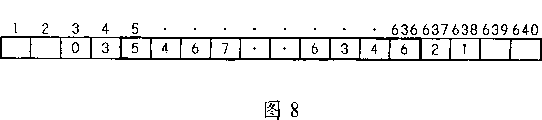
图8为示意性地表示了本发明实施方式1中的图像处理系统的进行端部检测处理的范围的例子的说明图。图8表示了检测对象的候选的像素以及横向边缘标记,图8的上方所示的数字表示了像素的水平方向的位置、也就是x坐标。图8所示的例子中,从x坐标为5的像素到x坐标为636的像素为止,被作为检测对象的水平方向的范围进行检测。FIG. 8 is an explanatory diagram schematically showing an example of a range in which edge detection processing is performed in the image processing system according to
图9为表示了本发明的实施方式1中的图像处理系统的检测对象的候选的说明图。图9表示了驾驶员脸部的图像、以及在步骤S109~S110的处理中检测出了水平方向的范围的检测对象的候选。图9中,×标记表示了用步骤109所检测的左右端,连接用×标记所示的左右端的线段表示了检测对象的候选。在这个阶段没有检测出左右端的候选,被从检测对象中除去。在图9所示的例子中,眉毛、眼睛、鼻孔、嘴以及下颚位置成为检测对象的候选。FIG. 9 is an explanatory diagram showing candidates of detection targets of the image processing system according to
然后,通过将图4所示的驾驶员脸部区域的水平方向的范围与图9所示的检测对象的候选的水平方向的范围相比较,在步骤S111中,从检测对象的候选中确定检测对象。另外,在步骤S111中,如果确定出的检测对象的候选为多个,则针对确定出的每个检测对象,对在形成确定出的各个检测对象的水平方向上所排列的各个像素中、横向边缘标记为规定值以上的像素的数量进行计数,将得到的数值所示出的指标作为鼻孔区域标记。然后,把鼻孔区域标记为最大的检测对象作为真值检测对象,把其他检测对象作为假值而排除掉。Then, by comparing the range in the horizontal direction of the driver's face region shown in FIG. 4 with the range in the horizontal direction of the candidates for the detection target shown in FIG. object. In addition, in step S111, if there are multiple candidates for the determined detection object, for each determined detection object, among the pixels arranged in the horizontal direction forming each determined detection object, The number of pixels whose edge marks are equal to or greater than a predetermined value is counted, and an index indicated by the obtained numerical value is used as a nostril region mark. Then, the detection object whose nostril area is marked as the largest is taken as the true value detection object, and other detection objects are excluded as false values.
图10为概念性地表示了本发明实施方式1中的图像处理系统的鼻孔区域标记的说明图。图10表示了图8所检测出的检测对象的水平方向的范围内所包括的像素、以及表示该像素的横向边缘标记的数值,用O包围了数值的像素表示横向边缘标记为规定值,在此为5以上的值。然后,对横向边缘标记为规定值以上的像素的数量进行计数,作为鼻孔区域。FIG. 10 is an explanatory diagram conceptually showing nostril region markers in the image processing system according to
并且,在本发明的图像处理系统中,通过步骤S112以后的处理,可以进一步判断被确定的检测对象的真伪。In addition, in the image processing system of the present invention, through the processing after step S112, the authenticity of the identified detection object can be further judged.
包括所述实施方式1中所示的数值的各种条件等仅仅为一个例子,可以通过系统结构、目的等状况进行适当的设定。Various conditions including the numerical values shown in
实施方式2.
图11为本发明的实施方式2中的图像处理系统的结构例的方框图。图11中,1为摄像装置,摄像装置1例如通过专用电缆与图像处理装置2进行了连接。摄像装置1中具有MPU11、ROM12、RAM13、摄像部14、A/D转换器15、帧存储器16以及通信接口17。11 is a block diagram of a configuration example of an image processing system in
图像处理装置2中具有CPU21、辅助记录部22、HD23、RAM24、帧存储器25以及通信接口26,通过辅助记录部22从本发明的实施方式2的记录了计算机程序32以及数据等各种信息的记录介质42中读取各种信息并记录于HD23、RAM24,通过CPU21来执行,由此图像处理装置2可以执行本发明实施方式2的各种步骤。The
另外,有关各装置的详细说明,由于与实施方式1相同,所以以实施方式1为参考,在此省略说明。In addition, since the detailed description of each device is the same as that of the first embodiment, the first embodiment will be referred to, and the description will be omitted here.
然后,对本发明的实施方式2中的图像处理系统所用的各种装置的处理进行说明。在本发明的实施方式2中,从由例如安装在车辆上的车载摄像头等的摄像装置1拍摄驾驶员的脸部而得到的图像中,以驾驶员脸部中的鼻孔为检测对象。图12为表示了本发明的实施方式2中的图像处理系统所用的图像处理装置2的处理例子的流程图。图像处理装置2中,通过CPU21对RAM24所记录的计算机程序32执行的控制,从帧存储器25中提取由摄像装置1的拍摄得到并经由通信接口26接收到的图像数据(S201),通过例如实施方式1所示的轮廓宽度检测处理,从所提取的图像数据中检测出作为驾驶员的脸部的宽度、即表示脸部的区域的边界的轮廓的水平方向的范围(S202),进一步检测包括鼻孔在内的左右鼻翼之间的区域作为鼻孔周边区域(S203)。步骤S202所检测出的轮廓的水平方向的范围以及步骤S203所检测出的鼻孔周边区域被记录到HD23或是RAM24中。在步骤S203中,检测鼻孔周边区域的方法中,例如使用实施方式1所示的方法。Next, processing of various devices used in the image processing system according to
另外,图像处理装置2通过CPU21的控制,从步骤S203所检测出的鼻孔周边区域的水平方向的像素亮度的变化中,导出取得极小值的2点作为极小点(S204),以所导出的2点极小点为基础,设定检测出检测对象的搜索范围(S205)。步骤S205所设定的搜索范围记录于HD23或是RAM24中。如果步骤S205的极小点为3点以上,则把亮度小的2点作为极小点导出。通过步骤S205所设定的范围,针对分别导出的极小值的2点,在水平方向为左右分别15个像素,在垂直方向为上下分别5个像素的范围。另外,在步骤S204所导出的2点极小点,可以视为与左右鼻孔相关的点,在步骤S205中,可视为分别对左右鼻孔设定了搜索范围。In addition, the
然后,图像处理装置2通过CPU21的控制,针对步骤S205所设定的搜索范围内的所有像素,通过进行加法运算以及减法运算的黑色区域计算滤波处理,变更亮度(S206),把变更后的值为最小的像素作为检测对象进行检测(S207),并将检测出的结果记录于HD23或是RAM24中,其中,所述加法运算是以相邻的其他像素的亮度为基础进行的,所述减法运算是以在水平方向相隔了规定距离的位置处的像素的亮度以及在垂直方向相隔了规定距离的位置处的像素的亮度为基础进行的。步骤S206~S207的处理中,针对左右鼻孔各自的搜索范围内所含的像素进行。Then, under the control of the
更详细说明利用图12的流程图说明过的处理。图13是概念性地表示本发明实施方式2中的图像处理系统的检测范围的设定例子的说明图。图13中,实线所表示的外侧框架为步骤S201所提取的图像数据所示的图像整体,点划线所示的图像的垂直方向(y轴方向)的线为步骤S202所检测出的区域范围,也就是驾驶员脸部的轮廓的宽度。另外,粗线所示的水平方向的线段是步骤S203中作为鼻孔的周边区域检测的包括鼻孔在内的左右鼻翼之间的区域。The processing explained using the flowchart of FIG. 12 will be described in more detail. 13 is an explanatory diagram conceptually showing a setting example of a detection range of the image processing system according to
图14概念性地表示本发明的实施方式2中的图像处理系统的搜索范围的设定例子的说明图。图14中,表示了包括鼻孔在内的周围的图像,图14中实线所示的长方形的范围为在步骤S205中,针对左右鼻孔所分别设定的搜索范围。FIG. 14 is an explanatory diagram conceptually showing a setting example of a search range in the image processing system according to
图15为表示本发明实施方式2中的图像处理系统的黑色区域计算滤波处理用的系数例子的说明图。通过对搜索范围内所包括的像素乘以图15所示的系数,使中央为低亮度且周围为高亮度的区域明确化。图15所示的黑色区域计算滤波器,对与作为转换对象的一个像素的亮度以及相邻的八个像素的亮度相乘的系数,设定了“1”,另外对与在与一个像素左右相隔了规定距离的位置处排列的二个像素的亮度相乘的系数,设定了“-1”,对与在与一个像素上下相隔了规定距离的位置处分别排列的二个像素的亮度相乘的系数,设定了“-1”。另外,规定距离被设定为步骤S202所检测的区域的1/18。15 is an explanatory diagram showing an example of coefficients for black area calculation filter processing in the image processing system according to
图16为概念性地表示了本发明的实施方式2中的图像处理系统的黑色区域计算滤波处理用的检测例子的说明图。图16中表示了在图14所示那样被设定的搜索范围中,作为图16中的左侧的鼻孔检测出的检测对象进行黑色区域计算滤波处理时的黑色区域计算滤波位置。图15所示的条件中所设定的黑色区域计算滤波器中,在针对图16所示的鼻孔中央附近的像素进行黑色区域计算滤波处理时,为了使用于加法运算的系数位于鼻孔,使用于减法运算的系数位于鼻孔外侧,而可以使鼻孔的中心明确化。16 is an explanatory diagram conceptually showing an example of detection for black area calculation filter processing in the image processing system according to
所述实施方式2所示的包括数值在内的各种条件等仅仅为一个例子,可以根据系统结构、目的等状况进行适当设定。The various conditions including numerical values shown in
实施方式3.
图17为表示本发明实施方式3中的图像处理系统的结构例子的方框图。图17中,1为摄像装置,摄像装置1例如通过专用电缆与图像处理装置2进行了连接。摄像装置1中具有MPU11、ROM12、RAM13、摄像部14、A/D转换器15、帧存储器16以及通信接口17。Fig. 17 is a block diagram showing a configuration example of an image processing system according to
图像处理装置2中具有CPU21、辅助记录部22、HD23、RAM24、帧存储器25以及通信接口26,通过辅助记录部22从记录了本发明实施方式3的计算机程序33以及数据等各种信息的记录介质43中读取各种信息而记录在HD23、记录在RAM24,通过CPU21来执行,由此图像处理装置2可以执行本发明实施方式3的各种步骤。The
另外有关各装置的详细说明,由于与实施方式1相同,所以以实施方式1为参考,在此省略说明。In addition, since the detailed description of each device is the same as that of the first embodiment, the first embodiment will be referred to, and the description will be omitted here.
然后对本发明的实施方式3中的图像处理系统所用的各种装置的处理进行说明。在本发明的实施方式3中,由例如安装在车辆上的车载摄像头等的摄像装置1对驾驶员的脸部进行拍摄所得到的图像中,以驾驶员脸部的鼻孔周围下方的区域为检测对象。图18为表示本发明实施方式3中的图像处理系统所用的图像处理装置2的处理例子的流程图。图像处理装置2中,通过CPU21对执行RAM24所记录的计算机程序33的控制,从帧存储器25中提取通过摄像装置1的拍摄所得到的、经由通信接口26所接收的图像数据(S301),通过例如实施方式1所示的轮廓宽度检测处理,从所提取的图像数据中检测出驾驶员的脸部宽度、即作为表示脸部的区域边界的轮廓的水平方向的范围(S302),进一步检测出使用图案匹配等处理的双眼以及鼻尖检测处理来检测双眼以及鼻尖的位置(S303),根据所检测出的轮廓的水平方向的范围、以及双眼以及鼻尖位置,设定搜索范围(S304)。在步骤S302所检测的轮廓的水平方向的范围、在步骤S303所检测的双眼和鼻尖位置以及在步骤S304设定的搜索范围被记录到HD23或是RAM24中。另外,在步骤S302中的双眼以及鼻尖检测处理的详细内容被记载在本申请人所申请的日本特开2004-234367号公报、日本特开2004-234494号公报等文献中。步骤S304所设定的搜索范围为被设定为例如基于如下位置的区域:垂直方向的上端从表示双眼的垂直方向的位置的y坐标的平均值起为轮廓的水平方向宽度的1/16距离之下的位置,下端从双眼的y坐标的平均值起为轮廓宽度的3/8的距离之下的位置,水平方向的左端为表示鼻尖的水平方向位置的x坐标起为轮廓宽度的1/8距离之左的位置,以及右端从鼻尖x坐标起为轮廓宽度的1/8的距离之右的位置。Next, processing by various devices used in the image processing system according to
另外,图像处理装置2通过CPU21的控制,对步骤S304所设定的搜索范围内的所有像素,导出作为指标的水平方向像素标记,该指标是将基于在水平方向上相邻的像素之间的亮度差的数值以及表示在水平方向上相邻的像素的亮度高低的数值相乘得到的(S305),在垂直方向对所导出的水平方向像素标记进行累加,从而导出作为表示在水平方向上的累加值变化的指标的水平方向标记(S306)。进而,在图像处理装置2中,通过CPU21的控制,对搜索范围内所有的像素,导出作为指标的垂直方向像素标记,该指标是将基于在垂直方向上相邻的像素之间的亮度差的数值以及表示在垂直方向上相邻的像素的亮度高低的数值相乘而得到的(S307),在水平方向对所导出的垂直方向上的像素标记进行累加,从而导出作为表示垂直方向上的累加值变化的指标的垂直方向标记(S308)。另外,图像处理装置2通过CPU21的控制,将步骤S306所导出的水平方向标记的最大值到最小值之间的水平方向的范围、以及将步骤S307所导出的垂直方向标记的最大值到最小值之间的垂直方向的范围,作为检测对象进行检测(S309),并把检测的结果记录在HD23或是RM24中。In addition, under the control of the
进一步详细说明利用图18的流程图说明过的处理。图19是概念性地说明本发明实施方式3中的图像处理系统的搜索范围的设定例子的说明图。图19中,实线所表示的外侧框架为步骤S301所提取的图像数据所示的图像整体,点划线所示的图像的垂直方向(y轴方向)的线为步骤S302所检测出的区域范围,也就是驾驶员脸部的轮廓宽度,×标记所表示的位置为步骤S303所检测出的双眼以及鼻尖的位置。另外,点线所示的区域为步骤S304所设定的搜索范围。The processing explained using the flowchart of FIG. 18 will be described in more detail. 19 is an explanatory diagram conceptually illustrating a setting example of a search range in the image processing system according to
步骤S305所导出的水平方向像素标记如下述式3所示。The horizontal direction pixel label derived in step S305 is expressed in
其中:x:水平方向的坐标(x坐标)Where: x: coordinates in the horizontal direction (x coordinates)
y:垂直方向的坐标(y坐标)y: coordinates in the vertical direction (y coordinates)
Sh(x,y):坐标(x,y)的像素的水平方向像素标记Sh(x, y): the horizontal pixel mark of the pixel at coordinates (x, y)
H(x,y):坐标(x,y)的像素的水平垂直方向边缘滤波处理结果H(x, y): The horizontal and vertical edge filtering processing results of the pixel at coordinates (x, y)
P(x,y):坐标(x,y)的像素的亮度P(x, y): the brightness of the pixel at coordinates (x, y)
图20为表示本发明实施方式3中的图像处理系统的水平方向边缘滤波处理用的系数例子的说明图。在式3中,H(x,y)表示了用图20所示的系数进行的水平方向边缘滤波处理的结果。图20作为3×3的矩阵表示了要与九个像素的亮度相乘的系数,针对中心的一个像素的亮度以及相邻的八个像素亮度,乘以各自对应的系数,把其结果的合计值作为中心位置的像素的水平方向边缘滤波处理结果进行计算。在使用图20所示的系数进行水平方向的边缘滤波处理时,通过将对左方相邻的像素亮度乘以“1”的数值、以及对右方相邻的像素亮度乘以“-1”的数值相加,由此求出作为结果的指标。也就是通过水平方向边缘滤波处理,以在水平方向上相邻的像素之间的亮度差为基础求出数值。20 is an explanatory diagram showing an example of coefficients for horizontal edge filter processing in the image processing system according to
对水平方向边缘滤波处理结果相乘的式是从表示把像素的亮度分为256个阶段而得到的灰度值的最高数值的“255”减去在水平方向相邻的像素的亮度的值,即表示亮度高低的数值。这样,水平方向像素标记是基于如下的数值得到的指标:基于在水平方向相邻的像素之间亮度差的数值、以及表示在水平方向相邻的像素的亮度高低的数值。另外,在与水平方向边缘滤波处理结果相乘的式中使用亮度的像素根据水平方向边缘滤波处理结果的正负而不同。The formula for multiplying the result of the horizontal edge filtering process is to subtract the value of the brightness of the pixels adjacent in the horizontal direction from "255" representing the highest value of the grayscale value obtained by dividing the brightness of the pixel into 256 steps, That is, the numerical value indicating the brightness level. In this way, the horizontal pixel label is an index based on numerical values based on a difference in luminance between pixels adjacent in the horizontal direction, and a numerical value indicating the level of luminance of pixels adjacent in the horizontal direction. In addition, the pixel whose luminance is used in the equation for multiplying the result of the horizontal edge filtering process differs depending on whether the result of the horizontal edge filtering process is positive or negative.
并且,步骤S306所导出的水平方向标记是表示通过在垂直方向对水平方向像素标记进行累加而导出的水平方向位置即x坐标和累加值之间关系的指标。也就是通过水平方向标记表示了水平方向像素标记在水平方向上的变化。具体而言,在水平方向标记中,在水平方向上像素亮度大幅度降低的位置的值变大,在像素亮度大幅度上升的位置的值变小。Furthermore, the horizontal direction flag derived in step S306 is an index indicating the relationship between the x-coordinate, which is the horizontal position derived by adding up the horizontal pixel marks in the vertical direction, and the accumulated value. That is, the horizontal direction mark represents the change of the horizontal direction pixel mark in the horizontal direction. Specifically, in the horizontal direction mark, the value at a position where the pixel luminance is greatly reduced in the horizontal direction becomes large, and the value at a position where the pixel luminance greatly increases becomes small.
步骤S307所导出的垂直方向像素标记,用下述式4进行表示。The vertical direction pixel label derived in step S307 is represented by the following
其中: Vh(x,y):坐标(x,y)的像素的垂直方向像素标记Among them: Vh(x, y): the vertical pixel mark of the pixel at coordinates (x, y)
V(x,y):坐标(x,y)的像素的垂直方向边缘滤波处理结果V(x, y): the vertical edge filtering processing result of the pixel at coordinates (x, y)
P(x,y):坐标(x,y)的像素的亮度P(x, y): the brightness of the pixel at coordinates (x, y)
图21为表示本发明实施方式3中的图像处理系统的垂直方向边缘滤波处理用的系数例子的说明图。在式4所示的式子中,V(x,y)表示了用图21所示的系数进行的垂直方向边缘滤波处理的结果。图21作为3×3的矩阵表示了要对九个像素的亮度相乘的系数,针对中心的一个像素亮度以及相邻的八个像素亮度,乘以各自对应的系数,把其结果的合计值作为中心位置的像素的垂直方向边缘滤波处理结果进行计算。在使用如图21所示的系数进行垂直方向边缘滤波处理时,通过将对上方相邻的像素亮度乘以“1”的数值、以及对下方相邻的像素亮度乘以“-1”的数值相加,求出成为结果的指标。也就是通过垂直方向边缘滤波处理,以在垂直方向上相邻的像素之间的亮度差为基础求出数值。21 is an explanatory diagram showing an example of coefficients for vertical edge filter processing in the image processing system according to
对垂直方向边缘滤波处理结果相乘的式是从表示把像素的亮度分为256个阶段而得到的灰度值的最高数值的“255”减去在垂直方向上相邻的像素的亮度的值,即是表示亮度高低的数值。这样,垂直方向像素标记是基于如下的数值得到的指标:基于在垂直方向相邻的像素之间亮度差的数值、以及表示在垂直方向相邻的像素的亮度高低的数值。另外,在与垂直方向边缘滤波处理结果相乘的式中使用了亮度的像素根据垂直方向边缘滤波处理结果的正负而不同。The formula for multiplying the result of the vertical edge filtering process is to subtract the value of the brightness of the pixels adjacent in the vertical direction from "255", which represents the highest value of the grayscale value obtained by dividing the brightness of the pixel into 256 steps. , which is the numerical value representing the brightness level. In this way, the vertical pixel label is an index obtained based on numerical values based on a difference in luminance between vertically adjacent pixels and a numerical value indicating how high or low the luminance of vertically adjacent pixels is. In addition, the pixels whose luminance is used in the formula for multiplying the result of the vertical edge filtering process differ depending on whether the result of the vertical edge filtering process is positive or negative.
并且,步骤S308所导出的垂直方向标记是表示通过在水平方向对垂直方向像素标记进行累加而导出的垂直方向位置即y坐标和累加值之间关系的指标。也就是通过垂直方向标记表示了垂直方向像素标记在垂直方向上的变化。具体而言,在垂直方向标记中,在垂直方向上像素亮度大幅度降低的位置的值变大,在像素亮度大幅度上升的位置的值变小。In addition, the vertical flag derived in step S308 is an index indicating the relationship between the vertical position, that is, the y coordinate and the accumulated value, derived by adding up the vertical pixel flags in the horizontal direction. That is, the vertical direction mark represents the change of the vertical direction pixel mark in the vertical direction. Specifically, in the vertical direction mark, the value at a position where the pixel luminance is greatly reduced in the vertical direction becomes large, and the value at a position where the pixel luminance greatly increases becomes small.
另外在步骤S309中,检测出如下设定的区域:将水平方向标记的最大值为水平方向的左端,最小值为水平方向的右端,垂直方向标记的最大值为垂直方向的上端,最小值为垂直方向的下端。In addition, in step S309, the area set as follows is detected: the maximum value of the horizontal direction mark is the left end of the horizontal direction, the minimum value is the right end of the horizontal direction, the maximum value of the vertical direction mark is the upper end of the vertical direction, and the minimum value is the lower end of the vertical direction.
图22为表示本发明的实施方式3中的图像处理系统的检测结果的说明图。图22表示了通过步骤S304所设定的搜索范围,由左端L、右端R、上端U以及下端D包围的用斜线所示的长方形的区域为被检测出鼻孔周围的下方的区域。FIG. 22 is an explanatory diagram showing detection results of the image processing system in
包括所述实施方式3所示的数值在内的各种条件等,只是一个例子,可以根据系统结构、目的等状况适当地进行设定。例如在所述实施方式3中,示出了在导出水平方向标记之后,导出垂直方向标记的实施方式,但也可以为导出垂直方向标记之后,导出水平方向标记的方式,还可以为不导出水平方向标记,而把水平方向的左端以及右端作为脸部轮廓的宽度,仅仅导出垂直方向标记等的方式等,可以进行各种各样的展开。Various conditions including the numerical values shown in
实施方式4.
图23为表示本发明实施方式4中的图像处理系统的结构例子的方框图。图23中,1为摄像装置,摄像装置1例如用专用电缆等与图像处理装置2进行了连接。摄像装置1中具有MPU11、ROM12、RAM13、摄像部14、A/D转换器15、帧存储器16以及通信接口17。Fig. 23 is a block diagram showing a configuration example of an image processing system according to
图像处理装置2中具有CPU21、辅助记录部22、HD23、RAM24、帧存储器25以及通信接口26,通过辅助记录部22,从记录了本发明实施方式4的计算机程序34以及数据等各种信息的记录介质44中读取各种信息并记录于HD23、RAM24,通过CPU21执行,由此图像处理装置2执行本发明实施方式4的各种步骤。在本发明实施方式4的图像处理装置2中,记录了包括本发明实施方式1至3中所说明的检测方法的多种检测方法。The
另外,有关各装置的详细说明,由于与实施方式1相同,所以以实施方式1为参考,在此省略说明。In addition, since the detailed description of each device is the same as that of the first embodiment, the first embodiment will be referred to, and the description will be omitted here.
接着,对本发明的实施方式4中的图像处理系统中所用的各种装置的处理进行说明。本发明的实施方式4中,在通过例如安装在车辆的车载摄像头等摄像装置1对驾驶者的脸部进行拍摄而得到的图像中,以驾驶者脸部中包括鼻孔在内的区域作为检测对象。图24是表示用于本发明的实施方式4中的图像处理系统的图像处理装置2的处理例子的流程图。在图像处理装置2中,通过执行记录于RAM24中的计算机程序34的CPU21的控制,从帧存储器25中提取通过摄像装置1的拍摄所得到的、经由通信接口26所接收的图像数据(S401),计算出所提取的图像数据中所包含的像素亮度的平均值(S402),并把作为计算出的结果的平均值与针对亮度平均值事先设定的阈值进行比较(S403)。而且在图像处理装置2中,通过CPU21的控制,计算像素亮度的分散值(S404),把作为计算出的结果的分散值、与针对亮度的分散值事先设定的阈值进行比较(S405)。然后在图像处理装置2中,通过CPU21的控制,基于亮度平均值与阈值之间的比较结果以及亮度分散值与阈值之间的比较结果,决定在HD23所记录的多种检测方法的优先顺序(S406)。Next, processing of various devices used in the image processing system according to
在本发明的实施方式4中进行如下处理:根据亮度的平均值和分散值,决定检测方法的优先顺序。所决定的优先顺序是是否需要执行多种检测方法和执行的顺序,根据所决定的内容,执行上述的本发明实施方式1乃至3所说明的检测方法,以及其他的检测方法。In
图像数据的亮度的平均值与分散值根据对驾驶员脸部照射的光线状况不同而变化较大,所以根据平均值和分散值判断照射状况,选择最为合适的检测方法。具体而言,如果产生太阳光仅仅照射到脸部的左半边而导致的各种偏变化,亮度的平均值为阈值以下,并且亮度的分散值为阈值以上,因此可以判断发生了偏变化,使难以对偏变化造成影响的检测方法优先。The average value and dispersion value of the brightness of the image data vary greatly depending on the light conditions on the driver's face, so the most suitable detection method is selected by judging the illumination conditions based on the average value and dispersion value. Specifically, if there are various partial changes caused by sunlight irradiating only the left half of the face, the average value of the brightness is below the threshold, and the dispersion value of the brightness is above the threshold, so it can be judged that partial changes have occurred, so that Detection methods that are difficult to affect bias changes are preferred.
例如没有产生偏变化的状态下,通过实施方式1所示的检测方法检测出鼻孔周边区域,使用检测出的结果,用实施方式2所示的检测方法检测出鼻孔。通过检测出鼻孔周边区域,限定成为图像处理对象的范围,因此提高处理速度,并提高检测精度。但是如果产生了偏变化,则由于产生亮度饱和的可能性大,所以使用实施方式1的横向边缘滤波器进行的处理的可靠性降低。因此,根据实施方式2所示的检测方法优先检测出鼻孔。For example, in a state where there is no bias change, the area around the nostrils is detected by the detection method described in
在所述实施方式4中,对亮度的平均值以及分散值的阈值设定了一个,但本发明并不局限于此,也可以设定多个阈值,并针对各种各样的状况决定检测方法的优先顺序,此外也可以基于平均值和分散值来决定用于进行检测的图像处理所需的各种设定值等的处理条件。In
在所述实施方式1至4中,对由平面直角坐标系所表示的图像数据进行了处理,但本发明并不局限于此,可以针对各种各样的坐标系的图像数据应用,例如应用于对包括被配置为蜂巢状的像素的图像进行处理时,通过第1方向和第2方向之间具有60度的角度而交叉的坐标系所示的图像数据等。In
另外,在所述实施方式1至4中示出了以车辆的驾驶员为检测对象的方式,但本发明并不局限于此,而也可以以各种各样的人物、以及人物以外的有生命物或是无生命物为检测对象。In addition, in the above-mentioned
此外,在所述实施方式1至4中示出了从使用车载摄像头的摄像装置的拍摄而生成的图像中检测出检测对象的方式,但本发明并不局限于此,可以应用于将通过各种装置用各种方法所生成的图像记录于HD中,从所记录的图像中检测出特定的检测对象的各种图像处理。In addition, in
Claims (21)
Applications Claiming Priority (1)
| Application Number | Priority Date | Filing Date | Title |
|---|---|---|---|
| PCT/JP2005/002928 WO2006090449A1 (en) | 2005-02-23 | 2005-02-23 | Image processing method, image processing device, image processing system, and computer program |
Related Child Applications (1)
| Application Number | Title | Priority Date | Filing Date |
|---|---|---|---|
| CN 200910224864 Division CN101714210B (en) | 2005-02-23 | 2005-02-23 | Image processing method, image processing device and image processing system |
Publications (2)
| Publication Number | Publication Date |
|---|---|
| CN101116106A true CN101116106A (en) | 2008-01-30 |
| CN101116106B CN101116106B (en) | 2011-11-09 |
Family
ID=36927100
Family Applications (1)
| Application Number | Title | Priority Date | Filing Date |
|---|---|---|---|
| CN2005800478099A Expired - Lifetime CN101116106B (en) | 2005-02-23 | 2005-02-23 | Image processing method, image processing device and image processing system |
Country Status (4)
| Country | Link |
|---|---|
| US (1) | US8457351B2 (en) |
| JP (1) | JP4364275B2 (en) |
| CN (1) | CN101116106B (en) |
| WO (1) | WO2006090449A1 (en) |
Cited By (3)
| Publication number | Priority date | Publication date | Assignee | Title |
|---|---|---|---|---|
| CN101582987B (en) * | 2008-01-31 | 2011-06-08 | 卡西欧计算机株式会社 | Image capture device |
| CN102339466A (en) * | 2010-07-15 | 2012-02-01 | 三星泰科威株式会社 | Method and camera for detecting regions with specific shapes |
| CN101978392B (en) * | 2008-03-26 | 2013-01-16 | 本田技研工业株式会社 | Image processing device for vehicle |
Families Citing this family (10)
| Publication number | Priority date | Publication date | Assignee | Title |
|---|---|---|---|---|
| JP4884251B2 (en) * | 2007-02-09 | 2012-02-29 | 富士フイルム株式会社 | Imaging apparatus, method, and program |
| EP3462727B1 (en) * | 2007-06-14 | 2020-05-13 | FUJIFILM Corporation | Photographing apparatus |
| JP2009199417A (en) * | 2008-02-22 | 2009-09-03 | Denso Corp | Face tracking device and face tracking method |
| JP5367037B2 (en) * | 2011-09-26 | 2013-12-11 | 本田技研工業株式会社 | Face orientation detection device |
| JP6222900B2 (en) * | 2012-07-09 | 2017-11-01 | キヤノン株式会社 | Image processing apparatus, image processing method, and program |
| KR101788070B1 (en) * | 2012-12-14 | 2017-10-20 | 동국대학교 산학협력단 | Method for nose region detection |
| JP6169366B2 (en) * | 2013-02-08 | 2017-07-26 | 株式会社メガチップス | Object detection device, program, and integrated circuit |
| JP6337949B1 (en) * | 2016-12-15 | 2018-06-06 | オムロン株式会社 | Line-shaped region detection device and line-shaped region detection method |
| CN108304764B (en) * | 2017-04-24 | 2021-12-24 | 中国民用航空局民用航空医学中心 | Fatigue state detection device and detection method in simulated flight driving process |
| CN110580676A (en) * | 2018-06-07 | 2019-12-17 | 富泰华工业(深圳)有限公司 | Face caricature image production method, electronic device and storage medium |
Family Cites Families (10)
| Publication number | Priority date | Publication date | Assignee | Title |
|---|---|---|---|---|
| JP2836238B2 (en) * | 1990-11-07 | 1998-12-14 | 日産自動車株式会社 | Driving car eye position detection device and state detection device |
| FR2674354A1 (en) * | 1991-03-22 | 1992-09-25 | Thomson Csf | Method of analysing sequences of road images, device for implementing it and its application to obstacle detection |
| JP3452685B2 (en) * | 1995-05-10 | 2003-09-29 | 三菱電機株式会社 | Face image processing device |
| US6061400A (en) * | 1997-11-20 | 2000-05-09 | Hitachi America Ltd. | Methods and apparatus for detecting scene conditions likely to cause prediction errors in reduced resolution video decoders and for using the detected information |
| CN1131699C (en) * | 1999-06-09 | 2003-12-24 | 现代自动车株式会社 | Method for detecting driver's eyes in dozing driving alarm system |
| JP2001067459A (en) * | 1999-08-26 | 2001-03-16 | Toshiba Corp | Face image processing method and face image processing device |
| JP2001331795A (en) * | 2000-05-18 | 2001-11-30 | Victor Co Of Japan Ltd | Device and method for normalizing image |
| JP3895238B2 (en) * | 2002-08-28 | 2007-03-22 | 株式会社東芝 | Obstacle detection apparatus and method |
| JP4204336B2 (en) | 2003-01-30 | 2009-01-07 | 富士通株式会社 | Facial orientation detection device, facial orientation detection method, and computer program |
| JP4162503B2 (en) | 2003-01-31 | 2008-10-08 | 富士通株式会社 | Eye state determination device, eye state determination method, and computer program |
-
2005
- 2005-02-23 CN CN2005800478099A patent/CN101116106B/en not_active Expired - Lifetime
- 2005-02-23 JP JP2007504583A patent/JP4364275B2/en not_active Expired - Lifetime
- 2005-02-23 WO PCT/JP2005/002928 patent/WO2006090449A1/en not_active Ceased
-
2007
- 2007-08-23 US US11/844,097 patent/US8457351B2/en active Active
Cited By (4)
| Publication number | Priority date | Publication date | Assignee | Title |
|---|---|---|---|---|
| CN101582987B (en) * | 2008-01-31 | 2011-06-08 | 卡西欧计算机株式会社 | Image capture device |
| CN101978392B (en) * | 2008-03-26 | 2013-01-16 | 本田技研工业株式会社 | Image processing device for vehicle |
| CN102339466A (en) * | 2010-07-15 | 2012-02-01 | 三星泰科威株式会社 | Method and camera for detecting regions with specific shapes |
| CN102339466B (en) * | 2010-07-15 | 2016-04-13 | 韩华泰科株式会社 | For detecting method and the camera in the region with given shape |
Also Published As
| Publication number | Publication date |
|---|---|
| CN101116106B (en) | 2011-11-09 |
| US8457351B2 (en) | 2013-06-04 |
| WO2006090449A1 (en) | 2006-08-31 |
| JPWO2006090449A1 (en) | 2008-07-17 |
| JP4364275B2 (en) | 2009-11-11 |
| US20070291999A1 (en) | 2007-12-20 |
Similar Documents
| Publication | Publication Date | Title |
|---|---|---|
| US8457351B2 (en) | Image object detection using separate ranges from both image detections | |
| CN101670835B (en) | Road-lane marker detection | |
| CN115761563B (en) | River surface flow velocity calculation method and system based on optical flow measurement and calculation | |
| KR101392850B1 (en) | Method and system for lane departure warning based on image recognition | |
| CN106919915B (en) | Map road marking and road quality acquisition device and method based on ADAS system | |
| CN105678285B (en) | A kind of adaptive road birds-eye view transform method and road track detection method | |
| US20100110193A1 (en) | Lane recognition device, vehicle, lane recognition method, and lane recognition program | |
| EP2698762B1 (en) | Eyelid-detection device, eyelid-detection method, and program | |
| CN103714538A (en) | Road edge detection method, device and vehicle | |
| JP2012212282A (en) | Road surface state detection device, road surface state detection method, and road surface state detection program | |
| CN115273023A (en) | Vehicle-mounted road pothole identification method and system and automobile | |
| CN107292214B (en) | Lane departure detection method, device and vehicle | |
| JP4644273B2 (en) | Vehicle periphery monitoring device | |
| JP4864043B2 (en) | Image processing apparatus, method, and program | |
| JP4171501B2 (en) | Vehicle periphery monitoring device | |
| JP2011165170A (en) | Object detection device and program | |
| CN101320477B (en) | Human body tracing method and equipment thereof | |
| CN108537138A (en) | A kind of eyes closed degree computational methods based on machine vision | |
| JP4185545B2 (en) | Road landscape analysis apparatus and method | |
| CN116206126B (en) | Method for extracting inherent geometric features of roads from the driver's perspective | |
| JP2004086417A (en) | Pedestrian detection method and device at pedestrian crossing | |
| JP5664078B2 (en) | Imaging apparatus, image evaluation method, and focus adjustment control program | |
| JP5370375B2 (en) | Image recognition device | |
| CN101714210B (en) | Image processing method, image processing device and image processing system | |
| JP4936045B2 (en) | Vehicle color discrimination device, method and program |
Legal Events
| Date | Code | Title | Description |
|---|---|---|---|
| C06 | Publication | ||
| PB01 | Publication | ||
| C10 | Entry into substantive examination | ||
| SE01 | Entry into force of request for substantive examination | ||
| C14 | Grant of patent or utility model | ||
| GR01 | Patent grant | ||
| CX01 | Expiry of patent term |
Granted publication date: 20111109 |
|
| CX01 | Expiry of patent term |