CN100581772C - Microwave Hardening Systems for Ceramic Extrusions - Google Patents
Microwave Hardening Systems for Ceramic Extrusions Download PDFInfo
- Publication number
- CN100581772C CN100581772C CN200480032065A CN200480032065A CN100581772C CN 100581772 C CN100581772 C CN 100581772C CN 200480032065 A CN200480032065 A CN 200480032065A CN 200480032065 A CN200480032065 A CN 200480032065A CN 100581772 C CN100581772 C CN 100581772C
- Authority
- CN
- China
- Prior art keywords
- microwave
- ceramic body
- ceramic
- wet
- cylindrical part
- Prior art date
- Legal status (The legal status is an assumption and is not a legal conclusion. Google has not performed a legal analysis and makes no representation as to the accuracy of the status listed.)
- Expired - Fee Related
Links
Images




Classifications
-
- C—CHEMISTRY; METALLURGY
- C04—CEMENTS; CONCRETE; ARTIFICIAL STONE; CERAMICS; REFRACTORIES
- C04B—LIME, MAGNESIA; SLAG; CEMENTS; COMPOSITIONS THEREOF, e.g. MORTARS, CONCRETE OR LIKE BUILDING MATERIALS; ARTIFICIAL STONE; CERAMICS; REFRACTORIES; TREATMENT OF NATURAL STONE
- C04B35/00—Shaped ceramic products characterised by their composition; Ceramics compositions; Processing powders of inorganic compounds preparatory to the manufacturing of ceramic products
- C04B35/01—Shaped ceramic products characterised by their composition; Ceramics compositions; Processing powders of inorganic compounds preparatory to the manufacturing of ceramic products based on oxide ceramics
- C04B35/16—Shaped ceramic products characterised by their composition; Ceramics compositions; Processing powders of inorganic compounds preparatory to the manufacturing of ceramic products based on oxide ceramics based on silicates other than clay
- C04B35/18—Shaped ceramic products characterised by their composition; Ceramics compositions; Processing powders of inorganic compounds preparatory to the manufacturing of ceramic products based on oxide ceramics based on silicates other than clay rich in aluminium oxide
- C04B35/195—Alkaline earth aluminosilicates, e.g. cordierite or anorthite
-
- B—PERFORMING OPERATIONS; TRANSPORTING
- B28—WORKING CEMENT, CLAY, OR STONE
- B28B—SHAPING CLAY OR OTHER CERAMIC COMPOSITIONS; SHAPING SLAG; SHAPING MIXTURES CONTAINING CEMENTITIOUS MATERIAL, e.g. PLASTER
- B28B11/00—Apparatus or processes for treating or working the shaped or preshaped articles
- B28B11/24—Apparatus or processes for treating or working the shaped or preshaped articles for curing, setting or hardening
- B28B11/241—Apparatus or processes for treating or working the shaped or preshaped articles for curing, setting or hardening using microwave heating means
-
- B—PERFORMING OPERATIONS; TRANSPORTING
- B28—WORKING CEMENT, CLAY, OR STONE
- B28B—SHAPING CLAY OR OTHER CERAMIC COMPOSITIONS; SHAPING SLAG; SHAPING MIXTURES CONTAINING CEMENTITIOUS MATERIAL, e.g. PLASTER
- B28B11/00—Apparatus or processes for treating or working the shaped or preshaped articles
- B28B11/24—Apparatus or processes for treating or working the shaped or preshaped articles for curing, setting or hardening
- B28B11/243—Setting, e.g. drying, dehydrating or firing ceramic articles
-
- B—PERFORMING OPERATIONS; TRANSPORTING
- B29—WORKING OF PLASTICS; WORKING OF SUBSTANCES IN A PLASTIC STATE IN GENERAL
- B29C—SHAPING OR JOINING OF PLASTICS; SHAPING OF MATERIAL IN A PLASTIC STATE, NOT OTHERWISE PROVIDED FOR; AFTER-TREATMENT OF THE SHAPED PRODUCTS, e.g. REPAIRING
- B29C48/00—Extrusion moulding, i.e. expressing the moulding material through a die or nozzle which imparts the desired form; Apparatus therefor
- B29C48/03—Extrusion moulding, i.e. expressing the moulding material through a die or nozzle which imparts the desired form; Apparatus therefor characterised by the shape of the extruded material at extrusion
- B29C48/09—Articles with cross-sections having partially or fully enclosed cavities, e.g. pipes or channels
- B29C48/11—Articles with cross-sections having partially or fully enclosed cavities, e.g. pipes or channels comprising two or more partially or fully enclosed cavities, e.g. honeycomb-shaped
-
- B—PERFORMING OPERATIONS; TRANSPORTING
- B29—WORKING OF PLASTICS; WORKING OF SUBSTANCES IN A PLASTIC STATE IN GENERAL
- B29C—SHAPING OR JOINING OF PLASTICS; SHAPING OF MATERIAL IN A PLASTIC STATE, NOT OTHERWISE PROVIDED FOR; AFTER-TREATMENT OF THE SHAPED PRODUCTS, e.g. REPAIRING
- B29C48/00—Extrusion moulding, i.e. expressing the moulding material through a die or nozzle which imparts the desired form; Apparatus therefor
- B29C48/25—Component parts, details or accessories; Auxiliary operations
- B29C48/78—Thermal treatment of the extrusion moulding material or of preformed parts or layers, e.g. by heating or cooling
- B29C48/86—Thermal treatment of the extrusion moulding material or of preformed parts or layers, e.g. by heating or cooling at the nozzle zone
- B29C48/865—Heating
-
- B—PERFORMING OPERATIONS; TRANSPORTING
- B29—WORKING OF PLASTICS; WORKING OF SUBSTANCES IN A PLASTIC STATE IN GENERAL
- B29C—SHAPING OR JOINING OF PLASTICS; SHAPING OF MATERIAL IN A PLASTIC STATE, NOT OTHERWISE PROVIDED FOR; AFTER-TREATMENT OF THE SHAPED PRODUCTS, e.g. REPAIRING
- B29C48/00—Extrusion moulding, i.e. expressing the moulding material through a die or nozzle which imparts the desired form; Apparatus therefor
- B29C48/25—Component parts, details or accessories; Auxiliary operations
- B29C48/88—Thermal treatment of the stream of extruded material, e.g. cooling
- B29C48/91—Heating, e.g. for cross linking
-
- B—PERFORMING OPERATIONS; TRANSPORTING
- B29—WORKING OF PLASTICS; WORKING OF SUBSTANCES IN A PLASTIC STATE IN GENERAL
- B29C—SHAPING OR JOINING OF PLASTICS; SHAPING OF MATERIAL IN A PLASTIC STATE, NOT OTHERWISE PROVIDED FOR; AFTER-TREATMENT OF THE SHAPED PRODUCTS, e.g. REPAIRING
- B29C48/00—Extrusion moulding, i.e. expressing the moulding material through a die or nozzle which imparts the desired form; Apparatus therefor
- B29C48/25—Component parts, details or accessories; Auxiliary operations
- B29C48/88—Thermal treatment of the stream of extruded material, e.g. cooling
- B29C48/91—Heating, e.g. for cross linking
- B29C48/9105—Heating, e.g. for cross linking of hollow articles
-
- C—CHEMISTRY; METALLURGY
- C04—CEMENTS; CONCRETE; ARTIFICIAL STONE; CERAMICS; REFRACTORIES
- C04B—LIME, MAGNESIA; SLAG; CEMENTS; COMPOSITIONS THEREOF, e.g. MORTARS, CONCRETE OR LIKE BUILDING MATERIALS; ARTIFICIAL STONE; CERAMICS; REFRACTORIES; TREATMENT OF NATURAL STONE
- C04B35/00—Shaped ceramic products characterised by their composition; Ceramics compositions; Processing powders of inorganic compounds preparatory to the manufacturing of ceramic products
- C04B35/01—Shaped ceramic products characterised by their composition; Ceramics compositions; Processing powders of inorganic compounds preparatory to the manufacturing of ceramic products based on oxide ceramics
- C04B35/16—Shaped ceramic products characterised by their composition; Ceramics compositions; Processing powders of inorganic compounds preparatory to the manufacturing of ceramic products based on oxide ceramics based on silicates other than clay
- C04B35/18—Shaped ceramic products characterised by their composition; Ceramics compositions; Processing powders of inorganic compounds preparatory to the manufacturing of ceramic products based on oxide ceramics based on silicates other than clay rich in aluminium oxide
- C04B35/185—Mullite 3Al2O3-2SiO2
-
- C—CHEMISTRY; METALLURGY
- C04—CEMENTS; CONCRETE; ARTIFICIAL STONE; CERAMICS; REFRACTORIES
- C04B—LIME, MAGNESIA; SLAG; CEMENTS; COMPOSITIONS THEREOF, e.g. MORTARS, CONCRETE OR LIKE BUILDING MATERIALS; ARTIFICIAL STONE; CERAMICS; REFRACTORIES; TREATMENT OF NATURAL STONE
- C04B35/00—Shaped ceramic products characterised by their composition; Ceramics compositions; Processing powders of inorganic compounds preparatory to the manufacturing of ceramic products
- C04B35/622—Forming processes; Processing powders of inorganic compounds preparatory to the manufacturing of ceramic products
- C04B35/626—Preparing or treating the powders individually or as batches ; preparing or treating macroscopic reinforcing agents for ceramic products, e.g. fibres; mechanical aspects section B
- C04B35/63—Preparing or treating the powders individually or as batches ; preparing or treating macroscopic reinforcing agents for ceramic products, e.g. fibres; mechanical aspects section B using additives specially adapted for forming the products, e.g.. binder binders
- C04B35/632—Organic additives
- C04B35/636—Polysaccharides or derivatives thereof
- C04B35/6365—Cellulose or derivatives thereof
-
- F—MECHANICAL ENGINEERING; LIGHTING; HEATING; WEAPONS; BLASTING
- F26—DRYING
- F26B—DRYING SOLID MATERIALS OR OBJECTS BY REMOVING LIQUID THEREFROM
- F26B1/00—Preliminary treatment of solid materials or objects to facilitate drying, e.g. mixing or backmixing the materials to be dried with predominantly dry solids
-
- F—MECHANICAL ENGINEERING; LIGHTING; HEATING; WEAPONS; BLASTING
- F26—DRYING
- F26B—DRYING SOLID MATERIALS OR OBJECTS BY REMOVING LIQUID THEREFROM
- F26B3/00—Drying solid materials or objects by processes involving the application of heat
- F26B3/32—Drying solid materials or objects by processes involving the application of heat by development of heat within the materials or objects to be dried, e.g. by fermentation or other microbiological action
- F26B3/34—Drying solid materials or objects by processes involving the application of heat by development of heat within the materials or objects to be dried, e.g. by fermentation or other microbiological action by using electrical effects
- F26B3/347—Electromagnetic heating, e.g. induction heating or heating using microwave energy
-
- B—PERFORMING OPERATIONS; TRANSPORTING
- B28—WORKING CEMENT, CLAY, OR STONE
- B28B—SHAPING CLAY OR OTHER CERAMIC COMPOSITIONS; SHAPING SLAG; SHAPING MIXTURES CONTAINING CEMENTITIOUS MATERIAL, e.g. PLASTER
- B28B3/00—Producing shaped articles from the material by using presses; Presses specially adapted therefor
- B28B3/20—Producing shaped articles from the material by using presses; Presses specially adapted therefor wherein the material is extruded
- B28B2003/203—Producing shaped articles from the material by using presses; Presses specially adapted therefor wherein the material is extruded for multi-channelled structures, e.g. honeycomb structures
-
- B—PERFORMING OPERATIONS; TRANSPORTING
- B29—WORKING OF PLASTICS; WORKING OF SUBSTANCES IN A PLASTIC STATE IN GENERAL
- B29C—SHAPING OR JOINING OF PLASTICS; SHAPING OF MATERIAL IN A PLASTIC STATE, NOT OTHERWISE PROVIDED FOR; AFTER-TREATMENT OF THE SHAPED PRODUCTS, e.g. REPAIRING
- B29C35/00—Heating, cooling or curing, e.g. crosslinking or vulcanising; Apparatus therefor
- B29C35/02—Heating or curing, e.g. crosslinking or vulcanizing during moulding, e.g. in a mould
- B29C35/08—Heating or curing, e.g. crosslinking or vulcanizing during moulding, e.g. in a mould by wave energy or particle radiation
- B29C35/0805—Heating or curing, e.g. crosslinking or vulcanizing during moulding, e.g. in a mould by wave energy or particle radiation using electromagnetic radiation
- B29C2035/0855—Heating or curing, e.g. crosslinking or vulcanizing during moulding, e.g. in a mould by wave energy or particle radiation using electromagnetic radiation using microwave
-
- C—CHEMISTRY; METALLURGY
- C04—CEMENTS; CONCRETE; ARTIFICIAL STONE; CERAMICS; REFRACTORIES
- C04B—LIME, MAGNESIA; SLAG; CEMENTS; COMPOSITIONS THEREOF, e.g. MORTARS, CONCRETE OR LIKE BUILDING MATERIALS; ARTIFICIAL STONE; CERAMICS; REFRACTORIES; TREATMENT OF NATURAL STONE
- C04B2235/00—Aspects relating to ceramic starting mixtures or sintered ceramic products
- C04B2235/02—Composition of constituents of the starting material or of secondary phases of the final product
- C04B2235/30—Constituents and secondary phases not being of a fibrous nature
- C04B2235/32—Metal oxides, mixed metal oxides, or oxide-forming salts thereof, e.g. carbonates, nitrates, (oxy)hydroxides, chlorides
- C04B2235/3205—Alkaline earth oxides or oxide forming salts thereof, e.g. beryllium oxide
- C04B2235/3206—Magnesium oxides or oxide-forming salts thereof
-
- C—CHEMISTRY; METALLURGY
- C04—CEMENTS; CONCRETE; ARTIFICIAL STONE; CERAMICS; REFRACTORIES
- C04B—LIME, MAGNESIA; SLAG; CEMENTS; COMPOSITIONS THEREOF, e.g. MORTARS, CONCRETE OR LIKE BUILDING MATERIALS; ARTIFICIAL STONE; CERAMICS; REFRACTORIES; TREATMENT OF NATURAL STONE
- C04B2235/00—Aspects relating to ceramic starting mixtures or sintered ceramic products
- C04B2235/02—Composition of constituents of the starting material or of secondary phases of the final product
- C04B2235/30—Constituents and secondary phases not being of a fibrous nature
- C04B2235/34—Non-metal oxides, non-metal mixed oxides, or salts thereof that form the non-metal oxides upon heating, e.g. carbonates, nitrates, (oxy)hydroxides, chlorides
- C04B2235/3427—Silicates other than clay, e.g. water glass
- C04B2235/3463—Alumino-silicates other than clay, e.g. mullite
-
- C—CHEMISTRY; METALLURGY
- C04—CEMENTS; CONCRETE; ARTIFICIAL STONE; CERAMICS; REFRACTORIES
- C04B—LIME, MAGNESIA; SLAG; CEMENTS; COMPOSITIONS THEREOF, e.g. MORTARS, CONCRETE OR LIKE BUILDING MATERIALS; ARTIFICIAL STONE; CERAMICS; REFRACTORIES; TREATMENT OF NATURAL STONE
- C04B2235/00—Aspects relating to ceramic starting mixtures or sintered ceramic products
- C04B2235/02—Composition of constituents of the starting material or of secondary phases of the final product
- C04B2235/30—Constituents and secondary phases not being of a fibrous nature
- C04B2235/34—Non-metal oxides, non-metal mixed oxides, or salts thereof that form the non-metal oxides upon heating, e.g. carbonates, nitrates, (oxy)hydroxides, chlorides
- C04B2235/3427—Silicates other than clay, e.g. water glass
- C04B2235/3463—Alumino-silicates other than clay, e.g. mullite
- C04B2235/3481—Alkaline earth metal alumino-silicates other than clay, e.g. cordierite, beryl, micas such as margarite, plagioclase feldspars such as anorthite, zeolites such as chabazite
-
- C—CHEMISTRY; METALLURGY
- C04—CEMENTS; CONCRETE; ARTIFICIAL STONE; CERAMICS; REFRACTORIES
- C04B—LIME, MAGNESIA; SLAG; CEMENTS; COMPOSITIONS THEREOF, e.g. MORTARS, CONCRETE OR LIKE BUILDING MATERIALS; ARTIFICIAL STONE; CERAMICS; REFRACTORIES; TREATMENT OF NATURAL STONE
- C04B2235/00—Aspects relating to ceramic starting mixtures or sintered ceramic products
- C04B2235/60—Aspects relating to the preparation, properties or mechanical treatment of green bodies or pre-forms
- C04B2235/602—Making the green bodies or pre-forms by moulding
- C04B2235/6021—Extrusion moulding
-
- C—CHEMISTRY; METALLURGY
- C04—CEMENTS; CONCRETE; ARTIFICIAL STONE; CERAMICS; REFRACTORIES
- C04B—LIME, MAGNESIA; SLAG; CEMENTS; COMPOSITIONS THEREOF, e.g. MORTARS, CONCRETE OR LIKE BUILDING MATERIALS; ARTIFICIAL STONE; CERAMICS; REFRACTORIES; TREATMENT OF NATURAL STONE
- C04B2235/00—Aspects relating to ceramic starting mixtures or sintered ceramic products
- C04B2235/60—Aspects relating to the preparation, properties or mechanical treatment of green bodies or pre-forms
- C04B2235/606—Drying
-
- C—CHEMISTRY; METALLURGY
- C04—CEMENTS; CONCRETE; ARTIFICIAL STONE; CERAMICS; REFRACTORIES
- C04B—LIME, MAGNESIA; SLAG; CEMENTS; COMPOSITIONS THEREOF, e.g. MORTARS, CONCRETE OR LIKE BUILDING MATERIALS; ARTIFICIAL STONE; CERAMICS; REFRACTORIES; TREATMENT OF NATURAL STONE
- C04B2235/00—Aspects relating to ceramic starting mixtures or sintered ceramic products
- C04B2235/70—Aspects relating to sintered or melt-casted ceramic products
- C04B2235/80—Phases present in the sintered or melt-cast ceramic products other than the main phase
Landscapes
- Engineering & Computer Science (AREA)
- Chemical & Material Sciences (AREA)
- Ceramic Engineering (AREA)
- Mechanical Engineering (AREA)
- Structural Engineering (AREA)
- Manufacturing & Machinery (AREA)
- Physics & Mathematics (AREA)
- Materials Engineering (AREA)
- Organic Chemistry (AREA)
- Thermal Sciences (AREA)
- Microbiology (AREA)
- General Engineering & Computer Science (AREA)
- Life Sciences & Earth Sciences (AREA)
- Inorganic Chemistry (AREA)
- Biotechnology (AREA)
- Biomedical Technology (AREA)
- Molecular Biology (AREA)
- Health & Medical Sciences (AREA)
- Electromagnetism (AREA)
- Devices For Post-Treatments, Processing, Supply, Discharge, And Other Processes (AREA)
- Press-Shaping Or Shaping Using Conveyers (AREA)
Abstract
一种用来对新形成的陶瓷挤出结构施加微波使其硬化,从而使其在干燥和烧制之前的加工性质获得改进的设备和方法。所述陶瓷体由包含无机原料和具有热胶凝点的粘合剂之类的有机物的塑性可形变材料制成。当所述陶瓷体原材离开挤出机模时,使其通过微波能量场,从而加热至高于有机粘合剂胶凝点的温度。然后使陶瓷体硬化,可以很简便地加工而不发生变形。

An apparatus and method for applying microwaves to harden newly formed ceramic extruded structures, thereby improving their processing properties before drying and firing. The ceramic body is made of a plastically deformable material comprising inorganic raw materials and an organic compound such as a binder having a hot gelling point. When the ceramic body material leaves the extruder die, it is passed through a microwave energy field, thereby heating it to a temperature above the gelling point of the organic binder. The ceramic body is then hardened, allowing for easy processing without deformation.
Description
发明背景Background of the invention
本发明涉及使用微波能量硬化挤出体(extruded body),从而改进加工,减少在干燥和烧制操作之前与加工相关的变形缺陷的加工系统和方法。更具体来说,本发明使得在湿陶瓷挤出物形成蜂窝型制品时对其进行连续的微波加热更加简便。The present invention relates to processing systems and methods that use microwave energy to harden extruded bodies, thereby improving processing and reducing deformation defects associated with processing prior to drying and firing operations. More specifically, the present invention facilitates continuous microwave heating of wet ceramic extrudates as they are formed into honeycomb-type articles.
将增塑材料混合物挤出成多孔体(即蜂窝体)的过程包括柔软性/变形性(用于成形模塑)和结构完整性(用于保持形状)的精细平衡。这些混合物包含无机陶瓷粉末、粘合剂体系和和液体组分,对这些物质的量进行严密控制,从而在挤出过程中保持低压力/扭矩/温度,同时制得能够在形成时进行处理的自支承体(self-supporting body)。The process of extruding a mixture of plasticized materials into a porous body (ie, honeycomb) involves a delicate balance of softness/deformability (for shape molding) and structural integrity (for shape retention). These blends contain inorganic ceramic powders, binder systems, and liquid components in tightly controlled amounts to keep pressure/torque/temperature low during extrusion while producing materials that can be handled as they are formed. Self-supporting body (self-supporting body).
通常当塑性可形变材料的粘性降低时,湿的成形结构或制品会由于自支承不足而发生崩塌。相反的,当塑性可形变材料的粘性增大以提供自支承时,该材料的成形需要明显更高的成形压力,这意味着需要使用更重的设备,更坚固的成形元件和耐磨部件。Often when the viscosity of the plastically deformable material decreases, the wet formed structure or article collapses due to insufficient self-support. Conversely, when the viscosity of a plastically deformable material is increased to provide self-support, the forming of the material requires significantly higher forming pressures, which means the use of heavier equipment, stronger forming elements and wear parts.
所述种类的塑性可形变材料通常还包含具有热胶凝点的有机粘合剂组分。当温度向着胶凝点升高时,这些材料的粘度减小,但是当达到胶凝点时,粘度会随着温度升高而很快地增大。因此,这种塑性可形变材料倾向于在刚好低于该有机粘合剂的胶凝点的温度下使用和成形。Plastically deformable materials of said kind generally also comprise an organic binder component having a thermal gelation point. The viscosity of these materials decreases as the temperature increases toward the gel point, but when the gel point is reached, the viscosity increases rapidly with increasing temperature. Accordingly, such plastically deformable materials tend to be used and formed at temperatures just below the gel point of the organic binder.
美国专利第5,223,188号提出了利用这种胶凝反应,在此专利中使用RF或辐射(radio)能量对增塑材料形成的结构体进行加热,以提供改进的湿强度,从而使其具有更好的加工和处理性能。然而,在对挤出结构体均匀施加RF能,防止形成挤出体表面缺陷和控制辐射泄漏方面还具有问题。因此,需要有改进的系统和方法用来对连续移动的湿陶瓷挤出物进行均匀加热,以改进在干燥和烧制之前的加工。U.S. Patent No. 5,223,188 proposes to take advantage of this gelation reaction. In this patent, RF or radiation (radio) energy is used to heat the structure formed of plasticized material to provide improved wet strength, so that it has better Processing and handling performance. However, there have been problems with uniformly applying RF energy to extruded structures, preventing the formation of surface defects in the extruded body, and controlling radiation leakage. Accordingly, there is a need for improved systems and methods for uniform heating of continuously moving wet ceramic extrudates to improve processing prior to drying and firing.
发明简述Brief description of the invention
本文提供一种用来对新形成的陶瓷挤出结构体施加微波使其硬化,从而使其在干燥和烧制之前的湿强度和加工性质获得充分改进的设备和方法。所述设备包括用来提供频率为100MHz至30GHz的能量的微波源;微波加热器(microwaveapplicator),该微波加热器包括具有流动轴、进口、出口和用来将挤出的陶瓷体沿流动轴输送的支架的室。该微波加热器通过单波导管馈源(single waveguide feed)从微波源接受微波。在挤出机模头末端相邻的位置提供本发明的设备,对湿陶瓷体提供比标准方法更为连续更为均匀的周围空间加热。Provided herein is an apparatus and method for applying microwaves to harden newly formed ceramic extruded structures so that their wet strength and processing properties are substantially improved prior to drying and firing. The apparatus includes a microwave source for providing energy at a frequency of 100 MHz to 30 GHz; a microwave applicator comprising a flow axis, an inlet, an outlet and a ceramic body used to transport the extruded ceramic body along the flow axis. chamber for the stand. The microwave heater receives microwaves from a microwave source through a single waveguide feed. Providing the apparatus of the present invention adjacent the extruder die end provides more continuous and uniform ambient heating of the wet ceramic body than standard methods.
本发明可用于任何能够通过挤出来模塑和成形的塑性可形变材料。这些材料的包含无机粉末(即陶瓷原料)和有机成形化合物(即粘合剂、表面活性剂、增塑剂、润滑剂等)的混合物。至少一种有机化合物具有热胶凝点,该化合物通常是粘合剂组分。特别合适的塑性材料是能够形成陶瓷制品的包含堇青石和/或富铝红柱石的混合物。这些混合物的例子是2-60重量%富铝红柱石,30-97%堇青石,还可包含通常最高达10重量%的其他相。在美国专利第3,885,977号中描述了一些用来形成堇青石的陶瓷批料组合物。适合用来形成堇青石配方的具有热胶凝点的粘合剂是纤维素醚粘合剂,例如甲基纤维素和/或甲基纤维素衍生物。The present invention is applicable to any plastically deformable material that can be molded and shaped by extrusion. These materials comprise mixtures of inorganic powders (ie, ceramic raw materials) and organic forming compounds (ie, binders, surfactants, plasticizers, lubricants, etc.). At least one organic compound has a thermal gel point, which compound is typically an adhesive component. Particularly suitable plastic materials are mixtures comprising cordierite and/or mullite capable of forming ceramic articles. Examples of such mixtures are 2-60% by weight mullite, 30-97% cordierite and may also contain other phases, usually up to 10% by weight. Certain ceramic batch compositions for forming cordierite are described in US Patent No. 3,885,977. A binder having a thermal gel point suitable for use in forming cordierite formulations is a cellulose ether binder such as methylcellulose and/or methylcellulose derivatives.
所述陶瓷原料、粘合剂和余下的有机组分与液体载体(通常是水)混合形成增塑的批料。然后将该批料挤压通过模头。挤出机是本领域众所周知的,可包括用来将所述材料压过模头的活塞或螺杆进样器。当陶瓷材料离开挤出机模头时,该材料是长的管状体的形式,其称为“原材”,然后将其切割成形。本发明特别适于挤出陶瓷基材的过程。在现有技术中,这样挤出的原材通常具有低的湿强度,由于孔壁很薄,通常无法牢固地自支承。这使得在随后对原材的加工步骤(即湿加工、剪切和干燥)中难以不由于例如变形造成破坏。The ceramic raw material, binder and remaining organic components are mixed with a liquid carrier (usually water) to form a plasticized batch. The batch is then extruded through a die. Extruders are well known in the art and may include piston or screw feeders to force the material through a die. When the ceramic material exits the extruder die, the material is in the form of a long tubular body called a "log", which is then cut to shape. The invention is particularly suitable for extrusion of ceramic substrates. In the prior art, such extruded logs generally have low wet strength and are generally not securely self-supporting due to the thin cell walls. This makes it difficult in subsequent processing steps of the raw material (ie wet processing, shearing and drying) without damage due to eg deformation.
根据本发明,所述陶瓷原材在离开挤出模头之后进入微波能量场中。该原材在暴露于微波的同时以足够的速率移动,使其加热至高于粘合剂胶凝点。这硬化了湿陶瓷体,从而防止其发生松垂或加工变形,这种松垂或加工变形在成形体具有低的湿强度,因此无法完全自支承时是很容易发生的。在本领域中已知有机粘合剂的胶凝是由于聚合物的交联造成的。然而,在本发明硬化的陶瓷体中基本不发生蒸发或失水。这是本发明的一个重要优点,因为因此避免了伴随收缩而产生的缺陷。通过本发明还可获得更高效、更低成本的陶瓷基材形成法。According to the invention, the ceramic raw material enters the microwave energy field after leaving the extrusion die. The log, while exposed to microwaves, moves at a rate sufficient to heat it above the gel point of the adhesive. This hardens the green ceramic body, thereby preventing it from sagging or work deformation, which can easily occur when the formed body has low green strength and is therefore not fully self-supporting. It is known in the art that gelation of organic binders is due to crosslinking of the polymers. However, substantially no evaporation or water loss occurs in the hardened ceramic bodies of the present invention. This is an important advantage of the invention, since the defects associated with shrinkage are thus avoided. A more efficient and lower-cost ceramic substrate forming method can also be obtained through the present invention.
附图简述Brief description of the drawings
参照以下附图可进一步理解本发明,在图中:The invention can be further understood with reference to the following drawings, in which:
图1是一般地显示根据本发明的微波硬化系统的示意图;Figure 1 is a schematic diagram generally showing a microwave hardening system according to the present invention;
图2是具有由改良的矩形波导组成的室的微波加热器的实施方式的透视图;Figure 2 is a perspective view of an embodiment of a microwave heater with a chamber consisting of a modified rectangular waveguide;
图3是沿图2的实施方式的3-3直线的截面图;Fig. 3 is a sectional view along the line 3-3 of the embodiment of Fig. 2;
图4是沿图2的实施方式中直线5-5的截面图;Fig. 4 is a sectional view along line 5-5 in the embodiment of Fig. 2;
图5是显示衰减装置的图2的微波加热器出口端的俯视图;Figure 5 is a top view of the outlet end of the microwave heater of Figure 2 showing the attenuation means;
图6是显示对孔(cell)密度为600孔/英寸,孔壁厚为0.004英寸的堇青石蜂窝状结构的微波加热效果的柱状图;Figure 6 is a bar graph showing the effect of microwave heating on a cordierite honeycomb structure with a cell density of 600 cells/inch and a cell wall thickness of 0.004 inches;
图7是具有室的微波加热器另一实施方式的透视图,该室由以径向分级结构排列的第一和第二圆柱形部分组成;Figure 7 is a perspective view of another embodiment of a microwave heater having a chamber consisting of first and second cylindrical sections arranged in a radially graded configuration;
图8是沿图7的实施方式的直线8-8的截面图;Figure 8 is a cross-sectional view along line 8-8 of the embodiment of Figure 7;
图9是沿图7实施方式的直线9-9的截面图。Figure 9 is a cross-sectional view along line 9-9 of the embodiment of Figure 7 .
发明详述Detailed description of the invention
图1以微波硬化系统10的示意图显示了本发明的主要特征。陶瓷原材12离开成形元件或挤出机14,被输送通过微波加热器16。因此,所述微波加热器16位于挤出机14的出口处或模头端,通过该模头元件形成陶瓷原材12之后,该陶瓷原材12立刻暴露于微波能量场。FIG. 1 shows the main features of the present invention in a schematic diagram of a
微波加热器16包括室20和单波导管馈源28。室20具有与用来支承原材12的支架18相结合的进口端22和出口端24。支架18涉及本领域中用来使材料体连续移动的任何装置,优选包括空气轴承(bearing)系统,如美国专利第5,205,991号所述,所述空气轴承系统包括一系列空气轴承支承室,通过与共用的空气输送管道相连的各个导管向这些室提供空气,该专利全文通过参考结合入本文中。
提供与微波源32相连的单波导馈源28,用来接收微波进入微波加热器16。出于设计简化和节约成本的原因,本发明的设备宜使用单波导馈源。A
当需要减少在进口端22和出口端24处的微波辐射泄漏时,通常提供衰减装置26。用来减少微波辐射的装置是本领域众所周知的,可包括微波衰减器和扼波器(choke)。通常还在微波源32和波导馈源28之间提供阻抗匹配装置30,用以阻止微波能在相反方向的反射。这些合适的装置包括本领域已知的循环器和短线调谐器(stub tuner)。Attenuation means 26 are typically provided when it is desired to reduce leakage of microwave radiation at the
微波源32发射频率为100MHz至30GHz的微波。所述微波源32可包括任何合适的微波源,例如磁控管、速调管、行波管、振荡管等。该系统还可装有电源和控制器34用来控制和调节输送到微波加热器16的微波辐射。微波能量以连续的TExy和/或TMxy波导模式(waveguide mode)提供,其中x为0-8,y为1-3。The
图2显示适用于本发明微波硬化系统的微波加热器40的实施方式。图3和图4分别显示沿直线3-3和5-5的截面图。微波加热器40包括由矩形波导52组成的室42,该矩形波导52沿其长度弯曲成两个90°的角度,例如形成U形结构。还预期具有正方形波导馈源的正方形波导也适于本发明。Figure 2 shows an embodiment of a
在操作中,大部分的微波能量在两个90°的拐点提供到陶瓷原材12。在第一个拐点,微波能量通过微波提供器(microwave feed)48进入室内,来回穿过陶瓷原材12,然后被54处的短路(short)反射。短路54将能量反射回90°拐点,使其第二次通过陶瓷原材12。微波能量以TE11波导模式在陶瓷原材进口和出口提供。In operation, most of the microwave energy is delivered to the
陶瓷原材12通过圆柱形进口端44和出口端46经过室42。图中显示,陶瓷原材12通过上文讨论的空气轴承支架50输送。优选的是如图5所示在进口端44和出口端46安装衰减装置56(图中仅显示了出口端46)。衰减装置56包括三排平行的螺丝钉(screw),这些在出口端46的空腔46a内围绕着陶瓷原材12,陶瓷原材12通过它们离开。已经发现这种简单的结构是能够有效减少本发明微波辐射的方法。在48提供微波输入口。Ceramic
制造了具有以下尺寸的实验室规模的微波硬化设备,并使用挤出的堇青石形成材料进行测试。在图4中,A=0.257米,B=0.257米,C=0.096米,D=0.610米,E=0.102米,F=0.154米。微波源是频率为2.45GHz的磁控管和1.8千瓦的电源,例如购自ASTeX的模型。将堇青石形成材料挤压通过蜂窝状成形模头,形成横截面基本为圆形的管状原材,该横截面的短轴和长轴约为1.5英寸,孔密度为600孔/英寸,孔壁厚度为0.004英寸。出于试验的目的,当陶瓷原材离开挤出机模头时,使该原材以40Ibs/小时的进料速率通过微波加热器。电源在约0瓦(无微波硬化)至600瓦的范围内变化。使用落球弹性试验测量陶瓷原材的硬度。该试验包括使圆形砝码(weight)落在支承的湿蜂窝状结构上。测量该砝码陷入该结构体中的深度。读数高说明结构体软,读数低说明结构体硬。A laboratory-scale microwave hardening device with the following dimensions was fabricated and tested using extruded cordierite-forming materials. In Fig. 4, A=0.257m, B=0.257m, C=0.096m, D=0.610m, E=0.102m, F=0.154m. The microwave source is a magnetron with a frequency of 2.45 GHz and a 1.8 kW power supply, such as those available from ASTeX model. The cordierite-forming material was extruded through a honeycomb forming die to form a tubular log of substantially circular cross-section with minor and major axes of approximately 1.5 inches and a cell density of 600 cells/inch with cell walls Thickness is 0.004 inches. For testing purposes, as the ceramic log exited the extruder die, the log was passed through a microwave heater at a feed rate of 40 Ibs/hour. The power supply was varied from about 0 watts (no microwave hardening) to 600 watts. The hardness of ceramic raw materials is measured using the falling ball elasticity test. The test involves dropping a circular weight onto a supported wet honeycomb structure. Measure how deep the weight sinks into the structure. A high reading indicates a soft structure and a low reading indicates a hard structure.
现在参见图6,图中显示了以毫米为单位的落球弹性试验的结果与以瓦特为单位的功率之间的变化关系。随着微波加热器的功率的增大,落球弹性试验的测量值减小,说明材料在变硬。在大约600瓦时,落球弹性试验结果减少了35%,则说明该陶瓷基础原材的硬度有显著的增大。Referring now to FIG. 6, the results of the ball drop test in millimeters are shown as a function of power in watts. As the power of the microwave heater increases, the measured value of the falling ball elasticity test decreases, indicating that the material is becoming harder. At about 600 watt hours, the drop ball elasticity test result decreased by 35%, indicating a significant increase in the hardness of the ceramic base material.
使用基于电磁模拟算法的有限差分时域(FDTD)法和Tecplot之类的形象化软件(visualization software),可根据陶瓷挤出材料的介电性质、微波加热器(图4的)和使用915MHz的频率完全地设计出微波硬化系统。因此,图7-9显示了根据本发明的另一实施方式。Using the finite difference time domain (FDTD) method based on the electromagnetic simulation algorithm and visualization software (visualization software) such as Tecplot, according to the dielectric properties of the ceramic extrusion material, the microwave heater (Figure 4) and the use of 915MHz Frequency completely engineered microwave hardening system. Thus, Figures 7-9 show another embodiment according to the present invention.
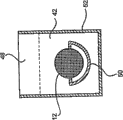
微波加热器60包括室62,该室62将微波能量从微波源传送到圆柱形波导模(mode)。如图所示,室62由内部圆柱形部分64和更大直径的外部圆柱形部分66组成。该外部圆柱形部分66围绕着内部圆柱形部分64,形成了径向分级结构。内部圆柱形部分64在进口端68接收陶瓷原材12,并使原材12在出口70离开。
外部圆柱形部分66包括用来接收微波进入室62的波导馈源72。如图8所示,沿部分的内部圆柱形部分64的外围进行切割,形成一对相邻的曲面段74。第一切除部分76与波导馈源72相邻,并且与波导馈源72相对应。第二切除部分78在曲面段74之间延伸。从所述第一切除部分76的中心测量,所述曲面段74的长度足以屏蔽陶瓷原材12的半波长区域。The outer
所述曲面段74的功能是使进入圆柱形波导62的微波能量均匀分布,从而为陶瓷原材12提供均匀的周围加热。具体来说,当微波通过微波进口72输送时,一部分的微波进入第一切除部分76,余下的微波被曲面段74反射而进入第二切除部分78,从而进行均匀的周围加热。模拟显示微波能量以连续的TEx1波导模式提供(其中x为3-4),使得陶瓷原材中微波能量的分布浓度更均匀。为激发这种更高级的波导模式,外部圆柱形部分66的直径与波导的厚度成比例。The function of the
本领域普通技术人员将会基于上述实施方式理解到本发明的其他特征和优点。因此,除非附加的权利要求书中说明,本发明并不限于具体显示和描述的内容。Those skilled in the art will understand other features and advantages of the present invention based on the above-mentioned embodiments. Accordingly, except as indicated in the appended claims, the invention is not to be limited by what has been particularly shown and described.
Claims (9)
Applications Claiming Priority (2)
| Application Number | Priority Date | Filing Date | Title |
|---|---|---|---|
| US10/699,008 | 2003-10-31 | ||
| US10/699,008 US20050093209A1 (en) | 2003-10-31 | 2003-10-31 | Microwave stiffening system for ceramic extrudates |
Publications (2)
| Publication Number | Publication Date |
|---|---|
| CN1874878A CN1874878A (en) | 2006-12-06 |
| CN100581772C true CN100581772C (en) | 2010-01-20 |
Family
ID=34550814
Family Applications (1)
| Application Number | Title | Priority Date | Filing Date |
|---|---|---|---|
| CN200480032065A Expired - Fee Related CN100581772C (en) | 2003-10-31 | 2004-10-22 | Microwave Hardening Systems for Ceramic Extrusions |
Country Status (4)
| Country | Link |
|---|---|
| US (2) | US20050093209A1 (en) |
| EP (1) | EP1684962A4 (en) |
| CN (1) | CN100581772C (en) |
| WO (1) | WO2005044530A2 (en) |
Families Citing this family (18)
| Publication number | Priority date | Publication date | Assignee | Title |
|---|---|---|---|---|
| ITMI20052359A1 (en) * | 2005-12-09 | 2007-06-10 | Italcementi Spa | PROCESS FOR THE PRODUCTION AND MAINTENANCE OF THE FOREMA OF AN EXTRUDED CEMENTITIOUS MATERIAL |
| US7596885B2 (en) * | 2006-07-28 | 2009-10-06 | Corning Incorporated | Microwave drying of ceramic structures |
| CN101541708A (en) * | 2006-11-29 | 2009-09-23 | 康宁股份有限公司 | Plasticized mixture and method of hardening |
| US8674275B2 (en) * | 2007-06-29 | 2014-03-18 | Corning Incorporated | Method of fabricating a honeycomb structure using microwaves |
| ES2319368B1 (en) * | 2007-07-06 | 2010-01-08 | Cosentino, S.A. | PROCEDURE FOR THE MANUFACTURE OF CONTAINER TABLES BY RADIATION WITH MICROWAVE AND AGLOMERATE TABLE MANUFACTURED BY RADIATION WITH MICROWAVE. |
| US8020314B2 (en) * | 2008-10-31 | 2011-09-20 | Corning Incorporated | Methods and apparatus for drying ceramic green bodies with microwaves |
| US9085089B2 (en) * | 2009-02-27 | 2015-07-21 | Corning Incorporated | Support tray for extruded ceramic ware and method |
| US8481900B2 (en) * | 2009-11-25 | 2013-07-09 | Corning Incorporated | Methods for drying ceramic materials |
| EP2937653B1 (en) * | 2010-02-25 | 2018-12-12 | Corning Incorporated | Tray assemblies and methods for manufacturing ceramic articles |
| DE102011016066B4 (en) * | 2011-04-05 | 2013-06-13 | Püschner Gmbh & Co. Kg | Process for the continuous microwave vacuum drying of honeycomb ceramic bodies and apparatus for carrying out the same |
| US9038284B2 (en) * | 2011-11-29 | 2015-05-26 | Corning Incorporated | Systems and methods for efficient microwave drying of extruded honeycomb structures |
| US9931763B2 (en) | 2012-08-30 | 2018-04-03 | Corning Incorporated | System and method for controlling the peripheral stiffness of a wet ceramic extrudate |
| MX2017005465A (en) * | 2014-10-27 | 2018-01-25 | Corning Inc | Systems and methods for drying skinned ceramic wares using recycled microwave radiation. |
| CN105338677B (en) * | 2015-11-25 | 2019-01-15 | 四川大学 | Duct type industrial microwave heating device |
| US11999074B2 (en) * | 2019-08-14 | 2024-06-04 | Corning Incorporated | Systems and methods for stiffening wet extrudate by circumferential irradiation |
| CN111842422B (en) * | 2020-07-15 | 2025-04-08 | 成都皓耘浩劢科技有限责任公司 | Microwave treatment device capable of continuously cracking solid waste |
| WO2024049738A2 (en) * | 2022-09-01 | 2024-03-07 | Corning Incorporated | Ring-of-light fixture to maximize energy coupling while maintaining log flotation |
| JP7635441B1 (en) | 2024-01-18 | 2025-02-25 | 宏碩系統股▲フン▼有限公司 | Microwave heating of liquids |
Citations (5)
| Publication number | Priority date | Publication date | Assignee | Title |
|---|---|---|---|---|
| US3465114A (en) * | 1966-09-19 | 1969-09-02 | Canadian Patents Dev | Method and apparatus for dielectric heating |
| US4715727A (en) * | 1984-07-05 | 1987-12-29 | M/A-Com, Inc. | Non-invasive temperature monitor |
| US4760228A (en) * | 1986-01-16 | 1988-07-26 | Micro Denshi Co., Ltd. | Microwave heating device |
| US5223188A (en) * | 1990-10-29 | 1993-06-29 | Corning Incorporated | Stiffening of extrudates with RF energy |
| CN1360674A (en) * | 1999-07-07 | 2002-07-24 | 康宁股份有限公司 | Ceramic continuous microwave drying equipment and method |
Family Cites Families (18)
| Publication number | Priority date | Publication date | Assignee | Title |
|---|---|---|---|---|
| US3478188A (en) * | 1967-10-13 | 1969-11-11 | Varian Associates | Multimode cavity resonator with two coupling holes at wall corners |
| US3843861A (en) * | 1971-05-04 | 1974-10-22 | Menschner Textil Johannes | Wave guide channel operating with micro-wave energy |
| DE2642335C2 (en) * | 1976-09-21 | 1978-12-21 | Ingenieurbuero Hermann Purfuerst Kg, 3004 Isernhagen | Device for continuous dielectric heating by means of microwave energy |
| US4269581A (en) * | 1979-09-14 | 1981-05-26 | Fusion Systems Corporation | Apparatus for molding thermosetting material |
| US4459450A (en) * | 1982-09-28 | 1984-07-10 | The Goodyear Tire & Rubber Company | Method of reducing pollution in microwave devulcanization process |
| US4861955A (en) * | 1987-07-09 | 1989-08-29 | Shen Zhi Yuan | Matched absorptive end choke for microwave applicators |
| US6020579A (en) * | 1997-01-06 | 2000-02-01 | International Business Machines Corporation | Microwave applicator having a mechanical means for tuning |
| US6121595A (en) * | 1997-01-06 | 2000-09-19 | International Business Machines Corporation | Applicator to provide uniform electric and magnetic fields over a large area and for continuous processing |
| US5302803A (en) * | 1991-12-23 | 1994-04-12 | Consortium For Surface Processing, Inc. | Apparatus and method for uniform microwave plasma processing using TE1101 modes |
| DE4313806A1 (en) * | 1993-04-27 | 1994-11-03 | Rene Salina | Device for heating materials in a heating chamber which can be irradiated with microwaves, and method for producing ceramic products, in which the raw product (unfinished product) is dried by means of microwaves |
| US5534278A (en) * | 1994-01-06 | 1996-07-09 | De Ruyter; Peter W. | Process and apparatus for making meat analogs |
| JP2000500711A (en) * | 1996-05-17 | 2000-01-25 | イムプリコ ベスローテン フェンノートシャップ | Manufacturing method of sintered extruded ceramic product and its manufacturing equipment |
| US5770143A (en) * | 1996-07-03 | 1998-06-23 | Board Of Trustees Operating Michigan State University | Method for liquid thermosetting resin molding using radiofrequency wave heating |
| US6246037B1 (en) * | 1999-08-11 | 2001-06-12 | Industrial Microwave Systems, Inc. | Method and apparatus for electromagnetic exposure of planar or other materials |
| JP3581956B2 (en) * | 2000-07-28 | 2004-10-27 | 政一 松尾 | Instant water heater |
| US6740858B2 (en) * | 2001-06-01 | 2004-05-25 | Communications And Power Industries, Inc. | Microwave heating applicator for heating a moving fluid |
| DE10128038C1 (en) * | 2001-06-08 | 2002-11-21 | Karlsruhe Forschzent | Microwave through-flow heater, for domestic, medical or industrial applications, has dimensions of microwave applicator matched to wavelength of microwaves |
| US6960747B2 (en) * | 2001-11-09 | 2005-11-01 | Personal Chemistry I Uppsala Ab | Microwave applicator system |
-
2003
- 2003-10-31 US US10/699,008 patent/US20050093209A1/en not_active Abandoned
-
2004
- 2004-10-22 WO PCT/US2004/035130 patent/WO2005044530A2/en not_active Ceased
- 2004-10-22 CN CN200480032065A patent/CN100581772C/en not_active Expired - Fee Related
- 2004-10-22 EP EP04796176A patent/EP1684962A4/en not_active Withdrawn
-
2006
- 2006-03-16 US US11/378,073 patent/US20060159795A1/en not_active Abandoned
Patent Citations (5)
| Publication number | Priority date | Publication date | Assignee | Title |
|---|---|---|---|---|
| US3465114A (en) * | 1966-09-19 | 1969-09-02 | Canadian Patents Dev | Method and apparatus for dielectric heating |
| US4715727A (en) * | 1984-07-05 | 1987-12-29 | M/A-Com, Inc. | Non-invasive temperature monitor |
| US4760228A (en) * | 1986-01-16 | 1988-07-26 | Micro Denshi Co., Ltd. | Microwave heating device |
| US5223188A (en) * | 1990-10-29 | 1993-06-29 | Corning Incorporated | Stiffening of extrudates with RF energy |
| CN1360674A (en) * | 1999-07-07 | 2002-07-24 | 康宁股份有限公司 | Ceramic continuous microwave drying equipment and method |
Non-Patent Citations (1)
| Title |
|---|
| 化工辞典. 王箴,954,化学工业出版社. 2000 * |
Also Published As
| Publication number | Publication date |
|---|---|
| EP1684962A4 (en) | 2011-01-12 |
| CN1874878A (en) | 2006-12-06 |
| US20050093209A1 (en) | 2005-05-05 |
| EP1684962A2 (en) | 2006-08-02 |
| US20060159795A1 (en) | 2006-07-20 |
| WO2005044530A3 (en) | 2005-08-04 |
| WO2005044530A2 (en) | 2005-05-19 |
Similar Documents
| Publication | Publication Date | Title |
|---|---|---|
| CN100581772C (en) | Microwave Hardening Systems for Ceramic Extrusions | |
| CN102235803B (en) | The drying means of honeycomb formed article | |
| CN101652232B (en) | Method and applicator for selective electromagnetic drying of ceramic-forming mixture | |
| CN103338905B (en) | Real-time, the closed-loop path shape controlling of extruded ceramic honeycomb | |
| US6932932B2 (en) | Method of fabricating honeycomb body | |
| CN102859305B (en) | Tray assemblies and methods for manufacturing ceramic articles | |
| JP6594935B2 (en) | Rapid drying of ceramic fabric | |
| US8674275B2 (en) | Method of fabricating a honeycomb structure using microwaves | |
| US20020109269A1 (en) | Method of fabricating honeycomb body and drying system | |
| JP2003504827A (en) | Microwave drying method for ceramics | |
| JP6417559B2 (en) | System and method for controlling ambient stiffness of wet ceramic extrudates | |
| JP2010511092A (en) | Plasticized mixture and its curing method | |
| JP2012500140A (en) | Method for drying ceramic fabrics using an electrode concentrator | |
| US7335323B2 (en) | Method for producing cordierite ceramic body using reclaimed ceramic starting material | |
| JP7334196B2 (en) | Systems and methods for drying crusted ceramic ware using recycled microwave radiation | |
| CN101646537A (en) | Method of drying honeycomb molding | |
| CN212457620U (en) | A kind of drying device for ceramic casting processing | |
| CN101336151A (en) | Method for production and shape preservation of extruded products made of cementitious materials | |
| Yu et al. | Binder burn out of tape cast ceramics by microwave energy | |
| CN104246402A (en) | Systems and methods for efficient microwave drying of extruded honeycomb structures | |
| JPH04272806A (en) | Method for curing extruded matter |
Legal Events
| Date | Code | Title | Description |
|---|---|---|---|
| C06 | Publication | ||
| PB01 | Publication | ||
| C10 | Entry into substantive examination | ||
| SE01 | Entry into force of request for substantive examination | ||
| C14 | Grant of patent or utility model | ||
| GR01 | Patent grant | ||
| C17 | Cessation of patent right | ||
| CF01 | Termination of patent right due to non-payment of annual fee |
Granted publication date: 20100120 Termination date: 20121022 |