CN100415765C - Humanization method of rabbit monoclonal antibody - Google Patents
Humanization method of rabbit monoclonal antibody Download PDFInfo
- Publication number
- CN100415765C CN100415765C CNB038271109A CN03827110A CN100415765C CN 100415765 C CN100415765 C CN 100415765C CN B038271109 A CNB038271109 A CN B038271109A CN 03827110 A CN03827110 A CN 03827110A CN 100415765 C CN100415765 C CN 100415765C
- Authority
- CN
- China
- Prior art keywords
- antibody
- rabbit
- ser
- thr
- gly
- Prior art date
- Legal status (The legal status is an assumption and is not a legal conclusion. Google has not performed a legal analysis and makes no representation as to the accuracy of the status listed.)
- Expired - Lifetime
Links
Images


Classifications
-
- C—CHEMISTRY; METALLURGY
- C07—ORGANIC CHEMISTRY
- C07H—SUGARS; DERIVATIVES THEREOF; NUCLEOSIDES; NUCLEOTIDES; NUCLEIC ACIDS
- C07H21/00—Compounds containing two or more mononucleotide units having separate phosphate or polyphosphate groups linked by saccharide radicals of nucleoside groups, e.g. nucleic acids
- C07H21/04—Compounds containing two or more mononucleotide units having separate phosphate or polyphosphate groups linked by saccharide radicals of nucleoside groups, e.g. nucleic acids with deoxyribosyl as saccharide radical
-
- C—CHEMISTRY; METALLURGY
- C07—ORGANIC CHEMISTRY
- C07K—PEPTIDES
- C07K16/00—Immunoglobulins [IG], e.g. monoclonal or polyclonal antibodies
- C07K16/18—Immunoglobulins [IG], e.g. monoclonal or polyclonal antibodies against material from animals or humans
- C07K16/28—Immunoglobulins [IG], e.g. monoclonal or polyclonal antibodies against material from animals or humans against receptors, cell surface antigens or cell surface determinants
- C07K16/2839—Immunoglobulins [IG], e.g. monoclonal or polyclonal antibodies against material from animals or humans against receptors, cell surface antigens or cell surface determinants against the integrin superfamily
-
- C—CHEMISTRY; METALLURGY
- C07—ORGANIC CHEMISTRY
- C07K—PEPTIDES
- C07K16/00—Immunoglobulins [IG], e.g. monoclonal or polyclonal antibodies
- C07K16/46—Hybrid immunoglobulins
- C07K16/461—Igs containing Ig-regions, -domains or -residues form different species
-
- C—CHEMISTRY; METALLURGY
- C07—ORGANIC CHEMISTRY
- C07K—PEPTIDES
- C07K2317/00—Immunoglobulins specific features
- C07K2317/50—Immunoglobulins specific features characterized by immunoglobulin fragments
- C07K2317/56—Immunoglobulins specific features characterized by immunoglobulin fragments variable (Fv) region, i.e. VH and/or VL
- C07K2317/565—Complementarity determining region [CDR]
-
- C—CHEMISTRY; METALLURGY
- C07—ORGANIC CHEMISTRY
- C07K—PEPTIDES
- C07K2317/00—Immunoglobulins specific features
- C07K2317/50—Immunoglobulins specific features characterized by immunoglobulin fragments
- C07K2317/56—Immunoglobulins specific features characterized by immunoglobulin fragments variable (Fv) region, i.e. VH and/or VL
- C07K2317/567—Framework region [FR]
Landscapes
- Chemical & Material Sciences (AREA)
- Health & Medical Sciences (AREA)
- Organic Chemistry (AREA)
- Life Sciences & Earth Sciences (AREA)
- Biochemistry (AREA)
- Molecular Biology (AREA)
- Immunology (AREA)
- Genetics & Genomics (AREA)
- General Health & Medical Sciences (AREA)
- Biophysics (AREA)
- Medicinal Chemistry (AREA)
- Proteomics, Peptides & Aminoacids (AREA)
- Biotechnology (AREA)
- Engineering & Computer Science (AREA)
- Peptides Or Proteins (AREA)
- Preparation Of Compounds By Using Micro-Organisms (AREA)
- Micro-Organisms Or Cultivation Processes Thereof (AREA)
Abstract
本发明提供了一种对兔单克隆抗体进行人源化的方法。总体上看,这种方法包括把兔亲本抗体的氨基酸序列与类似的人抗体的氨基酸序列进行比较,改变兔亲本抗体的氨基酸序列,这样,兔亲本抗体的构架区在序列上更接近于类似人抗体的对应构架区。在很多实施方案中,不属于互补决定区接触残基、链间接触残基或隐蔽残基的兔亲本抗体中的氨基酸不加以修饰。本发明还提供了编码目标抗体的核酸、包含该核酸的载体和宿主细胞,以及制备目标抗体的方法。目标抗体、核酸组合物以及试剂盒具有多种用途,包括诊断、临床治疗以及疾病和不适的研究。The invention provides a method for humanizing rabbit monoclonal antibody. In general, this method involves comparing the amino acid sequence of a parental rabbit antibody to that of a similar human antibody and altering the amino acid sequence of the parental rabbit antibody so that the framework regions of the parental rabbit antibody are more closely related in sequence to the human-like The corresponding framework region of the antibody. In many embodiments, amino acids in the rabbit parent antibody that are not complementarity determining region contact residues, interchain contact residues or cryptic residues are not modified. The present invention also provides a nucleic acid encoding the target antibody, a vector and a host cell comprising the nucleic acid, and a method for preparing the target antibody. Antibodies of interest, nucleic acid compositions, and kits have a variety of uses, including diagnosis, clinical treatment, and research on diseases and disorders.
Description
技术领域 technical field
本发明的领域属于抗体,特别是对兔单克隆抗体进行人源化的方法。The field of the invention is antibodies, particularly methods for humanizing rabbit monoclonal antibodies.
背景技术 Background technique
由于单克隆抗体能靶向实质上任何具有某种特异性的分子,因此,单克隆抗体及其缀合物和衍生物都将可能成为未来的一种主要的治疗剂。尽管人们早已认识到这种可能性,但是为了实现这种可能性进行的第一次尝试却以失败而告终,其主要原因是,即使是治疗中使用的单克隆抗体仅以单一低剂量注射一次(Dillman,Cancer Biother 19949:17-28),单克隆抗体也会在患者体内产生强烈的免疫反应(Schroff,1985 Cancer Res 45:879-85,Shawler.J Immunol 1985135:1530-5)。科学家们预言,人抗体不会产生这种不良的免疫反应,但目前的杂交瘤技术还无法产生人单克隆抗体。此后,其它一些可替代性的制备人抗体的技术已经陆续面世,例如使用噬菌体展示(Phage display)和转基因动物。然而,啮齿类动物抗体已经具备了良好的实用性和充分表征的抗原特异性,因此,我们仍然有必要设计出能够克服啮齿类动物抗体免疫原性的手段。此外,某些有用的抗原结合特性可能极为罕见,而且很难或是根本不可能在啮齿类动物免疫系统之外重现。Because monoclonal antibodies can target virtually any molecule with some specificity, monoclonal antibodies and their conjugates and derivatives will likely become a major therapeutic agent in the future. Although this possibility has long been recognized, the first attempts to realize it have failed, mainly because even the monoclonal antibodies used in the therapy are injected only once in a single low dose (Dillman, Cancer Biother 19949: 17-28), monoclonal antibodies will also generate a strong immune response in patients (Schroff, 1985 Cancer Res 45: 879-85, Shawler.J Immunol 1985135: 1530-5). Scientists predict that human antibodies will not produce this adverse immune response, but current hybridoma technology cannot produce human monoclonal antibodies. Since then, some other alternative technologies for preparing human antibodies have emerged, such as using phage display and transgenic animals. However, rodent antibodies already have good utility and well-characterized antigen specificity, so it is still necessary to design means that can overcome the immunogenicity of rodent antibodies. In addition, some useful antigen-binding properties may be extremely rare and difficult or impossible to reproduce outside the rodent immune system.
抗体的免疫原性取决于多种因素,其中包括施用方法、注射的次数、剂量、结合反应性能、所采用的特异性片段、抗原的聚集状态以及抗原的性质(例如,Kuus-Reichel,Clin Diagn Lab Immunol 19941:365-72)。在这些因素中,很多或者绝大多数都是可以控制的,从而达到降低免疫反应的目的,但是,如果最初的抗体序列属于“危险性”或是“异质性”的,那么,迟早都会出现强烈的免疫反应,进而制约了抗体在治疗中的应用。The immunogenicity of an antibody depends on many factors, including the method of administration, the number of injections, the dose, the nature of the binding reactivity, the specific fragment employed, the aggregation state of the antigen, and the nature of the antigen (e.g., Kuus-Reichel, Clin Diagn Lab Immunol 19941:365-72). Many or most of these factors can be controlled to reduce the immune response, but if the original antibody sequence is "dangerous" or "heterogeneous", sooner or later Strong immune response, which in turn restricts the application of antibodies in treatment.
嵌合抗体的工程化使啮齿类动物的FV片段与人的FC片段结合在一起(例如,Boulianne Nature 1984312:643-6),使得在治疗中利用人类效应器结构域(Clark,Immunol Today 200021:397-402)成为可能的同时,大幅度地降低了免疫原性问题(例如,LoBuglio,ProcNatl Acad Sci 198986:4220-4)。此外,在构建人源化抗体的时候,FV本身的啮齿类动物序列在至少保持其亲本互补决定区(CDRs)的同时,结构尽可能地接近于人类序列(例如,Riechmann,Nature 1988332:323-7)。人源化啮齿类动物抗体在人类患者中也显示出免疫原性的大为减少(Moreland,Arthritis Rheum 199336:307-18),尽管某些人源化抗体对绝大多数患者仍然是免疫原性的,但这更可能是啮齿类动物互补决定区(CDRs)自身所固有的免疫原性造成的(Ritter,Cancer Res 200161:6851-9;Welt,Clin Cancer Res20039:1338-46)。Engineering of chimeric antibodies that combine rodent FV fragments with human Fc fragments (e.g., Boulianne Nature 1984312:643-6) allows the use of human effector domains in therapy (Clark, Immunol Today 200021: 397-402) are possible while substantially reducing the immunogenicity problem (eg, LoBuglio, ProcNatl Acad Sci 198986:4220-4). Furthermore, when constructing humanized antibodies, the rodent sequence of the FV itself is as close as possible to the human sequence in structure while at least maintaining its parental complementarity determining regions (CDRs) (e.g., Riechmann, Nature 1988 332:323- 7). Humanized rodent antibodies have also shown greatly reduced immunogenicity in human patients (Moreland, Arthritis Rheum 199336:307-18), although some humanized antibodies remain immunogenic in the vast majority of patients Yes, but this is more likely to be caused by the inherent immunogenicity of rodent CDRs (Ritter, Cancer Res 200161:6851-9; Welt, Clin Cancer Res20039:1338-46).
目前(2003),全世界临床使用的单克隆抗体产品多达十几种,已经创造了20亿美元的收入,还有几十种单克隆抗体产品处于临床试验阶段。进入临床使用的许多抗体属于嵌合的、人源化或人类抗体,其中的绝大多数最初是鼠的单克隆抗体。At present (2003), there are as many as a dozen monoclonal antibody products in clinical use around the world, which have created a revenue of 2 billion US dollars, and dozens of monoclonal antibody products are in the clinical trial stage. Many antibodies entering clinical use are chimeric, humanized or human antibodies, the vast majority of which were originally murine monoclonal antibodies.
鼠抗体之所以得到广泛的应用,不是由于它们具有其它物种的抗体所不具备的优势,而是由于至今在非啮齿类动物杂交瘤技术方面的欠缺。目前,这种状况已经所有改变。兔子由于其自身所固有的强烈的免疫反应特性,及其生成对众多表位具有高亲合力抗体的能力,使之成为高质量抗体的最佳来源之一。最近,利用传统的融合方法制备兔的单克隆抗体已经成为可能(Spieker-Polet,Proc Natl Acad Sci199592:9348-52)。因此,能生产非常高质量的单克隆兔抗体。The widespread use of murine antibodies is not due to their advantages over antibodies from other species, but rather due to the lack of non-rodent hybridoma technology to date. At present, this situation has all changed. Rabbit is one of the best sources of high-quality antibodies due to its inherent strong immune response characteristics and its ability to generate high-affinity antibodies to many epitopes. Recently, it has become possible to prepare rabbit monoclonal antibodies using traditional fusion methods (Spieker-Polet, Proc Natl Acad Sci 199592:9348-52). Thus, very high quality monoclonal rabbit antibodies can be produced.
但是如果用于治疗的话,和鼠抗体一样,兔抗体同样也会引起强烈的免疫反应,其将阻碍延长的重复施用。因此,在临床使用之前,同样需要制备嵌合的与人源化的兔抗体。然而,制备嵌合的与人源化的啮齿类动物抗体的方法却由于如下的原因而无法用于许多兔抗体:But if used therapeutically, rabbit antibodies, like murine antibodies, also elicit a strong immune response that would preclude prolonged repeated administration. Therefore, chimeric and humanized rabbit antibodies also need to be prepared before clinical use. However, methods for making chimeric and humanized rodent antibodies cannot be used for many rabbit antibodies for the following reasons:
首先,很多兔抗体的κ链在可变区和恒定区之间具有二硫键。这种结构上的特征在制备嵌合与人源化抗体时带来一个问题,据我们所知,这个问题尚未在研究中得到解决。同型κ-1(K-1)链是目前使用最多的兔抗体轻链。常见的五种K-1异型抗体中的三种(b4,b5和b6)在可变区(VK)骨架3的80位点处有一个半胱氨酸。该残基的侧链为裸露的,并可与恒定区κ链上的另一个半胱氨酸残基形成二硫键。尽管兔的第四种常见K-1异型抗体--b9,也有多余的二硫化物,但是在这种情况下,可变区的半胱氨酸残基占据了骨架4中VK的最后一个位置,残基108。人抗体和啮齿动物抗体的κ链中没有这种多余的二硫键。因此,如果要想利用许多已知方法中的一种,通过连接兔的可变区κ链与人的恒定区κ链构建嵌合或人源化的抗体,可变区κ链的半胱氨酸残基就会保持不成对状态。这极可能会导致出现蛋白质的折叠和表达问题,并且即使获得了高产量的折叠正确的抗体,不成对的半胱氨酸残基也极有可能会导致抗体的一部分通过其VK半胱氨酸残基形成二聚物,这通常是我们不希望看到的结果。First, the kappa chains of many rabbit antibodies have disulfide bonds between the variable and constant regions. This structural feature poses a problem in the preparation of chimeric versus humanized antibodies that, to our knowledge, has not been resolved in research. The isotype kappa-1 (K-1) chain is currently the most used rabbit antibody light chain. Three of the five common K-1 isotype antibodies (b4, b5 and b6) have a cysteine at
其次,相对于人类和鼠类的氨基酸残基,很多兔类重链可变区在β链D和E之间的环上缺少一或两个氨基酸残基。此外,与人和鼠类的链相比,很多重链和轻链在氨基端上也缺少一个残基。尽管在人和鼠类抗体中,这两个区域一般不与抗原相接触,但它们却都非常接近于互补决定区(CDRs),并且经常和互补决定区残基相接触。显然,对于这些兔类的抗体链来说,由于不存在这些残基的位置,因此,我们不能在所述位置上找到相应的同源的人类残基。Second, many rabbit heavy chain variable regions lack one or two amino acid residues in the loop between beta chains D and E, relative to human and murine amino acid residues. In addition, many heavy and light chains also lack a residue at the amino terminus compared to the human and murine chains. Although in human and murine antibodies these two regions are generally not in contact with the antigen, they are both in close proximity to and often in contact with CDRs. Apparently, for these rabbit antibody chains, we could not find the corresponding homologous human residues at these positions since they do not exist.
第三,与人和鼠类的对应物相比,很多兔类的VH链有额外成对的半胱氨酸。例如,在某些兔类的VH链中,除了Cys 22-Cys 92“正常”的二硫键之外,不仅还有一个Cys 21-Cys 79的二硫键,而且在CDR H1的最后一个半胱氨酸残基和CDR H2的第一个半胱氨酸残基之间还有另一个二硫键。人们还经常在VK L3互补决定区中发现成对的半胱氨酸残基。通过根据同源性把兔类抗体结构与已知结构进行的模型分析,我们可以看到,半胱氨酸对呈现出空间布置状态,其允许二硫键的形成。Third, many rabbit VH chains have an extra pair of cysteines compared to their human and murine counterparts. For example, in the VH chain of some rabbits, in addition to the "normal" disulfide bond of Cys 22-
最后,很多兔类抗体CDR并不属于前面已知的规范结构。尤其是VK CDR L3常常比已知的人或鼠类抗体L3 CDR长得多。由于以前缺少对兔类CDR结构的认识,使得人们很难精确地进行模型分析。Finally, many rabbit antibody CDRs do not belong to previously known canonical structures. In particular the VK CDR L3 is often much longer than the known L3 CDR of human or murine antibodies. Due to the lack of previous understanding of the rabbit CDR structure, it is difficult to carry out model analysis accurately.
因此,由于兔类单克隆抗体的独特性,目前对啮齿类动物抗体进行人源化的方法并不能轻易用于对兔类单克隆抗体进行人源化。所以说,目前迫切需要一种对兔类抗体进行人源化的方法。本发明就是为了解决这一问题及其它相关要求。Therefore, current methods for humanizing rodent antibodies cannot be easily applied to humanize rabbit mAbs due to the unique nature of rabbit mAbs. Therefore, there is an urgent need for a method for humanizing rabbit antibodies. The present invention addresses this problem and other related needs.
参考文献references
相关的参考文献包括:美国专利6,331,415 B1、5,225,539、6,342,587、4,816,567、5,639,641、6,180,370、5,693,762、4,816,397、5,693,761、5,530,101、5,585,089、6,329,551以及相关出版物,Morea等人,Methods 20:267-279(2000),Ann.AllergyAsthma Immunol.81:105-119(1998);Rader等人,J.Biol.Chem.276:13668-13676(2000);Steinberger等人,J.Bio.Chem.275:36073-36078(2000);Roguska等人,Proc.Natl.Acad.Sci.91:969-973(1994);Delagrave等人,Prot.Eng.12:357-362(1999);Rogusca等人,Prot.Eng.9:895-904(1996);Knight和Becker,Cell 60:963-970(1990);Becker and Knight,Cell 63:987-997(1990)以及Popkov,J Mol Biol 325:325-35(2003)。相关的参考文献包括:美国专利6,331,415 B1、5,225,539、6,342,587、4,816,567、5,639,641、6,180,370、5,693,762、4,816,397、5,693,761、5,530,101、5,585,089、6,329,551以及相关出版物,Morea等人,Methods 20:267-279(2000) , Ann.AllergyAsthma Immunol.81:105-119 (1998); Rader et al., J.Biol.Chem.276:13668-13676 (2000); Steinberger et al., J.Bio.Chem.275:36073-36078 ( 2000); Roguska et al., Proc.Natl.Acad.Sci.91:969-973 (1994); Delagrave et al., Prot.Eng.12:357-362 (1999); Rogusca et al., Prot.Eng.9 : 895-904 (1996); Knight and Becker, Cell 60: 963-970 (1990); Becker and Knight, Cell 63: 987-997 (1990) and Popkov, J Mol Biol 325: 325-35 (2003).
发明内容 Contents of the invention
本发明提供了一种对兔单克隆抗体进行人源化的方法。总体上看,这种方法包括对兔亲本抗体的氨基酸序列与类似人抗体的氨基酸序列进行比较,改变兔亲本抗体的氨基酸序列,以便使兔亲本抗体的构架(FW)区与类似人抗体的相应构架区在序列上更为接近。在某些实施方案中,可以将来自兔抗体重链和轻链的FW1区替换为类似人抗体的对应的FW1区,在大多数实施方案中,其添加了至少一个氨基酸(也就是说,增加1、2、3或更多个氨基酸)到人源化的抗体序列,与亲本抗体序列相比。在其它实施方案中,兔抗体重链可变区的整个D-E环可以被类似的人抗体的对应的环替代,在许多实施方案中,其添加了至少一个氨基酸(也即,1,2或3或更多个氨基酸)。在某些实施方案中,例如在抗体的轻链中存在一个半胱氨酸80的话,这个氨基酸被对应的氨基酸所替代,或被人抗体中对应的E-F环所替代。最后,被认为相互接近的半胱氨酸对也有可能会改变。在很多实施方案中,如果兔亲本抗体中的氨基酸是互补决定区的接触残基、链间接触残基或隐蔽残基,则这些氨基酸不加以修饰。The invention provides a method for humanizing rabbit monoclonal antibody. In general, this method involves comparing the amino acid sequence of a parent rabbit antibody to that of a similar human antibody and altering the amino acid sequence of the parent rabbit antibody so that the framework (FW) regions of the parent rabbit antibody correspond to those of a similar human antibody. The framework regions are closer in sequence. In certain embodiments, the FW1 regions from the heavy and light chains of rabbit antibodies can be replaced with the corresponding FW1 regions of similar human antibodies, which in most embodiments have at least one amino acid added (that is, increased 1, 2, 3 or more amino acids) to the humanized antibody sequence, compared to the parental antibody sequence. In other embodiments, the entire D-E loop of the heavy chain variable region of a rabbit antibody can be replaced by the corresponding loop of a similar human antibody, which in many embodiments has at least one amino acid added (i.e., 1, 2 or 3 or more amino acids). In certain embodiments, for example, if a
本发明还进一步提供了编码目标抗体的核酸、包含该核酸的载体和宿主细胞和制备目标抗体的方法。目标抗体、核酸组合物以及试剂盒具有多种用途,包括诊断、治疗及疾病和不适的研究。The present invention further provides a nucleic acid encoding the target antibody, a vector and host cell comprising the nucleic acid, and a method for preparing the target antibody. Antibodies of interest, nucleic acid compositions, and kits have a variety of uses, including diagnosis, treatment, and research of diseases and disorders.
在很多实施方案中,互补决定区(CDR)接触所涉及的氨基酸选自重链可变区中的1,2,4,24,27,28,29,30,36,38,40,46,48,49,66,67,68,69,71,73,78,80,82,86,92,93和94位置上的氨基酸以及κ轻链可变区中的1,2,3,4,5,7,22,23,35,45,48,49,58,60,62,66,67,69,70,71和88位置上的氨基酸。In many embodiments, the amino acids involved in complementarity determining region (CDR) contacts are selected from 1, 2, 4, 24, 27, 28, 29, 30, 36, 38, 40, 46, 48 in the heavy chain variable region , 49, 66, 67, 68, 69, 71, 73, 78, 80, 82, 86, 92, 93 and 94 amino acids and 1, 2, 3, 4, 5 in the kappa light chain variable region , 7, 22, 23, 35, 45, 48, 49, 58, 60, 62, 66, 67, 69, 70, 71 and 88 amino acids.
在很多实施方案中,链间接触所涉及的氨基酸选自重链可变区中的37,39,43,44,45,47,91,103和105位置上的氨基酸以及κ轻链可变区中的36,38,43,44,46,85,87,98和100位置上的氨基酸。In many embodiments, the amino acids involved in interchain contacts are selected from amino acids at
在很多实施方案中,隐蔽残基选自重链可变区中的6,9,12,18,20,22,76,82c,88,90,107,109和111位置上的氨基酸以及κ轻链可变区中的6,11,13,19,21,37,47,61,73,75,78,82,83,84,86,102,104和106位置上的氨基酸。In many embodiments, the cryptic residues are selected from amino acids at
对于本领域技术人员来说,在详细阅读如下充分描述的本发明细节之后,必将会认识到本发明的这些和其它优点和特征。These and other advantages and features of the present invention will become apparent to those skilled in the art after a detailed reading of the details of the invention as fully described below.
附图说明 Description of drawings
图1是一个说明了本发明的某些实施方案的图例。Figure 1 is a diagram illustrating certain embodiments of the present invention.
图2克隆自不同兔杂交瘤的可变κ链(上部)和可变重链(下部)的多重序列比对。标准编号、β链(A,A′,B,C,C′,D,E,F,G)的位置见各队列的上部。这些位置是以相关文献为基础的(Chothia JMol Biol 1998 278:457-79)。UP4_31:SEQ ID NO:1;UP4_29:SEQID NO:2;UP4_23:SEQ ID NO:3;CALK_VK:SEQ ID NO:4;CD79_A:SEQID NO:5;UP 3_4_V:SEQ ID NO:6;CS1_108:SEQ ID NO:7;CS1_115:SEQ ID NO:8;PLAP_VK:SEQ ID NO:9;B1_VK:SEQ ID NO:10;DEW76:SEQ ID NO:11;DEW148:SEQ ID NO:12;B1_VH:SEQ ID NO:13;DEW73:SEQID NO:14;DEW70:SEQ ID NO:15以及KabX:SEQ ID NO:16。Figure 2 Multiple sequence alignment of variable kappa chain (upper) and variable heavy chain (lower) cloned from different rabbit hybridomas. See the upper part of each queue for the standard numbers and the positions of the β-strands (A, A', B, C, C', D, E, F, G). These positions are based on the relevant literature (Chothia JMol Biol 1998 278:457-79). UP4_31: SEQ ID NO: 1; UP4_29: SEQ ID NO: 2; UP4_23: SEQ ID NO: 3; CALK_VK: SEQ ID NO: 4; CD79_A: SEQ ID NO: 5; UP 3_4_V: SEQ ID NO: 6; CS1_108: SEQ ID NO: 6; ID NO: 7; CS1_115: SEQ ID NO: 8; PLAP_VK: SEQ ID NO: 9; B1_VK: SEQ ID NO: 10; DEW76: SEQ ID NO: 11; DEW148: SEQ ID NO: 12; B1_VH: SEQ ID NO : 13; DEW73: SEQ ID NO: 14; DEW70: SEQ ID NO: 15 and KabX: SEQ ID NO: 16.
图3是抗整联蛋白β-6兔单克隆抗体B1人源化的多重序列比对。图中所示的原始B1 VK和VH序列与它们各自最近的人类目的基因胚系序列和最终的人源化链序列进行了比对。为方便阅读,比对在互补决定区(CDRs)和构架(FRs)的末端中断。标准编号位于上部的基线位置。编码上的阴影区说明了互补决定区的位置。其它阴影区域代表着不同于原始兔序列的构架位置。黑色单元部分为相对于人对应物而在兔序列中缺失的部分。由于部分人VK CDR3和全部VH CDR3没有在人的胚系中被准确地编码,因而在图中没有显示出来。B1VK:SEQ ID NO:17;Hu_L12_JK4:SEQ ID NO17;B1_VK_HZ1:SEQ ID NO:20;B1VH:SEQ IDNO:21;B1VH_HZ1:SEQ ID NO:22。Figure 3 is a multiple sequence alignment of humanization of anti-integrin β-6 rabbit monoclonal antibody B1. The original B1 VK and VH sequences shown in the figure were aligned with their respective closest germline sequences of the human gene of interest and the final humanized strand sequences. For readability, the alignment is interrupted at the ends of the complementarity determining regions (CDRs) and frameworks (FRs). The standard number is located at the upper baseline. Shaded regions on the codes illustrate the location of complementarity-determining regions. Other shaded areas represent framework positions that differ from the original rabbit sequence. Black cell portions are those that are missing in the rabbit sequence relative to the human counterpart. Since some human VK CDR3s and all VH CDR3s are not exactly encoded in the human germline, they are not shown in the figure. B1VK: SEQ ID NO: 17; Hu_L12_JK4: SEQ ID NO17; B1_VK_HZ1: SEQ ID NO: 20; B1VH: SEQ ID NO: 21; B1VH_HZ1: SEQ ID NO: 22.
图4显示了VK和CK之间“额外”二硫键的Fab抗体片段,它存在于某些兔类κ链中,但不存在于人或鼠类的κ链中。Figure 4 shows the Fab antibody fragment of the "extra" disulfide bond between VK and CK, which is present in some rabbit kappa chains, but not in human or murine kappa chains.
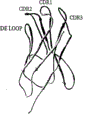
图5显示了三个互补决定区和D-E环位置的兔类VH区的结构。Figure 5 shows the structure of the rabbit VH region for the three complementarity determining regions and the D-E loop position.
定义definition
在进一步叙述本发明之前,我们有必要认识到,本发明并不局限于描述的特定的实施方案,也就是说,在具体形式上可能存在着变化。还有一点需要提醒的是,由于本发明的范围仅受附加的权利要求书的限制,因此,本文所使用的术语只是为了描述特定实施方案的目的,而不是为了限制本发明的目的。Before the present invention is further described, it is important to realize that this invention is not limited to particular embodiments described, that is, variations may exist in specific forms. It should also be reminded that the terminology used herein is for the purpose of describing particular embodiments only and not for the purpose of limiting the invention, since the scope of the present invention is limited only by the appended claims.
除另有其它定义,否则,本文所使用的所有科学技术术语与本发明所属领域的普通技术人员通常理解的意义相同。尽管与本文所述类似或等同的任何方法和材料都可用于实施本发明或是对本发明进行检验,但优选的方法和材料是现在描述的。对于本文所提及的所有出版物都引入这里作为参考,以结合所引用的出版物用于公开和描述本发明方法和/或材料。Unless otherwise defined, all scientific and technical terms used herein have the same meaning as commonly understood by one of ordinary skill in the art to which this invention belongs. Although any methods and materials similar or equivalent to those described herein can be used in the practice or testing of the present invention, the preferred methods and materials are now described. All publications mentioned herein are incorporated by reference herein to disclose and describe the methods and/or materials of the invention in connection with which the publications were cited.
必须注意的是,在正文及附加权利要求书中所用,除非上下文中另外清楚地指明,单数形式“a”,“an”和“the”包括复数形式。例如,“一种抗体”也包括这种抗体的复数形式,“一个构架区”即可以指一个构架区,也可以指多个构架区,以及本领域技术人员已知的其等价物,等等。It must be noted that, as used in the text and appended claims, the singular forms "a", "an" and "the" include plural referents unless the context clearly dictates otherwise. For example, "an antibody" also includes plural forms of such antibodies, and "a framework region" may refer to one framework region, or multiple framework regions, and their equivalents known to those skilled in the art, and so on.
本文所提到的出版物仅为在本申请的申请日之前公开的内容。但此处公开的内容不得理解为承认本发明不具备因在先发明而早于所述出版物的资格。此外,所提供的出版物的日期可能会与实际出版日期有所不同,这一点可能需要单独予以核实。Publications mentioned herein refer only to those that were disclosed prior to the filing date of the present application. Nothing herein is to be construed as an admission that the present invention is not entitled to antedate said publication by virtue of prior invention. In addition, the dates of publication provided may differ from the actual publication dates, which may need to be independently verified.
术语“宿主生物”是指所有能产生与兔具有相似可变区结构抗体的动物。示例的宿主生物包括人类、小鼠、大鼠等。The term "host organism" refers to any animal capable of producing antibodies having a variable region structure similar to that of rabbits. Exemplary host organisms include humans, mice, rats, and the like.
与另一个氨基酸残基“紧密接触”、“紧密接近”或“亲近”的氨基酸残基是其侧链靠近另一个氨基酸的侧链——即:与另一个氨基酸侧链的距离在7、6、5或4埃的氨基酸。例如,一个接近于互补决定区的氨基酸就是一个非互补决定区氨基酸,它的侧链接近于互补决定区中的氨基酸的侧链。An amino acid residue that is "in close contact", "in close proximity" or "in close proximity" to another amino acid residue is one whose side chain is close to the side chain of another amino acid - ie: within 7, 6 , 5 or 4 Angstroms of amino acids. For example, an amino acid that is close to a complementarity determining region is a non-complementarity determining region amino acid whose side chain is close to that of an amino acid in the complementarity determining region.
抗体重链或轻链的“可变区”是该链的N-末端成熟区域。所有区域、互补决定区和残基的编号都是基于序列比对和结构知识指定的。构架残基的识别和编号见Chothia等人的文章(Chothia:免疫球蛋白可变区序列中的结构决定簇,J Mol Biol 1998;278;457-79)。The "variable region" of an antibody heavy or light chain is the N-terminal mature region of that chain. The numbering of all regions, complementarity determining regions and residues is assigned based on sequence alignments and knowledge of structure. The identification and numbering of framework residues is found in the article by Chothia et al. (Chothia: Structural determinants in immunoglobulin variable region sequences. J Mol Biol 1998; 278; 457-79).
VH是抗体重链的可变区。VL是抗体轻链的可变区,它可能是κ(K)或λ的同型。K-2抗体具有κ-1同型,而K-2抗体则具有κ-1同型。VL是可变区的λ轻链。VH is the variable region of an antibody heavy chain. VL is the variable region of an antibody light chain, which may be of the kappa (K) or lambda isotype. The K-2 antibody has the kappa-1 isotype and the K-2 antibody has the kappa-1 isotype. VL is the lambda light chain of the variable region.
“隐蔽残基”是其侧链相对可溶性低于50%的氨基酸残基,可溶性是指在延伸的GGXGG(SEQ ID NO:23)肽中相对于相同残基X可溶性的百分比。可溶性的计算方法是本领域已知的,(Connolly 1983 J.appl.Crystallogr,16,548-558)。A "cryptic residue" is an amino acid residue whose side chain has less than 50% relative solubility, which refers to the percentage of solubility relative to the same residue X in the extended GGXGG (SEQ ID NO: 23) peptide. Calculation methods for solubility are known in the art, (Connolly 1983 J. appl. Crystallogr, 16, 548-558).
术语“抗体”和“免疫球蛋白”在本文中可以互换使用。这些术语均为本领域技术人员所熟知的术语,具体是指由能特异结合抗原的一种或多种多肽构成的蛋白质。抗体的一种形式构成了抗体的基本结构单元。这种形式是四聚物,它由两对完全相同的抗体链构成,每一对都有一个轻链和一个重链。在每对抗体链中,轻链和重链的可变区联合在一起共同负责结合抗原,而恒定区则负责抗体的效应器功能。The terms "antibody" and "immunoglobulin" are used interchangeably herein. These terms are all terms well known to those skilled in the art, and specifically refer to a protein composed of one or more polypeptides that can specifically bind to an antigen. One form of antibody constitutes the basic structural unit of an antibody. This form is a tetramer, which consists of two identical pairs of antibody chains, each pair having a light chain and a heavy chain. In each pair of antibody chains, the variable regions of the light and heavy chains combine to be responsible for antigen binding, while the constant regions are responsible for the antibody's effector functions.
目前已知的免疫球蛋白多肽包括κ和λ轻链,以及α、γ(IgG1,IgG2,IgG3,IgG4)、δ、ε和μ重链,或它们的其它类型等价物。全长的免疫球蛋白“轻链”(大约25kDa或大约214个氨基酸)包含一个由NH2-末端上大约110个氨基酸形成的可变区,以及一个COOH-末端上的κ或λ恒定区。全长的免疫球蛋白“重链”(大约50kDa或大约446个氨基酸),同样包含一个可变区(大约116个氨基酸),以及前面所述的重链恒定区之一,例如γ(大约330个氨基酸)。Currently known immunoglobulin polypeptides include kappa and lambda light chains, and alpha, gamma (IgG1, IgG2, IgG3, IgG4), delta, epsilon and mu heavy chains, or other types of equivalents thereof. Full-length immunoglobulin "light chains" (about 25 kDa or about 214 amino acids) comprise a variable region of about 110 amino acids at the NH2 -terminus, and a kappa or lambda constant region at the COOH-terminus. A full-length immunoglobulin "heavy chain" (approximately 50 kDa or approximately 446 amino acids), likewise comprising a variable region (approximately 116 amino acids).
术语“抗体”和“免疫球蛋白”包括任何同型体的抗体或免疫球蛋白,或保持与抗原特异结合的抗体片段,包括但不限于Fab、Fv、scFv和Fd片段、嵌合抗体、人源化抗体、单链抗体以及包含抗体的抗原结合部分和非抗体蛋白质的融合蛋白质。抗体可以进行可检测标记的,例如,可以通过放射性同位素、能产生可检测产物的酶、荧光蛋白质等等。抗体也可以与其它成分缀合,如特异性结合对的成员,例如生物素(生物素-抗生物素蛋白特异性结合对)等等。抗体还可以结合于固态支持物上,包括但不限于聚苯乙烯平板或珠粒等等。该术语还包括Fab’,Fv,F(ab’)2和/或其它保持与抗原特异性结合的抗体片段。The terms "antibody" and "immunoglobulin" include antibodies or immunoglobulins of any isotype, or antibody fragments that retain specific binding to an antigen, including but not limited to Fab, Fv, scFv and Fd fragments, chimeric antibodies, human Antibodies, single chain antibodies, and fusion proteins comprising an antigen-binding portion of an antibody and a non-antibody protein. Antibodies can be detectably labeled, for example, with radioactive isotopes, enzymes that produce detectable products, fluorescent proteins, and the like. Antibodies can also be conjugated to other components, such as members of specific binding pairs, eg, biotin (biotin-avidin specific binding pair), and the like. Antibodies can also be bound to solid supports, including but not limited to polystyrene plates or beads, and the like. The term also includes Fab', Fv, F(ab') 2 and/or other antibody fragments that retain specific binding to an antigen.
抗体还可以以多种其它形式存在,例如包括Fv、Fab和(Fab′)2,以及双功能(即:双特异性)杂合抗体(例如,Lanzavecchia等人,Eur.J.Immunol.17,105(1987))以及以单链形式(例如,Huston et al.,Proc.Natl.Acad.Sci.U.S.A.,85,5879-5883(1988)和Bird etal.,Science,242,423-426(1988),在此引用作为参考)。(一般知识请参见:Hood et al.,″Immunology″,Benjamin,N.Y.,2nd ed.(1984),和Hunkapiller and Hood,Nature,323,15-16(1986),)。Antibodies can also exist in a variety of other forms including, for example, Fv, Fab, and (Fab') 2 , as well as bifunctional (ie, bispecific) hybrid antibodies (eg, Lanzavecchia et al., Eur. J. Immunol. 17, 105 (1987)) and in single-chain form (for example, Huston et al., Proc. ), incorporated herein by reference). (For general knowledge see: Hood et al., "Immunology", Benjamin, NY, 2nd ed. (1984), and Hunkapiller and Hood, Nature, 323, 15-16 (1986),).
免疫球蛋白重链或轻链可变区由一个“构架”区(FR)构成,这个“构架”区被三个高变区分开,也被人们称为“互补决定区”或CDR。有关学者已经对构架区和互补决定区的范围进行了精确的定义(见″Sequences of Proteins of Immunological Interest,″E.Kabat etal.,U.S.Department of Health and Human Services,(1991))。不同重链或轻链构架区的序列在同物种之内保持相对保守性。抗体构架区——也就是由重链或轻链组成的组合构架区——其作用是确定互补决定区的定位和排列。互补决定区(CDRs)主要负责与抗原表位结合。The variable region of an immunoglobulin heavy or light chain consists of a "framework" region (FR) separated by three hypervariable regions, also known as "complementarity determining regions" or CDRs. Relevant scholars have precisely defined the scope of framework regions and complementarity-determining regions (see "Sequences of Proteins of Immunological Interest," E.Kabat et al., U.S.Department of Health and Human Services, (1991)). The sequences of the framework regions of different heavy or light chains remain relatively conserved within the same species. The antibody framework regions—that is, the combined framework regions composed of either the heavy or light chains—serve to determine the location and arrangement of the complementarity determining regions. Complementarity-determining regions (CDRs) are mainly responsible for binding to antigenic epitopes.
在嵌合抗体中,其重链和轻链基因一般是通过基因工程,由属于不同物种的抗体可变区和恒定区构建的。例如,来自兔单克隆抗体基因可变区段可以连接于人的恒定区段,例如γ1和γ3。治疗用嵌合抗体的一个例子是由兔抗体可变区或抗原结合区与人抗体恒定区或效应器区构成的杂合蛋白质(例如,由A.T.C.C.保藏登记号CRL 9688的细胞制备的抗-Tac嵌合抗体),当然,也可以使用其它哺乳动物物种。In chimeric antibodies, the heavy and light chain genes are typically engineered from antibody variable and constant regions belonging to different species. For example, variable segments from rabbit monoclonal antibody genes can be linked to human constant segments, such as γ1 and γ3. An example of a therapeutic chimeric antibody is a hybrid protein consisting of a rabbit antibody variable or antigen-binding region and a human antibody constant or effector region (e.g., anti-Tac chimeric antibodies), of course, other mammalian species can also be used.
在本文中,术语“人源化抗体”或“人源化免疫球蛋白”指一种抗体,它包含兔抗体的一个或多个互补决定区;以及一个在人抗体序列上含有氨基酸替代和/或缺失和/或插入的兔构架区。提供互补决定区的兔免疫球蛋白被称为“母体”或“受体”,提供构架改变的人抗体被称为“供体”。人源化免疫球蛋白不需要存在恒定区,但如果存在的话,它们一般与人抗体的恒定区基本相同,即:至少有约85-90%一致性,优选大约95%或更高的一致性。因此,在某些实施方案中,全长的人源化兔重链或轻链免疫球蛋白含有人的恒定区、兔的互补决定区以及具有许多“人源化”氨基酸变异的基本的兔构架区,这将在下面详细描述。在很多实施方案中,“人源化抗体”是一种由人源化可变轻链和/或人源化可变重链构成的抗体。例如,人源化抗体可能不包括上述定义的典型嵌合抗体,例如因为嵌合抗体的全部可变区都不是人类的。通过“人源化”过程而进行了“人源化”的修饰抗体结合与提供互补决定区的亲本抗体相同的抗原,这种抗体与亲本抗体相比,其在人类中的免疫原性一般较低。As used herein, the term "humanized antibody" or "humanized immunoglobulin" refers to an antibody comprising one or more complementarity determining regions of a rabbit antibody; and a human antibody sequence containing amino acid substitutions and/or or deleted and/or inserted rabbit framework regions. The rabbit immunoglobulin providing the complementarity determining regions is referred to as the "parent" or "acceptor" and the human antibody providing the framework changes is referred to as the "donor". Humanized immunoglobulins need not have constant regions present, but if they do, they will generally be substantially identical to those of human antibodies, i.e. at least about 85-90% identical, preferably about 95% or greater identical . Thus, in certain embodiments, a full-length humanized rabbit heavy or light chain immunoglobulin contains human constant regions, rabbit complementarity determining regions, and a basic rabbit framework with many "humanized" amino acid variations. area, which will be described in detail below. In many embodiments, a "humanized antibody" is an antibody composed of a humanized variable light chain and/or a humanized variable heavy chain. For example, a humanized antibody may not include a typical chimeric antibody as defined above, for example because none of the variable regions of the chimeric antibody are human. Modified antibodies that have been "humanized" through the process of "humanization" bind to the same antigen as the parent antibody from which the CDRs are provided and are generally less immunogenic in humans than the parent antibody Low.
我们应该认识到,按本方法设计和制备的人源化抗体可能会具有其它的保守性氨基酸置换,而这些置换对于与抗原的结合或其它抗体功能基本上没有影响。保守性置换是指预期的组合,如来自以下群组的组合:gly,ala;val,ile,leu;asp,glu;asn,gln;ser,thr;lys,arg和phe,tyr。不存在于同一组中的氨基酸为“实质上不同的”氨基酸。We should realize that the humanized antibody designed and prepared according to this method may have other conservative amino acid substitutions, and these substitutions basically have no effect on the binding to antigen or other antibody functions. Conservative substitutions refer to expected combinations, such as combinations from the following groups: gly, ala; val, ile, leu; asp, glu; asn, gln; ser, thr; lys, arg and phe, tyr. Amino acids that are not present in the same group are "substantially different" amino acids.
在本文中,术语“确定”、“测量”以及“评价”和“测定”可以互换使用,它们都包括定量和定性的测定方法。As used herein, the terms "determine", "measure" and "evaluate" and "determine" are used interchangeably and include both quantitative and qualitative methods of determination.
术语“多肽”和“蛋白质”在本文中可以互换使用,它们都是指任何长度的聚合形式的氨基酸,可以包括编码和非编码的氨基酸、通过化学或生物化学修饰或衍生的氨基酸以及具有修饰肽骨架的多肽。该术语包括融合蛋白,包括但不限于具有异源氨基酸序列的融合蛋白;具有异源和同源前导序列,带有或不带有N-末端甲硫氨酸残基的融合蛋白;带有免疫标记的蛋白;带有可检测融合伴侣的融合蛋白,例如包括荧光蛋白质、β-半乳糖苷酶、荧光素酶等等作为融合伴侣的融合蛋白,等等。The terms "polypeptide" and "protein" are used interchangeably herein to refer to a polymeric form of amino acids of any length, which may include encoded and non-encoded amino acids, chemically or biochemically modified or derivatized amino acids, and amino acids with modified The peptide backbone of the polypeptide. The term includes fusion proteins, including but not limited to fusion proteins with heterologous amino acid sequences; fusion proteins with heterologous and homologous leader sequences, with or without an N-terminal methionine residue; Labeled proteins; fusion proteins with a detectable fusion partner, eg, fusion proteins comprising fluorescent proteins, β-galactosidase, luciferase, etc. as fusion partners, and the like.
本文中所使用的术语“分离的”,即文中的分离抗体,指的是在纯化之前感兴趣的抗体至少60%、至少75%、至少90%、至少95%或至少98%,甚至是至少99%没有抗体结合的其它成分。The term "isolated", as used herein, refers to an antibody of interest that is at least 60%, at least 75%, at least 90%, at least 95%, or at least 98%, or even at least 99% free of other components bound by the antibody.
术语“治疗”及其它类似术语是指对哺乳动物的任何疾病或不适进行的任何治疗,尤其是人或鼠类,包括:a)预防疾病、不适或疾病或不适的症状出现在怀疑患有某种疾病但是还没有诊断为患有该疾病的个体中;b)抑制疾病,不适,或疾病或不适的症状,例如抑制它的发展,和/或推迟它在患者身上的恶化或显露;和/或c)缓解疾病,不适或疾病或不适的症状,例如使这种不适或疾病和/或其症状衰退。The term "treatment" and other similar terms mean any treatment of any disease or disorder in a mammal, especially a human or rodent, including: a) preventing a disease, disorder or symptoms of a disease or disorder b) inhibiting the disease, disorder, or symptoms of the disease or disorder, such as inhibiting its development, and/or delaying its worsening or manifestation in the patient; and/or c) Relief of a disease, ailment or a symptom of a disease or ailment, such as a regression of such ailment or disease and/or its symptoms.
术语“对象”、“宿主”、“患者”以及“个体”在本文中可以交替使用,具体是指接受诊断或治疗的任何哺乳动物,尤其是指人类。其它对象可能包括牛、狗、猫、豚鼠、兔、大鼠、小鼠和马等。The terms "subject", "host", "patient" and "individual" are used interchangeably herein, and specifically refer to any mammal, especially a human being, who is being diagnosed or treated. Other subjects may include cows, dogs, cats, guinea pigs, rabbits, rats, mice, and horses, among others.
优选实施方案的祥述Description of the preferred embodiment
本发明提供了一种对兔单克隆抗体进行人源化的方法。总体上看,这种方法涉及到对兔亲本抗体的氨基酸序列与类似人抗体的氨基酸序列进行比较,改变兔亲本抗体的氨基酸序列,使其构架区与类似人抗体的相应构架区在序列上更为接近。在很多实施方案中,对于不属于互补决定区接触残基、链间接触残基或隐蔽残基的兔亲本抗体中的氨基酸不加以修饰。本发明还进一步提供了编码目标抗体的核酸、包含该核酸的载体和宿主细胞和制备目标抗体的方法。目标抗体、核酸和组合物以及试剂盒具有多种用途,包括诊断、治疗以及疾病和不适的研究。The invention provides a method for humanizing rabbit monoclonal antibody. In general, this method involves comparing the amino acid sequence of a parental rabbit antibody with that of a similar human antibody and altering the amino acid sequence of the parental rabbit antibody so that its framework regions are more in sequence than the corresponding framework regions of a similar human antibody. for close. In many embodiments, amino acids in the rabbit parent antibody that are not complementarity determining region contact residues, interchain contact residues, or cryptic residues are not modified. The present invention further provides a nucleic acid encoding the target antibody, a vector and host cell comprising the nucleic acid, and a method for preparing the target antibody. Antibodies, nucleic acids, and compositions of interest, as well as kits, have a variety of uses, including diagnosis, therapy, and research of diseases and disorders.
在进一步对本发明进行描述的过程中,首先将讨论对兔单克隆抗体进行人源化的方法,然后,阐述按本文所介绍方法对人源化抗体进行编码的核酸,最后,综述各种相关方法以及它们在本文所讨论系统中的典型应用。In further describing the invention, methods for humanizing rabbit monoclonal antibodies will first be discussed, then nucleic acids encoding humanized antibodies as described herein will be described, and finally, various related methods will be reviewed and their typical applications in the systems discussed in this article.
对兔单克隆抗体进行人源化的方法Method for Humanizing Rabbit Monoclonal Antibodies
本发明提供了一种兔单克隆抗体进行人源化的方法。这种方法一般包括改变抗体重链和轻链可变结构构架区的某些氨基酸,使人源化兔抗体的构架区与人抗体的构架区在序列上更为接近。与未经修饰的兔亲本抗体相比,这些人源化的兔抗体在人宿主中一般具有较弱的免疫原性,同时保持以高亲和力与抗原、一般是预先确定的抗原特异性结合。换句话说,本方法可以用于生产人源化的兔抗体,与兔亲本抗体相比,人源化兔抗体在人宿主内具有较弱的免疫原性,从而与未经修饰的亲本抗体结合的抗原的结合亲和力为至少约107M-1的亲和力,优选108M-1到1010M-1,或更高。在很多实施方案中,改变仅针对结构上不重要的氨基酸进行,这些结构上重要的氨基酸可能是互补决定区接触残基、链间接触残基或是隐蔽残基,具体见本文详细论述。在某些实施方案中,兔抗体重链和轻链的FW1区可能被类似人抗体的对应FW1区所替代,也就是说,与亲本抗体序列相比,大多数实施方案中在人源化抗体序列上增加至少一个氨基酸(即:1个、2个、3个或更多个氨基酸)。在其它实施方案中,兔抗体重链可变区的全部D-E环可能被类似人抗体的对应环所替代,在许多实施方案中,其增加至少一个氨基酸(即:1个、2个、3个或更多个氨基酸)。在其它某些实施方案中,如果抗体轻链中存在cys 80的话,该氨基酸被相应氨基酸所替代,或是E-F环被类似人抗体的对应E-F环所替代。最后,相互接近的半胱氨酸对也可能被改变。The invention provides a method for humanizing a rabbit monoclonal antibody. This method generally involves changing certain amino acids in the variable framework regions of the heavy and light chains of the antibody, so that the framework regions of the humanized rabbit antibody are closer in sequence to those of the human antibody. These humanized rabbit antibodies are generally less immunogenic in a human host than the unmodified parent rabbit antibody, while retaining specific binding to an antigen, generally a predetermined antigen, with high affinity. In other words, this method can be used to produce humanized rabbit antibodies that are less immunogenic in human hosts than the parental rabbit antibody and thus bind to the unmodified parental antibody The binding affinity for the antigen is an affinity of at least about 10 7 M -1 , preferably 10 8 M -1 to 10 10 M -1 , or higher. In many embodiments, changes are made only to structurally unimportant amino acids, which may be CDR contact residues, interstrand contact residues, or cryptic residues, as discussed in detail herein. In certain embodiments, the FW1 regions of the heavy and light chains of rabbit antibodies may be replaced by corresponding FW1 regions of human antibodies, that is, in most embodiments, the sequence of the humanized antibody is less than that of the parental antibody sequence. At least one amino acid is added to the sequence (ie: 1, 2, 3 or more amino acids). In other embodiments, the entire DE loop of the heavy chain variable region of a rabbit antibody may be replaced by a corresponding loop similar to that of a human antibody, which in many embodiments is increased by at least one amino acid (i.e., 1, 2, 3 or more amino acids). In other certain embodiments, if cys 80 is present in the light chain of the antibody, this amino acid is replaced by the corresponding amino acid, or the EF loop is replaced by the corresponding EF loop similar to that of a human antibody. Finally, pairs of cysteines that are close to each other may also be altered.
本方法可以用于对所有兔抗体进行人源化。但是,在特定的实施方案中,本方法只能用于对具有轻链互补决定区3的兔抗体进行人源化,互补决定区3是一个“长的”互补决定区3,与长度一般为6个残基的人和鼠轻链互补决定区3相比,它的长度通常为10、11、12、13、14或15个残基。This method can be used to humanize all rabbit antibodies. However, in certain embodiments, this method can only be used to humanize rabbit antibodies with a light chain CDR3, which is a "long" CDR3 that is typically It is typically 10, 11, 12, 13, 14 or 15 residues in length compared to the 6 residues of human and mouse light chain
人源化兔抗体在经济上可以进行大批量生产和使用,例如,利用各种技术诊断和治疗各种人类和鼠类疾病。Humanized rabbit antibodies can be economically produced in large quantities and used, for example, in the diagnosis and treatment of various human and murine diseases using various techniques.
图1是说明该方法某些实施方案的总体流程图。按照图1,在这些方法中,首先需要选择兔子2进行免疫和产生单克隆抗体。也许可以选择任何一只兔子4,或是在某些实施方案中,可以使用基因确定的兔子6。也可以根据抗体是否带有VK-CK二硫键S-S,或是否需要具备VH的D-E环,选择某些类型基因确定的兔子8。例如,可以使用bas兔子10制备没有VK-CK二硫键的抗体,可以使用b9/b9兔子12制备有cys108但没有cys80的抗体,或是可以用A2/A2兔子14制备一般不具有VH的D-E环缺失的抗体。在很多实施方案中,一旦确鉴定并制备了一种适当的单克隆抗体,编码该抗体可变区的核酸就被克隆16并测序20,并确定抗体可变区的氨基酸序列。识别互补决定区CDR,通常按Chothia(见上文)或Kabat(见上文)的方案对氨基酸进行编号20。然后,类似的人抗体被识别出,并按照如下步骤改变兔抗体的序列:a)将兔抗体重链和/或轻链可变区的N-末端替代为类似人抗体的对应部分24;b)将兔抗体的全部VH D-E环替换为类似人抗体的对应环26;c)将兔抗体轻链的cys80替换为类似人抗体的对应氨基酸,或是在其它实施方案中,将兔抗体的全部E-F环替换为类似人抗体的对应E-F环28;d)如果认为抗体中的半胱氨酸对紧密接近的话,去除抗体的半胱氨酸对30,以及e)不改变涉及互补决定区接触32、链间接触34,或是隐蔽残基36的任何残基。在人源化兔抗体的可变区序列进行设计之后22,通过两种替代性示例方法40制备编码可变区的核酸,这些方法对可变区的核酸进行重新合成42,或是改变兔亲本单克隆抗体可变区的核酸,从而对人源化可变区进行编码44。在制备过程之后,可以将可变区核酸克隆到适当的载体中,进行抗体的制备,在细胞中进行表达,对编码的抗体进行表征46。Figure 1 is a general flow diagram illustrating certain embodiments of the process. According to Figure 1, in these methods,
兔免疫球蛋白VH和VL链序列Rabbit immunoglobulin VH and VL chain sequences
本方法的第一个步骤是取得兔单克隆抗体(“亲本”抗体)的氨基酸序列。在很多实施方案中,单克隆抗体的特异性是已知的,但是在某些实施方案中,其特异性是未知的。The first step in the method is to obtain the amino acid sequence of the rabbit monoclonal antibody (the "parental" antibody). In many embodiments, the specificity of the monoclonal antibody is known, but in some embodiments, its specificity is not known.
兔抗体是通过以一种抗原或是抗原的混合物对兔子进行免疫处理产生的,对编码它们的核酸(尤其是cDNAs)进行测序,确定兔免疫球蛋白重链和轻链的可变区序列。在上面的讨论中,根据兔亲本抗体的预期序列特征,可以在本方法中使用多种兔的基因型。一般而言,可以采用任何兔,包括具有basilea(bas)和b9/b9基因型和A2/A2的兔。这些核酸可分离自任何产生抗体的细胞或细胞的混合物,例如来自免疫处理的兔的骨髓和脾脏等部位的细胞,或是产生兔抗体的杂交瘤细胞。在大多数实施方案中,采用标准分子生物学技术,从这些细胞分离编码抗体的核酸,这些技术包括聚合酶链反应(PCR)或逆转录PCR(RT-PCR)(Ausubel,et al,Short Protocols in MolecularBiology,3rd ed.,Wiley & Sons,1995;Sambrook,et al.,Molecular Cloning:A Laboratory Manual,Second Edition,(1989)Cold Spring Harbor,N.Y.)。Rabbit antibodies are produced by immunizing rabbits with an antigen or a mixture of antigens, and the nucleic acids encoding them (especially cDNAs) are sequenced to determine the variable region sequences of the heavy and light chains of rabbit immunoglobulins. As discussed above, depending on the expected sequence characteristics of the rabbit parental antibody, various rabbit genotypes can be used in this method. In general, any rabbit can be used, including rabbits with basilea (bas) and b9/b9 genotypes and A2/A2. These nucleic acids can be isolated from any antibody-producing cell or mixture of cells, such as cells from the bone marrow and spleen of immunized rabbits, or hybridoma cells that produce rabbit antibodies. In most embodiments, antibody-encoding nucleic acid is isolated from these cells using standard molecular biology techniques, including polymerase chain reaction (PCR) or reverse transcription PCR (RT-PCR) (Ausubel, et al, Short Protocols in Molecular Biology, 3rd ed., Wiley & Sons, 1995; Sambrook, et al., Molecular Cloning: A Laboratory Manual, Second Edition, (1989) Cold Spring Harbor, N.Y.).
在很多实施方案中,对兔亲本抗体VH和VL区编码的核酸分离自产生兔抗体的杂交瘤细胞。为了制备产生兔抗体的杂交瘤细胞系,需要用一种抗原对兔子进行免疫处理,一旦兔子产生某种特异性免疫反应,便将免疫兔子脾脏的细胞与浆细胞瘤细胞系,例如240E融合在一起(Spieker-Polet et al.,Proc.Natl.Acad.Sci.92:9348-9352,1995)。在融合之后,将细胞在含有次黄嘌呤、氨基蝶呤和胸腺嘧啶脱氧核苷(HAT)的培养基中培养,选择用于杂交瘤生长,在经过2到3个星期之后,开始出现杂交瘤细胞集落。采用酶联免疫吸附测定法(ELISA)对这些杂交瘤细胞培养上清液进行筛选,筛选抗体分泌,按照标准程序,选择并继续培养能分泌对某种抗原具有特异性的单克隆抗体的阳性克隆(Harlow et al.,Antibodies:A Laboratory Manual,First Edition(1988)Cold spring Harbor,N.Y.;andSpieker-Polet et al.,见上文)。In many embodiments, nucleic acids encoding the VH and VL regions of the rabbit parent antibody are isolated from hybridoma cells that produce the rabbit antibody. In order to prepare a hybridoma cell line that produces rabbit antibodies, it is necessary to immunize the rabbit with an antigen. Once the rabbit has a specific immune response, the cells of the spleen of the immunized rabbit are fused with the plasmacytoma cell line, such as 240E. Together (Spieker-Polet et al., Proc. Natl. Acad. Sci. 92:9348-9352, 1995). Following fusion, cells are cultured in media containing hypoxanthine, aminopterin, and thymidine (HAT), selected for hybridoma growth, and after 2 to 3 weeks, hybridomas begin to appear Cell colonies. Use enzyme-linked immunosorbent assay (ELISA) to screen these hybridoma cell culture supernatants to screen for antibody secretion. According to standard procedures, select and continue to culture positive clones that can secrete monoclonal antibodies specific to a certain antigen. (Harlow et al., Antibodies: A Laboratory Manual, First Edition (1988) Cold spring Harbor, N.Y.; and Spieker-Polet et al., supra).
在其它实施方案中,编码兔亲本抗体的核酸通过任何已知方法从细胞分离。典型的方法包括:1)对从兔脾脏、骨髓、淋巴结或其它淋巴器官采集的细胞群体实施流式细胞计量术,之后进行单细胞选择性平皿培养,例如,通过用带标记的抗兔IgG对细胞进行温育,用FACSVantage SE细胞分类器(Becton-Dickinson,San Jose,CA)对标记的细胞进行分类;以及2)在多孔板上按有限稀释法对血浆细胞进行选择性平皿培养。细胞可以直接分类进入包含RT-PCR缓冲液的96孔或384孔平皿,然后采用对IgG重链和轻链具有特异性的嵌套引物进行RT-PCR。作为对细胞进行分类的另一种方法,为了获得单个B细胞,也可以采用有限稀释细胞平皿培养法。In other embodiments, the nucleic acid encoding the parent rabbit antibody is isolated from the cells by any known method. Typical methods include: 1) flow cytometry of cell populations collected from rabbit spleen, bone marrow, lymph nodes, or other lymphoid organs, followed by single cell selective plating, e.g., by using labeled anti-rabbit IgG for Cells were incubated and labeled cells were sorted using a FACSVantage SE cell sorter (Becton-Dickinson, San Jose, CA); and 2) plasma cells were selectively plated by limiting dilution on multiwell plates. Cells can be sorted directly into 96-well or 384-well dishes containing RT-PCR buffer, followed by RT-PCR with nested primers specific for IgG heavy and light chains. As an alternative to sorting cells, limiting dilution cell plating can also be used to obtain single B cells.
尽管本发明的方法适用于修饰任何兔类抗体,但一般还是用于修饰“天然”抗体,在这种情况下,抗体的轻免疫球蛋白和重免疫球蛋白是通过兔子的免疫系统自然选择的,这与例如通过噬菌体展示制备的“非天然”成对的抗体是相反的。此处所述的抗体一般不与病毒外壳蛋白序列等病毒序列连接,也即可操作连接。Although the method of the present invention is applicable to the modification of any rabbit antibody, it is generally used to modify "natural" antibodies, in which case the antibody's light and heavy immunoglobulins are naturally selected by the rabbit's immune system , in contrast to "non-natural" paired antibodies produced eg by phage display. The antibodies described herein are generally not linked, ie operably linked, to viral sequences such as viral coat protein sequences.
序列比较sequence comparison
一旦确定兔亲本抗体VH和VL区的氨基酸序列之后,一般应采用适当的编号系统对氨基酸进行编号,例如Chothia于1998年(见上文)或Kabat(见上文)提出的编号系统,同时通常鉴别互补决定区和/或构架残基。然后,序列与人类免疫球蛋白序列数据库,一般是种系序列进行比较,从而鉴别类似的人抗体。这个类似的人抗体可以称为“供体”抗体,因为氨基酸一般是从人抗体转移到兔子的亲本抗体。一般情况下,利用适当的比较程序对兔的亲本抗体VH或VL序列与数据库,例如BLASTP和FASTP,以默认设置进行比较,类似的人抗体被确定为在氨基酸序列同一性方面(通过同一性百分比或P值)具有与亲本抗体可变区序列最相近的10个(或者,在某些实施方案中3个之一或最高的一个)类似可变区(VL或VH)之一。被选择的供体抗体可变区一般在构架区内至少约55%,至少约65%,至少约75%,至少约80%,至少约85%,至少约90%或至少约95%的氨基酸序列与亲本构架区一致。在某些实施方案中,将序列与未保存在数据库中的氨基酸序列,例如与新测序抗体的序列进行比较。Once the amino acid sequences of the VH and VL regions of the rabbit parental antibody have been determined, amino acids should generally be numbered using an appropriate numbering system, such as that proposed by Chothia, 1998 (see above) or Kabat (see above), and usually Identification of complementarity determining regions and/or framework residues. The sequences are then compared to databases of human immunoglobulin sequences, typically germline sequences, to identify similar human antibodies. This similar human antibody can be referred to as the "donor" antibody because the amino acids are generally transferred from the human antibody to the rabbit's parental antibody. In general, similar human antibodies are determined to be identical in amino acid sequence identity (by percent identity) using an appropriate comparison program to compare the VH or VL sequences of the rabbit's parental antibody to databases, such as BLASTP and FASTP, with default settings. or P value) has one of the 10 (or, in certain embodiments, one of 3 or the highest one) similar variable regions (VL or VH) to the sequence of the variable region of the parental antibody that is closest. The selected donor antibody variable region typically has at least about 55%, at least about 65%, at least about 75%, at least about 80%, at least about 85%, at least about 90%, or at least about 95% of the amino acids within the framework regions The sequences are identical to the parental framework regions. In certain embodiments, the sequence is compared to amino acid sequences not deposited in a database, eg, to the sequence of a newly sequenced antibody.
在大多数实施方案中,可以采用同一个人抗体的重链和轻链作为供体。In most embodiments, the heavy and light chains of the same human antibody can be used as the donor.
可以对各抗体数据库进行调查,以鉴别针对给定兔免疫球蛋白序列的类似人抗体免疫球蛋白(一般是种系抗体序列)。除了国家生物技术信息中心(NCBI)数据库之外,其它几个常用的数据库如下:Antibody databases can be searched to identify similar human antibody immunoglobulins (typically germline antibody sequences) to a given rabbit immunoglobulin sequence. In addition to the National Center for Biotechnology Information (NCBI) database, several other commonly used databases are as follows:
V BASE-人类抗体基因数据库:该数据库由英国剑桥的医疗研究理事会(MRC)维护,并通过医疗研究理事会的全球互联网公布,网址为mrc-cpe.cam.ac.uk。该数据库是综合性目录,全部为依靠一千多个已公开序列编译得到的人类种系可变区序列,其中包括美国国家生物技术情报中心(Genbank)和欧洲分子生物学实验室(EMBL)数据文库目前公布的基因序列。V BASE - Human Antibody Gene Database: This database is maintained by the Medical Research Council (MRC) in Cambridge, UK and is published via the MRC Worldwide Internet at mrc-cpe.cam.ac.uk. The database is a comprehensive catalog of all human germline variable region sequences compiled from more than a thousand published sequences, including data from the National Center for Biotechnology Intelligence (Genbank) and the European Molecular Biology Laboratory (EMBL) Libraries of currently published gene sequences.
具有免疫学重要性的蛋白质序列的Kabat数据库(Johnson,G和Wu,TT(2001),Kabat数据库及其应用:未来的方向。核酸研究,29:205-206),见芝加哥西北大学网址(immuno.bme.nwu.edu)。kabat数据库还可以获自国家健康协会/美国国家生物技术信息中心(nih/ncbi)的网址。The Kabat database of protein sequences of immunological importance (Johnson, G and Wu, TT (2001), The Kabat database and its applications: future directions. Nucleic Acids Res. 29: 205-206), at the Northwestern University website in Chicago (immuno .bme.nwu.edu). The kabat database is also available from the National Institutes of Health/National Center for Biotechnology Information (nih/ncbi) web site.
Immunogenetics数据库:由欧洲生物信息学会维护,并刊载于该学会的网址:www.ebi.ac.uk。该数据库是一个专业数据库,它包括了在免疫系统的功能中重要基因的核苷酸序列信息。该数据库收集并解释了属于免疫球蛋白超家族、与免疫识别有关的序列。Immunogenetics database: maintained by the European Bioinformatics Society and published on the Society's website: www.ebi.ac.uk. This database is a professional database that includes nucleotide sequence information of genes important in the function of the immune system. This database collects and interprets sequences belonging to the immunoglobulin superfamily that are involved in immune recognition.
ABG:鼠类种系基因的目录——鼠类VH和VK种系区段的目录,墨西哥国立大学生物技术学会抗体组的部分网页。ABG: Catalog of Murine Germline Genes - Catalog of Murine VH and VK Germline Segments, part of the web page of the Antibody Group of the Biotechnology Society of the National University of Mexico.
可以通过内置搜索引擎搜寻在氨基酸序列同源性方面类似的基因序列。在本发明的方法中,采用缺省参数运行BLAST(Altschul et al.,J.Mol.Biol.215:403-10,1990),包括BLOSUM62矩阵的选择,预期临界值为10,低复杂性过滤器设置为关闭,允许间隙,字号为3。Similar gene sequences in terms of amino acid sequence homology can be searched through the built-in search engine. In the method of the present invention, BLAST (Altschul et al., J. Mol. Biol. 215:403-10, 1990) is run with default parameters, including selection of BLOSUM62 matrix, expected cutoff value of 10, low complexity filtering Set the filter to off, allow gaps, and font size to 3.
兔单克隆抗体的人源化Humanization of Rabbit Monoclonal Antibodies
本发明提供了一种可以对兔抗体进行人源化的方法。在这种方法中,可以修饰兔抗体VH和VL域的构架区,使之与上述确定的类似人抗体更为接近。总之,这些方法在总体上与其它对兔抗体进行人源化的方法(例如互补决定区嫁接、抗体再涂层等方法)相互兼容(即:在实施其它方法的时候可以同时采用)。The present invention provides a method for humanizing rabbit antibodies. In this approach, the framework regions of the VH and VL domains of rabbit antibodies can be modified to more closely resemble human-like antibodies identified above. In a word, these methods are generally compatible with other methods for humanizing rabbit antibodies (such as complementary determining region grafting, antibody recoating, etc.) (that is, they can be used simultaneously with other methods).
一般情况下,这种方法包括将亲本抗体的VH和VL区的序列与供体抗体的VH和VL区进行排列比对,改变亲本抗体VH和VL构架区的序列,使之与供体抗体的序列更为接近。总体上看,它涉及将兔抗体序列的特定氨基酸氨基酸替换为供体抗体对应的氨基酸(即:按照上述的编号方案,在相同的位置上替换)。换句话说,“对应”的含义是,在对两个序列进行比对,将供体序列上的氨基酸残基放置在亲本序列上的残基的对应处。当然,本领域已知(例如,Roguska et al,P.N.A.S.91:969-973,1994;Kabat 1991 Sequences of Proteinsof Immunological Interest,DHHS,Washington,DC),有的时候,应该在一个或两个序列上产生1、2或3个缺口,或是插入1、2、3或4或更多个氨基酸从而完成排列比对。这样,在很多实施方案中,在一个兔亲本抗体序列中插入空隙,或缺失氨基酸,从而完成兔亲本序列和人序列之间的排列比对。Generally, this method involves aligning the VH and VL regions of the parental antibody with those of the donor antibody, changing the VH and VL framework sequences of the parental antibody to match those of the donor antibody. sequence is closer. Generally speaking, it involves replacing specific amino acids of the rabbit antibody sequence with corresponding amino acids of the donor antibody (ie, replacing at the same position according to the above numbering scheme). In other words, "corresponding" means that, in aligning the two sequences, the amino acid residues in the donor sequence are placed at the corresponding positions of the residues in the parent sequence. Of course, it is known in the art (e.g., Roguska et al, P.N.A.S. 91:969-973, 1994; Kabat 1991 Sequences of Proteins of Immunological Interest, DHHS, Washington, DC), that sometimes, one or both sequences should be generated 1, 2 or 3 gaps, or insertions of 1, 2, 3 or 4 or more amino acids to complete the alignment. Thus, in many embodiments, gaps are inserted, or amino acids are deleted, in one of the rabbit parent antibody sequences, thereby completing an alignment between the rabbit parent sequence and the human sequence.
在其它实施方案中,本方法涉及到兔抗体的一个区替换为供体抗体对应的一个区。与亲本抗体序列相比,被替换的区可以增加或缺失氨基酸。在大多数实施方案中,被替换的氨基酸并非是相邻的,可能由一组亲本抗体和供体抗体之间不同的非相邻氨基酸组成。因此,在某些实施方案中,按照下面所讨论的限制条件,在人源化方法中,将供体人抗体构架区替换为人亲本抗体的构架区,从而对兔抗体进行人源化。如果与兔抗体序列相比的话,人抗体序列多出一个氨基酸,那么,一般需要在兔抗体序列中增加一个氨基酸,同样,如果与兔抗体序列相比的话,人抗体序列缺少一个氨基酸,那么,在人源化过程中,一般需要在兔抗体序列中缺失一个氨基酸。In other embodiments, the method involves replacing a region of a rabbit antibody with a corresponding region of a donor antibody. The substituted region may have amino acid additions or deletions compared to the parental antibody sequence. In most embodiments, the substituted amino acids are not contiguous, and may consist of a set of non-contiguous amino acids that differ between the parent antibody and the donor antibody. Thus, in certain embodiments, rabbit antibodies are humanized by replacing the framework regions of the donor human antibody with those of the parental human antibody in a humanization procedure, subject to the constraints discussed below. If compared with the rabbit antibody sequence, the human antibody sequence has one more amino acid, then generally one amino acid needs to be added to the rabbit antibody sequence, and similarly, if compared with the rabbit antibody sequence, the human antibody sequence lacks one amino acid, then, During humanization, it is generally necessary to delete one amino acid in the rabbit antibody sequence.
可变区的N-末端:与人VH链的N-末端相比,兔子的全部三个主要VH1同种异型(A1,A2,A3)的抗体VH区都具有预计缺少一个残基的N-末端(即:这些抗体的FR1区)。但是,由于VH基因在兔中比VH1基因使用的频率低,因此,并非所有的兔抗体重链都有一个长度较短的N-末端。实际上,在我们所克隆的可变κ链中,大约有一半比其它兔的VK和比所有人的VK在其N-末端缺少一个残基(见图2)。N-terminus of the variable region: Antibody VH regions of all three major VH1 allotypes (A1, A2, A3) of rabbits have an N-terminus predicted to be missing one residue compared to the N-terminus of the human VH chain. terminus (ie, the FR1 region of these antibodies). However, since VH genes are used less frequently than VH1 genes in rabbits, not all rabbit antibody heavy chains have a shorter N-terminus. In fact, about half of the variable kappa chains we cloned lacked one residue at their N-terminus than other rabbit VKs and than human VKs (see Figure 2).
总之,除了下面提到的某些氨基酸之外,兔抗体的全部FR1区(即:抗体重链的N-末端区,这个抗体又是第一个互补决定区(CDR1)的第一个氨基酸的N-末端,包括A链、A’链和B链的一部分)被供体抗体的全部FR1区所替代,这样,人源化兔抗体重链和轻链的前三个N-末端残基(1,2和3)与供体人抗体重链和轻链的前三个N-末端残基完全匹配。在本发明的大多数实施方案中,残基VK22,VH24,VH27,VH28,VH29和VH30不应该变化,因为它们非常接近于互补决定区。可以对残基VK11,VK13,VK19,VH9,VH12和VH18进行保守的氨基酸替换。In summary, with the exception of certain amino acids mentioned below, the entire FR1 region of a rabbit antibody (i.e., the N-terminal region of the heavy chain of the antibody, which in turn is the first amino acid of the first complementarity determining region (CDR1) The N-terminus, including part of the A chain, the A' chain and the B chain), is replaced by the entire FR1 region of the donor antibody, such that the first three N-terminal residues of the heavy and light chains of the humanized rabbit antibody ( 1, 2 and 3) are an exact match with the first three N-terminal residues of the heavy and light chains of the donor human antibody. In most embodiments of the invention, residues VK22, VH24, VH27, VH28, VH29 and VH30 should not be changed since they are very close to the complementarity determining regions. Conservative amino acid substitutions can be made to residues VK11, VK13, VK19, VH9, VH12 and VH18.
VH的D-E环:图5说明D-E环相对于抗体重链的CDR的位置。三个主要VH1同种异型的两个(A1,A3)具有D-E环区,在一般情况下,与人和兔的A2同种异型VH链相比,它们分别缺少一到两个残基。在亲和力成熟期间,这个区的氨基酸残基数是可以改变的,但一般很少出现变化。按照本发明,通过将从72一直到77位置的六个相邻的兔残基替换为被选择供体抗体序列的对应残基,对D-E环进行人源化。在某些实施方案中,可以采用如下的序列替代兔抗体序列的72到77残基:可以采用DTSKNQ(SEQ ID NO:24),DNSKNT(SEQ ID NO:25)、DNAKNS(SEQ ID NO:26),或是在某些实施方案中:DDSKNS(SEQ IDNO:27),DDSKNT(SEQ ID NO:28),DESTST(SEQ ID NO:29),DGSKSI(SEQID NO:30)、DKSIST(SEQ ID NO:31),DKSKNQ(SEQ ID NO:32)、DKSTST(SEQ ID NO:33)、DMSTST(SEQ ID NO:34),DNAKNT(SEQ ID NO:35),DNSKNS(SEQ ID NO:36)、DRSKNQ(SEQ ID NO:37),DRSMST(SEQ IDNO:38),DTSAST(SEQ ID NO:39)、DTSIST(SEQ ID NO:40),DTSKSQ(SEQ ID NO:41),DTSTDT(SEQ ID NO:42)、DTSTST(SEQ ID NO:43),DTSVST(SEQ ID NO:44),ENAKNS(SEQ ID NO:45)或NTSIST(SEQ IDNO:46)。D-E loop of VH: Figure 5 illustrates the position of the D-E loop relative to the CDRs of the antibody heavy chain. Two of the three major VH1 allotypes (A1, A3) have the D-E loop region, which in general is missing one to two residues, respectively, compared to the human and rabbit A2 allotype VH chains. During affinity maturation, the number of amino acid residues in this region can change, but generally only rarely. According to the present invention, the D-E loop was humanized by replacing the six adjacent rabbit residues from
在可选择的实施方案中,可以从对A2同种异型纯合的兔获得具有正确长度D-E环的兔抗体。In an alternative embodiment, rabbit antibodies with D-E loops of the correct length can be obtained from rabbits homozygous for the A2 allotype.
VK C80/E-F环:兔抗体的κ链,例如属于κ-1 b4、b5以及b6同种异型的κ链,在位点80处有一个半胱氨酸残基(cys80),它在κ恒定区与一个半胱氨酸残基形成二硫键(见图4)。如果存在于兔抗体中的话,应该将cys80突变为非半胱氨酸残基。一般情况下,虽然可以用任何其它氨基酸替代cys80,但是,pro、ala或ser(P,A,S)是最经常使用的。在其它实施方案中,可以使用被选择供体抗体相应位置(即:VK80)上的残基。VK C80/E-F Loop: The kappa chains of rabbit antibodies, such as those belonging to the kappa-1 b4, b5, and b6 allotypes, have a cysteine residue at position 80 (cys80), which is constant at kappa The region forms a disulfide bond with a cysteine residue (see Figure 4). Cys80 should be mutated to a non-cysteine residue if present in the rabbit antibody. In general, pro, ala or ser (P,A,S) are most often used, although any other amino acid can be substituted for cys80. In other embodiments, residues at the corresponding position (ie, VK80) of the selected donor antibody can be used.
在可选择的实施方案中,可以采用兔制备在位置80处不包含半胱氨酸残基的兔抗体,在所述的兔中,产生缺少包含cys80的VK-CK二硫键的κ链。尤其是,basilea(ba s)兔只能产生VK κ-2同型和λ链,两者都没有所述二硫键。此外,还可以采用来自b9/b9纯合兔的抗体,因为它们不需要利用Cys 80。但是,在来自b9/b9兔的抗体中,cys 108却形成了二硫键。In an alternative embodiment, rabbit antibodies that do not contain a cysteine residue at
在另一种用于替代兔抗体Cys80的实施方案中,如果兔亲本抗体轻链存在一个E-F环(VK77到VK83之间的残基)的话,E-F环被其它序列,如来自所选择供体抗体的序列所替代。这7个氨基酸一般被替换成以下的氨基酸序列:SLQPEDF(SEQ ID NO:47)或RVEAEDV(SEQID NO:48);或NIESEDA(SEQ ID NO:49)、RLEPEDF(SEQ ID NO:50)、SLEAEDA(SEQ ID NO:51)、SLEPEDF(SEQ ID NO:52)、SLQAEDV(SEQID NO:53)、SLQPDDF(SEQ ID NO:54)、SLQPEDI(SEQ ID NO:55)、SLQPEDV(SEQ ID NO:56)或SLQSEDF(SEQ ID NO:57)。在某些实施方案中,在任何人抗体中发现的任何不包含半胱氨酸残基的对应序列都可以使用,包括被选择供体抗体中的序列。In another embodiment for replacing Cys80 of the rabbit antibody, if there is an E-F loop (residues between VK77 and VK83) in the light chain of the rabbit parent antibody, the E-F loop is replaced by other sequences, such as those from the selected donor antibody. sequence replaced. These 7 amino acids are generally replaced with the following amino acid sequences: SLQPEDF (SEQ ID NO: 47) or RVEAEDV (SEQ ID NO: 48); or NIESEDA (SEQ ID NO: 49), RLEPEDF (SEQ ID NO: 50), SLEAEDA (SEQ ID NO: 51), SLEPEDF (SEQ ID NO: 52), SLQAEDV (SEQ ID NO: 53), SLQPDDF (SEQ ID NO: 54), SLQPEDI (SEQ ID NO: 55), SLQPEDV (SEQ ID NO: 56 ) or SLQSEDF (SEQ ID NO: 57). In certain embodiments, any corresponding sequence found in any human antibody that does not contain cysteine residues can be used, including sequences in selected donor antibodies.
在这7个残基中,处于位置82的残基必须总是D(asp)。如在兔中发现的,如果对应的人残基具有明显不同的尺寸、电荷或疏水性,处于位置78和83的残基应当保留,因为这些残基经常处于隐蔽状态。在大多数情况下,无论是兔还是人VKs,处于位置78的兔残基都是保守的(V,L,I或M),但这却不适用于处于位置83的残基,因为它的电荷和大小在兔和人VKs之间存在着显著的差异。因此,在很多实施方案中,残基83保持完整,而所有的E-F环氨基酸都可以按照上述的序列之一加以改变。Of these 7 residues, the residue at
其它半胱氨酸对:对于在位置108上拥有一个半胱氨酸残基的兔κ链,例如κ-1b9同种异型的那些抗体,半胱氨酸残基可以改变为其它任何其它残基,但一般是见于人抗体相同位置上的残基,例如所选择的供体抗体。Other cysteine pairs: For rabbit kappa chains with a cysteine residue at
除了VK cys80或cys108之外,兔抗体的可变区经常具有其它人抗体中不存在的其它半胱氨酸。通过模型分析,或是与一种已知结构进行比较,抗体的相互接近的其它半胱氨酸对——即足够接近以通过二硫键键合,应该予以改变。在某些实施方案中,一对结合半胱氨酸残基中的一个半胱氨酸残基被改变,而在其它实施方案中,结合成对的两个半胱氨酸残基都被改变。因此,在很多实施方案中,本过程包括确定一对彼此极为接近的半胱氨酸(例如,在大约4,5,6或大约7埃之内),并将两个半胱氨酸残基都改变为其它氨基酸。这些半胱氨酸残基可以改变为任何其它氨基酸,一般为另一个抗体,例如被选择的供体抗体,相应位置上的非半胱氨酸氨基酸。In addition to VK cys80 or cys108, the variable regions of rabbit antibodies often have other cysteines that are not present in other human antibodies. By model analysis, or comparison to a known structure, other cysteine pairs of the antibody that are close to each other - ie close enough to be disulfide bonded - should be changed. In certain embodiments, one cysteine residue in a pair of bound cysteine residues is altered, while in other embodiments, both cysteine residues in the bound pair are altered . Thus, in many embodiments, the process involves identifying a pair of cysteine residues that are in close proximity to each other (e.g., within about 4, 5, 6, or about 7 Angstroms), and dividing the two cysteine residues into are changed to other amino acids. These cysteine residues may be changed to any other amino acid, typically a non-cysteine amino acid at the corresponding position in another antibody, eg, a selected donor antibody.
在特定的实施方案中,兔的VH半胱氨酸对cys21/cys79可以改变为:S21/Y79、T21/S79或是在其它实施方案中,变为S21/H79和T21/V79。In specific embodiments, the rabbit VH cysteine pair cys21/cys79 can be changed to: S21/Y79, T21/S79 or, in other embodiments, to S21/H79 and T21/V79.
一般情况下,不应该改变包含在互补决定区之一内的假定半胱氨酸对。但是确实存在某些例外情况。其中一个例外情况是存在于互补决定区内的VH35-VH50半胱氨酸(按Kabat的定义,1991,见上文)。按照结构模型,这两个半胱氨酸的侧链都处于隐蔽状态,此外,这两个半胱氨酸占据的位置都在β链上。因此,在这种情况下,任选地将半胱氨酸改变为对应的人残基。In general, putative cysteine pairs contained within one of the CDRs should not be altered. But certain exceptions do exist. One exception to this is the VH35-VH50 cysteines present within the complementarity determining regions (as defined by Kabat, 1991, supra). According to the structural model, the side chains of these two cysteines are in a hidden state. In addition, the positions occupied by these two cysteines are all on the β chain. Thus, in this case, cysteines are optionally changed to the corresponding human residues.
对于上述的抗体修饰,无论是单独进行还是与其它任何方法同时进行,都不得修饰表1所示的氨基酸,或是在其它实施方案中,可以对处于隐蔽的氨基酸进行保守的改变。这些氨基酸还将在下面详细加以介绍,它们预计将变成与互补决定区紧密接近的氨基酸,形成不同的链或是隐蔽的氨基酸。For the above-mentioned antibody modification, no matter whether it is performed alone or simultaneously with any other method, the amino acids shown in Table 1 must not be modified, or in other embodiments, conservative changes can be made to hidden amino acids. These amino acids, which are also described in detail below, are expected to become amino acids in close proximity to the complementarity determining regions, form distinct strands or cryptic amino acids.
互补决定区接触:互补决定区H3一般不能有把握地建模,不管采用何种产生抗体的动物物种都如此。尤其兔抗体包含有一个比人或小鼠长(例如,长2、3、4、5、6、7或更多个氨基酸)的互补决定区时,更难以建模。因此,一般单独根据蛋白质序列不能把确定的已知的规范结构运用于兔的CDR。然而,按照本发明,我们仍然可以预测到大多数可能与互补决定区紧密接近的构架残基,因为随着互补决定区变长,例如互补决定区H3和互补决定区L3就是这种情况,或是当它们采取不同的构象时,它们就越有可能在仅接触抗原或其它互补决定区的环区、而不是构架残基上发生变化。因此,即使是粗糙的兔抗体模型,也足以预测出与互补决定区接触的残基。CDR contacts: The CDR H3 cannot generally be modeled with confidence, regardless of the antibody-producing animal species used. Rabbit antibodies are especially difficult to model when they contain a complementarity determining region that is longer (eg, 2, 3, 4, 5, 6, 7 or more amino acids longer) than human or mouse. Thus, definitive known canonical structures cannot generally be applied to rabbit CDRs based on protein sequence alone. However, according to the present invention we can still predict most of the framework residues that are likely to be in close proximity to the CDRs, as this is the case for example CDR H3 and CDR L3 as CDRs get longer, or But when they adopt a different conformation, the more likely they are to change only in the loop regions that contact the antigen or other complementarity-determining regions, rather than in the framework residues. Thus, even a crude rabbit antibody model is sufficient to predict residues that make contact with complementarity-determining regions.
链间接触。表1所列出的很多氨基酸参与链间接触(例如,在VK/VH交界面上),这样,在人源化期间不应该对它们进行改变。chain contact. Many of the amino acids listed in Table 1 are involved in interchain contacts (eg, at the VK/VH interface) and as such, they should not be altered during humanization.
隐蔽残基。隐蔽残基(即,预测不处于抗体表面的氨基酸)在人源化期间不应进行改变,或是在一些实施方案中,可以用具有类似大小和疏水性的氨基酸进行替代,以对氨基酸序列进行保守的改变(见表1)。cryptic residues. Buried residues (i.e., amino acids predicted not to be on the surface of the antibody) should not be altered during humanization, or in some embodiments, can be substituted with amino acids of similar size and hydrophobicity to modify the amino acid sequence. Conservative changes (see Table 1).
在很多实施方案中,在每个可变区内,最多可以有2、约4、约6、约8、约10、约12、约14、约16或约20个氨基酸被修饰。In many embodiments, up to 2, about 4, about 6, about 8, about 10, about 12, about 14, about 16, or about 20 amino acids may be modified within each variable domain.
表1:由于形成互补决定区接触(CDR)、链间接触(INT)或成为隐蔽(BUR)而可能在结构上较为重要的构架残基。注:属于一个以上类别的残基仅列入一个类别(氨基酸的列示顺序INT>CDR>BUR)。Table 1: Framework residues that may be structurally important due to forming complementarity determining region contacts (CDR), interstrand contacts (INT) or becoming cryptic (BUR). Note: Residues belonging to more than one class are included in only one class (amino acids are listed in order INT>CDR>BUR).

在很多实施方案中,本方法采用以计算机或计算机系统的算术方法进行。在这些实施方案中,用户至少可以把兔抗体一个构架区或一个可变区的氨基酸序列输入到计算机中,使用例如用户的界面,由计算机运行上述方法,通过这种算法,输出一个人源化的兔构架或修饰的可变区氨基酸序列,甚至是一个编码修饰的兔构架或修饰的可变区的核苷酸序列。该领域的技术人员很熟悉这个程序。In many embodiments, the method is performed using arithmetic methods on a computer or computer system. In these embodiments, the user can at least input the amino acid sequence of a framework region or a variable region of the rabbit antibody into the computer, use, for example, a user interface, and run the above method by the computer, and output a humanized A modified rabbit framework or modified variable region amino acid sequence, or even a nucleotide sequence encoding a modified rabbit framework or modified variable region. Those skilled in the art are familiar with this procedure.
按本发明进行的编程可以记录在计算机的可读介质上,例如计算机可以直接阅读和存取的所有介质。上述介质包括但不限于磁性存储介质,如软盘、硬盘储存介质以及磁带;光学存储介质,如CD-ROM;电子存储介质,如RAM和ROM;这些介质的混合,如磁性/光学存储介质。本领域技术人员可很容易地知道如何利用目前已知的任何计算机可读介质生产产品,包括对实施上述方法所采用的程序或算法加以记录。The programming according to the present invention can be recorded on a computer-readable medium, such as any medium that can be directly read and accessed by a computer. Such media include, but are not limited to, magnetic storage media, such as floppy disks, hard disk storage media, and magnetic tape; optical storage media, such as CD-ROM; electronic storage media, such as RAM and ROM; hybrids of these, such as magnetic/optical storage media. Those skilled in the art can easily know how to use any currently known computer-readable media to produce products, including recording the programs or algorithms used to implement the above methods.
人源化兔单克隆抗体Humanized Rabbit Monoclonal Antibody
本发明提供了一种按上述方法进行人源化的兔抗体。The present invention provides a rabbit antibody humanized according to the above method.
一般情况下,人源化兔抗体保留亲本抗体识别抗原的特异性,这种人源化兔抗体具有相当高的亲合力(例如,至少107M-1、至少108M-1或至少在109M-1到1010M-1,甚至更高),与兔亲本抗体相比,在人宿主内一般产生较低的免疫原性。如上所述,在很多实施方案中,修饰的兔抗体包含至少一套来自人抗体的连续或非连续氨基酸。In general, humanized rabbit antibodies retain the specificity of the parental antibody for recognizing the antigen, and such humanized rabbit antibodies have a relatively high affinity (eg, at least 10 7 M −1 , at least 10 8 M −1 , or at least 10 9 M -1 to 10 10 M -1 , or even higher), generally produce lower immunogenicity in human hosts than the parent rabbit antibody. As noted above, in many embodiments, the modified rabbit antibody comprises at least one set of contiguous or non-contiguous amino acids from a human antibody.
与兔亲本抗体在人宿主内的免疫原性水平相比,人源化兔抗体在人体宿主内的免疫原性水平可以通过多种方式加以确定,其中包括给一个人宿主施用等摩尔量的两种分离的抗体,以及测量人宿主对每一种抗体的免疫反应。可选择地,将亲本抗体和修饰的抗体分别施用于不同的人宿主,然后测量宿主的免疫反应。测量非兔宿主针对每一种抗体的免疫反应的一种比较恰当的方法是酶联免疫吸附测定法(ELISA)(见:Ausubel,et al,Short Protocols in MolecularBiology,3rd ed.,Wiley & Sons,1995,UNIT 11-4),按照这种方法,将适当的等量每一种抗体滴在微量滴定板上的孔内,然后采用来自人宿主的多克隆抗血清进行测定。在大多数实施方案中,与未修饰的兔亲本抗体相比,试验用人源化兔抗体产生的免疫原性大约低10%,20%,30%,40%,50%,60%,80%,90%或甚至约95%。The level of immunogenicity of a humanized rabbit antibody in a human host compared to the level of immunogenicity of the parent rabbit antibody in a human host can be determined in a number of ways, including administering equimolar amounts of both to a human host. isolated antibodies, and the measurement of the human host immune response to each antibody. Alternatively, the parental antibody and the modified antibody are administered separately to different human hosts, and the host's immune response is measured. A more appropriate method for measuring the immune response of a non-rabbit host to each antibody is an enzyme-linked immunosorbent assay (ELISA) (see: Ausubel, et al, Short Protocols in Molecular Biology, 3rd ed., Wiley & Sons, 1995, UNIT 11-4), according to this method, the appropriate equal amount of each antibody is dropped in the well of the microtiter plate, and then the polyclonal antiserum from the human host is used for detection. In most embodiments, the tester humanized rabbit antibody is about 10%, 20%, 30%, 40%, 50%, 60%, 80% less immunogenic than the unmodified parental rabbit antibody , 90% or even about 95%.
根据所采用的是恒定区还是其它区,用本方法可以制备几种类型的本领域已知的抗体。用本方法也可以制备全长抗体以及抗体的抗原结合片段。这些片段包括但不限于Fab、Fab′和F(ab′)2、Fd、单链Fvs(scFv),单链免疫球蛋白(例如,其中重链或重链的一部分,以及轻链或轻链的一部分进行了融合)、二硫键连接的Fvs(sdFv)、二价抗体、三价抗体、四价抗体、scFv微型抗体、Fab微型抗体以及二聚scFv和其它所有在构象中包含一个VL和一个VH区、从而形成特异性抗原结合区的片段。包括单链抗体在内的抗体片段,可以仅包含可变区,或可以与以下各区的全部或部分组合构成:重链上的重链恒定区或其部分,例如CH1、CH2、CH3、跨膜和/或胞质区,以及轻链上的轻链恒定区,例如Cκ区或Cλ区,或其部分。此外,本发明还包括所有可变区与CH1、CH2、CH3、Cκ区、Cλ区、跨膜及胞质区的组合。术语“抗体”是指任何类型的抗体,其中包括上面所列的那些抗体,我们已经在前面解释过,它们的重链和轻链是自然配对的,即:不包括所谓的“噬菌体展示”抗体。Depending on whether constant or other regions are employed, several types of antibodies known in the art can be prepared by this method. Full-length antibodies as well as antigen-binding fragments of antibodies can also be prepared using this method. These fragments include, but are not limited to, Fab, Fab' and F(ab') 2 , Fd, single chain Fvs (scFv), single chain immunoglobulins (e.g., heavy chain or part of a heavy chain, and light chain or light chain part of fused), disulfide-linked Fvs (sdFv), bivalent, trivalent, tetravalent, scFv minibodies, Fab minibodies as well as dimeric scFv and all others that contain a VL and A fragment of a VH region, thereby forming a specific antigen-binding region. Antibody fragments, including single-chain antibodies, may comprise the variable region only, or may be constructed in combination with all or part of the heavy chain constant region or part thereof, such as CH1, CH2, CH3, transmembrane And/or the cytoplasmic region, and the light chain constant region on the light chain, such as the C κ region or C λ region, or a portion thereof. In addition, the present invention also includes all variable regions in combination with CH1, CH2, CH3, Cκ region, Cλ region, transmembrane and cytoplasmic regions. The term "antibody" refers to any type of antibody, including those listed above, for which we have explained above that the heavy and light chains are naturally paired, ie: excluding so-called "phage display" antibodies .
当然,人源化兔抗体也可以容纳一定程度的氨基酸变异,例如,保守性氨基酸替换,只要它们保持特异性,具有相当高的亲和力,与亲本抗体相比,一般会降低非兔宿主的免疫原性。Of course, humanized rabbit antibodies can also accommodate a certain degree of amino acid variation, for example, conservative amino acid substitutions, as long as they maintain specificity, have a relatively high affinity, and generally reduce the immunogenicity of non-rabbit hosts compared with the parental antibody. sex.
编码兔单克隆抗体的核酸Nucleic Acids Encoding Rabbit Monoclonal Antibodies
本发明还提供了包含编码修饰的试验兔抗体的核苷酸序列的核酸,及其部分,包括重链或轻链、重链或轻链可变区或重链或轻链可变区的构架区。试验核酸是通过一种试验方法产生的。在很多实施方案中,核酸还包含一个针对恒定区的编码序列,例如所有人抗体的恒定区。编码人免疫球蛋白前导肽(例如MEFGLSWVFLVAILKGVQC,SEQ IDNO:58)的核酸可以通过生物工程技术,实现抗体链的分泌。The invention also provides nucleic acids comprising a nucleotide sequence encoding a modified test rabbit antibody, and portions thereof, including heavy or light chains, heavy or light chain variable regions, or frameworks for heavy or light chain variable regions district. Test nucleic acids are produced by an assay method. In many embodiments, the nucleic acid also includes a coding sequence for a constant region, such as that of a human antibody. The nucleic acid encoding the leader peptide of human immunoglobulin (for example, MEFGLSWVFLVAILKGVQC, SEQ ID NO: 58) can realize the secretion of antibody chains through bioengineering technology.
由于操纵核酸的遗传密码和重组技术是已知的,并且可以通过上述方法获得目标抗体的氨基酸序列,因此,编码人源化兔抗体的核酸的设计和制备完全在技术人员的技能之内。在某些实施方案中,一般采用的是标准重组DNA技术(Ausubel,et al,Short Protocols inMolecular Biology,3rd ed.,Wiley & Sons,1995;Sambrook,etal.,Molecular Cloning:A Laboratory Manual,Second Edition,(1989)Cold Spring Harbor,N.Y.)。例如,可以采取任何一种或多种重组方法的组合从生成抗体的细胞中分离出抗体编码序列,这些重组方法就不必在本文中加以赘述了。随后,可以利用标准重组DNA技术,对编码蛋白质的核酸序列中的核苷酸进行替换、缺失和/或添加。Since genetic codes and recombinant techniques for manipulating nucleic acids are known, and the amino acid sequence of the target antibody can be obtained by the above methods, the design and preparation of nucleic acids encoding humanized rabbit antibodies are well within the skill of the skilled person. In certain embodiments, standard recombinant DNA techniques are generally employed (Ausubel, et al, Short Protocols in Molecular Biology, 3rd ed., Wiley & Sons, 1995; Sambrook, et al., Molecular Cloning: A Laboratory Manual, Second Edition , (1989) Cold Spring Harbor, N.Y.). For example, antibody coding sequences can be isolated from antibody-producing cells by any one or combination of recombinant methods, which need not be described in detail herein. Subsequent substitutions, deletions and/or additions of nucleotides in the protein-encoding nucleic acid sequence can be made using standard recombinant DNA techniques.
例如,可以采用定点诱变技术和亚克隆技术在编码抗体的多核苷酸中导入、缺失或替换核酸残基。在其它实施方案中,则可以采用PCR。可以通过对寡核苷酸进行化学合成完整地制备编码感兴趣多肽的核酸(例如,Cello et al.,Science(2002)297:1016-8)。For example, site-directed mutagenesis and subcloning techniques can be used to introduce, delete or replace nucleic acid residues in polynucleotides encoding antibodies. In other embodiments, PCR may be used. A nucleic acid encoding a polypeptide of interest can be prepared in its entirety by chemical synthesis of oligonucleotides (eg, Cello et al., Science (2002) 297:1016-8).
在某些实施方案中,可以对编码感兴趣多肽的核酸密码子进行优化,从而在特定物种的细胞中加以表达,尤其在哺乳动物的细胞,例如人的细胞中。In certain embodiments, the codons of a nucleic acid encoding a polypeptide of interest can be optimized for expression in cells of a particular species, particularly mammalian cells, such as human cells.
本发明还提供了包含目标核酸的载体(也被称为“构建体”)。在本发明的许多实施方案中,在使目标核酸序列与表达控制序列,例如包括启动子可操作地连接之后,在宿主体内表达目标核酸序列。一般情况下,还把目标核酸插入表达载体中,表达载体可以作为游离体或宿主染色体DNA的组成部分在宿主细胞内进行复制。通常,表达载体将包含有选择标记,例如四环素或新霉素,从而可以检测目标DNA序列转化的细胞(见:美国专利No.4,704,362,其引入这里作为参考)。包括单表达盒载体和双表达盒载体在内的载体是本领域已知的(Ausubel,et al,Short Protocols in Molecular Biology,3rd ed.,Wiley & Sons,1995;Sambrook,et al.,Molecular Cloning:ALaboratory Manual,Second Edition,(1989)Cold Spring Harbor,N.Y.)。合适的载体包括病毒载体、质粒、粘粒、人工染色体(人造染色体、细菌人工染色体、酵母人工染色体等等)、微型染色体及其它此类载体。也可以采用逆转录病毒、腺病毒以及腺相关病毒的载体。The invention also provides vectors (also referred to as "constructs") comprising a nucleic acid of interest. In many embodiments of the invention, the nucleic acid sequence of interest is expressed in a host after it has been operably linked to expression control sequences, including, for example, a promoter. Typically, the nucleic acid of interest is also inserted into an expression vector that can replicate within the host cell either as an episome or as part of the host chromosomal DNA. Typically, the expression vector will contain a selectable marker, such as tetracycline or neomycin, so that cells transformed with the DNA sequence of interest can be detected (see: US Patent No. 4,704,362, which is incorporated herein by reference). Vectors including single and double expression cassette vectors are known in the art (Ausubel, et al, Short Protocols in Molecular Biology, 3rd ed., Wiley & Sons, 1995; Sambrook, et al., Molecular Cloning : A Laboratory Manual, Second Edition, (1989) Cold Spring Harbor, N.Y.). Suitable vectors include viral vectors, plasmids, cosmids, artificial chromosomes (artificial chromosomes, bacterial artificial chromosomes, yeast artificial chromosomes, etc.), minichromosomes, and other such vectors. Retroviral, adenoviral, and adeno-associated viral vectors may also be employed.
为了在细胞中制备感兴趣多肽的目的,多种表达载体都是本领域技术人员能得到的。一种用于某些实施方案的合适载体是猪巨细胞病毒(pCMV)。按照《国际承认用于专利程序的微生物保存布达佩斯条约》的规定,这种载体于1998年10月13日存入美国典型培养物保藏中心(ATCC)。该DNA经过美国典型培养物保藏中心(ATCC)的检验,并确认为是存活的。美国典型培养物保藏中心(ATCC)已经给pCMV指定了如下的保藏编号:ATCC#203351。A variety of expression vectors are available to those skilled in the art for the purpose of producing a polypeptide of interest in cells. A suitable vector for certain embodiments is porcine cytomegalovirus (pCMV). This vector was deposited with the American Type Culture Collection (ATCC) on October 13, 1998, pursuant to the Budapest Treaty on the International Recognition of the Deposit of Microorganisms for the Purposes of Patent Procedure. The DNA was tested by the American Type Culture Collection (ATCC) and confirmed to be viable. The American Type Culture Collection (ATCC) has assigned pCMV the following deposit number: ATCC #203351.
目标核酸一般包含编码目标抗体的单开放阅读框架,但是在某些实施方案中,由于用于表达感兴趣多肽的宿主细胞可能是真核细胞,例如哺乳动物细胞,如人类细胞,单开放阅读框架可能会被内含子打断。目标核酸一般是转录单元的一部分,该转录单元除包含目标核酸之外还可以包含3’和5’的非翻译区(UTRs),该非翻译区可以指导RNA的稳定性和翻译的效率等。目标核酸还可以是表达盒的一部分,该表达盒除包含目标核酸之外还包含一个启动子和一个转录终止子,该启动子指导多肽的转录和表达。The nucleic acid of interest generally comprises a single open reading frame encoding the antibody of interest, but in certain embodiments, since the host cell used to express the polypeptide of interest may be a eukaryotic cell, such as a mammalian cell, such as a human cell, a single open reading frame May be interrupted by introns. The target nucleic acid is generally a part of the transcription unit, which may also include 3' and 5' untranslated regions (UTRs) in addition to the target nucleic acid, which can guide the stability of the RNA and the efficiency of translation. The nucleic acid of interest may also be part of an expression cassette comprising, in addition to the nucleic acid of interest, a promoter and a transcription terminator which direct the transcription and expression of the polypeptide.
真核生物的启动子可以是任何在真核细胞或任何其它宿主细胞中发挥作用的启动子,包括病毒启动子或源自真核基因或原核基因的启动子。典型的真核生物启动子包括,但不限于如下启动子:鼠类金属硫蛋白I基因序列的启动子(Hamer et a1.,J.Mol.Appl.Gen.1:273-288,1982);疱疹病毒的TK启动子(McKnight,Cell 31:355-365,1982);SV40早期启动子(Benoist et al.,Nature(London)290:304-310,1981);酵母gall基因序列的启动子(Johnston et al.,Proc.Natl.Acad.Sci.(USA)79:6971-6975,1982);Silver etal.,Proc.Natl.Acad.Sci.(USA)81:5951-59SS,1984);CMV启动子;EF-1启动子;蜕皮激素反应性启动子;四环素反应性启动子等等。病毒启动子可能具有特殊的意义,因为它们常常是特别强的启动子。在某些实施方案中,所采用的启动子是目标病原体的启动子。用于本发明的启动子的选择原则是它们能在所要导入的细胞(和/或动物)中发挥作用。在某些实施方案中,启动子是CMV启动子。A eukaryotic promoter can be any promoter that functions in a eukaryotic cell or any other host cell, including viral promoters or promoters derived from eukaryotic or prokaryotic genes. Typical eukaryotic promoters include, but are not limited to the following promoters: the promoter of the mouse metallothionein I gene sequence (Hamer et al., J.Mol.Appl.Gen.1:273-288, 1982); The TK promoter of herpes virus (McKnight, Cell 31:355-365, 1982); SV40 early promoter (Benoist et al., Nature (London) 290:304-310, 1981); The promoter of yeast gall gene sequence ( CMV promoter; EF-1 promoter; ecdysone-responsive promoter; tetracycline-responsive promoter, etc. Viral promoters may be of special interest since they are often particularly strong promoters. In certain embodiments, the promoter employed is that of the pathogen of interest. The principle of selection of promoters for use in the present invention is that they function in the cells (and/or animals) into which they are introduced. In certain embodiments, the promoter is a CMV promoter.
在某些实施方案中,目标载体还可以提供可选择标记的表达。合适的载体和可选择标记是本领域熟知的,而且已经在很多相关文献中进行了阐述和讨论,其中包括Ausubel等人(Short Protocols inMolecular Biology,3rd ed.,Wiley & Sons,1995)以及Sambrook等人(Molecular Cloning:A Laboratory Manual,Third Edition,(2001)Cold Spring Harbor,N.Y.)。人们已经采用了众多的不同基因作为可选择标记,在本目标载体中作为可选择标记而采用的特定基因主要是依据便利性而选择的。目前已知的可选择标记基因包括:胸苷激酶基因;二氢叶酸还原酶基因;黄嘌呤-鸟嘌呤磷酸核糖转移酶基因;CAD;腺苷脱氨酶基因;天冬酰胺合成酶基因;抗生素抗性基因,例如四环素抗性基因(tetr)、氨苄青霉素抗性基因(ampr)、氯霉素抗性基因(Cmr或cat)、卡那霉素或新霉素抗性基因(kanr或neor)(氨基糖苷磷酸转移酶基因)、潮霉素B磷酸转移酶基因等等。In certain embodiments, the destination vector can also provide for the expression of a selectable marker. Suitable vectors and selectable markers are well known in the art and have been described and discussed in many relevant literatures, including Ausubel et al. (Short Protocols in Molecular Biology, 3rd ed., Wiley & Sons, 1995) and Sambrook et al. Human (Molecular Cloning: A Laboratory Manual, Third Edition, (2001) Cold Spring Harbor, N.Y.). A large number of different genes have been used as selectable markers, and the specific genes used as selectable markers in this targeting vector were chosen mainly on the basis of convenience. Currently known selectable marker genes include: thymidine kinase gene; dihydrofolate reductase gene; xanthine-guanine phosphoribosyltransferase gene; CAD; adenosine deaminase gene; asparagine synthase gene; antibiotics Resistance genes such as tetracycline resistance (tetr), ampicillin resistance (ampr), chloramphenicol resistance (Cmr or cat), kanamycin or neomycin resistance (kanr or neor) (aminoglycoside phosphotransferase gene), hygromycin B phosphotransferase gene, and the like.
目标核酸还可以包含限制性酶切位点、多克隆位点、引物结合位点、可连接末端、重组位点等,以便于构建编码人源化兔抗体的核酸。The target nucleic acid may also contain restriction enzyme sites, multiple cloning sites, primer binding sites, ligatable ends, recombination sites, etc., to facilitate the construction of nucleic acids encoding humanized rabbit antibodies.
一般而言,用于制备编码抗体的核酸的几种方法是本领域已知的,其中包括美国专利6,180,370、5,693,762、4,816,397、5,693,761和5,530,101。有一种PCR方法采用了“重叠延伸PCR”(Hayashi etal.,Biotechniques.1994:312,314-5),用于构建编码轻链和重链核酸的表达盒。按照这种方法,采用从抗体产生细胞获得的cDNA产物以及其它适当的核酸作为模板,通过多重重叠PCR反应产生表达盒。In general, several methods for preparing antibody-encoding nucleic acids are known in the art, including US Patents 6,180,370, 5,693,762, 4,816,397, 5,693,761 and 5,530,101. One PCR method employs "overlap extension PCR" (Hayashi et al., Biotechniques. 1994:312, 314-5) for the construction of expression cassettes encoding light and heavy chain nucleic acids. According to this method, expression cassettes are generated by multiple overlapping PCR reactions using cDNA products obtained from antibody producing cells and other appropriate nucleic acids as templates.
制备人源化兔单克隆抗体的方法Method for preparing humanized rabbit monoclonal antibody
在大多数实施方案中,编码人源化单克隆抗体的目标核酸被直接导入宿主细胞,细胞在适当的条件下进行培养,从而诱导编码抗体的表达。In most embodiments, target nucleic acid encoding a humanized monoclonal antibody is directly introduced into host cells, and the cells are cultured under appropriate conditions to induce expression of the encoded antibody.
任何适用于表达盒进行表达的细胞都可以作为宿主细胞。例如:酵母、昆虫、植物等的细胞。在很多实施方案中,一般采用不会产生抗体的哺乳动物宿主细胞系,其实例如下:猴的肾脏细胞(COS细胞);由SV40转化的猴的肾脏CVI细胞(COS-7,ATCC CRL 1651);人的胚肾细胞(HEK-293,Graham et al.J.Gen Virol.36:59(1977));幼仓鼠的肾脏细胞(BHK,ATCC CCL 10);中国仓鼠的卵巢细胞(CHO,Urlaub and Chasin,Proc.Natl.Acad.Sci.(USA)77:4216,(1980);小鼠的塞尔托利细胞(TM4,Mather,Biol.Reprod.23:243-251(1980));猴的肾脏细胞(CVI ATCC CCL 70);非洲绿猴的肾脏细胞(VERO-76,ATCC CRL-1587);人的子宫颈癌细胞(HELA,ATCC CCL 2);犬的肾脏细胞(MDCK,ATCC CCL 34);buffalo大鼠的肝脏细胞(BRL 3A,ATCC CRL 1442);人的肺细胞(W138,ATCC CCL 75);人的肝脏细胞(hep G2,HB 8065);小鼠的乳腺癌细胞;(MMT 060562,ATCC CCL 51);TRI细胞(Mather et al.,Annals N.Y.Acad.Sci 383:44-68(1982));NIH/3T3细胞(ATCC CRL-1658);小鼠L细胞(ATCC CCL-1)。其它细胞系是本领域普通技术人员显而易见的。从美国典型培养物保藏中心(ATCC)可以获得多种细胞系,地址:American Type CultureCollection,10801 University Boulevard,Manassas,Va.20110-2209。Any cell suitable for the expression of the expression cassette can be used as a host cell. For example: cells of yeast, insects, plants, etc. In many embodiments, mammalian host cell lines that do not produce antibodies are generally used, examples of which are: monkey kidney cells (COS cells); monkey kidney CVI cells transformed with SV40 (COS-7, ATCC CRL 1651) ; human embryonic kidney cells (HEK-293, Graham et al.J.Gen Virol.36:59 (1977)); baby hamster kidney cells (BHK, ATCC CCL 10); Chinese hamster ovary cells (CHO, Urlaub and Chasin, Proc.Natl.Acad.Sci.(USA) 77:4216, (1980); Sertoli cells of mice (TM4, Mather, Biol.Reprod.23:243-251 (1980)); Kidney cells (CVI ATCC CCL 70); Kidney cells from African green monkey (VERO-76, ATCC CRL-1587); Human cervical cancer cells (HELA, ATCC CCL 2); Kidney cells from dogs (MDCK, ATCC CCL 34); buffalo rat liver cells (BRL 3A, ATCC CRL 1442); human lung cells (W138, ATCC CCL 75); human liver cells (hep G2, HB 8065); mouse breast cancer cells; ( MMT 060562, ATCC CCL 51); TRI cells (Mather et al., Annals N.Y.Acad.Sci 383:44-68 (1982)); NIH/3T3 cells (ATCC CRL-1658); mouse L cells (ATCC CCL- 1).Other cell lines are obvious to those of ordinary skill in the art.Can obtain multiple cell lines from American Type Culture Collection (ATCC), address: American Type Culture Collection, 10801 University Boulevard, Manassas, Va.20110-2209.
将核酸导入细胞的方法是本领域熟知的。合适的方法包括电穿孔技术、粒子枪技术、磷酸钙沉淀、直接显微注射等等。具体方法的选择一般取决于被转化的细胞类型,以及进行转化所处的具体环境(即:在体外、离体还是在活体内进行)。有关这些方法的一般性介绍可以参考:Ausubel,et al,Short Protocolsin Molecular Biology,3rded.,Wiley & Sons,1995。在一些实施方案中,可以采用脂质转染胺(Lipofectamine)和钙介导的基因转移技术。Methods for introducing nucleic acids into cells are well known in the art. Suitable methods include electroporation techniques, particle gun techniques, calcium phosphate precipitation, direct microinjection, and the like. The choice of a particular method generally depends on the type of cell being transformed, and the particular environment in which transformation is performed (ie, in vitro, ex vivo, or in vivo). A general introduction to these methods can be found in: Ausubel, et al, Short Protocols in Molecular Biology, 3rded., Wiley & Sons, 1995. In some embodiments, Lipofectamine and calcium-mediated gene transfer techniques can be used.
在将目标核酸导入到细胞中之后,一般对细胞进行温育,正常温育温度为37℃,某些时候温度是可以选择的,温育时间为大约1到24个小时,从而充分地实现抗体表达。在大多数实施方案中,抗体一般分泌到培养细胞的培养基的上清液中。After the target nucleic acid is introduced into the cells, the cells are generally incubated, the normal incubation temperature is 37°C, sometimes the temperature can be selected, and the incubation time is about 1 to 24 hours, so as to fully realize the antibody Express. In most embodiments, antibodies are generally secreted into the supernatant of the medium in which the cells are cultured.
在哺乳动物的宿主细胞中,可以利用许多以病毒为基础的表达系统表达目标抗体。在采用腺病毒作为表达载体的情况下,感兴趣的抗体编码序列可以连接到一个腺病毒转录/翻译控制复合体上,例如晚期启动子和三联前导序列。之后,可以采用体外或活体内重组的方法,将这个嵌合基因插入腺病毒基因组。如果插入病毒基因组非必需区(例如,E1或E3区)的话,将会得到重组病毒,其是活的并且能在被感染的宿主内表达抗体分子。(例如见:Logan & Shenk,Proc.Natl.Acad.Sci.USA 81:355-359(1984))。通过包含适当的转录增强元件和转录终止子等,可以提高表达的效率(见:Bittner et al.,Methods in Enzymol.153:51-544(1987))。In mammalian host cells, a number of virus-based expression systems can be used to express antibodies of interest. In cases where adenovirus is used as the expression vector, the antibody coding sequence of interest can be linked to an adenoviral transcriptional/translational control complex, such as the late promoter and tripartite leader sequence. Afterwards, this chimeric gene can be inserted into the adenovirus genome by in vitro or in vivo recombination. If nonessential regions of the viral genome (eg, El or E3 regions) are inserted, recombinant viruses will be obtained that are viable and capable of expressing the antibody molecule in the infected host. (See, eg, Logan & Shenk, Proc. Natl. Acad. Sci. USA 81:355-359 (1984)). The efficiency of expression can be improved by including appropriate transcription enhancing elements and transcription terminators (see: Bittner et al., Methods in Enzymol. 153:51-544 (1987)).
为了长期和高产量的生产重组抗体,可以使用稳定的表达系统。例如,通过生物工程技术构建稳定表达抗体分子的细胞系。而不是使用含有病毒复制起点的表达载体,可以用免疫球蛋白表达盒以及可选择标记对宿主细胞进行转化。在导入外源的DNA之后,工程化细胞可以在滋养培养基中生长一到两天,之后,将滋养培养基换成选择培养基。在重组质粒中的可选择标记提供选择抗性,使得细胞将重组质粒稳定整合入染色体中并使细胞生长形成转化灶,该转化灶反过来可以被克隆,并进一步生长成为细胞系。这种工程化细胞系尤其适用于对直接或间接与抗体分子相互作用的化合物进行筛选和评价。For long-term and high-yield production of recombinant antibodies, stable expression systems can be used. For example, a cell line stably expressing antibody molecules is constructed by bioengineering techniques. Instead of using an expression vector containing a viral origin of replication, host cells can be transformed with an immunoglobulin expression cassette along with a selectable marker. After the introduction of exogenous DNA, the engineered cells can be grown in a feeder medium for one to two days, after which the feeder medium is replaced with a selection medium. A selectable marker in the recombinant plasmid provides resistance to selection, allowing the cell to stably integrate the recombinant plasmid into the chromosome and allow the cell to grow to form foci, which in turn can be cloned and further grown into cell lines. This engineered cell line is particularly suitable for screening and evaluating compounds that directly or indirectly interact with antibody molecules.
一旦制备出本发明所述的抗体分子,就可以采用本领域已知的用于免疫球蛋白分子纯化的任何方法,对这个抗体分子进行纯化,例如通过色谱法(例如,离子交换,亲和层析,尤其是使用蛋白质A的针对特异性抗原的亲和层析,以及分子筛柱层析)、离心分离法、液相分离法(differential solubility)以及对蛋白质进行提纯的其它标准技术。在很多实施方案中,细胞分泌的抗体进入培养基,并从培养基收获该抗体。Once the antibody molecule of the invention has been prepared, it can be purified by any method known in the art for the purification of immunoglobulin molecules, such as by chromatography (e.g., ion exchange, affinity layers analysis, especially affinity chromatography for specific antigens using protein A, and molecular sieve column chromatography), centrifugation, differential solubility, and other standard techniques for purification of proteins. In many embodiments, antibodies secreted by cells enter the culture medium, and the antibodies are harvested from the culture medium.
人源化兔抗体结合亲和力的测定Determination of Binding Affinity of Humanized Rabbit Antibody
在制备修饰的抗体之后,一般采用已知的方法对它的亲和力进行测定,例如这些测定方法包括:1)采用标记(用放射性标记或荧光标记)兔亲本抗体、修饰的抗体以及由亲本抗体识别的抗原的竞争结合分析法;2)采用如BIACore仪器进行的表面细胞质基因组共振分析,提供抗体的结合特征。采用这种方法,把抗原固定在固相基质芯片上,并以实时方式测量液相中抗体的结合力;以及3)流式细胞计量术,例如,采用荧光激活的细胞分类(FACS)分析法,研究抗体与细胞表面抗原的结合力;4)酶联免疫吸附测定法(ELISA);5)平衡透析或FACS。在这种FACS法中,表达抗原的转染细胞和天然细胞可用于研究抗体的结合力。测定抗体亲和力的方法一般采用Harlow等人介绍的方法:《抗体:实验室手册》(Antibodies:A Laboratory Manual,First Edition(1988)Cold Spring Harbor,N.Y.;Ausubel,et al,Short Protocolsin Molecular Biology,3rd ed.,Wiley & Sons,1995)。After the modified antibody is prepared, its affinity is generally determined by known methods, for example, these assay methods include: 1) using labeled (radioactively or fluorescently labeled) rabbit parent antibody, the modified antibody and recognition by the parent antibody 2) Using surface cytoplasmic resonance analysis such as BIACore instrument to provide the binding characteristics of the antibody. With this approach, antigens are immobilized on solid-phase matrix chips and antibody binding in liquid phase is measured in real-time; and 3) flow cytometry, for example, using fluorescence-activated cell sorting (FACS) analysis , to study the binding ability of antibodies to cell surface antigens; 4) enzyme-linked immunosorbent assay (ELISA); 5) equilibrium dialysis or FACS. In this FACS method, both transfected and native cells expressing the antigen can be used to study antibody binding. The method for determining antibody affinity generally adopts the method introduced by Harlow et al.: Antibodies: A Laboratory Manual, First Edition (1988) Cold Spring Harbor, N.Y.; Ausubel, et al, Short Protocols in Molecular Biology, 3rd ed., Wiley & Sons, 1995).
如果亲和力分析表明修饰的抗体的结合力与亲本抗体相比有所下降的话,可以对构架进行“微调”,从而达到增加亲和力的目的。微调构架的方法之一是采用定点诱变技术,有系统地将每个修饰的残基变为原始的状态。通过对这些回复突变的抗体进行表达和分析,我们可以预测除非不降低亲和力否则无法进行修饰的关键残基。If affinity analysis shows that the binding of the modified antibody is reduced compared to the parental antibody, the framework can be "fine-tuned" to increase the affinity. One approach to fine-tuning the framework is to employ site-directed mutagenesis, which systematically returns each modified residue to its original state. By expressing and analyzing these backmutated antibodies, we can predict critical residues that cannot be modified without reducing affinity.
另一种预测需要回复突变残基的方法是分子建模。通过对原始抗体、人源化抗体或鼠源化抗体结构的三维模型进行比较,来自与互补决定区残基太接近(例如:距离低于大约5埃)的表面残基的任何残基都应该回复突变为兔的残基或两个物种的共同残基。Another approach to predicting the need for backmutated residues is molecular modeling. Any residues from surface residues that are too close (e.g., less than about 5 Angstroms away) to CDR residues should Backmutate to rabbit residues or to residues common to both species.
功用function
本发明的人源化兔抗体可以用于临床诊断、抗体成像以及治疗对基于单克隆抗体的疗法敏感的疾病。尤其,人源化兔抗体可以用于被动免疫或除去不需要的细胞或抗原,如通过补体介导的细胞溶解或抗体介导的细胞毒性(ADCC),所有通过这些方法得到的抗体都不会产生与许多以前抗体有关的各种免疫反应(例如,过敏性休克)。例如,本发明的抗体可以用于治疗因多余细胞表面特异性表达被该抗体识别的蛋白质(例如HER2)而诱发的疾病,或是该抗体可以用于对多余的毒素、刺激物或病原体进行中和。人源化兔免疫球蛋白尤其适用于治疗多种类型的癌症,例如结肠癌、肺癌、乳腺癌、前列腺癌等等,这些癌症都与特定的细胞标志物表达有关。由于绝大多数(如果不是所有)与疾病有关的细胞和病原体都具有成为抗体的潜在目标的分子标记,许多疾病可以是人源化抗体药物的可能指示。这些疾病包括由特定类型免疫细胞攻击自我抗原的自体免疫性疾病,例如胰岛素依赖性糖尿病、系统性红斑狼疮、恶性贫血、过敏症和类风湿性关节炎;和器官移植有关的免疫激活性疾病,例如移植排斥、移植物抗宿主疾病;其它免疫系统疾病,例如败血症性休克;传染性疾病,例如病毒性感染和细菌性感染;心血管疾病,例如血栓症以及神经性疾病,例如阿尔茨海默氏病。The humanized rabbit antibodies of the present invention can be used in clinical diagnosis, antibody imaging, and treatment of diseases sensitive to monoclonal antibody-based therapies. In particular, humanized rabbit antibodies can be used for passive immunization or removal of unwanted cells or antigens, such as through complement-mediated cytolysis or antibody-mediated cytotoxicity (ADCC), all antibodies obtained by these methods will not Various immune responses (eg, anaphylactic shock) associated with many previous antibodies are produced. For example, the antibodies of the present invention can be used to treat diseases induced by the specific expression of proteins (such as HER2) recognized by the antibodies on the surface of extra cells, or the antibodies can be used to neutralize unwanted toxins, irritants or pathogens. and. Humanized rabbit immunoglobulin is especially suitable for the treatment of various types of cancer, such as colon cancer, lung cancer, breast cancer, prostate cancer, etc., which are all related to the expression of specific cell markers. Since most, if not all, disease-associated cells and pathogens have molecular markers that are potential targets for antibodies, many diseases can be a possible indication for a humanized antibody drug. These diseases include autoimmune diseases in which specific types of immune cells attack self-antigens, such as insulin-dependent diabetes, systemic lupus erythematosus, pernicious anemia, allergies, and rheumatoid arthritis; and immune activation diseases associated with organ transplantation, Examples include transplant rejection, graft-versus-host disease; other immune system disorders, such as septic shock; infectious diseases, such as viral and bacterial infections; cardiovascular disorders, such as thrombosis, and neurological disorders, such as Alzheimer's disease disease.
试剂盒Reagent test kit
根据上面的介绍,本发明还提供了用于实施本发明方法的试剂盒。该试剂盒至少包括一种或多种如下试剂:编码至少一种人源化兔抗体构架序列的核酸,具体见前文所述,包含上述核酸的载体以及对该核酸进行扩增的寡核苷酸引物。试剂盒中其它可以选用的成分还包括:限制性内切酶、对照引物和质粒、缓冲液等。试剂盒中的核酸可能还有限制性酶切位点、多克隆位点、引物位点等等,以便于实现它们与非兔抗体互补决定区编码核酸的连接。试剂盒的各成分既可以存在于分开的容器中,也可以根据需要,把某些相容的成分预先混合放于一个独立的容器内。According to the above introduction, the present invention also provides a kit for carrying out the method of the present invention. The kit includes at least one or more of the following reagents: a nucleic acid encoding at least one humanized rabbit antibody framework sequence, specifically as described above, a vector containing the nucleic acid, and an oligonucleotide for amplifying the nucleic acid primers. Other optional components in the kit include: restriction endonucleases, control primers and plasmids, buffers, and the like. The nucleic acids in the kit may also have restriction enzyme cutting sites, multiple cloning sites, primer sites, etc., in order to realize their connection with the nucleic acid encoding the complementarity determining region of the non-rabbit antibody. The components of the kit may be present in separate containers or, as required, certain compatible components may be premixed in a separate container.
除了上述的成分之外,试剂盒一般还包括为实施本发明方法而使用试剂盒中的成分的使用说明。实施本发明方法的使用说明一般记录于适当的记录介质上。例如,可以把使用说明印在纸、塑料或其它材质的基质上。这样,这些使用说明可以作为包装插入物放在试剂盒中,存在于试剂盒或其成分的容器的标签上(即:与包装或小包装相关),等等。在其它实施方案中,这些使用说明可以采取电子储存数据文件的形式,储存在适当的计算机可读储存介质上,如CD-ROM、磁盘等。在其它的实施方案中,实际的使用说明并不包括在试剂盒中,而是提供以远程通讯形式获取这些使用说明的方式,例如通过互联网获取。这种实施方案的一个具体例子就是在试剂盒上标注了网址,此时,使用者可以在线阅读这些使用说明,也可以通过网络下载这些使用说明。对于这样的使用说明,这种获取这些使用说明的方式记录在适当基质上。In addition to the components described above, kits will generally include instructions for using the components of the kit in order to practice the methods of the invention. Instructions for carrying out the methods of the invention are generally recorded on a suitable recording medium. For example, instructions for use may be printed on a paper, plastic or other substrate. Thus, these instructions for use may be placed in the kit as a package insert, present on the label of the container of the kit or its components (ie, associated with the pack or packet), and the like. In other embodiments, these instructions for use may take the form of electronically stored data files stored on suitable computer-readable storage media, such as CD-ROMs, magnetic disks, and the like. In other embodiments, the actual instructions for use are not included in the kit, but a means for obtaining these instructions by remote communication is provided, for example via the Internet. A specific example of this embodiment is that a website is marked on the kit, at this time, users can read these instructions for use online, and can also download these instructions for use through the Internet. For such instructions for use, the means of obtaining these instructions for use is recorded on an appropriate substrate.
本发明还提供至少包括一种计算机可读的介质的试剂盒,该介质储存着上述的程序和使用说明。使用说明可能还包括安装或设置说明书。使用说明还有可能包括使用上述个别方案或各种方案组合的本发明的用法说明。在某些实施方案中,使用说明同时包括两类信息。The present invention also provides a kit comprising at least one computer-readable medium storing the above-mentioned program and instructions for use. Instructions for use may also include installation or setup instructions. Instructions for use may also include instructions for use of the present invention using the above-mentioned individual solutions or combinations of various solutions. In certain embodiments, instructions for use include both types of information.
同时提供软件和使用说明的试剂盒,可以用于多种用途。也可以将该组合包装并作为一种工具购买,用于制备在非兔宿主中产生免疫原性低于亲本抗体的兔抗体或其核苷酸序列。A kit that also provides software and instructions for use can be used for a variety of purposes. The combination can also be packaged and purchased as a tool for making rabbit antibodies or nucleotide sequences thereof that are less immunogenic than the parent antibody in non-rabbit hosts.
使用说明一般记录于适当的记录介质上。例如,可以把使用说明印在纸、塑料或其它材质的基质上。这样,这些使用说明可以作为包装插入物放在试剂盒中,存在于试剂盒或其成分的容器的标签上(即:与包装或小包装相关),等等。在其它实施方案中,这些说明可以采取电子储存数据文件的形式,储存在适当的计算机可读储存介质上,如CD-ROM、磁盘等,包括存放程序的相同介质。Instructions for use are generally recorded on suitable recording media. For example, instructions for use may be printed on a paper, plastic or other substrate. Thus, these instructions for use may be placed in the kit as a package insert, present on the label of the container of the kit or its components (ie, associated with the pack or packet), and the like. In other embodiments, these instructions may take the form of electronically stored data files stored on suitable computer-readable storage media, such as CD-ROMs, magnetic disks, etc., including the same media on which the programs are stored.
具体实施方式 Detailed ways
如下实施例的目的是为本领域的普通技术人员提供如何进行和使用本发明的完整描述和说明,而不是为限制发明人所认为的发明的范围,也不是为了说明以下实验是进行的所有或仅有的实验。尽管发明人已经采取了尽可能的措施,以确保这些实验所采用数字的准确性(例如数量、温度等等),但仍然需要考虑到实验误差和偏差。除另有说明之外,份数是重量份,分子量是指重均分子量,温度采用摄氏度单位,压力为大气压或接近于大气压。The purpose of the following examples is to provide those of ordinary skill in the art with a complete description and illustration of how to perform and use the present invention, but not to limit the scope of the invention that the inventor believes, nor to illustrate that the following experiments are all or The only experiment. While every effort has been taken by the inventors to ensure accuracy with respect to numbers used in these experiments (eg amounts, temperature, etc.), experimental errors and deviations should be accounted for. Unless otherwise stated, parts are parts by weight, molecular weight is weight average molecular weight, temperature is in degrees Celsius, and pressure is at or near atmospheric pressure.
实施例1Example 1
兔单克隆抗体Rabbit monoclonal antibody
图2描述了对由各种兔单克隆抗体克隆的可变重链和κ链进行序列比对的过程,该兔单克隆抗体由Epitomics公司开发。它显示出,兔链的结构特征明显不同于人和鼠类抗体。绝大部分VK链和一半的VH链在N-末端上缺少一个残基(与其它兔抗体序列相对于人抗体序列相比)。绝大部分重链在D-E环区也缺少一个或两个残基。所有分离的κ链在位置80处有一个半胱氨酸残基。很多κ链的CDR3序列比以前所知道的人或鼠类抗体的相应序列长。少数κ链在它们的第三个互补决定区内有一对额外的半胱氨酸残基。额外的一对半胱氨酸也存在于某些VH区内。最后,由于这一事实在图中没有清楚地显示,使得无法把以前所知道的典型的结构赋予某些互补决定区。Figure 2 depicts the sequence alignment of the variable heavy and kappa chains cloned from various rabbit monoclonal antibodies developed by Epitomics. It shows that the structural features of the rabbit chain are distinct from those of human and murine antibodies. Most of the VK chains and half of the VH chains lack one residue at the N-terminus (compared to other rabbit antibody sequences relative to human antibody sequences). Most heavy chains also lack one or two residues in the D-E loop region. All isolated kappa chains have a cysteine residue at
实施例2Example 2
兔单克隆抗体B1的人源化Humanization of Rabbit Monoclonal Antibody B1
兔抗整联蛋白β-6单克隆抗体B1的可变区κ链和重链是按下面的聚合酶链反应(PCR)程序克隆获得的。对几种独立的PCR产物进行了测序,用一套引物进行的聚合酶链反应(PCR)一般情况下就足够了。The variable region κ chain and heavy chain of rabbit anti-integrin β-6 monoclonal antibody B1 were cloned according to the following polymerase chain reaction (PCR) procedure. Several independent PCR products were sequenced, and polymerase chain reaction (PCR) with one set of primers was generally sufficient.
制备杂交瘤细胞的悬浮液Preparation of a suspension of hybridoma cells
-1毫升的生长的B1细胞,1100转/分钟离心5分钟- 1 ml of grown B1 cells, centrifuged at 1100 rpm for 5 min
-用1×PBS进行冲洗- Rinse with 1×PBS
-检查细胞的数量,调整到每毫升400,000个细胞- Check the number of cells and adjust to 400,000 cells per ml
制备RNAPreparation of RNA
-把1ul细胞加入9ul缓冲液A,放置在冰块上-Add 1ul cells to 9ul buffer A and place on ice
-加5ul冷的缓冲液B-Add 5ul of cold buffer B
-加热到65℃,保持1分钟-Heat to 65°C for 1 minute
-在基因扩增仪上逐渐冷却-Gradual cooling on the thermal cycler
55℃ 45℃ 35℃ 23℃ 冰点55
30秒 30秒 30秒 2分钟30
-加冷却缓冲液C每管5ul- Add cooling buffer C 5ul per tube
-在42℃的温度下温育42分钟-Incubate for 42 minutes at a temperature of 42°C
-放回到冰块中- put it back in the ice cube
缓冲液A,B,CBuffer A, B, C
缓冲液ABuffer A
-2ul二硫苏糖醇(DTT)(0.1M)-2ul dithiothreitol (DTT) (0.1M)
-2ul 5×第一链合成缓冲液-
-5ul焦碳酸二乙酯(DEPC)处理的水-5ul diethylpyrocarbonate (DEPC) treated water
缓冲液BBuffer B
-1.0ul 0.1%NP40-1.0ul 0.1% NP40
-1.0ul第一链合成缓冲液-1.0ul first strand synthesis buffer
-1.0ul oligo(dT)-1.0ul oligo(dT)
-0.5ul RNaseOut核酸酶抑制剂40U/ml-0.5ul RNaseOut nuclease inhibitor 40U/ml
-1.5ul焦碳酸二乙酯(DEPC)处理的水-1.5ul diethylpyrocarbonate (DEPC) treated water
缓冲液CBuffer C
-1ul 10mM dNTP混合物-1ul 10mM dNTP mix
-1ul 5×第一链合成缓冲液(Invitrogen)-
-1ul Superscript RT II(Invitrogen)-1ul Superscript RT II (Invitrogen)
-2ul焦碳酸二乙酯(DEPC)处理的水-2ul diethylpyrocarbonate (DEPC) treated water
聚合酶链反应(PCR)Polymerase Chain Reaction (PCR)
引物浓度:3pmole/ulPrimer concentration: 3pmole/ul
2.50ul 10×缓冲液2.50
0.75ul 50mM MgCl2 0.75ul 50mM MgCl 2
3.00ul引物13.00
3.00ul引物23.00
0.50ul 10mM dNTP混合物0.50ul 10mM dNTP mix
0.25ul Taq或其它聚合酶0.25ul Taq or other polymerase
10.00ul水10.00ul water
5.00ul模板5.00ul template
----------------------
25.00ul25.00ul
94℃ 2分钟94℃ for 2 minutes
68℃ 10分钟68°
第一轮:用于H链:引物1+引物10First round: For H chain:
用于L链:引物12+引物19For L chain:
嵌套聚合酶链反应:仅用于H链:引物2+引物8Nested PCR: For H chain only:
>引物1TCGCACTCAACACAGACGCTCACC(SEQ ID NO:59)>Primer 1TCGCACTCAACACAGACGCTCACC (SEQ ID NO: 59)
>引物2ATGGAGACTGGGCTGCGCTGGCTT(SEQ ID NO:60)>Primer 2ATGGAGACTGGGCTGCGCTGGCTT (SEQ ID NO: 60)
>引物8GCTCAGCGAGTAGAGGCCTGAGGAC(SEQ ID NO:61)> Primer 8GCTCAGCGAGTAGAGGCCTGAGGAC (SEQ ID NO: 61)
>引物10TTGGGGGGAAGATGAAGACAGACGG(SEQ ID NO:62)>Primer 10TTGGGGGGAAGATGAAGACAGACGG (SEQ ID NO: 62)
>引物12CAGTGCAGGCAGGACCCAGCATGG(SEQ ID NO:63)>Primer 12CAGTGCAGGCAGGACCCAGCATGG (SEQ ID NO: 63)
>引物19GCCCTGGCAGGCGTCTCRCTCTA(SEQ ID NO:64)> Primer 19GCCCTGGCAGGCGTCTCCRCTCTA (SEQ ID NO: 64)
互补决定区和残基数量的设置与Chothia(1998,见上文)和Kaba(见上文)介绍的编号方法保持一致。图3总结了计划用于对抗整联蛋白β-6兔单克隆抗体B1进行人源化的序列。详细情况见以下章节。在VK和VH区内,分别有总共15个和17个构架残基从兔型变异为人型。两个残基分别插入到VH的位置1和73。在VK和VH区内,相对于可能进行改变的最大数量而言,分别有4个和7个构架残基保持不变。在VK和VH构架内的ID百分比分别从76%增加到95%和从72%增加到94%。The numbering of CDRs and residues is consistent with the numbering described by Chothia (1998, supra) and Kaba (supra). Figure 3 summarizes the sequences planned for humanization of anti-integrin beta-6 rabbit monoclonal antibody B1. See the following chapters for details. Within the VK and VH regions, a total of 15 and 17 framework residues mutated from rabbit to human, respectively. Two residues were inserted at
下面的很多人源化步骤都要求详细了解抗体的可变区结构。获取此类知识最可靠也是最简便的方法是阅读各类有关抗体结构方面的文献(例如:Chothia 1998,见上文)。然而,对公众可在pdb数据库得到的几百个抗体结构以及准备进行人源化的特定兔抗体的结构,进行模型化处理也许会更加便于使用。Many of the following humanization steps require detailed knowledge of the antibody variable region structure. The surest and easiest way to acquire such knowledge is to read the various literature on antibody structure (eg Chothia 1998, supra). However, it may be more convenient to model the hundreds of antibody structures publicly available in the pdb database and the structure of a specific rabbit antibody to be humanized.
为了建立兔抗体模型,需要将兔序列与pdb数据库进行比照,在数据库中寻找适当的结构用于同源建模(homology modeling)。一般情况下,我们可以寻找其蛋白质序列与兔抗体的蛋白质序列最为接近的成对VH/VL链的结构。当然,两个序列之间类似性越相近,最终得到的模型就越好。In order to establish a rabbit antibody model, it is necessary to compare the rabbit sequence with the pdb database, and find an appropriate structure in the database for homology modeling. In general, we can look for the structure of the paired VH/VL chain whose protein sequence is closest to that of the rabbit antibody. Of course, the closer the similarity between two sequences, the better the final model.
我们可以利用几种程序通过同源性建立模型。有些程序可以在市场上购买,有些也可以通过互联网得到。例如,Swiss Pdb Viewer,也被称为“Deep View”,可以用于对同源蛋白质进行建模。相对于模板结构的环而言,如果在兔抗体的环中存在间隙或插入,则可以利用其它结构进行建模。互补决定区如果属于已知的规范结构,建模可能较为容易。例如,互补决定区L2一般就是这种情况。但是在正常的情况下,我们几乎不可能把已知的规范结构直接用于兔的互补决定区,这样,也许就很难找到良好的模板结构对它们进行建模。特别需要指出的是,我们在为互补决定区L3和H3寻找适当的模板结构时会很困难。同样,D-E环的建模也不会简单。但是,在对互补决定区环和D-E环建模时没有必要做到完美无缺。We can build models by homology using several programs. Some programs are commercially available, and some are also available on the Internet. For example, the Swiss Pdb Viewer, also known as "Deep View", can be used to model homologous proteins. If there are gaps or insertions in the loop of the rabbit antibody relative to the loop of the template structure, other structures can be used for modeling. Modeling of complementarity-determining regions may be easier if they belong to known canonical structures. This is generally the case, for example, for complementarity determining region L2. But under normal circumstances, it is almost impossible for us to apply the known canonical structures directly to the complementarity-determining regions of rabbits, so it may be difficult to find good template structures to model them. In particular, it is difficult to find the appropriate template structure for complementarity determining regions L3 and H3. Likewise, the modeling of the D-E ring will not be simple. However, it is not necessary to be perfect when modeling CDR loops and D-E loops.
程序pdb阅读器可以用于确定哪些构架残基有可能与互补决定区进行接触。另外,我们可以采用多种程序语言,例如PERL编写脚本,甚至可以采用Microsoft Excel,其可以直接采用来自pdb文件的坐标,确定哪些残基与任何互补决定区残基的接触距离在5埃或更近的距离之内。由于不能期望兔抗体的模型十全十美,因此,我们建议采取保守的做法,对于在距离互补决定区6埃或甚至7埃之内的残基实际进行计算,然后,用图形加以表述,从而确定它们是否有可能接触到互补决定区。同样的方法也可以用于寻找哪些残基可能涉及到链间接触,尽管在这种情况下,我们最好采用pdb阅读器对几个结构进行观察。最后,我们可以使用pdb阅读器的脚本语言计算相对表面接近程度,从而确定哪些残基处于隐蔽状态。The program pdb reader can be used to determine which framework residues are likely to make contacts with CDRs. Alternatively, we can use a variety of programming languages, such as PERL to write scripts, or even Microsoft Excel, which can use the coordinates directly from the pdb file to determine which residues are within 5 Angstroms or less of any CDR residue. within close distance. Since rabbit antibody models cannot be expected to be perfect, we recommend taking the conservative approach of actually performing calculations for residues within 6 angstroms or even 7 angstroms of complementarity-determining regions and then representing them graphically to determine whether they are Access to complementarity-determining regions is possible. The same approach can be used to find which residues are likely to be involved in interstrand contacts, although in this case we would be better off with the pdb reader for several structures. Finally, we can use the pdb reader's scripting language to calculate relative surface proximity and thus determine which residues are buried.
兔单克隆抗体B1具有预测的二硫键,因此,除非半胱氨酸80被一个非半胱氨酸的人残基所替代,否则,就不可能实施人源化。根据本发明,cys 80和位置77到83的相邻残基从DLECADA(SEQ ID NO:65)被改变为SLQPDDA(SEQ ID NO:66)。除位置83上的最后一个残基没有从A改变为F之外,人源化序列与上述序列中之一——SLQPDDF(SEQ IDNO:67)几乎完全一致。这是因为,同样是按照本发明,残基应在替换的侧链中保持完整是相当不同的。这个残基经常处于隐蔽状态,如果从A改变为F就意味着,需要把一个大的甲基-苯基放置在原来只有一个甲基的位置上。Rabbit mAb B1 has a predicted disulfide bond, so humanization is not possible unless
两个链的N-末端分别被完全人源化为VK的残基21和VH的残基27。残基VK22、VH28和VH29都没有发生变化,因为它们过于接近互补决定区,或是已经接触互补决定区。The N-termini of the two chains were fully humanized to
图5描绘了兔VH区的模型化结构,这个VH区说明了三个互补决定区和D-E环的位置。后者靠近互补决定区。兔单克隆抗体B1的这个区通过采纳这三个可能出现的最佳人抗体序列中的一个:包括多余残基的DNSKNT(位置72-77),实现了人源化,因而在人源化兔抗体中变成一个大环。Figure 5 depicts the modeled structure of a rabbit VH region illustrating the location of the three complementarity determining regions and the D-E loop. The latter are located close to the complementarity-determining region. This region of rabbit mAb B1 was humanized by adopting one of the three best possible human antibody sequences: DNSKNT (positions 72-77) including redundant residues, thus in humanized rabbit The antibody becomes a macrocycle.
由于两个残基预计将处于隐蔽状态,并同时成为互补决定区的一部分,因此,兔B1抗体的VH区中存在的cys35-cys50对没有改变。The presence of the cys35-cys50 pair in the VH region of the rabbit B1 antibody was unchanged as two residues were predicted to be cryptic and simultaneously part of the complementarity determining region.
除以下残基外,所有其它残基都发生了变化,从而和人的目标序列相匹配:All but the following residues were changed to match the human target sequence:
-VK43和VH 91,因为它们都接近于VK/VH界面,或是处于VK/VH界面处。- VK43 and
-VK83,因为它有可能被隐蔽,改变(从A到F)将会导致其大小出现显著的变化。-VK83, because it has the potential to be concealed, changing (from A to F) will result in a significant change in its size.
-VK67、VH48、VH49、VH71和VH78,因为它们都接近互补决定区或与CDR接触。- VK67, VH48, VH49, VH71 and VH78 as they are all close to complementarity determining regions or in contact with CDRs.
在这种情况下,B1抗体两个计划中的可变区被合成,并克隆到表达载体中,该表达载体编码人的κ链和IgG1的恒定区。然后,载体被暧时表达于HEK293细胞中,把培养液的上清液用于细胞的酶联免疫吸附测定法(ELISA),从而显示出,人源化兔抗体紧密地与抗原结合。In this case, the two planned variable regions of the B1 antibody were synthesized and cloned into an expression vector encoding the human kappa chain and the constant region of IgG1. Then, the vector was expressed in HEK293 cells in time, and the culture supernatant was used for enzyme-linked immunosorbent assay (ELISA) of the cells, thereby showing that the humanized rabbit antibody tightly bound to the antigen.
在其它情况下,我们可以进行点突变,而不是对可变区基因进行合成。我们也可以表达抗体的片段,而不是整个IgG。In other cases, we can perform point mutations instead of synthesizing the variable region genes. We can also express fragments of antibodies instead of whole IgG.
上面的实验结果和讨论显然可以说明,本发明为实现兔抗体的人源化提供了一种新的重要手段。因此,本发明方法和系统具有多种用途,包括研究、农业、治疗以及其它应用。所以,本发明对该领域的发展做出了巨大的贡献。The above experimental results and discussions clearly show that the present invention provides a new and important means for realizing the humanization of rabbit antibodies. Accordingly, the methods and systems of the invention have a variety of uses, including research, agricultural, therapeutic, and other applications. Therefore, the present invention makes a great contribution to the development of this field.
虽然本发明已经根据其特定实施方案进行了描述,本领域技术人员应当理解,可以进行各种改变和等同替换,而不背离本发明的实际精神和范围。此外,为适应于某些具体情况、材料、物质的组成、过程、过程中的各个步骤以及本发明的目的、宗旨和范围,可以进行很多改进。所有这些改进都落在本发明附加权利要求书的范围之内。While the invention has been described in terms of specific embodiments thereof, it should be understood by those skilled in the art that various changes and equivalents may be substituted without departing from the true spirit and scope of the invention. In addition, many modifications may be made to adapt a particular situation, material, composition of matter, process, individual steps in a process, and the object, spirit and scope of the invention. All such modifications are within the scope of the appended claims of the invention.
序列表sequence listing
<110>Couto,Joseph<110> Couto, Joseph
<120>兔单克隆抗体的人源化方法<120> Humanization method of rabbit monoclonal antibody
<130>EPIT-009WO<130>EPIT-009WO
<140>未指定<140> unspecified
<141>与此一起提交<141> Commit with this
<160>67<160>67
<170>FastSEQ for Windows Version 4.0<170>FastSEQ for Windows Version 4.0
<210>1<210>1
<211>109<211>109
<212>PRT<212>PRT
<213>人工序列<213> Artificial sequence
<220><220>
<223>合成序列<223> Synthetic sequence
<400>1<400>1
Gln Val Leu Thr Gln Thr Pro Ser Pro Val Ser Ala Ala Val Gly GlyGln Val Leu Thr Gln Thr Pro Ser Pro Val Ser Ala Ala Val Gly Gly
1 5 10 151 5 10 15
Thr Val Thr Ile Ser Cys Gln Ser Ser Gln Ser Val Tyr Ser Asn AsnThr Val Thr Ile Ser Cys Gln Ser Ser Gln Ser Val Tyr Ser Asn Asn
20 25 3020 25 30
Arg Leu Ser Trp Tyr Gln Gln Lys Pro Gly Gln Pro Pro Lys Leu LeuArg Leu Ser Trp Tyr Gln Gln Lys Pro Gly Gln Pro Pro Lys Leu Leu
35 40 4535 40 45
Ile Tyr Gln Ala Ser Asn Leu Ala Ser Gly Val Pro Ser Arg Phe LysIle Tyr Gln Ala Ser Asn Leu Ala Ser Gly Val Pro Ser Arg Phe Lys
50 55 6050 55 60
Gly Ser Gly Ser Gly Thr Gln Phe Thr Leu Thr Ile Ser Gly Val GlnGly Ser Gly Ser Gly Thr Gln Phe Thr Leu Thr Ile Ser Gly Val Gln
65 70 75 8065 70 75 80
Cys Asp Asp Ala Ala Thr Tyr Tyr Cys Gln Gly Tyr Tyr Gly Gly GlyCys Asp Asp Ala Ala Thr Tyr Tyr Cys Gln Gly Tyr Tyr Gly Gly Gly
85 90 9585 90 95
Met Gly Ala Phe Gly Gly Gly Thr Glu Val Val Val LysMet Gly Ala Phe Gly Gly Gly Thr Glu Val Val Val Lys
100 105100 105
<210>2<210>2
<211>109<211>109
<212>PRT<212>PRT
<213>人工序列<213> Artificial sequence
<220><220>
<223>合成序列<223> Synthetic sequence
<400>2<400>2
Gln Val Leu Thr Gln Thr Pro Ser Pro Val Ser Ala Val Val Gly GlyGln Val Leu Thr Gln Thr Pro Ser Pro Val Ser Ala Val Val Gly Gly
1 5 10 151 5 10 15
Thr Val Thr Ile Ser Cys Gln Ala Ser Gln Ser Val Tyr Ser Asn AsnThr Val Thr Ile Ser Cys Gln Ala Ser Gln Ser Val Tyr Ser Asn Asn
20 25 3020 25 30
Arg Leu Ala Trp Tyr Gln Gln Lys Pro Gly Gln Pro Pro Lys Leu LeuArg Leu Ala Trp Tyr Gln Gln Lys Pro Gly Gln Pro Pro Lys Leu Leu
35 40 4535 40 45
Ile Gly Arg Ala Ser Asn Leu Ala Ser Gly Val Pro Ser Arg Phe LysIle Gly Arg Ala Ser Asn Leu Ala Ser Gly Val Pro Ser Arg Phe Lys
50 55 6050 55 60
Gly Ser Gly Ser Gly Thr Gln Phe Thr Leu Thr Ile Ser Glu Val GlnGly Ser Gly Ser Gly Thr Gln Phe Thr Leu Thr Ile Ser Glu Val Gln
65 70 75 8065 70 75 80
Cys Asp Asp Val Ala Thr Tyr Tyr Cys Gln Gly Tyr Tyr Gly Gly GlyCys Asp Asp Val Ala Thr Tyr Tyr Cys Gln Gly Tyr Tyr Gly Gly Gly
85 90 9585 90 95
Ile Tyr Ala Phe Gly Gly Gly Thr Glu Val Val Val LysIle Tyr Ala Phe Gly Gly Gly Thr Glu Val Val Val Lys
100 105100 105
<210>3<210>3
<211>112<211>112
<212>PRT<212>PRT
<213>人工序列<213> Artificial sequence
<220><220>
<223>合成序列<223> Synthetic sequence
<400>3<400>3
Gln Val Leu Thr Gln Thr Pro Ser Ser Val Ser Ala Ala Val Gly GlyGln Val Leu Thr Gln Thr Pro Ser Ser Val Ser Ala Ala Val Gly Gly
1 5 10 151 5 10 15
Thr Val Thr Ile Ser Cys Gln Ala Ser Gln Asn Ile Tyr Asn Asn AsnThr Val Thr Ile Ser Cys Gln Ala Ser Gln Asn Ile Tyr Asn Asn Asn
20 25 3020 25 30
Phe Leu Ser Trp Tyr Gln Gln Lys Pro Gly Gln Pro Pro Lys Leu LeuPhe Leu Ser Trp Tyr Gln Gln Lys Pro Gly Gln Pro Pro Lys Leu Leu
35 40 4535 40 45
Ile Tyr Tyr Ala Ser Asn Leu Glu Thr Gly Val Pro Ser Arg Phe SerIle Tyr Tyr Ala Ser Asn Leu Glu Thr Gly Val Pro Ser Arg Phe Ser
50 55 6050 55 60
Gly Ser Gly Phe Gly Thr His Phe Thr Leu Thr Ile Ser Gly Val GlnGly Ser Gly Phe Gly Thr His Phe Thr Leu Thr Ile Ser Gly Val Gln
65 70 75 8065 70 75 80
Cys Asp Asp Ala Ala Thr Tyr Tyr Cys Ala Gly Glu Phe Phe Cys SerCys Asp Asp Ala Ala Thr Tyr Tyr Cys Ala Gly Glu Phe Phe Cys Ser
85 90 9585 90 95
Ser Gly Asp Cys Ile Ala Phe Gly Gly Gly Thr Glu Val Val Val LysSer Gly Asp Cys Ile Ala Phe Gly Gly Gly Thr Glu Val Val Val Lys
100 105 110100 105 110
<210>4<210>4
<211>112<211>112
<212>PRT<212>PRT
<213>人工序列<213> Artificial sequence
<220><220>
<223>合成序列<223> Synthetic sequence
<400>4<400>4
Gln Val Leu Thr Gln Thr Ala Ser Pro Val Ser Ala Ala Val Gly GlyGln Val Leu Thr Gln Thr Ala Ser Pro Val Ser Ala Ala Val Gly Gly
1 5 10 151 5 10 15
Thr Val Thr Ile Asn Cys Gln Ala Ser Gln Ser Val Tyr Gly Arg AsnThr Val Thr Ile Asn Cys Gln Ala Ser Gln Ser Val Tyr Gly Arg Asn
20 25 3020 25 30
Asn Leu Ala Trp Phe Gln Arg Lys Pro Gly Gln Pro Pro Lys Arg LeuAsn Leu Ala Trp Phe Gln Arg Lys Pro Gly Gln Pro Pro Lys Arg Leu
35 40 4535 40 45
Ile Tyr Ser Ala Ser Thr Leu Ala Ser Gly Val Pro Ser Arg Phe LysIle Tyr Ser Ala Ser Thr Leu Ala Ser Gly Val Pro Ser Arg Phe Lys
50 55 6050 55 60
Ala Ser Gly Ser Gly Thr Gln Phe Thr Leu Thr Ile Ser Asp Val GlnAla Ser Gly Ser Gly Thr Gln Phe Thr Leu Thr Ile Ser Asp Val Gln
65 70 75 8065 70 75 80
Cys Asp Gly Ala Ala Thr Tyr Tyr Cys Leu Gly Glu Phe Ser Cys SerCys Asp Gly Ala Ala Thr Tyr Tyr Cys Leu Gly Glu Phe Ser Cys Ser
85 90 9585 90 95
Ser Ala Asp Cys Phe Ala Phe Gly Gly Gly Thr Glu Val Val Val LysSer Ala Asp Cys Phe Ala Phe Gly Gly Gly Thr Glu Val Val Val Lys
100 105 110100 105 110
<210>5<210>5
<211>109<211>109
<212>PRT<212>PRT
<213>人工序列<213> Artificial sequence
<220><220>
<223>合成序列<223> Synthetic sequence
<400>5<400>5
Gln Val Leu Thr Gln Thr Ala Ser Pro Val Ser Ala Ala Val Gly GlyGln Val Leu Thr Gln Thr Ala Ser Pro Val Ser Ala Ala Val Gly Gly
1 5 10 151 5 10 15
Thr Val Thr Ile Ser Cys Gln Ser Ser Gln Ser Val Tyr Lys Asn IleThr Val Thr Ile Ser Cys Gln Ser Ser Gln Ser Val Tyr Lys Asn Ile
20 25 3020 25 30
Trp Leu Ala Trp Phe Gln Gln Lys Pro Gly Gln Pro Pro Lys Arg LeuTrp Leu Ala Trp Phe Gln Gln Lys Pro Gly Gln Pro Pro Lys Arg Leu
35 40 4535 40 45
Ile Tyr Ser Ala Ser Thr Leu Ala Ala Gly Val Pro Ser Arg Phe LysIle Tyr Ser Ala Ser Thr Leu Ala Ala Gly Val Pro Ser Arg Phe Lys
50 55 6050 55 60
Gly Ser Gly Ser Gly Thr Gln Phe Thr Leu Thr Ile Ser Asp Leu GluGly Ser Gly Ser Gly Thr Gln Phe Thr Leu Thr Ile Ser Asp Leu Glu
65 70 75 8065 70 75 80
Cys Asp Asp Ala Ala Thr Tyr Tyr Cys Ala Gly Gly Trp Ser Gly GluCys Asp Asp Ala Ala Thr Tyr Tyr Cys Ala Gly Gly Trp Ser Gly Glu
85 90 9585 90 95
Ile Tyr Ile Phe Gly Gly Gly Thr Glu Val Val Val LysIle Tyr Ile Phe Gly Gly Gly Thr Glu Val Val Val Lys
100 105100 105
<210>6<210>6
<211>112<211>112
<212>PRT<212>PRT
<213>人工序列<213> Artificial sequence
<220><220>
<223>合成序列<223> Synthetic sequence
<221>变体<221> variant
<222>7<222>7
<223>Xaa=任何氨基酸<223> Xaa = any amino acid
<400>6<400>6
Gln Val Leu Thr Gln Thr Xaa Tyr Pro Val Ser Ala Ala Val Gly GlyGln Val Leu Thr Gln Thr Xaa Tyr Pro Val Ser Ala Ala Val Gly Gly
1 5 10 151 5 10 15
Thr Val Thr Val Asn Cys Gln Ala Ser Lys Ser Val Trp Asn Lys AsnThr Val Thr Val Asn Cys Gln Ala Ser Lys Ser Val Trp Asn Lys Asn
20 25 3020 25 30
Asp Leu Ser Trp Tyr Gln Gln Lys Pro Gly Gln Pro Pro Lys Leu LeuAsp Leu Ser Trp Tyr Gln Gln Lys Pro Gly Gln Pro Pro Lys Leu Leu
35 40 4535 40 45
Leu Tyr Gly Thr Ser Thr Leu Ala Ser Gly Val Pro Ser Arg Phe LysLeu Tyr Gly Thr Ser Thr Leu Ala Ser Gly Val Pro Ser Arg Phe Lys
50 55 6050 55 60
Gly Ser Gly Ser Gly Thr Gln Phe Thr Leu Thr Ile Ser Asp Val GlnGly Ser Gly Ser Gly Thr Gln Phe Thr Leu Thr Ile Ser Asp Val Gln
65 70 75 8065 70 75 80
Cys Asp Asp Ala Ala Thr Tyr Tyr Cys Leu Gly Ser Tyr Asp Cys AlaCys Asp Asp Ala Ala Thr Tyr Tyr Cys Leu Gly Ser Tyr Asp Cys Ala
85 90 9585 90 95
Arg Ala Glu Cys Phe Ala Phe Gly Gly Gly Thr Glu Leu Val Ile LysArg Ala Glu Cys Phe Ala Phe Gly Gly Gly Thr Glu Leu Val Ile Lys
100 105 110100 105 110
<210>7<210>7
<211>112<211>112
<212>PRT<212>PRT
<213>人工序列<213> Artificial sequence
<220><220>
<223>合成序列<223> Synthetic sequence
<400>7<400>7
Asp Val Val Met Thr Gln Thr Pro Ala Ser Val Glu Ala Ala Val GlyAsp Val Val Met Thr Gln Thr Pro Ala Ser Val Glu Ala Ala Val Gly
1 5 10 151 5 10 15
Gly Thr Val Thr Ile Lys Cys Gln Ala Ser Gln Ser Ile Ser Ala LysGly Thr Val Thr Ile Lys Cys Gln Ala Ser Gln Ser Ile Ser Ala Lys
20 25 3020 25 30
Tyr Trp Ser Trp Tyr Gln Gln Lys Pro Gly Gln Pro Pro Lys Leu LeuTyr Trp Ser Trp Tyr Gln Gln Lys Pro Gly Gln Pro Pro Lys Leu Leu
35 40 4535 40 45
Ile Tyr Lys Ala Ser Thr Leu Ala Ser Gly Val Pro Ser Arg Phe LysIle Tyr Lys Ala Ser Thr Leu Ala Ser Gly Val Pro Ser Arg Phe Lys
50 55 6050 55 60
Gly Ser Gly Ser Gly Thr Glu Tyr Thr Leu Thr Ile Ser Gly Val GlnGly Ser Gly Ser Gly Thr Glu Tyr Thr Leu Thr Ile Ser Gly Val Gln
65 70 75 8065 70 75 80
Cys Asp Asp Ala Ala Ile Tyr Tyr Cys Leu Tyr Ser Tyr Tyr Ser ProCys Asp Asp Ala Ala Ile Tyr Tyr Cys Leu Tyr Ser Tyr Tyr Ser Pro
85 90 9585 90 95
Ser Ser Ser Asp Asn Ala Phe Gly Gly Gly Thr Glu Val Val Val LysSer Ser Ser Asp Asn Ala Phe Gly Gly Gly Thr Glu Val Val Val Lys
100 105 110100 105 110
<210>8<210>8
<211>112<211>112
<212>PRT<212>PRT
<213>人工序列<213> Artificial sequence
<220><220>
<223>合成序列<223> Synthetic sequence
<400>8<400>8
Asp Val Val Met Thr Gln Thr Pro Ala Ser Val Glu Ala Ala Val GlyAsp Val Val Met Thr Gln Thr Pro Ala Ser Val Glu Ala Ala Val Gly
1 5 10 151 5 10 15
Gly Thr Val Thr Ile Lys Cys Gln Ala Ser Gln Ser Ile Ser Ala LysGly Thr Val Thr Ile Lys Cys Gln Ala Ser Gln Ser Ile Ser Ala Lys
20 25 3020 25 30
Tyr Trp Ser Trp Tyr Gln Gln Lys Pro Gly Gln Pro Pro Lys Leu LeuTyr Trp Ser Trp Tyr Gln Gln Lys Pro Gly Gln Pro Pro Lys Leu Leu
35 40 4535 40 45
Ile Tyr Lys Ala Ala Thr Leu Ala Ala Gly Val Pro Ser Arg Phe LysIle Tyr Lys Ala Ala Thr Leu Ala Ala Gly Val Pro Ser Arg Phe Lys
50 55 6050 55 60
Gly Ser Gly Ser Gly Thr Gln Phe Thr Leu Thr Ile Ser Gly Val GlnGly Ser Gly Ser Gly Thr Gln Phe Thr Leu Thr Ile Ser Gly Val Gln
65 70 75 8065 70 75 80
Cys Asp Asp Ala Ala Met Tyr Tyr Cys Leu Tyr Ser Tyr Phe Ser ProCys Asp Asp Ala Ala Met Tyr Tyr Cys Leu Tyr Ser Tyr Phe Ser Pro
85 90 9585 90 95
Ser Ser Ser Asp Asn Gly Phe Gly Gly Gly Thr Glu Val Val Val LysSer Ser Ser Asp Asn Gly Phe Gly Gly Gly Thr Glu Val Val Val Lys
100 105 110100 105 110
<210>9<210>9
<211>111<211>111
<212>PRT<212>PRT
<213>人工序列<213> Artificial sequence
<220><220>
<223>合成序列<223> Synthetic sequence
<400>9<400>9
Asp Ile Val Met Thr Gln Thr Pro Ala Ser Val Glu Ala Ala Val GlyAsp Ile Val Met Thr Gln Thr Pro Ala Ser Val Glu Ala Ala Val Gly
1 5 10 151 5 10 15
Gly Thr Val Thr Ile Lys Cys Gln Ala Ser Glu Ser Thr Gly Arg AsnGly Thr Val Thr Ile Lys Cys Gln Ala Ser Glu Ser Thr Gly Arg Asn
20 25 3020 25 30
Leu Ala Trp Tyr Gln Gln Lys Pro Gly Gln Pro Pro Lys Leu Leu PheLeu Ala Trp Tyr Gln Gln Lys Pro Gly Gln Pro Pro Lys Leu Leu Phe
35 40 4535 40 45
Tyr Gln Ala Ser Thr Leu Ala Ser Gly Val Pro Ser Arg Phe Lys GlyTyr Gln Ala Ser Thr Leu Ala Ser Gly Val Pro Ser Arg Phe Lys Gly
50 55 6050 55 60
Ser Gly Ser Gly Thr Glu Phe Ala Leu Thr Ile Ser Asp Leu Glu CysSer Gly Ser Gly Thr Glu Phe Ala Leu Thr Ile Ser Asp Leu Glu Cys
65 70 75 8065 70 75 80
Ala Asp Ala Ala Thr Tyr Tyr Cys Gln Ser Tyr Ala Tyr Ile Arg AsnAla Asp Ala Ala Thr Tyr Tyr Cys Gln Ser Tyr Ala Tyr Ile Arg Asn
85 90 9585 90 95
Ser Tyr Glu Asn Ser Phe Gly Gly Gly Thr Glu Val Val Val LysSer Tyr Glu Asn Ser Phe Gly Gly Gly Thr Glu Val Val Val Lys
100 105 110100 105 110
<210>10<210>10
<211>112<211>112
<212>PRT<212>PRT
<213>人工序列<213> Artificial sequence
<220><220>
<223>合成序列<223> Synthetic sequence
<400>10<400>10
Asp Ile Val Met Thr Gln Thr Pro Ser Ser Val Ser Ala Ala Val GlyAsp Ile Val Met Thr Gln Thr Pro Ser Ser Val Ser Ala Ala Val Gly
1 5 10 151 5 10 15
Gly Thr Val Thr Ile Lys Cys Gln Ala Ser Asp Asn Ile Tyr Ser LeuGly Thr Val Thr Ile Lys Cys Gln Ala Ser Asp Asn Ile Tyr Ser Leu
20 25 3020 25 30
Leu Ala Trp Tyr Gln Gln Lys Pro Gly Gln Pro Pro Lys Leu Leu IleLeu Ala Trp Tyr Gln Gln Lys Pro Gly Gln Pro Pro Lys Leu Leu Ile
35 40 4535 40 45
Tyr Tyr Thr Ser Asp Leu Thr Ser Gly Val Pro Ser Arg Phe Ser GlyTyr Tyr Thr Ser Asp Leu Thr Ser Gly Val Pro Ser Arg Phe Ser Gly
50 55 6050 55 60
Ser Gly Tyr Gly Thr Glu Phe Thr Leu Thr Ile Ser Asp Leu Glu CysSer Gly Tyr Gly Thr Glu Phe Thr Leu Thr Ile Ser Asp Leu Glu Cys
65 70 75 8065 70 75 80
Ala Asp Ala Ala Thr Tyr Tyr Cys Gln Ser Tyr His Tyr Ser Lys SerAla Asp Ala Ala Thr Tyr Tyr Cys Gln Ser Tyr His Tyr Ser Lys Ser
85 90 9585 90 95
Ser Thr Tyr Val Asn Val Phe Gly Gly Gly Thr Glu Val Val Val LysSer Thr Tyr Val Asn Val Phe Gly Gly Gly Thr Glu Val Val Val Lys
100 105 110100 105 110
<210>11<210>11
<211>110<211>110
<212>PRT<212>PRT
<213>人工序列<213> Artificial sequence
<220><220>
<223>合成序列<223> Synthetic sequence
<400>11<400>11
Gln Ser Val Glu Glu Ser Gly Gly Arg Leu Val Thr Pro Gly Thr ProGln Ser Val Glu Glu Ser Gly Gly Arg Leu Val Thr Pro Gly Thr Pro
1 5 10 151 5 10 15
Leu Thr Leu Thr Cys Thr Val Ser Gly Ile Asp Leu Asn Asn Tyr SerLeu Thr Leu Thr Cys Thr Val Ser Gly Ile Asp Leu Asn Asn Tyr Ser
20 25 3020 25 30
Met Asn Trp Val Arg Gln Ala Pro Gly Lys Gly Leu Glu Tyr Ile GlyMet Asn Trp Val Arg Gln Ala Pro Gly Lys Gly Leu Glu Tyr Ile Gly
35 40 4535 40 45
Ala Ile Asn Arg Tyr Gly Gly Thr Asn Tyr Ala Thr Trp Ala Lys GlyAla Ile Asn Arg Tyr Gly Gly Thr Asn Tyr Ala Thr Trp Ala Lys Gly
50 55 6050 55 60
Arg Phe Thr Ile Ser Lys Thr Ser Thr Thr Ile Asp Leu Lys Ile ThrArg Phe Thr Ile Ser Lys Thr Ser Thr Thr Ile Asp Leu Lys Ile Thr
65 70 75 8065 70 75 80
Ser Pro Thr Thr Gly Asp Thr Ala Thr Tyr Phe Cys Ala Ser Ser GlySer Pro Thr Thr Gly Asp Thr Ala Thr Tyr Phe Cys Ala Ser Ser Gly
85 90 9585 90 95
Phe Asn Ile Trp Gly Pro Gly Thr Leu Val Thr Val Ser SerPhe Asn Ile Trp Gly Pro Gly Thr Leu Val Thr Val Ser Ser
100 105 110100 105 110
<210>12<210>12
<211>119<211>119
<212>PRT<212>PRT
<213>人工序列<213> Artificial sequence
<220><220>
<223>合成序列<223> Synthetic sequence
<400>12<400>12
Gln Ser Leu Glu Glu Ser Gly Gly Arg Leu Val Thr Pro Gly Thr ProGln Ser Leu Glu Glu Ser Gly Gly Arg Leu Val Thr Pro Gly Thr Pro
1 5 10 151 5 10 15
Leu Thr Leu Thr Cys Thr Val Ser Gly Phe Ser Leu Ser Ser Tyr TyrLeu Thr Leu Thr Cys Thr Val Ser Gly Phe Ser Leu Ser Ser Tyr Tyr
20 25 3020 25 30
Met Thr Trp Val Arg Gln Ala Pro Gly Lys Gly Leu Glu Trp Ile GlyMet Thr Trp Val Arg Gln Ala Pro Gly Lys Gly Leu Glu Trp Ile Gly
35 40 4535 40 45
His Ile Glu Thr Pro Asp Asn Thr Tyr Tyr Ala Ser Trp Ala Lys GlyHis Ile Glu Thr Pro Asp Asn Thr Tyr Tyr Ala Ser Trp Ala Lys Gly
50 55 6050 55 60
Arg Phe Thr Ile Ser Arg Thr Ser Thr Thr Val Asp Leu Lys Ile ThrArg Phe Thr Ile Ser Arg Thr Ser Thr Thr Val Asp Leu Lys Ile Thr
65 70 75 8065 70 75 80
Ser Pro Thr Thr Glu Asp Thr Ala Thr Tyr Phe Cys Val Arg Gly AspSer Pro Thr Thr Glu Asp Thr Ala Thr Tyr Phe Cys Val Arg Gly Asp
85 90 9585 90 95
Val Ala Ser Tyr Asn Ala Ala Tyr Tyr Phe Asn Ile Trp Gly Pro GlyVal Ala Ser Tyr Asn Ala Ala Tyr Tyr Phe Asn Ile Trp Gly Pro Gly
100 105 110100 105 110
Thr Leu Val Thr Val Ser SerThr Leu Val Thr Val Ser Ser
115115
<210>13<210>13
<211>121<211>121
<212>PRT<212>PRT
<213>人工序列<213> Artificial sequence
<220><220>
<223>合成序列<223> Synthetic sequence
<400>13<400>13
Gln Ser Leu Glu Glu SerGly Gl y Gly Leu Val Lys Pro Gly Ala SerGln Ser Leu Glu Glu SerGly Gly Gly Leu Val Lys Pro Gly Ala Ser
1 5 10 151 5 10 15
Leu Ala Leu Thr Cys Lys Ala Ser Gly Phe Ser Phe Ser Leu Ser PheLeu Ala Leu Thr Cys Lys Ala Ser Gly Phe Ser Phe Ser Leu Ser Phe
20 25 3020 25 30
Tyr Met Cys Trp Val Arg Gln Ala Pro Gly Lys Gly Leu Glu Trp IleTyr Met Cys Trp Val Arg Gln Ala Pro Gly Lys Gly Leu Glu Trp Ile
35 40 4535 40 45
Ala Cys Ile Tyr Ser Gly Ser Ser Gly Ser Thr Tyr Tyr Ala Ser TrpAla Cys Ile Tyr Ser Gly Ser Ser Ser Gly Ser Thr Tyr Tyr Ala Ser Trp
50 55 6050 55 60
Ala Lys Gly Arg Phe Thr Ile Ser Lys Thr Ser Ala Thr Thr Val ThrAla Lys Gly Arg Phe Thr Ile Ser Lys Thr Ser Ala Thr Thr Val Thr
65 70 75 8065 70 75 80
Leu Gln Met Thr Thr Leu Thr Ala Ala Asp Thr Ala Thr Tyr Phe CysLeu Gln Met Thr Thr Leu Thr Ala Ala Asp Thr Ala Thr Tyr Phe Cys
85 90 9585 90 95
Ala Arg Ser Ala Ser Ser Thr Thr Phe His Tyr Phe Asn Leu Trp GlyAla Arg Ser Ala Ser Ser Thr Thr Phe His Tyr Phe Asn Leu Trp Gly
100 105 110100 105 110
Gln Gly Thr Leu Val Thr Val Ser SerGln Gly Thr Leu Val Thr Val Ser Ser
115 120115 120
<210>14<210>14
<211>122<211>122
<212>PRT<212>PRT
<213>人工序列<213> Artificial sequence
<220><220>
<223>合成序列<223> Synthetic sequence
<400>14<400>14
Gln Gln Gln Leu Val Glu Ser Gly Gly Gly Leu Val Lys Pro Gly AlaGln Gln Gln Leu Val Glu Ser Gly Gly Gly Leu Val Lys Pro Gly Ala
1 5 10 151 5 10 15
Ser Leu Thr Leu Thr Cys Thr Ala Ser Gly Phe Ser Phe Ser Asn GlySer Leu Thr Leu Thr Cys Thr Ala Ser Gly Phe Ser Phe Ser Asn Gly
20 25 3020 25 30
Val Asp Met Cys Trp Val Arg Gln Ala Pro Gly Lys Gly Leu Glu TrpVal Asp Met Cys Trp Val Arg Gln Ala Pro Gly Lys Gly Leu Glu Trp
35 40 4535 40 45
Ile Gly Phe Ile Tyr Thr Gly Ser Glu Ser Pro Tyr Tyr Ala Asn TrpIle Gly Phe Ile Tyr Thr Gly Ser Glu Ser Pro Tyr Tyr Ala Asn Trp
50 55 6050 55 60
Ala Lys Gly Arg Phe Thr Ile Ser Lys Thr Ser Ser Thr Thr Val ThrAla Lys Gly Arg Phe Thr Ile Ser Lys Thr Ser Ser Thr Thr Val Thr
65 70 75 8065 70 75 80
Leu Gln Met Thr Ser Leu Thr Ala Ala Asp Thr Ala Thr Tyr Phe CysLeu Gln Met Thr Ser Leu Thr Ala Ala Asp Thr Ala Thr Tyr Phe Cys
85 90 9585 90 95
Ala Arg Asp Leu Asp Val Ala Gly Gly Ala Tyr Leu Phe Gly Leu TrpAla Arg Asp Leu Asp Val Ala Gly Gly Ala Tyr Leu Phe Gly Leu Trp
100 105 110100 105 110
Gly Pro Gly Thr Leu Val Thr Val Ser SerGly Pro Gly Thr Leu Val Thr Val Ser Ser
115 120115 120
<210>15<210>15
<211>118<211>118
<212>PRT<212>PRT
<213>人工序列<213> Artificial sequence
<220><220>
<223>合成序列<223> Synthetic sequence
<400>15<400>15
Gln Glu Gln Leu Lys Glu Ser Gly Gly Gly Leu Phe Lys Pro Arg AspGln Glu Gln Leu Lys Glu Ser Gly Gly Gly Leu Phe Lys Pro Arg Asp
1 5 10 151 5 10 15
Thr Leu Thr Leu Asn Cys Thr Val Ser Gly Phe Ser Leu Ser Asn TyrThr Leu Thr Leu Asn Cys Thr Val Ser Gly Phe Ser Leu Ser Asn Tyr
20 25 3020 25 30
Gly Val Ser Trp Val Arg Gln Ala Pro Gly Lys Gly Leu Glu Trp IleGly Val Ser Trp Val Arg Gln Ala Pro Gly Lys Gly Leu Glu Trp Ile
35 40 4535 40 45
Gly Phe Val Tyr Ile Ser Gly Arg Met Ala Tyr Ala Ser Trp Ala LysGly Phe Val Tyr Ile Ser Gly Arg Met Ala Tyr Ala Ser Trp Ala Lys
50 55 6050 55 60
Ser Arg Ser Thr Ile Thr Arg Asn Thr Asn Glu Asn Thr Val Thr LeuSer Arg Ser Thr Ile Thr Arg Asn Thr Asn Glu Asn Thr Val Thr Leu
65 70 75 8065 70 75 80
Thr Met Thr Ser Leu Thr Ala Ala Asp Thr Ala Thr Tyr Val Cys AlaThr Met Thr Ser Leu Thr Ala Ala Asp Thr Ala Thr Tyr Val Cys Ala
85 90 9585 90 95
Arg Ser His Ser Ile Asp Asn Ser Leu Tyr Ile Trp Gly Pro Gly ThrArg Ser His Ser Ile Asp Asn Ser Leu Tyr Ile Trp Gly Pro Gly Thr
100 105 110100 105 110
Leu Val Thr Val Ser SerLeu Val Thr Val Ser Ser
115115
<210>16<210>16
<211>122<211>122
<212>PRT<212>PRT
<213>人工序列<213> Artificial sequence
<220><220>
<223>合成序列<223> Synthetic sequence
<400>16<400>16
Gln Glu Gln Leu Val Glu Ser Gly Gly Gly Leu Val Thr Pro Gly GluGln Glu Gln Leu Val Glu Ser Gly Gly Gly Leu Val Thr Pro Gly Glu
1 5 10 151 5 10 15
Ser Leu Lys Leu Cys Cys Lys Ala Ser Gly Phe Thr Thr Ser Asn TyrSer Leu Lys Leu Cys Cys Lys Ala Ser Gly Phe Thr Thr Ser Asn Tyr
20 25 3020 25 30
Tyr Met Cys Trp Val Arg Gln Ala Pro Gly Lys Gly Leu Glu Trp IleTyr Met Cys Trp Val Arg Gln Ala Pro Gly Lys Gly Leu Glu Trp Ile
35 40 4535 40 45
Gly Cys Ile Tyr Ala Gly Ser Gly Ser Ser Thr Tyr Tyr Ala Ser TrpGly Cys Ile Tyr Ala Gly Ser Gly Ser Ser Thr Tyr Tyr Ala Ser Trp
50 55 6050 55 60
Val Asn Gly Arg Phe Thr Leu Ser Arg Asp Asn Asp Gln Ser Thr GlyVal Asn Gly Arg Phe Thr Leu Ser Arg Asp Asn Asp Gln Ser Thr Gly
65 70 75 8065 70 75 80
Cys Leu Gln Leu Asn Ser Leu Thr Ala Ala Asp Thr Ala Met Tyr TyrCys Leu Gln Leu Asn Ser Leu Thr Ala Ala Asp Thr Ala Met Tyr Tyr
85 90 9585 90 95
Cys Ala Arg Gly Gly Val Pro Gly Gly Phe Tyr Tyr Tyr Asn Ile TrpCys Ala Arg Gly Gly Val Pro Gly Gly Phe Tyr Tyr Tyr Asn Ile Trp
100 105 110100 105 110
Gly Pro Gly Thr Leu Val Thr Val Ser SerGly Pro Gly Thr Leu Val Thr Val Ser Ser
115 120115 120
<210>17<210>17
<211>112<211>112
<212>PRT<212>PRT
<213>人工序列<213> Artificial sequence
<220><220>
<223>合成序列<223> Synthetic sequence
<400>17<400>17
Asp Ile Val Met Thr Gln Thr Pro Ser Ser Val Ser Ala Ala Val GlyAsp Ile Val Met Thr Gln Thr Pro Ser Ser Val Ser Ala Ala Val Gly
1 5 10 151 5 10 15
Gly Thr Val Thr Ile Lys Cys Gln Ala Ser Asp Asn Ile Tyr Ser LeuGly Thr Val Thr Ile Lys Cys Gln Ala Ser Asp Asn Ile Tyr Ser Leu
20 25 3020 25 30
Leu Ala Trp Tyr Gln Gln Lys Pro Gly Gln Pro Pro Lys Leu Leu IleLeu Ala Trp Tyr Gln Gln Lys Pro Gly Gln Pro Pro Lys Leu Leu Ile
35 40 4535 40 45
Tyr Tyr Thr Ser Asp Leu Thr Ser Gly Val Pro Ser Arg Phe Ser GlyTyr Tyr Thr Ser Asp Leu Thr Ser Gly Val Pro Ser Arg Phe Ser Gly
50 55 6050 55 60
Ser Gly Tyr Gly Thr Glu Phe Thr Leu Thr Ile Ser Asp Leu Glu CysSer Gly Tyr Gly Thr Glu Phe Thr Leu Thr Ile Ser Asp Leu Glu Cys
65 70 75 8065 70 75 80
Ala Asp Ala Ala Thr Tyr Tyr Cys Gln Ser Tyr His Tyr Ser Lys SerAla Asp Ala Ala Thr Tyr Tyr Cys Gln Ser Tyr His Tyr Ser Lys Ser
85 90 9585 90 95
Ser Thr Tyr Val Asn Val Phe Gly Gly Gly Thr Glu Val Val Val LysSer Thr Tyr Val Asn Val Phe Gly Gly Gly Thr Glu Val Val Val Lys
100 105 110100 105 110
<210>18<210>18
<211>63<211>63
<212>PRT<212>PRT
<213>人工序列<213> Artificial sequence
<220><220>
<223>合成序列<223> Synthetic sequence
<400>18<400>18
Asp Ile Met Thr Gln Pro SerSer Ala Val Gly Val Thr Ile Cys GlnAsp Ile Met Thr Gln Pro SerSer Ala Val Gly Val Thr Ile Cys Gln
1 5 10 151 5 10 15
Trp Tyr Gln Gln Lys Pro Gly Pro Lys Leu Leu Ile Tyr Asp Gly ValTrp Tyr Gln Gln Lys Pro Gly Pro Lys Leu Leu Ile Tyr Asp Gly Val
20 25 3020 25 30
Pro Ser Arg Phe Ser Gly Ser Gly Gly Thr Glu Phe Thr Leu Thr IlePro Ser Arg Phe Ser Gly Ser Gly Gly Thr Glu Phe Thr Leu Thr Ile
35 40 4535 40 45
Ser Leu Asp Ala Thr Tyr Tyr Cys Phe Gly Gly Gly Thr Val LysSer Leu Asp Ala Thr Tyr Tyr Cys Phe Gly Gly Gly Thr Val Lys
50 55 6050 55 60
<210>19<210>19
<211>96<211>96
<212>PRT<212>PRT
<213>人工序列<213> Artificial sequence
<220><220>
<223>合成序列<223> Synthetic sequence
<400>19<400>19
Asp Ile Met Thr Gln Pro Ser Ser Ala Val Gly Val Thr Ile Lys CysAsp Ile Met Thr Gln Pro Ser Ser Ala Val Gly Val Thr Ile Lys Cys
1 5 10 151 5 10 15
Gln Ala Ser Asp Asn Ile Tyr Ser Leu Leu Ala Trp Tyr Gln Gln LysGln Ala Ser Asp Asn Ile Tyr Ser Leu Leu Ala Trp Tyr Gln Gln Lys
20 25 3020 25 30
Pro Gly Pro Pro Lys Leu Leu Ile Tyr Tyr Thr Ser Asp Leu Thr SerPro Gly Pro Pro Lys Leu Leu Ile Tyr Tyr Thr Ser Asp Leu Thr Ser
35 40 4535 40 45
Gly Val Pro Ser Arg Phe Ser Gly Ser Gly Gly Thr Glu Phe Thr LeuGly Val Pro Ser Arg Phe Ser Gly Ser Gly Gly Thr Glu Phe Thr Leu
50 55 6050 55 60
Thr Ile Ser Leu Asp Ala Ala Thr Tyr Tyr Cys Gln Ser Tyr His TyrThr Ile Ser Leu Asp Ala Ala Thr Tyr Tyr Cys Gln Ser Tyr His Tyr
65 70 75 8065 70 75 80
Ser Lys Ser Ser Thr Tyr Val Asn Val Phe Gly Gly Gly Thr Val LysSer Lys Ser Ser Thr Tyr Val Asn Val Phe Gly Gly Gly Thr Val Lys
85 90 9585 90 95
<210>20<210>20
<211>121<211>121
<212>PRT<212>PRT
<213>人工序列<213> Artificial sequence
<220><220>
<223>合成序列<223> Synthetic sequence
<400>20<400>20
Gln Ser Leu Glu Glu Ser Gly Gly Gly Leu Val Lys Pro Gly Ala SerGln Ser Leu Glu Glu Ser Gly Gly Gly Leu Val Lys Pro Gly Ala Ser
1 5 10 151 5 10 15
Leu Ala Leu Thr Cys Lys Ala Ser Gly Phe Ser Phe Ser Leu Ser PheLeu Ala Leu Thr Cys Lys Ala Ser Gly Phe Ser Phe Ser Leu Ser Phe
20 25 3020 25 30
Tyr Met Cys Trp Val Arg Gln Ala Pro Gly Lys Gly Leu Glu Trp IleTyr Met Cys Trp Val Arg Gln Ala Pro Gly Lys Gly Leu Glu Trp Ile
35 40 4535 40 45
Ala Cys Ile Tyr Ser Gly Ser Ser Gly Ser Thr Tyr Tyr Ala Ser TrpAla Cys Ile Tyr Ser Gly Ser Ser Ser Gly Ser Thr Tyr Tyr Ala Ser Trp
50 55 6050 55 60
Ala Lys Gly Arg Phe Thr Ile Ser Lys Thr Ser Ala Thr Thr Val ThrAla Lys Gly Arg Phe Thr Ile Ser Lys Thr Ser Ala Thr Thr Val Thr
65 70 75 8065 70 75 80
Leu Gln Met Thr Thr Leu Thr Ala Ala Asp Thr Ala Thr Tyr Phe CysLeu Gln Met Thr Thr Leu Thr Ala Ala Asp Thr Ala Thr Tyr Phe Cys
85 90 9585 90 95
Ala Arg Ser Ala Ser Ser Thr Thr Phe His Tyr Phe Asn Leu Trp GlyAla Arg Ser Ala Ser Ser Thr Thr Phe His Tyr Phe Asn Leu Trp Gly
100 105 110100 105 110
Gln Gly Thr Leu Val Thr Val Ser SerGln Gly Thr Leu Val Thr Val Ser Ser
115 120115 120
<210>21<210>21
<211>61<211>61
<212>PRT<212>PRT
<213>人工序列<213> Artificial sequence
<220><220>
<223>合成序列<223> Synthetic sequence
<400>21<400>21
Leu Glu Ser Gly Gly Gly Leu Val Pro Gly Ser Leu Leu Cys Ala SerLeu Glu Ser Gly Gly Gly Leu Val Pro Gly Ser Leu Leu Cys Ala Ser
1 5 10 151 5 10 15
Gly Phe Ser Trp Val Arg Gln Ala Pro Gly Lys Gly Leu Glu Trp ArgGly Phe Ser Trp Val Arg Gln Ala Pro Gly Lys Gly Leu Glu Trp Arg
20 25 3020 25 30
Phe Thr Ile Ser Ser Thr Leu Gln Met Leu Ala Asp Thr Ala Tyr CysPhe Thr Ile Ser Ser Ser Thr Leu Gln Met Leu Ala Asp Thr Ala Tyr Cys
35 40 4535 40 45
Ala Arg Trp Gly Gln Gly Thr Leu Val Thr Val Ser SerAla Arg Trp Gly Gln Gly Thr Leu Val Thr Val Ser Ser
50 55 6050 55 60
<210>22<210>22
<211>105<211>105
<212>PRT<212>PRT
<213>人工序列<213> Artificial sequence
<220><220>
<223>合成序列<223> Synthetic sequence
<400>22<400>22
Glu Leu Glu Ser Gly Gly Gly Leu Val Pro Gly Ser Leu Leu Cys AlaGlu Leu Glu Ser Gly Gly Gly Leu Val Pro Gly Ser Leu Leu Cys Ala
1 5 10 151 5 10 15
Ser Gly Phe Ser Phe Ser Leu Ser Phe Tyr Met Cys Trp Val Arg GlnSer Gly Phe Ser Phe Ser Leu Ser Phe Tyr Met Cys Trp Val Arg Gln
20 25 3020 25 30
Ala Pro Gly Lys Gly Leu Glu Trp Ile Ala Cys Ile Tyr Ser Gly SerAla Pro Gly Lys Gly Leu Glu Trp Ile Ala Cys Ile Tyr Ser Gly Ser
35 40 4535 40 45
Ser Gly Ser Thr Tyr Tyr Ala Ser Trp Ala Lys Gly Arg Phe Thr IleSer Gly Ser Thr Tyr Tyr Ala Ser Trp Ala Lys Gly Arg Phe Thr Ile
50 55 6050 55 60
Ser Lys Ser Thr Val Leu Gln Met Leu Ala Asp Thr Ala Tyr Phe CysSer Lys Ser Thr Val Leu Gln Met Leu Ala Asp Thr Ala Tyr Phe Cys
65 70 75 8065 70 75 80
Ala Arg Ser Ala Ser Ser Thr Thr Phe His Tyr Phe Asn Leu Trp GlyAla Arg Ser Ala Ser Ser Thr Thr Phe His Tyr Phe Asn Leu Trp Gly
85 90 9585 90 95
Gln Gly Thr Leu Val Thr Val Ser SerGln Gly Thr Leu Val Thr Val Ser Ser
100 105100 105
<210>23<210>23
<211>5<211>5
<212>PRT<212>PRT
<213>人工序列<213> Artificial sequence
<220><220>
<223>合成序列<223> Synthetic sequence
<221>变体<221> variant
<222>3<222>3
<223>Xaa=任何氨基酸<223> Xaa = any amino acid
<400>23<400>23
Gly Gly Xaa Gly GlyGly Gly Xaa Gly Gly
1 51 5
<210>24<210>24
<211>6<211>6
<212>PRT<212>PRT
<213>人工序列<213> Artificial sequence
<220><220>
<223>合成序列<223> Synthetic sequence
<400>24<400>24
Asp Thr Ser Lys Asn GlnAsp Thr Ser Lys Asn Gln
1 51 5
<210>25<210>25
<211>6<211>6
<212>PRT<212>PRT
<213>人工序列<213> Artificial sequence
<220><220>
<223>合成序列<223> Synthetic sequence
<400>25<400>25
Asp Asn Ser Lys Asn ThrAsp Asn Ser Lys Asn Thr
1 51 5
<210>26<210>26
<211>6<211>6
<212>PRT<212>PRT
<213>人工序列<213> Artificial sequence
<220><220>
<223>合成序列<223> Synthetic sequence
<400>26<400>26
Asp Asn Ala Lys Asn SerAsp Asn Ala Lys Asn Ser
1 51 5
<210>27<210>27
<211>6<211>6
<212>PRT<212>PRT
<213>人工序列<213> Artificial sequence
<220><220>
<223>合成序列<223> Synthetic sequence
<400>27<400>27
Asp Asp Ser Lys Asn SerAsp Asp Ser Lys Asn Ser
1 51 5
<210>28<210>28
<211>6<211>6
<212>PRT<212>PRT
<213>人工序列<213> Artificial sequence
<220><220>
<223>合成序列<223> Synthetic sequence
<400>28<400>28
Asp Asp Ser Lys Asn ThrAsp Asp Ser Lys Asn Thr
1 51 5
<210>29<210>29
<211>6<211>6
<212>PRT<212>PRT
<213>人工序列<213> Artificial sequence
<220><220>
<223>合成序列<223> Synthetic sequence
<400>29<400>29
Asp Glu Ser Thr Ser ThrAsp Glu Ser Thr Ser Thr
1 51 5
<210>30<210>30
<211>6<211>6
<212>PRT<212>PRT
<213>人工序列<213> Artificial sequence
<220><220>
<223>合成序列<223> Synthetic sequence
<400>30<400>30
Asp Gly Ser Lys Ser IleAsp Gly Ser Lys Ser Ile
1 51 5
<210>31<210>31
<211>6<211>6
<212>PRT<212>PRT
<213>人工序列<213> Artificial sequence
<220><220>
<223>合成序列<223> Synthetic sequence
<400>31<400>31
Asp Lys Ser Ile Ser ThrAsp Lys Ser Ile Ser Thr
1 51 5
<210>32<210>32
<211>6<211>6
<212>PRT<212>PRT
<213>人工序列<213> Artificial sequence
<220><220>
<223>合成序列<223> Synthetic sequence
<400>32<400>32
Asp Lys Ser Lys Asn GlnAsp Lys Ser Lys Asn Gln
1 51 5
<210>33<210>33
<211>6<211>6
<212>PRT<212>PRT
<213>人工序列<213> Artificial sequence
<220><220>
<223>合成序列<223> Synthetic sequence
<400>33<400>33
Asp Lys Ser Thr Ser ThrAsp Lys Ser Thr Ser Thr
1 51 5
<210>34<210>34
<211>6<211>6
<212>PRT<212>PRT
<213>人工序列<213> Artificial sequence
<220><220>
<223>合成序列<223> Synthetic sequence
<400>34<400>34
Asp Met Ser Thr Ser ThrAsp Met Ser Thr Ser Thr
1 51 5
<210>35<210>35
<211>6<211>6
<212>PRT<212>PRT
<213>人工序列<213> Artificial sequence
<220><220>
<223>合成序列<223> Synthetic sequence
<400>35<400>35
Asp Asn Ala Lys Asn ThrAsp Asn Ala Lys Asn Thr
1 51 5
<210>36<210>36
<211>6<211>6
<212>PRT<212>PRT
<213>人工序列<213> Artificial sequence
<220><220>
<223>合成序列<223> Synthetic sequence
<400>36<400>36
Asp Asn Ser Lys Asn SerAsp Asn Ser Lys Asn Ser
1 51 5
<210>37<210>37
<211>6<211>6
<212>PRT<212>PRT
<213>人工序列<213> Artificial sequence
<220><220>
<223>合成序列<223> Synthetic sequence
<400>37<400>37
Asp Arg Ser Lys Asn GlnAsp Arg Ser Lys Asn Gln
1 51 5
<210>38<210>38
<211>6<211>6
<212>PRT<212>PRT
<213>人工序列<213> Artificial sequence
<220><220>
<223>合成序列<223> Synthetic sequence
<400> 38<400> 38
Asp Arg Ser Met Ser ThrAsp Arg Ser Met Ser Thr
1 51 5
<210>39<210>39
<211>6<211>6
<212>PRT<212>PRT
<213>人工序列<213> Artificial sequence
<220><220>
<223>合成序列<223> Synthetic sequence
<400>39<400>39
Asp Thr Ser Ala Ser ThrAsp Thr Ser Ala Ser Thr
1 51 5
<210>40<210>40
<211>6<211>6
<212>PRT<212>PRT
<213>人工序列<213> Artificial sequence
<220><220>
<223>合成序列<223> Synthetic sequence
<400>40<400>40
Asp Thr Ser Ile Ser ThrAsp Thr Ser Ile Ser Thr
1 51 5
<210>41<210>41
<211>6<211>6
<212>PRT<212>PRT
<213>人工序列<213> Artificial sequence
<220><220>
<223>合成序列<223> Synthetic sequence
<400>41<400>41
Asp Thr Ser Lys Ser GlnAsp Thr Ser Lys Ser Gln
1 51 5
<210>42<210>42
<211>6<211>6
<212>PRT<212>PRT
<213>人工序列<213> Artificial sequence
<220><220>
<223>合成序列<223> Synthetic sequence
<400>42<400>42
Asp Thr Ser Thr Asp ThrAsp Thr Ser Thr Asp Thr
1 51 5
<210>43<210>43
<211>6<211>6
<212>PRT<212>PRT
<213>人工序列<213> Artificial sequence
<220><220>
<223>合成序列<223> Synthetic sequence
<400>43<400>43
Asp Thr Ser Thr Ser ThrAsp Thr Ser Thr Ser Thr
1 51 5
<210>44<210>44
<211>6<211>6
<212>PRT<212>PRT
<213>人工序列<213> Artificial sequence
<220><220>
<223>合成序列<223> Synthetic sequence
<400>44<400>44
Asp Thr Ser Val Ser ThrAsp Thr Ser Val Ser Thr
1 51 5
<210>45<210>45
<211>6<211>6
<212>PRT<212>PRT
<213>人工序列<213> Artificial sequence
<220><220>
<223>合成序列<223> Synthetic sequence
<400>45<400>45
Glu Asn Ala Lys Asn SerGlu Asn Ala Lys Asn Ser
1 51 5
<210>46<210>46
<211>6<211>6
<212>PRT<212>PRT
<213>人工序列<213> Artificial sequence
<220><220>
<223>合成序列<223> Synthetic sequence
<400>46<400>46
Asn Thr Ser Ile Ser ThrAsn Thr Ser Ile Ser Thr
1 51 5
<210>47<210>47
<211>7<211>7
<212>PRT<212>PRT
<213>人工序列<213> Artificial sequence
<220><220>
<223>合成序列<223> Synthetic sequence
<400>47<400>47
Ser Leu Gln Pro Glu Asp PheSer Leu Gln Pro Glu Asp Phe
1 51 5
<210>48<210>48
<211>7<211>7
<212>PRT<212>PRT
<213>人工序列<213> Artificial sequence
<220><220>
<223>合成序列<223> Synthetic sequence
<400>48<400>48
Arg Val Glu Ala Glu Asp ValArg Val Glu Ala Glu Asp Val
1 51 5
<210>49<210>49
<211>7<211>7
<212>PRT<212>PRT
<213>人工序列<213> Artificial sequence
<220><220>
<223>合成序列<223> Synthetic sequence
<400>49<400>49
Asn Ile Glu Ser Glu Asp AlaAsn Ile Glu Ser Glu Asp Ala
1 51 5
<210>50<210>50
<211>7<211>7
<212>PRT<212>PRT
<213>人工序列<213> Artificial sequence
<220><220>
<223>合成序列<223> Synthetic sequence
<400>50<400>50
Arg Leu Glu Pro Glu Asp PheArg Leu Glu Pro Glu Asp Phe
1 51 5
<210>51<210>51
<211>7<211>7
<212>PRT<212>PRT
<213>人工序列<213> Artificial sequence
<220><220>
<223>合成序列<223> Synthetic sequence
<400>51<400>51
Ser Leu Glu Ala Glu Asp AlaSer Leu Glu Ala Glu Asp Ala
1 51 5
<210>52<210>52
<211>7<211>7
<212>PRT<212>PRT
<213>人工序列<213> Artificial sequence
<220><220>
<223>合成序列<223> Synthetic sequence
<400>52<400>52
Ser Leu Glu Pro Glu Asp PheSer Leu Glu Pro Glu Asp Phe
1 51 5
<210>53<210>53
<211>7<211>7
<212>PRT<212>PRT
<213>人工序列<213> Artificial sequence
<220><220>
<223>合成序列<223> Synthetic sequence
<400>53<400>53
Ser Leu Gln Ala Glu Asp ValSer Leu Gln Ala Glu Asp Val
1 51 5
<210>54<210>54
<211>7<211>7
<212>PRT<212>PRT
<213>人工序列<213> Artificial sequence
<220><220>
<223>合成序列<223> Synthetic sequence
<400>54<400>54
Ser Leu Gln Pro Asp Asp PheSer Leu Gln Pro Asp Asp Phe
1 51 5
<210>55<210>55
<211>7<211>7
<212>PRT<212>PRT
<213>人工序列<213> Artificial sequence
<220><220>
<223>合成序列<223> Synthetic sequence
<400>55<400>55
Ser Leu Gln Pro Glu Asp IleSer Leu Gln Pro Glu Asp Ile
1 51 5
<210>56<210>56
<211>7<211>7
<212>PRT<212>PRT
<213>人工序列<213> Artificial sequence
<220><220>
<223>合成序列<223> Synthetic sequence
<400>56<400>56
Ser Leu Gln Pro Glu Asp ValSer Leu Gln Pro Glu Asp Val
1 51 5
<210>57<210>57
<211>7<211>7
<212>PRT<212>PRT
<213>人工序列<213> Artificial sequence
<220><220>
<223>合成序列<223> Synthetic sequence
<400>57<400>57
Ser Leu Gln Ser Glu Asp PheSer Leu Gln Ser Glu Asp Phe
1 51 5
<210>58<210>58
<211>19<211>19
<212>PRT<212>PRT
<213>人工序列<213> Artificial sequence
<220><220>
<223>合成序列<223> Synthetic sequence
<400>58<400>58
Met Glu Phe Gly Leu Ser Trp Val Phe Leu Val Ala I le Leu Lys GlyMet Glu Phe Gly Leu Ser Trp Val Phe Leu Val Ala I le Leu Lys Gly
1 5 10 151 5 10 15
Val Gln CysVal Gln Cys
<210>59<210>59
<211>24<211>24
<212>DNA<212>DNA
<213>人工序列<213> Artificial sequence
<220><220>
<223>合成序列<223> Synthetic sequence
<400>59<400>59
tcgcactcaa cacagacgct cacc 24tcgcactcaa cacagacgct cacc 24
<210>60<210>60
<211>24<211>24
<212>DNA<212>DNA
<213>人工序列<213> Artificial sequence
<220><220>
<223>合成序列<223> Synthetic sequence
<400>60<400>60
atggagactg ggctgcgctg gctt 24atggagactg ggctgcgctg gctt 24
<210>61<210>61
<211>25<211>25
<212>DNA<212>DNA
<213>人工序列<213> Artificial sequence
<220><220>
<223>合成序列<223> Synthetic sequence
<400>61<400>61
gctcagcgag tagaggcctg aggac 25gctcagcgag tagaggcctg aggac 25
<210>62<210>62
<211>25<211>25
<212>DNA<212>DNA
<213>人工序列<213> Artificial sequence
<220><220>
<223>合成序列<223> Synthetic sequence
<400>62<400>62
ttggggggaa gatgaagaca gacgg 25ttgggggggaa gatgaagaca gacgg 25
<210>63<210>63
<211>24<211>24
<212>DNA<212>DNA
<213>人工序列<213> Artificial sequence
<220><220>
<223>合成序列<223> Synthetic sequence
<400>63<400>63
cagtgcaggc aggacccagc atgg 24cagtgcaggc aggacccagc atgg 24
<210>64<210>64
<211>23<211>23
<212>DNA<212>DNA
<213>人工序列<213> Artificial sequence
<220><220>
<223>合成序列<223> Synthetic sequence
<400>64<400>64
gccctggcag gcgtctcrct cta 23
<210>65<210>65
<211>7<211>7
<212>PRT<212>PRT
<213>人工序列<213> Artificial sequence
<220><220>
<223>合成序列<223> Synthetic sequence
<400>65<400>65
Asp Leu Glu Cys Ala Asp AlaAsp Leu Glu Cys Ala Asp Ala
1 51 5
<210>66<210>66
<211>7<211>7
<212>PRT<212>PRT
<213>人工序列<213> Artificial sequence
<220><220>
<223>合成序列<223> Synthetic sequence
<400>66<400>66
Ser Leu Gln Pro Asp Asp AlaSer Leu Gln Pro Asp Asp Ala
1 51 5
<210>67<210>67
<211>7<211>7
<212>PRT<212>PRT
<213>人工序列<213> Artificial sequence
<220><220>
<223>合成序列<223> Synthetic sequence
<400>67<400>67
Ser Leu Gln Pro Asp Asp PheSer Leu Gln Pro Asp Asp Phe
1 51 5
Claims (18)
Applications Claiming Priority (1)
| Application Number | Priority Date | Filing Date | Title |
|---|---|---|---|
| PCT/US2003/025002 WO2005016950A1 (en) | 2003-08-07 | 2003-08-07 | Methods for humanizing rabbit monoclonal antibodies |
Publications (2)
| Publication Number | Publication Date |
|---|---|
| CN1839144A CN1839144A (en) | 2006-09-27 |
| CN100415765C true CN100415765C (en) | 2008-09-03 |
Family
ID=34421161
Family Applications (1)
| Application Number | Title | Priority Date | Filing Date |
|---|---|---|---|
| CNB038271109A Expired - Lifetime CN100415765C (en) | 2003-08-07 | 2003-08-07 | Humanization method of rabbit monoclonal antibody |
Country Status (7)
| Country | Link |
|---|---|
| US (1) | US20050033031A1 (en) |
| EP (1) | EP1651659A4 (en) |
| JP (1) | JP2007520991A (en) |
| CN (1) | CN100415765C (en) |
| AU (1) | AU2003259718A1 (en) |
| CA (1) | CA2533830A1 (en) |
| WO (1) | WO2005016950A1 (en) |
Families Citing this family (95)
| Publication number | Priority date | Publication date | Assignee | Title |
|---|---|---|---|---|
| US7462697B2 (en) * | 2004-11-08 | 2008-12-09 | Epitomics, Inc. | Methods for antibody engineering |
| EP2021463B1 (en) * | 2006-05-19 | 2016-11-23 | Alder Biopharmaceuticals, Inc. | Culture method for obtaining a clonal population of antigen-specific b cells |
| AU2008246442B2 (en) | 2007-05-04 | 2014-07-03 | Technophage, Investigacao E Desenvolvimento Em Biotecnologia, Sa | Engineered rabbit antibody variable domains and uses thereof |
| US8404235B2 (en) | 2007-05-21 | 2013-03-26 | Alderbio Holdings Llc | Antagonists of IL-6 to raise albumin and/or lower CRP |
| US8178101B2 (en) | 2007-05-21 | 2012-05-15 | Alderbio Holdings Inc. | Use of anti-IL-6 antibodies having specific binding properties to treat cachexia |
| US8252286B2 (en) | 2007-05-21 | 2012-08-28 | Alderbio Holdings Llc | Antagonists of IL-6 to prevent or treat thrombosis |
| DK2164514T3 (en) | 2007-05-21 | 2017-02-27 | Alderbio Holdings Llc | Antibodies to IL-6 and its use |
| AU2013204593B2 (en) * | 2007-05-21 | 2016-01-21 | Alderbio Holdings Llc | Novel rabbit antibody humanization methods and humanized rabbit antibodies |
| US8062864B2 (en) | 2007-05-21 | 2011-11-22 | Alderbio Holdings Llc | Nucleic acids encoding antibodies to IL-6, and recombinant production of anti-IL-6 antibodies |
| US7906117B2 (en) * | 2007-05-21 | 2011-03-15 | Alderbio Holdings Llc | Antagonists of IL-6 to prevent or treat cachexia, weakness, fatigue, and/or fever |
| US9701747B2 (en) | 2007-05-21 | 2017-07-11 | Alderbio Holdings Llc | Method of improving patient survivability and quality of life by anti-IL-6 antibody administration |
| TW201531484A (en) | 2007-05-21 | 2015-08-16 | Alder Biopharmaceuticals Inc | Antibodies to TNF alpha and use thereof |
| KR20170036814A (en) * | 2007-05-21 | 2017-04-03 | 앨더바이오 홀딩스 엘엘씨 | Novel rabbit antibody humanization methods and humanized rabbit antibodies |
| US8329421B2 (en) | 2007-07-13 | 2012-12-11 | Ventana Medical Systems, Inc. | Methods of predicting response of a neoplasm to an EGFR inhibitor and detecting interactions between EGFR and an EGFR regulatory protein |
| EP2219671A4 (en) | 2007-11-09 | 2011-02-09 | Salk Inst For Biological Studi | USE OF TAM RECEPTOR INHIBITORS AS TAM IMMUNOSTIMULATORS AND ACTIVATORS AS IMMUNOSUPPRESSANTS |
| KR101581244B1 (en) * | 2008-03-26 | 2015-12-31 | 에피토믹스, 인코포레이티드 | Anti-vegf antibody |
| AU2015203705B2 (en) * | 2008-06-25 | 2017-06-08 | Novartis Ag | Stable and soluble antibodies inhibiting vegf |
| BRPI0914251B1 (en) | 2008-06-25 | 2022-07-19 | Novartis Ag | RECOMBINANT IMMUNOLIGIANT, ITS ANTIGEN-BINDING FRAGMENT, USE THEREOF, AND COMPOSITION |
| KR20210097819A (en) * | 2008-06-25 | 2021-08-09 | 노바르티스 아게 | Humanization of rabbit antibodies using a universal antibody framework |
| KR102050040B1 (en) | 2008-06-25 | 2019-11-28 | 에스바테크 - 어 노바티스 컴파니 엘엘씨 | STABLE AND SOLUBLE ANTIBODIES INHIBITING TNFα |
| PL2307458T3 (en) * | 2008-06-25 | 2018-08-31 | Esbatech, An Alcon Biomedical Research Unit Llc | Humanization of rabbit antibodies using a universal antibody framework |
| PL3628686T3 (en) | 2008-06-25 | 2022-02-28 | Novartis Ag | Humanization of rabbit antibodies using a universal antibody framework |
| US8323649B2 (en) | 2008-11-25 | 2012-12-04 | Alderbio Holdings Llc | Antibodies to IL-6 and use thereof |
| US9212223B2 (en) | 2008-11-25 | 2015-12-15 | Alderbio Holdings Llc | Antagonists of IL-6 to prevent or treat thrombosis |
| US9452227B2 (en) * | 2008-11-25 | 2016-09-27 | Alderbio Holdings Llc | Methods of treating or diagnosing conditions associated with elevated IL-6 using anti-IL-6 antibodies or fragments |
| US8992920B2 (en) | 2008-11-25 | 2015-03-31 | Alderbio Holdings Llc | Anti-IL-6 antibodies for the treatment of arthritis |
| US8420089B2 (en) | 2008-11-25 | 2013-04-16 | Alderbio Holdings Llc | Antagonists of IL-6 to raise albumin and/or lower CRP |
| US8337847B2 (en) | 2008-11-25 | 2012-12-25 | Alderbio Holdings Llc | Methods of treating anemia using anti-IL-6 antibodies |
| US9079942B2 (en) * | 2009-02-09 | 2015-07-14 | Epitomics, Inc. | CDR-anchored amplification method |
| AU2010217120B2 (en) * | 2009-02-24 | 2014-11-20 | Novartis Ag | Methods for identifying immunobinders of cell-surface antigens |
| MX352922B (en) * | 2009-02-24 | 2017-12-14 | Esbatech Alcon Biomed Res Unit | Methods for identifying immunobinders of cell-surface antigens. |
| CA2761310C (en) | 2009-05-07 | 2017-02-28 | Charles S. Craik | Antibodies and methods of use thereof |
| US20100317539A1 (en) * | 2009-06-12 | 2010-12-16 | Guo-Liang Yu | Library of Engineered-Antibody Producing Cells |
| US8399625B1 (en) | 2009-06-25 | 2013-03-19 | ESBATech, an Alcon Biomedical Research Unit, LLC | Acceptor framework for CDR grafting |
| CN102002104A (en) * | 2009-08-28 | 2011-04-06 | 江苏先声药物研究有限公司 | Anti-VEGF monoclonal antibody and medicinal composition containing same |
| US8293483B2 (en) | 2009-09-11 | 2012-10-23 | Epitomics, Inc. | Method for identifying lineage-related antibodies |
| CN102740888B (en) | 2009-11-24 | 2016-10-12 | 奥尔德生物制药公司 | IL-6 antibody and application thereof |
| US9775921B2 (en) | 2009-11-24 | 2017-10-03 | Alderbio Holdings Llc | Subcutaneously administrable composition containing anti-IL-6 antibody |
| CN103328511B (en) * | 2010-09-10 | 2016-01-20 | 埃派斯进有限公司 | Anti-IL-1 β antibody and using method thereof |
| UY33679A (en) | 2010-10-22 | 2012-03-30 | Esbatech | STABLE AND SOLUBLE ANTIBODIES |
| CA2818813C (en) | 2010-11-23 | 2020-10-06 | Alder Biopharmaceuticals, Inc. | Anti-il-6 antibodies for the treatment of oral mucositis |
| US9057728B2 (en) | 2011-07-12 | 2015-06-16 | Epitomics, Inc. | FACS-based method for obtaining an antibody sequence |
| CN103588878A (en) * | 2012-08-15 | 2014-02-19 | 江苏泰康生物医药有限公司 | Humanized anti-human-interleukin-1[belta] monoclonal antibody, preparation thereof and applications thereof |
| AU2013341711A1 (en) | 2012-11-12 | 2015-05-21 | Redwood Bioscience, Inc. | Compounds and methods for producing a conjugate |
| US9310374B2 (en) | 2012-11-16 | 2016-04-12 | Redwood Bioscience, Inc. | Hydrazinyl-indole compounds and methods for producing a conjugate |
| WO2014078733A1 (en) | 2012-11-16 | 2014-05-22 | The Regents Of The University Of California | Pictet-spengler ligation for protein chemical modification |
| WO2014122143A1 (en) | 2013-02-05 | 2014-08-14 | Engmab Ag | Method for the selection of antibodies against bcma |
| EP2762496A1 (en) | 2013-02-05 | 2014-08-06 | EngMab AG | Method for the selection of antibodies against BCMA |
| JP2016506974A (en) | 2013-02-15 | 2016-03-07 | エスバテック − ア ノバルティスカンパニー エルエルシー | Acceptor framework for CDR grafting |
| CA2896174A1 (en) | 2013-02-20 | 2014-08-28 | Esbatech - A Novartis Company Llc | Acceptor framework for cdr grafting |
| EP2789630A1 (en) | 2013-04-09 | 2014-10-15 | EngMab AG | Bispecific antibodies against CD3e and ROR1 |
| IL243311B (en) | 2013-06-26 | 2022-07-01 | Numab Therapeutics AG | Novel antibody frameworks |
| WO2015026606A1 (en) | 2013-08-19 | 2015-02-26 | Epitomics, Inc. | Antibody identification by lineage analysis |
| CN115504924A (en) | 2013-11-27 | 2022-12-23 | 雷德伍德生物科技股份有限公司 | Hydrazino-pyrrolo compounds and methods for producing conjugates |
| EP3620793A1 (en) | 2013-12-03 | 2020-03-11 | President And Fellows Of Harvard College | Methods and reagents for the assessment of gestational diabetes |
| GB201409558D0 (en) | 2014-05-29 | 2014-07-16 | Ucb Biopharma Sprl | Method |
| KR102486180B1 (en) | 2014-06-06 | 2023-01-11 | 레드우드 바이오사이언스 인코포레이티드 | Anti-her2 antibody-maytansine conjugates and methods of use thereof |
| AU2015279712B2 (en) | 2014-06-26 | 2021-03-25 | Yale University | Compositions and methods to regulate renalase in the treatment of diseases and disorders |
| GB201412659D0 (en) | 2014-07-16 | 2014-08-27 | Ucb Biopharma Sprl | Molecules |
| GB201412658D0 (en) | 2014-07-16 | 2014-08-27 | Ucb Biopharma Sprl | Molecules |
| WO2016044736A1 (en) * | 2014-09-18 | 2016-03-24 | Cell Signaling Technology, Inc. | Altered antibodies and methods of making the same |
| EP3204415B1 (en) | 2014-10-09 | 2020-06-17 | EngMab Sàrl | Bispecific antibodies against cd3epsilon and ror1 |
| SMT202000633T1 (en) * | 2015-06-19 | 2021-01-05 | Eisai R&D Man Co Ltd | CYS80-CONJUGATED IMMUNOGLOBULINS |
| GB201601075D0 (en) | 2016-01-20 | 2016-03-02 | Ucb Biopharma Sprl | Antibodies molecules |
| GB201601073D0 (en) * | 2016-01-20 | 2016-03-02 | Ucb Biopharma Sprl | Antibodies |
| GB201601077D0 (en) | 2016-01-20 | 2016-03-02 | Ucb Biopharma Sprl | Antibody molecule |
| SI3331910T1 (en) | 2015-08-03 | 2020-07-31 | Engmab Sarl | Monoclonal antibodies against human b cell maturation antigen (bcma) |
| EP3370764A4 (en) | 2015-11-05 | 2019-07-17 | The Regents of The University of California | CELLS MARKED BY LIPID CONJUGATES AND METHODS OF USING THE SAME |
| EP3373937B1 (en) | 2015-11-09 | 2021-12-22 | R.P. Scherer Technologies, LLC | Anti-cd22 antibody-maytansine conjugates and methods of use thereof |
| GB201521382D0 (en) | 2015-12-03 | 2016-01-20 | Ucb Biopharma Sprl | Antibodies |
| GB201521393D0 (en) | 2015-12-03 | 2016-01-20 | Ucb Biopharma Sprl | Antibodies |
| GB201521383D0 (en) | 2015-12-03 | 2016-01-20 | Ucb Biopharma Sprl And Ucb Celltech | Method |
| GB201521391D0 (en) | 2015-12-03 | 2016-01-20 | Ucb Biopharma Sprl | Antibodies |
| GB201521389D0 (en) | 2015-12-03 | 2016-01-20 | Ucb Biopharma Sprl | Method |
| JP7267914B2 (en) | 2016-11-02 | 2023-05-02 | エンクマフ エスアーエールエル | Bispecific antibodies to BCMA and CD3 and immunotherapeutic agents used in combination to treat multiple myeloma |
| IL268049B2 (en) | 2017-01-19 | 2025-08-01 | Omniab Inc | Human antibodies from transgenic rodents with multiple heavy chain immunoglobulin loci |
| EP3459968A1 (en) | 2017-09-20 | 2019-03-27 | Numab Innovation AG | Novel stable antibody variable domain framework combinations |
| US20210221915A1 (en) | 2018-06-08 | 2021-07-22 | Ventana Medical Systems, Inc. | Universal or normalized antibody frameworks for improved functionality and manufacturability |
| CA3118692A1 (en) | 2018-11-06 | 2020-05-14 | Alsatech, Inc. | Cell-based gene therapy for neurodegenerative diseases |
| CN116601173A (en) | 2020-09-11 | 2023-08-15 | 阿雷克森制药公司 | Anti-ceruloplasmin antibodies and uses thereof |
| US12187810B2 (en) | 2020-11-20 | 2025-01-07 | R.P. Scherer Technologies, Llc | Glycoside dual-cleavage linkers for antibody-drug conjugates |
| CN112500476B (en) * | 2020-12-16 | 2024-02-23 | 南京基蛋生物医药有限公司 | Method for amplifying mouse monoclonal antibody heavy and light chain gene sequence, primer thereof and method for screening primer |
| US12435444B2 (en) | 2021-03-09 | 2025-10-07 | Cdr-Life Ag | Rabbit-derived antigen binding protein nucleic acid libraries and methods of making the same |
| MX2023010541A (en) | 2021-03-09 | 2023-11-24 | Cdr Life Ag | Mage-a4 peptide-mhc antigen binding proteins. |
| MX2023011268A (en) | 2021-03-24 | 2023-12-14 | Alkermes Inc | UPAR ANTIBODIES AND FUSION PROTEINS WITH THESE. |
| CN113683688B (en) * | 2021-07-23 | 2023-06-23 | 无锡傲锐东源生物科技有限公司 | Anti-human immunodeficiency virus type Ⅰ P24 antigen (HIV-1 P24) rabbit monoclonal antibody and its application |
| CN113956355B (en) * | 2021-07-26 | 2023-06-23 | 无锡傲锐东源生物科技有限公司 | Anti-human Brain Natriuretic Peptide (BNP) rabbit monoclonal antibody and application thereof |
| MX2024007473A (en) | 2021-12-14 | 2024-09-10 | Cdr Life Ag | DUAL MHC-TARGETING T LYMPHOCYTE ACTIVATOR. |
| CN114736300B (en) * | 2022-06-09 | 2022-08-19 | 苏州百道医疗科技有限公司 | anti-HER 2 recombinant rabbit monoclonal antibody and application thereof |
| CA3264474A1 (en) | 2022-09-14 | 2024-03-21 | Cdr-Life Ag | Mage-a4 peptide dual t cell engagers |
| CN120113001A (en) * | 2022-10-28 | 2025-06-06 | 南京金斯瑞生物科技有限公司 | Construction method and application of humanized antibody sequence evaluation model |
| CN116355094B (en) * | 2023-02-21 | 2023-10-20 | 武汉爱博泰克生物科技有限公司 | Monoclonal antibody against interleukin 12 of mouse and preparation method |
| CN118440198B (en) * | 2024-04-03 | 2024-11-15 | 武汉爱博泰克生物科技有限公司 | Anti-human CD69 protein rabbit monoclonal antibody and application thereof |
| WO2025210181A1 (en) | 2024-04-04 | 2025-10-09 | Cdr-Life Ag | Antigen binding proteins targeting an hla-restricted kk-lc-1 peptide |
| WO2025215160A1 (en) | 2024-04-11 | 2025-10-16 | Cdr-Life Ag | Antigen binding proteins targeting an hla-restricted prame peptide |
Family Cites Families (4)
| Publication number | Priority date | Publication date | Assignee | Title |
|---|---|---|---|---|
| US6346249B1 (en) * | 1999-10-22 | 2002-02-12 | Ludwig Institute For Cancer Research | Methods for reducing the effects of cancers that express A33 antigen using A33 antigen specific immunoglobulin products |
| MXPA05000511A (en) * | 2001-07-12 | 2005-09-30 | Jefferson Foote | Super humanized antibodies. |
| WO2004016740A2 (en) * | 2002-08-15 | 2004-02-26 | Epitomics, Inc. | Humanized rabbit antibodies |
| US20050048578A1 (en) * | 2003-06-26 | 2005-03-03 | Epitomics, Inc. | Methods of screening for monoclonal antibodies with desirable activity |
-
2003
- 2003-08-07 AU AU2003259718A patent/AU2003259718A1/en not_active Abandoned
- 2003-08-07 CN CNB038271109A patent/CN100415765C/en not_active Expired - Lifetime
- 2003-08-07 JP JP2005507902A patent/JP2007520991A/en active Pending
- 2003-08-07 EP EP03818231A patent/EP1651659A4/en not_active Withdrawn
- 2003-08-07 CA CA002533830A patent/CA2533830A1/en not_active Abandoned
- 2003-08-07 US US10/637,317 patent/US20050033031A1/en not_active Abandoned
- 2003-08-07 WO PCT/US2003/025002 patent/WO2005016950A1/en not_active Ceased
Non-Patent Citations (1)
| Title |
|---|
| the rabbit antibody repertoire as a novel source for thegeneration of therapeutic human antibodies. rader et al.the journal of biological chemistry,Vol.275 No.18. 2000 * |
Also Published As
| Publication number | Publication date |
|---|---|
| EP1651659A1 (en) | 2006-05-03 |
| EP1651659A4 (en) | 2008-09-17 |
| US20050033031A1 (en) | 2005-02-10 |
| WO2005016950A1 (en) | 2005-02-24 |
| CN1839144A (en) | 2006-09-27 |
| JP2007520991A (en) | 2007-08-02 |
| CA2533830A1 (en) | 2005-02-24 |
| AU2003259718A1 (en) | 2005-03-07 |
Similar Documents
| Publication | Publication Date | Title |
|---|---|---|
| CN100415765C (en) | Humanization method of rabbit monoclonal antibody | |
| US20040086979A1 (en) | Humanized rabbit antibodies | |
| JP5096611B2 (en) | Methods for antibody engineering | |
| JP5054058B2 (en) | Hybrid antibody | |
| Almagro et al. | Humanization of antibodies | |
| CA2823044C (en) | Express humanization of antibodies | |
| CN115536747B (en) | An antibody binding to TROP2 and a bispecific antibody targeting TROP2 and CD3 and preparation method and application thereof | |
| US9079942B2 (en) | CDR-anchored amplification method | |
| US11884741B2 (en) | Method for improving thermal stability of antibody and method for producing modified antibody | |
| Padoa et al. | Engineered antibodies: A new tool for use in diabetes research | |
| O’Brien et al. | Humanization of monoclonal antibodies by CDR grafting | |
| Tiwari et al. | Humanization of high affinity anti-HBs antibody by using human consensus sequence and modification of selected minimal positional template and packing residues | |
| CN111662385A (en) | Fully human anti-human GPC3 monoclonal antibody and use thereof | |
| Saldanha | Humanization of recombinant antibodies | |
| CN120476146A (en) | Anti-OX40 antibodies and their applications | |
| CN121591884A (en) | CP-IgM antibody and its preparation methods and applications, nucleic acid molecules, vectors, cells, quality control materials, kits, and detection methods for CP-IgM antibody. |
Legal Events
| Date | Code | Title | Description |
|---|---|---|---|
| C06 | Publication | ||
| PB01 | Publication | ||
| C10 | Entry into substantive examination | ||
| SE01 | Entry into force of request for substantive examination | ||
| C14 | Grant of patent or utility model | ||
| GR01 | Patent grant | ||
| CX01 | Expiry of patent term |
Granted publication date: 20080903 |
|
| CX01 | Expiry of patent term |