
Catalina Espinosa
Research expert covering society, economy, and politics for Europe and the EU
The United States has a long history with immigration with the vast majority of the American population coming from some form of immigrant background apart from American Indians or Alaska Natives. The economic strength of the United States, alongside the substantial soft power it possesses, means that demand for so-called ‘green cards’, or permanent residence visas, is high. Since 2007, the United States has approved around one million green cards per year, although this number fell slightly in 2020 and 2021 during the COVID-19 pandemic. The greatest number of permanent residency approvals in 2023 were for persons residing in the state of California.
At the heart of the current immigration debate is the number of undocumented immigrants living in the country, a deeply polarizing issue: nearly all surveyed Democrats say President Donald Trump’s approach to immigration, including deportations of legal immigrants, was too harsh, compared with just eight percent of Republicans. This divide continues to fuel disagreements over whether undocumented immigrants should be allowed to remain.
Motives for immigration may differ, yet most are divided into two main categories: push factors that drive people away from their home country, including persecution, poverty, and oppression, and pull factors that draw people toward their target country, such as family reunification and education or employment opportunities. Despite the United States’ past reputation as a destination for those seeking freedom from their own circumstances, immigration has become one of the most contested issues in American politics. Although 79 percent of Americans felt that immigration was a good thing as of 2025, this public perception has been in decline over the last few years. Similarly, a study conducted in that same year found that over 30 percent of Americans think that the level of immigration to the U.S. should be decreased in the future.
The most recent point of public opinion discussion has been around the role of Immigration and Customs Enforcement (ICE). ICE deported roughly 330,000 people in the fiscal year 2025, the highest total in about a decade , while its detention system swelled to unprecedented levels, holding around 65,700 people on a single day in late November 2025, a rise of roughly 65 percent in just one year. Public unease has grown alongside those numbers: nearly two-thirds of Americans say ICE is making the country less safe, and that sentiment hardened further after the fatal shootings of Minneapolis residents Renée Good and Alex Pretti during enforcement operations in early 2026, which sparked widespread protests and renewed demands for tighter oversight of the agency.
Refugee policy has also become a contested issue in American politics, alongside debates over illegal immigration. Despite the extensive vetting process required to obtain refugee status, tens of thousands enter the U.S. each year, including over 6,758 Afghan refugees in the fiscal year 2025 alone. Public attitudes remain divided: while most Americans supported accepting Ukrainian refugees following Russia's 2022 invasion, around one third opposed admitting them in large numbers, reflecting the broader uncertainty over how open the United States should be to those fleeing violence abroad.
Detailed statistics
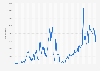
Number of people with green cards in the U.S. FY 1820-2023

Detailed statistics
Immigrants obtaining a green card in the U.S. FY 2023, by category

Detailed statistics
Public opinion on a path to legal status for undocumented immigrants in the U.S. 2024
Number of people with green cards in the U.S. FY 1820-2023
Number of persons obtaining legal permanent resident status in the United States from FY 1820 to FY 2023

Immigrants receiving citizenship in the U.S. FY 1990-2023
Number of immigrants naturalized in the United States from fiscal year 1990 to fiscal year 2023

Refugee admissions to the U.S. FY 2025, by region of origin
Number of refugees arriving in the United States in fiscal year 2025, by region of origin
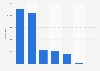
Legal immigrants in the United States FY 2023, by region of birth
Number of persons obtaining legal permanent resident status (green card) in the U.S. in the fiscal year of 2023, by region of birth

Immigrants obtaining a green card in the U.S. FY 2023, by state
Number of immigrants obtaining legal permanent residency status in the United States in fiscal year 2023, by state

Immigrants obtaining a green card in the U.S. FY 2023, by metro area of residence
Number of immigrants obtaining legal permanent residency status in the United States in fiscal year 2023, by metropolitan area of residence
Immigrants obtaining a green card in the U.S. FY 2023, by category
Number of immigrants obtaining legal permanent residency status in the United States in fiscal year 2023, by category of admission

Immigrants obtaining a green card in the U.S. FY 2009-2023, by gender
Number of immigrants obtaining legal permanent residency status in the United States from fiscal year 2009 to fiscal year 2023, by gender

Immigrants obtaining a green card in the U.S. FY 2009-2023, by age group
Number of immigrants obtaining legal permanent residency status in the United States from fiscal year 2009 to fiscal year 2023, by age group

Immigrants obtaining a green card in the U.S. FY 2023, by profession
Number of immigrants obtaining legal permanent residency status in the United States in fiscal year 2023, by occupation

Immigrants receiving citizenship in the U.S. FY 2023, by region of birth
Number of immigrants naturalized in the United States in fiscal year 2023, by region of birth

Immigrants receiving citizenship in the U.S. FY 2023, by birth country
Number of immigrants naturalized in the United States in fiscal year 2023, by country of birth

Immigrants receiving citizenship in the U.S. FY 2023, by state of residence
Number of immigrants naturalized in the United States in fiscal year 2023, by state of residence

Immigrants receiving citizenship in the U.S. FY 2023, by gender
Number of persons naturalized in the United States in fiscal year 2023, by gender

Immigrants receiving citizenship in the U.S. FY 2009-2023, by age group
Number of immigrants naturalized in the United States from fiscal year 2009 to fiscal year 2023, by age group

Immigrants receiving citizenship in the U.S. FY 2023, by occupation
Number of persons naturalized in the United States in fiscal year 2023, by occupation

Refugee admissions to the U.S. FY 1990-2025
Number of refugees arriving in the United States from fiscal year 1990 to fiscal year 2025

Refugees arrivals in the U.S. by origin FY 2025
Number of refugees arriving in the United States in fiscal year 2025, by country of nationality

Refugees arriving in the U.S. 2024, by gender
Number of refugees arriving in the United States in 2024, by gender

Refugees arriving in the U.S. 2024, by age group
Number of refugees arriving in the United States in 2024, by age group

Individuals granted asylum in the U.S. FY 1990-2023
Number of individuals granted asylum in the United States from fiscal year 1990 to fiscal year 2023

Individuals granted affirmative asylum in the U.S. FY 2023, by region
Number of individuals granted affirmative asylum in the United States in fiscal year 2023, by region of origin

Individuals granted asylum in the U.S. FY 2023, by leading nationalities
Number of individuals granted asylum affirmatively or defensively in the United States in fiscal year 2023, by leading countries

U.S. Border Patrol apprehensions and expulsions FY 1990-2025
Annual number of U.S. Border Patrol (USBP) enforcement encounters in the United States from the 1990 fiscal year to the 2025 fiscal year

Number of unauthorized immigrant removals and returns in the U.S. FY 1990-2022
Number of unauthorized immigrants removed or returned from the United States from fiscal year 1990 to fiscal year 2022

Immigrants returned to their country from the U.S. FY 2022, by region
Number of administrative returns of noncitizen immigrants in the United States in fiscal year 2022, by region of origin

Immigrants removed from the U.S. FY 2022, by criminal status and region
Number of removals of noncitizen immigrants in the United States in fiscal year 2022, by criminal status and region of origin

Public opinion on the current level of immigration in the U.S. 2001-2025
Are you satisfied with the level of immigration into the country today?

Public opinion on the level of immigration in the U.S. 2005-2025
Opinions on whether immigration should increase, decrease, or stay the same from 2015 to 2025

Public opinion on the impact of immigration on the U.S. 2005-2025
Share of Americans who perceive immigration as a bad or good thing for the country in the United States from 2005 to 2025
Public opinion on a path to legal status for undocumented immigrants in the U.S. 2024
Public opinion on a path to legal status for undocumented immigrants in the United States in June 2024

Public support for abolishing ICE in the U.S. January 2026
Share of Americans who support the elimination of the Immigration and Customs Enforcement agency (ICE) in the United States as of January 2026

Public opinion on ICE shooting of Renee Good in Minneapolis in the U.S. January 2026
Share of Americans who believed the shooting of Renee Good by the Immigration and Customs Enforcement Agency (ICE) was justified in the United States in January 2026

Public opinion on whether ICE is improving safety in the U.S. January 2026
Share of Americans who believed the Immigration and Customs Enforcement Agency (ICE) was making Americans more of less safe in the United States in January 2026
Feel free to contact us anytime. We will respond to your inquiry as quickly as possible.


