The logistics industry facilitates trade and entrepreneurial activities between parties by transporting, storing, and delivering goods through B2B, B2C, or C2C supply chain networks. At present, logistics companies provide cargo transportation services by land, air, and water while adapting to changing economic patterns and digitalization. As one of the backbones of international trade, the
at over 9.4 trillion euros in 2023 and is projected to exceed 14 trillion euros by 2028. Correspondingly,
11 trillion U.S. dollars in 2023, representing 10.6 percent of the
The
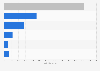
Asia-Pacific logistics market is the largest worldwide, with a market size of nearly 4.6 trillion dollars in 2023. The region’s leading position is attributed to the expansion of trade routes and the shift of industrial production to Asian countries.
Freight logistics move towards new peaks
The global logistics industry recovered to pre-pandemic levels after the slump experienced in 2020, with
global air freight traffic totaling 57.7 million metric tons in 2023. FedEx, Qatar Airways, and UPS ranked as the
top air freight carriers based on international and domestic freight ton-kilometers. Following pandemic-related supply chain disruptions, global maritime shipping reached a new seaborne trade volume peak of 12.3 billion metric tons in 2023.
Containerized maritime trade also continued its year-on-year growth, reaching 166.6 million TEUs in 2024.
Rail freight traffic worldwide likewise peaked at nearly 12 trillion ton-kilometers in 2024, with the largest shares recorded in the Asia-Pacific region and the Americas.
Freight forwarding and e-commerce logistics market development
With a market size of 176 billion euros in 2024,
global freight forwarding provides the logistics industry with quicker and more efficient transportation solutions. DSV + Schenker, DHL Logistics, and Kuehne + Nagel were the
leading players in the global freight forwarding market. Specifically, Sinotrans, Kuehne + Nagel, and DHL ranked as the top three ocean freight forwarders worldwide by volume in twenty-foot equivalent units (TEUs). As an essential part of the e-commerce ecosystem, logistics is responsible for planning, controlling, and moving goods from origin to end users. Driven by the rise of global e-commerce and the resulting growth in intra-regional and cross-border trade, the
global e-commerce logistics market reached 552 billion euros in 2023.
This text provides general information. Statista assumes no
liability for the information given being complete or correct.
Due to varying update cycles, statistics can display more up-to-date
data than referenced in the text.