U.S. Bicycle Industry - Statistics & Facts
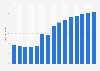
Overall bicycle sales in the United States have remained relatively stable over the past three at just over 130 million units per year and are projected to remain at a similar level until 2030. Despite stagnation in unit sales revenue from bicycle sales are projected to rise, largely driven by the increase in the sale of e.bikes.
While most bicycle sales in the United States remain traditional bikes, electric bicycles are beginning to increase their market share. In 2019 electric bicycles made up less than one percent of the market but had gained a market share of close to 12.5 percent by 2025. The United States’ e-bike market, however, remains far less mature than the one in several European countries, where e-bike sales are beginning to outstrip mechanical bicycle sales.
Bicycle imports exceed exports 9:1
While the United States boasts a domestic bicycle manufacturing sector and exports bicycles, the U.S. bicycle market is dominated by imports. In 2023, the country imported bicycles worth around 1.3 billion U.S. dollars, while exporting bicycles of a value of only 143 million.
The vast majority of bicycles imported to the United States originate from China. Nearly 8.4 million bicycles imported to the country originated from there in 2023. Though the picture becomes more complex, when considering the value of bicycle imports. During the same period, Taiwan accounted for the highest share of bike imports by value, not including electric bicycles. Bikes imported from Taiwan were valued at nearly 526 million U.S. dollars. Meanwhile China only ranked second, exporting bikes worth 451 million U.S. dollars to the United States. Taiwan, Cambodia, and Vietnam all export fewer but on average more valuable bicycles to the United States than China.
Do Americans cycle for leisure or transport?
Cycling is both a recreational activity as well as a form of transport among U.S. Americans. Around 46 percent of adults in the United States who cycle, do so exclusively for recreational purposes. The remaining 54 percent of cyclists cycle exclusively for transport of a mix of leisure and transport. Yet, among cyclists who use their bike for transport, utility trips hold a similar significance as recreational trips. Among transport cyclist 70 percent indicated that they use their bike for running errands or shopping, nearly the same share as use their bike for social and leisure purposes, at 69 percent.
Among young cyclists aged under 18, cycling tends to be more leisure focused. 58 percent of youths who cycle, only ride for recreation. Young U.S. Americans are more likely to have access to a functional bicycle, however. 68 percent of young people between three and 18 years old have access to a bike in their household, while this figure stands at 48 percent among adults.