






The Fast Facts
- Darker skin has more melanin, which is a natural sun blocker to a degree.
- While melanin plays a preventive role by helping prevent sunburn, it doesn’t fully protect against dark spots getting darker (hyperpigmentation, melasma), acne worsening in the sun, wrinkles (from UVA rays), or skin cancer.
- We’ve vetted 10 sunscreens that offer mineral protection, chemical compounds formulated by dermatologists, or both — from Black Girl Sunscreen to La Roche-Posay Anthelios Melt-In Milk Sunscreen, 100 SPF.
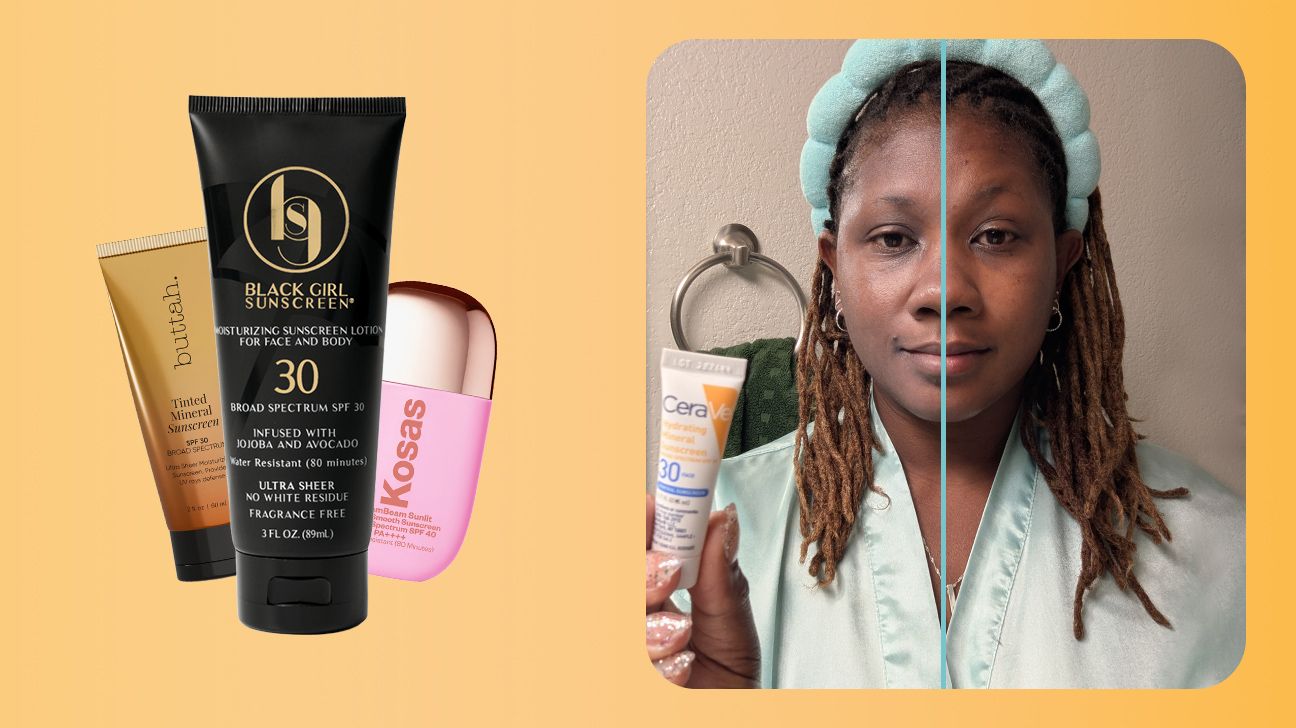
Living with a darker skin tone is very much like having a superpower. Sunburn is rare. Tanning beds and spray tans are rendered unnecessary. Thanks to melanin, those of us with darker skin have some protection against the sun’s rays, which can damage and even kill.
Despite having a form of built-in sunblock, dark skin tones still require defense against exacerbated hyperpigmentation, melasma, and yes, skin cancer.
Chemical sunscreens are effective, but if you want a natural mineral sunscreen, that telltale “white cast” has many of us throwing the (Coppertone) baby out with the bathwater.
We’ve medically vetted the top 10 sunblock picks for darker skin to meet nuanced needs.
Pricing key: $ = under $10, $$= $10–$30, $$$ = over $30.
To make sure you’re getting the best protection against sun damage, you’ll want a sunscreen that provides adequate sun protection. Equally important is finding a product that doesn’t leave you looking chalky or ashy.
To find products that meet both requirements, we reviewed online reviews and selected those rated highly and with at least SPF 30. We also selected a diverse bunch to cover different price points, skin types, and skin care requirements.
There’s a reason sunscreen is advised to be used daily — come rain, come sunshine. Actually, make that plenty of reasons: dark spots and scars getting darker, acne worsening, and skin cancer are just some of the ways sun damage affects dark skin. This makes protection against harmful UVA and UVB rays important not just for appearance, but also for your well-being.
To make sure you’re getting the best sunscreen for your skin type, there are a few sunscreen criteria to look out for:
- A broad-spectrum formula: It’s important to look out for sunscreen that offers broad-spectrum protection against the sun’s rays. This simply means that your sunscreen is able to protect you against the dangerous tag team of UVA and UVB sun rays.
- SPF 30 or higher: When selecting your sunscreen, look for products with SPF (sun protection factor) 30 or higher. That’s how much solar energy is required to cause a sunburn on protected skin compared with unprotected skin. An SPF 30 sunscreen filters about
97% of the sun’s rays when applied correctly. Even on cloudy days, 80% of harmful rays still reach your skin. - Chemical or mineral: Sunscreens are commonly available in chemical or mineral form. Distinguishing between both forms is fairly easy — mineral sunscreens make use of minerals such as zinc oxide and titanium dioxide, while chemical sunscreens use these active ingredients:
- oxybenzone
- avobenzone
- octisalate
- octocrylene
- homosalate
- octinoxate
Reapply sunscreen
Even a super high SPF doesn't protect you completely. Be sure to reapply at least every 2 hours. If you're spending time in the water, reapply more frequently.
Chemicals allow easy application to the skin and are less likely to produce a white cast. However, there are concerns about the effects of long-term exposure to these chemicals, both on humans and on aquatic life.
In the meantime, the only ingredients recognized as safe and effective by the Food and Drug Administration (FDA) are zinc oxide and titanium dioxide, which are found in mineral sunscreens. Mineral sunscreens are great for people with sensitive skin.
You should know, however, that mineral sunscreen is more difficult to apply (it can take a while to rub in) and is usually responsible for that telltale white cast.
Tips for sun safety
Beyond sunscreen, there are other ways to protect your skin when you’re out in the sun. They include:
- wearing a hat
- selecting protective clothing
- wearing sunglasses
- staying covered in shade when outdoors
Medical Perspective“The ABCDEs of melanoma still applies to people with skin of color. The main difference is [that pink tone, aka erythema] to skin cancers like squamous cell carcinoma and basal cell carcinoma tend to be more difficult to [notice] in darker skin tones (they look more purple or even dark brown).
“But the ABCDEs of melanoma still apply regardless of skin tone:
A- asymmetry
B – irregular borders
C – multiple colors
D – diameter bigger than a pencil eraser (6 mm)
E – evolution (is the spot changing in size, color, shape, is it painful or bleeding now, etc)“People of color need to do self skin exams and educate … on what their moles look like. … I recommend an annual full skin exam with a board certified dermatologist who specializes in skin or color.”
How to check the ABCDEs of melanoma.
Quotes represent the opinions of our medical experts. All content is strictly informational and should not be considered medical advice.
Yes. Prevailing myths claim that people with darker skin don’t experience sun damage, leading some to skip applying sunscreen.
According to scientific research, Black people are four times more likely to be diagnosed with advanced-stage melanoma and are more likely to die of the disease than white people with a similar diagnosis.
Aesthetically speaking: Invisible protection that won’t burn your eyes, make you look greasy, or chalky like a ghost.
Clinically speaking, hyaluronic acid, niacinamide, zinc oxide, and iron oxide are the top 4 ingredients Black people most benefit from in sunscreen.
Hyaluronic acid pulls moisture up from your deeper skin layers and your surroundings, and Niacinamide helps stop dark spots from getting darker.
Zinc is the ingredient that casts a white hue and makes folk look ashen. The products on our vetted list contain “micronized” zinc (think: presifted flour vs. coarse flour) to break up the white cast.
Some products on our list have added iron oxide (tints to counterbalance the white cast):
• Fenty Skin Hydra Vizor (Huez tinted version)
• EltaMD UV Clear (Tinted version)
• Tatcha The Silk Sunscreen
• SuperGoop Protec(tint)
• Buttah Skin Invisible Tinted Mineral
• Neutrogena Invisible Daily Defense (Mineral version)
While melanin provides some degree of skin protection, dermatologists recommend at least SPF 30 to avoid skin damage or sunburn.
If ethical practices and skin health, prioritizing natural ingredients, are important to you, check these out:
• Black Girl Sunscreen SPF 30: This is the gold standard for both plant-forward and vegan-friendly. It’s certified vegan and is built entirely around plant-derived moisturizers like avocado oil, jojoba oil, and cacao butter.
• Fenty Skin Hydra Vizor: This product is vegan and cruelty-free. Rihanna and her team highlight African plant extracts — specifically Kalahari melon and baobab — as its primary moisturizing ingredients to support the skin barrier.
• Buttah Skin Invisible Tinted Mineral: This brand is vegan-friendly and relies primarily on plant-based ingredients like shea butter and vitamin E to provide a nourishing finish that’s gentler on darker skin tones.
• Kosas DreamBeam SPF 40: This product is vegan and cruelty-free. While it includes clinical-grade ingredients like peptides, its formula is “clean,” emphasizing plant-derived ceramides and botanical extracts to soothe and smooth the skin.
Having said that, it’s prudent to note that vegan skincare means the product does not contain any animal-sourced ingredients (think beeswax, honey, or lanolin), but it does not necessarily mean the brand is 100% cruelty-free (untested on animals). This list contains vegan-friendly products.
Similarly, sunscreen cannot be 100% plant based because its active ingredients, such as avobenzone and zinc oxide, are chemical compounds.
Buttah Skin Invisible and Black Girl Sunscreen are Black-owned and sunscreens developed by Black dermatologists.
Protection against UVA rays fortifies against sun damage that ages the skin. A formula with UVB protection shields against sun exposure that can burn the skin.
It’s a myth that people of color don’t need to apply sunscreen. Skin cancer doesn’t see color. It can develop in anyone.
Additionally, that dark mustache-like shadow, ladies, (one area melasma can show up), acne, hyperpigmentation, and skin cancer are all issues best reduced or prevented with your choice of sunblock.
When choosing sunscreen, consider the type you prefer, where you’ll use it, the price, and any skin concerns you’d like it to address.