KR102226067B1 - Method and apparatus for providing a virtual traffic light service in autonomous driving system - Google Patents
Method and apparatus for providing a virtual traffic light service in autonomous driving system Download PDFInfo
- Publication number
- KR102226067B1 KR102226067B1 KR1020190093507A KR20190093507A KR102226067B1 KR 102226067 B1 KR102226067 B1 KR 102226067B1 KR 1020190093507 A KR1020190093507 A KR 1020190093507A KR 20190093507 A KR20190093507 A KR 20190093507A KR 102226067 B1 KR102226067 B1 KR 102226067B1
- Authority
- KR
- South Korea
- Prior art keywords
- vehicle
- traffic light
- information
- virtual traffic
- message
- Prior art date
- Legal status (The legal status is an assumption and is not a legal conclusion. Google has not performed a legal analysis and makes no representation as to the accuracy of the status listed.)
- Active
Links
Images






Classifications
-
- G—PHYSICS
- G08—SIGNALLING
- G08G—TRAFFIC CONTROL SYSTEMS
- G08G1/00—Traffic control systems for road vehicles
- G08G1/09—Arrangements for giving variable traffic instructions
- G08G1/0962—Arrangements for giving variable traffic instructions having an indicator mounted inside the vehicle, e.g. giving voice messages
- G08G1/0967—Systems involving transmission of highway information, e.g. weather, speed limits
- G08G1/096708—Systems involving transmission of highway information, e.g. weather, speed limits where the received information might be used to generate an automatic action on the vehicle control
- G08G1/096716—Systems involving transmission of highway information, e.g. weather, speed limits where the received information might be used to generate an automatic action on the vehicle control where the received information does not generate an automatic action on the vehicle control
-
- G—PHYSICS
- G08—SIGNALLING
- G08G—TRAFFIC CONTROL SYSTEMS
- G08G1/00—Traffic control systems for road vehicles
- G08G1/09—Arrangements for giving variable traffic instructions
- G08G1/0962—Arrangements for giving variable traffic instructions having an indicator mounted inside the vehicle, e.g. giving voice messages
- G08G1/0965—Arrangements for giving variable traffic instructions having an indicator mounted inside the vehicle, e.g. giving voice messages responding to signals from another vehicle, e.g. emergency vehicle
-
- B—PERFORMING OPERATIONS; TRANSPORTING
- B60—VEHICLES IN GENERAL
- B60K—ARRANGEMENT OR MOUNTING OF PROPULSION UNITS OR OF TRANSMISSIONS IN VEHICLES; ARRANGEMENT OR MOUNTING OF PLURAL DIVERSE PRIME-MOVERS IN VEHICLES; AUXILIARY DRIVES FOR VEHICLES; INSTRUMENTATION OR DASHBOARDS FOR VEHICLES; ARRANGEMENTS IN CONNECTION WITH COOLING, AIR INTAKE, GAS EXHAUST OR FUEL SUPPLY OF PROPULSION UNITS IN VEHICLES
- B60K35/00—Instruments specially adapted for vehicles; Arrangement of instruments in or on vehicles
-
- B—PERFORMING OPERATIONS; TRANSPORTING
- B60—VEHICLES IN GENERAL
- B60W—CONJOINT CONTROL OF VEHICLE SUB-UNITS OF DIFFERENT TYPE OR DIFFERENT FUNCTION; CONTROL SYSTEMS SPECIALLY ADAPTED FOR HYBRID VEHICLES; ROAD VEHICLE DRIVE CONTROL SYSTEMS FOR PURPOSES NOT RELATED TO THE CONTROL OF A PARTICULAR SUB-UNIT
- B60W30/00—Purposes of road vehicle drive control systems not related to the control of a particular sub-unit, e.g. of systems using conjoint control of vehicle sub-units
- B60W30/14—Adaptive cruise control
- B60W30/16—Control of distance between vehicles, e.g. keeping a distance to preceding vehicle
- B60W30/165—Automatically following the path of a preceding lead vehicle, e.g. "electronic tow-bar"
-
- B—PERFORMING OPERATIONS; TRANSPORTING
- B60—VEHICLES IN GENERAL
- B60W—CONJOINT CONTROL OF VEHICLE SUB-UNITS OF DIFFERENT TYPE OR DIFFERENT FUNCTION; CONTROL SYSTEMS SPECIALLY ADAPTED FOR HYBRID VEHICLES; ROAD VEHICLE DRIVE CONTROL SYSTEMS FOR PURPOSES NOT RELATED TO THE CONTROL OF A PARTICULAR SUB-UNIT
- B60W30/00—Purposes of road vehicle drive control systems not related to the control of a particular sub-unit, e.g. of systems using conjoint control of vehicle sub-units
- B60W30/18—Propelling the vehicle
- B60W30/18009—Propelling the vehicle related to particular drive situations
- B60W30/18154—Approaching an intersection
-
- B—PERFORMING OPERATIONS; TRANSPORTING
- B60—VEHICLES IN GENERAL
- B60W—CONJOINT CONTROL OF VEHICLE SUB-UNITS OF DIFFERENT TYPE OR DIFFERENT FUNCTION; CONTROL SYSTEMS SPECIALLY ADAPTED FOR HYBRID VEHICLES; ROAD VEHICLE DRIVE CONTROL SYSTEMS FOR PURPOSES NOT RELATED TO THE CONTROL OF A PARTICULAR SUB-UNIT
- B60W30/00—Purposes of road vehicle drive control systems not related to the control of a particular sub-unit, e.g. of systems using conjoint control of vehicle sub-units
- B60W30/18—Propelling the vehicle
- B60W30/18009—Propelling the vehicle related to particular drive situations
- B60W30/18163—Lane change; Overtaking manoeuvres
-
- B—PERFORMING OPERATIONS; TRANSPORTING
- B60—VEHICLES IN GENERAL
- B60W—CONJOINT CONTROL OF VEHICLE SUB-UNITS OF DIFFERENT TYPE OR DIFFERENT FUNCTION; CONTROL SYSTEMS SPECIALLY ADAPTED FOR HYBRID VEHICLES; ROAD VEHICLE DRIVE CONTROL SYSTEMS FOR PURPOSES NOT RELATED TO THE CONTROL OF A PARTICULAR SUB-UNIT
- B60W40/00—Estimation or calculation of non-directly measurable driving parameters for road vehicle drive control systems not related to the control of a particular sub unit, e.g. by using mathematical models
- B60W40/02—Estimation or calculation of non-directly measurable driving parameters for road vehicle drive control systems not related to the control of a particular sub unit, e.g. by using mathematical models related to ambient conditions
- B60W40/04—Traffic conditions
-
- B—PERFORMING OPERATIONS; TRANSPORTING
- B60—VEHICLES IN GENERAL
- B60W—CONJOINT CONTROL OF VEHICLE SUB-UNITS OF DIFFERENT TYPE OR DIFFERENT FUNCTION; CONTROL SYSTEMS SPECIALLY ADAPTED FOR HYBRID VEHICLES; ROAD VEHICLE DRIVE CONTROL SYSTEMS FOR PURPOSES NOT RELATED TO THE CONTROL OF A PARTICULAR SUB-UNIT
- B60W40/00—Estimation or calculation of non-directly measurable driving parameters for road vehicle drive control systems not related to the control of a particular sub unit, e.g. by using mathematical models
- B60W40/02—Estimation or calculation of non-directly measurable driving parameters for road vehicle drive control systems not related to the control of a particular sub unit, e.g. by using mathematical models related to ambient conditions
- B60W40/06—Road conditions
-
- B—PERFORMING OPERATIONS; TRANSPORTING
- B60—VEHICLES IN GENERAL
- B60W—CONJOINT CONTROL OF VEHICLE SUB-UNITS OF DIFFERENT TYPE OR DIFFERENT FUNCTION; CONTROL SYSTEMS SPECIALLY ADAPTED FOR HYBRID VEHICLES; ROAD VEHICLE DRIVE CONTROL SYSTEMS FOR PURPOSES NOT RELATED TO THE CONTROL OF A PARTICULAR SUB-UNIT
- B60W50/00—Details of control systems for road vehicle drive control not related to the control of a particular sub-unit, e.g. process diagnostic or vehicle driver interfaces
- B60W50/08—Interaction between the driver and the control system
- B60W50/14—Means for informing the driver, warning the driver or prompting a driver intervention
-
- G—PHYSICS
- G08—SIGNALLING
- G08G—TRAFFIC CONTROL SYSTEMS
- G08G1/00—Traffic control systems for road vehicles
- G08G1/09—Arrangements for giving variable traffic instructions
- G08G1/0962—Arrangements for giving variable traffic instructions having an indicator mounted inside the vehicle, e.g. giving voice messages
- G08G1/0967—Systems involving transmission of highway information, e.g. weather, speed limits
- G08G1/096708—Systems involving transmission of highway information, e.g. weather, speed limits where the received information might be used to generate an automatic action on the vehicle control
-
- G—PHYSICS
- G08—SIGNALLING
- G08G—TRAFFIC CONTROL SYSTEMS
- G08G1/00—Traffic control systems for road vehicles
- G08G1/09—Arrangements for giving variable traffic instructions
- G08G1/0962—Arrangements for giving variable traffic instructions having an indicator mounted inside the vehicle, e.g. giving voice messages
- G08G1/0967—Systems involving transmission of highway information, e.g. weather, speed limits
- G08G1/096733—Systems involving transmission of highway information, e.g. weather, speed limits where a selection of the information might take place
- G08G1/096758—Systems involving transmission of highway information, e.g. weather, speed limits where a selection of the information might take place where no selection takes place on the transmitted or the received information
-
- G—PHYSICS
- G08—SIGNALLING
- G08G—TRAFFIC CONTROL SYSTEMS
- G08G1/00—Traffic control systems for road vehicles
- G08G1/09—Arrangements for giving variable traffic instructions
- G08G1/0962—Arrangements for giving variable traffic instructions having an indicator mounted inside the vehicle, e.g. giving voice messages
- G08G1/0967—Systems involving transmission of highway information, e.g. weather, speed limits
- G08G1/096766—Systems involving transmission of highway information, e.g. weather, speed limits where the system is characterised by the origin of the information transmission
- G08G1/096783—Systems involving transmission of highway information, e.g. weather, speed limits where the system is characterised by the origin of the information transmission where the origin of the information is a roadside individual element
-
- G—PHYSICS
- G08—SIGNALLING
- G08G—TRAFFIC CONTROL SYSTEMS
- G08G1/00—Traffic control systems for road vehicles
- G08G1/09—Arrangements for giving variable traffic instructions
- G08G1/0962—Arrangements for giving variable traffic instructions having an indicator mounted inside the vehicle, e.g. giving voice messages
- G08G1/0967—Systems involving transmission of highway information, e.g. weather, speed limits
- G08G1/096766—Systems involving transmission of highway information, e.g. weather, speed limits where the system is characterised by the origin of the information transmission
- G08G1/096791—Systems involving transmission of highway information, e.g. weather, speed limits where the system is characterised by the origin of the information transmission where the origin of the information is another vehicle
-
- G—PHYSICS
- G08—SIGNALLING
- G08G—TRAFFIC CONTROL SYSTEMS
- G08G1/00—Traffic control systems for road vehicles
- G08G1/09—Arrangements for giving variable traffic instructions
- G08G1/0962—Arrangements for giving variable traffic instructions having an indicator mounted inside the vehicle, e.g. giving voice messages
- G08G1/0968—Systems involving transmission of navigation instructions to the vehicle
-
- G—PHYSICS
- G08—SIGNALLING
- G08G—TRAFFIC CONTROL SYSTEMS
- G08G1/00—Traffic control systems for road vehicles
- G08G1/16—Anti-collision systems
- G08G1/161—Decentralised systems, e.g. inter-vehicle communication
- G08G1/162—Decentralised systems, e.g. inter-vehicle communication event-triggered
-
- G—PHYSICS
- G08—SIGNALLING
- G08G—TRAFFIC CONTROL SYSTEMS
- G08G1/00—Traffic control systems for road vehicles
- G08G1/16—Anti-collision systems
- G08G1/166—Anti-collision systems for active traffic, e.g. moving vehicles, pedestrians, bikes
-
- G—PHYSICS
- G08—SIGNALLING
- G08G—TRAFFIC CONTROL SYSTEMS
- G08G1/00—Traffic control systems for road vehicles
- G08G1/22—Platooning, i.e. convoy of communicating vehicles
-
- H—ELECTRICITY
- H04—ELECTRIC COMMUNICATION TECHNIQUE
- H04L—TRANSMISSION OF DIGITAL INFORMATION, e.g. TELEGRAPHIC COMMUNICATION
- H04L67/00—Network arrangements or protocols for supporting network services or applications
- H04L67/01—Protocols
- H04L67/10—Protocols in which an application is distributed across nodes in the network
-
- H—ELECTRICITY
- H04—ELECTRIC COMMUNICATION TECHNIQUE
- H04W—WIRELESS COMMUNICATION NETWORKS
- H04W4/00—Services specially adapted for wireless communication networks; Facilities therefor
- H04W4/02—Services making use of location information
- H04W4/021—Services related to particular areas, e.g. point of interest [POI] services, venue services or geofences
-
- H—ELECTRICITY
- H04—ELECTRIC COMMUNICATION TECHNIQUE
- H04W—WIRELESS COMMUNICATION NETWORKS
- H04W4/00—Services specially adapted for wireless communication networks; Facilities therefor
- H04W4/12—Messaging; Mailboxes; Announcements
-
- H—ELECTRICITY
- H04—ELECTRIC COMMUNICATION TECHNIQUE
- H04W—WIRELESS COMMUNICATION NETWORKS
- H04W4/00—Services specially adapted for wireless communication networks; Facilities therefor
- H04W4/30—Services specially adapted for particular environments, situations or purposes
- H04W4/40—Services specially adapted for particular environments, situations or purposes for vehicles, e.g. vehicle-to-pedestrians [V2P]
- H04W4/44—Services specially adapted for particular environments, situations or purposes for vehicles, e.g. vehicle-to-pedestrians [V2P] for communication between vehicles and infrastructures, e.g. vehicle-to-cloud [V2C] or vehicle-to-home [V2H]
-
- H—ELECTRICITY
- H04—ELECTRIC COMMUNICATION TECHNIQUE
- H04W—WIRELESS COMMUNICATION NETWORKS
- H04W4/00—Services specially adapted for wireless communication networks; Facilities therefor
- H04W4/30—Services specially adapted for particular environments, situations or purposes
- H04W4/40—Services specially adapted for particular environments, situations or purposes for vehicles, e.g. vehicle-to-pedestrians [V2P]
- H04W4/46—Services specially adapted for particular environments, situations or purposes for vehicles, e.g. vehicle-to-pedestrians [V2P] for vehicle-to-vehicle communication [V2V]
-
- B—PERFORMING OPERATIONS; TRANSPORTING
- B60—VEHICLES IN GENERAL
- B60W—CONJOINT CONTROL OF VEHICLE SUB-UNITS OF DIFFERENT TYPE OR DIFFERENT FUNCTION; CONTROL SYSTEMS SPECIALLY ADAPTED FOR HYBRID VEHICLES; ROAD VEHICLE DRIVE CONTROL SYSTEMS FOR PURPOSES NOT RELATED TO THE CONTROL OF A PARTICULAR SUB-UNIT
- B60W50/00—Details of control systems for road vehicle drive control not related to the control of a particular sub-unit, e.g. process diagnostic or vehicle driver interfaces
- B60W50/08—Interaction between the driver and the control system
- B60W50/14—Means for informing the driver, warning the driver or prompting a driver intervention
- B60W2050/146—Display means
-
- B—PERFORMING OPERATIONS; TRANSPORTING
- B60—VEHICLES IN GENERAL
- B60W—CONJOINT CONTROL OF VEHICLE SUB-UNITS OF DIFFERENT TYPE OR DIFFERENT FUNCTION; CONTROL SYSTEMS SPECIALLY ADAPTED FOR HYBRID VEHICLES; ROAD VEHICLE DRIVE CONTROL SYSTEMS FOR PURPOSES NOT RELATED TO THE CONTROL OF A PARTICULAR SUB-UNIT
- B60W2555/00—Input parameters relating to exterior conditions, not covered by groups B60W2552/00, B60W2554/00
- B60W2555/60—Traffic rules, e.g. speed limits or right of way
-
- B—PERFORMING OPERATIONS; TRANSPORTING
- B60—VEHICLES IN GENERAL
- B60W—CONJOINT CONTROL OF VEHICLE SUB-UNITS OF DIFFERENT TYPE OR DIFFERENT FUNCTION; CONTROL SYSTEMS SPECIALLY ADAPTED FOR HYBRID VEHICLES; ROAD VEHICLE DRIVE CONTROL SYSTEMS FOR PURPOSES NOT RELATED TO THE CONTROL OF A PARTICULAR SUB-UNIT
- B60W2556/00—Input parameters relating to data
- B60W2556/45—External transmission of data to or from the vehicle
-
- B—PERFORMING OPERATIONS; TRANSPORTING
- B60—VEHICLES IN GENERAL
- B60Y—INDEXING SCHEME RELATING TO ASPECTS CROSS-CUTTING VEHICLE TECHNOLOGY
- B60Y2300/00—Purposes or special features of road vehicle drive control systems
- B60Y2300/14—Cruise control
- B60Y2300/16—Control of distance between vehicles, e.g. keeping a distance to preceding vehicle
- B60Y2300/165—Automatically following the path of a preceding lead vehicle, e.g. "electronic tow-bar"
-
- B—PERFORMING OPERATIONS; TRANSPORTING
- B60—VEHICLES IN GENERAL
- B60Y—INDEXING SCHEME RELATING TO ASPECTS CROSS-CUTTING VEHICLE TECHNOLOGY
- B60Y2300/00—Purposes or special features of road vehicle drive control systems
- B60Y2300/18—Propelling the vehicle
- B60Y2300/18008—Propelling the vehicle related to particular drive situations
- B60Y2300/18158—Approaching intersection
-
- B—PERFORMING OPERATIONS; TRANSPORTING
- B60—VEHICLES IN GENERAL
- B60Y—INDEXING SCHEME RELATING TO ASPECTS CROSS-CUTTING VEHICLE TECHNOLOGY
- B60Y2300/00—Purposes or special features of road vehicle drive control systems
- B60Y2300/18—Propelling the vehicle
- B60Y2300/18008—Propelling the vehicle related to particular drive situations
- B60Y2300/18166—Overtaking, changing lanes
-
- H—ELECTRICITY
- H04—ELECTRIC COMMUNICATION TECHNIQUE
- H04L—TRANSMISSION OF DIGITAL INFORMATION, e.g. TELEGRAPHIC COMMUNICATION
- H04L67/00—Network arrangements or protocols for supporting network services or applications
- H04L67/01—Protocols
- H04L67/12—Protocols specially adapted for proprietary or special-purpose networking environments, e.g. medical networks, sensor networks, networks in vehicles or remote metering networks
Landscapes
- Engineering & Computer Science (AREA)
- Physics & Mathematics (AREA)
- General Physics & Mathematics (AREA)
- Automation & Control Theory (AREA)
- Mechanical Engineering (AREA)
- Transportation (AREA)
- Atmospheric Sciences (AREA)
- Life Sciences & Earth Sciences (AREA)
- Computer Networks & Wireless Communication (AREA)
- Signal Processing (AREA)
- Mathematical Physics (AREA)
- Emergency Management (AREA)
- Business, Economics & Management (AREA)
- Human Computer Interaction (AREA)
- Radar, Positioning & Navigation (AREA)
- Remote Sensing (AREA)
- Chemical & Material Sciences (AREA)
- Combustion & Propulsion (AREA)
- Mobile Radio Communication Systems (AREA)
Abstract
자율주행시스템(Automated Vehicle & Highway Systems)에서 제1 차량의 가상 신호등 서비스 제공방법에 있어서, 가상 신호등 정보를 생성하기 위한 참조메시지를 수신하고, 제2 차량 또는 RSU(Road Side Unit)로부터 V2X 통신을 이용하여, V2X 메시지를 수신하며, 유효구간에 상기 제2 차량이 진입하였는지 여부를 판단하고, 상기 유효구간에 상기 제2 차량이 진입한 경우, 상기 가상 신호등 정보를 생성하여, 이를 통해, 상기 제1 차량과 상기 제2 차량의 협력주행이 가능하다.
본 발명의 자율 주행 차량, 사용자 단말기 및 서버 중 하나 이상이 인공지능(Artificial Intelligence) 모듈, 드론 (Unmmanned Aerial Vehicle, UAV) 로봇, 증강 현실 (Augmented Reality, AR) 장치, 가상 현실(Virtual reality, VR) 장치, 5G 서비스와 관련된 장치 등과 연계될 수 있다In the method of providing a virtual traffic light service for a first vehicle in an Automated Vehicle & Highway Systems, a reference message for generating virtual traffic light information is received, and V2X communication is performed from the second vehicle or RSU (Road Side Unit). By using, the V2X message is received, it is determined whether the second vehicle has entered the valid section, and when the second vehicle enters the valid section, the virtual traffic light information is generated, and through this, the second vehicle Cooperative driving between the first vehicle and the second vehicle is possible.
At least one of the autonomous vehicle, the user terminal and the server of the present invention is an artificial intelligence module, a drone (Unmmanned Aerial Vehicle, UAV) robot, an augmented reality (AR) device, and a virtual reality (VR) device. ) Can be linked to devices, devices related to 5G services, etc.
Description
본 발명은 자율주행시스템에 관한 것으로서 가상 신호등을 생성하고 가상 신호등의 정보 처리방법 및 이를 위한 장치에 관한 것이다.The present invention relates to an autonomous driving system, and to a method for generating a virtual traffic light and processing information of a virtual traffic light, and an apparatus therefor.
자동차는 사용되는 원동기의 종류에 따라, 내연기관(internal combustion engine) 자동차, 외연기관(external combustion engine) 자동차, 가스터빈(gas turbine) 자동차 또는 전기자동차(electric vehicle) 등으로 분류될 수 있다.Vehicles can be classified into internal combustion engine vehicles, external combustion engine vehicles, gas turbine vehicles, or electric vehicles, depending on the type of prime mover used.
자율주행자동차(Autonomous Vehicle)란 운전자 또는 승객의 조작 없이 자동차 스스로 운행이 가능한 자동차를 말하며, 자율주행시스템(Automated Vehicle & Highway Systems)은 이러한 자율주행자동차가 스스로 운행될 수 있도록 모니터링하고 제어하는 시스템을 말한다.Autonomous Vehicle refers to a vehicle that can operate by itself without driver or passenger manipulation, and Automated Vehicle & Highway Systems is a system that monitors and controls such autonomous vehicles so that they can operate on their own. Say.
본 발명은 전술한 필요성 및/또는 문제점을 해결하는 것을 목적으로 한다.It is an object of the present invention to solve the aforementioned necessities and/or problems.
또한, 본 발명의 목적은, 자율주행시스템에서 가상 신호등 생성방법 및 이를 위한 장치를 제안한다.In addition, an object of the present invention is to propose a method for generating a virtual traffic light in an autonomous driving system and an apparatus therefor.
또한, 본 발명의 목적은, 자율주행시스템에서 가상 신호등을 생성하고, 이러한 가상 신호등의 정보 처리방법 및 이를 위한 장치를 제안한다.In addition, an object of the present invention is to provide a method for generating a virtual traffic light in an autonomous driving system, and processing information of the virtual traffic light, and an apparatus therefor.
본 발명이 이루고자 하는 기술적 과제들은 이상에서 언급한 기술적 과제들로 제한되지 않으며, 언급되지 않은 또 다른 기술적 과제들은 이하의 발명의 상세한 설명으로부터 본 발명이 속하는 기술분야에서 통상의 지식을 가진 자에게 명확하게 이해될 수 있을 것이다.The technical problems to be achieved by the present invention are not limited to the technical problems mentioned above, and other technical problems that are not mentioned are obvious to those of ordinary skill in the technical field to which the present invention belongs from the detailed description below. It will be understandable.
본 발명의 일 양상은, 자율주행시스템(Automated Vehicle & Highway Systems)에서 제1 차량의 가상 신호등 서비스 제공방법에 있어서, 가상 신호등 정보를 생성하기 위한 참조메시지를 수신하는 단계; 제2 차량 또는 RSU(Road Side Unit)로부터 V2X 통신을 이용하여, V2X 메시지를 수신하는 단계; 상기 참조메시지 또는 상기 V2X 메시지를 이용하여, 상기 가상 신호등 정보를 이용한 주행이 요구되는 유효구간에 상기 제2 차량이 진입하였는지 여부를 판단하는 단계; 및 상기 유효구간에 상기 제2 차량이 진입한 경우, 상기 가상 신호등 정보를 생성하는 단계; 를 포함하며, 상기 가상 신호등 정보는 상기 유효구간에서 상기 제1 차량과 상기 제2 차량의 협력주행을 위한 신호등 신호를 포함할 수 있다.An aspect of the present invention provides a method for providing a virtual traffic light service for a first vehicle in an Automated Vehicle & Highway Systems, the method comprising: receiving a reference message for generating virtual traffic light information; Receiving a V2X message using V2X communication from a second vehicle or RSU (Road Side Unit); Determining whether the second vehicle has entered a valid section requiring driving using the virtual traffic light information using the reference message or the V2X message; And generating the virtual traffic light information when the second vehicle enters the valid section. Including, the virtual traffic light information may include a traffic light signal for cooperative driving of the first vehicle and the second vehicle in the valid section.
또한, 상기 참조메시지는 상기 유효구간의 도로정보, 상기 도로정보에 근거한 도로의 우선순위값, 상기 유효구간 내에 주행 중인 차량정보, 상기 유효구간 내에 주행 중인 차량의 우선순위값 또는 상기 가상 신호등 정보를 이용한 주행에 적용되는 정책(Policy)정보를 포함할 수 있다.In addition, the reference message includes road information of the valid section, a priority value of a road based on the road information, information on a vehicle running within the valid section, a priority value of a vehicle running within the valid section, or the virtual traffic light information. It may include policy information applied to the used driving.
또한, 상기 차량의 우선순위값은 상기 유효구간에 위치한 기준지점 또는 상기 차량의 운행목적에 근거할 수 있다.In addition, the priority value of the vehicle may be based on a reference point located in the valid section or a driving purpose of the vehicle.
또한, 상기 제1 차량이 자율주행을 지원하지 않는 차량인 경우, 상기 제1 차량의 사용자에게 상기 가상 신호등 정보를 디스플레이 할 수 있다.In addition, when the first vehicle is a vehicle that does not support autonomous driving, the virtual traffic light information may be displayed to a user of the first vehicle.
또한, 상기 정책정보는 상기 유효구간에 먼저 진입하는 차량을 우선하는 선진입 차량 우선 정책정보, 상기 유효구간의 교통흐름을 개선하기 위한 교통흐름 개선 우선 정책정보 또는 긴급 차량을 우선하는 긴급차량 우선 정책정보를 포함할 수 있다.In addition, the policy information includes first-entry vehicle priority policy information that prioritizes vehicles entering the valid section, traffic flow improvement priority policy information to improve the traffic flow in the valid section, or emergency vehicle priority policy that prioritizes emergency vehicles. May contain information.
또한, 상기 정책정보가 상기 선진입 차량 우선 정책정보인 경우, 상기 가상 신호등 정보를 생성하는 단계는 상기 도로정보에 근거하여 주행가능상태로 판단되는 도로를 기준으로, 높은 우선순위값을 갖는 차량이 먼저 상기 유효구간을 통과하도록 하기 위한 상기 신호등 신호가 포함된 상기 가상 신호등 정보를 생성할 수 있다.In addition, when the policy information is the first-entry vehicle priority policy information, the step of generating the virtual traffic light information includes a vehicle having a high priority value based on a road determined to be in a drivable state based on the road information. First, the virtual traffic light information including the traffic light signal for passing through the valid section may be generated.
또한, 상기 정책정보가 상기 교통흐름 개선 우선 정책정보인 경우, 상기 가상 신호등 정보를 생성하는 단계는 상기 도로정보에 근거하여, 교통흐름 개선을 필요로 하는 도로를 우선으로하여, 상기 도로의 우선순위값이 설정되고, 상기 도로의 우선순위값에 근거하여 높은 우선순위값을 갖는 상기 도로의 차량이 먼저 상기 유효구간을 통과하도록 하기 위한 상기 신호등 신호가 포함된 상기 신호등 정보를 생성할 수 있다.In addition, when the policy information is the traffic flow improvement priority policy information, the step of generating the virtual traffic light information is based on the road information, giving priority to a road requiring traffic flow improvement, and prioritizing the road. A value is set, and the traffic light information including the traffic light signal for allowing a vehicle of the road having a high priority value to pass through the valid section first may be generated based on the priority value of the road.
또한, 상기 V2X 메시지를 통해, 상기 제2 차량이 상기 가상 신호등 정보를 이용하는 주행을 하지 않는 차량임을 판단한 경우, 상기 제1 차량은 긴급정지하거나, 상기 제1 차량의 사용자에게 경고 메시지를 디스플레이 할 수 있다.In addition, when it is determined through the V2X message that the second vehicle is a vehicle that does not travel using the virtual traffic light information, the first vehicle may stop in an emergency or display a warning message to the user of the first vehicle. have.
또한, 상기 제1 차량이 군집주행 중인 상태인 경우, 상기 유효구간은 상기 제1 차량이 군집주행에서 이탈하는 구간을 지시할 수 있다.In addition, when the first vehicle is in a platoon running state, the valid section may indicate a section in which the first vehicle is departing from platooning.
또한, 상기 제1 차량이 군집주행이 요구되는 상태인 경우, 상기 유효구간은 상기 군집주행에 합류하는 구간을 지시할 수 있다.In addition, when the first vehicle is in a state in which platooning is required, the valid section may indicate a section joining the platooning.
또한, 상기 제1 차량이 군집주행 중인 상태인 경우, 상기 제1 차량의 우선순위값은 상기 군집주행을 위하여, 군집을 이루는 차량의 수에 근거할 수 있다.In addition, when the first vehicle is in a cluster driving state, the priority value of the first vehicle may be based on the number of vehicles forming the cluster for the cluster driving.
본 발명의 또 다른 일 양상은, 자율주행시스템(Automated Vehicle & Highway Systems)에서 서버의 가상 신호등 서비스 제공방법에 있어서,Another aspect of the present invention is a method for providing a virtual traffic light service of a server in an autonomous driving system (Automated Vehicle & Highway Systems),
차량으로부터 가상 신호등 서비스의 요청메시지를 수신 또는 지도(Map)정보를 통해 상기 서버가 모니터링 하는 구간의 도로정보를 획득하는 단계; 상기 요청메시지 또는 상기 도로정보에 근거하여, 상기 가상 신호등 서비스의 시작 여부를 결정하는 단계; 상기 가상 신호등 서비스를 위한, 가상 신호등 정보를 이용한 주행이 요구되는 유효구간을 설정하는 단계; 및 상기 가상 신호등 정보를 생성하기 위한 참조메시지를 전송하는 단계를 포함하며, 상기 참조메시지는 상기 유효구간 내에 브로드캐스트(Broadcast) 모드를 통해 전송될 수 있다.Receiving a request message for a virtual traffic light service from a vehicle or obtaining road information of a section monitored by the server through map information; Determining whether to start the virtual traffic light service based on the request message or the road information; Setting a valid section in which driving is required using virtual traffic light information for the virtual traffic light service; And transmitting a reference message for generating the virtual traffic light information, and the reference message may be transmitted through a broadcast mode within the valid period.
또한, 상기 가상 신호등 서비스의 시작여부를 결정하는 단계는 상기 도로정보에 근거하여 교차로 구간, 램프(Ramp) 구간 또는 공사 구간이 발생하거나, 상기 요청메시지에 근거하여 상기 차량의 군집주행을 위한 동작이 발생하는 경우에 상기 가상 신호등 서비스의 시작이 결정될 수 있다.In addition, the step of determining whether to start the virtual traffic light service may occur in an intersection section, a ramp section, or a construction section based on the road information, or the operation for cluster driving of the vehicle is performed based on the request message. When this occurs, the start of the virtual traffic light service may be determined.
또한, 상기 차량의 군집주행을 위한 동작은 상기 차량이 속한 군집이 교차로를 통과하는 동작 또는 차선을 변경하는 동작을 포함할 수 있다.Further, the operation for cluster driving of the vehicle may include an operation in which a cluster to which the vehicle belongs passes through an intersection or an operation of changing a lane.
또한, 상기 참조메시지는 상기 유효구간의 도로정보, 상기 도로정보에 근거한 도로의 우선순위값, 상기 유효구간 내에 주행 중인 차량정보, 상기 유효구간 내에 주행 중인 차량의 우선순위값 또는 상기 가상 신호등 정보를 이용한 주행에 적용되는 정책(Policy)정보를 포함할 수 있다.In addition, the reference message includes road information of the valid section, a priority value of a road based on the road information, information on a vehicle running within the valid section, a priority value of a vehicle running within the valid section, or the virtual traffic light information. It may include policy information applied to the used driving.
또한, 상기 차량의 우선순위값은 상기 유효구간에 위치한 기준지점 또는 상기 차량의 운행목적에 근거할 수 있다.In addition, the priority value of the vehicle may be based on a reference point located in the valid section or a driving purpose of the vehicle.
또한, 상기 서버는 상기 가상 신호등 서비스를 수행할 수 있는 어플리케이션이 포함된 호스트(Host) 차량을 포함할 수 있다.In addition, the server may include a host vehicle including an application capable of performing the virtual traffic light service.
또한, 상기 차량으로부터 PC5를 통한 V2X 통신을 이용하는 V2X 메시지를 수신하는 단계; 상기 V2X 메시지에 근거하여, 상기 참조메시지를 갱신하는 단계; 및 갱신된 상기 참조메시지를 전송하는 단계;를 더 포함하며, 상기 V2X 메시지는 상기 차량의 상태정보 또는 상기 유효구간의 도로정보를 포함할 수 있다.In addition, receiving a V2X message using a V2X communication through the PC5 from the vehicle; Updating the reference message based on the V2X message; And transmitting the updated reference message, wherein the V2X message may include status information of the vehicle or road information of the valid section.
또한, 상기 참조메시지를 전송하는 단계는 상기 유효구간 내에 주행중인 차량이 있는 동안 전송될 수 있다.In addition, the step of transmitting the reference message may be transmitted while there is a vehicle running in the valid section.
본 발명의 또 다른 일 양상은, 자율주행시스템(Automated Vehicle & Highway Systems)에서 서버의 가상 신호등 서비스 제공하는 서버에 있어서, 통신모듈(communication module); 메모리; 프로세서를 포함하고, 상기 프로세서는 상기 통신모듈을 이용하여, 차량으로부터 가상 신호등 서비스의 요청메시지를 수신 또는 지도(Map)정보를 통해 상기 서버가 모니터링 하는 구간의 도로정보를 획득하며, 상기 요청메시지 또는 상기 도로정보에 근거하여, 상기 가상 신호등 서비스의 시작여부를 결정하고, 상기 가상 신호등 서비스를 통해, 가상 신호등 정보를 이용한 주행이 요구되는 유효구간을 설정하며, 상기 가상 신호등 정보를 생성하기 위한 참조메시지를 전송하고, 상기 참조메시지는 상기 유효구간의 도로정보를 포함할 수 있다.Another aspect of the present invention is a server providing a virtual traffic light service of a server in an Automated Vehicle & Highway Systems, comprising: a communication module; Memory; Including a processor, wherein the processor receives a request message for a virtual traffic light service from a vehicle using the communication module or obtains road information of a section monitored by the server through map information, and the request message or A reference message for determining whether to start the virtual traffic light service based on the road information, setting an effective section in which driving using virtual traffic light information is required through the virtual traffic light service, and generating the virtual traffic light information Is transmitted, and the reference message may include road information of the valid section.
본 발명의 실시예에 따르면, 자율주행시스템에서 가상 신호등 생성방법 및 이를 위한 장치를 제공 할 수 있다.According to an embodiment of the present invention, a method for generating a virtual traffic light in an autonomous driving system and an apparatus therefor can be provided.
또한, 본 발명의 실시예에 따르면, 자율주행시스템에서 가상 신호등을 생성하고, 이러한 가상 신호등의 정보 처리방법 및 이를 위한 장치를 제공할 수 있다.In addition, according to an embodiment of the present invention, it is possible to provide a method for generating a virtual traffic light in an autonomous driving system, processing information of the virtual traffic light, and an apparatus therefor.
본 발명에서 얻을 수 있는 효과는 이상에서 언급한 효과로 제한되지 않으며, 언급하지 않은 또 다른 효과들은 아래의 기재로부터 본 발명이 속하는 기술분야에서 통상의 지식을 가진 자에게 명확하게 이해될 수 있을 것이다.The effects obtainable in the present invention are not limited to the above-mentioned effects, and other effects not mentioned will be clearly understood by those of ordinary skill in the art from the following description. .
도 1은 본 명세서에서 제안하는 방법들이 적용될 수 있는 무선 통신 시스템의 블록 구성도를 예시한다.
도 2는 무선 통신 시스템에서 신호 송/수신 방법의 일례를 나타낸다.
도 3은 5G 통신 시스템에서 자율 주행 차량과 5G 네트워크의 기본 동작의 일 예를 나타낸다.
도 4는 5G 통신을 이용한 차량 대 차량 간의 기본 동작의 일 예를 나타낸다.
도 5는 본 발명의 실시예에 따른 차량을 도시한 도면이다.
도 6은 본 발명의 실시예에 따른 차량의 제어 블럭도이다.
도 7은 본 발명의 실시예에 따른 자율 주행 장치의 제어 블럭도이다.
도 8은 본 발명의 실시예에 따른 자율 주행 차량의 신호 흐름도이다.
도 9는 본 발명의 실시예에 따라 사용자의 이용 시나리오를 설명하는데 참조되는 도면이다.
도 10는 본 발명이 적용될 수 있는 V2X 통신의 예시이다.
도 11은 V2X가 사용되는 사이드링크에서의 자원 할당 방법을 예시한다.
도 12는 PC5를 이용한 V2X 통신의 브로드캐스트 모드에 대한 절차를 예시하는 도면이다.
도 13는 본 발명이 적용될 수 있는 참조메시지 처리과정에 대한 예시이다.
도 14은 본 발명이 적용될 수 있는 참조메시지 처리과정에 대한 예시이다.
도 15은 본 발명이 적용될 수 있는 일 실시예이다.
도 16은 본 발명이 적용될 수 있는 가상 신호등 정보 생성에 대한 예시이다.
도 17은 본 발명이 적용될 수 있는 가상 신호등 정보 생성에 대한 예시이다.
도 18은 본 발명에 적용될 수 있는 일 실시예이다.
도 19는 본 발명에 적용될 수 있는 일 실시예이다.
도 20은 본 발명에 적용될 수 있는 일 실시예이다.
도 21은 교차로에서 서버를 통해, 가상 신호등 정보가 전송되는 일 실시예이다.
도 22는 교차로에서 Host 차량을 통해, 가상 신호등 정보가 전송되는 일 실시예이다.
도 23은 본 발명이 적용되는 서버의 구성을 도시하는 도면이다.
본 발명에 관한 이해를 돕기 위해 상세한 설명의 일부로 포함되는, 첨부 도면은 본 발명에 대한 실시예를 제공하고, 상세한 설명과 함께 본 발명의 기술적 특징을 설명한다.1 illustrates a block diagram of a wireless communication system to which the methods proposed in the present specification can be applied.
2 shows an example of a signal transmission/reception method in a wireless communication system.
3 shows an example of a basic operation of an autonomous vehicle and a 5G network in a 5G communication system.
4 shows an example of a vehicle-to-vehicle basic operation using 5G communication.
5 is a view showing a vehicle according to an embodiment of the present invention.
6 is a control block diagram of a vehicle according to an embodiment of the present invention.
7 is a control block diagram of an autonomous driving apparatus according to an embodiment of the present invention.
8 is a signal flow diagram of an autonomous vehicle according to an embodiment of the present invention.
9 is a diagram referenced to explain a usage scenario of a user according to an embodiment of the present invention.
10 is an example of V2X communication to which the present invention can be applied.
11 illustrates a resource allocation method in a sidelink in which V2X is used.
12 is a diagram illustrating a procedure for a broadcast mode of V2X communication using PC5.
13 is an example of a reference message processing procedure to which the present invention can be applied.
14 is an example of a reference message processing procedure to which the present invention can be applied.
15 is an embodiment to which the present invention can be applied.
16 is an example of generating virtual traffic light information to which the present invention can be applied.
17 is an example of generating virtual traffic light information to which the present invention can be applied.
18 is an embodiment that can be applied to the present invention.
19 is an embodiment that can be applied to the present invention.
20 is an embodiment that can be applied to the present invention.
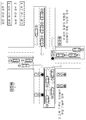
21 is an embodiment in which virtual traffic light information is transmitted through a server at an intersection.
22 is an embodiment in which virtual traffic light information is transmitted through a host vehicle at an intersection.
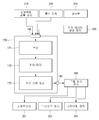
23 is a diagram showing a configuration of a server to which the present invention is applied.
BRIEF DESCRIPTION OF THE DRAWINGS The accompanying drawings, which are included as part of the detailed description to aid in understanding of the present invention, provide embodiments of the present invention, and together with the detailed description, the technical features of the present invention will be described.
이하, 첨부된 도면을 참조하여 본 명세서에 개시된 실시예를 상세히 설명하되, 도면 부호에 관계없이 동일하거나 유사한 구성요소는 동일한 참조 번호를 부여하고 이에 대한 중복되는 설명은 생략하기로 한다. 이하의 설명에서 사용되는 구성요소에 대한 접미사 "모듈" 및 "부"는 명세서 작성의 용이함만이 고려되어 부여되거나 혼용되는 것으로서, 그 자체로 서로 구별되는 의미 또는 역할을 갖는 것은 아니다. 또한, 본 명세서에 개시된 실시예를 설명함에 있어서 관련된 공지 기술에 대한 구체적인 설명이 본 명세서에 개시된 실시예의 요지를 흐릴 수 있다고 판단되는 경우 그 상세한 설명을 생략한다. 또한, 첨부된 도면은 본 명세서에 개시된 실시예를 쉽게 이해할 수 있도록 하기 위한 것일 뿐, 첨부된 도면에 의해 본 명세서에 개시된 기술적 사상이 제한되지 않으며, 본 발명의 사상 및 기술 범위에 포함되는 모든 변경, 균등물 내지 대체물을 포함하는 것으로 이해되어야 한다. Hereinafter, exemplary embodiments disclosed in the present specification will be described in detail with reference to the accompanying drawings, but identical or similar elements are denoted by the same reference numerals regardless of reference numerals, and redundant descriptions thereof will be omitted. The suffixes "module" and "unit" for constituent elements used in the following description are given or used interchangeably in consideration of only the ease of preparation of the specification, and do not have meanings or roles that are distinguished from each other by themselves. In addition, in describing the embodiments disclosed in the present specification, when it is determined that a detailed description of related known technologies may obscure the subject matter of the embodiments disclosed in the present specification, the detailed description thereof will be omitted. In addition, the accompanying drawings are for easy understanding of the embodiments disclosed in the present specification, and the technical idea disclosed in the present specification is not limited by the accompanying drawings, and all changes included in the spirit and scope of the present invention It should be understood to include equivalents or substitutes.
제1, 제2 등과 같이 서수를 포함하는 용어는 다양한 구성요소들을 설명하는데 사용될 수 있지만, 상기 구성요소들은 상기 용어들에 의해 한정되지는 않는다. 상기 용어들은 하나의 구성요소를 다른 구성요소로부터 구별하는 목적으로만 사용된다.Terms including ordinal numbers such as first and second may be used to describe various elements, but the elements are not limited by the terms. The above terms are used only for the purpose of distinguishing one component from another component.
어떤 구성요소가 다른 구성요소에 "연결되어" 있다거나 "접속되어" 있다고 언급된 때에는, 그 다른 구성요소에 직접적으로 연결되어 있거나 또는 접속되어 있을 수도 있지만, 중간에 다른 구성요소가 존재할 수도 있다고 이해되어야 할 것이다. 반면에, 어떤 구성요소가 다른 구성요소에 "직접 연결되어" 있다거나 "직접 접속되어" 있다고 언급된 때에는, 중간에 다른 구성요소가 존재하지 않는 것으로 이해되어야 할 것이다.When a component is referred to as being "connected" or "connected" to another component, it is understood that it may be directly connected or connected to the other component, but other components may exist in the middle. It should be. On the other hand, when a component is referred to as being "directly connected" or "directly connected" to another component, it should be understood that there is no other component in the middle.
단수의 표현은 문맥상 명백하게 다르게 뜻하지 않는 한, 복수의 표현을 포함한다.Singular expressions include plural expressions unless the context clearly indicates otherwise.
본 출원에서, "포함한다" 또는 "가지다" 등의 용어는 명세서상에 기재된 특징, 숫자, 단계, 동작, 구성요소, 부품 또는 이들을 조합한 것이 존재함을 지정하려는 것이지, 하나 또는 그 이상의 다른 특징들이나 숫자, 단계, 동작, 구성요소, 부품 또는 이들을 조합한 것들의 존재 또는 부가 가능성을 미리 배제하지 않는 것으로 이해되어야 한다.In this application, terms such as "comprises" or "have" are intended to designate the presence of features, numbers, steps, actions, components, parts, or combinations thereof described in the specification, but one or more other features. It is to be understood that the presence or addition of elements or numbers, steps, actions, components, parts, or combinations thereof does not preclude in advance.
A. UE 및 5G 네트워크 블록도 예시A. UE and 5G network block diagram example
도 1은 본 명세서에서 제안하는 방법들이 적용될 수 있는 무선 통신 시스템의 블록 구성도를 예시한다.1 illustrates a block diagram of a wireless communication system to which the methods proposed in the present specification can be applied.
도 1을 참조하면, 자율 주행 모듈을 포함하는 장치(자율 주행 장치)를 제1 통신 장치로 정의(도 1의 910)하고, 프로세서(911)가 자율 주행 상세 동작을 수행할 수 있다.Referring to FIG. 1, a device including an autonomous driving module (autonomous driving device) is defined as a first communication device (910 in FIG. 1 ), and a
자율 주행 장치와 통신하는 다른 차량을 포함하는 5G 네트워크를 제2 통신 장치로 정의(도 1의 920)하고, 프로세서(921)가 자율 주행 상세 동작을 수행할 수 있다.A 5G network including other vehicles communicating with the autonomous driving device may be defined as a second communication device (920 in FIG. 1), and the
5G 네트워크가 제 1 통신 장치로, 자율 주행 장치가 제 2 통신 장치로 표현될 수도 있다.The 5G network may be referred to as a first communication device and an autonomous driving device may be referred to as a second communication device.
예를 들어, 상기 제 1 통신 장치 또는 상기 제 2 통신 장치는 기지국, 네트워크 노드, 전송 단말, 수신 단말, 무선 장치, 무선 통신 장치, 자율 주행 장치 등일 수 있다.For example, the first communication device or the second communication device may be a base station, a network node, a transmission terminal, a reception terminal, a wireless device, a wireless communication device, an autonomous driving device, and the like.
예를 들어, 단말 또는 UE(User Equipment)는 차량(vehicle), 휴대폰, 스마트 폰(smart phone), 노트북 컴퓨터(laptop computer), 디지털 방송용 단말기, PDA(personal digital assistants), PMP(portable multimedia player), 네비게이션, 슬레이트 PC(slate PC), 태블릿 PC(tablet PC), 울트라북(ultrabook), 웨어러블 디바이스(wearable device, 예를 들어, 워치형 단말기 (smartwatch), 글래스형 단말기 (smart glass), HMD(head mounted display)) 등을 포함할 수 있다. 예를 들어, HMD는 머리에 착용하는 형태의 디스플레이 장치일 수 있다. 예를 들어, HMD는 VR, AR 또는 MR을 구현하기 위해 사용될 수 있다. 도 1을 참고하면, 제 1 통신 장치(910)와 제 2 통신 장치(920)은 프로세서(processor, 911,921), 메모리(memory, 914,924), 하나 이상의 Tx/Rx RF 모듈(radio frequency module, 915,925), Tx 프로세서(912,922), Rx 프로세서(913,923), 안테나(916,926)를 포함한다. Tx/Rx 모듈은 트랜시버라고도 한다. 각각의 Tx/Rx 모듈(915)는 각각의 안테나(926)을 통해 신호를 전송한다. 프로세서는 앞서 살핀 기능, 과정 및/또는 방법을 구현한다. 프로세서 (921)는 프로그램 코드 및 데이터를 저장하는 메모리 (924)와 관련될 수 있다. 메모리는 컴퓨터 판독 가능 매체로서 지칭될 수 있다. 보다 구체적으로, DL(제 1 통신 장치에서 제 2 통신 장치로의 통신)에서, 전송(TX) 프로세서(912)는 L1 계층(즉, 물리 계층)에 대한 다양한 신호 처리 기능을 구현한다. 수신(RX) 프로세서는 L1(즉, 물리 계층)의 다양한 신호 프로세싱 기능을 구현한다.For example, a terminal or user equipment (UE) is a vehicle, mobile phone, smart phone, laptop computer, digital broadcasting terminal, personal digital assistants (PDA), portable multimedia player (PMP). , Navigation, slate PC, tablet PC, ultrabook, wearable device, for example, smartwatch, smart glass, HMD ( head mounted display)). For example, the HMD may be a display device worn on the head. For example, HMD can be used to implement VR, AR or MR. Referring to FIG. 1, a
UL(제 2 통신 장치에서 제 1 통신 장치로의 통신)은 제 2 통신 장치(920)에서 수신기 기능과 관련하여 기술된 것과 유사한 방식으로 제 1 통신 장치(910)에서 처리된다. 각각의 Tx/Rx 모듈(925)는 각각의 안테나(926)을 통해 신호를 수신한다. 각각의 Tx/Rx 모듈은 RF 반송파 및 정보를 RX 프로세서(923)에 제공한다. 프로세서 (921)는 프로그램 코드 및 데이터를 저장하는 메모리 (924)와 관련될 수 있다. 메모리는 컴퓨터 판독 가능 매체로서 지칭될 수 있다.The UL (communication from the second communication device to the first communication device) is handled in the
B. 무선 통신 시스템에서 신호 송/수신 방법B. Signal transmission/reception method in wireless communication system
도 2는 무선 통신 시스템에서 신호 송/수신 방법의 일례를 나타낸 도이다.2 is a diagram illustrating an example of a method of transmitting/receiving a signal in a wireless communication system.
도 2를 참고하면, UE는 전원이 켜지거나 새로이 셀에 진입한 경우 BS와 동기를 맞추는 등의 초기 셀 탐색(initial cell search) 작업을 수행한다(S201). 이를 위해, UE는 BS로부터 1차 동기 채널(primary synchronization channel, P-SCH) 및 2차 동기 채널(secondary synchronization channel, S-SCH)을 수신하여 BS와 동기를 맞추고, 셀 ID 등의 정보를 획득할 수 있다. LTE 시스템과 NR 시스템에서 P-SCH와 S-SCH는 각각 1차 동기 신호(primary synchronization signal, PSS)와 2차 동기 신호(secondary synchronization signal, SSS)로 불린다. 초기 셀 탐색 후, UE는 BS로부터 물리 브로드캐스트 채널(physical broadcast channel, PBCH)를 수신하여 셀 내 브로드캐스트 정보를 획득할 수 있다. 한편, UE는 초기 셀 탐색 단계에서 하향링크 참조 신호(downlink reference Signal, DL RS)를 수신하여 하향링크 채널 상태를 확인할 수 있다. 초기 셀 탐색을 마친 UE는 물리 하향링크 제어 채널(physical downlink control channel, PDCCH) 및 상기 PDCCH에 실린 정보에 따라 물리 하향링크 공유 채널(physical downlink shared Channel, PDSCH)을 수신함으로써 좀더 구체적인 시스템 정보를 획득할 수 있다(S202).Referring to FIG. 2, when the UE is powered on or newly enters a cell, the UE performs an initial cell search operation such as synchronizing with the BS (S201). To this end, the UE receives a primary synchronization channel (P-SCH) and a secondary synchronization channel (S-SCH) from the BS, synchronizes with the BS, and obtains information such as cell ID. can do. In the LTE system and the NR system, the P-SCH and S-SCH are referred to as a primary synchronization signal (PSS) and a secondary synchronization signal (SSS), respectively. After initial cell discovery, the UE may obtain intra-cell broadcast information by receiving a physical broadcast channel (PBCH) from the BS. Meanwhile, the UE may check a downlink channel state by receiving a downlink reference signal (DL RS) in the initial cell search step. Upon completion of the initial cell search, the UE acquires more detailed system information by receiving a physical downlink control channel (PDCCH) and a physical downlink shared channel (PDSCH) according to the information carried on the PDCCH. It can be done (S202).
한편, BS에 최초로 접속하거나 신호 전송을 위한 무선 자원이 없는 경우 UE는 BS에 대해 임의 접속 과정(random access procedure, RACH)을 수행할 수 있다(단계 S203 내지 단계 S206). 이를 위해, UE는 물리 임의 접속 채널(physical random access Channel, PRACH)을 통해 특정 시퀀스를 프리앰블로서 전송하고(S203 및 S205), PDCCH 및 대응하는 PDSCH를 통해 프리앰블에 대한 임의 접속 응답(random access response, RAR) 메시지를 수신할 수 있다(S204 및 S206). 경쟁 기반 RACH의 경우, 추가적으로 충돌 해결 과정(contention resolution procedure)를 수행할 수 있다.Meanwhile, when accessing the BS for the first time or when there is no radio resource for signal transmission, the UE may perform a random access procedure (RACH) for the BS (steps S203 to S206). To this end, the UE transmits a specific sequence as a preamble through a physical random access channel (PRACH) (S203 and S205), and a random access response to the preamble through the PDCCH and the corresponding PDSCH (random access response, RAR) message can be received (S204 and S206). In the case of contention-based RACH, a contention resolution procedure may be additionally performed.
상술한 바와 같은 과정을 수행한 UE는 이후 일반적인 상향링크/하향링크 신호 전송 과정으로서 PDCCH/PDSCH 수신(S207) 및 물리 상향링크 공유 채널(physical uplink shared Channel, PUSCH)/물리 상향링크 제어 채널(physical uplink control channel, PUCCH) 전송(S208)을 수행할 수 있다. 특히 UE는 PDCCH를 통하여 하향링크 제어 정보(downlink control information, DCI)를 수신한다. UE는 해당 탐색 공간 설정(configuration)들에 따라 서빙 셀 상의 하나 이상의 제어 요소 세트(control element set, CORESET)들에 설정된 모니터링 기회(occasion)들에서 PDCCH 후보(candidate)들의 세트를 모니터링한다. UE가 모니터할 PDCCH 후보들의 세트는 탐색 공간 세트들의 면에서 정의되며, 탐색 공간 세트는 공통 탐색 공간 세트 또는 UE-특정 탐색 공간 세트일 수 있다. CORESET은 1~3개 OFDM 심볼들의 시간 지속기간을 갖는 (물리) 자원 블록들의 세트로 구성된다. 네트워크는 UE가 복수의 CORESET들을 갖도록 설정할 수 있다. UE는 하나 이상의 탐색 공간 세트들 내 PDCCH 후보들을 모니터링한다. 여기서 모니터링이라 함은 탐색 공간 내 PDCCH 후보(들)에 대한 디코딩 시도하는 것을 의미한다. UE가 탐색 공간 내 PDCCH 후보들 중 하나에 대한 디코딩에 성공하면, 상기 UE는 해당 PDCCH 후보에서 PDCCH를 검출했다고 판단하고, 상기 검출된 PDCCH 내 DCI를 기반으로 PDSCH 수신 혹은 PUSCH 전송을 수행한다. PDCCH는 PDSCH 상의 DL 전송들 및 PUSCH 상의 UL 전송들을 스케줄링하는 데 사용될 수 있다. 여기서 PDCCH 상의 DCI는 하향링크 공유 채널과 관련된, 변조(modulation) 및 코딩 포맷과 자원 할당(resource allocation) 정보를 적어도 포함하는 하향링크 배정(assignment)(즉, downlink grant; DL grant), 또는 상향링크 공유 채널과 관련된, 변조 및 코딩 포맷과 자원 할당 정보를 포함하는 상향링크 그랜트(uplink grant; UL grant)를 포함한다.After performing the above-described process, the UE receives PDCCH/PDSCH (S207) and physical uplink shared channel (PUSCH)/physical uplink control channel as a general uplink/downlink signal transmission process. Uplink control channel, PUCCH) transmission (S208) may be performed. In particular, the UE receives downlink control information (DCI) through the PDCCH. The UE monitors the set of PDCCH candidates from monitoring opportunities set in one or more control element sets (CORESET) on the serving cell according to the corresponding search space configurations. The set of PDCCH candidates to be monitored by the UE is defined in terms of search space sets, and the search space set may be a common search space set or a UE-specific search space set. CORESET consists of a set of (physical) resource blocks with a time duration of 1 to 3 OFDM symbols. The network can configure the UE to have multiple CORESETs. The UE monitors PDCCH candidates in one or more search space sets. Here, monitoring means attempting to decode PDCCH candidate(s) in the search space. If the UE succeeds in decoding one of the PDCCH candidates in the discovery space, the UE determines that the PDCCH is detected in the corresponding PDCCH candidate, and performs PDSCH reception or PUSCH transmission based on the detected DCI in the PDCCH. The PDCCH can be used to schedule DL transmissions on the PDSCH and UL transmissions on the PUSCH. Here, the DCI on the PDCCH is a downlink assignment (ie, downlink grant; DL grant) including at least information on modulation and coding format and resource allocation related to a downlink shared channel, or uplink It includes an uplink grant (UL grant) including modulation and coding format and resource allocation information related to the shared channel.
도 2를 참고하여, 5G 통신 시스템에서의 초기 접속(Initial Access, IA) 절차에 대해 추가적으로 살펴본다.With reference to FIG. 2, an initial access (IA) procedure in a 5G communication system will be additionally described.
UE는 SSB에 기반하여 셀 탐색(search), 시스템 정보 획득, 초기 접속을 위한 빔 정렬, DL 측정 등을 수행할 수 있다. SSB는 SS/PBCH(Synchronization Signal/Physical Broadcast channel) 블록과 혼용된다.The UE may perform cell search, system information acquisition, beam alignment for initial access, and DL measurement based on the SSB. SSB is used interchangeably with a Synchronization Signal/Physical Broadcast Channel (SS/PBCH) block.
SSB는 PSS, SSS와 PBCH로 구성된다. SSB는 4개의 연속된 OFDM 심볼들에 구성되며, OFDM 심볼별로 PSS, PBCH, SSS/PBCH 또는 PBCH가 전송된다. PSS와 SSS는 각각 1개의 OFDM 심볼과 127개의 부반송파들로 구성되고, PBCH는 3개의 OFDM 심볼과 576개의 부반송파들로 구성된다.SSB consists of PSS, SSS and PBCH. The SSB is composed of four consecutive OFDM symbols, and PSS, PBCH, SSS/PBCH or PBCH are transmitted for each OFDM symbol. The PSS and SSS are each composed of 1 OFDM symbol and 127 subcarriers, and the PBCH is composed of 3 OFDM symbols and 576 subcarriers.
셀 탐색은 UE가 셀의 시간/주파수 동기를 획득하고, 상기 셀의 셀 ID(Identifier)(예, Physical layer Cell ID, PCI)를 검출하는 과정을 의미한다. PSS는 셀 ID 그룹 내에서 셀 ID를 검출하는데 사용되고, SSS는 셀 ID 그룹을 검출하는데 사용된다. PBCH는 SSB (시간) 인덱스 검출 및 하프-프레임 검출에 사용된다.Cell discovery refers to a process in which the UE acquires time/frequency synchronization of a cell and detects a cell identifier (eg, Physical layer Cell ID, PCI) of the cell. PSS is used to detect a cell ID within a cell ID group, and SSS is used to detect a cell ID group. PBCH is used for SSB (time) index detection and half-frame detection.
336개의 셀 ID 그룹이 존재하고, 셀 ID 그룹 별로 3개의 셀 ID가 존재한다. 총 1008개의 셀 ID가 존재한다. 셀의 셀 ID가 속한 셀 ID 그룹에 관한 정보는 상기 셀의 SSS를 통해 제공/획득되며, 상기 셀 ID 내 336개 셀들 중 상기 셀 ID에 관한 정보는 PSS를 통해 제공/획득된다There are 336 cell ID groups, and 3 cell IDs exist for each cell ID group. There are a total of 1008 cell IDs. Information on the cell ID group to which the cell ID of the cell belongs is provided/obtained through the SSS of the cell, and information on the cell ID among 336 cells in the cell ID is provided/obtained through the PSS.
SSB는 SSB 주기(periodicity)에 맞춰 주기적으로 전송된다. 초기 셀 탐색 시에 UE가 가정하는 SSB 기본 주기는 20ms로 정의된다. 셀 접속 후, SSB 주기는 네트워크(예, BS)에 의해 {5ms, 10ms, 20ms, 40ms, 80ms, 160ms} 중 하나로 설정될 수 있다.SSB is transmitted periodically according to the SSB period. The SSB basic period assumed by the UE during initial cell search is defined as 20 ms. After cell access, the SSB period may be set to one of {5ms, 10ms, 20ms, 40ms, 80ms, 160ms} by the network (eg, BS).
다음으로, 시스템 정보 (system information; SI) 획득에 대해 살펴본다.Next, it looks at obtaining system information (SI).
SI는 마스터 정보 블록(master information block, MIB)와 복수의 시스템 정보 블록(system information block, SIB)들로 나눠진다. MIB 외의 SI는 RMSI(Remaining Minimum System Information)으로 지칭될 수 있다. MIB는 SIB1(SystemInformationBlock1)을 나르는 PDSCH를 스케줄링하는 PDCCH의 모니터링을 위한 정보/파라미터를 포함하며 SSB의 PBCH를 통해 BS에 의해 전송된다. SIB1은 나머지 SIB들(이하, SIBx, x는 2 이상의 정수)의 가용성(availability) 및 스케줄링(예, 전송 주기, SI-윈도우 크기)과 관련된 정보를 포함한다. SIBx는 SI 메시지에 포함되며 PDSCH를 통해 전송된다. 각각의 SI 메시지는 주기적으로 발생하는 시간 윈도우(즉, SI-윈도우) 내에서 전송된다.SI is divided into a master information block (MIB) and a plurality of system information blocks (SIB). SI other than MIB may be referred to as RMSI (Remaining Minimum System Information). The MIB includes information/parameters for monitoring the PDCCH that schedules the PDSCH carrying System Information Block1 (SIB1), and is transmitted by the BS through the PBCH of the SSB. SIB1 includes information related to availability and scheduling (eg, transmission period, SI-window size) of the remaining SIBs (hereinafter, SIBx, x is an integer greater than or equal to 2). SIBx is included in the SI message and is transmitted through the PDSCH. Each SI message is transmitted within a periodic time window (ie, SI-window).
도 2를 참고하여, 5G 통신 시스템에서의 임의 접속(Random Access, RA) 과정에 대해 추가적으로 살펴본다.Referring to FIG. 2, a random access (RA) process in a 5G communication system will be additionally described.
임의 접속 과정은 다양한 용도로 사용된다. 예를 들어, 임의 접속 과정은 네트워크 초기 접속, 핸드오버, UE-트리거드(triggered) UL 데이터 전송에 사용될 수 있다. UE는 임의 접속 과정을 통해 UL 동기와 UL 전송 자원을 획득할 수 있다. 임의 접속 과정은 경쟁 기반(contention-based) 임의 접속 과정과 경쟁 프리(contention free) 임의 접속 과정으로 구분된다. 경쟁 기반의 임의 접속 과정에 대한 구체적인 절차는 아래와 같다.The random access process is used for various purposes. For example, the random access procedure may be used for initial network access, handover, and UE-triggered UL data transmission. The UE may acquire UL synchronization and UL transmission resources through a random access process. The random access process is divided into a contention-based random access process and a contention free random access process. The detailed procedure for the contention-based random access process is as follows.
UE가 UL에서 임의 접속 과정의 Msg1로서 임의 접속 프리앰블을 PRACH를 통해 전송할 수 있다. 서로 다른 두 길이를 가지는 임의 접속 프리앰블 시퀀스들이 지원된다. 긴 시퀀스 길이 839는 1.25 및 5 kHz의 부반송파 간격(subcarrier spacing)에 대해 적용되며, 짧은 시퀀스 길이 139는 15, 30, 60 및 120 kHz의 부반송파 간격에 대해 적용된다.The UE may transmit the random access preamble as Msg1 of the random access procedure in the UL through the PRACH. Random access preamble sequences having two different lengths are supported. The long sequence length 839 is applied for subcarrier spacing of 1.25 and 5 kHz, and the short sequence length 139 is applied for subcarrier spacing of 15, 30, 60 and 120 kHz.
BS가 UE로부터 임의 접속 프리앰블을 수신하면, BS는 임의 접속 응답(random access response, RAR) 메시지(Msg2)를 상기 UE에게 전송한다. RAR을 나르는 PDSCH를 스케줄링하는 PDCCH는 임의 접속(random access, RA) 무선 네트워크 임시 식별자(radio network temporary identifier, RNTI)(RA-RNTI)로 CRC 마스킹되어 전송된다. RA-RNTI로 마스킹된 PDCCH를 검출한 UE는 상기 PDCCH가 나르는 DCI가 스케줄링하는 PDSCH로부터 RAR을 수신할 수 있다. UE는 자신이 전송한 프리앰블, 즉, Msg1에 대한 임의 접속 응답 정보가 상기 RAR 내에 있는지 확인한다. 자신이 전송한 Msg1에 대한 임의 접속 정보가 존재하는지 여부는 상기 UE가 전송한 프리앰블에 대한 임의 접속 프리앰블 ID가 존재하는지 여부에 의해 판단될 수 있다. Msg1에 대한 응답이 없으면, UE는 전력 램핑(power ramping)을 수행하면서 RACH 프리앰블을 소정의 횟수 이내에서 재전송할 수 있다. UE는 가장 최근의 경로 손실 및 전력 램핑 카운터를 기반으로 프리앰블의 재전송에 대한 PRACH 전송 전력을 계산한다.When the BS receives the random access preamble from the UE, the BS transmits a random access response (RAR) message (Msg2) to the UE. The PDCCH for scheduling the PDSCH carrying RAR is transmitted after being CRC masked with a random access (RA) radio network temporary identifier (RNTI) (RA-RNTI). A UE that detects a PDCCH masked with RA-RNTI may receive an RAR from a PDSCH scheduled by a DCI carried by the PDCCH. The UE checks whether the preamble transmitted by the UE, that is, random access response information for Msg1, is in the RAR. Whether there is random access information for Msg1 transmitted by the UE may be determined based on whether there is a random access preamble ID for the preamble transmitted by the UE. If there is no response to Msg1, the UE may retransmit the RACH preamble within a predetermined number of times while performing power ramping. The UE calculates the PRACH transmission power for retransmission of the preamble based on the most recent path loss and power ramping counter.
상기 UE는 임의 접속 응답 정보를 기반으로 상향링크 공유 채널 상에서 UL 전송을 임의 접속 과정의 Msg3로서 전송할 수 있다. Msg3은 RRC 연결 요청 및 UE 식별자를 포함할 수 있다. Msg3에 대한 응답으로서, 네트워크는 Msg4를 전송할 수 있으며, 이는 DL 상에서의 경쟁 해결 메시지로 취급될 수 있다. Msg4를 수신함으로써, UE는 RRC 연결된 상태에 진입할 수 있다.The UE may transmit UL transmission as Msg3 in a random access procedure on an uplink shared channel based on random access response information. Msg3 may include an RRC connection request and a UE identifier. In response to Msg3, the network may send Msg4, which may be treated as a contention resolution message on the DL. By receiving Msg4, the UE can enter the RRC connected state.
C. 5G 통신 시스템의 빔 관리(Beam Management, BM) 절차C. Beam Management (BM) procedure of 5G communication system
BM 과정은 (1) SSB 또는 CSI-RS를 이용하는 DL BM 과정과, (2) SRS(sounding reference signal)을 이용하는 UL BM 과정으로 구분될 수 있다. 또한, 각 BM 과정은 Tx 빔을 결정하기 위한 Tx 빔 스위핑과 Rx 빔을 결정하기 위한 Rx 빔 스위핑을 포함할 수 있다.The BM process may be divided into (1) a DL BM process using SSB or CSI-RS and (2) a UL BM process using a sounding reference signal (SRS). In addition, each BM process may include Tx beam sweeping to determine the Tx beam and Rx beam sweeping to determine the Rx beam.
SSB를 이용한 DL BM 과정에 대해 살펴본다.Let's look at the DL BM process using SSB.
SSB를 이용한 빔 보고(beam report)에 대한 설정은 RRC_CONNECTED에서 채널 상태 정보(channel state information, CSI)/빔 설정 시에 수행된다.Configuration for beam report using SSB is performed when channel state information (CSI)/beam is configured in RRC_CONNECTED.
- UE는 BM을 위해 사용되는 SSB 자원들에 대한 CSI-SSB-ResourceSetList를 포함하는 CSI-ResourceConfig IE를 BS로부터 수신한다. RRC 파라미터 csi-SSB-ResourceSetList는 하나의 자원 세트에서 빔 관리 및 보고을 위해 사용되는 SSB 자원들의 리스트를 나타낸다. 여기서, SSB 자원 세트는 {SSBx1, SSBx2, SSBx3, SSBx4, ??}으로 설정될 수 있다. SSB 인덱스는 0부터 63까지 정의될 수 있다.-The UE receives a CSI-ResourceConfig IE including CSI-SSB-ResourceSetList for SSB resources used for BM from BS. The RRC parameter csi-SSB-ResourceSetList represents a list of SSB resources used for beam management and reporting in one resource set. Here, the SSB resource set may be set to {SSBx1, SSBx2, SSBx3, SSBx4, ??}. The SSB index may be defined from 0 to 63.
- UE는 상기 CSI-SSB-ResourceSetList에 기초하여 SSB 자원들 상의 신호들을 상기 BS로부터 수신한다.-The UE receives signals on SSB resources from the BS based on the CSI-SSB-ResourceSetList.
- SSBRI 및 참조 신호 수신 전력(reference signal received power, RSRP)에 대한 보고와 관련된 CSI-RS reportConfig가 설정된 경우, 상기 UE는 최선(best) SSBRI 및 이에 대응하는 RSRP를 BS에게 보고한다. 예를 들어, 상기 CSI-RS reportConfig IE의 reportQuantity가 'ssb-Index-RSRP'로 설정된 경우, UE는 BS으로 최선 SSBRI 및 이에 대응하는 RSRP를 보고한다.-When the CSI-RS reportConfig related to reporting on SSBRI and reference signal received power (RSRP) is configured, the UE reports the best SSBRI and RSRP corresponding thereto to the BS. For example, when the reportQuantity of the CSI-RS reportConfig IE is set to'ssb-Index-RSRP', the UE reports the best SSBRI and corresponding RSRP to the BS.
UE는 SSB와 동일한 OFDM 심볼(들)에 CSI-RS 자원이 설정되고, 'QCL-TypeD'가 적용 가능한 경우, 상기 UE는 CSI-RS와 SSB가 'QCL-TypeD' 관점에서 유사 동일 위치된(quasi co-located, QCL) 것으로 가정할 수 있다. 여기서, QCL-TypeD는 공간(spatial) Rx 파라미터 관점에서 안테나 포트들 간에 QCL되어 있음을 의미할 수 있다. UE가 QCL-TypeD 관계에 있는 복수의 DL 안테나 포트들의 신호들을 수신 시에는 동일한 수신 빔을 적용해도 무방하다.When the UE is configured with CSI-RS resources in the same OFDM symbol(s) as the SSB, and'QCL-TypeD' is applicable, the UE is similarly co-located in terms of'QCL-TypeD' where the CSI-RS and SSB are ( quasi co-located, QCL). Here, QCL-TypeD may mean that QCL is performed between antenna ports in terms of a spatial Rx parameter. When the UE receives signals from a plurality of DL antenna ports in a QCL-TypeD relationship, the same reception beam may be applied.
다음으로, CSI-RS를 이용한 DL BM 과정에 대해 살펴본다.Next, a DL BM process using CSI-RS will be described.
CSI-RS를 이용한 UE의 Rx 빔 결정(또는 정제(refinement)) 과정과 BS의 Tx 빔 스위핑 과정에 대해 차례대로 살펴본다. UE의 Rx 빔 결정 과정은 반복 파라미터가 'ON'으로 설정되며, BS의 Tx 빔 스위핑 과정은 반복 파라미터가 'OFF'로 설정된다.The Rx beam determination (or refinement) process of the UE using CSI-RS and the Tx beam sweeping process of the BS are sequentially described. In the UE's Rx beam determination process, the repetition parameter is set to'ON', and the BS's Tx beam sweeping process is set to'OFF'.
먼저, UE의 Rx 빔 결정 과정에 대해 살펴본다.First, a process of determining the Rx beam of the UE will be described.
- UE는 'repetition'에 관한 RRC 파라미터를 포함하는 NZP CSI-RS resource set IE를 RRC 시그널링을 통해 BS로부터 수신한다. 여기서, 상기 RRC 파라미터 'repetition'이 'ON'으로 세팅되어 있다.-The UE receives the NZP CSI-RS resource set IE including the RRC parameter for'repetition' from the BS through RRC signaling. Here, the RRC parameter'repetition' is set to'ON'.
- UE는 상기 RRC 파라미터 'repetition'이 'ON'으로 설정된 CSI-RS 자원 세트 내의 자원(들) 상에서의 신호들을 BS의 동일 Tx 빔(또는 DL 공간 도메인 전송 필터)을 통해 서로 다른 OFDM 심볼에서 반복 수신한다. -The UE repeats signals on the resource(s) in the CSI-RS resource set in which the RRC parameter'repetition' is set to'ON' in different OFDM symbols through the same Tx beam (or DL spatial domain transmission filter) of the BS Receive.
- UE는 자신의 Rx 빔을 결정한다.-The UE determines its own Rx beam.
- UE는 CSI 보고를 생략한다. 즉, UE는 상가 RRC 파라미터 'repetition'이 'ON'으로 설정된 경우, CSI 보고를 생략할 수 있다. -The UE omits CSI reporting. That is, the UE may omit CSI reporting when the shopping price RRC parameter'repetition' is set to'ON'.
다음으로, BS의 Tx 빔 결정 과정에 대해 살펴본다.Next, a process of determining the Tx beam of the BS will be described.
- UE는 'repetition'에 관한 RRC 파라미터를 포함하는 NZP CSI-RS resource set IE를 RRC 시그널링을 통해 BS로부터 수신한다. 여기서, 상기 RRC 파라미터 'repetition'이 'OFF'로 세팅되어 있으며, BS의 Tx 빔 스위핑 과정과 관련된다.-The UE receives the NZP CSI-RS resource set IE including the RRC parameter for'repetition' from the BS through RRC signaling. Here, the RRC parameter'repetition' is set to'OFF', and is related to the Tx beam sweeping process of the BS.
- UE는 상기 RRC 파라미터 'repetition'이 'OFF'로 설정된 CSI-RS 자원 세트 내의 자원들 상에서의 신호들을 BS의 서로 다른 Tx 빔(DL 공간 도메인 전송 필터)을 통해 수신한다. -The UE receives signals on resources in the CSI-RS resource set in which the RRC parameter'repetition' is set to'OFF' through different Tx beams (DL spatial domain transmission filters) of the BS.
- UE는 최상의(best) 빔을 선택(또는 결정)한다.-The UE selects (or determines) the best beam.
- UE는 선택된 빔에 대한 ID(예, CRI) 및 관련 품질 정보(예, RSRP)를 BS으로 보고한다. 즉, UE는 CSI-RS가 BM을 위해 전송되는 경우 CRI와 이에 대한 RSRP를 BS으로 보고한다.-The UE reports the ID (eg, CRI) and related quality information (eg, RSRP) for the selected beam to the BS. That is, when the CSI-RS is transmitted for the BM, the UE reports the CRI and the RSRP for it to the BS.
다음으로, SRS를 이용한 UL BM 과정에 대해 살펴본다.Next, a UL BM process using SRS will be described.
- UE는 'beam management'로 설정된 (RRC 파라미터) 용도 파라미터를 포함하는 RRC 시그널링(예, SRS-Config IE)를 BS로부터 수신한다. SRS-Config IE는 SRS 전송 설정을 위해 사용된다. SRS-Config IE는 SRS-Resources의 리스트와 SRS-ResourceSet들의 리스트를 포함한다. 각 SRS 자원 세트는 SRS-resource들의 세트를 의미한다.-The UE receives RRC signaling (eg, SRS-Config IE) including a usage parameter set to'beam management' (RRC parameter) from the BS. SRS-Config IE is used for SRS transmission configuration. The SRS-Config IE includes a list of SRS-Resources and a list of SRS-ResourceSets. Each SRS resource set means a set of SRS-resources.
- UE는 상기 SRS-Config IE에 포함된 SRS-SpatialRelation Info에 기초하여 전송할 SRS 자원에 대한 Tx 빔포밍을 결정한다. 여기서, SRS-SpatialRelation Info는 SRS 자원별로 설정되고, SRS 자원별로 SSB, CSI-RS 또는 SRS에서 사용되는 빔포밍과 동일한 빔포밍을 적용할지를 나타낸다.-The UE determines Tx beamforming for the SRS resource to be transmitted based on the SRS-SpatialRelation Info included in the SRS-Config IE. Here, the SRS-SpatialRelation Info is set for each SRS resource, and indicates whether to apply the same beamforming as the beamforming used in SSB, CSI-RS or SRS for each SRS resource.
- 만약 SRS 자원에 SRS-SpatialRelationInfo가 설정되면 SSB, CSI-RS 또는 SRS에서 사용되는 빔포밍과 동일한 빔포밍을 적용하여 전송한다. 하지만, SRS 자원에 SRS-SpatialRelationInfo가 설정되지 않으면, 상기 UE는 임의로 Tx 빔포밍을 결정하여 결정된 Tx 빔포밍을 통해 SRS를 전송한다.-If SRS-SpatialRelationInfo is set in the SRS resource, the same beamforming as the beamforming used in SSB, CSI-RS or SRS is applied and transmitted. However, if SRS-SpatialRelationInfo is not set in the SRS resource, the UE randomly determines Tx beamforming and transmits the SRS through the determined Tx beamforming.
다음으로, 빔 실패 복구(beam failure recovery, BFR) 과정에 대해 살펴본다.Next, a beam failure recovery (BFR) process will be described.
빔포밍된 시스템에서, RLF(Radio Link Failure)는 UE의 회전(rotation), 이동(movement) 또는 빔포밍 블로키지(blockage)로 인해 자주 발생할 수 있다. 따라서, 잦은 RLF가 발생하는 것을 방지하기 위해 BFR이 NR에서 지원된다. BFR은 무선 링크 실패 복구 과정과 유사하고, UE가 새로운 후보 빔(들)을 아는 경우에 지원될 수 있다. 빔 실패 검출을 위해, BS는 UE에게 빔 실패 검출 참조 신호들을 설정하고, 상기 UE는 상기 UE의 물리 계층으로부터의 빔 실패 지시(indication)들의 횟수가 BS의 RRC 시그널링에 의해 설정된 기간(period) 내에 RRC 시그널링에 의해 설정된 임계치(threshold)에 이르면(reach), 빔 실패를 선언(declare)한다. 빔 실패가 검출된 후, 상기 UE는 PCell 상의 임의 접속 과정을 개시(initiate)함으로써 빔 실패 복구를 트리거하고; 적절한(suitable) 빔을 선택하여 빔 실패 복구를 수행한다(BS가 어떤(certain) 빔들에 대해 전용 임의 접속 자원들을 제공한 경우, 이들이 상기 UE에 의해 우선화된다). 상기 임의 접속 절차의 완료(completion) 시, 빔 실패 복구가 완료된 것으로 간주된다.In a beamformed system, Radio Link Failure (RLF) may frequently occur due to rotation, movement, or beamforming blockage of the UE. Therefore, BFR is supported in NR to prevent frequent RLF from occurring. BFR is similar to the radio link failure recovery process, and may be supported when the UE knows the new candidate beam(s). For beam failure detection, the BS sets beam failure detection reference signals to the UE, and the UE sets the number of beam failure indications from the physical layer of the UE within a period set by RRC signaling of the BS. When a threshold set by RRC signaling is reached, a beam failure is declared. After the beam failure is detected, the UE triggers beam failure recovery by initiating a random access procedure on the PCell; Beam failure recovery is performed by selecting a suitable beam (if the BS has provided dedicated random access resources for certain beams, these are prioritized by the UE). Upon completion of the random access procedure, it is considered that the beam failure recovery is complete.
D. URLLC (Ultra-Reliable and Low Latency Communication)D. URLLC (Ultra-Reliable and Low Latency Communication)
NR에서 정의하는 URLLC 전송은 (1) 상대적으로 낮은 트래픽 크기, (2) 상대적으로 낮은 도착 레이트(low arrival rate), (3) 극도의 낮은 레이턴시 요구사항(requirement)(예, 0.5, 1ms), (4) 상대적으로 짧은 전송 지속기간(duration)(예, 2 OFDM symbols), (5) 긴급한 서비스/메시지 등에 대한 전송을 의미할 수 있다. UL의 경우, 보다 엄격(stringent)한 레이턴시 요구 사항(latency requirement)을 만족시키기 위해 특정 타입의 트래픽(예컨대, URLLC)에 대한 전송이 앞서서 스케줄링된 다른 전송(예컨대, eMBB)과 다중화(multiplexing)되어야 할 필요가 있다. 이와 관련하여 한 가지 방안으로, 앞서 스케줄링 받은 UE에게 특정 자원에 대해서 프리엠션(preemption)될 것이라는 정보를 주고, 해당 자원을 URLLC UE가 UL 전송에 사용하도록 한다.URLLC transmission as defined by NR is (1) relatively low traffic size, (2) relatively low arrival rate, (3) extremely low latency requirement (e.g. 0.5, 1ms), (4) It may mean a relatively short transmission duration (eg, 2 OFDM symbols), and (5) transmission of an urgent service/message. In the case of UL, transmission for a specific type of traffic (e.g., URLLC) must be multiplexed with another transmission (e.g., eMBB) scheduled in advance in order to satisfy a more stringent latency requirement. Needs to be. In this regard, as one method, information that a specific resource will be preempted is given to the previously scheduled UE, and the URLLC UE uses the corresponding resource for UL transmission.
NR의 경우, eMBB와 URLLC 사이의 동적 자원 공유(sharing)이 지원된다. eMBB와 URLLC 서비스들은 비-중첩(non-overlapping) 시간/주파수 자원들 상에서 스케줄될 수 있으며, URLLC 전송은 진행 중인(ongoing) eMBB 트래픽에 대해 스케줄된 자원들에서 발생할 수 있다. eMBB UE는 해당 UE의 PDSCH 전송이 부분적으로 펑처링(puncturing)되었는지 여부를 알 수 없을 수 있고, 손상된 코딩된 비트(corrupted coded bit)들로 인해 UE는 PDSCH를 디코딩하지 못할 수 있다. 이 점을 고려하여, NR에서는 프리엠션 지시(preemption indication)을 제공한다. 상기 프리엠션 지시(preemption indication)는 중단된 전송 지시(interrupted transmission indication)으로 지칭될 수도 있다.In the case of NR, dynamic resource sharing between eMBB and URLLC is supported. eMBB and URLLC services can be scheduled on non-overlapping time/frequency resources, and URLLC transmission can occur on resources scheduled for ongoing eMBB traffic. The eMBB UE may not be able to know whether the PDSCH transmission of the corresponding UE is partially punctured, and the UE may not be able to decode the PDSCH due to corrupted coded bits. In consideration of this point, the NR provides a preemption indication. The preemption indication may be referred to as an interrupted transmission indication.
프리엠션 지시와 관련하여, UE는 BS로부터의 RRC 시그널링을 통해 DownlinkPreemption IE를 수신한다. UE가 DownlinkPreemption IE를 제공받으면, DCI 포맷 2_1을 운반(convey)하는 PDCCH의 모니터링을 위해 상기 UE는 DownlinkPreemption IE 내 파라미터 int-RNTI에 의해 제공된 INT-RNTI를 가지고 설정된다. 상기 UE는 추가적으로 servingCellID에 의해 제공되는 서빙 셀 인덱스들의 세트를 포함하는 INT-ConfigurationPerServing Cell에 의해 서빙 셀들의 세트와 positionInDCI에 의해 DCI 포맷 2_1 내 필드들을 위한 위치들의 해당 세트를 가지고 설정되고, dci-PayloadSize에 의해 DCI 포맷 2_1을 위한 정보 페이로드 크기를 가지고 설졍되며, timeFrequencySect에 의한 시간-주파수 자원들의 지시 입도(granularity)를 가지고 설정된다.Regarding the preemption indication, the UE receives the DownlinkPreemption IE through RRC signaling from the BS. When the UE is provided with the DownlinkPreemption IE, the UE is configured with the INT-RNTI provided by the parameter int-RNTI in the DownlinkPreemption IE for monitoring of the PDCCH carrying DCI format 2_1. The UE is additionally configured with a set of serving cells by INT-ConfigurationPerServing Cell including a set of serving cell indexes provided by servingCellID and a corresponding set of positions for fields in DCI format 2_1 by positionInDCI, and dci-PayloadSize It is set with the information payload size for DCI format 2_1 by and is set with the indication granularity of time-frequency resources by timeFrequencySect.
상기 UE는 상기 DownlinkPreemption IE에 기초하여 DCI 포맷 2_1을 상기 BS로부터 수신한다.The UE receives DCI format 2_1 from the BS based on the DownlinkPreemption IE.
UE가 서빙 셀들의 설정된 세트 내 서빙 셀에 대한 DCI 포맷 2_1을 검출하면, 상기 UE는 상기 DCI 포맷 2_1이 속한 모니터링 기간의 바로 앞(last) 모니터링 기간의 PRB들의 세트 및 심볼들의 세트 중 상기 DCI 포맷 2_1에 의해 지시되는 PRB들 및 심볼들 내에는 상기 UE로의 아무런 전송도 없다고 가정할 수 있다. 예를 들어, UE는 프리엠션에 의해 지시된 시간-주파수 자원 내 신호는 자신에게 스케줄링된 DL 전송이 아니라고 보고 나머지 자원 영역에서 수신된 신호들을 기반으로 데이터를 디코딩한다.When the UE detects the DCI format 2_1 for the serving cell in the set set of serving cells, the UE is the DCI format among the set of PRBs and symbols of the monitoring period immediately preceding the monitoring period to which the DCI format 2_1 belongs. It may be assumed that there is no transmission to the UE in the PRBs and symbols indicated by 2_1. For example, the UE considers that the signal in the time-frequency resource indicated by the preemption is not a DL transmission scheduled to it, and decodes data based on the signals received in the remaining resource regions.
E. mMTC (massive MTC)E. mMTC (massive MTC)
mMTC(massive Machine Type Communication)은 많은 수의 UE와 동시에 통신하는 초연결 서비스를 지원하기 위한 5G의 시나리오 중 하나이다. 이 환경에서, UE는 굉장히 낮은 전송 속도와 이동성을 가지고 간헐적으로 통신하게 된다. 따라서, mMTC는 UE를 얼마나 낮은 비용으로 오랫동안 구동할 수 있는지를 주요 목표로 하고 있다. mMTC 기술과 관련하여 3GPP에서는 MTC와 NB(NarrowBand)-IoT를 다루고 있다.Massive Machine Type Communication (mMTC) is one of 5G scenarios to support hyper-connection services that communicate with a large number of UEs at the same time. In this environment, the UE communicates intermittently with a very low transmission rate and mobility. Therefore, mMTC aims at how long the UE can be driven at a low cost. Regarding mMTC technology, 3GPP deals with MTC and NB (NarrowBand)-IoT.
mMTC 기술은 PDCCH, PUCCH, PDSCH(physical downlink shared channel), PUSCH 등의 반복 전송, 주파수 호핑(hopping), 리튜닝(retuning), 가드 구간(guard period) 등의 특징을 가진다.The mMTC technology has features such as repetitive transmission of PDCCH, PUCCH, physical downlink shared channel (PDSCH), and PUSCH, frequency hopping, retuning, and guard period.
즉, 특정 정보를 포함하는 PUSCH(또는 PUCCH(특히, long PUCCH) 또는 PRACH) 및 특정 정보에 대한 응답을 포함하는 PDSCH(또는 PDCCH)가 반복 전송된다. 반복 전송은 주파수 호핑(frequency hopping)을 통해 수행되며, 반복 전송을 위해, 제 1 주파수 자원에서 제 2 주파수 자원으로 가드 구간(guard period)에서 (RF) 리튜닝(retuning)이 수행되고, 특정 정보 및 특정 정보에 대한 응답은 협대역(narrowband)(ex. 6 RB (resource block) or 1 RB)를 통해 송/수신될 수 있다.That is, a PUSCH (or PUCCH (especially, long PUCCH) or PRACH) including specific information and a PDSCH (or PDCCH) including a response to specific information are repeatedly transmitted. Repetitive transmission is performed through frequency hopping, and for repetitive transmission, (RF) retuning is performed in a guard period from a first frequency resource to a second frequency resource, and specific information And a response to specific information may be transmitted/received through a narrowband (ex. 6 resource block (RB) or 1 RB).
F. 5G 통신을 이용한 자율 주행 차량 간 기본 동작F. Basic operation between autonomous vehicles using 5G communication
도 3은 5G 통신 시스템에서 자율 주행 차량과 5G 네트워크의 기본 동작의 일 예를 나타낸다.3 shows an example of a basic operation of an autonomous vehicle and a 5G network in a 5G communication system.
자율 주행 차량(Autonomous Vehicle)은 특정 정보 전송을 5G 네트워크로 전송한다(S1). 상기 특정 정보는 자율 주행 관련 정보를 포함할 수 있다. 그리고, 상기 5G 네트워크는 차량의 원격 제어 여부를 결정할 수 있다(S2). 여기서, 상기 5G 네트워크는 자율 주행 관련 원격 제어를 수행하는 서버 또는 모듈을 포함할 수 있다. 그리고, 상기 5G 네트워크는 원격 제어와 관련된 정보(또는 신호)를 상기 자율 주행 차량으로 전송할 수 있다(S3).The autonomous vehicle transmits specific information transmission to the 5G network (S1). The specific information may include autonomous driving related information. In addition, the 5G network may determine whether to remotely control the vehicle (S2). Here, the 5G network may include a server or module that performs remote control related to autonomous driving. In addition, the 5G network may transmit information (or signals) related to remote control to the autonomous vehicle (S3).
G. 5G 통신 시스템에서 자율 주행 차량과 5G 네트워크 간의 응용 동작G. Application operation between autonomous vehicle and 5G network in 5G communication system
이하, 도 1 및 도 2와 앞서 살핀 무선 통신 기술(BM 절차, URLLC, Mmtc 등)을 참고하여 5G 통신을 이용한 자율 주행 차량의 동작에 대해 보다 구체적으로 살펴본다.Hereinafter, the operation of an autonomous vehicle using 5G communication will be described in more detail with reference to Salpin wireless communication technology (BM procedure, URLLC, Mmtc, etc.) prior to FIGS. 1 and 2.
먼저, 후술할 본 발명에서 제안하는 방법과 5G 통신의 eMBB 기술이 적용되는 응용 동작의 기본 절차에 대해 설명한다.First, a basic procedure of an application operation to which the eMBB technology of 5G communication is applied and the method proposed by the present invention to be described later will be described.
도 3의 S1 단계 및 S3 단계와 같이, 자율 주행 차량이 5G 네트워크와 신호, 정보 등을 송/수신하기 위해, 자율 주행 차량은 도 3의 S1 단계 이전에 5G 네트워크와 초기 접속(initial access) 절차 및 임의 접속(random access) 절차를 수행한다.As in steps S1 and S3 of FIG. 3, in order for the autonomous vehicle to transmit/receive the 5G network, signals, information, etc., the autonomous vehicle is an initial access procedure with the 5G network prior to step S1 of FIG. 3. And a random access procedure.
보다 구체적으로, 자율 주행 차량은 DL 동기 및 시스템 정보를 획득하기 위해 SSB에 기초하여 5G 네트워크와 초기 접속 절차를 수행한다. 상기 초기 접속 절차 과정에서 빔 관리(beam management, BM) 과정, 빔 실패 복구(beam failure recovery) 과정이 추가될 수 있으며, 자율 주행 차량이 5G 네트워크로부터 신호를 수신하는 과정에서 QCL(quasi-co location) 관계가 추가될 수 있다.More specifically, the autonomous vehicle performs an initial access procedure with the 5G network based on the SSB in order to obtain DL synchronization and system information. In the initial access procedure, a beam management (BM) process and a beam failure recovery process may be added. In the process of receiving a signal from the 5G network by an autonomous vehicle, a quasi-co location (QCL) ) Relationships can be added.
또한, 자율 주행 차량은 UL 동기 획득 및/또는 UL 전송을 위해 5G 네트워크와 임의 접속 절차를 수행한다.그리고, 상기 5G 네트워크는 상기 자율 주행 차량으로 특정 정보의 전송을 스케쥴링하기 위한 UL grant를 전송할 수 있다. 따라서, 상기 자율 주행 차량은 상기 UL grant에 기초하여 상기 5G 네트워크로 특정 정보를 전송한다. 그리고, 상기 5G 네트워크는 상기 자율 주행 차량으로 상기 특정 정보에 대한 5G 프로세싱 결과의 전송을 스케쥴링하기 위한 DL grant를 전송한다. 따라서, 상기 5G 네트워크는 상기 DL grant에 기초하여 상기 자율 주행 차량으로 원격 제어와 관련된 정보(또는 신호)를 전송할 수 있다.In addition, the autonomous vehicle performs a random access procedure with a 5G network to obtain UL synchronization and/or transmit UL. And, the 5G network may transmit a UL grant for scheduling transmission of specific information to the autonomous vehicle. have. Accordingly, the autonomous vehicle transmits specific information to the 5G network based on the UL grant. In addition, the 5G network transmits a DL grant for scheduling transmission of a 5G processing result for the specific information to the autonomous vehicle. Accordingly, the 5G network may transmit information (or signals) related to remote control to the autonomous vehicle based on the DL grant.
다음으로, 후술할 본 발명에서 제안하는 방법과 5G 통신의 URLLC 기술이 적용되는 응용 동작의 기본 절차에 대해 설명한다.Next, a basic procedure of an application operation to which the URLLC technology of 5G communication is applied and the method proposed by the present invention to be described later will be described.
앞서 설명한 바와 같이, 자율 주행 차량은 5G 네트워크와 초기 접속 절차 및/또는 임의 접속 절차를 수행한 후, 자율 주행 차량은 5G 네트워크로부터 DownlinkPreemption IE를 수신할 수 있다. 그리고, 자율 주행 차량은 DownlinkPreemption IE에 기초하여 프리엠션 지시(pre-emption indication)을 포함하는 DCI 포맷 2_1을 5G 네트워크로부터 수신한다. 그리고, 자율 주행 차량은 프리엠션 지시(pre-emption indication)에 의해 지시된 자원(PRB 및/또는 OFDM 심볼)에서 eMBB data의 수신을 수행(또는 기대 또는 가정)하지 않는다. 이후, 자율 주행 차량은 특정 정보를 전송할 필요가 있는 경우 5G 네트워크로부터 UL grant를 수신할 수 있다.As described above, after the autonomous vehicle performs an initial access procedure and/or a random access procedure with the 5G network, the autonomous vehicle may receive a DownlinkPreemption IE from the 5G network. In addition, the autonomous vehicle receives DCI format 2_1 including a pre-emption indication from the 5G network based on the DownlinkPreemption IE. And, the autonomous vehicle does not perform (or expect or assume) the reception of eMBB data in the resource (PRB and/or OFDM symbol) indicated by the pre-emption indication. Thereafter, the autonomous vehicle may receive a UL grant from the 5G network when it is necessary to transmit specific information.
다음으로, 후술할 본 발명에서 제안하는 방법과 5G 통신의 mMTC 기술이 적용되는 응용 동작의 기본 절차에 대해 설명한다.Next, the method proposed by the present invention to be described later and the basic procedure of the application operation to which the mMTC technology of 5G communication is applied will be described.
도 3의 단계들 중 mMTC 기술의 적용으로 달라지는 부분 위주로 설명하기로 한다.Among the steps of FIG. 3, a description will be made focusing on the parts that are changed by the application of the mMTC technology.
도 3의 S1 단계에서, 자율 주행 차량은 특정 정보를 5G 네트워크로 전송하기 위해 5G 네트워크로부터 UL grant를 수신한다. 여기서, 상기 UL grant는 상기 특정 정보의 전송에 대한 반복 횟수에 대한 정보를 포함하고, 상기 특정 정보는 상기 반복 횟수에 대한 정보에 기초하여 반복하여 전송될 수 있다. 즉, 상기 자율 주행 차량은 상기 UL grant에 기초하여 특정 정보를 5G 네트워크로 전송한다. 그리고, 특정 정보의 반복 전송은 주파수 호핑을 통해 수행되고, 첫 번째 특정 정보의 전송은 제 1 주파수 자원에서, 두 번째 특정 정보의 전송은 제 2 주파수 자원에서 전송될 수 있다. 상기 특정 정보는 6RB(Resource Block) 또는 1RB(Resource Block)의 협대역(narrowband)을 통해 전송될 수 있다.In step S1 of FIG. 3, the autonomous vehicle receives a UL grant from the 5G network to transmit specific information to the 5G network. Here, the UL grant includes information on the number of repetitions for transmission of the specific information, and the specific information may be repeatedly transmitted based on the information on the number of repetitions. That is, the autonomous vehicle transmits specific information to the 5G network based on the UL grant. Further, repetitive transmission of specific information may be performed through frequency hopping, transmission of first specific information may be transmitted in a first frequency resource, and transmission of second specific information may be transmitted in a second frequency resource. The specific information may be transmitted through a narrowband of 6RB (Resource Block) or 1RB (Resource Block).
H. 5G 통신을 이용한 차량 대 차량 간의 자율 주행 동작H. Vehicle-to-vehicle autonomous driving operation using 5G communication
도 4는 5G 통신을 이용한 차량 대 차량 간의 기본 동작의 일 예를 예시한다.4 illustrates an example of a vehicle-to-vehicle basic operation using 5G communication.
제1 차량은 특정 정보를 제2 차량으로 전송한다(S61). 제2 차량은 특정 정보에 대한 응답을 제1 차량으로 전송한다(S62).The first vehicle transmits specific information to the second vehicle (S61). The second vehicle transmits a response to the specific information to the first vehicle (S62).
한편, 5G 네트워크가 상기 특정 정보, 상기 특정 정보에 대한 응답의 자원 할당에 직접적(사이드 링크 통신 전송 모드 3) 또는 간접적으로(사이드링크 통신 전송 모드 4) 관여하는지에 따라 차량 대 차량 간 응용 동작의 구성이 달라질 수 있다.On the other hand, depending on whether the 5G network directly (side link communication transmission mode 3) or indirectly (sidelink communication transmission mode 4) is involved in the resource allocation of the specific information and the response to the specific information, the vehicle-to-vehicle application operation The composition may vary.
다음으로, 5G 통신을 이용한 차량 대 차량 간의 응용 동작에 대해 살펴본다.Next, a vehicle-to-vehicle application operation using 5G communication will be described.
먼저, 5G 네트워크가 차량 대 차량 간의 신호 전송/수신의 자원 할당에 직접적으로 관여하는 방법을 설명한다.First, a method in which a 5G network is directly involved in resource allocation for vehicle-to-vehicle signal transmission/reception will be described.
5G 네트워크는, 모드 3 전송(PSCCH 및/또는 PSSCH 전송)의 스케줄링을 위해 DCI 포맷 5A를 제1 차량에 전송할 수 있다. 여기서, PSCCH(physical sidelink control channel)는 특정 정보 전송의 스케줄링을 위한 5G 물리 채널이고, PSSCH(physical sidelink shared channel)는 특정 정보를 전송하는 5G 물리 채널이다. 그리고, 제1 차량은 특정 정보 전송의 스케줄링을 위한 SCI 포맷 1을 PSCCH 상에서 제2 차량으로 전송한다. 그리고, 제1 차량이 특정 정보를 PSSCH 상에서 제2 차량으로 전송한다.The 5G network may transmit DCI format 5A to the first vehicle for scheduling of
다음으로, 5G 네트워크가 신호 전송/수신의 자원 할당에 간접적으로 관여하는 방법에 대해 살펴본다.Next, we will look at how the 5G network indirectly participates in resource allocation for signal transmission/reception.
제1 차량은 모드 4 전송을 위한 자원을 제1 윈도우에서 센싱한다. 그리고, 제1 차량은, 상기 센싱 결과에 기초하여 제2 윈도우에서 모드 4 전송을 위한 자원을 선택한다. 여기서, 제1 윈도우는 센싱 윈도우(sensing window)를 의미하고, 제2 윈도우는 선택 윈도우(selection window)를 의미한다. 제1 차량은 상기 선택된 자원을 기초로 특정 정보 전송의 스케줄링을 위한 SCI 포맷 1을 PSCCH 상에서 제2 차량으로 전송한다. 그리고, 제1 차량은 특정 정보를 PSSCH 상에서 제2 차량으로 전송한다.The first vehicle senses a resource for
주행Driving
(1) 차량 외관(1) Vehicle appearance
도 5는 본 발명의 실시예에 따른 차량을 도시한 도면이다.5 is a view showing a vehicle according to an embodiment of the present invention.
도 5를 참조하면, 본 발명의 실시예에 따른 차량(10)은, 도로나 선로 위를 주행하는 수송 수단으로 정의된다. 차량(10)은, 자동차, 기차, 오토바이를 포함하는 개념이다. 차량(10)은, 동력원으로서 엔진을 구비하는 내연기관 차량, 동력원으로서 엔진과 전기 모터를 구비하는 하이브리드 차량, 동력원으로서 전기 모터를 구비하는 전기 차량등을 모두 포함하는 개념일 수 있다. 차량(10)은 개인이 소유한 차량일 수 있다. 차량(10)은, 공유형 차량일 수 있다. 차량(10)은 자율 주행 차량일 수 있다.Referring to FIG. 5, the
(2) 차량의 구성 요소(2) vehicle components
도 6은 본 발명의 실시예에 따른 차량의 제어 블럭도이다.6 is a control block diagram of a vehicle according to an embodiment of the present invention.
도 6을 참조하면, 차량(10)은, 사용자 인터페이스 장치(200), 오브젝트 검출 장치(210), 통신 장치(220), 운전 조작 장치(230), 메인 ECU(240), 구동 제어 장치(250), 자율 주행 장치(260), 센싱부(270) 및 위치 데이터 생성 장치(280)를 포함할 수 있다. 오브젝트 검출 장치(210), 통신 장치(220), 운전 조작 장치(230), 메인 ECU(240), 구동 제어 장치(250), 자율 주행 장치(260), 센싱부(270) 및 위치 데이터 생성 장치(280)는 각각이 전기적 신호를 생성하고, 상호간에 전기적 신호를 교환하는 전자 장치로 구현될 수 있다.Referring to FIG. 6, the
1) 사용자 인터페이스 장치1) User interface device
사용자 인터페이스 장치(200)는, 차량(10)과 사용자와의 소통을 위한 장치이다. 사용자 인터페이스 장치(200)는, 사용자 입력을 수신하고, 사용자에게 차량(10)에서 생성된 정보를 제공할 수 있다. 차량(10)은, 사용자 인터페이스 장치(200)를 통해, UI(User Interface) 또는 UX(User Experience)를 구현할 수 있다. 사용자 인터페이스 장치(200)는, 입력 장치, 출력 장치 및 사용자 모니터링 장치를 포함할 수 있다.The
2) 오브젝트 검출 장치2) Object detection device
오브젝트 검출 장치(210)는, 차량(10) 외부의 오브젝트에 대한 정보를 생성할 수 있다. 오브젝트에 대한 정보는, 오브젝트의 존재 유무에 대한 정보, 오브젝트의 위치 정보, 차량(10)과 오브젝트와의 거리 정보 및 차량(10)과 오브젝트와의 상대 속도 정보 중 적어도 어느 하나를 포함할 수 있다. 오브젝트 검출 장치(210)는, 차량(10) 외부의 오브젝트를 검출할 수 있다. 오브젝트 검출 장치(210)는, 차량(10) 외부의 오브젝트를 검출할 수 있는 적어도 하나의 센서를 포함할 수 있다. 오브젝트 검출 장치(210)는, 카메라, 레이다, 라이다, 초음파 센서 및 적외선 센서 중 적어도 하나를 포함할 수 있다. 오브젝트 검출 장치(210)는, 센서에서 생성되는 센싱 신호에 기초하여 생성된 오브젝트에 대한 데이터를 차량에 포함된 적어도 하나의 전자 장치에 제공할 수 있다. The
2.1) 카메라2.1) Camera
카메라는 영상을 이용하여 차량(10) 외부의 오브젝트에 대한 정보를 생성할 수 있다. 카메라는 적어도 하나의 렌즈, 적어도 하나의 이미지 센서 및 이미지 센서와 전기적으로 연결되어 수신되는 신호를 처리하고, 처리되는 신호에 기초하여 오브젝트에 대한 데이터를 생성하는 적어도 하나의 프로세서를 포함할 수 있다.The camera may generate information on an object outside the
카메라는, 모노 카메라, 스테레오 카메라, AVM(Around View Monitoring) 카메라 중 적어도 어느 하나일 수 있다. 카메라는, 다양한 영상 처리 알고리즘을 이용하여, 오브젝트의 위치 정보, 오브젝트와의 거리 정보 또는 오브젝트와의 상대 속도 정보를 획득할 수 있다. 예를 들면, 카메라는, 획득된 영상에서, 시간에 따른 오브젝트 크기의 변화를 기초로, 오브젝트와의 거리 정보 및 상대 속도 정보를 획득할 수 있다. 예를 들면, 카메라는, 핀홀(pin hole) 모델, 노면 프로파일링 등을 통해, 오브젝트와의 거리 정보 및 상대 속도 정보를 획득할 수 있다. 예를 들면, 카메라는, 스테레오 카메라에서 획득된 스테레오 영상에서 디스패러티(disparity) 정보를 기초로 오브젝트와의 거리 정보 및 상대 속도 정보를 획득할 수 있다. The camera may be at least one of a mono camera, a stereo camera, and an AVM (Around View Monitoring) camera. The camera may use various image processing algorithms to obtain position information of an object, distance information to an object, or information on a relative speed to an object. For example, from the acquired image, the camera may acquire distance information and relative speed information from the object based on a change in the size of the object over time. For example, the camera may obtain distance information and relative speed information with an object through a pin hole model, road surface profiling, or the like. For example, the camera may acquire distance information and relative speed information from an object based on disparity information from a stereo image obtained from a stereo camera.
카메라는, 차량 외부를 촬영하기 위해 차량에서 FOV(field of view) 확보가 가능한 위치에 장착될 수 있다. 카메라는, 차량 전방의 영상을 획득하기 위해, 차량의 실내에서, 프런트 윈드 쉴드에 근접하게 배치될 수 있다. 카메라는, 프런트 범퍼 또는 라디에이터 그릴 주변에 배치될 수 있다. 카메라는, 차량 후방의 영상을 획득하기 위해, 차량의 실내에서, 리어 글라스에 근접하게 배치될 수 있다. 카메라는, 리어 범퍼, 트렁크 또는 테일 게이트 주변에 배치될 수 있다. 카메라는, 차량 측방의 영상을 획득하기 위해, 차량의 실내에서 사이드 윈도우 중 적어도 어느 하나에 근접하게 배치될 수 있다. 또는, 카메라는, 사이드 미러, 휀더 또는 도어 주변에 배치될 수 있다.The camera may be mounted in a position where field of view (FOV) can be secured in the vehicle to photograph the outside of the vehicle. The camera may be placed in the interior of the vehicle, close to the front windshield, to acquire an image of the front of the vehicle. The camera can be placed around the front bumper or radiator grille. The camera may be placed close to the rear glass, in the interior of the vehicle, to acquire an image of the rear of the vehicle. The camera can be placed around the rear bumper, trunk or tailgate. The camera may be disposed adjacent to at least one of the side windows in the interior of the vehicle in order to acquire an image of the side of the vehicle. Alternatively, the camera may be disposed around a side mirror, a fender, or a door.
2.2) 레이다2.2) radar
레이다는 전파를 이용하여 차량(10) 외부의 오브젝트에 대한 정보를 생성할 수 있다. 레이다는, 전자파 송신부, 전자파 수신부 및 전자파 송신부 및 전자파 수신부와 전기적으로 연결되어, 수신되는 신호를 처리하고, 처리되는 신호에 기초하여 오브젝트에 대한 데이터를 생성하는 적어도 하나의 프로세서를 포함할 수 있다. 레이다는 전파 발사 원리상 펄스 레이다(Pulse Radar) 방식 또는 연속파 레이다(Continuous Wave Radar) 방식으로 구현될 수 있다. 레이다는 연속파 레이다 방식 중에서 신호 파형에 따라 FMCW(Frequency Modulated Continuous Wave)방식 또는 FSK(Frequency Shift Keyong) 방식으로 구현될 수 있다. 레이다는 전자파를 매개로, TOF(Time of Flight) 방식 또는 페이즈 쉬프트(phase-shift) 방식에 기초하여, 오브젝트를 검출하고, 검출된 오브젝트의 위치, 검출된 오브젝트와의 거리 및 상대 속도를 검출할 수 있다. 레이다는, 차량의 전방, 후방 또는 측방에 위치하는 오브젝트를 감지하기 위해 차량의 외부의 적절한 위치에 배치될 수 있다. The radar may use radio waves to generate information on objects outside the
2.3) 라이다2.3) Lida
라이다는, 레이저 광을 이용하여, 차량(10) 외부의 오브젝트에 대한 정보를 생성할 수 있다. 라이다는, 광 송신부, 광 수신부 및 광 송신부 및 광 수신부와 전기적으로 연결되어, 수신되는 신호를 처리하고, 처리된 신호에 기초하여 오브젝트에 대한 데이터를 생성하는 적어도 하나의 프로세서를 포함할 수 있다. 라이다는, TOF(Time of Flight) 방식 또는 페이즈 쉬프트(phase-shift) 방식으로 구현될 수 있다. 라이다는, 구동식 또는 비구동식으로 구현될 수 있다. 구동식으로 구현되는 경우, 라이다는, 모터에 의해 회전되며, 차량(10) 주변의 오브젝트를 검출할 수 있다. 비구동식으로 구현되는 경우, 라이다는, 광 스티어링에 의해, 차량을 기준으로 소정 범위 내에 위치하는 오브젝트를 검출할 수 있다. 차량(100)은 복수의 비구동식 라이다를 포함할 수 있다. 라이다는, 레이저 광 매개로, TOF(Time of Flight) 방식 또는 페이즈 쉬프트(phase-shift) 방식에 기초하여, 오브젝트를 검출하고, 검출된 오브젝트의 위치, 검출된 오브젝트와의 거리 및 상대 속도를 검출할 수 있다. 라이다는, 차량의 전방, 후방 또는 측방에 위치하는 오브젝트를 감지하기 위해 차량의 외부의 적절한 위치에 배치될 수 있다.The lidar may generate information on an object outside the
3) 통신 장치3) Communication device
통신 장치(220)는, 차량(10) 외부에 위치하는 디바이스와 신호를 교환할 수 있다. 통신 장치(220)는, 인프라(예를 들면, 서버, 방송국), 타 차량, 단말기 중 적어도 어느 하나와 신호를 교환할 수 있다. 통신 장치(220)는, 통신을 수행하기 위해 송신 안테나, 수신 안테나, 각종 통신 프로토콜이 구현 가능한 RF(Radio Frequency) 회로 및 RF 소자 중 적어도 어느 하나를 포함할 수 있다. The
예를 들어, 통신 장치는 C-V2X(Cellular V2X) 기술을 기반으로 외부 디바이스와 신호를 교환할 수 있다. 예를 들어, C-V2X 기술은 LTE 기반의 사이드링크 통신 및/또는 NR 기반의 사이드링크 통신을 포함할 수 있다. C-V2X와 관련된 내용은 후술한다.For example, the communication device may exchange signals with external devices based on C-V2X (Cellular V2X) technology. For example, C-V2X technology may include LTE-based sidelink communication and/or NR-based sidelink communication. Contents related to C-V2X will be described later.
예를 들어, 통신 장치는 IEEE 802.11p PHY/MAC 계층 기술과 IEEE 1609 Network/Transport 계층 기술 기반의 DSRC(Dedicated Short Range Communications) 기술 또는 WAVE(Wireless Access in Vehicular Environment) 표준을 기반으로 외부 디바이스와 신호를 교환할 수 있다. DSRC (또는 WAVE 표준) 기술은 차량 탑재 장치 간 혹은 노변 장치와 차량 탑재 장치 간의 단거리 전용 통신을 통해 ITS(Intelligent Transport System) 서비스를 제공하기 위해 마련된 통신 규격이다. DSRC 기술은 5.9GHz 대역의 주파수를 사용할 수 있고, 3Mbps~27Mbps의 데이터 전송 속도를 가지는 통신 방식일 수 있다. IEEE 802.11p 기술은 IEEE 1609 기술과 결합되어 DSRC 기술 (혹은 WAVE 표준)을 지원할 수 있다.For example, a communication device can communicate with external devices based on the IEEE 802.11p PHY/MAC layer technology and the Dedicated Short Range Communications (DSRC) technology based on the IEEE 1609 Network/Transport layer technology, or the Wireless Access in Vehicular Environment (WAVE) standard. Can be exchanged. DSRC (or WAVE standard) technology is a communication standard designed to provide Intelligent Transport System (ITS) services through short-distance dedicated communication between vehicle-mounted devices or between roadside devices and vehicle-mounted devices. The DSRC technology may use a frequency of 5.9 GHz band, and may be a communication method having a data transmission rate of 3 Mbps to 27 Mbps. IEEE 802.11p technology can be combined with IEEE 1609 technology to support DSRC technology (or WAVE standard).
본 발명의 통신 장치는 C-V2X 기술 또는 DSRC 기술 중 어느 하나만을 이용하여 외부 디바이스와 신호를 교환할 수 있다. 또는, 본 발명의 통신 장치는 C-V2X 기술 및 DSRC 기술을 하이브리드하여 외부 디바이스와 신호를 교환할 수 있다.The communication apparatus of the present invention can exchange signals with an external device using only either C-V2X technology or DSRC technology. Alternatively, the communication device of the present invention may exchange signals with external devices by hybridizing C-V2X technology and DSRC technology.
4) 운전 조작 장치4) Driving operation device
운전 조작 장치(230)는, 운전을 위한 사용자 입력을 수신하는 장치이다. 메뉴얼 모드인 경우, 차량(10)은, 운전 조작 장치(230)에 의해 제공되는 신호에 기초하여 운행될 수 있다. 운전 조작 장치(230)는, 조향 입력 장치(예를 들면, 스티어링 휠), 가속 입력 장치(예를 들면, 가속 페달) 및 브레이크 입력 장치(예를 들면, 브레이크 페달)를 포함할 수 있다.The driving
5) 메인 ECU5) Main ECU
메인 ECU(240)는, 차량(10) 내에 구비되는 적어도 하나의 전자 장치의 전반적인 동작을 제어할 수 있다.The
6) 구동 제어 장치6) Drive control device
구동 제어 장치(250)는, 차량(10)내 각종 차량 구동 장치를 전기적으로 제어하는 장치이다. 구동 제어 장치(250)는, 파워 트레인 구동 제어 장치, 샤시 구동 제어 장치, 도어/윈도우 구동 제어 장치, 안전 장치 구동 제어 장치, 램프 구동 제어 장치 및 공조 구동 제어 장치를 포함할 수 있다. 파워 트레인 구동 제어 장치는, 동력원 구동 제어 장치 및 변속기 구동 제어 장치를 포함할 수 있다. 샤시 구동 제어 장치는, 조향 구동 제어 장치, 브레이크 구동 제어 장치 및 서스펜션 구동 제어 장치를 포함할 수 있다. 한편, 안전 장치 구동 제어 장치는, 안전 벨트 제어를 위한 안전 벨트 구동 제어 장치를 포함할 수 있다.The
구동 제어 장치(250)는, 적어도 하나의 전자적 제어 장치(예를 들면, 제어 ECU(Electronic Control Unit))를 포함한다.The
구종 제어 장치(250)는, 자율 주행 장치(260)에서 수신되는 신호에 기초하여, 차량 구동 장치를 제어할 수 있다. 예를 들면, 제어 장치(250)는, 자율 주행 장치(260)에서 수신되는 신호에 기초하여, 파워 트레인, 조향 장치 및 브레이크 장치를 제어할 수 있다. The vehicle
7) 자율 주행 장치7) Autonomous driving device
자율 주행 장치(260)는, 획득된 데이터에 기초하여, 자율 주행을 위한 패스를 생성할 수 있다. 자율 주행 장치(260)는, 생성된 경로를 따라 주행하기 위한 드라이빙 플랜을 생성 할 수 있다. 자율 주행 장치(260)는, 드라이빙 플랜에 따른 차량의 움직임을 제어하기 위한 신호를 생성할 수 있다. 자율 주행 장치(260)는, 생성된 신호를 구동 제어 장치(250)에 제공할 수 있다.The
자율 주행 장치(260)는, 적어도 하나의 ADAS(Advanced Driver Assistance System) 기능을 구현할 수 있다. ADAS는, 적응형 크루즈 컨트롤 시스템(ACC : Adaptive Cruise Control), 자동 비상 제동 시스템(AEB : Autonomous Emergency Braking), 전방 충돌 알림 시스템(FCW : Foward Collision Warning), 차선 유지 보조 시스템(LKA : Lane Keeping Assist), 차선 변경 보조 시스템(LCA : Lane Change Assist), 타겟 추종 보조 시스템(TFA : Target Following Assist), 사각 지대 감시 시스템(BSD : Blind Spot Detection), 적응형 하이빔 제어 시스템(HBA : High Beam Assist), 자동 주차 시스템(APS : Auto Parking System), 보행자 충돌 알림 시스템(PD collision warning system), 교통 신호 검출 시스템(TSR : Traffic Sign Recognition), 교통 신호 보조 시스템(TSA : Trafffic Sign Assist), 나이트 비전 시스템(NV : Night Vision), 운전자 상태 모니터링 시스템(DSM : Driver Status Monitoring) 및 교통 정체 지원 시스템(TJA : Traffic Jam Assist) 중 적어도 어느 하나를 구현할 수 있다.The
자율 주행 장치(260)는, 자율 주행 모드에서 수동 주행 모드로의 전환 동작 또는 수동 주행 모드에서 자율 주행 모드로의 전환 동작을 수행할 수 있다. 예를 들면, 자율 주행 장치(260)는, 사용자 인터페이스 장치(200)로부터 수신되는 신호에 기초하여, 차량(10)의 모드를 자율 주행 모드에서 수동 주행 모드로 전환하거나 수동 주행 모드에서 자율 주행 모드로 전환할 수 있다.The
8) 센싱부8) Sensing part
센싱부(270)는, 차량의 상태를 센싱할 수 있다. 센싱부(270)는, IMU(inertial measurement unit) 센서, 충돌 센서, 휠 센서(wheel sensor), 속도 센서, 경사 센서, 중량 감지 센서, 헤딩 센서(heading sensor), 포지션 모듈(position module), 차량 전진/후진 센서, 배터리 센서, 연료 센서, 타이어 센서, 스티어링 센서, 온도 센서, 습도 센서, 초음파 센서, 조도 센서, 페달 포지션 센서 중 적어도 어느 하나를 포함할 수 있다. 한편, IMU(inertial measurement unit) 센서는, 가속도 센서, 자이로 센서, 자기 센서 중 하나 이상을 포함할 수 있다. The
센싱부(270)는, 적어도 하나의 센서에서 생성되는 신호에 기초하여, 차량의 상태 데이터를 생성할 수 있다. 차량 상태 데이터는, 차량 내부에 구비된 각종 센서에서 감지된 데이터를 기초로 생성된 정보일 수 있다. 센싱부(270)는, 차량 자세 데이터, 차량 모션 데이터, 차량 요(yaw) 데이터, 차량 롤(roll) 데이터, 차량 피치(pitch) 데이터, 차량 충돌 데이터, 차량 방향 데이터, 차량 각도 데이터, 차량 속도 데이터, 차량 가속도 데이터, 차량 기울기 데이터, 차량 전진/후진 데이터, 차량의 중량 데이터, 배터리 데이터, 연료 데이터, 타이어 공기압 데이터, 차량 내부 온도 데이터, 차량 내부 습도 데이터, 스티어링 휠 회전 각도 데이터, 차량 외부 조도 데이터, 가속 페달에 가해지는 압력 데이터, 브레이크 페달에 가해지는 압력 데이터 등을 생성할 수 있다.The
9) 위치 데이터 생성 장치9) Location data generation device
위치 데이터 생성 장치(280)는, 차량(10)의 위치 데이터를 생성할 수 있다. 위치 데이터 생성 장치(280)는, GPS(Global Positioning System) 및 DGPS(Differential Global Positioning System) 중 적어도 어느 하나를 포함할 수 있다. 위치 데이터 생성 장치(280)는, GPS 및 DGPS 중 적어도 어느 하나에서 생성되는 신호에 기초하여 차량(10)의 위치 데이터를 생성할 수 있다. 실시예에 따라, 위치 데이터 생성 장치(280)는, 센싱부(270)의 IMU(Inertial Measurement Unit) 및 오브젝트 검출 장치(210)의 카메라 중 적어도 어느 하나에 기초하여 위치 데이터를 보정할 수 있다. 위치 데이터 생성 장치(280)는, GNSS(Global Navigation Satellite System)로 명명될 수 있다.The location
차량(10)은, 내부 통신 시스템(50)을 포함할 수 있다. 차량(10)에 포함되는 복수의 전자 장치는 내부 통신 시스템(50)을 매개로 신호를 교환할 수 있다. 신호에는 데이터가 포함될 수 있다. 내부 통신 시스템(50)은, 적어도 하나의 통신 프로토콜(예를 들면, CAN, LIN, FlexRay, MOST, 이더넷)을 이용할 수 있다.
(3) 자율 주행 장치의 구성 요소(3) Components of autonomous driving devices
도 7은 본 발명의 실시예에 따른 자율 주행 장치의 제어 블럭도이다.7 is a control block diagram of an autonomous driving apparatus according to an embodiment of the present invention.
도 7을 참조하면, 자율 주행 장치(260)는, 메모리(140), 프로세서(170), 인터페이스부(180) 및 전원 공급부(190)를 포함할 수 있다. Referring to FIG. 7, the
메모리(140)는, 프로세서(170)와 전기적으로 연결된다. 메모리(140)는 유닛에 대한 기본데이터, 유닛의 동작제어를 위한 제어데이터, 입출력되는 데이터를 저장할 수 있다. 메모리(140)는, 프로세서(170)에서 처리된 데이터를 저장할 수 있다. 메모리(140)는, 하드웨어적으로, ROM, RAM, EPROM, 플래시 드라이브, 하드 드라이브 중 적어도 어느 하나로 구성될 수 있다. 메모리(140)는 프로세서(170)의 처리 또는 제어를 위한 프로그램 등, 자율 주행 장치(260) 전반의 동작을 위한 다양한 데이터를 저장할 수 있다. 메모리(140)는, 프로세서(170)와 일체형으로 구현될 수 있다. 실시예에 따라, 메모리(140)는, 프로세서(170)의 하위 구성으로 분류될 수 있다.The
인터페이스부(180)는, 차량(10) 내에 구비되는 적어도 하나의 전자 장치와 유선 또는 무선으로 신호를 교환할 수 있다. 인터페이스부(280)는, 오브젝트 검출 장치(210), 통신 장치(220), 운전 조작 장치(230), 메인 ECU(240), 구동 제어 장치(250), 센싱부(270) 및 위치 데이터 생성 장치(280) 중 적어도 어느 하나와 유선 또는 무선으로 신호를 교환할 수 있다. 인터페이스부(280)는, 통신 모듈, 단자, 핀, 케이블, 포트, 회로, 소자 및 장치 중 적어도 어느 하나로 구성될 수 있다.The
전원 공급부(190)는, 자율 주행 장치(260)에 전원을 공급할 수 있다. 전원 공급부(190)는, 차량(10)에 포함된 파워 소스(예를 들면, 배터리)로부터 전원을 공급받아, 자율 주행 장치(260)의 각 유닛에 전원을 공급할 수 있다. 전원 공급부(190)는, 메인 ECU(240)로부터 제공되는 제어 신호에 따라 동작될 수 있다. 전원 공급부(190)는, SMPS(switched-mode power supply)를 포함할 수 있다.The
프로세서(170)는, 메모리(140), 인터페이스부(280), 전원 공급부(190)와 전기적으로 연결되어 신호를 교환할 수 있다. 프로세서(170)는, ASICs (application specific integrated circuits), DSPs(digital signal processors), DSPDs(digital signal processing devices), PLDs(programmable logic devices), FPGAs(field programmable gate arrays), 프로세서(processors), 제어기(controllers), 마이크로 컨트롤러(micro-controllers), 마이크로 프로세서(microprocessors), 기타 기능 수행을 위한 전기적 유닛 중 적어도 하나를 이용하여 구현될 수 있다.The
프로세서(170)는, 전원 공급부(190)로부터 제공되는 전원에 의해 구동될 수 있다. 프로세서(170)는, 전원 공급부(190)에 의해 전원이 공급되는 상태에서 데이터를 수신하고, 데이터를 처리하고, 신호를 생성하고, 신호를 제공할 수 있다.The
프로세서(170)는, 인터페이스부(180)를 통해, 차량(10) 내 다른 전자 장치로부터 정보를 수신할 수 있다. 프로세서(170)는, 인터페이스부(180)를 통해, 차량(10) 내 다른 전자 장치로 제어 신호를 제공할 수 있다.The
자율 주행 장치(260)는, 적어도 하나의 인쇄 회로 기판(printed circuit board, PCB)을 포함할 수 있다. 메모리(140), 인터페이스부(180), 전원 공급부(190) 및 프로세서(170)는, 인쇄 회로 기판에 전기적으로 연결될 수 있다.The
(4) 자율 주행 장치의 동작(4) operation of autonomous driving devices
도 8은 본 발명의 실시예에 따른 자율 주행 차량의 신호 흐름도이다.8 is a signal flow diagram of an autonomous vehicle according to an embodiment of the present invention.
1) 수신 동작1) Receiving operation
도 8을 참조하면, 프로세서(170)는, 수신 동작을 수행할 수 있다. 프로세서(170)는, 인터페이스부(180)를 통해, 오브젝트 검출 장치(210), 통신 장치(220), 센싱부(270) 및 위치 데이터 생성 장치(280) 중 적어도 어느 하나로부터, 데이터를 수신할 수 있다. 프로세서(170)는, 오브젝트 검출 장치(210)로부터, 오브젝트 데이터를 수신할 수 있다. 프로세서(170)는, 통신 장치(220)로부터, HD 맵 데이터를 수신할 수 있다. 프로세서(170)는, 센싱부(270)로부터, 차량 상태 데이터를 수신할 수 있다. 프로세서(170)는, 위치 데이터 생성 장치(280)로부터 위치 데이터를 수신할 수 있다.Referring to FIG. 8, the
2) 처리/판단 동작2) Processing/judgment operation
프로세서(170)는, 처리/판단 동작을 수행할 수 있다. 프로세서(170)는, 주행 상황 정보에 기초하여, 처리/판단 동작을 수행할 수 있다. 프로세서(170)는, 오브젝트 데이터, HD 맵 데이터, 차량 상태 데이터 및 위치 데이터 중 적어도 어느 하나에 기초하여, 처리/판단 동작을 수행할 수 있다.The
2.1) 드라이빙 플랜 데이터 생성 동작2.1) Driving plan data generation operation
프로세서(170)는, 드라이빙 플랜 데이터(driving plan data)를 생성할 수 있다. 예를 들면, 프로세서(1700는, 일렉트로닉 호라이즌 데이터(Electronic Horizon Data)를 생성할 수 있다. 일렉트로닉 호라이즌 데이터는, 차량(10)이 위치한 지점에서부터 호라이즌(horizon)까지 범위 내에서의 드라이빙 플랜 데이터로 이해될 수 있다. 호라이즌은, 기 설정된 주행 경로를 기준으로, 차량(10)이 위치한 지점에서 기설정된 거리 앞의 지점으로 이해될 수 있다. 호라이즌은, 기 설정된 주행 경로를 따라 차량(10)이 위치한 지점에서부터 차량(10)이 소정 시간 이후에 도달할 수 있는 지점을 의미할 수 있다. The
일렉트로닉 호라이즌 데이터는, 호라이즌 맵 데이터 및 호라이즌 패스 데이터를 포함할 수 있다.The electronic horizon data may include horizon map data and horizon pass data.
2.1.1) 호라이즌 맵 데이터2.1.1) Horizon Map Data
호라이즌 맵 데이터는, 토폴로지 데이터(topology data), 도로 데이터, HD 맵 데이터 및 다이나믹 데이터(dynamic data) 중 적어도 어느 하나를 포함할 수 있다. 실시예에 따라, 호라이즌 맵 데이터는, 복수의 레이어를 포함할 수 있다. 예를 들면, 호라이즌 맵 데이터는, 토폴로지 데이터에 매칭되는 1 레이어, 도로 데이터에 매칭되는 제2 레이어, HD 맵 데이터에 매칭되는 제3 레이어 및 다이나믹 데이터에 매칭되는 제4 레이어를 포함할 수 있다. 호라이즌 맵 데이터는, 스태이틱 오브젝트(static object) 데이터를 더 포함할 수 있다.The horizon map data may include at least one of topology data, road data, HD map data, and dynamic data. According to an embodiment, the horizon map data may include a plurality of layers. For example, the horizon map data may include one layer matching topology data, a second layer matching road data, a third layer matching HD map data, and a fourth layer matching dynamic data. The horizon map data may further include static object data.
토폴로지 데이터는, 도로 중심을 연결해 만든 지도로 설명될 수 있다. 토폴로지 데이터는, 차량의 위치를 대략적으로 표시하기에 알맞으며, 주로 운전자를 위한 내비게이션에서 사용하는 데이터의 형태일 수 있다. 토폴로지 데이터는, 차로에 대한 정보가 제외된 도로 정보에 대한 데이터로 이해될 수 있다. 토폴로지 데이터는, 통신 장치(220)를 통해, 외부 서버에서 수신된 데이터에 기초하여 생성될 수 있다. 토폴로지 데이터는, 차량(10)에 구비된 적어도 하나의 메모리에 저장된 데이터에 기초할 수 있다.Topology data can be described as a map created by connecting the centers of the roads. The topology data is suitable for roughly indicating the location of the vehicle, and may be in the form of data mainly used in a navigation for a driver. The topology data may be understood as data about road information excluding information about a lane. The topology data may be generated based on data received from an external server through the
도로 데이터는, 도로의 경사 데이터, 도로의 곡률 데이터, 도로의 제한 속도 데이터 중 적어도 어느 하나를 포함할 수 있다. 도로 데이터는, 추월 금지 구간 데이터를 더 포함할 수 있다. 도로 데이터는, 통신 장치(220)를 통해, 외부 서버에서 수신된 데이터에 기초할 수 있다. 도로 데이터는, 오브젝트 검출 장치(210)에서 생성된 데이터에 기초할 수 있다.The road data may include at least one of slope data of a road, curvature data of a road, and speed limit data of a road. The road data may further include overtaking prohibited section data. Road data may be based on data received from an external server through the
HD 맵 데이터는, 도로의 상세한 차선 단위의 토폴로지 정보, 각 차선의 연결 정보, 차량의 로컬라이제이션(localization)을 위한 특징 정보(예를 들면, 교통 표지판, Lane Marking/속성, Road furniture 등)를 포함할 수 있다. HD 맵 데이터는, 통신 장치(220)를 통해, 외부 서버에서 수신된 데이터에 기초할 수 있다.The HD map data includes detailed lane-level topology information of the road, connection information of each lane, and feature information for localization of the vehicle (e.g., traffic signs, lane marking/attributes, road furniture, etc.). I can. The HD map data may be based on data received from an external server through the
다이나믹 데이터는, 도로상에서 발생될 수 있는 다양한 동적 정보를 포함할 수 있다. 예를 들면, 다이나믹 데이터는, 공사 정보, 가변 속도 차로 정보, 노면 상태 정보, 트래픽 정보, 무빙 오브젝트 정보 등을 포함할 수 있다. 다이나믹 데이터는, 통신 장치(220)를 통해, 외부 서버에서 수신된 데이터에 기초할 수 있다. 다이나믹 데이터는, 오브젝트 검출 장치(210)에서 생성된 데이터에 기초할 수 있다.The dynamic data may include various dynamic information that may be generated on the road. For example, the dynamic data may include construction information, variable speed lane information, road surface condition information, traffic information, moving object information, and the like. The dynamic data may be based on data received from an external server through the
프로세서(170)는, 차량(10)이 위치한 지점에서부터 호라이즌까지 범위 내에서의 맵 데이터를 제공할 수 있다.The
2.1.2) 호라이즌 패스 데이터2.1.2) Horizon Pass Data
호라이즌 패스 데이터는, 차량(10)이 위치한 지점에서부터 호라이즌까지의 범위 내에서 차량(10)이 취할 수 있는 궤도로 설명될 수 있다. 호라이즌 패스 데이터는, 디시전 포인트(decision point)(예를 들면, 갈림길, 분기점, 교차로 등)에서 어느 하나의 도로를 선택할 상대 확률을 나타내는 데이터를 포함할 수 있다. 상대 확률은, 최종 목적지까지 도착하는데 걸리는 시간에 기초하여 계산될 수 있다. 예를 들면, 디시전 포인트에서, 제1 도로를 선택하는 경우 제2 도로를 선택하는 경우보다 최종 목적지에 도착하는데 걸리는 시간이 더 작은 경우, 제1 도로를 선택할 확률은 제2 도로를 선택할 확률보다 더 높게 계산될 수 있다.The horizon pass data may be described as a trajectory that the
호라이즌 패스 데이터는, 메인 패스와 서브 패스를 포함할 수 있다. 메인 패스는, 선택될 상대적 확률이 높은 도로들을 연결한 궤도로 이해될 수 있다. 서브 패스는, 메인 패스 상의 적어도 하나의 디시전 포인트에서 분기될 수 있다. 서브 패스는, 메인 패스 상의 적어도 하나의 디시전 포인트에서 선택될 상대적 확률이 낮은 적어도 어느 하나의 도로를 연결한 궤도로 이해될 수 있다.Horizon pass data may include a main pass and a sub pass. The main path can be understood as a trajectory connecting roads with a high relative probability to be selected. The sub-path may be branched at at least one decision point on the main path. The sub-path may be understood as a trajectory connecting at least one road having a low relative probability to be selected from at least one decision point on the main path.
3) 제어 신호 생성 동작3) Control signal generation operation
프로세서(170)는, 제어 신호 생성 동작을 수행할 수 있다. 프로세서(170)는, 일렉트로닉 호라이즌 데이터에 기초하여, 제어 신호를 생성할 수 있다. 예를 들면, 프로세서(170)는, 일렉트로닉 호라이즌 데이터에 기초하여, 파워트레인 제어 신호, 브라이크 장치 제어 신호 및 스티어링 장치 제어 신호 중 적어도 어느 하나를 생성할 수 있다.The
프로세서(170)는, 인터페이스부(180)를 통해, 생성된 제어 신호를 구동 제어 장치(250)에 전송할 수 있다. 구동 제어 장치(250)는, 파워 트레인(251), 브레이크 장치(252) 및 스티어링 장치(253) 중 적어도 어느 하나에 제어 신호를 전송할 수 있다.The
자율 주행 차량 이용 시나리오Self-driving vehicle usage scenario
도 9는 본 발명의 실시예에 따라 사용자의 이용 시나리오를 설명하는데 참조되는 도면이다.9 is a diagram referenced to explain a usage scenario of a user according to an embodiment of the present invention.
1) 목적지 예측 시나리오1) Destination prediction scenario
제1 시나리오(S111)는, 사용자의 목적지 예측 시나리오이다. 사용자 단말기는 캐빈 시스템(300)과 연동 가능한 애플리케이션을 설치할 수 있다. 사용자 단말기는, 애플리케이션을 통해, 사용자의 컨텍스트추얼 정보(user's contextual information)를 기초로, 사용자의 목적지를 예측할 수 있다. 사용자 단말기는, 애플리케이션을 통해, 캐빈 내의 빈자리 정보를 제공할 수 있다.The first scenario S111 is a user's destination prediction scenario. The user terminal may install an application capable of interworking with the cabin system 300. The user terminal may predict the destination of the user based on the user's contextual information through the application. The user terminal may provide information on empty seats in the cabin through an application.
2) 캐빈 인테리어 레이아웃 준비 시나리오2) Cabin interior layout preparation scenario
제2 시나리오(S112)는, 캐빈 인테리어 레이아웃 준비 시나리오이다. 캐빈 시스템(300)은, 차량(300) 외부에 위치하는 사용자에 대한 데이터를 획득하기 위한 스캐닝 장치를 더 포함할 수 있다. 스캐닝 장치는, 사용자를 스캐닝하여, 사용자의 신체 데이터 및 수하물 데이터를 획득할 수 있다. 사용자의 신체 데이터 및 수하물 데이터는, 레이아웃을 설정하는데 이용될 수 있다. 사용자의 신체 데이터는, 사용자 인증에 이용될 수 있다. 스캐닝 장치는, 적어도 하나의 이미지 센서를 포함할 수 있다. 이미지 센서는, 가시광 대역 또는 적외선 대역의 광을 이용하여 사용자 이미지를 획득할 수 있다.The second scenario S112 is a cabin interior layout preparation scenario. The cabin system 300 may further include a scanning device for acquiring data on a user located outside the vehicle 300. The scanning device may scan the user to obtain body data and baggage data of the user. The user's body data and baggage data can be used to set the layout. The user's body data may be used for user authentication. The scanning device may include at least one image sensor. The image sensor may acquire a user image by using light in the visible or infrared band.
시트 시스템(360)은, 사용자의 신체 데이터 및 수하물 데이터 중 적어도 어느 하나에 기초하여, 캐빈 내 레이아웃을 설정할 수 있다. 예를 들면, 시트 시스템(360)은, 수하물 적재 공간 또는 카시트 설치 공간을 마련할 수 있다. The seat system 360 may set a layout in the cabin based on at least one of a user's body data and baggage data. For example, the seat system 360 may provide a luggage storage space or a car seat installation space.
3) 사용자 환영 시나리오3) User welcome scenario
제3 시나리오(S113)는, 사용자 환영 시나리오이다. 캐빈 시스템(300)은, 적어도 하나의 가이드 라이트를 더 포함할 수 있다. 가이드 라이트는, 캐빈 내 바닥에 배치될 수 있다. 캐빈 시스템(300)은, 사용자의 탑승이 감지되는 경우, 복수의 시트 중 기 설정된 시트에 사용자가 착석하도록 가이드 라이트를 출력할 수 있다. 예를 들면, 메인 컨트롤러(370)는, 오픈된 도어에서부터 기 설정된 사용자 시트까지 시간에 따른 복수의 광원에 대한 순차 점등을 통해, 무빙 라이트를 구현할 수 있다.The third scenario S113 is a user welcome scenario. The cabin system 300 may further include at least one guide light. The guide light may be disposed on the floor in the cabin. When a user's boarding is detected, the cabin system 300 may output a guide light to allow the user to sit on a preset seat among a plurality of seats. For example, the main controller 370 may implement a moving light by sequentially lighting a plurality of light sources according to time from an opened door to a preset user seat.
4) 시트 조절 서비스 시나리오4) Seat adjustment service scenario
제4 시나리오(S114)는, 시트 조절 서비스 시나리오이다. 시트 시스템(360)은, 획득된 신체 정보에 기초하여, 사용자와 매칭되는 시트의 적어도 하나의 요소를 조절할 수 있다. The fourth scenario S114 is a seat adjustment service scenario. The seat system 360 may adjust at least one element of a seat matching the user based on the acquired body information.
5) 개인 컨텐츠 제공 시나리오5) Personal content provision scenario
제5 시나리오(S115)는, 개인 컨텐츠 제공 시나리오이다. 디스플레이 시스템(350)은, 입력 장치(310) 또는 통신 장치(330)를 통해, 사용자 개인 데이터를 수신할 수 있다. 디스플레이 시스템(350)은, 사용자 개인 데이터에 대응되는 컨텐츠를 제공할 수 있다. The fifth scenario S115 is a personal content providing scenario. The display system 350 may receive user personal data through the input device 310 or the communication device 330. The display system 350 may provide content corresponding to user personal data.
6) 상품 제공 시나리오6) Product provision scenario
제6 시나리오(S116)는, 상품 제공 시나리오이다. 카고 시스템(355)은, 입력 장치(310) 또는 통신 장치(330)를 통해, 사용자 데이터를 수신할 수 있다. 사용자 데이터는, 사용자의 선호도 데이터 및 사용자의 목적지 데이터 등을 포함할 수 있다. 카고 시스템(355)은, 사용자 데이터에 기초하여, 상품을 제공할 수 있다. The sixth scenario S116 is a product provision scenario. The cargo system 355 may receive user data through the input device 310 or the communication device 330. The user data may include user preference data and user destination data. The cargo system 355 may provide a product based on user data.
7) 페이먼트 시나리오7) Payment scenario
제7 시나리오(S117)는, 페이먼트 시나리오이다. 페이먼트 시스템(365)은, 입력 장치(310), 통신 장치(330) 및 카고 시스템(355) 중 적어도 어느 하나로부터 가격 산정을 위한 데이터를 수신할 수 있다. 페이먼트 시스템(365)은, 수신된 데이터에 기초하여, 사용자의 차량 이용 가격을 산정할 수 있다. 페이먼트 시스템(365)은, 산정된 가격으로 사용자(예를 들면, 사용자의 이동 단말기)에 요금 지불을 요청할 수 있다. The seventh scenario S117 is a payment scenario. The payment system 365 may receive data for price calculation from at least one of the input device 310, the communication device 330, and the cargo system 355. The payment system 365 may calculate a vehicle usage price of the user based on the received data. The payment system 365 may request payment of a fee from a user (eg, a user's mobile terminal) at the calculated price.
8) 사용자의 디스플레이 시스템 제어 시나리오8) User's display system control scenario
제8 시나리오(S118)는, 사용자의 디스플레이 시스템 제어 시나리오이다. 입력 장치(310)는, 적어도 어느 하나의 형태로 이루어진 사용자 입력을 수신하여, 전기적 신호로 전환할 수 있다. 디스플레이 시스템(350)은, 전기적 신호에 기초하여, 표시되는 컨텐츠를 제어할 수 있다.The eighth scenario S118 is a user's display system control scenario. The input device 310 may receive a user input in at least one form and convert it into an electrical signal. The display system 350 may control displayed content based on an electrical signal.
9) AI 에이전트 시나리오9) AI agent scenario
제9 시나리오(S119)는, 복수의 사용자를 위한 멀티 채널 인공지능(artificial intelligence, AI) 에이전트 시나리오이다. 인공 지능 에이전트(372)는, 복수의 사용자 별로 사용자 입력을 구분할 수 있다. 인공 지능 에이전트(372)는, 복수의 사용자 개별 사용자 입력이 전환된 전기적 신호에 기초하여, 디스플레이 시스템(350), 카고 시스템(355), 시트 시스템(360) 및 페이먼트 시스템(365) 중 적어도 어느 하나를 제어할 수 있다.The ninth scenario S119 is a multi-channel artificial intelligence (AI) agent scenario for a plurality of users. The artificial intelligence agent 372 may classify a user input for each of a plurality of users. The artificial intelligence agent 372 is at least one of the display system 350, the cargo system 355, the seat system 360, and the payment system 365 based on the electrical signals converted from a plurality of user individual user inputs. Can be controlled.
10) 복수 사용자를 위한 멀티미디어 컨텐츠 제공 시나리오10) Scenario for providing multimedia contents for multiple users
제10 시나리오(S120)는, 복수의 사용자를 대상으로 하는 멀티미디어 컨텐츠 제공 시나리오이다. 디스플레이 시스템(350)은, 모든 사용자가 함께 시청할 수 있는 컨텐츠를 제공할 수 있다. 이경우, 디스플레이 시스템(350)은, 시트별로 구비된 스피커를 통해, 동일한 사운드를 복수의 사용자 개별적으로 제공할 수 있다. 디스플레이 시스템(350)은, 복수의 사용자가 개별적으로 시청할 수 있는 컨텐츠를 제공할 수 있다. 이경우, 디스플레이 시스템(350)는, 시트별로 구비된 스피커를 통해, 개별적 사운드를 제공할 수 있다.The tenth scenario S120 is a scenario for providing multimedia contents targeting a plurality of users. The display system 350 may provide content that all users can watch together. In this case, the display system 350 may individually provide the same sound to a plurality of users through speakers provided for each sheet. The display system 350 may provide content that can be individually viewed by a plurality of users. In this case, the display system 350 may provide individual sounds through speakers provided for each sheet.
11) 사용자 안전 확보 시나리오11) User safety security scenario
제11 시나리오(S121)는, 사용자 안전 확보 시나리오이다. 사용자에게 위협이되는 차량 주변 오브젝트 정보를 획득하는 경우, 메인 컨트롤러(370)는, 디스플레이 시스템(350)을 통해, 차량 주변 오브젝트에 대한 알람이 출력되도록 제어할 수 있다.The eleventh scenario S121 is a user safety securing scenario. When obtaining information on objects around the vehicle that threatens the user, the main controller 370 may control to output an alarm for the objects around the vehicle through the display system 350.
12) 소지품 분실 예방 시나리오12) Loss of belongings prevention scenario
제12 시나리오(S122)는, 사용자의 소지품 분실 예방 시나리오이다. 메인 컨트롤러(370)는, 입력 장치(310)를 통해, 사용자의 소지품에 대한 데이터를 획득할 수 있다. 메인 컨트롤러(370)는, 입력 장치(310)를 통해, 사용자의 움직임 데이터를 획득할 수 있다. 메인 컨트롤러(370)는, 소지품에 대한 데이터 및 움직임 데이터에 기초하여, 사용자가 소지품을 두고 하차 하는지 여부를 판단할 수 있다. 메인 컨트롤러(370)는, 디스플레이 시스템(350)을 통해, 소지품에 관한 알람이 출력되도록 제어할 수 있다.The twelfth scenario S122 is a scenario for preventing the loss of belongings by the user. The main controller 370 may acquire data on the user's belongings through the input device 310. The main controller 370 may acquire motion data of a user through the input device 310. The main controller 370 may determine whether the user leaves the belongings and alights based on the data on the belongings and the movement data. The main controller 370 may control an alarm for belongings to be output through the display system 350.
13) 하차 리포트 시나리오13) Alight Report Scenario
제13 시나리오(S123)는, 하차 리포트 시나리오이다. 메인 컨트롤러(370)는, 입력 장치(310)를 통해, 사용자의 하차 데이터를 수신할 수 있다. 사용자 하차 이후, 메인 컨트롤러(370)는, 통신 장치(330)를 통해, 사용자의 이동 단말기에 하차에 따른 리포트 데이터를 제공할 수 있다. 리포트 데이터는, 차량(10) 전체 이용 요금 데이터를 포함할 수 있다.The thirteenth scenario S123 is a getting off report scenario. The main controller 370 may receive a user's getting off data through the input device 310. After getting off the user, the main controller 370 may provide report data according to the getting off to the user's mobile terminal through the communication device 330. The report data may include data on the total usage fee of the
V2X (Vehicle-to-Everything) V2X (Vehicle-to-Everything)
도 10는 본 발명이 적용될 수 있는 V2X 통신의 예시이다.10 is an example of V2X communication to which the present invention can be applied.
V2X 통신은 차량 사이의 통신(communication between vehicles)을 지칭하는 V2V(Vehicle-to-Vehicle), 차량과 eNB 또는 RSU(Road Side Unit) 사이의 통신을 지칭하는 V2I(Vehicle to Infrastructure), 차량 및 개인(보행자, 자전거 운전자, 차량 운전자 또는 승객)이 소지하고 있는 UE 간 통신을 지칭하는 V2P(Vehicle-to-Pedestrian), V2N(vehicle-to-network) 등 차량과 모든 개체들 간 통신을 포함한다.V2X communication is V2V (Vehicle-to-Vehicle), which refers to communication between vehicles, V2I (Vehicle to Infrastructure), which refers to communication between a vehicle and an eNB or RSU (Road Side Unit), and vehicle and individual. It includes communication between the vehicle and all entities such as V2P (Vehicle-to-Pedestrian) and V2N (vehicle-to-network), which refer to communication between UEs possessed by (pedestrian, cyclist, vehicle driver, or passenger).
V2X 통신은 V2X 사이드링크 또는 NR V2X와 동일한 의미를 나타내거나 또는 V2X 사이드링크 또는 NR V2X를 포함하는 보다 넓은 의미를 나타낼 수 있다.V2X communication may represent the same meaning as V2X sidelink or NR V2X, or may represent a broader meaning including V2X sidelink or NR V2X.
V2X 통신은 예를 들어, 전방 충돌 경고, 자동 주차 시스템, 협력 조정형 크루즈 컨트롤(Cooperative adaptive cruise control: CACC), 제어 상실 경고, 교통행렬 경고, 교통 취약자 안전 경고, 긴급 차량 경보, 굽은 도로 주행 시 속도 경고, 트래픽 흐름 제어 등 다양한 서비스에 적용 가능하다.V2X communication includes, for example, forward collision warning, automatic parking system, cooperative adaptive cruise control (CACC), control loss warning, traffic matrix warning, traffic vulnerable safety warning, emergency vehicle warning, and driving on curved roads. It can be applied to various services such as speed warning and traffic flow control.
V2X 통신은 PC5 인터페이스 및/또는 Uu 인터페이스를 통해 제공될 수 있다. 이 경우, V2X 통신을 지원하는 무선 통신 시스템에는, 상기 차량과 모든 개체들 간의 통신을 지원하기 위한 특정 네트워크 개체(network entity)들이 존재할 수 있다. 예를 들어, 상기 네트워크 개체는, BS(eNB), RSU(road side unit), UE, 또는 어플리케이션 서버(application server)(예, 교통 안전 서버(traffic safety server)) 등일 수 있다.V2X communication may be provided through a PC5 interface and/or a Uu interface. In this case, in a wireless communication system supporting V2X communication, specific network entities for supporting communication between the vehicle and all entities may exist. For example, the network entity may be a BS (eNB), a road side unit (RSU), a UE, or an application server (eg, a traffic safety server).
또한, V2X 통신을 수행하는 UE는, 일반적인 휴대용 UE(handheld UE)뿐만 아니라, 차량 UE(V-UE(Vehicle UE)), 보행자 UE(pedestrian UE), BS 타입(eNB type)의 RSU, 또는 UE 타입(UE type)의 RSU, 통신 모듈을 구비한 로봇 등을 의미할 수 있다.In addition, the UE performing V2X communication is not only a general portable UE (handheld UE), but also a vehicle UE (V-UE (Vehicle UE)), a pedestrian UE (pedestrian UE), a BS type (eNB type) RSU, or a UE It may refer to a type (UE type) RSU, a robot equipped with a communication module, or the like.
V2X 통신은 UE들 간에 직접 수행되거나, 상기 네트워크 개체(들)를 통해 수행될 수 있다. 이러한 V2X 통신의 수행 방식에 따라 V2X 동작 모드가 구분될 수 있다.V2X communication may be performed directly between UEs or may be performed through the network entity(s). V2X operation modes can be classified according to the V2X communication method.
V2X 통신은, 사업자(operator) 또는 제3자가 V2X가 지원되는 지역 내에서 UE 식별자를 트랙킹할 수 없도록, V2X 어플리케이션의 사용 시에 UE의 익명성(pseudonymity) 및 개인보호(privacy)를 지원할 것이 요구된다. V2X communication is required to support the pseudonymity and privacy of the UE when using the V2X application so that an operator or a third party cannot track the UE identifier within the region where V2X is supported. do.
V2X 통신에서 자주 사용되는 용어는 다음과 같이 정의된다.The terms frequently used in V2X communication are defined as follows.
- RSU (Road Side Unit): RSU는 V2I 서비스를 사용하여 이동 차량과 전송/수신 할 수 있는 V2X 서비스 가능 장치이다. 또한, RSU는 V2X 어플리케이션을 지원하는 고정 인프라 엔터티로서, V2X 어플리케이션을 지원하는 다른 엔터티와 메시지를 교환할 수 있다. RSU는 기존 ITS 스펙에서 자주 사용되는 용어이며, 3GPP 스펙에 이 용어를 도입한 이유는 ITS 산업에서 문서를 더 쉽게 읽을 수 있도록 하기 위해서이다. RSU는 V2X 어플리케이션 로직을 BS(BS-타입 RSU라고 함) 또는 UE(UE-타입 RSU라고 함)의 기능과 결합하는 논리적 엔티티이다.-RSU (Road Side Unit): RSU is a V2X service capable device that can transmit/receive with a mobile vehicle using V2I service. In addition, RSU is a fixed infrastructure entity that supports V2X applications, and can exchange messages with other entities that support V2X applications. RSU is a term frequently used in the existing ITS specification, and the reason for introducing this term in the 3GPP specification is to make the document easier to read in the ITS industry. The RSU is a logical entity that combines the V2X application logic with the function of a BS (referred to as a BS-type RSU) or a UE (referred to as a UE-type RSU).
- V2I 서비스: V2X 서비스의 일 타입으로, 한 쪽은 차량(vehicle)이고 다른 쪽은 기반시설(infrastructure)에 속하는 엔티티.-V2I service: A type of V2X service, an entity belonging to one side of the vehicle and the other side of the infrastructure.
- V2P 서비스: V2X 서비스의 일 타입으로, 한 쪽은 차량이고, 다른 쪽은 개인이 휴대하는 기기(예, 보행자, 자전거 타는 사람, 운전자 또는 동승자가 휴대하는 휴대용 UE기).-V2P service: A type of V2X service, with one side being a vehicle and the other side being a personal device (eg, a portable UE device carried by a pedestrian, cyclist, driver, or passenger).
- V2X 서비스: 차량에 전송 또는 수신 장치가 관계된 3GPP 통신 서비스 타입.-V2X service: 3GPP communication service type in which a transmitting or receiving device is related to a vehicle.
- V2X 가능(enabled) UE: V2X 서비스를 지원하는 UE.-V2X enabled (enabled) UE: UE that supports V2X service.
- V2V 서비스: V2X 서비스의 타입으로, 통신의 양쪽 모두 차량이다.-V2V service: This is a type of V2X service, both of which are vehicles.
- V2V 통신 범위: V2V 서비스에 참여하는 두 차량 간의 직접 통신 범위.-V2V communication range: Direct communication range between two vehicles participating in V2V service.
V2X(Vehicle-to-Everything)라고 불리는 V2X 어플리케이션은 살핀 것처럼, (1) 차량 대 차량 (V2V), (2) 차량 대 인프라 (V2I), (3) 차량 대 네트워크 (V2N), (4) 차량 대 보행자 (V2P)의 4가지 타입이 있다.A V2X application, called Vehicle-to-Everything (V2X), looks like you're looking at: (1) Vehicle-to-Vehicle (V2V), (2) Vehicle-to-Infrastructure (V2I), (3) Vehicle-to-Network (V2N), (4) Vehicle There are four types of pedestrians (V2P).
도 11은 V2X가 사용되는 사이드링크에서의 자원 할당 방법을 예시한다.11 illustrates a resource allocation method in a sidelink in which V2X is used.
사이드링크에서는 도 13(a)와 같이 서로 다른 사이드링크 제어 채널(physical sidelink control channel, PSCCH)들이 주파수 도메인에서 이격되어 할당되고 서로 다른 사이드링크 공유 채널(physical sidelink shared channel, PSSCH)들이 이격되어 할당될 수 있다. 또는, 도 13(b)와 같이 서로 다른 PSCCH들이 주파수 도메인에서 연속하여 할당되고, PSSCH들도 주파수 도메인에서 연속하여 할당될 수도 있다. In the sidelink, different sidelink control channels (physical sidelink control channels, PSCCHs) are allocated to be spaced apart in the frequency domain, and different sidelink shared channels (physical sidelink shared channels, PSSCHs) are allocated to be spaced apart as shown in FIG. Can be. Alternatively, as shown in FIG. 13(b), different PSCCHs may be consecutively allocated in the frequency domain, and PSSCHs may be consecutively allocated in the frequency domain.
NR V2XNR V2X
3GPP 릴리즈 14 및 15 동안 자동차 산업으로 3GPP 플랫폼을 확장하기 위해, LTE에서 V2V 및 V2X 서비스에 대한 지원이 소개되었다.During
개선된(enhanced) V2X 사용 예(use case)에 대한 지원을 위한 요구사항(requirement)들은 크게 4개의 사용 예 그룹들로 정리된다.The requirements for support for the enhanced V2X use case are largely organized into four use case groups.
(1) 차량 플래투닝 (vehicle Platooning)은 차량들이 함께 움직이는 플래툰(platoon)을 동적으로 형성할 수 있게 한다. 플래툰의 모든 차량은 이 플래툰을 관리하기 위해 선두 차량으로부터 정보를 얻는다. 이러한 정보는 차량이 정상 방향보다 조화롭게 운전되고, 같은 방향으로 가고 함께 운행할 수 있게 한다.(1) Vehicle Platooning enables vehicles to dynamically form a platoon that moves together. All of Platoon's vehicles get information from the leading vehicle to manage this Platoon. This information allows vehicles to drive more harmoniously than normal, go in the same direction and travel together.
(2) 확장된 센서(extended sensor)들은 차량, 도로 사이트 유닛(road site unit), 보행자 장치(pedestrian device) 및 V2X 어플리케이션 서버에서 로컬 센서 또는 동영상 이미지(live video image)를 통해 수집된 원시(raw) 또는 처리된 데이터를 교환할 수 있게 한다. 차량은 자신의 센서가 감지할 수 있는 것 이상으로 환경에 대한 인식을 높일 수 있으며, 지역 상황을 보다 광범위하고 총체적으로 파악할 수 있다. 높은 데이터 전송 레이트가 주요 특징 중 하나이다.(2) Extended sensors are raw data collected from vehicles, road site units, pedestrian devices, and V2X application servers via local sensors or live video images. ) Or exchange of processed data. Vehicles can increase their awareness of the environment beyond what their own sensors can detect, and can grasp the local situation more broadly and holistically. A high data transfer rate is one of its main features.
(3) 진화된 운전(advanced driving)은 반-자동 또는 완전-자동 운전을 가능하게 한다. 각 차량 및/또는 RSU는 로컬 센서에서 얻은 자체 인식 데이터를 근접 차량과 공유하고, 차량이 궤도(trajectory) 또는 기동(manoeuvre)을 동기화 및 조정할 수 있게 한다. 각 차량은 근접 운전 차량과 운전 의도를 공유한다.(3) Advanced driving enables semi-automatic or fully-automatic driving. Each vehicle and/or RSU shares its own recognition data from local sensors with nearby vehicles, allowing the vehicle to synchronize and adjust trajectory or manoeuvre. Each vehicle shares a driving intention with a nearby driving vehicle.
(4) 원격 운전(remote driving)은 원격 운전자 또는 V2X 어플리케이션이 스스로 또는 위험한 환경에 있는 원격 차량으로 주행 할 수 없는 승객을 위해 원격 차량을 운전할 수 있게 한다. 변동이 제한적이고, 대중 교통과 같이 경로를 예측할 수 있는 경우, 클라우드 컴퓨팅을 기반으로 한 운전을 사용할 수 있다. 높은 신뢰성과 낮은 대기 시간이 주요 요구 사항이다.(4) Remote driving allows remote drivers or V2X applications to drive remote vehicles for passengers who cannot drive themselves or with remote vehicles in hazardous environments. When fluctuations are limited and the route can be predicted, such as in public transport, driving based on cloud computing can be used. High reliability and low latency are the main requirements.
브로드캐스트 모드(Broadcast mode)Broadcast mode
도 12는 PC5를 이용한 V2X 통신의 브로드캐스트 모드에 대한 절차를 예시하는 도면이다.12 is a diagram illustrating a procedure for a broadcast mode of V2X communication using PC5.
1. 수신 단말은 브로드캐스트 수신을 위한 목적(destination) Layer-2 ID를 결정한다. 목적 Layer-2 ID는 수신을 위해, 수신 단말의 AS 계층으로 전달된다.1. The receiving terminal determines a destination Layer-2 ID for broadcast reception. The destination Layer-2 ID is transmitted to the AS layer of the receiving terminal for reception.
2. 송신 단말의 V2X application layer는 데이터 유닛을 제공하고, V2X 어플리케이션 요구사항(Application Requirements)을 제공할 수 있다.2. The V2X application layer of the transmitting terminal can provide data units and V2X application requirements.
3. 송신 단말은 브로드캐스트를 위한, 목적 Layer-2 ID를 결정한다. 송신 단말은 소스(source) Layer-2 ID를 자체 할당한다.3. The transmitting terminal determines a destination Layer-2 ID for broadcast. The transmitting terminal allocates itself with a source Layer-2 ID.
4. 송신 단말이 전송하는 하나의 브로드캐스트 메시지는 소스 Layer-2 ID 와 목적 Layer-2 ID를 이용하여, V2X 서비스 데이터를 전송한다.4. One broadcast message transmitted by the transmitting terminal transmits V2X service data using the source Layer-2 ID and the destination Layer-2 ID.
앞서 살핀 5G 통신 기술은 후술할 본 발명에서 제안하는 방법들과 결합되어 적용될 수 있으며, 또는 본 발명에서 제안하는 방법들의 기술적 특징을 구체화하거나 명확하게 하는데 보충될 수 있다.The above salpin 5G communication technology may be applied in combination with the methods proposed in the present invention to be described later, or may be supplemented to specify or clarify the technical characteristics of the methods proposed in the present invention.
자율주행시스템에서 센서의 센싱데이터를 통해 제공되는 운전보조정보(예를 들어, 주행 경고메시지)들은 사용자의 시선을 분산 시켜 위험상황을 유발 시킬 수 있다. RSU 등을 이용하는 GLOSA(Green light optimal speed advisory)와 같은 서비스는 해당 RSU에 의존적이며, RSU가 없는 도로구간에서는 지원될 수 없다.In the autonomous driving system, driving assistance information (eg, driving warning messages) provided through sensor sensing data can cause a dangerous situation by distracting the user's gaze. Services such as GLOSA (Green light optimal speed advisory) using RSU, etc. are dependent on the RSU and cannot be supported on road sections without RSU.
신호등은 도로 상의 교차로나 횡단보도 등에 설치되어 적색, 녹색, 황색 및 녹색 화살 표시 등의 점멸로 통행 차량이나 사람에게 정지, 우회, 진행 등을 지시하는 장치이다.Traffic lights are installed at intersections or crosswalks on roads, and are devices that instruct vehicles or people to stop, detour, and proceed with flashing of red, green, yellow and green arrows.
본 발명은 이러한 신호등이 없는 구간과 같이 신호등이 필요한 구간에서 가상 신호등 정보를 생성, 주행 상황을 지도정보, V2X 메시지 기반으로 판단하고, 생성된 가상 신호등 정보를 해당 구간에 있는 차량들에게 전송하여, 교통흐름을 제어할 수 있다. 이를 위해, V2X 통신을 통해 공유될 수 있는 참조(Reference) 메시지, 각 차량의 상태 및 탐지(detection) 정보를 포함하고 있는 V2V 메시지를 기반으로하여, 각 차량에 사용될 수 있는 가상 신호등 정보를 생성한다. 또한, 각 차량의 사용자에게 가상 신호등 정보, 주행 보조 정보등을 제공한다.The present invention generates virtual traffic light information in a section requiring a traffic light, such as a section without a traffic light, determines the driving situation based on map information and V2X message, and transmits the generated virtual traffic light information to vehicles in the corresponding section, Traffic flow can be controlled. To this end, it creates virtual traffic light information that can be used for each vehicle based on a reference message that can be shared through V2X communication and a V2V message that includes status and detection information of each vehicle. . In addition, virtual traffic light information and driving assistance information are provided to users of each vehicle.
본 발명을 이용하면, 차량은 충돌위험을 회피할 수 있는 운전을 할 수 있도록 유도될 수 있고, RSU와 같은 인프라가 없는 도로구간에서도 가상 신호등 정보 및 주행 보조 정보등을 제공할 수 있다. 또한, 인프라가 있는 도로구간에서도 현재 교통 상황을 고려하여, 안전운전을 할 수 있도록 유도될 수 있다.Using the present invention, the vehicle can be guided to drive to avoid the risk of collision, and virtual traffic light information and driving assistance information can be provided even in a road section without infrastructure such as RSU. In addition, even in a road section with infrastructure, it can be guided to drive safely in consideration of the current traffic situation.
본 발명에서 자율주행차는 특정 자동차를 지칭하는 것이 아니라, 제공하는 자율주행기능에 따라 레벨 1~3(부분 자율)과 레벨 4~5(완전 자율)로 구분될 수 있다. In the present invention, an autonomous vehicle does not refer to a specific vehicle, but may be classified into
자율주행을 지원하지 않는 차량과 자율주행이 지원되는 차량이 혼재하는 도로에서 가상 신호등 정보는 디스플레이되어, 사용자에게 제공되거나, 직접적으로 자율주행차량의 주행을 위한 알고리즘에 입력되어, 서로의 협력 주행을 통해 교통흐름을 제어할 수 있다.On a road where vehicles that do not support autonomous driving and vehicles that support autonomous driving are mixed, virtual traffic light information is displayed and provided to the user, or directly input to an algorithm for driving the autonomous vehicle to enable cooperative driving with each other. Traffic flow can be controlled.
이를 위해, 본 발명은 V2X 통신이 지원되는 네트워크를 통해, 실제 신호등이 있는 구간 또는 없는 구간에서 차량 상태정보 (예를들어, 속도, 위치 등), 지도정보 및 교통 법규하에서 차량간 진입/진출에 대한 순서 결정이 필요한 경우, 각 차량들이 서로 협력 주행할 수 있도록 가상 신호등 정보를 생성하고 처리하는 방법을 제안한다.To this end, the present invention provides vehicle status information (e.g., speed, location, etc.), map information, and vehicle-to-vehicle entry/exit in a section with or without a traffic light through a network supporting V2X communication. When it is necessary to determine the order of the vehicle, we propose a method of generating and processing virtual traffic light information so that each vehicle can cooperatively drive with each other.
참조메시지 및 지도정보Reference message and map information
본 발명을 위한 참조메시지 및 지도정보는 차량(10)에서 생성되거나 서버를 통해 생성되어, 차량(10)들에게 전송될 수 있다. 참조메시지는 차량(10)이 생성하는 제1 참조메시지, 서버에서 생성되는 제2 참조메시지를 포함할 수 있으며, 제1 참조메시지는 차량(10)이 서버의 역할을 수행하는 경우, 자체 생성하거나, 차량(10)이 서버 역할을 수행하지 않는 경우에는 다른 차량을 통해 수신하고, 서버로부터 수신한 제2 참조메시지에 근거하여 생성할 수 있다. 또한, 제2 참조메시지와 달리 제1 참조메시지는 가상 신호등 서비스에 대한 요청메시지를 포함할 수 있다. 이러한 참조메시지 및 지도정보는 예를 들어, 다음과 같은 정보를 포함할 수 있다.The reference message and map information for the present invention may be generated in the
1. 참조메시지1. Reference message
- 가상 신호등 정보 유효구간에 대한 도로정보 및 차선별 대기 차량수 등을 포함하는 동적정보.-Dynamic information including road information for the effective section of virtual traffic light information and the number of vehicles waiting for each lane.
- 가상 신호등 정보 생성을 위한 차량의 우선순위값 -Vehicle priority value for generating virtual traffic light information
- 진/출입 등에 대한 정책정보 (예를 들어, 선진입 차량 우선, 교통흐름 개선 우선, 긴급 차량 우선)-Policy information on entry/exit, etc. (e.g., first entry vehicle priority, traffic flow improvement priority, emergency vehicle priority)
- 동적으로 결정되는 차선별 주행허용정보 (예를 들어, 차선별 직진, 우회전, 좌회전 허용 정보)-Dynamically determined driving allowance information for each lane (e.g., information on allowing straight, right turn, and left turn for each lane)
- 동적으로 결정되는 도로 또는 차선에 대한 우선순위값 (진/출입 정책정보에 따라 동적결정될 수 있다.)-Priority values for roads or lanes that are dynamically determined (can be dynamically determined according to entry/exit policy information)
- 불량 차량정보 (이는 가상 신호등 정보에 따라 운행되지 않는 차량에 대한 정보를 가상 신호등 유효구간 내에 있는 자율주행차량들에게 전파하기 위한 목적이다.)-Defective vehicle information (This is the purpose of disseminating information about vehicles that are not running according to the virtual traffic light information to autonomous vehicles within the effective zone of the virtual traffic light.)
2. 지도정보2. Map information
- 차량(10)의 주행경로상에 위치한 도로구간이 가상 신호등 정보가 필요한 구간인지 여부를 판단하기 위한 정보.-Information for determining whether the road section located on the driving route of the
- 참조메시지에 포함되는 도로정보를 생성하기 위한 정보.-Information for generating road information included in the reference message.
또한, 본 발명에서 설명하는 V2X 메시지는 PC5 인터페이스를 통한 V2X 통신을 이용해 전송되는 3GPP에서 정의되는 V2X 메시지를 의미할 수 있으며, 당해 차량(10)의 상태정보, 제어정보, 위치정보, 센싱정보등을 포함할 수 있다. 또한, 브로드캐스트 메시지 방식 등을 통해, 서버 또는 주변 차량들에게 전송될 수 있으며, 예를 들어, 군집내 차량간 통신을 위해서는 초당 30번 또는 RSU와의 통신을 위해서는 초당 50번의 전송주기를 갖을 수 있다.In addition, the V2X message described in the present invention may mean a V2X message defined in 3GPP transmitted using V2X communication through the PC5 interface, and the status information, control information, location information, sensing information, etc. of the
이러한 V2X 메시지를 통해 얻은 정보에 근거하여, 참조메시지 또는 지도정보는 생성되고 갱신될 수 있다.Based on the information obtained through the V2X message, a reference message or map information may be generated and updated.
가상 신호등 정보 유효구간Virtual traffic light information valid section
본 발명에서 예시하고 있는 가상 신호등 정보 유효구간은 차량(10)이 특정구간에 진입한 경우 또는 주행상태를 통해, 차량간 진출/입 순서 결정이 필요한 경우로 판단되는 경우에 설정될 수 있다.The virtual traffic light information valid section illustrated in the present invention may be set when it is determined that the
이러한 가상 신호등 정보 유효구간 설정을 위해, 지도정보 또는 참조메시지를 활용한다.In order to set the valid section of this virtual traffic light information, map information or reference message is used.
유효구간 후보로는 도로정보 또는 차량으로부터 수신한 제1 참조메시지를 통해 판단될 수 있는, 예를 들어, 교차로, 램프(Ramp) 구간, 공사 구간, 군집 주행 시(예를 들어, 차선 변경, 교차로 통과, 군집 생성/해제/합류/이탈 이벤트 발생시)로 정의 될 수 있다. 유효구간은 이러한 유효구간 후보에서 일정범위로 설정될 수 있다. 예를 들어, 유효구간은 도로정보 또는 제1 참조메시지를 통해 판단된 유효구간 후보지점의 중심점으로부터, 100m 반경으로 설정될 수 있다. 다만, 이는 교통상황에 따라, 유동적일 수 있다. 예를 들어, 유효구간의 도로가 고속주행 도로 또는 주행중인 차량이 많을 경우, 또는 도로환경에 따라, (예를 들면, 비, 눈, 밤) 사용자에게 고도의 주의가 요구되는 경우에는 일정범위는 더 넓어질 수 있다.Valid section candidates can be determined through road information or a first reference message received from a vehicle, for example, at an intersection, a ramp section, a construction section, or when driving in a cluster (e.g., lane change, intersection It can be defined as passing, cluster creation/deletion/combination/departure event). The valid section may be set in a certain range from these valid section candidates. For example, the valid section may be set to a radius of 100 m from the center point of the valid section candidate point determined through road information or the first reference message. However, this may be flexible depending on traffic conditions. For example, if the valid section of the road is a high-speed road or a large number of vehicles running, or depending on the road environment (e.g., rain, snow, night), if a high degree of attention is required from the user, the certain range is It can be wider.
가상 신호등 정보 처리 방법How to process virtual traffic light information
최초 가상 신호등 정보가 필요한 구간에 진입을 인지한 최초 차량(10)은 연결된 서버로 가상 신호등 서비스 시작 요청메시지를 전송한다. 또는 서버는 모니터링하는 구간과 관련된 지도정보, 제2 참조메시지에 근거하여, 가상 신호등 서비스를 시작할 수 있다. 이를 통해, 가상 신호등 서비스가 시작되는 경우, 당해 가상 신호등 정보가 필요한 구간은 가상 신호등 정보 유효구간으로 설정될 수 있다. The
만일, 차량(10)과 연결된 서버가 없는 경우, 최초 차량(10)이 서버 역할을 수행할 수 있다. 서버 역할을 수행하는 차량(10)이 가상 신호등 정보 유효구간에서 벗어나는 경우, 서버 역할은 후순위 차량에게 할당될 수 있다. If there is no server connected to the
서버는 가상 신호등 정보 생성을 위한 참조메시지를 가상 신호등 정보 유효구간 내에 또는 유효구간내에 차량(10)들이 주행하는 동안 전송한다. 이러한 참조메시지는 서버 또는 서버 역할을 수행하는 차량에 기설정된 정책(policy)에 따라 생성된다.The server transmits a reference message for generating virtual traffic light information within a valid period of virtual traffic light information or while the
가상 신호등 정보 유효구간에 진입한 차량(10)들은 서버로 자신의 상태정보를 업데이트 하고, 업데이트가 완료되면 이러한 상태정보는 참조메시지에 반영된다.
후술되는 가상 신호등 정보 생성방법에 따라 참조메시지는 유효구간내에 전송되고, 이를 수신한 차량(10)은 참조메시지를 이용하여, 참조메시지 내의 우선순위값에 따르는 신호등 신호가 포함된 가상 신호등 정보를 생성, 이용 할 수 있다.According to the method of generating virtual traffic light information to be described later, the reference message is transmitted within the valid section, and the
가상 신호등 정보 생성을 위한 우선순위Priority for generating virtual traffic light information
가상 신호등 정보를 생성을 위한 차량의 우선순위값은 예를 들어 다음과 같다.The priority value of the vehicle for generating virtual traffic light information is as follows, for example.
1. 가상 신호등 유효구간 내의 기준지점에 가까이 위치하는 차량1. Vehicles located close to the reference point within the effective section of a virtual traffic light
2. 가상 신호등 유효구간 내의 기준지점에 먼저 도착할 것으로 예상되는 차량 2. Vehicles expected to arrive first at the reference point within the valid section of the virtual traffic light
3. 가상 신호등 유효구간에 설정된 차량의 타입(예를 들어, 일반 차량, 긴급 차량 포함하는 특수 차량 등)에 따른 우선순위3. Priority according to the type of vehicle set in the effective section of the virtual traffic light (eg, general vehicle, special vehicle including emergency vehicle, etc.)
상기 기준지점은 도로환경에 따라, 초기 설정되거나, 동적으로 설정될 수 있다.The reference point may be initially set or dynamically set according to a road environment.
도 13는 본 발명이 적용될 수 있는 참조메시지 처리과정에 대한 예시이다.13 is an example of a reference message processing procedure to which the present invention can be applied.
차량(10)은 제1 서버 또는 제2 서버와 연결되어 PC5 인터페이스를 통한 V2X 통신을 수행할 수 있다. 제1 서버는 가상 신호등 서비스를 위한 어플리케이션을 포함할 수 있고, 제2 서버는 가상 신호등 서비스를 위한 지도정보를 관리하는 DB(Data Base)를 포함할 수 있다. 제1 서버와 제2 서버는 물리적으로 하나의 서버로 구성될 수 있고, 차량(10)이 제1 서버의 역할을 수행하는 경우, 제2 서버는 차량(10)과 연결되어 데이터를 송수신할 수 있다.The
1. 차량(10)은 제1 참조메시지를 제1 서버로 전송한다. 제1 참조메시지에는 차량(10)에서 주행구간이 가상 신호등 서비스를 필요로 하는 구간으로 판단하는 경우, 가상 신호등 서비스 시작 요청메시지를 포함할 수 있다. 예를 들어, 가상 신호등 유효구간에 최초 접근한 차량이 해당 구간을 통과하는 동안, 당해 차량은 V2X 메시지를 기반으로 유효구간에 한 대 이상의 차량이 접근하는 지 여부를 판단할 수 있고, 다른 차량의 접근이 예상되는 경우, 당해 차량으로부터 가상 신호등 서비스 요청메시지가 수신될 수 있다.1. The
제1 참조메시지는 차량(10)의 센싱데이터에 근거하여, 생성되거나, 다른 차량으로부터 수신되어 질 수 있다. The first reference message may be generated based on the sensing data of the
2. 제1 서버는 제2 서버로 지도정보를 요청하고, 이를 수신한다.2. The first server requests map information from the second server and receives it.
3. 제1 서버는 제1 참조메시지를 수신한 경우, 이를 근거로 가상 신호등 서비스를 시작한다. 또는, 지도정보에 근거하여, 획득된 도로정보를 통해, 가상 신호등 서비스를 시작한다. 만일, 차량(10)으로부터 제1 참조메시지를 수신하지 못한 경우, 제1 서버는 1번 단계를 수행하지 않을 수 있다.3. When the first server receives the first reference message, it starts the virtual traffic light service based on this. Or, based on the map information, the virtual traffic light service is started through the acquired road information. If the first reference message is not received from the
4. 제1 서버는 제1 참조메시지 및 지도정보를 근거로 가상 신호등 유효구간을 설정하며, 가상 신호등 유효구간에서 가상 신호등 서비스를 위한, 제2 참조메시지를 생성한다.4. The first server sets a virtual traffic light valid section based on the first reference message and map information, and generates a second reference message for the virtual traffic light service in the virtual traffic light valid section.
5. 제1 서버는 차량(10)으로 가상 신호등 서비스를 제공하기 위한, 제2 참조메시지를 전송한다.5. The first server transmits a second reference message for providing a virtual traffic light service to the
6. 차량(10)은 수신한 제2 참조메시지에 근거하여, 자율주행을 실시하거나, 제2 참조메시지에 대한 정보를 사용자에게 제공할 수 있다.6. The
7. 차량(10)은 주행과 관련한 상태정보가 포함되어있는 V2X 메시지를 PC5를 이용한 V2X 통신을 통해, 제1 서버로 전송한다.7. The
8. 제1 서버는 수신한 V2X 메시지에 근거하여, 제2 참조메시지를 갱신한다.8. The first server updates the second reference message based on the received V2X message.
9. 제1 서버는 갱신된 제2 참조메시지를 차량(10)으로 전송한다.9. The first server transmits the updated second reference message to the
상기 7단계 내지 9단계는 제1서버가 V2X 메시지에 근거하여, 당해 차량(10)에 가상 신호등 서비스가 제공될 필요가 없다고 판단될 때까지 반복하여, 수행될 수 있다.Steps 7 to 9 may be repeatedly performed until it is determined that the first server does not need to provide a virtual traffic light service to the
도 14은 본 발명이 적용될 수 있는 참조메시지 처리과정에 대한 예시이다.14 is an example of a reference message processing procedure to which the present invention can be applied.
도 15의 예시와 달리, 차량(10)이 서버의 역할을 할당받는 경우, 제2 차량을 위한 가상 신호등 서비스는 제1 차량이 제2 차량으로부터 가상 신호등 서비스 시작 요청메시지가 포함된 제1 참조메시지를 수신하거나, 제1 차량이 스스로 판단하여 시작될 수 있다. 이후, 도 15와 유사한 동작을 통해, 제2 차량에게 참조메시지를 제공할 수 있다.Unlike the example of FIG. 15, when the
도 15은 본 발명이 적용될 수 있는 일 실시예이다.15 is an embodiment to which the present invention can be applied.
도 15(a)는 차량의 가상 신호등 서비스 수행방법에 대한 예시이다.15(a) is an example of a method of performing a virtual traffic light service for a vehicle.
차량은 서버로 부터, 제2 참조메시지를 수신할 수 있다(S1500). The vehicle may receive a second reference message from the server (S1500).
제2 참조메시지를 수신한 경우, 주변 차량의 주행정보가 포함된 V2X 메시지를 수신한다(S1520).When the second reference message is received, a V2X message including driving information of nearby vehicles is received (S1520).
제2 참조메시지에서 지시하고 있는 가상 신호등 유효구간에 다른 차량이 진입했는지 여부를 RSU 또는 지도정보등을 통해 판단한다(S1521). 또한, V2X 메세지 또는 유효구간에 위치하고 있는 센서(Radar, Camera, Lidar 등)등을 이용하여, 지도정보에 표시되지 않은 공사 구간, 사고 구간, Traffic Jam, 신호등 존재 유무 등을 획득하여 활용할 수 있다. Whether another vehicle has entered the valid section of the virtual traffic light indicated in the second reference message is determined through RSU or map information (S1521). In addition, by using V2X messages or sensors (Radar, Camera, Lidar, etc.) located in the valid section, it is possible to acquire and utilize construction sections, accident sections, traffic jams, traffic lights, etc. that are not displayed in the map information.
가상 신호등 정보를 생성한다(S1522). 가상 신호등 정보는 제2 참조메시지 내의 우선순위값을 통해, 결정되는 신호등 신호를 포함한다. 즉, 경쟁관계에 있는 차량들은 우선순위값을 통해, 우선순위가 높은 차량이 파란 신호등 신호를 갖고, 우선순위가 낮은 차량이 빨간 신호등 신호를 갖게 된다.Virtual traffic light information is generated (S1522). The virtual traffic light information includes a traffic light signal determined through a priority value in the second reference message. That is, vehicles with a competitive relationship have a blue traffic light signal for a vehicle with a high priority and a red traffic light signal for a vehicle with a low priority through the priority value.
당해 차량(10)이 자율주행을 지원하는 차량인지 판단한다(S1523).It is determined whether the
자율주행을 지원하는 차량이라면, 서버는 가상 신호등 정보를 이용하여, 자율주행을 제어할 수 있고, 다른 차량에게 가상 신호등 정보를 전송할 수도 있다(S1524). In the case of a vehicle supporting autonomous driving, the server may control autonomous driving by using the virtual traffic light information, and may transmit the virtual traffic light information to another vehicle (S1524).
만일, 자율주행을 지원하는 차량이 아니라면, 차량은 가상 신호등 정보를 사용자에게 제공할 수 있다(S1525).If the vehicle is not a vehicle supporting autonomous driving, the vehicle may provide virtual traffic light information to the user (S1525).
이러한 가상 신호등 정보는 차량별로 생성될 수 도 있고, 특정 차량에서 생성된 가상 신호등 정보가 공유될 수도 있으며, 서버에서 생성되어 공유될 수도 있다Such virtual traffic light information may be generated for each vehicle, virtual traffic light information generated in a specific vehicle may be shared, or generated and shared in a server.
도 15(b)는 서버 또는 Host 차량에서 가상 서비스 수행방법에 대한 예시이다. 본 발명에서는 전술한 바와 같이, Host 차량에서 서버의 역할을 수행할 수 있다.15(b) is an example of a method of performing a virtual service in a server or a host vehicle. In the present invention, as described above, the host vehicle can serve as a server.
서버는 지도정보를 다른 서버를 통하거나, 자체 DB를 통해 획득할수있고, 또는 차량으로부터 제1 참조메시지를 수신할 수 있다(S1530).The server may obtain the map information through another server or its own DB, or may receive the first reference message from the vehicle (S1530).
지도정보를 통해, 가상 신호등 정보 유효구간들에 대한 도로정보를 획득한다(S1531).Through the map information, road information on valid sections of virtual traffic light information is acquired (S1531).
도로정보 또는 제1 참조메시지를 근거로, 가상 신호등 서비스가 시작되어야 하는지 여부를 결정한다(S1532). 이는 전술한 유효구간 후보가 존재하는 지 여부로 결정될 수 있다.Based on the road information or the first reference message, it is determined whether or not the virtual traffic light service should be started (S1532). This may be determined by whether or not the above-described valid interval candidate exists.
가상 신호등 서비스가 시작되어야 한다고 판단되는 경우, 가상 신호등 유효구간을 설정한다(S1533). 유효구간의 설정범위는 주변 교통 상황(예를 들어, 주변 차량의 속도, 주변차량의 수)에 따라 가변적일 수 있다.If it is determined that the virtual traffic light service should be started, a virtual traffic light valid period is set (S1533). The setting range of the effective section may be variable according to the surrounding traffic conditions (eg, the speed of surrounding vehicles, the number of surrounding vehicles).
가상 신호등 정보를 위한, 제2 참조메시지를 생성하고 전송한다(S1534). 제2 참조메시지를 통해, 가상 신호등 유효구간에 대한 도로정보, 차량의 우선순위값 등을 다른 차량들에게 제공할 수 있다. 차량은 제2 참조메시지에 근거하여, 가상 신호등 정보를 생성한다.A second reference message for virtual traffic light information is generated and transmitted (S1534). Through the second reference message, road information on an effective section of a virtual traffic light, a priority value of a vehicle, and the like may be provided to other vehicles. The vehicle generates virtual traffic light information based on the second reference message.
도 16은 본 발명이 적용될 수 있는 가상 신호등 정보 생성에 대한 예시이다.16 is an example of generating virtual traffic light information to which the present invention can be applied.
도 16을 참조하면, 선진입 차량 우선 정책에서 각 도로에 할당되는 우선순위값은 모두 동일하다. 유효구간 내의 차량들은 가상 신호등 유효구간 내의 기준지점에 가까이 위치하는 차량 순으로 우선순위가 결정된다.Referring to FIG. 16, the priority values assigned to each road in the first-entry vehicle priority policy are all the same. Vehicles within the valid section are prioritized in the order of vehicles located close to the reference point within the valid section of the virtual traffic light.
일반차량은 동일한 우선순위값을 갖을 수 있다. 다만 군집주행의 경우, 군집을 형성하는 차량의 수에 따라, 높은 우선순위값이 부여될 수 있다.General vehicles can have the same priority value. However, in the case of platooning, a high priority value may be assigned depending on the number of vehicles forming the platoon.
가상 신호등 정보는 아래와 같은 순서로 생성될 수 있다.Virtual traffic light information can be generated in the following order.
(1) 먼저 참조메시지내의 도로정보를 근거로, 주행가능 상태인 도로들만 고려된다.(1) First, based on the road information in the reference message, only roads that are in a drivable state are considered.
(2) 만일, 가상 신호등 유효구간 내의 도로에 차량(10)이외의 물체가(예를 들어, 보행자, 자전거) 감지되는 경우, 당해 도로는 당해 물체가 제거될 때까지, 주행불가인 상태로 설정될 수 있다.(2) If an object other than the vehicle 10 (for example, pedestrians, bicycles) is detected on the road within the effective section of the virtual traffic light, the road is set in a state that cannot be driven until the object is removed. Can be.
(3) 주행가능 상태인 도로에 주행하는 차량들의 우선순위값을 고려하여, 정책정보에 따라 가상 신호등 정보를 생성한다.(3) Virtual traffic light information is generated according to the policy information, taking into account the priority values of vehicles running on the road in a drivable state.
여기서 기준지점은 교차로의 중심이 될 수 있으며, 이를 기준으로 각 차량들은 우선순위값이 설정되고, 이를 근거로 차량은 우선순위값이 높은 순서로 당해 교차로를 통과하도록 제어될 수 있다.Here, the reference point may be the center of the intersection, and a priority value is set for each vehicle based on this, and based on this, the vehicles may be controlled to pass the intersection in the order of the highest priority value.
도 17은 본 발명이 적용될 수 있는 가상 신호등 정보 생성에 대한 예시이다.17 is an example of generation of virtual traffic light information to which the present invention can be applied.
도 17을 참조하면, 교통 흐름 우선정책이 적용될 경우, 각 도로 또는 차선에 우선순위값이 설정될 수 있다. 선 진입 차량 우선정책은 각 도로에 주행중인 차량의 수가 적을 경우(예를 들어, 각 도록에 2대 이하의 차량이 주행시) 이용될 수 있는 반면, 교통 흐름 우선정책은 유효구간 내의 교통 흐름 개선이 필요할 경우, 적용될 수 있다. 이러한 도로 및 차선에 대한 우선순위값은 서버에 의해 주기적으로 갱신될 수 있다.Referring to FIG. 17, when a traffic flow priority policy is applied, a priority value may be set for each road or lane. Line-entry vehicle priority policy can be used when the number of vehicles running on each road is small (e.g., when two or less vehicles are driving in each catalog), whereas the traffic flow priority policy is to improve traffic flow within the effective section. If necessary, it can be applied. The priority values for these roads and lanes may be periodically updated by the server.
본 발명에서 특정 도로 또는 차선간의 주행경로가 서로 충돌하는 경우, 당해 도로 또는 차선들은 경쟁관계에 있는 것으로 정의될 수 있다. 경쟁관계에 있는 도로 또는 차선들은 부여된 우선순위값에 따라, 우선순위가 결정된다. 다만, 우선순위가 낮은 도로 또는 차선이더라도, 경쟁관계이 있는 우선순위가 높은 도로 또는 차선에 주행중인 차량이 존재하지 않는 경우, 차우선순위의 도로 또는 차선의 차량도 주행이 가능하다.In the present invention, when the driving paths between specific roads or lanes collide with each other, the roads or lanes may be defined as being in a competitive relationship. Roads or lanes in competition are prioritized according to the assigned priority values. However, even on a road or lane with a low priority, if there is no vehicle running on a road or lane with a high priority for which there is a competitive relationship, a vehicle in the road or lane of the second priority may also be driven.
도 18은 본 발명에 적용될 수 있는 일 실시예이다.18 is an embodiment applicable to the present invention.
가상 신호등 유효구간내에 주행중인 차량이 불량차량을 감지한 경우, V2X 메시지를 통해, 서버로 이를 전송하거나, Host 차량이 이를 직접 감지할 수 있다. 여기서 불량차량이란, 당해 유효구간내의 가상 신호등 정보에 따른 주행을 하지 않거나, 불가한 차량을 의미한다.When a vehicle driving within the effective zone of a virtual traffic light detects a defective vehicle, it can be transmitted to the server through a V2X message, or the host vehicle can directly detect it. Here, the defective vehicle means a vehicle that does not or cannot drive according to the virtual traffic light information within the valid section.
유효구간 내의 차량이 자율주행이 지원되는 차량인 경우, 위험회피를 위해 자동으로 정지될 수 있고, 당해 차량이 자율주행차량이 아닌 경우, 사용자에게 경고 메시지를 제공할 수 있다.When the vehicle in the valid section is a vehicle that supports autonomous driving, it may be automatically stopped for risk avoidance, and when the vehicle is not an autonomous driving vehicle, a warning message may be provided to the user.
만일, 불량차량이 자율주행을 지원하는 차량이라면, 서버 또는 Host 차량은 원격제어을 통해 불량차량을 안전한 위치로 이동시킬 수 있다.If the defective vehicle is a vehicle that supports autonomous driving, the server or the host vehicle can move the defective vehicle to a safe location through remote control.
도 19 및 도 20는 본 발명이 적용될 수 있는 일 실시예이다.19 and 20 are an embodiment to which the present invention can be applied.
도 19 및 도 20는 협력-조정형 크루즈 컨트롤(CACC : Cooperative Adaptive Cruise Control) 또는 군집주행모드에서 합류(Join)/이탈(Leave)시, 차선변경 또는 교차로 통과 시 가상 신호등 정보 유효구간으로 판단하는 예시이다.19 and 20 are examples of determining as a valid section of virtual traffic light information when joining/leaving in cooperative-adjusted cruise control (CACC) or platoon driving mode, when changing lanes or passing through an intersection to be.
가상 신호등 정보 유효구간의 범위는 주변 교통상황(예를 들어, 주변 차량의 속도, 주변차량의 수)에 따라 가변적으로 변경되어 설정될 수 있다.The range of the effective section of the virtual traffic light information may be variably changed and set according to the surrounding traffic conditions (eg, the speed of surrounding vehicles and the number of surrounding vehicles).
가상 신호등 유효구간에 최초 접근한 차량이 해당 구간을 통과하는 동안 V2V 메시지를 기반으로 당해 유효구간에 한 대 이상의 차량이 접근하는지 여부를 판단할 수 있다. 해당 유효구간 범위 안에 차량 접근이 예상 되는 경우, 가상 신호등 서비스 요청 메시지를 서버로 전송할 수 있다.It is possible to determine whether or not more than one vehicle approaches the valid section based on the V2V message while the first vehicle approaching the valid section of a virtual traffic light passes through the section. When vehicle access is expected within the valid range, a virtual traffic light service request message can be transmitted to the server.
서버는 가상 신호 유효 구간 외부에 존재하거나, 유효 구간 안에 있는 차량 중에 하나가 담당할 수 있다. 예를 들어, 최초 다른 차량의 접근을 인지한 차량이 서버가 될 수 있으며, 서버 역할을 맡은 차량이 해당 유효 구간을 벗어 나는 경우, 서버 역할을 유효구간 내의 타 차량에게 위임할 수 있다.The server may exist outside the virtual signal valid period or may be handled by one of the vehicles within the valid period. For example, a vehicle that initially recognizes the approach of another vehicle may serve as a server, and when a vehicle in the role of a server leaves a corresponding valid section, the server role can be delegated to another vehicle within the valid section.
예를 들어, 군집 주행에서 선두 차량(Leader Vehicle)은 수동 운전, 군집 차량은 자동 주행 중인 상황인 경우, 군집이 대형을 유지하여 교차로를 통과할 수 있도록 가상 신호등 정보가 생성될 수 있다.For example, in a situation in which a leader vehicle is manually driven and a cluster vehicle is automatically driven in a cluster driving, virtual traffic light information may be generated so that the cluster can maintain a large size and pass through an intersection.
도 21은 교차로에서 서버를 통해, 가상 신호등 정보가 전송되는 일 실시예이다. 21 is an embodiment in which virtual traffic light information is transmitted through a server at an intersection.
차량에서 가상 신호등 서비스 시작이 필요로 하다고 판단된 경우, 이를 인지한 최초 차량은 가상 신호등 서비스 요청메시지를 서버로 전송한다. 가상 신호등 서비스 유효구간에 진입하는 차량들은 서버로 이를 알릴 수 있다.When it is determined that the vehicle needs to start the virtual traffic light service, the first vehicle that recognizes it transmits a virtual traffic light service request message to the server. Vehicles entering the valid zone of the virtual traffic light service can notify this to the server.
서버는 가상 신호등 서비스를 위한 참조 메시지를 가상 신호등 유효구간에 전파 또는 유효구간내에 주행중인 차량이 있는동안 전파할 수 있다. 이를 위해, RSU가 이용될 수도 있다.The server may propagate the reference message for the virtual traffic light service to the effective zone of the virtual traffic light or while there is a vehicle running in the effective zone. For this, RSU may be used.
도 22는 교차로에서 Host 차량을 통해, 가상 신호등 정보가 전송되는 일 실시예이다. 22 is an embodiment in which virtual traffic light information is transmitted through a host vehicle at an intersection.
전술한 실시예들은 서버의 역할을 Host 차량을 통해, 수행할 수 있으며, Host 차량은 자율주행차량 중 가상 신호등 유효구간 내에 최초 진입한 차량으로 지정될 수 있고, 당해 Host 차량이 유효구간을 벗어나는 경우, 후순위 차량에게 할당될 수 있다.The above-described embodiments can perform the role of a server through a host vehicle, and the host vehicle may be designated as a vehicle that first enters the effective zone of a virtual traffic light among autonomous vehicles, and the host vehicle is out of the valid zone , Can be assigned to subordinate vehicles.
본 발명이 적용될 수 있는 장치 일반General devices to which the present invention can be applied
도 23를 참조하면 제안하는 실시 예에 따른 서버(X200)는, 통신모듈(X210), 프로세서(X220) 및 메모리(X230)를 포함할 수 있다. 통신모듈(X210)은 무선 주파수(radio frequency, RF) 유닛으로 칭해지기도 한다. 통신모듈(X210)은 외부 장치로 각종 신호, 데이터 및 정보를 전송하고, 외부 장치로 각종 신호, 데이터 및 정보를 수신하도록 구성될 수 있다. 서버(X200)는 외부 장치와 유선 및/또는 무선으로 연결될 수 있다. 통신모듈(X210)은 전송부와 수신부로 분리되어 구현될 수도 있다. 프로세서(X220)는 서버(X200) 전반의 동작을 제어할 수 있으며, 서버(X200)가 외부 장치와 송수신할 정보 등을 연산 처리하는 기능을 수행하도록 구성될 수 있다. 또한, 프로세서(X220)는 본 발명에서 제안하는 서버 동작을 수행하도록 구성될 수 있다. 프로세서(X220)은 본 발명의 제안에 따라 데이터 혹은 메시지를 UE 혹은 다른 차량, 다른 서버에 전송하도록 통신모듈(X110)을 제어할 수 있다. 메모리(X230)는 연산 처리된 정보 등을 소정시간 동안 저장할 수 있으며, 버퍼 등의 구성요소로 대체될 수 있다.Referring to FIG. 23, the server X200 according to the proposed embodiment may include a communication module X210, a processor X220, and a memory X230. The communication module X210 is also referred to as a radio frequency (RF) unit. The communication module X210 may be configured to transmit various signals, data, and information to an external device, and to receive various signals, data, and information to an external device. The server X200 may be connected to an external device by wire and/or wirelessly. The communication module X210 may be implemented separately as a transmission unit and a reception unit. The processor X220 may control the overall operation of the server X200, and may be configured to perform a function for the server X200 to calculate and process information to be transmitted/received with an external device. In addition, the processor X220 may be configured to perform the server operation proposed in the present invention. The processor X220 may control the communication module X110 to transmit data or messages to the UE, another vehicle, or another server according to the proposal of the present invention. The memory X230 may store operation-processed information and the like for a predetermined period of time, and may be replaced with a component such as a buffer.
또한, 위와 같은 단말 장치(X100) 및 서버(X200)의 구체적인 구성은, 전술한 본 발명의 다양한 실시예에서 설명한 사항들이 독립적으로 적용되거나 또는 2 이상의 실시예가 동시에 적용되도록 구현될 수 있으며, 중복되는 내용은 명확성을 위하여 설명을 생략한다.In addition, the specific configuration of the terminal device X100 and the server X200 as described above may be implemented so that the above-described various embodiments of the present invention are applied independently or two or more embodiments may be applied simultaneously, and overlapping Contents are omitted for clarity.
본 발명이 적용될 수 있는 실시예Examples to which the present invention can be applied
실시예 1:Example 1:
자율주행시스템(Automated Vehicle & Highway Systems)에서 제1 차량의 가상 신호등 서비스 제공방법에 있어서, 가상 신호등 정보를 생성하기 위한 참조메시지를 수신하는 단계; 제2 차량 또는 RSU(Road Side Unit)로부터 V2X 통신을 이용하여, V2X 메시지를 수신하는 단계; 상기 참조메시지 또는 상기 V2X 메시지를 이용하여, 상기 가상 신호등 정보를 이용한 주행이 요구되는 유효구간에 상기 제2 차량이 진입하였는지 여부를 판단하는 단계; 및 상기 유효구간에 상기 제2 차량이 진입한 경우, 상기 가상 신호등 정보를 생성하는 단계; 를 포함하며,상기 가상 신호등 정보는 상기 유효구간에서 상기 제1 차량과 상기 제2 차량의 협력주행을 위한 신호등 신호를 포함하는 가상 신호등 서비스 제공방법.A method for providing a virtual traffic light service for a first vehicle in an Automated Vehicle & Highway Systems, the method comprising: receiving a reference message for generating virtual traffic light information; Receiving a V2X message using V2X communication from a second vehicle or RSU (Road Side Unit); Determining whether the second vehicle has entered a valid section requiring driving using the virtual traffic light information using the reference message or the V2X message; And generating the virtual traffic light information when the second vehicle enters the valid section. Including, The virtual traffic light information is a method for providing a virtual traffic light service including a traffic light signal for cooperative driving of the first vehicle and the second vehicle in the valid section.
실시예 2:Example 2:
실시예 1에 있어서, 상기 참조메시지는 상기 유효구간의 도로정보, 상기 도로정보에 근거한 도로의 우선순위값, 상기 유효구간 내에 주행 중인 차량정보, 상기 유효구간 내에 주행 중인 차량의 우선순위값 또는 상기 가상 신호등 정보를 이용한 주행에 적용되는 정책(Policy)정보를 포함하는 가상 신호등 서비스 제공방법.In Example 1, the reference message includes road information of the valid section, a priority value of a road based on the road information, information on a vehicle running within the valid section, a priority value of a vehicle running within the valid section, or the A method of providing a virtual traffic light service including policy information applied to driving using virtual traffic light information.
실시예 3:Example 3:
실시예 2에 있어서,상기 차량의 우선순위값은 상기 유효구간에 위치한 기준지점 또는 상기 차량의 운행목적에 근거하는 가상 신호등 서비스 제공방법.The method according to the second embodiment, wherein the priority value of the vehicle is based on a reference point located in the valid section or a driving purpose of the vehicle.
실시예 4:Example 4:
실시예 1에 있어서, 상기 제1 차량이 자율주행을 지원하지 않는 차량인 경우, 상기 제1 차량의 사용자에게 상기 가상 신호등 정보를 디스플레이하는 가상 신호등 서비스 제공방법.In
실시예 5:Example 5:
실시예 2에 있어서, 상기 정책정보는 상기 유효구간에 먼저 진입하는 차량을 우선하는 선진입 차량 우선 정책정보, 상기 유효구간의 교통흐름을 개선하기 위한 교통흐름 개선 우선 정책정보 또는 긴급 차량을 우선하는 긴급차량 우선 정책정보를 포함하는 가상 신호등 서비스 제공방법.In the second embodiment, the policy information is first-entry vehicle priority policy information that prioritizes a vehicle entering the valid section first, traffic flow improvement priority policy information to improve the traffic flow in the effective section, or an emergency vehicle. A method of providing a virtual traffic light service including priority policy information for emergency vehicles.
실시예 6:Example 6:
실시예 5에 있어서, 상기 정책정보가 상기 선진입 차량 우선 정책정보인 경우, 상기 가상 신호등 정보를 생성하는 단계는 상기 도로정보에 근거하여 주행가능상태로 판단되는 도로를 기준으로, 높은 우선순위값을 갖는 차량이 먼저 상기 유효구간을 통과하도록 하기 위한 상기 신호등 신호가 포함된 상기 가상 신호등 정보를 생성하는 가상 신호등 서비스 제공방법.In Example 5, when the policy information is the priority policy information for the first-entry vehicle, generating the virtual traffic light information includes a high priority value based on a road determined to be in a drivable state based on the road information. A method for providing a virtual traffic light service for generating the virtual traffic light information including the traffic light signal for allowing a vehicle having a vehicle to first pass through the valid section.
실시예 7:Example 7:
실시예 5에 있어서, 상기 정책정보가 상기 교통흐름 개선 우선 정책정보인 경우, 상기 가상 신호등 정보를 생성하는 단계는 상기 도로정보에 근거하여, 교통흐름 개선을 필요로 하는 도로를 우선으로하여, 상기 도로의 우선순위값이 설정되고, 상기 도로의 우선순위값에 근거하여 높은 우선순위값을 갖는 상기 도로의 차량이 먼저 상기 유효구간을 통과하도록 하기 위한 상기 신호등 신호가 포함된 상기 신호등 정보를 생성하는 가상 신호등 서비스 제공방법.In
실시예 8:Example 8:
실시예 1에 있어서, 상기 V2X 메시지를 통해, 상기 제2 차량이 상기 가상 신호등 정보를 이용하는 주행을 하지 않는 차량임을 판단한 경우, 상기 제1 차량은 긴급정지하거나, 상기 제1 차량의 사용자에게 경고 메시지를 디스플레이하는 가상 신호등 서비스 제공방법.In Example 1, when it is determined through the V2X message that the second vehicle is a vehicle that does not travel using the virtual traffic light information, the first vehicle is an emergency stop or a warning message to the user of the first vehicle A method of providing a virtual traffic light service that displays.
실시예 9:Example 9:
실시예 1에 있어서, 상기 제1 차량이 군집주행 중인 상태인 경우, 상기 유효구간은 상기 제1 차량이 군집주행에서 이탈하는 구간을 지시하는 가상 신호등 서비스 제공방법.In
실시예 10 :Example 10:
실시예 1에 있어서, 상기 제1 차량이 군집주행이 요구되는 상태인 경우, 상기 유효구간은 상기 군집주행에 합류하는 구간을 지시하는 가상 신호등 서비스 제공방법.In the first embodiment, when the first vehicle is in a state in which platooning is required, the valid section is a method for providing a virtual traffic light service indicating a section joining the platooning.
실시예 11:Example 11:
실시예 2에 있어서, 상기 제1 차량이 군집주행 중인 상태인 경우, 상기 제1 차량의 우선순위값은 상기 군집주행을 위하여, 군집을 이루는 차량의 수에 근거하는 가상 신호등 서비스 제공방법.In
실시예 12:Example 12:
자율주행시스템(Automated Vehicle & Highway Systems)에서 서버의 가상 신호등 서비스 제공방법에 있어서, 차량으로부터 가상 신호등 서비스의 요청메시지를 수신 또는 지도(Map)정보를 통해 상기 서버가 모니터링 하는 구간의 도로정보를 획득하는 단계; 상기 요청메시지 또는 상기 도로정보에 근거하여, 상기 가상 신호등 서비스의 시작 여부를 결정하는 단계; 상기 가상 신호등 서비스를 위한, 가상 신호등 정보를 이용한 주행이 요구되는 유효구간을 설정하는 단계; 및 상기 가상 신호등 정보를 생성하기 위한 참조메시지를 전송하는 단계를 포함하며, 상기 유효구간은 상기 가상 신호등 정보를 이용한 주행이 요구되는 이벤트 발생지점을 기준으로 일정거리 범위 이내의 영역이 설정되며, 상기 참조메시지는 상기 유효구간 내에 브로드캐스트(Broadcast) 모드를 통해 전송되는 가상 신호등 서비스 제공방법.In the method of providing a virtual traffic light service from a server in an Automated Vehicle & Highway Systems, receiving a request message for a virtual traffic light service from a vehicle or obtaining road information of a section monitored by the server through map information. The step of doing; Determining whether to start the virtual traffic light service based on the request message or the road information; Setting a valid section in which driving is required using virtual traffic light information for the virtual traffic light service; And transmitting a reference message for generating the virtual traffic light information, wherein the valid section is set within a certain distance range based on an event occurrence point requiring driving using the virtual traffic light information, and the A method for providing a virtual traffic light service in which a reference message is transmitted through a broadcast mode within the valid period.
실시예 13 :Example 13:
실시예 12에 있어서, 상기 가상 신호등 서비스의 시작여부를 결정하는 단계는 상기 도로정보에 근거하여 교차로 구간, 램프(Ramp) 구간 또는 공사 구간이 발생하거나, 상기 요청메시지에 근거하여 상기 차량의 군집주행을 위한 동작이 발생하는 경우에 상기 가상 신호등 서비스의 시작이 결정되는 가상 신호등 서비스 제공방법.In Example 12, the step of determining whether to start the virtual traffic light service includes generating an intersection section, a ramp section, or a construction section based on the road information, or clustering the vehicle based on the request message. A method for providing a virtual traffic light service in which the start of the virtual traffic light service is determined when an operation for the operation occurs.
실시예 14 :Example 14:
실시예 13에 있어서, 상기 차량의 군집주행을 위한 동작은 상기 차량이 속한 군집이 교차로를 통과하는 동작 또는 차선을 변경하는 동작을 포함하는 가상 신호등 서비스 제공방법.The method of embodiment 13, wherein the operation for cluster driving of the vehicle includes an operation of passing a cluster to which the vehicle belongs through an intersection or changing a lane.
실시예 15 :Example 15:
실시예 12에 있어서, 상기 참조메시지는 상기 유효구간의 도로정보, 상기 도로정보에 근거한 도로의 우선순위값, 상기 유효구간 내에 주행 중인 차량정보, 상기 유효구간 내에 주행 중인 차량의 우선순위값 또는 상기 가상 신호등 정보를 이용한 주행에 적용되는 정책(Policy)정보를 포함하는 가상 신호등 서비스 제공방법.In
실시예 16:Example 16:
실시예 15에 있어서, 상기 차량의 우선순위값은 상기 유효구간에 위치한 기준지점 또는 상기 차량의 운행목적에 근거하는 가상 신호등 서비스 제공방법.In Embodiment 15, the priority value of the vehicle is a method for providing a virtual traffic light service based on a reference point located in the valid section or a driving purpose of the vehicle.
실시예 17 :Example 17:
실시예 12에 있어서, 상기 서버는 상기 가상 신호등 서비스를 수행할 수 있는 어플리케이션이 포함된 호스트(Host) 차량을 포함하는 가상 신호등 서비스 제공방법.The method of
실시예 18 :Example 18:
실시예 12에 있어서, 상기 차량으로부터 PC5를 통한 V2X 통신을 이용하는 V2X 메시지를 수신하는 단계; 상기 V2X 메시지에 근거하여, 상기 참조메시지를 갱신하는 단계; 및 갱신된 상기 참조메시지를 전송하는 단계;를 더 포함하며, 상기 V2X 메시지는 상기 차량의 상태정보 또는 상기 유효구간의 도로정보를 포함하는 가상 신호등 서비스 제공방법.In
실시예 19 :Example 19:
실시예 12에 있어서, 상기 참조메시지를 전송하는 단계는 상기 유효구간 내에 주행중인 차량이 있는 동안 전송되는 가상 신호등 서비스 제공방법.In
실시예 20 :Example 20:
실시예 18에 있어서, 상기 일정거리 범위는 상기 도로정보에 근거하여, 상기 사용자에게 요구되는 주의정도에 따라 재설정되는 가상 신호등 서비스 제공방법.In Embodiment 18, the predetermined distance range is reset according to the degree of attention required of the user based on the road information.
실시예 21 :Example 21:
자율주행시스템(Automated Vehicle & Highway Systems)에서 서버의 가상 신호등 서비스 제공하는 서버에 있어서, 통신모듈(communication module); 메모리; 프로세서를 포함하고, 상기 프로세서는 상기 통신모듈을 이용하여, 차량으로부터 가상 신호등 서비스의 요청메시지를 수신 또는 지도(Map)정보를 통해 상기 서버가 모니터링 하는 구간의 도로정보를 획득하며, 상기 요청메시지 또는 상기 도로정보에 근거하여, 상기 가상 신호등 서비스의 시작여부를 결정하고, 상기 가상 신호등 서비스를 통해, 가상 신호등 정보를 이용한 주행이 요구되는 유효구간을 설정하며, 상기 가상 신호등 정보를 생성하기 위한 참조메시지를 전송하고, 상기 참조메시지는 상기 유효구간의 도로정보를 포함하는 서버.A server providing a virtual traffic light service of a server in an Automated Vehicle & Highway Systems, comprising: a communication module; Memory; Including a processor, wherein the processor receives a request message for a virtual traffic light service from a vehicle using the communication module or obtains road information of a section monitored by the server through map information, and the request message or A reference message for determining whether to start the virtual traffic light service based on the road information, setting an effective section in which driving using virtual traffic light information is required through the virtual traffic light service, and generating the virtual traffic light information And the reference message includes road information of the valid section.
전술한 본 발명은, 프로그램이 기록된 매체에 컴퓨터가 읽을 수 있는 코드로서 구현하는 것이 가능하다. 컴퓨터가 읽을 수 있는 매체는, 컴퓨터 시스템에 의하여 읽혀질 수 있는 데이터가 저장되는 모든 종류의 기록장치를 포함한다. 컴퓨터가 읽을 수 있는 매체의 예로는, HDD(Hard Disk Drive), SSD(Solid State Disk), SDD(Silicon Disk Drive), ROM, RAM, CD-ROM, 자기 테이프, 플로피 디스크, 광 데이터 저장 장치 등이 있으며, 또한 캐리어 웨이브(예를 들어, 인터넷을 통한 전송)의 형태로 구현되는 것도 포함한다. 따라서, 상기의 상세한 설명은 모든 면에서 제한적으로 해석되어서는 아니되고 예시적인 것으로 고려되어야 한다. 본 발명의 범위는 첨부된 청구항의 합리적 해석에 의해 결정되어야 하고, 본 발명의 등가적 범위 내에서의 모든 변경은 본 발명의 범위에 포함된다.The present invention described above can be implemented as a computer-readable code on a medium on which a program is recorded. The computer-readable medium includes all types of recording devices that store data that can be read by a computer system. Examples of computer-readable media include hard disk drives (HDDs), solid state disks (SSDs), silicon disk drives (SDDs), ROMs, RAM, CD-ROMs, magnetic tapes, floppy disks, optical data storage devices, etc. There is also a carrier wave (for example, transmission over the Internet) also includes the implementation of the form. Therefore, the detailed description above should not be construed as restrictive in all respects and should be considered as illustrative. The scope of the present invention should be determined by reasonable interpretation of the appended claims, and all changes within the equivalent scope of the present invention are included in the scope of the present invention.
또한, 이상에서 서비스 및 실시 예들을 중심으로 설명하였으나 이는 단지 예시일 뿐 본 발명을 한정하는 것이 아니며, 본 발명이 속하는 분야의 통상의 지식을 가진 자라면 본 서비스 및 실시 예의 본질적인 특성을 벗어나지 않는 범위에서 이상에 예시되지 않은 여러 가지의 변형과 응용이 가능함을 알 수 있을 것이다. 예를 들어, 실시 예들에 구체적으로 나타난 각 구성 요소는 변형하여 실시할 수 있는 것이다. 그리고 이러한 변형과 응용에 관계된 차이점들은 첨부한 청구 범위에서 규정하는 본 발명의 범위에 포함되는 것으로 해석되어야 할 것이다.In addition, although the services and embodiments have been described above, these are only examples and do not limit the present invention, and those of ordinary skill in the field to which the present invention pertains will not depart from the essential characteristics of the service and embodiments. It will be appreciated that various modifications and applications not illustrated above are possible. For example, each component specifically shown in the embodiments can be modified and implemented. And differences related to these modifications and applications should be construed as being included in the scope of the present invention defined in the appended claims.
Claims (20)
상기 제1 차량이 가상 신호등 정보를 이용한 주행이 요구되는 유효구간의 기준지점으로부터 일정범위 안에 진입하였음이 서버에 의해 감지되는 경우, 상기 서버로부터, 가상 신호등 정보를 생성하기 위한 참조메시지를 수신하고,
상기 참조메시지는 상기 유효구간의 도로정보, 상기 도로정보에 근거한 도로의 제1 우선순위값, 상기 유효구간 내에 주행 중인 차량정보, 상기 유효구간 내에 주행 중인 차량의 제2 우선순위값 및 상기 가상 신호등 정보를 이용한 주행에 적용되는 정책(Policy)정보를 포함하며,
상기 정책정보는 1) 상기 유효구간을 주행하는 차량의 수가 일정수 이하인 경우, 선진입 차량 우선으로 설정되고, 2) 상기 유효구간의 교통흐름의 개선이 요구될 경우, 교통흐름 개선 우선으로 설정되며,
제2 차량 또는 RSU(Road Side Unit)로부터 V2X 통신을 이용하여, V2X 메시지를 수신하는 단계;
상기 참조메시지 또는 상기 V2X 메시지를 이용하여, 상기 유효구간에 상기 제2 차량이 진입하였는지 여부를 판단하는 단계; 및
상기 유효구간에 상기 제2 차량이 진입한 경우, 상기 가상 신호등 정보를 생성하는 단계; 를 포함하며,
상기 가상 신호등 정보는
상기 유효구간에서 상기 제1 차량과 상기 제2 차량의 협력주행을 위한 신호등 신호를 포함하며, 상기 정책정보가 1) 상기 선진입 차량 우선으로 설정된 경우, 상기 제2 우선순위값을 기준으로 생성되고, 2) 상기 교통흐름 개선 우선으로 설정된 경우, 상기 제1 우선순위값을 기준으로 생성되는 가상 신호등 서비스 제공방법.
In the method of providing a virtual traffic light service for a first vehicle in an automated vehicle & highway system,
When the server detects that the first vehicle has entered within a certain range from the reference point of the valid section for which driving using the virtual traffic light information is requested, a reference message for generating virtual traffic light information is received from the server,
The reference message includes road information of the valid section, a first priority value of a road based on the road information, information on a vehicle running within the valid section, a second priority value of a vehicle running within the valid section, and the virtual traffic light. Includes policy information applied to driving using information,
The policy information is 1) when the number of vehicles running on the valid section is less than a certain number, first-entry vehicle is prioritized, and 2) when it is required to improve the traffic flow in the valid section, traffic flow improvement is prioritized. ,
Receiving a V2X message using V2X communication from a second vehicle or RSU (Road Side Unit);
Determining whether the second vehicle has entered the valid section using the reference message or the V2X message; And
Generating the virtual traffic light information when the second vehicle enters the valid section; Including,
The virtual traffic light information is
It includes a traffic light signal for cooperative driving of the first vehicle and the second vehicle in the valid section, and the policy information is generated based on the second priority value when 1) the first-entry vehicle is set as priority. , 2) When the traffic flow improvement priority is set, the virtual traffic light service providing method is generated based on the first priority value.
상기 제2 우선순위값은
상기 유효구간에 위치한 기준지점 또는 상기 차량의 운행목적에 근거하는 가상 신호등 서비스 제공방법.
The method of claim 1,
The second priority value is
A method of providing a virtual traffic light service based on a reference point located in the valid section or the purpose of driving the vehicle.
상기 제1 차량이 자율주행을 지원하지 않는 차량인 경우, 상기 제1 차량의 사용자에게 상기 가상 신호등 정보를 디스플레이하는 가상 신호등 서비스 제공방법.
The method of claim 1,
When the first vehicle is a vehicle that does not support autonomous driving, a virtual traffic light service providing method for displaying the virtual traffic light information to a user of the first vehicle.
상기 V2X 메시지를 통해, 상기 제2 차량이 상기 가상 신호등 정보를 이용하는 주행을 하지 않는 차량임을 판단한 경우,
상기 제1 차량은 긴급정지하거나, 상기 제1 차량의 사용자에게 경고 메시지를 디스플레이하는 가상 신호등 서비스 제공방법.
The method of claim 1,
When it is determined through the V2X message that the second vehicle is a vehicle not driving using the virtual traffic light information,
The first vehicle is a virtual traffic light service providing method for displaying an emergency stop or a warning message to the user of the first vehicle.
상기 제1 차량이 군집주행 중인 상태인 경우,
상기 유효구간은 상기 제1 차량이 군집주행에서 이탈하는 구간을 지시하는 가상 신호등 서비스 제공방법.
The method of claim 1,
When the first vehicle is running in a platoon,
The effective section is a virtual traffic light service providing method for indicating a section in which the first vehicle deviates from platooning.
상기 제1 차량이 군집주행이 요구되는 상태인 경우,
상기 유효구간은 상기 군집주행에 합류하는 구간을 지시하는 가상 신호등 서비스 제공방법.
The method of claim 1,
When the first vehicle is in a state in which platoon driving is required,
The method for providing a virtual traffic light service indicating a section joining the platoon driving in the valid section.
상기 제1 차량이 군집주행 중인 상태인 경우,
상기 제1 차량의 제2 우선순위값은
상기 군집주행을 위하여, 군집을 이루는 차량의 수에 근거하는 가상 신호등 서비스 제공방법.
The method of claim 1,
When the first vehicle is running in a platoon,
The second priority value of the first vehicle is
For the cluster driving, a method for providing a virtual traffic light service based on the number of vehicles forming a cluster.
차량으로부터 가상 신호등 서비스의 요청메시지를 수신 또는 지도(Map)정보를 통해 상기 서버가 모니터링 하는 구간의 도로정보를 획득하는 단계;
상기 요청메시지 또는 상기 도로정보에 근거하여, 상기 가상 신호등 서비스의 시작 여부를 결정하는 단계;
상기 가상 신호등 서비스를 위한, 가상 신호등 정보를 이용한 주행이 요구되는 유효구간을 설정하는 단계; 및
상기 가상 신호등 정보를 생성하기 위한 참조메시지를 전송하는 단계를 포함하며,
상기 유효구간은 상기 가상 신호등 정보를 이용한 주행이 요구되는 이벤트 발생지점을 기준으로 일정거리 범위의 영역이 설정되며,
상기 참조메시지는 상기 유효구간 내에 브로드캐스트(Broadcast) 모드를 통해 전송되고, 상기 유효구간의 도로정보, 상기 도로정보에 근거한 도로의 제1 우선순위값, 상기 유효구간 내에 주행 중인 차량정보, 상기 유효구간 내에 주행 중인 차량의 제2 우선순위값 및 상기 가상 신호등 정보를 이용한 주행에 적용되는 정책(Policy)정보를 포함하며,
상기 정책정보는 1) 상기 유효구간을 주행하는 차량의 수가 일정수 이하인 경우, 선진입 차량 우선으로 설정되고, 2) 상기 유효구간의 교통흐름의 개선이 요구될 경우, 교통흐름 개선 우선으로 설정되며,
상기 가상 신호등 정보는
상기 정책정보가 1) 상기 선진입 차량 우선으로 설정된 경우, 상기 제2 우선순위값을 기준으로 생성되고, 2) 상기 교통흐름 개선 우선으로 설정된 경우, 상기 제1 우선순위값을 기준으로 생성되는 가상 신호등 서비스 제공방법.
In the method of providing a virtual traffic light service of a server in an Automated Vehicle & Highway Systems,
Receiving a request message for a virtual traffic light service from a vehicle or obtaining road information of a section monitored by the server through map information;
Determining whether to start the virtual traffic light service based on the request message or the road information;
Setting a valid section in which driving is required using virtual traffic light information for the virtual traffic light service; And
And transmitting a reference message for generating the virtual traffic light information,
In the valid section, an area of a certain distance range is set based on an event occurrence point requiring driving using the virtual traffic light information,
The reference message is transmitted through a broadcast mode within the valid section, the road information of the valid section, the first priority value of the road based on the road information, the vehicle information running in the valid section, the validity It includes a second priority value of the vehicle running in the section and policy information applied to driving using the virtual traffic light information,
The policy information is 1) when the number of vehicles running on the valid section is less than a certain number, first-entry vehicle is prioritized, and 2) when it is required to improve the traffic flow in the valid section, traffic flow improvement is prioritized. ,
The virtual traffic light information is
When the policy information is set as 1) priority for the first-entry vehicle, it is generated based on the second priority value, and 2) when it is set as the traffic flow improvement priority, a virtual generated based on the first priority value How to provide traffic light services.
상기 가상 신호등 서비스의 시작여부를 결정하는 단계는
상기 도로정보에 근거하여 교차로 구간, 램프(Ramp) 구간 또는 공사 구간이 발생하거나, 상기 요청메시지에 근거하여 상기 차량의 군집주행을 위한 동작이 발생하는 경우에 상기 가상 신호등 서비스의 시작이 결정되는 가상 신호등 서비스 제공방법.
The method of claim 12,
The step of determining whether to start the virtual traffic light service
The start of the virtual traffic light service is determined when an intersection section, a ramp section, or a construction section occurs based on the road information, or when an operation for cluster driving of the vehicle occurs based on the request message. How to provide traffic light services.
상기 차량의 군집주행을 위한 동작은
상기 차량이 속한 군집이 교차로를 통과하는 동작 또는 차선을 변경하는 동작을 포함하는 가상 신호등 서비스 제공방법.
The method of claim 13,
The operation for platooning of the vehicle is
A method for providing a virtual traffic light service comprising an operation of passing a cluster to which the vehicle belongs to an intersection or changing a lane.
상기 제2 우선순위값은
상기 유효구간에 위치한 기준지점 또는 상기 차량의 운행목적에 근거하는 가상 신호등 서비스 제공방법.
The method of claim 12,
The second priority value is
A method of providing a virtual traffic light service based on a reference point located in the valid section or the purpose of driving the vehicle.
상기 서버는
상기 가상 신호등 서비스를 수행할 수 있는 어플리케이션이 포함된 호스트(Host) 차량을 포함하는 가상 신호등 서비스 제공방법.
The method of claim 12,
The server is
A method for providing a virtual traffic light service including a host vehicle including an application capable of performing the virtual traffic light service.
상기 차량으로부터 PC5를 통한 V2X 통신을 이용하는 V2X 메시지를 수신하는 단계;
상기 V2X 메시지에 근거하여, 상기 참조메시지를 갱신하는 단계; 및
갱신된 상기 참조메시지를 전송하는 단계;를 더 포함하며,
상기 V2X 메시지는 상기 차량의 상태정보 또는 상기 유효구간의 도로정보를 포함하는 가상 신호등 서비스 제공방법.
The method of claim 12,
Receiving a V2X message using V2X communication through PC5 from the vehicle;
Updating the reference message based on the V2X message; And
Further comprising; transmitting the updated reference message;
The V2X message is a method for providing a virtual traffic light service including status information of the vehicle or road information of the valid section.
상기 참조메시지를 전송하는 단계는
상기 유효구간 내에 주행중인 차량이 있는 동안 전송되는 가상 신호등 서비스 제공방법.
The method of claim 12,
The step of transmitting the reference message
A method for providing a virtual traffic light service that is transmitted while a vehicle is running in the valid section.
상기 일정거리 범위의 영역은
상기 도로정보에 근거하여, 사용자에게 요구되는 주의정도에 따라 재설정되는 가상 신호등 서비스 제공방법.
The method of claim 18,
The area of the predetermined distance range
Based on the road information, a method for providing a virtual traffic light service that is reset according to the level of attention required of the user.
Priority Applications (2)
| Application Number | Priority Date | Filing Date | Title |
|---|---|---|---|
| KR1020190093507A KR102226067B1 (en) | 2019-07-31 | 2019-07-31 | Method and apparatus for providing a virtual traffic light service in autonomous driving system |
| US16/557,287 US20190385450A1 (en) | 2019-07-31 | 2019-08-30 | Method and apparatus for providing virtual traffic light service in automated vehicle and highway systems |
Applications Claiming Priority (1)
| Application Number | Priority Date | Filing Date | Title |
|---|---|---|---|
| KR1020190093507A KR102226067B1 (en) | 2019-07-31 | 2019-07-31 | Method and apparatus for providing a virtual traffic light service in autonomous driving system |
Publications (2)
| Publication Number | Publication Date |
|---|---|
| KR20190098093A KR20190098093A (en) | 2019-08-21 |
| KR102226067B1 true KR102226067B1 (en) | 2021-03-11 |
Family
ID=67808603
Family Applications (1)
| Application Number | Title | Priority Date | Filing Date |
|---|---|---|---|
| KR1020190093507A Active KR102226067B1 (en) | 2019-07-31 | 2019-07-31 | Method and apparatus for providing a virtual traffic light service in autonomous driving system |
Country Status (2)
| Country | Link |
|---|---|
| US (1) | US20190385450A1 (en) |
| KR (1) | KR102226067B1 (en) |
Cited By (2)
| Publication number | Priority date | Publication date | Assignee | Title |
|---|---|---|---|---|
| CN117935593A (en) * | 2023-12-08 | 2024-04-26 | 长城汽车股份有限公司 | Method, device and equipment for processing vehicle traffic information and vehicle |
| WO2024136279A1 (en) * | 2022-12-23 | 2024-06-27 | 엘지전자 주식회사 | Method and apparatus for processing sensor information into receiver-oriented information and sharing receiver-oriented information, on basis of unicast or groupcast |
Families Citing this family (24)
| Publication number | Priority date | Publication date | Assignee | Title |
|---|---|---|---|---|
| US11113960B2 (en) * | 2018-03-30 | 2021-09-07 | Intel Corporation | Intelligent traffic management for vehicle platoons |
| US10979857B2 (en) | 2018-05-03 | 2021-04-13 | Curbside Inc. | Content conversion tracking based on location data |
| CN111918804B (en) * | 2018-09-24 | 2024-04-16 | C.R.F.财团股份公司 | Automobile driver assistance |
| US10531224B1 (en) * | 2019-03-11 | 2020-01-07 | Whelen Engineering Company, Inc. | System and method for managing emergency vehicle alert geofence |
| WO2021040058A1 (en) * | 2019-08-23 | 2021-03-04 | 엘지전자 주식회사 | Vehicle electronic device and operation method of vehicle electronic device |
| US10999719B1 (en) * | 2019-12-03 | 2021-05-04 | Gm Cruise Holdings Llc | Peer-to-peer autonomous vehicle communication |
| CN111091714B (en) * | 2020-01-10 | 2021-06-22 | 长沙理工大学 | A traffic light signal control method based on vehicle-road coordination |
| EP4090569B1 (en) | 2020-01-16 | 2026-02-25 | Qualcomm Incorporated | Vehicle maneuver estimation accuracy conveyance |
| KR102734867B1 (en) * | 2020-01-23 | 2024-11-29 | 엘지전자 주식회사 | Method for transmitting virtual V2X message by V2X vehicle in wireless communication system supporting sidelink and device therefor |
| CN111627240A (en) * | 2020-05-27 | 2020-09-04 | 南京美慧软件有限公司 | Intelligent urban bus special lane facility system and control method |
| KR102468814B1 (en) | 2020-06-22 | 2022-11-18 | 주식회사 메인정보시스템 | Self-driving assistance device that composes real-time map for autonomous driving |
| KR102953118B1 (en) * | 2020-08-24 | 2026-04-14 | 현대자동차주식회사 | Method and Apparatus for Providing Traffic Information to Personal Mobility |
| CN115002715B (en) * | 2021-03-02 | 2025-07-25 | 深圳联友科技有限公司 | Communication method, system and system of vehicle and off-board equipment based on 5GC-V2X technology |
| US12384410B2 (en) | 2021-03-05 | 2025-08-12 | The Research Foundation For The State University Of New York | Task-motion planning for safe and efficient urban driving |
| CN115116248B (en) * | 2021-03-22 | 2024-08-20 | 华为技术有限公司 | A method and device for sending a map MAP message |
| CN113306575B (en) * | 2021-07-06 | 2022-09-20 | 北京经纬恒润科技股份有限公司 | A vehicle driving control method and device |
| KR102596403B1 (en) * | 2021-08-12 | 2023-11-01 | 한국전자통신연구원 | Apparatus and method for autonomous driving vehicle negotiation based on v2v communication |
| CN113382385B (en) * | 2021-08-12 | 2022-02-01 | 深圳市城市交通规划设计研究中心股份有限公司 | Vehicle authorization method, device, computer and storage medium |
| CN114038201B (en) * | 2021-11-28 | 2023-10-27 | 中国船舶重工集团公司第七一三研究所 | An efficiency-based dispatching method for manned vehicles at intersections without traffic lights |
| WO2023239195A1 (en) * | 2022-06-09 | 2023-12-14 | 엘지전자 주식회사 | Method and device for transmitting and receiving signals in wireless communication system |
| CN115223367B (en) * | 2022-07-28 | 2023-11-03 | 福建工程学院 | Road crosswind early warning system based on Internet of things |
| KR102785304B1 (en) * | 2022-08-17 | 2025-03-25 | (주)오토노머스에이투지 | Method for controlling the passage of a vehicle by associating a lidar installed at an intersection without a traffic light with map information corresponding to the intersection, and lidar infrastructure system using the same |
| KR102806051B1 (en) * | 2022-11-15 | 2025-05-14 | 경희대학교 산학협력단 | Traffic sign device and traffic communication method and system for vehicle control using the same |
| KR102785017B1 (en) * | 2023-12-15 | 2025-03-25 | (주)토탈소프트뱅크 | System and method for providing virtual traffic light information |
Citations (1)
| Publication number | Priority date | Publication date | Assignee | Title |
|---|---|---|---|---|
| JP2018106255A (en) * | 2016-12-22 | 2018-07-05 | パイオニア株式会社 | Map data structure, transmission device, and driving support device |
Family Cites Families (6)
| Publication number | Priority date | Publication date | Assignee | Title |
|---|---|---|---|---|
| KR101714185B1 (en) * | 2015-08-05 | 2017-03-22 | 엘지전자 주식회사 | Driver Assistance Apparatus and Vehicle Having The Same |
| KR102378051B1 (en) * | 2015-11-13 | 2022-03-24 | 현대모비스 주식회사 | Apparatus and method for controlling rotating and driving of vehicle |
| KR101826408B1 (en) * | 2016-03-03 | 2018-03-22 | 엘지전자 주식회사 | Display Apparatus and Vehicle Having The Same |
| KR20180069646A (en) * | 2016-12-15 | 2018-06-25 | 엘지전자 주식회사 | Driver assistance apparatus |
| KR20180076913A (en) * | 2016-12-28 | 2018-07-06 | 엘지전자 주식회사 | Driver assistance apparatus |
| KR20190057881A (en) * | 2017-11-21 | 2019-05-29 | 한국건설기술연구원 | Connected autonomous vehicle-based traffic signal system, and control method for the same |
-
2019
- 2019-07-31 KR KR1020190093507A patent/KR102226067B1/en active Active
- 2019-08-30 US US16/557,287 patent/US20190385450A1/en not_active Abandoned
Patent Citations (1)
| Publication number | Priority date | Publication date | Assignee | Title |
|---|---|---|---|---|
| JP2018106255A (en) * | 2016-12-22 | 2018-07-05 | パイオニア株式会社 | Map data structure, transmission device, and driving support device |
Cited By (2)
| Publication number | Priority date | Publication date | Assignee | Title |
|---|---|---|---|---|
| WO2024136279A1 (en) * | 2022-12-23 | 2024-06-27 | 엘지전자 주식회사 | Method and apparatus for processing sensor information into receiver-oriented information and sharing receiver-oriented information, on basis of unicast or groupcast |
| CN117935593A (en) * | 2023-12-08 | 2024-04-26 | 长城汽车股份有限公司 | Method, device and equipment for processing vehicle traffic information and vehicle |
Also Published As
| Publication number | Publication date |
|---|---|
| KR20190098093A (en) | 2019-08-21 |
| US20190385450A1 (en) | 2019-12-19 |
Similar Documents
| Publication | Publication Date | Title |
|---|---|---|
| KR102226067B1 (en) | Method and apparatus for providing a virtual traffic light service in autonomous driving system | |
| KR102239277B1 (en) | Method for wireless communication of vehicle in autonomous driving system and apparatus thereof | |
| KR102243244B1 (en) | Method and apparatus for controlling by emergency step in autonomous driving system | |
| KR102221559B1 (en) | Method and Apparatus For Controlling A Vehicle Performing Platnooning In An Autonoumous Drving System | |
| KR102195939B1 (en) | Method for charging battery of autonomous vehicle and apparatus therefor | |
| KR102237421B1 (en) | Method and apparatus for updating application based on data in an autonomous driving system | |
| KR102135259B1 (en) | Method and apparatus for moving a parking vehicle for an emegency vehicle in autonomous driving system | |
| US11119503B2 (en) | Method for controlling vehicle in autonomous driving system and apparatus thereof | |
| US20200004268A1 (en) | Method and apparatus for determining validity of message received by vehicle in automated vehicle & highway systems | |
| US20200094827A1 (en) | Apparatus for controlling autonomous vehicle and control method thereof | |
| KR20190096873A (en) | Method and aparratus for setting a car and a server connection in autonomous driving system | |
| KR102203475B1 (en) | Method for controlling vehicle in autonomous driving system and apparatus thereof | |
| KR20210053385A (en) | Vehicle Having a Dangerous Situation Notification Function and Control Method thereof | |
| KR20190098092A (en) | Management method of hacking vehicle in automatic driving system and the apparatus for the method | |
| KR102807639B1 (en) | Method and apparatus of tracking objects using map information in autonomous driving system | |
| KR20190107277A (en) | Method for controlling vehicle in autonomous driving system and apparatus thereof | |
| KR102227287B1 (en) | Method and apparatus for controlling multi-antenna of vehicle in autonomous driving system | |
| KR102257803B1 (en) | Remote driving method using other autonomous vehicles in an autonomous driving system | |
| KR102205794B1 (en) | Method and apparatus for setting a server bridge in an automatic driving system | |
| US20210331699A1 (en) | Method for managing resources of vehicle in automated vehicle & highway systems and apparaus therefor | |
| US20210118293A1 (en) | Method for controlling a vehicle in an autonoumous drving system | |
| US20200033875A1 (en) | Image sensor system and autonomous driving system using the same | |
| KR20210043039A (en) | Method and apparatus of vehicle motion prediction using high definition map in autonomous driving system | |
| KR20210098572A (en) | Method and System for Autonomous Driving based of Backlight | |
| KR102789125B1 (en) | Autonomous driving vehicle and control method thereof |
Legal Events
| Date | Code | Title | Description |
|---|---|---|---|
| A201 | Request for examination | ||
| PA0109 | Patent application |
St.27 status event code: A-0-1-A10-A12-nap-PA0109 |
|
| PA0201 | Request for examination |
St.27 status event code: A-1-2-D10-D11-exm-PA0201 |
|
| PG1501 | Laying open of application |
St.27 status event code: A-1-1-Q10-Q12-nap-PG1501 |
|
| D13-X000 | Search requested |
St.27 status event code: A-1-2-D10-D13-srh-X000 |
|
| D14-X000 | Search report completed |
St.27 status event code: A-1-2-D10-D14-srh-X000 |
|
| P22-X000 | Classification modified |
St.27 status event code: A-2-2-P10-P22-nap-X000 |
|
| PN2301 | Change of applicant |
St.27 status event code: A-3-3-R10-R13-asn-PN2301 St.27 status event code: A-3-3-R10-R11-asn-PN2301 |
|
| E902 | Notification of reason for refusal | ||
| PE0902 | Notice of grounds for rejection |
St.27 status event code: A-1-2-D10-D21-exm-PE0902 |
|
| E13-X000 | Pre-grant limitation requested |
St.27 status event code: A-2-3-E10-E13-lim-X000 |
|
| P11-X000 | Amendment of application requested |
St.27 status event code: A-2-2-P10-P11-nap-X000 |
|
| P13-X000 | Application amended |
St.27 status event code: A-2-2-P10-P13-nap-X000 |
|
| E701 | Decision to grant or registration of patent right | ||
| PE0701 | Decision of registration |
St.27 status event code: A-1-2-D10-D22-exm-PE0701 |
|
| GRNT | Written decision to grant | ||
| PR0701 | Registration of establishment |
St.27 status event code: A-2-4-F10-F11-exm-PR0701 |
|
| PR1002 | Payment of registration fee |
St.27 status event code: A-2-2-U10-U11-oth-PR1002 Fee payment year number: 1 |
|
| PG1601 | Publication of registration |
St.27 status event code: A-4-4-Q10-Q13-nap-PG1601 |
|
| P22-X000 | Classification modified |
St.27 status event code: A-4-4-P10-P22-nap-X000 |
|
| PR1001 | Payment of annual fee |
St.27 status event code: A-4-4-U10-U11-oth-PR1001 Fee payment year number: 4 |
|
| PR1001 | Payment of annual fee |
St.27 status event code: A-4-4-U10-U11-oth-PR1001 Fee payment year number: 5 |
|
| PR1001 | Payment of annual fee |
St.27 status event code: A-4-4-U10-U11-oth-PR1001 Fee payment year number: 6 |
|
| U11 | Full renewal or maintenance fee paid |
Free format text: ST27 STATUS EVENT CODE: A-4-4-U10-U11-OTH-PR1001 (AS PROVIDED BY THE NATIONAL OFFICE) Year of fee payment: 6 |