JP2019086983A - Driving support device, driving status information acquisition system, driving support method and program - Google Patents
Driving support device, driving status information acquisition system, driving support method and program Download PDFInfo
- Publication number
- JP2019086983A JP2019086983A JP2017214163A JP2017214163A JP2019086983A JP 2019086983 A JP2019086983 A JP 2019086983A JP 2017214163 A JP2017214163 A JP 2017214163A JP 2017214163 A JP2017214163 A JP 2017214163A JP 2019086983 A JP2019086983 A JP 2019086983A
- Authority
- JP
- Japan
- Prior art keywords
- driver
- obstacle
- evaluation criteria
- driving
- sight
- Prior art date
- Legal status (The legal status is an assumption and is not a legal conclusion. Google has not performed a legal analysis and makes no representation as to the accuracy of the status listed.)
- Granted
Links
Images



Classifications
-
- B—PERFORMING OPERATIONS; TRANSPORTING
- B60—VEHICLES IN GENERAL
- B60W—CONJOINT CONTROL OF VEHICLE SUB-UNITS OF DIFFERENT TYPE OR DIFFERENT FUNCTION; CONTROL SYSTEMS SPECIALLY ADAPTED FOR HYBRID VEHICLES; ROAD VEHICLE DRIVE CONTROL SYSTEMS FOR PURPOSES NOT RELATED TO THE CONTROL OF A PARTICULAR SUB-UNIT
- B60W50/00—Details of control systems for road vehicle drive control not related to the control of a particular sub-unit, e.g. process diagnostic or vehicle driver interfaces
- B60W50/08—Interaction between the driver and the control system
- B60W50/14—Means for informing the driver, warning the driver or prompting a driver intervention
-
- B—PERFORMING OPERATIONS; TRANSPORTING
- B60—VEHICLES IN GENERAL
- B60R—VEHICLES, VEHICLE FITTINGS, OR VEHICLE PARTS, NOT OTHERWISE PROVIDED FOR
- B60R1/00—Optical viewing arrangements; Real-time viewing arrangements for drivers or passengers using optical image capturing systems, e.g. cameras or video systems specially adapted for use in or on vehicles
- B60R1/20—Real-time viewing arrangements for drivers or passengers using optical image capturing systems, e.g. cameras or video systems specially adapted for use in or on vehicles
- B60R1/22—Real-time viewing arrangements for drivers or passengers using optical image capturing systems, e.g. cameras or video systems specially adapted for use in or on vehicles for viewing an area outside the vehicle, e.g. the exterior of the vehicle
- B60R1/28—Real-time viewing arrangements for drivers or passengers using optical image capturing systems, e.g. cameras or video systems specially adapted for use in or on vehicles for viewing an area outside the vehicle, e.g. the exterior of the vehicle with an adjustable field of view
-
- G—PHYSICS
- G06—COMPUTING OR CALCULATING; COUNTING
- G06T—IMAGE DATA PROCESSING OR GENERATION, IN GENERAL
- G06T7/00—Image analysis
- G06T7/70—Determining position or orientation of objects or cameras
-
- G—PHYSICS
- G06—COMPUTING OR CALCULATING; COUNTING
- G06V—IMAGE OR VIDEO RECOGNITION OR UNDERSTANDING
- G06V20/00—Scenes; Scene-specific elements
- G06V20/50—Context or environment of the image
- G06V20/56—Context or environment of the image exterior to a vehicle by using sensors mounted on the vehicle
-
- G—PHYSICS
- G06—COMPUTING OR CALCULATING; COUNTING
- G06V—IMAGE OR VIDEO RECOGNITION OR UNDERSTANDING
- G06V20/00—Scenes; Scene-specific elements
- G06V20/50—Context or environment of the image
- G06V20/56—Context or environment of the image exterior to a vehicle by using sensors mounted on the vehicle
- G06V20/58—Recognition of moving objects or obstacles, e.g. vehicles or pedestrians; Recognition of traffic objects, e.g. traffic signs, traffic lights or roads
-
- G—PHYSICS
- G06—COMPUTING OR CALCULATING; COUNTING
- G06V—IMAGE OR VIDEO RECOGNITION OR UNDERSTANDING
- G06V20/00—Scenes; Scene-specific elements
- G06V20/50—Context or environment of the image
- G06V20/59—Context or environment of the image inside of a vehicle, e.g. relating to seat occupancy, driver state or inner lighting conditions
- G06V20/597—Recognising the driver's state or behaviour, e.g. attention or drowsiness
-
- G—PHYSICS
- G06—COMPUTING OR CALCULATING; COUNTING
- G06V—IMAGE OR VIDEO RECOGNITION OR UNDERSTANDING
- G06V40/00—Recognition of biometric, human-related or animal-related patterns in image or video data
- G06V40/10—Human or animal bodies, e.g. vehicle occupants or pedestrians; Body parts, e.g. hands
- G06V40/16—Human faces, e.g. facial parts, sketches or expressions
-
- G—PHYSICS
- G08—SIGNALLING
- G08G—TRAFFIC CONTROL SYSTEMS
- G08G1/00—Traffic control systems for road vehicles
- G08G1/16—Anti-collision systems
-
- G—PHYSICS
- G08—SIGNALLING
- G08G—TRAFFIC CONTROL SYSTEMS
- G08G1/00—Traffic control systems for road vehicles
- G08G1/16—Anti-collision systems
- G08G1/166—Anti-collision systems for active traffic, e.g. moving vehicles, pedestrians, bikes
-
- B—PERFORMING OPERATIONS; TRANSPORTING
- B60—VEHICLES IN GENERAL
- B60R—VEHICLES, VEHICLE FITTINGS, OR VEHICLE PARTS, NOT OTHERWISE PROVIDED FOR
- B60R2300/00—Details of viewing arrangements using cameras and displays, specially adapted for use in a vehicle
- B60R2300/10—Details of viewing arrangements using cameras and displays, specially adapted for use in a vehicle characterised by the type of camera system used
- B60R2300/105—Details of viewing arrangements using cameras and displays, specially adapted for use in a vehicle characterised by the type of camera system used using multiple cameras
-
- B—PERFORMING OPERATIONS; TRANSPORTING
- B60—VEHICLES IN GENERAL
- B60R—VEHICLES, VEHICLE FITTINGS, OR VEHICLE PARTS, NOT OTHERWISE PROVIDED FOR
- B60R2300/00—Details of viewing arrangements using cameras and displays, specially adapted for use in a vehicle
- B60R2300/20—Details of viewing arrangements using cameras and displays, specially adapted for use in a vehicle characterised by the type of display used
-
- B—PERFORMING OPERATIONS; TRANSPORTING
- B60—VEHICLES IN GENERAL
- B60R—VEHICLES, VEHICLE FITTINGS, OR VEHICLE PARTS, NOT OTHERWISE PROVIDED FOR
- B60R2300/00—Details of viewing arrangements using cameras and displays, specially adapted for use in a vehicle
- B60R2300/80—Details of viewing arrangements using cameras and displays, specially adapted for use in a vehicle characterised by the intended use of the viewing arrangement
- B60R2300/8093—Details of viewing arrangements using cameras and displays, specially adapted for use in a vehicle characterised by the intended use of the viewing arrangement for obstacle warning
-
- G—PHYSICS
- G06—COMPUTING OR CALCULATING; COUNTING
- G06T—IMAGE DATA PROCESSING OR GENERATION, IN GENERAL
- G06T2207/00—Indexing scheme for image analysis or image enhancement
- G06T2207/30—Subject of image; Context of image processing
- G06T2207/30248—Vehicle exterior or interior
- G06T2207/30252—Vehicle exterior; Vicinity of vehicle
- G06T2207/30261—Obstacle
Landscapes
- Engineering & Computer Science (AREA)
- Multimedia (AREA)
- Physics & Mathematics (AREA)
- General Physics & Mathematics (AREA)
- Theoretical Computer Science (AREA)
- Mechanical Engineering (AREA)
- Automation & Control Theory (AREA)
- Human Computer Interaction (AREA)
- Transportation (AREA)
- Computer Vision & Pattern Recognition (AREA)
- Oral & Maxillofacial Surgery (AREA)
- General Health & Medical Sciences (AREA)
- Health & Medical Sciences (AREA)
- Traffic Control Systems (AREA)
- Control Of Driving Devices And Active Controlling Of Vehicle (AREA)
Abstract
【課題】注意喚起の頻発の回避と、危険発生の可能性がある場合の注意喚起との両立を図れるようにする。【解決手段】運転支援装置、移動体の運転者の視線の方向を検出する視線方向検出部と、前記移動体の周囲の障害物の位置を検出する障害物検出部と、前記運転者による前記障害物の目視の評価基準を、時間、場所、天候、自車の状態、および、前記運転者の状態のうち少なくとも何れか1つ以上に基づいて決定する評価基準決定部と、前記運転者の視線の方向および前記障害物の位置に基づいて算出したスコアを前記評価基準に適用して、前記運転者による前記障害物の目視を評価し、評価結果に基づいて、前記運転者への注意喚起の要否および程度のうち少なくとも何れか一方を決定する注意喚起処理部と、を備える。【選択図】図1PROBLEM TO BE SOLVED: To achieve both avoidance of frequent occurrence of alerting and alerting when there is a possibility of occurrence of danger. A driving support device, a line-of-sight direction detecting unit that detects the direction of the line-of-sight of a driver of a moving body, an obstacle detecting unit that detects the position of an obstacle around the moving body, and the driver The evaluation criteria determination unit that determines the visual evaluation criteria for obstacles based on at least one of the time, place, weather, the condition of the vehicle, and the condition of the driver, and the driver's A score calculated based on the direction of the line of sight and the position of the obstacle is applied to the evaluation criteria to evaluate the driver's visual inspection of the obstacle, and the driver is alerted based on the evaluation result. It is provided with a warning processing unit for determining at least one of the necessity and degree of the above. [Selection diagram] Fig. 1
Description
本発明は、運転支援装置、運転状況情報取得システム、運転支援方法及びプログラムに関する。 The present invention relates to a driving support device, a driving condition information acquisition system, a driving support method, and a program.
運転支援に関連して、運転者の視線に基づいて運転者が視認している障害物を判定する技術が提案されている。
例えば、特許文献1に記載の運転支援装置は、運転者の両目の視線ベクトルの交点に位置する障害物を、運転者が視認する障害物と判断し、この障害物に関する視認情報を生成する。
In connection with driving assistance, a technology has been proposed for determining an obstacle that the driver is viewing based on the driver's gaze.
For example, the driving support device described in Patent Document 1 determines an obstacle located at the intersection of the line-of-sight vectors of the driver's eyes as the obstacle visually recognized by the driver, and generates visual information on the obstacle.
また、特許文献2に記載の走行支援システムは、運転者の視線位置、視線円および視野領域に基づいて、車両の進行方向前方にある特徴物を運転者が注視しているか否かを判定し、注視していないと判定された場合に特徴物に関する案内を行う。
また、特許文献3に記載の診断装置は、自車両の運転者の視線空間に、自車両周辺に存在する対象物の少なくとも一領域が含まれるか否かに基づいて、対象物に対する運転者の認知度を診断する。
また、特許文献4に記載の車両用警報装置は、運転者が障害物を注視したか否かの情報を記憶しておき、運転者が既に注視した障害物に対する再度の警報を回避する。
In addition, the driving support system described in
In addition, the diagnostic device described in Patent Document 3 is configured such that the driver's operation on the target object is performed based on whether or not the sight line space of the driver of the host vehicle includes at least one region of To diagnose the degree of recognition.
Moreover, the alarm apparatus for vehicles of patent document 4 memorize | stores the information of whether the driver gazed at the obstacle, and avoids the warning of the second time with respect to the obstacle which the driver has already gazed at.
運転支援装置が運転者に対して障害物への注意喚起を促しても、運転者が注意喚起を無視すると危険回避に結びつかない。運転支援装置が危険性の少ない障害物にまで頻繁に注意喚起を行うと、運転者の注意喚起に対する関心が弱まり注意喚起を無視するようになることが考えられる。
この点、上記のように運転者が視認している障害物を判定することで、運転者が視認している障害物について注意喚起を抑制し、注意喚起の頻度を低減させることができる。
Even if the driving support device urges the driver to call attention to an obstacle, ignoring the warning does not lead to danger avoidance. If the driving support device warns frequently to an obstacle with less risk, it may be considered that the driver's interest in alerting is weakened and the alerting can be ignored.
In this regard, by determining the obstacle visually recognized by the driver as described above, alerting can be suppressed for the obstacle visually recognized by the driver, and the frequency of alerting can be reduced.
一方、運転者の視界にある障害物であっても、運転者の認識が弱い場合には注意喚起をすることが適切な場合が考えられる。この点について、注意喚起の頻発の回避と、危険発生の可能性がある場合の注意喚起との両立を図れることが好ましい。上記のように、運転者の視界にある障害物であっても、運転者に注意喚起することが適切な場合が考えられる。一方、運転者の視界にある障害物について注意喚起の頻度が高くなりすぎると、運転者の注意喚起に対する関心が弱まり注意喚起を無視するようになることが考えられる。 On the other hand, even if the obstacle is in the driver's field of view, it may be appropriate to warn when the driver's recognition is weak. In this regard, it is preferable to be able to achieve both the avoidance of frequent alerting and the alerting when there is a possibility of danger occurrence. As described above, even if an obstacle is in the driver's field of view, it may be appropriate to alert the driver. On the other hand, if the frequency of alerting the obstacle in the driver's field of view is too high, it is possible that the driver's interest in alerting becomes weak and the alerting can be ignored.
本発明は、上述の課題を解決することのできる運転支援装置、運転状況情報取得システム、運転支援方法及びプログラムを提供することを目的としている。 An object of the present invention is to provide a driving support device, a driving situation information acquisition system, a driving support method, and a program that can solve the above-mentioned problems.
本発明の第1の態様によれば、運転支援装置は、移動体の運転者の視線の方向を検出する視線方向検出部と、前記移動体の周囲の障害物の位置を検出する障害物検出部と、前記運転者による前記障害物の目視の評価基準を、時間、場所、天候、自車の状態、および、前記運転者の状態のうち少なくとも何れか1つ以上に基づいて決定する評価基準決定部と、前記運転者の視線の方向および前記障害物の位置に基づいて算出したスコアを前記評価基準に適用して、前記運転者による前記障害物の目視を評価し、評価結果に基づいて、前記運転者への注意喚起の要否および程度のうち少なくとも何れか一方を決定する注意喚起処理部と、を備える。
本発明の第2の態様によれば、運転状況情報取得システムは、移動体に搭載される車載システムと、前記車載システムと通信を行う運転状況情報取得装置とを備え、前記車載システムは、前記移動体の運転者の顔の画像を撮影する視線方向検出用カメラと、前記移動体の周囲の障害物を検出するための障害物センサと、を備え、前記運転状況情報取得装置は、前記運転者の顔の画像に基づいて前記運転者の視線の方向を検出する視線方向検出部と、前記障害物センサからのセンシングデータに基づいて前記移動体の周囲の障害物の位置を検出する障害物検出部と、前記運転者による前記障害物の目視の評価基準を、時間、場所、天候、自車の状態、および、前記運転者の状態のうち少なくとも何れか1つ以上に基づいて決定する評価基準決定部と、前記運転者の視線の方向および前記障害物の位置に基づいて算出したスコアを前記評価基準に適用して、前記運転者による前記障害物の目視の評価値を算出する運転状況情報取得部と、を備える。
According to the first aspect of the present invention, the driving assistance apparatus detects the direction of the line of sight of the driver of the mobile unit, and the obstacle detection of detecting the position of the obstacle around the mobile unit. Evaluation criteria for determining the visual evaluation criteria of the obstacle by the driver based on at least one of time, place, weather, the state of the vehicle, and the state of the driver A score calculated based on the determination unit, the direction of the driver's line of sight and the position of the obstacle is applied to the evaluation criteria to evaluate the visual observation of the obstacle by the driver, and based on the evaluation result And a reminder processing unit that determines at least one of necessity and degree of alerting the driver.
According to a second aspect of the present invention, a driving status information acquisition system includes an in-vehicle system mounted on a mobile body, and a driving status information acquiring device that communicates with the in-vehicle system, the in-vehicle system includes A camera for detecting the direction of gaze for capturing an image of the face of a driver of a moving body, and an obstacle sensor for detecting an obstacle around the moving body A gaze direction detection unit that detects the direction of the driver's gaze based on an image of the person's face, and an obstacle that detects the position of an obstacle around the mobile object based on sensing data from the obstacle sensor Evaluation which determines the evaluation part of the detection part and the visual observation of the said obstacle by the said driver based on at least any one or more among time, a place, the weather, the state of the own vehicle, and the state of the said driver Standard decision And a driving condition information acquisition unit that calculates a visual evaluation value of the obstacle by the driver by applying a score calculated based on the direction of the driver's line of sight and the position of the obstacle to the evaluation criteria And.
本発明の第3の態様によれば、運転支援方法は、移動体の運転者の視線の方向を検出することと、前記移動体の周囲の障害物の位置を検出することと、前記運転者による前記障害物の目視の評価基準を、時間、場所、天候、自車の状態、および、前記運転者の状態のうち少なくとも何れか1つ以上に基づいて決定することと、前記運転者の視線の方向および前記障害物の位置を前記評価基準に適用して、前記運転者による前記障害物の目視を評価し、評価結果に基づいて、前記運転者への注意喚起の要否および程度のうち少なくとも何れか一方を決定することと、を含む。 According to a third aspect of the present invention, there is provided a driving assistance method comprising: detecting a direction of a line of sight of a driver of a moving object; detecting a position of an obstacle around the moving object; Determining a visual evaluation criterion of the obstacle based on at least one of time, place, weather, a state of the vehicle, and a state of the driver, and a line of sight of the driver The direction of the obstacle and the position of the obstacle are applied to the evaluation criteria to evaluate the visual observation of the obstacle by the driver, and based on the evaluation result, the necessity and the degree of the alerting to the driver Determining at least one of them.
本発明の第4の態様によれば、プログラムは、コンピュータに、移動体の運転者の視線の方向を検出することと、前記移動体の周囲の障害物の位置を検出することと、前記運転者による前記障害物の目視の評価基準を、時間、場所、天候、自車の状態、および、前記運転者の状態のうち少なくとも何れか1つ以上に基づいて決定することと、前記運転者の視線の方向および前記障害物の位置を前記評価基準に適用して、前記運転者による前記障害物の目視を評価し、評価結果に基づいて、前記運転者への注意喚起の要否および程度のうち少なくとも何れか一方を決定することと、を実行させるためのプログラムである。 According to a fourth aspect of the present invention, the program causes the computer to detect the direction of the line of sight of the driver of the mobile, to detect the position of an obstacle around the mobile, and to drive the vehicle. Determining the evaluation criteria for visual observation of the obstacle by the driver based on at least any one or more of time, place, weather, the state of the vehicle, and the state of the driver; By applying the direction of the line of sight and the position of the obstacle to the evaluation criteria, the visual evaluation of the obstacle by the driver is evaluated, and based on the evaluation result, necessity and degree of alerting the driver It is a program for performing determining at least any one among them.
この発明によれば、注意喚起の頻発の回避と、危険発生の可能性がある場合の注意喚起との両立を図ることができる。 According to the present invention, it is possible to achieve both the avoidance of frequent alerting and the alerting when there is a possibility of danger occurrence.
以下、本発明の実施形態を説明するが、以下の実施形態は請求の範囲にかかる発明を限定するものではない。また、実施形態の中で説明されている特徴の組み合わせの全てが発明の解決手段に必須であるとは限らない。
以下では、動画像または時間的に連続する静止画像(コマ送りの静止画像)を映像と称する。また、動画像と静止画像とを総称して画像と表記する。
Hereinafter, embodiments of the present invention will be described, but the following embodiments do not limit the invention according to the claims. Moreover, not all combinations of features described in the embodiments are essential to the solution of the invention.
Hereinafter, a moving image or a temporally continuous still image (frame-fed still image) is referred to as a video. In addition, moving images and still images are collectively referred to as images.
<第1実施形態>
図1は、本発明の第1実施形態に係る運転支援システムの機能構成を示す概略ブロック図である。図1に示すように、運転支援システム1は、視線方向検出用カメラ110と、障害物センサ120と、運転支援装置200と、表示装置310と、音声出力装置320とを備える。運転支援装置200は、通信部210と、記憶部280と、制御部290とを備える。制御部290は、視線方向検出部291と、障害物検出部292と、評価基準決定部293と、注意喚起処理部294とを備える。
First Embodiment
FIG. 1 is a schematic block diagram showing a functional configuration of a driving support system according to a first embodiment of the present invention. As shown in FIG. 1, the driving support system 1 includes a gaze
また、運転支援システム1は、自動車900に搭載されている。図1では、運転支援システム1を搭載している自動車900についてさらに、映像提示用カメラ910と、映像提示装置920と、バックミラー930と、左サイドミラー941と、右サイドミラー942とが示されている。
運転支援システム1を搭載している自動車900を、運転支援システム1から見て自車と称する。また、運転支援システム1を搭載している自動車900を、単に自動車900と称する。
Further, the driving support system 1 is mounted on a
The
自動車900は移動体の例に該当する。但し、ここでの移動体は自動車に限らず、周囲の障害物に注意して運転する必要があるいろいろな乗物とすることができる。
運転支援システム1は、自動車900の周囲の障害物に対する注意喚起を運転者に促すことで、運転者の運転を支援する。注意喚起が頻発し過ぎて運転者が注意喚起を無視することを回避するため、運転支援システム1は、周囲の環境応じて注意喚起を行うか否かの判定閾値を変化させる。
The
The driving support system 1 supports the driver's driving by urging the driver to warn of an obstacle around the
視線方向検出用カメラ110は、運転者の視線を検出するためのカメラであり、運転者の顔画像を撮影する。
障害物センサ120は、自動車900の周囲の障害物を検出するためのセンサである。障害物センサ120は特定のセンサに限定されない。例えば、障害物センサ120は、赤外線センサ、超音波センサ、レーザーセンサー、および、レーダーの何れか、あるいはこれらの組合せであってもよいし、ステレオカメラ等のカメラで自動車900の周囲を撮影して画像解析を行うものであってもよい。
The gaze
The
映像提示用カメラ910は、自動車900の周囲を撮影し、撮影した自動車900の周囲の映像を映像提示装置920に提供する。
映像提示装置920はモニタ画面を有し、映像提示用カメラ910からの映像をモニタ画面に表示することで、自動車900の周囲の映像を表示する。
The
The
映像提示装置920は、単に固定の映像を表示するのではなく、映像を切り替え可能である。例えば、自動車900に複数の映像提示用カメラ910が配置され、映像提示装置920が映像提示用カメラ910を切り替えて映像を表示するようにしてもよい。あるいは、1つ以上の映像提示用カメラ910が、撮影方向可変に設置されていてもよい。あるいは、1つ以上の映像提示用カメラ910が広範囲を撮影するようにしてもよい。この場合、映像提示装置920が、映像提示用カメラ910が撮影した映像のうちの部分映像を表示し、映像提示用カメラ910が撮影した映像のうち、部分映像を抜き取る箇所を変更するようにしてもよい。
The
映像提示装置920が、自動的に映像の切り替えを行うようにしてもよい。あるいは、運転者が映像の切り替え操作を行うなど、人が映像の切り替えを行うようにしてもよい。
また、映像提示装置920は、映像に映っている障害物の像を検出し、検出した障害物の像を強調表示する機能を有している。映像提示装置920が、映像に映っている障害物の像を検出し、検出した障害物の像を強調表示する方法として、公知の方法を用いることができる。
The
Also, the
運転支援装置200は、視線方向検出用カメラ110が撮影する運転者の顔画像、および、障害物センサ120からのセンシングデータに基づいて、運転者への注意喚起の要否および注意喚起の方法を制御する。
運転支援装置200は、例えば車載用コンピュータなどのコンピュータを用いて構成される。
あるいは、運転支援装置200がクラウド内に位置するなど自動車900の外部に設けられ、自動車900との通信にてデータのやり取りを行うようにしてもよい。この場合、運転支援装置200が処理対象としている自動車900(処理中の自動車900)を自車と称する。
Based on the driver's face image captured by the gaze
The driving
Alternatively, the driving
通信部210は、他の機器と通信を行う。特に、通信部210は、視線方向検出用カメラ110が撮影した画像を画像データにて受信する。また、通信部210は、障害物センサ120からセンシングデータを受信する。また、通信部210は、映像提示装置920から、映像提示装置920が協調表示した障害物を示す情報を受信する。また、運転支援装置200が運転者への注意喚起を行う場合、通信部210は、表示装置310へ注意喚起用の画像データを送信して画像を表示させ、また、音声出力装置320へ注意喚起用の音声データを送信して音声を出力させる。
The
記憶部280は、各種データを記憶する。記憶部280は、運転支援装置200が備える記憶デバイスを用いて構成される。
制御部290は、運転支援装置200の各部を制御して各種処理を実行する。制御部290は、運転支援装置200が備えるCPU(Central Processing Unit、中央処理装置)が、記憶部280からプログラムを読み出して実行することで構成される。
The
視線方向検出部291は、視線方向検出用カメラ110が撮影した画像に基づいて運転者の視線の方向を検出する。
運転者の視線の先に鏡がある場合、視線方向検出部291は、運転者の視線の方向を鏡による光の反射先の方向に設定する。また、運転者の視線の先に映像提示装置920がある場合、視線方向検出部291は、運転者が映像提示装置920に映っているもの(障害物等)を見ていると判定し、特に、映像提示装置920が強調表示している障害物を運転者が視認していると判定する。
The gaze direction detection unit 291 detects the direction of the driver's gaze based on the image captured by the gaze
When there is a mirror ahead of the driver's line of sight, the line-of-sight direction detection unit 291 sets the direction of the driver's line of sight to the direction of the reflection destination of the light by the mirror. In addition, when the
図2は、運転者の視線が向かう方向の例を示す図である。図2では、運転席から見えるものの例が示されている。運転者の視線が、バックミラー930、左サイドミラー941、右サイドミラー942の何れかに向いている場合、視線方向検出部291は、運転者の視線の方向を、これらのミラーで反射した方向に設定する。また、運転者の視線が、映像提示装置920のモニタに向いている場合、視線方向検出部291は、運転者がモニタに映っている障害物等を見ていると判定し、特に、映像提示装置920のモニタが強調表示している障害物を運転者が視認していると判定する。
FIG. 2 is a diagram showing an example of the direction in which the driver's gaze is directed. In FIG. 2, an example of what can be seen from the driver's seat is shown. When the driver's line of sight is directed to any one of the
視線方向検出部291は、例えば、運転者の視線が領域A111の範囲内に向いていると判定した場合、運転者がバックミラー930を見ていると判定する。また、視線方向検出部291は、例えば、運転者の視線が領域A121の範囲内に向いていると判定した場合、運転者が左サイドミラー941を見ていると判定する。また、視線方向検出部291は、例えば、運転者の視線が領域A122の範囲内に向いていると判定した場合、運転者が右サイドミラー942を見ていると判定する。また、視線方向検出部291は、例えば、運転者の視線が領域A131の範囲内に向いていると判定した場合、運転者が映像提示装置920のモニタを見ていると判定する。
The gaze direction detection unit 291 determines that the driver is looking at the
障害物検出部292は、障害物センサ120からのセンシングデータに基づいて、自動車900の周囲の障害物の位置を検出する。
図3は、障害物検出部292が障害物の位置を検出する領域の例を示す図である。図3の例では、自動車900の前後左右それぞれに障害物センサ120が設けられており、障害物検出部292は、自動車900の前方の領域A211、左側の領域A221、右側の領域A222、後ろ側の領域A231のいずれについても障害物を検出する。このように、障害物検出部292が自動車900の全周にわたって障害物を検出することで、障害物がどの方向から自動車900に近付いてくる場合でも、その障害物を検出することができる。
The obstacle detection unit 292 detects the position of an obstacle around the
FIG. 3 is a diagram illustrating an example of a region where the obstacle detection unit 292 detects the position of the obstacle. In the example of FIG. 3, the
評価基準決定部293は、運転者による障害物の目視の評価基準を、時間、場所、天候、自動車900の状態、および、運転者の状態のうち少なくとも何れか1つ以上に基づいて決定する。
例えば、夕暮れ時や雨の日など視界が悪いときは、運転者の視界に障害物があっても、運転者が障害物に気付きにくい。そこで、評価基準決定部293は、夕暮れ時および雨の日は、晴れた昼間のときよりも注意喚起を行い易くなる評価基準を用いる。
The evaluation criteria determination unit 293 determines the evaluation criteria for visual observation of an obstacle by the driver based on at least one of time, place, weather, the state of the
For example, when visibility is poor, such as at dusk or on a rainy day, the driver is less likely to notice the obstacle even if the driver's vision is obstructed. Therefore, the evaluation standard determination unit 293 uses an evaluation standard that makes it easier to call attention at dusk and rainy days than at sunny daytime.
このように、評価基準決定部293が運転時の条件に応じて評価基準を変えることで、運転支援システム1による運転者への注意喚起の頻度を低減し、かつ、比較的危険性の高い状況では、運転支援システム1が注意喚起を行い易くすることができる。この点で、運転支援装置200によれば、注意喚起の頻発の回避と、危険発生の可能性がある場合の注意喚起との両立を図ることができる。
In this manner, the evaluation criteria determination unit 293 changes the evaluation criteria according to the conditions at the time of driving, thereby reducing the frequency of alerting the driver by the driving support system 1, and a relatively high risk situation. Then, the driving support system 1 can easily make a warning. In this respect, according to the driving
注意喚起処理部294は、視線方向検出部291が検出した運転者の視線の方向、および、障害物検出部292が検出した障害物の位置を、評価基準決定部293が決定した評価基準に適用して、運転者による障害物の目視を評価する。そして、注意喚起処理部294は、評価結果に基づいて、運転者への注意喚起の要否および程度のうち少なくとも何れか一方を決定する。
また、運転者の視線の方向が映像提示装置920に向いている場合、注意喚起処理部294は、映像提示装置920が表示している映像で注意喚起されている障害物を運転者が視認したと評価する。
The attention processing unit 294 applies the direction of the driver's line of sight detected by the line of sight direction detection unit 291 and the position of the obstacle detected by the obstacle detection unit 292 to the evaluation criteria determined by the evaluation criteria determination unit 293. And assess the driver's vision of the obstacle. Then, the alerting processing unit 294 determines at least one of necessity and degree of alerting the driver based on the evaluation result.
In addition, when the driver's line of sight is directed to the
注意喚起処理部294は、さらに、自動車900の状態と障害物の位置との関係に基づいて、運転者への注意喚起の要否および程度のうち少なくとも何れか一方を決定する。
例えば、自動車900が交差点を左折している場合、交差点の向こう側(直進した先)で歩行者が道路を横断していても、自動車900はそこを通過せず、別段危険は生じない。注意喚起処理部294は、このように、自動車900の進行方向に基づいて、自動車900にとって危険の要因とならないと考えられる障害物を、運転者への注意喚起の対象から除外する。
The alerting processing unit 294 further determines, based on the relationship between the state of the
For example, when the
表示装置310は、例えば液晶パネルまたはLED(Light Emitting Diode)パネル等の表示画面を有し、各種画像を表示する。
音声出力装置320は、スピーカを有し、音を出力する。
表示装置310および音声出力装置320は、運転支援システム1が運転者への注意喚起を行うために用いられる。例えば、表示装置310が注意喚起を促すメッセージおよび注意喚起対象の障害物の画像を表示し、音声出力装置320が報知音を出力するようにしてもよい。
表示装置310および音声出力装置320は、運転支援システム1専用に構成されていてもよいし、自動車900に備え付けられているなど他の用途と共用の物であってもよい。例えば、表示装置310および音声出力装置320として、映像提示装置920が備える表示画面およびスピーカを用いるようにしてもよい。
The
The
The
The
次に、図4および図5を参照して運転支援装置200の動作について説明する。
図4は、運転支援装置200が運転者への注意喚起の要否、および、注意喚起する場合の態様を決める処理手順の例を示すフローチャートである。運転支援装置200は、例えば周期的に図4の処理を行う。
図4の処理で、障害物検出部292が、障害物の検知結果を取得する(ステップS111)。具体的には、障害物検出部292は、通信部210を介して障害物センサ120からセンシングデータを取得する。
Next, the operation of the driving
FIG. 4 is a flow chart showing an example of a processing procedure for determining whether or not the driving
In the process of FIG. 4, the obstacle detection unit 292 acquires the detection result of the obstacle (step S111). Specifically, the obstacle detection unit 292 acquires sensing data from the
次に、障害物検出部292は、自動車900の周囲に障害物が存在するか否かを判定する(ステップS121)。具体的には、障害物検出部292は、障害物センサ120のセンシングデータが、自動車900から所定距離範囲内に障害物の存在を示しているか否かを判定する。
障害物が存在していなと判定した場合(ステップS112:NO)、図4の処理を終了する。この場合、運転支援システム1は、運転者に対して、別段、注意喚起を行わない。
一方、ステップS112で障害物が存在していると判定した場合(ステップS113:YES)、視線方向検出部291が、運転者の視線方向を検出(決定)する(ステップS121)。
Next, the obstacle detection unit 292 determines whether an obstacle is present around the automobile 900 (step S121). Specifically, the obstacle detection unit 292 determines whether sensing data of the
When it is determined that the obstacle does not exist (step S112: NO), the process of FIG. 4 is ended. In this case, the driving support system 1 does not alert the driver.
On the other hand, when it is determined in step S112 that an obstacle is present (step S113: YES), the gaze direction detection unit 291 detects (determines) the driver's gaze direction (step S121).
図5は、視線方向検出部291が運転者の視線方向を検出する処理手順の例を示すフローチャートである。視線方向検出部291は、図4のステップS121で図5の処理を行う。
図5の処理で、視線方向検出部291は、視線方向検出用カメラ110が運転者を撮影した画像に基づいて運転者の視線方向を検出する(ステップS211)。
次に、視線方向検出部291は、運転者の視線方向に基づいて、運転者がミラーを目視しているか否かを判定する(ステップS212)。
FIG. 5 is a flowchart showing an example of a processing procedure in which the sight line direction detection unit 291 detects the sight line direction of the driver. The gaze direction detection unit 291 performs the process of FIG. 5 in step S121 of FIG.
In the process of FIG. 5, the sight line direction detection unit 291 detects the sight line direction of the driver based on the image of the driver captured by the sight direction detection camera 110 (step S211).
Next, the sight line direction detection unit 291 determines whether the driver is viewing the mirror based on the sight line direction of the driver (step S212).
ミラーを目視していると判定した場合(ステップS212:YES)、視線方向検出部291は、運転者の視線の方向を、ミラーが写す方向に変更する(ステップS221)。具体的には、視線方向検出部291は、運転者の視線の方向を、ミラーで反射した方向に伸ばしていく。
次に、視線方向検出部291は、運転者の視線方向に基づいて、運転者がモニタ(映像提示装置920のモニタ画面)を目視しているか否かを判定する(ステップS231)。
When it is determined that the mirror is viewed (step S212: YES), the gaze direction detection unit 291 changes the direction of the driver's gaze to a direction in which the mirror is photographed (step S221). Specifically, the gaze direction detection unit 291 extends the direction of the driver's gaze in the direction reflected by the mirror.
Next, the sight line direction detection unit 291 determines whether the driver is viewing the monitor (monitor screen of the video presentation device 920) based on the sight direction of the driver (step S231).
モニタを目視していると判定した場合(ステップS231:YES)、視線方向検出部291は、通信部210を介して映像提示装置920から注意喚起情報を取得する(ステップS241)。映像提示装置920の注意喚起情報には、映像提示装置920が強調表示することで運転者に注意喚起している障害物を特定する情報が含まれている。
次に、視線方向検出部291は、映像提示装置920のモニタ映像で注意喚起されている障害物(すなわち、強調表示されている障害物)を、運転者が目視していると評価する(ステップS242)。
ステップS242の後、図5の処理を終了して図4の処理へ戻る。
When it is determined that the monitor is viewed (step S231: YES), the gaze direction detection unit 291 acquires alert information from the
Next, the sight line direction detection unit 291 evaluates that the driver is visually observing the obstacle (that is, the obstacle highlighted) displayed on the monitor image of the image presentation device 920 (step). S242).
After step S242, the process of FIG. 5 is ended and the process returns to the process of FIG.
一方、ステップS231で、運転者がモニタを目視していないと判定した場合(ステップS231:NO)、視線方向検出部291は、視線方向に存在する障害物を運転者が目視していると評価する(ステップS251)。ステップS212で運転者がミラーを目視していると評価した場合、ステップS251では、視線がミラーで反射した先の方向に存在する障害物を、運転者が目視していると評価する。
ステップS251の後、図5の処理を終了して図4の処理へ戻る。
一方、ステップS212で、運転者がミラーを目視していないと判定した場合(ステップS212:NO)、ステップS231へ進む。
On the other hand, when it is determined in step S231 that the driver does not look at the monitor (step S231: NO), the gaze direction detection unit 291 evaluates that the driver looks at an obstacle present in the gaze direction. (Step S251). When it is evaluated in step S212 that the driver is viewing the mirror, in step S251, it is evaluated that the driver is viewing an obstacle existing in the direction of the destination where the line of sight is reflected by the mirror.
After step S251, the process of FIG. 5 is ended and the process returns to the process of FIG.
On the other hand, when it is determined in step S212 that the driver does not look at the mirror (step S212: NO), the process proceeds to step S231.
図4のステップS121の後、障害物検出部292は、各障害物を追跡して位置情報を更新する(ステップS122)。具体的には、障害物検出部292は、前回ステップS122の処理を行った際に位置情報を所得済みの障害物の位置を、今回得られた障害物センサ120のセンシングデータが示す位置に更新する。一方、障害物検出部292は、今回新たに検出した障害物については、その位置情報を新規に登録する(例えば、記憶部280に記憶させる)。
After step S121 of FIG. 4, the obstacle detection unit 292 tracks each obstacle and updates the position information (step S122). Specifically, the obstacle detection unit 292 updates the position of the obstacle whose position information has already been acquired when the processing of step S122 was performed last time, to the position indicated by the sensing data of the
次に、評価基準決定部293は、運転者による障害物の目視の評価基準を、時間、場所、天候、自動車900の状態、および、運転者の状態のうち少なくとも何れか1つ以上に基づいて決定する(ステップS123)。評価基準決定部293は、ステップS132のTTCによる判定の閾値、および、ステップS141の評価スコアによる判定の閾値のうち何れか一方または両方を決定する。
Next, the evaluation criteria determination unit 293 determines evaluation criteria for visual observation of an obstacle by the driver based on at least one of time, place, weather, the state of the
ここでいうTTCは、自動車900と障害物との距離を、自動車900と障害物との相対速度で除算した値である。TTCは、相対速度を保った場合の衝突までの猶予時間を示している。TTCの判定閾値を大きくすることで、障害物が比較的遠くに位置する早い段階でステップS141での判定を行うことになる。後述するように、評価スコアとして時間方向の積算値を用いることから、評価スコアの値が比較的小さい段階でステップS141での判定を行うことになり、運転者に対して注意喚起を行い易くなる。
Here, TTC is a value obtained by dividing the distance between the
ここで、夕暮れ時や雨の日など視界が悪いときは、運転者の視界に障害物があっても、運転者が障害物に気付きにくい。そこで、評価基準決定部293は、夕暮れ時および雨の日は、晴れた昼間のときよりも注意喚起を行い易くなる評価基準を用いる。 Here, when visibility is poor, such as at dusk or on a rainy day, the driver hardly notices the obstacle even if there is an obstacle in the driver's vision. Therefore, the evaluation standard determination unit 293 uses an evaluation standard that makes it easier to call attention at dusk and rainy days than at sunny daytime.
注意喚起を行い易くする場合、評価基準決定部293は、例えばステップS132でのTTC(Time To Collision)による判定閾値を比較的大きく設定し、かつ、ステップS141での障害物に対する運転者の目視の評価スコアの判定閾値を比較的大きく設定する。あるいは、評価基準決定部293が、これら2つのうち何れか一方の閾値のみを設定するようにしてもよい。 In order to facilitate alerting, for example, the evaluation criterion determination unit 293 sets a relatively large determination threshold by TTC (Time To Collision) in step S132, and allows the driver to visually check the obstacle in step S141. The judgment threshold of the evaluation score is set relatively large. Alternatively, the evaluation criterion determination unit 293 may set only one of the two thresholds.
場所に関して、評価基準決定部293は、例えば路地など回避動作が困難な場所で判定閾値(TTCの判定閾値、および、評価スコアの判定閾値のうち何れか一方または両方)を大きくする。
自動車900の状態に関して、評価基準決定部293は、例えば方向指示器、ハンドル操舵角、シフト位置および車速のうち少なくとも1つ以上に基づいて、運転者による障害物の目視の評価基準を決定する。
Regarding the place, the evaluation criteria determination unit 293 enlarges the determination threshold (one or both of the TTC determination threshold and the evaluation score determination threshold) in a place where the avoidance operation is difficult, such as an alley, for example.
With regard to the state of the
例えば評価基準決定部293が、方向指示器の動作およびハンドル操舵角のうち何れか一方又は両方を参照して、走行方向変更の頻度または変更角度の大きさなど、自動車900の走行方向変更の度合いを評価するようにしてもよい。評価基準決定部293が、自動車900の走行方向変更の度合いが所定の閾値より大きいと判定した場合に、判定閾値を大きくするようにしてもよい。
For example, the evaluation criterion determination unit 293 refers to one or both of the operation of the turn indicator and the steering wheel steering angle, and the degree of the traveling direction change of the
また、評価基準決定部293が、シフト位置および車速のうち何れか一方又は両方を参照して、走行方向変更の頻度または変更角度の大きさなど、自動車900の走行方向変更の度合いを評価するようにしてもよい。評価基準決定部293が、自動車900の走行方向変更の度合いが所定の閾値より大きいと判定した場合に、判定閾値を大きくするようにしてもよい。
In addition, the evaluation criterion determination unit 293 evaluates the degree of change in the traveling direction of the
運転者の状態に関して、評価基準決定部293は、例えば、運転者のまばたきの回数、あるいは、運転者が目を閉じている時間等に基づいて、運転者の眠気の強さを推定する。運転者の眠気が所定の基準よりも強いと判定した場合、評価基準決定部293は、判定閾値を大きくする。 As for the driver's condition, the evaluation criterion determination unit 293 estimates the driver's drowsiness level based on, for example, the number of blinks of the driver, or the time during which the driver's eyes are closed. If it is determined that the driver's drowsiness is stronger than the predetermined standard, the evaluation criterion determination unit 293 increases the determination threshold.
次に、制御部290は、障害物毎に処理を行うループL1を開始する(ステップS131)。以下では、ループL1で処理対象となっている障害物を、処理対象の障害物と称する。
ループL1の処理で、注意喚起処理部294は、処理対象の障害物のTTCが閾値未満か否かを判定する(ステップS132)。上記のように、評価基準決定部293がこの閾値を設定するようにしてもよい。
Next, the
In the processing of loop L1, the alert processing unit 294 determines whether the TTC of the obstacle to be processed is less than the threshold (step S132). As described above, the evaluation criteria determination unit 293 may set this threshold.
TTCが閾値以上であると判定した場合(ステップS132:NO)、注意喚起処理部294は、処理対象の障害物に対する運転者の目視の評価スコアを算出する(ステップS161)。図4の処理では、注意喚起処理部294は、障害物のTTCが閾値以上である間、スコアの積算を行う。
例えば、注意喚起処理部294は、ステップS121での視線方向検出部291の判定に基づいて、運転者が処理対象の障害物を目視した回数または時間を、障害物のTTCが閾値以上である間、積算する。
If it is determined that TTC is equal to or greater than the threshold (step S132: NO), the alerting processing unit 294 calculates a driver's visual evaluation score for the obstacle to be processed (step S161). In the process of FIG. 4, the alert processing unit 294 integrates scores while the TTC of the obstacle is equal to or greater than a threshold.
For example, based on the determination of the gaze direction detection unit 291 in step S121, the attention processing unit 294 counts the number of times or time the driver visually checks the obstacle to be processed while the TTC of the obstacle is equal to or greater than the threshold. Accumulate.
スコアを算出する際、注意喚起処理部294が、TTCの値および目視の種別のうちいずれか一方又は両方に応じた係数を乗算した値を積算するようにしてもよい。例えば、注意喚起処理部294は、直接の目視の場合に、ミラーを介した目視よりも大きい係数を乗算する。また、映像提示装置920での目視の場合、映像提示装置920の画面に処理対象の障害物が強調表示されていれば、直接の目視の場合よりも更に大きい係数を乗算する。また、注意喚起処理部294は、TTCの値が小さいほど(従って、障害物が自動車900に近いほど)大きい係数を乗算する。
また、注意喚起処理部294が、係数の値を変更するようにしてもよい。例えば雨の場合、サイドミラー(左サイドミラー941および右サイドミラー942)に水滴が付着する等により運転者がサイドミラーを見づらくなることが考えられる。そこで、注意喚起処理部294が、雨の場合にサイドミラーを介した目視の係数を小さくする(目視の評価を比較的低くする)ようにしてもよい。また、左折時に巻き込み事故が多発する地点の場合、注意喚起処理部294が、左サイドミラー941を介した目視の係数を大きくするようにしてもよい。
注意喚起処理部294が、評価基準決定部293による評価基準の決定に連動して係数の値を変更するようにしてもよい。例えば、評価基準決定部293が雨のときの評価基準を用いる場合に、注意喚起処理部294が、サイドミラーを介した目視の係数を小さくするようにしてもよい。
When calculating the score, the alert processing unit 294 may integrate a value obtained by multiplying a coefficient according to one or both of the TTC value and the type of visual observation. For example, in the case of direct visual observation, the alerting processing unit 294 multiplies a coefficient larger than visual observation through a mirror. Further, in the case of visual observation with the
Further, the alert processing unit 294 may change the value of the coefficient. For example, in the case of rain, it is conceivable that the driver may not easily see the side mirror due to water droplets adhering to the side mirrors (the
The attention processing unit 294 may change the value of the coefficient in conjunction with the determination of the evaluation criteria by the evaluation criteria determination unit 293. For example, when the evaluation criterion determination unit 293 uses the evaluation criterion when it is raining, the caution processing unit 294 may reduce the coefficient of visual observation via the side mirror.
次に、注意喚起処理部294は、通常の注意喚起として定められている処理を行う(ステップS162)。例えば、注意喚起処理部294は、表示装置310に障害物がある旨のメッセージを表示させ、音声出力装置320には別段、音を出力させない。あるいは、通常の注意喚起の処理が、何も注意喚起を行わないと定められていてもよい。この場合、注意喚起処理部294は、運転者に対する注意喚起の有無を決定している。
Next, the caution processing unit 294 performs a process defined as a normal warning (step S162). For example, the alert processing unit 294 causes the
次に、制御部290は、ループL1の終端処理を行う(ステップS171)。具体的には、制御部290は、障害物検出部292が検出した全ての障害物に対してループL1での処理を行ったか否かを判定する。未処理の障害物があると判定した場合、ステップS131へ戻り、未処理の障害物に対して引き続きループL1の処理を行う。
一方、全ての障害物に対してループL1での処理を完了したと判定した場合、ループL1を終了する。この場合、図4の処理を終了する。
Next, the
On the other hand, when it is determined that the processing in the loop L1 has been completed for all the obstacles, the loop L1 is ended. In this case, the process of FIG. 4 ends.
一方、ステップS132でTTCが閾値未満であると判定した場合(ステップS132:YES)、注意喚起処理部294は、ステップS161で積算した評価スコアが閾値よりも大きいか否かを判定する(ステップS141)。上記のように、評価基準決定部293が、ここでの閾値を設定するようにしてもよい。 On the other hand, when it is determined in step S132 that TTC is less than the threshold (step S132: YES), the caution processing unit 294 determines whether the evaluation score integrated in step S161 is larger than the threshold (step S141). ). As described above, the evaluation criterion determination unit 293 may set the threshold here.
評価スコアが閾値より大きいと判定した場合(ステップS141:YES)、ステップS162へ進む。
一方、評価スコアが閾値以下であると判定した場合(ステップS141:NO)、注意喚起処理部294は、特別な注意喚起として定められている処理を行う(ステップS151)。ここでの特別な注意喚起は、ステップS162における通常の注意喚起よりも、運転者に対して注意喚起を強く促すものであればよい。
If it is determined that the evaluation score is larger than the threshold (step S141: YES), the process proceeds to step S162.
On the other hand, when it is determined that the evaluation score is equal to or less than the threshold (step S141: NO), the alert processing unit 294 performs a process defined as a special alert (step S151). The special alerting here may be any that strongly urges the driver to alert rather than the usual alerting in step S162.
例えば、注意喚起処理部294が、音声出力装置320に通常の注意喚起の場合とは音量や音色の異なる電子音、または「左後方に注意」といったような具体的な内容を含む音声などを出力させて聴覚的に注意を促すようにしてもよい。また、注意喚起処理部294が、表示装置310に障害物の画像を表示させ、点滅等によって強調表示させるようにしてもよい。
また、注意喚起処理部294が、注視すべき画面やミラーを光らせて視覚的に注意を促すようにしてもよい。
ステップS151の後、ステップS171へ進む。
For example, the alerting processing unit 294 outputs, to the
Further, the alert processing unit 294 may be configured to light a screen or a mirror to be watched to visually warn attention.
After step S151, the process proceeds to step S171.
以上のように、視線方向検出部291は、自動車900の運転者の視線の方向を検出する。障害物検出部292は、自動車900の周囲の障害物の位置を検出する。評価基準決定部293は、運転者による障害物の目視の評価基準を、時間、場所、天候、自動車900の状態、および、運転者の状態のうち少なくとも何れか1つ以上に基づいて決定する。注意喚起処理部294は、運転者の視線の方向および障害物の位置に基づいて算出したスコアを評価基準に適用して、運転者による障害物の目視を評価し、評価結果に基づいて、運転者への注意喚起の要否および程度のうち少なくとも何れか一方を決定する。
As described above, the gaze direction detection unit 291 detects the direction of the gaze of the driver of the
このように、評価基準決定部293が運転時の条件に応じて評価基準を変えることで、運転支援システム1による運転者への注意喚起の頻度を低減し、かつ、比較的危険性の高い状況では、運転支援システム1が注意喚起を行い易くすることができる。この点で、運転支援装置200によれば、注意喚起の頻発の回避と、危険発生の可能性がある場合の注意喚起との両立を図ることができる。
In this manner, the evaluation criteria determination unit 293 changes the evaluation criteria according to the conditions at the time of driving, thereby reducing the frequency of alerting the driver by the driving support system 1, and a relatively high risk situation. Then, the driving support system 1 can easily make a warning. In this respect, according to the driving
また、注意喚起処理部294は、運転者が障害物を視認した時間又は回数に、運転者が障害物を視認した方法に応じた係数を乗算した値を積算して、スコアを算出する。
これにより、注意喚起処理部294は、運転者が障害物を視認した方法を反映している点で、精度の高いスコアを算出することができる。
Further, the attention processing unit 294 integrates a value obtained by multiplying the time or the number of times the driver visually recognizes the obstacle by a coefficient according to the method in which the driver visually recognizes the obstacle to calculate a score.
Thereby, the alert processing unit 294 can calculate the score with high accuracy in that the method reflects the method in which the driver visually recognizes the obstacle.
また、注意喚起処理部294は、運転者の視線の方向が映像提示装置に向いている場合、映像提示装置の映像で注意喚起されている障害物を運転者が視認したと評価する。
ここで、映像で障害物が注意喚起されている場合、運転者の意識が注意喚起されている障害物に向かい、注意喚起されていない障害物への注目が弱くなる可能性がある。
注意喚起処理部294は、映像での注意喚起の有無に応じたスコアを算出する点で、精度の高いスコアを算出することができる。
Further, when the direction of the driver's line of sight is directed to the video presentation device, the attention processing unit 294 evaluates that the driver visually recognizes the obstacle being alerted by the video of the video presentation device.
Here, when the obstacle is alerted by the image, the driver's consciousness may be directed to the alerted obstacle, and the attention to the unnotified obstacle may be weakened.
The alerting processing unit 294 can calculate a score with high accuracy in that it calculates a score according to the presence or absence of alerting in a video.
また、注意喚起処理部294は、さらに、自動車900の状態と障害物の位置との関係に基づいて、運転者への注意喚起の要否および程度のうち少なくとも何れか一方を決定する。
これにより、注意喚起処理部294は、自動車900との関係で危険性が低いと思われる障害物について、運転者に注意喚起することを抑制できる。
Further, the alerting processing unit 294 further determines at least one of necessity and degree of alerting to the driver based on the relationship between the state of the
As a result, the alert processing unit 294 can suppress the driver from being alerted of an obstacle that is considered to have a low risk in relation to the
なお、運転者が障害物を視認していると判別できた場合、注意喚起処理部294が注意喚起の方法を変更する、あるいは、注意喚起を終了するようにしてもよい。
また、映像提示装置920を介した目視の形態として、いろいろな形態を用いることができる。例えば、ナビ画面、計器クラスタ、電子ミラー等の表示画面にカメラ映像を表示するようにしてもよい。あるいは、ヘッドアップディスプレイまたはミラーのインジケータで、特定の障害物に対して注意喚起する形態であってもよい。
If it is determined that the driver visually recognizes the obstacle, the alerting processing unit 294 may change the alerting method or end the alerting.
In addition, various forms can be used as a form of visual observation via the
また、運転者が障害物を視認した回数、しなかった回数を記録し、その情報を安全運転指導に用いるようにしてもよい。
また、運転者による目視の有無の判定情報を、カメラの映像およびセンサデータと併せて一定期間保存しておき、事故発生時の状況把握のために用いるようにしてもよい。
Alternatively, the number of times the driver visually recognizes the obstacle and the number of times the obstacle is not observed may be recorded, and the information may be used for safe driving instruction.
Further, the determination information of the presence or absence of visual observation by the driver may be stored together with the image of the camera and the sensor data for a certain period, and used for grasping the situation at the time of the accident occurrence.
また、注意喚起処理部294が、運転者が障害物を視認しているか否かの判定に加えて、自動車900における方向指示器、ハンドル操舵角、シフト位置、車速など、自動車900の状態に基づいて特別な注意喚起の実施の有無を切り替えるようにしてもよい。例えば、自動車900の方向指示器が左に出ている場合に、車両の左側で検知された障害物に対し、運転者が視認しているか否かの判定に基づいて注意喚起を行う一方、車両の右側で検知された障害物に対しては、注意喚起を行わないようしてもよい。
In addition to the determination as to whether or not the driver visually recognizes the obstacle, the attention processing unit 294 is based on the state of the
<第2実施形態>
上述したように、運転支援装置がクラウド内など車外に設けられていてもよい。第2実施形態では、この点について説明する。
図6は、本発明の第2実施形態に係る運転状況情報取得システムの機能構成を示す概略ブロック図である。
Second Embodiment
As described above, the driving support device may be provided outside the vehicle, such as in a cloud. This point will be described in the second embodiment.
FIG. 6 is a schematic block diagram showing a functional configuration of a driving condition information acquisition system according to a second embodiment of the present invention.
図6に示す運転状況情報取得システム2は、運転状況情報取得装置201と、車載システム400とを備える。車載システム400は、視線方向検出用カメラ110と、障害物センサ120と、表示装置310と、音声出力装置320と、通信装置410とを備える。運転状況情報取得装置201は、通信部210と、記憶部280と、制御部290とを備える。制御部290は、視線方向検出部291と、障害物検出部292と、評価基準決定部293と、運転状況情報取得部494とを備える。車載システム400と、運転状況情報取得装置201とは、ネットワーク950を介して通信を行う。
The operating condition
ネットワーク950は、運転支援装置200の通信部210と車載システムの通信装置410との通信を中継できる通信ネットワークであればよい。自動車900の可動性からは、ネットワーク950が、通信装置410と無線通信を行うことが好ましい。例えば、ネットワーク950は、インターネットと携帯電話網(通信事業者がスマートフォンまたは携帯電話機等の携帯端末向けに提供する通信ネットワーク)との組み合わせにて構成されていてもよい。
運転状況情報取得システム2でデータ収集対象となる自動車900の数は、1台以上であればよい。
The
The number of
図6の各部のうち図1の各部に対応して同様の機能を有する部分には同一の符号(110、120、210、280、290、291、292、293、310、320,900、910、920、930、941、942)を付して説明を省略する。図6では、運転状況情報取得装置201が車外に設置されており、車内(自動車900内)の各装置と運転支援装置との間で通信を行うために、車内に通信装置410が設置されている。
Among the components in FIG. 6, the components having the same functions as those in FIG. 1 have the same reference numerals (110, 120, 210, 280, 290, 291, 292, 293, 310, 320, 900, 910, 920, 930, 941, 942), and the description is omitted. In FIG. 6, the driving condition
運転状況情報取得部494は、視線方向検出部291が検出した運転者の視線の方向、および、障害物検出部292が検出した障害物の位置を、評価基準決定部293が決定した評価基準に適用して、運転者による障害物の目視の評価値を算出する。運転状況情報取得部494が運転者による障害物の目視の評価値を算出方法は、図1の注意喚起処理部294の場合と同様である。運転者による障害物の目視の評価値は、運転者の目視が適切か否かを判断する指標値となる。この点で、運転者による障害物の目視の評価値は、一種の運転状況情報であると言える。ここでいう運転状況情報は、運転の状況を示す情報である。
The driving condition
運転状況情報取得部494が、さらに、図1の注意喚起処理部294と同様に、運転者への注意喚起の要否および程度のうち少なくとも何れか一方を決定するようにしてもよい。但し、運転状況情報取得部494は、車外の運転状況情報取得装置201に位置することから、運転状況情報取得部494自らは運転者への注意喚起を行わない。このため、注意喚起処理部との名称に代えて運転状況情報取得部との名称を付している。
The driving condition
運転状況情報取得部494が運転者への注意喚起の要否および程度のうち少なくとも何れか一方を決定する場合、決定内容を示す情報、すなわち、運転者への注意喚起の要否および程度のうち少なくとも何れか一方を示す情報を生成する。そして、運転状況情報取得部494は、通信部210およびネットワーク950を介して、運転者への注意喚起の要否および程度のうち少なくとも何れか一方を示す情報を車載システム400へ送信する。車載システム400では、表示装置310および音声出力装置320のうち何れか一方または両方が、運転状況情報取得装置201からの情報に従って運転者に注意喚起を行う。
When the driving status
運転状況情報取得装置201を車外に設置して車載システム400に対するサーバとして機能させることで、第1実施形態および第2実施形態の場合と同様の運転者への運転支援に加えて、あるいは代えて、運転状況情報取得装置201が車載システム400から情報を収集することができる。例えば、運転状況情報取得部494が、上記のように注意喚起のための情報を車載システム400へ送信することに加えて、あるいは代えて、記憶部280に運転状況を示す情報を記憶させるようにしてもよい。
In addition to or instead of the driving assistance to the driver similar to the case of the first embodiment and the second embodiment, the driving situation
ここでいう運転状況を示す情報は、運転者による障害物の目視の評価値、および、運転者への注意喚起の要否および程度を示す情報のうち何れか一方または両方であってもよい。あるいは更に、自動車900の周囲の障害物の位置情報など自動車900の周囲の情報、自動車900の速度など自動車900の状態を示す情報、運転者の瞬きの頻度など運転者の状態を示す情報の何れか、あるいはそれらの組合せを含んでいてもよい。
The information indicating the driving situation here may be either or both of the evaluation value of the visual observation of the obstacle by the driver and the information indicating the necessity and the degree of the alerting to the driver. Further, any of information on the surroundings of the
このように、第2実施形態では運転者への注意喚起を行うとは限らないことから、運転状況情報取得システムおよび運転状況情報取得装置との名称を用いている。
運転者への注意喚起を行わない場合、車載システム400の表示装置310および音声出力装置320は必須ではない。
一方、運転状況情報取得システム2が運転者への注意喚起を行う場合、運転状況情報取得システムを運転支援システムと称することができる。また、運転状況情報取得装置を、運転支援装置と称することができる。
As described above, in the second embodiment, since the driver is not always alerted, the names of the driving condition information acquisition system and the driving condition information acquisition device are used.
When the driver is not alerted, the
On the other hand, when the driving condition
図6では、車載システム400が自動車900に搭載されている場合の例を示しているが、図1の場合と同様、車載システム400を搭載する移動体は自動車に限定されず、周囲の障害物に注意して運転する必要があるいろいろな乗物とすることができる。
運転状況情報取得システム2のサーバクライアント構成により、運転状況情報取得装置201のユーザ(例えば、運転支援サービスを提供する事業者)は、リモートで運転の状況を確認することができ、危険な運転だったか否かを判断することができる。
さらには、運転状況情報取得装置201のユーザは、危険な運転と判断されたシーンを用いて運転者に運転安全指導をすることができる。その際、危険と判断された運転を行った運転者本人だけでなく、他の運転者にも情報提供するなど安全運転指導を行うことができる。
Although FIG. 6 shows an example in which the in-
With the server client configuration of the driving status
Furthermore, the user of the driving condition
次に、図7および図8を参照して本発明の最小構成について説明する。
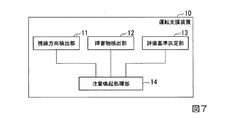
図7は、本発明に係る運転支援装置の最小構成の例を示す図である。図7に示す運転支援装置10は、視線方向検出部11と、障害物検出部12と、評価基準決定部13と、注意喚起処理部14とを備える。
Next, the minimum configuration of the present invention will be described with reference to FIGS. 7 and 8.
FIG. 7 is a diagram showing an example of the minimum configuration of the driving support device according to the present invention. The driving
かかる構成にて、視線方向検出部11は、移動体の運転者の視線の方向を検出する。障害物検出部12は、移動体の周囲の障害物の位置を検出する。評価基準決定部13は、運転者による障害物の目視の評価基準を、時間、場所、天候、自動車900の状態、および、運転者の状態のうち少なくとも何れか1つ以上に基づいて決定する。注意喚起処理部14は、運転者の視線の方向および障害物の位置に基づいて算出したスコアを評価基準に適用して、運転者による障害物の目視を評価し、評価結果に基づいて、運転者への注意喚起の要否および程度のうち少なくとも何れか一方を決定する。
In this configuration, the sight line
このように、評価基準決定部293が運転時の条件に応じて評価基準を変えることで、運転者への注意喚起の頻度を低減し、かつ、比較的危険性の高い状況では、注意喚起を行い易くすることができる。この点で、運転支援装置10によれば、注意喚起の頻発の回避と、危険発生の可能性がある場合の注意喚起との両立を図ることができる。
In this manner, the evaluation standard determination unit 293 changes the evaluation standard according to the conditions at the time of driving to reduce the frequency of alerting the driver, and in a situation where the risk is relatively high, alerting is performed. It can be done easily. In this respect, according to the driving
図8は、本発明に係る運転状況情報取得システムの最小構成の例を示す図である。図8に示す運転状況情報取得システム20は、車載システム21と、運転状況情報取得装置24とを備える。車載システム21は、視線方向検出用カメラ22と、障害物センサ23とを備える。運転状況情報取得装置24は、視線方向検出部25と、障害物検出部26と、評価基準決定部27と、運転状況情報取得部28とを備える。
FIG. 8 is a diagram showing an example of the minimum configuration of the driving condition information acquisition system according to the present invention. The driving condition
かかる構成にて、車載システム21は、移動体に搭載される。運転状況情報取得装置24は、車載システム21と通信を行う。視線方向検出用カメラ22は、移動体の運転者の顔の画像を撮影する。障害物センサ23は、移動体の周囲の障害物を検出するためのセンサである。視線方向検出部25は、運転者の顔の画像に基づいて運転者の視線の方向を検出する。障害物検出部26は、障害物センサ23からのセンシングデータに基づいて移動体の周囲の障害物の位置を検出する。評価基準決定部27は、運転者による障害物の目視の評価基準を、時間、場所、天候、自車の状態、および、運転者の状態のうち少なくとも何れか1つ以上に基づいて決定する。運転状況情報取得部は、運転者の視線の方向および障害物の位置に基づいて算出したスコアを評価基準に適用して、運転者による障害物の目視の評価値を算出する。
In this configuration, the in-
このように、評価基準決定部293が運転時の条件に応じて評価基準を変えることで、例えば雨の場合にミラーを用いての目視のスコアを低めに評価するなど、運転者による目視をより高精度に評価することができる。 In this way, the evaluation criteria determination unit 293 changes the evaluation criteria according to the conditions at the time of driving, for example, in the case of rain, the visual score using the mirror is evaluated lower, etc. It can be evaluated with high accuracy.
なお、制御部290が行う処理の全部または一部を実現するためのプログラムをコンピュータ読み取り可能な記録媒体に記録して、この記録媒体に記録されたプログラムをコンピュータシステムに読み込ませ、実行することにより各部の処理を行ってもよい。なお、ここでいう「コンピュータシステム」とは、OSや周辺機器等のハードウェアを含むものとする。
また、「コンピュータ読み取り可能な記録媒体」とは、フレキシブルディスク、光磁気ディスク、ROM、CD−ROM等の可搬媒体、コンピュータシステムに内蔵されるハードディスク等の記憶装置のことをいう。また上記プログラムは、前述した機能の一部を実現するためのものであっても良く、さらに前述した機能をコンピュータシステムにすでに記録されているプログラムとの組み合わせで実現できるものであっても良い。
A program for realizing all or part of the process performed by
The term "computer-readable recording medium" refers to a storage medium such as a flexible disk, a magneto-optical disk, a ROM, a portable medium such as a ROM or a CD-ROM, or a hard disk built in a computer system. The program may be for realizing a part of the functions described above, or may be realized in combination with the program already recorded in the computer system.
以上、この発明の実施形態について図面を参照して詳述してきたが、具体的な構成はこの実施形態に限られるものではなく、この発明の要旨を逸脱しない範囲の設計等も含まれる。 The embodiment of the present invention has been described in detail with reference to the drawings. However, the specific configuration is not limited to this embodiment, and includes design and the like within the scope of the present invention.
1 運転支援システム
2、20 運転状況情報取得システム
10、200 運転支援装置
11、25、291 視線方向検出部
12、26、292 障害物検出部
13、27、293 評価基準決定部
14、294 注意喚起処理部
21、400 車載システム
22、110 視線方向検出用カメラ
23、120 障害物センサ
24、201 運転状況情報取得装置
28、494 運転状況情報取得部
210 通信部
280 記憶部
290 制御部
310 表示装置
320 音声出力装置
910 映像提示用カメラ
920 映像提示装置
930 バックミラー
941 左サイドミラー
942 右サイドミラー
950 ネットワーク
DESCRIPTION OF SYMBOLS 1
Claims (7)
前記移動体の周囲の障害物の位置を検出する障害物検出部と、
前記運転者による前記障害物の目視の評価基準を、時間、場所、天候、自車の状態、および、前記運転者の状態のうち少なくとも何れか1つ以上に基づいて決定する評価基準決定部と、
前記運転者の視線の方向および前記障害物の位置に基づいて算出したスコアを前記評価基準に適用して、前記運転者による前記障害物の目視を評価し、評価結果に基づいて、前記運転者への注意喚起の要否および程度のうち少なくとも何れか一方を決定する注意喚起処理部と、
を備える運転支援装置。 A gaze direction detection unit that detects the direction of the gaze of the driver of the moving body;
An obstacle detection unit that detects a position of an obstacle around the moving body;
An evaluation criteria determination unit that determines the evaluation criteria for visual observation of the obstacle by the driver based on at least one of time, place, weather, the state of the vehicle, and the state of the driver; ,
The score calculated based on the direction of the driver's line of sight and the position of the obstacle is applied to the evaluation criteria to evaluate the visual observation of the obstacle by the driver, and the driver is evaluated based on the evaluation result. An alerting processing unit that determines at least one of the necessity and the degree of alerting to
Driving assistance device comprising:
請求項1に記載の運転支援装置。 The alert processing unit calculates the score by integrating a value obtained by multiplying the time or the number of times the driver visually recognized the obstacle by a coefficient according to the method in which the driver visually recognized the obstacle Do,
The driving support device according to claim 1.
請求項1または請求項2に記載の運転支援装置。 The alert processing unit evaluates that the driver visually recognizes an obstacle alerted by the image of the image presentation device, when the direction of the driver's line of sight is directed to the image presentation device.
The driving assistance device according to claim 1 or 2.
請求項1から3の何れか一項に記載の運転支援装置。 The alerting processing unit further determines at least one of necessity and degree of alerting to the driver based on the relationship between the state of the moving object and the position of the obstacle.
The driving assistance device according to any one of claims 1 to 3.
前記車載システムと通信を行う運転状況情報取得装置とを備え、
前記車載システムは、
前記移動体の運転者の顔の画像を撮影する視線方向検出用カメラと、
前記移動体の周囲の障害物を検出するための障害物センサと、
を備え、
前記運転状況情報取得装置は、
前記運転者の顔の画像に基づいて前記運転者の視線の方向を検出する視線方向検出部と、
前記障害物センサからのセンシングデータに基づいて前記移動体の周囲の障害物の位置を検出する障害物検出部と、
前記運転者による前記障害物の目視の評価基準を、時間、場所、天候、自車の状態、および、前記運転者の状態のうち少なくとも何れか1つ以上に基づいて決定する評価基準決定部と、
前記運転者の視線の方向および前記障害物の位置に基づいて算出したスコアを前記評価基準に適用して、前記運転者による前記障害物の目視の評価値を算出する運転状況情報取得部と、
を備える運転状況情報取得システム。 An on-board system mounted on a mobile body,
And a driving status information acquisition device that communicates with the in-vehicle system;
The in-vehicle system
A gaze direction detection camera for capturing an image of a face of a driver of the moving body;
An obstacle sensor for detecting an obstacle around the moving body;
Equipped with
The driving status information acquisition device
A gaze direction detection unit that detects the direction of the driver's gaze based on the image of the driver's face;
An obstacle detection unit that detects the position of an obstacle around the mobile object based on sensing data from the obstacle sensor;
An evaluation criteria determination unit that determines the evaluation criteria for visual observation of the obstacle by the driver based on at least one of time, place, weather, the state of the vehicle, and the state of the driver; ,
A driving condition information acquisition unit that calculates a visual evaluation value of the obstacle by the driver by applying a score calculated based on the direction of the driver's line of sight and the position of the obstacle to the evaluation criteria;
Driving situation information acquisition system provided with.
前記移動体の周囲の障害物の位置を検出することと、
前記運転者による前記障害物の目視の評価基準を、時間、場所、天候、自車の状態、および、前記運転者の状態のうち少なくとも何れか1つ以上に基づいて決定することと、
前記運転者の視線の方向および前記障害物の位置を前記評価基準に適用して、前記運転者による前記障害物の目視を評価し、評価結果に基づいて、前記運転者への注意喚起の要否および程度のうち少なくとも何れか一方を決定することと、
を含む運転支援方法。 Detecting the direction of the driver's line of sight of the moving body;
Detecting a position of an obstacle around the moving body;
Determining the evaluation criteria for visual observation of the obstacle by the driver based on at least one of time, place, weather, the state of the vehicle, and the state of the driver;
The direction of the driver's line of sight and the position of the obstacle are applied to the evaluation criteria to evaluate the visual observation of the obstacle by the driver, and based on the evaluation result, it is necessary to call the driver's attention. Determining at least one of the negative and the degree;
Driving support method including.
移動体の運転者の視線の方向を検出することと、
前記移動体の周囲の障害物の位置を検出することと、
前記運転者による前記障害物の目視の評価基準を、時間、場所、天候、自車の状態、および、前記運転者の状態のうち少なくとも何れか1つ以上に基づいて決定することと、
前記運転者の視線の方向および前記障害物の位置を前記評価基準に適用して、前記運転者による前記障害物の目視を評価し、評価結果に基づいて、前記運転者への注意喚起の要否および程度のうち少なくとも何れか一方を決定することと、
を実行させるためのプログラム。 On the computer
Detecting the direction of the driver's line of sight of the moving body;
Detecting a position of an obstacle around the moving body;
Determining the evaluation criteria for visual observation of the obstacle by the driver based on at least one of time, place, weather, the state of the vehicle, and the state of the driver;
The direction of the driver's line of sight and the position of the obstacle are applied to the evaluation criteria to evaluate the visual observation of the obstacle by the driver, and based on the evaluation result, it is necessary to call the driver's attention. Determining at least one of the negative and the degree;
A program to run a program.
Priority Applications (4)
| Application Number | Priority Date | Filing Date | Title |
|---|---|---|---|
| JP2017214163A JP7043795B2 (en) | 2017-11-06 | 2017-11-06 | Driving support device, driving status information acquisition system, driving support method and program |
| US16/757,602 US11643012B2 (en) | 2017-11-06 | 2018-10-03 | Driving assistance device, driving situation information acquisition system, driving assistance method, and program |
| PCT/JP2018/037039 WO2019087662A1 (en) | 2017-11-06 | 2018-10-03 | Driving assistance device, driving situation information acquisition system, driving assistance method, and program |
| JP2022042315A JP7294483B2 (en) | 2017-11-06 | 2022-03-17 | Driving support device, driving support method and program |
Applications Claiming Priority (1)
| Application Number | Priority Date | Filing Date | Title |
|---|---|---|---|
| JP2017214163A JP7043795B2 (en) | 2017-11-06 | 2017-11-06 | Driving support device, driving status information acquisition system, driving support method and program |
Related Child Applications (1)
| Application Number | Title | Priority Date | Filing Date |
|---|---|---|---|
| JP2022042315A Division JP7294483B2 (en) | 2017-11-06 | 2022-03-17 | Driving support device, driving support method and program |
Publications (2)
| Publication Number | Publication Date |
|---|---|
| JP2019086983A true JP2019086983A (en) | 2019-06-06 |
| JP7043795B2 JP7043795B2 (en) | 2022-03-30 |
Family
ID=66333028
Family Applications (1)
| Application Number | Title | Priority Date | Filing Date |
|---|---|---|---|
| JP2017214163A Active JP7043795B2 (en) | 2017-11-06 | 2017-11-06 | Driving support device, driving status information acquisition system, driving support method and program |
Country Status (3)
| Country | Link |
|---|---|
| US (1) | US11643012B2 (en) |
| JP (1) | JP7043795B2 (en) |
| WO (1) | WO2019087662A1 (en) |
Cited By (1)
| Publication number | Priority date | Publication date | Assignee | Title |
|---|---|---|---|---|
| JP2024043130A (en) * | 2022-09-16 | 2024-03-29 | トヨタ自動車株式会社 | Peripheral image display device, peripheral image display method, and peripheral image display program |
Families Citing this family (3)
| Publication number | Priority date | Publication date | Assignee | Title |
|---|---|---|---|---|
| JP7259957B2 (en) * | 2019-06-11 | 2023-04-18 | 日本電気株式会社 | Judgment system, processing method, program |
| JP2021144505A (en) * | 2020-03-12 | 2021-09-24 | パナソニックIpマネジメント株式会社 | Estimation device and estimation method |
| CN114582153B (en) * | 2022-02-25 | 2023-12-12 | 智己汽车科技有限公司 | Ramp entry long solid line reminding method, system and vehicle |
Citations (3)
| Publication number | Priority date | Publication date | Assignee | Title |
|---|---|---|---|---|
| JP2009116394A (en) * | 2007-11-01 | 2009-05-28 | Mazda Motor Corp | Vehicle alarm device |
| JP2009237776A (en) * | 2008-03-26 | 2009-10-15 | Mazda Motor Corp | Vehicle drive supporting apparatus |
| JP2014194625A (en) * | 2013-03-28 | 2014-10-09 | Fujitsu Ltd | Visual confirmation evaluation device, method and program |
Family Cites Families (16)
| Publication number | Priority date | Publication date | Assignee | Title |
|---|---|---|---|---|
| JP2929927B2 (en) * | 1993-12-14 | 1999-08-03 | 日産自動車株式会社 | Driving information providing device |
| US20060106538A1 (en) * | 2004-11-12 | 2006-05-18 | Browne Alan L | Cooperative collision mitigation |
| JP4604691B2 (en) | 2004-12-07 | 2011-01-05 | 日産自動車株式会社 | Alarm device for vehicle, alarm method of vehicle surrounding situation |
| WO2007105792A1 (en) * | 2006-03-15 | 2007-09-20 | Omron Corporation | Monitor and monitoring method, controller and control method, and program |
| JPWO2011064831A1 (en) | 2009-11-30 | 2013-04-11 | 富士通株式会社 | Diagnostic device and diagnostic method |
| JP5821179B2 (en) * | 2010-12-08 | 2015-11-24 | トヨタ自動車株式会社 | Vehicle information transmission device |
| JP2014120111A (en) | 2012-12-19 | 2014-06-30 | Aisin Aw Co Ltd | Travel support system, travel support method, and computer program |
| JP6296684B2 (en) | 2013-02-07 | 2018-03-20 | 三菱電機株式会社 | Driving assistance device |
| US20150310758A1 (en) * | 2014-04-26 | 2015-10-29 | The Travelers Indemnity Company | Systems, methods, and apparatus for generating customized virtual reality experiences |
| US9547798B2 (en) * | 2014-05-20 | 2017-01-17 | State Farm Mutual Automobile Insurance Company | Gaze tracking for a vehicle operator |
| US20160267335A1 (en) * | 2015-03-13 | 2016-09-15 | Harman International Industries, Incorporated | Driver distraction detection system |
| KR101895485B1 (en) * | 2015-08-26 | 2018-09-05 | 엘지전자 주식회사 | Drive assistance appratus and method for controlling the same |
| DE102016215291A1 (en) * | 2016-01-21 | 2017-07-27 | Robert Bosch Gmbh | Method for classifying driver movements |
| US10317900B2 (en) * | 2016-05-13 | 2019-06-11 | GM Global Technology Operations LLC | Controlling autonomous-vehicle functions and output based on occupant position and attention |
| US10346697B2 (en) * | 2016-12-21 | 2019-07-09 | Hyundai America Technical Center, Inc | Driver state monitoring using corneal reflection detection |
| JP6819431B2 (en) * | 2017-04-12 | 2021-01-27 | トヨタ自動車株式会社 | Attention device |
-
2017
- 2017-11-06 JP JP2017214163A patent/JP7043795B2/en active Active
-
2018
- 2018-10-03 US US16/757,602 patent/US11643012B2/en active Active
- 2018-10-03 WO PCT/JP2018/037039 patent/WO2019087662A1/en not_active Ceased
Patent Citations (3)
| Publication number | Priority date | Publication date | Assignee | Title |
|---|---|---|---|---|
| JP2009116394A (en) * | 2007-11-01 | 2009-05-28 | Mazda Motor Corp | Vehicle alarm device |
| JP2009237776A (en) * | 2008-03-26 | 2009-10-15 | Mazda Motor Corp | Vehicle drive supporting apparatus |
| JP2014194625A (en) * | 2013-03-28 | 2014-10-09 | Fujitsu Ltd | Visual confirmation evaluation device, method and program |
Cited By (1)
| Publication number | Priority date | Publication date | Assignee | Title |
|---|---|---|---|---|
| JP2024043130A (en) * | 2022-09-16 | 2024-03-29 | トヨタ自動車株式会社 | Peripheral image display device, peripheral image display method, and peripheral image display program |
Also Published As
| Publication number | Publication date |
|---|---|
| JP7043795B2 (en) | 2022-03-30 |
| WO2019087662A1 (en) | 2019-05-09 |
| US20210197722A1 (en) | 2021-07-01 |
| US11643012B2 (en) | 2023-05-09 |
Similar Documents
| Publication | Publication Date | Title |
|---|---|---|
| US10882398B2 (en) | System and method for correlating user attention direction and outside view | |
| JP5718942B2 (en) | Apparatus and method for assisting safe operation of transportation means | |
| KR102051142B1 (en) | System for managing dangerous driving index for vehicle and method therof | |
| JP6241235B2 (en) | Vehicle driving support device | |
| US8085140B2 (en) | Travel information providing device | |
| CN113631411B (en) | Display control device, display control method, and recording medium | |
| US20170174129A1 (en) | Vehicular visual information system and method | |
| JP7501598B2 (en) | Driving assistance device, driving status information acquisition system, driving assistance method and program | |
| US20080204208A1 (en) | Vehicle Surroundings Information Output System and Method For Outputting Vehicle Surroundings Information | |
| JP2016081086A (en) | Driving characteristic diagnostic device, driving characteristic diagnostic system, driving characteristic diagnostic method, information output device, information output method | |
| JPH08178712A (en) | Ambush driving detector | |
| JP2020035437A (en) | Vehicle system, method performed in vehicle system, and driver assistance system | |
| CN110544368B (en) | Augmented reality early warning device and early warning method for fatigue driving | |
| JP2019185218A (en) | Alarm device | |
| JP7043795B2 (en) | Driving support device, driving status information acquisition system, driving support method and program | |
| JP6213435B2 (en) | Over-attention state determination device and over-attention state determination program | |
| JP4872245B2 (en) | Pedestrian recognition device | |
| WO2018168097A1 (en) | Driving state determination device, driving state determination method, and program for determining driving state | |
| JP5003473B2 (en) | Warning device | |
| JP7276082B2 (en) | Driver state estimation device | |
| JP7294483B2 (en) | Driving support device, driving support method and program | |
| JP2017224066A (en) | Side view state determination device | |
| JP2018149940A (en) | Concentration level determination device, concentration level determination method, and program for determining concentration level | |
| JP7537833B2 (en) | Attention calling device and attention calling method | |
| JP2012103849A (en) | Information provision device |
Legal Events
| Date | Code | Title | Description |
|---|---|---|---|
| A621 | Written request for application examination |
Free format text: JAPANESE INTERMEDIATE CODE: A621 Effective date: 20201006 |
|
| A131 | Notification of reasons for refusal |
Free format text: JAPANESE INTERMEDIATE CODE: A131 Effective date: 20210713 |
|
| A521 | Request for written amendment filed |
Free format text: JAPANESE INTERMEDIATE CODE: A523 Effective date: 20210913 |
|
| TRDD | Decision of grant or rejection written | ||
| A01 | Written decision to grant a patent or to grant a registration (utility model) |
Free format text: JAPANESE INTERMEDIATE CODE: A01 Effective date: 20220215 |
|
| A61 | First payment of annual fees (during grant procedure) |
Free format text: JAPANESE INTERMEDIATE CODE: A61 Effective date: 20220228 |
|
| R151 | Written notification of patent or utility model registration |
Ref document number: 7043795 Country of ref document: JP Free format text: JAPANESE INTERMEDIATE CODE: R151 |