EP1745935A2 - Ink-jet recording device - Google Patents
Ink-jet recording device Download PDFInfo
- Publication number
- EP1745935A2 EP1745935A2 EP06014705A EP06014705A EP1745935A2 EP 1745935 A2 EP1745935 A2 EP 1745935A2 EP 06014705 A EP06014705 A EP 06014705A EP 06014705 A EP06014705 A EP 06014705A EP 1745935 A2 EP1745935 A2 EP 1745935A2
- Authority
- EP
- European Patent Office
- Prior art keywords
- ink
- ultraviolet ray
- recording medium
- acid
- filter unit
- Prior art date
- Legal status (The legal status is an assumption and is not a legal conclusion. Google has not performed a legal analysis and makes no representation as to the accuracy of the status listed.)
- Withdrawn
Links
- 230000001678 irradiating effect Effects 0.000 claims abstract description 59
- 239000011941 photocatalyst Substances 0.000 claims abstract description 6
- GWEVSGVZZGPLCZ-UHFFFAOYSA-N Titan oxide Chemical compound O=[Ti]=O GWEVSGVZZGPLCZ-UHFFFAOYSA-N 0.000 claims description 10
- OGIDPMRJRNCKJF-UHFFFAOYSA-N titanium oxide Inorganic materials [Ti]=O OGIDPMRJRNCKJF-UHFFFAOYSA-N 0.000 claims description 7
- 239000000976 ink Substances 0.000 description 166
- 239000000049 pigment Substances 0.000 description 99
- 150000001875 compounds Chemical class 0.000 description 91
- 239000002609 medium Substances 0.000 description 87
- 239000000203 mixture Substances 0.000 description 84
- -1 aromatic epoxides Chemical class 0.000 description 51
- 239000000975 dye Substances 0.000 description 45
- RTZKZFJDLAIYFH-UHFFFAOYSA-N Diethyl ether Chemical compound CCOCC RTZKZFJDLAIYFH-UHFFFAOYSA-N 0.000 description 21
- 239000002253 acid Substances 0.000 description 21
- 239000000463 material Substances 0.000 description 18
- QYKIQEUNHZKYBP-UHFFFAOYSA-N Vinyl ether Chemical class C=COC=C QYKIQEUNHZKYBP-UHFFFAOYSA-N 0.000 description 17
- 239000000178 monomer Substances 0.000 description 16
- 238000004040 coloring Methods 0.000 description 15
- 239000003999 initiator Substances 0.000 description 14
- 229920000642 polymer Polymers 0.000 description 14
- 229920005989 resin Polymers 0.000 description 14
- 239000011347 resin Substances 0.000 description 14
- 239000002904 solvent Substances 0.000 description 14
- 239000004593 Epoxy Substances 0.000 description 13
- 230000002378 acidificating effect Effects 0.000 description 13
- 238000001816 cooling Methods 0.000 description 12
- 150000002148 esters Chemical class 0.000 description 12
- 239000003112 inhibitor Substances 0.000 description 12
- 238000009423 ventilation Methods 0.000 description 12
- 229960000834 vinyl ether Drugs 0.000 description 12
- LFQSCWFLJHTTHZ-UHFFFAOYSA-N Ethanol Chemical compound CCO LFQSCWFLJHTTHZ-UHFFFAOYSA-N 0.000 description 11
- FBPFZTCFMRRESA-FSIIMWSLSA-N D-Glucitol Natural products OC[C@H](O)[C@H](O)[C@@H](O)[C@H](O)CO FBPFZTCFMRRESA-FSIIMWSLSA-N 0.000 description 10
- 238000001723 curing Methods 0.000 description 10
- GYZLOYUZLJXAJU-UHFFFAOYSA-N diglycidyl ether Chemical class C1OC1COCC1CO1 GYZLOYUZLJXAJU-UHFFFAOYSA-N 0.000 description 10
- LYCAIKOWRPUZTN-UHFFFAOYSA-N ethylene glycol Natural products OCCO LYCAIKOWRPUZTN-UHFFFAOYSA-N 0.000 description 10
- 150000003839 salts Chemical class 0.000 description 10
- 239000000600 sorbitol Substances 0.000 description 10
- 239000004094 surface-active agent Substances 0.000 description 10
- NIXOWILDQLNWCW-UHFFFAOYSA-M Acrylate Chemical compound [O-]C(=O)C=C NIXOWILDQLNWCW-UHFFFAOYSA-M 0.000 description 9
- 125000002947 alkylene group Chemical group 0.000 description 9
- 239000003505 polymerization initiator Substances 0.000 description 9
- 150000003254 radicals Chemical class 0.000 description 9
- CERQOIWHTDAKMF-UHFFFAOYSA-N Methacrylic acid Chemical compound CC(=C)C(O)=O CERQOIWHTDAKMF-UHFFFAOYSA-N 0.000 description 8
- 239000002202 Polyethylene glycol Substances 0.000 description 8
- 239000000428 dust Substances 0.000 description 8
- 229920001223 polyethylene glycol Polymers 0.000 description 8
- 238000006116 polymerization reaction Methods 0.000 description 8
- 238000011160 research Methods 0.000 description 8
- 125000001931 aliphatic group Chemical group 0.000 description 7
- 150000001732 carboxylic acid derivatives Chemical class 0.000 description 7
- 229920001577 copolymer Polymers 0.000 description 7
- 230000000694 effects Effects 0.000 description 7
- 238000005562 fading Methods 0.000 description 7
- 230000003647 oxidation Effects 0.000 description 7
- 238000007254 oxidation reaction Methods 0.000 description 7
- 239000007787 solid Substances 0.000 description 7
- DNIAPMSPPWPWGF-UHFFFAOYSA-N Propylene glycol Chemical compound CC(O)CO DNIAPMSPPWPWGF-UHFFFAOYSA-N 0.000 description 6
- 125000000217 alkyl group Chemical group 0.000 description 6
- 150000004056 anthraquinones Chemical class 0.000 description 6
- 230000008901 benefit Effects 0.000 description 6
- 230000035945 sensitivity Effects 0.000 description 6
- TXBCBTDQIULDIA-UHFFFAOYSA-N 2-[[3-hydroxy-2,2-bis(hydroxymethyl)propoxy]methyl]-2-(hydroxymethyl)propane-1,3-diol Chemical compound OCC(CO)(CO)COCC(CO)(CO)CO TXBCBTDQIULDIA-UHFFFAOYSA-N 0.000 description 5
- FBPFZTCFMRRESA-JGWLITMVSA-N D-glucitol Chemical compound OC[C@H](O)[C@@H](O)[C@H](O)[C@H](O)CO FBPFZTCFMRRESA-JGWLITMVSA-N 0.000 description 5
- OFOBLEOULBTSOW-UHFFFAOYSA-N Malonic acid Chemical compound OC(=O)CC(O)=O OFOBLEOULBTSOW-UHFFFAOYSA-N 0.000 description 5
- XLOMVQKBTHCTTD-UHFFFAOYSA-N Zinc monoxide Chemical compound [Zn]=O XLOMVQKBTHCTTD-UHFFFAOYSA-N 0.000 description 5
- PYKYMHQGRFAEBM-UHFFFAOYSA-N anthraquinone Natural products CCC(=O)c1c(O)c2C(=O)C3C(C=CC=C3O)C(=O)c2cc1CC(=O)OC PYKYMHQGRFAEBM-UHFFFAOYSA-N 0.000 description 5
- 230000000740 bleeding effect Effects 0.000 description 5
- 229920006317 cationic polymer Polymers 0.000 description 5
- 239000003086 colorant Substances 0.000 description 5
- 239000002270 dispersing agent Substances 0.000 description 5
- 239000006185 dispersion Substances 0.000 description 5
- 150000002921 oxetanes Chemical class 0.000 description 5
- 125000003566 oxetanyl group Chemical group 0.000 description 5
- 239000002245 particle Substances 0.000 description 5
- 230000001235 sensitizing effect Effects 0.000 description 5
- LDHQCZJRKDOVOX-UHFFFAOYSA-N trans-crotonic acid Natural products CC=CC(O)=O LDHQCZJRKDOVOX-UHFFFAOYSA-N 0.000 description 5
- 125000000391 vinyl group Chemical group [H]C([*])=C([H])[H] 0.000 description 5
- 229920002554 vinyl polymer Polymers 0.000 description 5
- CZAVRNDQSIORTH-UHFFFAOYSA-N 1-ethenoxy-2,2-bis(ethenoxymethyl)butane Chemical compound C=COCC(CC)(COC=C)COC=C CZAVRNDQSIORTH-UHFFFAOYSA-N 0.000 description 4
- HCLJOFJIQIJXHS-UHFFFAOYSA-N 2-[2-[2-(2-prop-2-enoyloxyethoxy)ethoxy]ethoxy]ethyl prop-2-enoate Chemical compound C=CC(=O)OCCOCCOCCOCCOC(=O)C=C HCLJOFJIQIJXHS-UHFFFAOYSA-N 0.000 description 4
- VGGSQFUCUMXWEO-UHFFFAOYSA-N Ethene Chemical compound C=C VGGSQFUCUMXWEO-UHFFFAOYSA-N 0.000 description 4
- 239000005977 Ethylene Substances 0.000 description 4
- YCKRFDGAMUMZLT-UHFFFAOYSA-N Fluorine atom Chemical compound [F] YCKRFDGAMUMZLT-UHFFFAOYSA-N 0.000 description 4
- ISWSIDIOOBJBQZ-UHFFFAOYSA-N Phenol Chemical compound OC1=CC=CC=C1 ISWSIDIOOBJBQZ-UHFFFAOYSA-N 0.000 description 4
- 239000000654 additive Substances 0.000 description 4
- 125000003118 aryl group Chemical group 0.000 description 4
- IISBACLAFKSPIT-UHFFFAOYSA-N bisphenol A Chemical compound C=1C=C(O)C=CC=1C(C)(C)C1=CC=C(O)C=C1 IISBACLAFKSPIT-UHFFFAOYSA-N 0.000 description 4
- 239000003795 chemical substances by application Substances 0.000 description 4
- HGCIXCUEYOPUTN-UHFFFAOYSA-N cyclohexene Chemical compound C1CCC=CC1 HGCIXCUEYOPUTN-UHFFFAOYSA-N 0.000 description 4
- 125000000664 diazo group Chemical group [N-]=[N+]=[*] 0.000 description 4
- 239000002612 dispersion medium Substances 0.000 description 4
- FJKIXWOMBXYWOQ-UHFFFAOYSA-N ethenoxyethane Chemical compound CCOC=C FJKIXWOMBXYWOQ-UHFFFAOYSA-N 0.000 description 4
- 229910052731 fluorine Inorganic materials 0.000 description 4
- 239000011737 fluorine Substances 0.000 description 4
- GWVMLCQWXVFZCN-UHFFFAOYSA-N isoindoline Chemical compound C1=CC=C2CNCC2=C1 GWVMLCQWXVFZCN-UHFFFAOYSA-N 0.000 description 4
- 238000000034 method Methods 0.000 description 4
- 239000003960 organic solvent Substances 0.000 description 4
- 125000002080 perylenyl group Chemical group C1(=CC=C2C=CC=C3C4=CC=CC5=CC=CC(C1=C23)=C45)* 0.000 description 4
- CSHWQDPOILHKBI-UHFFFAOYSA-N peryrene Natural products C1=CC(C2=CC=CC=3C2=C2C=CC=3)=C3C2=CC=CC3=C1 CSHWQDPOILHKBI-UHFFFAOYSA-N 0.000 description 4
- IEQIEDJGQAUEQZ-UHFFFAOYSA-N phthalocyanine Chemical compound N1C(N=C2C3=CC=CC=C3C(N=C3C4=CC=CC=C4C(=N4)N3)=N2)=C(C=CC=C2)C2=C1N=C1C2=CC=CC=C2C4=N1 IEQIEDJGQAUEQZ-UHFFFAOYSA-N 0.000 description 4
- 230000000704 physical effect Effects 0.000 description 4
- QQONPFPTGQHPMA-UHFFFAOYSA-N propylene Natural products CC=C QQONPFPTGQHPMA-UHFFFAOYSA-N 0.000 description 4
- 125000004805 propylene group Chemical group [H]C([H])([H])C([H])([*:1])C([H])([H])[*:2] 0.000 description 4
- BBEAQIROQSPTKN-UHFFFAOYSA-N pyrene Chemical compound C1=CC=C2C=CC3=CC=CC4=CC=C1C2=C43 BBEAQIROQSPTKN-UHFFFAOYSA-N 0.000 description 4
- VZCYOOQTPOCHFL-UHFFFAOYSA-N trans-butenedioic acid Natural products OC(=O)C=CC(O)=O VZCYOOQTPOCHFL-UHFFFAOYSA-N 0.000 description 4
- 239000006097 ultraviolet radiation absorber Substances 0.000 description 4
- 239000012855 volatile organic compound Substances 0.000 description 4
- XDWRKTULOHXYGN-UHFFFAOYSA-N 1,3-bis(ethenoxy)-2,2-bis(ethenoxymethyl)propane Chemical compound C=COCC(COC=C)(COC=C)COC=C XDWRKTULOHXYGN-UHFFFAOYSA-N 0.000 description 3
- ZWEHNKRNPOVVGH-UHFFFAOYSA-N 2-Butanone Chemical compound CCC(C)=O ZWEHNKRNPOVVGH-UHFFFAOYSA-N 0.000 description 3
- WMYINDVYGQKYMI-UHFFFAOYSA-N 2-[2,2-bis(hydroxymethyl)butoxymethyl]-2-ethylpropane-1,3-diol Chemical compound CCC(CO)(CO)COCC(CC)(CO)CO WMYINDVYGQKYMI-UHFFFAOYSA-N 0.000 description 3
- VPWNQTHUCYMVMZ-UHFFFAOYSA-N 4,4'-sulfonyldiphenol Chemical compound C1=CC(O)=CC=C1S(=O)(=O)C1=CC=C(O)C=C1 VPWNQTHUCYMVMZ-UHFFFAOYSA-N 0.000 description 3
- QTBSBXVTEAMEQO-UHFFFAOYSA-N Acetic acid Chemical compound CC(O)=O QTBSBXVTEAMEQO-UHFFFAOYSA-N 0.000 description 3
- CSCPPACGZOOCGX-UHFFFAOYSA-N Acetone Chemical compound CC(C)=O CSCPPACGZOOCGX-UHFFFAOYSA-N 0.000 description 3
- UHOVQNZJYSORNB-UHFFFAOYSA-N Benzene Chemical compound C1=CC=CC=C1 UHOVQNZJYSORNB-UHFFFAOYSA-N 0.000 description 3
- LCFVJGUPQDGYKZ-UHFFFAOYSA-N Bisphenol A diglycidyl ether Chemical compound C=1C=C(OCC2OC2)C=CC=1C(C)(C)C(C=C1)=CC=C1OCC1CO1 LCFVJGUPQDGYKZ-UHFFFAOYSA-N 0.000 description 3
- LSNNMFCWUKXFEE-UHFFFAOYSA-M Bisulfite Chemical compound OS([O-])=O LSNNMFCWUKXFEE-UHFFFAOYSA-M 0.000 description 3
- WWZKQHOCKIZLMA-UHFFFAOYSA-N Caprylic acid Natural products CCCCCCCC(O)=O WWZKQHOCKIZLMA-UHFFFAOYSA-N 0.000 description 3
- ZAMOUSCENKQFHK-UHFFFAOYSA-N Chlorine atom Chemical compound [Cl] ZAMOUSCENKQFHK-UHFFFAOYSA-N 0.000 description 3
- YMWUJEATGCHHMB-UHFFFAOYSA-N Dichloromethane Chemical compound ClCCl YMWUJEATGCHHMB-UHFFFAOYSA-N 0.000 description 3
- XEKOWRVHYACXOJ-UHFFFAOYSA-N Ethyl acetate Chemical compound CCOC(C)=O XEKOWRVHYACXOJ-UHFFFAOYSA-N 0.000 description 3
- KFZMGEQAYNKOFK-UHFFFAOYSA-N Isopropanol Chemical compound CC(C)O KFZMGEQAYNKOFK-UHFFFAOYSA-N 0.000 description 3
- OKKJLVBELUTLKV-UHFFFAOYSA-N Methanol Chemical compound OC OKKJLVBELUTLKV-UHFFFAOYSA-N 0.000 description 3
- LRHPLDYGYMQRHN-UHFFFAOYSA-N N-Butanol Chemical compound CCCCO LRHPLDYGYMQRHN-UHFFFAOYSA-N 0.000 description 3
- 229920003171 Poly (ethylene oxide) Polymers 0.000 description 3
- NRCMAYZCPIVABH-UHFFFAOYSA-N Quinacridone Chemical compound N1C2=CC=CC=C2C(=O)C2=C1C=C1C(=O)C3=CC=CC=C3NC1=C2 NRCMAYZCPIVABH-UHFFFAOYSA-N 0.000 description 3
- YXFVVABEGXRONW-UHFFFAOYSA-N Toluene Chemical compound CC1=CC=CC=C1 YXFVVABEGXRONW-UHFFFAOYSA-N 0.000 description 3
- NIXOWILDQLNWCW-UHFFFAOYSA-N acrylic acid group Chemical group C(C=C)(=O)O NIXOWILDQLNWCW-UHFFFAOYSA-N 0.000 description 3
- 230000009471 action Effects 0.000 description 3
- 125000003545 alkoxy group Chemical group 0.000 description 3
- 150000001408 amides Chemical class 0.000 description 3
- 150000001412 amines Chemical class 0.000 description 3
- 239000000981 basic dye Substances 0.000 description 3
- XUCHXOAWJMEFLF-UHFFFAOYSA-N bisphenol F diglycidyl ether Chemical compound C1OC1COC(C=C1)=CC=C1CC(C=C1)=CC=C1OCC1CO1 XUCHXOAWJMEFLF-UHFFFAOYSA-N 0.000 description 3
- 125000004432 carbon atom Chemical group C* 0.000 description 3
- 239000000460 chlorine Substances 0.000 description 3
- 229910052801 chlorine Inorganic materials 0.000 description 3
- 239000003822 epoxy resin Substances 0.000 description 3
- 238000009472 formulation Methods 0.000 description 3
- 125000004435 hydrogen atom Chemical group [H]* 0.000 description 3
- 125000002887 hydroxy group Chemical group [H]O* 0.000 description 3
- WGCNASOHLSPBMP-UHFFFAOYSA-N hydroxyacetaldehyde Natural products OCC=O WGCNASOHLSPBMP-UHFFFAOYSA-N 0.000 description 3
- PXZQEOJJUGGUIB-UHFFFAOYSA-N isoindolin-1-one Chemical compound C1=CC=C2C(=O)NCC2=C1 PXZQEOJJUGGUIB-UHFFFAOYSA-N 0.000 description 3
- 230000007246 mechanism Effects 0.000 description 3
- YDKNBNOOCSNPNS-UHFFFAOYSA-N methyl 1,3-benzoxazole-2-carboxylate Chemical compound C1=CC=C2OC(C(=O)OC)=NC2=C1 YDKNBNOOCSNPNS-UHFFFAOYSA-N 0.000 description 3
- LVHBHZANLOWSRM-UHFFFAOYSA-N methylenebutanedioic acid Natural products OC(=O)CC(=C)C(O)=O LVHBHZANLOWSRM-UHFFFAOYSA-N 0.000 description 3
- 238000002156 mixing Methods 0.000 description 3
- 239000012860 organic pigment Substances 0.000 description 3
- FJKROLUGYXJWQN-UHFFFAOYSA-N papa-hydroxy-benzoic acid Natural products OC(=O)C1=CC=C(O)C=C1 FJKROLUGYXJWQN-UHFFFAOYSA-N 0.000 description 3
- 229920000647 polyepoxide Polymers 0.000 description 3
- 229920000098 polyolefin Polymers 0.000 description 3
- BDERNNFJNOPAEC-UHFFFAOYSA-N propan-1-ol Chemical compound CCCO BDERNNFJNOPAEC-UHFFFAOYSA-N 0.000 description 3
- 239000000126 substance Substances 0.000 description 3
- 238000011144 upstream manufacturing Methods 0.000 description 3
- XLYOFNOQVPJJNP-UHFFFAOYSA-N water Substances O XLYOFNOQVPJJNP-UHFFFAOYSA-N 0.000 description 3
- 239000001993 wax Substances 0.000 description 3
- 235000014692 zinc oxide Nutrition 0.000 description 3
- 239000011787 zinc oxide Substances 0.000 description 3
- 125000003837 (C1-C20) alkyl group Chemical group 0.000 description 2
- WBYWAXJHAXSJNI-VOTSOKGWSA-M .beta-Phenylacrylic acid Natural products [O-]C(=O)\C=C\C1=CC=CC=C1 WBYWAXJHAXSJNI-VOTSOKGWSA-M 0.000 description 2
- GPHWXFINOWXMDN-UHFFFAOYSA-N 1,1-bis(ethenoxy)hexane Chemical compound CCCCCC(OC=C)OC=C GPHWXFINOWXMDN-UHFFFAOYSA-N 0.000 description 2
- SKYXLDSRLNRAPS-UHFFFAOYSA-N 1,2,4-trifluoro-5-methoxybenzene Chemical compound COC1=CC(F)=C(F)C=C1F SKYXLDSRLNRAPS-UHFFFAOYSA-N 0.000 description 2
- ZXHDVRATSGZISC-UHFFFAOYSA-N 1,2-bis(ethenoxy)ethane Chemical compound C=COCCOC=C ZXHDVRATSGZISC-UHFFFAOYSA-N 0.000 description 2
- LXSVCBDMOGLGFA-UHFFFAOYSA-N 1,2-bis(ethenoxy)propane Chemical compound C=COC(C)COC=C LXSVCBDMOGLGFA-UHFFFAOYSA-N 0.000 description 2
- YXIWHUQXZSMYRE-UHFFFAOYSA-N 1,3-benzothiazole-2-thiol Chemical compound C1=CC=C2SC(S)=NC2=C1 YXIWHUQXZSMYRE-UHFFFAOYSA-N 0.000 description 2
- MWZJGRDWJVHRDV-UHFFFAOYSA-N 1,4-bis(ethenoxy)butane Chemical compound C=COCCCCOC=C MWZJGRDWJVHRDV-UHFFFAOYSA-N 0.000 description 2
- OGBWMWKMTUSNKE-UHFFFAOYSA-N 1-(2-methylprop-2-enoyloxy)hexyl 2-methylprop-2-enoate Chemical compound CCCCCC(OC(=O)C(C)=C)OC(=O)C(C)=C OGBWMWKMTUSNKE-UHFFFAOYSA-N 0.000 description 2
- SAMJGBVVQUEMGC-UHFFFAOYSA-N 1-ethenoxy-2-(2-ethenoxyethoxy)ethane Chemical compound C=COCCOCCOC=C SAMJGBVVQUEMGC-UHFFFAOYSA-N 0.000 description 2
- UZKWTJUDCOPSNM-UHFFFAOYSA-N 1-ethenoxybutane Chemical compound CCCCOC=C UZKWTJUDCOPSNM-UHFFFAOYSA-N 0.000 description 2
- LAYAKLSFVAPMEL-UHFFFAOYSA-N 1-ethenoxydodecane Chemical compound CCCCCCCCCCCCOC=C LAYAKLSFVAPMEL-UHFFFAOYSA-N 0.000 description 2
- QJJDJWUCRAPCOL-UHFFFAOYSA-N 1-ethenoxyoctadecane Chemical compound CCCCCCCCCCCCCCCCCCOC=C QJJDJWUCRAPCOL-UHFFFAOYSA-N 0.000 description 2
- OVGRCEFMXPHEBL-UHFFFAOYSA-N 1-ethenoxypropane Chemical compound CCCOC=C OVGRCEFMXPHEBL-UHFFFAOYSA-N 0.000 description 2
- LNETULKMXZVUST-UHFFFAOYSA-N 1-naphthoic acid Chemical compound C1=CC=C2C(C(=O)O)=CC=CC2=C1 LNETULKMXZVUST-UHFFFAOYSA-N 0.000 description 2
- VOBUAPTXJKMNCT-UHFFFAOYSA-N 1-prop-2-enoyloxyhexyl prop-2-enoate Chemical compound CCCCCC(OC(=O)C=C)OC(=O)C=C VOBUAPTXJKMNCT-UHFFFAOYSA-N 0.000 description 2
- WULAHPYSGCVQHM-UHFFFAOYSA-N 2-(2-ethenoxyethoxy)ethanol Chemical compound OCCOCCOC=C WULAHPYSGCVQHM-UHFFFAOYSA-N 0.000 description 2
- JAHNSTQSQJOJLO-UHFFFAOYSA-N 2-(3-fluorophenyl)-1h-imidazole Chemical compound FC1=CC=CC(C=2NC=CN=2)=C1 JAHNSTQSQJOJLO-UHFFFAOYSA-N 0.000 description 2
- XFCMNSHQOZQILR-UHFFFAOYSA-N 2-[2-(2-methylprop-2-enoyloxy)ethoxy]ethyl 2-methylprop-2-enoate Chemical compound CC(=C)C(=O)OCCOCCOC(=O)C(C)=C XFCMNSHQOZQILR-UHFFFAOYSA-N 0.000 description 2
- INQDDHNZXOAFFD-UHFFFAOYSA-N 2-[2-(2-prop-2-enoyloxyethoxy)ethoxy]ethyl prop-2-enoate Chemical compound C=CC(=O)OCCOCCOCCOC(=O)C=C INQDDHNZXOAFFD-UHFFFAOYSA-N 0.000 description 2
- AOBIOSPNXBMOAT-UHFFFAOYSA-N 2-[2-(oxiran-2-ylmethoxy)ethoxymethyl]oxirane Chemical compound C1OC1COCCOCC1CO1 AOBIOSPNXBMOAT-UHFFFAOYSA-N 0.000 description 2
- HWSSEYVMGDIFMH-UHFFFAOYSA-N 2-[2-[2-(2-methylprop-2-enoyloxy)ethoxy]ethoxy]ethyl 2-methylprop-2-enoate Chemical compound CC(=C)C(=O)OCCOCCOCCOC(=O)C(C)=C HWSSEYVMGDIFMH-UHFFFAOYSA-N 0.000 description 2
- KUDUQBURMYMBIJ-UHFFFAOYSA-N 2-prop-2-enoyloxyethyl prop-2-enoate Chemical compound C=CC(=O)OCCOC(=O)C=C KUDUQBURMYMBIJ-UHFFFAOYSA-N 0.000 description 2
- DSSAWHFZNWVJEC-UHFFFAOYSA-N 3-(ethenoxymethyl)heptane Chemical compound CCCCC(CC)COC=C DSSAWHFZNWVJEC-UHFFFAOYSA-N 0.000 description 2
- LULAYUGMBFYYEX-UHFFFAOYSA-N 3-chlorobenzoic acid Chemical compound OC(=O)C1=CC=CC(Cl)=C1 LULAYUGMBFYYEX-UHFFFAOYSA-N 0.000 description 2
- VVBLNCFGVYUYGU-UHFFFAOYSA-N 4,4'-Bis(dimethylamino)benzophenone Chemical compound C1=CC(N(C)C)=CC=C1C(=O)C1=CC=C(N(C)C)C=C1 VVBLNCFGVYUYGU-UHFFFAOYSA-N 0.000 description 2
- XOJWAAUYNWGQAU-UHFFFAOYSA-N 4-(2-methylprop-2-enoyloxy)butyl 2-methylprop-2-enoate Chemical compound CC(=C)C(=O)OCCCCOC(=O)C(C)=C XOJWAAUYNWGQAU-UHFFFAOYSA-N 0.000 description 2
- DBCAQXHNJOFNGC-UHFFFAOYSA-N 4-bromo-1,1,1-trifluorobutane Chemical compound FC(F)(F)CCCBr DBCAQXHNJOFNGC-UHFFFAOYSA-N 0.000 description 2
- HMBNQNDUEFFFNZ-UHFFFAOYSA-N 4-ethenoxybutan-1-ol Chemical compound OCCCCOC=C HMBNQNDUEFFFNZ-UHFFFAOYSA-N 0.000 description 2
- ASDLSKCKYGVMAI-UHFFFAOYSA-N 9,10-dioxoanthracene-2-carboxylic acid Chemical compound C1=CC=C2C(=O)C3=CC(C(=O)O)=CC=C3C(=O)C2=C1 ASDLSKCKYGVMAI-UHFFFAOYSA-N 0.000 description 2
- KWOLFJPFCHCOCG-UHFFFAOYSA-N Acetophenone Chemical compound CC(=O)C1=CC=CC=C1 KWOLFJPFCHCOCG-UHFFFAOYSA-N 0.000 description 2
- WVDDGKGOMKODPV-UHFFFAOYSA-N Benzyl alcohol Chemical compound OCC1=CC=CC=C1 WVDDGKGOMKODPV-UHFFFAOYSA-N 0.000 description 2
- WKBOTKDWSSQWDR-UHFFFAOYSA-N Bromine atom Chemical compound [Br] WKBOTKDWSSQWDR-UHFFFAOYSA-N 0.000 description 2
- HEDRZPFGACZZDS-UHFFFAOYSA-N Chloroform Chemical compound ClC(Cl)Cl HEDRZPFGACZZDS-UHFFFAOYSA-N 0.000 description 2
- WBYWAXJHAXSJNI-SREVYHEPSA-N Cinnamic acid Chemical compound OC(=O)\C=C/C1=CC=CC=C1 WBYWAXJHAXSJNI-SREVYHEPSA-N 0.000 description 2
- XTHFKEDIFFGKHM-UHFFFAOYSA-N Dimethoxyethane Chemical compound COCCOC XTHFKEDIFFGKHM-UHFFFAOYSA-N 0.000 description 2
- BRLQWZUYTZBJKN-UHFFFAOYSA-N Epichlorohydrin Chemical compound ClCC1CO1 BRLQWZUYTZBJKN-UHFFFAOYSA-N 0.000 description 2
- IAYPIBMASNFSPL-UHFFFAOYSA-N Ethylene oxide Chemical compound C1CO1 IAYPIBMASNFSPL-UHFFFAOYSA-N 0.000 description 2
- VZCYOOQTPOCHFL-OWOJBTEDSA-N Fumaric acid Chemical compound OC(=O)\C=C\C(O)=O VZCYOOQTPOCHFL-OWOJBTEDSA-N 0.000 description 2
- PEDCQBHIVMGVHV-UHFFFAOYSA-N Glycerine Chemical compound OCC(O)CO PEDCQBHIVMGVHV-UHFFFAOYSA-N 0.000 description 2
- AEMRFAOFKBGASW-UHFFFAOYSA-N Glycolic acid Chemical compound OCC(O)=O AEMRFAOFKBGASW-UHFFFAOYSA-N 0.000 description 2
- MHAJPDPJQMAIIY-UHFFFAOYSA-N Hydrogen peroxide Chemical compound OO MHAJPDPJQMAIIY-UHFFFAOYSA-N 0.000 description 2
- QIGBRXMKCJKVMJ-UHFFFAOYSA-N Hydroquinone Chemical compound OC1=CC=C(O)C=C1 QIGBRXMKCJKVMJ-UHFFFAOYSA-N 0.000 description 2
- GOOHAUXETOMSMM-UHFFFAOYSA-N Propylene oxide Chemical compound CC1CO1 GOOHAUXETOMSMM-UHFFFAOYSA-N 0.000 description 2
- KKEYFWRCBNTPAC-UHFFFAOYSA-N Terephthalic acid Chemical compound OC(=O)C1=CC=C(C(O)=O)C=C1 KKEYFWRCBNTPAC-UHFFFAOYSA-N 0.000 description 2
- DKGAVHZHDRPRBM-UHFFFAOYSA-N Tert-Butanol Chemical compound CC(C)(C)O DKGAVHZHDRPRBM-UHFFFAOYSA-N 0.000 description 2
- DAKWPKUUDNSNPN-UHFFFAOYSA-N Trimethylolpropane triacrylate Chemical compound C=CC(=O)OCC(CC)(COC(=O)C=C)COC(=O)C=C DAKWPKUUDNSNPN-UHFFFAOYSA-N 0.000 description 2
- OKKRPWIIYQTPQF-UHFFFAOYSA-N Trimethylolpropane trimethacrylate Chemical compound CC(=C)C(=O)OCC(CC)(COC(=O)C(C)=C)COC(=O)C(C)=C OKKRPWIIYQTPQF-UHFFFAOYSA-N 0.000 description 2
- HVVWZTWDBSEWIH-UHFFFAOYSA-N [2-(hydroxymethyl)-3-prop-2-enoyloxy-2-(prop-2-enoyloxymethyl)propyl] prop-2-enoate Chemical compound C=CC(=O)OCC(CO)(COC(=O)C=C)COC(=O)C=C HVVWZTWDBSEWIH-UHFFFAOYSA-N 0.000 description 2
- 238000010521 absorption reaction Methods 0.000 description 2
- 150000001252 acrylic acid derivatives Chemical class 0.000 description 2
- WNLRTRBMVRJNCN-UHFFFAOYSA-N adipic acid Chemical compound OC(=O)CCCCC(O)=O WNLRTRBMVRJNCN-UHFFFAOYSA-N 0.000 description 2
- 125000002723 alicyclic group Chemical group 0.000 description 2
- AOADSHDCARXSGL-ZMIIQOOPSA-M alkali blue 4B Chemical compound CC1=CC(/C(\C(C=C2)=CC=C2NC2=CC=CC=C2S([O-])(=O)=O)=C(\C=C2)/C=C/C\2=N\C2=CC=CC=C2)=CC=C1N.[Na+] AOADSHDCARXSGL-ZMIIQOOPSA-M 0.000 description 2
- 125000004453 alkoxycarbonyl group Chemical group 0.000 description 2
- 125000004471 alkyl aminosulfonyl group Chemical group 0.000 description 2
- 150000001448 anilines Chemical class 0.000 description 2
- MWPLVEDNUUSJAV-UHFFFAOYSA-N anthracene Chemical compound C1=CC=CC2=CC3=CC=CC=C3C=C21 MWPLVEDNUUSJAV-UHFFFAOYSA-N 0.000 description 2
- 125000005141 aryl amino sulfonyl group Chemical group 0.000 description 2
- 125000005161 aryl oxy carbonyl group Chemical group 0.000 description 2
- 125000004104 aryloxy group Chemical group 0.000 description 2
- 239000000987 azo dye Substances 0.000 description 2
- WPYMKLBDIGXBTP-UHFFFAOYSA-N benzoic acid Chemical compound OC(=O)C1=CC=CC=C1 WPYMKLBDIGXBTP-UHFFFAOYSA-N 0.000 description 2
- RWCCWEUUXYIKHB-UHFFFAOYSA-N benzophenone Chemical compound C=1C=CC=CC=1C(=O)C1=CC=CC=C1 RWCCWEUUXYIKHB-UHFFFAOYSA-N 0.000 description 2
- 239000012965 benzophenone Substances 0.000 description 2
- 230000015572 biosynthetic process Effects 0.000 description 2
- PXKLMJQFEQBVLD-UHFFFAOYSA-N bisphenol F Chemical compound C1=CC(O)=CC=C1CC1=CC=C(O)C=C1 PXKLMJQFEQBVLD-UHFFFAOYSA-N 0.000 description 2
- GDTBXPJZTBHREO-UHFFFAOYSA-N bromine Substances BrBr GDTBXPJZTBHREO-UHFFFAOYSA-N 0.000 description 2
- 229910052794 bromium Inorganic materials 0.000 description 2
- GKRVGTLVYRYCFR-UHFFFAOYSA-N butane-1,4-diol;2-methylidenebutanedioic acid Chemical compound OCCCCO.OC(=O)CC(=C)C(O)=O.OC(=O)CC(=C)C(O)=O GKRVGTLVYRYCFR-UHFFFAOYSA-N 0.000 description 2
- 125000003178 carboxy group Chemical group [H]OC(*)=O 0.000 description 2
- 150000001735 carboxylic acids Chemical class 0.000 description 2
- 125000002091 cationic group Chemical group 0.000 description 2
- 238000006243 chemical reaction Methods 0.000 description 2
- 235000013985 cinnamic acid Nutrition 0.000 description 2
- 229930016911 cinnamic acid Natural products 0.000 description 2
- 238000004140 cleaning Methods 0.000 description 2
- 238000010276 construction Methods 0.000 description 2
- 150000004696 coordination complex Chemical class 0.000 description 2
- XCJYREBRNVKWGJ-UHFFFAOYSA-N copper(II) phthalocyanine Chemical compound [Cu+2].C12=CC=CC=C2C(N=C2[N-]C(C3=CC=CC=C32)=N2)=NC1=NC([C]1C=CC=CC1=1)=NC=1N=C1[C]3C=CC=CC3=C2[N-]1 XCJYREBRNVKWGJ-UHFFFAOYSA-N 0.000 description 2
- LDHQCZJRKDOVOX-NSCUHMNNSA-N crotonic acid Chemical compound C\C=C\C(O)=O LDHQCZJRKDOVOX-NSCUHMNNSA-N 0.000 description 2
- QSAWQNUELGIYBC-UHFFFAOYSA-N cyclohexane-1,2-dicarboxylic acid Chemical compound OC(=O)C1CCCCC1C(O)=O QSAWQNUELGIYBC-UHFFFAOYSA-N 0.000 description 2
- ZWAJLVLEBYIOTI-UHFFFAOYSA-N cyclohexene oxide Chemical compound C1CCCC2OC21 ZWAJLVLEBYIOTI-UHFFFAOYSA-N 0.000 description 2
- FWFSEYBSWVRWGL-UHFFFAOYSA-N cyclohexene oxide Natural products O=C1CCCC=C1 FWFSEYBSWVRWGL-UHFFFAOYSA-N 0.000 description 2
- LJOODBDWMQKMFB-UHFFFAOYSA-N cyclohexylacetic acid Chemical compound OC(=O)CC1CCCCC1 LJOODBDWMQKMFB-UHFFFAOYSA-N 0.000 description 2
- JBDSSBMEKXHSJF-UHFFFAOYSA-N cyclopentanecarboxylic acid Chemical compound OC(=O)C1CCCC1 JBDSSBMEKXHSJF-UHFFFAOYSA-N 0.000 description 2
- 229920001971 elastomer Polymers 0.000 description 2
- 230000002708 enhancing effect Effects 0.000 description 2
- 239000004210 ether based solvent Substances 0.000 description 2
- UHESRSKEBRADOO-UHFFFAOYSA-N ethyl carbamate;prop-2-enoic acid Chemical compound OC(=O)C=C.CCOC(N)=O UHESRSKEBRADOO-UHFFFAOYSA-N 0.000 description 2
- STVZJERGLQHEKB-UHFFFAOYSA-N ethylene glycol dimethacrylate Substances CC(=C)C(=O)OCCOC(=O)C(C)=C STVZJERGLQHEKB-UHFFFAOYSA-N 0.000 description 2
- GVEPBJHOBDJJJI-UHFFFAOYSA-N fluoranthrene Natural products C1=CC(C2=CC=CC=C22)=C3C2=CC=CC3=C1 GVEPBJHOBDJJJI-UHFFFAOYSA-N 0.000 description 2
- LNTHITQWFMADLM-UHFFFAOYSA-N gallic acid Chemical compound OC(=O)C1=CC(O)=C(O)C(O)=C1 LNTHITQWFMADLM-UHFFFAOYSA-N 0.000 description 2
- 125000005843 halogen group Chemical group 0.000 description 2
- IPCSVZSSVZVIGE-UHFFFAOYSA-N hexadecanoic acid Chemical compound CCCCCCCCCCCCCCCC(O)=O IPCSVZSSVZVIGE-UHFFFAOYSA-N 0.000 description 2
- 235000019239 indanthrene blue RS Nutrition 0.000 description 2
- 230000005764 inhibitory process Effects 0.000 description 2
- 239000001023 inorganic pigment Substances 0.000 description 2
- 238000009434 installation Methods 0.000 description 2
- QQVIHTHCMHWDBS-UHFFFAOYSA-N isophthalic acid Chemical compound OC(=O)C1=CC=CC(C(O)=O)=C1 QQVIHTHCMHWDBS-UHFFFAOYSA-N 0.000 description 2
- JVTAAEKCZFNVCJ-UHFFFAOYSA-N lactic acid Chemical compound CC(O)C(O)=O JVTAAEKCZFNVCJ-UHFFFAOYSA-N 0.000 description 2
- RYZCLUQMCYZBJQ-UHFFFAOYSA-H lead(2+);dicarbonate;dihydroxide Chemical compound [OH-].[OH-].[Pb+2].[Pb+2].[Pb+2].[O-]C([O-])=O.[O-]C([O-])=O RYZCLUQMCYZBJQ-UHFFFAOYSA-H 0.000 description 2
- IIPYXGDZVMZOAP-UHFFFAOYSA-N lithium nitrate Chemical compound [Li+].[O-][N+]([O-])=O IIPYXGDZVMZOAP-UHFFFAOYSA-N 0.000 description 2
- 235000010187 litholrubine BK Nutrition 0.000 description 2
- VZCYOOQTPOCHFL-UPHRSURJSA-N maleic acid Chemical compound OC(=O)\C=C/C(O)=O VZCYOOQTPOCHFL-UPHRSURJSA-N 0.000 description 2
- 239000011976 maleic acid Substances 0.000 description 2
- 239000006224 matting agent Substances 0.000 description 2
- 238000002844 melting Methods 0.000 description 2
- 230000008018 melting Effects 0.000 description 2
- QSHDDOUJBYECFT-UHFFFAOYSA-N mercury Chemical compound [Hg] QSHDDOUJBYECFT-UHFFFAOYSA-N 0.000 description 2
- 150000002734 metacrylic acid derivatives Chemical class 0.000 description 2
- 229910052751 metal Inorganic materials 0.000 description 2
- 239000002184 metal Substances 0.000 description 2
- 150000002736 metal compounds Chemical class 0.000 description 2
- NYGZLYXAPMMJTE-UHFFFAOYSA-M metanil yellow Chemical group [Na+].[O-]S(=O)(=O)C1=CC=CC(N=NC=2C=CC(NC=3C=CC=CC=3)=CC=2)=C1 NYGZLYXAPMMJTE-UHFFFAOYSA-M 0.000 description 2
- WBYWAXJHAXSJNI-UHFFFAOYSA-N methyl p-hydroxycinnamate Natural products OC(=O)C=CC1=CC=CC=C1 WBYWAXJHAXSJNI-UHFFFAOYSA-N 0.000 description 2
- FUZZWVXGSFPDMH-UHFFFAOYSA-N n-hexanoic acid Natural products CCCCCC(O)=O FUZZWVXGSFPDMH-UHFFFAOYSA-N 0.000 description 2
- 125000000018 nitroso group Chemical group N(=O)* 0.000 description 2
- 229920003986 novolac Polymers 0.000 description 2
- 150000002894 organic compounds Chemical class 0.000 description 2
- 150000002896 organic halogen compounds Chemical class 0.000 description 2
- 239000011236 particulate material Substances 0.000 description 2
- 230000035515 penetration Effects 0.000 description 2
- FDPIMTJIUBPUKL-UHFFFAOYSA-N pentan-3-one Chemical compound CCC(=O)CC FDPIMTJIUBPUKL-UHFFFAOYSA-N 0.000 description 2
- 125000000951 phenoxy group Chemical group [H]C1=C([H])C([H])=C(O*)C([H])=C1[H] 0.000 description 2
- LCPDWSOZIOUXRV-UHFFFAOYSA-N phenoxyacetic acid Chemical compound OC(=O)COC1=CC=CC=C1 LCPDWSOZIOUXRV-UHFFFAOYSA-N 0.000 description 2
- 125000000843 phenylene group Chemical group C1(=C(C=CC=C1)*)* 0.000 description 2
- 239000001007 phthalocyanine dye Substances 0.000 description 2
- 229920002037 poly(vinyl butyral) polymer Polymers 0.000 description 2
- 229920000058 polyacrylate Polymers 0.000 description 2
- 229920000728 polyester Polymers 0.000 description 2
- 229920001225 polyester resin Polymers 0.000 description 2
- 229920001451 polypropylene glycol Polymers 0.000 description 2
- 229960004063 propylene glycol Drugs 0.000 description 2
- 235000013772 propylene glycol Nutrition 0.000 description 2
- IZMJMCDDWKSTTK-UHFFFAOYSA-N quinoline yellow Chemical compound C1=CC=CC2=NC(C3C(C4=CC=CC=C4C3=O)=O)=CC=C21 IZMJMCDDWKSTTK-UHFFFAOYSA-N 0.000 description 2
- 239000005060 rubber Substances 0.000 description 2
- YGSDEFSMJLZEOE-UHFFFAOYSA-N salicylic acid Chemical compound OC(=O)C1=CC=CC=C1O YGSDEFSMJLZEOE-UHFFFAOYSA-N 0.000 description 2
- 125000001424 substituent group Chemical group 0.000 description 2
- 239000010936 titanium Substances 0.000 description 2
- ARCGXLSVLAOJQL-UHFFFAOYSA-N trimellitic acid Chemical compound OC(=O)C1=CC=C(C(O)=O)C(C(O)=O)=C1 ARCGXLSVLAOJQL-UHFFFAOYSA-N 0.000 description 2
- QBYIENPQHBMVBV-HFEGYEGKSA-N (2R)-2-hydroxy-2-phenylacetic acid Chemical compound O[C@@H](C(O)=O)c1ccccc1.O[C@@H](C(O)=O)c1ccccc1 QBYIENPQHBMVBV-HFEGYEGKSA-N 0.000 description 1
- KZFMOINJHMONLW-FOCLMDBBSA-N (2e)-4,7-dichloro-2-(4,7-dichloro-3-oxo-1-benzothiophen-2-ylidene)-1-benzothiophen-3-one Chemical compound S\1C(C(=CC=C2Cl)Cl)=C2C(=O)C/1=C1/C(=O)C(C(Cl)=CC=C2Cl)=C2S1 KZFMOINJHMONLW-FOCLMDBBSA-N 0.000 description 1
- LRIUTQPZISVIHK-FNORWQNLSA-N (3e)-tetradeca-1,3-diene Chemical compound CCCCCCCCCC\C=C\C=C LRIUTQPZISVIHK-FNORWQNLSA-N 0.000 description 1
- PSGCQDPCAWOCSH-UHFFFAOYSA-N (4,7,7-trimethyl-3-bicyclo[2.2.1]heptanyl) prop-2-enoate Chemical compound C1CC2(C)C(OC(=O)C=C)CC1C2(C)C PSGCQDPCAWOCSH-UHFFFAOYSA-N 0.000 description 1
- OAKFFVBGTSPYEG-UHFFFAOYSA-N (4-prop-2-enoyloxycyclohexyl) prop-2-enoate Chemical compound C=CC(=O)OC1CCC(OC(=O)C=C)CC1 OAKFFVBGTSPYEG-UHFFFAOYSA-N 0.000 description 1
- ZWHZXZQAFIRJNP-UHFFFAOYSA-N (6-methyl-7-oxabicyclo[4.1.0]heptan-2-yl) prop-2-enoate Chemical compound C1CCC(OC(=O)C=C)C2OC21C ZWHZXZQAFIRJNP-UHFFFAOYSA-N 0.000 description 1
- PVPBBTJXIKFICP-UHFFFAOYSA-N (7-aminophenothiazin-3-ylidene)azanium;chloride Chemical compound [Cl-].C1=CC(=[NH2+])C=C2SC3=CC(N)=CC=C3N=C21 PVPBBTJXIKFICP-UHFFFAOYSA-N 0.000 description 1
- OYHQOLUKZRVURQ-NTGFUMLPSA-N (9Z,12Z)-9,10,12,13-tetratritiooctadeca-9,12-dienoic acid Chemical compound C(CCCCCCC\C(=C(/C\C(=C(/CCCCC)\[3H])\[3H])\[3H])\[3H])(=O)O OYHQOLUKZRVURQ-NTGFUMLPSA-N 0.000 description 1
- WRIDQFICGBMAFQ-UHFFFAOYSA-N (E)-8-Octadecenoic acid Natural products CCCCCCCCCC=CCCCCCCC(O)=O WRIDQFICGBMAFQ-UHFFFAOYSA-N 0.000 description 1
- BJEPYKJPYRNKOW-REOHCLBHSA-N (S)-malic acid Chemical compound OC(=O)[C@@H](O)CC(O)=O BJEPYKJPYRNKOW-REOHCLBHSA-N 0.000 description 1
- FGTUGLXGCCYKPJ-SPIKMXEPSA-N (Z)-but-2-enedioic acid 2-[2-(2-hydroxyethoxy)ethoxy]ethanol Chemical compound OC(=O)\C=C/C(O)=O.OC(=O)\C=C/C(O)=O.OCCOCCOCCO FGTUGLXGCCYKPJ-SPIKMXEPSA-N 0.000 description 1
- VLSRUFWCGBMYDJ-ONEGZZNKSA-N (e)-3-(3,5-dimethoxyphenyl)prop-2-enoic acid Chemical compound COC1=CC(OC)=CC(\C=C\C(O)=O)=C1 VLSRUFWCGBMYDJ-ONEGZZNKSA-N 0.000 description 1
- SORHAFXJCOXOIC-CCAGOZQPSA-N (z)-4-[2-[(z)-3-carboxyprop-2-enoyl]oxyethoxy]-4-oxobut-2-enoic acid Chemical compound OC(=O)\C=C/C(=O)OCCOC(=O)\C=C/C(O)=O SORHAFXJCOXOIC-CCAGOZQPSA-N 0.000 description 1
- HIYIGPVBMDKPCR-UHFFFAOYSA-N 1,1-bis(ethenoxymethyl)cyclohexane Chemical compound C=COCC1(COC=C)CCCCC1 HIYIGPVBMDKPCR-UHFFFAOYSA-N 0.000 description 1
- JYEUMXHLPRZUAT-UHFFFAOYSA-N 1,2,3-triazine Chemical compound C1=CN=NN=C1 JYEUMXHLPRZUAT-UHFFFAOYSA-N 0.000 description 1
- CGXVUIBINWTLNT-UHFFFAOYSA-N 1,2,3-tris(ethenoxy)propane Chemical compound C=COCC(OC=C)COC=C CGXVUIBINWTLNT-UHFFFAOYSA-N 0.000 description 1
- BVOMRRWJQOJMPA-UHFFFAOYSA-N 1,2,3-trithiane Chemical compound C1CSSSC1 BVOMRRWJQOJMPA-UHFFFAOYSA-N 0.000 description 1
- USGYMDAUQBQWFU-UHFFFAOYSA-N 1,2,5,6-diepoxycyclooctane Chemical compound C1CC2OC2CCC2OC12 USGYMDAUQBQWFU-UHFFFAOYSA-N 0.000 description 1
- MYWOJODOMFBVCB-UHFFFAOYSA-N 1,2,6-trimethylphenanthrene Chemical compound CC1=CC=C2C3=CC(C)=CC=C3C=CC2=C1C MYWOJODOMFBVCB-UHFFFAOYSA-N 0.000 description 1
- RBACIKXCRWGCBB-UHFFFAOYSA-N 1,2-Epoxybutane Chemical compound CCC1CO1 RBACIKXCRWGCBB-UHFFFAOYSA-N 0.000 description 1
- CYIGRWUIQAVBFG-UHFFFAOYSA-N 1,2-bis(2-ethenoxyethoxy)ethane Chemical compound C=COCCOCCOCCOC=C CYIGRWUIQAVBFG-UHFFFAOYSA-N 0.000 description 1
- LFKLPJRVSHJZPL-UHFFFAOYSA-N 1,2:7,8-diepoxyoctane Chemical compound C1OC1CCCCC1CO1 LFKLPJRVSHJZPL-UHFFFAOYSA-N 0.000 description 1
- JIHQDMXYYFUGFV-UHFFFAOYSA-N 1,3,5-triazine Chemical class C1=NC=NC=N1 JIHQDMXYYFUGFV-UHFFFAOYSA-N 0.000 description 1
- VDYWHVQKENANGY-UHFFFAOYSA-N 1,3-Butyleneglycol dimethacrylate Chemical compound CC(=C)C(=O)OC(C)CCOC(=O)C(C)=C VDYWHVQKENANGY-UHFFFAOYSA-N 0.000 description 1
- BCMCBBGGLRIHSE-UHFFFAOYSA-N 1,3-benzoxazole Chemical compound C1=CC=C2OC=NC2=C1 BCMCBBGGLRIHSE-UHFFFAOYSA-N 0.000 description 1
- YHMYGUUIMTVXNW-UHFFFAOYSA-N 1,3-dihydrobenzimidazole-2-thione Chemical compound C1=CC=C2NC(S)=NC2=C1 YHMYGUUIMTVXNW-UHFFFAOYSA-N 0.000 description 1
- RYHBNJHYFVUHQT-UHFFFAOYSA-N 1,4-Dioxane Chemical compound C1COCCO1 RYHBNJHYFVUHQT-UHFFFAOYSA-N 0.000 description 1
- AZQWKYJCGOJGHM-UHFFFAOYSA-N 1,4-benzoquinone Chemical compound O=C1C=CC(=O)C=C1 AZQWKYJCGOJGHM-UHFFFAOYSA-N 0.000 description 1
- 150000005208 1,4-dihydroxybenzenes Chemical class 0.000 description 1
- DYUWIMGIHNMKSD-UHFFFAOYSA-N 1-(2-chloroethoxy)-2-ethenoxyethane Chemical compound ClCCOCCOC=C DYUWIMGIHNMKSD-UHFFFAOYSA-N 0.000 description 1
- AYMDJPGTQFHDSA-UHFFFAOYSA-N 1-(2-ethenoxyethoxy)-2-ethoxyethane Chemical compound CCOCCOCCOC=C AYMDJPGTQFHDSA-UHFFFAOYSA-N 0.000 description 1
- UNMYKPSSIFZORM-UHFFFAOYSA-N 1-(2-ethenoxyethoxy)butane Chemical compound CCCCOCCOC=C UNMYKPSSIFZORM-UHFFFAOYSA-N 0.000 description 1
- KLWGMEDURRDUPO-UHFFFAOYSA-N 1-(ethenoxymethyl)-4-methylcyclohexane Chemical compound CC1CCC(COC=C)CC1 KLWGMEDURRDUPO-UHFFFAOYSA-N 0.000 description 1
- ZNZJQJLLXWDANB-UHFFFAOYSA-N 1-benzofuran-2-thiol Chemical compound C1=CC=C2OC(S)=CC2=C1 ZNZJQJLLXWDANB-UHFFFAOYSA-N 0.000 description 1
- DNJRKFKAFWSXSE-UHFFFAOYSA-N 1-chloro-2-ethenoxyethane Chemical compound ClCCOC=C DNJRKFKAFWSXSE-UHFFFAOYSA-N 0.000 description 1
- PNEWSCXZLUPKET-UHFFFAOYSA-N 1-chloro-4-ethenoxybutane Chemical compound ClCCCCOC=C PNEWSCXZLUPKET-UHFFFAOYSA-N 0.000 description 1
- RQJCIXUNHZZFMB-UHFFFAOYSA-N 1-ethenoxy-2-(2-ethenoxypropoxy)propane Chemical compound C=COCC(C)OCC(C)OC=C RQJCIXUNHZZFMB-UHFFFAOYSA-N 0.000 description 1
- HWCLMKDWXUGDKL-UHFFFAOYSA-N 1-ethenoxy-2-ethoxyethane Chemical compound CCOCCOC=C HWCLMKDWXUGDKL-UHFFFAOYSA-N 0.000 description 1
- GXZPMXGRNUXGHN-UHFFFAOYSA-N 1-ethenoxy-2-methoxyethane Chemical compound COCCOC=C GXZPMXGRNUXGHN-UHFFFAOYSA-N 0.000 description 1
- OZCMOJQQLBXBKI-UHFFFAOYSA-N 1-ethenoxy-2-methylpropane Chemical compound CC(C)COC=C OZCMOJQQLBXBKI-UHFFFAOYSA-N 0.000 description 1
- MIMKRVLJPMYKID-UHFFFAOYSA-N 1-ethenoxynonane Chemical compound CCCCCCCCCOC=C MIMKRVLJPMYKID-UHFFFAOYSA-N 0.000 description 1
- HAVHPQLVZUALTL-UHFFFAOYSA-N 1-ethenoxypropan-2-ol Chemical compound CC(O)COC=C HAVHPQLVZUALTL-UHFFFAOYSA-N 0.000 description 1
- WJFKNYWRSNBZNX-UHFFFAOYSA-N 10H-phenothiazine Chemical compound C1=CC=C2NC3=CC=CC=C3SC2=C1 WJFKNYWRSNBZNX-UHFFFAOYSA-N 0.000 description 1
- XYRRJTMWSSGQGR-UHFFFAOYSA-N 2,2-bis(hydroxymethyl)propane-1,3-diol;prop-2-enoic acid Chemical compound OC(=O)C=C.OC(=O)C=C.OC(=O)C=C.OC(=O)C=C.OC(=O)C=C.OC(=O)C=C.OCC(CO)(CO)CO.OCC(CO)(CO)CO XYRRJTMWSSGQGR-UHFFFAOYSA-N 0.000 description 1
- PGGMEZOUAPIYOY-UHFFFAOYSA-N 2,2-dicyclohexylacetic acid Chemical compound C1CCCCC1C(C(=O)O)C1CCCCC1 PGGMEZOUAPIYOY-UHFFFAOYSA-N 0.000 description 1
- STMDPCBYJCIZOD-UHFFFAOYSA-N 2-(2,4-dinitroanilino)-4-methylpentanoic acid Chemical compound CC(C)CC(C(O)=O)NC1=CC=C([N+]([O-])=O)C=C1[N+]([O-])=O STMDPCBYJCIZOD-UHFFFAOYSA-N 0.000 description 1
- BBBUAWSVILPJLL-UHFFFAOYSA-N 2-(2-ethylhexoxymethyl)oxirane Chemical compound CCCCC(CC)COCC1CO1 BBBUAWSVILPJLL-UHFFFAOYSA-N 0.000 description 1
- SMZOUWXMTYCWNB-UHFFFAOYSA-N 2-(2-methoxy-5-methylphenyl)ethanamine Chemical compound COC1=CC=C(C)C=C1CCN SMZOUWXMTYCWNB-UHFFFAOYSA-N 0.000 description 1
- GHTVHGGJFHMYBA-UHFFFAOYSA-N 2-(7-oxabicyclo[4.1.0]heptane-4-carbonyloxy)ethyl 7-oxabicyclo[4.1.0]heptane-4-carboxylate Chemical compound C1CC2OC2CC1C(=O)OCCOC(=O)C1CC2OC2CC1 GHTVHGGJFHMYBA-UHFFFAOYSA-N 0.000 description 1
- YSUQLAYJZDEMOT-UHFFFAOYSA-N 2-(butoxymethyl)oxirane Chemical compound CCCCOCC1CO1 YSUQLAYJZDEMOT-UHFFFAOYSA-N 0.000 description 1
- GJKGAPPUXSSCFI-UHFFFAOYSA-N 2-Hydroxy-4'-(2-hydroxyethoxy)-2-methylpropiophenone Chemical compound CC(C)(O)C(=O)C1=CC=C(OCCO)C=C1 GJKGAPPUXSSCFI-UHFFFAOYSA-N 0.000 description 1
- XNWFRZJHXBZDAG-UHFFFAOYSA-N 2-METHOXYETHANOL Chemical compound COCCO XNWFRZJHXBZDAG-UHFFFAOYSA-N 0.000 description 1
- FWLHAQYOFMQTHQ-UHFFFAOYSA-N 2-N-[8-[[8-(4-aminoanilino)-10-phenylphenazin-10-ium-2-yl]amino]-10-phenylphenazin-10-ium-2-yl]-8-N,10-diphenylphenazin-10-ium-2,8-diamine hydroxy-oxido-dioxochromium Chemical compound O[Cr]([O-])(=O)=O.O[Cr]([O-])(=O)=O.O[Cr]([O-])(=O)=O.Nc1ccc(Nc2ccc3nc4ccc(Nc5ccc6nc7ccc(Nc8ccc9nc%10ccc(Nc%11ccccc%11)cc%10[n+](-c%10ccccc%10)c9c8)cc7[n+](-c7ccccc7)c6c5)cc4[n+](-c4ccccc4)c3c2)cc1 FWLHAQYOFMQTHQ-UHFFFAOYSA-N 0.000 description 1
- RFCQDOVPMUSZMN-UHFFFAOYSA-N 2-Naphthalenethiol Chemical compound C1=CC=CC2=CC(S)=CC=C21 RFCQDOVPMUSZMN-UHFFFAOYSA-N 0.000 description 1
- HHRACYLRBOUBKM-UHFFFAOYSA-N 2-[(4-tert-butylphenoxy)methyl]oxirane Chemical compound C1=CC(C(C)(C)C)=CC=C1OCC1OC1 HHRACYLRBOUBKM-UHFFFAOYSA-N 0.000 description 1
- APJRQJNSYFWQJD-GGWOSOGESA-N 2-[(e)-but-2-enoyl]oxyethyl (e)-but-2-enoate Chemical compound C\C=C\C(=O)OCCOC(=O)\C=C\C APJRQJNSYFWQJD-GGWOSOGESA-N 0.000 description 1
- APJRQJNSYFWQJD-GLIMQPGKSA-N 2-[(z)-but-2-enoyl]oxyethyl (z)-but-2-enoate Chemical compound C\C=C/C(=O)OCCOC(=O)\C=C/C APJRQJNSYFWQJD-GLIMQPGKSA-N 0.000 description 1
- SYEWHONLFGZGLK-UHFFFAOYSA-N 2-[1,3-bis(oxiran-2-ylmethoxy)propan-2-yloxymethyl]oxirane Chemical compound C1OC1COCC(OCC1OC1)COCC1CO1 SYEWHONLFGZGLK-UHFFFAOYSA-N 0.000 description 1
- SHKUUQIDMUMQQK-UHFFFAOYSA-N 2-[4-(oxiran-2-ylmethoxy)butoxymethyl]oxirane Chemical compound C1OC1COCCCCOCC1CO1 SHKUUQIDMUMQQK-UHFFFAOYSA-N 0.000 description 1
- WTYYGFLRBWMFRY-UHFFFAOYSA-N 2-[6-(oxiran-2-ylmethoxy)hexoxymethyl]oxirane Chemical compound C1OC1COCCCCCCOCC1CO1 WTYYGFLRBWMFRY-UHFFFAOYSA-N 0.000 description 1
- MPGABYXKKCLIRW-UHFFFAOYSA-N 2-decyloxirane Chemical compound CCCCCCCCCCC1CO1 MPGABYXKKCLIRW-UHFFFAOYSA-N 0.000 description 1
- IELQNQLDZIHBPK-UHFFFAOYSA-N 2-ethenoxy-1-ethoxy-1-methoxyethane Chemical compound CCOC(OC)COC=C IELQNQLDZIHBPK-UHFFFAOYSA-N 0.000 description 1
- PGYJSURPYAAOMM-UHFFFAOYSA-N 2-ethenoxy-2-methylpropane Chemical compound CC(C)(C)OC=C PGYJSURPYAAOMM-UHFFFAOYSA-N 0.000 description 1
- VUIWJRYTWUGOOF-UHFFFAOYSA-N 2-ethenoxyethanol Chemical compound OCCOC=C VUIWJRYTWUGOOF-UHFFFAOYSA-N 0.000 description 1
- OUELSYYMNDBLHV-UHFFFAOYSA-N 2-ethenoxyethylbenzene Chemical compound C=COCCC1=CC=CC=C1 OUELSYYMNDBLHV-UHFFFAOYSA-N 0.000 description 1
- ZNYVTSYLHMCSSI-UHFFFAOYSA-N 2-ethenoxyoxolane Chemical compound C=COC1CCCO1 ZNYVTSYLHMCSSI-UHFFFAOYSA-N 0.000 description 1
- GNUGVECARVKIPH-UHFFFAOYSA-N 2-ethenoxypropane Chemical compound CC(C)OC=C GNUGVECARVKIPH-UHFFFAOYSA-N 0.000 description 1
- GTELLNMUWNJXMQ-UHFFFAOYSA-N 2-ethyl-2-(hydroxymethyl)propane-1,3-diol;prop-2-enoic acid Chemical class OC(=O)C=C.OC(=O)C=C.OC(=O)C=C.CCC(CO)(CO)CO GTELLNMUWNJXMQ-UHFFFAOYSA-N 0.000 description 1
- UKQBWWAPJNHIQR-UHFFFAOYSA-N 2-ethyl-2-(hydroxymethyl)propane-1,3-diol;prop-2-enoic acid Chemical class OC(=O)C=C.CCC(CO)(CO)CO UKQBWWAPJNHIQR-UHFFFAOYSA-N 0.000 description 1
- CNXZMGRWEYQCOQ-UHFFFAOYSA-N 2-methoxy-3-phenylprop-2-enoic acid Chemical compound COC(C(O)=O)=CC1=CC=CC=C1 CNXZMGRWEYQCOQ-UHFFFAOYSA-N 0.000 description 1
- ICPWFHKNYYRBSZ-UHFFFAOYSA-N 2-methoxypropanoic acid Chemical compound COC(C)C(O)=O ICPWFHKNYYRBSZ-UHFFFAOYSA-N 0.000 description 1
- TURITJIWSQEMDB-UHFFFAOYSA-N 2-methyl-n-[(2-methylprop-2-enoylamino)methyl]prop-2-enamide Chemical compound CC(=C)C(=O)NCNC(=O)C(C)=C TURITJIWSQEMDB-UHFFFAOYSA-N 0.000 description 1
- YBKWKURHPIBUEM-UHFFFAOYSA-N 2-methyl-n-[6-(2-methylprop-2-enoylamino)hexyl]prop-2-enamide Chemical compound CC(=C)C(=O)NCCCCCCNC(=O)C(C)=C YBKWKURHPIBUEM-UHFFFAOYSA-N 0.000 description 1
- GDHSRTFITZTMMP-UHFFFAOYSA-N 2-methylidenebutanedioic acid;propane-1,2-diol Chemical compound CC(O)CO.OC(=O)CC(=C)C(O)=O.OC(=O)CC(=C)C(O)=O GDHSRTFITZTMMP-UHFFFAOYSA-N 0.000 description 1
- AAMHBRRZYSORSH-UHFFFAOYSA-N 2-octyloxirane Chemical compound CCCCCCCCC1CO1 AAMHBRRZYSORSH-UHFFFAOYSA-N 0.000 description 1
- RZVINYQDSSQUKO-UHFFFAOYSA-N 2-phenoxyethyl prop-2-enoate Chemical compound C=CC(=O)OCCOC1=CC=CC=C1 RZVINYQDSSQUKO-UHFFFAOYSA-N 0.000 description 1
- WLJVXDMOQOGPHL-PPJXEINESA-N 2-phenylacetic acid Chemical compound O[14C](=O)CC1=CC=CC=C1 WLJVXDMOQOGPHL-PPJXEINESA-N 0.000 description 1
- VFZKVQVQOMDJEG-UHFFFAOYSA-N 2-prop-2-enoyloxypropyl prop-2-enoate Chemical compound C=CC(=O)OC(C)COC(=O)C=C VFZKVQVQOMDJEG-UHFFFAOYSA-N 0.000 description 1
- ZDFKSZDMHJHQHS-UHFFFAOYSA-N 2-tert-butylbenzoic acid Chemical compound CC(C)(C)C1=CC=CC=C1C(O)=O ZDFKSZDMHJHQHS-UHFFFAOYSA-N 0.000 description 1
- LQJBNNIYVWPHFW-UHFFFAOYSA-N 20:1omega9c fatty acid Natural products CCCCCCCCCCC=CCCCCCCCC(O)=O LQJBNNIYVWPHFW-UHFFFAOYSA-N 0.000 description 1
- SLJFKNONPLNAPF-UHFFFAOYSA-N 3-Vinyl-7-oxabicyclo[4.1.0]heptane Chemical compound C1C(C=C)CCC2OC21 SLJFKNONPLNAPF-UHFFFAOYSA-N 0.000 description 1
- KLBVIRPOVIVOLL-UHFFFAOYSA-N 3-hydroxy-4-[[4-[4-[[2-hydroxy-3-[(2-methoxyphenyl)carbamoyl]naphthalen-1-yl]diazenyl]-3-methoxyphenyl]-2-methoxyphenyl]diazenyl]-N-(2-methoxyphenyl)naphthalene-2-carboxamide Chemical compound COc1ccccc1NC(=O)c1cc2ccccc2c(N=Nc2ccc(cc2OC)-c2ccc(N=Nc3c(O)c(cc4ccccc34)C(=O)Nc3ccccc3OC)c(OC)c2)c1O KLBVIRPOVIVOLL-UHFFFAOYSA-N 0.000 description 1
- AFPHTEQTJZKQAQ-UHFFFAOYSA-N 3-nitrobenzoic acid Chemical compound OC(=O)C1=CC=CC([N+]([O-])=O)=C1 AFPHTEQTJZKQAQ-UHFFFAOYSA-N 0.000 description 1
- MECNWXGGNCJFQJ-UHFFFAOYSA-N 3-piperidin-1-ylpropane-1,2-diol Chemical compound OCC(O)CN1CCCCC1 MECNWXGGNCJFQJ-UHFFFAOYSA-N 0.000 description 1
- FQMIAEWUVYWVNB-UHFFFAOYSA-N 3-prop-2-enoyloxybutyl prop-2-enoate Chemical compound C=CC(=O)OC(C)CCOC(=O)C=C FQMIAEWUVYWVNB-UHFFFAOYSA-N 0.000 description 1
- BTXXTMOWISPQSJ-UHFFFAOYSA-N 4,4,4-trifluorobutan-2-one Chemical compound CC(=O)CC(F)(F)F BTXXTMOWISPQSJ-UHFFFAOYSA-N 0.000 description 1
- ZEHOVWPIGREOPO-UHFFFAOYSA-N 4,5,6,7-tetrachloro-2-[2-(4,5,6,7-tetrachloro-1,3-dioxoinden-2-yl)quinolin-8-yl]isoindole-1,3-dione Chemical compound O=C1C(C(=C(Cl)C(Cl)=C2Cl)Cl)=C2C(=O)N1C(C1=N2)=CC=CC1=CC=C2C1C(=O)C2=C(Cl)C(Cl)=C(Cl)C(Cl)=C2C1=O ZEHOVWPIGREOPO-UHFFFAOYSA-N 0.000 description 1
- IICCLYANAQEHCI-UHFFFAOYSA-N 4,5,6,7-tetrachloro-3',6'-dihydroxy-2',4',5',7'-tetraiodospiro[2-benzofuran-3,9'-xanthene]-1-one Chemical compound O1C(=O)C(C(=C(Cl)C(Cl)=C2Cl)Cl)=C2C21C1=CC(I)=C(O)C(I)=C1OC1=C(I)C(O)=C(I)C=C21 IICCLYANAQEHCI-UHFFFAOYSA-N 0.000 description 1
- WZSFTHVIIGGDOI-UHFFFAOYSA-N 4,5,6,7-tetrachloro-3-[2-methyl-3-[(4,5,6,7-tetrachloro-3-oxoisoindol-1-yl)amino]anilino]isoindol-1-one Chemical compound ClC1=C(Cl)C(Cl)=C(Cl)C2=C1C(NC1=CC=CC(NC=3C4=C(C(=C(Cl)C(Cl)=C4Cl)Cl)C(=O)N=3)=C1C)=NC2=O WZSFTHVIIGGDOI-UHFFFAOYSA-N 0.000 description 1
- RRXFVFZYPPCDAW-UHFFFAOYSA-N 4-(7-oxabicyclo[4.1.0]heptan-4-ylmethoxymethyl)-7-oxabicyclo[4.1.0]heptane Chemical compound C1CC2OC2CC1COCC1CC2OC2CC1 RRXFVFZYPPCDAW-UHFFFAOYSA-N 0.000 description 1
- HYYPKCMPDGCDHE-UHFFFAOYSA-N 4-(7-oxabicyclo[4.1.0]heptan-4-ylmethyl)-7-oxabicyclo[4.1.0]heptane Chemical compound C1CC2OC2CC1CC1CC2OC2CC1 HYYPKCMPDGCDHE-UHFFFAOYSA-N 0.000 description 1
- BGNGWHSBYQYVRX-UHFFFAOYSA-N 4-(dimethylamino)benzaldehyde Chemical compound CN(C)C1=CC=C(C=O)C=C1 BGNGWHSBYQYVRX-UHFFFAOYSA-N 0.000 description 1
- KTZOPXAHXBBDBX-FCXRPNKRSA-N 4-[(e)-but-2-enoyl]oxybutyl (e)-but-2-enoate Chemical compound C\C=C\C(=O)OCCCCOC(=O)\C=C\C KTZOPXAHXBBDBX-FCXRPNKRSA-N 0.000 description 1
- IRQWEODKXLDORP-UHFFFAOYSA-N 4-ethenylbenzoic acid Chemical compound OC(=O)C1=CC=C(C=C)C=C1 IRQWEODKXLDORP-UHFFFAOYSA-N 0.000 description 1
- 229940090248 4-hydroxybenzoic acid Drugs 0.000 description 1
- JHWGFJBTMHEZME-UHFFFAOYSA-N 4-prop-2-enoyloxybutyl prop-2-enoate Chemical compound C=CC(=O)OCCCCOC(=O)C=C JHWGFJBTMHEZME-UHFFFAOYSA-N 0.000 description 1
- AWQSAIIDOMEEOD-UHFFFAOYSA-N 5,5-Dimethyl-4-(3-oxobutyl)dihydro-2(3H)-furanone Chemical compound CC(=O)CCC1CC(=O)OC1(C)C AWQSAIIDOMEEOD-UHFFFAOYSA-N 0.000 description 1
- IYHIFXGFKVJNBB-UHFFFAOYSA-N 5-chloro-2-[(2-hydroxynaphthalen-1-yl)diazenyl]-4-methylbenzenesulfonic acid Chemical compound C1=C(Cl)C(C)=CC(N=NC=2C3=CC=CC=C3C=CC=2O)=C1S(O)(=O)=O IYHIFXGFKVJNBB-UHFFFAOYSA-N 0.000 description 1
- XAYDWGMOPRHLEP-UHFFFAOYSA-N 6-ethenyl-7-oxabicyclo[4.1.0]heptane Chemical compound C1CCCC2OC21C=C XAYDWGMOPRHLEP-UHFFFAOYSA-N 0.000 description 1
- RBHIUNHSNSQJNG-UHFFFAOYSA-N 6-methyl-3-(2-methyloxiran-2-yl)-7-oxabicyclo[4.1.0]heptane Chemical compound C1CC2(C)OC2CC1C1(C)CO1 RBHIUNHSNSQJNG-UHFFFAOYSA-N 0.000 description 1
- GJEZBVHHZQAEDB-UHFFFAOYSA-N 6-oxabicyclo[3.1.0]hexane Chemical compound C1CCC2OC21 GJEZBVHHZQAEDB-UHFFFAOYSA-N 0.000 description 1
- YXALYBMHAYZKAP-UHFFFAOYSA-N 7-oxabicyclo[4.1.0]heptan-4-ylmethyl 7-oxabicyclo[4.1.0]heptane-4-carboxylate Chemical compound C1CC2OC2CC1C(=O)OCC1CC2OC2CC1 YXALYBMHAYZKAP-UHFFFAOYSA-N 0.000 description 1
- CAKHDJPNOKXIED-UHFFFAOYSA-N 7-oxabicyclo[4.1.0]heptan-5-ylmethyl 2-methylprop-2-enoate Chemical compound CC(=C)C(=O)OCC1CCCC2OC12 CAKHDJPNOKXIED-UHFFFAOYSA-N 0.000 description 1
- QSBYPNXLFMSGKH-UHFFFAOYSA-N 9-Heptadecensaeure Natural products CCCCCCCC=CCCCCCCCC(O)=O QSBYPNXLFMSGKH-UHFFFAOYSA-N 0.000 description 1
- XGWFJBFNAQHLEF-UHFFFAOYSA-N 9-anthroic acid Chemical compound C1=CC=C2C(C(=O)O)=C(C=CC=C3)C3=CC2=C1 XGWFJBFNAQHLEF-UHFFFAOYSA-N 0.000 description 1
- BJCTXUUKONLPPK-UHFFFAOYSA-N 9-oxofluorene-2-carboxylic acid Chemical compound C1=CC=C2C(=O)C3=CC(C(=O)O)=CC=C3C2=C1 BJCTXUUKONLPPK-UHFFFAOYSA-N 0.000 description 1
- BQACOLQNOUYJCE-FYZZASKESA-N Abietic acid Natural products CC(C)C1=CC2=CC[C@]3(C)[C@](C)(CCC[C@@]3(C)C(=O)O)[C@H]2CC1 BQACOLQNOUYJCE-FYZZASKESA-N 0.000 description 1
- RSWGJHLUYNHPMX-UHFFFAOYSA-N Abietic-Saeure Natural products C12CCC(C(C)C)=CC2=CCC2C1(C)CCCC2(C)C(O)=O RSWGJHLUYNHPMX-UHFFFAOYSA-N 0.000 description 1
- RZVAJINKPMORJF-UHFFFAOYSA-N Acetaminophen Chemical compound CC(=O)NC1=CC=C(O)C=C1 RZVAJINKPMORJF-UHFFFAOYSA-N 0.000 description 1
- 229920000178 Acrylic resin Polymers 0.000 description 1
- 239000004925 Acrylic resin Substances 0.000 description 1
- RGCKGOZRHPZPFP-UHFFFAOYSA-N Alizarin Natural products C1=CC=C2C(=O)C3=C(O)C(O)=CC=C3C(=O)C2=C1 RGCKGOZRHPZPFP-UHFFFAOYSA-N 0.000 description 1
- 239000005711 Benzoic acid Substances 0.000 description 1
- XWUNIDGEMNBBAQ-UHFFFAOYSA-N Bisphenol A ethoxylate diacrylate Chemical compound C=1C=C(OCCOC(=O)C=C)C=CC=1C(C)(C)C1=CC=C(OCCOC(=O)C=C)C=C1 XWUNIDGEMNBBAQ-UHFFFAOYSA-N 0.000 description 1
- DKPFZGUDAPQIHT-UHFFFAOYSA-N Butyl acetate Natural products CCCCOC(C)=O DKPFZGUDAPQIHT-UHFFFAOYSA-N 0.000 description 1
- WNVDZDLVUGYYKK-HBGYKRQNSA-K C.I. Pigment Yellow 100 Chemical compound OC(=O)C1=NN(C(=O)C1\N=N\c1ccc(cc1)S(=O)(=O)O[Al](OS(=O)(=O)c1ccc(cc1)\N=N\C1C(=O)N(N=C1C(O)=O)c1ccc(cc1)S(O)(=O)=O)OS(=O)(=O)c1ccc(cc1)\N=N\C1C(=O)N(N=C1C(O)=O)c1ccc(cc1)S(O)(=O)=O)c1ccc(cc1)S(O)(=O)=O WNVDZDLVUGYYKK-HBGYKRQNSA-K 0.000 description 1
- SIIUCZGVLNNCPO-UHFFFAOYSA-N C1=C2C(C=C(Cl)C(C3=O)Cl)=C3C=C(C=C3)C2=C2C3=CC3=C(C=CC=C4)C4=CC4=CC=C1C2=C34 Chemical compound C1=C2C(C=C(Cl)C(C3=O)Cl)=C3C=C(C=C3)C2=C2C3=CC3=C(C=CC=C4)C4=CC4=CC=C1C2=C34 SIIUCZGVLNNCPO-UHFFFAOYSA-N 0.000 description 1
- IUCNRNQUSXDOAL-UHFFFAOYSA-N CC(=C)OC(C)=C.CC1COOC(=O)O1 Chemical compound CC(=C)OC(C)=C.CC1COOC(=O)O1 IUCNRNQUSXDOAL-UHFFFAOYSA-N 0.000 description 1
- LAKGQRZUKPZJDH-GLIMQPGKSA-N C\C=C/C(=O)OCC(CO)(CO)COC(=O)\C=C/C Chemical compound C\C=C/C(=O)OCC(CO)(CO)COC(=O)\C=C/C LAKGQRZUKPZJDH-GLIMQPGKSA-N 0.000 description 1
- RYGMFSIKBFXOCR-UHFFFAOYSA-N Copper Chemical compound [Cu] RYGMFSIKBFXOCR-UHFFFAOYSA-N 0.000 description 1
- FEWJPZIEWOKRBE-JCYAYHJZSA-N Dextrotartaric acid Chemical compound OC(=O)[C@H](O)[C@@H](O)C(O)=O FEWJPZIEWOKRBE-JCYAYHJZSA-N 0.000 description 1
- QEVGZEDELICMKH-UHFFFAOYSA-N Diglycolic acid Chemical compound OC(=O)COCC(O)=O QEVGZEDELICMKH-UHFFFAOYSA-N 0.000 description 1
- RWSOTUBLDIXVET-UHFFFAOYSA-N Dihydrogen sulfide Chemical class S RWSOTUBLDIXVET-UHFFFAOYSA-N 0.000 description 1
- 102000004190 Enzymes Human genes 0.000 description 1
- 108090000790 Enzymes Proteins 0.000 description 1
- GXBYFVGCMPJVJX-UHFFFAOYSA-N Epoxybutene Chemical compound C=CC1CO1 GXBYFVGCMPJVJX-UHFFFAOYSA-N 0.000 description 1
- PYVHTIWHNXTVPF-UHFFFAOYSA-N F.F.F.F.C=C Chemical compound F.F.F.F.C=C PYVHTIWHNXTVPF-UHFFFAOYSA-N 0.000 description 1
- OFOBLEOULBTSOW-UHFFFAOYSA-L Malonate Chemical compound [O-]C(=O)CC([O-])=O OFOBLEOULBTSOW-UHFFFAOYSA-L 0.000 description 1
- CERQOIWHTDAKMF-UHFFFAOYSA-M Methacrylate Chemical compound CC(=C)C([O-])=O CERQOIWHTDAKMF-UHFFFAOYSA-M 0.000 description 1
- FNJSWIPFHMKRAT-UHFFFAOYSA-N Monomethyl phthalate Chemical compound COC(=O)C1=CC=CC=C1C(O)=O FNJSWIPFHMKRAT-UHFFFAOYSA-N 0.000 description 1
- NPKSPKHJBVJUKB-UHFFFAOYSA-N N-phenylglycine Chemical compound OC(=O)CNC1=CC=CC=C1 NPKSPKHJBVJUKB-UHFFFAOYSA-N 0.000 description 1
- LRYAPECLTRYCTR-UHFFFAOYSA-N NC(=O)C=C.NC(=O)C=C.NC(=O)C=C.NCCNCCN Chemical compound NC(=O)C=C.NC(=O)C=C.NC(=O)C=C.NCCNCCN LRYAPECLTRYCTR-UHFFFAOYSA-N 0.000 description 1
- YDMUKYUKJKCOEE-SPIKMXEPSA-N OC(=O)\C=C/C(O)=O.OC(=O)\C=C/C(O)=O.OCC(CO)(CO)CO Chemical compound OC(=O)\C=C/C(O)=O.OC(=O)\C=C/C(O)=O.OCC(CO)(CO)CO YDMUKYUKJKCOEE-SPIKMXEPSA-N 0.000 description 1
- BEAWHIRRACSRDJ-UHFFFAOYSA-N OCC(CO)(CO)CO.OC(=O)CC(=C)C(O)=O.OC(=O)CC(=C)C(O)=O Chemical compound OCC(CO)(CO)CO.OC(=O)CC(=C)C(O)=O.OC(=O)CC(=C)C(O)=O BEAWHIRRACSRDJ-UHFFFAOYSA-N 0.000 description 1
- 241000123069 Ocyurus chrysurus Species 0.000 description 1
- 239000005642 Oleic acid Substances 0.000 description 1
- ZQPPMHVWECSIRJ-UHFFFAOYSA-N Oleic acid Natural products CCCCCCCCC=CCCCCCCCC(O)=O ZQPPMHVWECSIRJ-UHFFFAOYSA-N 0.000 description 1
- CBENFWSGALASAD-UHFFFAOYSA-N Ozone Chemical compound [O-][O+]=O CBENFWSGALASAD-UHFFFAOYSA-N 0.000 description 1
- 235000021314 Palmitic acid Nutrition 0.000 description 1
- AMFGWXWBFGVCKG-UHFFFAOYSA-N Panavia opaque Chemical compound C1=CC(OCC(O)COC(=O)C(=C)C)=CC=C1C(C)(C)C1=CC=C(OCC(O)COC(=O)C(C)=C)C=C1 AMFGWXWBFGVCKG-UHFFFAOYSA-N 0.000 description 1
- FQYUMYWMJTYZTK-UHFFFAOYSA-N Phenyl glycidyl ether Chemical compound C1OC1COC1=CC=CC=C1 FQYUMYWMJTYZTK-UHFFFAOYSA-N 0.000 description 1
- 239000004721 Polyphenylene oxide Substances 0.000 description 1
- IWYDHOAUDWTVEP-UHFFFAOYSA-N R-2-phenyl-2-hydroxyacetic acid Natural products OC(=O)C(O)C1=CC=CC=C1 IWYDHOAUDWTVEP-UHFFFAOYSA-N 0.000 description 1
- 229920001800 Shellac Polymers 0.000 description 1
- 229910002370 SrTiO3 Inorganic materials 0.000 description 1
- 235000021355 Stearic acid Nutrition 0.000 description 1
- PJANXHGTPQOBST-VAWYXSNFSA-N Stilbene Natural products C=1C=CC=CC=1/C=C/C1=CC=CC=C1 PJANXHGTPQOBST-VAWYXSNFSA-N 0.000 description 1
- AWMVMTVKBNGEAK-UHFFFAOYSA-N Styrene oxide Chemical compound C1OC1C1=CC=CC=C1 AWMVMTVKBNGEAK-UHFFFAOYSA-N 0.000 description 1
- KDYFGRWQOYBRFD-UHFFFAOYSA-N Succinic acid Natural products OC(=O)CCC(O)=O KDYFGRWQOYBRFD-UHFFFAOYSA-N 0.000 description 1
- FEWJPZIEWOKRBE-UHFFFAOYSA-N Tartaric acid Natural products [H+].[H+].[O-]C(=O)C(O)C(O)C([O-])=O FEWJPZIEWOKRBE-UHFFFAOYSA-N 0.000 description 1
- WYURNTSHIVDZCO-UHFFFAOYSA-N Tetrahydrofuran Chemical compound C1CCOC1 WYURNTSHIVDZCO-UHFFFAOYSA-N 0.000 description 1
- RTAQQCXQSZGOHL-UHFFFAOYSA-N Titanium Chemical compound [Ti] RTAQQCXQSZGOHL-UHFFFAOYSA-N 0.000 description 1
- GSEJCLTVZPLZKY-UHFFFAOYSA-N Triethanolamine Chemical compound OCCN(CCO)CCO GSEJCLTVZPLZKY-UHFFFAOYSA-N 0.000 description 1
- ZJCCRDAZUWHFQH-UHFFFAOYSA-N Trimethylolpropane Chemical compound CCC(CO)(CO)CO ZJCCRDAZUWHFQH-UHFFFAOYSA-N 0.000 description 1
- SLGBZMMZGDRARJ-UHFFFAOYSA-N Triphenylene Natural products C1=CC=C2C3=CC=CC=C3C3=CC=CC=C3C2=C1 SLGBZMMZGDRARJ-UHFFFAOYSA-N 0.000 description 1
- 229910000004 White lead Inorganic materials 0.000 description 1
- MOOIXEMFUKBQLJ-UHFFFAOYSA-N [1-(ethenoxymethyl)cyclohexyl]methanol Chemical compound C=COCC1(CO)CCCCC1 MOOIXEMFUKBQLJ-UHFFFAOYSA-N 0.000 description 1
- GQPVFBDWIUVLHG-UHFFFAOYSA-N [2,2-bis(hydroxymethyl)-3-(2-methylprop-2-enoyloxy)propyl] 2-methylprop-2-enoate Chemical compound CC(=C)C(=O)OCC(CO)(CO)COC(=O)C(C)=C GQPVFBDWIUVLHG-UHFFFAOYSA-N 0.000 description 1
- CQHKDHVZYZUZMJ-UHFFFAOYSA-N [2,2-bis(hydroxymethyl)-3-prop-2-enoyloxypropyl] prop-2-enoate Chemical compound C=CC(=O)OCC(CO)(CO)COC(=O)C=C CQHKDHVZYZUZMJ-UHFFFAOYSA-N 0.000 description 1
- ULQMPOIOSDXIGC-UHFFFAOYSA-N [2,2-dimethyl-3-(2-methylprop-2-enoyloxy)propyl] 2-methylprop-2-enoate Chemical compound CC(=C)C(=O)OCC(C)(C)COC(=O)C(C)=C ULQMPOIOSDXIGC-UHFFFAOYSA-N 0.000 description 1
- LAKGQRZUKPZJDH-GGWOSOGESA-N [2-[[(e)-but-2-enoyl]oxymethyl]-3-hydroxy-2-(hydroxymethyl)propyl] (e)-but-2-enoate Chemical compound C\C=C\C(=O)OCC(CO)(CO)COC(=O)\C=C\C LAKGQRZUKPZJDH-GGWOSOGESA-N 0.000 description 1
- SWHLOXLFJPTYTL-UHFFFAOYSA-N [2-methyl-3-(2-methylprop-2-enoyloxy)-2-(2-methylprop-2-enoyloxymethyl)propyl] 2-methylprop-2-enoate Chemical compound CC(=C)C(=O)OCC(C)(COC(=O)C(C)=C)COC(=O)C(C)=C SWHLOXLFJPTYTL-UHFFFAOYSA-N 0.000 description 1
- HSZUHSXXAOWGQY-UHFFFAOYSA-N [2-methyl-3-prop-2-enoyloxy-2-(prop-2-enoyloxymethyl)propyl] prop-2-enoate Chemical compound C=CC(=O)OCC(C)(COC(=O)C=C)COC(=O)C=C HSZUHSXXAOWGQY-UHFFFAOYSA-N 0.000 description 1
- MPIAGWXWVAHQBB-UHFFFAOYSA-N [3-prop-2-enoyloxy-2-[[3-prop-2-enoyloxy-2,2-bis(prop-2-enoyloxymethyl)propoxy]methyl]-2-(prop-2-enoyloxymethyl)propyl] prop-2-enoate Chemical compound C=CC(=O)OCC(COC(=O)C=C)(COC(=O)C=C)COCC(COC(=O)C=C)(COC(=O)C=C)COC(=O)C=C MPIAGWXWVAHQBB-UHFFFAOYSA-N 0.000 description 1
- DPKHZNPWBDQZCN-UHFFFAOYSA-N acridine orange free base Chemical compound C1=CC(N(C)C)=CC2=NC3=CC(N(C)C)=CC=C3C=C21 DPKHZNPWBDQZCN-UHFFFAOYSA-N 0.000 description 1
- 150000001251 acridines Chemical class 0.000 description 1
- 125000005396 acrylic acid ester group Chemical group 0.000 description 1
- 125000002252 acyl group Chemical group 0.000 description 1
- 125000004442 acylamino group Chemical group 0.000 description 1
- 125000004423 acyloxy group Chemical group 0.000 description 1
- 239000001361 adipic acid Substances 0.000 description 1
- 235000011037 adipic acid Nutrition 0.000 description 1
- 239000005456 alcohol based solvent Substances 0.000 description 1
- 239000000783 alginic acid Substances 0.000 description 1
- 229960001126 alginic acid Drugs 0.000 description 1
- 235000010443 alginic acid Nutrition 0.000 description 1
- 229920000615 alginic acid Polymers 0.000 description 1
- 150000004781 alginic acids Chemical class 0.000 description 1
- HFVAFDPGUJEFBQ-UHFFFAOYSA-M alizarin red S Chemical compound [Na+].O=C1C2=CC=CC=C2C(=O)C2=C1C=C(S([O-])(=O)=O)C(O)=C2O HFVAFDPGUJEFBQ-UHFFFAOYSA-M 0.000 description 1
- 239000003513 alkali Substances 0.000 description 1
- 150000003973 alkyl amines Chemical class 0.000 description 1
- 150000005215 alkyl ethers Chemical class 0.000 description 1
- 125000004390 alkyl sulfonyl group Chemical group 0.000 description 1
- 125000004656 alkyl sulfonylamino group Chemical group 0.000 description 1
- 125000004414 alkyl thio group Chemical group 0.000 description 1
- HSFWRNGVRCDJHI-UHFFFAOYSA-N alpha-acetylene Natural products C#C HSFWRNGVRCDJHI-UHFFFAOYSA-N 0.000 description 1
- OBETXYAYXDNJHR-UHFFFAOYSA-N alpha-ethylcaproic acid Natural products CCCCC(CC)C(O)=O OBETXYAYXDNJHR-UHFFFAOYSA-N 0.000 description 1
- BJEPYKJPYRNKOW-UHFFFAOYSA-N alpha-hydroxysuccinic acid Natural products OC(=O)C(O)CC(O)=O BJEPYKJPYRNKOW-UHFFFAOYSA-N 0.000 description 1
- 150000003863 ammonium salts Chemical class 0.000 description 1
- SOIFLUNRINLCBN-UHFFFAOYSA-N ammonium thiocyanate Chemical compound [NH4+].[S-]C#N SOIFLUNRINLCBN-UHFFFAOYSA-N 0.000 description 1
- 125000000129 anionic group Chemical group 0.000 description 1
- 238000013459 approach Methods 0.000 description 1
- 150000001491 aromatic compounds Chemical class 0.000 description 1
- 150000008365 aromatic ketones Chemical class 0.000 description 1
- 239000003849 aromatic solvent Substances 0.000 description 1
- VUEDNLCYHKSELL-UHFFFAOYSA-N arsonium Chemical class [AsH4+] VUEDNLCYHKSELL-UHFFFAOYSA-N 0.000 description 1
- 125000005100 aryl amino carbonyl group Chemical group 0.000 description 1
- 125000004657 aryl sulfonyl amino group Chemical group 0.000 description 1
- 125000004429 atom Chemical group 0.000 description 1
- 239000002585 base Substances 0.000 description 1
- 235000010233 benzoic acid Nutrition 0.000 description 1
- 229960004365 benzoic acid Drugs 0.000 description 1
- DZBUGLKDJFMEHC-UHFFFAOYSA-N benzoquinolinylidene Natural products C1=CC=CC2=CC3=CC=CC=C3N=C21 DZBUGLKDJFMEHC-UHFFFAOYSA-N 0.000 description 1
- QRUDEWIWKLJBPS-UHFFFAOYSA-N benzotriazole Chemical compound C1=CC=C2N[N][N]C2=C1 QRUDEWIWKLJBPS-UHFFFAOYSA-N 0.000 description 1
- 239000012964 benzotriazole Substances 0.000 description 1
- GONOPSZTUGRENK-UHFFFAOYSA-N benzyl(trichloro)silane Chemical compound Cl[Si](Cl)(Cl)CC1=CC=CC=C1 GONOPSZTUGRENK-UHFFFAOYSA-N 0.000 description 1
- DVWBKCSKPCZFDE-UHFFFAOYSA-N bicyclo[2.2.1]hept-2-ene-2,3-dicarboxylic acid Chemical compound C1CC2C(C(=O)O)=C(C(O)=O)C1C2 DVWBKCSKPCZFDE-UHFFFAOYSA-N 0.000 description 1
- GLROGUSVUGSGPO-UHFFFAOYSA-N bis(3-methyl-7-oxabicyclo[4.1.0]heptan-4-yl) hexanedioate Chemical compound C1C2OC2CC(C)C1OC(=O)CCCCC(=O)OC1CC2OC2CC1C GLROGUSVUGSGPO-UHFFFAOYSA-N 0.000 description 1
- DJUWPHRCMMMSCV-UHFFFAOYSA-N bis(7-oxabicyclo[4.1.0]heptan-4-ylmethyl) hexanedioate Chemical compound C1CC2OC2CC1COC(=O)CCCCC(=O)OCC1CC2OC2CC1 DJUWPHRCMMMSCV-UHFFFAOYSA-N 0.000 description 1
- 229920001400 block copolymer Polymers 0.000 description 1
- 230000000903 blocking effect Effects 0.000 description 1
- 239000001055 blue pigment Substances 0.000 description 1
- 150000001642 boronic acid derivatives Chemical class 0.000 description 1
- OZQCLFIWZYVKKK-UHFFFAOYSA-N butane-1,3-diol 2-methylidenebutanedioic acid Chemical compound CC(O)CCO.OC(=O)CC(=C)C(O)=O.OC(=O)CC(=C)C(O)=O OZQCLFIWZYVKKK-UHFFFAOYSA-N 0.000 description 1
- KDYFGRWQOYBRFD-NUQCWPJISA-N butanedioic acid Chemical compound O[14C](=O)CC[14C](O)=O KDYFGRWQOYBRFD-NUQCWPJISA-N 0.000 description 1
- QHIWVLPBUQWDMQ-UHFFFAOYSA-N butyl prop-2-enoate;methyl 2-methylprop-2-enoate;prop-2-enoic acid Chemical compound OC(=O)C=C.COC(=O)C(C)=C.CCCCOC(=O)C=C QHIWVLPBUQWDMQ-UHFFFAOYSA-N 0.000 description 1
- 239000006229 carbon black Substances 0.000 description 1
- 150000001733 carboxylic acid esters Chemical class 0.000 description 1
- 238000012663 cationic photopolymerization Methods 0.000 description 1
- 239000000919 ceramic Substances 0.000 description 1
- 230000008859 change Effects 0.000 description 1
- PZTQVMXMKVTIRC-UHFFFAOYSA-L chembl2028348 Chemical compound [Ca+2].[O-]S(=O)(=O)C1=CC(C)=CC=C1N=NC1=C(O)C(C([O-])=O)=CC2=CC=CC=C12 PZTQVMXMKVTIRC-UHFFFAOYSA-L 0.000 description 1
- ZLFVRXUOSPRRKQ-UHFFFAOYSA-N chembl2138372 Chemical compound [O-][N+](=O)C1=CC(C)=CC=C1N=NC1=C(O)C=CC2=CC=CC=C12 ZLFVRXUOSPRRKQ-UHFFFAOYSA-N 0.000 description 1
- VYXSBFYARXAAKO-WTKGSRSZSA-N chembl402140 Chemical compound Cl.C1=2C=C(C)C(NCC)=CC=2OC2=C\C(=N/CC)C(C)=CC2=C1C1=CC=CC=C1C(=O)OCC VYXSBFYARXAAKO-WTKGSRSZSA-N 0.000 description 1
- 125000003016 chromanyl group Chemical class O1C(CCC2=CC=CC=C12)* 0.000 description 1
- 239000000084 colloidal system Substances 0.000 description 1
- 238000007334 copolymerization reaction Methods 0.000 description 1
- 229910052802 copper Inorganic materials 0.000 description 1
- 239000010949 copper Substances 0.000 description 1
- 235000001671 coumarin Nutrition 0.000 description 1
- AFYCEAFSNDLKSX-UHFFFAOYSA-N coumarin 460 Chemical compound CC1=CC(=O)OC2=CC(N(CC)CC)=CC=C21 AFYCEAFSNDLKSX-UHFFFAOYSA-N 0.000 description 1
- 125000000332 coumarinyl group Chemical group O1C(=O)C(=CC2=CC=CC=C12)* 0.000 description 1
- 238000002425 crystallisation Methods 0.000 description 1
- 230000008025 crystallization Effects 0.000 description 1
- GDEBSAWXIHEMNF-UHFFFAOYSA-O cupferron Chemical compound [NH4+].O=NN([O-])C1=CC=CC=C1 GDEBSAWXIHEMNF-UHFFFAOYSA-O 0.000 description 1
- 150000001923 cyclic compounds Chemical class 0.000 description 1
- 125000000753 cycloalkyl group Chemical group 0.000 description 1
- TXWOGHSRPAYOML-UHFFFAOYSA-N cyclobutanecarboxylic acid Chemical compound OC(=O)C1CCC1 TXWOGHSRPAYOML-UHFFFAOYSA-N 0.000 description 1
- 125000002433 cyclopentenyl group Chemical group C1(=CCCC1)* 0.000 description 1
- YMGUBTXCNDTFJI-UHFFFAOYSA-N cyclopropanecarboxylic acid Chemical compound OC(=O)C1CC1 YMGUBTXCNDTFJI-UHFFFAOYSA-N 0.000 description 1
- 238000000354 decomposition reaction Methods 0.000 description 1
- 230000006866 deterioration Effects 0.000 description 1
- 125000004386 diacrylate group Chemical group 0.000 description 1
- 238000010586 diagram Methods 0.000 description 1
- 239000012954 diazonium Substances 0.000 description 1
- 150000001989 diazonium salts Chemical class 0.000 description 1
- 150000001991 dicarboxylic acids Chemical class 0.000 description 1
- LXCYSACZTOKNNS-UHFFFAOYSA-N diethoxy(oxo)phosphanium Chemical compound CCO[P+](=O)OCC LXCYSACZTOKNNS-UHFFFAOYSA-N 0.000 description 1
- MTHSVFCYNBDYFN-UHFFFAOYSA-N diethylene glycol Chemical compound OCCOCCO MTHSVFCYNBDYFN-UHFFFAOYSA-N 0.000 description 1
- 239000000539 dimer Substances 0.000 description 1
- XHFGWHUWQXTGAT-UHFFFAOYSA-N dimethylamine hydrochloride Natural products CNC(C)C XHFGWHUWQXTGAT-UHFFFAOYSA-N 0.000 description 1
- IQDGSYLLQPDQDV-UHFFFAOYSA-N dimethylazanium;chloride Chemical compound Cl.CNC IQDGSYLLQPDQDV-UHFFFAOYSA-N 0.000 description 1
- 150000002019 disulfides Chemical class 0.000 description 1
- 230000008030 elimination Effects 0.000 description 1
- 238000003379 elimination reaction Methods 0.000 description 1
- 230000007613 environmental effect Effects 0.000 description 1
- SEACYXSIPDVVMV-UHFFFAOYSA-L eosin Y Chemical compound [Na+].[Na+].[O-]C(=O)C1=CC=CC=C1C1=C2C=C(Br)C(=O)C(Br)=C2OC2=C(Br)C([O-])=C(Br)C=C21 SEACYXSIPDVVMV-UHFFFAOYSA-L 0.000 description 1
- 150000002118 epoxides Chemical class 0.000 description 1
- IINNWAYUJNWZRM-UHFFFAOYSA-L erythrosin B Chemical compound [Na+].[Na+].[O-]C(=O)C1=CC=CC=C1C1=C2C=C(I)C(=O)C(I)=C2OC2=C(I)C([O-])=C(I)C=C21 IINNWAYUJNWZRM-UHFFFAOYSA-L 0.000 description 1
- 235000012732 erythrosine Nutrition 0.000 description 1
- 229940011411 erythrosine Drugs 0.000 description 1
- 239000004174 erythrosine Substances 0.000 description 1
- 239000003759 ester based solvent Substances 0.000 description 1
- DAOJMFXILKTYRL-UHFFFAOYSA-N ethane-1,2-diol;2-methylidenebutanedioic acid Chemical compound OCCO.OC(=O)CC(=C)C(O)=O.OC(=O)CC(=C)C(O)=O DAOJMFXILKTYRL-UHFFFAOYSA-N 0.000 description 1
- AZDCYKCDXXPQIK-UHFFFAOYSA-N ethenoxymethylbenzene Chemical compound C=COCC1=CC=CC=C1 AZDCYKCDXXPQIK-UHFFFAOYSA-N 0.000 description 1
- BIUZXWXXSCLGNK-UHFFFAOYSA-N ethenoxymethylcyclohexane Chemical compound C=COCC1CCCCC1 BIUZXWXXSCLGNK-UHFFFAOYSA-N 0.000 description 1
- 238000007046 ethoxylation reaction Methods 0.000 description 1
- FPIQZBQZKBKLEI-UHFFFAOYSA-N ethyl 1-[[2-chloroethyl(nitroso)carbamoyl]amino]cyclohexane-1-carboxylate Chemical compound ClCCN(N=O)C(=O)NC1(C(=O)OCC)CCCCC1 FPIQZBQZKBKLEI-UHFFFAOYSA-N 0.000 description 1
- PLYDMIIYRWUYBP-UHFFFAOYSA-N ethyl 4-[[2-chloro-4-[3-chloro-4-[(3-ethoxycarbonyl-5-oxo-1-phenyl-4h-pyrazol-4-yl)diazenyl]phenyl]phenyl]diazenyl]-5-oxo-1-phenyl-4h-pyrazole-3-carboxylate Chemical compound CCOC(=O)C1=NN(C=2C=CC=CC=2)C(=O)C1N=NC(C(=C1)Cl)=CC=C1C(C=C1Cl)=CC=C1N=NC(C(=N1)C(=O)OCC)C(=O)N1C1=CC=CC=C1 PLYDMIIYRWUYBP-UHFFFAOYSA-N 0.000 description 1
- HNPDNOZNULJJDL-UHFFFAOYSA-N ethyl n-ethenylcarbamate Chemical class CCOC(=O)NC=C HNPDNOZNULJJDL-UHFFFAOYSA-N 0.000 description 1
- 230000005284 excitation Effects 0.000 description 1
- 238000001914 filtration Methods 0.000 description 1
- GNBHRKFJIUUOQI-UHFFFAOYSA-N fluorescein Chemical compound O1C(=O)C2=CC=CC=C2C21C1=CC=C(O)C=C1OC1=CC(O)=CC=C21 GNBHRKFJIUUOQI-UHFFFAOYSA-N 0.000 description 1
- 150000002222 fluorine compounds Chemical class 0.000 description 1
- 125000001153 fluoro group Chemical group F* 0.000 description 1
- NVVZQXQBYZPMLJ-UHFFFAOYSA-N formaldehyde;naphthalene-1-sulfonic acid Chemical compound O=C.C1=CC=C2C(S(=O)(=O)O)=CC=CC2=C1 NVVZQXQBYZPMLJ-UHFFFAOYSA-N 0.000 description 1
- 239000001530 fumaric acid Substances 0.000 description 1
- 229940074391 gallic acid Drugs 0.000 description 1
- 235000004515 gallic acid Nutrition 0.000 description 1
- 235000011187 glycerol Nutrition 0.000 description 1
- 230000005484 gravity Effects 0.000 description 1
- 229910052736 halogen Inorganic materials 0.000 description 1
- LNEPOXFFQSENCJ-UHFFFAOYSA-N haloperidol Chemical compound C1CC(O)(C=2C=CC(Cl)=CC=2)CCN1CCCC(=O)C1=CC=C(F)C=C1 LNEPOXFFQSENCJ-UHFFFAOYSA-N 0.000 description 1
- 150000002391 heterocyclic compounds Chemical class 0.000 description 1
- 125000000623 heterocyclic group Chemical group 0.000 description 1
- XXMIOPMDWAUFGU-UHFFFAOYSA-N hexane-1,6-diol Chemical compound OCCCCCCO XXMIOPMDWAUFGU-UHFFFAOYSA-N 0.000 description 1
- 229910052739 hydrogen Inorganic materials 0.000 description 1
- XMBWDFGMSWQBCA-UHFFFAOYSA-N hydrogen iodide Chemical class I XMBWDFGMSWQBCA-UHFFFAOYSA-N 0.000 description 1
- 230000002209 hydrophobic effect Effects 0.000 description 1
- 230000006872 improvement Effects 0.000 description 1
- 238000010348 incorporation Methods 0.000 description 1
- 150000002468 indanes Chemical class 0.000 description 1
- UHOKSCJSTAHBSO-UHFFFAOYSA-N indanthrone blue Chemical compound C1=CC=C2C(=O)C3=CC=C4NC5=C6C(=O)C7=CC=CC=C7C(=O)C6=CC=C5NC4=C3C(=O)C2=C1 UHOKSCJSTAHBSO-UHFFFAOYSA-N 0.000 description 1
- 230000003993 interaction Effects 0.000 description 1
- LDHQCZJRKDOVOX-IHWYPQMZSA-N isocrotonic acid Chemical compound C\C=C/C(O)=O LDHQCZJRKDOVOX-IHWYPQMZSA-N 0.000 description 1
- IQPQWNKOIGAROB-UHFFFAOYSA-N isocyanate group Chemical group [N-]=C=O IQPQWNKOIGAROB-UHFFFAOYSA-N 0.000 description 1
- ZFSLODLOARCGLH-UHFFFAOYSA-N isocyanuric acid Chemical compound OC1=NC(O)=NC(O)=N1 ZFSLODLOARCGLH-UHFFFAOYSA-N 0.000 description 1
- QXJSBBXBKPUZAA-UHFFFAOYSA-N isooleic acid Natural products CCCCCCCC=CCCCCCCCCC(O)=O QXJSBBXBKPUZAA-UHFFFAOYSA-N 0.000 description 1
- JMMWKPVZQRWMSS-UHFFFAOYSA-N isopropanol acetate Natural products CC(C)OC(C)=O JMMWKPVZQRWMSS-UHFFFAOYSA-N 0.000 description 1
- 229940011051 isopropyl acetate Drugs 0.000 description 1
- GWYFCOCPABKNJV-UHFFFAOYSA-N isovaleric acid Chemical compound CC(C)CC(O)=O GWYFCOCPABKNJV-UHFFFAOYSA-N 0.000 description 1
- 239000005453 ketone based solvent Substances 0.000 description 1
- 239000004310 lactic acid Substances 0.000 description 1
- 235000014655 lactic acid Nutrition 0.000 description 1
- 229910021514 lead(II) hydroxide Inorganic materials 0.000 description 1
- 229910052744 lithium Inorganic materials 0.000 description 1
- 239000001630 malic acid Substances 0.000 description 1
- 235000011090 malic acid Nutrition 0.000 description 1
- 229940099690 malic acid Drugs 0.000 description 1
- 229960002510 mandelic acid Drugs 0.000 description 1
- 125000005397 methacrylic acid ester group Chemical group 0.000 description 1
- 125000000956 methoxy group Chemical group [H]C([H])([H])O* 0.000 description 1
- 125000002496 methyl group Chemical group [H]C([H])([H])* 0.000 description 1
- NKHAVTQWNUWKEO-IHWYPQMZSA-N methyl hydrogen fumarate Chemical compound COC(=O)\C=C/C(O)=O NKHAVTQWNUWKEO-IHWYPQMZSA-N 0.000 description 1
- XJRBAMWJDBPFIM-UHFFFAOYSA-N methyl vinyl ether Chemical compound COC=C XJRBAMWJDBPFIM-UHFFFAOYSA-N 0.000 description 1
- GDOPTJXRTPNYNR-UHFFFAOYSA-N methyl-cyclopentane Natural products CC1CCCC1 GDOPTJXRTPNYNR-UHFFFAOYSA-N 0.000 description 1
- CXKWCBBOMKCUKX-UHFFFAOYSA-M methylene blue Chemical compound [Cl-].C1=CC(N(C)C)=CC2=[S+]C3=CC(N(C)C)=CC=C3N=C21 CXKWCBBOMKCUKX-UHFFFAOYSA-M 0.000 description 1
- SNVLJLYUUXKWOJ-UHFFFAOYSA-N methylidenecarbene Chemical compound C=[C] SNVLJLYUUXKWOJ-UHFFFAOYSA-N 0.000 description 1
- 229960000907 methylthioninium chloride Drugs 0.000 description 1
- ZIUHHBKFKCYYJD-UHFFFAOYSA-N n,n'-methylenebisacrylamide Chemical compound C=CC(=O)NCNC(=O)C=C ZIUHHBKFKCYYJD-UHFFFAOYSA-N 0.000 description 1
- BZFWSDQZPYVFHP-UHFFFAOYSA-N n,n-dimethyl-4-methylsulfanylaniline Chemical compound CSC1=CC=C(N(C)C)C=C1 BZFWSDQZPYVFHP-UHFFFAOYSA-N 0.000 description 1
- WQEPLUUGTLDZJY-UHFFFAOYSA-N n-Pentadecanoic acid Natural products CCCCCCCCCCCCCCC(O)=O WQEPLUUGTLDZJY-UHFFFAOYSA-N 0.000 description 1
- YQCFXPARMSSRRK-UHFFFAOYSA-N n-[6-(prop-2-enoylamino)hexyl]prop-2-enamide Chemical compound C=CC(=O)NCCCCCCNC(=O)C=C YQCFXPARMSSRRK-UHFFFAOYSA-N 0.000 description 1
- 239000000025 natural resin Substances 0.000 description 1
- 150000002815 nickel Chemical class 0.000 description 1
- 229910052759 nickel Inorganic materials 0.000 description 1
- PXHVJJICTQNCMI-UHFFFAOYSA-N nickel Substances [Ni] PXHVJJICTQNCMI-UHFFFAOYSA-N 0.000 description 1
- QIQXTHQIDYTFRH-UHFFFAOYSA-N octadecanoic acid Chemical compound CCCCCCCCCCCCCCCCCC(O)=O QIQXTHQIDYTFRH-UHFFFAOYSA-N 0.000 description 1
- OQCDKBAXFALNLD-UHFFFAOYSA-N octadecanoic acid Natural products CCCCCCCC(C)CCCCCCCCC(O)=O OQCDKBAXFALNLD-UHFFFAOYSA-N 0.000 description 1
- ZQPPMHVWECSIRJ-KTKRTIGZSA-N oleic acid Chemical compound CCCCCCCC\C=C/CCCCCCCC(O)=O ZQPPMHVWECSIRJ-KTKRTIGZSA-N 0.000 description 1
- 235000021313 oleic acid Nutrition 0.000 description 1
- 150000001451 organic peroxides Chemical class 0.000 description 1
- 150000007978 oxazole derivatives Chemical class 0.000 description 1
- 239000007800 oxidant agent Substances 0.000 description 1
- 230000001590 oxidative effect Effects 0.000 description 1
- FEUIEHHLVZUGPB-UHFFFAOYSA-N oxolan-2-yl prop-2-enoate Chemical compound C=CC(=O)OC1CCCO1 FEUIEHHLVZUGPB-UHFFFAOYSA-N 0.000 description 1
- NWVVVBRKAWDGAB-UHFFFAOYSA-N p-methoxyphenol Chemical compound COC1=CC=C(O)C=C1 NWVVVBRKAWDGAB-UHFFFAOYSA-N 0.000 description 1
- 239000003973 paint Substances 0.000 description 1
- FZUGPQWGEGAKET-UHFFFAOYSA-N parbenate Chemical compound CCOC(=O)C1=CC=C(N(C)C)C=C1 FZUGPQWGEGAKET-UHFFFAOYSA-N 0.000 description 1
- 150000004965 peroxy acids Chemical class 0.000 description 1
- 239000005011 phenolic resin Substances 0.000 description 1
- 150000002989 phenols Chemical class 0.000 description 1
- 229950000688 phenothiazine Drugs 0.000 description 1
- 125000001997 phenyl group Chemical group [H]C1=C([H])C([H])=C(*)C([H])=C1[H] 0.000 description 1
- GVKCHTBDSMQENH-UHFFFAOYSA-L phloxine B Chemical compound [Na+].[Na+].[O-]C(=O)C1=C(Cl)C(Cl)=C(Cl)C(Cl)=C1C1=C2C=C(Br)C(=O)C(Br)=C2OC2=C(Br)C([O-])=C(Br)C=C21 GVKCHTBDSMQENH-UHFFFAOYSA-L 0.000 description 1
- 150000004714 phosphonium salts Chemical class 0.000 description 1
- 150000003018 phosphorus compounds Chemical class 0.000 description 1
- 238000006303 photolysis reaction Methods 0.000 description 1
- XNGIFLGASWRNHJ-UHFFFAOYSA-L phthalate(2-) Chemical compound [O-]C(=O)C1=CC=CC=C1C([O-])=O XNGIFLGASWRNHJ-UHFFFAOYSA-L 0.000 description 1
- 229940110337 pigment blue 1 Drugs 0.000 description 1
- FSDNTQSJGHSJBG-UHFFFAOYSA-N piperidine-4-carbonitrile Chemical compound N#CC1CCNCC1 FSDNTQSJGHSJBG-UHFFFAOYSA-N 0.000 description 1
- 229920001515 polyalkylene glycol Polymers 0.000 description 1
- 229920006122 polyamide resin Polymers 0.000 description 1
- 229920000767 polyaniline Polymers 0.000 description 1
- 229920005668 polycarbonate resin Polymers 0.000 description 1
- 239000004431 polycarbonate resin Substances 0.000 description 1
- 239000004645 polyester resin Substances 0.000 description 1
- 229920000570 polyether Polymers 0.000 description 1
- 229920001228 polyisocyanate Polymers 0.000 description 1
- 239000005056 polyisocyanate Substances 0.000 description 1
- 229920005596 polymer binder Polymers 0.000 description 1
- 239000002491 polymer binding agent Substances 0.000 description 1
- 239000002685 polymerization catalyst Substances 0.000 description 1
- 229920002503 polyoxyethylene-polyoxypropylene Polymers 0.000 description 1
- 229920005749 polyurethane resin Polymers 0.000 description 1
- 239000011148 porous material Substances 0.000 description 1
- 229910052700 potassium Inorganic materials 0.000 description 1
- ZNNZYHKDIALBAK-UHFFFAOYSA-M potassium thiocyanate Chemical compound [K+].[S-]C#N ZNNZYHKDIALBAK-UHFFFAOYSA-M 0.000 description 1
- 229940116357 potassium thiocyanate Drugs 0.000 description 1
- 230000002265 prevention Effects 0.000 description 1
- 238000012545 processing Methods 0.000 description 1
- 125000006239 protecting group Chemical group 0.000 description 1
- KXXXUIKPSVVSAW-UHFFFAOYSA-K pyranine Chemical compound [Na+].[Na+].[Na+].C1=C2C(O)=CC(S([O-])(=O)=O)=C(C=C3)C2=C2C3=C(S([O-])(=O)=O)C=C(S([O-])(=O)=O)C2=C1 KXXXUIKPSVVSAW-UHFFFAOYSA-K 0.000 description 1
- 150000003242 quaternary ammonium salts Chemical class 0.000 description 1
- 235000012752 quinoline yellow Nutrition 0.000 description 1
- 229940051201 quinoline yellow Drugs 0.000 description 1
- 239000004172 quinoline yellow Substances 0.000 description 1
- 238000003847 radiation curing Methods 0.000 description 1
- 150000005839 radical cations Chemical class 0.000 description 1
- 238000010526 radical polymerization reaction Methods 0.000 description 1
- 230000000717 retained effect Effects 0.000 description 1
- PYWVYCXTNDRMGF-UHFFFAOYSA-N rhodamine B Chemical compound [Cl-].C=12C=CC(=[N+](CC)CC)C=C2OC2=CC(N(CC)CC)=CC=C2C=1C1=CC=CC=C1C(O)=O PYWVYCXTNDRMGF-UHFFFAOYSA-N 0.000 description 1
- 229940043267 rhodamine b Drugs 0.000 description 1
- 229940081623 rose bengal Drugs 0.000 description 1
- 229930187593 rose bengal Natural products 0.000 description 1
- STRXNPAVPKGJQR-UHFFFAOYSA-N rose bengal A Natural products O1C(=O)C(C(=CC=C2Cl)Cl)=C2C21C1=CC(I)=C(O)C(I)=C1OC1=C(I)C(O)=C(I)C=C21 STRXNPAVPKGJQR-UHFFFAOYSA-N 0.000 description 1
- 229960004889 salicylic acid Drugs 0.000 description 1
- 239000004576 sand Substances 0.000 description 1
- SPVXKVOXSXTJOY-UHFFFAOYSA-O selenonium Chemical class [SeH3+] SPVXKVOXSXTJOY-UHFFFAOYSA-O 0.000 description 1
- 239000004065 semiconductor Substances 0.000 description 1
- ZLGIYFNHBLSMPS-ATJNOEHPSA-N shellac Chemical compound OCCCCCC(O)C(O)CCCCCCCC(O)=O.C1C23[C@H](C(O)=O)CCC2[C@](C)(CO)[C@@H]1C(C(O)=O)=C[C@@H]3O ZLGIYFNHBLSMPS-ATJNOEHPSA-N 0.000 description 1
- 239000004208 shellac Substances 0.000 description 1
- 229940113147 shellac Drugs 0.000 description 1
- 235000013874 shellac Nutrition 0.000 description 1
- 229910052708 sodium Inorganic materials 0.000 description 1
- APSBXTVYXVQYAB-UHFFFAOYSA-M sodium docusate Chemical group [Na+].CCCCC(CC)COC(=O)CC(S([O-])(=O)=O)C(=O)OCC(CC)CCCC APSBXTVYXVQYAB-UHFFFAOYSA-M 0.000 description 1
- KVMUSGMZFRRCAS-UHFFFAOYSA-N sodium;5-oxo-1-(4-sulfophenyl)-4-[(4-sulfophenyl)diazenyl]-4h-pyrazole-3-carboxylic acid Chemical compound [Na+].OC(=O)C1=NN(C=2C=CC(=CC=2)S(O)(=O)=O)C(=O)C1N=NC1=CC=C(S(O)(=O)=O)C=C1 KVMUSGMZFRRCAS-UHFFFAOYSA-N 0.000 description 1
- 239000008117 stearic acid Substances 0.000 description 1
- PJANXHGTPQOBST-UHFFFAOYSA-N stilbene Chemical compound C=1C=CC=CC=1C=CC1=CC=CC=C1 PJANXHGTPQOBST-UHFFFAOYSA-N 0.000 description 1
- 235000021286 stilbenes Nutrition 0.000 description 1
- VEALVRVVWBQVSL-UHFFFAOYSA-N strontium titanate Chemical compound [Sr+2].[O-][Ti]([O-])=O VEALVRVVWBQVSL-UHFFFAOYSA-N 0.000 description 1
- RGZQGGVFIISIHZ-UHFFFAOYSA-N strontium titanium Chemical compound [Ti].[Sr] RGZQGGVFIISIHZ-UHFFFAOYSA-N 0.000 description 1
- BDHFUVZGWQCTTF-UHFFFAOYSA-M sulfonate Chemical compound [O-]S(=O)=O BDHFUVZGWQCTTF-UHFFFAOYSA-M 0.000 description 1
- 150000003460 sulfonic acids Chemical class 0.000 description 1
- 150000003464 sulfur compounds Chemical class 0.000 description 1
- 239000011975 tartaric acid Substances 0.000 description 1
- 235000002906 tartaric acid Nutrition 0.000 description 1
- 229960001367 tartaric acid Drugs 0.000 description 1
- 150000004897 thiazines Chemical class 0.000 description 1
- 150000003568 thioethers Chemical class 0.000 description 1
- JOUDBUYBGJYFFP-FOCLMDBBSA-N thioindigo Chemical compound S\1C2=CC=CC=C2C(=O)C/1=C1/C(=O)C2=CC=CC=C2S1 JOUDBUYBGJYFFP-FOCLMDBBSA-N 0.000 description 1
- 150000003573 thiols Chemical class 0.000 description 1
- YRHRIQCWCFGUEQ-UHFFFAOYSA-N thioxanthen-9-one Chemical compound C1=CC=C2C(=O)C3=CC=CC=C3SC2=C1 YRHRIQCWCFGUEQ-UHFFFAOYSA-N 0.000 description 1
- 229910052719 titanium Inorganic materials 0.000 description 1
- 235000010215 titanium dioxide Nutrition 0.000 description 1
- PWBHRVGYSMBMIO-UHFFFAOYSA-M tributylstannanylium;acetate Chemical compound CCCC[Sn](CCCC)(CCCC)OC(C)=O PWBHRVGYSMBMIO-UHFFFAOYSA-M 0.000 description 1
- 150000003628 tricarboxylic acids Chemical class 0.000 description 1
- 239000013638 trimer Substances 0.000 description 1
- QXJQHYBHAIHNGG-UHFFFAOYSA-N trimethylolethane Chemical compound OCC(C)(CO)CO QXJQHYBHAIHNGG-UHFFFAOYSA-N 0.000 description 1
- 125000005580 triphenylene group Chemical group 0.000 description 1
- 239000011800 void material Substances 0.000 description 1
- 238000009736 wetting Methods 0.000 description 1
- 239000012463 white pigment Substances 0.000 description 1
- 150000003732 xanthenes Chemical class 0.000 description 1
- 150000003751 zinc Chemical class 0.000 description 1
- INRGAWUQFOBNKL-UHFFFAOYSA-N {4-[(Vinyloxy)methyl]cyclohexyl}methanol Chemical compound OCC1CCC(COC=C)CC1 INRGAWUQFOBNKL-UHFFFAOYSA-N 0.000 description 1
Images


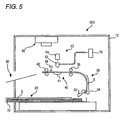
Classifications
-
- B—PERFORMING OPERATIONS; TRANSPORTING
- B41—PRINTING; LINING MACHINES; TYPEWRITERS; STAMPS
- B41J—TYPEWRITERS; SELECTIVE PRINTING MECHANISMS, i.e. MECHANISMS PRINTING OTHERWISE THAN FROM A FORME; CORRECTION OF TYPOGRAPHICAL ERRORS
- B41J11/00—Devices or arrangements of selective printing mechanisms, e.g. ink-jet printers or thermal printers, for supporting or handling copy material in sheet or web form
- B41J11/0015—Devices or arrangements of selective printing mechanisms, e.g. ink-jet printers or thermal printers, for supporting or handling copy material in sheet or web form for treating before, during or after printing or for uniform coating or laminating the copy material before or after printing
- B41J11/002—Curing or drying the ink on the copy materials, e.g. by heating or irradiating
- B41J11/0021—Curing or drying the ink on the copy materials, e.g. by heating or irradiating using irradiation
- B41J11/00214—Curing or drying the ink on the copy materials, e.g. by heating or irradiating using irradiation using UV radiation
Definitions
- the present invention relates to an ink-jet recording device which allows an ultraviolet-curable ink to be ejected onto a recording medium to form an image thereon and more particularly to an ink-jet recording device free from an ink odor.
- An ink-jet recording device which ejects an ultraviolet-curable ink through an ink-jet head onto a recording medium where it is then irradiated with ultraviolet ray and cure to effect image formation is characterized in that it is environmentally friendly, can make high speed recording on various recording media and provides a highly fine image with little bleeding (see, e.g., JP-A-2003-200564 (the term "JP-A" as used herein means an "unexamined published Japanese patent application)).
- Fig. 5 is a schematic drawing that illustrates construction of a conventional ink-jet recording device of a roller conveying type.
- the reference numeral 500 indicates the ink-jet recording device of the roller conveying type.
- the ink-jet recording device of the roller conveying type has a housing 12 in which there are provided a recording medium housing portion 20, a conveying portion 30 for retrieving a recording medium S from the housing portion 20, a conveying and supporting portion 40, an image recording portion 50 and a tray 90 onto which a recording medium S which has been subjected to recording in the image forming portion 50 is delivered.
- a housing cassette 22 for housing the recording medium S is detachably disposed under the housing 12.
- the recording medium S is conveyed from the housing cassette 22 to the scanning/retaining portion 40.
- the conveying and supporting portion 40 has a flat platen 41.
- Conveying rollers 36, 42 are provided both front and rear the platen 41, respectively. These conveying rollers are rotated in the predetermined respective direction. As the conveying rollers 36, 42 rotate, the recording medium S is conveyed from the conveying roller 36 to the conveying roller 42.
- a head unit 52 In the image recording portion 50 is provided a head unit 52.
- the head unit 52 ejects an ink image-wise from the various ink ejection portions on the recording medium S at predetermined positions.
- a head driver 54 To each of the various head units 52 is connected a head driver 54 which controls the amount of the ink to be ejected through the various ink ejection nozzles.
- a supplying portion 70 To each of these head units 52 is connected a supplying portion 70 which supplies the respective ink.
- An ultraviolet ray irradiating portion 56 is disposed down the head unit 52 shortly after the image recording position.
- the ultraviolet ray irradiating portion 56 is adapted to irradiate the ink dropped on the recording medium S with ultraviolet ray so that the ink is immediately cured.
- the tray 90 receives sequentially sheets of recording media S driven by the conveying roller 42 to form a stack of recording media S.
- a ventilation cooling portion 80 is provided at the upper portion in the housing 12. The internal air is exhausted out of the device through the ventilation cooling portion 80.
- the ink-jet recording device which ejects an ultraviolet-curable ink through an ink-jet head onto a recording medium where it is then irradiated with ultraviolet ray and cure to effect image formation is characterized in that it can make high speed recording on various recording media and provide a highly fine image with little bleeding.
- the ink-jet head can difficultly eject a highly viscous ink.
- the head is driven while being heated to reduce the viscosity of the ink during drawing.
- an ink containing a volatile curable component is used. Accordingly, such an ink is disadvantageous in that it has an odor and the volatile component gives unpleasant feeling to human being.
- An objection of the invention is to provide an ink-jet recording device which can form a high quality image at an excellent productivity without generating volatile components.
- a filter unit which is activated when irradiated with ultraviolet ray irradiated by an irradiating unit is provided, making it possible to obtain a ink-jet recording device which can form a high quality image at an excellent productivity without generating volatile components.
- JP-A-2005-70264 discloses an image forming device which uses a filter unit to remove odor from the interior thereof. To this end, a dedicated illuminating light is needed, adding to cost. Further, the installation space for the illuminating light is needed.
- the illuminating light is operated in ON/OFF control mode, i.e., ON for a predetermined period of time, OFF, and ON again.
- ON/OFF control mode i.e., ON for a predetermined period of time, OFF, and ON again.
- the in-rush current developed when the illuminating light is switched ON gives a great burden on the illuminating light. Therefore, the illuminating light has a shorter life when switched ON/OFF repeatedly than when kept ON. Thus, this ON/OFF control mode is not desirable.
- a dedicated illuminating light it is not necessary that a dedicated illuminating light be separately provided. Further, ON/OFF control mode, in which the life of the illuminating light is drastically reduced, is not used. Moreover, an illuminating light which is kept ON can be operated at as high an efficiency as 100% such that emission cannot be wasted.
- Fig. 1 is a schematic drawing that illustrates configuration of an ink-jet recording device of a roller conveying type according to Embodiment 1 of the invention.
- Fig. 1A is a drawing that illustrates how a filter unit provided according to the invention is irradiated with ultraviolet ray from an irradiating unit.
- Fig. 1B is a drawing that illustrates the operation of the conventional movement irradiating a recording medium with ultraviolet ray from an irradiating unit.
- the reference numeral 100 indicates a ink-jet recording device.
- the ink-jet recording device 100 comprises a housing 12 in which there are provided a recording medium housing portion 20 (hereinafter also simply referred to as “housing portion”) for housing sheet-like recording media S having the same size in a stack, a conveying unit (hereinafter also referred to as “conveying portion”) 30 for retrieving the recording medium S from the housing portion 20, a conveying and supporting portion 40 serving as a conveying unit for conveying the recording medium S conveyed by the conveying portion 30 while being supported within a recording position range, an image recording portion 50 for performing ink-jet image recording and ultraviolet fixing on the recording medium S which is being moved and scanned while being retained in the conveying and supporting portion 40 and a tray 90 onto which the recording medium S which has an image recorded thereon in the image recording portion 50 is outputted.
- a recording medium housing portion 20 hereinafter also simply referred to as “housing portion”
- conveying unit 30 for retrieving the recording medium S from
- a housing cassette 22 for housing the recording medium S is detachably disposed under the housing 12 of the ink-jet recording device 100 so that recording media S having different sizes replaced by each other can be supplied into the device.
- the recording medium housing portion 20 can also be arranged to have a plurality of cassettes mounted thereon.
- a feed roller 32 is provided in contact with the forward end of the recording medium S in the housing cassette 22 set in the housing 12 in the insert direction of the housing cassette 22. Further, a pair of conveying rollers 34, 36 for conveying the recording medium S drawn out by the feed roller 32 to the conveying and supporting portion 40 is provided.
- the conveying and supporting portion 40 has a flat platen 41 for supporting the recording medium S on the non-recording surface thereof opposite the recording surface thereof.
- Conveying rollers 36, 42 are provided before and after the platen 41, respectively. These conveying rollers are rotated in the predetermined direction on their axis, respectively. As the conveying rollers 36, 42 rotate, the recording medium S is conveyed from the conveying roller 36 to the conveying roller 42.
- an ink-jet head (hereinafter also referred to as "head unit") 52 including plural ejection nozzles extending toward the recording medium S arranged in the direction perpendicular to the surface of the drawing.
- the head unit 52 ejects an ink image-wise from the various ink ejection portions on the recording medium S at predetermined positions.
- Fig. 1A only a head unit 52 of a full line-head type for black K is illustrated.
- head units dedicated respectively for yellow Y, magenta M and cyan C are arranged parallel to the head unit 52 for black K upstream or downstream in the conveying direction.
- a head driver 54 which controls the amount of the ink to be ejected through the various ink ejection nozzles.
- a supplying portion 70 which supplies the respective ink.
- An irradiating portion (hereinafter also referred to as "ultraviolet ray irradiating portion") 56 is disposed down the head unit 52 shortly after the image recording position.
- the ultraviolet ray irradiating portion 56 is adapted to irradiate the ink dropped on the recording medium S with ultraviolet ray so that the ink is immediately cured.
- the light source for emitting ultraviolet ray there may be used high pressure mercury vapor lamp, black light fluorescent tube, low pressure mercury vapor lamp, ultraviolet ray emitting diode, ultraviolet semiconductor laser, excimer laser, Ti sapphire laser or the like.
- the tray 90 receives sequentially sheets of recording media S driven by the conveying roller 42 to form a stack of recording media S.
- the tray 90 is disposed in such an arrangement that the forward end thereof (upstream side of the recording medium P in the conveying direction) is disposed outside the housing 12 and the rear end thereof is disposed inside the housing 12.
- the tray 90 is also tilted at a predetermined angle such that the forward end thereof is lower than the rear end thereof.
- a ventilation cooling portion 80 is provided at the upper portion in the housing 12. The internal air is exhausted out of the device through the ventilation cooling portion 80.
- the device described above is characterized in that the filter unit 57 which is activated when irradiated with ultraviolet ray irradiated by the ultraviolet ray irradiating portion 56 is provided according to the invention.
- the filter unit 57 is disposed on the side of the recording medium S opposite the emitting unit 57 at a position such that when the ultraviolet ray irradiated by the ultraviolet ray irradiating portion 56 are not blocked by the recording medium S, the filter unit 57 is irradiated with the irritating light.
- the filter unit 57 is formed by a porous ceramic having a void of 50% or more and a pore diameter of from 10 ⁇ m to 100 ⁇ m and has a photocatalyst dispersed and supported therein. As the photocatalyst there is effectively used titanium oxide.
- the filter unit 57 comprising a photocatalyst incorporated therein has odor component-containing air present therein
- ultraviolet ray having a wavelength of from 300 nm to 400 nm irradiated by the ultraviolet ray irritating portion 56
- organic components which are odor components are decomposed to eliminate odor, giving no unpleasant feeling.
- the ultraviolet ray irradiating portion 56 keeps irritating ultraviolet ray.
- the recording medium S on which the ink has been dropped in the image recording portion 50 is then irradiated with ultraviolet ray irradiated by the ultraviolet ray irradiating portion 56 while passing under the ultraviolet ray irradiating portion 56 so that the ink is cured and fixed.
- ultraviolet ray irradiated by the ultraviolet ray irradiating portion 56 are no longer blocked by the recording medium S to cause the filter unit 57 to be automatically irradiated with ultraviolet ray as illustrated in Fig. 1A.
- the filter unit 57 is irradiated with ultraviolet ray, the organic compounds constituting foreign matters F caught by the filter unit 57 are then decomposed to eliminate odor.
- the irradiation of the filter unit 57 is then suspended and followed by the ordinary fixing operation involving the fixation of ink on the recording medium S.
- the provision of the filter unit 57 which is activated when irradiated with ultraviolet ray causes the elimination of odor of ink, making it possible to prevent the user from being offended by unpleasant odor.
- the invention is also characterized in that as the device for irradiating the filter unit 57 with ultraviolet ray, the ultraviolet ray irradiating portion 56 for curing the ink on the recording medium S is also used effectively while the ink is not being cured instead of separately providing an ultraviolet lamp.
- the ultraviolet ray irradiating portion 56 can be operated as effectively as 100% without necessitating a complicated, expensive and fragile switching mechanism to remove odor.
- Fig. 2 is a schematic drawing that illustrates configuration of an ink-jet recording device of a roller conveying type according to Embodiment 2 of the invention.
- Fig. 2A is a drawing that illustrates how a filter unit provided according to the invention is irradiated with ultraviolet ray from an irritating unit.
- Fig. 2B is a diagram that illustrates the operation of the conventional photosetting technique involving the irradiation of a recording medium with ultraviolet ray from an irritating unit.
- Embodiment 2 is characterized in that the device of Embodiment 1 is additionally provided with a unit for forming air flow toward the filter unit.
- the reference numeral 58 indicates an air flow forming unit as a suction fan comprising an aspiration fan and a duct surrounding the aspiration fan.
- the air flow forming unit 58 is disposed close to the filter unit 57 on the side thereof opposite the ultraviolet ray irradiating portion 56.
- an air flow is developed in the duct in the direction shown by the arrow so that the air flows mainly through this region to pass through the filter unit 57, causing the odor components F in the air in the device to be caught by the filter unit 57.
- the mode is switched from the ink irradiation mode illustrated in Fig. 2B to the filter unit irradiation mode illustrated in Fig. 2A.
- the ultraviolet ray irradiated by the ultraviolet ray irradiating portion 56 then hit the filter unit instead of the recording medium S.
- the odor components F in the air caught by the filter unit 57 are then decomposed by ultraviolet ray to eliminate odor.
- a unit for forming air flow toward the filter unit is added.
- a circulation system allowing the flow of air toward the filter unit 57 in the device is formed, making it possible for the odor components F in the air to be caught efficiently by the filter unit 57.
- Fig. 3 is a schematic drawing that illustrated configuration of an ink-jet recording device according to Embodiment 3 of the invention.
- Fig. 3A is a drawing that illustrates how a filter unit provided according to the invention is irradiated with ultraviolet ray from an irritating unit.
- Fig. 3B is a drawing that illustrates the operation of the conventional photosetting technique involving the irradiation of a recording medium with ultraviolet ray from an irritating unit.
- the ink-jet recording device is characterized in that the ventilation cooling portion 80 as the suction fan is provided in the vicinity of the tray 90, which is the outlet of the recording medium S, the filter unit 57 is provided in the air passage of the ventilation cooling portion 80 and the reflective plate 59 for reflecting the ultraviolet ray from the ultraviolet ray irradiating portion 56 toward the filter unit 57 is disposed on the extension line from the ultraviolet ray irradiating portion 56 toward the recording medium S on the side of the recording medium S opposite the irritating unit 56.
- the ventilation cooling portion 80 when the ventilation cooling portion 80 operates, the inner air flows mainly toward the ventilation cooling portion 80 to pass through the filter unit 57 so that the odor components F in the air in the device are caught by the filter unit 57.
- the mode is switched from the ink irradiation mode illustrated in Fig. 3B to the filter unit irradiation mode illustrated in Fig. 3A.
- the ultraviolet ray from the ultraviolet ray irradiating portion 56 is then reflected by the reflective plate 59 instead of hitting the recording medium S.
- the ultraviolet ray thus reflected then hit the filter unit 57.
- the odor components F in the air caught by the filter unit 57 are decomposed by the ultraviolet ray to eliminate odor.
- the ventilation cooling portion 80 is disposed in the vicinity of the outlet of the recording medium S.
- the air flows toward the ventilation cooling portion 80 while cleaning the recording medium S to remove dust.
- the dust is then removed by the cleaning filter.
- the resulting purified air is then exhausted out of the device from the ventilation cooling portion 80.
- the odor components F are caught by the filter unit 57.
- the ultraviolet ray irradiated by the ultraviolet ray irradiating portion 56 is reflected by the reflective plate 59 and then hit the filter unit 57 instead of hitting the recording medium S. In this manner, the odor components F in the air caught by the filter unit 57 are decomposed by the ultraviolet ray to eliminate odor.
- Fig. 4 is a schematic drawing that illustrates configuration of an ink-jet recording device according to Embodiment 4 of the invention.
- Fig. 4A is a drawing that illustrates how a filter unit provided according to the invention is irradiated with ultraviolet ray from an irritating unit.
- Fig. 4B is a drawing that illustrates the operation of the conventional photosetting technique involving the irradiation of a recording medium with ultraviolet ray from an irritating unit.
- the ink-jet recording device is characterized in that pressure adjusting units 110 to 130 are provided instead of the ventilation cooling portion 80 of Examples 1 to 3.
- the reference numeral 110 indicates a filter
- the reference numeral 120 indicates an aspiration fan as a suction fan
- the reference numeral 130 indicates a duct.
- the filter 110 is adapted to remove dust and foreign matters from the external air which is being taken in the device, providing clean air.
- the aspiration fan 120 is adapted to take the clean external air given by the filter 110 into the device.
- the duct 130 covers the exhaustion side of the aspiration fan 120 at one end thereof and the ink-jet head 52 at the other and extends to the forward end of the ink-jet head 52 at which it is opened toward the recording medium S.
- the air flow which has been blocked by the recording medium S is then branched upstream and downstream in the conveying direction.
- the downstream air flow W2 proceeds to the outlet.
- the filter unit 57 according to the invention is provided at the position where the air flow W2 collides with the filter unit 57.
- the reflective plate 59 for reflecting the ultraviolet ray from the ultraviolet ray irradiating portion 56 toward the filter unit 57 is provided on the extension line from the ultraviolet ray irradiating portion 56 toward the recording medium S on the side of the recording medium S opposite the irritating unit 56.
- the aspiration fan 120 When the aspiration fan 120 operates, the external air containing dust is cleaned through the filter 110, and then taken into the device. The clean air thus taken passes through the duct 130 to the ink-jet head 52 from which it is then exhausted toward the recording medium S. The air then flows along the surface of the recording medium S toward the outlet where the tray 90 is disposed to form an air flow W2 which then hits the filter unit 57. In this manner, the odor components F in the air flow in the device are caught by the filter unit 57.
- the mode is switched from the ink irradiation mode illustrated in Fig. 4B to the filter unit irradiation mode illustrated in Fig.
- the ultraviolet ray from the ultraviolet ray irradiating portion 56 are then reflected by the reflective plate 59 to hit the filter unit 57.
- the odor components F in the air caught by the filter unit 57 are decomposed by the ultraviolet ray to eliminate odor.
- the air flow W2 removes dust from the surface of the recording medium S, making it possible to effect clean image processing free from stain.
- the air which has been cleaned and given a higher pressure than the external air by the pressure adjusting units 110 to 130 flows through the duct 130 and then around the ink-jet head 52 to form an air curtain around the ink-jet head 52 so that foreign matters such as dust and paper dust, if any in the device, cannot approach the nozzle of the ink-jet head, making it possible to keep the ink-jet head 52 clean.
- the interior of the device is always kept under a high pressure, the air is exhausted out of the device through the outlet of the tray 90 to discharge the foreign matters out of the device. At the same time, the air taken into the device is cleaned by the filter 110. Thus, in the final stationary state, the interior of the device can be kept clean.
- the air flow containing the odor components F in the air in the device is caught by the filter unit 57 which is irradiated with the ultraviolet ray from the ultraviolet ray irradiating portion 56 which are reflected by the reflective plate 59 instead of hitting the recording medium S.
- the odor components F in the air caught by the filter unit 57 are decomposed by the ultraviolet ray to eliminate odor.
- a filter unit which is activated when irradiated with ultraviolet ray from an irritating unit is provided, making it possible to obtain an ink-jet recording device which can draw a high quality image at an excellent productivity without generating volatile components.
- the device according to the invention requires no dedicated illuminating light, making it possible to reduce cost and installation space.
- cationic polymer-based ink compositions cationic polymer-based ink compositions, radical polymerization-based ink compositions and aqueous ink compositions which can be used in the invention will be further described hereinafter.
- the cationic polymer-based ink composition comprises (a) a cationically polymerizable compound and (b) a compound which generates an acid when irradiated with light energy.
- the cationic polymer-based ink composition may optionally further comprise (d) an organic acidic component having a pKa value of from 2 to 6, (e) a colorant, etc.
- the cationically polymerizable compound (a) to be used in the invention is not specifically limited so far as it is a compound which undergoes polymerization reaction with the acid generated by the compound (b) described later which generates an acid when irradiated with light energy to cause curing.
- a compound there may be used any of various cationically polymerizable monomers known as cationic photopolymerizable monomer.
- Examples of the cationically polymerizable monomers include epoxy compounds, vinylether compounds and oxetane compounds disclosed in JP-A-6 -9714 , JP-A-2001-31892 , JP-A-2001-40068 , JP-A-2001 - 55507 , JP-A-2001-310938 , JP-A-2001-310937 , and JP-A- 2001-220526 .
- epoxy compounds examples include aromatic epoxides, and alicyclic epoxides.
- the aromatic epoxide there may be used a di- or polyglycidylether produced by the reaction of a polyvalent phenol having at least one aromatic nucleus or alkylene oxide adduct thereof with epichlorohydrin.
- the di- or polyglycidylether include di- or polyglycidylether of bisphenol A or alkylene oxide adduct thereof, di- or polyglycidylether of hydrogenated bisphenol A or alkylene oxide adduct thereof, and novolac type epoxy resin.
- the alkylene oxide include ethylene oxide, and propylene oxide.
- a cyclohexene oxide- or cyclopentene oxide-containing compound obtained by epoxidizing a compound having at least one cycloalkane ring such as cyclohexene and cyclopentene ring with a proper oxidizing agent such as hydrogen peroxide and peracid.
- aliphatic epoxide there may be used a di- or polyglycidylether of aliphatic polyvalent alcohol or alkylene oxide adduct thereof.
- the di- or polyglycidylether include diglycidylethers of alkylene glycol such as diglycidylether of ethylene glycol, diglycidylether of propylene glycol and diglycidylether of 1,6-hexanediol, polyglycidylethers of polyvalent alcohol such as di- or triglyciylether of glycerin or alkylene oxide adduct thereof, and diglycidylethers of polyalkylene glycol such as diglycidylether of polyethylene glycol or alkylene oxide adduct thereof and diglycidylether of polypropylene glycol or alkylene oxide adduct thereof.
- the alkylene oxide include ethylene oxide and propylene oxide.
- the epoxy compound may be monofunctional or polyfunctional.
- Examples of the monofunctional epoxy compound employable herein include phenylglycidylether, p-tert- butylphenyl glycidylether, butyl glycidylether, 2-ethylhexyl glycidylether, allyl glycidylether, 1,2- butylene oxide, 1,3-butadiene monoxide, 1,2-epoxy dodecane, epichlorohydrin, 1,2-epoxydecane, styrene oxide, cyclohexene oxide, 3-methacryloyloxymethyl cyclohexene oxide, 3-acryloyloxy methyl cyclohexene oxide, and 3-binyl cyclohexene oxide.
- polyfunctional epoxy compound examples include bisphenol A diglycidylether, bisphenol F diglycidylether, bisphenol S diglycidylether, bromated bisphenol A diglycidylether, bromated bisphenol F diglycidylether, bromated bisphenol S diglycidylether, epoxy novolac resin, hydrogenated bisphenol A diglycidylether, hydrogenated bisphenol F diglycidylether, hydrogenated bisphenol S diglycidylether, 3,4-epoxycyclohexylmethyl-3',4'- epoxycyclohexane carboxylate, 2-(3,4-epoxycyclohexyl-5,5-spiro-3,4-epoxy)cyclohexane-metha-dioxane, bis (3,4-epoxycyclohexylmethyl)adipate, vinylcyclohexene oxide, 4-vinylepoxycyclohexane, bis(3,4-epoxy-6-methylcyclohexyl)
- epoxy compounds are aromatic epoxides and alicyclic epoxides because they can be cured very quickly. Particularly preferred among these epoxy compounds are alicyclic epoxides.
- vinylether compound employable herein examples include di- or trivinylether compounds such as ethylene glycol divinyl ether, diethylene glycol divinyl ether, triethylene glycol divinyl ether, propylene glycol divinyl ether, dipropylene glycol divinyl ether, butanediol divinyl ether, hexanediol divinyl ether, cyclohexanedimethanol divinyl ether and trimethylolpropane trivinyl ether, and monovinyl ether compounds such as ethyl vinyl ether, n-butyl vinyl ether, isobutyl vinyl ether, octadecyl vinyl ether, cyclohexyl vinyl ether, hydroxybutyl vinyl ether, 2-ethylhexyl vinyl ether, cyclohexane dimethanol monovinyl ether, n-propylvinyl ether, isopropylvinyl ether
- the vinylether compound of the invention may be monofunctional or polyfunctional.
- the monofunctional vinylether examples include methyl vinyl ether, ethyl vinyl ether, propyl vinyl ether, n-butyl vinyl ether, t-butyl vinyl ether, 2-ethylhexyl vinyl ether, n-nonyl vinyl ether, lauryl vinyl ether, cyclohexyl vinyl ether, cyclohexyl methyl vinyl ether, 4-methylcyclohexyl methyl vinyl ether, benzyl vinyl ether, dicyclopentenyl vinyl ether, 2- dicyclopentenoxyethyl vinyl ether, methoxyethyl vinyl ether, ethoxyethyl vinyl ether, butoxyethyl vinyl ether, methoxyethoxyethyl vinyl ether, ethoxyethoxyethyl vinyl ether, methoxy polyethylene glycol vinyl ether, tetrahydrofuryl vinyl ether, 2-hydroxyethyl vinyl ether, 2-hydroxypropyl vinyl ether,
- polyfunctional vinyl ether examples include vinyl ethers such as ethylene glycol divinyl ether, diethylene glycol divinyl ether, polyethylene glycol vinyl ether, propylene glycol divinyl ether, butylene glycol divinyl ether, hexanediol divinyl ether, bisphenol A alkylene oxide divinyl ether and bisphenol F al kylene oxide divinyl ether, and polyfunctional vinyl ethers such as trimethylolethane trivinyl ether, trimethylolpropane trivinyl ether, ditrimethylolpropane tetravinyl ether, glycerin trivinyl ether, pentaerythritol tetravinyl ether, dipentaerythritol pentavinyl ether, dipentaerythtritol hexavinyl ether, ethylene oxide-added trimethylolpropane trivinyl ether, propylene oxide-added
- vinylether compounds are di- or trivinylether compounds from the standpoint of curability, adhesion to recording medium and surface hardness of image thus formed.
- Particularly preferred among these vinylether compounds are divinylether compounds.
- the oxetane compound of the invention is a compound having an oxetane ring.
- Known oxetane compounds as disclosed in JP-A-2001-220526 , JP-A-2001-310937 and JP- A-2003-341217 can be arbitrarily selected.
- the compound having an oxetane ring which can be used in the ink composition of the invention there is preferably used a compound having from 1 to 4 oxetane rings.
- a compound having from 1 to 4 oxetane rings makes it easy to keep the viscosity of the ink composition within a range such that the ink composition can be fairly handled and makes it possible to obtain a high adhesion between the ink composition thus cured and the recording medium.
- oxetane compounds to be used in the invention are those having one oxetane ring from the standpoint of viscosity and adhesion of ink composition.
- the ink composition of the invention may comprise these cationically polymerizable compounds incorporated therein singly or in combination of two or more thereof. From the standpoint of effectiveness in the inhibition of shrinkage during ink curing, however, at least one compound selected from the group consisting of oxetane compounds and epoxy compounds and vinylether compounds are preferably used in combination.
- the content of the cationically polymerizable compound (a) in the ink composition is preferably from 10% to 95% by weight, more preferably from 30% to 90% by weight, even more preferably from 50% to 85% by weight based on the total solid content of the composition.
- the ink composition of the invention contains a compound which generates an acid when irradiated with light energy (hereinafter optionally referred to as "photoacid generator").
- the photoacid generator to be used in the invention there may be properly selected cationic photopolymerization initiator, photoradical polymerization initiator, photodiscoloring agent for dyes, photodecoloring agent, or a compound which generates when irradiated with irritating light used for microresist (ultraviolet ray having a wavelength of from 200 nm to 400 nm, far ultraviolet ray, particularly preferably g-beam, h-beam, i-beam, KrF excimer laser beam), ArF excimer laser beam or the like.
- irritating light used for microresist ultraviolet ray having a wavelength of from 200 nm to 400 nm, far ultraviolet ray, particularly preferably g-beam, h-beam, i-beam, KrF excimer laser beam
- ArF excimer laser beam or the like.
- Examples of the photoacid generator include onium salts such as diazonium salt, ammonium salt, phosphonium salt, iodonium salt, sulfonium salt, selenonium salt and arsonium salt, organic halogen compounds and organic metal/organic halogen compounds which undergo decomposition and generate an acid when irradiated with light energy, photoacid generators having o-nitrobenzyl type protective group, compounds which undergo photodecomposition to sulfonic acid such as iminosulfonate, disulfone compounds, diazoketosulfone, and diazodisulfone compounds.
- onium salts such as diazonium salt, ammonium salt, phosphonium salt, iodonium salt, sulfonium salt, selenonium salt and arsonium salt
- organic halogen compounds and organic metal/organic halogen compounds which undergo decomposition and generate an acid when irradiated with light energy photoacid generators having o-nitrobenz
- the photoacid generator there is preferably used also a oxazole derivative or s-triazine derivative disclosed in JP-A-2002-122994 , paragraph [0029] to [0030]. Further, onium salt compounds and sulfonate-based compounds exemplified in JP-A-2002-122994 , paragraph [0037] to [0063] can be used as photoacid generator in the invention to advantage.
- photoacid generators (b) may be used singly or in combination of two or more thereof.
- the content of the photoacid generator (b) in the ink composition is preferably from 0.1 to 20% by weight, more preferably from 0.5 to 10% by weight, even more preferably from 1 to 7% by weight based on the total solid content of the ink composition.
- the ink composition of the invention may also comprise various additives incorporated therein in addition to the aforementioned essential components. These arbitrary components will be further described hereinafter.
- the ink composition of the invention may comprise (d) an organic acidic component having a pKa value of from 2 to 6 (hereinafter occasionally referred simply to as "organic acidic component") incorporated therein.
- the organic acidic component having a pKa value of from 2 to 6 corresponds qualitatively to a weakly acidic organic compound.
- the organic acidic component having a pKa value of more than 6 causes the drop of sensitivity when incorporated in the ink composition of the invention.
- the organic acidic component having a pKa value of less than 2 causes the deterioration of age stability of the ink composition.
- an organic acidic component having pKa value of from 2 to 6 is preferably used.
- the organic acidic component having a pKa value of from 2 to 6 include carboxylic acids.
- the carboxylic acid include C 1 -C 20 aliphatic or aromatic monocarboxylic acids, dicarboxylic acids and tricarboxylic acids such as acetic acid, phenylacetic acid, phenoxyacetic acid, methoxypropionic acid, lactic acid, hexanoic acid, heptanoic acid, octanoic acid, palmitic acid, stearic acid, oleic acid, linoleic acid, cyclopropylcarboxylic acid, cyclobutanecarboxylic acid, cyclopentanecarboxylic acid, cyclohexanecarboxylic acid, 1-adamanthanecarboxylic acid, 1,3-adamanthane dicarboxylic acid, norbornene-2,3-dicarboxylic acid, abietic acid, trans-retinic acid,
- the ink composition of the invention can form a visible image when it comprises a coloring agent incorporated therein.
- the coloring agent to be used herein is not specifically limited. Any known coloring materials (pigment, dye) may be properly selected depending on the purpose. For example, in order to form an image excellent in weathering resistance, pigments are preferably used. As dyes there may be used any of water-soluble dyes and oil-soluble dyes. However, oil- soluble dyes are preferred.
- the pigments to be used in the invention are not specifically limited.
- a dispersion of any commercially available organic or inorganic pigment in a resin which cannot dissolve the pigment therein as a dispersion medium or a pigment the surface of which is grafted with a resin can be used.
- a particulate resin dyed with a dye can be used.
- pigments examples include those disclosed in Seishiro Ito, “Ganryo no Jiten (Dictionary of Pigments)", 2000 , W. Herbst, K. Hunger, “Industrial Organic Pigments ", JP-A-2002-12607 , JP-A-2002-188025 , JP-A-2003-26978 , and JP-A-2003-342503 .
- examples of those which assume yellow color include monoazo pigments such as C. I. Pigment Yellow 1 (e.g., Fast Yellow G) and C. I. Pigment Yellow 74, disazo pigments such as C. I. Pigment Yellow 12 (e.g., Disazo Yellow AAA) and C. I. Pigment Yellow 17, non-benzidine- based azo pigments such as C. I. Pigment Yellow 180, azolake pigments such as C. I. Pigment Yellow 100 (e.g., Tartrazine Yellow Lake), condensed azo pigments such as C. I.
- Pigment Yellow 95 e.g., condensed azo yellow GR
- acidic dye lake pigments such as C. I. Pigment Yellow 115 (e.g., Quinoline Yellow Lake)
- basic dye lake pigments such as C. I. Pigment Yellow 18 (e.g., Thioflavin Lake)
- anthraquinone-based pigments such as Flavanthrone Yellow (Y-24)
- isoindolinone pigments such as Isoindolinone Yellow 3RLT (Y-110)
- quinophthalone pigments such as Quinophthalone Yellow (Y-138)
- Isoindoline pigments such as Isoindoline Yellow (Y-139)
- nitroso pigments such as C. I. Pigment Yellow 153 (e.g., Nickel Nitroso Yellow)
- metal complex salt-based azomethine pigments such as C. I. Pigment Yellow 117 (e.g., copper azomethine yellow).
- red or magenta color examples include monoazo-based pigments such as C. I. Pigment Red 3 (e.g., Toluidine Red), disazo pigments such as C. I. Pigment Red 38 (e.g., Pyrazolone Red B), azo lake pigments such as C. I. Pigment Red 53:1 (e.g., Lake Red C) and C. I. Pigment Red 57:1 (Brilliant Carmine 6B), condensed azo pigments such as C. I. Pigment Red 144 (e.g. , Condensed Azo Red BR), acidic dye lake pigments such as C. I. Pigment Red 174 (e.g., Phloxine B Lake), basic dye lake pigments such as C. I.
- monoazo-based pigments such as C. I. Pigment Red 3 (e.g., Toluidine Red)
- disazo pigments such as C. I. Pigment Red 38 (e.g., Pyrazolone Red B)
- azo lake pigments
- Pigment Red 81 e.g., Rhodamine 6G' Lake
- anthraquinone-based pigments such as C. I. Pigment Red 177 (e.g., Dianthraquinonyl Red)
- thioindigo pigments such as C. I. Pigment Red 88 (e.g., Thioindigo Bordeaux)
- perynone pigments such as C. I. Pigment Red 194 (e.g., Perynone Red)
- perylene pigments such as C. I. Pigment Red 149 (e.g., perylene Scarlet)
- quinacridone pigments such as C. I. Pigment Violet 19 (unsubstituted quinacridone) and C. I.
- Pigment Red 122 e.g., Quinacridone Magenta
- isoindolinone pigments such as C. I. Pigment Red 180 (e.g., Isoindolidone Red 2BLT) and alizarin lake pigments such as C. I. Pigment Red 83 (e.g., Madder Lake).
- blue or cyan color examples include disazo-based pigments such as C. I. Pigment Blue 25 (e.g., Dianisidine Blue), phthalocyanine pigments such as C. I. Pigment Blue 15 (e.g., phthalocyanine blue), acidic dye lake pigments such as C. I. Pigment Blue 24 (e.g., Peacock Blue Lake), basic dye lake pigments such as C. I. Pigment Blue 1 (e.g., Bichlothia Pure Blue BO Lake), anthraquinone-based pigments such as C. I. Pigment Blue 60 (e.g., Indanthrone Blue), and alkali blue pigments such as C. I. Pigment Blue 18 (e.g., Alkali blue V-5:1).
- disazo-based pigments such as C. I. Pigment Blue 25 (e.g., Dianisidine Blue)
- phthalocyanine pigments such as C. I. Pigment Blue 15 (e.g., phthalocyanine blue)
- Examples of those which assume green color include phthalocyanine pigments such as C. I. Pigment Green 7 (Phthalocyanine Green) and C. I. Pigment Green 36 (Phthalocyanine Green), and azo metal complex pigments such as C. I. Pigment Green 8 (Nitroso Green).
- phthalocyanine pigments such as C. I. Pigment Green 7 (Phthalocyanine Green) and C. I. Pigment Green 36 (Phthalocyanine Green)
- azo metal complex pigments such as C. I. Pigment Green 8 (Nitroso Green).
- orange color examples include isoindoline-based pigments such as C. I. Pigment Orange 66 (Isoindoline Orange), and anthraquinone-based pigments such as C. I. Pigment Orange 51 (Dichloropyranthrone Orange).
- black color examples include carbon black, titanium black, and aniline black.
- white pigments employable herein include basic lead carbonate (2PbCO 3 Pb(OH) 2 , i. e., so-called silver white), zinc oxide (ZnO, i.e., so-called zinc white), titanium oxide (TiO 2 , i.e., so-called titanium white), and strontium titanate (SrTiO 3 , i.e., so-called titanium strontium white).
- 2PbCO 3 Pb(OH) 2 i. e., so-called silver white
- ZnO zinc oxide
- TiO 2 titanium oxide
- strontium titanate strontium titanate
- titanium oxide exhibits a small specific gravity, a great refractive index and a high chemical and physical stability as compared with the other white pigments and thus has a great opacifying strength and coloring power as a pigment.
- Titanium oxide is excellent also in durability against acid, alkali and other environmental factors. Accordingly, as white pigment there is preferably used titanium oxide. It goes without saying that other white pigments (which may be other than the above exemplified white pigments) may be used as necessary.
- a dispersing machine such as ball mill, sand mill, attritor, roll mill, jet mill, homogenizer, paint shaker, kneader, agitator, Henschel mixer, colloid mill, ultrasonic homogenizer, pearl mill and wet jet mill may be used.
- the dispersion of pigment may be effected with a dispersant added.
- the dispersant employable herein include hydroxyl group-containing carboxylic acid esters, salts of long-chain polyamino amide with polymer acid ester, salts of high molecular polycarboxylic acid, high molecular unsaturated acid esters, high molecular copolymers, modified polyacrylates, aliphatic polyvalent carboxylic acids, naphthalenesulfonic acid-formalin condensates, polyoxyethylene alkylphosphoric acid esters, and pigment derivatives.
- commercially available dispersants such as Solspherse Series (produced by Zeneca Inc.) are preferably used.
- a dispersing aid there may be used a synergist depending on the pigment used. These dispersants and dispersing aids are preferably added in an amount of from 1 to 50 parts by weight based on 100 parts by weight of the pigment used.
- the dispersion medium for the various components such as pigment constituting the ink composition there may be used a solvent.
- the aforementioned cationically polymerizable compound (a) which is a low molecular component, may be used free of solvent.
- the ink composition of the invention is a radiation-curing ink which is adapted to be applied to the recording medium on which it is then cured, it is preferred that no solvents be used. This is because if any solvent remains in the cured ink image, the cured ink shows a deteriorated solvent resistance or the remaining solvent causes VOC (volatile organic compound) problem.
- cationically polymerizable compound (a) Preferred among these cationically polymerizable compounds are those having the lowest viscosity from the standpoint of dispersibility or enhancement of handleability of ink composition.
- the average particle diameter of the pigment is preferably from 0.02 ⁇ m to 4 ⁇ m, more preferably from 0.02 ⁇ m to 2 ⁇ m, even more preferably from 0.02 ⁇ m to 1.0 ⁇ m.
- the kind of pigment, dispersant and dispersion medium to be used and the dispersion and filtration conditions are predetermined such that the average particle diameter of the pigment particles fall within the above defined desired range.
- the dye to be used in the invention is preferably oil-soluble.
- the solubility of the dye of the invention in water at 25°C is 1 g or less, preferably 0.5 g or less, more preferably 0.1 g or less. Accordingly, a so-called water-insoluble oil-soluble dye is preferably used.
- the aforementioned dye nucleus preferably has an oil-solubilizing group incorporated therein to cause the dye to be dissolved in the ink composition in a required amount.
- oil-solubilizing group examples include long-chain and branched alkyl groups, long-chain and branched alkoxy groups, long-chain and branched alkylthio groups, long-chain and branched alkylsulfonyl groups, long-chain and branched acyloxy groups, long-chain and branched alkoxycarbonyl groups, long-chain and branched acyl groups, long-chain and branched acylamino groups, long-chain and branched alkylsulfonylamino groups, long-chain and branched alkylaminosulfonyl groups, and aryl, aryloxy, aryloxycarbonyl, arylarbonyloxy, arylaminocarbonyl, arylaminosulfonyl and arylsulfonylamino groups containing these long-chain and branched substituents.
- a water-soluble dye having a carboxylic acid or sulfonic acid may be reacted with a long-chain or branched alcohol, amine, phenol or aniline derivative to convert the carboxylic acid or sulfonic acid into alkoxycarbonyl group, aryloxycarbonyl group, alkylaminosulfonyl group or arylaminosulfonyl group as an oil-solubilizing group, thereby providing a dye of the invention.
- the aforementioned oil-soluble dye preferably has a melting point of 200°C or less, more preferably 150°C or less, even more preferably 100°C or less.
- the use of an oil-soluble dye having a low melting point makes it possible to inhibit the crystallization of the dye in the ink composition and hence improve the storage stability of the ink composition.
- the oxidation potential of the oil-soluble dye is preferably positive (high).
- the oil-soluble dye to be used in the invention there is preferably used one having an oxidation potential of 1.0 V (vsSCE) or more.
- the oxidation potential of the oil-soluble dye is preferably as high as possible, more preferably 1.1 V (vsSCE) or more, particularly preferably 1.15 V (vsSCE) or more.
- yellow color dye there is preferably used a compound having the structure represented by the general formula (Y-I) disclosed in JP-A-2004-250483 .
- yellow color dye examples include those represented by the general formulae (Y-II) to (Y-IV) disclosed in JP-A-2004-250483 , paragraph [0034]. Specific examples of these dyes include compounds disclosed in JP-A-2004-250483 , paragraph [0060] to [0071].
- the oil-soluble dye of the general formula (Y-I) disclosed in these patents may be used not only for yellow ink but also any other color inks such as black ink and red ink.
- magenta color dye there is preferably used a compound having the structure represented by the general formula (3) or (4) disclosed in JP-A-2002-114930 .
- Specific examples of such a compound include those disclosed in JP-A-2002-114930 , paragraph [0054] to [0073].
- magenta dye examples include azo dyes represented by the general formulae (M-1) and (M-2) disclosed in JP-A-2002-121414 , paragraph [0084] to [0122].
- Specific examples of the azo dye include compounds disclosed in JP-A-2002-121414 , paragraph [0123] to [0132].
- the oil-soluble dyes of the general formulae (3), (4), (M-1) and (M-2) disclosed in these patents may be used not only for magenta color dye but also for any other color inks such as black ink and red ink.
- Preferred examples of the cyan color dye include dyes represented by the general formulae (I) to (IV) disclosed in JP-A-2001-181547 , and dyes represented by the general formulae (IV-1) to (IV-4) disclosed in JP-A- 2002-121414 , paragraph [0063] to [0078].
- Specific examples of these dyes include compounds disclosed in JP-A-2001-181547 , paragraph [0052] to [0066] and JP-A-2002-121414 , paragraph [0079] to [0081].
- the cyan dye include phthalocyanine dyes represented by the general formulae (C-I) and (C-II) disclosed in JP-A-2002-121414 , paragraph [0133] to [0196], even more preferably (C-II).
- Specific examples of these phthalocyanine dyes include compounds disclosed in JP-A-2002-121414 , paragraph [0198] to [0201].
- the oil-soluble dyes of the general formulae (I) to (IV), (IV-1) to (IV-4), (C-I) and (C-II) may be used not only for cyan color ink but also for any other color inks such as black ink and green ink.
- coloring agents are preferably incorporated in the ink composition in an amount of from 1 to 20% by weight, more preferably from 2 to 10% by weight as calculated in terms of solid content.
- an ultraviolet absorber may be used from the standpoint of enhancement of weathering resistance of the image obtained and prevention of fading of the image.
- Examples of the ultraviolet absorber employable herein include benzotriazole-based compounds disclosed in JP-A-58-185677 , JP-A-61-190537 , JP-A-2-782 , JP-A-5-197075 and JP-A-9-34057 , benzophenone-based compounds disclosed in JP-A-46-2784 , JP-A-5-194483 and US Patent 3,214,463 , cinnamic acid-based compounds disclosed in JP-B-48-30492 (the term "JP-B" as used herein means an "examined Japanese patent application), JP-A-56-21141 and JP-A-10-88106 , triazine-based compounds disclosed in JP-A-4-298503 , JP-A-8-53427 , JP-A-8-239368 , JP-A-10-182621 and JP-T-8-501291 , and compounds which absorb ultraviolet ray to emit fluorescence, so-called fluorescent brighter, such as
- the added amount of the ultraviolet absorber is properly predetermined depending on the purpose but is normally from about 0.5 to 15% by weight as calculated in terms of solid content.
- the ink composition of the invention may comprise a sensitizer incorporated therein as necessary for the purpose of enhancing the acid generation efficiency of photoacid generator and moving the wavelength of sensitivity to a longer range.
- a sensitizer there may be used any material which can sensitize the photoacid generator by an electron moving mechanism or energy moving mechanism.
- Preferred examples of the sensitizer include aromatic polycondensed cyclic compounds such as anthracene, 9,10-dialkoxyanthracene, pyrene and perylene, aromatic ketone compounds such as acetophenone, benzophenone, thioxanthone and Michler's ketone, and heterocyclic compounds such as phenothiazine and N-aryloxazolidinone.
- the added amount of the sensitizer is properly predetermined depending on the purpose but is normally from 0.01 to 1 mol-%, preferably from 0.1 to 0.5 mol-% based on the photoacid generator.
- the ink composition of the invention may comprise an oxidation inhibitor incorporated therein to enhance stability thereof.
- oxidation inhibitor employable herein include those disclosed in European Disclosed Patent Nos. 223739 , 309401 , 309402 , 310551 , 310552 and 459416 , German Disclosed Patent No.
- the added amount of the oxidation inhibitor is properly predetermined depending on the purpose but is normally from about 0.1 to 8% by weight as calculated in terms of solid content.
- the ink composition of the invention may comprise various organic or metal complex-based fading inhibitors incorporated therein.
- the organic fading inhibitor employable herein include hydroquinones, alkoxyphenols, dialkoxyphenols, phenols, anilines, amines, indanes, chromanes, alkoxyanilines, and heterocycles.
- the metal complex-based fading inhibitor employable herein include nickel complexes, and zinc complexes.
- the added amount of the fading inhibitor is properly predetermined depending on the purpose but is normally from about 0.1 to 8% by weight as calculated in terms of solid content.
- the ink composition of the invention may comprise an electrically-conductive salt such as potassium thiocyanate, lithium nitrate, ammonium thiocyanate and dimethylamine hydrochloride incorporated therein for the purpose of controlling the ejectability thereof.
- an electrically-conductive salt such as potassium thiocyanate, lithium nitrate, ammonium thiocyanate and dimethylamine hydrochloride incorporated therein for the purpose of controlling the ejectability thereof.
- the ink composition of the invention may also comprise an extremely slight amount of an organic solvent incorporated therein to improve the adhesion thereof to the recording medium to advantage.
- Examples of the solvent employable herein include ketone-based solvents such as acetone, methyl ethyl ketone and diethyl ketone, alcohol-based solvents such as methanol, ethanol, 2-propanol, 1-propanol, 1-butanol and tert-butanol, chlorine-based solvents such as chloroform and methylene chloride, aromatic solvents such as benzene and toluene, ester-based solvents such as ethyl acetate, butyl acetate and isopropyl acetate, ether-based solvents such as diethyl ether, tetrahydrofurane and dioxane, and glycol ether-based solvents such as ethylene glycol monomethyl ether and ethylene glycol dimethyl ether.
- ketone-based solvents such as acetone, methyl ethyl ketone and diethyl ketone
- alcohol-based solvents such as methanol,
- the organic solvent is added in such an amount that no problems of solvent resistance and VOC can occur to advantage.
- the added amount of the solvent is preferably from 0.1 to 5% by weight, more preferably from 0.1 to 3% by weight based on the total amount of the ink composition.
- the ink composition of the invention may comprise various polymer compounds incorporated therein to adjust the physical properties of the film.
- the polymer compound employable herein include acrylic polymers, polyvinyl butyral resins, polyurethane resins, polyamide resins, polyester resins, epoxy resins, phenol resins, polycarbonate resins, polyvinyl butyral resins, polyvinyl formal resins, shellac, vinyl-based resins, acrylic resins, rubber-based resins, waxes, and other natural resins. Two or more of these polymer compounds may be used in combination.
- Preferred among these polymer compounds are vinyl-based copolymers obtained by the copolymerization of acrylic monomers.
- copolymer composition of polymer binder there is preferably used a copolymer containing a "carboxyl group-containing monomer", “methacrylic acid alkyl ester” or “acrylic acid alkyl ester” as a structural unit.
- the ink composition of the invention may comprise a surface active agent incorporated therein.
- the surface active agent there may be used any of those disclosed in JP-A-62-173463 and JP-A-62-183457 .
- the surface active agent employable herein include anionic surface active agents such as dialkylsulfosuccinic acid salts, alkylnaphthalenesulfonic acid salts and aliphatic acid salts, nonionic surface active agents such as polyoxyethylene alkyl ether, polyoxyethylene alkyl allyl ether, acetylene glycol and polyoxyethylene- polyoxypropylene block copolymer, and cationic surface active agents such as alkylamine and quaternary ammonium salt.
- An organic fluoro compound may be used instead of the aforementioned surface active agent.
- the organic fluoro compound is preferably hydrophobic.
- the organic fluoro compound include fluorine-based surface active agents, oil-like fluorine-based compounds (e.g., fluorinated oil), and solid fluorine compound resins (e.g., ethylene tetrafluoride resin). Specific examples of these organic fluoro compounds include those disclosed in JP-A-57-9053 (columns 8 to 17) and JP-A-62-135826 .
- a leveling agent a matting agent, a wax for adjusting the physical properties of the film, a tackifier which doesn't inhibit polymerization to improve adhesion to recording medium such as polyolefin and PET, etc. may be incorporated in the ink composition.
- tackifier employable herein include high molecular tacky polymers disclosed in JP-A-2001-49200 , pp. 5 - 6 (e.g., copolymer comprising ester of (meth) acrylic acid with alcohol having a C 1 -C 20 alkyl group, ester of (meth)acrylic acid with C 3 -C 14 alicyclic alcohol or ester of (meth)acrylic acid with C 6 -C 14 aromatic alcohol), and low molecular tackifying resins having polymerizable unsaturated bond.
- high molecular tacky polymers disclosed in JP-A-2001-49200 , pp. 5 - 6 (e.g., copolymer comprising ester of (meth) acrylic acid with alcohol having a C 1 -C 20 alkyl group, ester of (meth)acrylic acid with C 3 -C 14 alicyclic alcohol or ester of (meth)acrylic acid with C 6 -C 14 aromatic alcohol)
- the ink composition of the invention preferably has a viscosity of from 7 to 30 mPa ⁇ s, more preferably from 7 to 20 mPa ⁇ s at the ejection temperature taking into account the ejectability.
- the composition ratio of the ink composition is preferably adjusted and predetermined such that the viscosity thereof falls within the above defined range.
- the viscosity of the ink composition at a temperature of from 25°C to 30°C is from 35 to 500 mPa ⁇ s, preferably from 35 to 200 mPa ⁇ s.
- the viscosity of the ink composition at room temperature is predetermined to be a high value, the penetration of the ink into the recording medium, even if it is porous, can be prevented, making it possible to reduce the amount of monomers left uncured and eliminate odor. Further, dot bleeding during the impact of ink droplet can be prevented, resulting in the improvement of image quality.
- the ink viscosity at a temperature of from 25°C to 30°C is less than 35 mPa ⁇ s, the resulting effect of preventing bleeding is small.
- the ink viscosity at a temperature of from 25°C to 30°C is greater than 50 mPa ⁇ s, the resulting ink solution can be difficultly delivered.
- the ink composition of the invention preferably has a surface tension of from 20 to 30 mN/m, more preferably from 23 to 28 mN/m.
- the surface tension of the ink composition of the invention is preferably 20 mN/m or more from the standpoint of bleeding and penetration or preferably 30 mN/m or less from the standpoint of wetting properties.
- the ink composition of the invention thus prepared can be used as an ink for ink-jet recording.
- the ink composition is ejected onto the recording medium using an ink-jet printer. Thereafter, the ink composition thus dropped on the recording medium is irradiated with light energy so that it is cured to effect recording.
- the image area is a result of curing of the ink composition by irradiation with light energy such as ultraviolet ray and thus is excellent in strength.
- the radical polymer-based ink composition comprises a radical-polymerizable compound and a polymerization initiator.
- the radical polymer-based ink composition may further comprise a sensitizing dye, a coloring material, etc. as necessary.
- radical-polymerizable compound examples include the following compounds having addition- polymerizable ethylenically unsaturated bond.
- Examples of the compounds having addition- polymerizable ethylenically unsaturated bond which can be incorporated in the ink composition of the invention include esters of unsaturated carboxylic acid (e.g., acrylic acid, methacrylic acid, itaconic acid, crotonic acid, isocrotonic acid, maleic acid) with aliphatic polyvalent alcohol compound, and amides of the aforementioned unsaturated carboxylic acid with aliphatic polyvalent amine compound.
- esters of unsaturated carboxylic acid e.g., acrylic acid, methacrylic acid, itaconic acid, crotonic acid, isocrotonic acid, maleic acid
- aliphatic polyvalent alcohol compound e.g., amides of the aforementioned unsaturated carboxylic acid with aliphatic polyvalent amine compound.
- acrylic acid ester examples include ethylene glycol diacrylate, triethylene glycol diacrylate, 1,3-butanediol diacrylate, tetramethylene glycol diacrylate, propylene glycol diacrylate, neopentyl glycol diacrylate, trimethylolpropane triacrylate, trimethylolpropane tri(acryloyloxy propyl)ether, trimethylolethane triacrylate, hexanediol diacrylate, 1,4-cyclohexanediol diacrylate, tetraethylene glycol diacrylate, pentaerythritol diacrylate, pentaerythritol triacrylate, pentaerythritol tetraacrylate, dipentaerythritol diacrylate, dipentaerythritol hexaacrylate, sorbitol
- methacrylic acid ester examples include tetramethylene dimethacrylate, triethylene glycol dimethacrylate, neopentyl glycol dimethacrylate, trimethylolpropane trimethacrylate, trimethylolethane trimethacrylate, ethylene glycol dimethacrylate, 1,3- butanediol dimethacrylate, hexanediol dimethacrylate, pentaerythritol dimethacrylate, dipentaerythritol dimethacrylate, dipentaerythritol hexamethacrylate, sorbitol trimethacrylate, sorbitol tetramethacrylate, bis[p-(3-methacryloxy-2-hydroxypropoxy)phenyl] dimethylmethane, and bis-[p-(acryloxyethoxy)phenyl] dimethylmethane.
- itaconic acid ester examples include ethylene glycol diitaconate, propylene glycol diitaconate, 1,3-butanediol diitaconate, 1,4-butane diol diitaconate, tetramethylene glycol diitaconate, pentaerythritol diitaconate, and sorbitol tetraitaconate.
- crotonic acid ester examples include ethylene glycol dicrotonate, tetramethylene glycol dicrotonate, pentaerythritol dicrotonate, and sorbitol tetradicrotonate.
- isocrotonic acid ester examples include ethylene glycol diisocrotonate, pentaerythritol diisocrotonate, and sorbitol tetraisocrotonate.
- maleic acid ester examples include ethylene glycol dimaleate, triethylene glycol dimaleate, pentaerythritol dimaleate, and sorbitol tetramaleate. Mixtures of the aforementioned ester monomers may be also used.
- monomers of amide of aliphatic polyvalent amine compound with unsaturated carboxylic acid include methylenebis-acrylamide, methylenebis-methacrylamide, 1,6-hexamethylenebis- acrylamide, 1,6-hexamethylenebis-methacrylamide, diethylenetriamine trisacrylamide, xylylene bisacrylamide, and xylylenebismethacrylamide.
- monomers include polyfunctional acrylates and methacrylates such as urethane acrylate as disclosed in JP-A-51-37193 , polyester acrylate as disclosed in JP-A-48-64183 , JP-B-49-43191 and JP-B-52-30490 and epoxy acrylates obtained by the reaction of epoxy resin with (meth) acrylic acid.
- those disclosed as photosetting monomer and oligomer in " The Journal of the Adhesion Society of Japan", vol. 20, No. 7, pp. 300 - 308, 1984 may be used.
- these monomers may be used in a chemical form such as prepolymer, i.e., dimer, trimer, oligomer, mixture and copolymer thereof.
- the amount of the radically-polymerizable compound to be used is normally from 1% to 99.99%, preferably from 5% to 90.0%, more preferably from 10% to 70% based on the total amount of the components of the ink composition (The term "%" as used herein is % by weight).
- the photopolymerization initiator to be used in the radical polymer-based ink composition of the invention will be further described hereinafter.
- the photopolymerization initiator of the invention is a compound which undergoes action by light or mutual interaction with electron excitation of sensitizing dye to cause chemical change resulting in the generation of at least one of radical, acid and base.
- Preferred examples of the photopolymerization initiator (a) aromatic ketones, (b) aromatic onium salt compounds, (c) organic peroxides, (d) hexaacryl biimidazole compounds, (e) ketoxime ester compounds, (f) borate compounds, (g) adinium compounds, (h) metalocene compounds, (i) active ester compounds, and (j) compounds having carbon-halogen bond.
- the ink composition of the invention may also comprise a sensitizing dye incorporated therein for the purpose of enhancing the sensitivity of the photopolymerization initiator.
- a sensitizing dye incorporated therein for the purpose of enhancing the sensitivity of the photopolymerization initiator.
- Preferred examples of the sensitizing dye employable herein include those belonging to the following compound group having an absorption wavelength of from 350 nm to 450 nm.
- Polynucleus aromatic compounds e.g., pyrene, perylene, triphenylene
- xanthenes e.g., fluorescein, eosine, erythrosine, rhodamine B, rose bengal
- cyanines e.g., thiazarbocyanine, oxacarbocyanine
- melocyanines e.g., melocyanine, carbomelocyanine
- thiazines e.g., thionine, methylene blue, tolidine blue
- acridines e.g., acridine orange, chlroflavin, acryflavin
- anthraquinones e.g., anthraquinone
- squariliums e.g., squarilium
- coumarines e.g., 7-diethylamino-4-methylcoumarine
- the ink of the invention may further comprise as a cosensitizer a known compound which acts to further enhance sensitivity or suppress the inhibition of polymerization by enzyme.
- Examples of such a cosensitizer include amines such as compounds disclosed in M. R. Sander et al, "Journal of Polymer Society", vol. 10, page 3,173, 1972 , JP-B-44-20189 , JP-A-51-82102 , JP-A-52-134692 , JP-A-59- 138205 , JP-A-60-84305 , JP-A-62-18537 , JP-A-64-33104 and Research Disclosure No. 33825 .
- Specific examples of these compounds include triethanolamine, p-dimethyl aminobenzoic acid ethyl ester, p-formyldimethylaniline, and p-methylthiodimethylaniline.
- cosensitizer examples include thiols and sulfides such as thiol compounds disclosed in JP-A- 53-702 , JP-B-55-500806 and JP-A-5-142772 and disulfide compounds disclosed in JP-A-56-75643 .
- Specific examples of these compounds include 2-mercaptobenzothiazole, 2-mercaptobenzooxaole, 2-mercaptobenzoimidazole, 2-mercapto-4(3H)-oxazoline, and ⁇ -mercaptonaphthalene.
- cosensitizer examples include amino acid compounds (e.g., N-phenylglycine), organic metal compounds (e.g., tributyltin acetate) disclosed in JP-B- 48-42965 , hydrogen-providing materials disclosed in JP- B-55-34414 , sulfur compounds (e.g., trithiane) disclosed in JP-A-6-308727 , phosphorus compounds (e.g., diethyl phosphite) disclosed in JP-A-6-250387 , and Si-H and Ge-H compounds disclosed in Japanese Patent Application No. 6-191605 .
- amino acid compounds e.g., N-phenylglycine
- organic metal compounds e.g., tributyltin acetate
- hydrogen-providing materials disclosed in JP- B-55-34414
- sulfur compounds e.g., trithiane
- phosphorus compounds e.g., diethyl phosphite
- a polymerization inhibitor is preferably incorporated in an amount of from 200 ppm to 20,000 ppm.
- the ink for ink-jet recording of the invention is preferably heated to a temperature of from 40°C to 80°C to have a lower viscosity before being ejected.
- a polymerization inhibitor is preferably added. Examples of the polymerization inhibitor include hydroquinone, benzoquinone, p- methoxyphenol, TEMPO, TEMPOL, and Cupferron A1. (Others)
- a surface active agent, a leveling agent, a matting agent, a polyester-based resin for adjusting physical properties of film, a polyurethane- based resin, a vinyl-based resin, an arylic acid, a rubber-based resin, and a wax may be properly selected.
- a tackifier which doesn't inhibit polymerization is preferably incorporated in the ink composition.
- the tackifier include high molecular tacky polymers disclosed in JP-A-2001-49200 , pp.
- the ink composition of the invention may also comprise an extremely slight amount of an organic solvent incorporated therein to improve the adhesion thereof to the recording medium to advantage.
- the organic solvent is added in such an amount that no problems of solvent resistance and VOC can occur to advantage.
- the added amount of the solvent is preferably from 0.1 to 5% by weight, more preferably from 0.1 to 3% by weight based on the total amount of the ink composition.
- a cationically polymerizable monomer having a long life with polymerization initiator and a polymerization initiator are preferably combined to form a radical cation-containing hybrid type curable ink.
- the aqueous ink composition comprises a polymerizable compound and a water-soluble photopolymerization initiator which undergoes action by light energy to produce radicals. If necessary, the aqueous ink composition may further comprise a coloring material, etc.
- the polymerizable compound being incorporated in the aqueous ink composition there may be used a polymerizable compound to be incorporated in known aqueous ink compositions.
- the aqueous ink composition may comprise a reactive material incorporated therein to provide a formulation optimized taking into account end user properties such as curing rate, adhesion and flexibility.
- a reactive material incorporated therein to provide a formulation optimized taking into account end user properties such as curing rate, adhesion and flexibility.
- the reactive material employable herein include (meth) acrylate (i.e., acrylate and/or methacrylate) monomers and oligomers, epoxides, and oxetanes.
- acrylate monomers examples include phenoxyethyl acrylate, octyldecyl acrylate, tetrahydrofuryl acrylate, isobornyl acrylate, hexanediol diacrylate, trimethylolpropane triacrylate, pentaerythritol triacrylate, polyethylene glycol diacrylate (e.g., tetraethylene glycol diacrylate), dipropylene glycol diacrylate, tri(propyleneglycol) triacrylate, neopentyl glycol diacrylate, bis (pentaerythritol) hexaacrylate, acrylate of ethoxylated or propoxylated glycol (e.g., propoxylated neopentyl glycol diacrylate, ethoxylated trimethylolpropane triacrylate), and mixtures thereof.
- polyethylene glycol diacrylate e.g., tetraethylene glycol di
- acrylate oligomers examples include ethoxylated polyethylene glycol, ethoxylated trimethylol propane acrylate, polyether acrylate, ethoxylation product thereof, and urethane acrylate oligomers.
- methacrylates examples include hexanediol dimethacrylate, trimethylol propane trimethacrylate, triethylene glycol dimethacrylate, diethylene glycol dimethacrylate, ethylene glycol dimethacrylate, 1,4- butanediol dimethacrylate, and mixtures thereof.
- the added amount of oligomer is preferably from 1% to 80% by weight, more preferably from 1% to 10% by weight based on the total amount of the ink composition.
- the polymerization initiator which can be used in the ink composition of the invention will be described below.
- An example of the polymerization initiator is a photopolymerization initiator which acts up to a wavelength of about 400 nm.
- Examples of such a photopolymerization initiator include photopolymerization initiators represented by the following general formulae (hereinafter referred to as "TX Series") which exhibit functionality in a long wavelength range, that is, which is sensitive to ultraviolet ray to produce radicals. In the invention, it is particularly preferred that the photopolymerization initiator be properly selected from these examples.
- R2 represents -(CH 2 )x-(in which x is 0 or 1), -O- (CH 2 ) y- (in which y is 1 or 2) or substituted or unsubstituted phenylene group.
- R2 is a phenylene group
- at least one of the hydrogen atoms in the benzene ring may be substituted by one or more groups or atoms selected from the group consisting of carboxyl groups or salts thereof, sulfonic acids or salts thereof, C 1 -C 4 straight-chain or branched alkyl groups, halogen atoms (e.g., fluorine, chlorine, bromine), C 1 -C 4 alkoxyl groups and aryloxy groups such as phenoxy group.
- M represents a hydrogen atom or an alkaline metal (e.g., Li, Na, K).
- R3 and R4 each independently represent a hydrogen atom or a substituted or unsubstituted alkyl group.
- alkyl group examples include straight-chain or branched alkyl groups having from about 1 to 10 carbon atoms, particularly preferably from 1 to 3 carbon atoms.
- substituents on these alkyl groups include halogen atoms (e.g., fluorine, chlorine, bromine), hydroxyl groups, and alkoxyl groups (having from about 1 to 3 carbon atoms).
- the suffix m represents an integer of from 1 to 10.
- a water-soluble derivative of the photopolymerization initiator Irgacure 2959 (Trade name; produced by Ciba Specialty Chemicals Co., Ltd.) represented by the following general formulae (hereinafter abbreviated as "IC Series") may be used.
- IC-1 to IC-3 represented by the following general formulae may be used.
- the aforementioned water-soluble polymerizable compound may be in the form of a transparent aqueous ink free of the aforementioned coloring materials to form a clear ink.
- an aqueous photosetting clear ink for ink-jet recording can be obtained.
- the use of such an ink makes it possible to obtain a clear film because it is free of coloring materials.
- the clear ink can be used as undercoat for providing the recording medium with adaptability to image printing or as overcoat for surface-protecting, further modifying or giving gloss to image formed by ordinary ink.
- the clear ink may comprise a colorless pigment or particulate material incorporated therein which is not intended for coloring. The incorporation of these pigments or particulate materials makes it possible to enhance properties such as image quality, fastness and workability (handleability) of printed matter regardless of whichever it is for undercoat or overcoat.
- the ink composition is preferably prepared under the conditions such that the water-soluble polymerizable compound, which is a main component of the ink, is incorporated in an amount of from 10% to 85% and the photopolymerization initiator (e.g., ultraviolet polymerization catalyst) is incorporated in an amount of from 1 to 10 parts by weight based on 100 parts by weight of the water-soluble polymerizable compound and at least 0.5 parts by weight based on 100 parts of the ink.
- the photopolymerization initiator e.g., ultraviolet polymerization catalyst
- the concentration of the polymerization initiator and the polymerizable materials in the ink be adjusted according to the absorption characteristics of the coloring materials incorporated in the ink.
- the mixing proportion of water or solvent is from 40% to 90% by weight, preferably from 60% to 75% by weight.
- the content of the polymerizable compound in the ink is from 1% to 30% by weight, preferably from 5% to 20% by weight based on the total amount of the ink composition.
- the mixing proportion of the polymerization initiator depends on the content of the polymerizable compound, the mixing proportion of the polymerization initiator is generally from 0.1% to 7% by weight, preferably from 0.3% to 5% by weight based on the total amount of the ink composition.
- the concentration of pure pigments in the ink composition is generally from 0.3% to 10% by weight based on the total amount of the ink composition.
- the coloring force of the pigments depends on the dispersion of pigment particles.
- concentration of the pigments falls within a range of from about 0.3% to 1%, the resulting ink can be used as a light color ink.
- concentration of the pigments exceeds the above range, the resulting ink has a pigment concentration for ordinary coloring.
Landscapes
- Health & Medical Sciences (AREA)
- General Health & Medical Sciences (AREA)
- Toxicology (AREA)
- Ink Jet (AREA)
Abstract
Description
- The present invention relates to an ink-jet recording device which allows an ultraviolet-curable ink to be ejected onto a recording medium to form an image thereon and more particularly to an ink-jet recording device free from an ink odor.
- An ink-jet recording device which ejects an ultraviolet-curable ink through an ink-jet head onto a recording medium where it is then irradiated with ultraviolet ray and cure to effect image formation is characterized in that it is environmentally friendly, can make high speed recording on various recording media and provides a highly fine image with little bleeding (see, e.g.,
JP-A-2003-200564 - Fig. 5 is a schematic drawing that illustrates construction of a conventional ink-jet recording device of a roller conveying type. In this figure, the
reference numeral 500 indicates the ink-jet recording device of the roller conveying type. The ink-jet recording device of the roller conveying type has ahousing 12 in which there are provided a recordingmedium housing portion 20, a conveyingportion 30 for retrieving a recording medium S from thehousing portion 20, a conveying and supportingportion 40, animage recording portion 50 and atray 90 onto which a recording medium S which has been subjected to recording in theimage forming portion 50 is delivered. - In the recording
medium housing portion 20, ahousing cassette 22 for housing the recording medium S is detachably disposed under thehousing 12. - In the
conveying portion 30, the recording medium S is conveyed from thehousing cassette 22 to the scanning/retainingportion 40. - The conveying and supporting
portion 40 has aflat platen 41.Conveying rollers platen 41, respectively. These conveying rollers are rotated in the predetermined respective direction. As theconveying rollers roller 36 to theconveying roller 42. - In the
image recording portion 50 is provided ahead unit 52. Thehead unit 52 ejects an ink image-wise from the various ink ejection portions on the recording medium S at predetermined positions. To each of thevarious head units 52 is connected ahead driver 54 which controls the amount of the ink to be ejected through the various ink ejection nozzles. To each of thesehead units 52 is connected a supplyingportion 70 which supplies the respective ink. - An ultraviolet
ray irradiating portion 56 is disposed down thehead unit 52 shortly after the image recording position. The ultravioletray irradiating portion 56 is adapted to irradiate the ink dropped on the recording medium S with ultraviolet ray so that the ink is immediately cured. - The
tray 90 receives sequentially sheets of recording media S driven by theconveying roller 42 to form a stack of recording media S. - In order to inhibit the rise of temperature in the
housing 12 due to the irritating light used in the curing of the ink in the ultravioletray irradiating portion 56, aventilation cooling portion 80 is provided at the upper portion in thehousing 12. The internal air is exhausted out of the device through theventilation cooling portion 80. - Thus, the ink-jet recording device which ejects an ultraviolet-curable ink through an ink-jet head onto a recording medium where it is then irradiated with ultraviolet ray and cure to effect image formation is characterized in that it can make high speed recording on various recording media and provide a highly fine image with little bleeding.
- On the other hand, however, the ink-jet head can difficultly eject a highly viscous ink. Thus, the head is driven while being heated to reduce the viscosity of the ink during drawing. In order to reduce the essential viscosity of ultraviolet-curable ink, an ink containing a volatile curable component is used. Accordingly, such an ink is disadvantageous in that it has an odor and the volatile component gives unpleasant feeling to human being.
- An objection of the invention is to provide an ink-jet recording device which can form a high quality image at an excellent productivity without generating volatile components.
- The object of the invention has been accomplished by the following constructions.
- (1) An ink-jet recording device comprising: an irradiating unit that irradiates an ultraviolet ray, an ink-jet head that ejects an ink toward a recording medium, the ink capable of curing by the ultraviolet ray irradiated from the irradiating unit, a conveying unit that conveys the recording medium to a position opposed to the ink-jet head, and a filter unit comprising a photocatalyst activated by the ultraviolet ray.
- (2) The ink-jet recording device as described in the item (1),
wherein the filter unit comprises a titanium oxide. - (3) The ink-jet recording device as described in the item (1) or (2), wherein the filter unit is disposed on a line in an irradiating direction of the ultraviolet ray irradiated from the irradiating unit toward the recording medium and on a side of the recording medium opposite the irradiating unit, and the filter unit is irradiated with the ultraviolet ray before and after the recording medium passes across the ultraviolet ray irradiated by the irradiating unit.
- (4) The ink-jet recording device as described in the item (1) or (2), which comprises: a reflective plate that is disposed on a line in an irradiating direction of the ultraviolet ray toward the recording medium and on a side of the recording medium opposite the irradiating unit, and reflects the ultraviolet ray irradiated from the irradiating unit toward the filter unit, wherein the filter unit is disposed in the vicinity of an outlet of the recording medium, the outlet being provided the ink-jet recording device, and the reflective plate reflects the ultraviolet ray so as to irradiate the filter unit with the ultraviolet ray before and after the recording medium passes across the ultraviolet ray irradiated by the irradiating unit.
- (5) The ink-jet recording device as described in the item (4), which comprises: a suction fan that is provided in the vicinity of the outlet of the recording medium.
- (6) The ink-jet recording device as described in the item (4), which comprises: a suction fan that is provided in the vicinity of the ink-jet head, wherein the suction fan that flows air taken in the ink-jet recording device toward the recording medium in an ejection direction of the ink so as to surround the ink-jet head.
- As mentioned above, in accordance with the invention, a filter unit which is activated when irradiated with ultraviolet ray irradiated by an irradiating unit is provided, making it possible to obtain a ink-jet recording device which can form a high quality image at an excellent productivity without generating volatile components.
-
JP-A-2005-70264 - Referring to how the illuminating light is used, the illuminating light is operated in ON/OFF control mode, i.e., ON for a predetermined period of time, OFF, and ON again. The in-rush current developed when the illuminating light is switched ON gives a great burden on the illuminating light. Therefore, the illuminating light has a shorter life when switched ON/OFF repeatedly than when kept ON. Thus, this ON/OFF control mode is not desirable.
- In accordance with the invention, it is not necessary that a dedicated illuminating light be separately provided. Further, ON/OFF control mode, in which the life of the illuminating light is drastically reduced, is not used. Moreover, an illuminating light which is kept ON can be operated at as high an efficiency as 100% such that emission cannot be wasted.
- The invention disclosed herein will be understood better with reference to the following drawings of which:
- Fig. 1 is a schematic drawing that illustrates configuration of an ink-jet recording device according to Embodiment 1 of the invention wherein Fig. 1A depicts an inventive mode and Fig. 1B depicts a fixing mode by irradiation with ultraviolet ray;
- Fig. 2 is a schematic drawing that illustrates configuration of an ink-jet recording device according to Embodiment 2 of the invention wherein Fig. 2A depicts an inventive mode and Fig. 2B depicts a fixing mode by irradiation with ultraviolet ray;
- Fig. 3 is a schematic drawing that illustrates configuration an ink-jet recording device according to Embodiment 3 of the invention wherein Fig. 3A depicts an inventive mode and Fig. 3B depicts a fixing mode by irradiation with ultraviolet ray;
- Fig. 4 is a schematic drawing that illustrates configuration of an ink-jet recording device according to Embodiment 4 of the invention wherein Fig. 4A depicts an inventive mode and Fig. 4B depicts a fixing mode by irradiation with ultraviolet ray; and
- Fig. 5 is a schematic drawing that illustrates configuration of an ink-jet recording device of fixing mode according to the related art devices.
- Exemplary embodiments of the invention will be hereunder described in reference to the attached drawings.
- Fig. 1 is a schematic drawing that illustrates configuration of an ink-jet recording device of a roller conveying type according to Embodiment 1 of the invention. Fig. 1A is a drawing that illustrates how a filter unit provided according to the invention is irradiated with ultraviolet ray from an irradiating unit. Fig. 1B is a drawing that illustrates the operation of the conventional movement irradiating a recording medium with ultraviolet ray from an irradiating unit.
- In these figures, the
reference numeral 100 indicates a ink-jet recording device. The ink-jet recording device 100 comprises ahousing 12 in which there are provided a recording medium housing portion 20 (hereinafter also simply referred to as "housing portion") for housing sheet-like recording media S having the same size in a stack, a conveying unit (hereinafter also referred to as "conveying portion") 30 for retrieving the recording medium S from thehousing portion 20, a conveying and supportingportion 40 serving as a conveying unit for conveying the recording medium S conveyed by the conveyingportion 30 while being supported within a recording position range, animage recording portion 50 for performing ink-jet image recording and ultraviolet fixing on the recording medium S which is being moved and scanned while being retained in the conveying and supportingportion 40 and atray 90 onto which the recording medium S which has an image recorded thereon in theimage recording portion 50 is outputted. - In the recording
medium housing portion 20, ahousing cassette 22 for housing the recording medium S is detachably disposed under thehousing 12 of the ink-jet recording device 100 so that recording media S having different sizes replaced by each other can be supplied into the device. The recordingmedium housing portion 20 can also be arranged to have a plurality of cassettes mounted thereon. - In the conveying
portion 30, afeed roller 32 is provided in contact with the forward end of the recording medium S in thehousing cassette 22 set in thehousing 12 in the insert direction of thehousing cassette 22. Further, a pair of conveyingrollers feed roller 32 to the conveying and supportingportion 40 is provided. - The conveying and supporting
portion 40 has aflat platen 41 for supporting the recording medium S on the non-recording surface thereof opposite the recording surface thereof. Conveyingrollers platen 41, respectively. These conveying rollers are rotated in the predetermined direction on their axis, respectively. As the conveyingrollers roller 36 to the conveyingroller 42. - In the
image recording portion 50 is provided an ink-jet head (hereinafter also referred to as "head unit") 52 including plural ejection nozzles extending toward the recording medium S arranged in the direction perpendicular to the surface of the drawing. Thehead unit 52 ejects an ink image-wise from the various ink ejection portions on the recording medium S at predetermined positions. In Fig. 1A, only ahead unit 52 of a full line-head type for black K is illustrated. In the case of color mode, head units dedicated respectively for yellow Y, magenta M and cyan C are arranged parallel to thehead unit 52 for black K upstream or downstream in the conveying direction. - To each of the
various head units 52 is connected ahead driver 54 which controls the amount of the ink to be ejected through the various ink ejection nozzles. To each of thesehead units 52 is connected a supplyingportion 70 which supplies the respective ink. - An irradiating portion (hereinafter also referred to as "ultraviolet ray irradiating portion") 56 is disposed down the
head unit 52 shortly after the image recording position. The ultravioletray irradiating portion 56 is adapted to irradiate the ink dropped on the recording medium S with ultraviolet ray so that the ink is immediately cured. As the light source for emitting ultraviolet ray there may be used high pressure mercury vapor lamp, black light fluorescent tube, low pressure mercury vapor lamp, ultraviolet ray emitting diode, ultraviolet semiconductor laser, excimer laser, Ti sapphire laser or the like. - The
tray 90 receives sequentially sheets of recording media S driven by the conveyingroller 42 to form a stack of recording media S. Thetray 90 is disposed in such an arrangement that the forward end thereof (upstream side of the recording medium P in the conveying direction) is disposed outside thehousing 12 and the rear end thereof is disposed inside thehousing 12. Thetray 90 is also tilted at a predetermined angle such that the forward end thereof is lower than the rear end thereof. - In order to inhibit the rise of temperature in the
housing 12 due to the irritating light used in the curing of the ink in the ultravioletray irradiating portion 56, aventilation cooling portion 80 is provided at the upper portion in thehousing 12. The internal air is exhausted out of the device through theventilation cooling portion 80. - The device described above is characterized in that the
filter unit 57 which is activated when irradiated with ultraviolet ray irradiated by the ultravioletray irradiating portion 56 is provided according to the invention. Thefilter unit 57 is disposed on the side of the recording medium S opposite the emittingunit 57 at a position such that when the ultraviolet ray irradiated by the ultravioletray irradiating portion 56 are not blocked by the recording medium S, thefilter unit 57 is irradiated with the irritating light. - The
filter unit 57 is formed by a porous ceramic having a void of 50% or more and a pore diameter of from 10 µm to 100 µm and has a photocatalyst dispersed and supported therein. As the photocatalyst there is effectively used titanium oxide. - In the case where the
filter unit 57 comprising a photocatalyst incorporated therein has odor component-containing air present therein, when thefilter unit 57 is irradiated with ultraviolet ray having a wavelength of from 300 nm to 400 nm irradiated by the ultravioletray irritating portion 56, organic components which are odor components are decomposed to eliminate odor, giving no unpleasant feeling. - The operation of the device will be described hereinafter.
- During the operation of the device, the ultraviolet
ray irradiating portion 56 keeps irritating ultraviolet ray. - As illustrated in Fig. 1B, the recording medium S on which the ink has been dropped in the
image recording portion 50 is then irradiated with ultraviolet ray irradiated by the ultravioletray irradiating portion 56 while passing under the ultravioletray irradiating portion 56 so that the ink is cured and fixed. When the forward end of the recording medium S having an ink fixed thereon ha reached thetray 90 and the rear end of the recording medium S has passed under the ultravioletray irradiating portion 56, ultraviolet ray irradiated by the ultravioletray irradiating portion 56 are no longer blocked by the recording medium S to cause thefilter unit 57 to be automatically irradiated with ultraviolet ray as illustrated in Fig. 1A. When thefilter unit 57 is irradiated with ultraviolet ray, the organic compounds constituting foreign matters F caught by thefilter unit 57 are then decomposed to eliminate odor. - When the subsequent recording medium S has reached the position under the ultraviolet
ray irradiating portion 56, the irradiation of thefilter unit 57 is then suspended and followed by the ordinary fixing operation involving the fixation of ink on the recording medium S. - Thus, the provision of the
filter unit 57 which is activated when irradiated with ultraviolet ray causes the elimination of odor of ink, making it possible to prevent the user from being offended by unpleasant odor. - Further, the invention is also characterized in that as the device for irradiating the
filter unit 57 with ultraviolet ray, the ultravioletray irradiating portion 56 for curing the ink on the recording medium S is also used effectively while the ink is not being cured instead of separately providing an ultraviolet lamp. - In other words, during the passage of the recording medium S under the ultraviolet
ray irradiating portion 56, the ink on the recording medium S is cured as illustrated in Fig. 1B. Even when the recording medium S is not present under the ultravioletray irradiating portion 56, the ultravioletray irradiating portion 56 remains the same in the direction of emission to irradiate thefilter unit 57 with ultraviolet ray as illustrated in Fig. 1A. In this arrangement, the ultravioletray irradiating portion 56 can be operated as effectively as 100% without necessitating a complicated, expensive and fragile switching mechanism to remove odor. - Fig. 2 is a schematic drawing that illustrates configuration of an ink-jet recording device of a roller conveying type according to Embodiment 2 of the invention. Fig. 2A is a drawing that illustrates how a filter unit provided according to the invention is irradiated with ultraviolet ray from an irritating unit. Fig. 2B is a diagram that illustrates the operation of the conventional photosetting technique involving the irradiation of a recording medium with ultraviolet ray from an irritating unit.
- Embodiment 2 is characterized in that the device of Embodiment 1 is additionally provided with a unit for forming air flow toward the filter unit.
- In these figures, the
reference numeral 58 indicates an air flow forming unit as a suction fan comprising an aspiration fan and a duct surrounding the aspiration fan. The airflow forming unit 58 is disposed close to thefilter unit 57 on the side thereof opposite the ultravioletray irradiating portion 56. When the aspiration fan rotates, an air flow is developed in the duct in the direction shown by the arrow so that the air flows mainly through this region to pass through thefilter unit 57, causing the odor components F in the air in the device to be caught by thefilter unit 57. - When the rear end of the recording medium S has passed under the ultraviolet
ray irradiating portion 56 under these conditions, the mode is switched from the ink irradiation mode illustrated in Fig. 2B to the filter unit irradiation mode illustrated in Fig. 2A. Thus, the ultraviolet ray irradiated by the ultravioletray irradiating portion 56 then hit the filter unit instead of the recording medium S. The odor components F in the air caught by thefilter unit 57 are then decomposed by ultraviolet ray to eliminate odor. - As mentioned above, in accordance with Embodiment 2, a unit for forming air flow toward the filter unit is added. In this arrangement, a circulation system allowing the flow of air toward the
filter unit 57 in the device is formed, making it possible for the odor components F in the air to be caught efficiently by thefilter unit 57. - Fig. 3 is a schematic drawing that illustrated configuration of an ink-jet recording device according to Embodiment 3 of the invention. Fig. 3A is a drawing that illustrates how a filter unit provided according to the invention is irradiated with ultraviolet ray from an irritating unit. Fig. 3B is a drawing that illustrates the operation of the conventional photosetting technique involving the irradiation of a recording medium with ultraviolet ray from an irritating unit.
- The ink-jet recording device according to Embodiment 3 is characterized in that the
ventilation cooling portion 80 as the suction fan is provided in the vicinity of thetray 90, which is the outlet of the recording medium S, thefilter unit 57 is provided in the air passage of theventilation cooling portion 80 and thereflective plate 59 for reflecting the ultraviolet ray from the ultravioletray irradiating portion 56 toward thefilter unit 57 is disposed on the extension line from the ultravioletray irradiating portion 56 toward the recording medium S on the side of the recording medium S opposite theirritating unit 56. - In these figures, when the
ventilation cooling portion 80 operates, the inner air flows mainly toward theventilation cooling portion 80 to pass through thefilter unit 57 so that the odor components F in the air in the device are caught by thefilter unit 57. - When the rear end of the recording medium S has passed under the ultraviolet
ray irradiating portion 56 under these conditions, the mode is switched from the ink irradiation mode illustrated in Fig. 3B to the filter unit irradiation mode illustrated in Fig. 3A. Thus, the ultraviolet ray from the ultravioletray irradiating portion 56 is then reflected by thereflective plate 59 instead of hitting the recording medium S. The ultraviolet ray thus reflected then hit thefilter unit 57. Thus, the odor components F in the air caught by thefilter unit 57 are decomposed by the ultraviolet ray to eliminate odor. - In accordance with Embodiment 3, the
ventilation cooling portion 80 is disposed in the vicinity of the outlet of the recording medium S. In this arrangement, the air flows toward theventilation cooling portion 80 while cleaning the recording medium S to remove dust. The dust is then removed by the cleaning filter. The resulting purified air is then exhausted out of the device from theventilation cooling portion 80. - The odor components F are caught by the
filter unit 57. The ultraviolet ray irradiated by the ultravioletray irradiating portion 56 is reflected by thereflective plate 59 and then hit thefilter unit 57 instead of hitting the recording medium S. In this manner, the odor components F in the air caught by thefilter unit 57 are decomposed by the ultraviolet ray to eliminate odor. - Fig. 4 is a schematic drawing that illustrates configuration of an ink-jet recording device according to Embodiment 4 of the invention. Fig. 4A is a drawing that illustrates how a filter unit provided according to the invention is irradiated with ultraviolet ray from an irritating unit. Fig. 4B is a drawing that illustrates the operation of the conventional photosetting technique involving the irradiation of a recording medium with ultraviolet ray from an irritating unit.
- The ink-jet recording device according to Embodiment 4 is characterized in that
pressure adjusting units 110 to 130 are provided instead of theventilation cooling portion 80 of Examples 1 to 3. In these figures, thereference numeral 110 indicates a filter, thereference numeral 120 indicates an aspiration fan as a suction fan and thereference numeral 130 indicates a duct. Thefilter 110 is adapted to remove dust and foreign matters from the external air which is being taken in the device, providing clean air. Theaspiration fan 120 is adapted to take the clean external air given by thefilter 110 into the device. Theduct 130 covers the exhaustion side of theaspiration fan 120 at one end thereof and the ink-jet head 52 at the other and extends to the forward end of the ink-jet head 52 at which it is opened toward the recording medium S. In this arrangement, the air flow which has been blocked by the recording medium S is then branched upstream and downstream in the conveying direction. The downstream air flow W2 proceeds to the outlet. Thefilter unit 57 according to the invention is provided at the position where the air flow W2 collides with thefilter unit 57. Thereflective plate 59 for reflecting the ultraviolet ray from the ultravioletray irradiating portion 56 toward thefilter unit 57 is provided on the extension line from the ultravioletray irradiating portion 56 toward the recording medium S on the side of the recording medium S opposite theirritating unit 56. - The function of these
pressure adjusting units 110 to 130 will be described hereinafter. - When the
aspiration fan 120 operates, the external air containing dust is cleaned through thefilter 110, and then taken into the device. The clean air thus taken passes through theduct 130 to the ink-jet head 52 from which it is then exhausted toward the recording medium S. The air then flows along the surface of the recording medium S toward the outlet where thetray 90 is disposed to form an air flow W2 which then hits thefilter unit 57. In this manner, the odor components F in the air flow in the device are caught by thefilter unit 57. When the mode is switched from the ink irradiation mode illustrated in Fig. 4B to the filter unit irradiation mode illustrated in Fig. 4A, the ultraviolet ray from the ultravioletray irradiating portion 56 are then reflected by thereflective plate 59 to hit thefilter unit 57. In this manner, the odor components F in the air caught by thefilter unit 57 are decomposed by the ultraviolet ray to eliminate odor. - The air flow W2 removes dust from the surface of the recording medium S, making it possible to effect clean image processing free from stain.
- As mentioned above, in accordance with Embodiment 4, the air which has been cleaned and given a higher pressure than the external air by the
pressure adjusting units 110 to 130 flows through theduct 130 and then around the ink-jet head 52 to form an air curtain around the ink-jet head 52 so that foreign matters such as dust and paper dust, if any in the device, cannot approach the nozzle of the ink-jet head, making it possible to keep the ink-jet head 52 clean. - Further, when the clean air flows along the surface of the recording medium S, dust and other foreign matters are blown from the recording medium S, making it possible to effect fixing with the surface of the recording medium S kept clean.
- Moreover, since the interior of the device is always kept under a high pressure, the air is exhausted out of the device through the outlet of the
tray 90 to discharge the foreign matters out of the device. At the same time, the air taken into the device is cleaned by thefilter 110. Thus, in the final stationary state, the interior of the device can be kept clean. During this procedure, the air flow containing the odor components F in the air in the device is caught by thefilter unit 57 which is irradiated with the ultraviolet ray from the ultravioletray irradiating portion 56 which are reflected by thereflective plate 59 instead of hitting the recording medium S. Thus, the odor components F in the air caught by thefilter unit 57 are decomposed by the ultraviolet ray to eliminate odor. - As mentioned above, in accordance with the invention, a filter unit which is activated when irradiated with ultraviolet ray from an irritating unit is provided, making it possible to obtain an ink-jet recording device which can draw a high quality image at an excellent productivity without generating volatile components.
- As compared with the image forming device disclosed in
JP-A-2005-70264 - While the aforementioned example has been described with reference to the case where as the head there is used an ink head of the full-line head type, the invention can be effectively applied also to the system using an ink head of a serial scanning type.
- The cationic polymer-based ink compositions, radical polymerization-based ink compositions and aqueous ink compositions which can be used in the invention will be further described hereinafter.
- The cationic polymer-based ink composition comprises (a) a cationically polymerizable compound and (b) a compound which generates an acid when irradiated with light energy. The cationic polymer-based ink composition may optionally further comprise (d) an organic acidic component having a pKa value of from 2 to 6, (e) a colorant, etc.
- The various components constituting the cationic polymer-based compound will be sequentially described hereinafter.
- The cationically polymerizable compound (a) to be used in the invention is not specifically limited so far as it is a compound which undergoes polymerization reaction with the acid generated by the compound (b) described later which generates an acid when irradiated with light energy to cause curing. As such a compound there may be used any of various cationically polymerizable monomers known as cationic photopolymerizable monomer. Examples of the cationically polymerizable monomers include epoxy compounds, vinylether compounds and oxetane compounds disclosed in
JP-A-6 -9714 JP-A-2001-31892 JP-A-2001-40068 JP-A-2001 55507 JP-A-2001-310938 JP-A-2001-310937 JP-A- 2001-220526 - Examples of the epoxy compounds include aromatic epoxides, and alicyclic epoxides.
- As the aromatic epoxide there may be used a di- or polyglycidylether produced by the reaction of a polyvalent phenol having at least one aromatic nucleus or alkylene oxide adduct thereof with epichlorohydrin. Examples of the di- or polyglycidylether include di- or polyglycidylether of bisphenol A or alkylene oxide adduct thereof, di- or polyglycidylether of hydrogenated bisphenol A or alkylene oxide adduct thereof, and novolac type epoxy resin. Examples of the alkylene oxide include ethylene oxide, and propylene oxide.
- As the alicyclic epoxide there is preferably used a cyclohexene oxide- or cyclopentene oxide-containing compound obtained by epoxidizing a compound having at least one cycloalkane ring such as cyclohexene and cyclopentene ring with a proper oxidizing agent such as hydrogen peroxide and peracid.
- As the aliphatic epoxide there may be used a di- or polyglycidylether of aliphatic polyvalent alcohol or alkylene oxide adduct thereof. Representative examples of the di- or polyglycidylether include diglycidylethers of alkylene glycol such as diglycidylether of ethylene glycol, diglycidylether of propylene glycol and diglycidylether of 1,6-hexanediol, polyglycidylethers of polyvalent alcohol such as di- or triglyciylether of glycerin or alkylene oxide adduct thereof, and diglycidylethers of polyalkylene glycol such as diglycidylether of polyethylene glycol or alkylene oxide adduct thereof and diglycidylether of polypropylene glycol or alkylene oxide adduct thereof. Examples of the alkylene oxide include ethylene oxide and propylene oxide.
- The epoxy compound may be monofunctional or polyfunctional.
- Examples of the monofunctional epoxy compound employable herein include phenylglycidylether, p-tert- butylphenyl glycidylether, butyl glycidylether, 2-ethylhexyl glycidylether, allyl glycidylether, 1,2- butylene oxide, 1,3-butadiene monoxide, 1,2-epoxy dodecane, epichlorohydrin, 1,2-epoxydecane, styrene oxide, cyclohexene oxide, 3-methacryloyloxymethyl cyclohexene oxide, 3-acryloyloxy methyl cyclohexene oxide, and 3-binyl cyclohexene oxide.
- Examples of the polyfunctional epoxy compound include bisphenol A diglycidylether, bisphenol F diglycidylether, bisphenol S diglycidylether, bromated bisphenol A diglycidylether, bromated bisphenol F diglycidylether, bromated bisphenol S diglycidylether, epoxy novolac resin, hydrogenated bisphenol A diglycidylether, hydrogenated bisphenol F diglycidylether, hydrogenated bisphenol S diglycidylether, 3,4-epoxycyclohexylmethyl-3',4'- epoxycyclohexane carboxylate, 2-(3,4-epoxycyclohexyl-5,5-spiro-3,4-epoxy)cyclohexane-metha-dioxane, bis (3,4-epoxycyclohexylmethyl)adipate, vinylcyclohexene oxide, 4-vinylepoxycyclohexane, bis(3,4-epoxy-6-methylcyclohexyl)adipate, 3,4-epoxy-6-methyl cyclohexyl-3',4'-epoxy-6'-methylcyclohexane carboxylate, methylene bis(3,4-epoxycyclohexane), dicyclopentadiene epoxide, di(3,4-epoxycyclohexyl methyl)ether of ethylene glycol, ethylene bis(3,4-epoxy cyclohexanecarboxylate), dioctyl epoxy hexahydrophthalate, di-2-ethylhexyl epoxy hexahydrophthalate, 1,4-butanediol diglycidylether, 1,6-hexanediol diglycidylether, glycerin triglycidylether, trimethylolpropane triglycidylether, polyethylene glycol diglycidylether, polypropylene glycol diglycidylether, 1,1,3-tetradecadiene dioxide, limonene dioxide, 1,2,7,8-diepoxyoctane, and 1,2,5,6- diepoxycyclooctane.
- Preferred among these epoxy compounds are aromatic epoxides and alicyclic epoxides because they can be cured very quickly. Particularly preferred among these epoxy compounds are alicyclic epoxides.
- Examples of the vinylether compound employable herein include di- or trivinylether compounds such as ethylene glycol divinyl ether, diethylene glycol divinyl ether, triethylene glycol divinyl ether, propylene glycol divinyl ether, dipropylene glycol divinyl ether, butanediol divinyl ether, hexanediol divinyl ether, cyclohexanedimethanol divinyl ether and trimethylolpropane trivinyl ether, and monovinyl ether compounds such as ethyl vinyl ether, n-butyl vinyl ether, isobutyl vinyl ether, octadecyl vinyl ether, cyclohexyl vinyl ether, hydroxybutyl vinyl ether, 2-ethylhexyl vinyl ether, cyclohexane dimethanol monovinyl ether, n-propylvinyl ether, isopropylvinyl ether, isopropenyl ether-O-propylene carbonate, dodecylvinyl ether, diethylene glycol monovinyl ether and octadecylvinyl ether.
- The vinylether compound of the invention may be monofunctional or polyfunctional.
- Specific examples of the monofunctional vinylether include methyl vinyl ether, ethyl vinyl ether, propyl vinyl ether, n-butyl vinyl ether, t-butyl vinyl ether, 2-ethylhexyl vinyl ether, n-nonyl vinyl ether, lauryl vinyl ether, cyclohexyl vinyl ether, cyclohexyl methyl vinyl ether, 4-methylcyclohexyl methyl vinyl ether, benzyl vinyl ether, dicyclopentenyl vinyl ether, 2- dicyclopentenoxyethyl vinyl ether, methoxyethyl vinyl ether, ethoxyethyl vinyl ether, butoxyethyl vinyl ether, methoxyethoxyethyl vinyl ether, ethoxyethoxyethyl vinyl ether, methoxy polyethylene glycol vinyl ether, tetrahydrofuryl vinyl ether, 2-hydroxyethyl vinyl ether, 2-hydroxypropyl vinyl ether, 4-hydroxybutyl vinyl ether, 4-hydroxymethyl cyclohexyl methyl vinyl ether, diethylene glycol monovinyl ether, polyethylene glycol vinyl ether, chloroethyl vinyl ether, chlorobutyl vinyl ether, chloroethoxyethyl vinyl ether, phenylethyl vinyl ether, and phenoxy polyethylene glycol vinyl ether.
- Examples of the polyfunctional vinyl ether include vinyl ethers such as ethylene glycol divinyl ether, diethylene glycol divinyl ether, polyethylene glycol vinyl ether, propylene glycol divinyl ether, butylene glycol divinyl ether, hexanediol divinyl ether, bisphenol A alkylene oxide divinyl ether and bisphenol F al kylene oxide divinyl ether, and polyfunctional vinyl ethers such as trimethylolethane trivinyl ether, trimethylolpropane trivinyl ether, ditrimethylolpropane tetravinyl ether, glycerin trivinyl ether, pentaerythritol tetravinyl ether, dipentaerythritol pentavinyl ether, dipentaerythtritol hexavinyl ether, ethylene oxide-added trimethylolpropane trivinyl ether, propylene oxide-added trimethylolpropane trivinyl ether, ethylene oxide-added ditrimethylolpropane tetravinyl ether, propylene oxide-added ditrimethylol propane tetravinyl ether, ethylene oxide-added pentaerythritol tetravinyl ether, propylene oxide-added pentaerythritol tetravinyl ether, ethylene oxide-added dipentaerythritol hexavinyl ether, and propylene oxide-added dipentaerythritol hexavinyl ether.
- Preferred among these vinylether compounds are di- or trivinylether compounds from the standpoint of curability, adhesion to recording medium and surface hardness of image thus formed. Particularly preferred among these vinylether compounds are divinylether compounds.
- The oxetane compound of the invention is a compound having an oxetane ring. Known oxetane compounds as disclosed in
JP-A-2001-220526 JP-A-2001-310937 JP- A-2003-341217 - As the compound having an oxetane ring which can be used in the ink composition of the invention there is preferably used a compound having from 1 to 4 oxetane rings. The use of such a compound makes it easy to keep the viscosity of the ink composition within a range such that the ink composition can be fairly handled and makes it possible to obtain a high adhesion between the ink composition thus cured and the recording medium.
- For the details of the compound having an oxetane ring, reference can be made to the above cited
JP-A-2003- 341217 - Preferred among the oxetane compounds to be used in the invention are those having one oxetane ring from the standpoint of viscosity and adhesion of ink composition.
- The ink composition of the invention may comprise these cationically polymerizable compounds incorporated therein singly or in combination of two or more thereof. From the standpoint of effectiveness in the inhibition of shrinkage during ink curing, however, at least one compound selected from the group consisting of oxetane compounds and epoxy compounds and vinylether compounds are preferably used in combination.
- The content of the cationically polymerizable compound (a) in the ink composition is preferably from 10% to 95% by weight, more preferably from 30% to 90% by weight, even more preferably from 50% to 85% by weight based on the total solid content of the composition.
- The ink composition of the invention contains a compound which generates an acid when irradiated with light energy (hereinafter optionally referred to as "photoacid generator").
- As the photoacid generator to be used in the invention there may be properly selected cationic photopolymerization initiator, photoradical polymerization initiator, photodiscoloring agent for dyes, photodecoloring agent, or a compound which generates when irradiated with irritating light used for microresist (ultraviolet ray having a wavelength of from 200 nm to 400 nm, far ultraviolet ray, particularly preferably g-beam, h-beam, i-beam, KrF excimer laser beam), ArF excimer laser beam or the like.
- Examples of the photoacid generator include onium salts such as diazonium salt, ammonium salt, phosphonium salt, iodonium salt, sulfonium salt, selenonium salt and arsonium salt, organic halogen compounds and organic metal/organic halogen compounds which undergo decomposition and generate an acid when irradiated with light energy, photoacid generators having o-nitrobenzyl type protective group, compounds which undergo photodecomposition to sulfonic acid such as iminosulfonate, disulfone compounds, diazoketosulfone, and diazodisulfone compounds.
- As the photoacid generator there is preferably used also a oxazole derivative or s-triazine derivative disclosed in
JP-A-2002-122994 JP-A-2002-122994 - These photoacid generators (b) may be used singly or in combination of two or more thereof.
- The content of the photoacid generator (b) in the ink composition is preferably from 0.1 to 20% by weight, more preferably from 0.5 to 10% by weight, even more preferably from 1 to 7% by weight based on the total solid content of the ink composition.
- The ink composition of the invention may also comprise various additives incorporated therein in addition to the aforementioned essential components. These arbitrary components will be further described hereinafter.
- The ink composition of the invention may comprise (d) an organic acidic component having a pKa value of from 2 to 6 (hereinafter occasionally referred simply to as "organic acidic component") incorporated therein. The organic acidic component having a pKa value of from 2 to 6 (d) corresponds qualitatively to a weakly acidic organic compound. The organic acidic component having a pKa value of more than 6 causes the drop of sensitivity when incorporated in the ink composition of the invention. The organic acidic component having a pKa value of less than 2 causes the deterioration of age stability of the ink composition. Thus, in the invention, an organic acidic component having pKa value of from 2 to 6 is preferably used.
- Specific examples of the organic acidic component having a pKa value of from 2 to 6 include carboxylic acids. Examples of the carboxylic acid include C1-C20 aliphatic or aromatic monocarboxylic acids, dicarboxylic acids and tricarboxylic acids such as acetic acid, phenylacetic acid, phenoxyacetic acid, methoxypropionic acid, lactic acid, hexanoic acid, heptanoic acid, octanoic acid, palmitic acid, stearic acid, oleic acid, linoleic acid, cyclopropylcarboxylic acid, cyclobutanecarboxylic acid, cyclopentanecarboxylic acid, cyclohexanecarboxylic acid, 1-adamanthanecarboxylic acid, 1,3-adamanthane dicarboxylic acid, norbornene-2,3-dicarboxylic acid, abietic acid, trans-retinic acid, cyclohexylacetic acid, dicyclohexylacetic acid, adamanthaneacetic acid, malonic acid, monomethylester malonate, fumaric acid, maleic acid, monomethyl ester maleate, itaconic acid, crotonic acid, succinic acid, adipic acid, sebasic acid, glycolic acid, diglycolic acid, mandelic acid, tartaric acid, malic acid, alginic acid, cinnamic acid, methoxycinnamic acid, 3,5-dimethoxycinnamic acid, benzoic acid, salicylic acid, 4-hydroxybenzoic acid, gallic acid, 3-nitrobenzoic acid, 3-chlorobenzoic acid, 4-vinylbenzoic acid, t-butylbenzoic acid, 1-naphthoic acid, 1-hydroxy-2-naphtoic acid, fluorenone-2-carboxylic acid, 9-anthracene carboxylic acid, 2-anthraquinonecarboxylic acid, phthalic acid, monomethyl ester phthalate, isophthalic acid, terephthalic acid, trimellitic acid, and monomethyl ester trimellitate. However, the invention is not limited thereto.
- The ink composition of the invention can form a visible image when it comprises a coloring agent incorporated therein.
- The coloring agent to be used herein is not specifically limited. Any known coloring materials (pigment, dye) may be properly selected depending on the purpose. For example, in order to form an image excellent in weathering resistance, pigments are preferably used. As dyes there may be used any of water-soluble dyes and oil-soluble dyes. However, oil- soluble dyes are preferred.
- Pigments which are preferably used in the invention will be described hereinafter.
- The pigments to be used in the invention are not specifically limited. A dispersion of any commercially available organic or inorganic pigment in a resin which cannot dissolve the pigment therein as a dispersion medium or a pigment the surface of which is grafted with a resin can be used. Alternatively, a particulate resin dyed with a dye can be used.
- Examples of these pigments include those disclosed in Seishiro Ito, "Ganryo no Jiten (Dictionary of Pigments)", 2000, W. Herbst, K. Hunger, "Industrial Organic Pigments",
JP-A-2002-12607 JP-A-2002-188025 JP-A-2003-26978 JP-A-2003-342503 - Referring to specific examples of the organic pigments and inorganic pigments which can be used in the invention, examples of those which assume yellow color include monoazo pigments such as C. I. Pigment Yellow 1 (e.g., Fast Yellow G) and C. I. Pigment Yellow 74, disazo pigments such as C. I. Pigment Yellow 12 (e.g., Disazo Yellow AAA) and C. I. Pigment Yellow 17, non-benzidine- based azo pigments such as C. I. Pigment Yellow 180, azolake pigments such as C. I. Pigment Yellow 100 (e.g., Tartrazine Yellow Lake), condensed azo pigments such as C. I. Pigment Yellow 95 (e.g., condensed azo yellow GR), acidic dye lake pigments such as C. I. Pigment Yellow 115 (e.g., Quinoline Yellow Lake), basic dye lake pigments such as C. I. Pigment Yellow 18 (e.g., Thioflavin Lake), anthraquinone-based pigments such as Flavanthrone Yellow (Y-24), isoindolinone pigments such as Isoindolinone Yellow 3RLT (Y-110), quinophthalone pigments such as Quinophthalone Yellow (Y-138), Isoindoline pigments such as Isoindoline Yellow (Y-139), nitroso pigments such as C. I. Pigment Yellow 153 (e.g., Nickel Nitroso Yellow), and metal complex salt-based azomethine pigments such as C. I. Pigment Yellow 117 (e.g., copper azomethine yellow).
- Examples of those which assume red or magenta color include monoazo-based pigments such as C. I. Pigment Red 3 (e.g., Toluidine Red), disazo pigments such as C. I. Pigment Red 38 (e.g., Pyrazolone Red B), azo lake pigments such as C. I. Pigment Red 53:1 (e.g., Lake Red C) and C. I. Pigment Red 57:1 (Brilliant Carmine 6B), condensed azo pigments such as C. I. Pigment Red 144 (e.g. , Condensed Azo Red BR), acidic dye lake pigments such as C. I. Pigment Red 174 (e.g., Phloxine B Lake), basic dye lake pigments such as C. I. Pigment Red 81 (e.g., Rhodamine 6G' Lake), anthraquinone-based pigments such as C. I. Pigment Red 177 (e.g., Dianthraquinonyl Red), thioindigo pigments such as C. I. Pigment Red 88 (e.g., Thioindigo Bordeaux), perynone pigments such as C. I. Pigment Red 194 (e.g., Perynone Red), perylene pigments such as C. I. Pigment Red 149 (e.g., perylene Scarlet), quinacridone pigments such as C. I. Pigment Violet 19 (unsubstituted quinacridone) and C. I. Pigment Red 122 (e.g., Quinacridone Magenta), isoindolinone pigments such as C. I. Pigment Red 180 (e.g., Isoindolidone Red 2BLT) and alizarin lake pigments such as C. I. Pigment Red 83 (e.g., Madder Lake).
- Examples of those which assume blue or cyan color include disazo-based pigments such as C. I. Pigment Blue 25 (e.g., Dianisidine Blue), phthalocyanine pigments such as C. I. Pigment Blue 15 (e.g., phthalocyanine blue), acidic dye lake pigments such as C. I. Pigment Blue 24 (e.g., Peacock Blue Lake), basic dye lake pigments such as C. I. Pigment Blue 1 (e.g., Bichlothia Pure Blue BO Lake), anthraquinone-based pigments such as C. I. Pigment Blue 60 (e.g., Indanthrone Blue), and alkali blue pigments such as C. I. Pigment Blue 18 (e.g., Alkali blue V-5:1).
- Examples of those which assume green color include phthalocyanine pigments such as C. I. Pigment Green 7 (Phthalocyanine Green) and C. I. Pigment Green 36 (Phthalocyanine Green), and azo metal complex pigments such as C. I. Pigment Green 8 (Nitroso Green).
- Examples of those which assume orange color include isoindoline-based pigments such as C. I. Pigment Orange 66 (Isoindoline Orange), and anthraquinone-based pigments such as C. I. Pigment Orange 51 (Dichloropyranthrone Orange).
- Examples of those which assume black color include carbon black, titanium black, and aniline black.
- Specific examples of the white pigments employable herein include basic lead carbonate (2PbCO3Pb(OH)2, i. e., so-called silver white), zinc oxide (ZnO, i.e., so-called zinc white), titanium oxide (TiO2, i.e., so-called titanium white), and strontium titanate (SrTiO3, i.e., so-called titanium strontium white).
- Among these white pigments, titanium oxide exhibits a small specific gravity, a great refractive index and a high chemical and physical stability as compared with the other white pigments and thus has a great opacifying strength and coloring power as a pigment. Titanium oxide is excellent also in durability against acid, alkali and other environmental factors. Accordingly, as white pigment there is preferably used titanium oxide. It goes without saying that other white pigments (which may be other than the above exemplified white pigments) may be used as necessary.
- For the dispersion of pigment, a dispersing machine such as ball mill, sand mill, attritor, roll mill, jet mill, homogenizer, paint shaker, kneader, agitator, Henschel mixer, colloid mill, ultrasonic homogenizer, pearl mill and wet jet mill may be used.
- The dispersion of pigment may be effected with a dispersant added. Examples of the dispersant employable herein include hydroxyl group-containing carboxylic acid esters, salts of long-chain polyamino amide with polymer acid ester, salts of high molecular polycarboxylic acid, high molecular unsaturated acid esters, high molecular copolymers, modified polyacrylates, aliphatic polyvalent carboxylic acids, naphthalenesulfonic acid-formalin condensates, polyoxyethylene alkylphosphoric acid esters, and pigment derivatives. Alternatively, commercially available dispersants such as Solspherse Series (produced by Zeneca Inc.) are preferably used.
- As a dispersing aid there may be used a synergist depending on the pigment used. These dispersants and dispersing aids are preferably added in an amount of from 1 to 50 parts by weight based on 100 parts by weight of the pigment used.
- As the dispersion medium for the various components such as pigment constituting the ink composition there may be used a solvent. Alternatively, the aforementioned cationically polymerizable compound (a), which is a low molecular component, may be used free of solvent. Since the ink composition of the invention is a radiation-curing ink which is adapted to be applied to the recording medium on which it is then cured, it is preferred that no solvents be used. This is because if any solvent remains in the cured ink image, the cured ink shows a deteriorated solvent resistance or the remaining solvent causes VOC (volatile organic compound) problem. From this standpoint of view, it is preferred that as the dispersion medium there be used cationically polymerizable compound (a). Preferred among these cationically polymerizable compounds are those having the lowest viscosity from the standpoint of dispersibility or enhancement of handleability of ink composition.
- The average particle diameter of the pigment is preferably from 0.02 µm to 4 µm, more preferably from 0.02 µm to 2 µm, even more preferably from 0.02 µm to 1.0 µm.
- The kind of pigment, dispersant and dispersion medium to be used and the dispersion and filtration conditions are predetermined such that the average particle diameter of the pigment particles fall within the above defined desired range. By thus controlling the particle diameter, the clogging of the head nozzle can be inhibited, making it possible to maintain the desired ink storage stability, ink transparency and curing sensitivity.
- The dye to be used in the invention is preferably oil-soluble. In some detail, the solubility of the dye of the invention in water at 25°C (weight of dye to be dissolved in 100 g of water) is 1 g or less, preferably 0.5 g or less, more preferably 0.1 g or less. Accordingly, a so-called water-insoluble oil-soluble dye is preferably used.
- Referring to the dye to be used in the invention, the aforementioned dye nucleus preferably has an oil-solubilizing group incorporated therein to cause the dye to be dissolved in the ink composition in a required amount.
- Examples of the oil-solubilizing group include long-chain and branched alkyl groups, long-chain and branched alkoxy groups, long-chain and branched alkylthio groups, long-chain and branched alkylsulfonyl groups, long-chain and branched acyloxy groups, long-chain and branched alkoxycarbonyl groups, long-chain and branched acyl groups, long-chain and branched acylamino groups, long-chain and branched alkylsulfonylamino groups, long-chain and branched alkylaminosulfonyl groups, and aryl, aryloxy, aryloxycarbonyl, arylarbonyloxy, arylaminocarbonyl, arylaminosulfonyl and arylsulfonylamino groups containing these long-chain and branched substituents.
- Alternatively, a water-soluble dye having a carboxylic acid or sulfonic acid may be reacted with a long-chain or branched alcohol, amine, phenol or aniline derivative to convert the carboxylic acid or sulfonic acid into alkoxycarbonyl group, aryloxycarbonyl group, alkylaminosulfonyl group or arylaminosulfonyl group as an oil-solubilizing group, thereby providing a dye of the invention.
- The aforementioned oil-soluble dye preferably has a melting point of 200°C or less, more preferably 150°C or less, even more preferably 100°C or less. The use of an oil-soluble dye having a low melting point makes it possible to inhibit the crystallization of the dye in the ink composition and hence improve the storage stability of the ink composition.
- In order to enhance the durability against fading, particularly against oxidizing materials such as ozone, and the curing properties, the oxidation potential of the oil-soluble dye is preferably positive (high). To this end, as the oil-soluble dye to be used in the invention there is preferably used one having an oxidation potential of 1.0 V (vsSCE) or more. The oxidation potential of the oil-soluble dye is preferably as high as possible, more preferably 1.1 V (vsSCE) or more, particularly preferably 1.15 V (vsSCE) or more.
- As the yellow color dye there is preferably used a compound having the structure represented by the general formula (Y-I) disclosed in
JP-A-2004-250483 - Particularly preferred examples of the yellow color dye include those represented by the general formulae (Y-II) to (Y-IV) disclosed in
JP-A-2004-250483 JP-A-2004-250483 - As the magenta color dye there is preferably used a compound having the structure represented by the general formula (3) or (4) disclosed in
JP-A-2002-114930 JP-A-2002-114930 - Particularly preferred examples of the magenta dye include azo dyes represented by the general formulae (M-1) and (M-2) disclosed in
JP-A-2002-121414 JP-A-2002-121414 - Preferred examples of the cyan color dye include dyes represented by the general formulae (I) to (IV) disclosed in
JP-A-2001-181547 JP-A- 2002-121414 JP-A-2001-181547 JP-A-2002-121414 - Particularly preferred examples of the cyan dye include phthalocyanine dyes represented by the general formulae (C-I) and (C-II) disclosed in
JP-A-2002-121414 JP-A-2002-121414 - These coloring agents are preferably incorporated in the ink composition in an amount of from 1 to 20% by weight, more preferably from 2 to 10% by weight as calculated in terms of solid content.
- Various additives which are used as necessary will be described hereinafter.
- In the invention, an ultraviolet absorber may be used from the standpoint of enhancement of weathering resistance of the image obtained and prevention of fading of the image.
- Examples of the ultraviolet absorber employable herein include benzotriazole-based compounds disclosed in
JP-A-58-185677 JP-A-61-190537 JP-A-2-782 JP-A-5-197075 JP-A-9-34057 JP-A-46-2784 JP-A-5-194483 US Patent 3,214,463 , cinnamic acid-based compounds disclosed inJP-B-48-30492 Japanese patent application), JP-A-56-21141 JP-A-10-88106 JP-A-4-298503 JP-A-8-53427 JP-A-8-239368 JP-A-10-182621 JP-T-8-501291 - The added amount of the ultraviolet absorber is properly predetermined depending on the purpose but is normally from about 0.5 to 15% by weight as calculated in terms of solid content.
- The ink composition of the invention may comprise a sensitizer incorporated therein as necessary for the purpose of enhancing the acid generation efficiency of photoacid generator and moving the wavelength of sensitivity to a longer range. As such a sensitizer there may be used any material which can sensitize the photoacid generator by an electron moving mechanism or energy moving mechanism. Preferred examples of the sensitizer include aromatic polycondensed cyclic compounds such as anthracene, 9,10-dialkoxyanthracene, pyrene and perylene, aromatic ketone compounds such as acetophenone, benzophenone, thioxanthone and Michler's ketone, and heterocyclic compounds such as phenothiazine and N-aryloxazolidinone. The added amount of the sensitizer is properly predetermined depending on the purpose but is normally from 0.01 to 1 mol-%, preferably from 0.1 to 0.5 mol-% based on the photoacid generator.
- The ink composition of the invention may comprise an oxidation inhibitor incorporated therein to enhance stability thereof. Examples of the oxidation inhibitor employable herein include those disclosed in
European Disclosed Patent Nos. 223739 309401 309402 310551 310552 459416 German Disclosed Patent No. 3435443 ,JP-A-54-48535 JP-A-62-262047 JP-A-63-113536 JP-A- 63-163351 JP-A-2-262654 JP-A-2-71262 JP-A-3-121449 JP-A-5-61166 JP-A-5-119449 US Patents 4,814,262 and4,980,275 . - The added amount of the oxidation inhibitor is properly predetermined depending on the purpose but is normally from about 0.1 to 8% by weight as calculated in terms of solid content.
- The ink composition of the invention may comprise various organic or metal complex-based fading inhibitors incorporated therein. Examples of the organic fading inhibitor employable herein include hydroquinones, alkoxyphenols, dialkoxyphenols, phenols, anilines, amines, indanes, chromanes, alkoxyanilines, and heterocycles. Examples of the metal complex-based fading inhibitor employable herein include nickel complexes, and zinc complexes. In some detail, compounds disclosed in patents cited in Research Disclosure No. 17643, VII-I to J, Research Disclosure No. 15162, Research Disclosure No. 18716, left column on page 650, Research Disclosure No. 36544, page 527, Research Disclosure No. 307105, page 872, and Research Disclosure No. 15162 and compounds contained in the general formulae and examples of representative compounds disclosed in
JP-A-62-215272 - The added amount of the fading inhibitor is properly predetermined depending on the purpose but is normally from about 0.1 to 8% by weight as calculated in terms of solid content.
- The ink composition of the invention may comprise an electrically-conductive salt such as potassium thiocyanate, lithium nitrate, ammonium thiocyanate and dimethylamine hydrochloride incorporated therein for the purpose of controlling the ejectability thereof.
- The ink composition of the invention may also comprise an extremely slight amount of an organic solvent incorporated therein to improve the adhesion thereof to the recording medium to advantage.
- Examples of the solvent employable herein include ketone-based solvents such as acetone, methyl ethyl ketone and diethyl ketone, alcohol-based solvents such as methanol, ethanol, 2-propanol, 1-propanol, 1-butanol and tert-butanol, chlorine-based solvents such as chloroform and methylene chloride, aromatic solvents such as benzene and toluene, ester-based solvents such as ethyl acetate, butyl acetate and isopropyl acetate, ether-based solvents such as diethyl ether, tetrahydrofurane and dioxane, and glycol ether-based solvents such as ethylene glycol monomethyl ether and ethylene glycol dimethyl ether.
- In this case, the organic solvent is added in such an amount that no problems of solvent resistance and VOC can occur to advantage. The added amount of the solvent is preferably from 0.1 to 5% by weight, more preferably from 0.1 to 3% by weight based on the total amount of the ink composition.
- The ink composition of the invention may comprise various polymer compounds incorporated therein to adjust the physical properties of the film. Examples of the polymer compound employable herein include acrylic polymers, polyvinyl butyral resins, polyurethane resins, polyamide resins, polyester resins, epoxy resins, phenol resins, polycarbonate resins, polyvinyl butyral resins, polyvinyl formal resins, shellac, vinyl-based resins, acrylic resins, rubber-based resins, waxes, and other natural resins. Two or more of these polymer compounds may be used in combination. Preferred among these polymer compounds are vinyl-based copolymers obtained by the copolymerization of acrylic monomers. Further, as the copolymer composition of polymer binder there is preferably used a copolymer containing a "carboxyl group-containing monomer", "methacrylic acid alkyl ester" or "acrylic acid alkyl ester" as a structural unit.
- The ink composition of the invention may comprise a surface active agent incorporated therein.
- As the surface active agent there may be used any of those disclosed in
JP-A-62-173463 JP-A-62-183457 JP-A-57-9053 columns 8 to 17) andJP-A-62-135826 - Besides these additives, a leveling agent, a matting agent, a wax for adjusting the physical properties of the film, a tackifier which doesn't inhibit polymerization to improve adhesion to recording medium such as polyolefin and PET, etc. may be incorporated in the ink composition.
- Specific examples of the tackifier employable herein include high molecular tacky polymers disclosed in
JP-A-2001-49200 - The ink composition of the invention preferably has a viscosity of from 7 to 30 mPa·s, more preferably from 7 to 20 mPa·s at the ejection temperature taking into account the ejectability. The composition ratio of the ink composition is preferably adjusted and predetermined such that the viscosity thereof falls within the above defined range. The viscosity of the ink composition at a temperature of from 25°C to 30°C is from 35 to 500 mPa·s, preferably from 35 to 200 mPa·s. When the viscosity of the ink composition at room temperature is predetermined to be a high value, the penetration of the ink into the recording medium, even if it is porous, can be prevented, making it possible to reduce the amount of monomers left uncured and eliminate odor. Further, dot bleeding during the impact of ink droplet can be prevented, resulting in the improvement of image quality. When the ink viscosity at a temperature of from 25°C to 30°C is less than 35 mPa·s, the resulting effect of preventing bleeding is small. On the contrary, when the ink viscosity at a temperature of from 25°C to 30°C is greater than 50 mPa·s, the resulting ink solution can be difficultly delivered.
- The ink composition of the invention preferably has a surface tension of from 20 to 30 mN/m, more preferably from 23 to 28 mN/m. In the case where recording is made on various recording media such as polyolefin, PET, coated paper and non-coated paper, the surface tension of the ink composition of the invention is preferably 20 mN/m or more from the standpoint of bleeding and penetration or preferably 30 mN/m or less from the standpoint of wetting properties.
- The ink composition of the invention thus prepared can be used as an ink for ink-jet recording. In the case where the ink composition of the invention is used as an ink for ink-jet recording, the ink composition is ejected onto the recording medium using an ink-jet printer. Thereafter, the ink composition thus dropped on the recording medium is irradiated with light energy so that it is cured to effect recording.
- In the printed matter obtained from this ink, the image area is a result of curing of the ink composition by irradiation with light energy such as ultraviolet ray and thus is excellent in strength.
- The radical polymer-based ink composition comprises a radical-polymerizable compound and a polymerization initiator. The radical polymer-based ink composition may further comprise a sensitizing dye, a coloring material, etc. as necessary.
- The various components constituting the radical polymer-based ink composition will be sequentially described hereinafter.
- Examples of the radical-polymerizable compound include the following compounds having addition- polymerizable ethylenically unsaturated bond.
- Examples of the compounds having addition- polymerizable ethylenically unsaturated bond which can be incorporated in the ink composition of the invention include esters of unsaturated carboxylic acid (e.g., acrylic acid, methacrylic acid, itaconic acid, crotonic acid, isocrotonic acid, maleic acid) with aliphatic polyvalent alcohol compound, and amides of the aforementioned unsaturated carboxylic acid with aliphatic polyvalent amine compound.
- Referring to specific examples of the esters of aliphatic polyvalent alcohol with unsaturated carboxylic acid, examples of acrylic acid ester include ethylene glycol diacrylate, triethylene glycol diacrylate, 1,3-butanediol diacrylate, tetramethylene glycol diacrylate, propylene glycol diacrylate, neopentyl glycol diacrylate, trimethylolpropane triacrylate, trimethylolpropane tri(acryloyloxy propyl)ether, trimethylolethane triacrylate, hexanediol diacrylate, 1,4-cyclohexanediol diacrylate, tetraethylene glycol diacrylate, pentaerythritol diacrylate, pentaerythritol triacrylate, pentaerythritol tetraacrylate, dipentaerythritol diacrylate, dipentaerythritol hexaacrylate, sorbitol triacrylate, sorbitol tetraacrylate, sorbitol pentaacrylate, sorbitol hexaacrylate, tri (acryloyloxy ethyl)isocyanurate, and polyester acrylate oligomer.
- Examples of methacrylic acid ester include tetramethylene dimethacrylate, triethylene glycol dimethacrylate, neopentyl glycol dimethacrylate, trimethylolpropane trimethacrylate, trimethylolethane trimethacrylate, ethylene glycol dimethacrylate, 1,3- butanediol dimethacrylate, hexanediol dimethacrylate, pentaerythritol dimethacrylate, dipentaerythritol dimethacrylate, dipentaerythritol hexamethacrylate, sorbitol trimethacrylate, sorbitol tetramethacrylate, bis[p-(3-methacryloxy-2-hydroxypropoxy)phenyl] dimethylmethane, and bis-[p-(acryloxyethoxy)phenyl] dimethylmethane. Examples of itaconic acid ester include ethylene glycol diitaconate, propylene glycol diitaconate, 1,3-butanediol diitaconate, 1,4-butane diol diitaconate, tetramethylene glycol diitaconate, pentaerythritol diitaconate, and sorbitol tetraitaconate.
- Examples of crotonic acid ester include ethylene glycol dicrotonate, tetramethylene glycol dicrotonate, pentaerythritol dicrotonate, and sorbitol tetradicrotonate. Examples of isocrotonic acid ester include ethylene glycol diisocrotonate, pentaerythritol diisocrotonate, and sorbitol tetraisocrotonate. Examples of maleic acid ester include ethylene glycol dimaleate, triethylene glycol dimaleate, pentaerythritol dimaleate, and sorbitol tetramaleate. Mixtures of the aforementioned ester monomers may be also used. Specific examples of the monomers of amide of aliphatic polyvalent amine compound with unsaturated carboxylic acid include methylenebis-acrylamide, methylenebis-methacrylamide, 1,6-hexamethylenebis- acrylamide, 1,6-hexamethylenebis-methacrylamide, diethylenetriamine trisacrylamide, xylylene bisacrylamide, and xylylenebismethacrylamide.
- Other examples of monomers include vinylurethane compounds having two or more polymerizable vinyl groups incorporated therein per molecule obtained by adding a vinyl monomer containing a hydroxyl group represented by the general formula (A): CH2=C(R)COOCH2CH(R')OH (in which R and R' each represent H or CH3) to a polyisocyanate compound having two or more isocyanate groups per molecule as disclosed in
JP-B-48-41708 - Further examples of monomers include polyfunctional acrylates and methacrylates such as urethane acrylate as disclosed in
JP-A-51-37193 JP-A-48-64183 JP-B-49-43191 JP-B-52-30490 - The amount of the radically-polymerizable compound to be used is normally from 1% to 99.99%, preferably from 5% to 90.0%, more preferably from 10% to 70% based on the total amount of the components of the ink composition (The term "%" as used herein is % by weight).
- The photopolymerization initiator to be used in the radical polymer-based ink composition of the invention will be further described hereinafter.
- The photopolymerization initiator of the invention is a compound which undergoes action by light or mutual interaction with electron excitation of sensitizing dye to cause chemical change resulting in the generation of at least one of radical, acid and base.
- Preferred examples of the photopolymerization initiator (a) aromatic ketones, (b) aromatic onium salt compounds, (c) organic peroxides, (d) hexaacryl biimidazole compounds, (e) ketoxime ester compounds, (f) borate compounds, (g) adinium compounds, (h) metalocene compounds, (i) active ester compounds, and (j) compounds having carbon-halogen bond.
- The ink composition of the invention may also comprise a sensitizing dye incorporated therein for the purpose of enhancing the sensitivity of the photopolymerization initiator. Preferred examples of the sensitizing dye employable herein include those belonging to the following compound group having an absorption wavelength of from 350 nm to 450 nm.
- Polynucleus aromatic compounds (e.g., pyrene, perylene, triphenylene), xanthenes (e.g., fluorescein, eosine, erythrosine, rhodamine B, rose bengal), cyanines (e.g., thiazarbocyanine, oxacarbocyanine), melocyanines (e.g., melocyanine, carbomelocyanine), thiazines (e.g., thionine, methylene blue, tolidine blue), acridines (e.g., acridine orange, chlroflavin, acryflavin), anthraquinones (e.g., anthraquinone), squariliums (e.g., squarilium), and coumarines (e.g., 7-diethylamino-4-methylcoumarine).
- The ink of the invention may further comprise as a cosensitizer a known compound which acts to further enhance sensitivity or suppress the inhibition of polymerization by enzyme.
- Examples of such a cosensitizer include amines such as compounds disclosed in M. R. Sander et al, "Journal of Polymer Society", vol. 10, page 3,173, 1972,
JP-B-44-20189 JP-A-51-82102 JP-A-52-134692 JP-A-59- 138205 JP-A-60-84305 JP-A-62-18537 JP-A-64-33104 - Other examples of cosensitizer include thiols and sulfides such as thiol compounds disclosed in
JP-A- 53-702 JP-B-55-500806 JP-A-5-142772 JP-A-56-75643 - Further examples of cosensitizer include amino acid compounds (e.g., N-phenylglycine), organic metal compounds (e.g., tributyltin acetate) disclosed in
JP-B- 48-42965 JP- B-55-34414 JP-A-6-308727 JP-A-6-250387 Japanese Patent Application No. 6-191605 - From the standpoint of enhancement of preservability, a polymerization inhibitor is preferably incorporated in an amount of from 200 ppm to 20,000 ppm. The ink for ink-jet recording of the invention is preferably heated to a temperature of from 40°C to 80°C to have a lower viscosity before being ejected. Also for the purpose of preventing clogging of the ink head by heat polymerization, a polymerization inhibitor is preferably added. Examples of the polymerization inhibitor include hydroquinone, benzoquinone, p- methoxyphenol, TEMPO, TEMPOL, and Cupferron A1. (Others)
- Besides these additives, known compounds may be used as necessary. For example, a surface active agent, a leveling agent, a matting agent, a polyester-based resin for adjusting physical properties of film, a polyurethane- based resin, a vinyl-based resin, an arylic acid, a rubber-based resin, and a wax may be properly selected. Further, in order to enhance the adhesion of the ink composition to the recording medium such as polyolefin and PET, a tackifier which doesn't inhibit polymerization is preferably incorporated in the ink composition. Specific examples of the tackifier include high molecular tacky polymers disclosed in
JP-A-2001-49200 - The ink composition of the invention may also comprise an extremely slight amount of an organic solvent incorporated therein to improve the adhesion thereof to the recording medium to advantage. In this case, the organic solvent is added in such an amount that no problems of solvent resistance and VOC can occur to advantage. The added amount of the solvent is preferably from 0.1 to 5% by weight, more preferably from 0.1 to 3% by weight based on the total amount of the ink composition.
- In order to prevent the drop of sensitivity due to the effect of the ink coloring material of blocking light, a cationically polymerizable monomer having a long life with polymerization initiator and a polymerization initiator are preferably combined to form a radical cation-containing hybrid type curable ink.
- The aqueous ink composition comprises a polymerizable compound and a water-soluble photopolymerization initiator which undergoes action by light energy to produce radicals. If necessary, the aqueous ink composition may further comprise a coloring material, etc.
- As the polymerizable compound being incorporated in the aqueous ink composition there may be used a polymerizable compound to be incorporated in known aqueous ink compositions.
- The aqueous ink composition may comprise a reactive material incorporated therein to provide a formulation optimized taking into account end user properties such as curing rate, adhesion and flexibility. Examples of the reactive material employable herein include (meth) acrylate (i.e., acrylate and/or methacrylate) monomers and oligomers, epoxides, and oxetanes.
- Examples of the acrylate monomers include phenoxyethyl acrylate, octyldecyl acrylate, tetrahydrofuryl acrylate, isobornyl acrylate, hexanediol diacrylate, trimethylolpropane triacrylate, pentaerythritol triacrylate, polyethylene glycol diacrylate (e.g., tetraethylene glycol diacrylate), dipropylene glycol diacrylate, tri(propyleneglycol) triacrylate, neopentyl glycol diacrylate, bis (pentaerythritol) hexaacrylate, acrylate of ethoxylated or propoxylated glycol (e.g., propoxylated neopentyl glycol diacrylate, ethoxylated trimethylolpropane triacrylate), and mixtures thereof.
- Examples of the acrylate oligomers include ethoxylated polyethylene glycol, ethoxylated trimethylol propane acrylate, polyether acrylate, ethoxylation product thereof, and urethane acrylate oligomers.
- Examples of the methacrylates include hexanediol dimethacrylate, trimethylol propane trimethacrylate, triethylene glycol dimethacrylate, diethylene glycol dimethacrylate, ethylene glycol dimethacrylate, 1,4- butanediol dimethacrylate, and mixtures thereof.
- The added amount of oligomer is preferably from 1% to 80% by weight, more preferably from 1% to 10% by weight based on the total amount of the ink composition.
- The polymerization initiator which can be used in the ink composition of the invention will be described below. An example of the polymerization initiator is a photopolymerization initiator which acts up to a wavelength of about 400 nm. Examples of such a photopolymerization initiator include photopolymerization initiators represented by the following general formulae (hereinafter referred to as "TX Series") which exhibit functionality in a long wavelength range, that is, which is sensitive to ultraviolet ray to produce radicals. In the invention, it is particularly preferred that the photopolymerization initiator be properly selected from these examples.


- In the general formulae TX-1 to TX-3, R2 represents -(CH2)x-(in which x is 0 or 1), -O- (CH2) y- (in which y is 1 or 2) or substituted or unsubstituted phenylene group. In the case where R2 is a phenylene group, at least one of the hydrogen atoms in the benzene ring may be substituted by one or more groups or atoms selected from the group consisting of carboxyl groups or salts thereof, sulfonic acids or salts thereof, C1-C4 straight-chain or branched alkyl groups, halogen atoms (e.g., fluorine, chlorine, bromine), C1-C4 alkoxyl groups and aryloxy groups such as phenoxy group. M represents a hydrogen atom or an alkaline metal (e.g., Li, Na, K). R3 and R4 each independently represent a hydrogen atom or a substituted or unsubstituted alkyl group. Examples of the alkyl group include straight-chain or branched alkyl groups having from about 1 to 10 carbon atoms, particularly preferably from 1 to 3 carbon atoms. Examples of substituents on these alkyl groups include halogen atoms (e.g., fluorine, chlorine, bromine), hydroxyl groups, and alkoxyl groups (having from about 1 to 3 carbon atoms). The suffix m represents an integer of from 1 to 10.
- In the invention, a water-soluble derivative of the photopolymerization initiator Irgacure 2959 (Trade name; produced by Ciba Specialty Chemicals Co., Ltd.) represented by the following general formulae (hereinafter abbreviated as "IC Series") may be used. In some detail, IC-1 to IC-3 represented by the following general formulae may be used.


- The aforementioned water-soluble polymerizable compound may be in the form of a transparent aqueous ink free of the aforementioned coloring materials to form a clear ink. In particular, by preparing such that ink-jet recording properties can be exhibited, an aqueous photosetting clear ink for ink-jet recording can be obtained. The use of such an ink makes it possible to obtain a clear film because it is free of coloring materials. Referring to the usage of clear ink free of coloring materials, the clear ink can be used as undercoat for providing the recording medium with adaptability to image printing or as overcoat for surface-protecting, further modifying or giving gloss to image formed by ordinary ink. The clear ink may comprise a colorless pigment or particulate material incorporated therein which is not intended for coloring. The incorporation of these pigments or particulate materials makes it possible to enhance properties such as image quality, fastness and workability (handleability) of printed matter regardless of whichever it is for undercoat or overcoat.
- Referring to the formulation of such a clear ink, the ink composition is preferably prepared under the conditions such that the water-soluble polymerizable compound, which is a main component of the ink, is incorporated in an amount of from 10% to 85% and the photopolymerization initiator (e.g., ultraviolet polymerization catalyst) is incorporated in an amount of from 1 to 10 parts by weight based on 100 parts by weight of the water-soluble polymerizable compound and at least 0.5 parts by weight based on 100 parts of the ink.
- In the case where the aforementioned water-soluble polymerizable compound is used in the ink containing coloring materials, it is preferred that the concentration of the polymerization initiator and the polymerizable materials in the ink be adjusted according to the absorption characteristics of the coloring materials incorporated in the ink. As previously mentioned, the mixing proportion of water or solvent is from 40% to 90% by weight, preferably from 60% to 75% by weight. Further, the content of the polymerizable compound in the ink is from 1% to 30% by weight, preferably from 5% to 20% by weight based on the total amount of the ink composition. Though the mixing proportion of the polymerization initiator depends on the content of the polymerizable compound, the mixing proportion of the polymerization initiator is generally from 0.1% to 7% by weight, preferably from 0.3% to 5% by weight based on the total amount of the ink composition.
- In the case where as the ink coloring materials there are used pigments, the concentration of pure pigments in the ink composition is generally from 0.3% to 10% by weight based on the total amount of the ink composition. The coloring force of the pigments depends on the dispersion of pigment particles. When the concentration of the pigments falls within a range of from about 0.3% to 1%, the resulting ink can be used as a light color ink. When the concentration of the pigments exceeds the above range, the resulting ink has a pigment concentration for ordinary coloring.
- The present application claims foreign priority based on Japanese Patent Application (
JP 2005-209138
Claims (6)
- An ink-jet recording device comprising:an irradiating unit that irradiates an ultraviolet ray,an ink-j et head that ejects an ink toward a recording medium, the ink capable of curing by the ultraviolet ray irradiated from the irradiating unit,a conveying unit that conveys the recording medium to a position opposed to the ink-jet head, anda filter unit comprising a photocatalyst activated by the ultraviolet ray.
- The ink-jet recording device as claimed in Claim 1,
wherein the filter unit comprises a titanium oxide. - The ink-jet recording device as claimed in Claim 1,
wherein
the filter unit is disposed on a line in an irradiating direction of the ultraviolet ray irradiated from the irradiating unit toward the recording medium and on a side of the recording medium opposite the irradiating unit, and
the filter unit is irradiated with the ultraviolet ray before and after the recording medium passes across the ultraviolet ray irradiated by the irradiating unit. - The ink-jet recording device as claimed in Claim 1, which comprises:a reflective plate that is disposed on a line in an irradiating direction of the ultraviolet ray toward the recording medium and on a side of the recording medium opposite the irradiating unit, and reflects the ultraviolet ray irradiated from the irradiating unit toward the filter unit,wherein
the filter unit is disposed in the vicinity of an outlet of the recording medium, the outlet being provided the ink-jet recording device, and
the reflective plate reflects the ultraviolet ray so as to irradiate the filter unit with the ultraviolet ray before and after the recording medium passes across the ultraviolet ray irradiated by the irradiating unit. - The ink-jet recording device as claimed in Claim 4, which comprises:a suction fan that is provided in the vicinity of the outlet of the recording medium.
- The ink-jet recording device as claimed in Claim 4, which comprises:a suction fan that is provided in the vicinity of the ink-jet head,wherein
the suction fan that flows air taken in the ink-jet recording device toward the recording medium in an ejection direction of the ink so as to surround the ink-jet head.
Applications Claiming Priority (1)
| Application Number | Priority Date | Filing Date | Title |
|---|---|---|---|
| JP2005209138A JP4662822B2 (en) | 2005-07-19 | 2005-07-19 | Photo-curable ink jet recording apparatus |
Publications (2)
| Publication Number | Publication Date |
|---|---|
| EP1745935A2 true EP1745935A2 (en) | 2007-01-24 |
| EP1745935A3 EP1745935A3 (en) | 2009-08-19 |
Family
ID=37199256
Family Applications (1)
| Application Number | Title | Priority Date | Filing Date |
|---|---|---|---|
| EP06014705A Withdrawn EP1745935A3 (en) | 2005-07-19 | 2006-07-14 | Ink-jet recording device |
Country Status (4)
| Country | Link |
|---|---|
| US (1) | US7537332B2 (en) |
| EP (1) | EP1745935A3 (en) |
| JP (1) | JP4662822B2 (en) |
| CN (1) | CN1899823B (en) |
Families Citing this family (7)
| Publication number | Priority date | Publication date | Assignee | Title |
|---|---|---|---|---|
| US7897653B2 (en) * | 2006-10-12 | 2011-03-01 | Xerox Corporation | Fluorescent radiation curable inks |
| US8764170B2 (en) * | 2007-02-09 | 2014-07-01 | Konica Minolta Medical & Graphic, Inc. | Ink-jet head, ink-jet printer, and ink-jet recording method |
| JP5540601B2 (en) | 2009-08-11 | 2014-07-02 | セイコーエプソン株式会社 | Recording device |
| CN102575402A (en) * | 2009-09-02 | 2012-07-11 | 株式会社御牧工程 | Inkjet printer and printing method |
| EP2682268B1 (en) * | 2011-03-04 | 2017-02-15 | Mimaki Engineering Co., Ltd. | Inkjet recording device |
| JP6600510B2 (en) * | 2015-08-31 | 2019-10-30 | 芝浦メカトロニクス株式会社 | Coating method and coating apparatus |
| CN113101801A (en) * | 2021-03-03 | 2021-07-13 | 武汉理工大学 | Harmful substance processing apparatus of printer |
Citations (81)
| Publication number | Priority date | Publication date | Assignee | Title |
|---|---|---|---|---|
| US3214463A (en) | 1960-05-12 | 1965-10-26 | Du Pont | Uv-absorbing sulfonated benzophenone derivatives |
| JPS4420189B1 (en) | 1965-06-03 | 1969-08-30 | ||
| JPS462784A (en) | 1971-03-11 | 1971-10-21 | ||
| JPS4864183A (en) | 1971-12-09 | 1973-09-05 | ||
| JPS4830492B1 (en) | 1969-10-07 | 1973-09-20 | ||
| JPS4841708B1 (en) | 1970-01-13 | 1973-12-07 | ||
| JPS4842965B1 (en) | 1968-04-02 | 1973-12-15 | ||
| JPS4943191B1 (en) | 1969-07-11 | 1974-11-19 | ||
| JPS5137193A (en) | 1974-09-25 | 1976-03-29 | Toyo Boseki | |
| JPS5182102A (en) | 1974-12-10 | 1976-07-19 | Basf Ag | Insatsuinki oyobi hifukuzairyonotameno hikarijugokanonaketsugozai |
| JPS5230490B2 (en) | 1972-03-21 | 1977-08-09 | ||
| JPS52134692A (en) | 1976-05-04 | 1977-11-11 | Fuji Photo Film Co Ltd | Photopolymerizable composition |
| JPS53702A (en) | 1975-12-23 | 1978-01-06 | Dynachem Corp | Adhesion promoting agent for polymerized film |
| JPS5448535A (en) | 1977-08-31 | 1979-04-17 | Konishiroku Photo Ind Co Ltd | Color photographic material |
| JPS5534414B2 (en) | 1972-06-02 | 1980-09-06 | ||
| JPS55500806A (en) | 1978-10-19 | 1980-10-16 | ||
| JPS5621141A (en) | 1979-07-30 | 1981-02-27 | Sharp Corp | Copying machine with timer |
| JPS5675643A (en) | 1979-11-07 | 1981-06-22 | Hoechst Ag | Photopolymerizable mixture and photopolymerizable copying material using same |
| JPS579053A (en) | 1980-06-18 | 1982-01-18 | Mitsubishi Electric Corp | Cathode ray tube |
| JPS58185677A (en) | 1982-04-22 | 1983-10-29 | Konishiroku Photo Ind Co Ltd | Uv light absorber |
| JPS59138205A (en) | 1983-01-20 | 1984-08-08 | チバ−ガイギ− アクチエンゲゼルシヤフト | Coating composition and curing method |
| JPS6084305A (en) | 1983-08-30 | 1985-05-13 | バスフ アクチェン ゲゼルシャフト | Photopolymerizable mixture |
| DE3435443A1 (en) | 1984-09-27 | 1986-04-03 | Agfa-Gevaert Ag, 5090 Leverkusen | PHOTOGRAPHIC RECORDING MATERIAL |
| JPS61190537A (en) | 1985-01-22 | 1986-08-25 | チバーガイギー アクチエンゲゼルシヤフト | 2-(2-hydroxy-3-branched alkyl-5-methylphenyl)- 2h-benzotriazole mixture, manufacture and stabilized composition |
| JPS6218537A (en) | 1985-07-16 | 1987-01-27 | ザ・ミ−ド・コ−ポレ−シヨン | Image forming material using photosensitive microcapsule containing third amine as coinitiator |
| EP0223739A1 (en) | 1985-11-06 | 1987-05-27 | Ciba-Geigy Ag | Dibenzoxaphosphorine |
| JPS62135826A (en) | 1985-12-09 | 1987-06-18 | Konishiroku Photo Ind Co Ltd | Heat developable photosensitive material |
| JPS62173463A (en) | 1986-01-28 | 1987-07-30 | Fuji Photo Film Co Ltd | Image forming method |
| JPS62183457A (en) | 1986-02-07 | 1987-08-11 | Fuji Photo Film Co Ltd | Image forming method |
| JPS62215272A (en) | 1986-02-17 | 1987-09-21 | Fuji Photo Film Co Ltd | Color image forming method |
| JPS62262047A (en) | 1986-04-30 | 1987-11-14 | イ−ストマン コダツク カンパニ− | Photographic element |
| JPS63113536A (en) | 1986-10-21 | 1988-05-18 | イーストマン コダック カンパニー | Photographic element containing heterocyclic phosphor compound stabilizing agent |
| JPS63163351A (en) | 1986-12-25 | 1988-07-06 | Konica Corp | Silver halide photographic sensitive material having improved fastness of dye image |
| JPS6433104A (en) | 1987-06-25 | 1989-02-03 | Ciba Geigy Ag | Photopolymerizable composition |
| US4814262A (en) | 1986-10-10 | 1989-03-21 | Megumi Ide | Silver halide photographic light-sensitive material to provide dye-image with improved color-fastness to light |
| EP0309402A1 (en) | 1987-09-21 | 1989-03-29 | Ciba-Geigy Ag | N-substituted hindered amine stabilizers |
| EP0309401A1 (en) | 1987-09-21 | 1989-03-29 | Ciba-Geigy Ag | Stabilization of coatings with N-hydroxy hindered amines |
| EP0310552A1 (en) | 1987-09-30 | 1989-04-05 | Ciba-Geigy Ag | Stabilizers for colour photographic recording materials |
| EP0310551A2 (en) | 1987-09-30 | 1989-04-05 | Ciba-Geigy Ag | Phenolic thianederivatives |
| JPH02782A (en) | 1987-12-28 | 1990-01-05 | Ciba Geigy Ag | New 2-(2-hydroxyphenyl)benzotriazole derivative |
| JPH0271262A (en) | 1987-10-09 | 1990-03-09 | Fuji Photo Film Co Ltd | Silver halide color photographic sensitive material |
| JPH02262654A (en) | 1988-12-06 | 1990-10-25 | Fuji Photo Film Co Ltd | Silver halide color photographic sensitive material |
| US4980275A (en) | 1988-04-13 | 1990-12-25 | Eastman Kodak Company | Photographic material and process comprising a dye stabilizer |
| JPH03121449A (en) | 1989-07-25 | 1991-05-23 | Fuji Photo Film Co Ltd | Silver halide color photographic sensitive material |
| EP0459416A2 (en) | 1990-05-28 | 1991-12-04 | Fuji Photo Film Co., Ltd. | Dye fixing element |
| JPH04298503A (en) | 1990-05-10 | 1992-10-22 | Ciba Geigy Ag | Radiation-curable light-stabilized composition |
| JPH0561166A (en) | 1991-05-28 | 1993-03-12 | Fuji Photo Film Co Ltd | Silver halide color photographic sensitive material |
| JPH05119449A (en) | 1991-10-25 | 1993-05-18 | Fuji Photo Film Co Ltd | Silver halide color photographic sensitive material |
| JPH05142772A (en) | 1991-11-26 | 1993-06-11 | Fuji Photo Film Co Ltd | Photopolymerizable composition |
| JPH05194483A (en) | 1991-07-03 | 1993-08-03 | Ciba Geigy Ag | Phenyl thiophenyl ketone |
| JPH05197075A (en) | 1991-09-05 | 1993-08-06 | Ciba Geigy Ag | Photographic film material incorporating ultraviolet-ray absorbent |
| JPH069714A (en) | 1992-06-29 | 1994-01-18 | Sumitomo Chem Co Ltd | Photopolymerizable composition and production of light control board |
| JPH06191605A (en) | 1992-12-25 | 1994-07-12 | Iyo Tekko Kk | Box type pallet |
| JPH06250387A (en) | 1993-03-01 | 1994-09-09 | Sumitomo Chem Co Ltd | Process for producing quinonediazide sulfonate and radiation-sensitive resin composition containing quinonediazide sulfonate obtained by the process |
| JPH06308727A (en) | 1993-04-19 | 1994-11-04 | Fuji Photo Film Co Ltd | Photopolymerizable composition |
| JPH08501291A (en) | 1992-09-07 | 1996-02-13 | チバ−ガイギー アクチエンゲゼルシャフト | Hydroxyphenyl-s-triazine |
| JPH0853427A (en) | 1994-07-27 | 1996-02-27 | Ciba Geigy Ag | Trisaryl-s-triazine shifted to red side and composition stabilized therewith |
| JPH08239368A (en) | 1994-10-10 | 1996-09-17 | Ciba Geigy Ag | Bisresorcinyltriazine |
| JPH0934057A (en) | 1995-06-19 | 1997-02-07 | Eastman Kodak Co | Ultraviolet absorbing polymers based on 2'-hydroxyphenylbenztriazole with specific substituents and photographic elements containing same |
| JPH1088106A (en) | 1996-08-16 | 1998-04-07 | Eastman Kodak Co | Uv-absorbing polymer particle |
| JPH10182621A (en) | 1996-11-20 | 1998-07-07 | Ciba Specialty Chem Holding Inc | Hydroxyphenyl triazine |
| JP2001031892A (en) | 1999-07-23 | 2001-02-06 | Toyo Ink Mfg Co Ltd | UV curable coating composition and use thereof |
| JP2001040068A (en) | 1999-07-27 | 2001-02-13 | Asahi Denka Kogyo Kk | Photopolymerizable composition |
| JP2001049200A (en) | 1999-08-11 | 2001-02-20 | Soken Chem & Eng Co Ltd | Acrylic pressure-sensitive adhesive composition, production of pressure-sensitive adhesive tape by using the composition and pressure-sensitive adhesive tape |
| JP2001055507A (en) | 1999-08-19 | 2001-02-27 | Kansai Paint Co Ltd | Active energy ray-curable composition and method for forming its film |
| JP2001181547A (en) | 1999-12-22 | 2001-07-03 | Fuji Photo Film Co Ltd | Dispersion of colored fine particle, ink for ink jet and ink jet printing process |
| JP2001220526A (en) | 2000-02-09 | 2001-08-14 | Brother Ind Ltd | Energy ray curable composition for ink jet recording system |
| JP2001310937A (en) | 2000-04-27 | 2001-11-06 | Hitachi Chem Co Ltd | Curable oxetane composition, its curing method and cured product obtained by the same |
| JP2001310938A (en) | 2000-04-28 | 2001-11-06 | Showa Denko Kk | Polymerizable composition, its cured product and production method |
| JP2002012607A (en) | 2000-06-28 | 2002-01-15 | Mitsubishi Chemicals Corp | Photopolymerizable composition, photopolymerizable colored composition and color filter |
| JP2002114930A (en) | 2000-10-05 | 2002-04-16 | Fuji Photo Film Co Ltd | Ink for ink jet recording and ink jet recording method |
| JP2002121414A (en) | 2000-07-17 | 2002-04-23 | Fuji Photo Film Co Ltd | Coloring composition, ink for ink-jet recording and method of ink-jet recording |
| JP2002122994A (en) | 2000-08-08 | 2002-04-26 | Fuji Photo Film Co Ltd | Positive type photosensitive composition |
| JP2002188025A (en) | 2000-10-10 | 2002-07-05 | Toyo Ink Mfg Co Ltd | Active energy ray-curable inkjet ink |
| JP2003026978A (en) | 1998-09-08 | 2003-01-29 | Ricoh Co Ltd | Recording liquid |
| JP2003200564A (en) | 2002-01-09 | 2003-07-15 | Konica Corp | Ink jet printer |
| JP2003342503A (en) | 2002-05-28 | 2003-12-03 | Konica Minolta Holdings Inc | Black ink for ink-jet recording and method for forming image |
| JP2003341217A (en) | 2002-05-24 | 2003-12-03 | Konica Minolta Holdings Inc | Image forming method, printed matter and recording device |
| JP2004250483A (en) | 2003-02-18 | 2004-09-09 | Fuji Photo Film Co Ltd | Ink and inkjet recording method |
| JP2005070264A (en) | 2003-08-22 | 2005-03-17 | Canon Inc | Image forming apparatus |
| JP2005209138A (en) | 2003-12-26 | 2005-08-04 | Creative Brains:Kk | Device of displaying space by vector type handle |
Family Cites Families (7)
| Publication number | Priority date | Publication date | Assignee | Title |
|---|---|---|---|---|
| JPH10106490A (en) * | 1996-09-26 | 1998-04-24 | Toshiba Lighting & Technol Corp | UV lamp, lighting device and UV irradiation device |
| JP2003200560A (en) * | 2001-12-28 | 2003-07-15 | Konica Corp | Ink jet printer |
| CN2532910Y (en) | 2002-01-23 | 2003-01-29 | 黄永卫 | Photocatalysis air purifying apparatus |
| US7080900B2 (en) * | 2002-11-20 | 2006-07-25 | Konica Minolta Holdings, Inc. | Device and method for recording images |
| JP3981348B2 (en) * | 2003-05-30 | 2007-09-26 | 松下電器産業株式会社 | Imaging device and manufacturing method thereof |
| JP2005088492A (en) * | 2003-09-19 | 2005-04-07 | Konica Minolta Medical & Graphic Inc | Image recording method and image recording apparatus |
| JP2006082287A (en) * | 2004-09-14 | 2006-03-30 | Fuji Xerox Co Ltd | Inkjet recorder |
-
2005
- 2005-07-19 JP JP2005209138A patent/JP4662822B2/en not_active Expired - Fee Related
-
2006
- 2006-07-06 US US11/481,013 patent/US7537332B2/en not_active Expired - Fee Related
- 2006-07-14 EP EP06014705A patent/EP1745935A3/en not_active Withdrawn
- 2006-07-19 CN CN2006101057572A patent/CN1899823B/en not_active Expired - Fee Related
Patent Citations (81)
| Publication number | Priority date | Publication date | Assignee | Title |
|---|---|---|---|---|
| US3214463A (en) | 1960-05-12 | 1965-10-26 | Du Pont | Uv-absorbing sulfonated benzophenone derivatives |
| JPS4420189B1 (en) | 1965-06-03 | 1969-08-30 | ||
| JPS4842965B1 (en) | 1968-04-02 | 1973-12-15 | ||
| JPS4943191B1 (en) | 1969-07-11 | 1974-11-19 | ||
| JPS4830492B1 (en) | 1969-10-07 | 1973-09-20 | ||
| JPS4841708B1 (en) | 1970-01-13 | 1973-12-07 | ||
| JPS462784A (en) | 1971-03-11 | 1971-10-21 | ||
| JPS4864183A (en) | 1971-12-09 | 1973-09-05 | ||
| JPS5230490B2 (en) | 1972-03-21 | 1977-08-09 | ||
| JPS5534414B2 (en) | 1972-06-02 | 1980-09-06 | ||
| JPS5137193A (en) | 1974-09-25 | 1976-03-29 | Toyo Boseki | |
| JPS5182102A (en) | 1974-12-10 | 1976-07-19 | Basf Ag | Insatsuinki oyobi hifukuzairyonotameno hikarijugokanonaketsugozai |
| JPS53702A (en) | 1975-12-23 | 1978-01-06 | Dynachem Corp | Adhesion promoting agent for polymerized film |
| JPS52134692A (en) | 1976-05-04 | 1977-11-11 | Fuji Photo Film Co Ltd | Photopolymerizable composition |
| JPS5448535A (en) | 1977-08-31 | 1979-04-17 | Konishiroku Photo Ind Co Ltd | Color photographic material |
| JPS55500806A (en) | 1978-10-19 | 1980-10-16 | ||
| JPS5621141A (en) | 1979-07-30 | 1981-02-27 | Sharp Corp | Copying machine with timer |
| JPS5675643A (en) | 1979-11-07 | 1981-06-22 | Hoechst Ag | Photopolymerizable mixture and photopolymerizable copying material using same |
| JPS579053A (en) | 1980-06-18 | 1982-01-18 | Mitsubishi Electric Corp | Cathode ray tube |
| JPS58185677A (en) | 1982-04-22 | 1983-10-29 | Konishiroku Photo Ind Co Ltd | Uv light absorber |
| JPS59138205A (en) | 1983-01-20 | 1984-08-08 | チバ−ガイギ− アクチエンゲゼルシヤフト | Coating composition and curing method |
| JPS6084305A (en) | 1983-08-30 | 1985-05-13 | バスフ アクチェン ゲゼルシャフト | Photopolymerizable mixture |
| DE3435443A1 (en) | 1984-09-27 | 1986-04-03 | Agfa-Gevaert Ag, 5090 Leverkusen | PHOTOGRAPHIC RECORDING MATERIAL |
| JPS61190537A (en) | 1985-01-22 | 1986-08-25 | チバーガイギー アクチエンゲゼルシヤフト | 2-(2-hydroxy-3-branched alkyl-5-methylphenyl)- 2h-benzotriazole mixture, manufacture and stabilized composition |
| JPS6218537A (en) | 1985-07-16 | 1987-01-27 | ザ・ミ−ド・コ−ポレ−シヨン | Image forming material using photosensitive microcapsule containing third amine as coinitiator |
| EP0223739A1 (en) | 1985-11-06 | 1987-05-27 | Ciba-Geigy Ag | Dibenzoxaphosphorine |
| JPS62135826A (en) | 1985-12-09 | 1987-06-18 | Konishiroku Photo Ind Co Ltd | Heat developable photosensitive material |
| JPS62173463A (en) | 1986-01-28 | 1987-07-30 | Fuji Photo Film Co Ltd | Image forming method |
| JPS62183457A (en) | 1986-02-07 | 1987-08-11 | Fuji Photo Film Co Ltd | Image forming method |
| JPS62215272A (en) | 1986-02-17 | 1987-09-21 | Fuji Photo Film Co Ltd | Color image forming method |
| JPS62262047A (en) | 1986-04-30 | 1987-11-14 | イ−ストマン コダツク カンパニ− | Photographic element |
| US4814262A (en) | 1986-10-10 | 1989-03-21 | Megumi Ide | Silver halide photographic light-sensitive material to provide dye-image with improved color-fastness to light |
| JPS63113536A (en) | 1986-10-21 | 1988-05-18 | イーストマン コダック カンパニー | Photographic element containing heterocyclic phosphor compound stabilizing agent |
| JPS63163351A (en) | 1986-12-25 | 1988-07-06 | Konica Corp | Silver halide photographic sensitive material having improved fastness of dye image |
| JPS6433104A (en) | 1987-06-25 | 1989-02-03 | Ciba Geigy Ag | Photopolymerizable composition |
| EP0309402A1 (en) | 1987-09-21 | 1989-03-29 | Ciba-Geigy Ag | N-substituted hindered amine stabilizers |
| EP0309401A1 (en) | 1987-09-21 | 1989-03-29 | Ciba-Geigy Ag | Stabilization of coatings with N-hydroxy hindered amines |
| EP0310552A1 (en) | 1987-09-30 | 1989-04-05 | Ciba-Geigy Ag | Stabilizers for colour photographic recording materials |
| EP0310551A2 (en) | 1987-09-30 | 1989-04-05 | Ciba-Geigy Ag | Phenolic thianederivatives |
| JPH0271262A (en) | 1987-10-09 | 1990-03-09 | Fuji Photo Film Co Ltd | Silver halide color photographic sensitive material |
| JPH02782A (en) | 1987-12-28 | 1990-01-05 | Ciba Geigy Ag | New 2-(2-hydroxyphenyl)benzotriazole derivative |
| US4980275A (en) | 1988-04-13 | 1990-12-25 | Eastman Kodak Company | Photographic material and process comprising a dye stabilizer |
| JPH02262654A (en) | 1988-12-06 | 1990-10-25 | Fuji Photo Film Co Ltd | Silver halide color photographic sensitive material |
| JPH03121449A (en) | 1989-07-25 | 1991-05-23 | Fuji Photo Film Co Ltd | Silver halide color photographic sensitive material |
| JPH04298503A (en) | 1990-05-10 | 1992-10-22 | Ciba Geigy Ag | Radiation-curable light-stabilized composition |
| EP0459416A2 (en) | 1990-05-28 | 1991-12-04 | Fuji Photo Film Co., Ltd. | Dye fixing element |
| JPH0561166A (en) | 1991-05-28 | 1993-03-12 | Fuji Photo Film Co Ltd | Silver halide color photographic sensitive material |
| JPH05194483A (en) | 1991-07-03 | 1993-08-03 | Ciba Geigy Ag | Phenyl thiophenyl ketone |
| JPH05197075A (en) | 1991-09-05 | 1993-08-06 | Ciba Geigy Ag | Photographic film material incorporating ultraviolet-ray absorbent |
| JPH05119449A (en) | 1991-10-25 | 1993-05-18 | Fuji Photo Film Co Ltd | Silver halide color photographic sensitive material |
| JPH05142772A (en) | 1991-11-26 | 1993-06-11 | Fuji Photo Film Co Ltd | Photopolymerizable composition |
| JPH069714A (en) | 1992-06-29 | 1994-01-18 | Sumitomo Chem Co Ltd | Photopolymerizable composition and production of light control board |
| JPH08501291A (en) | 1992-09-07 | 1996-02-13 | チバ−ガイギー アクチエンゲゼルシャフト | Hydroxyphenyl-s-triazine |
| JPH06191605A (en) | 1992-12-25 | 1994-07-12 | Iyo Tekko Kk | Box type pallet |
| JPH06250387A (en) | 1993-03-01 | 1994-09-09 | Sumitomo Chem Co Ltd | Process for producing quinonediazide sulfonate and radiation-sensitive resin composition containing quinonediazide sulfonate obtained by the process |
| JPH06308727A (en) | 1993-04-19 | 1994-11-04 | Fuji Photo Film Co Ltd | Photopolymerizable composition |
| JPH0853427A (en) | 1994-07-27 | 1996-02-27 | Ciba Geigy Ag | Trisaryl-s-triazine shifted to red side and composition stabilized therewith |
| JPH08239368A (en) | 1994-10-10 | 1996-09-17 | Ciba Geigy Ag | Bisresorcinyltriazine |
| JPH0934057A (en) | 1995-06-19 | 1997-02-07 | Eastman Kodak Co | Ultraviolet absorbing polymers based on 2'-hydroxyphenylbenztriazole with specific substituents and photographic elements containing same |
| JPH1088106A (en) | 1996-08-16 | 1998-04-07 | Eastman Kodak Co | Uv-absorbing polymer particle |
| JPH10182621A (en) | 1996-11-20 | 1998-07-07 | Ciba Specialty Chem Holding Inc | Hydroxyphenyl triazine |
| JP2003026978A (en) | 1998-09-08 | 2003-01-29 | Ricoh Co Ltd | Recording liquid |
| JP2001031892A (en) | 1999-07-23 | 2001-02-06 | Toyo Ink Mfg Co Ltd | UV curable coating composition and use thereof |
| JP2001040068A (en) | 1999-07-27 | 2001-02-13 | Asahi Denka Kogyo Kk | Photopolymerizable composition |
| JP2001049200A (en) | 1999-08-11 | 2001-02-20 | Soken Chem & Eng Co Ltd | Acrylic pressure-sensitive adhesive composition, production of pressure-sensitive adhesive tape by using the composition and pressure-sensitive adhesive tape |
| JP2001055507A (en) | 1999-08-19 | 2001-02-27 | Kansai Paint Co Ltd | Active energy ray-curable composition and method for forming its film |
| JP2001181547A (en) | 1999-12-22 | 2001-07-03 | Fuji Photo Film Co Ltd | Dispersion of colored fine particle, ink for ink jet and ink jet printing process |
| JP2001220526A (en) | 2000-02-09 | 2001-08-14 | Brother Ind Ltd | Energy ray curable composition for ink jet recording system |
| JP2001310937A (en) | 2000-04-27 | 2001-11-06 | Hitachi Chem Co Ltd | Curable oxetane composition, its curing method and cured product obtained by the same |
| JP2001310938A (en) | 2000-04-28 | 2001-11-06 | Showa Denko Kk | Polymerizable composition, its cured product and production method |
| JP2002012607A (en) | 2000-06-28 | 2002-01-15 | Mitsubishi Chemicals Corp | Photopolymerizable composition, photopolymerizable colored composition and color filter |
| JP2002121414A (en) | 2000-07-17 | 2002-04-23 | Fuji Photo Film Co Ltd | Coloring composition, ink for ink-jet recording and method of ink-jet recording |
| JP2002122994A (en) | 2000-08-08 | 2002-04-26 | Fuji Photo Film Co Ltd | Positive type photosensitive composition |
| JP2002114930A (en) | 2000-10-05 | 2002-04-16 | Fuji Photo Film Co Ltd | Ink for ink jet recording and ink jet recording method |
| JP2002188025A (en) | 2000-10-10 | 2002-07-05 | Toyo Ink Mfg Co Ltd | Active energy ray-curable inkjet ink |
| JP2003200564A (en) | 2002-01-09 | 2003-07-15 | Konica Corp | Ink jet printer |
| JP2003341217A (en) | 2002-05-24 | 2003-12-03 | Konica Minolta Holdings Inc | Image forming method, printed matter and recording device |
| JP2003342503A (en) | 2002-05-28 | 2003-12-03 | Konica Minolta Holdings Inc | Black ink for ink-jet recording and method for forming image |
| JP2004250483A (en) | 2003-02-18 | 2004-09-09 | Fuji Photo Film Co Ltd | Ink and inkjet recording method |
| JP2005070264A (en) | 2003-08-22 | 2005-03-17 | Canon Inc | Image forming apparatus |
| JP2005209138A (en) | 2003-12-26 | 2005-08-04 | Creative Brains:Kk | Device of displaying space by vector type handle |
Non-Patent Citations (9)
| Title |
|---|
| M. R. SANDER, JOURNAL OF POLYMER SOCIETY, vol. 10, 1972, pages 3 |
| RESEARCH DISCLOSURE |
| RESEARCH DISCLOSURE, pages 527 |
| RESEARCH DISCLOSURE, pages 650 |
| RESEARCH DISCLOSURE, pages 872 |
| RESEARCH DISCLOSURE, vol. VII-I |
| SEISHIRO ITO, GANRYO NO JITEN, 2000 |
| THE JOURNAL OF THE ADHESION SOCIETY OF JAPAN, vol. 20, no. 7, 1984, pages 300 - 308 |
| W. HERBST; K. HUNGER, INDUSTRIAL ORGANIC PIGMENTS |
Also Published As
| Publication number | Publication date |
|---|---|
| JP4662822B2 (en) | 2011-03-30 |
| JP2007021957A (en) | 2007-02-01 |
| CN1899823B (en) | 2010-10-06 |
| US7537332B2 (en) | 2009-05-26 |
| CN1899823A (en) | 2007-01-24 |
| EP1745935A3 (en) | 2009-08-19 |
| US20070019051A1 (en) | 2007-01-25 |
Similar Documents
| Publication | Publication Date | Title |
|---|---|---|
| EP1757457B1 (en) | Ink-jet recording device | |
| EP1905606B1 (en) | Inkjet recording apparatus | |
| EP1878582B1 (en) | Inkjet recording apparatus | |
| EP1905597B1 (en) | Inkjet recording apparatus | |
| EP1955849B1 (en) | Ink-jet recording method and ink-jet recording apparatus | |
| EP1974933B1 (en) | Active-energy ray curable ink-jet recording apparatus | |
| EP1974936B1 (en) | UV curable ink-jet recording apparatus | |
| EP1726441A1 (en) | Ink cartridge and ink-jet recording device | |
| EP1974935A2 (en) | Active-energy ray curable ink-jet recording apparatus | |
| EP1839891A2 (en) | Inkjet recording apparatus | |
| US8038283B2 (en) | Ink-jet recording apparatus | |
| JP2007083509A (en) | Photo-curable ink jet recording apparatus | |
| US7537332B2 (en) | Ink-jet recording device | |
| JP2006327048A (en) | Active energy curing type inkjet recorder | |
| EP1970205A2 (en) | Ink-jet recording apparatus | |
| JP2007083611A (en) | Active energy curable ink jet recording apparatus | |
| JP2007083510A (en) | Photo-curable ink jet recording apparatus | |
| JP2007210151A (en) | Active energy curable ink jet recording apparatus | |
| JP2006321621A (en) | Active energy setting type ink jet recording device | |
| JP2006347024A (en) | Optical energy-curable inkjet recording device | |
| JP2006327049A (en) | Active energy curing type inkjet recorder | |
| JP2007210150A (en) | Active energy curable ink jet recording apparatus | |
| JP2007021958A (en) | Active energy curable ink jet recording apparatus | |
| JP2007253561A (en) | Inkjet head driving apparatus and method |
Legal Events
| Date | Code | Title | Description |
|---|---|---|---|
| PUAI | Public reference made under article 153(3) epc to a published international application that has entered the european phase |
Free format text: ORIGINAL CODE: 0009012 |
|
| AK | Designated contracting states |
Kind code of ref document: A2 Designated state(s): AT BE BG CH CY CZ DE DK EE ES FI FR GB GR HU IE IS IT LI LT LU LV MC NL PL PT RO SE SI SK TR |
|
| AX | Request for extension of the european patent |
Extension state: AL BA HR MK YU |
|
| RAP1 | Party data changed (applicant data changed or rights of an application transferred) |
Owner name: FUJIFILM CORPORATION |
|
| PUAL | Search report despatched |
Free format text: ORIGINAL CODE: 0009013 |
|
| AK | Designated contracting states |
Kind code of ref document: A3 Designated state(s): AT BE BG CH CY CZ DE DK EE ES FI FR GB GR HU IE IS IT LI LT LU LV MC NL PL PT RO SE SI SK TR |
|
| AX | Request for extension of the european patent |
Extension state: AL BA HR MK RS |
|
| 17P | Request for examination filed |
Effective date: 20091208 |
|
| AKX | Designation fees paid |
Designated state(s): DE GB |
|
| STAA | Information on the status of an ep patent application or granted ep patent |
Free format text: STATUS: THE APPLICATION IS DEEMED TO BE WITHDRAWN |
|
| 18D | Application deemed to be withdrawn |
Effective date: 20140204 |