DE102024206445A1 - Systems and Methods for Camera-to-Radar Knowledge Distillation - Google Patents
Systems and Methods for Camera-to-Radar Knowledge Distillation Download PDFInfo
- Publication number
- DE102024206445A1 DE102024206445A1 DE102024206445.9A DE102024206445A DE102024206445A1 DE 102024206445 A1 DE102024206445 A1 DE 102024206445A1 DE 102024206445 A DE102024206445 A DE 102024206445A DE 102024206445 A1 DE102024206445 A1 DE 102024206445A1
- Authority
- DE
- Germany
- Prior art keywords
- radar
- training
- point cloud
- radar point
- neural network
- Prior art date
- Legal status (The legal status is an assumption and is not a legal conclusion. Google has not performed a legal analysis and makes no representation as to the accuracy of the status listed.)
- Pending
Links
Images


Classifications
-
- G—PHYSICS
- G01—MEASURING; TESTING
- G01S—RADIO DIRECTION-FINDING; RADIO NAVIGATION; DETERMINING DISTANCE OR VELOCITY BY USE OF RADIO WAVES; LOCATING OR PRESENCE-DETECTING BY USE OF THE REFLECTION OR RERADIATION OF RADIO WAVES; ANALOGOUS ARRANGEMENTS USING OTHER WAVES
- G01S13/00—Systems using the reflection or reradiation of radio waves, e.g. radar systems; Analogous systems using reflection or reradiation of waves whose nature or wavelength is irrelevant or unspecified
- G01S13/88—Radar or analogous systems specially adapted for specific applications
- G01S13/89—Radar or analogous systems specially adapted for specific applications for mapping or imaging
- G01S13/90—Radar or analogous systems specially adapted for specific applications for mapping or imaging using synthetic aperture techniques, e.g. synthetic aperture radar [SAR] techniques
- G01S13/9021—SAR image post-processing techniques
- G01S13/9027—Pattern recognition for feature extraction
-
- G—PHYSICS
- G01—MEASURING; TESTING
- G01S—RADIO DIRECTION-FINDING; RADIO NAVIGATION; DETERMINING DISTANCE OR VELOCITY BY USE OF RADIO WAVES; LOCATING OR PRESENCE-DETECTING BY USE OF THE REFLECTION OR RERADIATION OF RADIO WAVES; ANALOGOUS ARRANGEMENTS USING OTHER WAVES
- G01S13/00—Systems using the reflection or reradiation of radio waves, e.g. radar systems; Analogous systems using reflection or reradiation of waves whose nature or wavelength is irrelevant or unspecified
- G01S13/86—Combinations of radar systems with non-radar systems, e.g. sonar, direction finder
- G01S13/867—Combination of radar systems with cameras
-
- G—PHYSICS
- G01—MEASURING; TESTING
- G01S—RADIO DIRECTION-FINDING; RADIO NAVIGATION; DETERMINING DISTANCE OR VELOCITY BY USE OF RADIO WAVES; LOCATING OR PRESENCE-DETECTING BY USE OF THE REFLECTION OR RERADIATION OF RADIO WAVES; ANALOGOUS ARRANGEMENTS USING OTHER WAVES
- G01S13/00—Systems using the reflection or reradiation of radio waves, e.g. radar systems; Analogous systems using reflection or reradiation of waves whose nature or wavelength is irrelevant or unspecified
- G01S13/88—Radar or analogous systems specially adapted for specific applications
- G01S13/89—Radar or analogous systems specially adapted for specific applications for mapping or imaging
-
- G—PHYSICS
- G01—MEASURING; TESTING
- G01S—RADIO DIRECTION-FINDING; RADIO NAVIGATION; DETERMINING DISTANCE OR VELOCITY BY USE OF RADIO WAVES; LOCATING OR PRESENCE-DETECTING BY USE OF THE REFLECTION OR RERADIATION OF RADIO WAVES; ANALOGOUS ARRANGEMENTS USING OTHER WAVES
- G01S13/00—Systems using the reflection or reradiation of radio waves, e.g. radar systems; Analogous systems using reflection or reradiation of waves whose nature or wavelength is irrelevant or unspecified
- G01S13/88—Radar or analogous systems specially adapted for specific applications
- G01S13/93—Radar or analogous systems specially adapted for specific applications for anti-collision purposes
- G01S13/931—Radar or analogous systems specially adapted for specific applications for anti-collision purposes of land vehicles
-
- G—PHYSICS
- G01—MEASURING; TESTING
- G01S—RADIO DIRECTION-FINDING; RADIO NAVIGATION; DETERMINING DISTANCE OR VELOCITY BY USE OF RADIO WAVES; LOCATING OR PRESENCE-DETECTING BY USE OF THE REFLECTION OR RERADIATION OF RADIO WAVES; ANALOGOUS ARRANGEMENTS USING OTHER WAVES
- G01S7/00—Details of systems according to groups G01S13/00, G01S15/00, G01S17/00
- G01S7/02—Details of systems according to groups G01S13/00, G01S15/00, G01S17/00 of systems according to group G01S13/00
- G01S7/41—Details of systems according to groups G01S13/00, G01S15/00, G01S17/00 of systems according to group G01S13/00 using analysis of echo signal for target characterisation; Target signature; Target cross-section
- G01S7/417—Details of systems according to groups G01S13/00, G01S15/00, G01S17/00 of systems according to group G01S13/00 using analysis of echo signal for target characterisation; Target signature; Target cross-section involving the use of neural networks
-
- G—PHYSICS
- G06—COMPUTING OR CALCULATING; COUNTING
- G06N—COMPUTING ARRANGEMENTS BASED ON SPECIFIC COMPUTATIONAL MODELS
- G06N3/00—Computing arrangements based on biological models
- G06N3/02—Neural networks
- G06N3/04—Architecture, e.g. interconnection topology
- G06N3/0464—Convolutional networks [CNN, ConvNet]
-
- G—PHYSICS
- G06—COMPUTING OR CALCULATING; COUNTING
- G06N—COMPUTING ARRANGEMENTS BASED ON SPECIFIC COMPUTATIONAL MODELS
- G06N3/00—Computing arrangements based on biological models
- G06N3/02—Neural networks
- G06N3/04—Architecture, e.g. interconnection topology
- G06N3/048—Activation functions
-
- G—PHYSICS
- G06—COMPUTING OR CALCULATING; COUNTING
- G06N—COMPUTING ARRANGEMENTS BASED ON SPECIFIC COMPUTATIONAL MODELS
- G06N3/00—Computing arrangements based on biological models
- G06N3/02—Neural networks
- G06N3/08—Learning methods
- G06N3/0895—Weakly supervised learning, e.g. semi-supervised or self-supervised learning
-
- G—PHYSICS
- G06—COMPUTING OR CALCULATING; COUNTING
- G06V—IMAGE OR VIDEO RECOGNITION OR UNDERSTANDING
- G06V10/00—Arrangements for image or video recognition or understanding
- G06V10/20—Image preprocessing
- G06V10/26—Segmentation of patterns in the image field; Cutting or merging of image elements to establish the pattern region, e.g. clustering-based techniques; Detection of occlusion
-
- G—PHYSICS
- G06—COMPUTING OR CALCULATING; COUNTING
- G06V—IMAGE OR VIDEO RECOGNITION OR UNDERSTANDING
- G06V10/00—Arrangements for image or video recognition or understanding
- G06V10/70—Arrangements for image or video recognition or understanding using pattern recognition or machine learning
- G06V10/764—Arrangements for image or video recognition or understanding using pattern recognition or machine learning using classification, e.g. of video objects
-
- G—PHYSICS
- G06—COMPUTING OR CALCULATING; COUNTING
- G06V—IMAGE OR VIDEO RECOGNITION OR UNDERSTANDING
- G06V10/00—Arrangements for image or video recognition or understanding
- G06V10/70—Arrangements for image or video recognition or understanding using pattern recognition or machine learning
- G06V10/77—Processing image or video features in feature spaces; using data integration or data reduction, e.g. principal component analysis [PCA] or independent component analysis [ICA] or self-organising maps [SOM]; Blind source separation
- G06V10/774—Generating sets of training patterns; Bootstrap methods, e.g. bagging or boosting
-
- G—PHYSICS
- G06—COMPUTING OR CALCULATING; COUNTING
- G06V—IMAGE OR VIDEO RECOGNITION OR UNDERSTANDING
- G06V10/00—Arrangements for image or video recognition or understanding
- G06V10/70—Arrangements for image or video recognition or understanding using pattern recognition or machine learning
- G06V10/82—Arrangements for image or video recognition or understanding using pattern recognition or machine learning using neural networks
-
- G—PHYSICS
- G06—COMPUTING OR CALCULATING; COUNTING
- G06V—IMAGE OR VIDEO RECOGNITION OR UNDERSTANDING
- G06V20/00—Scenes; Scene-specific elements
- G06V20/50—Context or environment of the image
- G06V20/56—Context or environment of the image exterior to a vehicle by using sensors mounted on the vehicle
- G06V20/58—Recognition of moving objects or obstacles, e.g. vehicles or pedestrians; Recognition of traffic objects, e.g. traffic signs, traffic lights or roads
-
- G—PHYSICS
- G06—COMPUTING OR CALCULATING; COUNTING
- G06V—IMAGE OR VIDEO RECOGNITION OR UNDERSTANDING
- G06V20/00—Scenes; Scene-specific elements
- G06V20/60—Type of objects
- G06V20/64—Three-dimensional [3D] objects
-
- G—PHYSICS
- G01—MEASURING; TESTING
- G01S—RADIO DIRECTION-FINDING; RADIO NAVIGATION; DETERMINING DISTANCE OR VELOCITY BY USE OF RADIO WAVES; LOCATING OR PRESENCE-DETECTING BY USE OF THE REFLECTION OR RERADIATION OF RADIO WAVES; ANALOGOUS ARRANGEMENTS USING OTHER WAVES
- G01S13/00—Systems using the reflection or reradiation of radio waves, e.g. radar systems; Analogous systems using reflection or reradiation of waves whose nature or wavelength is irrelevant or unspecified
- G01S13/88—Radar or analogous systems specially adapted for specific applications
- G01S13/93—Radar or analogous systems specially adapted for specific applications for anti-collision purposes
- G01S13/931—Radar or analogous systems specially adapted for specific applications for anti-collision purposes of land vehicles
- G01S2013/9322—Radar or analogous systems specially adapted for specific applications for anti-collision purposes of land vehicles using additional data, e.g. driver condition, road state or weather data
-
- G—PHYSICS
- G06—COMPUTING OR CALCULATING; COUNTING
- G06V—IMAGE OR VIDEO RECOGNITION OR UNDERSTANDING
- G06V2201/00—Indexing scheme relating to image or video recognition or understanding
- G06V2201/07—Target detection
Landscapes
- Engineering & Computer Science (AREA)
- Physics & Mathematics (AREA)
- Remote Sensing (AREA)
- Radar, Positioning & Navigation (AREA)
- Theoretical Computer Science (AREA)
- General Physics & Mathematics (AREA)
- Evolutionary Computation (AREA)
- Artificial Intelligence (AREA)
- Multimedia (AREA)
- Health & Medical Sciences (AREA)
- Software Systems (AREA)
- General Health & Medical Sciences (AREA)
- Computing Systems (AREA)
- Computer Vision & Pattern Recognition (AREA)
- Computer Networks & Wireless Communication (AREA)
- Medical Informatics (AREA)
- Databases & Information Systems (AREA)
- Electromagnetism (AREA)
- Biophysics (AREA)
- Mathematical Physics (AREA)
- General Engineering & Computer Science (AREA)
- Molecular Biology (AREA)
- Data Mining & Analysis (AREA)
- Computational Linguistics (AREA)
- Biomedical Technology (AREA)
- Life Sciences & Earth Sciences (AREA)
- Image Analysis (AREA)
Abstract
Hierin ist ein Arbeitsablauf zum Trainieren eines Radardatenverarbeitungsmodells mit einer reduzierten Anforderung für annotierte Trainingsdaten beschrieben. Der Trainingsarbeitsablauf setzt einen Bildsensor, wie etwa eine Kamera, wirksam ein, der mit einem Radarsensor synchronisiert ist, um synchrone Bild- und Radarpunktwolkendaten zu erfassen. Der Trainingsarbeitsablauf nutzt einen selbstüberwachten Wissensdestillationsprozess, um das Radardatenverarbeitungsmodell an den nicht annotierten synchronen Bild- und Radarpunktwolkendaten unter Verwendung eines vortrainierten Bildmodells vorzutrainieren. Anschließend wird das Radardatenverarbeitungsmodell mit einem beschränkten Satz von annotierten Radarpunktwolkendaten fein abgestimmt, wodurch der menschliche Annotationsaufwand stark reduziert wird.Described herein is a workflow for training a radar data processing model with a reduced requirement for annotated training data. The training workflow leverages an image sensor, such as a camera, synchronized with a radar sensor to acquire synchronous image and radar point cloud data. The training workflow uses a self-supervised knowledge distillation process to pre-train the radar data processing model on the unannotated synchronous image and radar point cloud data using a pre-trained image model. The radar data processing model is then fine-tuned using a limited set of annotated radar point cloud data, greatly reducing human annotation effort.
Description
GebietArea
Die Vorrichtung und das Verfahren, die in diesem Dokument offenbart sind, beziehen sich auf maschinelles Lernen und insbesondere auf das Trainieren eines Radardatenverarbeitungsmodells.The apparatus and method disclosed in this document relate to machine learning and, in particular, to training a radar data processing model.
Hintergrundbackground
Sofern hierin nicht anders angegeben, werden die in diesem Abschnitt beschriebenen Materialien durch Aufnahme in diesen Abschnitt nicht als Stand der Technik anerkannt.Unless otherwise indicated herein, the materials described in this section are not admitted as prior art by their inclusion in this section.
Die enorme Entwicklung von Millimeterwellen-Radaren hat bewirkt, dass sie weitgehend in kommerziellen Fahrzeugen integriert wurden, um genauere Abstands-, Richtungs- und Geschwindigkeitsinformationen von Objekten in der umliegenden Umgebung zu sammeln, was eine wichtige Komponente bei autonomen Fahrsystemen ist. Diese Fähigkeiten machen Radar einen perfekten Kandidaten für die Objektdetektion, bei der es sich um eine der kritischsten Aufgaben bei autonomen Fahrlösungen handelt, insbesondere in extremen Bedingungen wie etwa Nebel, Regen und anderen Szenarien ohne Sicht. Radar kann eine genauere Objektdetektion und Bildsegmentierung ermöglichen, indem die Messungen von Abstand, Richtung und Geschwindigkeit bezüglich eines Objekts wirksam eingesetzt werden. Gleichermaßen gibt es ein Potenzial dafür, dass Radarsysteme in verschiedenen anderen Szenarien eingesetzt werden, wie etwa die Detektion von Menschen in Innenräumen, intelligente Staubsauger oder Objektdetektion für das Selbstfahren in Außenumgebungen.The tremendous development of millimeter-wave radars has led to their widespread integration in commercial vehicles to collect more accurate distance, direction, and speed information of objects in the surrounding environment, which is an important component in autonomous driving systems. These capabilities make radar a perfect candidate for object detection, which is one of the most critical tasks in autonomous driving solutions, especially in extreme conditions such as fog, rain, and other zero-visibility scenarios. Radar can enable more accurate object detection and image segmentation by leveraging the measurements of distance, direction, and speed related to an object. Similarly, there is potential for radar systems to be used in various other scenarios, such as indoor human detection, smart vacuum cleaners, or object detection for self-driving in outdoor environments.
Aufgrund der Spärlichkeitsbeschränkung von Radarpunkten erfordern bestehende radarbasierte Ansätze jedoch einen erheblichen menschlichen Aufwand, um eine große Anzahl von Radarpunktwolken zu annotieren und einen großen Datensatz zu erstellen, was es recht kostspielig macht, bestehende radarbasierte Ansätze zu verwenden.However, due to the sparsity limitation of radar points, existing radar-based approaches require significant human effort to annotate a large number of radar point clouds and create a large dataset, which makes it quite costly to use existing radar-based approaches.
Was benötigt wird, ist ein Ansatz, der den menschlichen Annotationsaufwand bei Radarpunktwolken reduziert, sodass radarbasierte Ansätze mit geringeren Kosten eingesetzt werden können.What is needed is an approach that reduces the human annotation effort on radar point clouds so that radar-based approaches can be deployed at lower cost.
Kurzdarstellungbrief description
Hierin ist ein Verfahren zum Trainieren eines ersten neuronalen Netzwerks beschrieben, um eine Radardatenverarbeitungsaufgabe durchzuführen. Das Verfahren umfasst Empfangen, mit einem Prozessor, einer Mehrzahl von Trainingsdatenpaaren, wobei jedes jeweilige Trainingsdatenpaar in der Mehrzahl von Trainingsdatenpaaren ein jeweiliges Bild und eine jeweilige Radarpunktwolke beinhaltet, die synchron zueinander für eine gleiche Szene erfasst wurden. Das Verfahren umfasst ferner Trainieren, mit dem Prozessor, in einer ersten Phase basierend auf der Mehrzahl von Trainingsdatenpaaren, des ersten neuronalen Netzwerks, um Merkmale aus Radarpunktwolken unter Verwendung eines zweiten neuronalen Netzwerks zu extrahieren, das vortrainiert ist, um Merkmale aus Bildern zu extrahieren. Das Verfahren umfasst ferner Empfangen, mit dem Prozessor, einer Mehrzahl von annotierten Radarpunktwolken, wobei die annotierten Radarpunktwolken Labels aufweisen, die einer Radardatenverarbeitungsaufgabe entsprechen. Das Verfahren umfasst ferner zusätzliches Trainieren, mit dem Prozessor, in einer zweiten Phase basierend auf der Mehrzahl von annotierten Radarpunktwolken, des ersten neuronalen Netzwerks, um die Radardatenverarbeitungsaufgabe durchzuführen.Described herein is a method for training a first neural network to perform a radar data processing task. The method includes receiving, with a processor, a plurality of training data pairs, wherein each respective training data pair in the plurality of training data pairs includes a respective image and a respective radar point cloud acquired in synchronization with each other for a same scene. The method further includes training, with the processor, in a first phase based on the plurality of training data pairs, the first neural network to extract features from radar point clouds using a second neural network pre-trained to extract features from images. The method further includes receiving, with the processor, a plurality of annotated radar point clouds, the annotated radar point clouds having labels corresponding to a radar data processing task. The method further comprises additionally training, with the processor, in a second phase based on the plurality of annotated radar point clouds, the first neural network to perform the radar data processing task.
Hierin ist ein nichtflüchtiges computerlesbares Medium beschrieben. Das nichtflüchtige computerlesbare Medium speichert Programmanweisungen, die, wenn durch einen Prozessor ausgeführt, veranlassen, dass der Prozessor eine Mehrzahl von Trainingsdatenpaaren empfängt, wobei jedes jeweilige Trainingsdatenpaar in der Mehrzahl von Trainingsdatenpaaren ein jeweiliges Bild und eine jeweilige Radarpunktwolke beinhaltet, die synchron zueinander für eine gleiche Szene erfasst wurden. Die Programmanweisungen, wenn durch den Prozessor ausgeführt, veranlassen ferner, dass der Prozessor, in einer ersten Phase basierend auf der Mehrzahl von Trainingsdatenpaaren, das erste neuronale Netzwerk trainiert, um Merkmale aus Radarpunktwolken unter Verwendung eines zweiten neuronalen Netzwerks zu extrahieren, das vortrainiert ist, um Merkmale aus Bildern zu extrahieren. Die Programmanweisungen, wenn durch den Prozessor ausgeführt, veranlassen ferner, dass der Prozessor eine Mehrzahl von annotierten Radarpunktwolken empfängt, wobei die annotierten Radarpunktwolken Labels aufweisen, die eine Radardatenverarbeitungsaufgabe entsprechen. Die Programmanweisungen, wenn durch den Prozessor ausgeführt, veranlassen ferner, dass der Prozessor, in einer zweiten Phase basierend auf der Mehrzahl von annotierten Radarpunktwolken, das erste neuronale Netzwerk zusätzlich trainiert, um die Radardatenverarbeitungsaufgabe durchzuführen.A non-transitory computer readable medium is described herein. The non-transitory computer readable medium stores program instructions that, when executed by a processor, cause the processor to receive a plurality of training data pairs, each respective training data pair in the plurality of training data pairs including a respective image and a respective radar point cloud acquired in synchronization with each other for a same scene. The program instructions, when executed by the processor, further cause the processor to, in a first phase, based on the plurality of training data pairs, train the first neural network to extract features from radar point clouds using a second neural network pre-trained to extract features from images. The program instructions, when executed by the processor, further cause the processor to receive a plurality of annotated radar point clouds, the annotated radar point clouds having labels corresponding to a radar data processing task. The program instructions, when executed by the processor, further cause the Processor, in a second phase based on the majority of annotated radar point clouds, additionally trains the first neural network to perform the radar data processing task.
Kurzbeschreibung der ZeichnungenShort description of the drawings
Die vorstehenden Aspekte und andere Merkmale der Verfahren werden in der folgenden Beschreibung in Verbindung mit den begleitenden Zeichnungen erläutert.
-
1 fasst einen Arbeitsablauf zum Trainieren eines Radardatenverarbeitungsmodells mit einer reduzierten Anforderung für annotierte Trainingsdaten zusammen. -
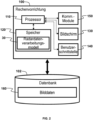
2 zeigt eine beispielhafte Ausführungsform der Rechenvorrichtung, die verwendet werden kann, um das Radardatenverarbeitungsmodell zu trainieren. -
3 zeigt ein Flussdiagramm für ein Verfahren zum Trainieren eines Radardatenverarbeitungsmodells, das dazu ausgelegt ist, eine Radardatenverarbeitungsaufgabe durchzuführen. -
4 zeigt ein Flussdiagramm für ein Verfahren zum Vortrainieren des Radardatenverarbeitungsmodells, in der Vortrainingsphase, das Superpixel und Superpunkte wirksam einsetzt. -
5A-5C zeigen eine beispielhafte Segmentierung eines Bildes in Superpixel.
-
1 summarizes a workflow for training a radar data processing model with a reduced requirement for annotated training data. -
2 shows an exemplary embodiment of the computing device that can be used to train the radar data processing model. -
3 shows a flowchart for a method for training a radar data processing model configured to perform a radar data processing task. -
4 shows a flowchart for a method for pre-training the radar data processing model, in the pre-training phase, which leverages superpixels and superpoints. -
5A-5C show an example segmentation of an image into superpixels.
Ausführliche BeschreibungDetailed description
Für den Zweck der Förderung des Verständnisses der Prinzipien der Offenbarung wird nun Bezug auf die Ausführungsformen genommen, die in den Zeichnungen veranschaulicht und in der folgenden geschriebenen Patentschrift beschrieben sind. Es versteht sich, dass dadurch keine Beschränkung auf den Schutzumfang der Offenbarung beabsichtigt wird. Es versteht sich ferner, dass die vorliegende Offenbarung jegliche Änderungen und Modifikationen an den veranschaulichten Ausführungsformen einschließt und ferner Anwendungen der Prinzipien der Offenbarung einschließt, wie einem Fachmann auf dem Gebiet, auf die sich die Offenbarung bezieht, normalerweise einfallen würde.For the purpose of promoting an understanding of the principles of the disclosure, reference will now be made to the embodiments illustrated in the drawings and described in the following written specification. It is to be understood that no limitation on the scope of the disclosure is thereby intended. It is further to be understood that the present disclosure includes any changes and modifications to the illustrated embodiments and further includes applications of the principles of the disclosure as would normally occur to one skilled in the art to which the disclosure relates.
Überblickoverview
Der Trainingsarbeitsablauf 10 besteht aus zwei Phasen: Vortraining und Feinabstimmung. In der Vortrainingsphase wird ein vortrainiertes Bildmodell 20 wirksam eingesetzt, um den Encoder 40 des Radardatenverarbeitungsmodells 30 vorzutrainieren. Insbesondere werden Paare von ausgerichteten Bildern und Radarpunktwolken in das vortrainierte Bildmodell 20 bzw. in den Encoder 40 des Radardatenverarbeitungsmodells 30 eingegeben. Der Encoder 40 des Radardatenverarbeitungsmodells 30 wird vortrainiert, indem ein Abgleich zwischen 2D-Pixelmerkmalen, die aus den ausgerichteten Bildern extrahiert werden, und 3D-Punktmerkmalen, die aus den Radarpunktwolken extrahiert werden, erzwungen wird. In der Feinabstimmungsphase wird der Decoder 50 des Radardatenverarbeitungsmodells 30 unter Verwendung eines kleinen Satzes von annotierten Radarpunktwolkendaten trainiert, die Labels aufweisen, die einer zu lernenden Downstream-Aufgabe entsprechen, wie etwa Objektdetektion oder semantische Segmentierung.The training workflow 10 consists of two phases: pre-training and fine-tuning. In the pre-training phase, a pre-trained image model 20 is leveraged to pre-train the encoder 40 of the radar
Der Trainingsarbeitsablauf 10 transferiert somit vorteilhafterweise Wissen von bestehenden Kamerabild-basierten Modellen und reduziert erheblich den menschlichen Aufwand, der zum Labeln von Radarpunktwolkendaten erforderlich ist, während eine vergleichbare Leistung erreicht wird. Insbesondere wird das Radardatenverarbeitungsmodell 30 an einer großen Menge von nicht annotierten Daten vortrainiert und erfordert später nur einen kleinen Satz von annotierten Daten zur Feinabstimmung.The training workflow 10 thus advantageously transfers knowledge from existing camera image-based models and significantly reduces the human effort required to label radar point cloud data while achieving comparable performance. In particular, the radar
Der Trainingsarbeitsablauf 10 kann für einen breiten Bereich von Anwendungen nützlich sein, einschließlich autonomes Fahren, Überwachungs- und öffentliche Sicherheitsanwendungen, Einbruchdetektion und Detektion von gefährdeten Fußgängern. Ein System, das kolokalisierte Kamera- und Radardaten erfasst, kann für das Training verwendet werden, und nach dem Training kann das Radar eigenständig arbeiten, um Objekte von Interesse und den Abstand vom Radarsensor unter Verwendung des vorgeschlagenen Verfahrens zu detektieren. Bei autonomen Fahrzeuganwendungen kann ein solcher Betrieb mit alleinig Radar dabei helfen, Hindernisse in Szenarien mit geringer Sichtbarkeit zu vermeiden. Für Überwachungs- und öffentliche Sicherheitsanwendungen kann es die öffentlichen Behörden oder Sicherheitsbeamte benachrichtigen, wenn ein Einbruch detektiert wird, oder einen Alarm auslösen.The training workflow 10 may be useful for a wide range of applications, including autonomous driving, surveillance and public safety applications, intrusion detection, and detection of pedestrians at risk. A system that collects colocated camera and radar data may be used for training, and after training, the radar may operate autonomously to detect objects of interest and distance from the radar sensor using the proposed method. For autonomous vehicle applications, such operation with radar alone may help avoid obstacles in low visibility scenarios. For surveillance and public safety applications, it may notify public authorities or security officials when an intrusion is detected or raise an alarm.
Beispielhafte Hardware-AusführungsformExample hardware implementation
Der Prozessor 110 ist dazu ausgelegt, Anweisungen zum Betreiben der Rechenvorrichtung 100 auszuführen, um die Merkmale, die Funktionalität, die Charakteristiken und/oder dergleichen, wie hierin beschrieben, zu ermöglichen. Zu diesem Zweck ist der Prozessor 110 operativ mit dem Speicher 120, dem Anzeigebildschirm 130 und dem Netzwerkkommunikationsmodul 150 verbunden. Der Prozessor 110 umfasst allgemein einen oder mehrere Prozessoren, die parallel oder anderweitig aufeinander abgestimmt arbeiten können. Durchschnittsfachleute auf dem Gebiet werden erkennen, dass ein „Prozessor“ ein beliebiges Hardwaresystem, einen beliebigen Hardwaremechanismus oder eine beliebige Hardwarekomponente einschließt, die/der/das Daten, Signale oder andere Informationen verarbeitet. Dementsprechend kann der Prozessor 110 ein System mit einer Zentralverarbeitungseinheit, Grafikverarbeitungseinheiten, mehreren Verarbeitungseinheiten, einer dedizierten Schaltungsanordnung zum Erreichen der Funktionalität, programmierbarer Logik oder anderen Verarbeitungssystemen beinhalten.The
Der Speicher 120 ist dazu ausgelegt, Daten und Programmanweisungen zu speichern, die, wenn durch den Prozessor 110 ausgeführt, der Rechenvorrichtung 100 ermöglichen, verschiedene hierin beschriebene Operationen durchzuführen. Der Speicher 120 kann einen beliebigen Typ von Vorrichtung aufweisen, die in der Lage sind, Informationen zu speichern, auf die der Prozessor 110 zugreifen kann, wie etwa eine Speicherkarte, ROM, RAM, Festplatten, Discs, Flash-Speicher oder beliebige von diversen anderen computerlesbaren Medien, die als Datenspeicherungsvorrichtungen dienen, wie von Durchschnittsfachleuten auf dem Gebiet erkannt wird.The
Der Anzeigebildschirm 130 kann beliebige von diversen bekannten Typen von Anzeigen umfassen, wie etwa LCD- oder OLED-Bildschirme, die dazu ausgelegt sind, grafische Benutzeroberflächen anzuzeigen. Die Benutzerschnittstelle 140 kann eine Vielfalt von Schnittstellen zum Betreiben der Rechenvorrichtung 100 beinhalten, wie etwa Tasten, Schalter, eine Tastatur oder ein anderes Tastenfeld, Lautsprecher und ein Mikrofon. Alternativ oder zusätzlich kann der Anzeigebildschirm 130 einen Touchscreen umfassen, der dazu ausgelegt ist, Berührungseingaben von einem Benutzer zu empfangen.The
Das Netzwerkkommunikationsmodul 150 kann einen oder mehrere Sendeempfänger, Modems, Prozessoren, Speicher, Oszillatoren, Antennen oder eine andere Hardware umfassen, die gewöhnlich in einem Kommunikationsmodul enthalten ist, um Kommunikationen mit verschiedenen anderen Vorrichtungen zu ermöglichen. Insbesondere beinhaltet das Netzwerkkommunikationsmodul 150 allgemein einen Ethernet-Adapter oder ein WiFi®-Modul, der bzw. das dazu ausgelegt ist, eine Kommunikation mit einem drahtgebundenen oder drahtlosen Netzwerk und/oder Router (nicht gezeigt) zu ermöglichen, das bzw. der dazu ausgelegt ist, eine Kommunikation mit verschiedenen anderen Vorrichtungen zu ermöglichen. Zusätzlich kann das Netzwerkkommunikationsmodul 150 ein Bluetooth®-Modul (nicht gezeigt), sowie ein oder mehrere Mobilfunkmodems, die dazu ausgelegt sind, mit drahtlosen Telefonnetzen zu kommunizieren, beinhalten.The
In zumindest einigen Ausführungsformen speichert der Speicher 120 Programmanweisungen des Radardatenverarbeitungsmodells 30, die, sobald das Training durchgeführt wird, dazu ausgelegt sind, eine Radardatenverarbeitungsaufgabe durchzuführen. In zumindest einigen Ausführungsformen speichert die Datenbank 102 eine Mehrzahl von Trainingsdatenpaaren, wobei jedes jeweilige Trainingsdatenpaar ein jeweiliges Bild und eine jeweilige Radarpunktwolke beinhaltet, die synchron in Bezug auf eine Szene erfasst wurden. Zusätzlich speichert die Datenbank 102 in zumindest einigen Ausführungsformen eine Mehrzahl von annotierten Radarpunktwolken, die Labels aufweisen, die der zu lernenden Radardatenverarbeitungsaufgabe entsprechen.In at least some embodiments,
Verfahren zum Trainieren eines RadardatenverarbeitungsmodellsMethod for training a radar data processing model
Eine Vielfalt von Operationen und Prozessen sind nachstehend zum Betreiben der Rechenvorrichtung 100 beschrieben, um das Radardatenverarbeitungsmodell 30 zum Durchführen einer Radardatenverarbeitungsaufgabe zu entwickeln und zu trainieren. In diesen Beschreibungen beziehen sich Aussagen, dass ein Verfahren, ein Prozessor und/oder ein System eine Aufgabe oder Funktion durchführt, darauf, dass eine Steuerung oder ein Prozessor (z. B. der Prozessor 110 der Rechenvorrichtung 100) programmierte Anweisungen ausführt, die in nichtflüchtigen computerlesbaren Speichermedien (z. B. dem Speicher 120 der Rechenvorrichtung 100), die operativ mit der Steuerung oder dem Prozessor verbunden sind, gespeichert sind, um Daten zu manipulieren oder eine oder mehrere Komponenten in der Rechenvorrichtung 100 oder der Datenbank 102 zu betreiben, um die Aufgabe oder Funktion durchzuführen. Zusätzlich können die Schritte der Verfahren in einer beliebigen realisierbaren chronologischen Reihenfolge durchgeführt werden, ungeachtet der Reihenfolge, die in den Figuren gezeigt ist, oder der Reihenfolge, in der die Schritte beschrieben sind.A variety of operations and processes are described below for operating the
Das Verfahren 200 beginnt mit dem Empfangen einer Mehrzahl von Trainingsdatenpaaren, wobei jedes jeweilige Trainingsdatenpaar ein Bild und eine Radarpunktwolke beinhaltet, die synchron in Bezug auf eine Szene erfasst wurden (Block 210). Insbesondere empfängt der Prozessor 110 und/oder speichert die Datenbank 102 eine Mehrzahl von Trainingsdatenpaaren 〈Pt, It〉. Jedes Trainingsdatenpaar beinhaltet eine Radarpunktwolke, bezeichnet als Pt = (pi)i=1,2,...,n ⊆ ℝN×Q, die durch einen Radarsensor erfasst wird, wobei t eine Zeit angibt, zu der die Radarpunktwolke Pt erfasst wurde, i ein Index jedes konkreten Radardatenpunkts in der Radarpunktwolke Pt ist, N eine Gesamtanzahl von Punkten in der Radarpunktwolke Pt ist und Q die Dimension jedes Radardatenpunkts in der Radarpunktwolke Pt ist. Jedes Trainingsdatenpaar beinhaltet auch ein entsprechendes Bild, bezeichnet als It ⊆ ℝM×3, das durch eine Kamera oder einen anderen 2D-Bildsensor (z. B. Tiefenkamera, Infrarotkamera usw.) synchron mit dem entsprechenden Radarpunktwolken-Radar zur gleichen Zeit t erfasst wird, wobei M die Anzahl von Pixeln im Bild It repräsentiert. Es sollte verstanden werden, dass die Mehrzahl von Trainingsdatenpaaren nicht manuell mit irgendwelchen Ground-Truth-Labels, die mit der Radardatenverarbeitungsaufgabe assoziiert sind, annotiert werden muss.The
Das Verfahren 200 fährt mit dem Trainieren, in einer Vortrainingsphase basierend auf der Mehrzahl von Trainingsdatenpaaren, eines ersten neuronalen Netzwerks fort, um Merkmale aus Radarpunktwolken unter Verwendung eines zweiten neuronalen Netzwerks zu extrahieren, das vortrainiert ist, um Merkmale aus Bildern zu extrahieren (Block 220). Insbesondere trainiert der Prozessor 110, in einer Vortrainingsphase, das Radardatenverarbeitungsmodell 30, bezeichnet als fθ(·), um Merkmale aus Radarpunktwolken unter Verwendung des vortrainierten Bildmodells 20, bezeichnet als hω(·), das vortrainiert ist, um Merkmale aus Bildern zu extrahieren, basierend auf der Mehrzahl von Trainingsdatenpaaren 〈Pt, It〉 zu extrahieren. Das Radardatenverarbeitungsmodell 30 wird auf eine selbstüberwachte Weise trainiert, indem die Ausgabe der Merkmale fθ(P) mit der entsprechenden Bildmodellausgabe hω(I) vom vortrainierten Bildmodell 20 ausgerichtet wird. In mindestens einer Ausführungsform sind Parameter (z. B. Kernel-Gewichte, Modellkoeffizienten usw.) des vortrainierten Bildmodells 20 während des Trainings des Radardatenverarbeitungsmodells 30 in der Vortrainingsphase eingefroren.The
In einigen Ausführungsformen ist das vortrainierte Bildmodell 20, hω(·): ℝM×3, ein neuronales Netzwerk, das dazu ausgelegt ist, 3-dimensionale RGB-Bilddaten als Eingabe zu nehmen und eine D-dimensionale Bildmerkmalskarte hω auszugeben, wobei M die Anzahl von Pixeln in Bild repräsentiert. In einigen Ausführungsformen weist das vortrainierte Bildmodell 20 eine Encoder-Decoder-Architektur auf (nicht gezeigt). In einer Ausführungsform ist der Encoder des vortrainierten Bildmodells 20 ein mehrschichtiges faltendes Netzwerk (z. B. Ausgabegröße 2048), und der Decoder des vordefinierten Bildmodells 20 ist eine einfache Faltungsschicht (z. B. Ausgabegröße 64). In einer Ausführungsform ist das vortrainierte Bildmodell 20 ein ResNet-50, das auf eine selbstüberwachte Art und Weise an ImageNet mit MoCov2 vortrainiert wird, gefolgt von einer punktweisen Projektion unter Verwendung einer linearen Schicht und 12-Normierung. In einigen Ausführungsformen sollte jedoch verstanden werden, dass eine breite Vielfalt von bereits bestehenden Modellen zum Extrahieren von Merkmalen aus 2D-Bilddaten genutzt werden kann.In some embodiments, the pre-trained image model 20, h ω (·): ℝ M×3 , is a neural network configured to take 3-dimensional RGB image data as input and output a D-dimensional image feature map h ω , where M represents the number of pixels in the image. In some embodiments, the pre-trained image model 20 comprises an encoder-decoder architecture (not shown). In one embodiment, the encoder of the pre-trained image model 20 is a multi-layer convolutional network (e.g., output size 2048), and the decoder of the pre-defined image model 20 is a simple convolutional layer (e.g., output size 64). In one embodiment, the pre-trained image model 20 is a ResNet-50 that is pre-trained in a self-supervised manner on ImageNet with MoCov2, followed by a point-wise projection using a linear layer and 12-normalization. In some embodiments, however, it should be understood that a wide variety of pre-existing models can be used to extract features from 2D image data.
In einigen Ausführungsformen ist das Radardatenverarbeitungsmodell 30, fθ(·); ℝN×Q', ein neuronales Netzwerk, das dazu ausgelegt ist, als Eingabe Q' nützliche Eingaben von Q zu nehmen und eine D-dimensionale Radarmerkmalskarte fθ auszugeben, wobei N eine Gesamtanzahl von Punkten in der Radarpunktwolke ist und Q die Dimension jedes Radardatenpunkts in der Radarpunktwolke ist. In mindestens einer Ausführungsform weist das Radardatenverarbeitungsmodell 30 eine spärliche Residual-U-Net-Architektur auf, gefolgt von einer punktweisen Projektion mit einer linearen Schicht und 12-Normierung.In some embodiments, radar
In der Vortrainingsphase stellt der Prozessor 110, für jedes Trainingsdatenpaar 〈Pt, It〉, die jeweilige Radarpunktwolke Pt als eine Eingabe in den Encoder 40 des Radardatenverarbeitungsmodells 30 bereit und stellt das jeweilige Bild It als eine Eingabe in das vortrainierte Bildmodell 20 bereit. Unter Verwendung des vordefinierten Bildmodells 20 bestimmt der Prozessor 110 eine D-dimensionale Bildmerkmalskarte hω(I) basierend auf dem Bild It. Gleichermaßen bestimmt der Prozessor 110, unter Verwendung des Encoders 40 des Radardatenverarbeitungsmodells 30, eine D-dimensionale Radarmerkmalskarte fθ(P) basierend auf der Radarpunktwolke Pt. Der Prozessor 110 bestimmt einen Trainingsverlust basierend auf einem Vergleich der Radarmerkmalskarte fθ(P) und der Bildmerkmalskarte hω(I). In mindestens einer Ausführungsform ist der Trainingsverlust ein kontrastiver Verlust. Schließlich verfeinert der Prozessor 110 das Radardatenverarbeitungsmodell 30 (z. B. aktualisiert Modellkoeffizienten, Gewichte, Parameter usw.) basierend auf dem bestimmten Trainingsverlust.In the pre-training phase, for each training data pair 〈P t , I t 〉, the
In zumindest einigen Ausführungsformen bestimmt der Prozessor 110 eine Abbildung zwischen (i) Punkten der Radarpunktwolken Pt in der Mehrzahl von Trainingsdatenpaaren 〈Pt, It〉 und Pixeln der Bilder It in der Mehrzahl von Trainingsdatenpaaren 〈Pt, It〉. Insbesondere besteht der erste Schritt in der Wissensdestillation darin, die Radarpunktwolke mit dem Kamerabild auszurichten. Basierend auf einer bekannten relativen Stellung des Radarsensors und des Kamerasensors projiziert der Prozessor 110 jeden Radarpunkt pi auf den Kamerarahmen, um einen Pixelwert im Bild It zu erfassen. Insbesondere erstellt der Prozessor 110 eine Abbildung εp: ℝQ → {0} ∪ {1, 2, 3, ... , M}, die als jeden 3D-Radarpunkt pi nimmt und einen Index des entsprechenden 2D-Pixels in Bild It ausgibt, oder 0, falls dieser Punkt sich nicht in der Sicht der Kamera befindet. Der Prozessor 110 verwendet die Abbildung εp, um den Trainingsverlust während der Vortrainingsphase zu berechnen.In at least some embodiments, the
Es sollte verstanden werden, dass das einfache Destillieren von Wissen auf einer Pixel-zu-Radarpunkt-Basis kein nützliches Wissen zu dem Radardatenverarbeitungsmodell 30 transferieren könnte, wodurch das Ziel der Verwendung eines bestehenden vordefinierten Bildmodells 20 zum Vortrainieren des Radardatenverarbeitungsmodells 30 ohne die Verwendung irgendwelcher menschlicher Annotationen erschwert wird. Dies liegt daran, dass die Radarpunktwolken vom Radarsensor eine andere Auflösung im Vergleich zu Bildern vom Kamerasensor aufweisen. Darüber hinaus ist das Radar in der Lage, Informationen auf Objektebene anstelle von Informationen auf Pixelebene zu erkennen. Somit ist es für den Wissensdestillationsprozess vorteilhaft, stattdessen Wissen auf Objektebene, aber nicht übermäßig grobes Wissen auf Szenenebene, aus dem vortrainierten Bildmodell 20 zu dem Radardatenverarbeitungsmodell 30 zu destillieren. Zu diesem Zweck werden in zumindest einigen Ausführungsformen Superpixel und Superpunkte wirksam eingesetzt, um den Wissensdestillationsprozess zu verbessern.It should be understood that simply distilling knowledge on a pixel-by-radar point basis may not transfer useful knowledge to the radar
Das Verfahren 300 beginnt mit dem Segmentieren (i) eines jeweiligen Bildes aus einem jeweiligen Trainingsdatenpaar in Superpixel und (ii) einer jeweiligen Radarpunktwolke aus dem jeweiligen Trainingsdatenpaar in Superpunkte (Block 310). Insbesondere bestimmt der Prozessor 110, in der Vortrainingsphase, für jedes Trainingsdatenpaar 〈Pt, It〉, ein segmentiertes Bild durch Segmentieren des jeweiligen Bildes It in eine Mehrzahl von Superpixeln, bezeichnet als
Gleichermaßen bestimmt der Prozessor 110, in der Vortrainingsphase, für jedes Trainingsdatenpaar 〈Pt, It〉, eine segmentierte Radarpunktwolke durch Segmentieren der jeweiligen Radarpunktwolke Pt in eine Mehrzahl von Superpunkten, bezeichnet als
Wie nachstehend zusätzlich ausführlich beschrieben, können die Superpixel und Superpunkte auf eine Vielfalt von Weisen definiert werden, um den Wissensdestillationsprozess zu verbessern. In einem ersten Ansatz zum Definieren der Superpixel und Superpunkte bestimmt der Prozessor 110 das segmentierte Bild und definiert somit die Superpixel durch Anwenden eines maschinellen Lernmodells, wie etwa eines Bildsegmentierungsalgorithmus, z. B. des graphenbasierten Felzenszwalb-und-Huttenlocher(FH)-Segmentierungsalgorithmus, oder eines Pixel-Clustering-Algorithmus, z. B. des SLIC-Algorithmus (Simple Linear Iterative Clustering - einfaches lineares iteratives Clustering), am jeweiligen Bild It.
Als Nächstes bestimmt der Prozessor 110 die segmentierte Radarpunktwolke und definiert somit die Superpunkte durch Abgleichen jedes Punkts in der jeweiligen Radarpunktwolke Pt mit einem entsprechenden Superpixel im jeweiligen Bild It zum Beispiel unter Verwendung der Abbildung εp. Erneut mit Bezug auf 


In einem zweiten Ansatz zum Definieren der Superpixel und Superpunkte, umgekehrt zum ersten Ansatz, bestimmt der Prozessor 110 die segmentierte Radarpunktwolke und definiert somit die Superpunkte durch Anwenden eines maschinellen Lernmodells, wie etwa eines Punkt-Clustering-Algorithmus, z. B. des DBScan-Algorithmus, auf die jeweilige Radarpunktwolke Pt.In a second approach to defining the superpixels and superpoints, reverse to the first approach, the
Als Nächstes definiert der Prozessor 110 anfänglich die Superpixel des segmentierten Bildes durch Anwenden eines Bildsegmentierungsalgorithmus oder eines Pixel-Clustering-Algorithmus, wie ähnlich mit Bezug auf den ersten Ansatz besprochen. Diese anfänglich definierten Superpixel werden jedoch zusätzlich durch den Prozessor 110 durch Abgleichen jedes anfänglich definierten Superpixels mit einem jeweiligen Superpunkt in der jeweiligen Radarpunktwolke Pt konsolidiert. Der Prozessor 110 definiert jedes finale Superpixel des segmentierten Bildes als eine Gruppe von anfänglich definierten Superpixeln, die auf einen selben Superpunkt in der jeweiligen segmentierten Radarpunktwolke abgebildet sind. Alternativ kann die Anwendung des Bildsegmentierungsalgorithmus oder Pixel-Clustering-Algorithmus im zweiten Ansatz weggelassen werden, und stattdessen gleicht der Prozessor 110 einfach jedes ursprüngliche Pixel im jeweiligen Bild It mit einem jeweiligen Superpunkt in der jeweiligen Radarpunktwolke Pt ab, um die Superpixel zu definieren. Mit anderen Worten enthält jedes finale Superpixel


Unter Verwendung des zweiten Ansatzes zum Definieren der Superpixel und Superpunkte wird das Clustering-Verfahren wirksam eingesetzt, um Radarpunkte zu unterscheiden, die zu unterschiedlichen Objekten gehören. Wenn Radarpunkte, die hauptsächlich zu demselben Objekt gehören, in dieselbe Gruppe geclustert werden, werden die ausgerichteten Superpixel miteinander kombiniert, um eine Repräsentation auf Objektebene zu bilden, wodurch das Problem der Übersegmentierung des Bildes überwunden wird. Aufgrund der Spärlichkeit von Radarpunktwolken ist jedoch die Form von Punkten willkürlich mit variierenden Dichten, und einige Ausreißer führen zusätzliche Schwierigkeiten beim Auswählen des richtigen Clustering-Verfahrens ein.Using the second approach to define the superpixels and superpoints, the clustering method is effectively used to distinguish radar points belonging to different objects. When radar points that mainly belong to the same object are clustered into the same group, the aligned superpixels are combined together to form an object-level representation, thus overcoming the problem of over-segmentation of the image. However, due to the sparsity of radar point clouds, the shape of points is arbitrary with varying densities, and some outliers introduce additional difficulties in selecting the correct clustering method.
In einem dritten Ansatz zum Definieren der Superpixel und Superpunkte, ähnlich zum zweiten Ansatz, bestimmt der Prozessor 110 die segmentierte Radarpunktwolke und definiert somit die Superpunkte durch Anwenden eines maschinellen Lernmodells, wie etwa eines Punkt-Clustering-Algorithmus, z. B. des DBScan-Algorithmus. Anstelle, dass der Punkt-Clustering-Algorithmus oder ein anderes maschinelles Lernmodell nur an der jeweiligen Radarpunktwolke Pt angewendet wird, erzeugt der Prozessor 110 jedoch eine kombinierte Radarpunktwolke durch Kombinieren der jeweiligen Radarpunktwolke Pt mit einer vorbestimmten Anzahl von benachbarten Radarpunktwolken, die zu unmittelbar vorherigen oder unmittelbar anschließenden Zeiten im Vergleich zu der Zeit t erfasst wurden, zu der die jeweilige Radarpunktwolke Pt erfasst wurde, z. B. die unmittelbar vorherige Radarpunktwolke Pt-1 und die unmittelbar anschließende Radarpunktwolke Pt+1. Diese kombinierte Radarpunktwolke hilft dabei, das Spärlichkeitsproblem von Radarpunktwolken zu überwinden. Der Prozessor 110 bestimmt die segmentierte Radarpunktwolke und definiert somit die Superpunkte durch Anwenden eines maschinellen Lernmodells, wie etwa eines Punkt-Clustering-Algorithmus, z. B. des DBScan-Algorithmus oder der ungarischen Methode, an der kombinierten Radarpunktwolke. Als Nächstes definiert der Prozessor 110 die Superpixel des segmentierten Bildes unter Verwendung der gleichen Prozesse, die mit Bezug auf den zweiten Ansatz besprochen sind.In a third approach to defining the superpixels and superpoints, similar to the second approach, the
Mit fortgesetztem Bezug auf
Das Verfahren 300 fährt mit dem Bestimmen eines kontrastiven Verlusts zwischen der Bildmerkmalskarte und der Radarmerkmalskarte auf einer Superpixel-zu-Superpunkt-Basis fort (Block 330). Insbesondere bestimmt der Prozessor 110 einen kontrastiven Verlust basierend auf der Radarmerkmalskarte fθ und der Bildmerkmalskarte hω und unter Verwendung der Abbildung εp. Um jedoch einen nützlicheren kontrastiven Verlust bereitzustellen, bestimmt der Prozessor 110 den kontrastiven Verlust auf einer Superpixel-zu-Superpunkt-Basis. Es sollte verstanden werden, dass dieser kontrastive Verlust auf Superpixelebene mehrere Vorteile aufweist. Der kontrastive Verlust auf Superpixelebene gibt allen Gebieten im kontrastiven Verlust die gleichen Gewichte ungeachtet der Radarpunktsamplingdichte. Zusätzlich macht der kontrastive Verlust auf Superpixelebene den kontrastiven Verlust zwischen den entsprechenden Superpixeln und Superpunkten klein genug, aber groß genug, um Merkmale von einem anderen Superpixel in anderen Kategorien in derselben Szene zu unterscheiden. Das Bestimmen des kontrastiven Verlusts zwischen zwei Merkmalskarten auf einer Superpixel-zu-Superpunkt-Basis hilft dabei, zu gewährleisten, dass die Wissensdestillation auf der Objektebene vorliegt. Im Vergleich zum kontrastiven Lernen auf Pixelebene unterliegt das Bestimmen des kontrastiven Verlusts auf einer Superpixel-zu-Superpunkt-Basis nicht dem Problem des Kontrasts zwischen fast identischen Punkten in einem Superpixel, was ein „Falsch-Negativ“-Problem für selbstüberwachtes Lernen erzeugen würde. Umgekehrt ist das Bestimmen des kontrastiven Verlusts auf Szenenebene, was normalerweise die globale Repräsentation einer gesamten Radarpunktwolke mit dem gesamten entsprechenden Kamerabild kontrastiert, nicht in der Lage, Unterschiede auf Objektebene zu unterscheiden, und liefert beschränkte Diversität, da die meisten Szenen die gleiche Klasse von Objekten aufweisen, z. B. Autos, Fußgänger usw.The
Somit bestimmt der Prozessor 110 den kontrastiven Verlust basierend auf den Superpunkten der segmentierten Radarmerkmalskarte fθ (d. h. die jeweilige Superpunktmerkmalsausgabe jedes Superpunkts in der jeweiligen Radarpunktwolke) und den Superpixeln der segmentierten Bildmerkmalskarte hω (d. h. die jeweilige Superpixelmerkmalsausgabe jedes Superpixels im jeweiligen Bild). Der Prozessor 110 gleicht jeden Superpunkt in der jeweiligen Radarpunktwolke mit einem jeweiligen Superpixel im jeweiligen Bild ab und bestimmt den kontrastiven Verlust basierend auf den abgeglichenen Superpunktmerkmalsausgaben und Superpixelmerkmalsausgaben. Insbesondere berechnet der Prozessor 110 in mindestens einer Ausführungsform, für ein gegebenes Kamerabild Ic, einen kontrastiven Verlust aus jedem entsprechenden Superpixel und Superpunkt. Um dies zu tun, muss der Prozessor 110 zunächst die Superpunktmerkmalsausgabe für jeden Superpunkt und die Superpixelmerkmalsausgabe jedes Superpixels erfassen.Thus, the
Wenn die Superpixel und Superpunkte definiert sind, kann der Prozessor 110 die ursprüngliche Radarmerkmalskarte fθ, die ursprüngliche Dimensionen N × D aufweist, mit der ursprünglichen Bildmerkmalskarte hω, die ursprüngliche Dimensionen M × D aufweist, unter Verwendung der definierten Superpixel und Superpunkte ausrichten. Insbesondere bestimmt der Prozessor 110, basierend auf der ursprünglichen Bildmerkmalskarte hω und der ursprünglichen Radarmerkmalskarte fθ, eine segmentierte Bildmerkmalskarte hω, die Dimensionen M' × D aufweist, und eine segmentierte Radarmerkmalskarte fθ, die Dimensionen N' × D aufweist. Mit anderen Worten werden die Dimensionen der Bildmerkmalskarte hω: ℝM×3 → ℝM'×D, die durch das vortrainierte Bildmodell 20 ausgegeben wird, so aufgelöst, dass sie die Dimensionen M × 3 → M' × D aufweisen, und die Dimensionen der Radarmerkmalskarte fθ: ℝN×Q' → ℝN'×D, die durch den Encoder 40 ausgegeben wird, werden so aufgelöst, dass sie die Dimensionen N × Q' → N' × D aufweisen.Once the superpixels and superpoints are defined, the
Der Prozessor 110 bestimmt die segmentierte Bildmerkmalskarte hω durch Bestimmen, für jedes Superpixel im jeweiligen Bild It, einer jeweiligen Superpixelmerkmalsausgabe

Der Prozessor 110 bestimmt die segmentierte Radarmerkmalskarte fθ durch Bestimmen, für jeden Superpunkt in der jeweiligen Radarpunktwolke Pt, einer jeweiligen Superpunktmerkmalsausgabe


Somit können die Ausgabemerkmale von k-ten abgeglichen Superpixel-zu-Superpunkt-Gebieten repräsentiert werden als:
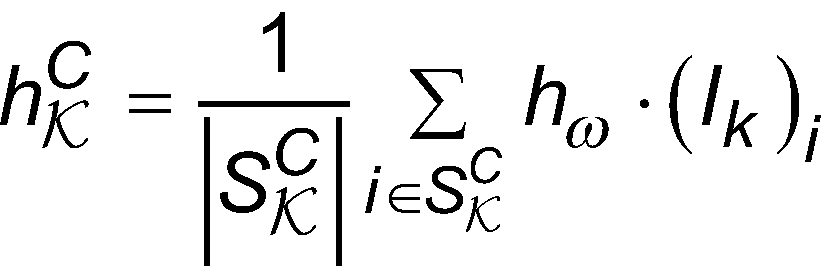

Der Prozessor 110 bestimmt den instanzweisen kontrastiven Verlust


Das Verfahren 300 fährt mit dem Training des ersten neuronalen Netzwerks basierend auf dem kontrastiven Verlust fort (Block 340). Insbesondere verfeinert der Prozessor 110, während jedes Trainingszyklus und/oder nach jedem Batch von Trainingsdatenpaaren 〈Pt, It〉, eine oder mehrere Komponenten des Radardatenverarbeitungsmodells 30 basierend auf dem kontrastiven Verlust

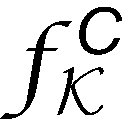


In einigen Ausführungsformen sind Parameter (z. B. Kernel-Gewichte, Modellkoeffizienten usw.) des vortrainierten Bildmodells 20 während des Trainings des Radardatenverarbeitungsmodells 30 in der Vortrainingsphase eingefroren. In einigen Ausführungsformen sind nur die Parameter des Encoders des vortrainierten Bildmodells 20 während der Vortrainingsphase eingefroren, und Parameter des Decoders des vortrainierten Bildmodells 20 werden gemeinsam mit dem Encoder 40 des Radardatenverarbeitungsmodells 30 trainiert.In some embodiments, parameters (e.g., kernel weights, model coefficients, etc.) of the pre-trained image model 20 are frozen during training of the radar
Auf diese Weise wird das Radardatenverarbeitungsmodell 30 auf eine selbstüberwachte Weise vortrainiert, um latente Merkmale aus Radarpunktwolken zu extrahieren, ohne die Notwendigkeit für eine menschliche Annotation der Radarpunktwolken, die beim Training verwendet werden. Stattdessen dienen die Ausgabemerkmale vom vortrainierten Bildmodell 20 im Wesentlichen als Soft-Labels für den Trainingsprozess.In this way, the radar
Erneut mit Bezug auf
Im Allgemeinen, da das Radardatenverarbeitungsmodell 30, und insbesondere der Encoder 40 des Radardatenverarbeitungsmodells 30, schon auf eine selbstüberwachte Weise vortrainiert wurde, ist die Anzahl von annotierten Radarpunktwolken in der Mehrzahl von annotierten Radarpunktwolken im Vergleich zu der Menge klein, die benötigt werden würde, um herkömmliche Radardatenverarbeitungsmodelle zu trainieren. Auf diese Weise kann der annotierte Trainingsdatensatz durch manuelles Labeln von Radarpunktwolken in einem Umfeld mit geringeren Ressourcen und mit geringeren Kosten konstruiert werden.In general, since the radar
Das Verfahren 200 fährt mit dem zusätzlichen Trainieren, in einer Feinabstimmungsphase basierend auf der Mehrzahl von annotierten Radarpunktwolken, des ersten neuronalen Netzwerks fort, um die Radardatenverarbeitungsaufgabe durchzuführen (Block 240). Insbesondere stellt der Prozessor 110, in der Feinabstimmungsphase, für jede annotierte Radarpunktwolke 〈Pt, Ct〉, die jeweilige Radarpunktwolke Pt als eine Eingabe in den Encoder 40 des Radardatenverarbeitungsmodells 30 bereit, was eine latente Repräsentation der jeweiligen Radarpunktwolke Pt in Form einer Radarmerkmalskarte fθ erzeugt, wie oben auf ähnliche Weise besprochen. Die Radarmerkmalskarte fθ wird dem Decoder 50 des Radardatenverarbeitungsmodells 30 bereitgestellt, was eine finale Modellausgabe erzeugt, z. B. eine Objektklassifikation oder semantische Segmentierung der Punkte in der Radarpunktwolke Pt. Der Prozessor 110 bestimmt einen Trainingsverlust basierend auf einem Vergleich der finalen Modellausgabe und der assoziierten Ground-Truth-Labels Ct. In mindestens einer Ausführungsform ist der Trainingsverlust ein Kreuzentropieverlust. Schließlich verfeinert der Prozessor 110 das Radardatenverarbeitungsmodell 30 basierend auf dem Trainingsverlust.The
Es sollte verstanden werden, dass nach der Vortrainingsphase das Radardatenverarbeitungsmodell 30 schon gut zum Extrahieren einer nützlichen latenten Repräsentation der jeweiligen Radarpunktwolke infolge des Wissensdestillationsprozesses trainiert sein wird. Der Decoder 50 des Radardatenverarbeitungsmodells 30 muss jedoch weiterhin trainiert werden, um die designierte Downstream-Aufgabe durchzuführen und die gewünschte finale Ausgabe zu erzeugen. Dementsprechend werden in mindestens einer Ausführungsform die Parameter (z. B. Kernel-Gewichte, Modellkoeffizienten usw.) des Encoders 40 während der Feinabstimmungsphase eingefroren, und nur die Parameter des Decoders 50 werden während der Feinabstimmungsphase verfeinert.It should be understood that after the pre-training phase, the radar
In einigen Ausführungsformen, bei denen die assoziierten Ground-Truth-Labels Ct Klassifikationslabels sind, wie etwa für eine Objektdetektionsklasse, bestimmt der Prozessor 110 den Trainingsverlust als einen kategorischen Kreuzentropieverlust wie folgt:
Experimentelle ErgebnisseExperimental Results
Um die durch den Trainingsarbeitsablauf 10 bereitgestellte Verbesserung zu demonstrieren, wurde die Leistung des Systems bezüglich der herausfordernden Objektdetektionsaufgaben getestet. Um eine reale Durchführung zu gewährleisten, wurde ein Prototyp des Systems implementiert und zum Testen an autonomen Fahrdaten ausgewählt.To demonstrate the improvement provided by the training workflow 10, the performance of the system was tested on the challenging object detection tasks. To ensure real-world performance, a prototype of the system was implemented and selected for testing on autonomous driving data.
Die Experimente wurden am nuScenes-Datensatz durchgeführt, bei dem es sich um den ersten Datensatz handelt, der ausgerichtete Kamera- und Radarsensoren, sowie ausreichende Radarmessungen (18 Merkmale pro Punkt, einschließlich Doppler-Geschwindigkeit, RCS, Tiefe usw.) für autonomes Fahren enthält. Im Vergleich zu anderen Datensätzen in der gleichen Domäne, weist nuScenes die größte Samplegröße und die umfassendsten Radardaten auf, was nützlich ist, da das Modell die unterschiedlichen Merkmale, die für Radardaten spezifisch sind, verwenden muss, um Downstream-Aufgaben durchzuführen, da Modelle, die gewöhnlich auf LiDAR basieren, in diesem Kontext nicht gut arbeiten. Der nuScenes-Datensatz enthält 700 Szenen für Training und 150 Szenen für Validierung. In diesem Experiment werden die Vortrainingsmodelle mit 700 Trainingsszenen trainiert, während die Downstream-Modelle mit 600 Szenen trainiert werden und an den restlichen 100 Szenen als Mini-Validierung zum Auswählen der Parameter evaluiert werden, wobei die Leistung der gesamten Pipeline mit 150 Validierungsszenen getestet wird.The experiments were performed on the nuScenes dataset, which is the first dataset that contains aligned camera and radar sensors, as well as sufficient radar measurements (18 features per point, including Doppler velocity, RCS, depth, etc.) for autonomous driving. Compared to other datasets in the same domain, nuScenes has the largest sample size and the most comprehensive radar data, which is useful because the model needs to use the different features specific to radar data to perform downstream tasks, as models usually based on LiDAR do not perform well in this context. The nuScenes dataset contains 700 scenes for training and 150 scenes for validation. In this experiment, the pre-training models are trained on 700 training scenes, while the downstream models are trained on 600 scenes and evaluated on the remaining 100 scenes as a mini-validation to select the parameters, testing the performance of the entire pipeline on 150 validation scenes.
Obwohl sie reichhaltige Radarmessungen wie etwa RCS und Doppler-Geschwindigkeit bereitstellen, kommen die rohen Radardaten vom nuScenes-Datensatz nicht mit Ground-Truth-Labeling, was andererseits die Schwierigkeit des manuellen Labelns jedes Radarpunkt widerspiegelt. Um das Experiment durchzuführen, wurden die Ground-Truth-Labels von ausgerichteten LiDAR-Daten wirksam eingesetzt, die zusammen mit der Kamera und dem Radar gesammelt wurden. LiDAR hat eine Größenordnung mehr Punkte im Vergleich zu Radar, was es ausreichend macht, um eine hinreichend gute Übereinstimmung für Radarpunkte zu finden. Jeder Radarpunkt wurde vom Radarrahmen in den globalen Ego-Rahmen transformiert, und seine Koordinaten wurden mit den transformierten LiDAR-Punkten im Ego-Rahmen verglichen. Die nächstliegenden Punkte wurden ausgewählt und das LiDAR-Label wurde als das Label dieses Radarpunkts angewendet. Um zu garantieren, dass der abgeglichene Radar- und LiDAR-Punkt zu demselben Objekt gehören, und zu gewährleisten, dass genug Radarpunkte für das Experiment ausgewählt wurden, war es notwendig, eine Abstandsschwelle zwischen abgeglichenen Radar- und LiDAR-Punkten sorgfältig auszuwählen. Es wurde angemerkt, dass der Bereich und die Auflösung der Tiefe an den Radarpunkten (Abstand nach vorne) erheblich größer ist als die anderen beiden Achsen, nachdem der Abstand zwischen Radar- und LiDAR-Punkten berechnet wurde, und ein relativer Abstand wurde mit einem Kompensationsfaktor von 0,13, multipliziert mit Tiefe, berechnet, um diese Tatsache am besten auszugleichen.Although providing rich radar measurements such as RCS and Doppler velocity, the raw radar data from the nuScenes dataset do not come with ground truth labeling, which in turn reflects the difficulty of manually labeling each radar point. To conduct the experiment, the ground truth labels from aligned LiDAR data collected together with the camera and radar were leveraged. LiDAR has an order of magnitude more points compared to radar, which makes it sufficient to find a sufficiently good match for radar points. Each radar point was transformed from the radar frame to the global ego frame, and its coordinates were compared with the transformed LiDAR points in the ego frame. The closest points were selected and the LiDAR label was applied as the label of that radar point. To guarantee that the matched radar and LiDAR points belong to the same object and to ensure that enough radar points were selected for the experiment, it was necessary to carefully select a distance threshold between matched radar and LiDAR points. It was noted that the range and resolution of depth at the radar points (distance forward) is significantly larger than the other two axes after the distance between radar and LiDAR points was calculated, and a relative distance was calculated with a compensation factor of 0.13 multiplied by depth to best compensate for this fact.
Eine andere Herausforderung bestand darin, den zweckmäßigen relativen Abstand auszuwählen, wobei durch visuelle Verifizierung an mehreren Schlüsselrahmen eine Schwelle von 1,5 m gewählt wurde, um die Genauigkeit und Verfügbarkeit von Radarpunkten am besten auszugleichen. Die Radar- und LiDAR-Punkte sind jedoch größtenteils ausgerichtet, wobei die meisten abgeglichenen Punkte innerhalb von 10 cm voneinander entfernt liegen. In diesem Datensatz hat Lidar nur eine Reichweite von 105 m, im Vergleich zu der Reichweite von 250 m der Tiefe des Radars. Infolgedessen wurden Radarpunkte außerhalb der LiDAR-Reichweite verworfen, da sie keinen Referenzpunkt haben, der sich innerhalb der Abstandsschwelle befindet. 100 Frames wurden manuell geprüft, um zu gewährleisten, dass die annotierten Labels unter Verwendung dieses Verfahrens genau sind.Another challenge was to select the appropriate relative distance, choosing a threshold of 1.5 m through visual verification at several key frames to best balance the accuracy and availability of radar points. However, the radar and LiDAR points are mostly aligned, with most of the matched points within 10 cm of each other. In this dataset, Lidar only has a range of 105 m, compared to the 250 m range of radar depth. As a result, radar points outside of LiDAR range were discarded as they do not have a reference point that is within the distance threshold. 100 frames were manually checked to ensure that the annotated labels are accurate using this procedure.
Das Durchführen von Objektdetektion an der spärlichen Radarpunktwolke ist eine herausfordernde Aufgabe. In den Experimenten wurde Objektdetektion an 3 Kategorien durchgeführt, die in NVRadarNet als Ziele verwendet werden: Auto, Fußgänger und Fahrrad.Performing object detection on the sparse radar point cloud is a challenging task. In the experiments, object detection was performed on 3 categories used as targets in NVRadarNet: car, pedestrian and bicycle.
In zumindest einigen Ausführungsformen ist das Backbone des hierin beschriebenen Radardatenverarbeitungsmodells 30 eine spärliche Residual-U-Net-Architektur. 3 × 3 × 3 Kernels wurden für alle spärlichen Faltungen angewendet. Als Eingabe nimmt sie ein spärliches Belegtheitsgitter der 3D-Radardaten an, erhalten aus Voxeln in zylindrischen Koordinaten, was eine bessere Passung für Radardaten ist. Die Radardaten weisen ein Eingabemerkmal von Tiefe, RCS und Doppler-Geschwindigkeit auf, die in das Radardatenverarbeitungsmodell 30 eingespeist werden und eine Größe von 64 latenten Merkmalen zur Ausrichtung mit dem Bildmodell ausgeben. Um die Eingabemerkmale auszugleichen, wurde RCS mit 1000 multipliziert, und die Doppler-Geschwindigkeit auf jeder Achse wurde mit 10.000 multipliziert. Selbstüberwachtes Lernen ist stark auf Datenaugmentierung angewiesen. Auf der Bildseite wurden zwei Augmentierungsverfahren verwendet: zufälliges Zuschneiden und zufälliges Umdrehen. Auf der Punktseite wurde ein zufälliges Umdrehen rund um die nach vorne zeigende Richtung angewendet.In at least some embodiments, the backbone of the radar
Die neuronalen Netzwerke wurden unter Verwendung von 1 GPU für 50 Epochen unter Verwendung von SGD und einer anfänglichen Lernrate von 0,05, einem Momentum von 0,9, einer Dämpfung von 0,1 und einem Gewichtszerfall von 0,0001 trainiert. Eine Batch-Größe von 32 und eine Ausfallrate von 0,5 wurden verwendet.The neural networks were trained using 1 GPU for 50 epochs using SGD and an initial learning rate of 0.05, momentum of 0.9, damping of 0.1, and weight decay of 0.0001. A batch size of 32 and a dropout rate of 0.5 were used.
Obwohl es vorherige Arbeiten bei der Wissensdestillation an LiDAR-Punktwolken gibt, schneiden sie schlecht ab, wenn sie an Radarpunktwolken angewendet werden, hauptsächlich aufgrund der Spärlichkeit. Eine Basislinie wurde als ein Vergleich zu unserem 3D-Vortrainingsansatz implementiert: ein vollständig verbundenes neuronales Netzwerk (FCN) für die Objektdetektionsaufgabe.Although there is previous work in knowledge distillation on LiDAR point clouds, they perform poorly when applied to radar point clouds, mainly due to sparsity. A baseline was implemented as a comparison to our 3D pre-training approach: a fully connected neural network (FCN) for the object detection task.
Um den Trainingsarbeitsablauf 10 mit einem herkömmlichen CNN-Netzwerk unter Verwendung aller Trainingsdaten zu vergleichen, wurde ein vollständig verbundenes neuronales Netzwerk (FCN) erstellt, das aus drei linearen Schichten, gefolgt von einer linearen Aktivierung (ReLU) und einer Ausfallschicht besteht. Die Leistung dieses FCN-Verfahrens wurde mit den Downstream-Ergebnissen unter Verwendung des Trainingsarbeitsablaufs 10 verglichen. Alle Basislinienmodelle wurden unter Verwendung des gleichen nuScenes-Trainingssatzes, unter Verwendung von 1 GPU, trainiert und unter dem nuScenes-Validierungssatz getestet.To compare the training workflow 10 with a traditional CNN network using all the training data, a fully connected neural network (FCN) was constructed, consisting of three linear layers followed by a linear activation (ReLU) and a dropout layer. The performance of this FCN procedure was compared with the downstream results using the training workflow 10. All baseline models were trained using the same nuScenes training set, using 1 GPU, and tested on the nuScenes validation set.
Die Leistung des FCN und des Trainingsarbeitsablaufs 10 am nuScenes-Validierungsdatensatz für die Objektdetektionsaufgaben ist in Tabelle I und Tabelle II gezeigt.The performance of the FCN and training workflow 10 on the nuScenes validation dataset for the object detection tasks is shown in Table I and Table II.
Tabelle I unten zeigt eine Leistung eines FCN-Netzwerks unter Verwendung zulässiger Radarpunkte am nuScenes-Datensatz (100 % Trainingssatz):
Tabelle II unten zeigt eine Leistung des Trainingsarbeitsablaufs 10 unter Verwendung zulässiger Radarpunkte am nuScenes-Datensatz.
Wie beobachtet werden kann, schneidet der hierin beschriebene Wissensdestillationsprozess besser ab als der herkömmliche FCN-Ansatz. Zusätzlich wird die Menge an erforderlichen annotierten Daten in der Downstream-Aufgabe unter Verwendung des hierin beschriebenen Wissensdestillationsprozesses erheblich reduziert.As can be observed, the knowledge distillation process described herein performs better than the conventional FCN approach. In addition, the amount of required annotated data in the downstream task is significantly reduced using the knowledge distillation process described herein.
Ausführungsformen im Schutzumfang der Offenbarung können auch nichtflüchtige computerlesbare Speichermedien oder maschinenlesbare Medien zum Führen oder Aufweisen von computerausführbaren Anweisungen (auch als Programmanweisungen bezeichnet) oder darauf gespeicherten Datenstrukturen beinhalten. Solche nichtflüchtigen computerlesbaren Speichermedien oder maschinenlesbaren Medien können beliebige verfügbare Medien sein, auf die ein Universal- oder Spezialcomputer zugreifen kann. Beispielhaft, und ohne Beschränkung, können solche nichtflüchtigen computerlesbaren Speichermedien oder maschinenlesbaren Medien RAM, ROM, EEPROM, CD-ROM oder eine andere optische Plattenspeicherung, magnetische Plattenspeicherung oder andere magnetische Speichervorrichtungen oder ein beliebiges anderes Medium umfassen, das verwendet werden kann, um gewünschte Programmcodemittel in Form von computerausführbaren Anweisungen oder Datenstrukturen zu führen oder zu speichern. Kombinationen des Obenstehenden sollten auch im Umfang der nichtflüchtigen computerlesbaren Speichermedien oder maschinenlesbaren Medien eingeschlossen sein.Embodiments within the scope of the disclosure may also include non-transitory computer-readable storage media or machine-readable media for carrying or having computer-executable instructions (also referred to as program instructions) or data structures stored thereon. Such non-transitory computer-readable storage media or machine-readable media may be any available media accessible by a general purpose or special purpose computer. By way of example, and without limitation, such non-transitory computer-readable storage media or machine-readable media may include RAM, ROM, EEPROM, CD-ROM or other optical disk storage, magnetic disk storage or other magnetic storage devices, or any other medium that may be used to carry or store desired program code means in the form of computer-executable instructions or data structures. Combinations of the above should also be included within the scope of non-transitory computer-readable storage media or machine-readable media.
Computerlesbare Anweisungen beinhalten zum Beispiel Anweisungen und Daten, die veranlassen, dass ein Universalcomputer, ein Spezialcomputer oder eine Spezialverarbeitungsvorrichtung eine bestimmte Funktion oder Gruppe von Funktionen durchführt. Computerausführbare Anweisungen beinhalten auch Programmmodule, die durch Computer in unabhängigen Umgebungen oder Netzwerkumgebungen ausgeführt werden. Im Allgemeinen beinhalten Programmmodule Routinen, Programme, Objekte, Komponenten und Datenstrukturen usw., die konkrete Aufgaben durchführen oder konkrete abstrakte Datentypen implementieren. Computerausführbare Anweisungen, assoziierte Datenstrukturen und Programmmodule repräsentieren Beispiele für die Programmcodemittel zum Ausführen von Schritten der hierin offenbarten Verfahren. Die konkrete Sequenz von solchen ausführbaren Anweisungen oder assoziierten Datenstrukturen repräsentiert Beispiele für entsprechende Handlungen zum Implementieren der Funktionen, die in solchen Schritten beschrieben sind.Computer-readable instructions include, for example, instructions and data that cause a general-purpose computer, special-purpose computer, or special-purpose processing device to perform a particular function or group of functions. Computer-executable instructions also include program modules that are executed by computers in standalone or networked environments. In general, program modules include routines, programs, objects, components, and data structures, etc. that perform specific tasks or implement specific abstract data types. Computer-executable instructions, associated data structures, and program modules represent examples of the program code means for carrying out steps of the methods disclosed herein. The specific sequence of such executable instructions or associated data structures represents examples of corresponding acts for implementing the functions described in such steps.
Obwohl die Offenbarung ausführlich in den Zeichnungen und in der vorstehenden Beschreibung veranschaulicht und beschrieben wurde, sollte dieselbe als veranschaulichend und nicht beschränkend angesehen werden. Es versteht sich, dass nur die bevorzugten Ausführungsformen dargelegt wurden und dass alle Änderungen, Modifikationen und weitere Anwendungen geschützt werden sollen, die innerhalb des Sinns der Offenbarung fallen.Although the disclosure has been particularly illustrated and described in the drawings and foregoing description, the same should be considered as illustrative and not restrictive. It is to be understood that only the preferred embodiments have been set forth and that all changes, modifications and other applications which come within the spirit of the disclosure are intended to be protected.
Claims (20)
Applications Claiming Priority (2)
| Application Number | Priority Date | Filing Date | Title |
|---|---|---|---|
| US18/351,816 US20250020774A1 (en) | 2023-07-13 | 2023-07-13 | Systems and Methods for Camera-to-Radar Knowledge Distillation |
| US18/351,816 | 2023-07-13 |
Publications (1)
| Publication Number | Publication Date |
|---|---|
| DE102024206445A1 true DE102024206445A1 (en) | 2025-01-16 |
Family
ID=93930584
Family Applications (1)
| Application Number | Title | Priority Date | Filing Date |
|---|---|---|---|
| DE102024206445.9A Pending DE102024206445A1 (en) | 2023-07-13 | 2024-07-09 | Systems and Methods for Camera-to-Radar Knowledge Distillation |
Country Status (4)
| Country | Link |
|---|---|
| US (1) | US20250020774A1 (en) |
| JP (1) | JP2025013308A (en) |
| CN (1) | CN119310561A (en) |
| DE (1) | DE102024206445A1 (en) |
Family Cites Families (8)
| Publication number | Priority date | Publication date | Assignee | Title |
|---|---|---|---|---|
| US11373064B2 (en) * | 2019-07-22 | 2022-06-28 | Raytheon Company | Cross-modality automatic target recognition |
| WO2022139783A1 (en) * | 2020-12-21 | 2022-06-30 | Intel Corporation | High end imaging radar |
| GB202100740D0 (en) * | 2021-01-20 | 2021-03-03 | Five Ai Ltd | Extracting features from sensor data |
| US20220261593A1 (en) * | 2021-02-16 | 2022-08-18 | Nvidia Corporation | Using neural networks to perform object detection, instance segmentation, and semantic correspondence from bounding box supervision |
| US12169232B2 (en) * | 2021-05-10 | 2024-12-17 | Qualcomm Incorporated | Radar and camera data fusion |
| US11971955B1 (en) * | 2021-07-21 | 2024-04-30 | Amazon Technologies, Inc. | Example-based image annotation |
| US12189026B1 (en) * | 2022-06-30 | 2025-01-07 | Zoox, Inc. | Radar anomaly detection based on multistage clustering |
| US12223837B2 (en) * | 2022-12-01 | 2025-02-11 | Caterpillar Inc. | Systems and methods for detecting false positives in collision notifications |
-
2023
- 2023-07-13 US US18/351,816 patent/US20250020774A1/en active Pending
-
2024
- 2024-07-09 DE DE102024206445.9A patent/DE102024206445A1/en active Pending
- 2024-07-12 CN CN202410934493.XA patent/CN119310561A/en active Pending
- 2024-07-12 JP JP2024112877A patent/JP2025013308A/en active Pending
Also Published As
| Publication number | Publication date |
|---|---|
| US20250020774A1 (en) | 2025-01-16 |
| JP2025013308A (en) | 2025-01-24 |
| CN119310561A (en) | 2025-01-14 |
Similar Documents
| Publication | Publication Date | Title |
|---|---|---|
| DE112016005059B4 (en) | Subcategory-aware convolutional neural networks for object detection | |
| DE112017002799B4 (en) | METHOD AND SYSTEM FOR GENERATION OF MULTIMODAL DIGITAL IMAGES | |
| EP2368216B1 (en) | Method and device for analyzing surrounding objects and/or surrounding scenes, such as for object and scene class segmenting | |
| DE102020113280A1 (en) | AUTOMATIC GENERATION OF BASIC TRUTH DATA FOR TRAINING OR RE-TRAINING ONE OR MORE MODELS FOR MACHINE LEARNING | |
| DE112019005750T5 (en) | Learning to generate synthetic data sets for training neural networks | |
| DE102017100609A1 (en) | Online capture and classification of dynamic gestures with recurrent folding neural networks | |
| DE102022105471A1 (en) | Generating modified digital images using deep visual guided patch matching models for image restoration | |
| DE102019007796A1 (en) | Use of a neural network serving for the detection of critical edges and a geometric model for determining camera parameters from a single digital image | |
| DE102019000171A1 (en) | Digital environment for the location of semantic classes | |
| DE102016116818A1 (en) | Method and device for detecting a vehicle contour by means of point cloud data | |
| DE112016004535T5 (en) | Universal Compliance Network | |
| DE102016005407A1 (en) | Joint depth estimation and semantic labeling of a single image | |
| DE102023129950A1 (en) | HIGH RESOLUTION TEXT-TO-3D CONTENT CREATION | |
| US20130070997A1 (en) | Systems, methods, and media for on-line boosting of a classifier | |
| DE112016006922T5 (en) | Detecting activity in a video footage based on depth information | |
| DE102023101265A1 (en) | Object detection in image stream processing using optical flow with dynamic regions of interest | |
| DE102019122402A1 (en) | CLASSIFYING TIME SERIES IMAGE DATA | |
| DE102022208714A1 (en) | Computer-implemented system and method for semantic analysis of a scene | |
| DE102023119490A1 (en) | Panoptically guided reconstruction using a panoptically reconstructing neural network | |
| DE102021128523A1 (en) | HIERARCHICAL IMAGE DECOMPOSITION FOR DEFECT DETECTION | |
| DE102022212583A1 (en) | Image quantization using machine learning | |
| DE112016005482T5 (en) | Object detection with adaptive channel features | |
| DE102023200834A1 (en) | Learning of semantic segmentation models in the absence of part of class labels | |
| DE102023119493A1 (en) | Generate and provide a panoptic reconstruction interface for generating and modifying reconstructed digital images | |
| DE102019112595A1 (en) | GUIDED HALLUCATION FOR MISSING PICTURE CONTENT USING A NEURONAL NETWORK |
Legal Events
| Date | Code | Title | Description |
|---|---|---|---|
| R012 | Request for examination validly filed |