DE102020103051A1 - AUTOMATED DRIVING SYSTEMS AND CONTROL LOGIC WITH THE USE OF MANEUVER CRITICALITY FOR VEHICLE CONTROL AND MODE ADAPTATION - Google Patents
AUTOMATED DRIVING SYSTEMS AND CONTROL LOGIC WITH THE USE OF MANEUVER CRITICALITY FOR VEHICLE CONTROL AND MODE ADAPTATION Download PDFInfo
- Publication number
- DE102020103051A1 DE102020103051A1 DE102020103051.7A DE102020103051A DE102020103051A1 DE 102020103051 A1 DE102020103051 A1 DE 102020103051A1 DE 102020103051 A DE102020103051 A DE 102020103051A DE 102020103051 A1 DE102020103051 A1 DE 102020103051A1
- Authority
- DE
- Germany
- Prior art keywords
- segment
- vehicle
- lane
- maneuver
- cost
- Prior art date
- Legal status (The legal status is an assumption and is not a legal conclusion. Google has not performed a legal analysis and makes no representation as to the accuracy of the status listed.)
- Withdrawn
Links
Images


Classifications
-
- B—PERFORMING OPERATIONS; TRANSPORTING
- B60—VEHICLES IN GENERAL
- B60W—CONJOINT CONTROL OF VEHICLE SUB-UNITS OF DIFFERENT TYPE OR DIFFERENT FUNCTION; CONTROL SYSTEMS SPECIALLY ADAPTED FOR HYBRID VEHICLES; ROAD VEHICLE DRIVE CONTROL SYSTEMS FOR PURPOSES NOT RELATED TO THE CONTROL OF A PARTICULAR SUB-UNIT
- B60W30/00—Purposes of road vehicle drive control systems not related to the control of a particular sub-unit, e.g. of systems using conjoint control of vehicle sub-units
- B60W30/10—Path keeping
- B60W30/12—Lane keeping
-
- B—PERFORMING OPERATIONS; TRANSPORTING
- B60—VEHICLES IN GENERAL
- B60W—CONJOINT CONTROL OF VEHICLE SUB-UNITS OF DIFFERENT TYPE OR DIFFERENT FUNCTION; CONTROL SYSTEMS SPECIALLY ADAPTED FOR HYBRID VEHICLES; ROAD VEHICLE DRIVE CONTROL SYSTEMS FOR PURPOSES NOT RELATED TO THE CONTROL OF A PARTICULAR SUB-UNIT
- B60W60/00—Drive control systems specially adapted for autonomous road vehicles
- B60W60/001—Planning or execution of driving tasks
- B60W60/0011—Planning or execution of driving tasks involving control alternatives for a single driving scenario, e.g. planning several paths to avoid obstacles
-
- B—PERFORMING OPERATIONS; TRANSPORTING
- B60—VEHICLES IN GENERAL
- B60W—CONJOINT CONTROL OF VEHICLE SUB-UNITS OF DIFFERENT TYPE OR DIFFERENT FUNCTION; CONTROL SYSTEMS SPECIALLY ADAPTED FOR HYBRID VEHICLES; ROAD VEHICLE DRIVE CONTROL SYSTEMS FOR PURPOSES NOT RELATED TO THE CONTROL OF A PARTICULAR SUB-UNIT
- B60W10/00—Conjoint control of vehicle sub-units of different type or different function
- B60W10/04—Conjoint control of vehicle sub-units of different type or different function including control of propulsion units
- B60W10/06—Conjoint control of vehicle sub-units of different type or different function including control of propulsion units including control of combustion engines
-
- B—PERFORMING OPERATIONS; TRANSPORTING
- B60—VEHICLES IN GENERAL
- B60W—CONJOINT CONTROL OF VEHICLE SUB-UNITS OF DIFFERENT TYPE OR DIFFERENT FUNCTION; CONTROL SYSTEMS SPECIALLY ADAPTED FOR HYBRID VEHICLES; ROAD VEHICLE DRIVE CONTROL SYSTEMS FOR PURPOSES NOT RELATED TO THE CONTROL OF A PARTICULAR SUB-UNIT
- B60W10/00—Conjoint control of vehicle sub-units of different type or different function
- B60W10/18—Conjoint control of vehicle sub-units of different type or different function including control of braking systems
-
- B—PERFORMING OPERATIONS; TRANSPORTING
- B60—VEHICLES IN GENERAL
- B60W—CONJOINT CONTROL OF VEHICLE SUB-UNITS OF DIFFERENT TYPE OR DIFFERENT FUNCTION; CONTROL SYSTEMS SPECIALLY ADAPTED FOR HYBRID VEHICLES; ROAD VEHICLE DRIVE CONTROL SYSTEMS FOR PURPOSES NOT RELATED TO THE CONTROL OF A PARTICULAR SUB-UNIT
- B60W30/00—Purposes of road vehicle drive control systems not related to the control of a particular sub-unit, e.g. of systems using conjoint control of vehicle sub-units
- B60W30/18—Propelling the vehicle
- B60W30/18009—Propelling the vehicle related to particular drive situations
- B60W30/18163—Lane change; Overtaking manoeuvres
-
- B—PERFORMING OPERATIONS; TRANSPORTING
- B60—VEHICLES IN GENERAL
- B60W—CONJOINT CONTROL OF VEHICLE SUB-UNITS OF DIFFERENT TYPE OR DIFFERENT FUNCTION; CONTROL SYSTEMS SPECIALLY ADAPTED FOR HYBRID VEHICLES; ROAD VEHICLE DRIVE CONTROL SYSTEMS FOR PURPOSES NOT RELATED TO THE CONTROL OF A PARTICULAR SUB-UNIT
- B60W40/00—Estimation or calculation of non-directly measurable driving parameters for road vehicle drive control systems not related to the control of a particular sub unit, e.g. by using mathematical models
- B60W40/02—Estimation or calculation of non-directly measurable driving parameters for road vehicle drive control systems not related to the control of a particular sub unit, e.g. by using mathematical models related to ambient conditions
- B60W40/04—Traffic conditions
-
- B—PERFORMING OPERATIONS; TRANSPORTING
- B60—VEHICLES IN GENERAL
- B60W—CONJOINT CONTROL OF VEHICLE SUB-UNITS OF DIFFERENT TYPE OR DIFFERENT FUNCTION; CONTROL SYSTEMS SPECIALLY ADAPTED FOR HYBRID VEHICLES; ROAD VEHICLE DRIVE CONTROL SYSTEMS FOR PURPOSES NOT RELATED TO THE CONTROL OF A PARTICULAR SUB-UNIT
- B60W40/00—Estimation or calculation of non-directly measurable driving parameters for road vehicle drive control systems not related to the control of a particular sub unit, e.g. by using mathematical models
- B60W40/02—Estimation or calculation of non-directly measurable driving parameters for road vehicle drive control systems not related to the control of a particular sub unit, e.g. by using mathematical models related to ambient conditions
- B60W40/06—Road conditions
-
- B—PERFORMING OPERATIONS; TRANSPORTING
- B60—VEHICLES IN GENERAL
- B60W—CONJOINT CONTROL OF VEHICLE SUB-UNITS OF DIFFERENT TYPE OR DIFFERENT FUNCTION; CONTROL SYSTEMS SPECIALLY ADAPTED FOR HYBRID VEHICLES; ROAD VEHICLE DRIVE CONTROL SYSTEMS FOR PURPOSES NOT RELATED TO THE CONTROL OF A PARTICULAR SUB-UNIT
- B60W50/00—Details of control systems for road vehicle drive control not related to the control of a particular sub-unit, e.g. process diagnostic or vehicle driver interfaces
-
- B—PERFORMING OPERATIONS; TRANSPORTING
- B60—VEHICLES IN GENERAL
- B60W—CONJOINT CONTROL OF VEHICLE SUB-UNITS OF DIFFERENT TYPE OR DIFFERENT FUNCTION; CONTROL SYSTEMS SPECIALLY ADAPTED FOR HYBRID VEHICLES; ROAD VEHICLE DRIVE CONTROL SYSTEMS FOR PURPOSES NOT RELATED TO THE CONTROL OF A PARTICULAR SUB-UNIT
- B60W60/00—Drive control systems specially adapted for autonomous road vehicles
- B60W60/001—Planning or execution of driving tasks
-
- G—PHYSICS
- G05—CONTROLLING; REGULATING
- G05D—SYSTEMS FOR CONTROLLING OR REGULATING NON-ELECTRIC VARIABLES
- G05D1/00—Control of position, course, altitude or attitude of land, water, air or space vehicles, e.g. using automatic pilots
- G05D1/02—Control of position or course in two dimensions
- G05D1/021—Control of position or course in two dimensions specially adapted to land vehicles
- G05D1/0212—Control of position or course in two dimensions specially adapted to land vehicles with means for defining a desired trajectory
- G05D1/0217—Control of position or course in two dimensions specially adapted to land vehicles with means for defining a desired trajectory in accordance with energy consumption, time reduction or distance reduction criteria
-
- B—PERFORMING OPERATIONS; TRANSPORTING
- B60—VEHICLES IN GENERAL
- B60W—CONJOINT CONTROL OF VEHICLE SUB-UNITS OF DIFFERENT TYPE OR DIFFERENT FUNCTION; CONTROL SYSTEMS SPECIALLY ADAPTED FOR HYBRID VEHICLES; ROAD VEHICLE DRIVE CONTROL SYSTEMS FOR PURPOSES NOT RELATED TO THE CONTROL OF A PARTICULAR SUB-UNIT
- B60W50/00—Details of control systems for road vehicle drive control not related to the control of a particular sub-unit, e.g. process diagnostic or vehicle driver interfaces
- B60W2050/0001—Details of the control system
- B60W2050/0043—Signal treatments, identification of variables or parameters, parameter estimation or state estimation
-
- B—PERFORMING OPERATIONS; TRANSPORTING
- B60—VEHICLES IN GENERAL
- B60W—CONJOINT CONTROL OF VEHICLE SUB-UNITS OF DIFFERENT TYPE OR DIFFERENT FUNCTION; CONTROL SYSTEMS SPECIALLY ADAPTED FOR HYBRID VEHICLES; ROAD VEHICLE DRIVE CONTROL SYSTEMS FOR PURPOSES NOT RELATED TO THE CONTROL OF A PARTICULAR SUB-UNIT
- B60W2552/00—Input parameters relating to infrastructure
-
- B—PERFORMING OPERATIONS; TRANSPORTING
- B60—VEHICLES IN GENERAL
- B60W—CONJOINT CONTROL OF VEHICLE SUB-UNITS OF DIFFERENT TYPE OR DIFFERENT FUNCTION; CONTROL SYSTEMS SPECIALLY ADAPTED FOR HYBRID VEHICLES; ROAD VEHICLE DRIVE CONTROL SYSTEMS FOR PURPOSES NOT RELATED TO THE CONTROL OF A PARTICULAR SUB-UNIT
- B60W2552/00—Input parameters relating to infrastructure
- B60W2552/10—Number of lanes
-
- B—PERFORMING OPERATIONS; TRANSPORTING
- B60—VEHICLES IN GENERAL
- B60W—CONJOINT CONTROL OF VEHICLE SUB-UNITS OF DIFFERENT TYPE OR DIFFERENT FUNCTION; CONTROL SYSTEMS SPECIALLY ADAPTED FOR HYBRID VEHICLES; ROAD VEHICLE DRIVE CONTROL SYSTEMS FOR PURPOSES NOT RELATED TO THE CONTROL OF A PARTICULAR SUB-UNIT
- B60W2552/00—Input parameters relating to infrastructure
- B60W2552/30—Road curve radius
-
- B—PERFORMING OPERATIONS; TRANSPORTING
- B60—VEHICLES IN GENERAL
- B60W—CONJOINT CONTROL OF VEHICLE SUB-UNITS OF DIFFERENT TYPE OR DIFFERENT FUNCTION; CONTROL SYSTEMS SPECIALLY ADAPTED FOR HYBRID VEHICLES; ROAD VEHICLE DRIVE CONTROL SYSTEMS FOR PURPOSES NOT RELATED TO THE CONTROL OF A PARTICULAR SUB-UNIT
- B60W2552/00—Input parameters relating to infrastructure
- B60W2552/50—Barriers
-
- B—PERFORMING OPERATIONS; TRANSPORTING
- B60—VEHICLES IN GENERAL
- B60W—CONJOINT CONTROL OF VEHICLE SUB-UNITS OF DIFFERENT TYPE OR DIFFERENT FUNCTION; CONTROL SYSTEMS SPECIALLY ADAPTED FOR HYBRID VEHICLES; ROAD VEHICLE DRIVE CONTROL SYSTEMS FOR PURPOSES NOT RELATED TO THE CONTROL OF A PARTICULAR SUB-UNIT
- B60W2555/00—Input parameters relating to exterior conditions, not covered by groups B60W2552/00, B60W2554/00
- B60W2555/20—Ambient conditions, e.g. wind or rain
-
- B—PERFORMING OPERATIONS; TRANSPORTING
- B60—VEHICLES IN GENERAL
- B60W—CONJOINT CONTROL OF VEHICLE SUB-UNITS OF DIFFERENT TYPE OR DIFFERENT FUNCTION; CONTROL SYSTEMS SPECIALLY ADAPTED FOR HYBRID VEHICLES; ROAD VEHICLE DRIVE CONTROL SYSTEMS FOR PURPOSES NOT RELATED TO THE CONTROL OF A PARTICULAR SUB-UNIT
- B60W2710/00—Output or target parameters relating to a particular sub-units
- B60W2710/06—Combustion engines, Gas turbines
-
- B—PERFORMING OPERATIONS; TRANSPORTING
- B60—VEHICLES IN GENERAL
- B60W—CONJOINT CONTROL OF VEHICLE SUB-UNITS OF DIFFERENT TYPE OR DIFFERENT FUNCTION; CONTROL SYSTEMS SPECIALLY ADAPTED FOR HYBRID VEHICLES; ROAD VEHICLE DRIVE CONTROL SYSTEMS FOR PURPOSES NOT RELATED TO THE CONTROL OF A PARTICULAR SUB-UNIT
- B60W2710/00—Output or target parameters relating to a particular sub-units
- B60W2710/18—Braking system
Landscapes
- Engineering & Computer Science (AREA)
- Transportation (AREA)
- Mechanical Engineering (AREA)
- Automation & Control Theory (AREA)
- Physics & Mathematics (AREA)
- Combustion & Propulsion (AREA)
- Chemical & Material Sciences (AREA)
- Human Computer Interaction (AREA)
- Mathematical Physics (AREA)
- Aviation & Aerospace Engineering (AREA)
- Radar, Positioning & Navigation (AREA)
- Remote Sensing (AREA)
- General Physics & Mathematics (AREA)
- Traffic Control Systems (AREA)
- Control Of Driving Devices And Active Controlling Of Vehicle (AREA)
Abstract
Präsentiert werden automatisierte Fahrsysteme und Steuerlogik für den intelligenten Fahrzeugbetrieb in transienten Fahrzuständen, Verfahren zum Aufbau/Betrieb solcher Systeme sowie Fahrzeuge, die mit solchen Systemen ausgestattet sind. Ein Verfahren zur Steuerung eines automatisierten Fahrbetriebs umfasst eine Fahrzeugsteuerung, die Pfadplandaten mit Standort-, Ziel- und vorhergesagten Pfaddaten für ein Fahrzeug empfängt. Aus den empfangenen Pfadplandaten prognostiziert die Steuerung ein bevorstehendes Manöver zum Fahren des Fahrzeugs zwischen Start- und Zielspursegmenten. Die Fahrzeugsteuerung bestimmt eine vorhergesagte Route mit Fahrspursegmenten, die Start- und Zielspursegment verbinden, und Segmentmanöver zur Bewegung des Fahrzeugs zwischen Start-, Ziel- und Fahrspursegmenten. Für jedes Segmentmanöver wird ein Kostenwert berechnet; die Steuerung bestimmt, ob ein Kostenwert einen entsprechenden Kritikalitätswert überschreitet. Wenn dies der Fall ist, sendet die Steuerung Befehle an ein residentes Fahrzeug-Subsystem, um einen Steuervorgang auszuführen, der mit der Einnahme der ersten vorhergesagten Route assoziiert ist.Automated driving systems and control logic for intelligent vehicle operation in transient driving states, procedures for setting up / operating such systems and vehicles equipped with such systems will be presented. A method for controlling automated driving comprises a vehicle controller that receives path plan data with location, destination and predicted path data for a vehicle. From the received path plan data, the controller predicts an upcoming maneuver for driving the vehicle between start and destination lane segments. The vehicle controller determines a predicted route with lane segments that connect the start and destination lane segments, and segment maneuvers for moving the vehicle between the start, destination and lane segments. A cost value is calculated for each segment maneuver; the controller determines whether a cost value exceeds a corresponding criticality value. If so, the controller sends commands to a resident vehicle subsystem to perform a control action associated with taking the first predicted route.
Description
EINLEITUNGINTRODUCTION
Die vorliegende Offenbarung bezieht sich im Allgemeinen auf Kraftfahrzeuge mit Navigationsfähigkeiten. Konkret beziehen sich Aspekte dieser Offenbarung auf automatisierte und autonome Fahrzeugantriebssysteme mit Funktionen zur Planung und Umleitung von Fahrzeugpfaden.The present disclosure relates generally to motor vehicles with navigation capabilities. Specifically, aspects of this disclosure relate to automated and autonomous vehicle propulsion systems with functions for planning and rerouting vehicle paths.
Kraftfahrzeuge aus der aktuellen Produktion, wie z.B. das moderne Automobil, sind ursprünglich mit einem Netzwerk von elektronischen Bordgeräten ausgestattet oder nachgerüstet, die automatisierte Fahrfunktionen bieten, die helfen, den Aufwand für den Fahrer zu minimieren. In Automobilanwendungen ist beispielsweise die am besten erkennbare Art der Fahrautomatik der Tempomat. Mit dem Tempomat kann der Fahrer eine bestimmte Fahrzeuggeschwindigkeit einstellen und das Bordcomputersystem des Fahrzeugs diese Geschwindigkeit beibehalten lassen, ohne dass der Fahrer das Gas- oder Bremspedal betätigt. Der Abstandsregeltempomat (ACC - Adaptive Cruise Control) der nächsten Generation ist eine computergesteuerte Fahrfunktion, die die Fahrzeuggeschwindigkeit reguliert und gleichzeitig den Abstand zwischen dem Host-Fahrzeug und den vorausfahrenden/nachfolgenden Fahrzeugen regelt. Eine weitere Art der automatisierten Fahrfunktion ist das Kollisionsvermeidungssystem (CAS - Collision Avoidance System), das drohende Kollisionszustände erkennt und den Fahrer warnt, aber auch selbstständig vorbeugend eingreift, z.B. durch Lenken oder Bremsen ohne Zutun des Fahrers. Intelligente Parkassistenten (IPAS), Spurüberwachungs- und automatische Lenksysteme („Autolenkung“) sowie andere Fahrerassistenzsysteme (ADAS) und autonome Fahrfunktionen sind ebenfalls in vielen modernen Fahrzeugen verfügbar.Motor vehicles from current production, e.g. the modern automobile, are originally equipped or retrofitted with a network of on-board electronic devices that offer automated driving functions that help to minimize the effort for the driver. For example, in automotive applications, the most recognizable type of automatic drive is cruise control. With the cruise control, the driver can set a specific vehicle speed and let the vehicle's on-board computer system maintain this speed without the driver pressing the accelerator or brake pedal. The next generation Adaptive Cruise Control (ACC) is a computer-controlled driving function that regulates the vehicle speed and at the same time regulates the distance between the host vehicle and the vehicles in front / behind. Another type of automated driving function is the Collision Avoidance System (CAS), which recognizes impending collision conditions and warns the driver, but also intervenes independently, e.g. by steering or braking without the driver having to do anything. Intelligent parking assistants (IPAS), lane monitoring and automatic steering systems (“car steering”) as well as other driver assistance systems (ADAS) and autonomous driving functions are also available in many modern vehicles.
Da sich die Fahrzeugverarbeitung, die Kommunikation und die Sensorfähigkeiten weiter verbessern, werden die Hersteller auch weiterhin mehr systemautomatisierte Fahrfunktionen anbieten, mit dem Ziel, schließlich vollständig autonome Fahrzeuge zu produzieren, die in der Lage sind, unter heterogenen Fahrzeugtypen sowohl in städtischen als auch in ländlichen Szenarien zu operieren. Die Originalhersteller (OEM) gehen in Richtung Fahrzeug-zu-Fahrzeug (V2V) und von Fahrzeug-zu-Infrastruktur (V2I) „sprechende“ Autos mit Fahrautomatisierung von hohem Level, die autonome Systeme einsetzen, um die Fahrzeugführung mit Lenkung, Spurwechsel, Szenarioplanung usw. zu ermöglichen. Automatisierte Routengenerierungssysteme nutzen Fahrzeugzustands- und Fahrdynamiksensoren, Karten- und Straßenzustandsdaten sowie Pfadvorhersage-Algorithmen, um eine Pfadabweichung mit automatisierter Fahrspurmitten- und Spurwechselvorhersage zu ermöglichen. Computergestützte Umleitungstechniken bieten prognostizierte alternative Reiserouten, die beispielsweise auf der Grundlage von Echtzeit- und virtuellen Fahrzeugdaten aktualisiert werden können.As vehicle processing, communication, and sensor capabilities continue to improve, manufacturers will continue to offer more system-automated driving functions, with the goal of ultimately producing fully autonomous vehicles capable of running among heterogeneous vehicle types in both urban and rural areas Operate scenarios. The original manufacturers (OEM) are moving in the direction of vehicle-to-vehicle (V2V) and vehicle-to-infrastructure (V2I) "talking" cars with high-level driving automation that use autonomous systems to control the vehicle with steering, lane changes and scenario planning etc. to enable. Automated route generation systems use vehicle condition and driving dynamics sensors, map and road condition data as well as path prediction algorithms to enable path deviations with automated lane center and lane change prediction. Computerized diversion techniques provide predicted alternative travel routes that can be updated based on, for example, real-time and virtual vehicle data.
Viele Automobile sind heute mit Fahrzeugbord-Navigationssystemen ausgestattet, die einen Senderempfänger für ein globales Ortungssystem (GPS - Global Positioning System) in Zusammenarbeit mit Navigationssoftware und Geostandortkartendienste (Geolocation Mapping Services) nutzen, um Informationen über Straßentopographie, Verkehr und Geschwindigkeitsbegrenzungen zu erhalten, die mit der aktuellen Position des Fahrzeugs assoziiert sind. Autonomes Fahren und fortschrittliche Fahrerassistenzsysteme sind oft in der Lage, bestimmte automatisierte Fahrmanöver auf der Grundlage von Fahrbahninformationen des bordeigenen Navigationssystems anzupassen. Ad-hoc-netzwerkbasiertes ADAS kann zum Beispiel GPS- und Kartendaten in Verbindung mit Multi-Hop-Geocast-V2V- und V2I-Datenaustausch nutzen, um automatisierte Fahrzeugmanöver und Antriebsstrangsteuerung zu ermöglichen. Während des unterstützten und nicht unterstützten Fahrzeugbetriebs kann das gebietsansässige Navigationssystem eine empfohlene Reiseroute auf der Grundlage einer geschätzten kürzesten Reisezeit oder der geschätzten kürzesten Entfernung zwischen dem Ausgangspunkt und dem Routenziel einer bestimmten Reise ermitteln. Diese empfohlene Reiseroute kann dann als Kartenausschnitt oder als Tum-by-Turn-Navigation auf einer geocodierten und kommentierten Karte angezeigt werden. Solche konventionellen Ansätze zur Routenplanung sind zwar effektiv bei der Ermittlung der kürzesten Fahrstrecke/Zeit zu einem gewünschten Ziel, berücksichtigen aber nicht die effizientesten Routen oder die günstigsten Routen zur Steuerung des Fahrzeugbetriebs.Many automobiles today are equipped with on-board navigation systems that use a transceiver for a global positioning system (GPS) in conjunction with navigation software and geolocation mapping services to obtain information about road topography, traffic and speed limits that are associated with are associated with the current position of the vehicle. Autonomous driving and advanced driver assistance systems are often able to adapt certain automated driving maneuvers based on lane information from the on-board navigation system. For example, ad hoc network-based ADAS can use GPS and map data in conjunction with multi-hop Geocast V2V and V2I data exchange to enable automated vehicle maneuvers and drive train control. During assisted and unsupported vehicle operation, the resident navigation system may determine a recommended travel route based on an estimated shortest travel time or the estimated shortest distance between the starting point and the route destination of a particular trip. This recommended travel route can then be displayed as a map section or as tum-by-turn navigation on a geocoded and annotated map. Such conventional approaches to route planning are effective in determining the shortest distance / time to a desired destination, but do not take into account the most efficient routes or the most favorable routes for controlling vehicle operation.
BESCHREIBUNGDESCRIPTION
Hierin offenbart werden automatisierte Fahrsysteme und dazugehörige Steuerlogik für den intelligenten Fahrzeugbetrieb unter transienten Fahrbedingungen, Verfahren zum Aufbau und Verfahren zum Betrieb solcher Systeme sowie Kraftfahrzeuge mit erweiterter Manöverkritikalitätsanalyse zur Ausführung intelligenter Fahrzeugoperationen. Als Beispiel werden Fahrzeugsteueralgorithmen und automatisierte Fahrsystemarchitekturen vorgestellt, die eine Fahrzeugpfadplanungs- und Umleitungsfähigkeit ermöglichen, um kostenintensive, unkritische Manöver zu verhindern, z.B. durch Wählen einer kostengünstigeren Alternativroute. Durch die vorgenannten Steueralgorithmen und Systemarchitekturen kann ein Fahrzeug auch in die Lage versetzt werden, ein kostenintensives kritisches Manöver, wie z.B. das Ausfahrmanöver an einer wichtigen Ausfahrt, durchzuführen, indem ein Fahrzeugfahrmodus automatisch auf „aggressiv“ angepasst wird, um stärkere Fahrzeuggeschwindigkeiten, Beschleunigungen, Spurwechsel usw. zu ermöglichen. Das automatisierte Fahrsystem kann den Fahrer mit einer Vorwarnung versorgen, die die Kritikalität eines bevorstehenden Manövers beschreibt, so dass der Fahrer Abhilfemaßnahmen ergreifen oder eine alternative Vorgehensweise wählen kann.It discloses automated driving systems and associated control logic for intelligent vehicle operation under transient driving conditions, methods for setting up and methods for operating such systems, as well as motor vehicles with extended maneuver criticality analysis for executing intelligent vehicle operations. As an example, vehicle control algorithms and automated driving system architectures are presented, which enable vehicle path planning and diversion capability in order to prevent cost-intensive, uncritical maneuvers, for example by choosing a cheaper alternative route. By The aforementioned control algorithms and system architectures can also enable a vehicle to carry out a cost-intensive critical maneuver, such as the maneuver at an important exit, by automatically adjusting a vehicle driving mode to "aggressive" in order to avoid higher vehicle speeds, accelerations, lane changes, etc. to enable. The automated driving system can provide the driver with an advance warning that describes the criticality of an upcoming maneuver, so that the driver can take remedial measures or choose an alternative course of action.
Eine erweiterte Manöverkritikalitätsanalyse für die Ausführung intelligenter Fahrzeugoperationen kann durch die Vorhersage einer Reihe von bevorstehenden Manöversegmenten zum Überwinden eines Manövers auf einer aktuellen Route und die Vorhersage eines entsprechenden Kritikalitätswertes für jedes Manöversegment ermöglicht werden. Unter Verwendung der geschätzten Kritikalität jedes Manöversegments schätzt das automatisierte Fahrsystem die maximalen Kosten, die dem Fahrzeug bei der Ausführung des Manövers entstehen können. Für ein sehr kritisches Manöver mit einer maximalen Kostenschätzung, die unter einer fahrzeugkalibrierten Kostenschwelle liegt, kann das automatische Fahrsystem automatisch einen aktuellen Fahrzeugmodus und andere Betriebsparameter anpassen, um eine aggressive Fahrzeugoperation zur Vervollständigung des Manövers zu ermöglichen. Im Gegensatz dazu kann bei einem bevorstehenden unkritischen Manöver mit einer maximalen Kostenschätzung, die die fahrzeugkalibrierte Kostenschwelle überschreitet, das automatisierte Fahrsystem das Fahrzeug automatisch umleiten. Bevor eine der vorgenannten Maßnahmen ergriffen wird, kann das automatische Fahrsystem eine visuelle und/oder akustische Warnung ausgeben, die den Fahrer vor der Kritikalität und der Kostenschätzung eines bevorstehenden Manövers warnt und ihn optional auffordert, vorbeugende Maßnahmen zu ergreifen oder die automatische Reaktion des Fahrzeugs zu genehmigen.Advanced maneuver criticality analysis for performing intelligent vehicle operations can be enabled by predicting a series of upcoming maneuver segments for overcoming a maneuver on a current route and predicting a corresponding criticality value for each maneuver segment. Using the estimated criticality of each maneuver segment, the automated driving system estimates the maximum cost that the vehicle can incur in performing the maneuver. For a very critical maneuver with a maximum cost estimate that is below a vehicle calibrated cost threshold, the automated driving system can automatically adjust a current vehicle mode and other operating parameters to allow aggressive vehicle operation to complete the maneuver. In contrast to this, in the event of an impending non-critical maneuver with a maximum cost estimate that exceeds the vehicle-calibrated cost threshold, the automated driving system can automatically reroute the vehicle. Before one of the aforementioned measures is taken, the automatic driving system can output a visual and / or acoustic warning that warns the driver of the criticality and cost estimate of an impending maneuver and optionally prompts him to take preventive measures or to allow the vehicle to react automatically authorize.
Zu den Vorteilen zumindest einiger der offenbarten Konzepte gehören intelligente Fahrsysteme, Steuerlogik und steuerungsautomatisierte Fahrtechniken, die dazu beitragen, dass ein autonomes Fahrzeug oder ein ADAS-betriebenes Fahrzeug in einem standardmäßigen „sanften“ Fahrmodus keine kritischen Manöver verpasst. Ebenso ist ein autonomes/ADAS-betriebenes Fahrzeug in der Lage, dynamisch aus einem aktuellen Pfad umzuleiten, um kostenintensive, wenig kritische Manöver zu vermeiden. ADAS und selbstfahrende Fahrzeugmodelle, die offenbarte Manöverkritikalitätsanalysetechniken implementieren, helfen, den Fahrgastkomfort zu verbessern und gleichzeitig das Kollisionsrisiko zu minimieren. Die verbesserte Manöverkritikalitätsanalyse trägt auch dazu bei, ein automatisiertes Fahrverhalten auf höchstem Level zu gewährleisten, was zu einen konsistenteren und zuverlässigeren Systembetrieb ermöglicht, ohne dass dafür spezielle Sensoren und Hardware erforderlich sind.The advantages of at least some of the disclosed concepts include intelligent driving systems, control logic and control-automated driving techniques that help ensure that an autonomous vehicle or an ADAS-operated vehicle does not miss any critical maneuvers in a standard “smooth” driving mode. An autonomous / ADAS-operated vehicle is also able to reroute dynamically from a current path in order to avoid costly, less critical maneuvers. ADAS and self-driving vehicle models that implement disclosed maneuver criticality analysis techniques help improve passenger comfort while minimizing the risk of collision. The improved maneuver criticality analysis also helps ensure automated driving behavior at the highest level, which enables more consistent and reliable system operation without the need for special sensors and hardware.
Aspekte dieser Offenbarung beziehen sich auf Steueralgorithmen und computerlesbare Medien zur Ausführung intelligenter Fahrzeugoperationen in transienten Fahrzuständen. In einem Beispiel wird ein Verfahren zur Steuerung eines automatisierten Fahrbetriebs eines Kraftfahrzeugs vorgestellt. Das vorstehende repräsentative Verfahren umfasst in beliebiger Reihenfolge und in beliebiger Kombination mit den oben und unten genannten Optionen und Merkmalen: Bestimmen, z. B. über eine residente oder entfernte Fahrzeugsteuerung unabhängig oder durch kooperativen Betrieb mit einem Fahrzeugnavigationssystem, von Pfadplandaten einschließlich Fahrzeugposition, Ziel und vorhergesagten Pfaddaten für das Kraftfahrzeug; Vorhersagen, z. B, über die Fahrzeugsteuerung auf Basis der empfangenen Pfadplandaten in Verbindung mit einer residenten oder entfernten Kartendatenbank, eines anstehenden Fahrmanövers, um das Kraftfahrzeug von einem Startspursegment in einen Zielspursegment zu fahren; Bestimmen z. B, über die Fahrzeugsteuerung in Echtzeit oder aus der Kartendatenbank oder einem Cloudcomputing-Ressourcendienst, einer primären (ersten) vorhergesagten Route mit mehreren (ersten) Routenspursegmenten, die das Startspursegment mit dem Zielspursegment kooperativ verbinden; Bestimmen mehrerer (erster) Segmentmanöver, von denen jedes das Fahrzeug zwischen einem jeweiligen Paar der Routenspursegmente und/oder einem der Routenspursegmente und dem Start- oder Zielspursegment bewegt; Bestimmen mehrerer (erster) Kostenwerte, von denen jeder mit einem jeweiligen Segmentmanöver korrespondiert; Bestimmen, ob ein Kostenwert, der mit einem der Segmentmanöver korrespondiert, größer als ein korrespondierender (erster) Kritikalitätswert ist; und, falls nicht, Übertragen eines (ersten) Befehlssignals über die Fahrzeugsteuerung an ein residentes Fahrzeug-Subsystem, um einen (ersten) Steuervorgang auszuführen, der mit der Einnahme der primären vorhergesagten Route assoziiert ist.Aspects of this disclosure relate to control algorithms and computer readable media for performing intelligent vehicle operations in transient driving conditions. In one example, a method for controlling automated driving of a motor vehicle is presented. The above representative method comprises, in any order and in any combination with the options and features mentioned above and below: determining, e.g. B. via a resident or remote vehicle controller independently or through cooperative operation with a vehicle navigation system, path plan data including vehicle position, destination and predicted path data for the motor vehicle; Predictions, e.g. B, via the vehicle controller on the basis of the received path plan data in connection with a resident or remote map database, of an upcoming driving maneuver in order to drive the motor vehicle from a start lane segment into a destination lane segment; Determine e.g. B, via the vehicle control in real time or from the map database or a cloud computing resource service, a primary (first) predicted route with several (first) route lane segments which cooperatively connect the start lane segment with the destination lane segment; Determining a plurality of (first) segment maneuvers, each of which moves the vehicle between a respective pair of the route lane segments and / or one of the route lane segments and the start or destination lane segment; Determining a plurality of (first) cost values, each of which corresponds to a respective segment maneuver; Determining whether a cost value corresponding to one of the segment maneuvers is greater than a corresponding (first) criticality value; and, if not, transmitting a (first) command signal via the vehicle controller to a resident vehicle subsystem to perform a (first) control operation associated with taking the primary predicted route.
Andere Aspekte der vorliegenden Offenbarung beziehen sich auf intelligente Kraftfahrzeuge mit erweiterten Möglichkeiten der Manöverkritikalitätsanalyse. Wie hierin verwendet, kann der Begriff „Kraftfahrzeug“ jede relevante Fahrzeugplattform umfassen, wie z.B. Personenfahrzeuge (Verbrennungsmotor (ICE), Hybrid, vollelektrisch, Brennstoffzelle usw.), Nutzfahrzeuge, Industriefahrzeuge, Kettenfahrzeuge, geländegängige und Geländefahrzeuge (ATV), Motorräder usw. Für die Zwecke dieser Offenbarung können die Begriffe „automatisiert“ und „autonom“ synonym und austauschbar verwendet werden, um Fahrzeuge mit unterstützten und/oder vollständig autonomen Fahrfähigkeiten zu bezeichnen, einschließlich Fahrzeugplattformen, die als ein Fahrzeug der Society of Automotive Engineers (SAE) Level 2, 3, 4 oder 5 klassifiziert werden können. SAE-Level 0 beispielsweise wird allgemein als „nicht unterstütztes“ Fahren typisiert, das fahrzeuggenerierte Warnungen mit kurzzeitigem Eingriff ermöglicht, ansonsten aber ausschließlich auf menschliche Kontrolle angewiesen ist. Im Vergleich dazu ermöglicht SAE Level 3 nicht unterstütztes, teilweise unterstütztes, und voll unterstütztes Fahren mit ausreichender Automatisierung für die volle Kontrolle des Fahrzeugs, wobei der Fahrer innerhalb eines kalibrierten Zeitrahmens eingreifen muss. Am oberen Ende des Spektrums liegt eine Level 5-Automatisierung, die den menschlichen Eingriff in den Fahrbetrieb des Fahrzeugs insgesamt eliminiert, z.B. Wegfall von Lenkrad, Gas- und Bremspedal, Schaltknopf etc.Other aspects of the present disclosure relate to intelligent automobiles with enhanced maneuver criticality analysis capabilities. As used herein, the term "motor vehicle" can include any relevant vehicle platform, such as passenger vehicles (internal combustion engine (ICE), hybrid, all-electric, fuel cell, etc.), commercial vehicles, industrial vehicles, tracked vehicles, all-terrain and all-terrain vehicles (ATV), motorcycles, etc. For the purposes of this disclosure, the terms “automated” and “autonomous” may be used interchangeably and interchangeably to refer to vehicles having denote assisted and / or fully autonomous driving skills, including vehicle platforms that can be classified as a Society of Automotive Engineers (SAE)
In einem Beispiel wird ein Kraftfahrzeug vorgestellt, das einen Fahrzeugaufbau mit einem Fahrzeugantriebsstrang (z. B. Maschine und/oder Motor, Getriebe, Achsantrieb, Antriebsstrangsteuermodul (PCM) usw.) umfasst.), einem Fahrzeugbremssystem (z. B. Scheiben-/Trommelbremsen, Hydrauliken, Bremssystemsteuermodul (BSCM) usw.), einem Lenksystem (z. B. Drive-by-Wire-Modell) und einem Netzwerk von Sensorvorrichtungen (z. B. Radar, LIDAR, Infrarot, Kamera, GPS, automatisiertes Systemsteuerungsmodul (ASCM) usw.), die alle am Fahrzeugaufbau montiert sind. Eine Fahrzeugsteuerung, die als Netzwerk von Steuerungen ausgeführt sein kann, ist kommunikativ mit dem Antriebsstrang des Fahrzeugs, dem Bremssystem, verschiedenen Sensorvorrichtungen und einem residenten Fahrzeugnavigationssystem verbunden. Die Fahrzeugsteuerung ist so programmiert, dass sie gespeicherte Anweisungen ausführt, um Pfadplandaten - Standort-, Ziel- und vorhergesagte Pfaddaten - für das Kraftfahrzeug zu empfangen, zu schätzen, zu identifizieren und/oder abzurufen (gemeinsam zu „bestimmen“) und auf der Grundlage dieser empfangenen Daten ein bevorstehendes Manöver zum Fahren des Fahrzeugs zwischen Start- und Zielfahrspursegmenten vorherzusagen. Die Fahrzeugsteuerung identifiziert eine gewünschte vorhergesagte Route mit Fahrspursegmenten, die Start- und Zielspursegmente verbinden, und bestimmt Segmentmanöver zur Bewegung des Fahrzeugs zwischen benachbarten Fahrspursegmenten. Für jedes Segmentmanöver wird ein Kostenwert berechnet; die Fahrzeugsteuerung stellt dann fest, ob einer dieser Kostenwerte einen korrespondierenden Kritikalitätswert überschreitet. Ist dies nicht der Fall, sendet die Fahrzeugsteuerung ein Befehlssignal an ein residentes Fahrzeug-Subsystem, um einen Steuervorgang auszuführen, der mit der Einnahme der gewünschten vorhergesagten Route verbunden ist.In one example, a motor vehicle is presented that includes a vehicle body with a vehicle drive train (e.g. engine and / or engine, transmission, final drive, drive train control module (PCM), etc.), a vehicle braking system (e.g. disc / Drum brakes, hydraulics, brake system control module (BSCM), etc.), a steering system (e.g. drive-by-wire model) and a network of sensor devices (e.g. radar, LIDAR, infrared, camera, GPS, automated system control module ( ASCM) etc.), which are all mounted on the vehicle body. A vehicle controller, which can be implemented as a network of controllers, is communicatively connected to the drive train of the vehicle, the braking system, various sensor devices and a resident vehicle navigation system. The vehicle controller is programmed to execute stored instructions to receive, estimate, identify and / or retrieve (collectively “determine”) path plan data - location, destination and predicted path data - for the motor vehicle and based on it this received data to predict an upcoming maneuver for driving the vehicle between start and destination lane segments. The vehicle controller identifies a desired predicted route with lane segments connecting start and destination lane segments and determines segment maneuvers for moving the vehicle between adjacent lane segments. A cost value is calculated for each segment maneuver; the vehicle control then determines whether one of these cost values exceeds a corresponding criticality value. If not, the vehicle controller sends a command signal to a resident vehicle subsystem to perform a control action associated with taking the desired predicted route.
Für jedes der offenbarten Fahrzeuge, Steuersysteme und -verfahren kann eine Fahrzeugsteuerung weiter programmiert werden zum: Bestimmen einer alternativen (zweiten) vorhergesagten Route mit mehreren Fahrspursegmenten, die die Start- und Zielspursegmente verbinden; Bestimmen von Segmentmanövern zum Bewegen des Kraftfahrzeugs zwischen jeweiligen Paaren benachbarter Fahrspursegmente; und Bestimmen (zweiter) Kostenwerte, die mit diesen alternativen Routensegmentmanövern korrespondieren. In diesem Fall kann der erste Kritikalitätswert auf der Grundlage von Kostenwerten aus dem ersten und zweiten Kostenwert berechnet werden. Als Reaktion darauf, dass der Primärrouten-Kostenwert einen korrespondierenden Kritikalitätswert überschreitet, kann eine Fahrzeugsteuerung so programmiert sein, dass sie ein alternatives (zweites) Befehlssignal an ein residentes Fahrzeug-Subsystem sendet, um einen anderen (zweiten) Fahrvorgang auszuführen, der mit der Einnahme der vorhergesagten alternativen Route assoziiert ist. In diesem Zusammenhang kann die Fahrzeugsteuerung auch eine andere alternative (dritte) vorhergesagte Route mit Spursegmenten bestimmen, die Start- und Zielspursegmenten kooperativ verbinden, und Segmentmanöver zum Verbinden benachbarter Fahrbahnsegmente. Die Fahrzeugsteuerung bestimmt dann Kostenwerte entsprechend dieser alternativen Segmentmanöver; der erste Kritikalitätswert kann als Minimumkostenfunktion mit Werten aus dem ersten, zweiten und dritten Kostenwert berechnet werden.For each of the disclosed vehicles, control systems, and methods, a vehicle controller may be further programmed to: determine an alternative (second) predicted route having multiple lane segments connecting the start and destination lane segments; Determining segment maneuvers for moving the motor vehicle between respective pairs of adjacent lane segments; and determining (second) cost values that correspond to these alternative route segment maneuvers. In this case, the first criticality value can be calculated on the basis of cost values from the first and second cost values. In response to the primary route cost value exceeding a corresponding criticality value, a vehicle controller may be programmed to send an alternate (second) command signal to a resident vehicle subsystem to perform another (second) driving operation that begins with the ingestion is associated with the predicted alternative route. In this context, the vehicle controller can also determine another alternative (third) predicted route with lane segments that cooperatively connect start and destination lane segments, and segment maneuvers for connecting adjacent lane segments. The vehicle control then determines cost values according to these alternative segment maneuvers; the first criticality value can be calculated as a minimum cost function with values from the first, second and third cost values.
Für jedes der offenbarten Fahrzeuge, Steuersysteme und Verfahren kann die Bestimmung einer vorhergesagten Route die Erzeugung eines Knotendiagramms beinhalten, wobei jedes der entsprechenden Fahrspursegmente als ein entsprechender Knoten dargestellt wird. In diesem Fall kann die Bestimmung von Segmentmanövern die Darstellung jedes Segmentmanövers als ein entsprechendes Verbindungsstück (z.B. ein Pfeil) beinhalten, das ein entsprechendes Knotenpaar verbindet. Als weitere Option kann die Bestimmung der Kostenwerte für ausgewählte Segmentmanöver Folgendes umfassen: Bestimmen mehrerer endlicher Schritte für das Kraftfahrzeug, um jedes Segmentmanöver zu vollenden; und Bestimmen eines entsprechenden endlichen Kostenwertes für jeden endlichen Schritt. In diesem Fall kann ein Kostenwert für ein jeweiliges Segmentmanöver als die Summe der endlichen Kostenwerte für die jeweiligen endlichen Schritte, die mit diesem Segmentmanöver korrespondieren, berechnet werden. Die Fahrzeugsteuerung kann auch einen aktuellen Fahrmodus eines automatisierten Fahrsystems des Motors bestimmen; das Berechnen eines Kostenwertes für ein Segmentmanöver kann die Anwendung eines Gewichtungsfaktors, basierend auf diesem Fahrmodus, auf einen oder mehrere mit diesem Segmentmanöver assoziierten Parameter beinhalten. For any of the disclosed vehicles, control systems, and methods, determining a predicted route may include generating a node diagram with each of the corresponding lane segments represented as a corresponding node. In this case, the determination of segment maneuvers can include the representation of each segment maneuver as a corresponding connecting piece (eg an arrow) that connects a corresponding pair of nodes. As a further option, determining the cost values for selected segment maneuvers may include: determining a plurality of finite steps for the motor vehicle to complete each segment maneuver; and determining a corresponding finite cost value for each finite step. In this case, a cost value for a respective segment maneuver can be calculated as the sum of the finite cost values for the respective finite steps that correspond to this segment maneuver. The vehicle controller can also determine a current driving mode of an automated driving system of the engine; the calculation of a cost value for a segment maneuver can include the application of a weighting factor, based on this driving mode, to one or more parameters associated with this segment maneuver.
Für jedes der offenbarten Fahrzeuge, Steuersysteme und Verfahren kann das Bestimmen eines Kostenwertes Folgendes umfassen: Bestimmen mehrerer Fahrzeugoperationen, die jeweils zur Durchführung eines bestimmten Segmentmanövers geeignet sind; Simulieren jeder Fahrzeugoperation, um einen entsprechenden Operationskostenwert davon zu schätzen; und Ableiten eines entsprechenden Kostenwertes, der mit diesem Segmentmanöver korrespondiert, durch Berechnung einer Minimumkostenfunktion der entsprechenden geschätzten Operationskostenwerte. Jeder Kostenwert kann repräsentativ sein für eine Schwierigkeitsanalyse zur Durchführung des entsprechenden Segmentmanövers als Funktion von Straßenzustandsdaten, Verkehrszustandsdaten und Wetterzustandsdaten.For each of the disclosed vehicles, control systems, and methods, determining a cost value may include: determining a plurality of vehicle operations each suitable for performing a particular segment maneuver; Simulating each vehicle operation to estimate a corresponding operation cost thereof; and deriving a corresponding cost value corresponding to that segment maneuver by calculating a minimum cost function of the corresponding estimated operating cost values. Each cost value can be representative of a difficulty analysis for performing the corresponding segment maneuver as a function of road condition data, traffic condition data and weather condition data.
Für jedes der offenbarten Fahrzeuge, Steuersysteme und Verfahren kann das residente Fahrzeug-Subsystem als autonomes Fahrsteuermodul ausgeführt werden, das zur Automatisierung des Fahrbetriebs des Kraftfahrzeugs eingesetzt werden kann. In diesem Fall kann der Vorgang der Fahrzeugsteuerung das automatische Fahren des Kraftfahrzeugs (z. B. Lenkung, Gas, Bremsen, Vorwärtsfahrt, Manövrieren usw.) umfassen, um eine ausgewählte vorhergesagte Route zu vervollständigen, um das Kraftfahrzeug vom Startspursegment bis zum der Zielspuregment zu fahren. Als weitere Option kann das residente Fahrzeug-Subsystem als ein ADAS-Steuermodul ausgeführt werden, das zur Automatisierung ausgewählter Fahrvorgänge des Fahrzeugs eingesetzt werden kann. In diesem Fall kann der Steuerungsvorgang die Ausführung eines steuerungsautomatisierten Fahrmanövers umfassen, um zumindest einen Teil der ausgewählten, vorhergesagten Route abzuschließen. Als weitere Option kann das residente Fahrzeug-Subsystem als ein residentes Fahrzeugnavigationssystem mit elektronischen Eingabe- und Anzeigevorrichtungen ausgeführt werden. In diesem Fall kann der Fahrzeugsteuerungsvorgang umfassen, dass die Anzeigevorrichtung gleichzeitig eine vorhergesagte Route mit dem korrespondierenden Kritikalitätswert anzeigt, und die Eingabevorrichtung, die einen Benutzerbefehl erhält, eine alternative Route für das Fahren des Kraftfahrzeugs vom Start- zum Zielspurabschnitt bestimmt.For each of the disclosed vehicles, control systems and methods, the resident vehicle subsystem can be designed as an autonomous driving control module that can be used to automate the driving operation of the motor vehicle. In this case, the act of controlling the vehicle may include automatically driving the vehicle (e.g., steering, accelerating, braking, driving forward, maneuvering, etc.) to complete a selected predicted route to route the vehicle from the start lane segment to the destination lane segment drive. As a further option, the resident vehicle subsystem can be designed as an ADAS control module that can be used to automate selected driving processes of the vehicle. In this case, the control process can include the execution of a control-automated driving maneuver in order to complete at least part of the selected, predicted route. As a further option, the resident vehicle subsystem can be implemented as a resident vehicle navigation system with electronic input and display devices. In this case, the vehicle control process can include the display device simultaneously displaying a predicted route with the corresponding criticality value, and the input device, which receives a user command, determining an alternative route for driving the motor vehicle from the start to the destination lane section.
Die obige Zusammenfassung soll nicht jede Ausführungsform oder jeden Aspekt der vorliegenden Offenbarung darstellen. Vielmehr liefert die vorstehende Zusammenfassung lediglich eine Veranschaulichung einiger der hier dargelegten neuartigen Konzepte und Merkmale. Die oben genannten Merkmale und Vorteile sowie andere Merkmale und damit verbundene Vorteile dieser Offenbarung werden aus der folgenden detaillierten Beschreibung der illustrierten Beispiele und repräsentativen Modi für die Durchführung der vorliegenden Offenbarung leicht ersichtlich, wenn sie in Verbindung mit den beigefügten Zeichnungen und den beigefügten Ansprüchen genommen werden. Darüber hinaus umfasst diese Offenbarung ausdrücklich alle Kombinationen und Unterkombinationen der oben und unten dargestellten Elemente und Merkmale.The above summary is not intended to represent each embodiment or every aspect of the present disclosure. Rather, the above summary is merely an illustration of some of the novel concepts and features set forth herein. The foregoing features and advantages, as well as other features and related advantages of this disclosure will become readily apparent from the following detailed description of the illustrated examples and representative modes for practicing the present disclosure when taken in conjunction with the accompanying drawings and claims . In addition, this disclosure expressly includes all combinations and sub-combinations of the elements and features shown above and below.
FigurenlisteFigure list
-
1 ist eine schematische Darstellung eines repräsentativen Kraftfahrzeugs mit einem Netzwerk von Fahrzeugsteuerungen, Sensorvorrichtungen und Kommunikationsvorrichtungen zur Durchführung automatisierter Fahrvorgänge gemäß den Aspekten dieser Offenbarung.1 Figure 4 is a schematic illustration of a representative motor vehicle having a network of vehicle controls, sensor devices, and communication devices for performing automated driving operations in accordance with aspects of this disclosure. -
2A ist eine Darstellung einer Draufsicht auf eine repräsentativen Straßenkreuzung, die ein Host-Fahrzeug zeigt, das eine erweiterte Manöverkritikalitätsanalyse für ein Fahrmanöver entlang einer geplanten Route gemäß den Aspekten der vorliegenden Offenbarung durchführt.2A Figure 4 is an illustration of a top view of a representative road intersection showing a host vehicle performing advanced maneuver criticality analysis for a driving maneuver along a planned route in accordance with aspects of the present disclosure. -
2B ist ein repräsentatives Knotendiagramm zur Durchführung einer Graphensuche, um eine optimale Route von einem Startspursegment zu einem Zielspursegment für das Fahrmanöver von2A zu finden.2 B Figure 13 is a representative node diagram for performing a graph search to find an optimal route from a start lane segment to a destination lane segment for the maneuver of2A to find. -
3A ist eine Darstellung einer Draufsicht eines repräsentativen Autobahnkreuzes, die ein Host-Fahrzeug zeigt, das eine erweiterte Manöverkritikalitätsanalyse für ein Fahrmanöver an einer Auffahr-/Abfahr-Kreuzung entlang einer geplanten Route gemäß den Aspekten der vorliegenden Offenbarung durchführt.3A Figure 4 is an illustration of a top view of a representative freeway interchange showing a host vehicle performing advanced maneuver criticality analysis for a driving maneuver at an entry / exit intersection along a planned route in accordance with aspects of the present disclosure. -
3B ist ein weiteres repräsentatives Knotendiagramm zur Durchführung einer Graphensuche, um eine optimale Route von einem Startpursegment zu einem Zielspursegment für das Fahrmanöver von3A zu finden.3B Fig. 13 is another representative node diagram for performing a graph search to find an optimal route from a start lane segment to a destination lane segment for the maneuver of3A to find. -
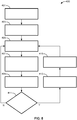
4 ist ein Flussdiagramm, das einen repräsentativen Kostenberechnungsalgorithmus eines erweiterten Manöverkritikalitätsprotokolls zur Ausführung einer intelligenten Fahrzeugoperation veranschaulicht, der mit gespeicherten Befehlen korrespondieren kann, die von fahrzeugseitigen und/oder entfernten Logikschaltungen, programmierbaren elektronischen Steuereinheiten oder anderen computergestützten Vorrichtungen oder Vorrichtungsnetzwerken gemäß Aspekten der offenbarten Konzepte ausgeführt werden.4th Figure 13 is a flow diagram illustrating a representative costing algorithm of an extended maneuver criticality protocol for performing intelligent vehicle operation which may correspond to stored instructions executed by on-vehicle and / or remote logic circuits, programmable electronic control units, or other computerized devices or device networks in accordance with aspects of the disclosed concepts. -
5 ist ein Flussdiagramm, das einen repräsentativen Umleitungsplanungsalgorithmus eines verbesserten Manöverkritikalitätsprotokolls für die Ausführung einer intelligenten Fahrzeugoperation veranschaulicht, der mit gespeicherten Befehlen korrespondieren kann, die von fahrzeugseitigen und/oder entfernten Logikschaltungen, programmierbaren elektronischen Steuereinheiten oder anderen computergestützten Vorrichtungen oder Vorrichtungsnetzwerken gemäß Aspekten der offenbarten Konzepte ausgeführt werden.5 Figure 13 is a flow diagram illustrating a representative rerouting planning algorithm of an enhanced maneuver criticality protocol for performing intelligent vehicle operation that may correspond to stored instructions executed by on-board and / or remote logic circuits, programmable electronic control units, or other computerized devices or device networks in accordance with aspects of the disclosed concepts become.
Die vorliegende Offenbarung kann in verschiedenen Modifikationen und alternativen Formen erfolgen, und einige repräsentative Ausführungsformen sind beispielhaft in den Zeichnungen dargestellt und werden hier ausführlich beschrieben. Es sollte jedoch verstanden werden, dass die neuartigen Aspekte dieser Offenbarung nicht auf die besonderen Formen beschränkt sind, die in den oben aufgeführten Zeichnungen dargestellt sind. Vielmehr soll die Offenbarung alle Modifikationen, Äquivalente, Kombinationen, Unterkombinationen, Permutationen, Gruppierungen und Alternativen umfassen, die in den Umfang dieser Offenbarung fallen und von den beigefügten Ansprüchen erfasst werden.The present disclosure is susceptible of various modifications and alternative forms, and some representative embodiments are shown by way of example in the drawings and will herein be described in detail. It should be understood, however, that the novel aspects of this disclosure are not limited to the particular forms depicted in the drawings identified above. Rather, the disclosure is intended to encompass all modifications, equivalents, combinations, subcombinations, permutations, groupings, and alternatives that fall within the scope of this disclosure and are covered by the appended claims.
AUSFÜHRLICHE BESCHREIBUNGDETAILED DESCRIPTION
Diese Offenbarung kann in vielen verschiedenen Formen ausgeführt werden. Repräsentative Ausführungsformen der Offenbarung sind in den Zeichnungen dargestellt und werden hierin detailliert beschrieben, mit dem Verständnis, dass diese Ausführungsformen als Beispiel für die offenbarten Prinzipien und nicht als Einschränkung der allgemeinen Aspekte der Offenbarung dienen. Insofern sollten Elemente und Einschränkungen, die z. B. in der Zusammenfassung, der Einleitung, der Beschreibung und der ausführlichen Beschreibung beschrieben sind, aber nicht explizit in den Ansprüchen aufgeführt sind, weder einzeln noch gemeinsam durch Implikation, Schlussfolgerung oder auf andere Weise in die Ansprüche aufgenommen werden.This disclosure can be embodied in many different forms. Representative embodiments of the disclosure are shown in the drawings and will be described in detail herein, with the understanding that these embodiments serve as examples of the principles disclosed, and not as limitations on the general aspects of the disclosure. In this respect, elements and restrictions that e.g. B. in the abstract, the introduction, the description and the detailed description, but are not explicitly listed in the claims, are not included in the claims either individually or collectively by implication, inference or in any other way.
Für die Zwecke dieser ausführlichen Beschreibung gilt, sofern nicht ausdrücklich ausgeschlossen: Der Singular schließt den Plural ein und umgekehrt; die Wörter „und“ und „oder“ sind sowohl konjunktiv als auch disjunktiv; die Wörter „jedes“ und „alle“ bedeuten „jedes und alle“; und die Wörter „umfassend“, „enthaltend“, „aufweisend“, „haben“ und dergleichen bedeuten jeweils „einschließlich ohne Einschränkung“. Darüber hinaus können hier Näherungswörter wie „etwa“, „fast“, „im Wesentlichen“, „ungefähr“, „allgemein“ und dergleichen im Sinne von „bei, nahe oder fast bei“ oder „innerhalb von 0-5% von“ oder „innerhalb akzeptabler Fertigungstoleranzen“ oder einer logischen Kombination davon verwendet werden. Schließlich können Richtungsadjektive und Adverbien, wie z.B. vorwärts, nach hinten, nach innen, nach außen, nach rechts, nach links, vertikal, horizontal, aufwärts, abwärts, vorne, hinten, links, rechts usw. auf ein Kraftfahrzeug bezogen sein, wie z.B. eine Vorwärtsfahrtrichtung eines Kraftfahrzeugs, wenn das Fahrzeug auf einer normalen Fahrfläche betriebsmäßig ausgerichtet ist.For the purposes of this detailed description, unless expressly excluded: The singular includes the plural and vice versa; the words “and” and “or” are both subjunctive and disjunctive; the words "any" and "all" mean "any and all"; and the words “comprising,” “including,” “having,” “having,” and the like, each mean “including without limitation”. In addition, approximate words such as “about”, “almost”, “essentially”, “approximately”, “general” and the like in the sense of “at, near or almost at” or “within 0-5% of” or "Within acceptable manufacturing tolerances" or a logical combination thereof. Finally, directional adjectives and adverbs such as forward, backward, inward, outward, rightward, leftward, vertical, horizontal, upward, downward, front, rear, left, right, etc. related to a motor vehicle, e.g. a forward direction of travel of a motor vehicle when the vehicle is operationally oriented on a normal driving surface.
Unter Bezugnahme auf die Zeichnungen, in denen sich gleiche Referenznummern auf gleiche Merkmale in den verschiedenen Ansichten beziehen, wird in
Das repräsentative Fahrzeug
Kommunikativ mit der Telematikeinheit
Unter Bezugnahme auf
Die CPU
Die Digitalkamera
Diese Sensoren sind im gesamten Kraftfahrzeug
Vorgestellt werden automatisierte Fahrsysteme, die die Kritikalität und die Kosten von Fahrmanövern entlang eines gegebenen Pfades für die Umleitung, Anpassung des Fahrzeugmodus und Fahrerwarnungen bewerten. In einem Beispiel verwendet ein autonomes Fahrzeug eine erweiterte Manöverkritikalitätsanalyse, um eine Umleitung vorzunehmen und somit kostenintensive, unkritische Manöver zu umgehen, z.B. indem es eine kostengünstigere Straßenroute nimmt, um eine schwierige Autobahnzusammenführung zu überspringen. Die vorstehende verbesserte Manöverkritikalitätsanalyse ermöglicht es dem autonomen Fahrzeug auch, zusätzliche Schritte zu unternehmen, um sicherzustellen, dass kritische Manöver nicht verpasst werden, z.B. durch den Wechsel eines aktuellen Fahrmodus des Fahrzeugs auf „aggressiv“, und somit höhere Beschleunigungen, höhere Geschwindigkeiten, aggressivere Spurwechsel usw. zu ermöglichen. Es können automatische Warnungen generiert werden, um den Fahrer über die Kritikalität und/oder die Kosten eines bevorstehenden Manövers zu informieren. Mit einer Kostenfunktion können sowohl Fahrmanöver als auch Fahrzeugtrajektorien von niedrigem Niveau ausgewertet werden, um eine kostengünstigere Lösung auszuwählen.Automated driving systems will be presented that evaluate the criticality and costs of driving maneuvers along a given path for diversion, adaptation of the vehicle mode and driver warnings. In one example, an autonomous vehicle uses an advanced maneuver criticality analysis to make a detour and thus avoid costly, non-critical maneuvers, e.g. by taking a cheaper road route to skip a difficult freeway merge. The above improved maneuver criticality analysis also enables the autonomous vehicle to take additional steps to ensure that critical maneuvers are not missed, e.g. by changing a current driving mode of the vehicle to "aggressive", and thus to enable higher accelerations, higher speeds, more aggressive lane changes, etc. Automatic warnings can be generated to inform the driver of the criticality and / or the costs of an upcoming maneuver. With a cost function, both driving maneuvers and vehicle trajectories from a low level can be evaluated in order to select a more cost-effective solution.
Die offenbarten Techniken zur Manöverkritikalitätsanalyse identifizieren eine Kritikalität jedes Manövers auf einer aktuellen Route und ermitteln anhand der Kritikalität jedes Manövers die maximalen Kosten, die das autonome Fahrzeug bei der Ausführung dieses Manövers erfahren kann. Der Fahrzeugmodus und andere Betriebsparameter des Fahrzeugs können z.B. von einem standardmäßigen „Komfort“-Modus in einen sportlich „aggressiven“ Modus oder umgekehrt angepasst werden, in Erwartung eines bevorstehenden Manövers auf der Grundlage einer Kosten- und Kritikalitätsanalyse. Zum Beispiel kann während der Trajektoriegenerierung ein maximal zulässiger Querbeschleunigungswert erhöht werden, um ein kritisches Manöver auszuführen. Dadurch wird das Fahrzeug in die Lage versetzt, hohe Beschleunigungen einzugehen, anstatt eine geeignete Trajektorie zu finden und ein kritisches Manöver aufzugeben. Umgekehrt kann ein aktueller Fahrmodus des Fahrzeugs auf einen Standard „Komfort“-Modus eingestellt und das Fahrzeug umgeleitet werden, wenn die geschätzten Kosten für die Durchführung eines bevorstehenden Manövers höher als erlaubt sind. Jede durchgeführte Operation kann den autonomen Betrieb des Fahrzeugs auf eine entsprechende Reihe von harten Limitierungen beschränken, einschließlich maximaler Vorwärts-, Quer- und Wendegeschwindigkeiten, Beschleunigungen, Abstände nach vorn, usw. sowie verschiedene Kostenfunktionen der Geschwindigkeit, Beschleunigung, des Abstands nach vorn usw.The disclosed techniques for maneuver criticality analysis identify a criticality of each maneuver on a current route and, based on the criticality of each maneuver, determine the maximum costs that the autonomous vehicle can experience in carrying out this maneuver. The vehicle mode and other operating parameters of the vehicle can, for example, be adapted from a standard “comfort” mode to a sporty “aggressive” mode or vice versa, in anticipation of an imminent maneuver based on a cost and criticality analysis. For example, a maximum permissible lateral acceleration value can be increased during the trajectory generation in order to carry out a critical maneuver. This enables the vehicle to enter into high accelerations instead of finding a suitable trajectory and giving up a critical maneuver. Conversely, a current driving mode of the vehicle can be set to a standard "comfort" mode and the vehicle can be rerouted, when the estimated cost of performing an upcoming maneuver is higher than allowed. Each operation performed can limit the autonomous operation of the vehicle to a corresponding set of hard limits, including maximum forward, lateral and turning speeds, accelerations, distances forward, etc., as well as various cost functions of speed, acceleration, distance forward, etc.
Mit Bezug zu
Bei der Durchführung der Manöverkritikalitätsanalyse wird ein Kostenwert für jedes Segment-zu-Segment-Manöver ermittelt. Zumindest für einige Implementierungen kann ein Kostenwert in Form der einzelnen Niedrig-Level-Schritte - oder „endlichen Schritte“ - abgeleitet werden, die das Host-Fahrzeug
Basierend auf aktuellen Schätzungen der Kostenwerte für jedes Segmentmanöver, wobei ein oder mehrere Werte aus Offline-Informationen ermittelt werden können, versucht das automatisierte Fahrsystem, die beste Route vom Startspursegment (


In diesem Beispiel kann das Host-Fahrzeug
Wenn ein Kostenwert, der mit einem der Segmentmanöver korrespondiert, größer ist als der zugehörige Kritikalitätswert, kann eine alternative Route gewünscht sein. Die Suche nach einer alternativen „zweitbesten“ Route kann das Entfernen dieses kostenintensiven Manövers und seines entsprechenden Pfeilverbinders aus dem Knotendiagramm
In vielen Fällen kann es mehr als eine alternative Route geben, um ein gewünschtes Zielspursegment zu erreichen und damit ein gewünschtes Fahrmanöver zu absolvieren. Als Erweiterung des Linksabbiegefahrmanövers nach 


In diesem Fall kann ein Kritikalitätswert für ein Segmentmanöver entlang der primären „besten“ Route als Minimumkostenfunktion mit Kostenwerten aus der „zweitbesten“ und „drittbesten“ Route berechnet werden, wobei:

Auch hier kann das automatische Fahrsystem entscheiden, das Segmentmanöver x zu überspringen, wenn Kosten(x) > Kritikalität(x). Here, too, the automatic driving system can decide to skip segment maneuver x if costs (x)> criticality (x).
Bei vielen der Manöverkritikalitätsbewertungen kann eine residente Fahrzeugsteuerung oder ein dediziertes Steuermodul des automatisierten Fahrsystems Gewichtungsfaktoren anwenden, um die assoziierten Kosten bestimmter endlicher Schritte eines Segmentmanövers in Abhängigkeit von einem aktuellen Fahrmodus eines Host-Fahrzeugs zu erhöhen oder zu verringern. Anders ausgedrückt kann nach der Bestimmung eines Fahrmodus des Fahrzeugs der jeweilige Kostenwert für ein Segmentmanöver berechnet werden, indem ein fahrmodusbasierter Gewichtungsfaktor auf einen oder mehrere mit diesem Segmentmanöver assoziierte Parameter angewendet wird. Tatsächlich hängen die einzelnen Kostenwerte der Segmentmanöver nicht nur von den Besonderheiten des Manövers ab, sondern auch von dem vom Benutzer gewählten Fahrmodus. Wenn z.B. der aktuelle Fahrmodus auf einen standardmäßigen „sanften“ Fahrmodus eingestellt ist, können die Begleitkosten für Beschleunigungs- oder Verzögerungsmanöver mit Größenordnungen größer als ein kalibrierter Schwellenwert der g-Kraft um einen Gewichtungsfaktor von 5 erhöht werden (z.B. Kosten(Verzögerung) = 5 × Fdecel 3). Ist der aktuelle Fahrmodus dagegen auf eine sportlich „aggressive“ Fahrweise eingestellt, wird kein zusätzlicher Gewichtungsfaktor (z.B. Kosten(Verzögerung) = Verzögerung3) angewendet.In many of the maneuver criticality assessments, a resident vehicle controller or a dedicated control module of the automated driving system may apply weighting factors to increase or decrease the associated cost of certain finite steps of a segment maneuver depending on a current driving mode of a host vehicle. In other words, after a driving mode of the vehicle has been determined, the respective cost value for a segment maneuver can be calculated by applying a driving mode-based weighting factor to one or more parameters associated with this segment maneuver. In fact, the individual cost values of the segment maneuvers depend not only on the particularities of the maneuver, but also on the driving mode selected by the user. If, for example, the current driving mode is set to a standard "gentle" driving mode, the accompanying costs for acceleration or deceleration maneuvers with magnitudes greater than a calibrated threshold value of the g-force can be increased by a weighting factor of 5 (e.g. costs (deceleration) = 5 × F decel 3 ). If, on the other hand, the current driving mode is set to a sporty, “aggressive” driving style, no additional weighting factor (e.g. costs (delay) = delay 3 ) is applied.
Zumindest einige der offenbarten Manöverkritikalitätsbewertungen können vordefinierte Strafen auf die Kosten bestimmter endlicher Schritte eines Segmentmanövers in Abhängigkeit von einem vom Insassen gewählten Fahrmodus des Host-Fahrzeugs anwenden. Beispielsweise können Kosten, die mit dem automatisierten Fahrsystem assoziiert sind, das automatisch den Fahrmodus an den Sportfahrmodus anpasst, wenn ein Insasse den Komfortfahrmodus gewählt hat, auf eine vordefinierte Strafe (z. B. 100) festgelegt werden. Eine solche Strafe würde nicht verhängt werden, wenn der Insasse die aggressive Sportfahrweise gewählt hat. Hat ein Insasse dagegen einen Fahrmodus „Extrakomfort“ gewählt, kann der Strafwert für die Anpassung des Fahrmodus an den Sportfahrmodus auf einen außerordentlich großen Wert (z. B. eine Million) gesetzt werden, wodurch das automatisierte Fahrsystem daran gehindert wird, eine solche Änderung ohne Eingreifen des Insassen vorzunehmen.At least some of the disclosed maneuver criticality assessments may apply predefined penalties to the cost of certain finite steps of a segment maneuver depending on an occupant selected driving mode of the host vehicle. For example, costs associated with the automated driving system that automatically adapts the driving mode to the sport driving mode when an occupant has selected the comfort driving mode can be set to a predefined penalty (e.g. 100). Such a penalty would not be imposed if the occupant chose aggressive sports driving. If, on the other hand, an occupant has selected an "extra comfort" driving mode, the penalty for adapting the driving mode to the sport driving mode can be set to an extremely large value (e.g. one million), which prevents the automated driving system from making such a change without Intervention of the occupant.
Aspekte der offenbarten Konzepte können separate Kostenwerte für zusätzliche Parameter bewerten, die sich auf ein Host-Fahrzeug beziehen, das ein bestimmtes Manöver durchführt. So kann z.B. ein autonomes Host-Fahrzeug versuchen, eine Autobahn an einer bevorstehenden Ausfahrt zu verlassen, indem es ein Spurwechselmanöver in eine dafür vorgesehene Ausfahrspur durchführt. Vor der Durchführung des Spurwechselmanövers fährt das Host-Fahrzeug vor einen großen Lkw, während zwei Zielfahrzeuge mit hoher Geschwindigkeit rechts vorbeifahren und ebenfalls versuchen, die Ausfahrt über die Ausfahrspur zu erreichen. Unter den aktuellen Fahr- und Verkehrsbedingungen kann dieses Manöver auf verschiedene Weise durchgeführt werden: Verfahren 


Die endgültigen Kosten des Spurwechselmanövers können wie folgt berechnet werden: Kosten(Spurwechsel) = min(Kosten(Verfahren 1), Kosten(Verfahren 2), Kosten(Verfahren 3)). The final cost of the lane change maneuver can be calculated as follows: cost (lane change) = min (cost (procedure 1), cost (procedure 2), cost (procedure 3)).
Unter Bezugnahme auf
Nach der in
Auf der anderen Seite kann die Durchführung eines Spurwechselmanövers von Fahrspursegment (
Transiente Fahrzustände können den Kostenwert eines oder mehrerer Segmentmanöver unerwartet erhöhen, was wiederum die Kosten für eine vorhergesagte, zu bewertende Strecke in die Höhe treibt. Beispielsweise können die Kosten für ein Segmentmanöver, das mit der Aufrechterhaltung einer vorhergesagten primären Route assoziiert ist, groß werden, wenn sich das Host-Fahrzeug einem vorausfahrenden Zielfahrzeug nähert, das zu langsam fährt und somit die Fahrspur ohne Überholmöglichkeit blockiert. Liegt nach Aktualisierung der Manöverkritikalitätsanalyse der erhöhte Gesamtkostenwert innerhalb eines erlaubten Kostenbereichs, fährt das autonome Fahrzeug mit der primären Route weiter. Umgekehrt kann das autonome Fahrzeug auf eine alternative sekundäre Route umleiten, die eventuell über einen anderen Satz an Straßen ein gewünschtes Fahrzeugziel erreicht. Wenn eine vorhergesagte alternative Route deutlich mehr kostet als eine vorhergesagte primäre Route, kann dem Fahrer/Insasse ein visueller, akustischer und/oder physischer Hinweis (z. B. über einen in einen Fahrzeugsitz eingebetteten haptischen Wandler) gegeben werden, der den Fahrer/Insassen auffordert, unverzüglich Maßnahmen zur Vervollständigung der primären Route zu ergreifen. Ebenso kann dem Fahrer/Insassen, wenn die primäre Route deutlich mehr kostet als die alternative Route, ein Hinweis gegeben werden, der den Fahrer/Insassen dazu auffordert, unverzüglich Maßnahmen zu ergreifen, um die alternative Route abzuschließen.Transient driving conditions can unexpectedly increase the cost value of one or more segment maneuvers, which in turn increases the costs for a predicted route to be evaluated. For example, the cost of a segment maneuver associated with maintaining a predicted primary route can become large when the host vehicle approaches a target vehicle ahead that is traveling too slowly and thus blocking the lane with no overtaking opportunity. If, after updating the maneuver criticality analysis, the increased total cost value is within a permitted cost range, the autonomous vehicle continues on the primary route. Conversely, the autonomous vehicle can reroute onto an alternative secondary route that may reach a desired vehicle destination via a different set of roads. If a predicted alternative route costs significantly more than a predicted primary route, the driver / occupant can be given a visual, acoustic and / or physical indication (e.g. via a haptic transducer embedded in a vehicle seat) which the driver / occupant can use prompts you to take immediate action to complete the primary route. Likewise, if the primary route costs significantly more than the alternative route, the driver / occupant can be given an indication that prompts the driver / occupant to take immediate action to complete the alternative route.
Unter Bezugnahme auf das Flussdiagramm von
Das Verfahren
Nach der Auflistung der verfügbaren Operationen, in denen ein bestimmtes Segmentmanöver durchgeführt werden kann, weist der Prozessblock
Das Verfahren
Unter Bezugnahme auf das Flussdiagramm von
Im Prozessblock
Unter Bezugnahme auf
Der Entscheidungsblock
Wenn festgestellt wird, dass der Kostenwert eines Segmentmanövers, wie z.B. des Segmentmanövers x aus
Aspekte dieser Offenbarung können in einigen Ausführungsformen durch ein computerausführbares Befehlsprogramm, wie z. B. Programmmodule, die allgemein als Softwareanwendungen oder Anwendungsprogramme bezeichnet werden, die von einer Steuerung oder den hier beschriebenen Steuerungsvariationen ausgeführt werden, umgesetzt werden. Software kann, in nicht einschränkenden Beispielen, Routinen, Programme, Objekte, Komponenten und Datenstrukturen enthalten, die bestimmte Aufgaben ausführen oder bestimmte Datentypen implementieren. Die Software kann eine Schnittstelle bilden, die es einem Computer ermöglicht, entsprechend einer Eingabequelle zu reagieren. Die Software kann auch mit anderen Codesegmenten zusammenarbeiten, um als Reaktion auf die empfangenen Daten in Verbindung mit der Quelle der empfangenen Daten eine Vielzahl von Aufgaben zu initiieren. Die Software kann auf einer Vielzahl von Speichermedien wie CD-ROM, Magnetplatte, Blasenspeicher und Halbleiterspeicher (z.B. verschiedene Arten von RAM oder ROM) gespeichert werden.Aspects of this disclosure may, in some embodiments, be implemented by a computer-executable instruction program, such as e.g. B. program modules, which are generally referred to as software applications or application programs executed by a controller or the controller variations described here, are implemented. Software may, by way of non-limiting examples, include routines, programs, objects, components, and data structures that perform certain tasks or implement certain types of data. The software can provide an interface that enables a computer to respond according to an input source. The software can also work with other code segments to initiate a variety of tasks in response to the received data in conjunction with the source of the received data. The software can be stored on a variety of storage media such as CD-ROM, magnetic disk, bubble memory, and semiconductor memory (e.g. various types of RAM or ROM).
Darüber hinaus können Aspekte der vorliegenden Offenbarung mit einer Vielzahl von Computersystem- und Computernetzwerkkonfigurationen praktiziert werden, einschließlich Multiprozessorsystemen, mikroprozessorbasierter oder programmierbarer Verbraucherelektronik, Minicomputern, Großrechnern und ähnlichem. Darüber hinaus können Aspekte der vorliegenden Offenbarung in Umgebungen mit verteilter Datenverarbeitung praktiziert werden, in denen die Aufgaben von residenten und entfernt arbeitenden Vorrichtungen ausgeführt werden, die über ein Kommunikationsnetzwerk miteinander verbunden sind. In einer Umgebung mit verteilter Datenverarbeitung können sich die Programmmodule sowohl in lokalen als auch in entfernten Computerspeichermedien einschließlich Speichergeräten befinden. Aspekte der vorliegenden Offenbarung können daher im Zusammenhang mit verschiedener Hardware, Software oder einer Kombination davon in einem Computersystem oder einem anderen Verarbeitungssystem implementiert werden.In addition, aspects of the present disclosure can be practiced with a variety of computer system and computer network configurations, including multiprocessor systems, microprocessor-based or programmable consumer electronics, minicomputers, mainframe computers, and the like. In addition, aspects of the present disclosure may be practiced in distributed computing environments where the tasks are performed by resident and remote devices that are interconnected via a communications network. In a distributed computing environment, the program modules can reside on both local and remote computer storage media, including storage devices. Aspects of the present disclosure can therefore be implemented in the context of various hardware, software, or a combination thereof in a computer system or other processing system.
Jede der hier beschriebenen Verfahren kann maschinenlesbare Anweisungen enthalten für die Ausführung durch: a) einen Prozessor, b) eine Steuerung und/oder c) jede andere geeignete Verarbeitungsvorrichtung. Jeder Algorithmus, jede Software, Steuerlogik, jedes Protokoll oder Verfahren, die hierin offenbart werden, können als Software auf einem zugreifbaren Medium wie z.B. einem Flash-Speicher, einer CD-ROM, einer Diskette, einer Festplatte, einer Digital Versatile Disk (DVD) oder anderen Speichermedien gespeichert werden. Der gesamte Algorithmus, die Steuerlogik, das Protokoll oder das Verfahren und/oder Teile davon können alternativ von einer anderen Vorrichtung als einer Steuerung ausgeführt werden und/oder in Firmware oder spezieller Hardware in verfügbarer Weise enthalten sein (z. B. implementiert durch eine anwendungsspezifische integrierte Schaltung (ASIC), ein programmierbares Logikbauteil (PLD), ein feldprogrammierbares Logikbauteil (FPLD), diskrete Logik usw.). Des Weiteren werden zwar spezifische Algorithmen mit Bezug auf die hier dargestellten Flussdiagramme beschrieben, doch können alternativ viele andere Verfahren zur Implementierung der beispielhaften maschinenlesbaren Anweisungen verwendet werden.Any of the methods described herein may contain machine-readable instructions for execution by: a) a processor, b) a controller, and / or c) any other suitable processing device. Any algorithm, software, control logic, protocol or method disclosed herein can be used as software on an accessible medium such as e.g. a flash memory, a CD-ROM, a floppy disk, a hard disk, a digital versatile disk (DVD) or other storage media. The entire algorithm, control logic, protocol or method and / or parts thereof may alternatively be executed by a device other than a controller and / or contained in firmware or special hardware in an available manner (e.g. implemented by an application-specific integrated circuit (ASIC), a programmable logic device (PLD), a field programmable logic device (FPLD), discrete logic, etc.). Furthermore, while specific algorithms are described with reference to the flowcharts presented herein, many other methods of implementing the exemplary machine-readable instructions may alternatively be used.
Aspekte der vorliegenden Offenbarung wurden unter Bezugnahme auf die abgebildeten Ausführungsformen ausführlich beschrieben; die Fachleute werden jedoch erkennen, dass viele Änderungen daran vorgenommen werden können, ohne vom Umfang der vorliegenden Offenbarung abzuweichen. Die vorliegende Offenbarung beschränkt sich nicht auf die genaue Konstruktion und Zusammensetzung, die hierin offenbart wird; alle Modifikationen, Änderungen und Abweichungen, die sich aus den vorstehenden Beschreibungen ergeben, fallen in den Umfang der Offenbarung, wie sie in den beigefügten Ansprüchen definiert ist. Darüber hinaus umfassen die vorliegenden Konzepte ausdrücklich alle Kombinationen und Unterkombinationen der vorstehenden Elemente und Merkmale.Aspects of the present disclosure have been described in detail with reference to the illustrated embodiments; however, those skilled in the art will recognize that many changes can be made therein without departing from the scope of the present disclosure. The present disclosure is not limited to the precise construction and composition disclosed herein; all modifications, changes, and alterations arising from the foregoing descriptions fall within the scope of the disclosure as defined in the appended claims. In addition, the present concepts expressly include all combinations and sub-combinations of the above elements and features.
Claims (10)

Applications Claiming Priority (2)
| Application Number | Priority Date | Filing Date | Title |
|---|---|---|---|
| US16/352,918 | 2019-03-14 | ||
| US16/352,918 US11052914B2 (en) | 2019-03-14 | 2019-03-14 | Automated driving systems and control logic using maneuver criticality for vehicle routing and mode adaptation |
Publications (1)
| Publication Number | Publication Date |
|---|---|
| DE102020103051A1 true DE102020103051A1 (en) | 2020-09-17 |
Family
ID=72289521
Family Applications (1)
| Application Number | Title | Priority Date | Filing Date |
|---|---|---|---|
| DE102020103051.7A Withdrawn DE102020103051A1 (en) | 2019-03-14 | 2020-02-06 | AUTOMATED DRIVING SYSTEMS AND CONTROL LOGIC WITH THE USE OF MANEUVER CRITICALITY FOR VEHICLE CONTROL AND MODE ADAPTATION |
Country Status (3)
| Country | Link |
|---|---|
| US (1) | US11052914B2 (en) |
| CN (1) | CN111688663B (en) |
| DE (1) | DE102020103051A1 (en) |
Cited By (1)
| Publication number | Priority date | Publication date | Assignee | Title |
|---|---|---|---|---|
| CN118254830A (en) * | 2024-05-07 | 2024-06-28 | 北京易航远智科技有限公司 | Vehicle speed control system, electronic device, vehicle, method and program product |
Families Citing this family (51)
| Publication number | Priority date | Publication date | Assignee | Title |
|---|---|---|---|---|
| EP3824404A4 (en) | 2018-07-20 | 2022-04-27 | May Mobility, Inc. | MULTI-PERSPECTIVE SYSTEM AND BEHAVIORAL POLICY SELECTION PROCESS BY AN AUTONOMOUS AGENT |
| US10614709B2 (en) | 2018-07-24 | 2020-04-07 | May Mobility, Inc. | Systems and methods for implementing multimodal safety operations with an autonomous agent |
| DE102018216082A1 (en) * | 2018-09-20 | 2018-12-13 | Robert Bosch Gmbh | Method for cooperative maneuvering |
| US11604073B1 (en) * | 2018-09-24 | 2023-03-14 | Apple Inc. | Route guidance system |
| DE102018216364B4 (en) * | 2018-09-25 | 2020-07-09 | Volkswagen Aktiengesellschaft | Method and device for supporting a lane change process for a vehicle |
| KR102637599B1 (en) * | 2018-10-08 | 2024-02-19 | 주식회사 에이치엘클레무브 | Apparatus and Method for Controlling Lane Changing using Vehicle-to-Vehicle Communication and Tendency Information Calculation Apparatus therefor |
| JP6856679B2 (en) * | 2019-02-15 | 2021-04-07 | 本田技研工業株式会社 | Vehicle control device, vehicle and vehicle control method |
| US10969470B2 (en) | 2019-02-15 | 2021-04-06 | May Mobility, Inc. | Systems and methods for intelligently calibrating infrastructure devices using onboard sensors of an autonomous agent |
| FR3093690B1 (en) * | 2019-03-14 | 2021-02-19 | Renault Sas | Selection process for a motor vehicle of a traffic lane of a roundabout |
| JP7278832B2 (en) * | 2019-03-27 | 2023-05-22 | 本田技研工業株式会社 | VEHICLE CONTROL DEVICE, VEHICLE CONTROL METHOD, VEHICLE AND PROGRAM |
| KR102762189B1 (en) * | 2019-05-03 | 2025-02-05 | 현대자동차주식회사 | Apparatus for controlling an autonomous driving of vehicle, system having the same and method thereof |
| JP7303667B2 (en) * | 2019-05-31 | 2023-07-05 | 株式会社Subaru | Automated driving support device |
| CN115567891B (en) * | 2019-06-05 | 2025-01-14 | 深圳引望智能技术有限公司 | Automatic driving information indicating method, automatic driving information obtaining method and device |
| JP7123867B2 (en) * | 2019-06-28 | 2022-08-23 | 本田技研工業株式会社 | VEHICLE CONTROL DEVICE, VEHICLE CONTROL METHOD, AND PROGRAM |
| DE102019129879A1 (en) * | 2019-11-06 | 2021-05-06 | Zf Friedrichshafen Ag | Method and control device for controlling a motor vehicle |
| EP3855121A3 (en) * | 2019-12-30 | 2021-10-27 | Waymo LLC | Kinematic model for autonomous truck routing |
| CN111523643B (en) * | 2020-04-10 | 2024-01-05 | 商汤集团有限公司 | Trajectory prediction method, device, equipment and storage medium |
| US12110040B2 (en) * | 2020-05-29 | 2024-10-08 | Toyota Research Institute, Inc. | Navigation cost computation for lane changes before a critical intersection |
| US11352023B2 (en) | 2020-07-01 | 2022-06-07 | May Mobility, Inc. | Method and system for dynamically curating autonomous vehicle policies |
| JP7347375B2 (en) * | 2020-08-31 | 2023-09-20 | トヨタ自動車株式会社 | Travel lane planning device and computer program for travel lane planning |
| DE102020215302A1 (en) * | 2020-12-03 | 2022-06-09 | Robert Bosch Gesellschaft mit beschränkter Haftung | Dynamics-dependent behavior planning for at least partially automated vehicles |
| WO2022132774A1 (en) | 2020-12-14 | 2022-06-23 | May Mobility, Inc. | Autonomous vehicle safety platform system and method |
| CN116490858A (en) * | 2020-12-17 | 2023-07-25 | 英特尔公司 | Adaptive Generation and Evaluation of Critical Scenarios for Autonomous Vehicles |
| EP4264181A4 (en) | 2020-12-17 | 2024-10-30 | May Mobility, Inc. | METHOD AND SYSTEM FOR DYNAMIC UPDATING OF AN ENVIRONMENT REPRESENTATION OF AN AUTONOMOUS AGENT |
| JP7256168B2 (en) * | 2020-12-28 | 2023-04-11 | 本田技研工業株式会社 | VEHICLE CONTROL DEVICE, VEHICLE CONTROL METHOD, AND PROGRAM |
| US20220252414A1 (en) * | 2021-02-09 | 2022-08-11 | Ford Global Technologies, Llc | Systems and methods for navigation and logistics management |
| US11654913B2 (en) * | 2021-03-04 | 2023-05-23 | Southwest Research Institute | Vehicle control based on infrastructure and other vehicles |
| EP4314708A4 (en) | 2021-04-02 | 2024-12-25 | May Mobility, Inc. | Method and system for operating an autonomous agent with incomplete environmental information |
| JP7510904B2 (en) * | 2021-04-02 | 2024-07-04 | 株式会社デンソー | Map information output device and map information output method |
| CN115257798B (en) * | 2021-04-29 | 2025-11-14 | 沃尔沃汽车公司 | Autonomous driving control methods and control units and systems for autonomous vehicles |
| WO2022256249A1 (en) * | 2021-06-02 | 2022-12-08 | May Mobility, Inc. | Method and system for remote assistance of an autonomous agent |
| CN113183943B (en) * | 2021-06-03 | 2023-02-21 | 南昌智能新能源汽车研究院 | Intelligent driving system of agricultural equipment and operation method thereof |
| CN115534954B (en) * | 2021-06-28 | 2025-12-09 | 大唐移动通信设备有限公司 | Vehicle control method, electronic device, apparatus and storage medium |
| CN113460086B (en) * | 2021-06-30 | 2022-08-09 | 重庆长安汽车股份有限公司 | Control system, method, vehicle and storage medium for automatically driving to enter ramp |
| CN113483775B (en) * | 2021-06-30 | 2024-06-14 | 上海商汤临港智能科技有限公司 | Path prediction method and device, electronic equipment and computer readable storage medium |
| WO2023102098A1 (en) | 2021-12-01 | 2023-06-08 | May Mobility, Inc. | Method and system for impact-based operation of an autonomous agent |
| WO2023102116A1 (en) | 2021-12-02 | 2023-06-08 | May Mobility, Inc. | Method and system for feasibility-based operation of an autonomous agent |
| US11987237B2 (en) * | 2021-12-20 | 2024-05-21 | Waymo Llc | Systems and methods to determine a lane change strategy at a merge region |
| US11814072B2 (en) | 2022-02-14 | 2023-11-14 | May Mobility, Inc. | Method and system for conditional operation of an autonomous agent |
| CN114689071B (en) * | 2022-03-22 | 2025-04-15 | 智道网联科技(北京)有限公司 | Vehicle path planning method, device, electronic device, and storage medium |
| US12552381B2 (en) * | 2022-06-22 | 2026-02-17 | Aptiv Technologies AG | Target of interest selection on roadway ramps for avoidance driving maneuvers |
| FR3137642A1 (en) * | 2022-07-05 | 2024-01-12 | Psa Automobiles Sa | Method and device for controlling a system for semi-automatically changing the lane of a vehicle as a function of a maximum value of a dynamic parameter |
| CN115752499A (en) * | 2022-11-25 | 2023-03-07 | 长城汽车股份有限公司 | Path planning method and device, terminal equipment and vehicle |
| US12027053B1 (en) | 2022-12-13 | 2024-07-02 | May Mobility, Inc. | Method and system for assessing and mitigating risks encounterable by an autonomous vehicle |
| DE102023100858A1 (en) | 2023-01-16 | 2024-07-18 | Dr. Ing. H.C. F. Porsche Aktiengesellschaft | Procedure and system for objective evaluation of an ADAS/ADS system |
| US20240326815A1 (en) * | 2023-03-31 | 2024-10-03 | Ford Global Technologies, Llc | Vehicle maneuvering |
| US12417086B2 (en) | 2023-07-10 | 2025-09-16 | Toyota Motor Engineering & Manufacturing North America, Inc. | Data communication with remote operation of a vehicle |
| US12427987B2 (en) * | 2023-08-18 | 2025-09-30 | Torc Robotics, Inc. | Cost map fusion for lane selection |
| US12479477B2 (en) * | 2023-08-18 | 2025-11-25 | Torc Robotics, Inc. | Courtesy lane selection paradigm |
| CN120840643A (en) * | 2024-04-28 | 2025-10-28 | 通用汽车环球科技运作有限责任公司 | Determine optimal vehicle maneuvers in traffic jams |
| US12459535B1 (en) * | 2024-12-26 | 2025-11-04 | Aurora Operations, Inc. | Autonomous vehicle anomalous event detection |
Family Cites Families (53)
| Publication number | Priority date | Publication date | Assignee | Title |
|---|---|---|---|---|
| US6697730B2 (en) | 2000-04-04 | 2004-02-24 | Georgia Tech Research Corp. | Communications and computing based urban transit system |
| US6356838B1 (en) | 2000-07-25 | 2002-03-12 | Sunil Paul | System and method for determining an efficient transportation route |
| US6304808B1 (en) | 2000-09-09 | 2001-10-16 | Kelsey-Hayes Company | Enhanced active brake control system functionality through system integration with adaptive cruise control |
| US6427119B1 (en) | 2001-04-16 | 2002-07-30 | General Motors Corporation | Method and system for providing multiple entry points to a vehicle navigation route |
| US6587785B2 (en) | 2001-09-21 | 2003-07-01 | General Motors Corporation | Method and system for mobile vehicle re-routing |
| DE10146744A1 (en) * | 2001-09-22 | 2003-04-17 | Bosch Gmbh Robert | Method and system for providing lane recommendations |
| DE502005008328D1 (en) * | 2005-07-06 | 2009-11-26 | Ford Global Tech Llc | Method for predicting driving situations in a motor vehicle |
| US8606506B2 (en) | 2006-07-26 | 2013-12-10 | General Motors Llc | Route-matching method for use with vehicle navigation systems |
| EP2135200A4 (en) | 2007-02-12 | 2011-12-28 | Sean O'sullivan | SHARED TRANSPORT SYSTEM AND SERVICE NETWORK |
| US20090030885A1 (en) | 2007-07-26 | 2009-01-29 | Ridecharge | Method and system for on-demand and scheduled services relating to travel and transportation |
| US8428843B2 (en) | 2008-06-20 | 2013-04-23 | GM Global Technology Operations LLC | Method to adaptively control vehicle operation using an autonomic vehicle control system |
| US8170739B2 (en) | 2008-06-20 | 2012-05-01 | GM Global Technology Operations LLC | Path generation algorithm for automated lane centering and lane changing control system |
| US8364334B2 (en) | 2008-10-30 | 2013-01-29 | Honeywell International Inc. | System and method for navigating an autonomous vehicle using laser detection and ranging |
| US20100228415A1 (en) | 2009-03-05 | 2010-09-09 | Sunil Paul | System and method for reducing the cost of efficient vehicles |
| US20110184642A1 (en) * | 2009-12-18 | 2011-07-28 | Daimler Trucks North America Llc | Fuel efficient routing system and method |
| US20110313880A1 (en) | 2010-05-24 | 2011-12-22 | Sunil Paul | System and method for selecting transportation resources |
| US9514647B2 (en) | 2010-10-20 | 2016-12-06 | GM Global Technology Operations LLC | Optimal acceleration profile for enhanced collision avoidance |
| US8612139B2 (en) | 2010-11-30 | 2013-12-17 | GM Global Technology Operations LLC | Systems and methods for planning vehicle routes based on safety factors |
| US20120239452A1 (en) | 2011-03-17 | 2012-09-20 | Aarjav Trivedi | Fleet Management Systems and Processes |
| US9014915B2 (en) | 2011-07-25 | 2015-04-21 | GM Global Technology Operations LLC | Active safety control for vehicles |
| DE102011109491A1 (en) | 2011-08-04 | 2013-02-07 | GM Global Technology Operations LLC (n. d. Gesetzen des Staates Delaware) | Driving assistance device to support the driving of narrow roads |
| DE102011109492A1 (en) | 2011-08-04 | 2013-02-07 | GM Global Technology Operations LLC (n. d. Gesetzen des Staates Delaware) | Driving assistance device to support the driving of narrow roads |
| US9318023B2 (en) | 2011-08-31 | 2016-04-19 | GM Global Technology Operations LLC | System and method for collision avoidance maneuver path determination with jerk limit |
| US20130204676A1 (en) | 2012-01-26 | 2013-08-08 | Flywheel Software, Inc. | Method and system for dynamically categorizing service providers |
| US20130219294A1 (en) | 2012-02-16 | 2013-08-22 | GM Global Technology Operations LLC | Team-Oriented Human-Vehicle Interface For Adaptive Cruise Control System And Methods For Using Same |
| US9066206B2 (en) | 2012-07-03 | 2015-06-23 | Uber Technologies, Inc. | System and method for providing dynamic supply positioning for on-demand services |
| US8849515B2 (en) | 2012-07-24 | 2014-09-30 | GM Global Technology Operations LLC | Steering assist in driver initiated collision avoidance maneuver |
| US9099006B2 (en) | 2013-08-22 | 2015-08-04 | GM Global Technology Operations LLC | Context-aware threat response arbitration |
| US9517771B2 (en) | 2013-11-22 | 2016-12-13 | Ford Global Technologies, Llc | Autonomous vehicle modes |
| US9079587B1 (en) | 2014-02-14 | 2015-07-14 | Ford Global Technologies, Llc | Autonomous control in a dense vehicle environment |
| US9404761B2 (en) * | 2014-05-30 | 2016-08-02 | Nissan North America, Inc. | Autonomous vehicle lane routing and navigation |
| US9428187B2 (en) | 2014-06-05 | 2016-08-30 | GM Global Technology Operations LLC | Lane change path planning algorithm for autonomous driving vehicle |
| US9457807B2 (en) | 2014-06-05 | 2016-10-04 | GM Global Technology Operations LLC | Unified motion planning algorithm for autonomous driving vehicle in obstacle avoidance maneuver |
| US9139204B1 (en) | 2014-06-12 | 2015-09-22 | GM Global Technology Operations LLC | Road surface condition detection with recursive adaptive learning and validation |
| US9283967B2 (en) | 2014-07-16 | 2016-03-15 | GM Global Technology Operations LLC | Accurate curvature estimation algorithm for path planning of autonomous driving vehicle |
| US9229453B1 (en) | 2014-08-29 | 2016-01-05 | GM Global Technology Operations LLC | Unified motion planner for autonomous driving vehicle in avoiding the moving obstacle |
| DE102014016567A1 (en) | 2014-11-08 | 2016-05-12 | GM Global Technology Operations LLC (n. d. Ges. d. Staates Delaware) | Method for determining an evasion trajectory and driver assistance system therefor |
| US20160231124A1 (en) | 2015-01-15 | 2016-08-11 | GM Global Technology Operations LLC | Horizon-based driver assistance systems and methods |
| US9868443B2 (en) | 2015-04-27 | 2018-01-16 | GM Global Technology Operations LLC | Reactive path planning for autonomous driving |
| US20160321771A1 (en) | 2015-04-29 | 2016-11-03 | Ford Global Technologies, Llc | Ride-sharing range contours |
| US20160320195A1 (en) | 2015-04-29 | 2016-11-03 | Ford Global Technologies, Llc | Ride-sharing long-term ride-share groups |
| US10796248B2 (en) | 2015-04-29 | 2020-10-06 | Ford Global Technologies, Llc | Ride-sharing joint rental groups |
| US20160320198A1 (en) | 2015-04-29 | 2016-11-03 | Ford Global Technologies, Llc | Ride-sharing routing using contextual constraints |
| US20160320194A1 (en) | 2015-04-29 | 2016-11-03 | Ford Global Technologies, Llc | Ride-sharing user path disturbances and user re-routing |
| DE112016003285B4 (en) * | 2015-07-22 | 2022-12-22 | Honda Motor Co., Ltd. | Route generator, route generation method and route generation program |
| US20170021830A1 (en) | 2015-07-22 | 2017-01-26 | GM Global Technology Operations LLC | Adaptive cruise control profiles |
| US9587952B1 (en) | 2015-09-09 | 2017-03-07 | Allstate Insurance Company | Altering autonomous or semi-autonomous vehicle operation based on route traversal values |
| US9815481B2 (en) | 2015-09-28 | 2017-11-14 | GM Global Technology Operations LLC | Vehicle-user-interaction system |
| US9487212B1 (en) | 2015-10-09 | 2016-11-08 | GM Global Technology Operations LLC | Method and system for controlling vehicle with automated driving system |
| US9971945B2 (en) | 2015-12-03 | 2018-05-15 | GM Global Technology Operations LLC | Vision-based wet road surface condition detection using tire side splash |
| US9972206B2 (en) | 2015-12-03 | 2018-05-15 | GM Global Technology Operations LLC | Wet road surface condition detection |
| JP6338159B2 (en) * | 2016-05-19 | 2018-06-06 | 本田技研工業株式会社 | Traffic situation estimation device, vehicle control system, route guidance device, traffic situation estimation method, and traffic situation estimation program |
| US12517511B2 (en) * | 2019-02-05 | 2026-01-06 | Nvidia Corporation | Combined prediction and path planning for autonomous objects using neural networks |
-
2019
- 2019-03-14 US US16/352,918 patent/US11052914B2/en not_active Expired - Fee Related
-
2020
- 2020-02-06 DE DE102020103051.7A patent/DE102020103051A1/en not_active Withdrawn
- 2020-03-16 CN CN202010181627.7A patent/CN111688663B/en not_active Expired - Fee Related
Cited By (1)
| Publication number | Priority date | Publication date | Assignee | Title |
|---|---|---|---|---|
| CN118254830A (en) * | 2024-05-07 | 2024-06-28 | 北京易航远智科技有限公司 | Vehicle speed control system, electronic device, vehicle, method and program product |
Also Published As
| Publication number | Publication date |
|---|---|
| CN111688663B (en) | 2023-12-01 |
| CN111688663A (en) | 2020-09-22 |
| US20200290619A1 (en) | 2020-09-17 |
| US11052914B2 (en) | 2021-07-06 |
Similar Documents
| Publication | Publication Date | Title |
|---|---|---|
| DE102020103051A1 (en) | AUTOMATED DRIVING SYSTEMS AND CONTROL LOGIC WITH THE USE OF MANEUVER CRITICALITY FOR VEHICLE CONTROL AND MODE ADAPTATION | |
| DE102019111390B4 (en) | METHOD FOR CONTROLLING AUTOMATED DRIVING OPERATION OF A MOTOR VEHICLE | |
| DE102020100953B4 (en) | Method for controlling automated driving operation of a motor vehicle | |
| DE102017114495B4 (en) | AUTONOMOUS DRIVING SYSTEM | |
| DE102019113865A1 (en) | INTELLIGENT MOTOR VEHICLES, SYSTEMS AND CONTROL LOGIC FOR REAL-TIME ROUTE GUIDANCE AND ADAPTIVE DRIVE CONTROL | |
| DE112016003585B4 (en) | Vehicle control device, vehicle control method and vehicle control program | |
| DE102019105874A1 (en) | Automated driving systems and control logic for cloud-based scenario planning of autonomous vehicles | |
| DE112016006603B4 (en) | Vehicle control system, vehicle control method and vehicle control program | |
| DE112020004949T5 (en) | VEHICLE ONBOARD DEVICE AND DRIVING ASSISTANCE METHOD | |
| EP3625785B1 (en) | Method for producing a passing probability collection, method for operating a control device of a motor vehicle, passing probability collecting device and control device | |
| DE102019114527A1 (en) | INTELLIGENT VEHICLE NAVIGATION SYSTEMS, METHOD AND CONTROL LOGIC FOR MULTIPLE TRACK SEPARATION AND TRAJECTOR EXTRACTION OF TRAMWAY SEGMENTS | |
| DE102019115030A1 (en) | INTELLIGENT MOTOR VEHICLES, SYSTEMS AND CONTROL LOGIC FOR COACHING DRIVER BEHAVIOR AND MOBILE CHARGING ON DEMAND | |
| DE112016003174T5 (en) | Vehicle control / control device, vehicle control / control method and vehicle control / control program | |
| DE102017121525A1 (en) | Vehicle-to-vehicle cooperation for instruction of traffic | |
| DE102017100323A1 (en) | Control for driving a vehicle | |
| DE112016006746T5 (en) | Vehicle control system, vehicle control method and vehicle control program | |
| DE112016006455T5 (en) | Vehicle control device, vehicle control and vehicle control program | |
| DE102011009665A1 (en) | jam resolution | |
| DE112016006461T5 (en) | VEHICLE CONTROL DEVICE / VEHICLE CONTROL DEVICE, VEHICLE CONTROL PROCEDURE / VEHICLE CONTROL METHOD, AND VEHICLE CONTROL PROGRAM / VEHICLE CONTROL PROGRAM | |
| DE112016006614T5 (en) | Vehicle Control System, Vehicle Control Method and Vehicle Control Program | |
| DE112016003156T5 (en) | Vehicle control device; Vehicle control procedure and vehicle control program | |
| DE102022127739A1 (en) | INTELLIGENT VEHICLE SYSTEMS AND CONTROL LOGIC FOR INCIDENT PREDICTION AND ASSISTANCE DURING OFF-ROAD DRIVING | |
| DE102016116604A1 (en) | Automatic vehicle travel control device | |
| DE102019114595A1 (en) | INTELLIGENT VEHICLE NAVIGATION SYSTEMS, METHOD AND CONTROL LOGIC FOR DERIVING ROAD SECTION SPEED LIMITS | |
| DE102016207421A1 (en) | VEHICLE CRUISE CONTROL DEVICE |
Legal Events
| Date | Code | Title | Description |
|---|---|---|---|
| R012 | Request for examination validly filed | ||
| R016 | Response to examination communication | ||
| R119 | Application deemed withdrawn, or ip right lapsed, due to non-payment of renewal fee |