CN113608670A - Block chain data storage method based on fairness and access heat - Google Patents

Block chain data storage method based on fairness and access heat Download PDF

Info

Publication number
CN113608670A
CN113608670A CN202110572523.3A CN202110572523A CN113608670A CN 113608670 A CN113608670 A CN 113608670A CN 202110572523 A CN202110572523 A CN 202110572523A CN 113608670 A CN113608670 A CN 113608670A
Authority
CN
China
Prior art keywords
data
time
fairness
blockchain
storage
Prior art date
Legal status (The legal status is an assumption and is not a legal conclusion. Google has not performed a legal analysis and makes no representation as to the accuracy of the status listed.)
Granted
Application number
CN202110572523.3A
Other languages
Chinese (zh)
Other versions
CN113608670B (en
Inventor
李春林
肖海成
Current Assignee (The listed assignees may be inaccurate. Google has not performed a legal analysis and makes no representation or warranty as to the accuracy of the list.)
Wuhan University of Technology WUT
Original Assignee
Wuhan University of Technology WUT
Priority date (The priority date is an assumption and is not a legal conclusion. Google has not performed a legal analysis and makes no representation as to the accuracy of the date listed.)
Filing date
Publication date
Application filed by Wuhan University of Technology WUT filed Critical Wuhan University of Technology WUT
Priority to CN202110572523.3A priority Critical patent/CN113608670B/en
Publication of CN113608670A publication Critical patent/CN113608670A/en
Application granted granted Critical
Publication of CN113608670B publication Critical patent/CN113608670B/en
Active legal-status Critical Current
Anticipated expiration legal-status Critical

Links

Images

Classifications

    • GPHYSICS
    • G06COMPUTING OR CALCULATING; COUNTING
    • G06FELECTRIC DIGITAL DATA PROCESSING
    • G06F3/00Input arrangements for transferring data to be processed into a form capable of being handled by the computer; Output arrangements for transferring data from processing unit to output unit, e.g. interface arrangements
    • G06F3/06Digital input from, or digital output to, record carriers, e.g. RAID, emulated record carriers or networked record carriers
    • G06F3/0601Interfaces specially adapted for storage systems
    • G06F3/0668Interfaces specially adapted for storage systems adopting a particular infrastructure
    • G06F3/067Distributed or networked storage systems, e.g. storage area networks [SAN], network attached storage [NAS]
    • GPHYSICS
    • G06COMPUTING OR CALCULATING; COUNTING
    • G06FELECTRIC DIGITAL DATA PROCESSING
    • G06F11/00Error detection; Error correction; Monitoring
    • G06F11/07Responding to the occurrence of a fault, e.g. fault tolerance
    • G06F11/14Error detection or correction of the data by redundancy in operations
    • G06F11/1446Point-in-time backing up or restoration of persistent data
    • G06F11/1448Management of the data involved in backup or backup restore
    • GPHYSICS
    • G06COMPUTING OR CALCULATING; COUNTING
    • G06FELECTRIC DIGITAL DATA PROCESSING
    • G06F11/00Error detection; Error correction; Monitoring
    • G06F11/07Responding to the occurrence of a fault, e.g. fault tolerance
    • G06F11/14Error detection or correction of the data by redundancy in operations
    • G06F11/1446Point-in-time backing up or restoration of persistent data
    • G06F11/1458Management of the backup or restore process
    • G06F11/1464Management of the backup or restore process for networked environments
    • GPHYSICS
    • G06COMPUTING OR CALCULATING; COUNTING
    • G06FELECTRIC DIGITAL DATA PROCESSING
    • G06F16/00Information retrieval; Database structures therefor; File system structures therefor
    • G06F16/10File systems; File servers
    • G06F16/18File system types
    • G06F16/182Distributed file systems
    • GPHYSICS
    • G06COMPUTING OR CALCULATING; COUNTING
    • G06FELECTRIC DIGITAL DATA PROCESSING
    • G06F3/00Input arrangements for transferring data to be processed into a form capable of being handled by the computer; Output arrangements for transferring data from processing unit to output unit, e.g. interface arrangements
    • G06F3/06Digital input from, or digital output to, record carriers, e.g. RAID, emulated record carriers or networked record carriers
    • G06F3/0601Interfaces specially adapted for storage systems
    • G06F3/0628Interfaces specially adapted for storage systems making use of a particular technique
    • G06F3/0638Organizing or formatting or addressing of data
    • GPHYSICS
    • G06COMPUTING OR CALCULATING; COUNTING
    • G06QINFORMATION AND COMMUNICATION TECHNOLOGY [ICT] SPECIALLY ADAPTED FOR ADMINISTRATIVE, COMMERCIAL, FINANCIAL, MANAGERIAL OR SUPERVISORY PURPOSES; SYSTEMS OR METHODS SPECIALLY ADAPTED FOR ADMINISTRATIVE, COMMERCIAL, FINANCIAL, MANAGERIAL OR SUPERVISORY PURPOSES, NOT OTHERWISE PROVIDED FOR
    • G06Q40/00Finance; Insurance; Tax strategies; Processing of corporate or income taxes
    • G06Q40/04Trading; Exchange, e.g. stocks, commodities, derivatives or currency exchange

Landscapes

  • Engineering & Computer Science (AREA)
  • Theoretical Computer Science (AREA)
  • Physics & Mathematics (AREA)
  • General Physics & Mathematics (AREA)
  • General Engineering & Computer Science (AREA)
  • Business, Economics & Management (AREA)
  • Accounting & Taxation (AREA)
  • Human Computer Interaction (AREA)
  • Quality & Reliability (AREA)
  • Finance (AREA)
  • Databases & Information Systems (AREA)
  • Data Mining & Analysis (AREA)
  • Development Economics (AREA)
  • Economics (AREA)
  • Marketing (AREA)
  • Strategic Management (AREA)
  • Technology Law (AREA)
  • General Business, Economics & Management (AREA)
  • Information Retrieval, Db Structures And Fs Structures Therefor (AREA)

Abstract

本发明公开了基于公平性和访问热度的区块链数据存储方法,包括:1)获取交易集合;2)对交易集合按照属性GASPrice的大小降序排序;将数据的元数据信息存储在区块链中;3)以文件的访问热度hot(d)阈值T区别冷数据与热数据;4)对于冷数据,将数据上传到分布式文件系统,并返回Hash值,对数据进行纠删码编码;5)对于热数据,查找存储地址信息,返回存储地址信息;6)用户访问数据时,访问区块链获取数据对应的Hash值,根据存储信息获取数据返回数据结果。本发明结合区块链内的特点和IPFS存储的特点提出了基于公平性和访问热度的数据存储方法,能优化以太坊区块链交易处理流程,提高进行存储交易过程中系统的公平性,同时保证IPFS存储数据的可靠性和可用性。

Figure 202110572523

The invention discloses a blockchain data storage method based on fairness and access heat, including: 1) acquiring a transaction set; 2) sorting the transaction set in descending order according to the size of the attribute GASPrice; storing metadata information of the data in the blockchain 3) Distinguish cold data and hot data by the threshold value T of hot (d) of file access; 4) For cold data, upload the data to the distributed file system, return the Hash value, and perform erasure coding on the data; 5) For hot data, look up the storage address information and return the storage address information; 6) When the user accesses the data, access the blockchain to obtain the Hash value corresponding to the data, and obtain the data according to the storage information and return the data result. The invention proposes a data storage method based on fairness and access heat in combination with the characteristics of the blockchain and the characteristics of IPFS storage, which can optimize the transaction processing flow of the Ethereum blockchain, improve the fairness of the system in the process of storage transactions, and at the same time Ensure the reliability and availability of data stored in IPFS.

Figure 202110572523

Description

Block chain data storage method based on fairness and access heat
Technical Field
The invention relates to the technical field of block chains and data storage, in particular to a block chain data storage method based on fairness and access heat.
Technical Field
In recent years, with the rapid development of technologies such as internet, internet of things and the like, more and more data are generated by users and devices. For example, the number of devices in the internet of things worldwide has increased rapidly, and the use of such devices in large quantities has resulted in a large amount of data information. The data magnitude is also getting larger and larger, and gradually progresses to PB or EB and even higher, the data type is also getting more and more complex, and so on. Meanwhile, as daily life such as shopping, medical treatment, housing and the like is more and more closely combined with the internet, personal data and private data of users in the network are more and more. Therefore, for huge personal data and private data, safe and reliable storage and management are very important. Medical data of, for example, hospital patients is important for the patients and personal ownership of the medical data should be in the possession of the individual, so that the medical data should be stored securely and securely without being leaked, and the data visitor should be granted access to the data by the patient. Aiming at huge data scale and reliable and safe storage requirements, a single-machine storage system or a network storage system is difficult to meet the requirements. While the traditional centralized cloud server storage can collect and control huge data resources, the traditional centralized cloud server storage needs high storage capacity and cost. Meanwhile, the centralized data storage mode also faces the problem of sensitive data leakage. For example, a server may exchange sensitive data with other entities without notifying the owner of the data. In the face of the rapid increase of mass data and the number of internet of things devices, compared with centralized storage, distributed storage can better meet storage requirements. However, in the traditional distributed storage, a trusted third party is still required to complete the integrity check on the data, and this way, the third party auditing agency is maliciously pretended to pose a threat to the data security. In addition, with the development of the mobile internet, a plurality of powerful centralized platforms (such as google, facebook, etc.) are formed, and these platforms hold a large amount of user data, but it is difficult for the user to effectively manage his/her personal data. Therefore, a centralized data storage and management mode faces an important safety problem.
The data storage of the block chain is currently an important research, and the research on the data storage method of the block chain has important significance. However, there still exist some disadvantages in using the blockchain for data storage, and the most important is that the storage space is limited and large amount of data cannot be stored. Since the blockchain is a decentralized distributed ledger, all transaction transactions on the blockchain network are recorded on the ledger, and therefore blockchain data is continuously increasing. Meanwhile, in order to ensure that data is not tampered, each node of the block chain synchronizes the data of the whole network, so that more and more data of a single node is generated, a transaction queue waiting for confirmation is longer and longer, and the whole block chain network is overstaffed. At present, two ideas exist for solving the problems of small storage data amount and excessive node synchronization data. One is to expand the blocks and increase the capacity of each block, but as the amount of data in a single block increases, the process of synchronizing data between nodes becomes slower and bulkier. Another approach is to reduce the block size, which, although it is possible to increase the speed at which the nodes synchronize data, results in less capacity. Both of these approaches have difficulty meeting storage requirements and resolving problems.
Disclosure of Invention
The invention aims to overcome the defects of the prior art and provides a block chain data storage method based on fairness and access heat, so that the fairness of a system in a storage transaction process is improved, and the reliability and the availability of the storage data of an IPFS (file system in IPFS) are ensured.
In order to achieve the above object, the block chain data storage method based on fairness and access heat designed by the present invention is characterized in that the method comprises the following steps:
1) obtaining a set of transactions { T } with an Etherhouse blockchainiThe sending time set { s } and the current time set { t } of each transaction in the transaction setc};
2) For the transaction set { TiSorting and obtaining a transaction set { T' }accordingto the descending order of the attributes GASPrice; according to the intersectionStoring metadata information of the data in a block chain in the order of the changeset;
3) performing heat calculation on the stored data, and distinguishing cold data from hot data by using the access heat hot (d) of the file;
4) for the cold data, uploading the data to an IPFS (distributed file system), returning a Hash value, and carrying out erasure code coding on the data; respectively storing the data blocks into available storage nodes, writing backup information, matrixes, file Hash values and other information into a block chain, and returning storage address information;
5) for the hot data, judging whether backup information exists or not, deleting the backup information and searching for storage address information, otherwise, directly searching for the storage address information and returning the storage address information;
6) and when the user accesses the data, the access block chain acquires the Hash value corresponding to the data, and the data is acquired according to the storage information and the data result is returned.
Preferably, the transactions in step 2) that are the same for the attribute gasspring are sorted in reverse order of latency.
Preferably, the method for calculating the access heat hot (d) of the file in the step 3) is as follows:
Figure RE-GDA0003290030960000031
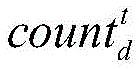
wherein N istime_periodThe number is the file access frequency, which is how many time periods have passed since the last access time to the present time interval.
Preferably, in step 4), for the cold data, RS erasure codes are used to perform fragmentation storage on the cold data in the block chain and the cold data blocks in the distributed file system IPFS, m redundant elements are obtained by calculating n original data elements, and for the n + m elements, when any m elements in the original data and the redundant data are in error, the original n blocks of data are restored through a responsive reconstruction algorithm.
Preferably, the specific step of accessing data by the user in step 6) includes:
6.1) obtaining a Hash value from the block chain according to the file name information;
6.2) acquiring data from the distributed file system IPFS according to the Hash value;
6.3) if the data is completely acquired, entering step 6.4), otherwise entering step 6.5);
6.4) directly returning the data file;
6.5) obtaining backup list information and a recovery matrix from the block chain, finding backup information corresponding to the file from the backup list, obtaining available data blocks, and then carrying out erasure code decoding to recover the original data.
Preferably, the waiting time wiThe calculation method comprises the following steps:
wi=tc-si
wherein, tcIs the current time, siIs the time of transmission of each transaction in the transaction pool.
Preferably, the step 3) is performed by a time interval Ntime_periodThe calculation method comprises the following steps:
Ntime_period=time_period/time
wherein, the size of the time period is defined according to the system requirement, and time _ period is the creation time to the current time interval.
Preferably, the method for calculating the file access frequency number includes:
Figure RE-GDA0003290030960000041
wherein N isTimeIndicating how many time periods the time interval is from the data creation at that time,
Figure RE-GDA0003290030960000042
indicating the access frequency of data block d over time period t,
Figure RE-GDA0003290030960000043
indicating access frequency
Figure RE-GDA0003290030960000044
The weight of (c).
Preferably, how many time periods N the time interval with the data creation is at this timeTimeThe calculation method comprises the following steps:
Figure RE-GDA0003290030960000045
where time _ now is the present time.
Preferably, for the elements of the n '+ m' block, a (n '+ m')/n 'two-dimensional matrix is used, the upper n' row of said two-dimensional matrix being an identity matrix and the lower matrix being selected from van der mond or kowski matrices; RS erasure codes are classified into two types, vandermonde RS codes and cauchy RS codes, according to the lower matrix type.
The block chain data storage method based on fairness and access heat provided by the invention has the beneficial effects that:
1. the block chain data storage method based on fairness and access heat is provided by combining the characteristics of the block chain and the characteristics of IPFS storage, so that the fairness of the system in the storage transaction process can be improved, and the reliability and the availability of cold data in the IPFS storage process can be ensured.
2. The storage method provided by the invention is suitable for data storage under a block chain environment, transaction operations generated in the storage process of the block chain are subjected to GASPrice descending sequencing on a waiting packed transaction set meeting a nonce value in the packing transaction process, in order to realize the maximum fairness of a system, transactions with the same GASPrice are sequenced in a reverse order of waiting time, and the transactions with long waiting time are packed first.
3. The packing algorithm provided by the invention reasonably sorts the transaction packing sequence by considering the transaction waiting time on the basis of the original Ether house packing algorithm, thereby improving the fairness of the transaction packing process.
4. According to the invention, erasure code blocking storage is carried out on cold data by calculating the data access heat and combining an IPFS storage mechanism, so that the reliability of data storage is improved to a certain extent.
Drawings
FIG. 1 is a flowchart of an algorithm of a data storage method based on access heat in the present invention.
Fig. 2 is a flow chart of a block chain packing algorithm based on a transaction fairness model.
Fig. 3 is a process of RS erasure coding according to the present invention.
Detailed Description
The invention is described in further detail below with reference to the figures and specific embodiments.
As shown in fig. 1, the block chain data storage method based on fairness and access heat provided by the present invention is proposed based on transaction on a block chain and by combining characteristics of a down-chain IPFS storage mechanism. The algorithm comprises the following steps:
1) all transactions waiting to be packed in the transaction pool are obtained to form a transaction set { T }i},gasiRepresents TiGASPrice for transactions, the system generates a transaction price gas each time a blockchain performs each transactioni(ii) a Obtaining a sending time set { s ] of each transaction in a transaction pooliAnd the current time tc
2) For transaction set TiSorting the transactions to be packed in a descending order according to the GASPrice; if the transaction combinations with the same GASPrice exist, sorting the transaction combinations in a descending order according to waiting time delay; and acquiring the updated packed transaction set T', and storing the metadata information of the data in the block chain according to the sequence of the transaction set.
The transactions with the same gaspice are sorted in the reverse order of the waiting time, and the transactions with long waiting time are packed first, as shown in fig. 2, the correctness of the method proves to be:
2.1) to define fairness of transaction, Jain fairness index is used here. The Jain smoothness index is used to evaluate the fairness of allocating resources to a group of users or devices. Suppose there are n users sharing a network resource service, xiThe throughput for the ith user, and the Jain fairness index is defined as:
Figure RE-GDA0003290030960000061
2.2) the fairness of transactions is defined according to Jain fairness index as follows:
suppose there are n transactions x that have been processed by the system1,x2,…xnResponse time is t1,t2,…tn. Then the fairness of the system is defined as:
Figure RE-GDA0003290030960000062
wherein t isiIs xiResponse time of (2), assuming transaction xiAt time siSubmitted to blockchain network and at time eiConfirm, then xiResponse time t ofiIs defined as:
ti=ei-si
2.3) assume a submitted transaction xiThe time of submission is siThen at time tcTime, trade xiWaiting time w ofiComprises the following steps:
wi=tc-si
given n' transactions x1,x2,x3,...,xn'Latency in transaction cache pool is w1,w2,w3,...,wn'And each block packs m 'transactions, the largest fairness can be realized by adopting the packing strategy of the first m' transactions with the longest packing waiting time, and the certification process of the method is followed.
2.4) assuming that the transaction transactions in a given transaction cache pool are sorted in descending order of waiting time, the set of transaction transactions is obtained as t1,t2,t3,...,tn'Where the latency of p transaction transactions is w1,w2,...,wp. The definition of string 1 is the above packing strategy, i.e. packing the transactions of the first q transactions with the longest latency.
Suppose there is another type of packingPolicy, structure 2, which enables greater fairness. The packed transaction order of the policy is k1,k2,...,kpWherein a is the arrangement sequence of different packaging modes from the previous packaging mode. From the above assumptions it can be derived:
Figure RE-GDA0003290030960000063
simultaneously according to two packing strategies, each time q transactions are selected to be packed into a block, so that the transaction set can be obtained
Figure RE-GDA0003290030960000071
And (4) blocks. The following formula can be obtained according to the packing manner of the two strategies.
Figure RE-GDA0003290030960000072
However, although the packaging manner is different, the packaging objects at the moment are the transaction sets, so that the formula (2-1) can be obtained.
Figure RE-GDA0003290030960000073
Assume that the time to pack a batch of transaction transactions into a block acknowledgement is tbThe response time of each transaction using the string 1 packaging strategy is
Figure RE-GDA0003290030960000074
Each transaction response time using the string 2 packaging policy is
Figure RE-GDA0003290030960000075
The fairness results for both strategies are shown in equations (3-2) and (3-3).
Figure RE-GDA0003290030960000076
Figure RE-GDA0003290030960000077
Since it is assumed that the string 2 can achieve greater fairness, we get:
Fstrage1<Fstrage2 (2-4)
since both policies are acting on the same set of transaction transactions, it is possible to obtain:
Figure RE-GDA0003290030960000078
Figure RE-GDA0003290030960000079
from equations (2-2), (2-3), (2-4) and (2-6) we can obtain:
Figure RE-GDA00032900309600000710
the formula (2-8) can be obtained by expanding the formula (2-7)
Figure RE-GDA0003290030960000081
From equations (3-5) and (3-8):
Figure RE-GDA0003290030960000082
adding the formula (3-1) and the formula (3-2) can obtain:
Figure RE-GDA0003290030960000083
adding equation (3-9) and equation (3-10) yields:
Figure RE-GDA0003290030960000084
simplified from formula (3-11) to obtain formula (3-12)
Figure RE-GDA0003290030960000085
Obviously, the formula (2-12) is contradictory to the formula (2-5), so that it is concluded that there is no fairness implementation strategy larger than the string 1, that is, transaction transactions are sorted according to waiting time, and the transaction with the longest waiting time is selected for packaging, so that the system fairness can be maximized.
3) When data storage is carried out, cold data is distinguished by using the access heat of a file hot (d), and backup storage is carried out on the cold data, wherein the heat of one data block d hot (d) is calculated as follows:
Figure RE-GDA0003290030960000086
wherein N istime_periodHow many time periods have elapsed for the time interval from the last access time to the present, and the size of the time period can be defined according to the system requirements.
3.1) when the file creation time is short and there is no time period from the creation time to the current time interval, the time _ period is calculated as follows.
time_period=time_now-time_create
If the file creation time is relatively long, then time _ period equals the current time minus the last access time:
time_period=time_now-time_last
3.2) number is the file access frequency, which takes into account the amount of access from different nodes during the time period as well as the amount of access during the history period. The number is thus calculated as follows.
Figure RE-GDA0003290030960000091
In the above formula
Figure RE-GDA0003290030960000092
Indicating the access frequency of data block d over time period t,
Figure RE-GDA0003290030960000093
indicating access frequency
Figure RE-GDA0003290030960000094
The weight of (c).
3.3)NTimeWhich indicates how many time periods the time interval is from the data creation at this time, is calculated as follows.
Figure RE-GDA0003290030960000095
4) And obtaining the access heat of each file according to the calculation method, and setting a threshold T for data cold and hot classification by the system.
4) For cold data, uploading the data to an IPFS (distributed file system), returning a Hash value, and performing erasure code coding on the data; respectively storing the data blocks into available storage nodes, writing backup information, matrixes, file Hash values and other information into a block chain, and returning storage address information;
as shown in fig. 3, erasure code data fragmentation backup storage is performed on cold data according to the calculation result, and the specific storage process is as follows:
4.1) obtaining the information of the storage node N of the storage file F, IPFS, and inquiring the access heat information of the file. And judging whether the file heat is higher than a threshold value, if so, entering a step 7.2, and otherwise, entering a step 7.3.
4.2) if the access heat of the file is higher than the threshold value, judging whether the file has backup information, if so, deleting the backup information, and then inquiring the storage address information as the storage address information.
4.3) if the access heat of the file is lower than the threshold value, the file is cold data, the data is uploaded to the IPFS, a Hash value is returned, and erasure code coding is carried out on the data; and then, respectively storing the data blocks into available storage nodes, finally writing backup information, matrixes, file Hash values and other information into a block chain, and returning storage address information.
4.4) when a user needs to access data, firstly, the Hash value corresponding to the target file name needs to be acquired through interaction with the block chain. When the Hash value is used for acquiring data, if the data can be acquired successfully according to the storage information, a data result is returned, if the data acquisition fails due to node offline, backup list information and a recovery matrix are acquired from a block chain, backup information corresponding to the file is found from the backup list, available data blocks are acquired, and then erasure code decoding is carried out to recover the original data.
5) For hot data, judging whether backup information exists or not, deleting the backup information and searching for storage address information, and if not, directly searching for the storage address information and returning the storage address information;
6) and when the user accesses the data, the access block chain acquires the Hash value corresponding to the data, and the data is acquired according to the storage information and the data result is returned. The method comprises the following specific steps:
6.1) obtaining a Hash value from the block chain according to the file name information;
6.2) acquiring data from the IPFS according to the Hash value;
6.3) if the data can be completely acquired, step 6.4) is entered, otherwise step 6.5) is entered);
6.4) directly returning the data file;
6.5) if the data can not be directly obtained, obtaining backup list information and a recovery matrix from the block chain, finding backup information corresponding to the file from the backup list, obtaining available data blocks, and then carrying out erasure code decoding to recover the original data.
The data storage method fully considers the problems in the blockchain transaction processing flow, so that the etherhouse blockchain transaction processing flow is optimized, and the fairness of the system in the storage transaction process is improved; in addition, the invention also considers the safety and auditability of data in the storage process under the IPFS chain, designs a data storage method based on the access heat degree, and performs erasure code redundancy backup on cold data, thereby ensuring the reliability and the availability of the cold data.
The study procedure of the present invention is detailed below:
the block chain technology realized by using the ether house for data storage is used, operations such as storage requests and the like interact with intelligent contracts in the storage process, a series of transaction operations can be generated in the block chain, and when a large number of storage transactions are carried out, the condition that a large number of transaction fees are the same exists. And when the GASPrice of the transaction is the same, the Ethernet shop is randomly packed, so that part of the transaction is possibly too long in waiting time and is not processed in time, and the fairness of the response time of the system is influenced. In addition, the problem of unreliable data storage exists in the storage of the down-link IPFS. First, IPFS provides a block storage model that is prone to loss of data reliability and availability when its servers crash. The block chain data storage method based on fairness and access heat considers system response time fairness and data storage reliability in the block chain transaction process. Firstly, in the process of transaction fairness, the correctness that the transactions with the same GASPrice are sorted according to the inverse sequence of waiting time and the transactions with long waiting time are packed firstly is proved; in addition, in the data storage method based on the access heat, cold data is processed firstly, a data file is stored in the IPFS, a Hash value of the data file is returned, and RS erasure code coding is carried out on the cold data to form a data block. And sequentially storing the generated data blocks into the available nodes, recording node information, the Hash value of the data blocks and original file information, and writing the information and the recovery matrix into a block chain. And for the files with the heat degree higher than the threshold value T, representing that the data files are already stored in the system, but for the data with the heat degree value just rising to exceed the threshold value, the storage state needs to be changed, the original backup information is deleted, and finally, the storage record address of the block chain is returned. The block chain data storage method based on fairness and access heat can effectively guarantee fairness in a transaction process and meanwhile guarantees reliability in IPFS storage under a chain.
The block chain data storage method model based on fairness and access heat degree provided by the invention comprises two parts: (1) the block chain storage design based on transaction packing fairness aims at the problems encountered in the process of using the Etheng as a block chain technology to store data, the method establishes a transaction fairness model, designs an Etheng block chain packing algorithm, optimizes the transaction processing flow of the Etheng block chain, and improves the fairness of the system in the process of storing and trading. The method flow is shown in fig. 2. (2) The data storage method based on the access heat saves IPFS (inter-layer file system) storage node information in a block chain, and simultaneously stores the information after data backup in the block chain. The data provider uploads the data to the IPFS storage, then obtains the Hash address of the data content, and writes the information and the storage position into the block chain through the intelligent contract. After the data is written into the intelligent contract, in order to calculate the data heat, the access frequency of the data is counted, the data heat is calculated through a heat calculation model, and erasure code data fragmentation backup storage is carried out on cold data according to the calculation result.
Related parameter definition in storage method
(1) The block chain transaction gaswire is gas: the invention considers the fairness of the block chain transaction process, wherein the first part of the fairness carries out descending order sequencing on the transactions to be packaged according to the gas values, and the gas quantity consumption is determined for each specified operation and contract method at the bottom layer of the Ethernet workshop system.
(2) The second part of fairness is that GASPrice-like transactions are sorted in reverse order by latency, where latency wiGiven by equation (1).
wi=tc-si (1)
Wherein t iscIs the current time, siIs the time of transmission of each transaction in the transaction pool.
(3) Access heat of data hot (d): hot (d) is given by the formula (2), Ntime_periodHow many time periods have elapsed since the last access time to the present time interval is given by formula (3), and number is the file access frequency, and the number is calculated as formula (4).
Figure RE-GDA0003290030960000121
(4) Interval period Ntime_period:Ntime_periodShown by equation (3). Wherein, the size of the time period can be defined according to the system requirement. time _ period is the creation time to current time interval.
Ntime_period=time_period/time (3)
(5) File access frequency number: this value takes into account the amount of access from different nodes in the time period as well as the amount of access in the historical period, and is calculated as shown in equation (4).
Figure RE-GDA0003290030960000122
Figure RE-GDA0003290030960000131
Indicating the access frequency of data block d over time period t,
Figure RE-GDA0003290030960000132
indicating access frequency
Figure RE-GDA0003290030960000133
Weight of (1), NTimeWhich represents how many time periods the time interval from the data creation is at this time, the calculation method is as shown in equation (5).
Figure RE-GDA0003290030960000134
According to the block chain data storage method based on fairness and access heat, firstly, the GASPrice descending ordering is carried out on the packed transaction sets, and then the reverse ordering is carried out according to a formula (1) under the condition that the GASPrice values are the same so as to guarantee fairness in the transaction process. When data storage based on the access heat is performed, the formula (2) is a calculation mode of the access heat of the data, and the threshold value T of the access heat is set by the system. Erasure code storage is then performed on data below the threshold.
Pseudo-code description of the method
Figure RE-GDA0003290030960000135
Figure RE-GDA0003290030960000141
The pseudo code description of the algorithm can be used to obtain the transaction set T, the sending time s and the current time T of each transaction in the transaction pool in the line 1c(ii) a Lines 2 to 4, sorting the transaction sets in descending order according to the GASPrice; and lines 5 to 20 acquire transaction sets with the same GASPrice and sort the transactions with the same GASPrice in a descending order according to waiting time delay to acquire a transaction set T' meeting the fairness packing principle. Line 21 obtains the access heat of the stored data, and filters the cold data by comparing the access heat with a threshold value. Lines 22 through 30 perform erasure coding storage of the cold data and obtain a storage address. Lines 31 through 33, when the data is not cold, the backup information is deleted and the memory address is looked up directly from the blockchain. In the method, in the process of storing by combining an on-chain mode and an off-chain mode, the fairness of transactions is considered in the process of storing the on-chain block chain, the storage method based on the file access heat is adopted in the storage of the off-chain IPFS, the heat of the stored data is calculated, and erasure code redundancy backup is carried out on the cold data according to the file heat, so that the reliability and the availability of the cold data are ensured.
The block chain data storage method based on fairness and access heat can optimize the transaction processing flow of the block chain of the ether house, improve the fairness of the system in the process of performing storage transaction, and simultaneously ensure the reliability and the availability of IPFS stored data. The invention provides a data storage method based on fairness and access heat by combining the characteristics in a block chain and the characteristics of IPFS storage. The data storage method is suitable for data storage in a link uplink and downlink combination mode of a block link and an IPFS (internet protocol file system), and is based on an Ethernet packing transaction process, GASPrice descending order sorting is carried out on a waiting packing transaction set meeting a nonce value, and GASPrice same transactions are sorted according to a waiting time reverse order, so that the maximum fairness of the system is realized. When data storage based on access heat is carried out, metadata information of the data is stored in the block chain, and the original data is uploaded to the IPFS network for storage. In order to make data access more convenient, IPFS storage node information is stored in the blockchain, and information after data backup is stored in the blockchain. The data provider uploads the data to the IPFS for storage, then the Hash address of the data content can be obtained, then the information and the storage position are written into the block chain through an intelligent contract, and simultaneously, the IPFS has the function of blocking the data, so that the storage information of each block is recorded in the block chain.
Finally, it should be noted that the above detailed description is only for illustrating the technical solution of the patent and not for limiting, although the patent is described in detail with reference to the preferred embodiments, it should be understood by those skilled in the art that the technical solution of the patent can be modified or replaced by equivalents without departing from the spirit and scope of the technical solution of the patent, which should be covered by the claims of the patent. A cache packet scheduling optimization algorithm based on consistent hashing in a serverless computing environment.

Claims (10)

1.一种基于公平性和访问热度的区块链数据存储方法,其特征在于,所述方法包括如下步骤:1. A blockchain data storage method based on fairness and access heat, characterized in that the method comprises the following steps: 1)获取与以太坊区块链进行交易的集合{Ti}以及交易集合中每条交易的发送时间集合{s}以及当前时间集合{tc};1) Obtain the set {T i } of transactions with the Ethereum blockchain, the sending time set {s} of each transaction in the transaction set, and the current time set {t c }; 2)对所述交易集合{Ti}按照属性GASPrice的大小降序排序获取交易集合{T'};按照该交易集合的顺序将数据的元数据信息存储在区块链中;2) Sort the transaction set {T i } according to the size of the attribute GASPrice in descending order to obtain the transaction set {T'}; store the metadata information of the data in the block chain according to the order of the transaction set; 3)对存储的数据进行热度计算,以文件的访问热度hot(d)阈值T区别冷数据与热数据;3) Perform heat calculation on the stored data, and distinguish between cold data and hot data by the access heat hot(d) threshold T of the file; 4)对于所述冷数据,将数据上传到分布式文件系统IPFS,并返回Hash值,对数据进行纠删码编码;将数据块分别存储到可用的存储节点,并将备份信息、矩阵和文件Hash值等信息写入区块链,返回存储地址信息;4) For the cold data, upload the data to the distributed file system IPFS, return the Hash value, and perform erasure coding on the data; store the data blocks in the available storage nodes respectively, and back up the information, matrix and files. Hash value and other information are written into the blockchain, and the storage address information is returned; 5)对于所述热数据,判断是否存在备份信息是则删除备份信息,查找存储地址信息,否则直接查找存储地址信息,返回存储地址信息;5) For the hot data, judging whether there is backup information, delete the backup information, search for the storage address information, otherwise directly search for the storage address information, and return the storage address information; 6)用户访问数据时,访问区块链获取数据对应的Hash值,根据存储信息获取数据返回数据结果。6) When the user accesses the data, he accesses the blockchain to obtain the Hash value corresponding to the data, and obtains the data according to the stored information and returns the data result. 2.根据权利要求1所述的基于公平性和访问热度的区块链数据存储方法,其特征在于:所述步骤2)中对于属性GASPrice相同的交易按照等待时间逆序排序。2. The blockchain data storage method based on fairness and access heat according to claim 1, characterized in that: in said step 2), transactions with the same attribute GASPrice are sorted in reverse order of waiting time. 3.根据权利要求1所述的基于公平性和访问热度的区块链数据存储方法,其特征在于:所述步骤3)中所述文件的访问热度hot(d)的计算方法为:3. The blockchain data storage method based on fairness and access heat according to claim 1, characterized in that: the calculation method of the access heat hot (d) of the file described in the step 3) is:
Figure FDA0003083249670000011
其中Ntime_period为上次访问时间到现在的时间间隔所经过了多少个时间段,number为文件访问频率。where N time_period is the number of time periods that have elapsed from the last access time to the present, and number is the file access frequency.
4.根据权利要求1所述的基于公平性和访问热度的区块链数据存储方法,其特征在于:所述步骤4)中,对于所述冷数据,使用RS纠删码对区块链和分布式文件系统IPFS中的冷数据分块进行分片存储,通过计算n块原始的数据元素得到m块冗余元素,对于n+m块的元素,当原始数据和冗余数据中任意的m块元素出错时,通过响应的重构算法恢复原始的n块数据。4. The blockchain data storage method based on fairness and access heat according to claim 1, characterized in that: in the step 4), for the cold data, RS erasure code is used to compare the blockchain and the data. The cold data in the distributed file system IPFS is stored in blocks, and m blocks of redundant elements are obtained by calculating n blocks of original data elements. For elements of n+m blocks, when any m in the original data and redundant data is obtained When the block element is wrong, the original n blocks of data are restored through the corresponding reconstruction algorithm. 5.根据权利要求1所述的基于公平性和访问热度的区块链数据存储方法,其特征在于:所述步骤6)中用户访问数据的具体步骤包括:5. The blockchain data storage method based on fairness and access heat according to claim 1, characterized in that: the specific steps of the user accessing data in the step 6) include: 6.1)根据文件名称信息从区块链中获取Hash值;6.1) Obtain the Hash value from the blockchain according to the file name information; 6.2)根据Hash值从分布式文件系统IPFS中获取数据;6.2) Obtain data from the distributed file system IPFS according to the Hash value; 6.3)如果数据完整获取则进入步骤6.4),否则进入步骤6.5);6.3) If the data is obtained completely, go to step 6.4), otherwise go to step 6.5); 6.4)直接返回数据文件;6.4) Return the data file directly; 6.5)从区块链中获取备份列表信息以及恢复矩阵,从备份列表中找到该文件对应的备份信息,获取可用的数据分块,然后进行纠删码解码恢复原数据。6.5) Obtain the backup list information and recovery matrix from the blockchain, find the backup information corresponding to the file from the backup list, obtain the available data blocks, and then perform erasure code decoding to restore the original data. 6.根据权利要求2所述的基于公平性和访问热度的区块链数据存储方法,其特征在于:所述等待时间wi的计算方法为:6. The blockchain data storage method based on fairness and access heat according to claim 2, characterized in that: the calculation method of the waiting time wi is: wi=tc-si w i =t c -s i 其中,tc为当前时间,si是交易池中每条交易的发送时间。Among them, t c is the current time, and s i is the sending time of each transaction in the transaction pool. 7.根据权利要求3述的基于公平性和访问热度的区块链数据存储方法,其特征在于:所述步骤3)间隔时间段Ntime_period的计算方法为:7. the block chain data storage method based on fairness and access heat according to claim 3, is characterized in that: the calculation method of described step 3) interval time period N time_period is: Ntime_period=time_period/timeN time_period =time_period/time 其中,时间段time的大小根据系统要求定义,time_period为创建时间到当前时间间隔。Among them, the size of the time period time is defined according to the system requirements, and time_period is the time interval from the creation time to the current time. 8.根据权利要求3所述的基于公平性和访问热度的区块链数据存储方法,其特征在于:对于所述文件访问频率number的计算方法为:8. The blockchain data storage method based on fairness and access heat according to claim 3, characterized in that: the calculation method for the file access frequency number is:
Figure FDA0003083249670000031
其中,NTime表示此时与数据创建时间间隔为多少时间段,
Figure FDA0003083249670000032
表示数据块d在时间段t的访问频率,
Figure FDA0003083249670000033
表示访问频率
Figure FDA0003083249670000034
的权重。
Among them, N Time represents the time interval between this time and the data creation time.
Figure FDA0003083249670000032
represents the access frequency of data block d in time period t,
Figure FDA0003083249670000033
Indicates the frequency of visits
Figure FDA0003083249670000034
the weight of.
9.根据权利要求8所述的基于公平性和访问热度的区块链数据存储方法,其特征在于:此时与数据创建时间间隔为多少时间段NTime的计算方法为:9. The blockchain data storage method based on fairness and access heat according to claim 8, characterized in that: the calculation method of how many time periods N Time is at this time interval with the data creation time interval is:
Figure FDA0003083249670000035
其中,time_now为现在的时间。Among them, time_now is the current time.
10.根据权利要求4所述的基于公平性和访问热度的区块链数据存储方法,其特征在于:对于n+m块的元素,使用一个(n+m)*n二维矩阵,所述二维矩阵上部n行是一个单位矩阵,下部矩阵选择范德蒙德矩阵或柯西矩阵;根据下部矩阵类型将RS纠删码分成范德蒙RS编码和柯西RS编码两类。10. The blockchain data storage method based on fairness and access heat according to claim 4, characterized in that: for the elements of n+m blocks, a (n+m)*n two-dimensional matrix is used, and the The upper n rows of the two-dimensional matrix are an identity matrix, and the lower matrix selects Vandermonde matrix or Cauchy matrix; RS erasure codes are divided into Vandermonde RS coding and Cauchy RS coding according to the type of the lower matrix.
CN202110572523.3A 2021-05-25 2021-05-25 Blockchain data storage method based on fairness and access popularity Active CN113608670B (en)

Priority Applications (1)

Application Number Priority Date Filing Date Title
CN202110572523.3A CN113608670B (en) 2021-05-25 2021-05-25 Blockchain data storage method based on fairness and access popularity

Applications Claiming Priority (1)

Application Number Priority Date Filing Date Title
CN202110572523.3A CN113608670B (en) 2021-05-25 2021-05-25 Blockchain data storage method based on fairness and access popularity

Publications (2)

Publication Number Publication Date
CN113608670A true CN113608670A (en) 2021-11-05
CN113608670B CN113608670B (en) 2023-10-27

Family

ID=78336459

Family Applications (1)

Application Number Title Priority Date Filing Date
CN202110572523.3A Active CN113608670B (en) 2021-05-25 2021-05-25 Blockchain data storage method based on fairness and access popularity

Country Status (1)

Country Link
CN (1) CN113608670B (en)

Cited By (7)

* Cited by examiner, † Cited by third party
Publication number Priority date Publication date Assignee Title
CN114547191A (en) * 2022-01-28 2022-05-27 上海树图区块链研究院 Method, system and P2P network for asynchronous execution of smart contract by blockchain virtual machine
CN114594911A (en) * 2022-03-13 2022-06-07 西安电子科技大学 Blockchain data storage system and method based on off-chain erasure code distributed storage
CN114896337A (en) * 2022-05-06 2022-08-12 远光软件股份有限公司 Data uplink method, system, equipment and computer readable storage medium
CN114915377A (en) * 2022-05-12 2022-08-16 中国人民解放军国防科技大学 Fountain code-based alliance chain storage system
CN115037755A (en) * 2022-04-27 2022-09-09 东北大学 Block chain lightweight storage method based on data redistribution and dynamic node strategy
CN119996433A (en) * 2025-04-11 2025-05-13 长春光华学院 A computer batch data storage method and system based on blockchain
CN120353807A (en) * 2025-06-24 2025-07-22 北京亿家老小科技有限公司 Trust evaluation data storage tracing method and system based on blockchain technology

Citations (4)

* Cited by examiner, † Cited by third party
Publication number Priority date Publication date Assignee Title
WO2012167642A1 (en) * 2011-06-09 2012-12-13 Tsinghua University Wear leveling method and apparatus
KR101533340B1 (en) * 2014-04-09 2015-07-06 인하대학교 산학협력단 A method of data replication using data access frequency and erasure codes in cloud storage system
CN109871366A (en) * 2019-01-17 2019-06-11 华东师范大学 A kind of storage of block chain fragment and querying method based on correcting and eleting codes
CN112699142A (en) * 2020-12-29 2021-04-23 平安普惠企业管理有限公司 Cold and hot data processing method and device, electronic equipment and storage medium

Patent Citations (4)

* Cited by examiner, † Cited by third party
Publication number Priority date Publication date Assignee Title
WO2012167642A1 (en) * 2011-06-09 2012-12-13 Tsinghua University Wear leveling method and apparatus
KR101533340B1 (en) * 2014-04-09 2015-07-06 인하대학교 산학협력단 A method of data replication using data access frequency and erasure codes in cloud storage system
CN109871366A (en) * 2019-01-17 2019-06-11 华东师范大学 A kind of storage of block chain fragment and querying method based on correcting and eleting codes
CN112699142A (en) * 2020-12-29 2021-04-23 平安普惠企业管理有限公司 Cold and hot data processing method and device, electronic equipment and storage medium

Non-Patent Citations (1)

* Cited by examiner, † Cited by third party
Title
张小庆;贺忠堂;李春林;张恒喜;钱琼芬;: "云计算系统中数据中心的节能算法研究", 计算机应用研究, no. 04 *

Cited By (11)

* Cited by examiner, † Cited by third party
Publication number Priority date Publication date Assignee Title
CN114547191A (en) * 2022-01-28 2022-05-27 上海树图区块链研究院 Method, system and P2P network for asynchronous execution of smart contract by blockchain virtual machine
CN114594911A (en) * 2022-03-13 2022-06-07 西安电子科技大学 Blockchain data storage system and method based on off-chain erasure code distributed storage
CN114594911B (en) * 2022-03-13 2024-03-29 西安电子科技大学 Block chain data storage system and method based on under-chain erasure code distributed storage
CN115037755A (en) * 2022-04-27 2022-09-09 东北大学 Block chain lightweight storage method based on data redistribution and dynamic node strategy
CN114896337A (en) * 2022-05-06 2022-08-12 远光软件股份有限公司 Data uplink method, system, equipment and computer readable storage medium
CN114915377A (en) * 2022-05-12 2022-08-16 中国人民解放军国防科技大学 Fountain code-based alliance chain storage system
CN114915377B (en) * 2022-05-12 2024-04-02 中国人民解放军国防科技大学 A consortium chain storage system based on fountain code
CN119996433A (en) * 2025-04-11 2025-05-13 长春光华学院 A computer batch data storage method and system based on blockchain
CN119996433B (en) * 2025-04-11 2025-08-15 长春光华学院 Computer batch data storage method and system based on blockchain
CN120353807A (en) * 2025-06-24 2025-07-22 北京亿家老小科技有限公司 Trust evaluation data storage tracing method and system based on blockchain technology
CN120353807B (en) * 2025-06-24 2026-01-16 北京亿家老小科技有限公司 A Trust Assessment Data Storage and Traceability Method and System Based on Blockchain Technology

Also Published As

Publication number Publication date
CN113608670B (en) 2023-10-27

Similar Documents

Publication Publication Date Title
CN113608670B (en) Blockchain data storage method based on fairness and access popularity
TWI733514B (en) A storage system, a network node of a blockchain network, and a blockchain-based log-structured storage system
US20190163564A1 (en) Data transfer priority levels
US20180081586A1 (en) Migrating data in a distributed storage network
US9817611B2 (en) Resolving write request conflicts in a dispersed storage network
CN109783016A (en) A kind of elastic various dimensions redundancy approach in distributed memory system
TWI592805B (en) System and method for sharing network storage and computing resource
TW202111520A (en) Log-structured storage systems
AU2018355092B2 (en) Witness blocks in blockchain applications
CN107046812B (en) Data storage method and device
US20150378616A1 (en) Adjusting timing of storing data in a dispersed storage network
Li et al. Blockchain-based security architecture for distributed cloud storage
US20250097006A1 (en) Policy Driven Data Migration in a Distributed Storage System
CN113687964B (en) Data processing method, device, electronic equipment, storage medium and program product
CN103067479A (en) Network disk synchronized method and system based on file coldness and hotness
WO2025001030A1 (en) Hybrid cloud data backup management method based on multi-objective optimal copy management policy
US20240427712A1 (en) Alarms with Priorities in a Storage Network
CN120610849A (en) A data disaster recovery method supporting multiple backup path switching
US10148788B2 (en) Method for providing schedulers in a distributed storage network
CN109597903A (en) Image file processing apparatus and method, document storage system and storage medium
Nygaard et al. Distributed storage system based on permissioned blockchain
CN111565144A (en) Data layered storage management method for instant communication tool
US10481832B2 (en) Applying a probability function to avoid storage operations for already-deleted data
US11113009B1 (en) Computing device facilitating prioritization of task execution within a distributed storage network (DSN)
Li Dynamic load balancing method for urban surveillance video big data storage based on HDFS

Legal Events

Date Code Title Description
PB01 Publication
PB01 Publication
SE01 Entry into force of request for substantive examination
GR01 Patent grant
GR01 Patent grant